Words The Kanto team (Golden Pin)
Images Greg Mayo
Jim Caumeron Design’s Exalt and Studio Ong’s Inato have earned the 2026 Golden Pin Design Mark, the official symbol of excellence awarded to entries that clear Secondary Selection at Taiwan’s Golden Pin Design Award, often billed as the most influential design award in the global Huaren market.
The mark carries commercial weight beyond the honor: recipients can use it on packaging, marketing, and sales platforms as a credential of design quality, while also advancing into Final Selection to compete for Best Design of the Year, the ultimate Golden Pin accolade.
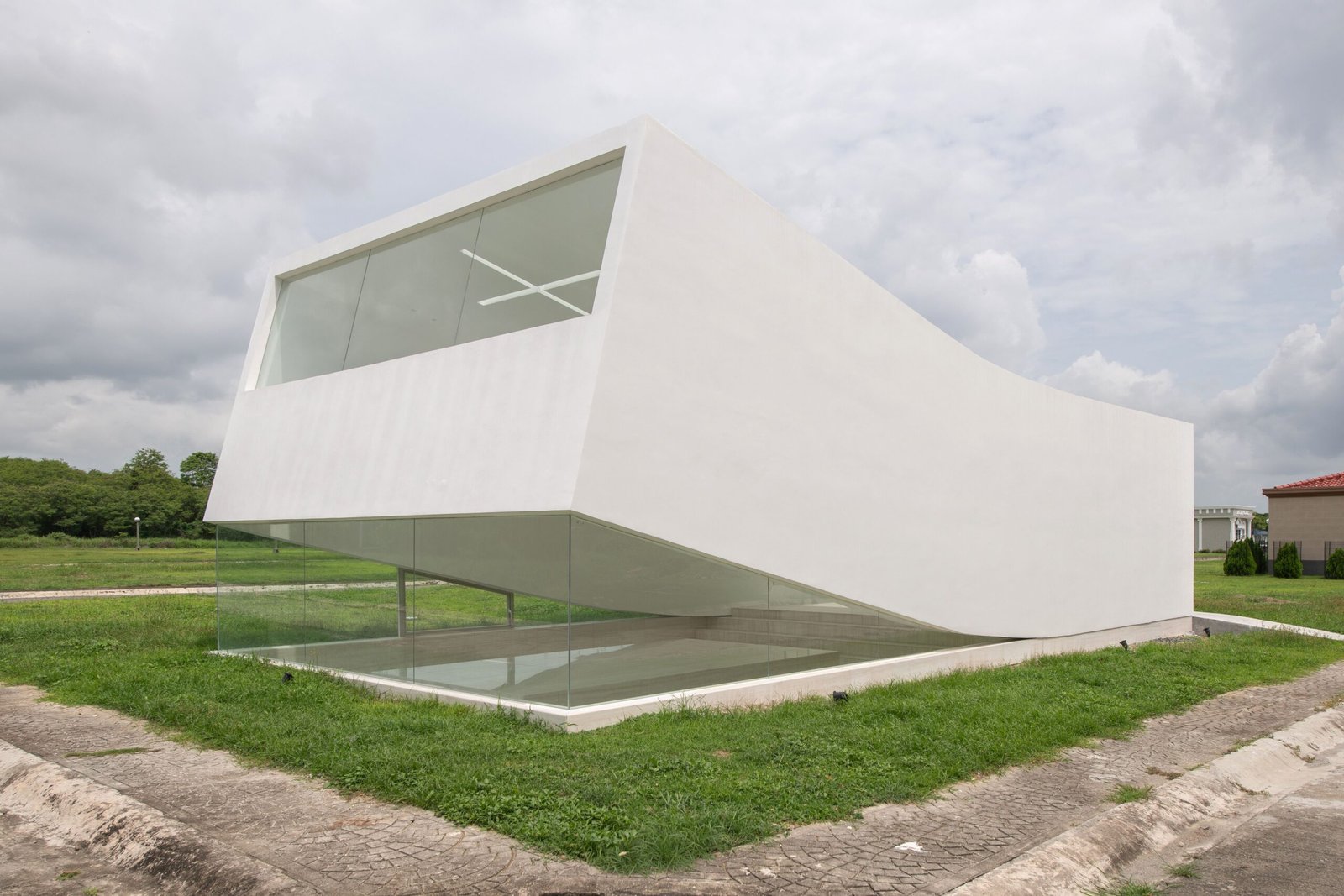
Exalt: Lifting one’s head up amidst grief
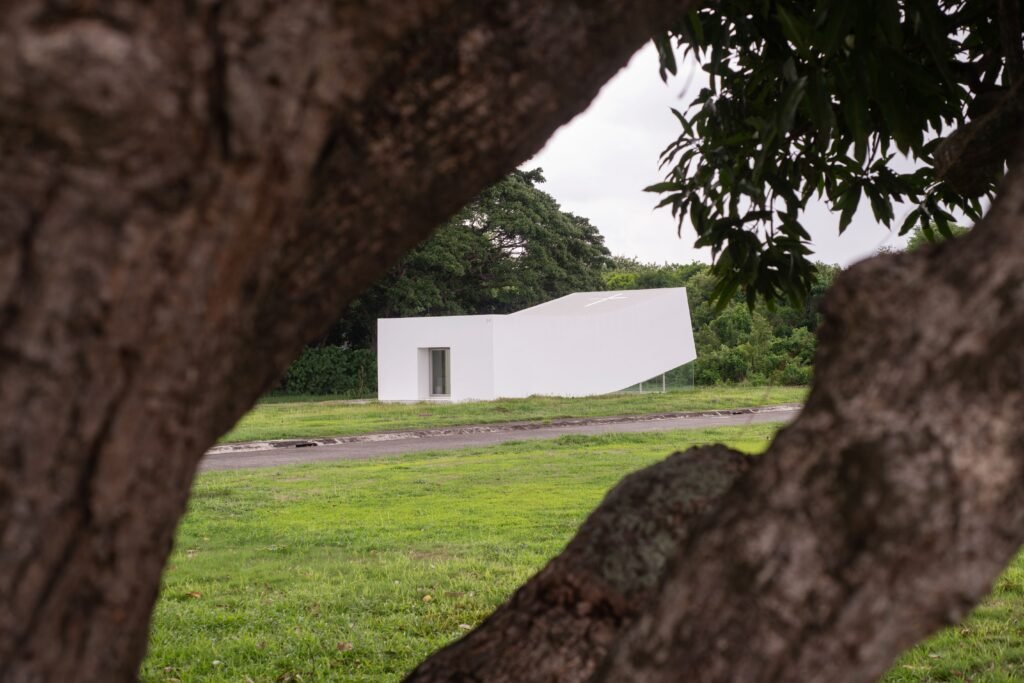
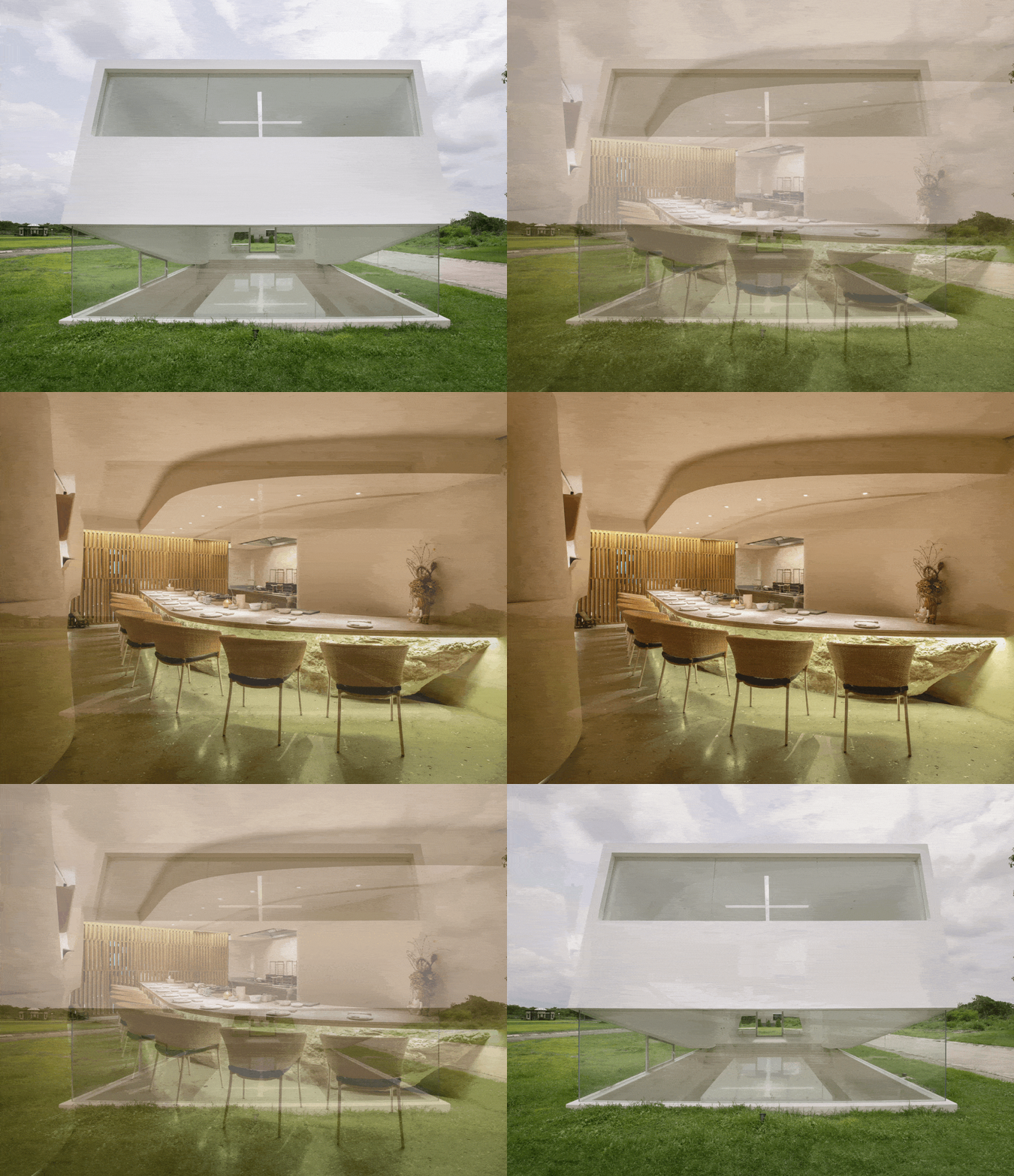
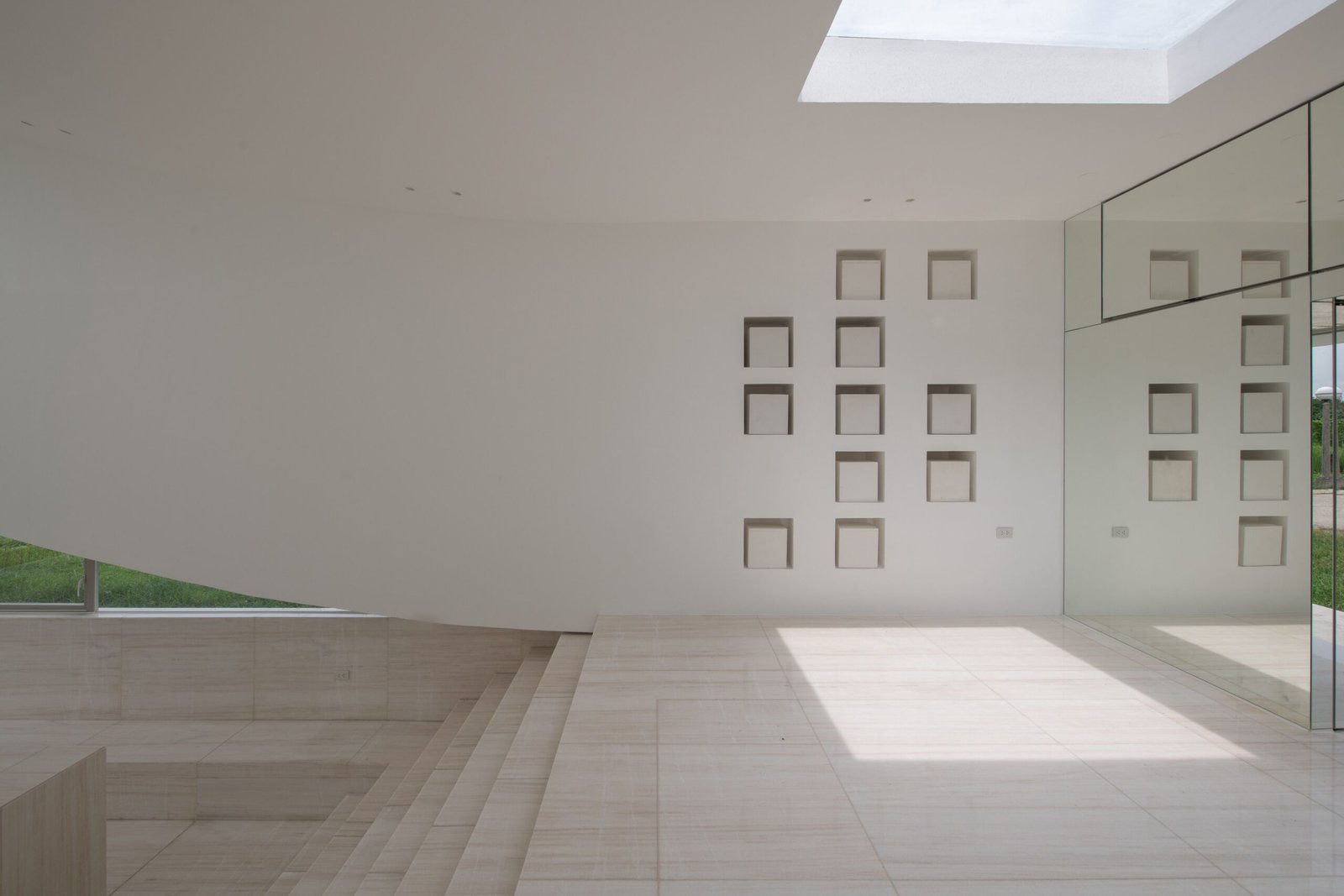
Located in a memorial park south of Metro Manila, the 88-sqm Exalt mausoleum builds its uplift into an explicit physical move: a plain quadrilinear volume rises at its midpoint in a shallow cantilever, glazed underneath so light reaches straight into the interior. Finished in painted concrete and glass above ground and travertine below, the mausoleum’s burial chamber sits three meters below ground, reached by a cascade of steps. The surrounding terrain is kept undisturbed, letting a visitor register the descent before reaching the entrance. Two skylights enhance the space’s buoyancy: a square cutout near the entrance, and a cross-shaped cutout directly above the burial vault that lets sunlight fall across its travertine surfaces. Exalt marks the second Filipino mausoleum project to reach Golden Pin Final Selection, following EUDO’s House for a Father in 2024.
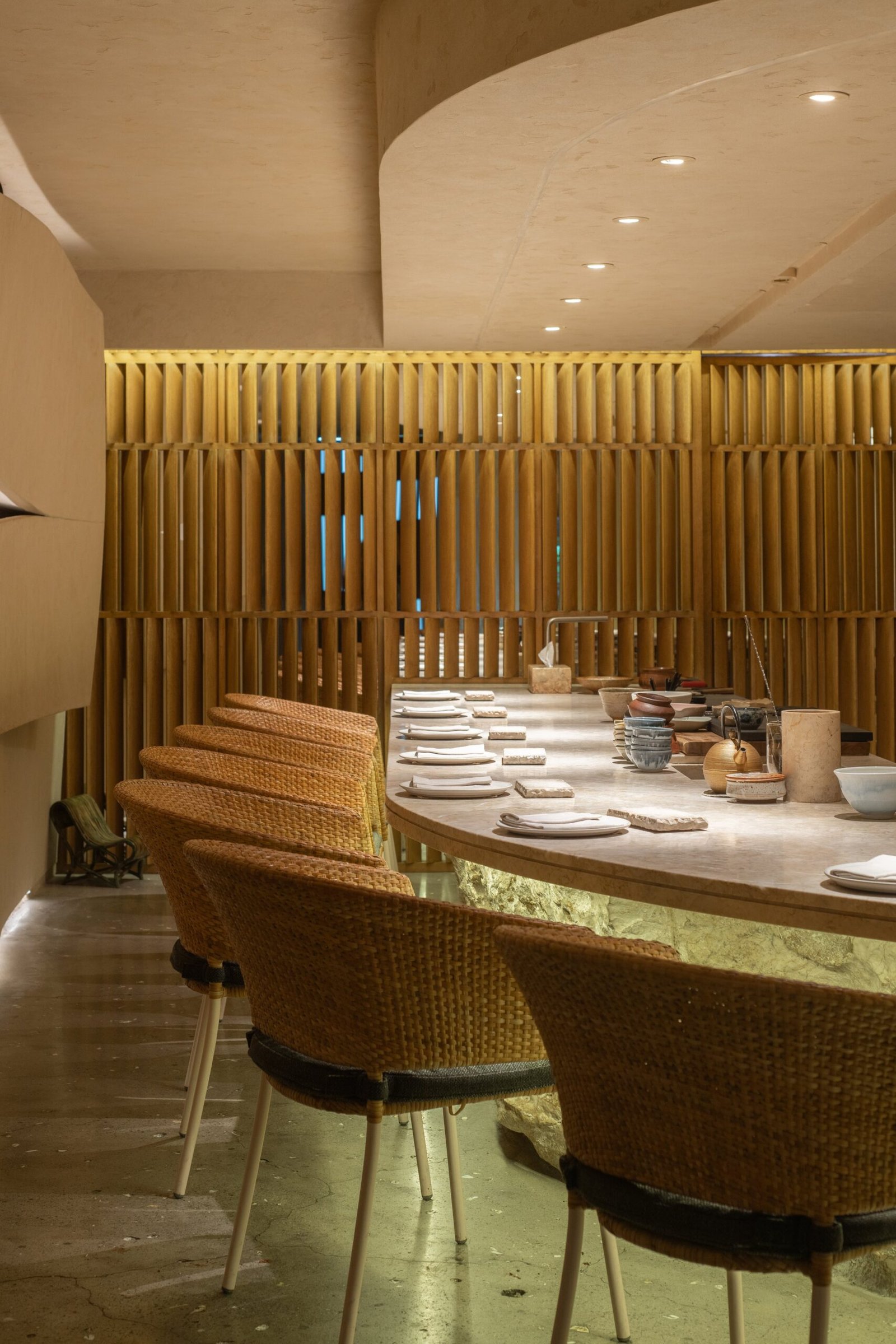
Inatô by Studio Ong, Golden Pin Design Mark recipient
Inatô: New ways to celebrate ‘our way’
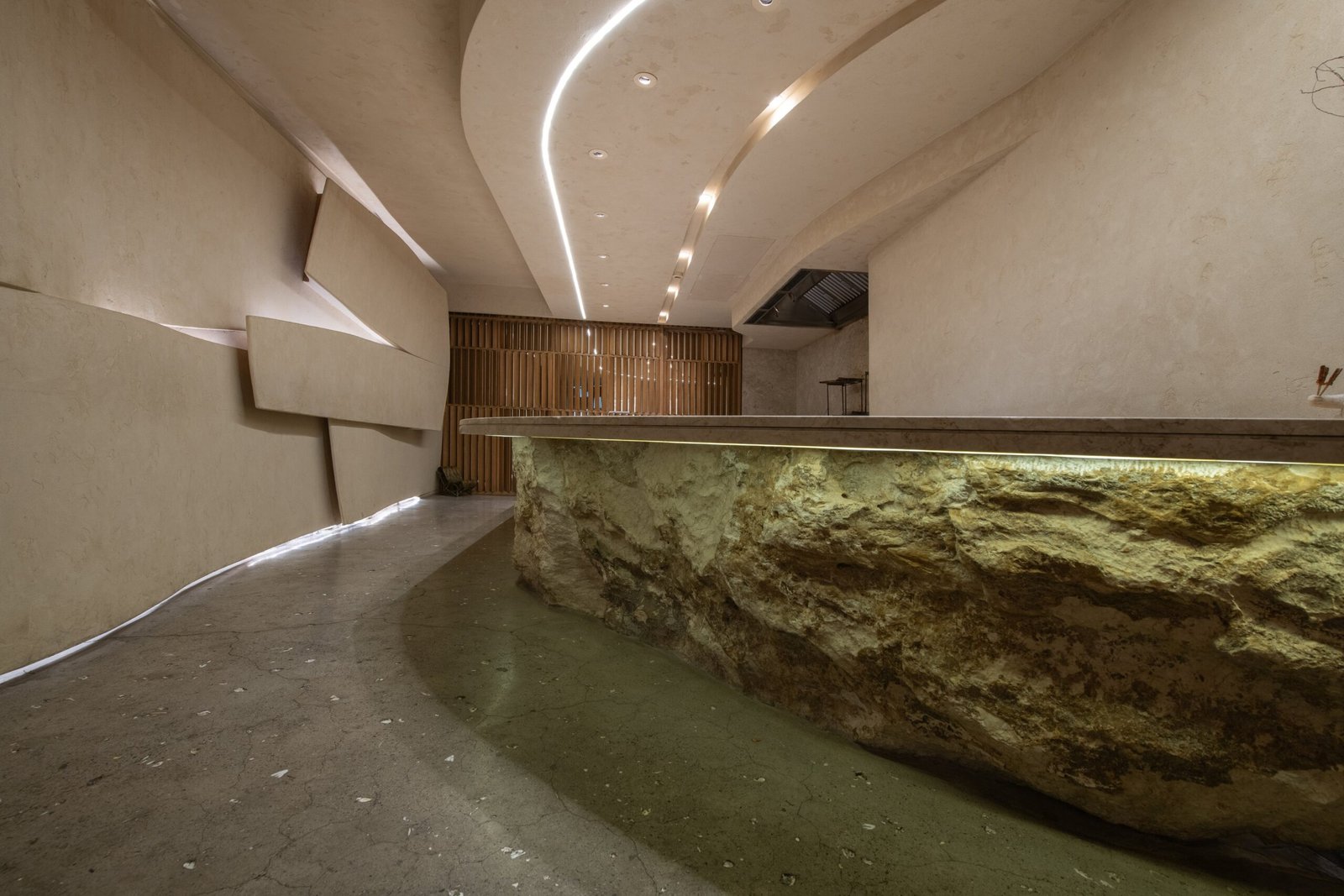
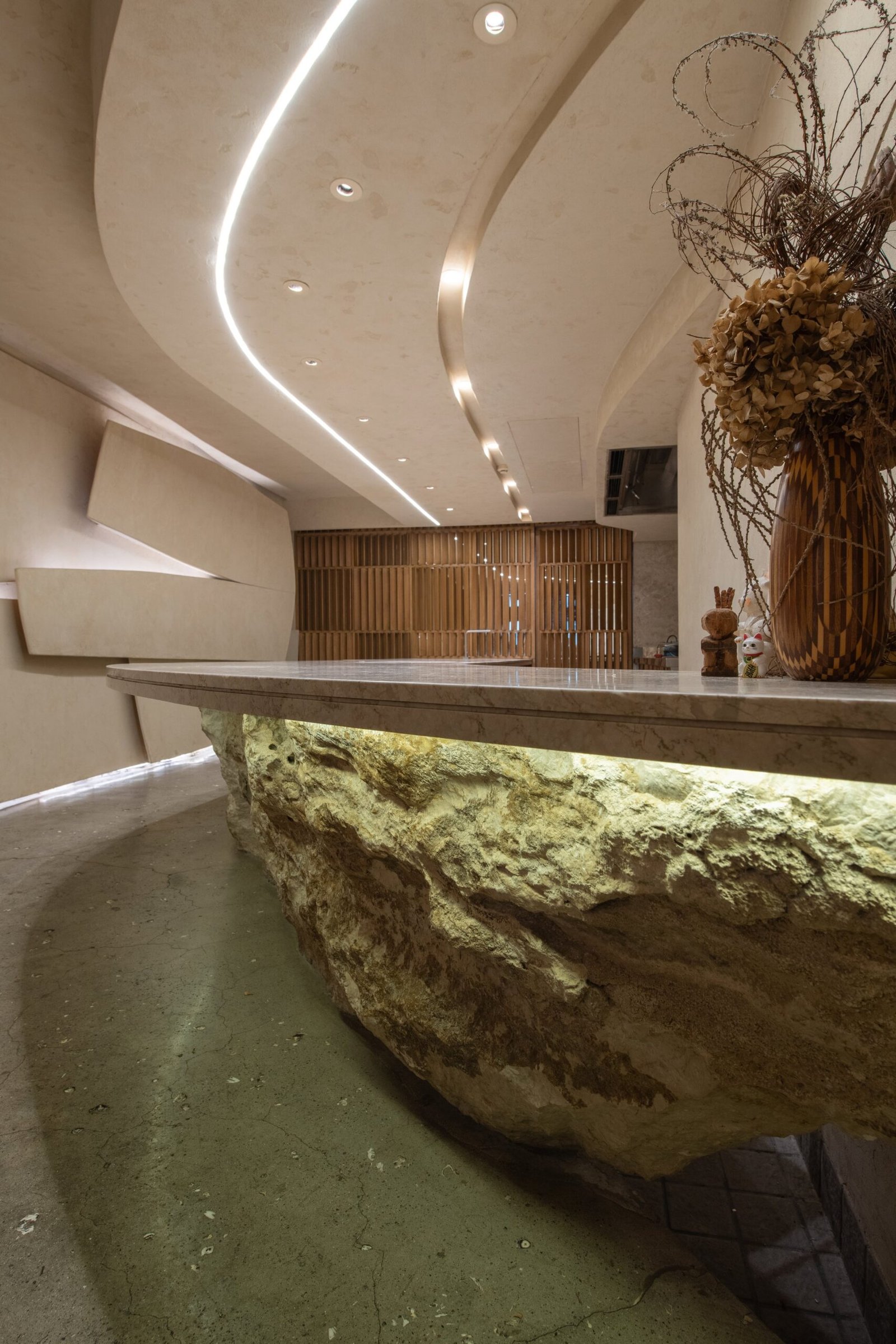
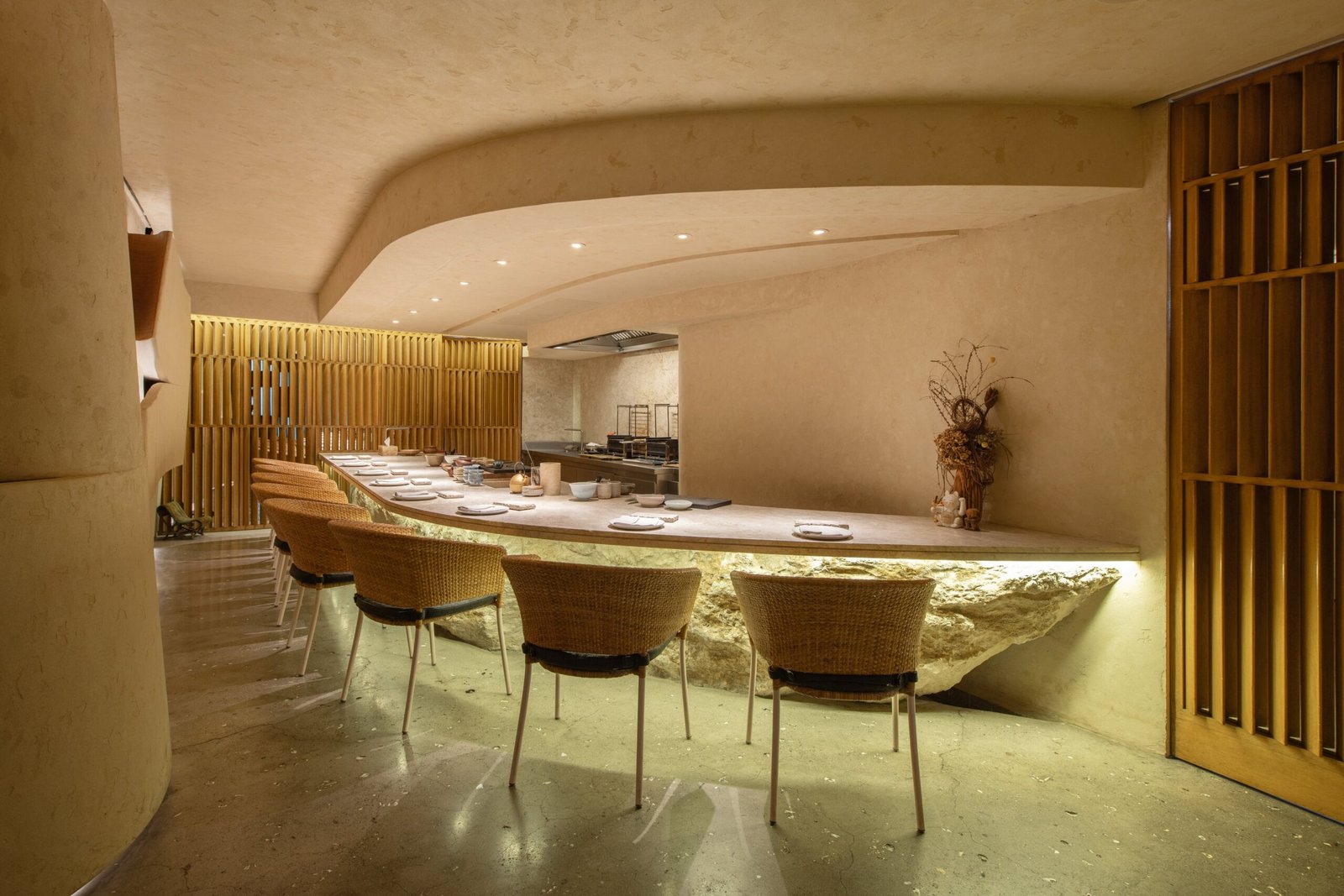
For Inatô in Makati, designer-sisters Charisse and Coleen Ong of Studio Ong worked with chef JP Cruz around an explicitly local material palette. An eight-seat counter carved from a single slab of Rizal marble anchors the room, facing the open kitchen so diners watch the food take shape in real time, a layout Tatler Asia singled out; the restaurant’s serving blocks are cut from offcuts of the same stone.
The accent wall took a similarly hands-on route: the designers mocked it up using literal banana peels to study how the material moved and folded, an origin story Cruz shared with F&B Report, before translating the effect into its final built form. Ipil-ipil parquet flooring, rice husk resin tabletops, capiz shell accents, and a floor finish embedded with crushed oyster shell round out a material palette that harks back to tradition expressed in a wholly contemporary language.
The restaurant’s name comes from the Binisaya term for “our way,” a fitting anchor: both the food and the interiors argue that myriad routes lead to good Filipino food.
An ongoing streak
The Philippines has sent entries to Final Selection three years running. In 2024, four Filipino names, Kenneth Cobonpue, EUDO, Plus63, and The Acid House, earned the Design Mark and advanced to Final Selection, the country’s first appearance at that stage. The field narrowed to two entries in 2025, Dominic Galicia Architects’ Kilyawan Farm Resort and Exploratory Projects’ KAY Chair, both of which also reached Final Selection, and again to two in 2026 with Exalt and Inatô. Best Design of the Year winners will be decided on August 26 and announced live at the awards ceremony in Taipei come late November.
The Philippines has traditionally performed well in the Spatial Design category, with a finalist in both 2024 and 2025, and now holds the most representation in 2026. Thematically, the Golden Pin jury appears to favor small, boutique projects whose materiality comes from local finishes, or which draw from highly emotive narratives, qualities that have marked every Filipino entry to reach Final Selection over the past three years.
Surveying the competition
This year’s Golden Pin Design Award drew entries from 23 regions, with 474 Design Mark recipients across four categories: 158 in Communication Design, 149 in Product Design, 118 in Spatial Design, and 49 in Integration Design, representing 17 winning regions in the final tally.
Within ASEAN, Thailand leads with 44 Design Mark recipients, 31 of them in Spatial Design alone, followed by Malaysia (12), Singapore (10), and Indonesia (6). Taiwan and China naturally dominate the overall field at 225 and 95, respectively, a yearly occurrence, with Hong Kong (34), Japan (22), and South Korea (12) rounding out the rest of the field.
No Filipino entry has won Best Design of the Year at the Golden Pin Design Award. But three straight years of Final Selection appearances put the Philippines closer to breaking through than it has been at any point since joining this competition. All roads now lead to Taipei, and here’s to hoping our Filipino designers finally crack the Golden Pin winners list.
For now, maraming salamat Jim Caumeron Design and Studio Ong! Mabuhay ang disenyong Filipino! •