Words and interview The Kanto team
Images Chini Lichangco for NEWFOLK (Jia CURATED 2026)
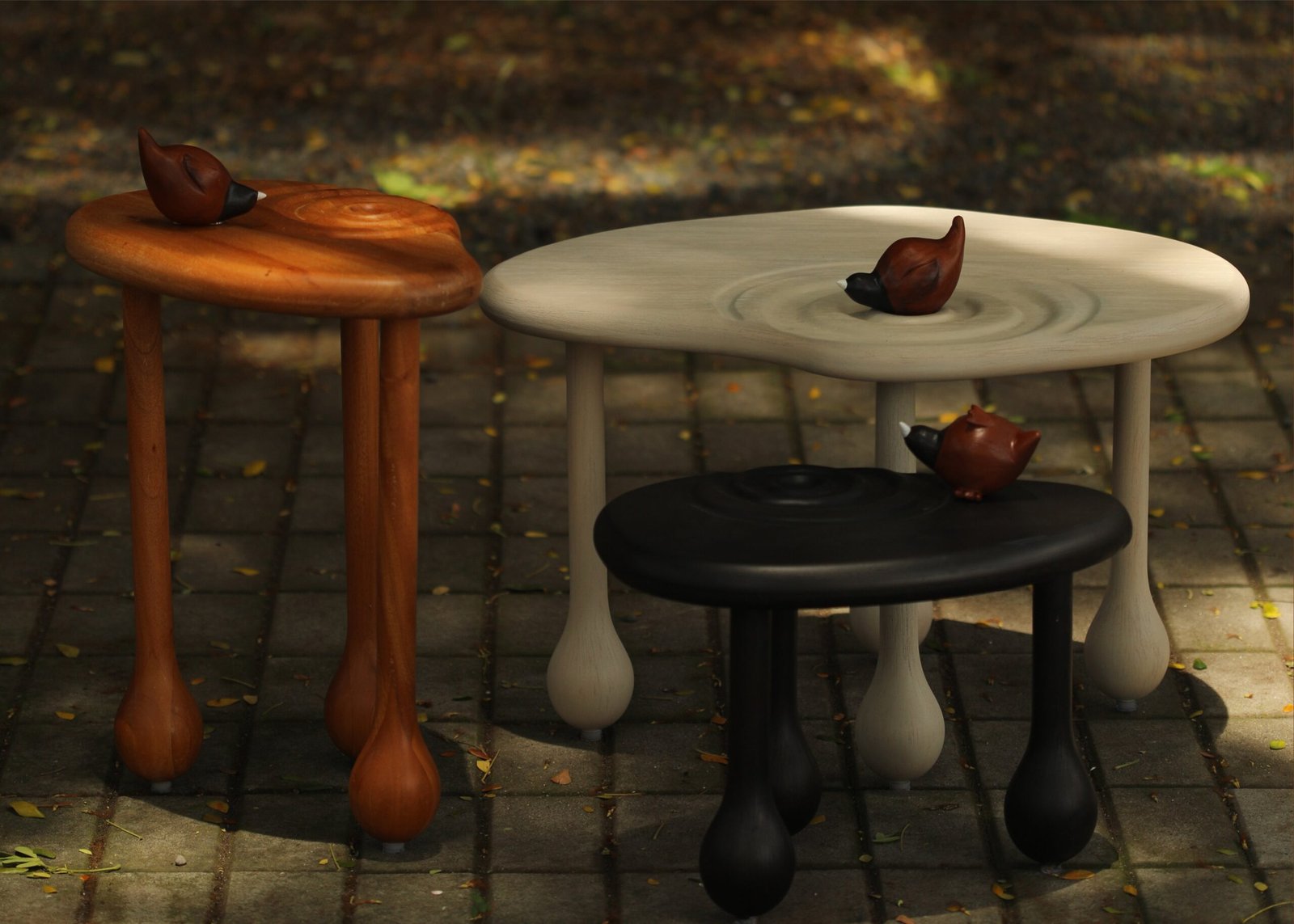
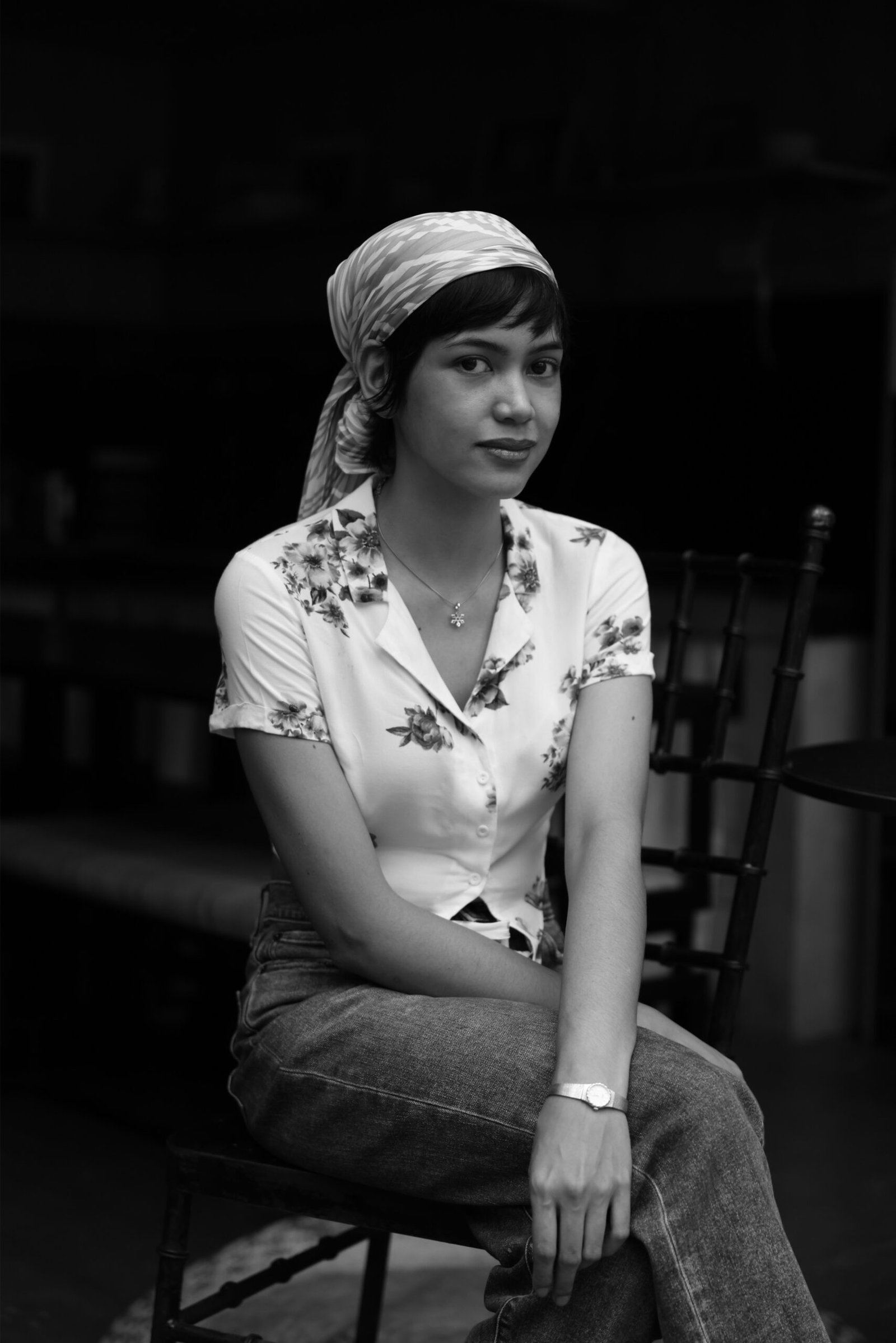
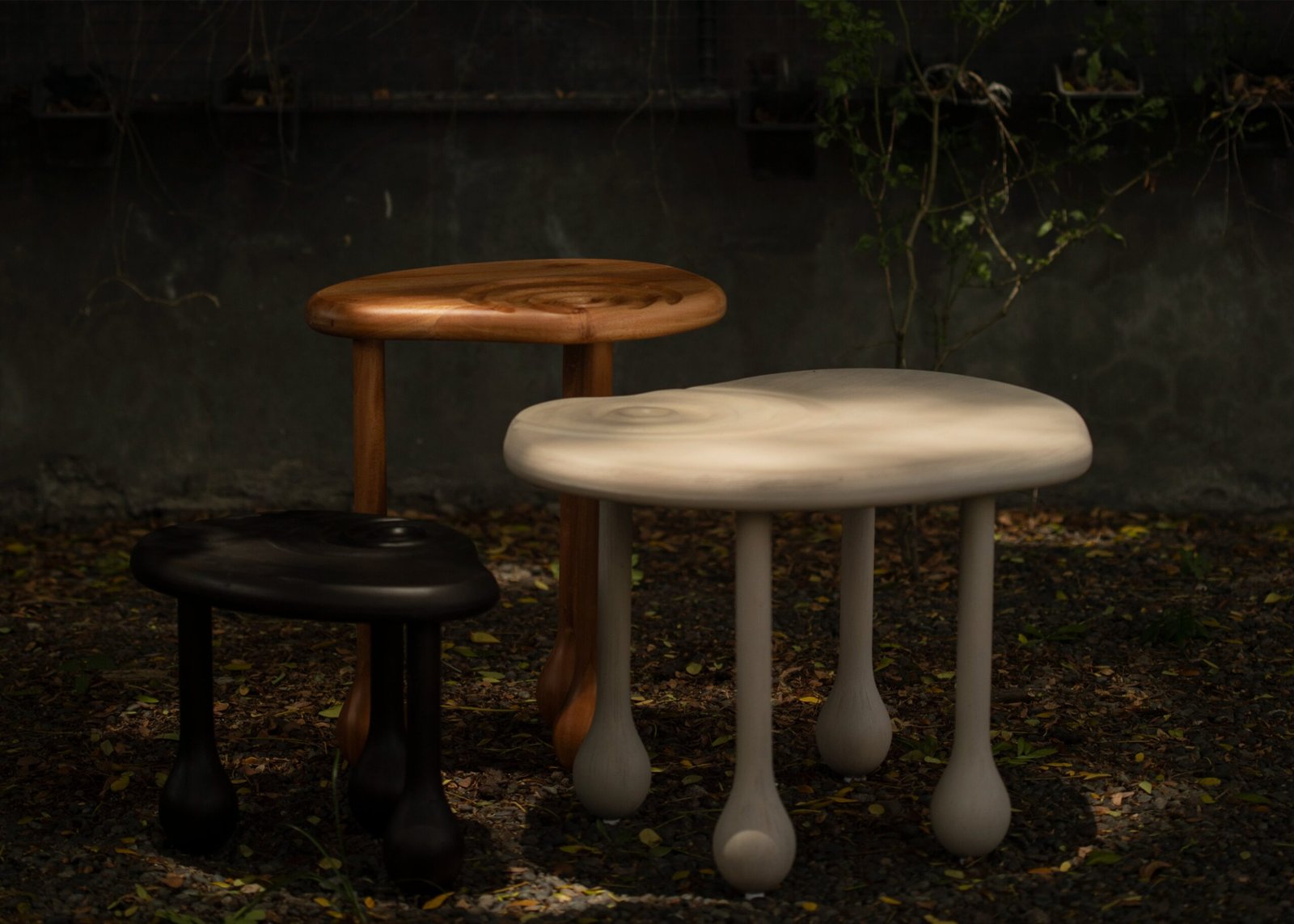
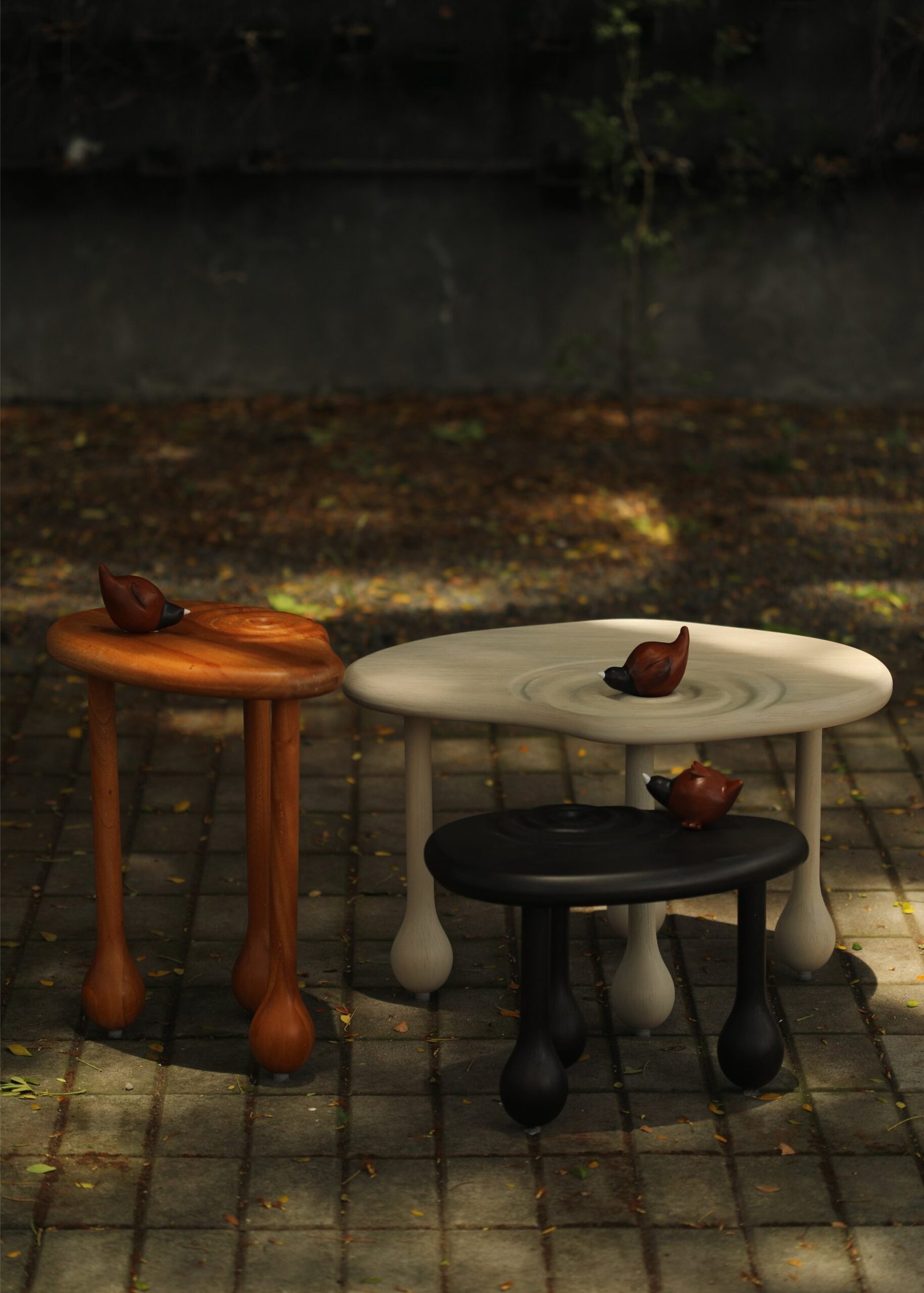
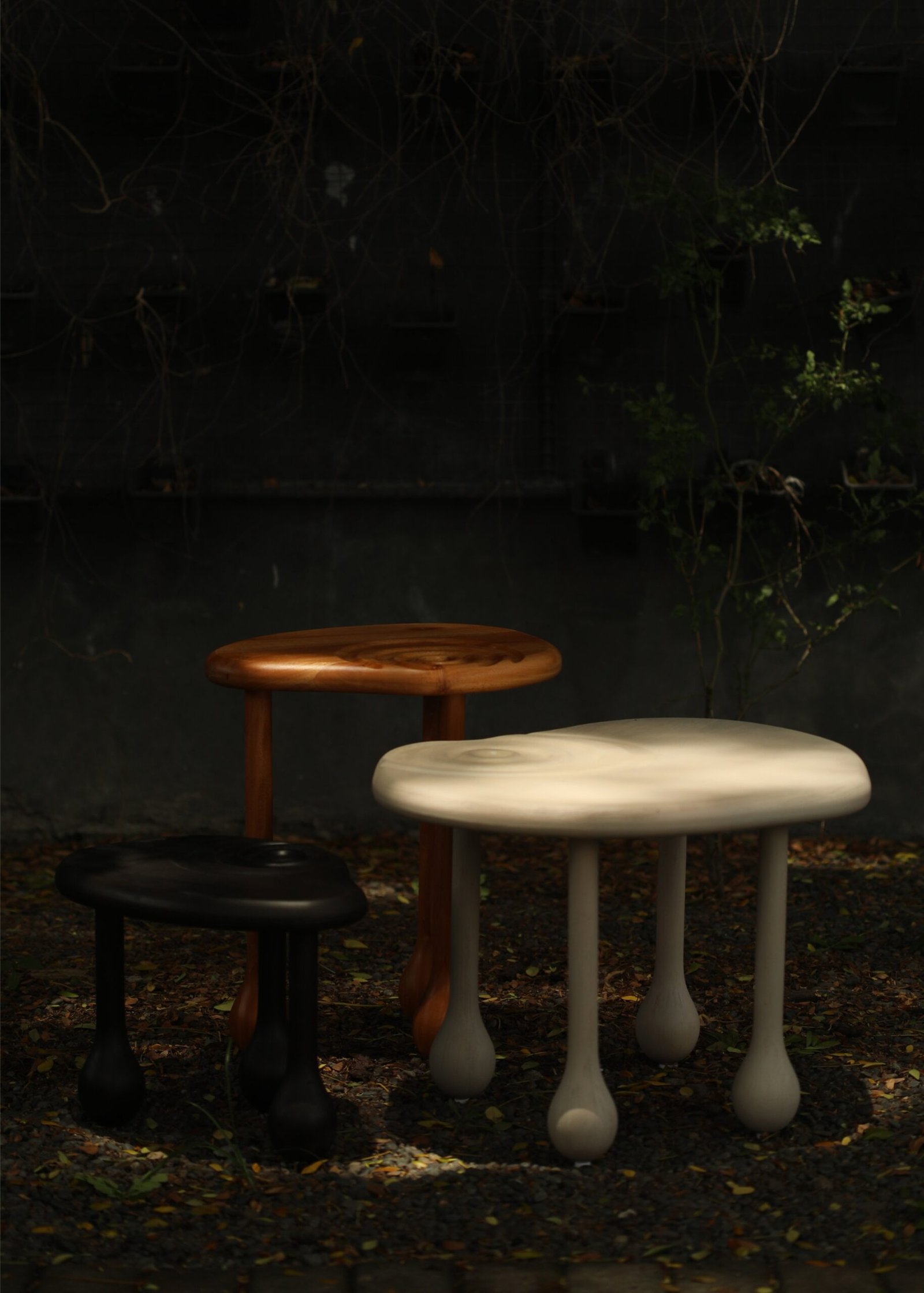
Industrial designer Chini Lichangco has told the same story twice. Puddle table began in concrete and capiz, made with Marikina-based maker Krete Manila as a modular set with detachable legs, its iridescent capiz surface catching and holding reflected light. For her NEWFOLK showing at Jia CURATED, she returned to that fluid form, this time in mahogany, with JB Woodcraft as her new partner, its woodcarvers now sculpting every ripple and drip into the grain.
Trained under local furniture legend Kenneth Cobonpue, Lichangco later built her own studio around the opposite instinct: restraint over spectacle, presence over momentum, creating work that demands to be felt and touched rather than simply seen. One sees this in her Magnolia chair for NEWFOLK’s No Boundaries show, whose dainty blooms beckon for one’s fingertips, or the Red Award-winning Kai’a paper lantern, part lighting object, part fantastical creature wrought out of rippling folded paper.
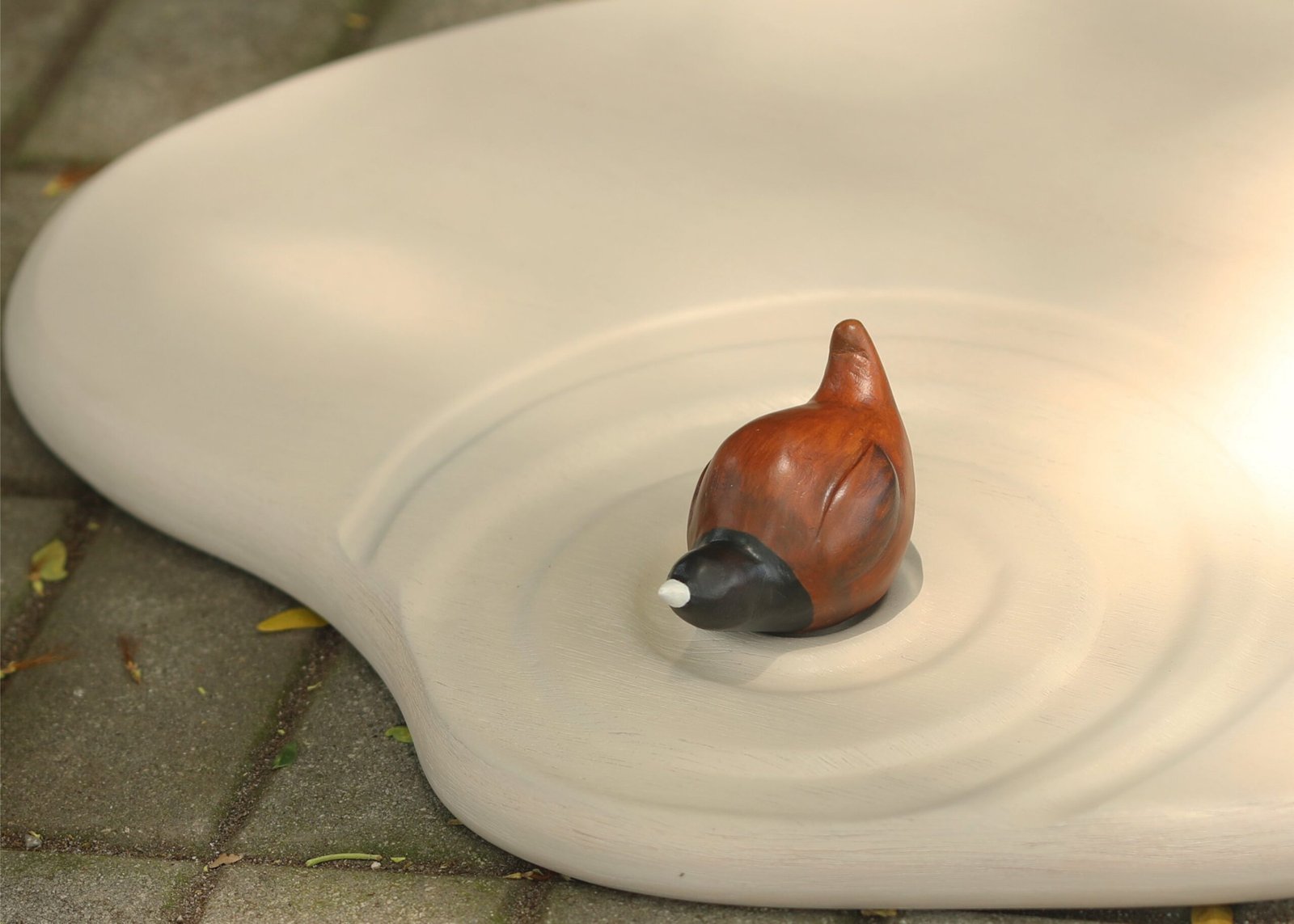
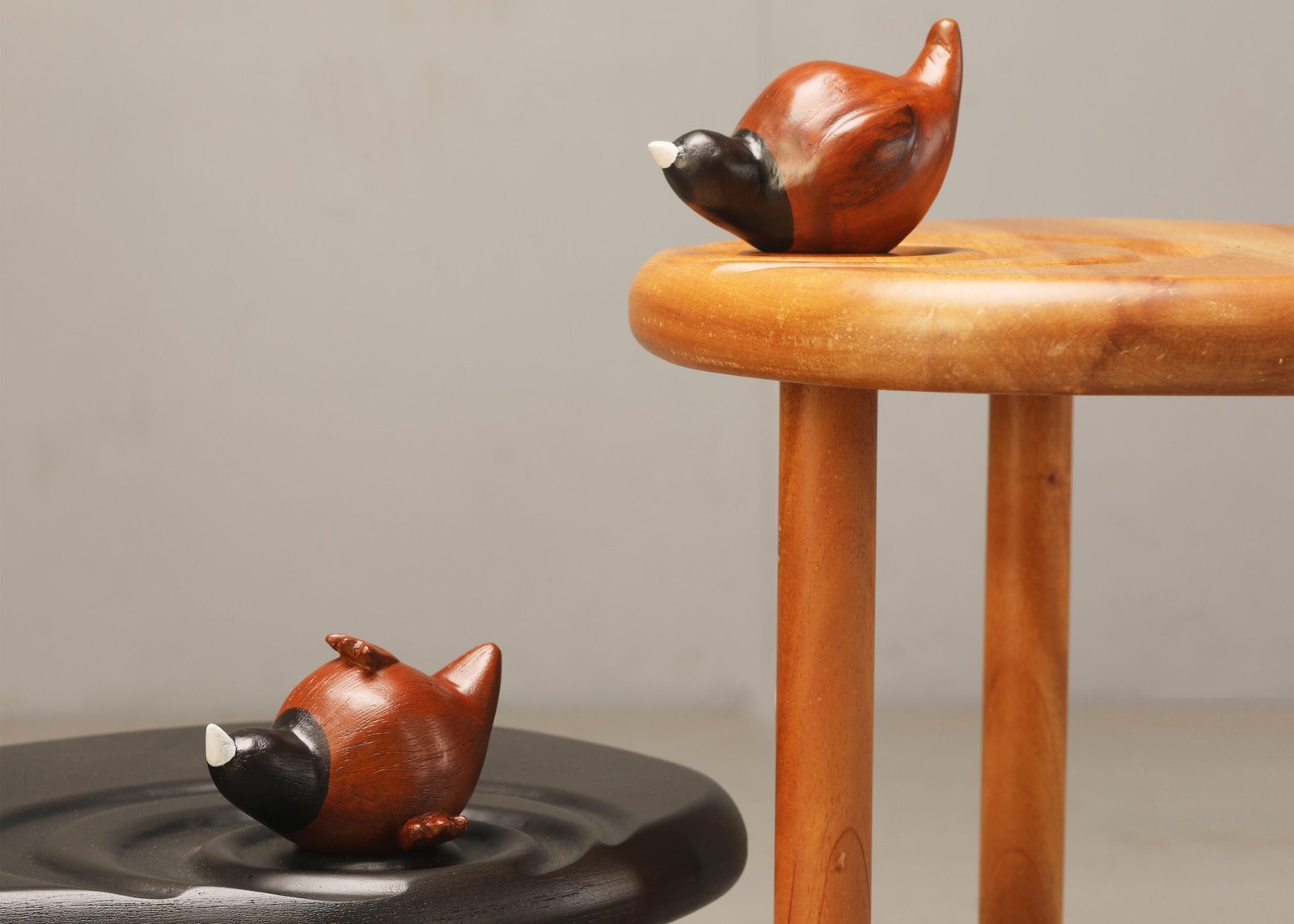
Munia, Lichangco’s second Jia CURATED offering, draws from that same instinct. These hand-carved wooden hooks take the shape of the chestnut munia, the country’s forgotten former national bird. Perched on top of the Puddle table, they turn its rippled surface into a birdbath.
The suppleness of the duo can only come from a hand that’s touched wood for fifty-four years. JB Woodcraft has carved out of Betis, Pampanga since 1972, a material expertise it shares with sister company South Sea Veneer, which is working with designer Bianca Carague for Jia CURATED. While JB Woodcraft’s usual register is classical and intricate, working with Lichangco introduced a more stylized, light-hearted take on the material, a new “puddle” to play in.
NEWFOLK’s Tomorrow asks designers and manufacturers to reconnect with nature and culture. What did that phrase mean to each of you, before your creation gave it shape?
Chini Lichangco: Reconnecting with nature is more than just taking inspiration from it. It is about listening, observing carefully, and seeing the value of nature in our surroundings. Reconnecting with culture is about recognizing the value of our traditions, craftsmanship, and stories that have shaped our identity. My work has always been inspired by nature, but this time I wanted it to reflect our culture too: birds that define us, hand-carved wooden furniture that once filled our lolos’ and lolas’ homes. I want to make sure our culture and our craft would not be forgotten. I hope to remind people that both nature and culture continue to shape us, but only if we choose to value and preserve them.
Puddle Table is described as a reimagining of an earlier design in a new material. What did carrying that image of standing water into wood actually change about the piece?
Chini Lichangco: Changing the material made the story and the piece’s story and beauty completely different. The original concrete version, made with Krete Manila, celebrates how puddles catch and reflect light. I love how the capiz softly shimmers against the concrete, like how rain puddles sparkle under streetlights at night. The carved wooden version with JB tells a different story: instead of reflection, it highlights movement and texture, the ripples that spread across still water after the rain. Wood lets you appreciate its natural grain, and when those grain patterns meet the carved ripples, they almost become one. Both pieces come from the same inspiration, but each material reveals it differently. That is what I find most exciting with this translation.
JB Woodcraft: JB started in 1972 as a small handicraft store selling to Americans, back when Subic and Clark bases were nearby, and the shop sat in the middle of the road connecting the two. Years after that, we moved into wood carving inspired by French designs and baroque curves. Our birds are very detailed. For Puddle and Munia, it is surprising how we can also create something very simple, yet still have every detail carefully thought through. It reminded me of how JB first did small accessories, and maybe we can continue producing those alongside the furniture line.
This is a pairing between a young designer and a legacy maker. What did you each have to learn from the other to make your pieces possible?
Chini Lichangco: One of my biggest lessons was learning the practicality of making. As a designer, I naturally believe almost anything is possible if we put our hearts to it. But passion and ideas alone are not enough. A design has to respect the people who will make it, and the process and resources involved. Working with JB Woodcraft reminded me that practicality is not about limiting creativity; it is what allows creativity to survive. A company that has been around for over fifty years has learned how to make pieces in a way that is repeatable and able to support the livelihoods of many craftsmen. That shifted the way I think about design. Making is not only about creating beautiful, inspiring objects, but also about creating opportunities for craftsmanship, livelihoods, and traditions to continue for future generations.
JB Woodcraft: We had to listen to each other. My work is to interpret what she envisions for the collection. I am a designer myself, so it is important for me to deliver what is required while staying true to JB’s capabilities and what her brand actually embodies. Wood has its limit, a breaking point. Logistically, we weren’t that close, so technology helped us stay updated on the progress. Chini is easy to work with, which made everything run smoothly. I hope that in the future, another set of designer and manufacturer will be able to produce something that respects each other’s design discipline and traditional craftsmanship.
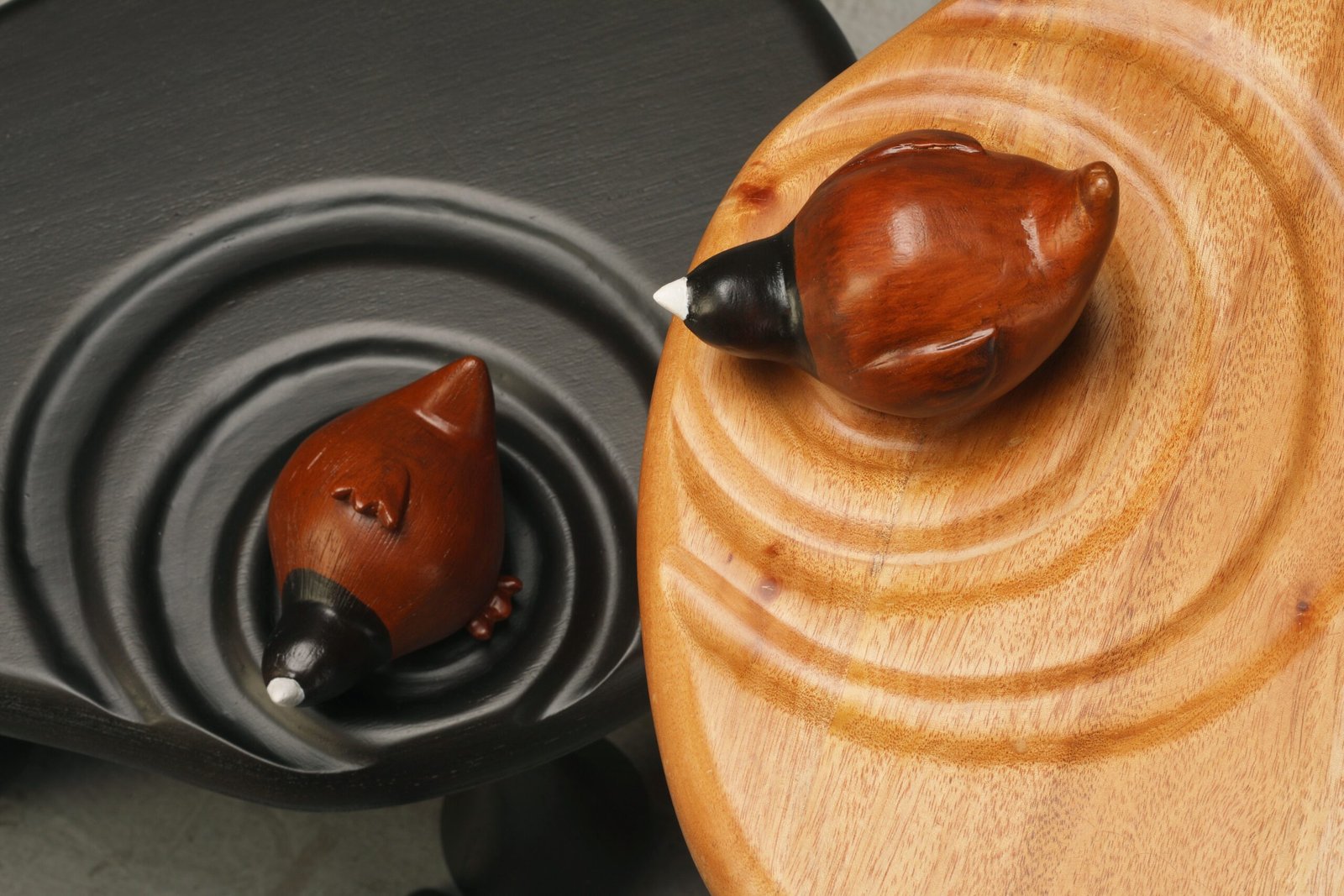
The presser calls Munia a tribute to a forgotten national symbol; most people today do not even know the Philippines once recognized a different bird before the Philippine eagle took over that space in the popular imagination. What made you want to revive a symbol most people don’t know they’ve lost?
Chini Lichangco: The Chestnut Munia, or Mayang Pula, was once considered our national bird and was far more common across the Philippines than it is today. I find it fascinating how something that was once part of everyday life can slowly fade from our awareness. What I love about the Chestnut Munia is that it is rarely alone. It is usually seen in flocks, and to me that reflects something very Filipino. We often find our strength in community rather than individuality. We naturally look after one another, and I think that warmth and togetherness are qualities we should keep embracing. By bringing the Chestnut Munia to Jia CURATED, I hope people from other cultures see that sense of togetherness as part of our identity. And for Filipinos, I hope it encourages us to look a little closer at the nature around us. The Chestnut Munia is still here, but many of us no longer notice it. Sometimes we do not realize what we have until it slips out of view.
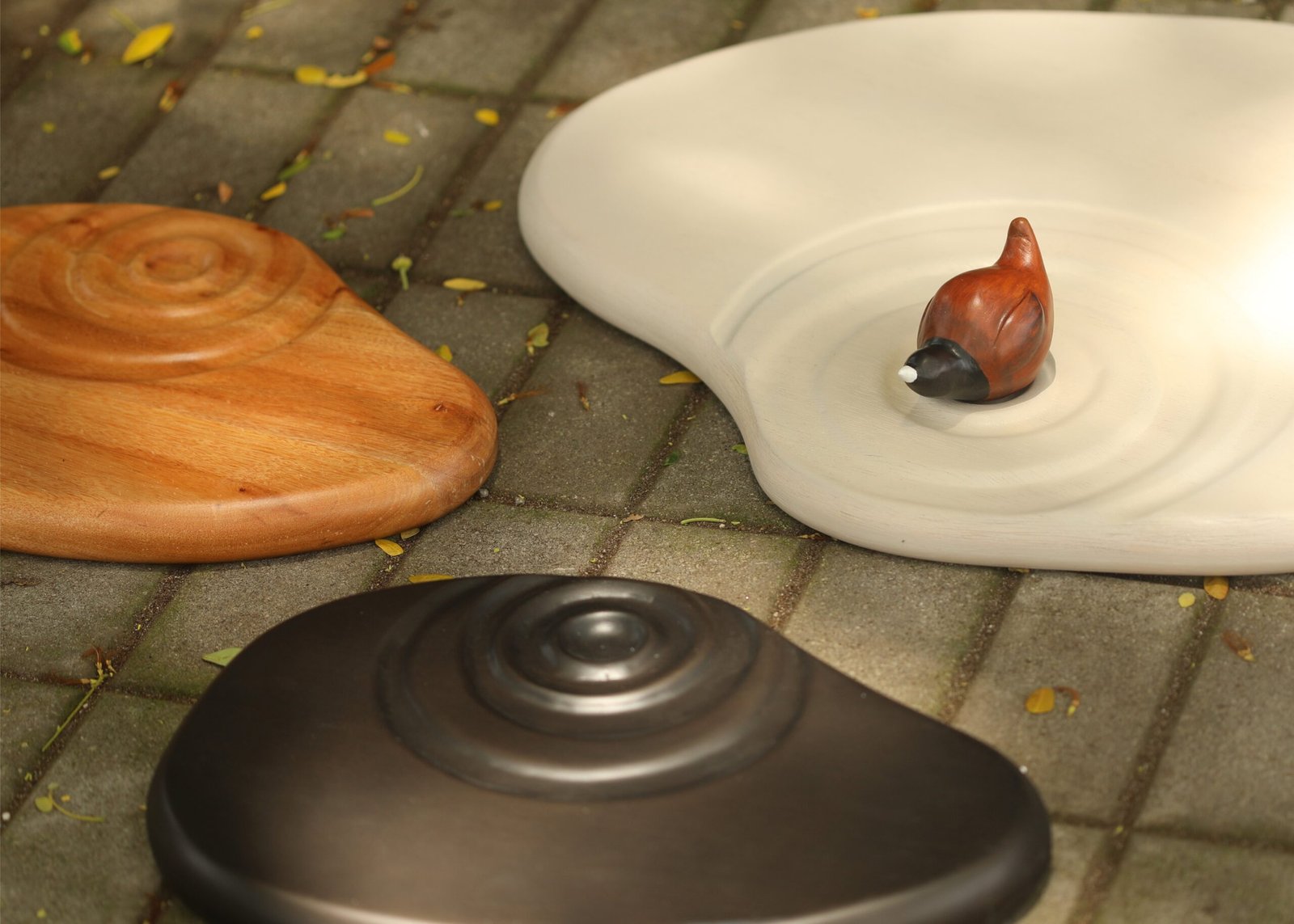
JB Woodcraft has built a reputation on exquisite, classical carved pieces. Puddle table and Munia are both more playful and contemporary by comparison. What was it like putting that classical carving hand toward something with a lighter touch?
JB Woodcraft: JB’s traditional hand-carving has been passed down for two generations, hopefully more to come. Preserving it is essential so the next generation can appreciate and see it. At the same time, we need to update ourselves and make this traditional way relevant to changing times. We need to keep up, so our pieces don’t only end up in museums and old houses, but stay in the homes of people who value and appreciate our craftsmanship.
Jia CURATED puts Philippine work in front of an international audience that may be encountering it for the first time. What do you want them to understand about Philippine design through your objects?
Chini Lichangco: Philippine design is still evolving, and we are still collectively shaping what our design identity will become. We are made up of thousands of islands with multiple cultures, and we were colonized for many years. Being multicultural, and all the complexity that comes with it, is part of our identity, and every designer contributes to that conversation. Through Puddle table and Munia, I hope people see that Philippine design isn’t defined by a single style. It’s shaped by our environment, our culture, and the way we make things. Craft, for me, is an important part of that identity, because every handmade process carries history, a way of seeing the world, and those stories are just as valuable as the objects themselves. Working on these pieces also reminded me that preserving culture doesn’t mean simply recreating the past but allowing traditional crafts to evolve and be relevant today.
NEWFOLK’s own framing of this show leans on padala, the practice of sending gifts to loved ones. If you can send your pieces as padala, who would be at the receiving end?
JB Woodcraft: I would send it to anyone who values tradition and appreciates craftsmanship. Regardless of nationality or age, it gives you pride that this piece is made in the Philippines. Our ancestors carved wood for generations, and we’ve carried that tradition forward. I hope they would love it as much as we enjoyed making it.
Chini Lichangco: I would send it to my best friend, Nicole Mendoza. We have been best friends since college, and she has been there long before “Chini” even existed. She has seen every stage of my journey and has always been one of my biggest supporters. Since she now lives in New York, I would love for her to have something that carries a piece of the Philippines, and my heart, with it.
We are currently at Jia CURATED, and there is a very real chance a kabayan will stand in front of this piece. What would you want a fellow Filipino to recognize in it, made especially for them?
Chini Lichangco: Carved wooden furniture was once a familiar part of many Filipino homes. Today we don’t see it as often, and I don’t want that craftsmanship to disappear simply because it doesn’t fit in our homes anymore. Beyond craft, I hope people recognize the story. We tend to forget so many things from our past: our craft, our tradition, even the birds that once surrounded us, slowly fading from memory as life moves faster. I believe remembering them has value. When we take time to observe and reconnect with those things, we don’t just preserve history but better understand who we are as Filipinos. •