Words and interview The Kanto team
Images Jar Concengco (Lamana) and Bien Alvarez
Bato Bato Stick started, like a lot of good ideas, with a riff on childhood play, calling to mind childlike resourcefulness in the name of fun, reimagining the Filipino game bato bato pick as furniture. It is a premise that should come as no surprise, as play and visual punnery are hallmarks of prolific design duo Nazareno/Lichauco (Rita Nazareno and Gabby Lichauco). For Jia CURATED 2026, they have reunited with a perennial partner, woodworking atelier Lamana, whom they have collaborated with for years on custom makes; their showing for Jia CURATED takes the wraps off a sampling of their first full collection together, a project that has long simmered even before the festival invitation arrived.
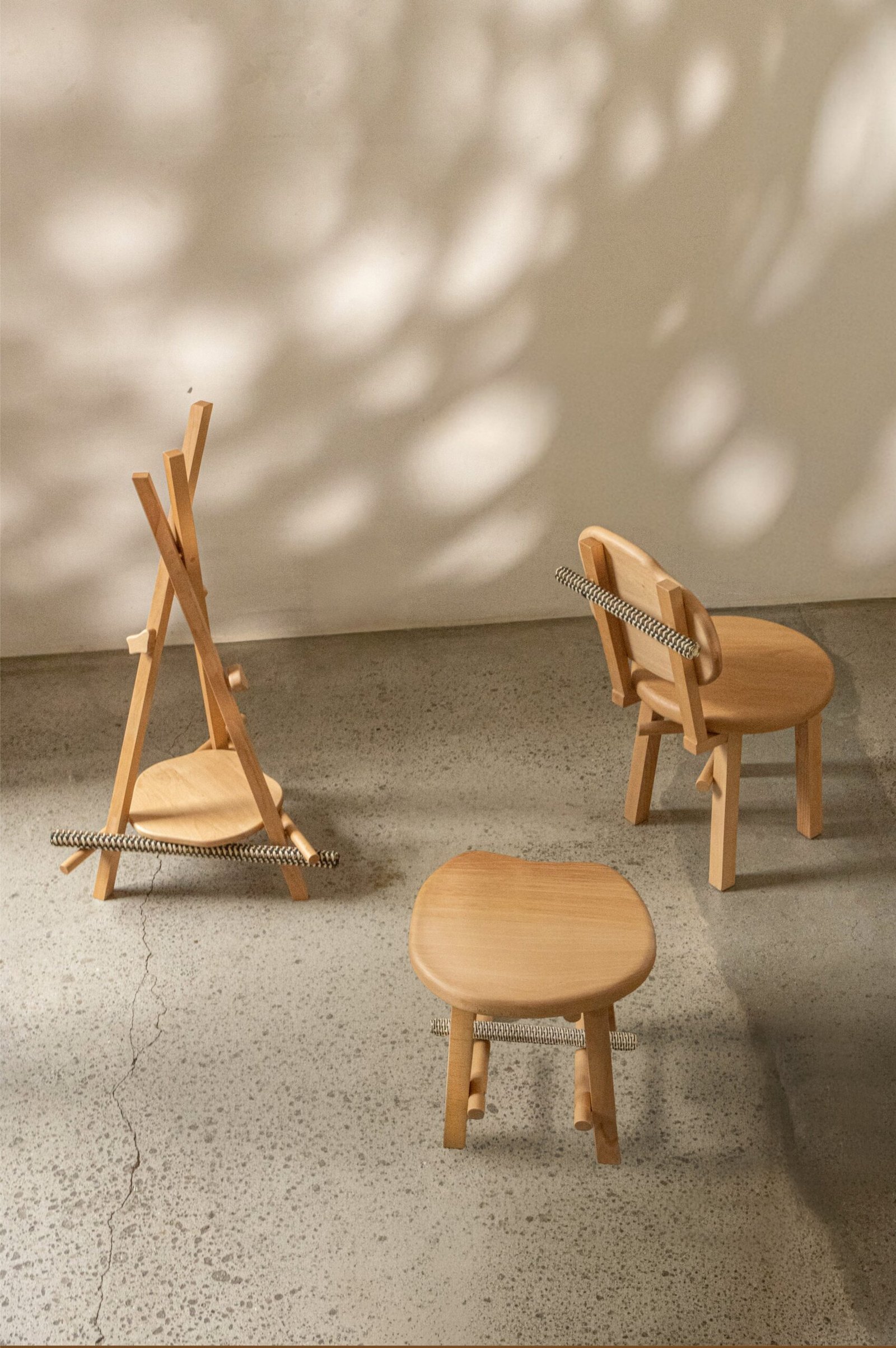
Bato Bato Stick made its public debut as part of Tomorrow, the NEWFOLK collective’s Philippine spotlight showcase at Bali’s annual design-day-out. Three of the collection’s twelve pieces, a chair, a stool, and a coat rack, have made the trip to Bali’s Pengembak Beach before they make their way home into Lamana’s permanent catalog after the show wraps.
While the existing rapport and playful premise of the collection sounds like the full story, Bato Bato Stick is a testament to Lamana’s openness to innovate as it executes a brief with a unique challenge: How can a woodworking shop honed and built on precision learn to let go of it?

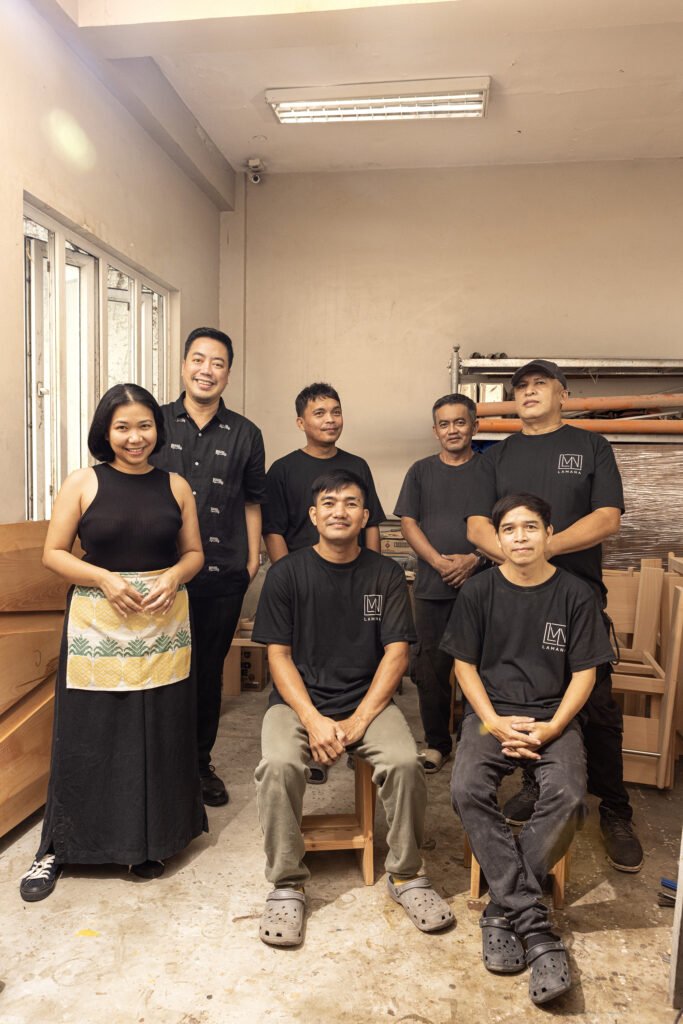
This is a pairing between an established design practice and Lamana, a workshop with its own distinct identity, built around one-craftsman production and its partnership with Japanese brand Ishinomaki Laboratory. This is also a pairing between long-time friends! What did you each have to learn from the other to make your pieces possible?
Nazareno/Lichauco: We have worked with Lamana in various capacities throughout the years, and we are familiar with their craftsmanship. The challenge was introducing a different aesthetic with curved lines and silhouettes, and we also added a different material to the mix: woven rattan sticks.
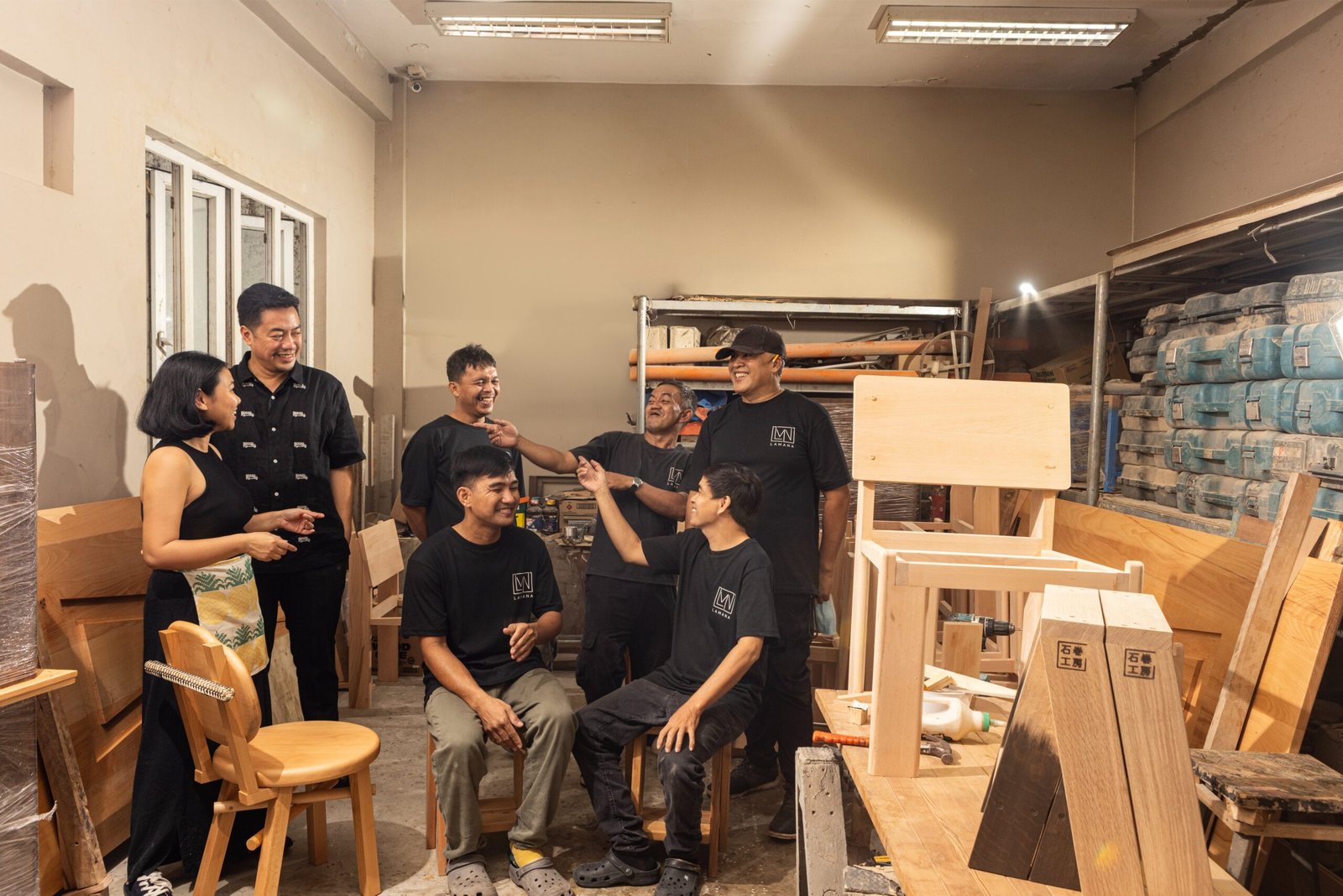
Kay Concengco, Lamana: This is our first collection together, which will become catalog pieces. Working with Gabby and Rita is always fun and easy, so when they shared their Bato Bato Stick concept with us, it was no surprise that it is playful, but I could also see that they thought of how Lamana would make use of its woodworking skills and practices.
The design incorporated woven rattan wicker in every item, which was a joint output between a Lamana craftsman and a Nazareno/Lichauco weaver. Lamana makes a rod, and the weaver covers it with wicker. The products feature organic-shaped surfaces and components. This is something we don’t normally do in Lamana, because we are trained to be precise and accurate with measurements. The craftsman learned to shape his timber less perfectly, and to appreciate the irregularity the pieces are designed with. Because Lamana and Nazareno/Lichauco already have a working relationship and we are also friends, this collaboration is very much like the pieces themselves: fun. I hope our audience feels the same way when they see the collection.
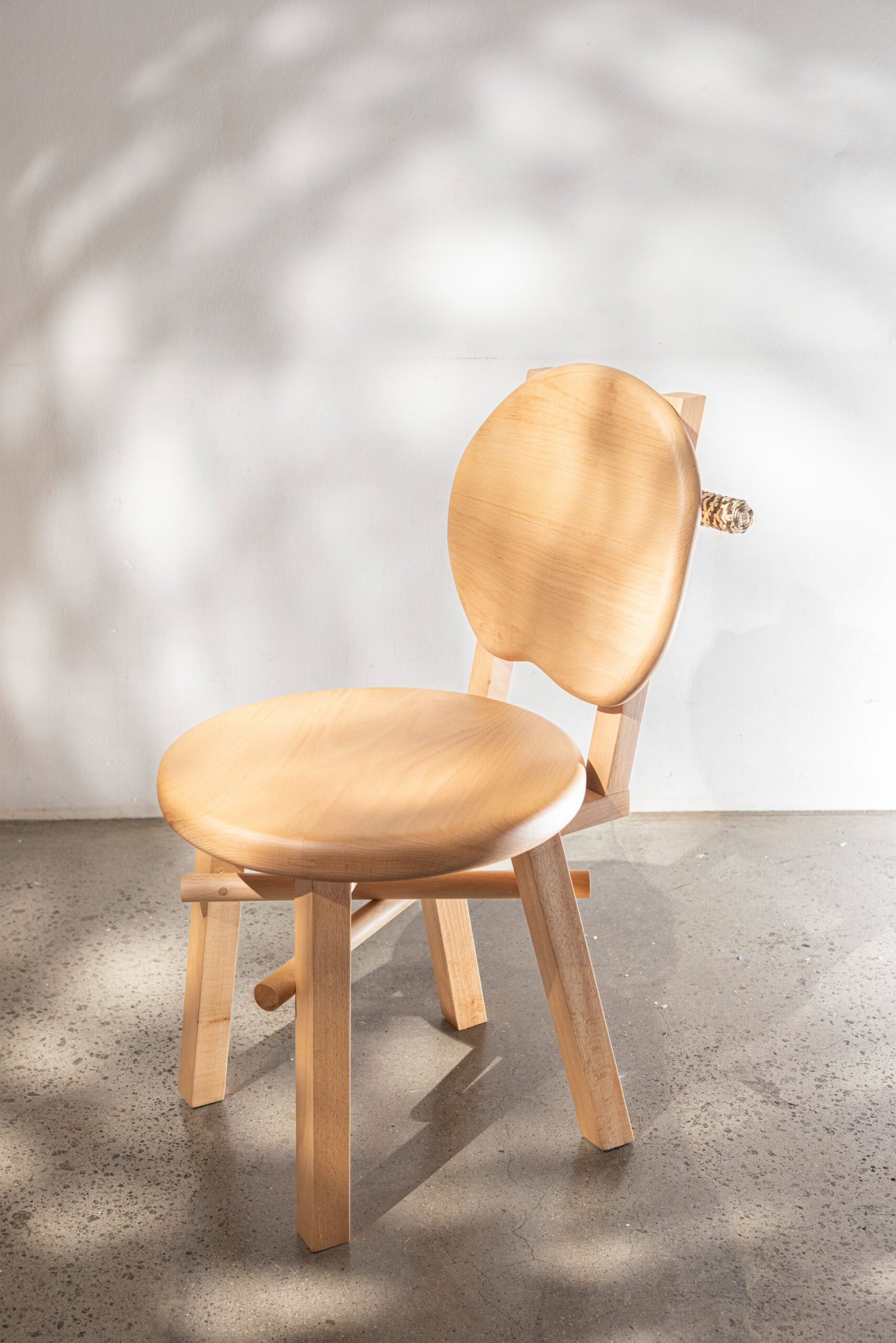
Bato Bato Stick collection by Nazareno/Lichauco and Lamana PH collection at Jia CURATED 2026
Jia CURATED puts Philippine work in front of an international audience that may be encountering it for the first time. What do you want them to understand about Philippine design through Bato Bato Stick?
Lamana: Philippine design is constantly evolving, but just like design in general, we all take inspiration from nature. Take bato (stone) and the wooden stick, for instance. It is also nature that allows us to bring these designs to life. We used solid beech wood, which is abundant and from a sustainable source, and rattan wicker detail, which is local. Next to Indonesia and Malaysia, the Philippines is a top producer of rattan. We design and build according to our cultural traditions and available resources.
Woodworking and weaving have also long been part of our history as a people. The early Filipinos shaped wood with stones and shells; we crafted boats and made objects like the bulol (rice crop guardian) out of wood. Weaving has been an art form and livelihood of many generations in the Philippines. The collection is also entirely handmade. Being able to bring woodworking and weaving together in this collection and show it to an international audience is something very special for Lamana, who is doing it for the first time.
Partnering with the powerhouse that is Nazareno/Lichauco in this collection affirms how Lamana has been growing. We began with the primary purpose of being Ishinomaki Laboratory’s Made in Local partner in the Philippines, but we’ve grown into a network of local designers who champion the same design language and share the same values. We thank Nazareno/Lichauco for entrusting us with their designs in this collaboration!
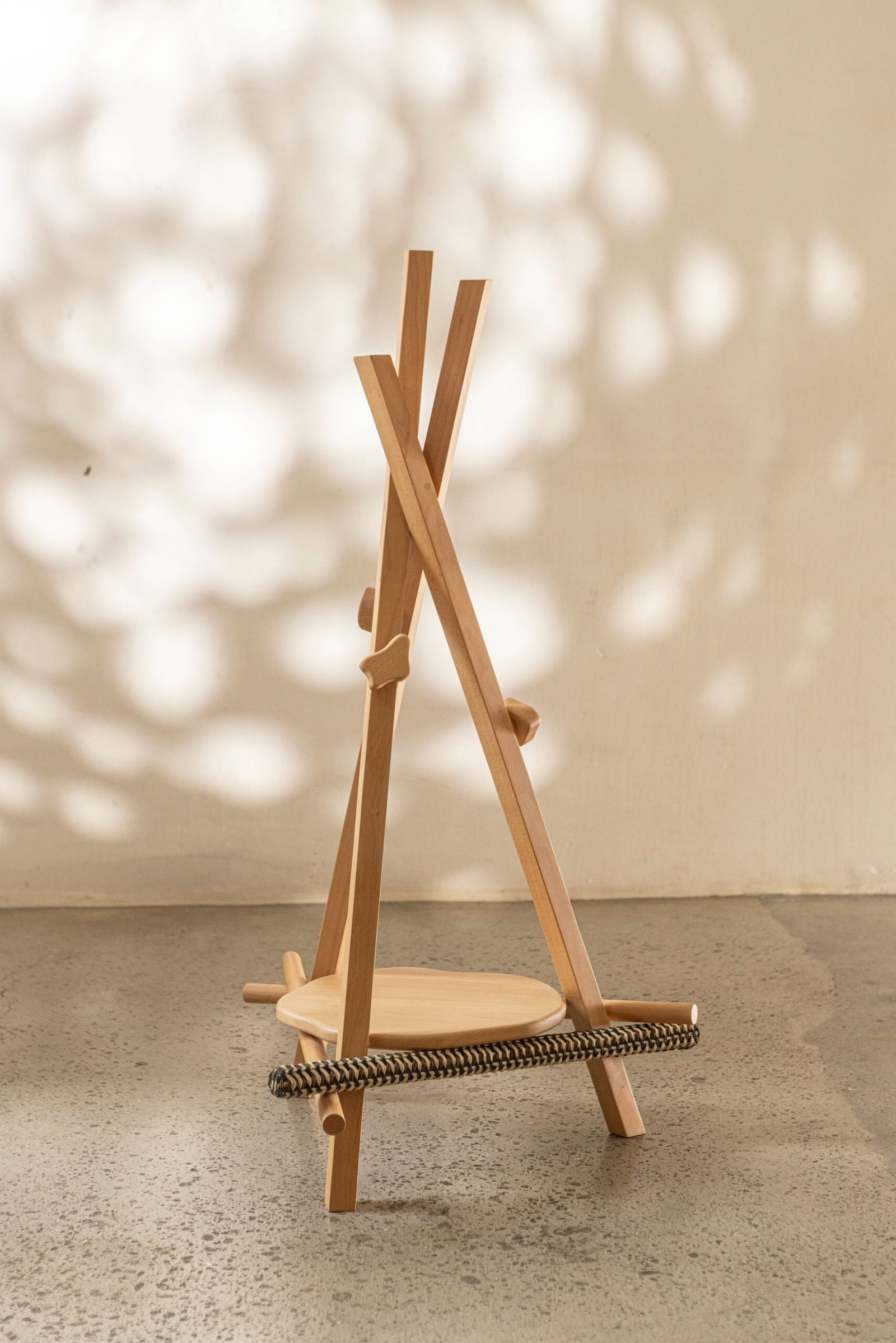
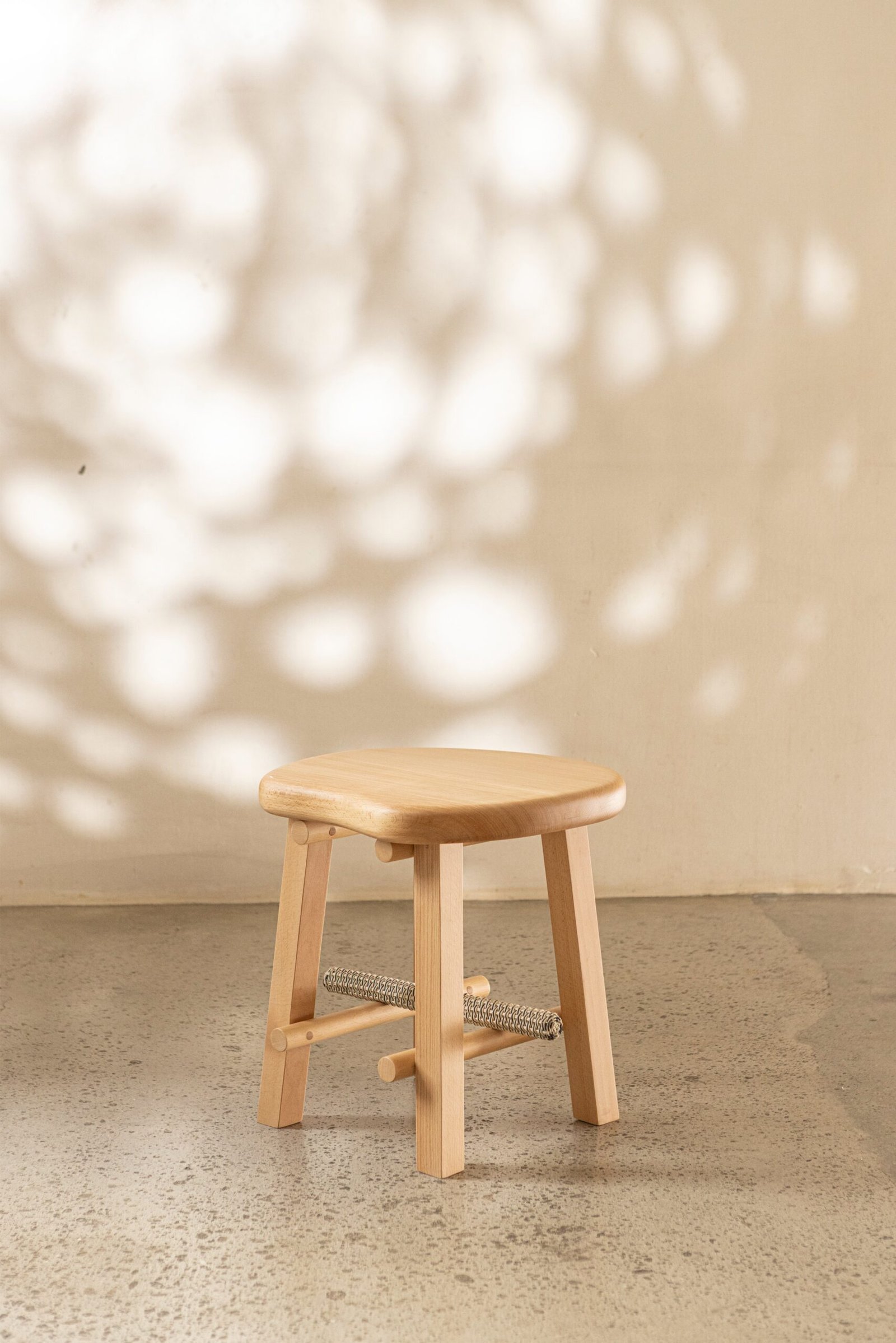
Bato Bato Stick collection by Nazareno/Lichauco and Lamana PH collection at Jia CURATED 2026
Bato Bato Stick draws on children’s games built around stones and sticks. Of all the forms that the concept could have taken, what made a chair, a stool, and a coat rack specifically the right vessels for it?
Nazareno/Lichauco: There’s always a narrative behind each design. We wanted to introduce Filipino narratives and culture through design, waxing nostalgic on Philippine youthful games and play. We wanted the chair, stool, and coat rack to be flexible in different spaces. We wanted those in people’s spaces. You can use them as a collection or individually, and it still would garner that sense of nostalgia and playfulness.
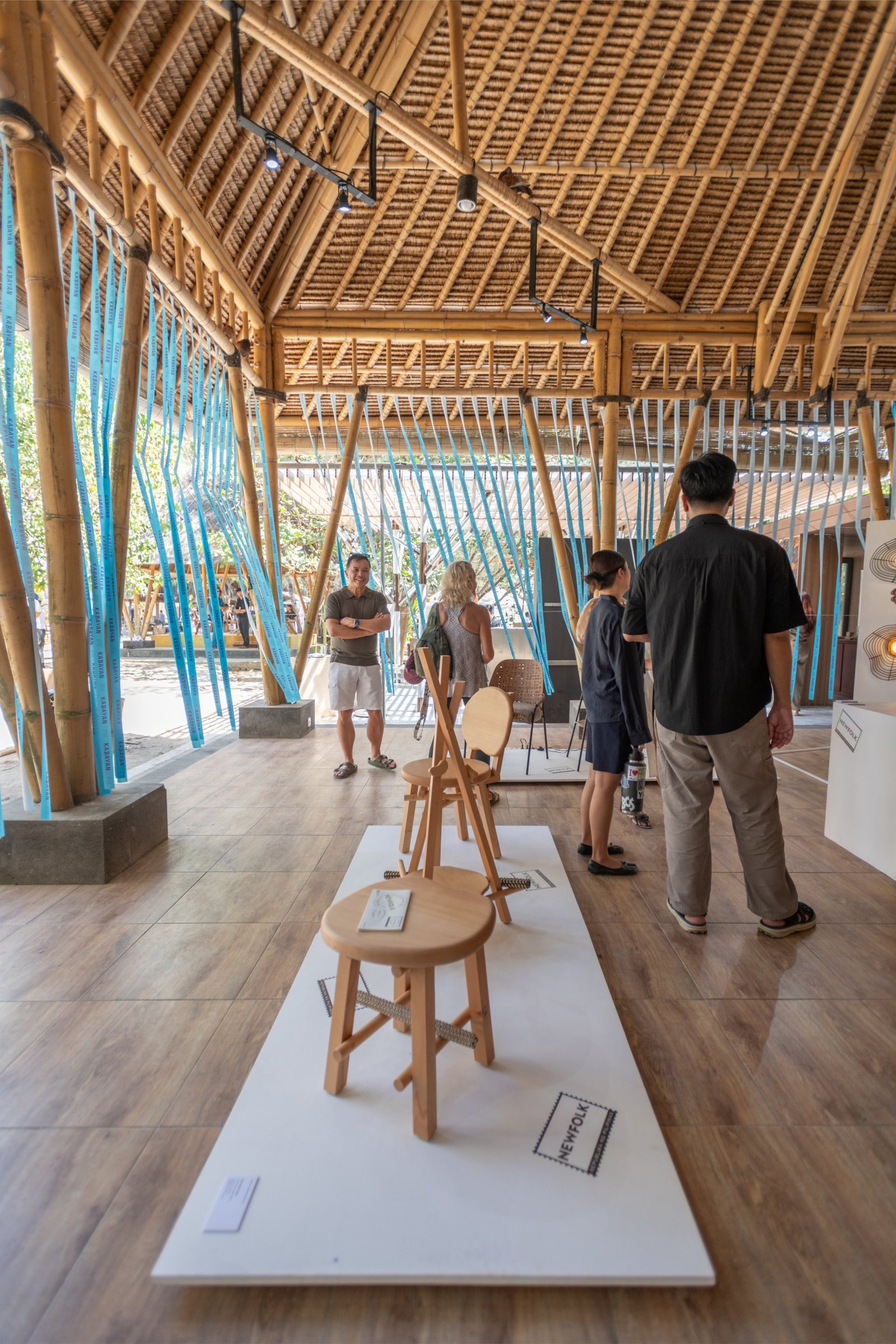
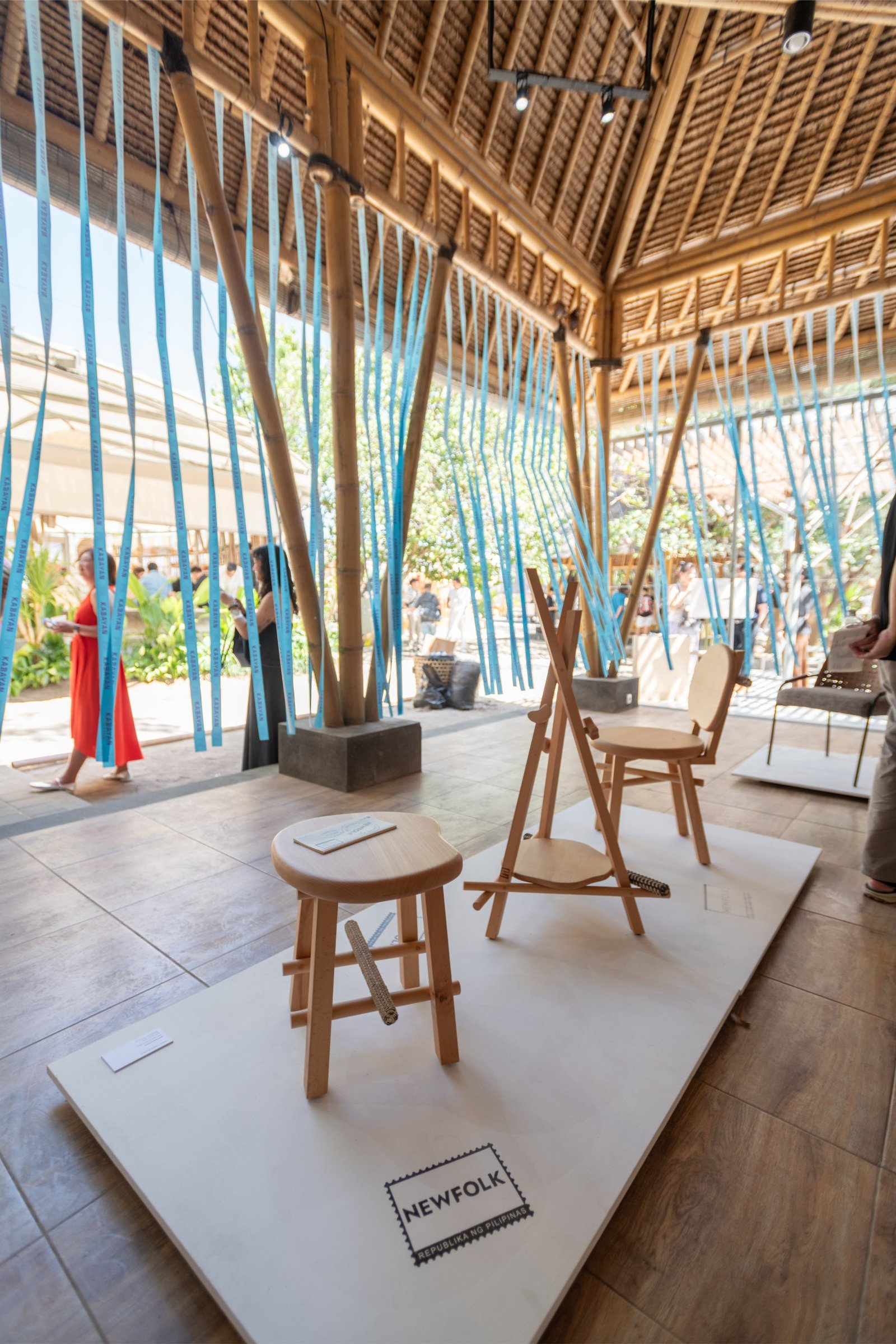
Bato Bato Stick at Jia CURATED 2026. Photographed by Bien Alvarez
Was there ever a moment during production where making the pieces playful and making them functional pulled in two different directions?
Nazareno/Lichauco: Functionality has always been the priority; the playfulness came naturally. There was a sense of fun when we were developing the pieces, a lot of laughter, even while looking at the proportion of each prototype chair. We were like kids again, playing around in the workshop.
Lamana: We had to make a few adjustments, from sizes to placement of certain parts. But these are all standard experiences when developing new products. I never felt any tension really, nor did I feel like we had to negotiate at any point. We understand each other and value each other’s input. This whole process has been light-hearted and enjoyable for the workshop.
NEWFOLK’s own framing of this show leans on padala, the practice of sending gifts to loved ones. If you had to send this piece off as your own padala, who would you send it to?
Nazareno/Lichauco: We both have Filipino-American friends who now live in the States, and friends who were born and raised in Manila but moved away. We’d give this to them. They would enjoy it, as it would hopefully remind them of their childhood back home.
Lamana: If I were to send these pieces to anyone, I would send them to Ishinomaki Laboratory founders Keiji Ashizawa and Takahiro Chiba. These two gentlemen believed in us before we believed we could put up a workshop. When I first wanted to simply import Ishinomaki Laboratory pieces, they said, “Just make it.” I want them to always remember how they empowered our local craftsmen and us, and how they continue to inspire us with the story and skills they passed on to us as we carve out our own story in the Philippines. Ashizawa-san, Chiba-san, we did make it, and we are still making it. Domo arigato gozaimasu! •