Words and interview The Kanto team
Images Triboa Bay Living and Bien Alvarez (Jia CURATED 2026)
Cut the same piece of wood, with the same thickness and grain, carve two different patterns onto it, and something strange happens: one bends easily into a lamp’s curved bulb shell, the other holds rigid enough to frame a chair. It is the kind of detail someone standing on both sides of the furniture design equation would notice: the one sketching the pieces, and the one who has to figure out how to make it work.
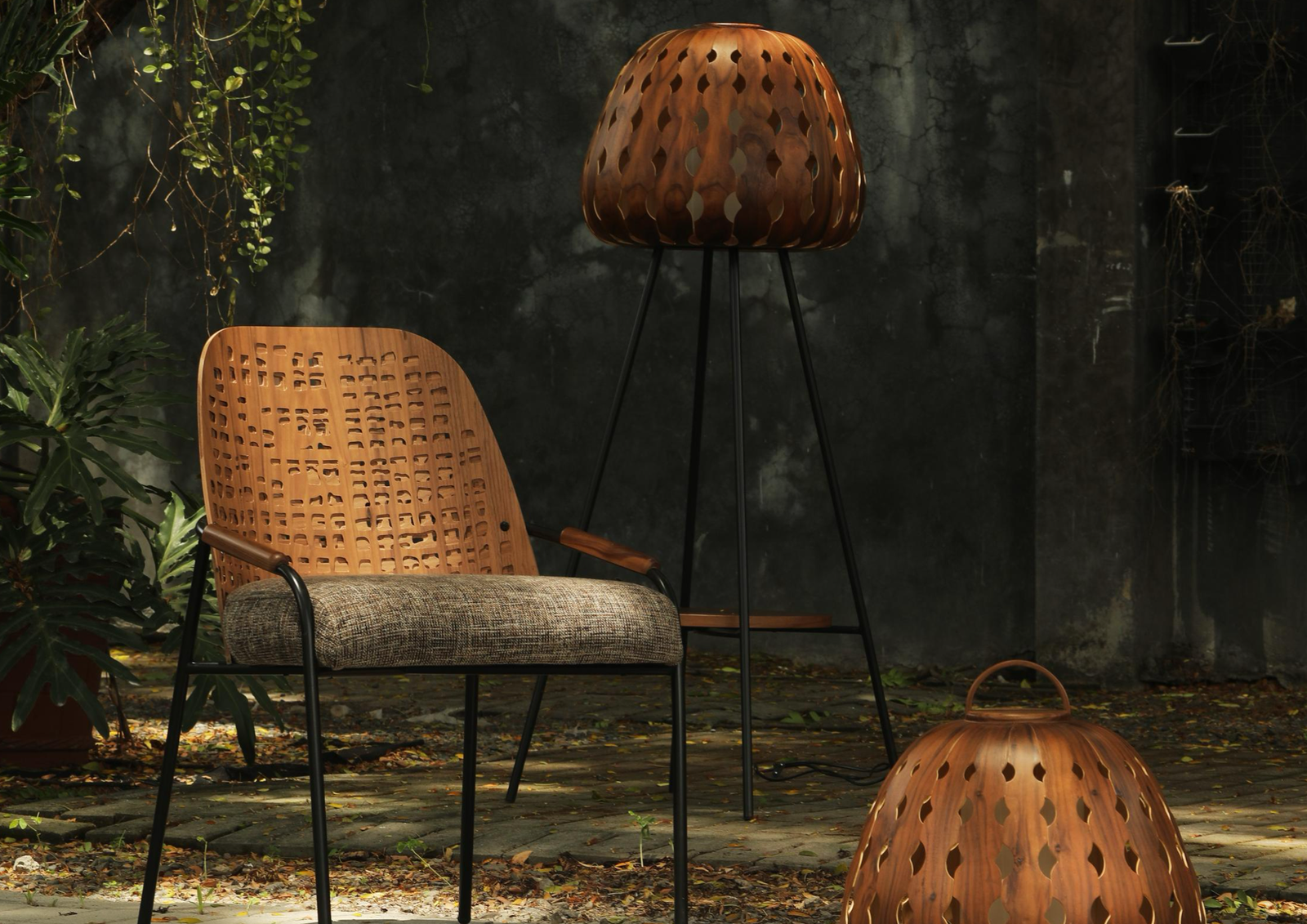
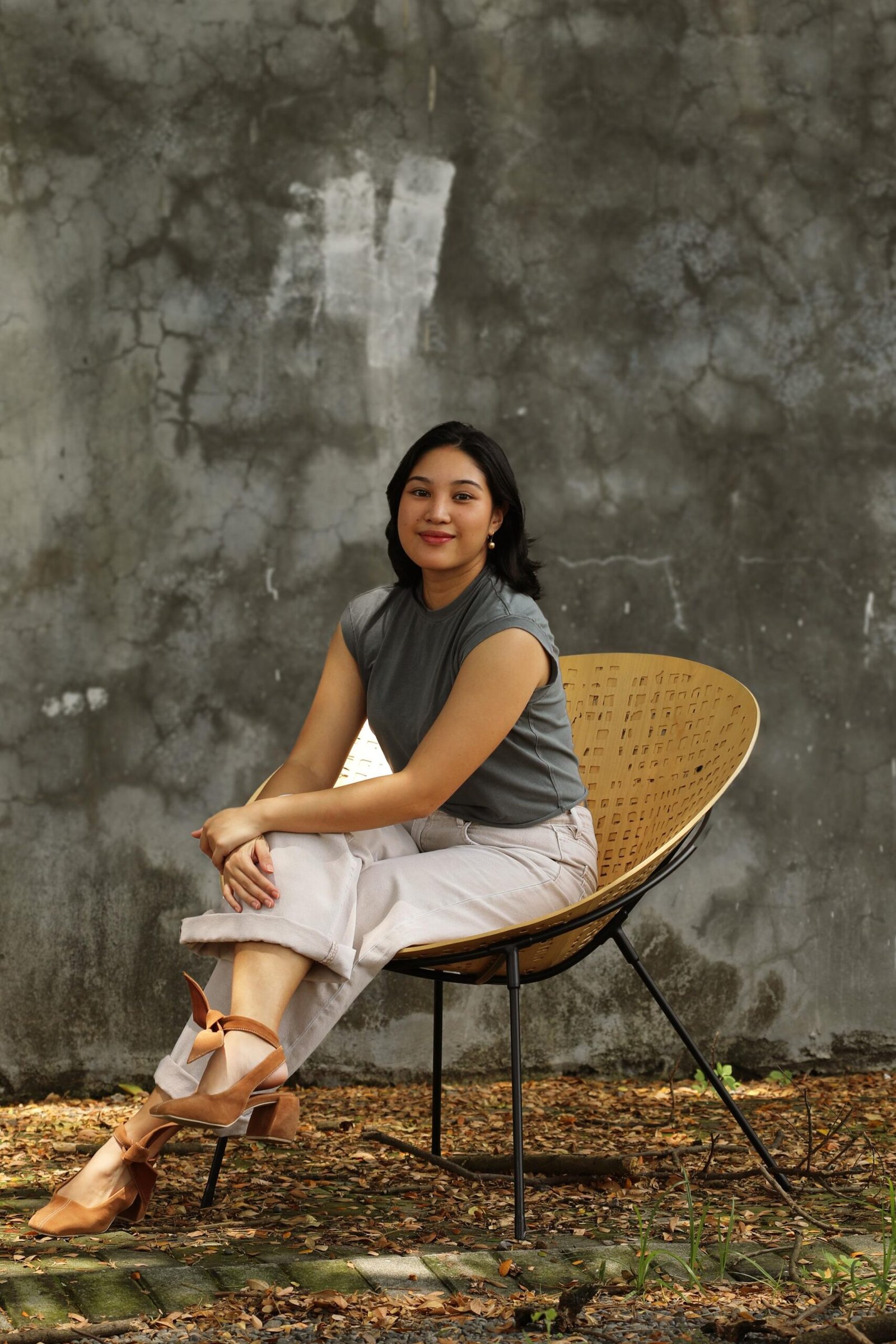
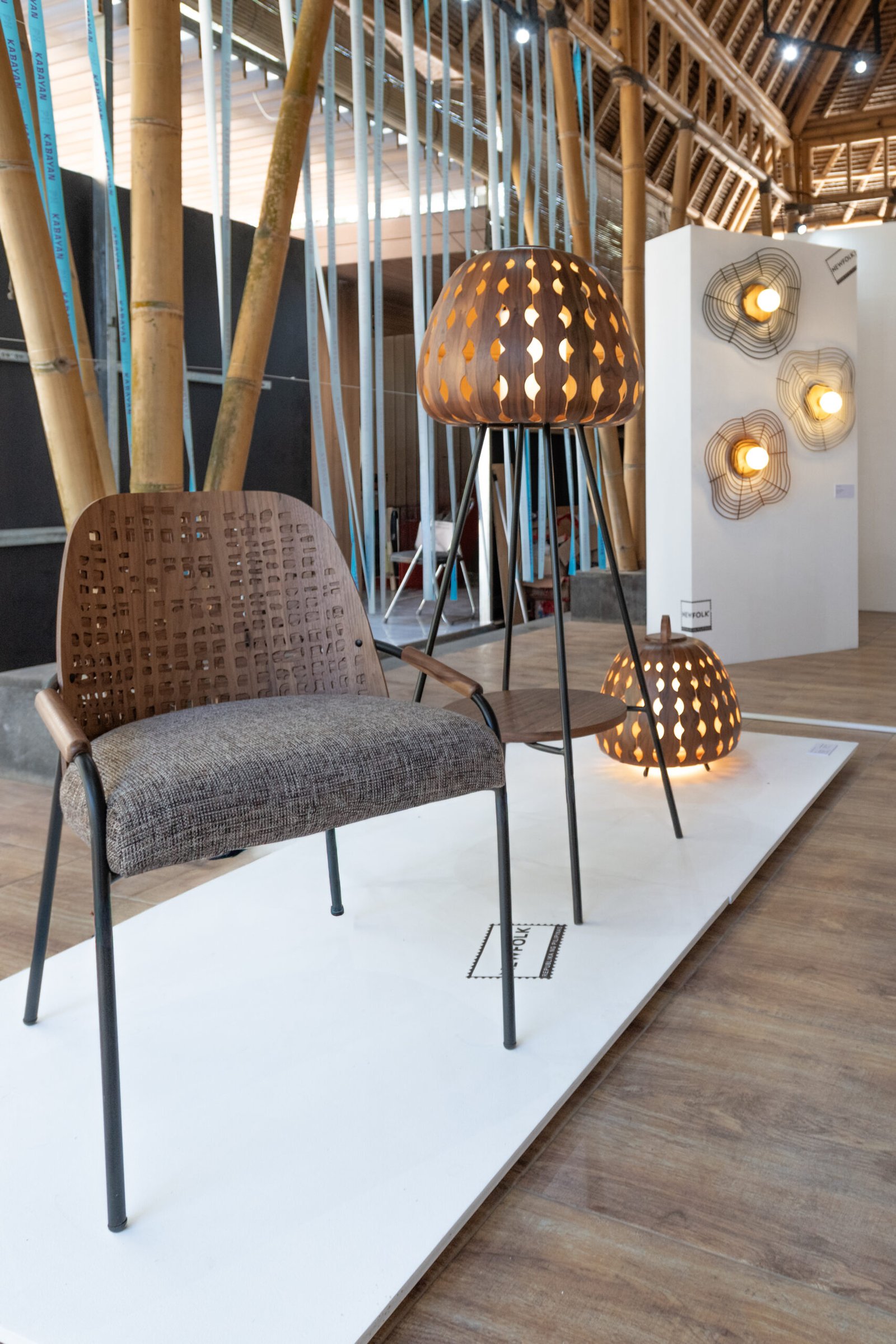
In every other pairing at Tomorrow, furniture collective NEWFOLK’s Philippine spotlight showcase at Bali’s Jia CURATED 2026, that’s two different parties, some working together for the first time. For the Hatch chair and Tulip lamp, it is the same person: Margarita ‘Guia’ Viray, KATHA Award-winning designer of the two pieces and assistant design director at Triboa Bay Living, the Angeles City, Pampanga furniture company her father Randy Viray founded in 2008. The family’s furniture-making lineage runs deeper still. Randy is himself a third-generation maker, which puts Guia’s own eye for furniture at four generations and counting.
If Hatch and Tulip’s punch-holed silhouettes seemed familiar to the reader, it is because they have already entranced visitors in NEWFOLK’s 2025 show No Boundaries at Comuna; a year after, Viray opted to present an evolution of the pieces for its Bali debut.
Tomorrow gathers under the word kabayan (countrymen), a word emblazoned across ribbons that curtain the NEWFOLK pavilion. If a fellow Filipino stood in front of your two pieces among everything else on the floor, what would you want them to recognize as made with them specifically in mind?
Guia Viray, Triboa Bay Living: The collection started with taking inspiration from open weaving. Weaving surrounds us Filipinos; we are drawn to it because it is an ancient practice that still finds its way into our homes. We appreciate its unobtrusiveness in any environment because of how it allows light to pass through the material. That is the same kind of feeling I wanted to capture with these pieces.
Let’s talk nitty-gritty. Hatch and Tulip both come from bending veneer strips into a patterned silhouette, one flatter and cross-hatched, the other curved into a full bulb shape. What’s the specific technique, in the workshop, that lets one process produce two such different results?
Triboa Bay Living: I found that even when using the same type of wood, with the same type of thickness, cut, and grain direction, it starts behaving differently depending on what pattern I cut into it. Some patterns bend really well, so I use that pattern on my Tulip lights as bent wood lamps, and some may not be as flexible but are very sturdy, like the one on my Hatch chairs.
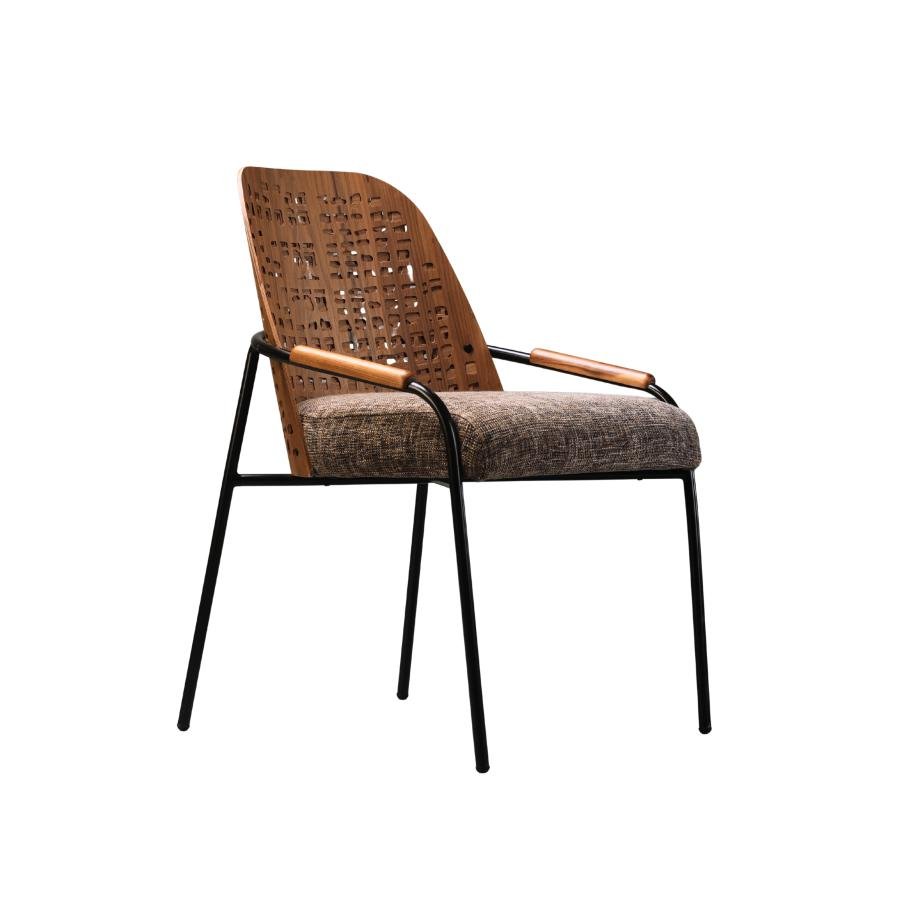
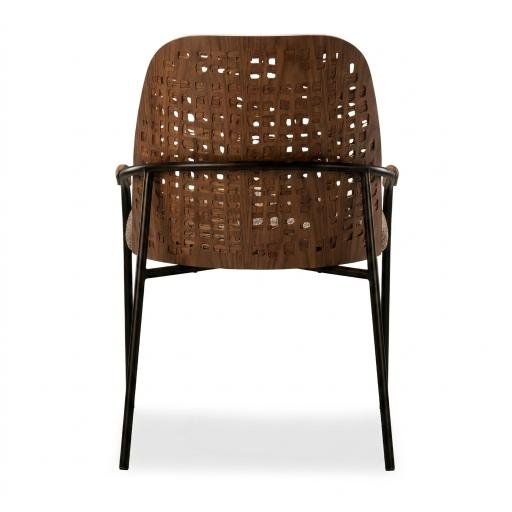
Hatch dining chair in walnut
As assistant design director for Triboa Bay Living, you’re also the one deciding what represents the company on an international stage like Jia CURATED. Did having that dual role make choosing which pieces to bring easier or harder?
Triboa Bay Living: It was very easy! I am very lucky to work with a great team of people who make it as easy as picking and choosing the items, knowing that they’re export-ready. The family business started out as a furniture exporter thirty years ago, so I’m glad I have that expertise to lean on.
Hatch and Tulip already exist in Triboa Bay’s catalog as retail pieces. Out of everything available to you, what made these two the right ones to bring to Jia CURATED?
Triboa Bay Living: They are pieces that speak to our brand’s signature look, which are objects that do not announce their presence, but are felt. They are created with techniques that are not easy to replicate but are easy to appreciate across cultures.
Jia CURATED puts Philippine work in front of an international audience that may be encountering it for the first time. What do you want them to understand about Philippine design through your creations, that they might not already assume?
Triboa Bay Living: What unites the NEWFOLK collective and Philippine designers in general, I think, is that Filipino culture is itself a hotpot mix, and that mix comes through in our creative output, whether we intend it to or not. Our work isn’t tied down to any one look. We’re able to take that variety and use it to our advantage, coming up with things that haven’t been thought up yet.
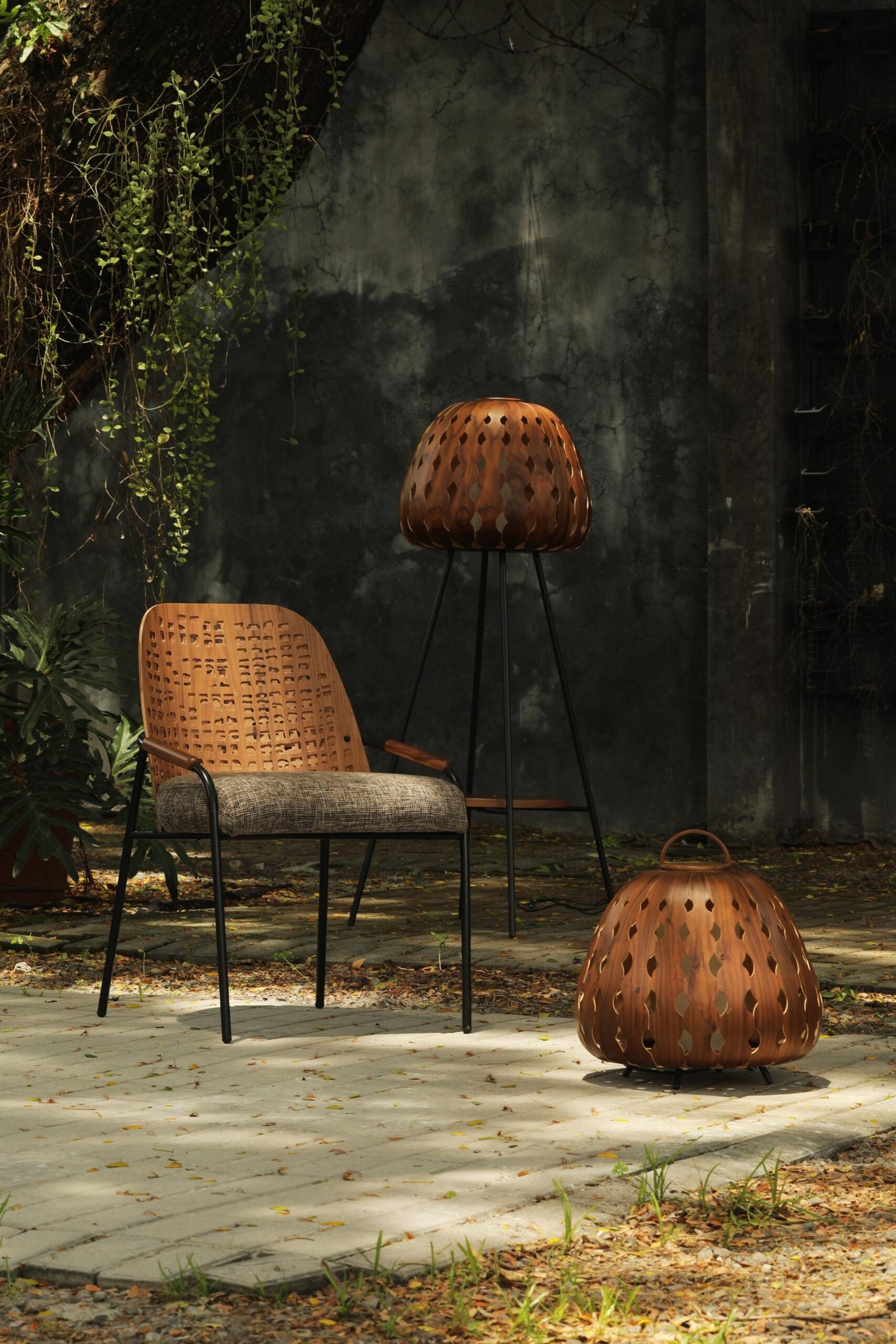
NEWFOLK’s own framing of this show leans on padala, the practice of sending gifts to loved ones. If you had to send this piece off as your own padala, who would you send it to?
Triboa Bay Living: I think I’d send them all to my little brother, who is in university abroad. His IKEA-filled dorm could use a little piece of home! •