Words Patrick Kasingsing
Images Bien Alvarez (Jia CURATED 2027)
One thing struck me about Balinese existence and mentality during one of my many Grab rides across the island of the gods. My particularly chatty Grab driver (and there are many of them) got increasingly inquisitive once he discovered I could reasonably converse in Bahasa Indonesia; he started asking about home life in the Philippines, what the thirty-something man in the backseat did for a living, whether he had a wife and kids. I told him I was a media guy, and that I wasn’t ready to start a family, and that it wasn’t yet in my financial horizon.
He went silent for a moment, then offered a self-effacing “Maaf ya, kak (Sorry, brother)” and shared that in Bali, readiness is something you grow into after stepping into the unknown. In the realm of starting a family, he dove in at 29, young and without a stable career, and now has four kids, three of whom are in college. You start the home, then you put it in order, he seemed to say. That hour-plus conversation between Denpasar and Rumah Luwih didn’t change my stance on family planning as a millennial, but it crystallized something I’ve long theorized about Bali as an island of creative drive: it welcomes and rewards a leap of faith, from locals and enamored foreigners alike.
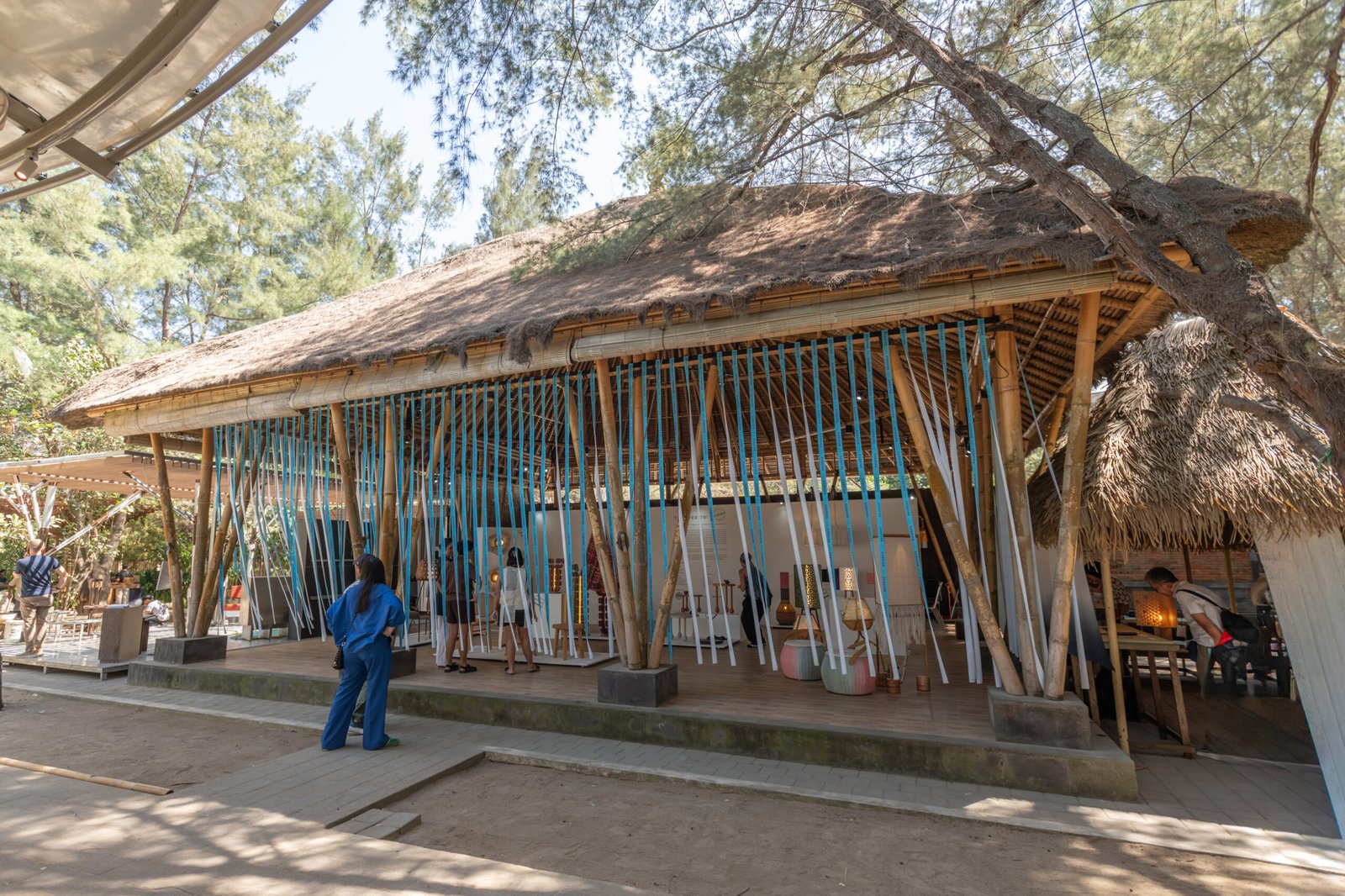
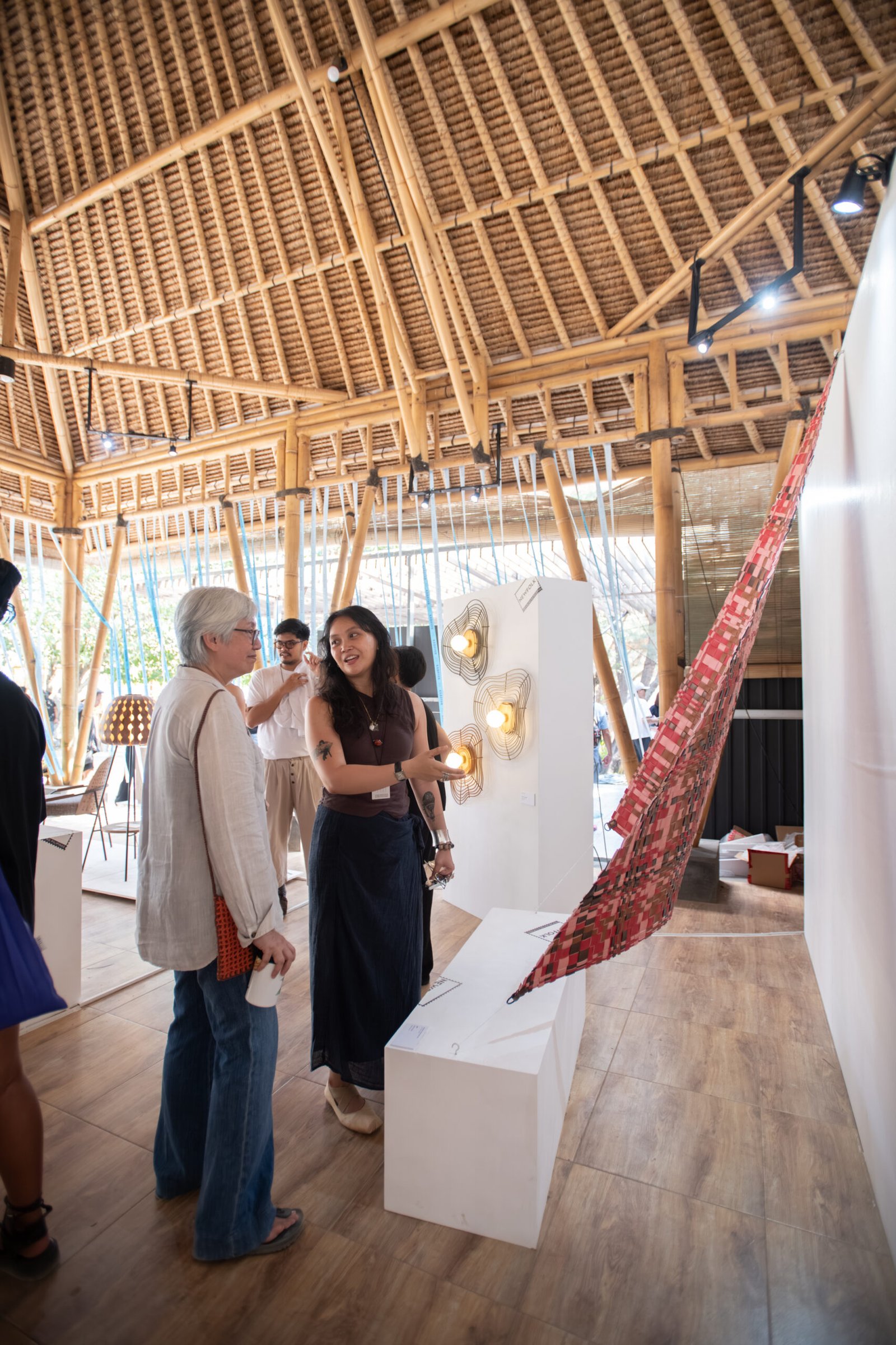
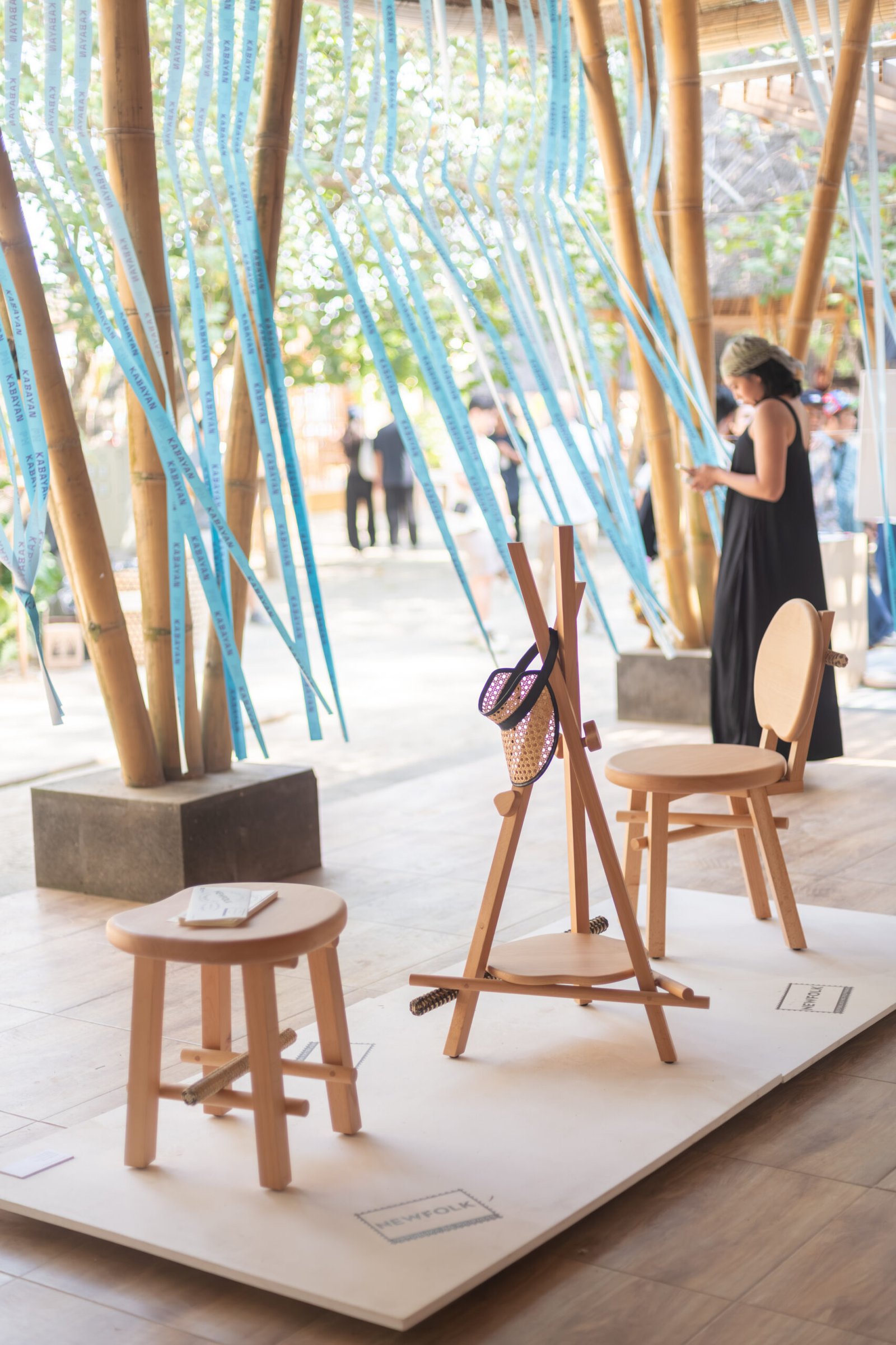
NEWFOLK’s “Tomorrow” show, the Philippine spotlight nation showcase at Jia CURATED 2026
Which brings me to the point of the whole anecdote: my first-hand experience with the now five-year-old Jia CURATED, a Balinese design festival encompassing furniture and interiors, architecture, art, and culture. Co-founder Budiman Ong, a lighting designer by trade, is notably not a Bali native, but found his footing on the island, drawn in by its natural beauty and rich cultural heritage. After a seven-year Scottish sojourn, he worked with famed Bali-based jeweler John Hardy before starting his own lighting brand, Ong Cen Kuang, in quiet Mengwi, in Badung, collaborating with local artisans.
Beyond being the land of his craft, Bali’s conviviality and insatiable creative energy are something Ong wanted to share with the regional design community; he and co-founders Yang Yang Hartono and Rudi Winata dreamt of forging an international gotong royong — a structure of mutual support that puts local and foreign voices together in a room for interaction, cultural exchange, and collaboration. What began as kiosks in 2022 is now Jia CURATED (Jia meaning “home” in Chinese, a nod to Ong’s Indonesian Chinese ancestry). Bien Alvarez, the photographer behind these images, put it plainly after his first trip to the festival: it felt like being welcomed into people’s homes, filled with pieces meticulously chosen and made, each carrying a story and a clear sense of intent.
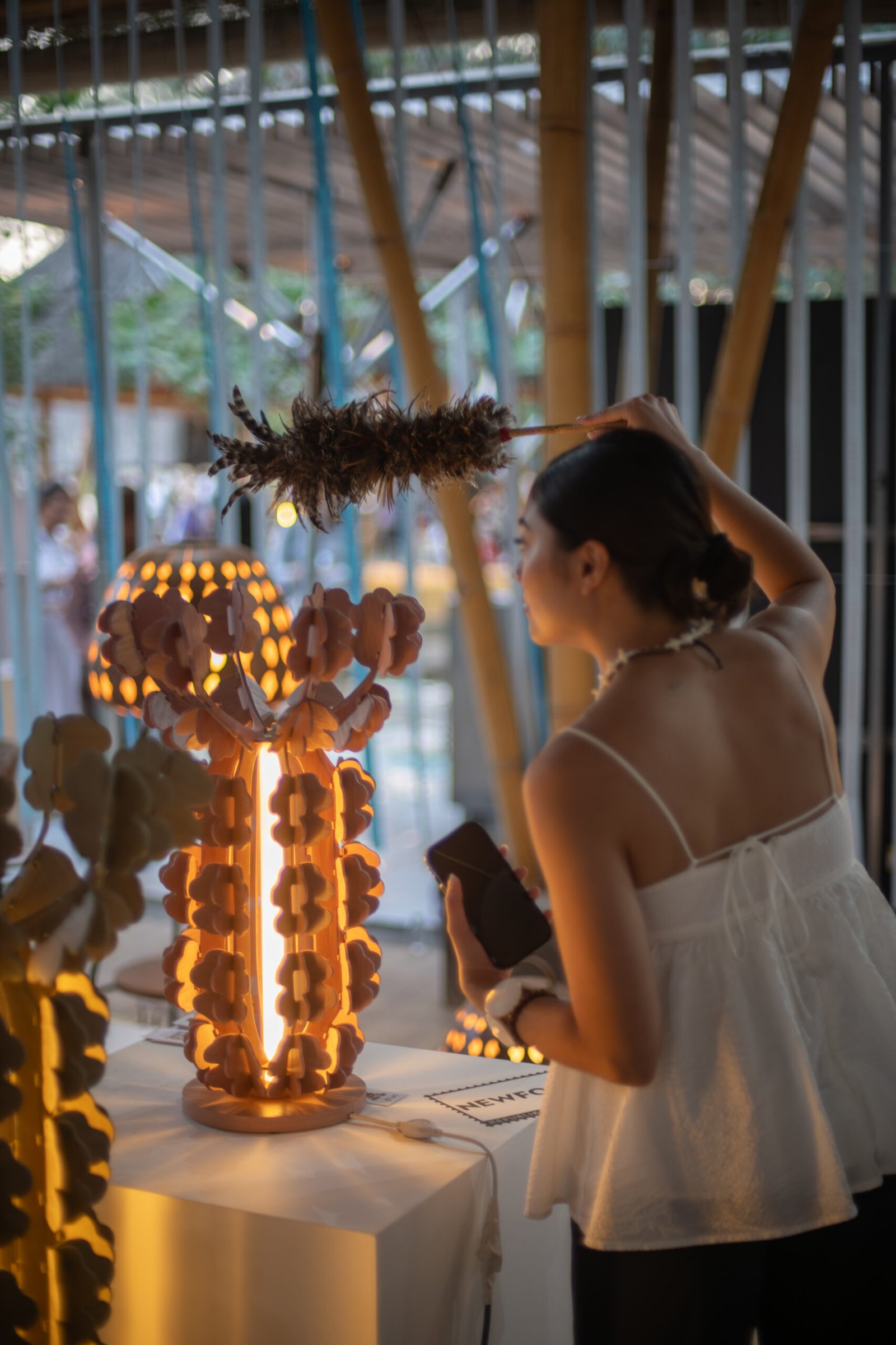
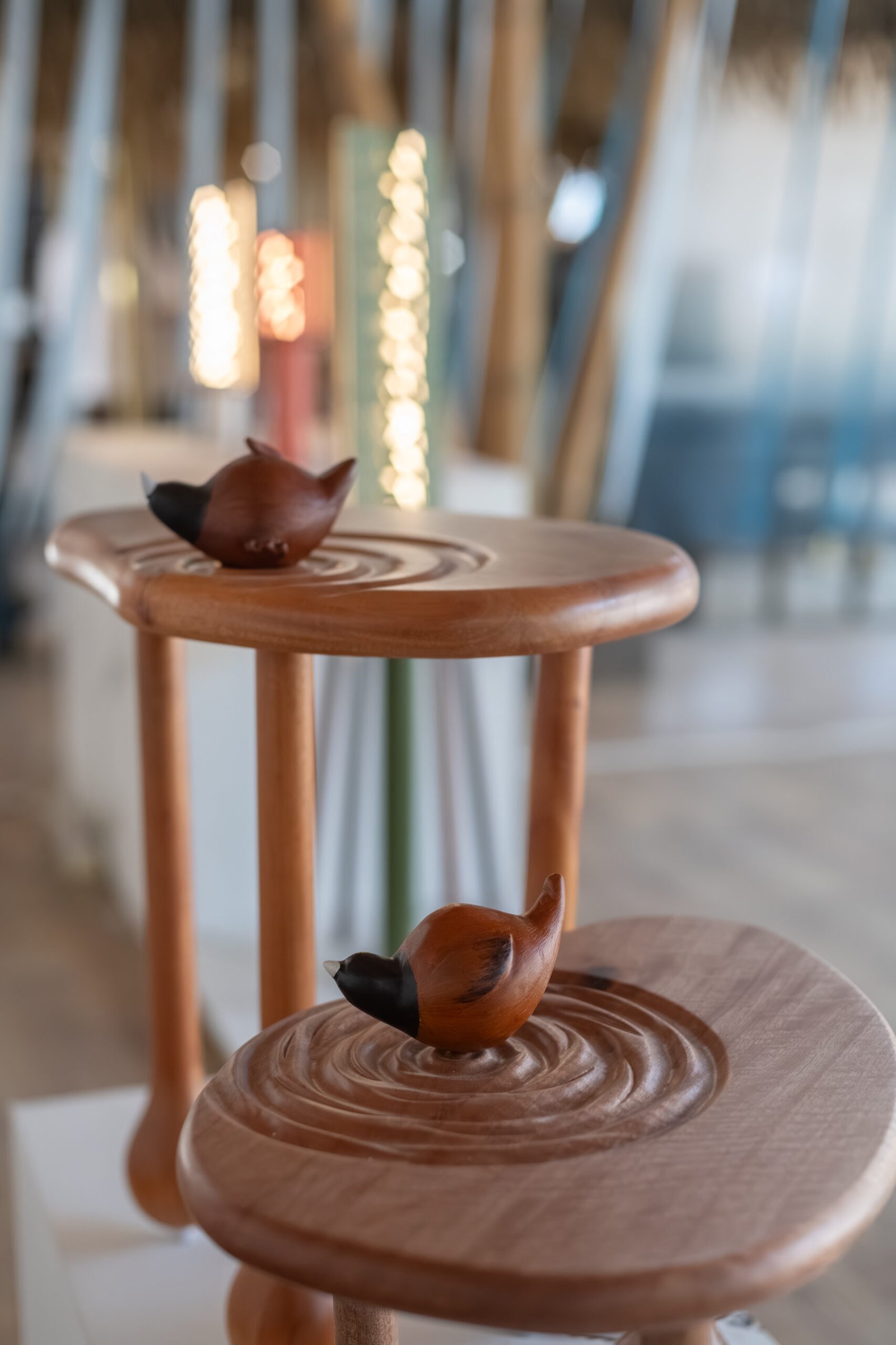
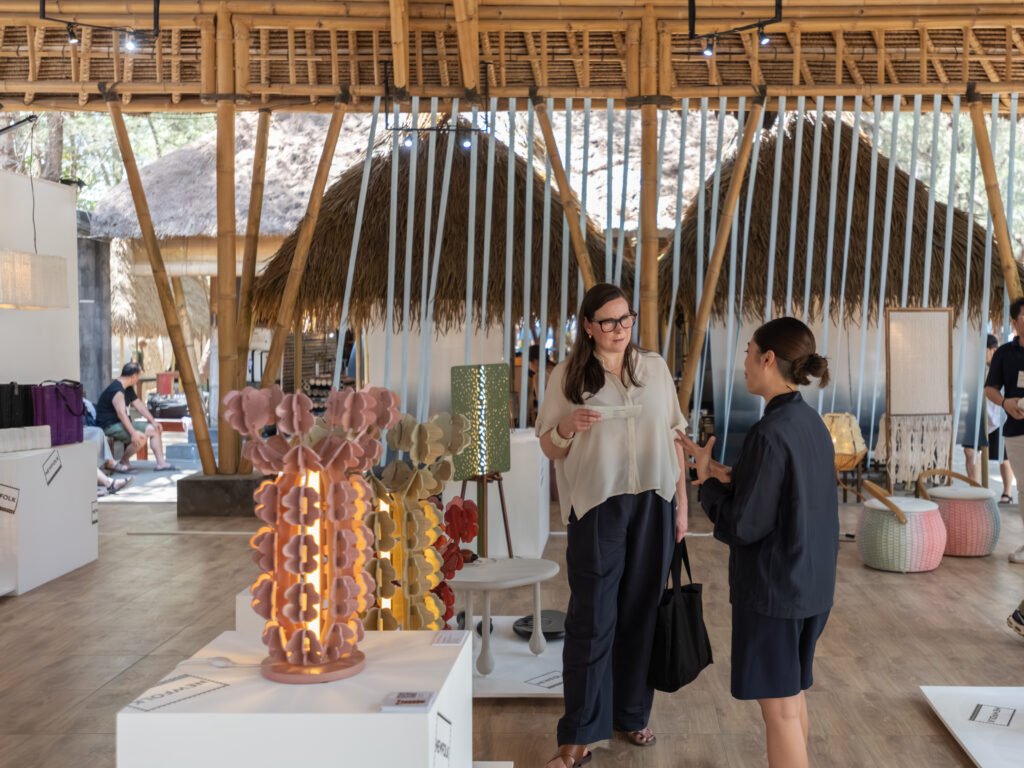
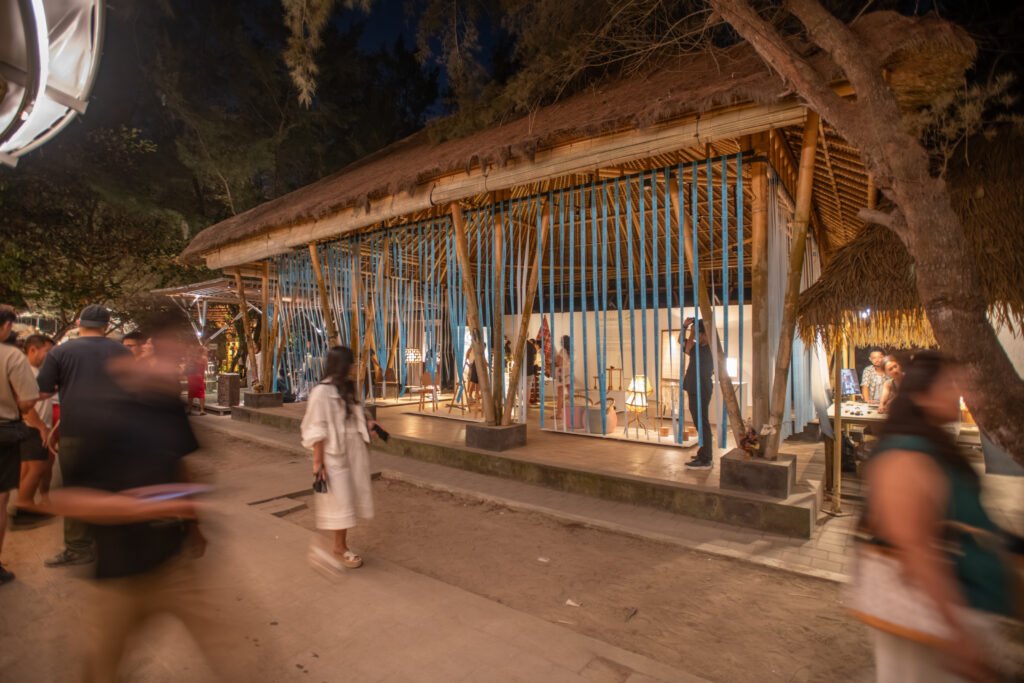
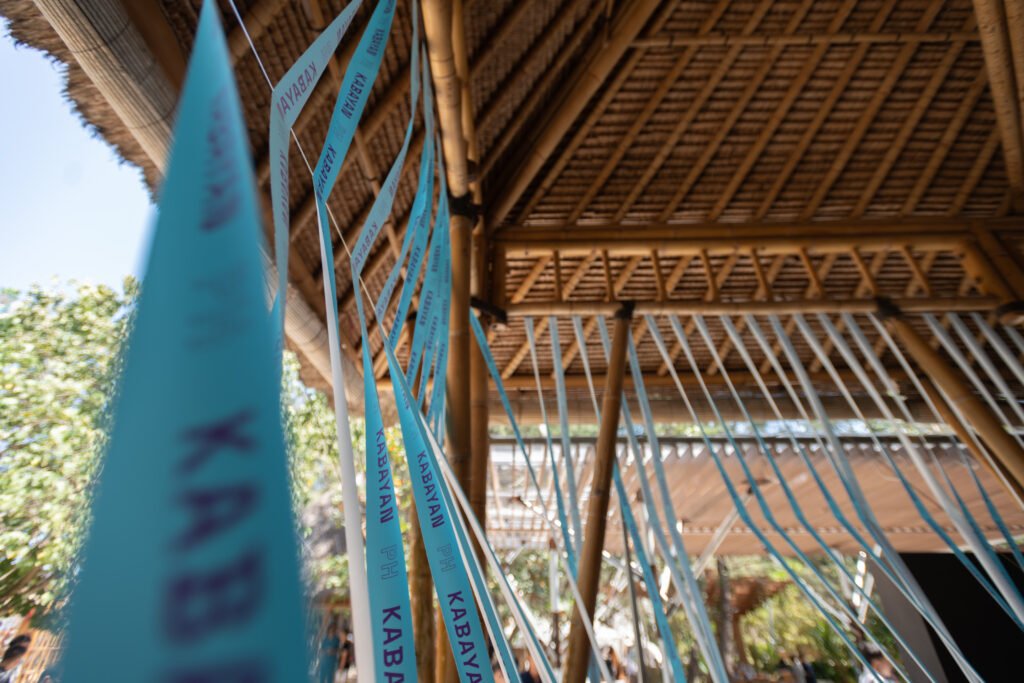
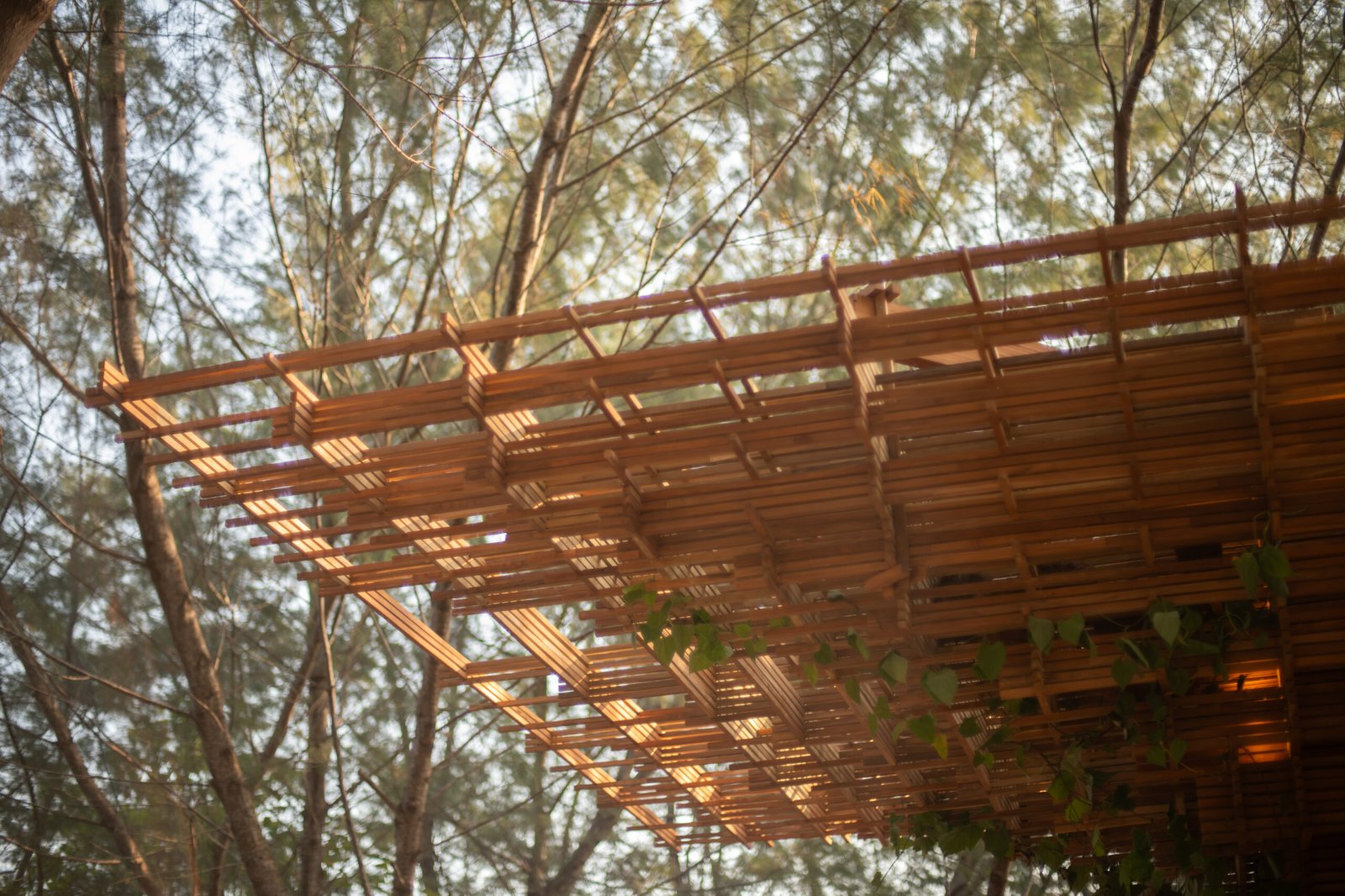
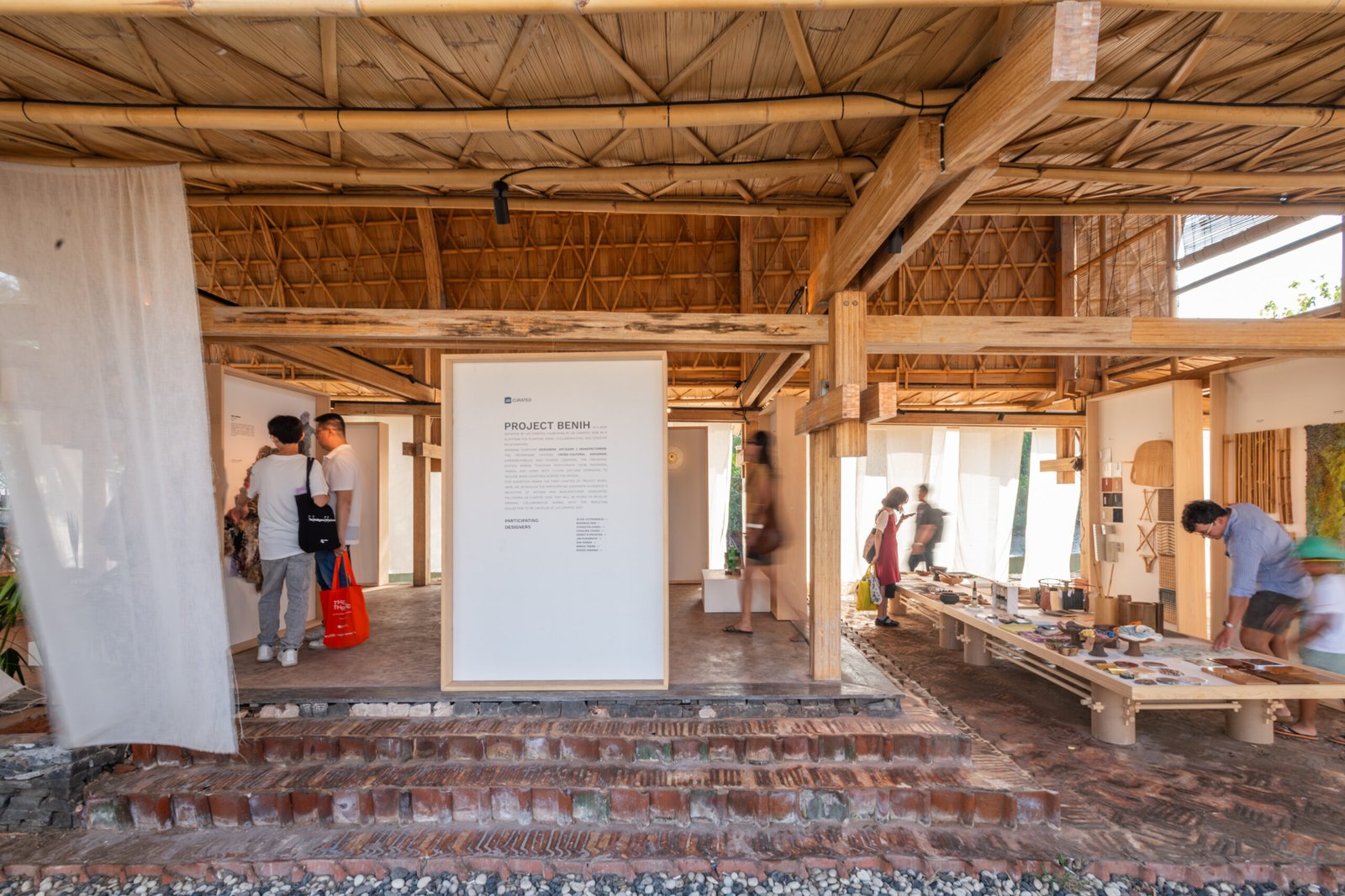
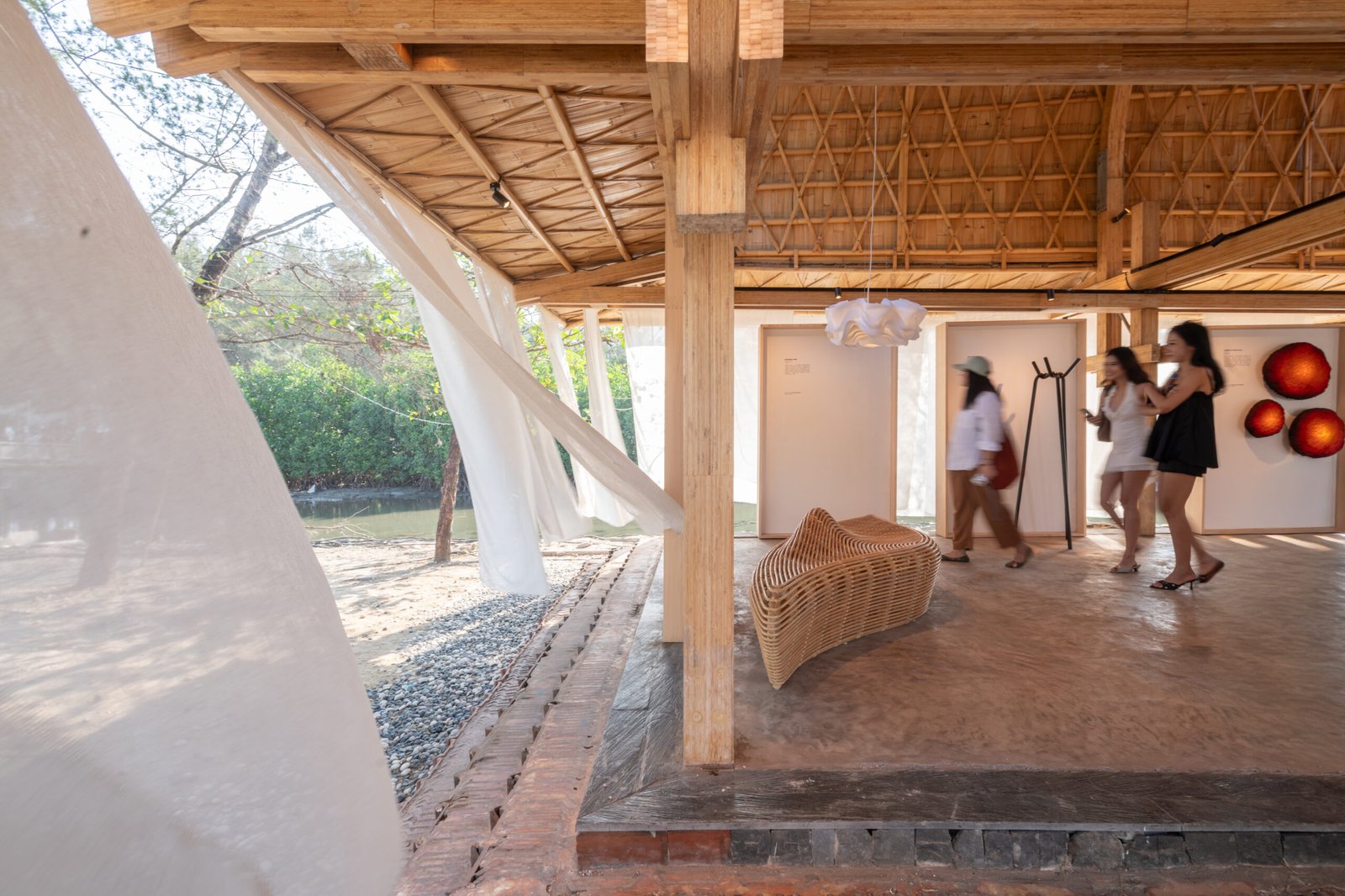
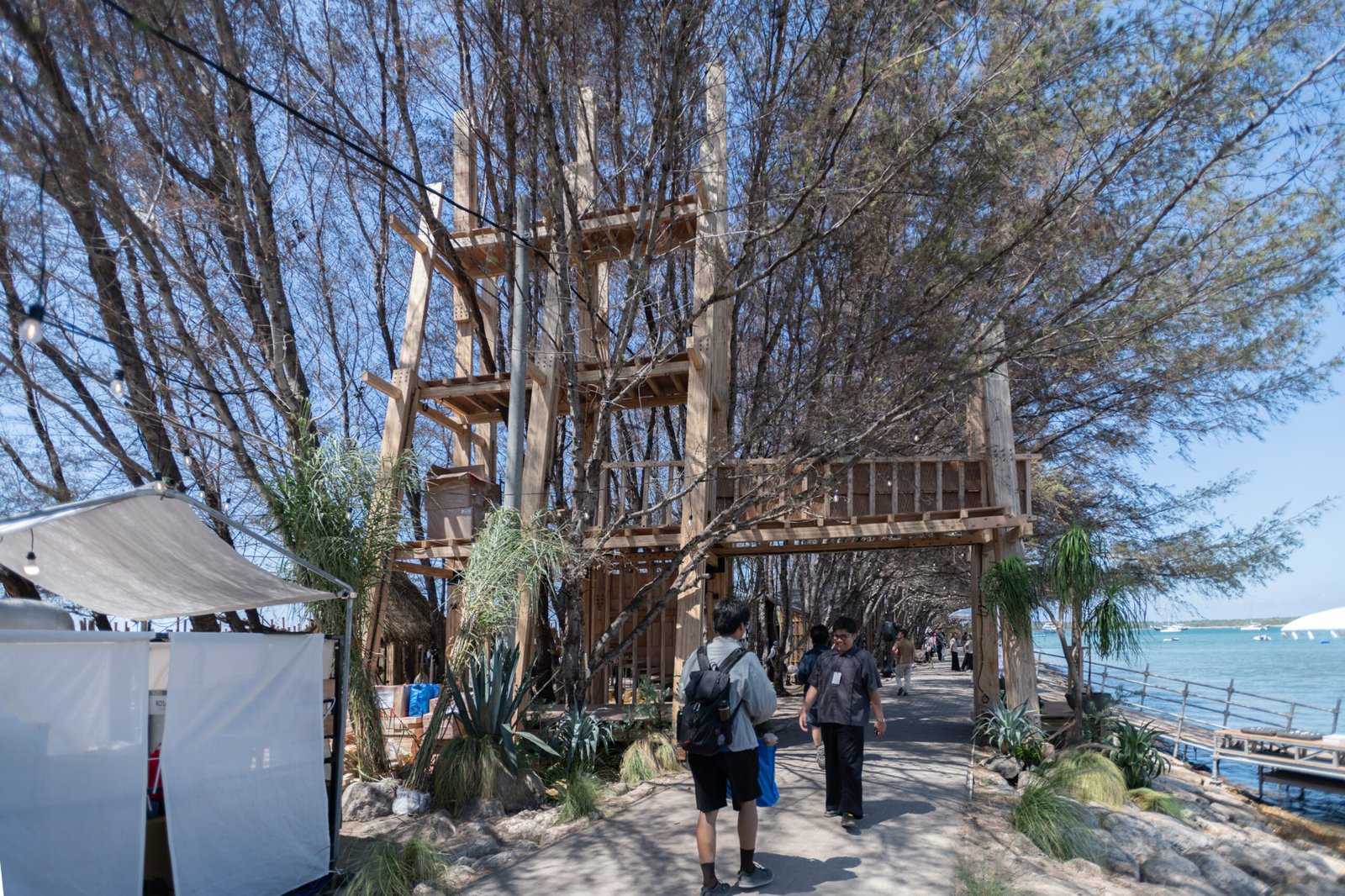
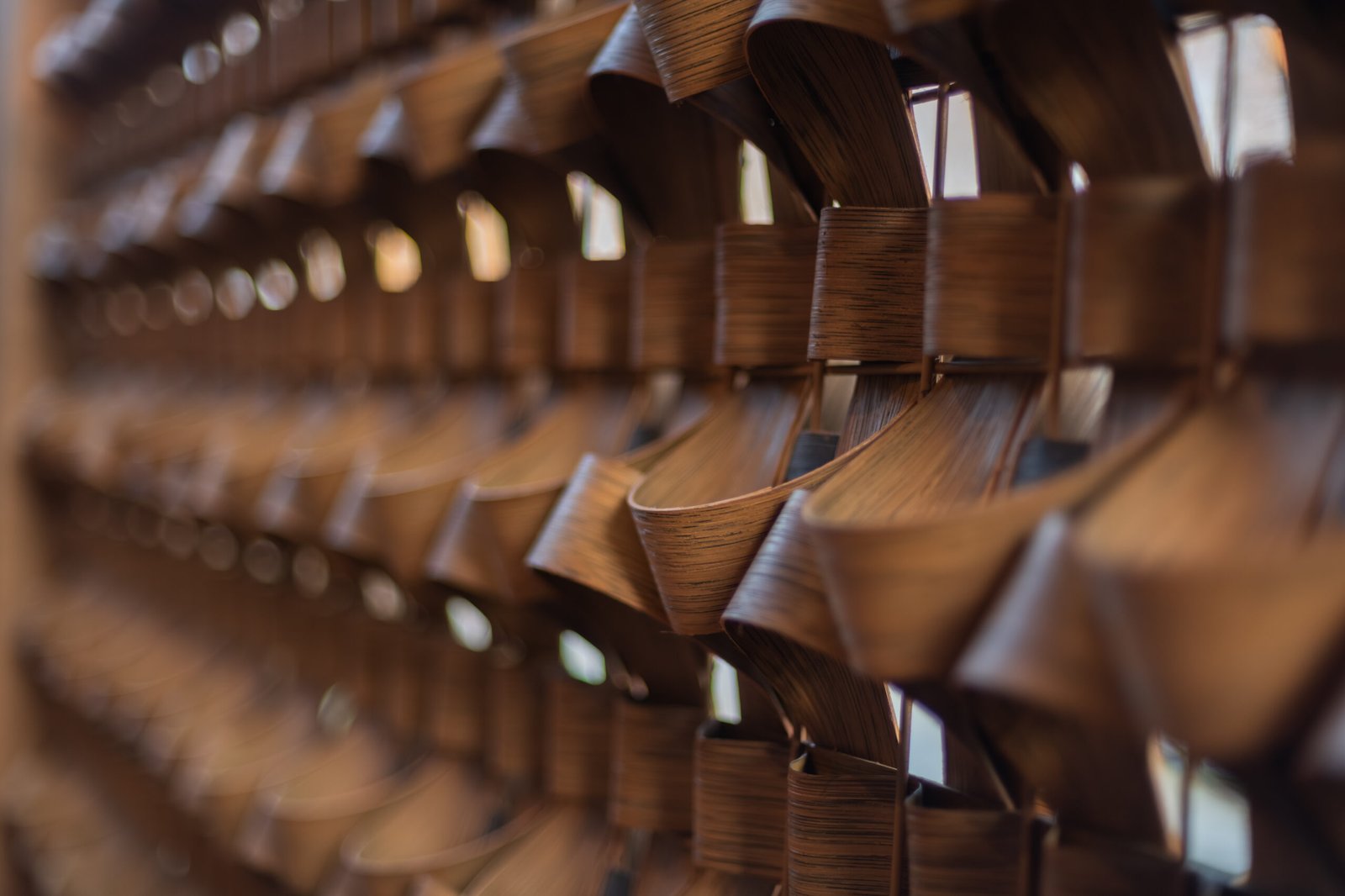
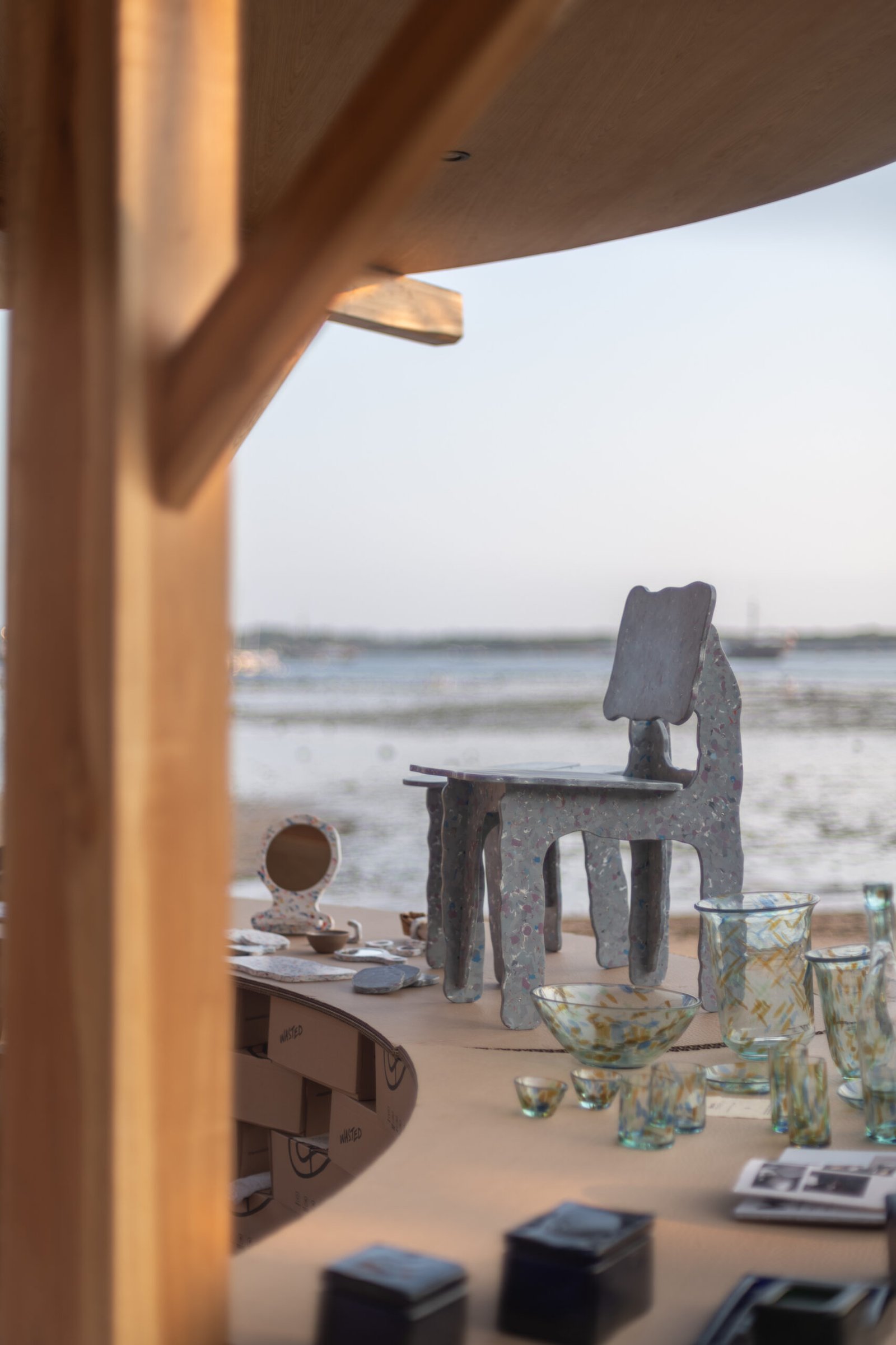
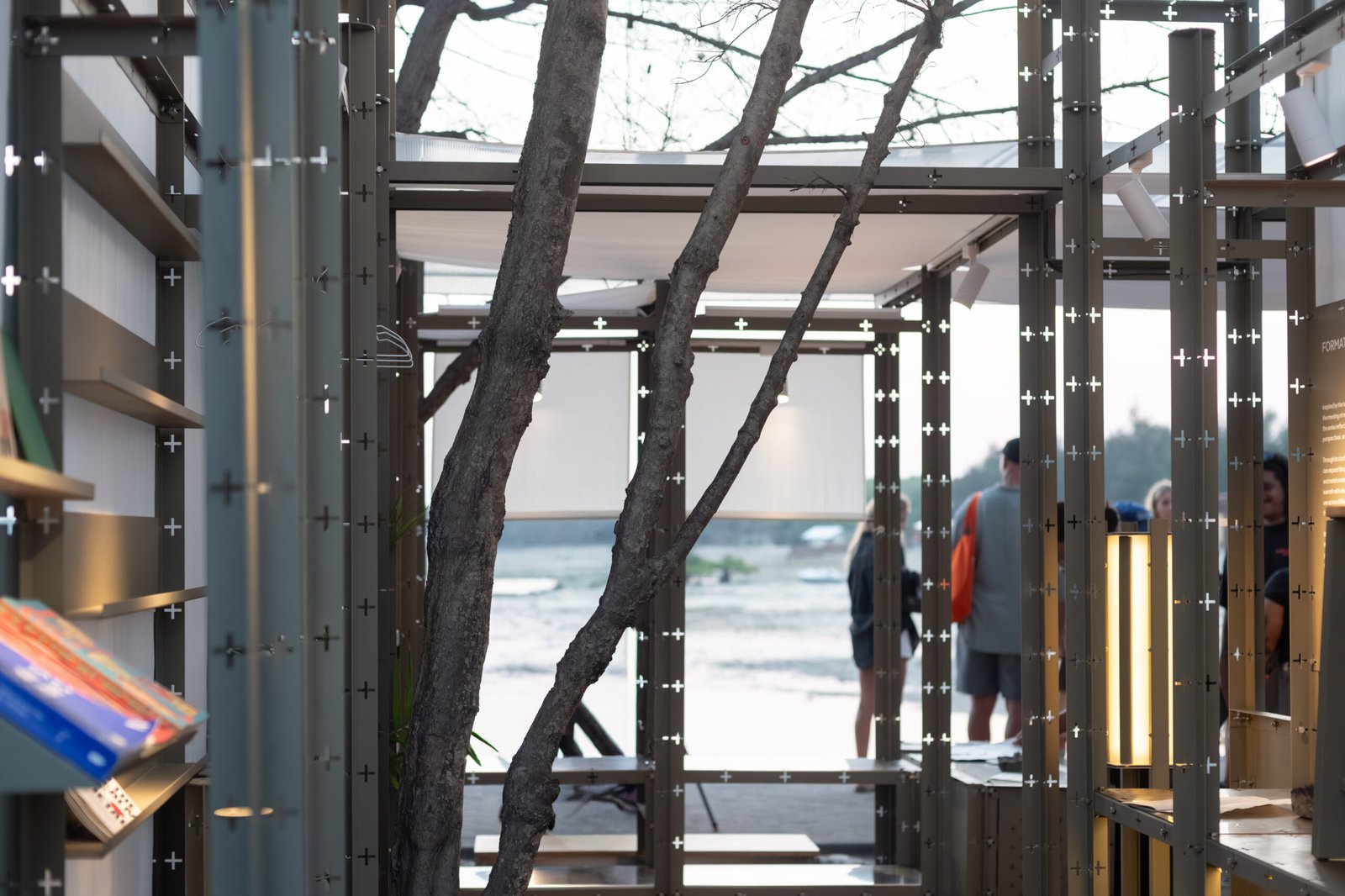
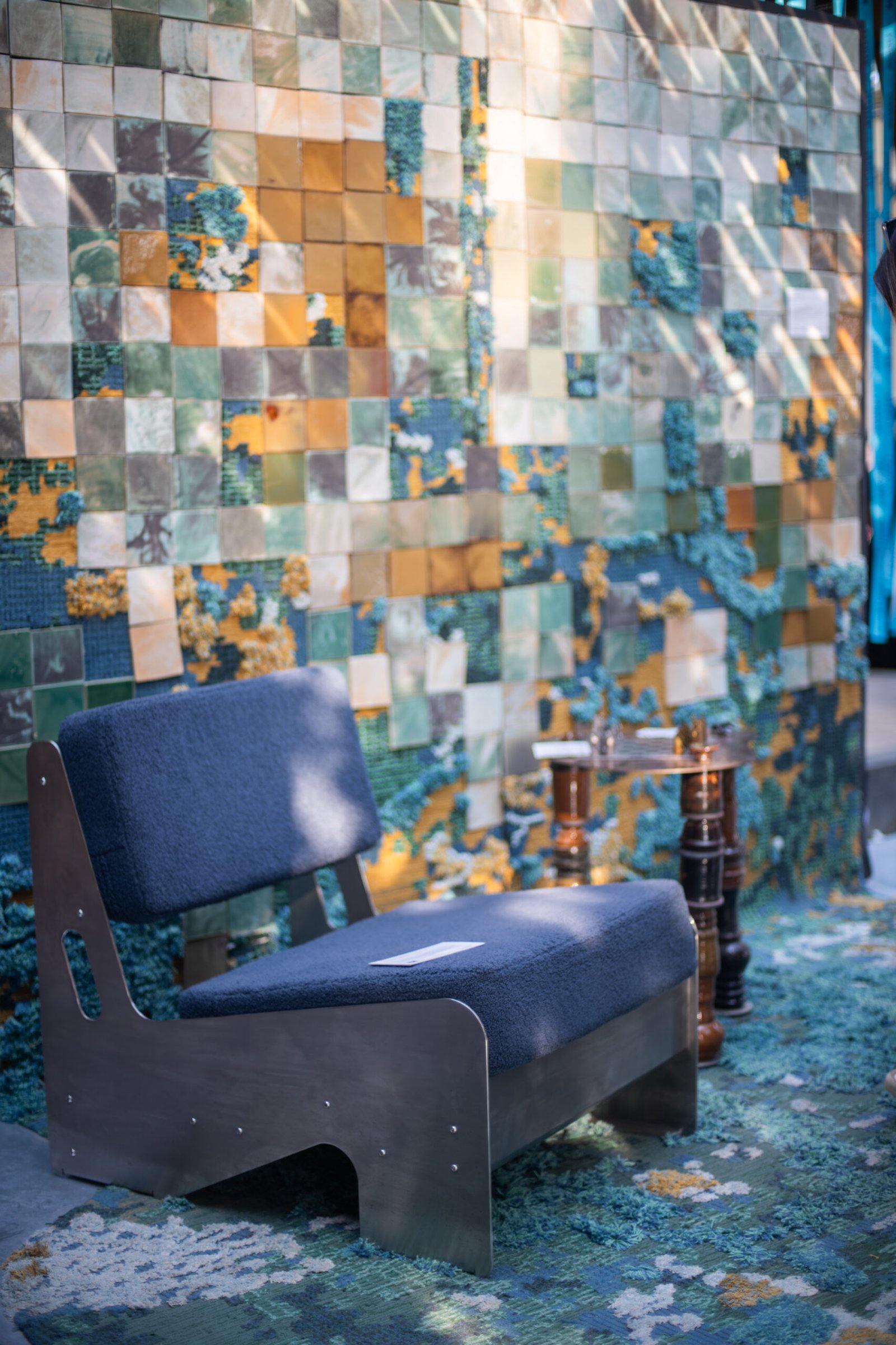
This was the same warm Balinese welcome Ong had described — the one that greeted me, also a Bali first-timer, both physically and figuratively at Pengembak Beach. There’s a lot to be said for holding a design event of this size, with 250-plus brands across five days, in an entropic environment like a beach — but the Jia team largely pulled it off. There was a lot to take in: the spatial gymnastics of the exhibitor pavilions, the precocious talent on display at the Filipino and Taiwan country pavilions and Project Benih, the banana-leaf walls of AlvinT and Somewhere Concepts, the discarded lace louvers of Threadapeutic, Monsala and Domestic Mass, the Instagram fodder of Broadway Malyan’s reflective cube, the diaphanous salt blocks of the sand-embedded Oaken Lab Tiltroom installation.
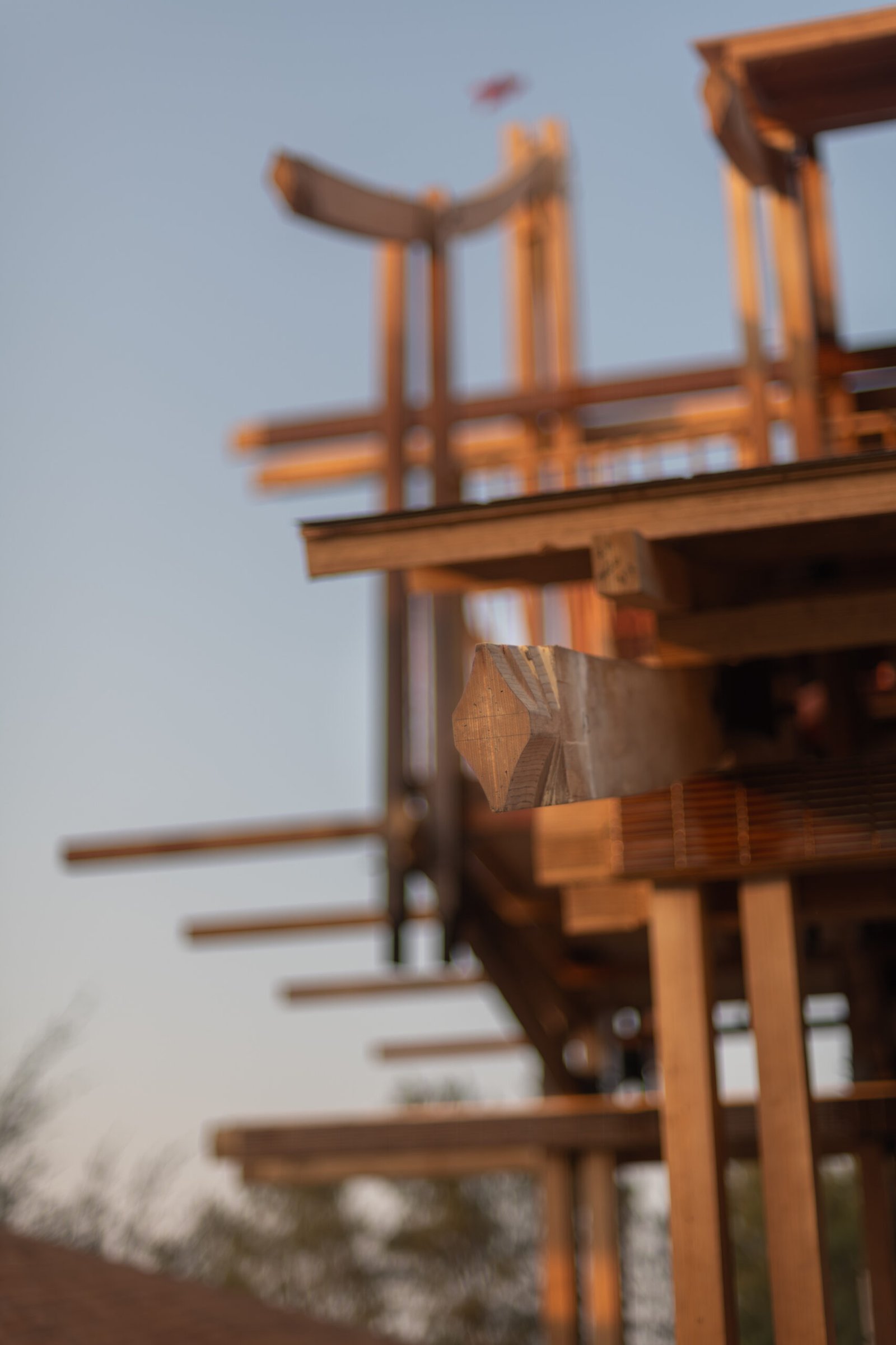
Some pavilions hadn’t been finished when the show opened, while others looked that way. These are the structures I remember most clearly. Studio Aliri’s SUAR sightseeing tower’s brazen use of glulam on a damp environment like a beach was ambition itself — building a 10-plus-meter tall tower for a five-day event, then having it left incomplete by the logistical demands of building on this entropic stretch of sand, said more about Jia than any of the polished pavilions could: this is a festival curated tightly in its players, but loose enough to let nature have the final word.
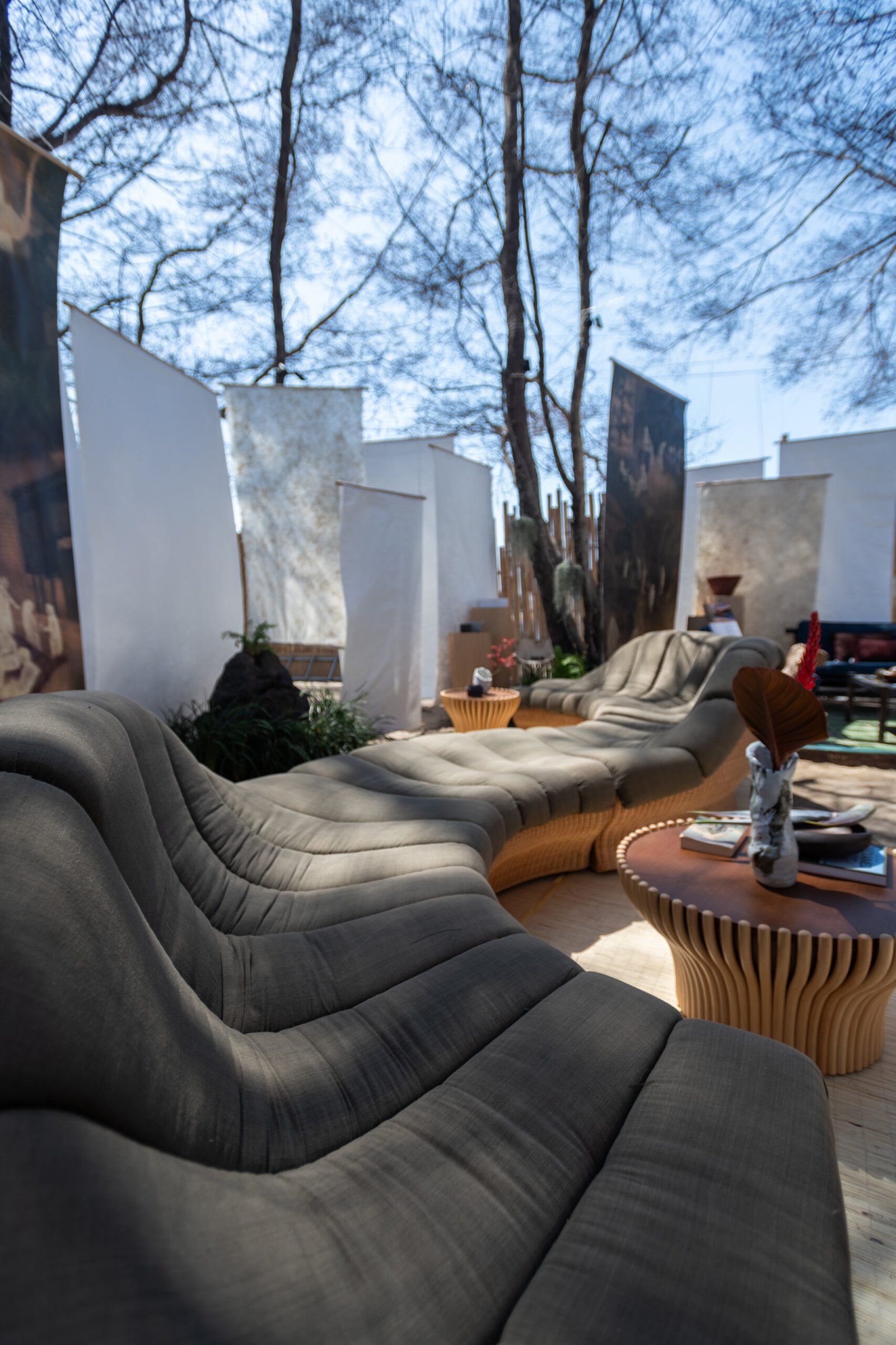
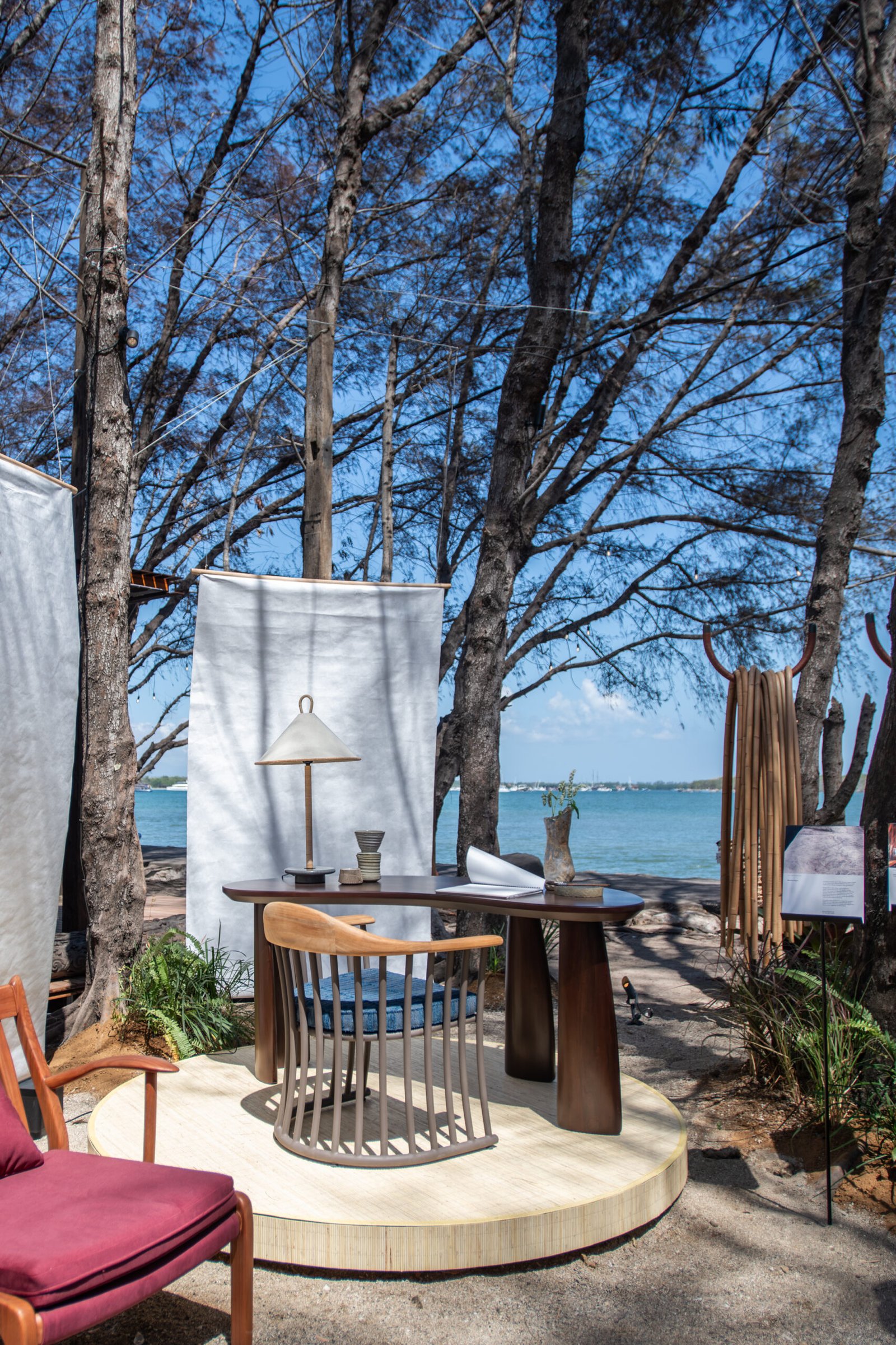
AlvinT and Somewhere Concepts’ Where We Once Gathered
“Some pavilions hadn’t been finished when the show opened, while others looked that way — this is a festival curated tightly in its players, but loose enough to let nature have the final word.”
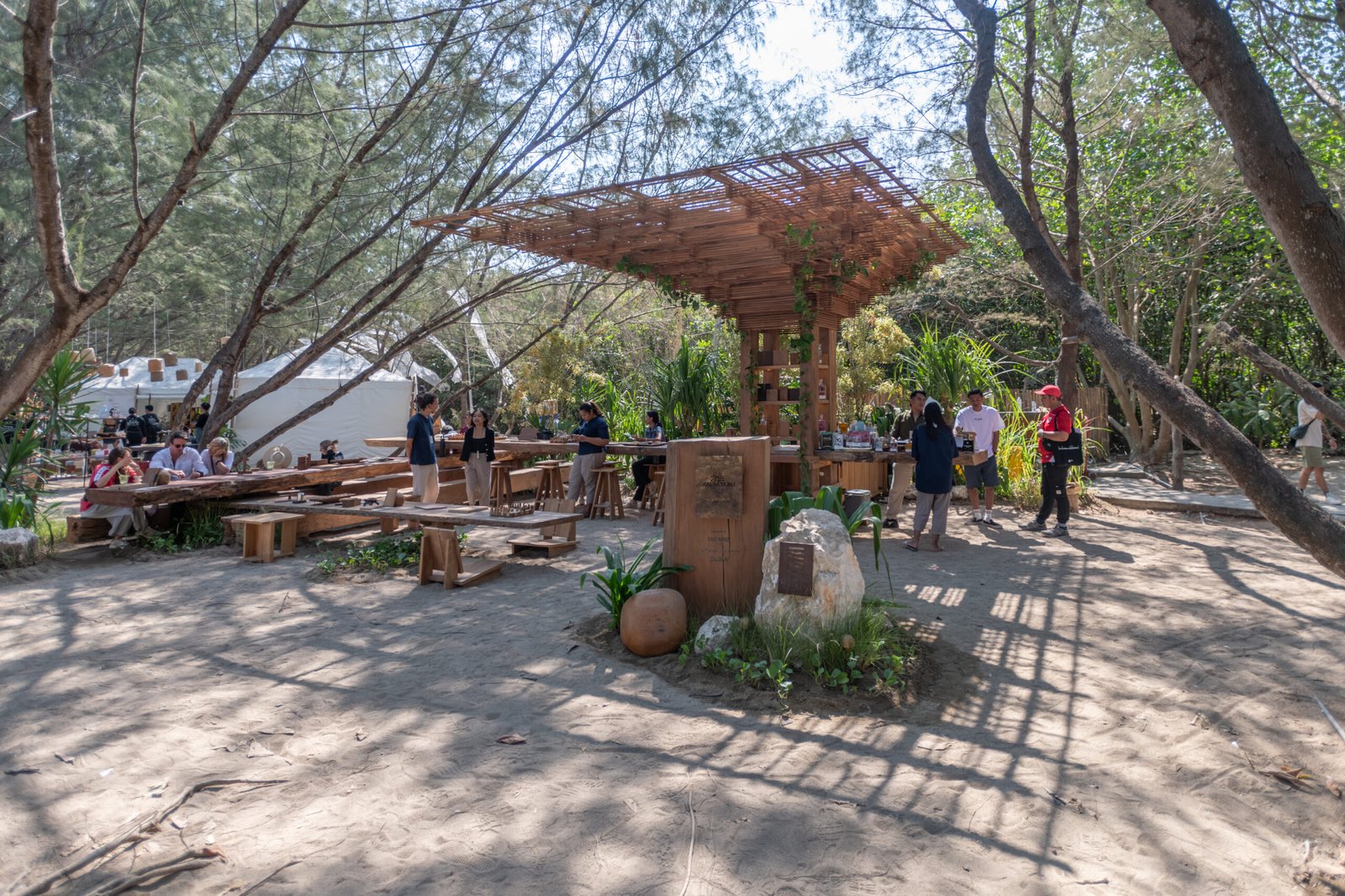
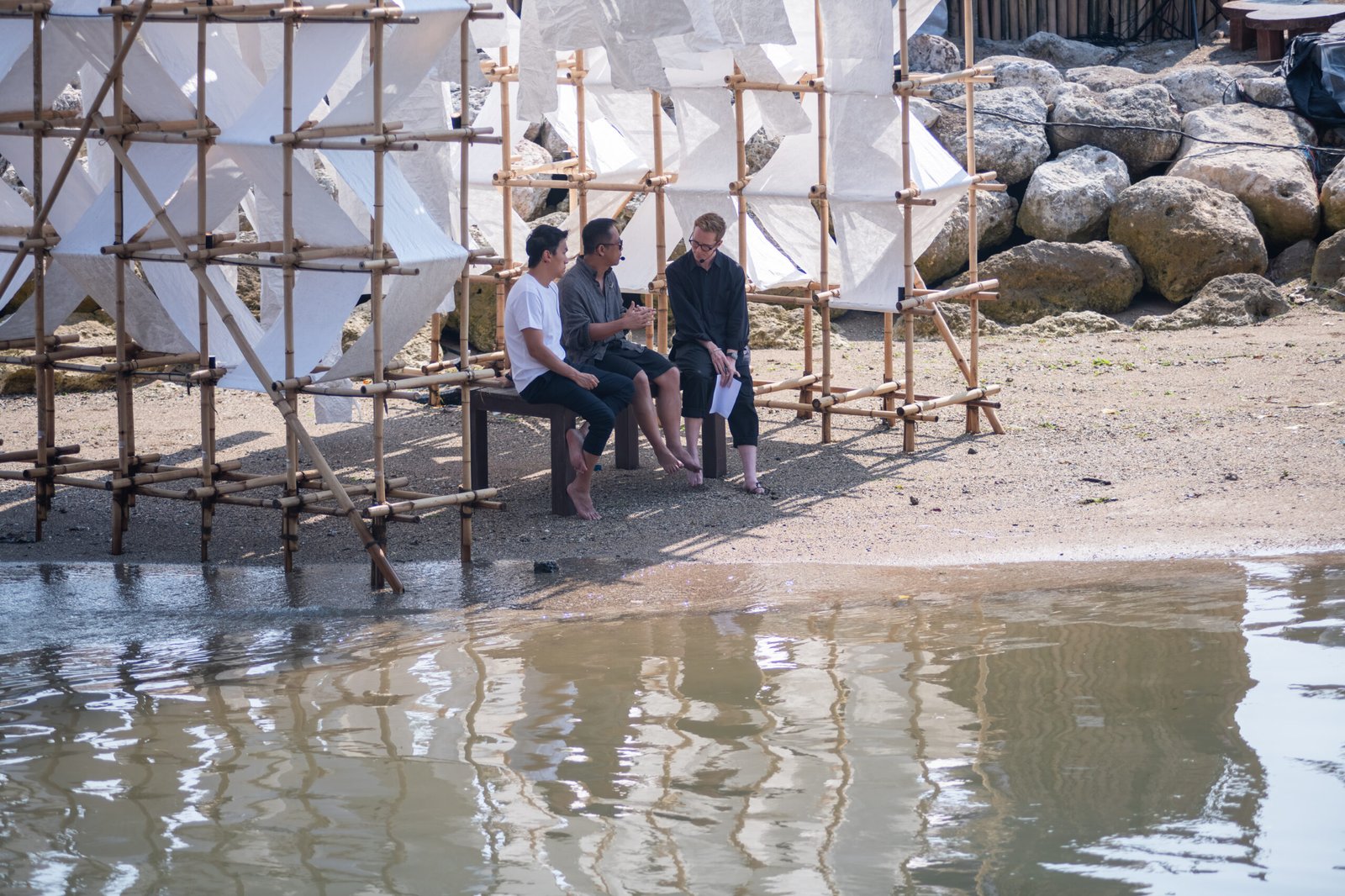
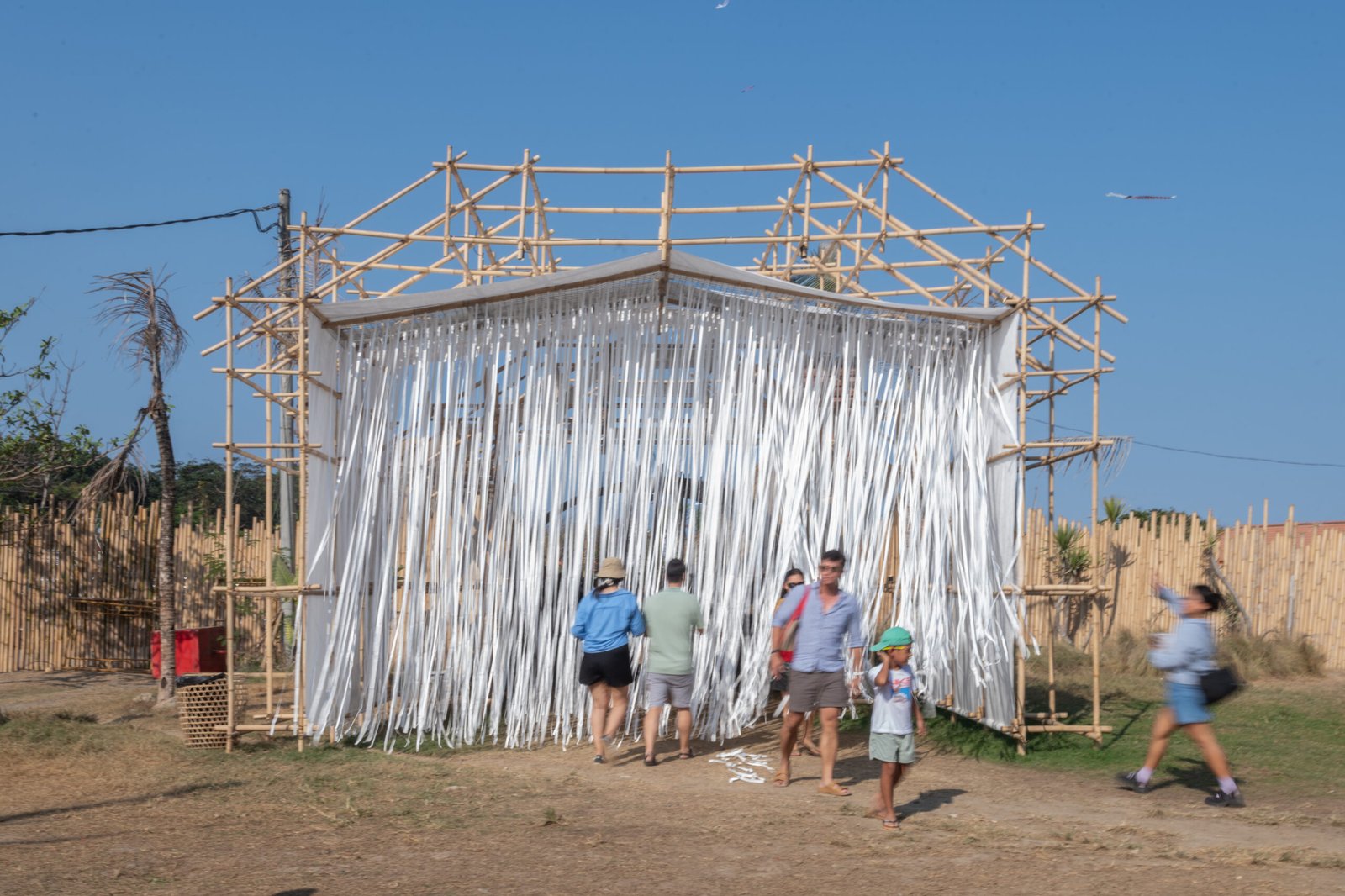
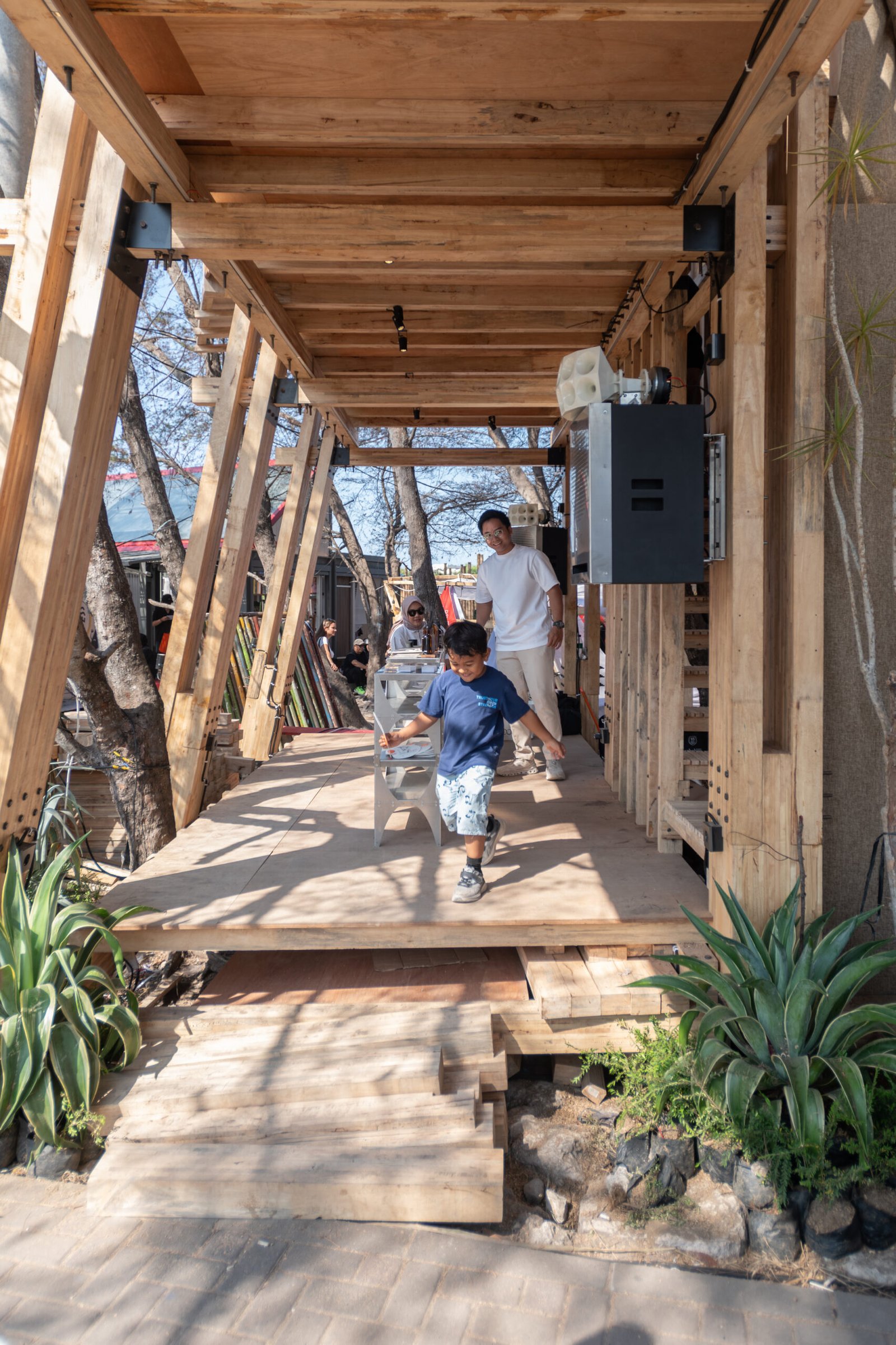
The Lintang pavilion, also by Studio Aliri, with Studio Hendro Hadinata, and Nusaé, ran out of runway before its roof went up — and rolled with it anyway for the run of the festival, its rafters tapering gracefully into the gap, looking like the most aesthetically pleasing shipwreck. Main Main, Blancostudio’s Best Exhibition Pavilion prize winner, made the same point in a gentler key: timber offcut platforms and a tree-like canopy structure left deliberately raw, with nature as co-conspirator. Even the talk schedules bent to the will of the tide; the speaker pavilion, a lattice structure strung with Tyvek paper that shaded panelists, sat half-submerged by morning and usable again by afternoon.
For brain food, Design Anthology’s Suzy Annetta and Jeremy Smart helmed multiple talks, lightly grazing topics from materiality to craft to AI for an audience that spanned design professionals and the general public. Architecture in Scale, an exhibition of 25 architectural maquettes from the day’s spatial masters — from Japan’s Kengo Kuma to Indonesian master Andra Matin — sat on bucket pedestals amidst the sandy dunes bordering Mertasari Beach, all painstakingly curated as exemplars of biophilia by South China Morning Post’s design doyenne Charmaine Chan. Food choices ran the gamut too, from rum-filled gelato to yakitori to local mee ayam, sending each visitor (the writer included) home both visually and gastronomically satiated.

SCMP’s Charmain Chan with Budiman Ong Elora Hardy with Charmaine Chan
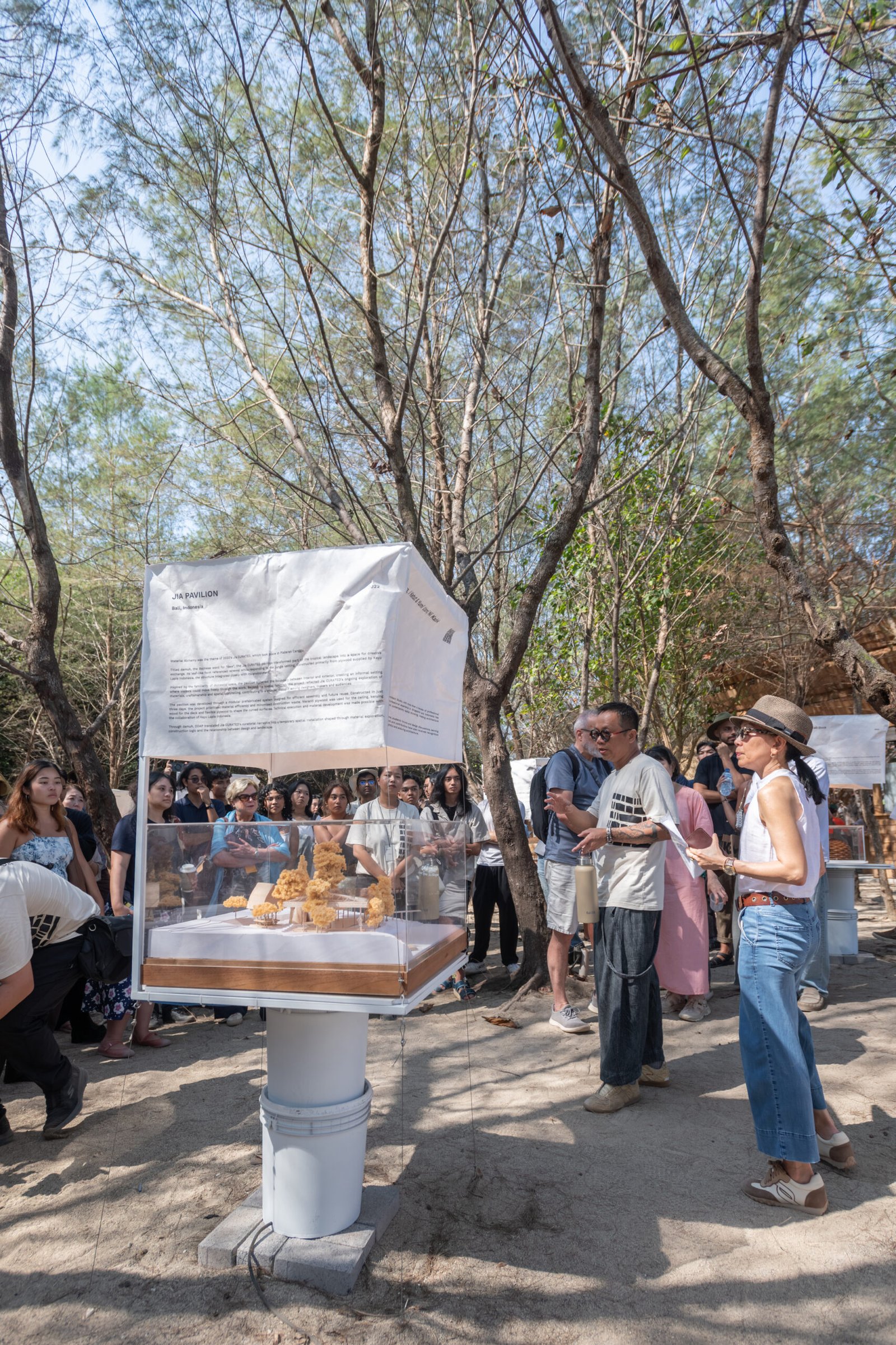
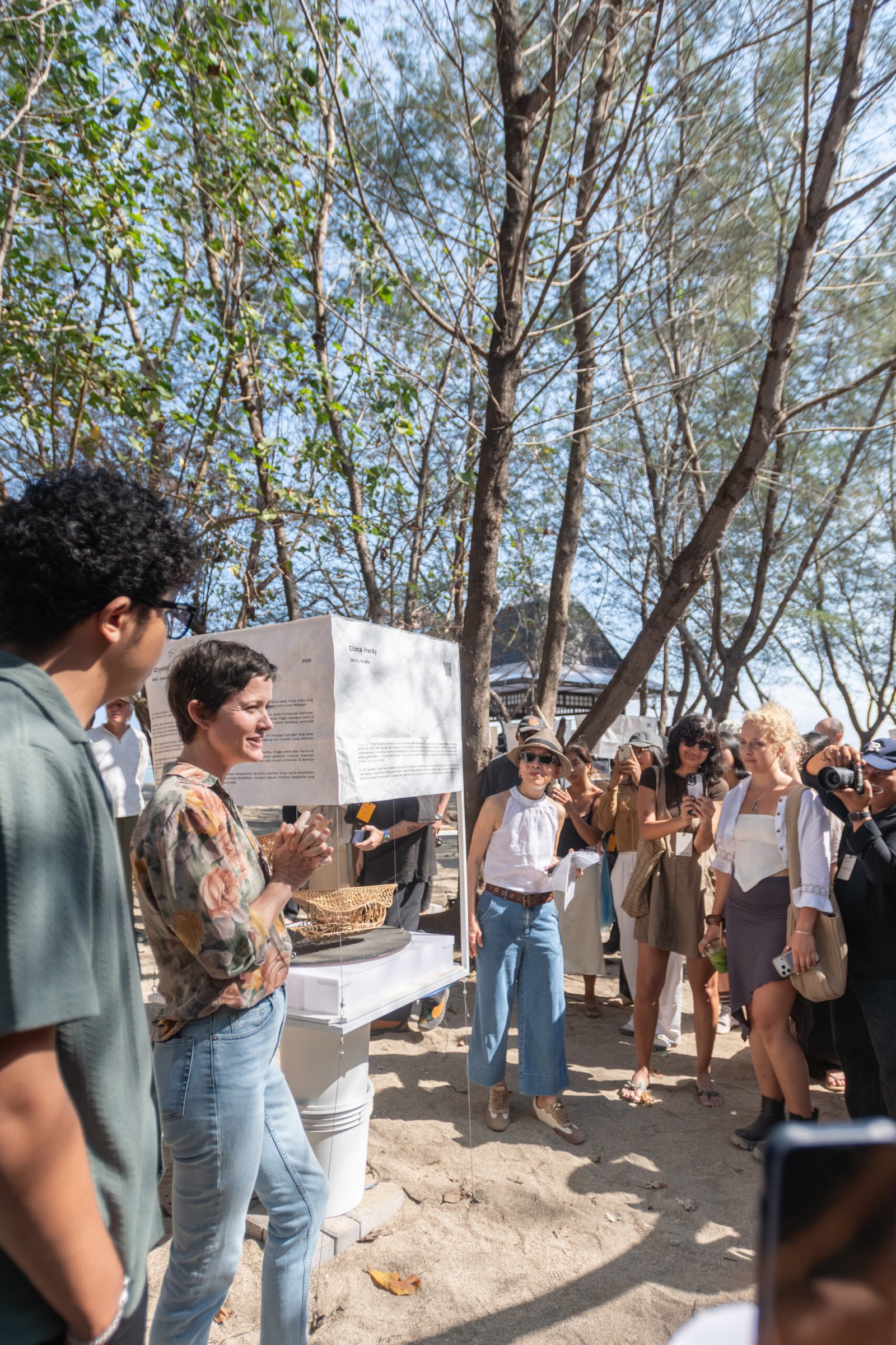
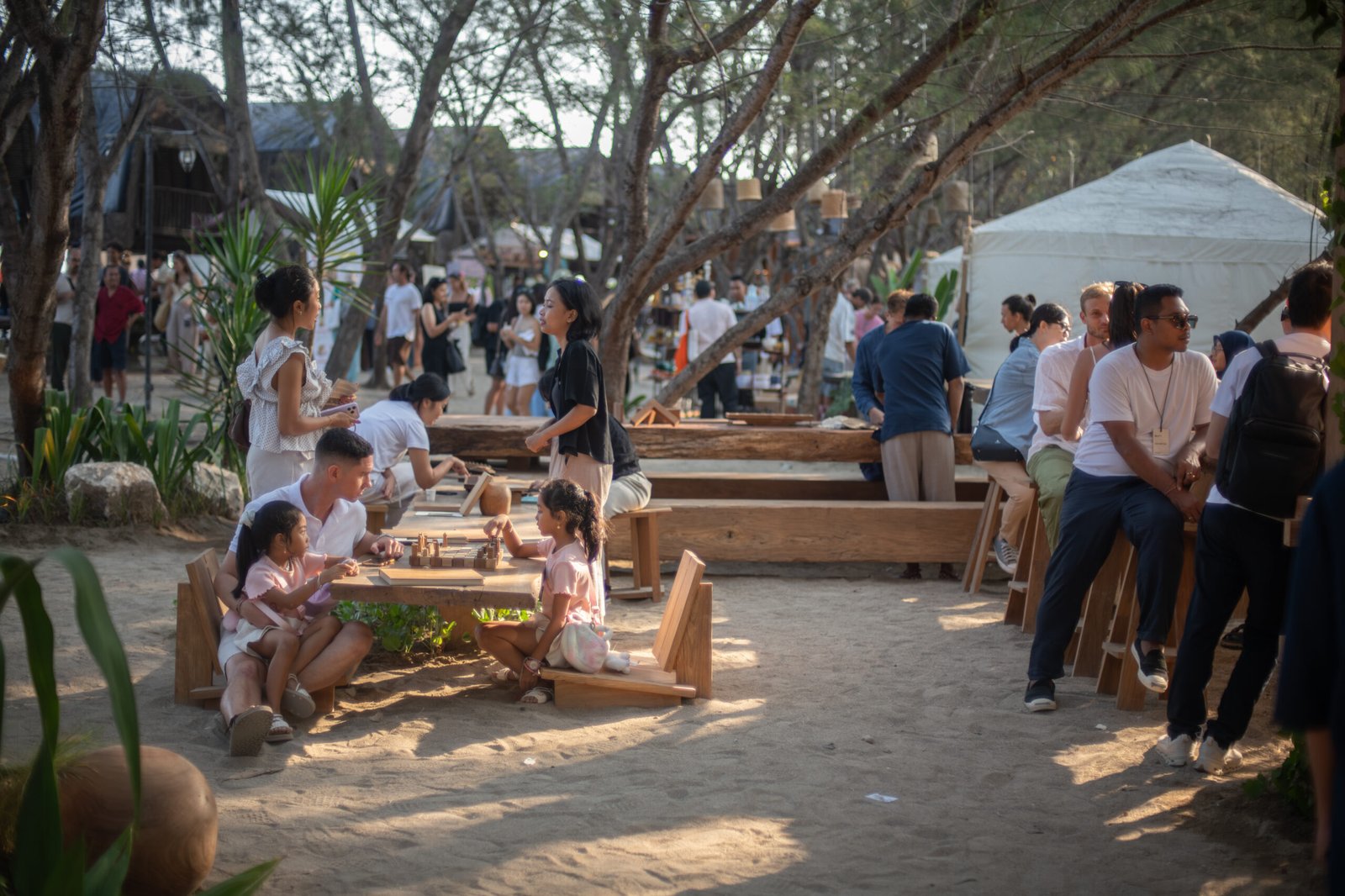
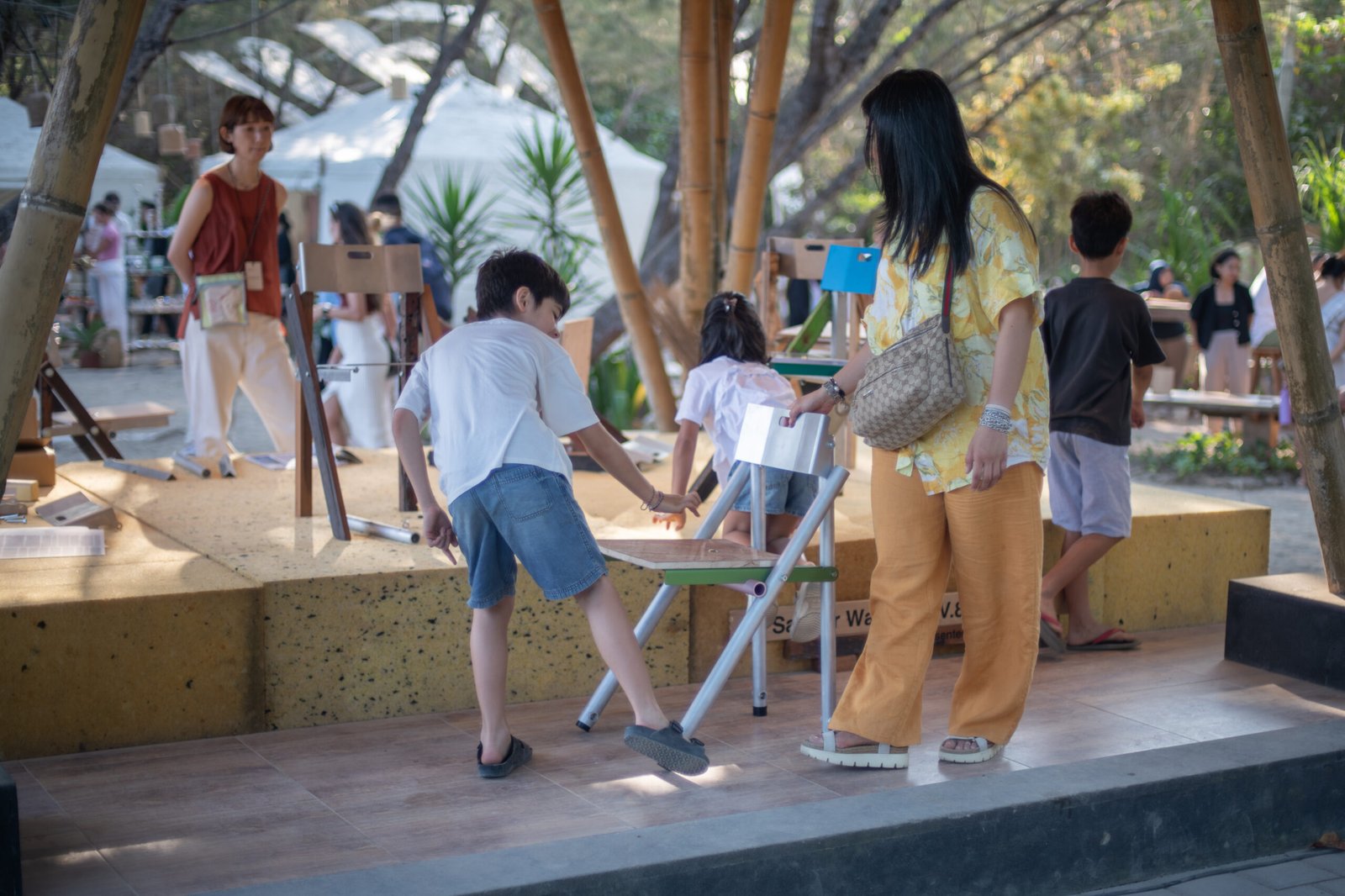
Alvarez noticed something else; he shared with Kanto that, amid all the business happening underneath, curiosity about the work and the people behind them never wavered. Young people, especially children, leaned hard into the pieces with the same intensity as the designers themselves — a rare sense of continuity for an event straddling commerce, culture and community.
By day three, Jia CURATED visitors have already breached 10,000.
Bali has a long history of hosting the bold, a muse to people with a vision bigger than themselves. National hero I Gusti Ngurah Rai made his last stand against the Dutch in the village of Marga, Tabanan. Bali hospitality pioneer Wija Wawo-Runtu’s Tandjung Sari was the progenitor of the Balinese sanggraloka brand of hospitality — a context-rooted approach that later inspired Aman and its ilk. Ong, with partners Hartono and Winata, is among the most recent of the island’s inspired, having built arguably its only annual international design-centric gathering.
What lies in store for Jia CURATED 2027 now that the hustle and bustle at Pengembak has given way once again to the persistent crash of waves? Jia co-founder Ong gives me the lowdown on how, from Nature Weave’s outward gaze, the festival now wants us to come home to our feelings.
On staying at Pengembak Beach
With Nature Weave closing out its run at Pengembak Beach, what did staging a familiar program in a wilder, less controlled setting teach the Jia team, both the good and the bad? Is Pengembak Beach here to stay for 2027?
Budiman Ong, co-founder of Jia CURATED: Pengembak Beach stays for 2027. Both the challenges and the positives come from the same thing: it’s unpredictable. As a designer, unpredictable isn’t a bad thing. It’s a challenge, which means more issues, but creative people usually like that. It makes you think outside the box. There’s still so much this space can give. Every year we bring a different theme, and that same space gets a different response each time. It’s interesting to see what changes from one year to the next, and how we improve. You never stop. When you stop, you die.
On where Emotion in Motion came from
Emotion in Motion follows Nature Weave as next year’s Jia CURATED theme. Where did this theme come from, and how does it build on or break from Nature Weave?
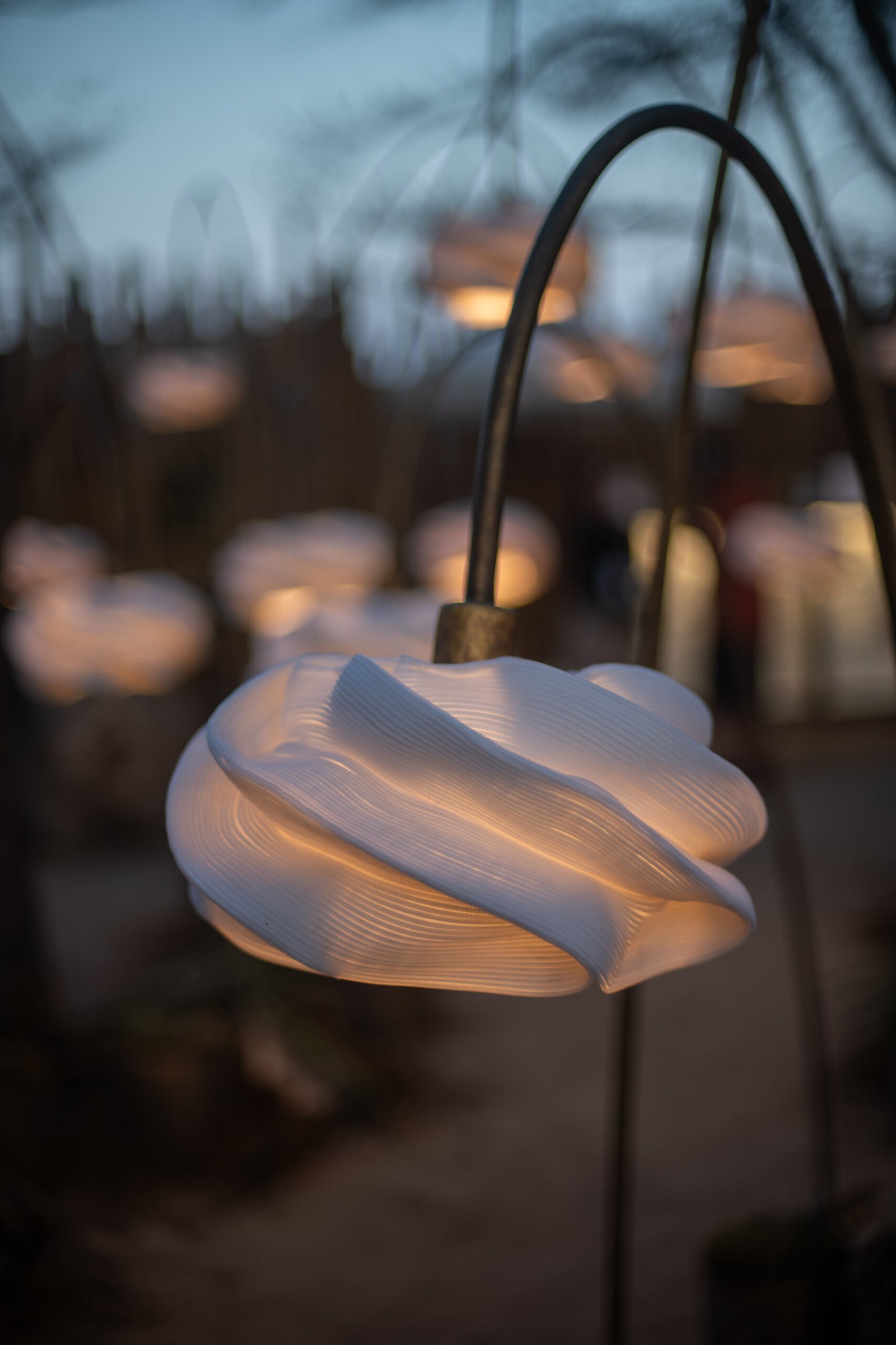
Budiman Ong: Every theme starts with me, because I work as a designer every day. I’m the expert on myself, so if I come up with something, it’s true to me first. My company is eighteen years old now, and it’s always been evolving from the same root. This year we realized our lighting work has always really been about emotion. Once we land on a direction, we keep it open enough for people to respond to it differently, because things are never static; they’re always moving. I don’t control how it lands either. From me to the person who makes the work, to the client who receives it, everyone reacts differently. That’s the motion in it. I want people’s interpretations to surprise me.
On what’s still missing, and Jia’s curatorial standard
This year spanned architecture, interiors, product design, performance, even food. Is there a creative discipline or mode of expression still missing that you want in the fold for Jia CURATED 2027? And for interested joiners, what do you look for in a Jia CURATED exhibitor?
Budiman Ong: In terms of disciplines, I think we have the ecosystem already: designers, brands, makers, artisans, manufacturers, interior designers, architects. What we need to keep working on is curation. We’re five years in now, and we’re starting to understand ourselves better. We still don’t really know what to call this thing. Is it a fair? A festival? A trade show? A cultural show? It’s all of those, combined, and I think that’s why it keeps evolving.
Our criteria for curation are fundamental, really. Jia is home, so we look for anything that belongs at home. That’s home, design, craft, culture, and gotong royong, five in total. A brand doesn’t need to fulfill all five to get in. If they’re strong in even one, that’s reason enough to let them in. They learn the rest during the festival.
On the regional gap, and next year’s spotlight nation
Japan, Taiwan, and the Philippines all showed up strong this year, but Southeast Asian neighbors are still rather thin on the ground. Is that a pipeline problem, or deliberate curation to keep local talent from being crowded out?
Budiman Ong: We want everyone, but we want it done the right way, and that’s subjective. For us it really comes down to people: how do we find the right ones? I’ve known Shikai [Tseng, curator for the Taiwan Pavilion and Project Benih] from Taiwan for years, since we met at Maison&Objet around 2013. We stayed in touch online long before I invited him to come. Japan grew because we invited Japanese architects to speak first, and Bali already has a strong Japanese community, so those connections built naturally.
The Philippines came through the same kind of networking, which is how we connected with Gabriel Lichauco. We want it to grow naturally, with people who share our philosophy, because when the right people are here, they bring their own people. We were new too, once. Nobody knew us at the start. It’s never about paying to be here; it’s about exchange, about people who want to grow together. That’s gotong royong. We do want everyone from the region eventually. Next year, it’s Australia. We’ve confirmed an Australian curator, and she’s very good.
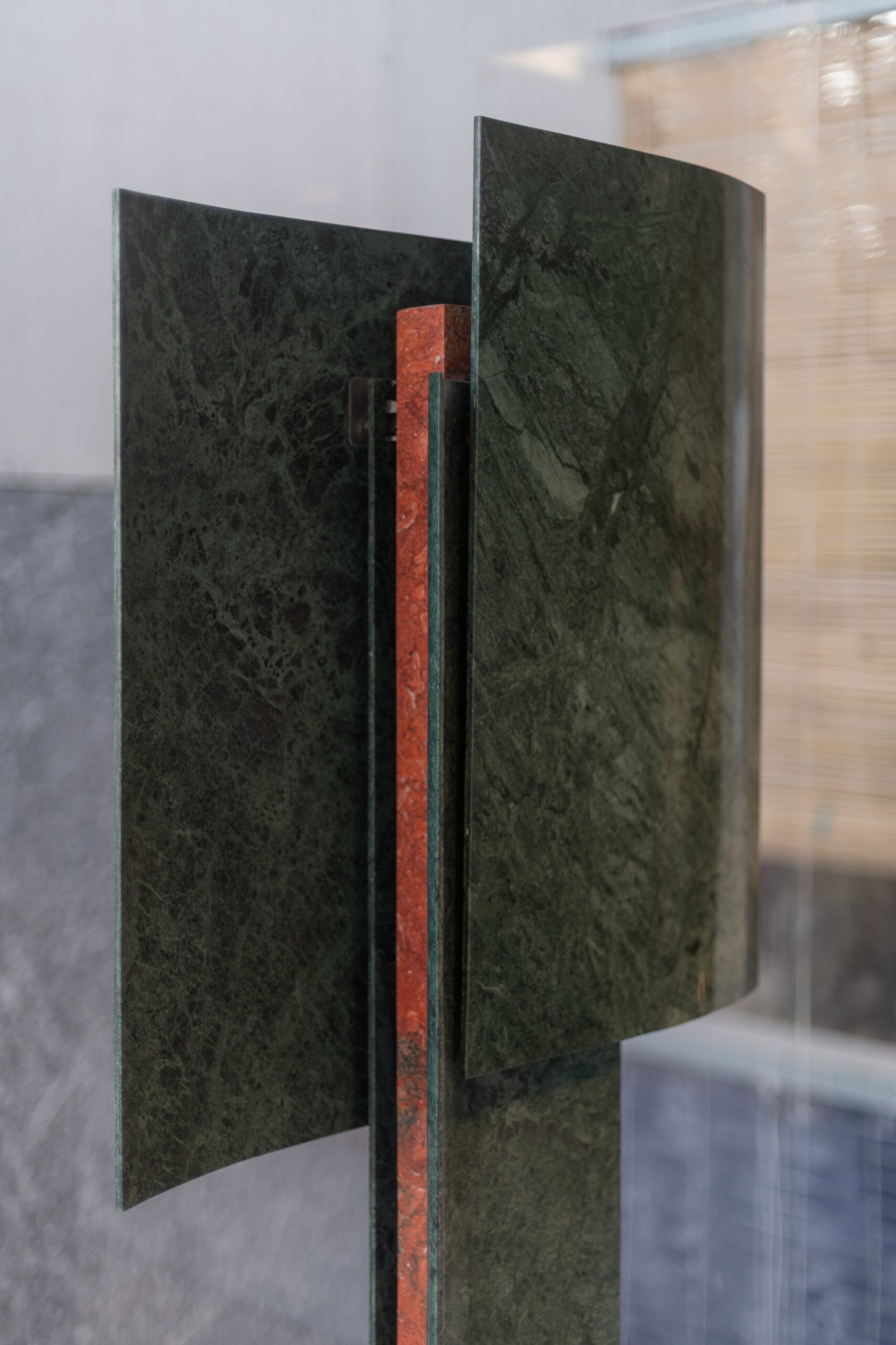
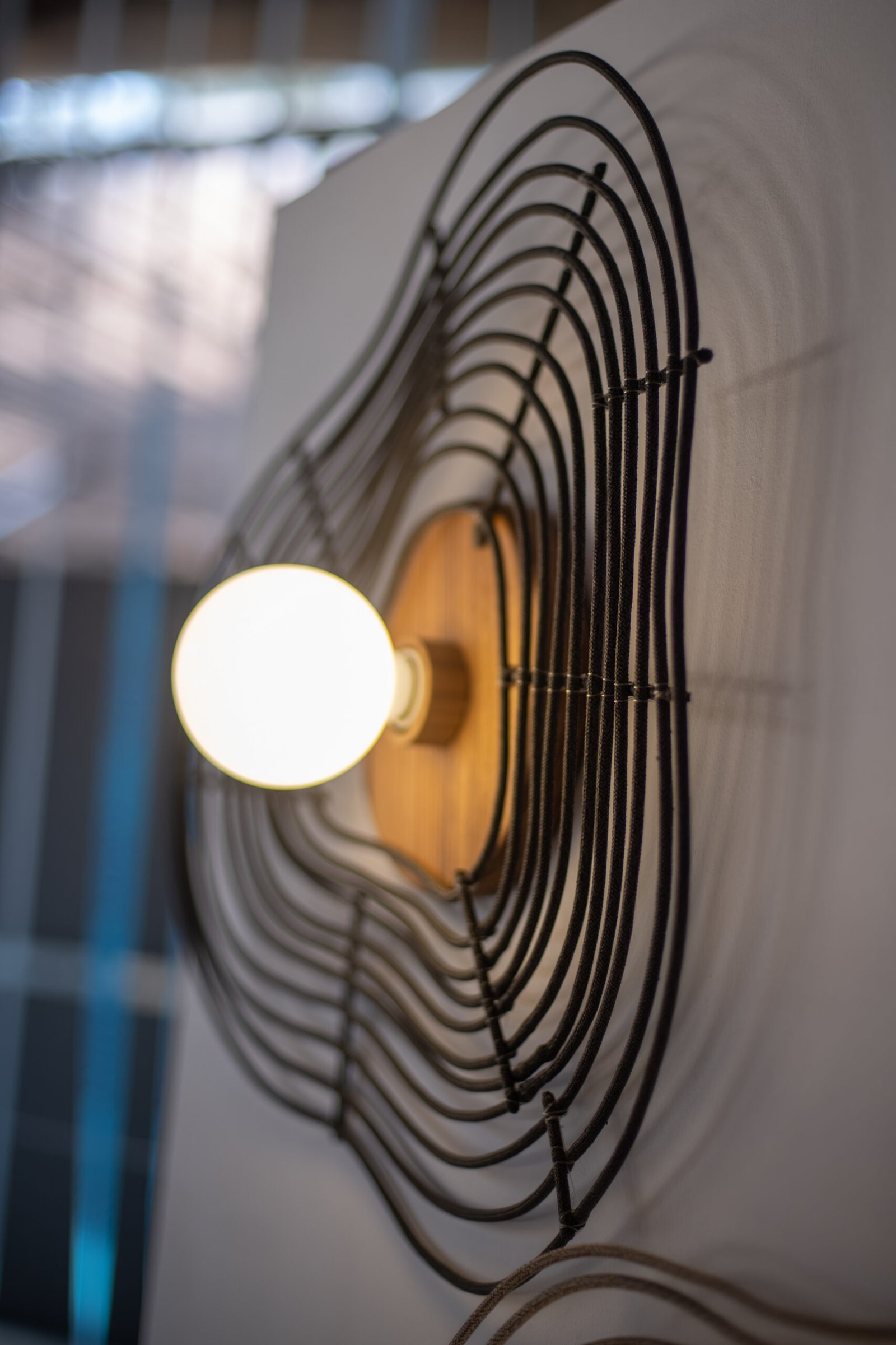
On what people bring home from Jia
Beyond exposure or sales, what’s the biggest thing past exhibitors have told you they got out of showing at Jia?
Budiman Ong: I think they feel welcome. That’s honestly how I gauge whether we’ve done our job, more than attracting the right numbers. When people are here, and we sense that they get it, that’s when I know it worked. As a designer, I’ve traveled to exhibitions that felt intimidating, and that’s what we want to take out of the equation here. Bali is grounded in a way that helps with that. We also tell exhibitors they don’t need a perfect booth. Use what’s already there, keep it as minimal as possible, and let the brand carry it instead of the build.
We’ve also become more aware that a fair generates waste, so this year we briefed participants on what happens after. Some of them took it seriously, building booths meant to be reused or sold, and a few sold this year. Others were donated — SUAR, a tower installation by Studio Aliri, went to a foundation on a beach in north Bali. That storyline matters to us as much as the work itself.
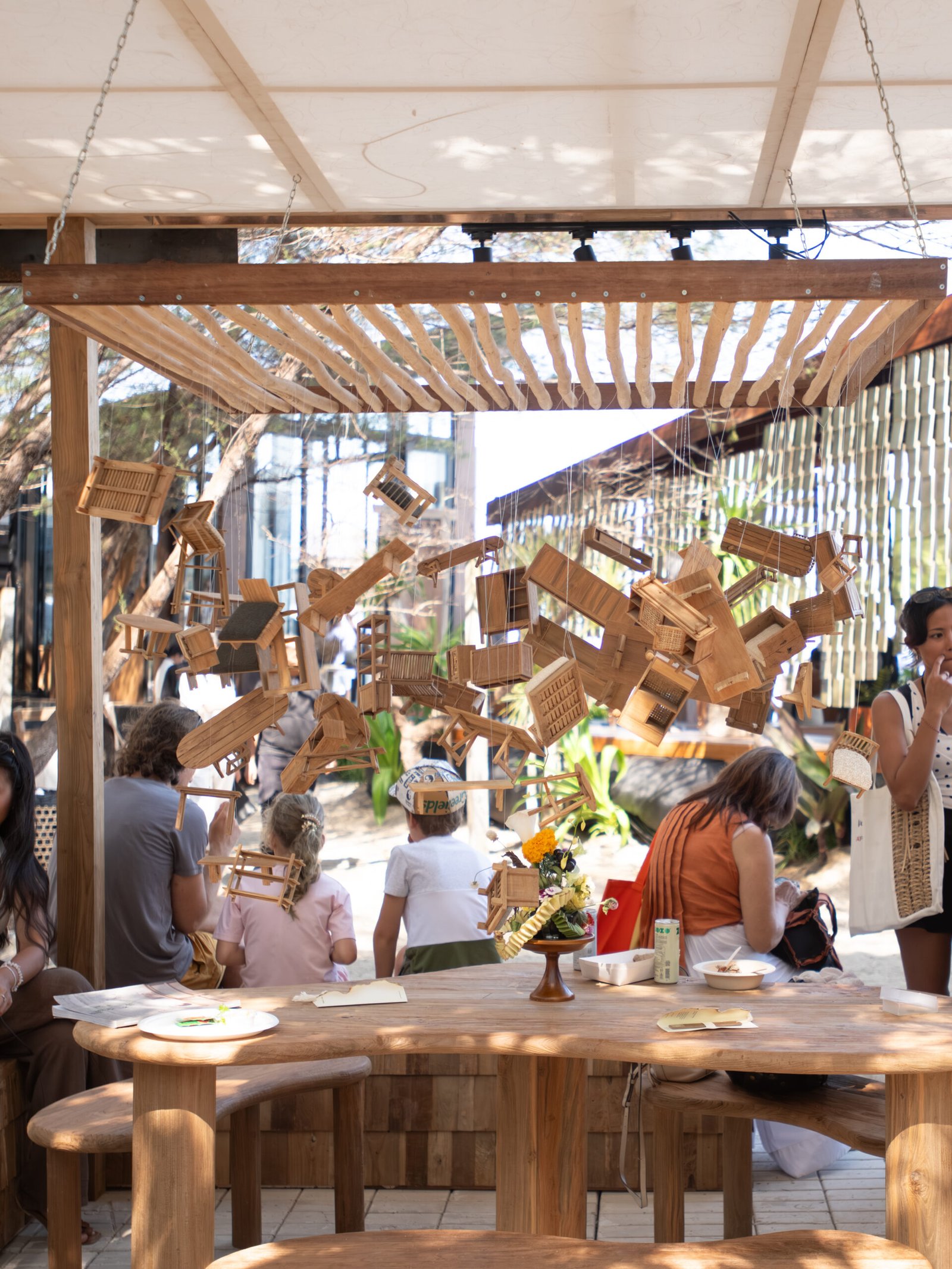
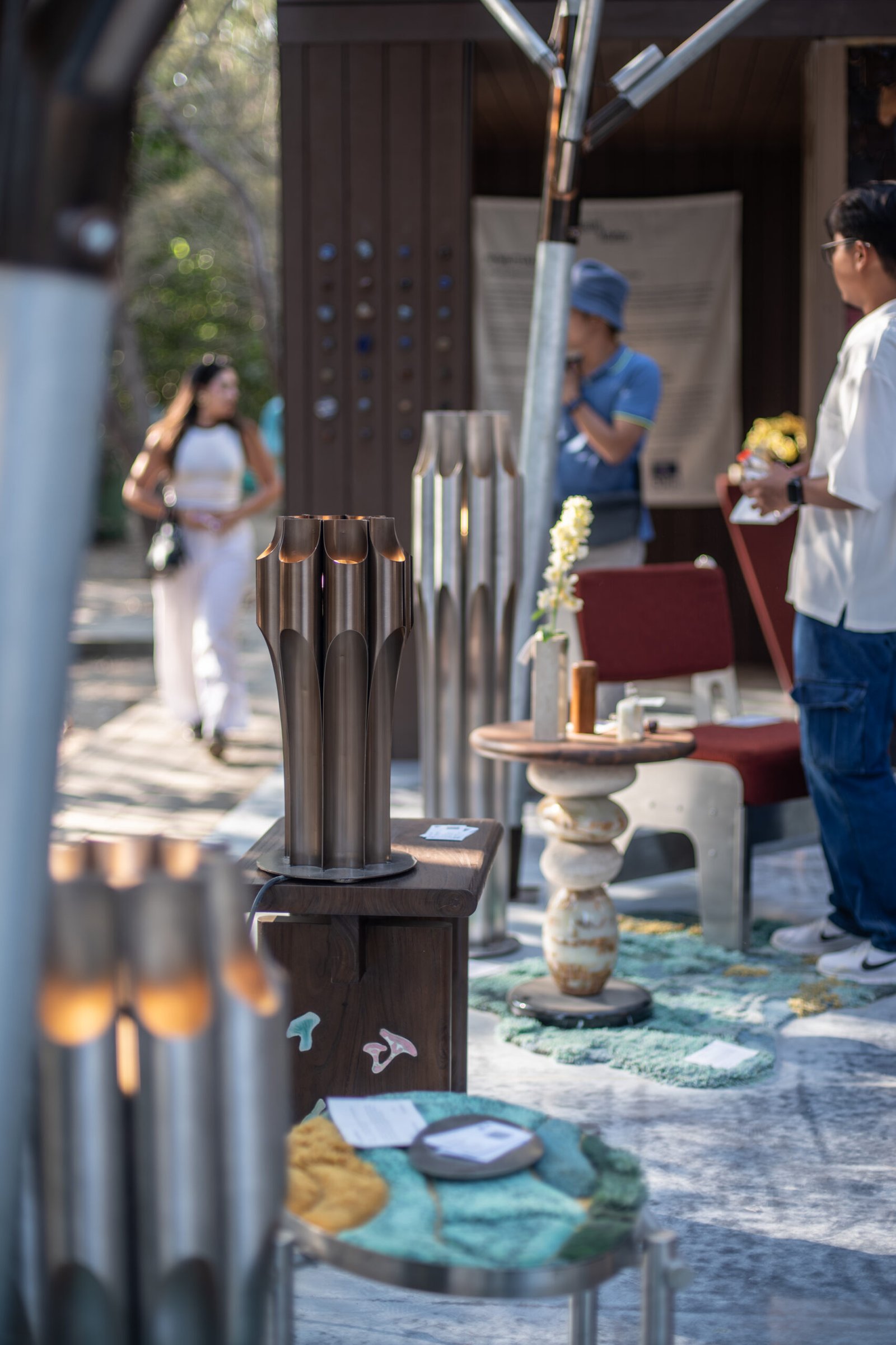
On Budiman’s exhibitor wishlist
Let’s end on a fun note! Kanto likes to think of itself as the place creatives manifest their wishes, and we’ve got a pretty good track record! Off the record or on, which brands or designers do you want to see at Jia CURATED 2027, should they be reading this?
Budiman Ong: Oh no, that’s not a fun question, it’s a trap, there’s just so much! Nendo would be good. Kengo Kuma would be good. Tokujin Yoshioka would be great! I remember him collaborating with Swarovski on a clear crystal stool shown at a museum in the Netherlands.
I seem to notice most from your designer wishlist hail from Japan
Budiman Ong: Oh! Well, I’ve always been influenced by Ingo Maurer, though he’s passed on now. His lamp collection really changed the way I see lighting.
Haha! I love Herr Maurer too, but I think that one’s beyond Kanto’s manifesting powers — you can only wish for the living ones! •

Kanto is a media partner of Jia CURATED 2026