Words and interview The Kanto team
Images Bianca Carague and Bien Alvarez (Jia CURATED 2026)
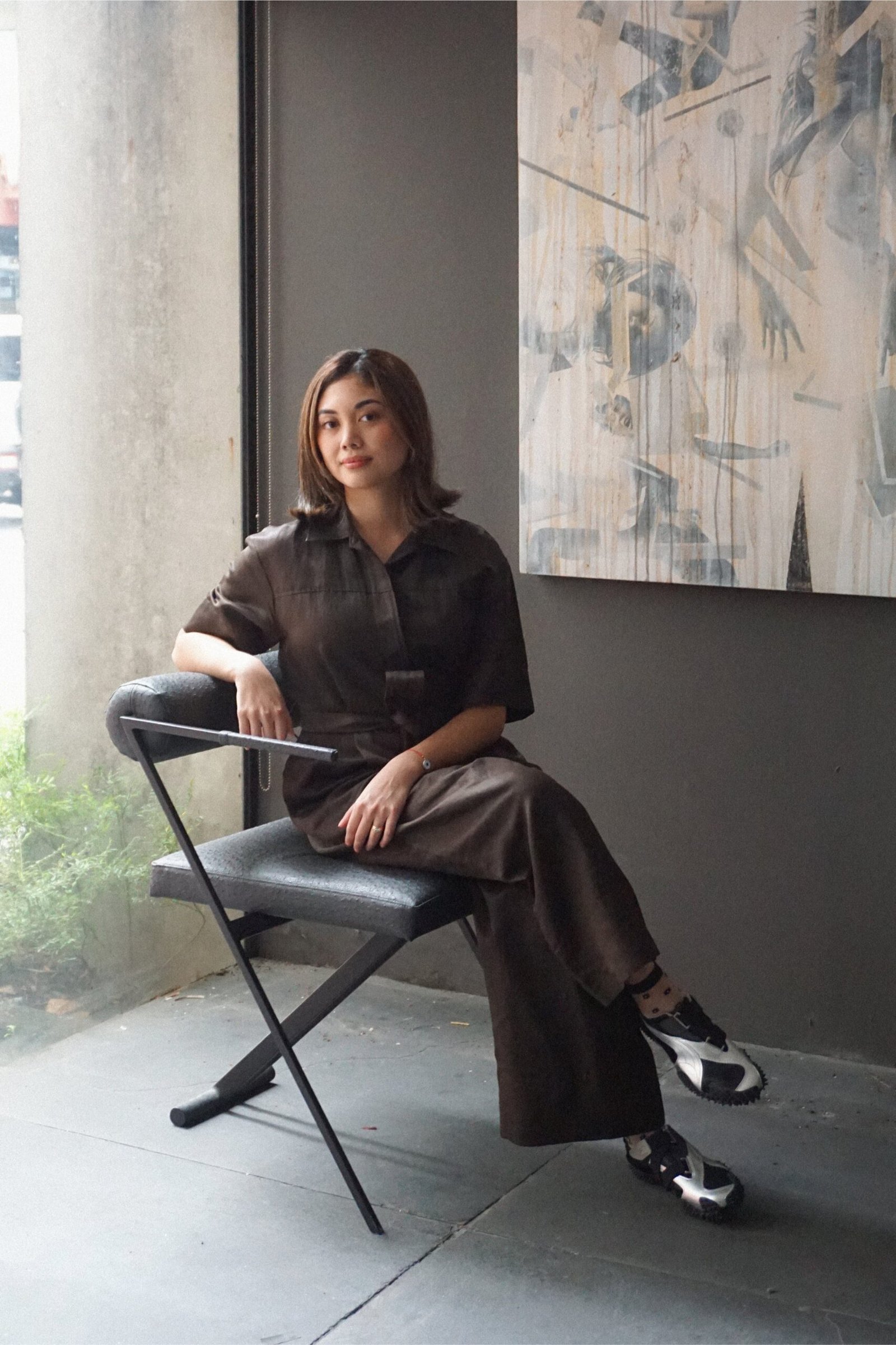
Bianca Carague works in organic, sculptural forms, often in the realm of digital otherworlds. Her creations are often grounded in premises that speak of dystopian futures or alternate multiverses, such as her recent Technospoonism collection of wearable cutlery for Benilde Open. Mabalacat-based South Sea Veneer, meanwhile, has spent over two decades perfecting flat, two-dimensional wood surfaces with finesse; they are wood whisperers after all, who have shown their skill through sister companies JB Woodcraft, Betis Crafts, and More than a Chair, whose pieces have reached foreign shores.
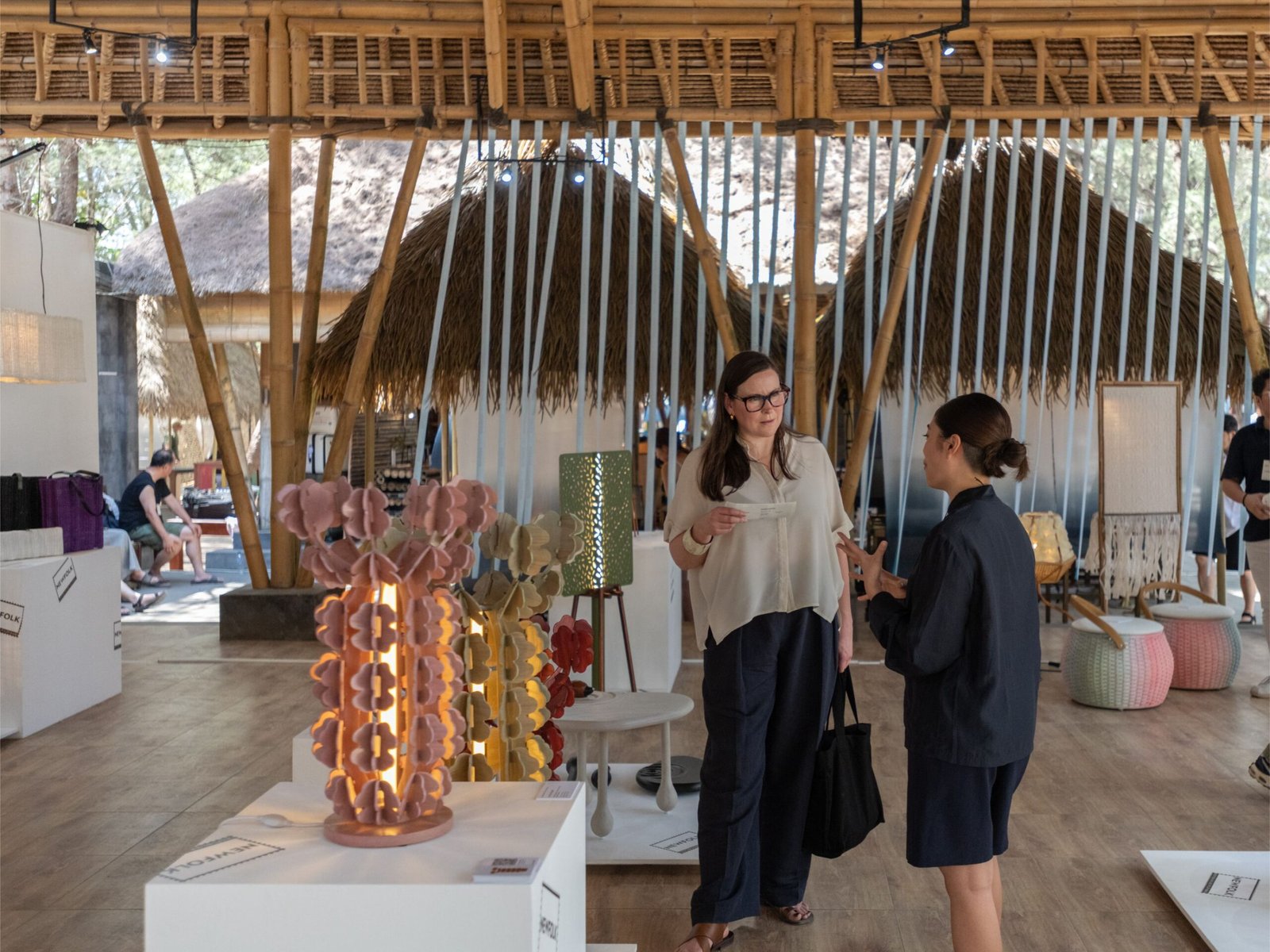
By Carague’s own admission, this was never going to be an obvious pairing. She pursued it anyway, out of admiration for the 24-year-old veneer manufacturer. The result, the Flutter lamp, part of Tomorrow, NEWFOLK’s Philippine spotlight showcase at Jia CURATED 2026, asked a designer used to the material possibilities of digital creation to handle physical constraints, and a manufacturer known for the sturdiness and solidity of wood to help it seemingly sway and tremble in the wind.
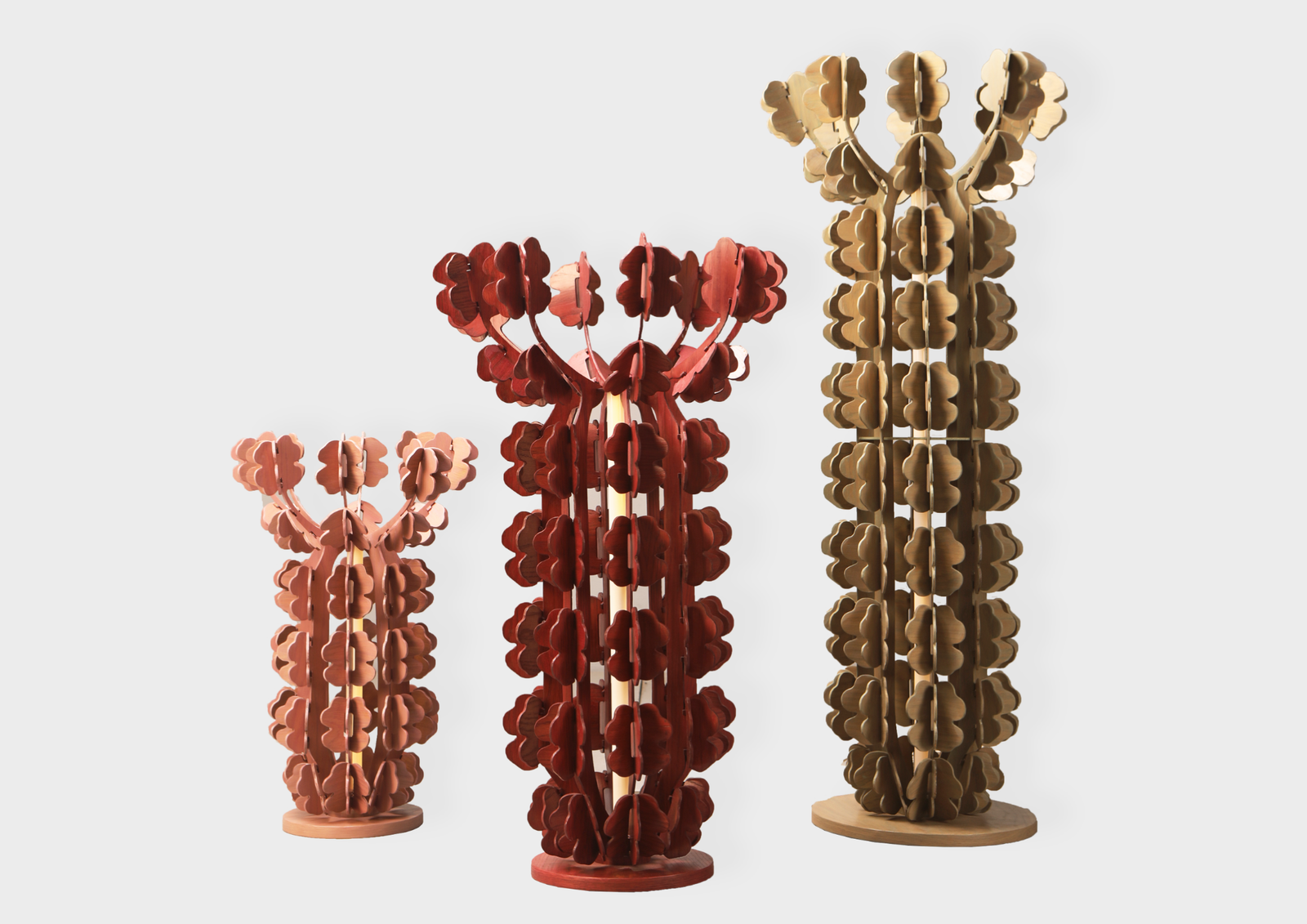
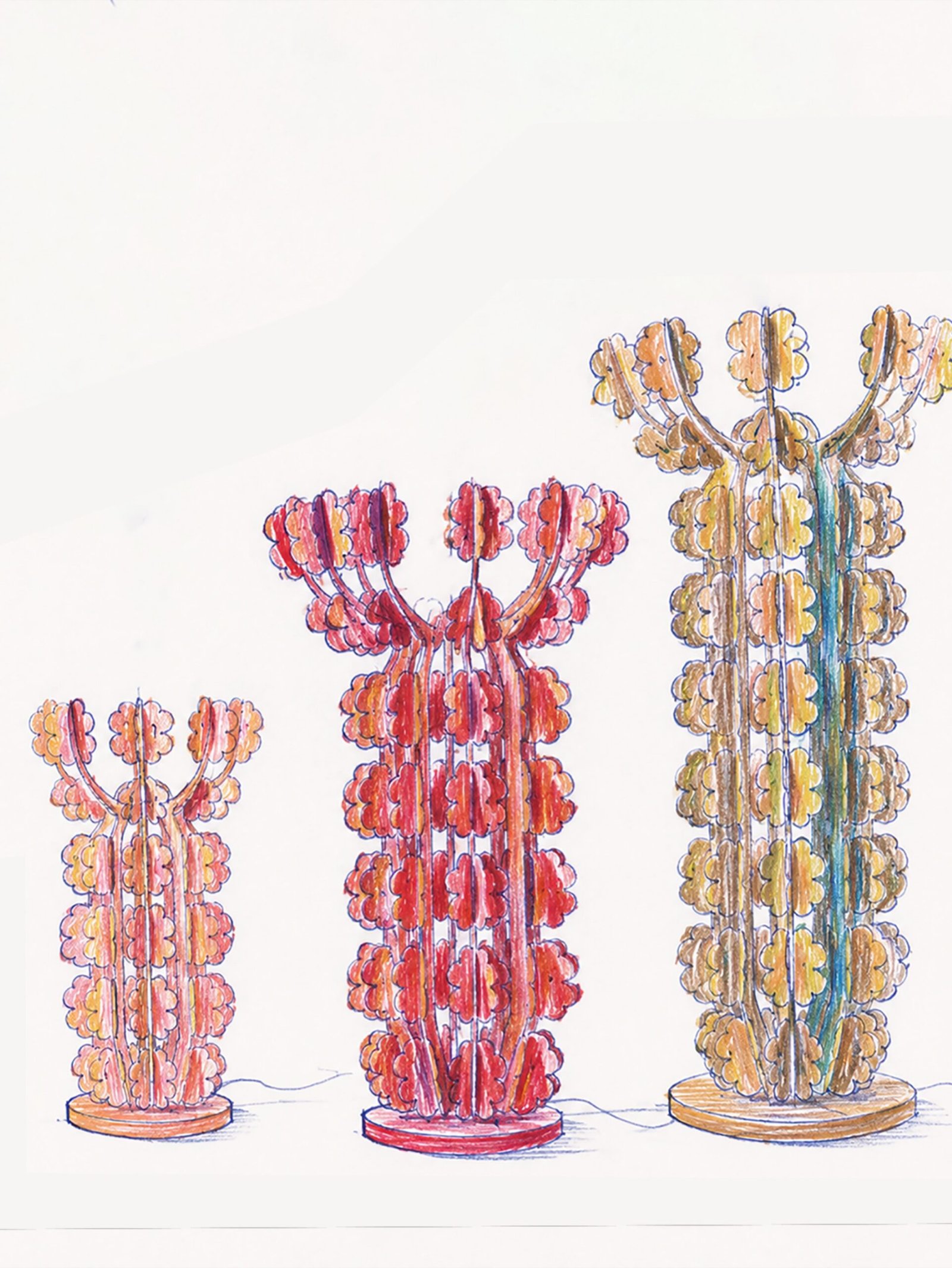
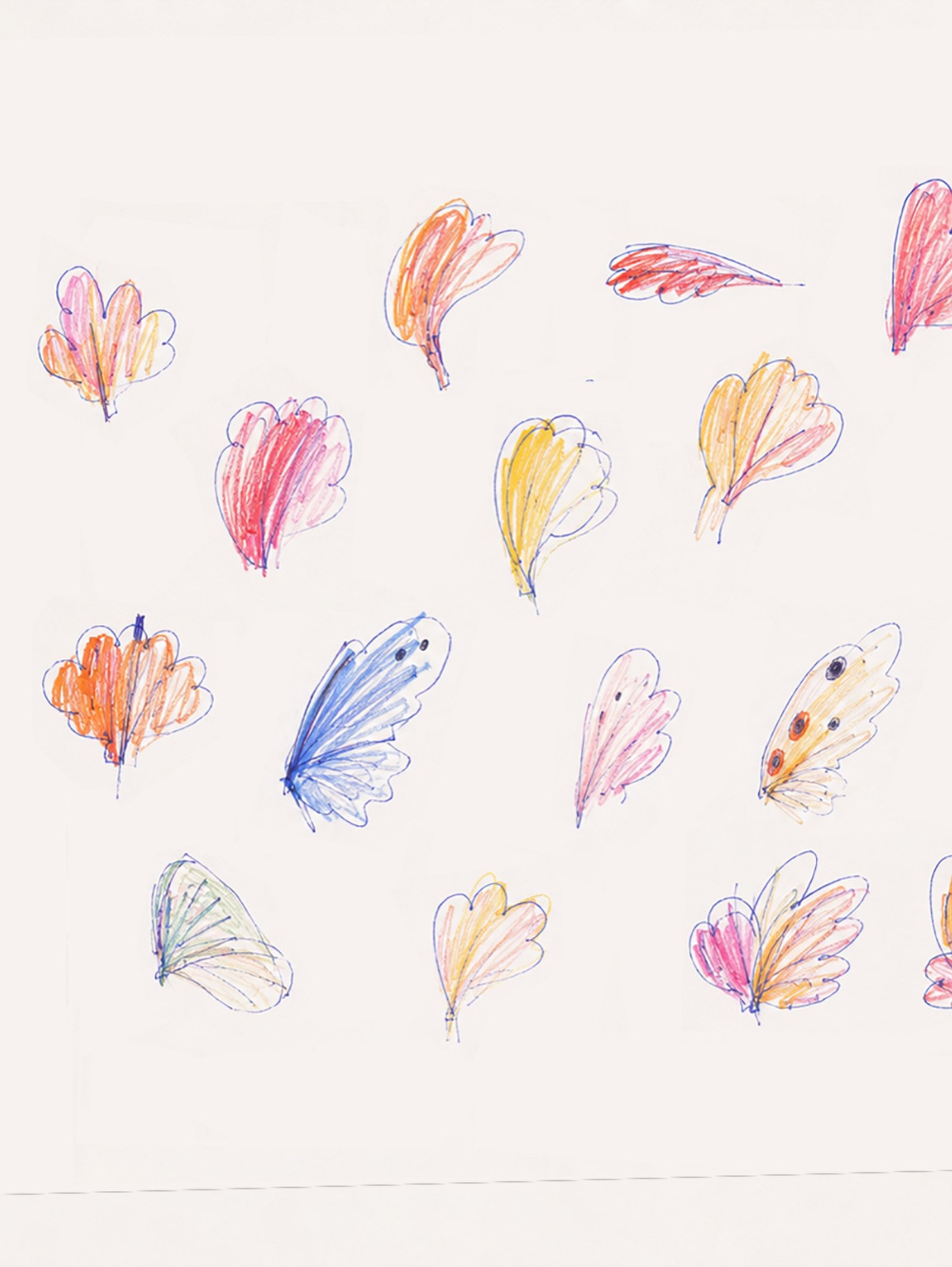
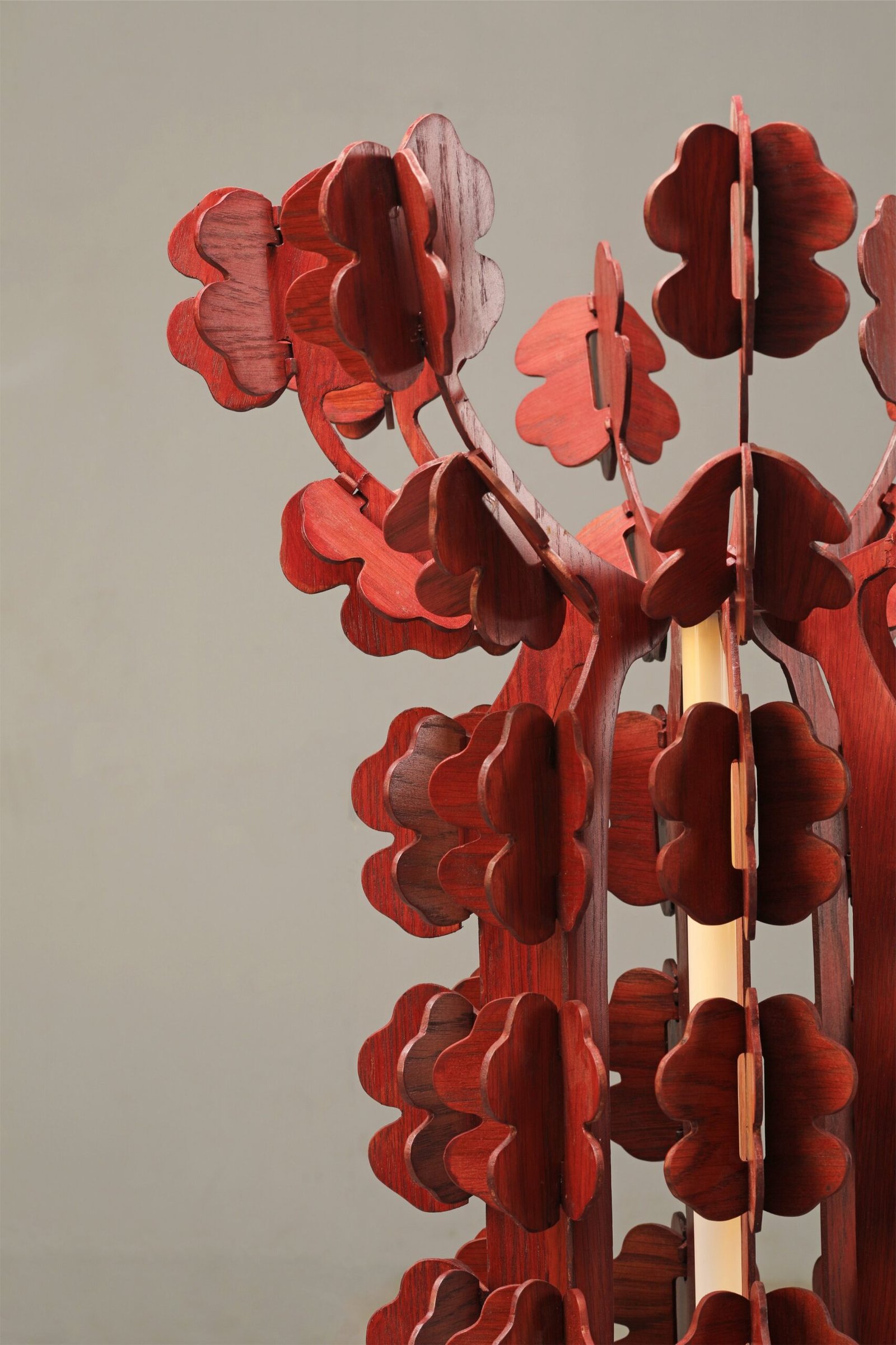
Flutter is built from a single repeating shape that grows upward in clustered layers, recalling petals, wings, or emerging shoots. What made South Sea’s veneer lamination expertise a fit to communicate that complexity through repetition?
Bianca Carague: The structure and clustered layers of the Flutter collection were digitally cut before being hand-clad in natural wood veneer. This approach allowed me to have control over the form through digital manufacturing, while South Sea’s craftsmanship brought warmth, depth, and tactility that can only be achieved by the human hand. The result brought together digital precision and traditional artisanship.
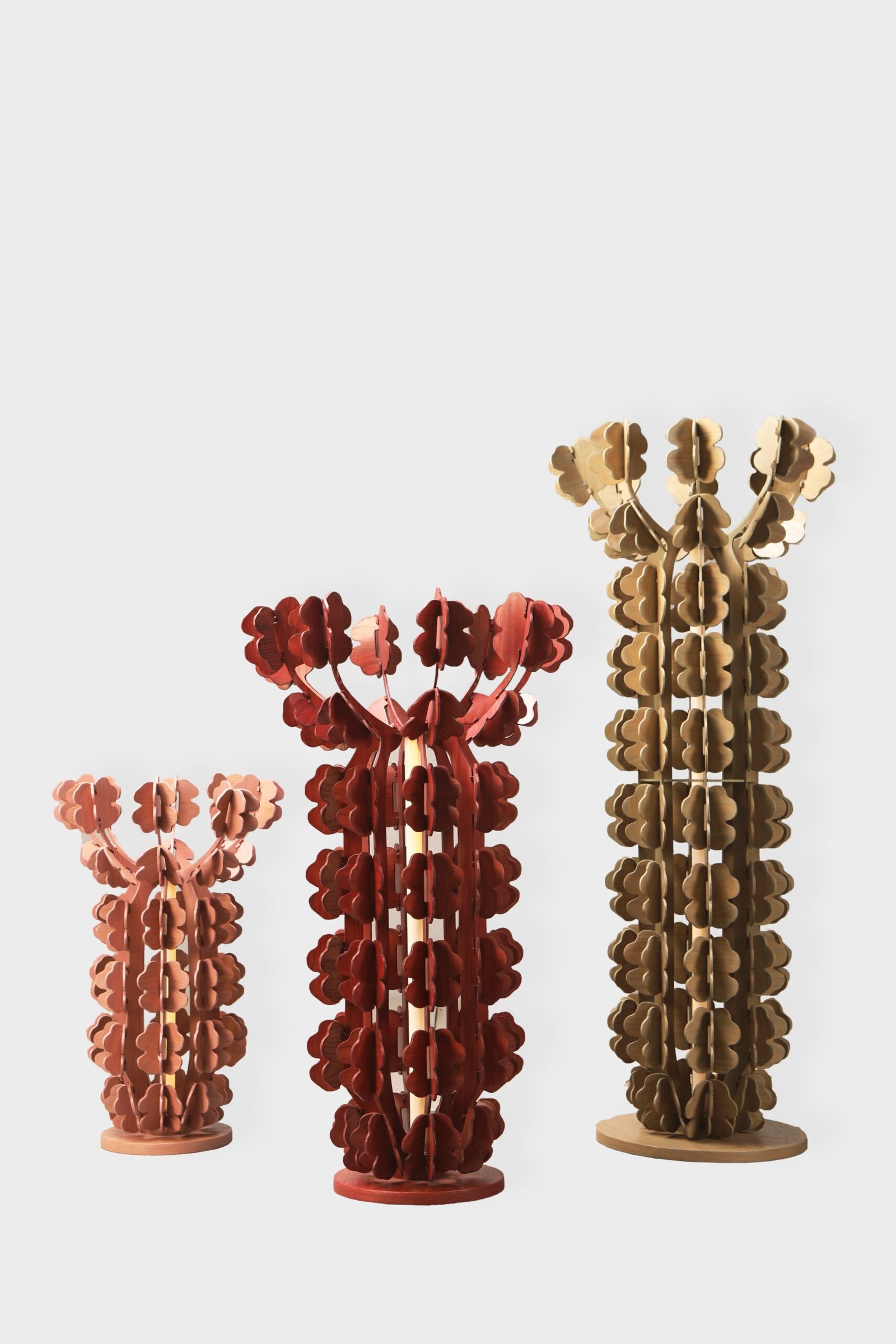
Flutter by Bianca Carague for Jia CURATED 2026
The Tomorrow show calls for a pairing between a young designer and a legacy maker. What did you each have to learn from the other to make Flutter a reality?
Bianca Carague: Beyond the pairing of a legacy maker and a young designer, our creative processes are fundamentally different. South Sea is rooted in preserving Philippine craft, while my practice is more future-oriented, often using technology in my process. My work also tends to be quite organic and sculptural, with forms that are not typically possible or easy to do with veneer, so we were not at all an obvious pairing.
However, I’ve long admired South Sea, so when I learned they were participating in Jia CURATED, I immediately wanted to collaborate with them. It was pretty unexpected, and I believe people were surprised by that choice. The challenge for me was finding common ground. Rather than asking South Sea to adapt to my usual language, I wanted to create something that leaned on their strengths while pushing it in a new direction a little bit, and still feel like me.
Lieza Bituin, South Sea Veneer: As a manufacturer, our role and objective is to transform our designers’ ideas from discussions and drawings into a physical product. It was important to introduce our materials and processes, explaining production restrictions, whether through available machines and tools, or what hand and manual work can and cannot do. But we still wanted to give the designer flexibility to explore ideas, and that flexibility benefited us too; we learned new techniques outside our comfort zone in the process.
Each component, though cut by laser to ensure consistency, is still assembled piece by piece by hand at the end of the day. It was a full circle of combining the consistency of machine cutting with the skill of handwork.
For South Sea Veneer, is there a technique or piece of your own history this partnership gives you a chance to put in front of people who’ve never seen it before?
South Sea Veneer: We hope that as a company, we can offer a glimpse of our capabilities beyond our usual furniture-making process. Usually, we highlight the manipulation of the wood veneer and various finishes first, with the form second. This collection reversed that order: to produce it, form had to come first.
The allure of Flutter is that it looks detailed and solid from afar, yet delicate and fragile up close. What structural engineering was needed to hold that tension, so the piece looks light while still holding its shape?
Bianca Carague: I wanted the piece to feel as though it were blooming in multiple directions. Nature, while bushy and wild, is also organized and designed. I was interested in imagining what that balance might look like in a world of my own making. Structurally, I used a slotted construction system because it’s simple and precise, and it was a way I realized I could work with South Sea, despite a method, veneer, that’s more commonly associated with flat, two-dimensional surfaces. By repeating and layering a single element, I was able to create a composition with depth, movement, and structural stability. That interplay between apparent fragility and strength is the tension I wanted the collection to embody.
You’ve been bridging your conceptual work with object design, as in recent work like Technospoonism, but this piece feels wholly physical from concept to execution. Did the Jia CURATED brief change your usual process, and what has realizing Flutter taught you about designing for a physical space?
Bianca Carague: It is true that much of my practice over the past few years has been conceptual, and only recently have I returned to designing functional and decorative objects. But in many ways, my process has not changed. When I design an object, I ask myself what kind of world it belongs to. So, I don’t think of Flutter as an object designed simply to occupy a space. I see it as a fragment of a larger world. Each piece I make becomes a building block in an environment I am authoring over time. I find interest in designing places or worlds that emerge object by object, each carrying a similar emotional and conceptual language.
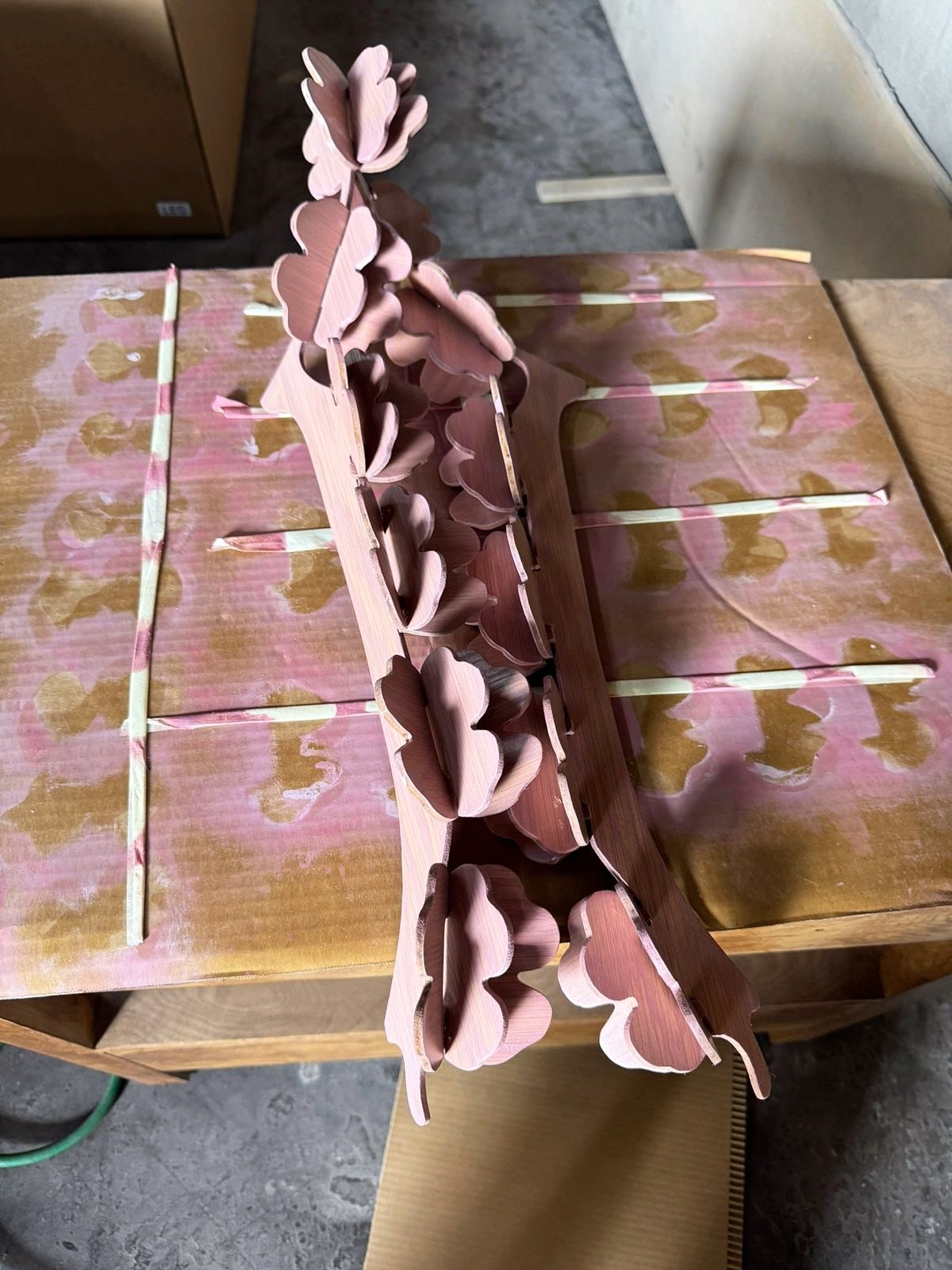
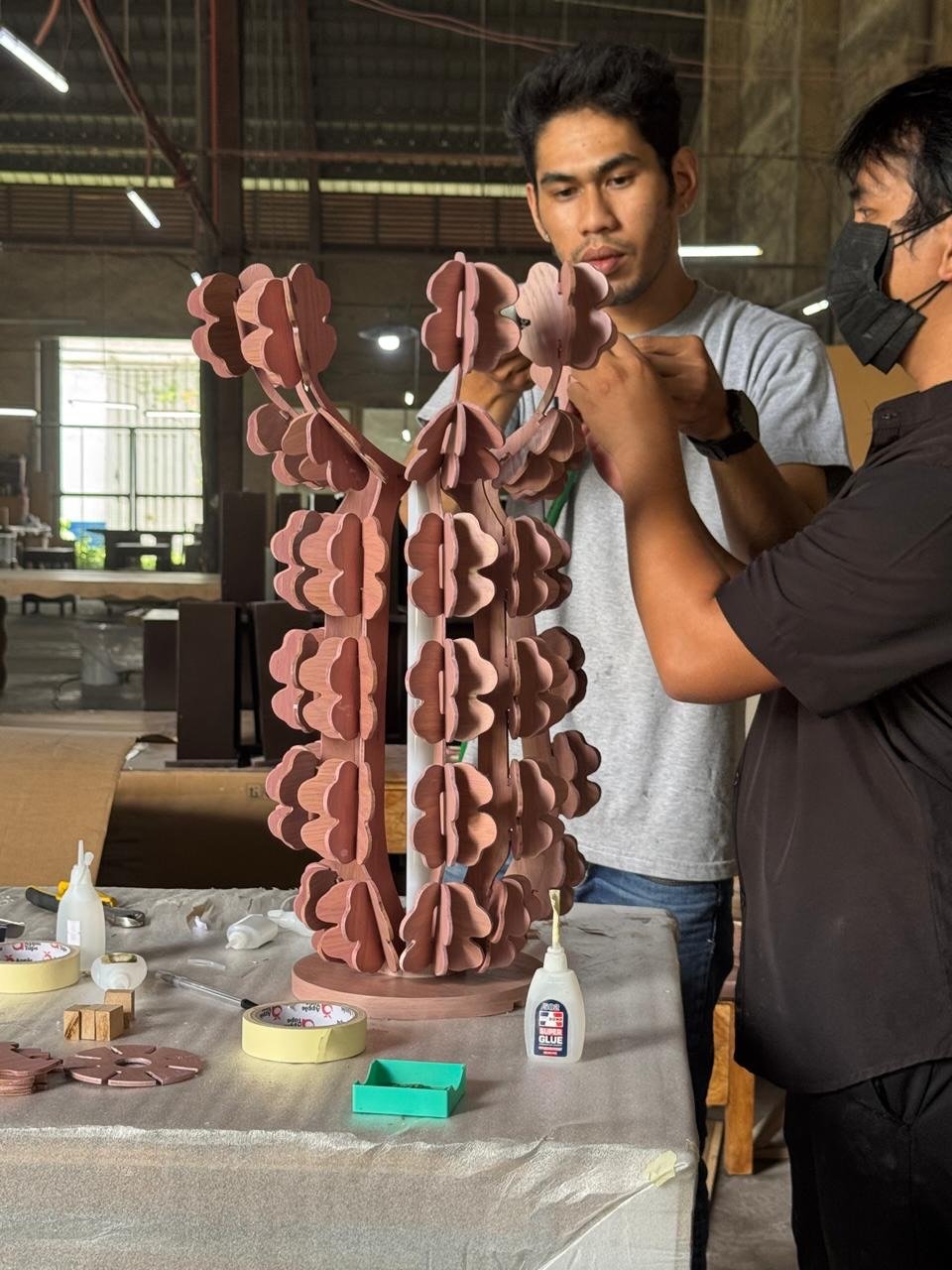
The making of Flutter for Jia CURATED 2026
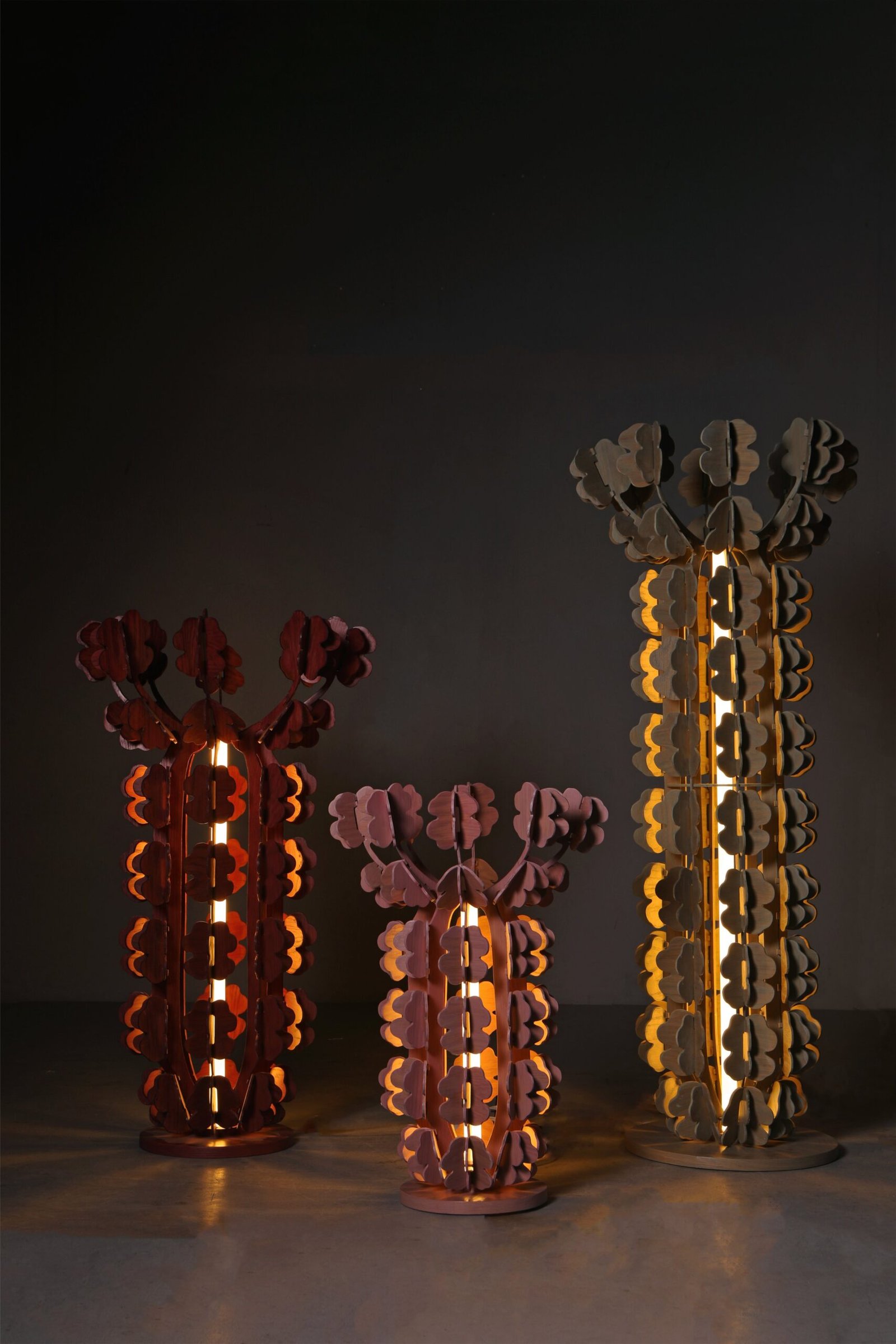
South Sea Veneer’s expertise is primarily in veneer lamination for furniture, where lighting is rarely part of the work. What did integrating LED illumination into Flutter’s veneer construction require that a typical commission wouldn’t?
South Sea Veneer: The Flutter collection, as a lighting series, is more delicate yet structural than what we would usually do as a furniture manufacturer. The exterior part, the visible wood veneer and color, is already our comfort zone, whereas constructing small components together, even if repetitive, makes the process different from our usual. Though we are not a lighting company, adding the illumination was necessary, and integrating it with the pieces, guided by Bianca’s vision, worked well given the availability of the electrical components.
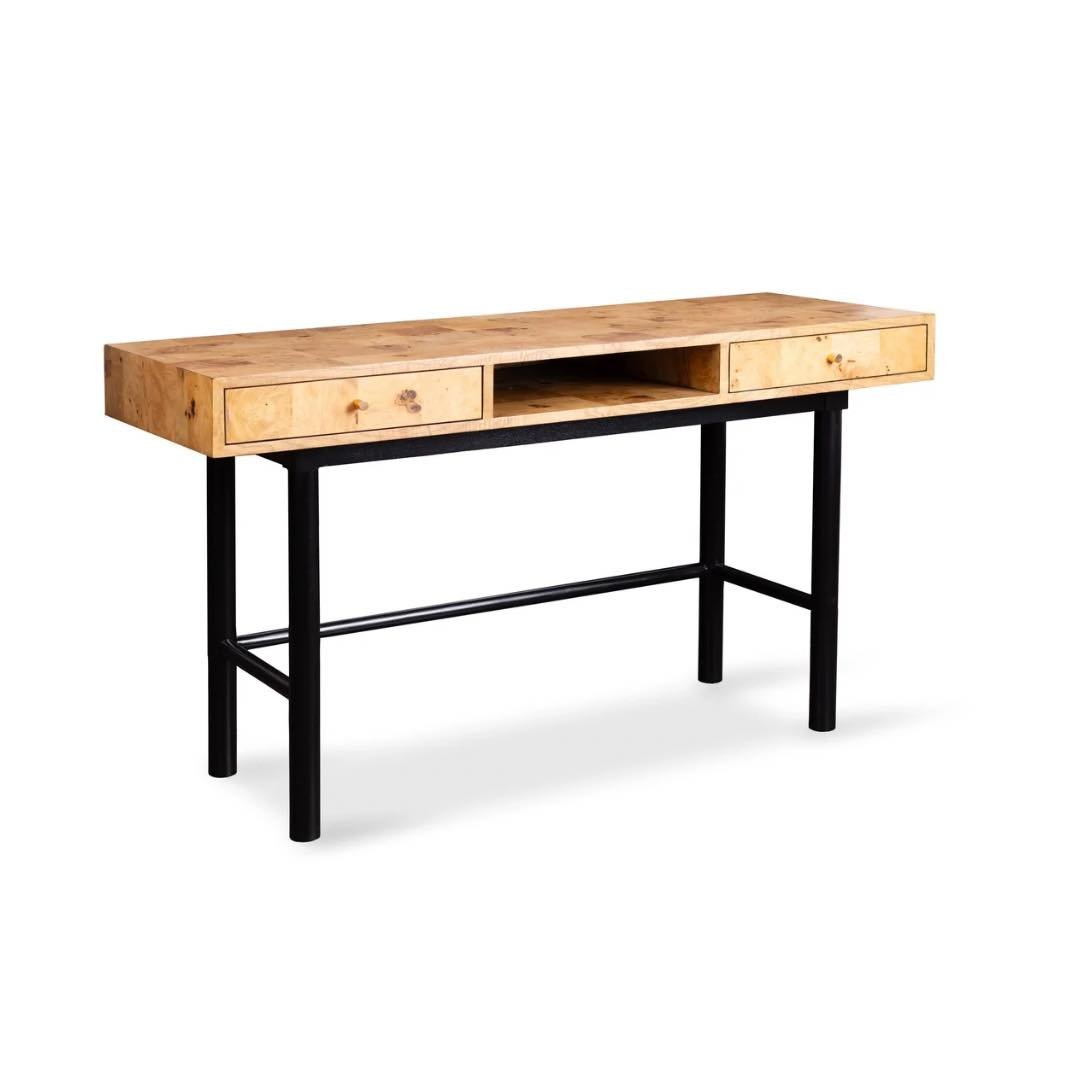
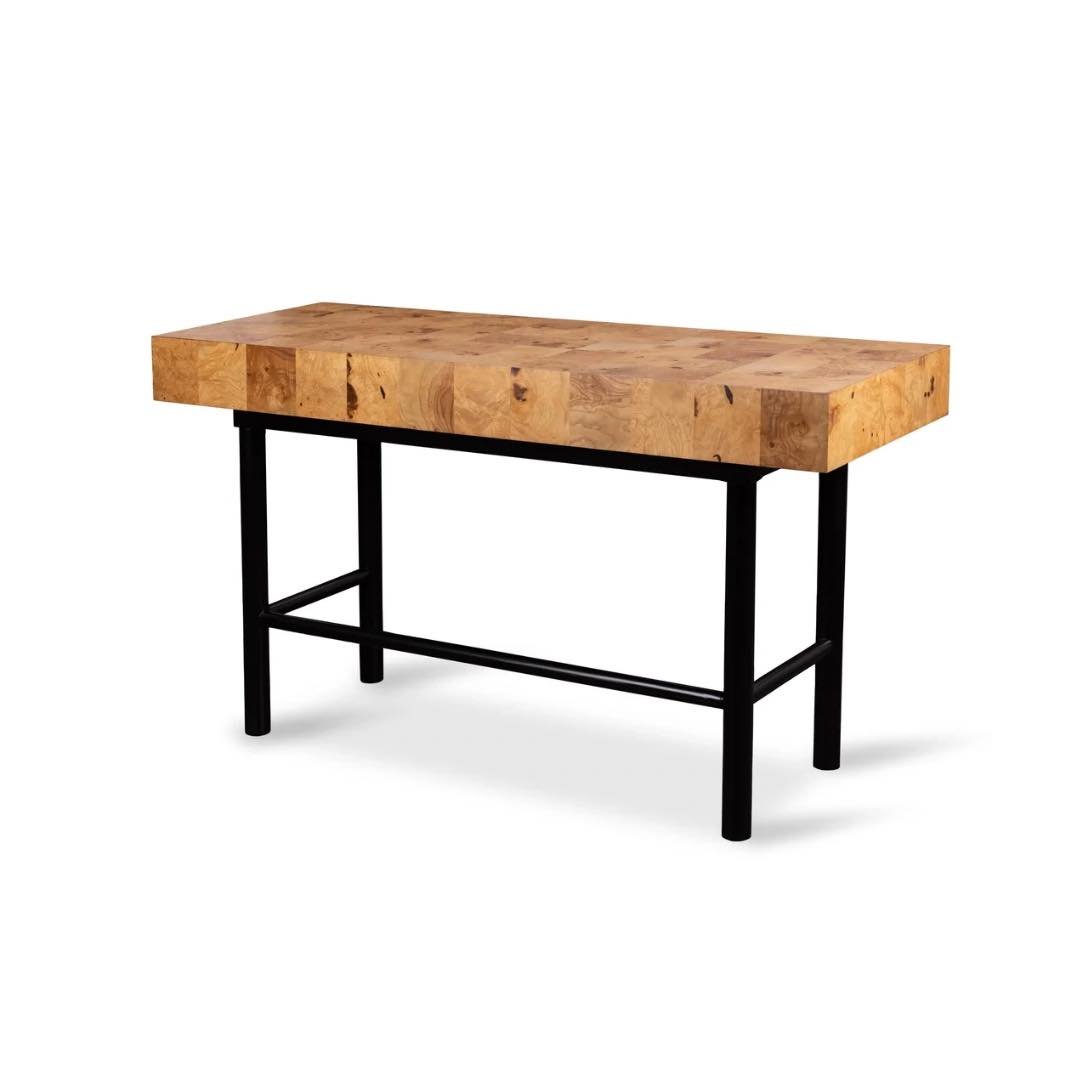
Baron Desk by South Sea Veneer, in olive ash burl wood veneer, hand-inlaid in tile pattern
The theme of Tomorrow asks designers and manufacturers to reconnect with nature and culture. What did that phrase mean to you?
Bianca Carague: I think about “treeness” quite often; what makes a tree a tree, how they naturally cultivate positive emotions in the spaces we inhabit, and how their forms have also shaped our sense of beauty over time. Much of my practice explores how our inner worlds shape our environment and how the environments we create, in turn, shape us. The digital landscapes I design are often serene and filled with natural elements because nature evokes calm, wonder, and reflection. For me, treeness embodies those qualities and reminds me that nature nurtures not only our physical lives but also our inner lives. I felt the prompt was asking me to translate treeness into a physical object.
Jia CURATED puts Philippine work in front of an international audience that may be encountering it for the first time. What do you want them to understand about Philippine design through this object, that they might not already assume?
Bianca Carague: To me, Philippine design is ultimately about the spirit of the object, which comes from the person who made it. Everything I make carries a part of me, and I believe that is what makes it Filipino. I see Philippine design on several levels. The first is aesthetic, the visual language people often associate with the tropics. The second is material and technique, the use of local materials and craft passed down through generations. The third is purpose, design that responds to our climate, culture, and the realities of life in the Philippines. But the level I resonate with the most is spirit: the worldview, values, and lived experience embedded in an object by its maker.
NEWFOLK’s own framing of this show leans on padala, the practice of sending gifts to loved ones. If you had to send this piece off as your own padala, to whom would you send it?
Bianca Carague: I would send it to a stranger. I like the idea that the most meaningful relationship an object can have is with someone the designer may never meet. And for me, design is often an act of care for someone you will never know. Once a piece leaves the studio, it begins a life of its own. If Flutter can make someone pause, or feel a little calmer or more joyful, then it is carrying what I hoped to send. In that sense, the object is the message.
South Sea Veneer: As the manufacturer, it will surely be to the designers, Bianca, and Gabby of NEWFOLK. The design and curation are their creations after all!
Tomorrow gathers under the word Kabayan, as it unravels on an international stage. Picture a fellow Filipino standing in front of Flutter among everything else on the floor. What would you want a kabayan to recognize as made with them in mind?
Bianca Carague: The maker. The lamp is Filipino-designed and Filipino-made.
South Sea Veneer: The tiyaga (perseverance) that defines being Filipino, found in the repetitive process of preparing each piece and putting it together again and again, until, with enough tiyaga, the whole picture comes together. •