

Interview The Kanto team
Images Renzo Navarro and Colin Dancel
Films Tarzeer Pictures for Bianca Carague

Technospoonism
by Bianca Carague, with edits from the Kanto team
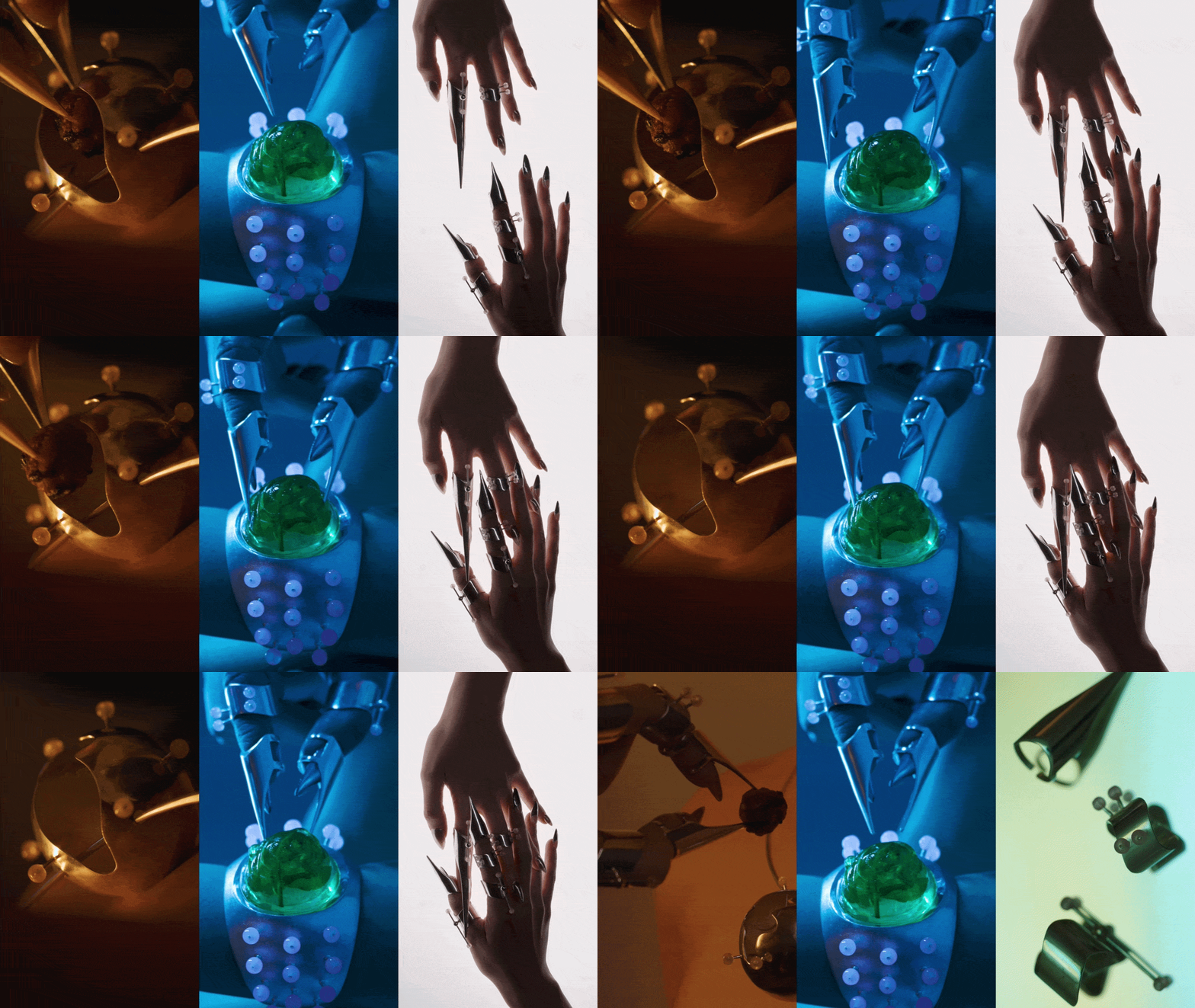
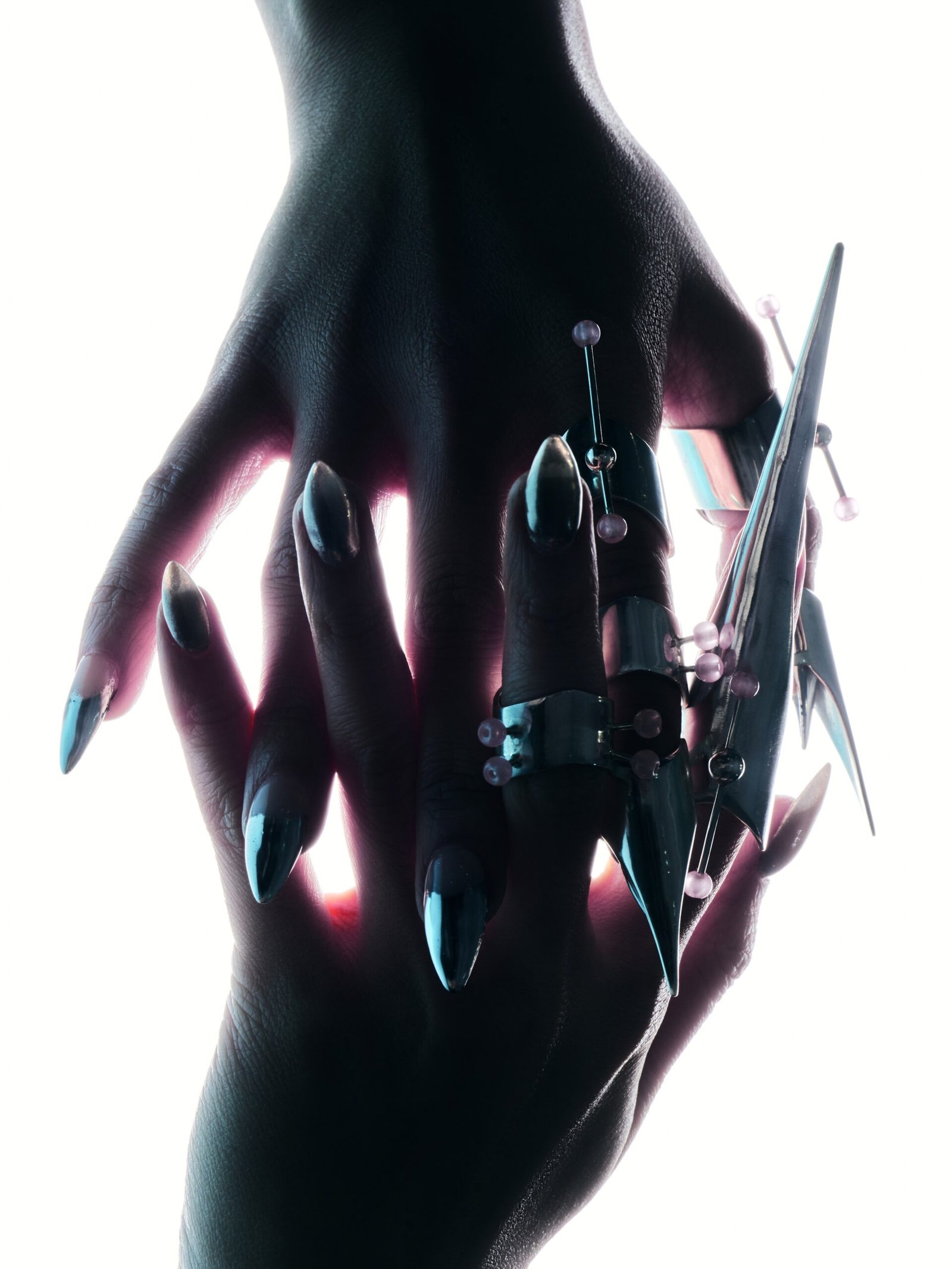
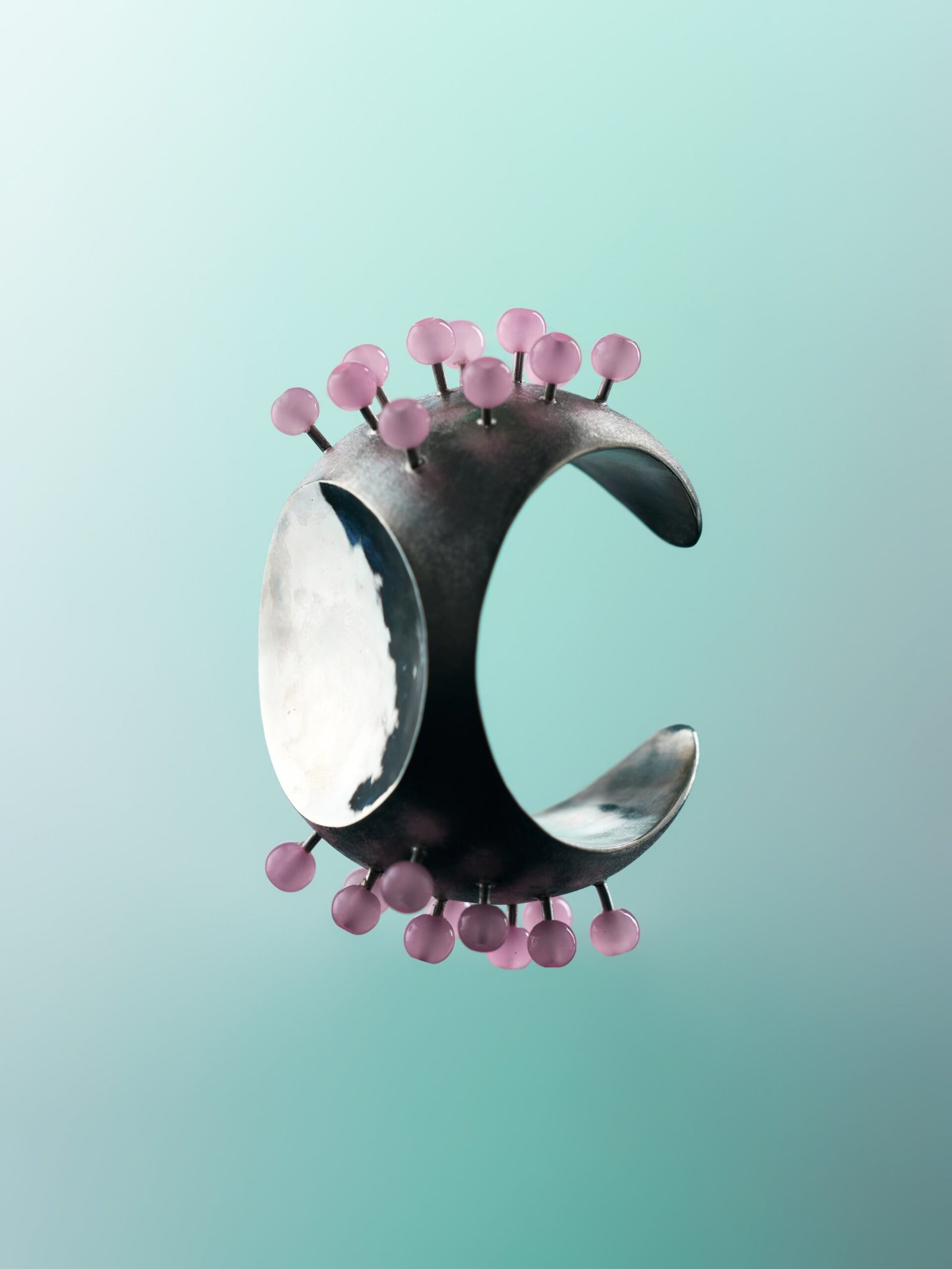
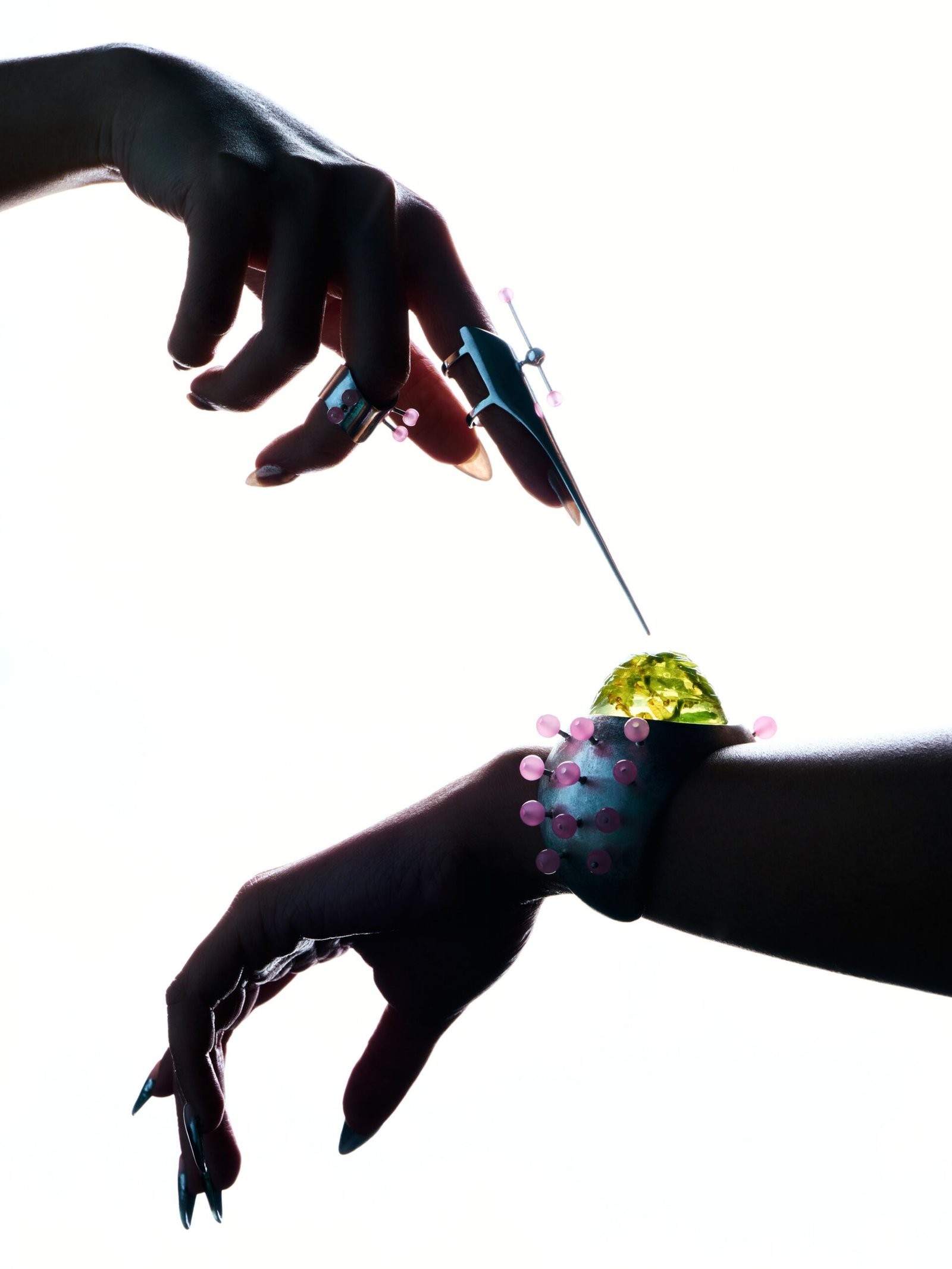
Presently on view at BASE Milano for the We Will Design 2026 showcase, Technospoonism is on view as part of the “Temporary Home” section at casaBASE. Under this year’s theme, “Hello Darkness,” the exhibition explores design as a tool for navigating the “abyss” of ecological and political uncertainty. It provides the stark backdrop for Carague’s investigation into the future of communal intimacy. By responding to the traditional kamayan (the Filipino ritual of communal eating by hand) with a silver jewelry collection, she reenvisions tableware as a prosthesis in an “uninhabitable” future. Cuffs function as plates, rings as forks, and pendants as vessels, extending natural manual gestures into functional implements for a speculative, climate-altered world.
The collection draws from the permanence of batok (traditional Philippine tattoos), translating ancestral marking into removable, mutable tools. Exploring the dissolution of boundaries between individual and collective portions, the work identifies the kamayan as a ritual for shared survival and connection in the face of ecological collapse.
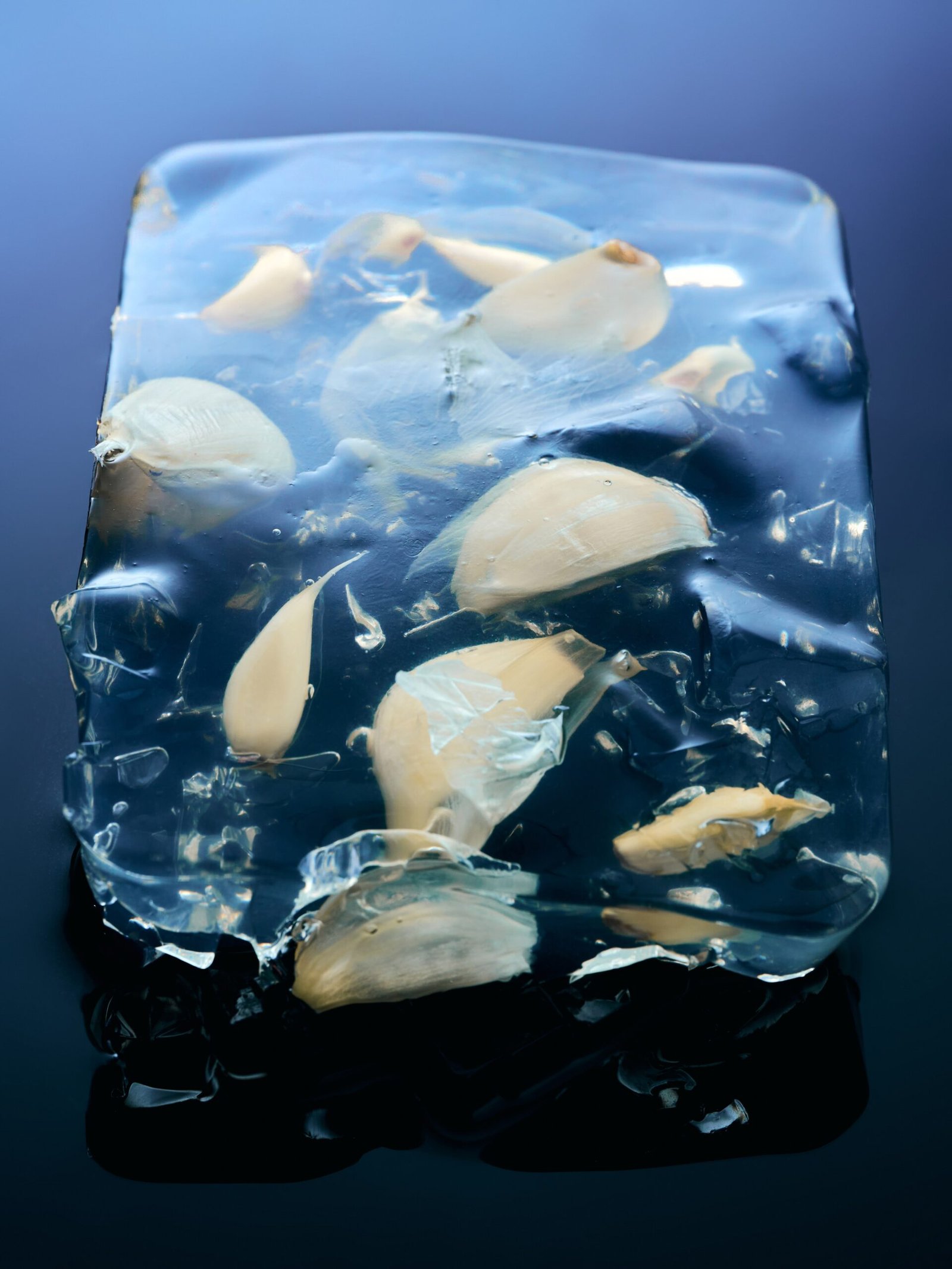
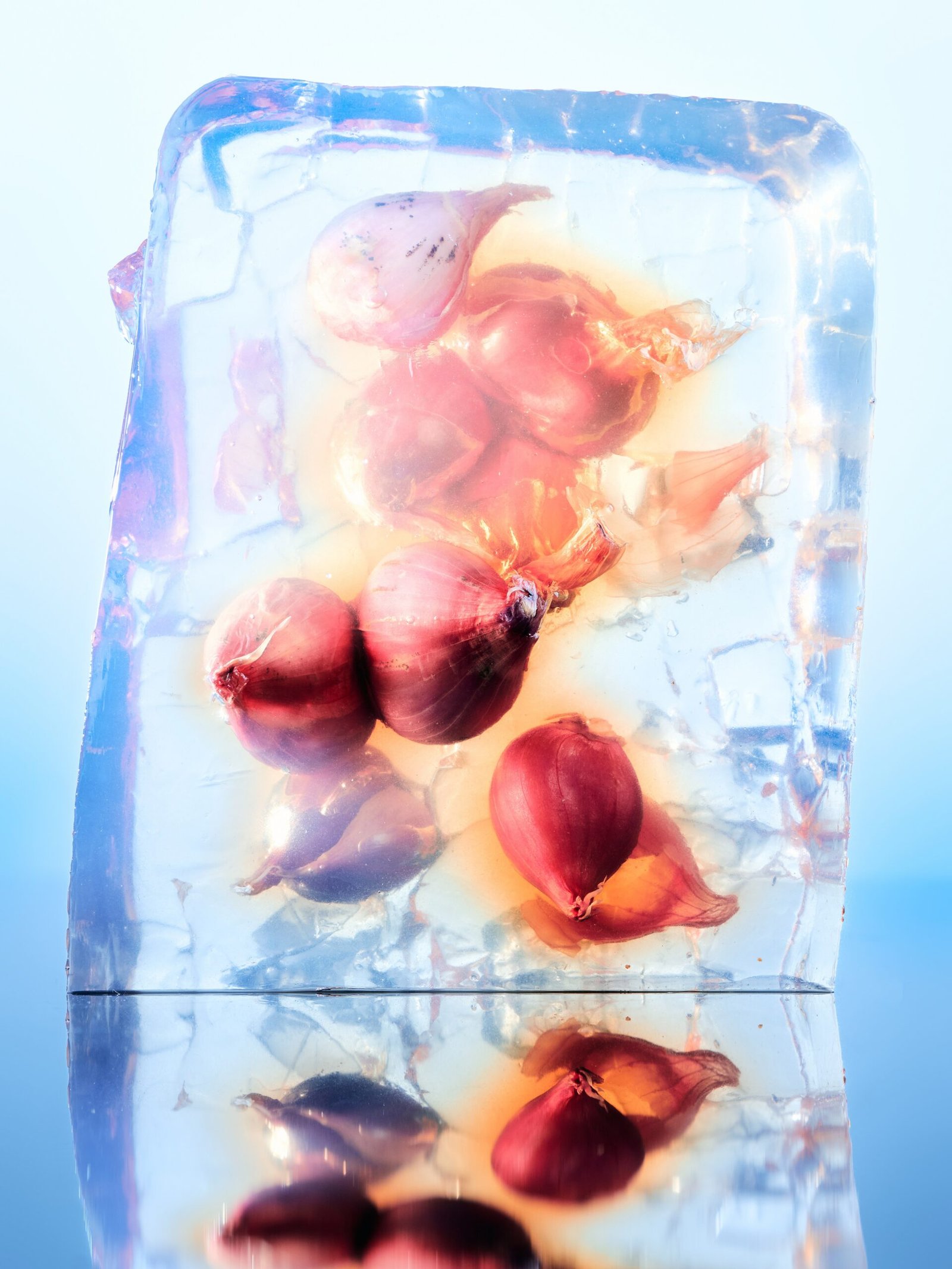
What does the menu look like in the world of Technospoonism? Working with Chef Kelvin Pundavela, Carague sees a turn toward dried and preserved cuisine, with ingredients suspended in translucent, seaweed-based agar-agar: a resource that thrives in harsh climates. By turning toward the “abyss” of the future, Technospoonism confronts its darkness as fertile ground for new rituals of beauty and connection to take root.
Editor’s note: Technospoonism is also on show at the concurrently running Benilde OPEN, a creative grant initiated by the De La Salle – College of Saint Benilde to fund unbuilt or unrealized ideas. Carague is one of ten cohorts for the biennial grant.
Congratulations, Bianca, on your BASE Milano appearance! Your Benilde OPEN project has truly turned heads from Manila to Milano.
Technospoonism frames the manual rituals of our traditional kamayan through a suite of futuristic, silver tools. Were there specific cultural gestures that served as a functional blueprint for these pieces, and how did those movements dictate the resulting forms of the collection?
Bianca Carague, designer of Technospoonism: When designing my collection, I actually started with the cuff (which functions as a plate).
I didn’t initially intend for a person to eat from their own cuff. I intended for the cuff to be worn, plated, and then extended to another to share. It’s the culture of sharing and camaraderie of kamayan that I wanted to emphasize through the work.
Your partnership with Chef Kelvin Pundavela (of Now Now, and formerly of MODAN) grounds the speculative narrative you’ve envisioned in a very tangible culinary reality. How did the physicalities of Technospoonism’s menu, from viscosity, texture, or the food’s ‘structural’ behavior, inform the design of the pieces? In relation to our previous question, we’re curious whether the food itself served as the primary catalyst for the user’s choreography, or whether the jewelry was the driver of the gesture.
Bianca Carague: I collaborated with Chef Kelvin Pundavela and visual director Isai Araneta to conceptualize how the food would appear in the visuals. For this first set of jewelry-cutlery, the designs came first, which influenced the types of dishes Kelvin could come up with, since they had to fit a certain shape and size. The textures and consistencies (hardness/softness) of the dishes were also decided within the constraints of what the objects could hold.
In the next collection or iteration of the project, I will do it the other way around, now that I have a better feel of the direction I want to take. The objects will follow the cuisine. Moving forward, I’d like my design process to be a constant conversation between the two.
“Exploring the dissolution of boundaries between individual and collective portions, the work identifies the kamayan as a ritual for shared survival and connection in the face of ecological collapse.”
BIANCA CARAGUE
While Technospoonism was designed for a speculative future, they are physical objects existing in the ‘now.’ How do you think the actual experience of the ritual changes when these future-centric objects are introduced into a present-day kamayan setting?
Bianca Carague: I mentioned previously that I designed the collection with the intention of creating moments of sharing during the meal through the gestures enabled by the objects.
But introducing these objects into a present-day kamayan setting, it would shift the experience from something purely intuitive to something slightly more self-aware, almost choreographed. These objects invite new gestures and, I imagine, would slow people down and make them more conscious of how they reach, offer, or share.
Kamayan is already tactile and communal, so I believe my pieces would amplify those qualities. Sharing would become more deliberate.
Milan during Fuorisalone is a total sensory overload! How has showing on this international stage (as this isn’t your first time) influenced your perspective on how a global audience understands, or potentially connects with or misinterprets, a ritual that is deeply rooted in Filipino culture?
Bianca Carague: Explaining the work here at Fuorisalone has definitely been a different experience than in the Philippines.
Back home, kamayan needs no explanation. You just sit and eat. The ‘rules’ are felt and instinctive. But in Milan, there’s curiosity, but also hesitation and wondering about what’s allowed or what’s correct.
But I think once people move past the initial uncertainty, the connection can happen quite quickly. The act of eating with one’s hands is surprisingly universal. Even if the cultural context isn’t understood right away, the emotional logic can be felt.
At the same time, there’s the risk of misinterpretation or viewing the work as purely aesthetic or exotic. So, part of my role is to guide people through the various layers of the project and help them understand it as a relational experience.
To close, if you could host an imaginary kamayan tonight using your jewelry, who, whether a person of influence or a fellow designer, would you most want to see at that table, what would you share, and what do you hope they take from the experience?
Bianca Carague: This is such a tough question! I mean, I would love to have a table full of artists, designers, technologists, and scientists. But if I had to name one person off the top of my head, it would be artist Anicka Yi because her practice fits right at that intersection. •
One Response