
Words Patricia Herbolario
Images Tanghalang Pilipino and May Celeste
(Sayaw Ng Mga Ilaw)
“During Martial Law, where was the child?” was the question Cheeno Marlo Sayuno kept returning to while writing Sayaw ng mga Ilaw for Tahanan Books. As an author of children’s picture books, Sayuno makes a point of starting even his most difficult stories from a child’s point of view. On the surface, Sayaw ng mga Ilaw is about two sisters and a traditional Filipino folk dance; underneath, it carries the grief and grievances of former president and dictator Ferdinand Marcos Sr.’s Martial Law.
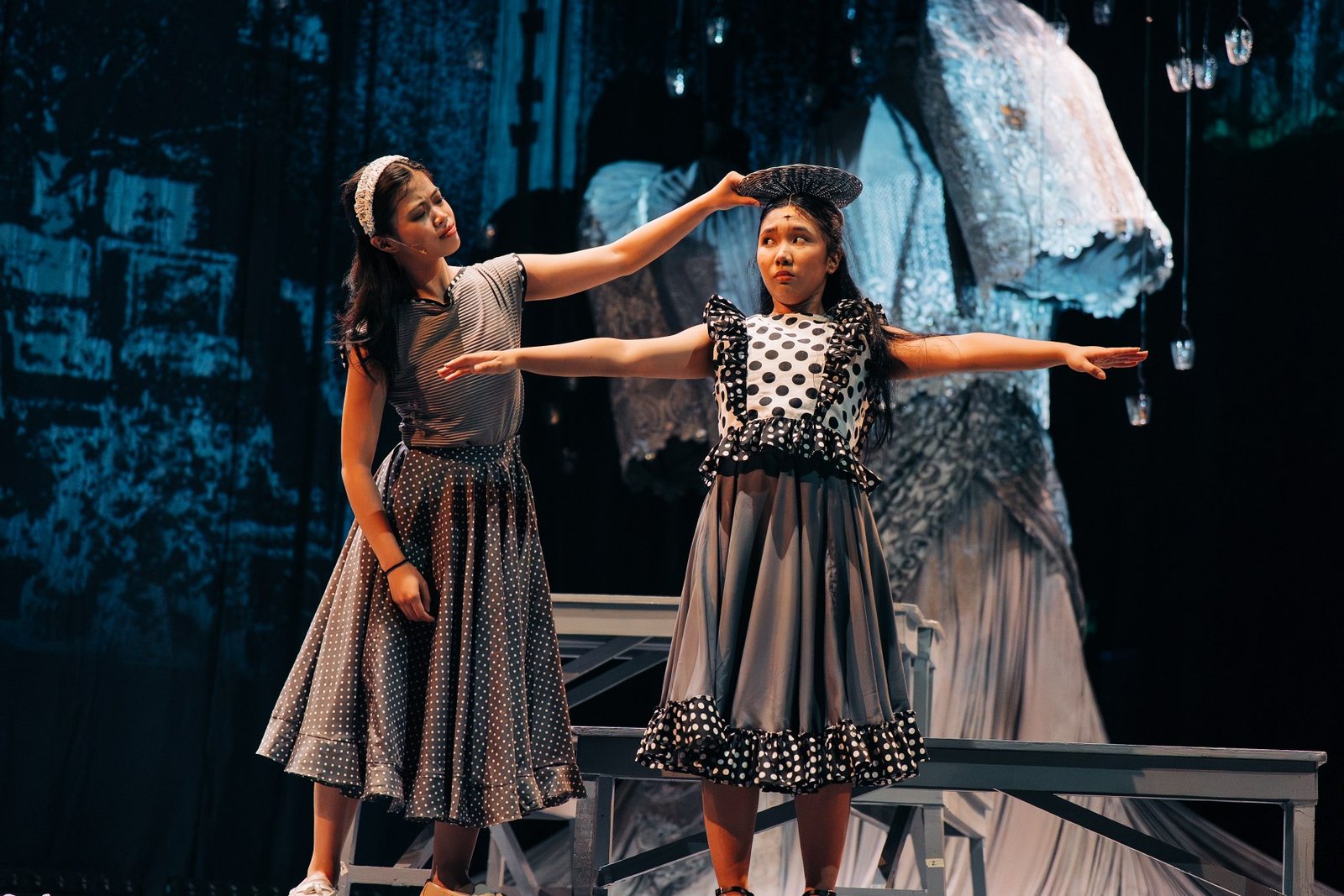
Sayaw ng mga Ilaw is Juan Ekis’ stage adaptation of Sayuno’s story, directed by Jonathan P. Tadioan with music by Krina Cayabyab. Young Laya dreams of learning the traditional Pandanggo dance alongside her older sister, Kala. One night, their father, a construction worker at the Manila Film Center, fails to come home.
The structure, inspired by classical Greek temples and Brutalism, was designed by Froilan Hong, with its 16,820-sqm footprint carrying a tight three-month deadline. Over 4,000 workers rotated in shifts around the clock until, at three in the morning on November 17, 1981, the scaffolding collapsed, trapping workers under quick-drying cement. A media blackout ensued, with only seven declared dead on the scene; later reports put the toll at over 168. Despite this, construction continued, and the 1982 Film Festival proceeded as planned, with international guests unaware of what lay beneath their heels and smart shoes. As showbiz touts, the show must go on.
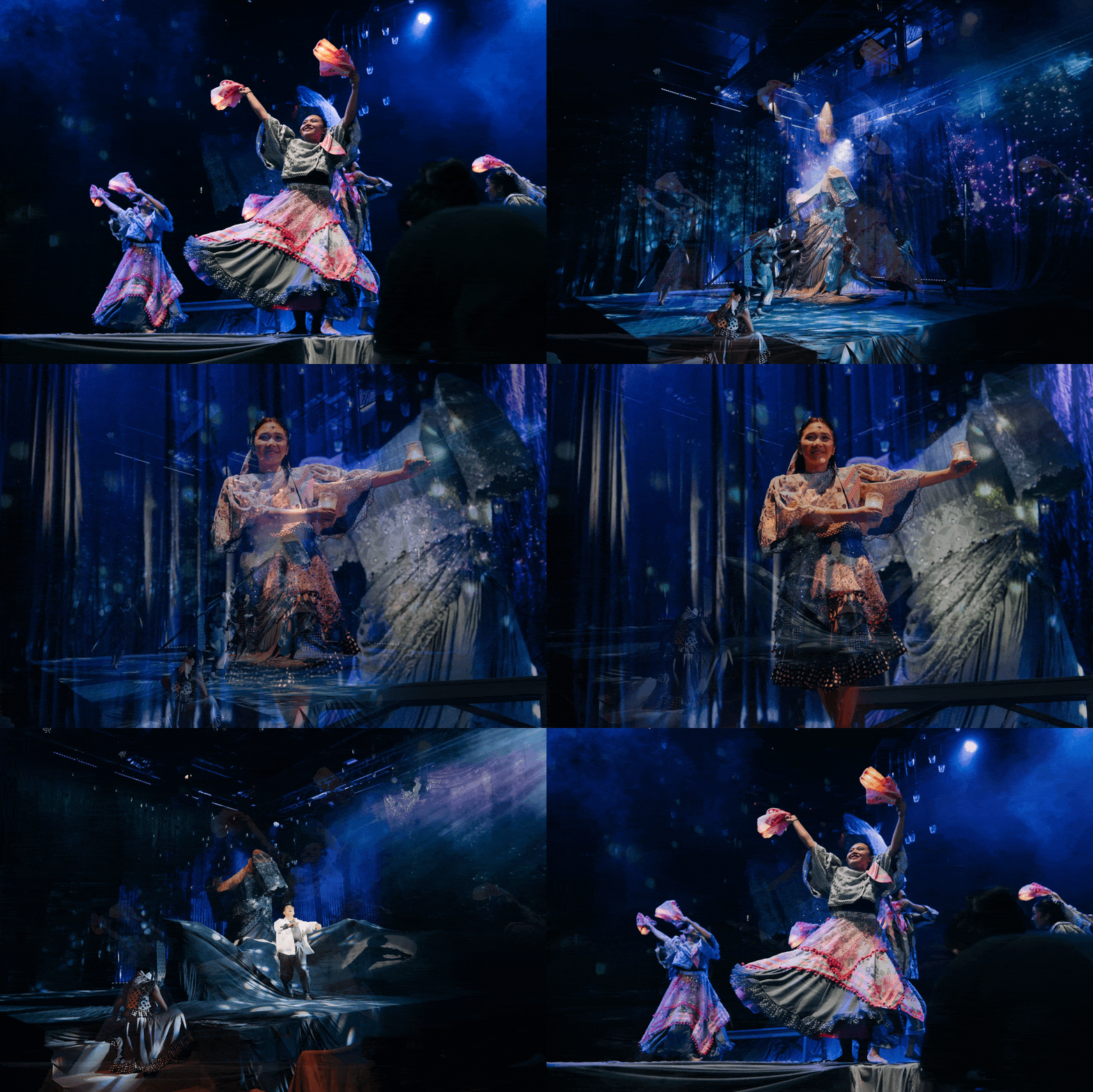
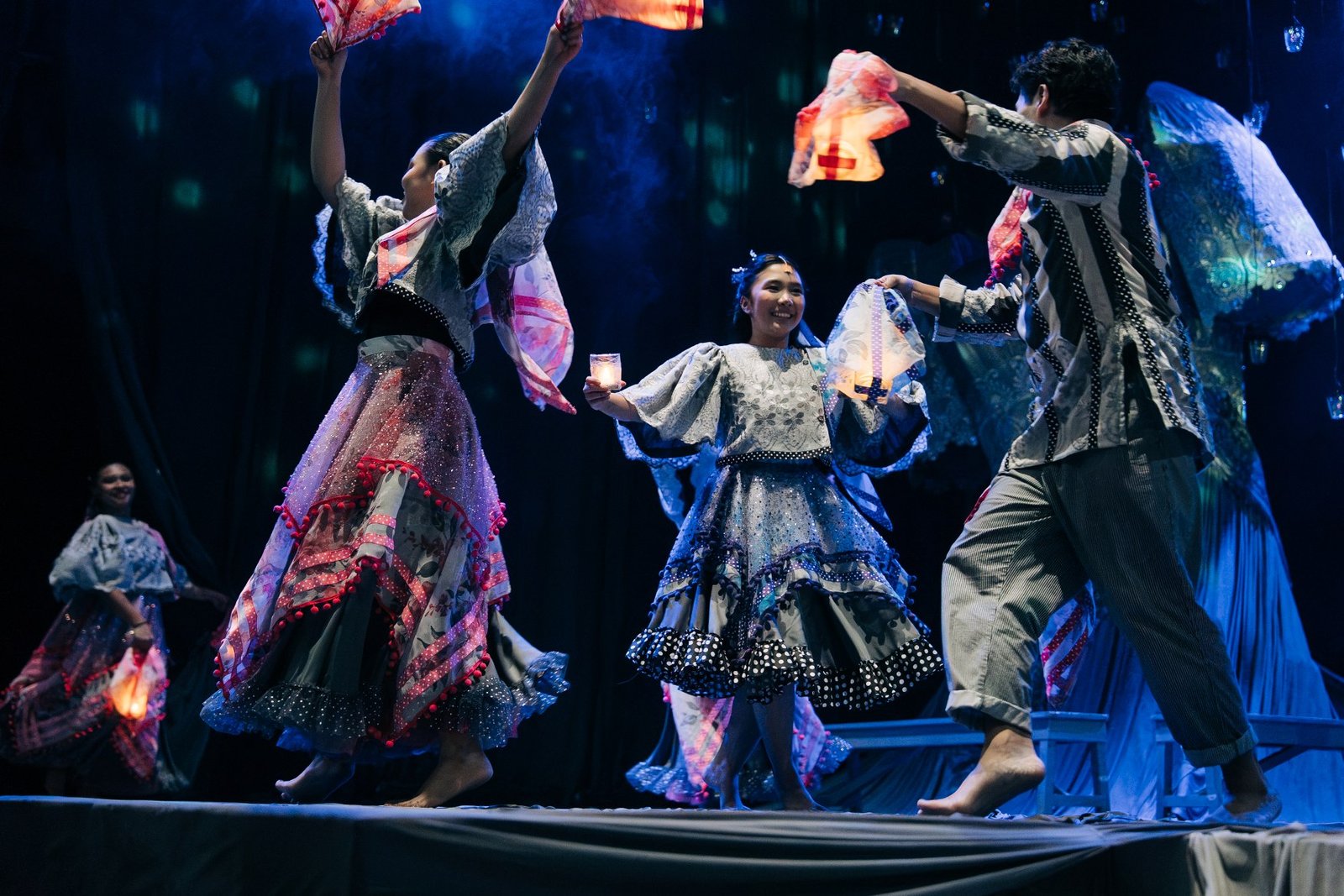
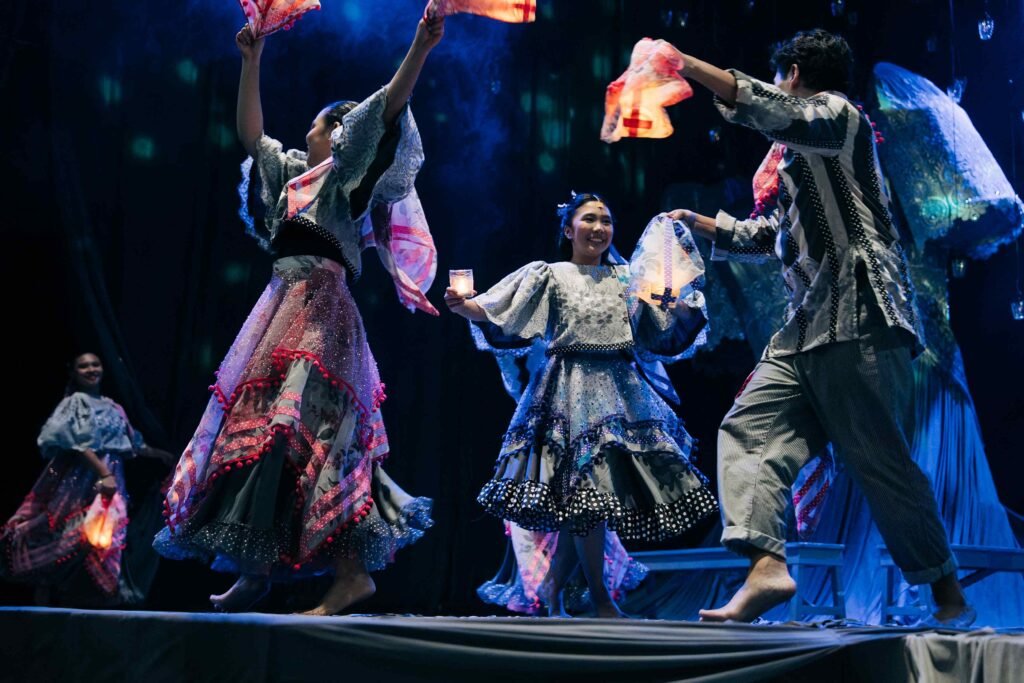
The Manila Film Center tragedy is one of the darkest chapters in Philippine history, and setting a children’s book against it might sound like an unlikely choice. Yet even as that history shapes the story, a family finds hope and light through the Pandanggo and each other. Tanghalang Pilipino takes that story further: candles balanced on dancers’ heads, flame passed from one generation to the next onstage, turning the book’s quietest images into something the audience watches happen in real time.
We spoke with Tanghalang Pilipino’s creative team behind Sayaw ng mga Ilaw about confronting grief through the arts, the Manila Film Center, and the painstaking transformation of a 34-page children’s book into a one-act musical.
Dance, death, and digital Age
As a cultural dance performer in Cavite, Sayuno says he was thrilled to see his book performed on stage and to watch Kala and Laya dance the Pandanggo beyond imagination. Two versions of the Pandanggo are celebrated on stage: the Pandanggo sa Ilaw and the Pandanggo Oasiwas, each carrying its own meaning and weight in the show. Pandanggo sa Ilaw, the better-known of the two, is a more delicate dance centered on courtship and love. Candles are placed in glass cups, then balanced on the dancers’ heads.
Through the Pandanggo, Laya learns her ate Kala’s beliefs, and her own growing mastery of the dance becomes its own quiet passing down of memory and flame. The Pandanggo Oasiwas guides fishermen home to shore, with candles in glasses wrapped in a handkerchief; it functions like a lighthouse. Laya dances the Oasiwas for her father, Tatay Ondeng, on the day he leaves home for work one final time.
Director Tadioan sees grief as something the body carries as much as the mind. “We can express sympathy with a comment or a heart reaction, but there are moments when those digital forms simply cannot contain the depth of what we feel. Grief is not only something we think about. It is something we physically experience. It can make the body heavy.
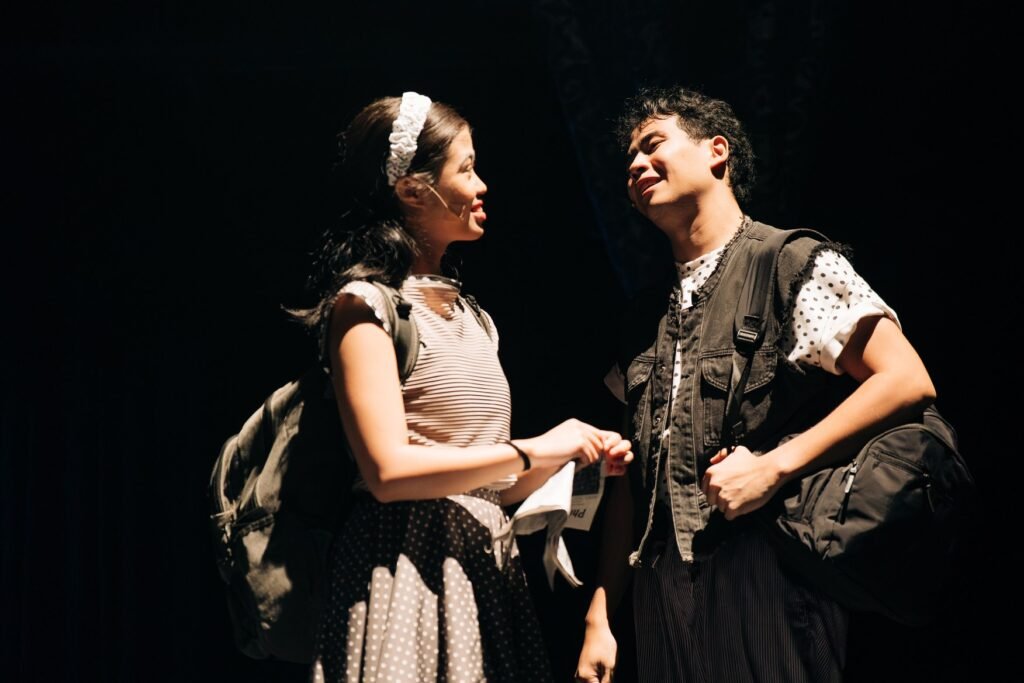
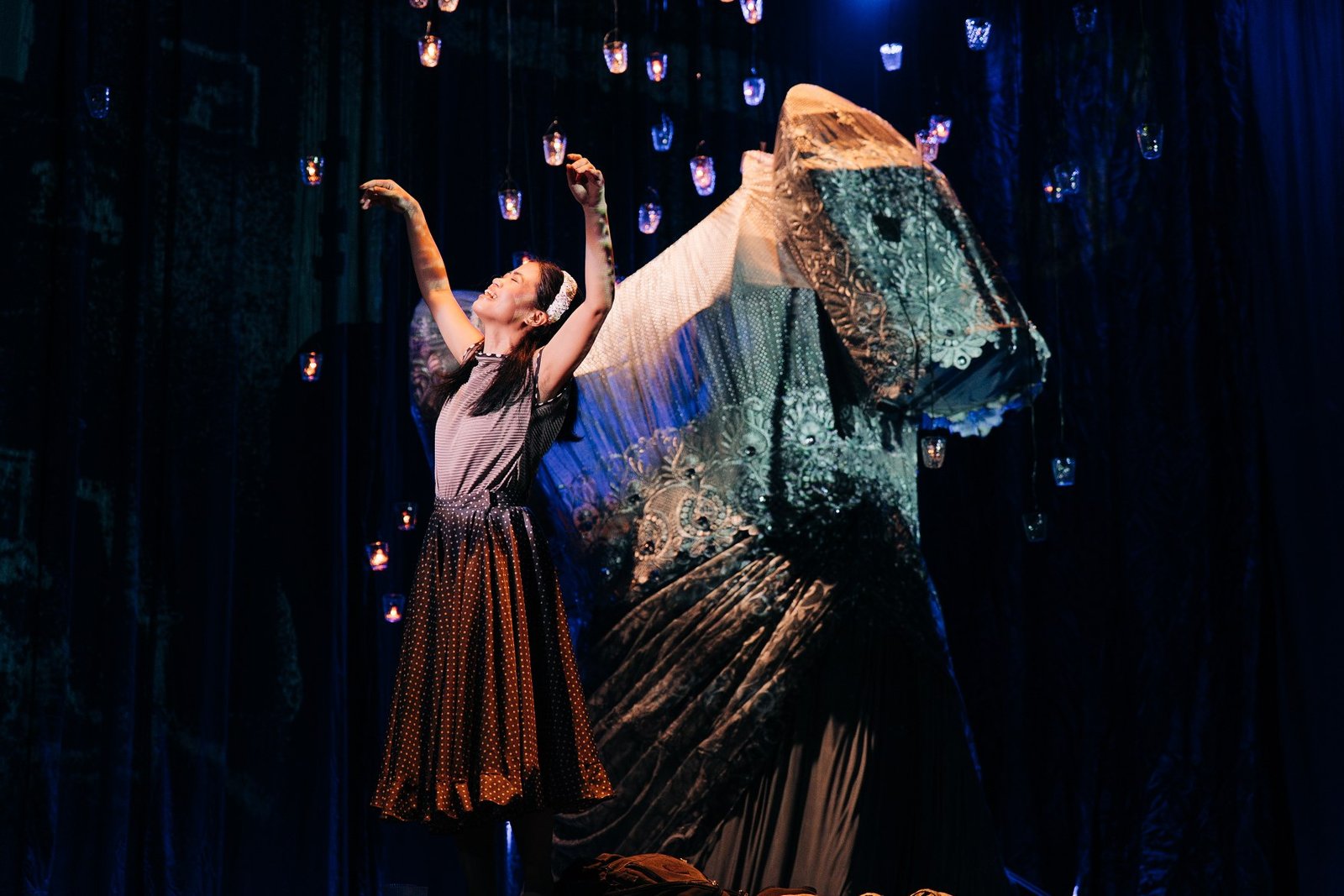
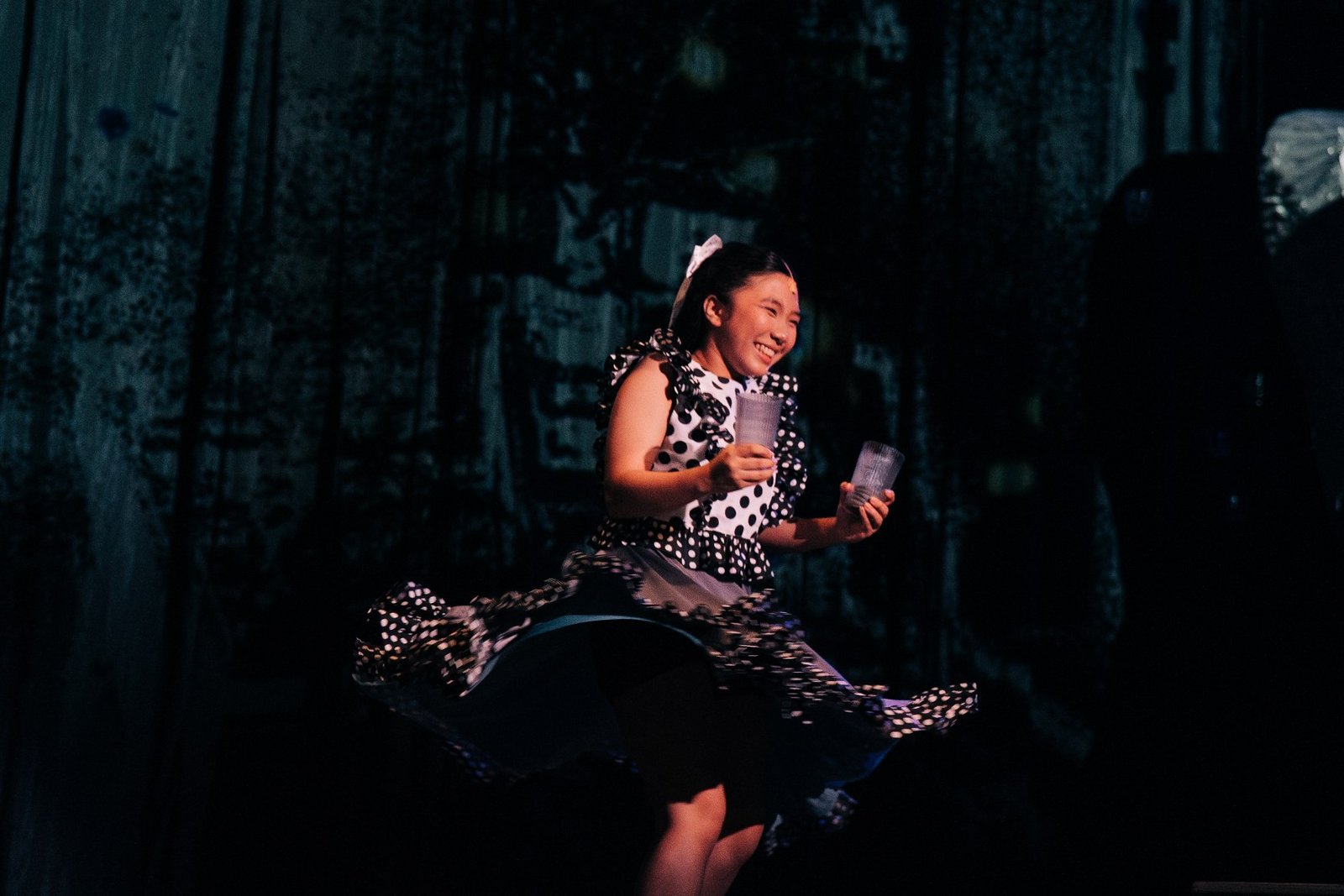
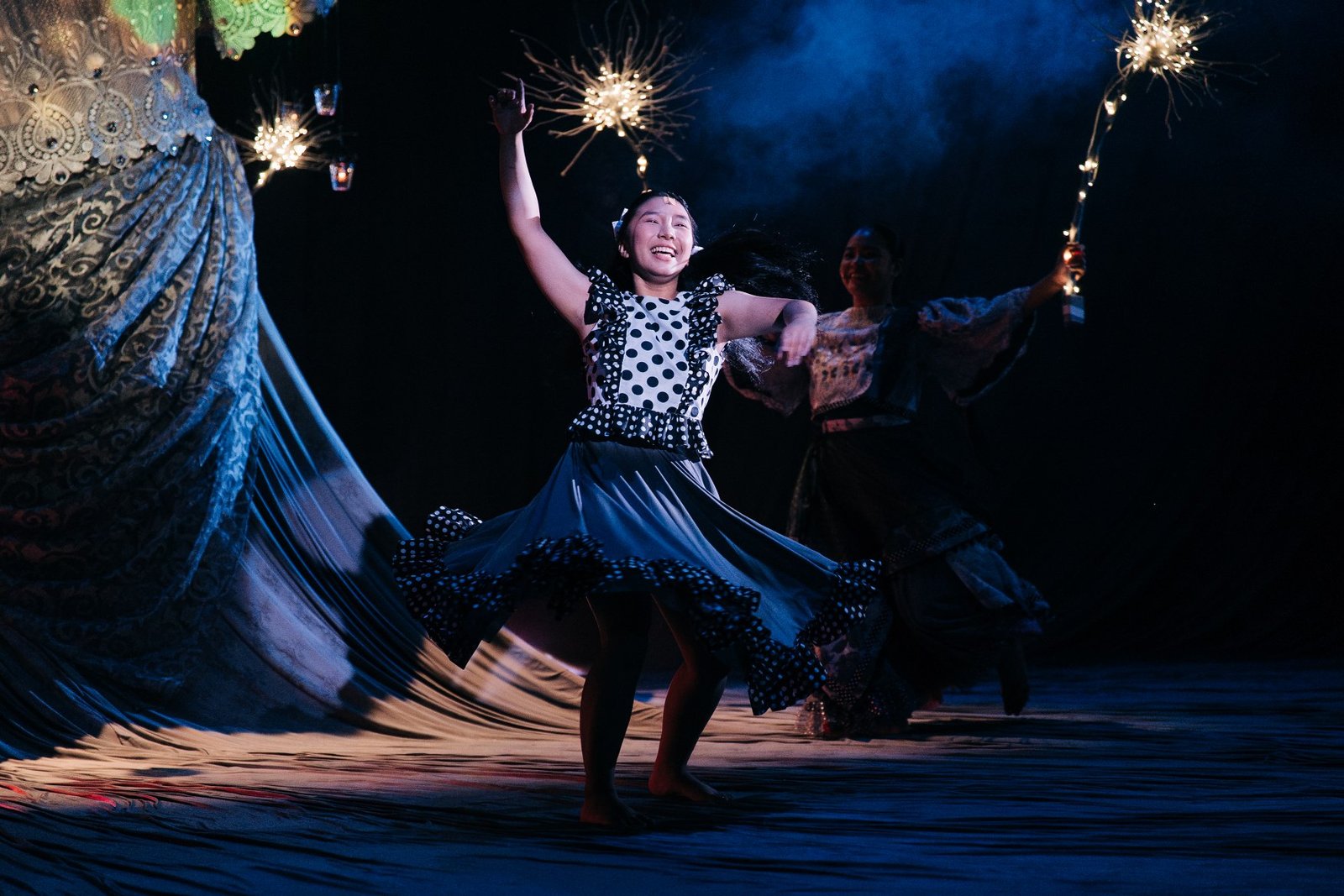
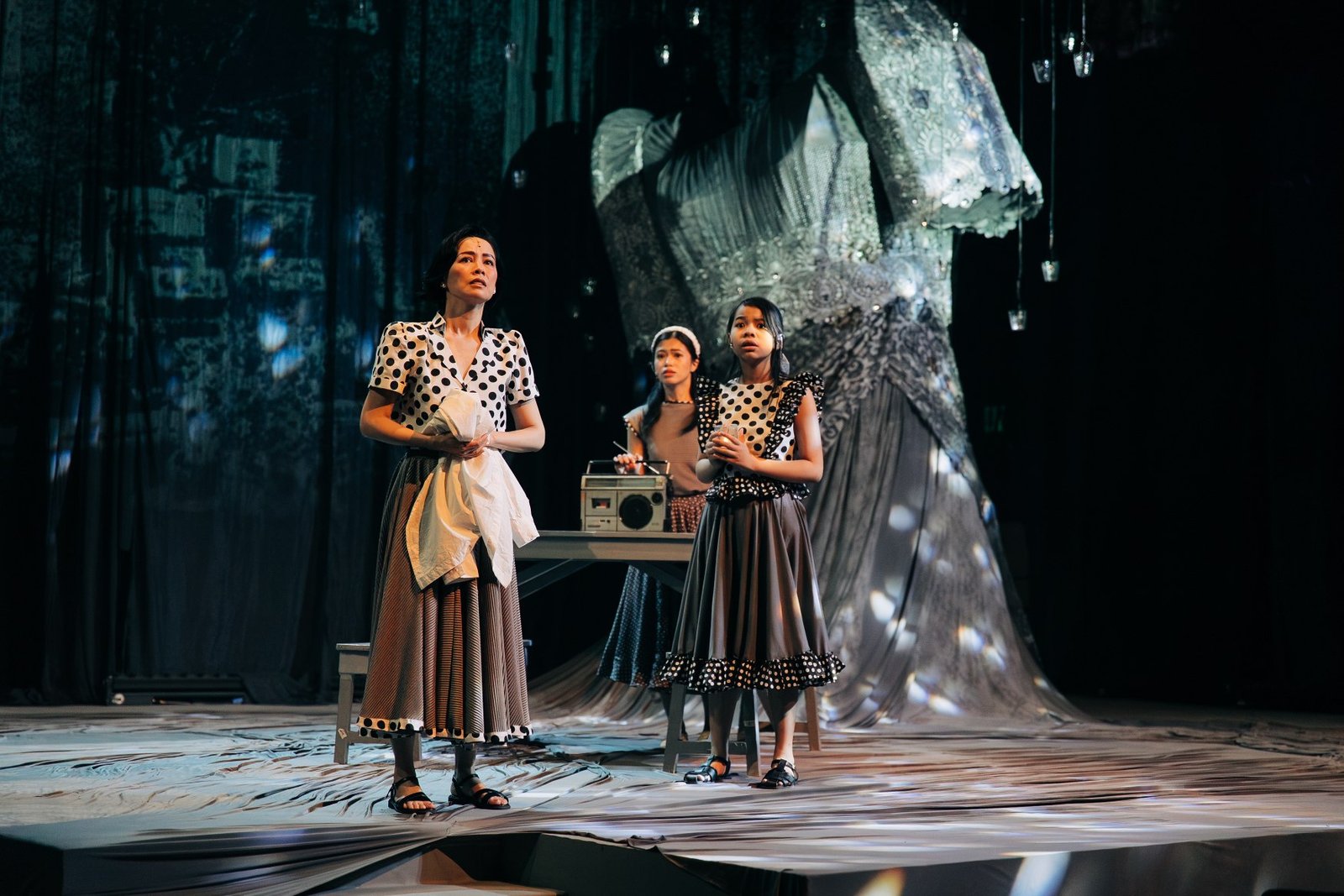
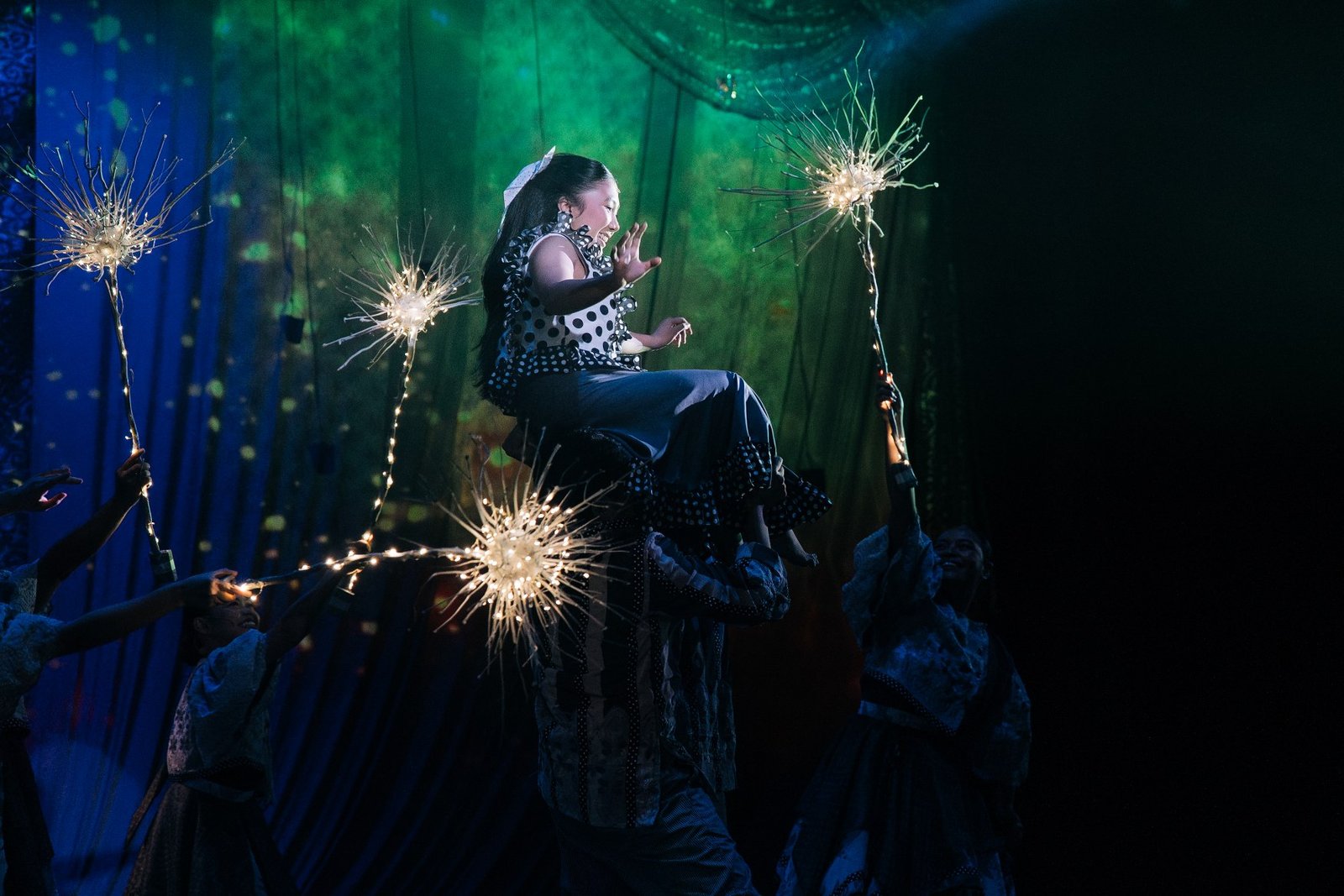
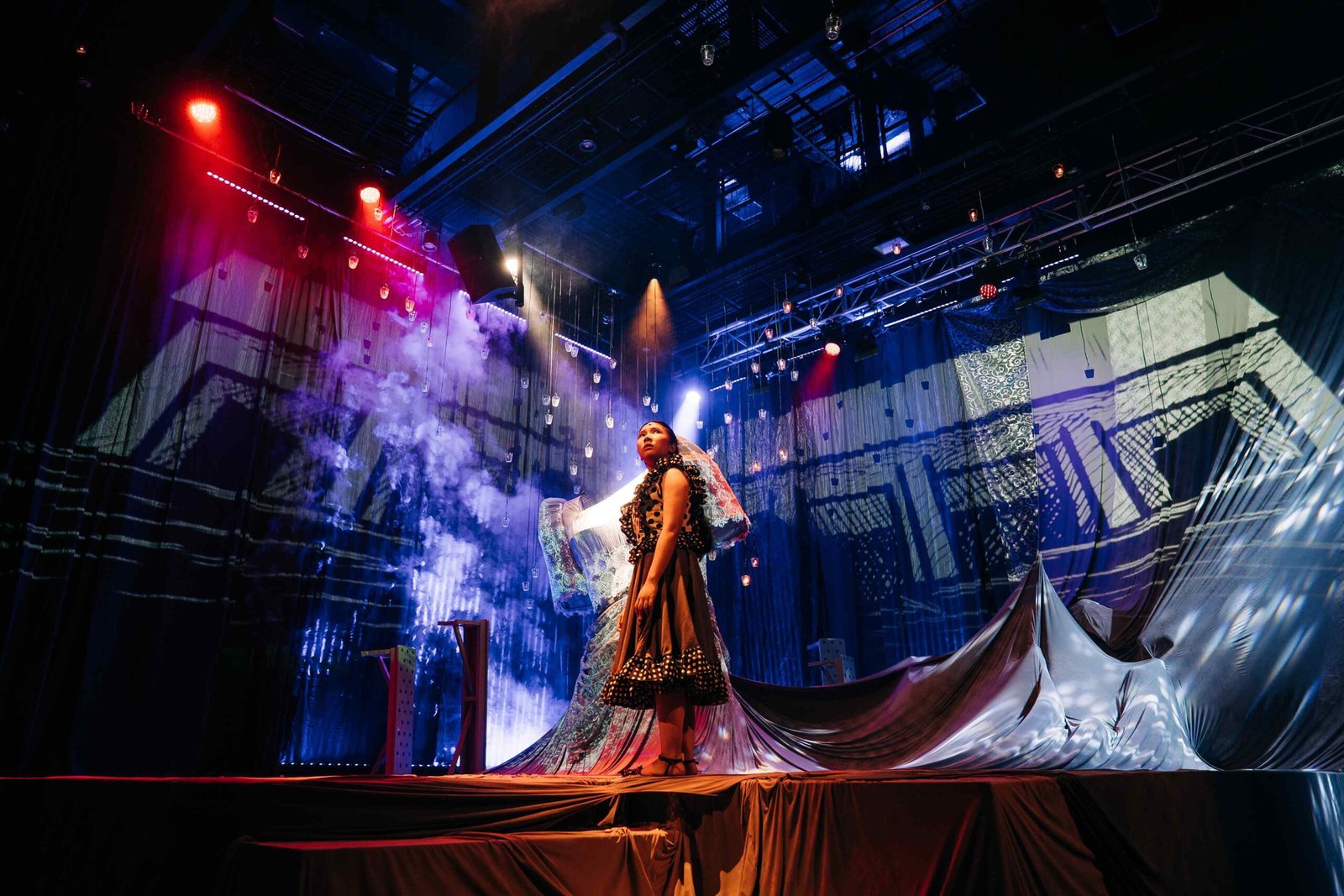
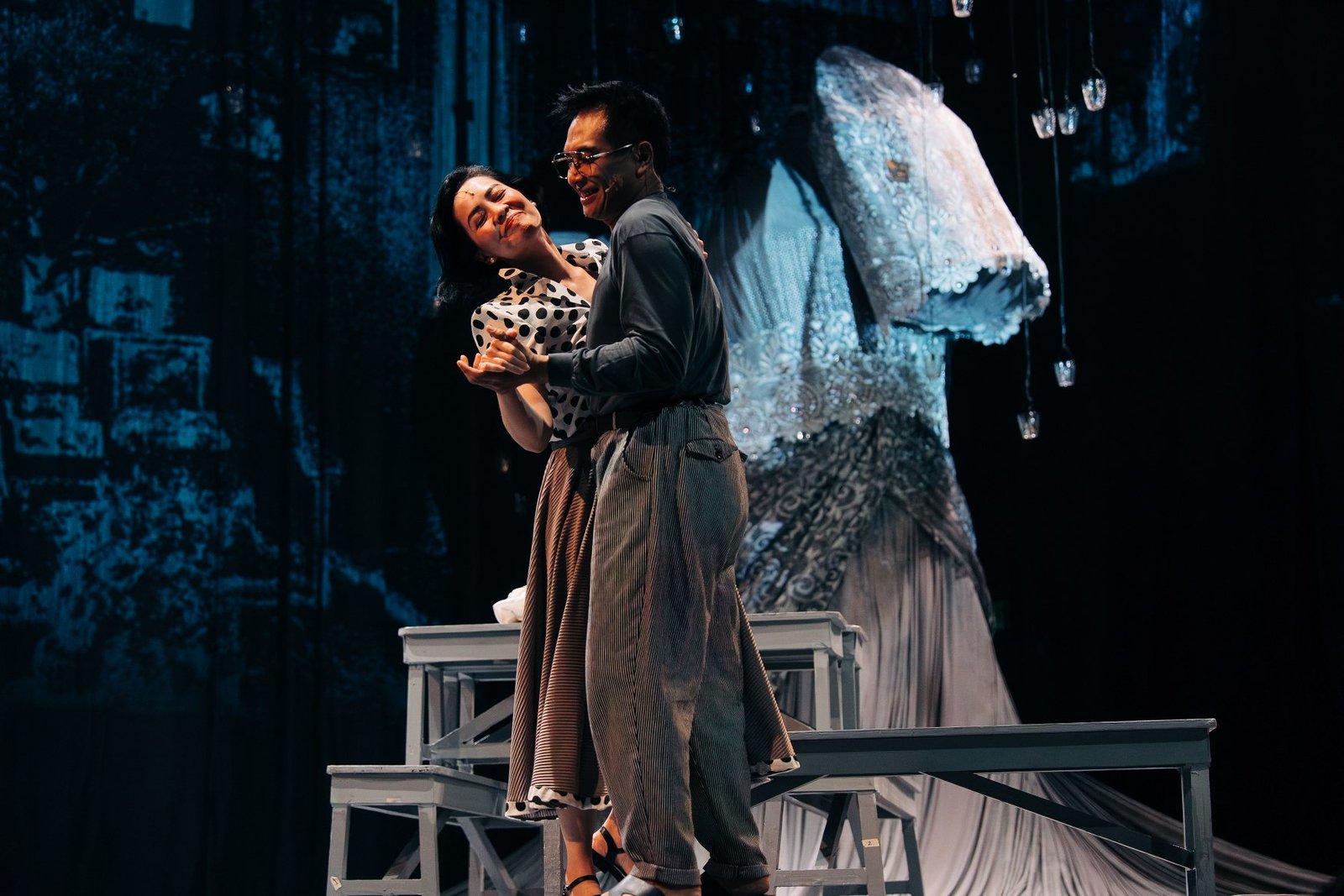
Dance also depicts the tragedy on stage, carefully choreographed and layered with practical and multimedia effects to portray Tatay Ondeng being buried in cement. He is swallowed by the grey cloth, which is also the trail of a gigantic crooked Filipiniana terno on stage, a symbolic statement of being swept under the rug by those in power. “When we see a body struggling, reaching, falling, or holding on to another body onstage, there is no screen between us and the performer. We share the same physical space. We hear the breath. We feel the silence. That creates a kind of human connection that digital communication cannot completely replace,” the director points out.
Kat Batara, who handled the dramaturgy for Sayaw Ng Mga Ilaw, says that while the play is rooted in the atrocities of Martial Law, its real focus stays on family: the relationship between Kala, Laya, and their mother, Nanay Lucia. She points to research behind that choice: “From studies, the more effective way to approach this kind of historical fiction for children is to have a clear narrative and strong character relationships over a breadth of historical data that could leave them confused and disconnected.”
Ekis makes the case for giving children more credit when it comes to distressing subject matter. “While there is a delicateness and prudence in attacking the themes, we should give children more credit,” he says. “They can understand and process these things. Yes, don’t need too much blood or gore on stage, and we don’t need to focus on the evil things because we want to focus on the lesson. We highlighted how a family dealt with loss, how art can be healing, praying before meals, and perseverance in learning the Pandanggo. Evil is not the lesson of this play.”
Translating a children’s book into a children’s musical
No stranger to making children’s books himself, Ekis calls it ballsy that Sayuno took on this topic through a child’s eyes: “I felt Cheeno was planting seeds in between the lines of the book. He was already constrained by the form; he was using metaphor through the dance and the relationships, but the soil was there for me to toil and dig through to expand the scenes into a play.” In translating the show, Ekis’s main goal was to reach an emotional understanding with the audience, balancing the educational and entertaining aspects of the piece. “This is the power and magic of theater and musical theatre: music and song can carry heavy themes and emotions and still be consumable by children. That’s the magic of live theater.”
Tadioan reflects on the challenge of bringing Ekis’s script into multimedia form: “The text of the script by Juan Ekis is beautiful, and translating it into a multimedia language was both a challenge and a learning experience for me. It was about finding a way for the projections to live harmoniously with Marco Viaña’s set, respond to D Cortezano’s lighting, and contribute to the world created through Krina Cayabyab’s music and TJ Ramos’s sound design. Each of us was working with a different medium, but the process was really about finding ways for these elements to speak to and support one another.”
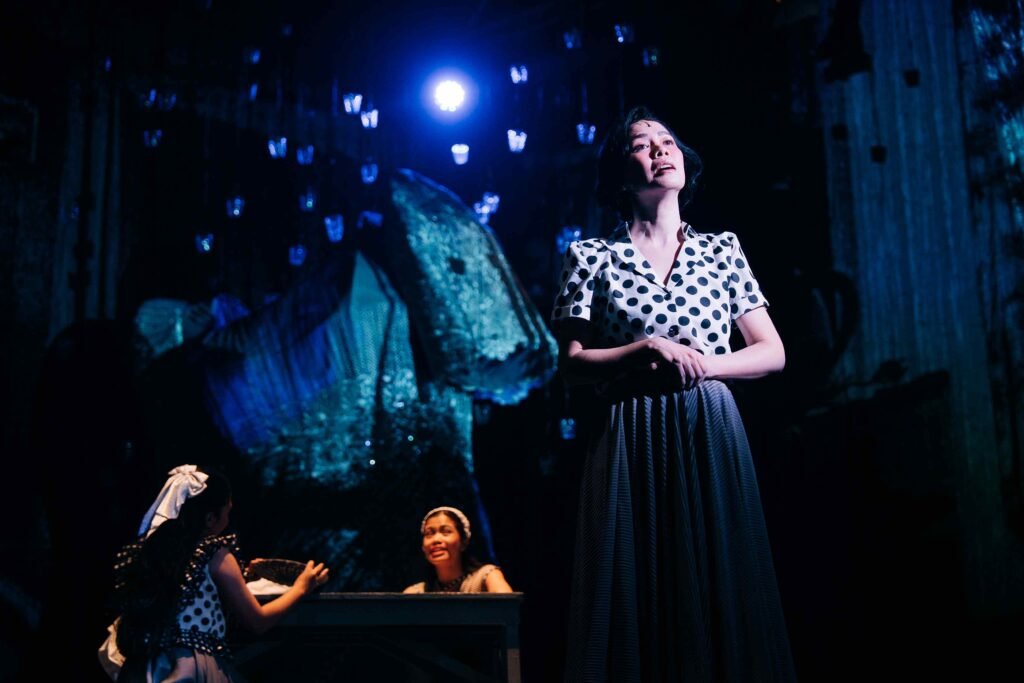
“We highlighted how a family dealt with loss, how art can be healing, praying before meals, and perseverance in learning the Pandanggo. Evil is not the lesson of this play.”
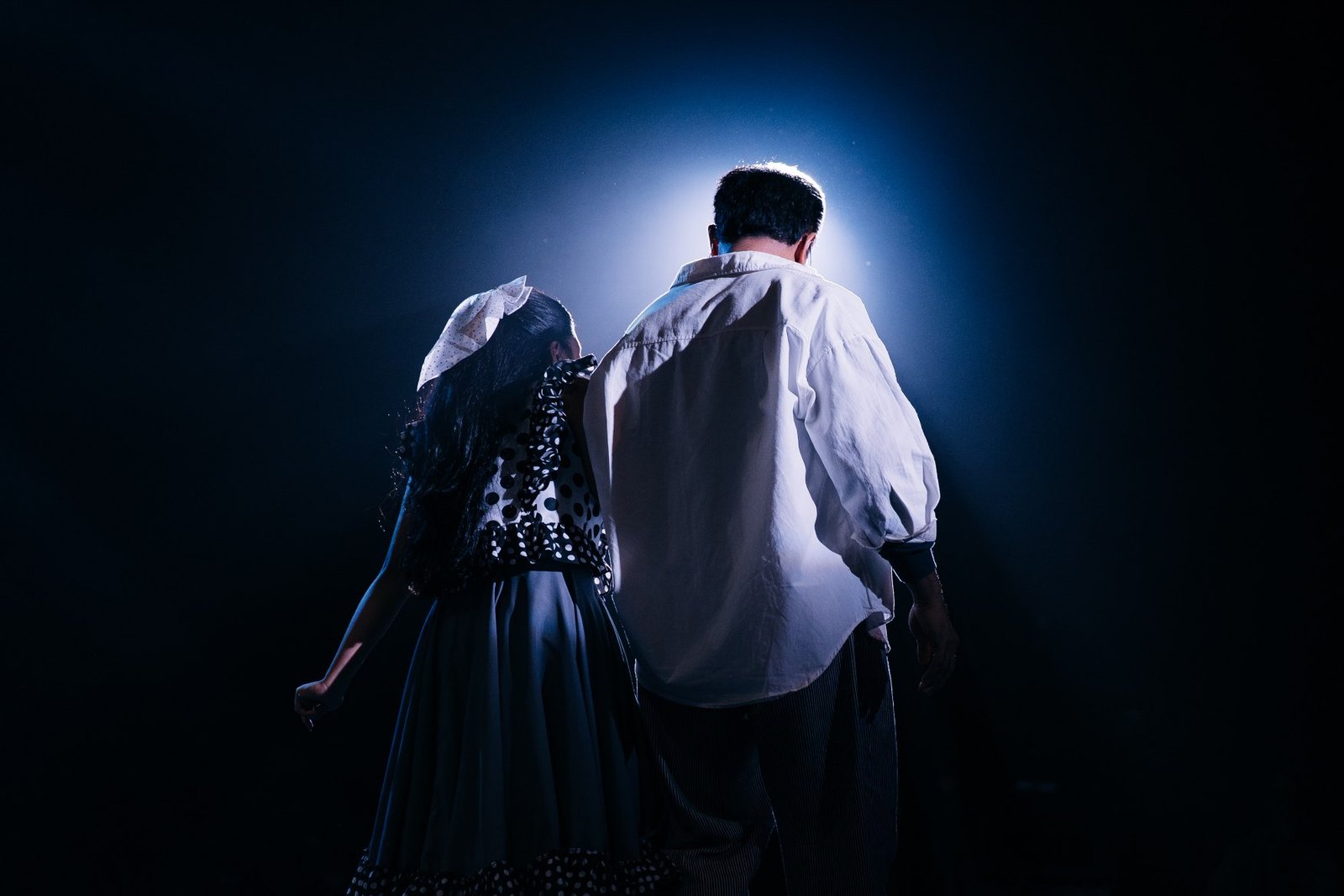
Initially set as a play with music, rather than a musical, Ekis found himself writing scenes that needed more songs. “This sort of call happens when the type of emotions in a scene are too strong and cannot be contained by words, so they have to be sung or performed with dance,” he explains. Set to original music by Krina Cayabyab, the musical has a uniquely Old Manila sound; each song would slip in unnoticed on a 1970s radio playlist.
The book, with illustrations by Aaron Asis, also comes to life through playful and whimsical projections on the draperies around the stage. This is contrasted with live footage of Ferdinand Marcos Sr. and other contextual footage from the time, a stark reminder that while the story is fiction, it draws on real history. The unmistakable centerpiece of the set design is the gigantic, crooked grey Filipiniana that anchors the stage.
An act of remembrance
The Manila Film Center is no stranger to sensationalism, especially in today’s digital age. It’s certainly been a Halloween special more times than it should be. Tadioan says this is the sort of treatment Tanghalang Pilipino veered away from in depicting the tragedy: “We did not want to sensationalize suffering or use violence simply to shock the audience. We chose to focus more on the human stories—the fear, the silence, the loss, the courage, and the resilience of the people who experienced these events.”
Located on the southwest end of the CCP Complex, the Film Center is now deemed structurally unsafe following an earthquake and a fire. It’s a haunting landmark in the Pasay City area, frozen in time like a mausoleum of the past. If you’re coming to see the show at CCP’s Tanghalang Ignacio Gomez, you may well pass by it.
Tadioan calls staging so close to ground zero deeply personal and, at the same time, humbling: “You cannot stand in a place where something tragic happened and simply treat it as a story.” Ultimately, he sees the show as an act of remembering and a responsibility to keep these stories alive, especially given how the truth of the tragedy, alongside its victims, was actively buried in the rubble by those in power.
“It’s not just any kind of loss,” Ekis says of the show. “Any other play can offer a dead loved one or grief as a main theme, but this one is the kind of loss caused by an institution or a power that was supposed to be protecting and serving us as a people. What happened at the Film Center is just symptomatic of the cancer of Martial Law and the monsters that that regime created.”
Sayaw Ng Mga Ilaw’s author, Sayuno, puts it simply: “We need to remember our history, because in forgetting, we also forget how strong, how proactive, and how courageous Filipinos are. Through the story, may the fire live on.” •
Sayaw ng mga Ilaw runs from September 18 to October 11, 2026, at the Tanghalang Ignacio Gimenez, Cultural Center of the Philippines Complex, Pasay City. The show runs on Fridays (8:00 PM), Saturdays (3:00 PM, 8:00 PM), and Sundays (3:00 PM). Tickets are available from Ticketnet.