Words and interview The Kanto team
Images Jasser Aguila for NEWFOLK (Jia CURATED 2026)
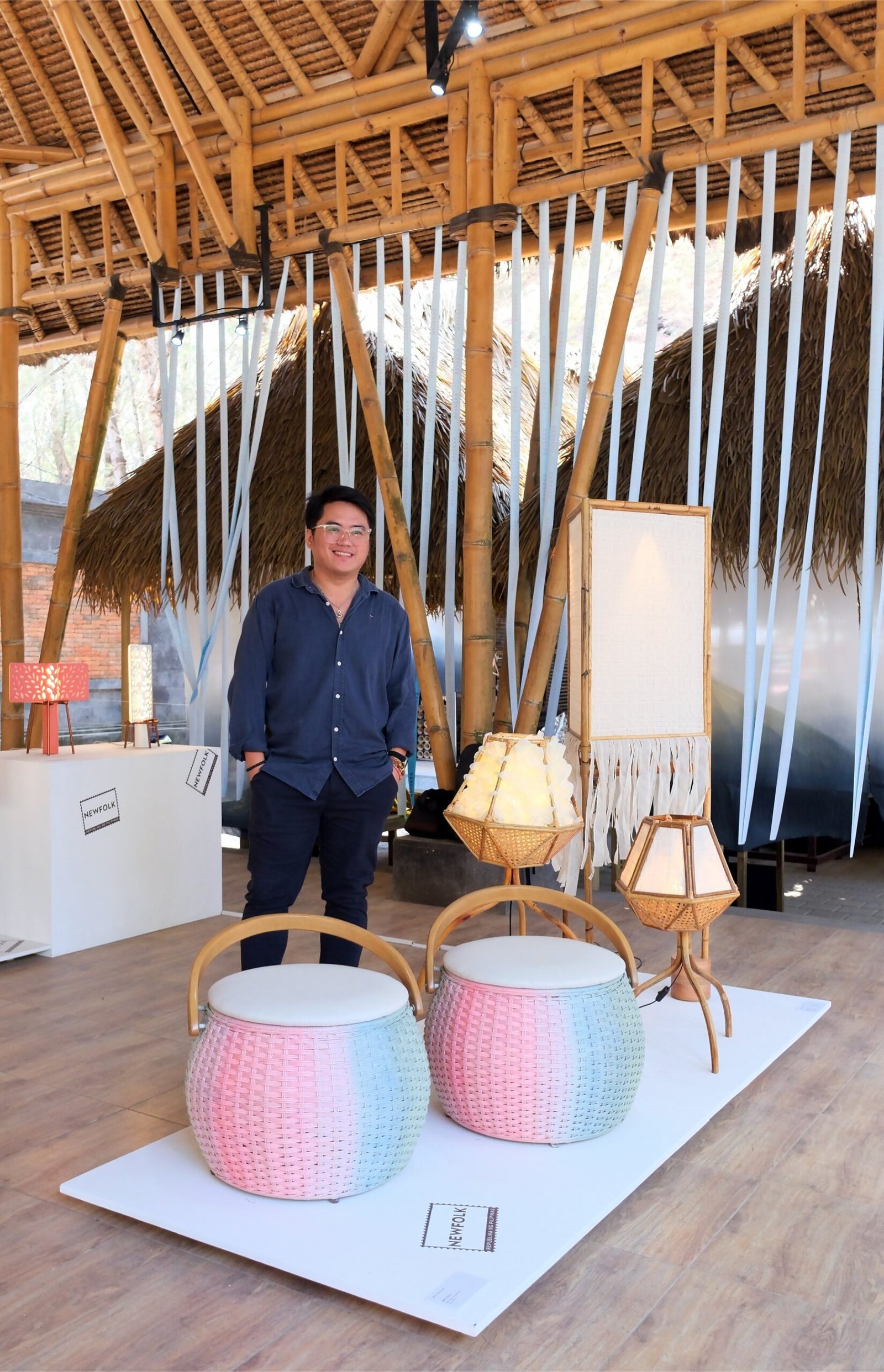
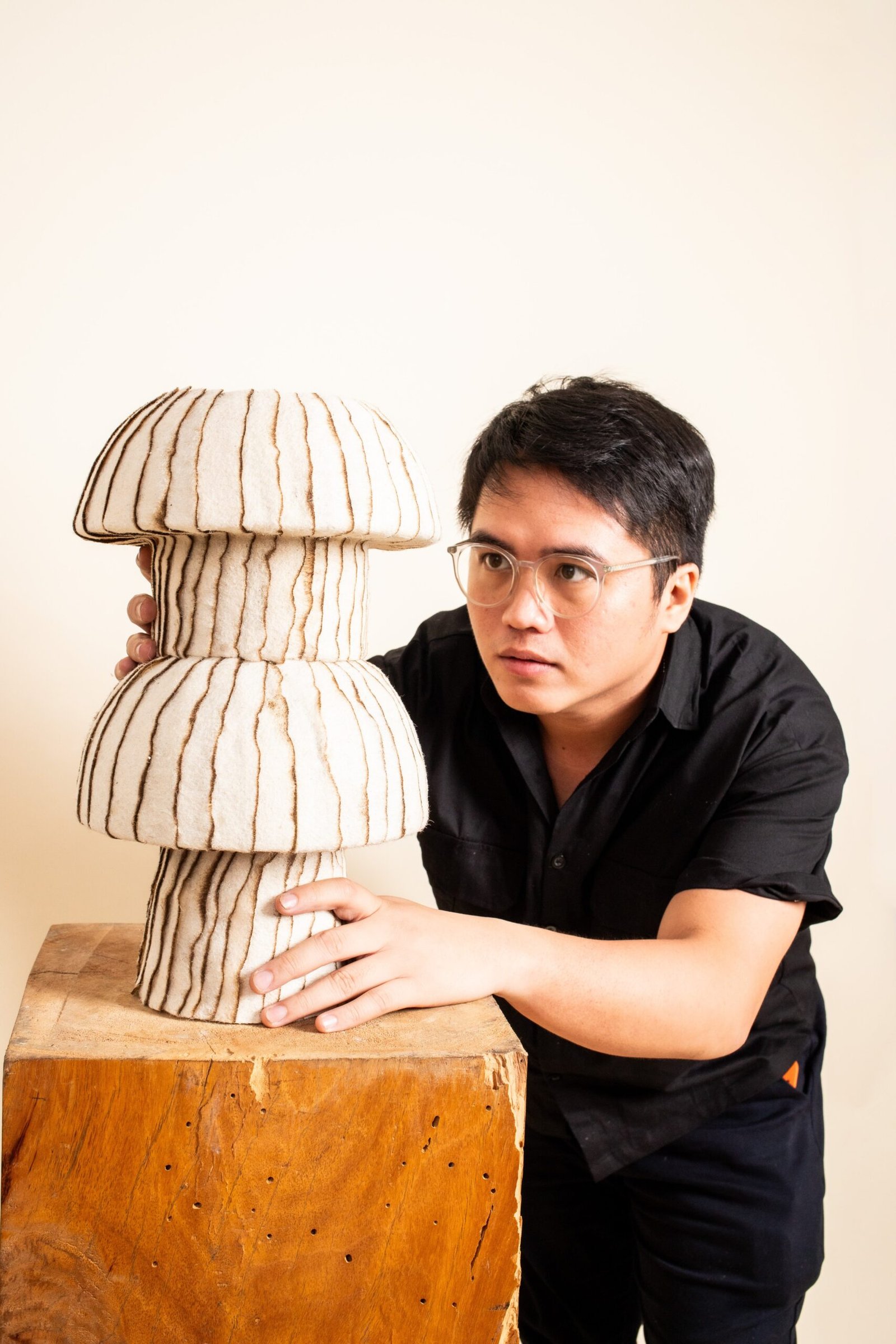
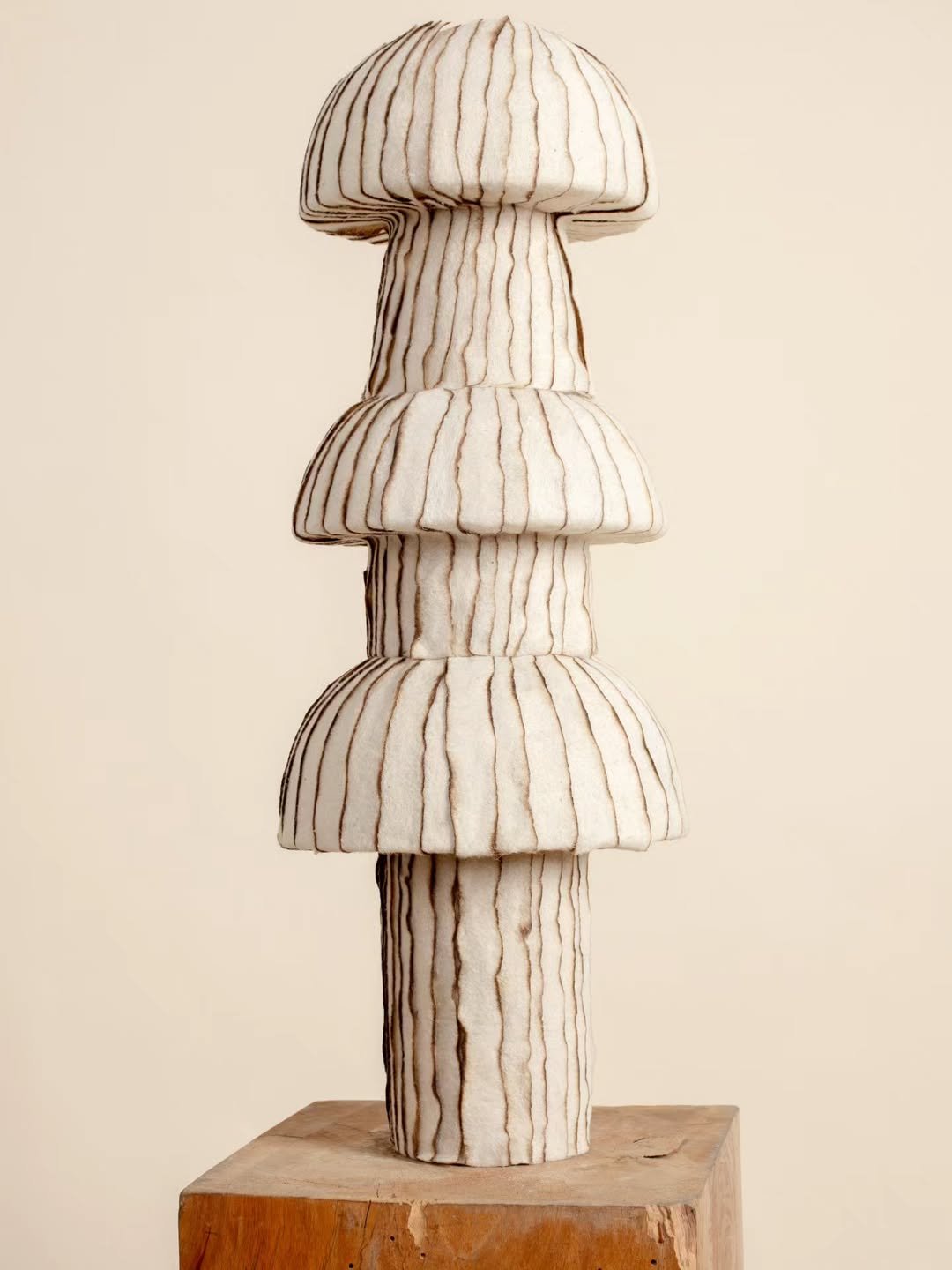
Jasser Aguila almost became a dentist. His family had an established practice and expected him to follow it, but a lost first year led him to Benilde’s School of Design and Arts instead, and later to an apprenticeship under local furniture legend Kenneth Cobonpue. What followed was Donna, his breakout piece, a rattan lounge chair evoking the relationship between a mother and child. He has since worked in wood, steel, papier-mâché, and, alongside fellow Jia CURATED designers Selena Placino, Chini Lichangco, and Edward Sibunga, with Hiblafelt, hand-layering strips of the pineapple-waste material into a sculptural lighting collection. His first international show, back in 2023, came through an invitation into the same circle now curating this one, a welcome dinner where he first met NEWFOLK’s Gabby Lichauco and Rita Nazareno.
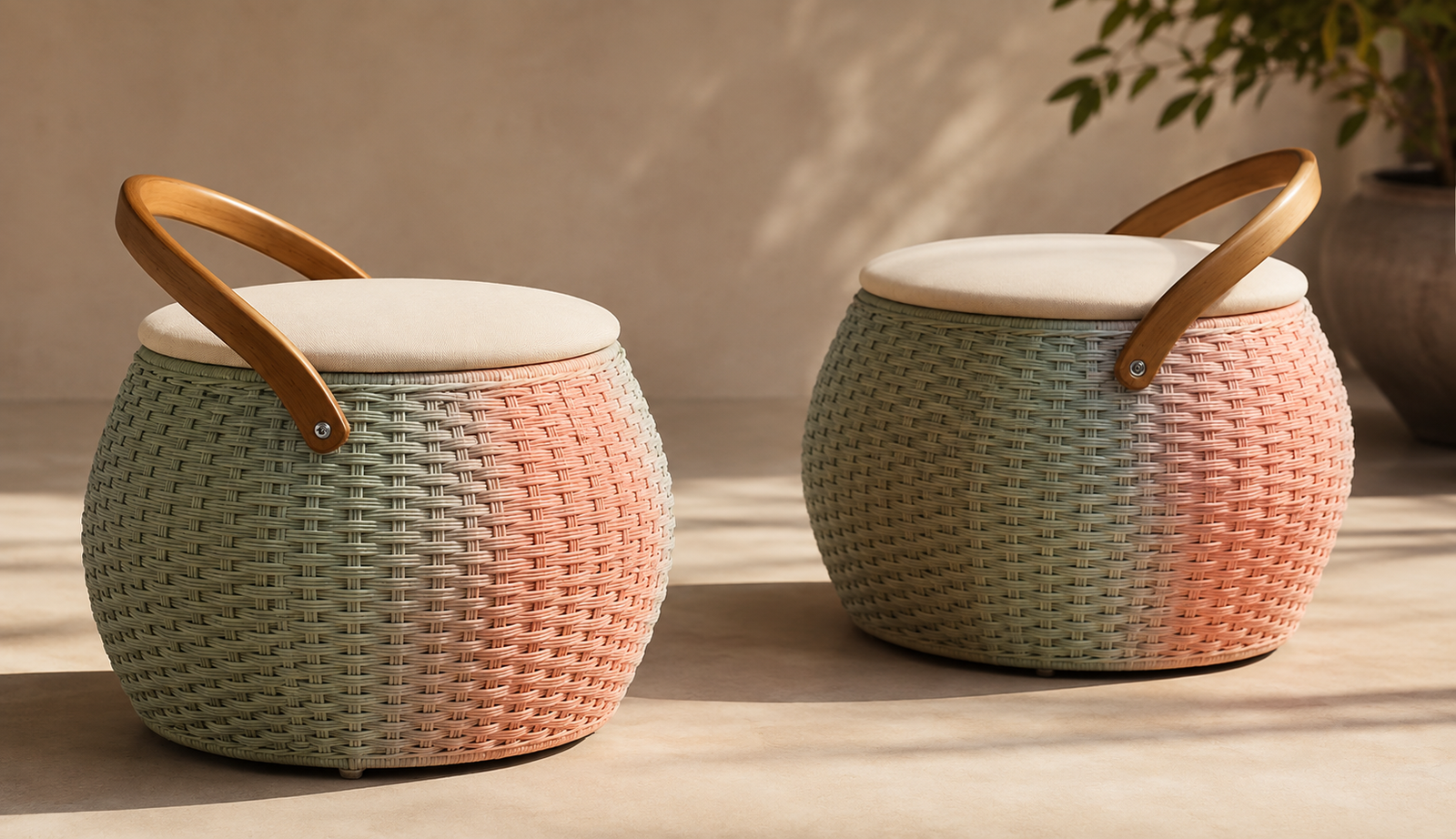
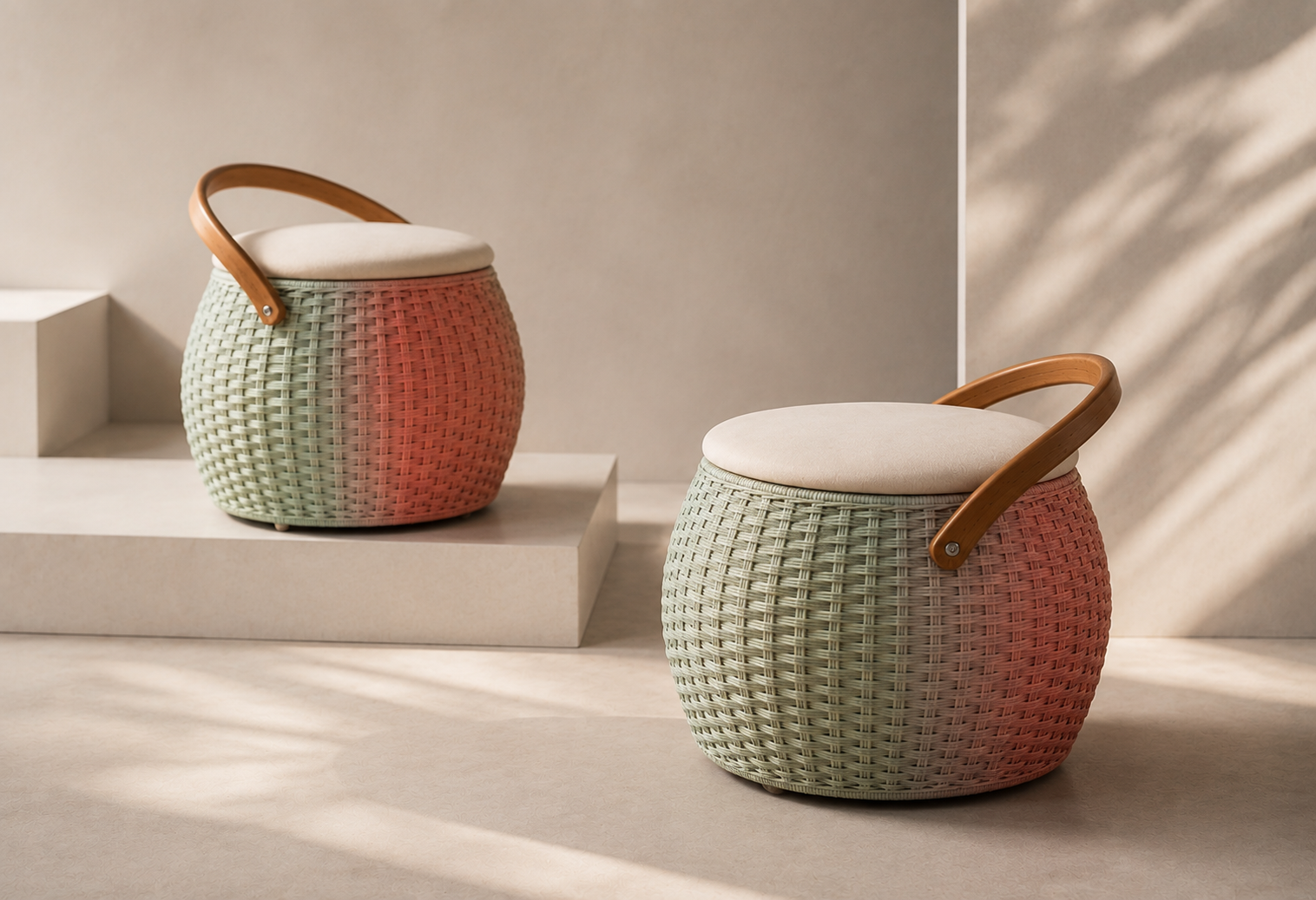
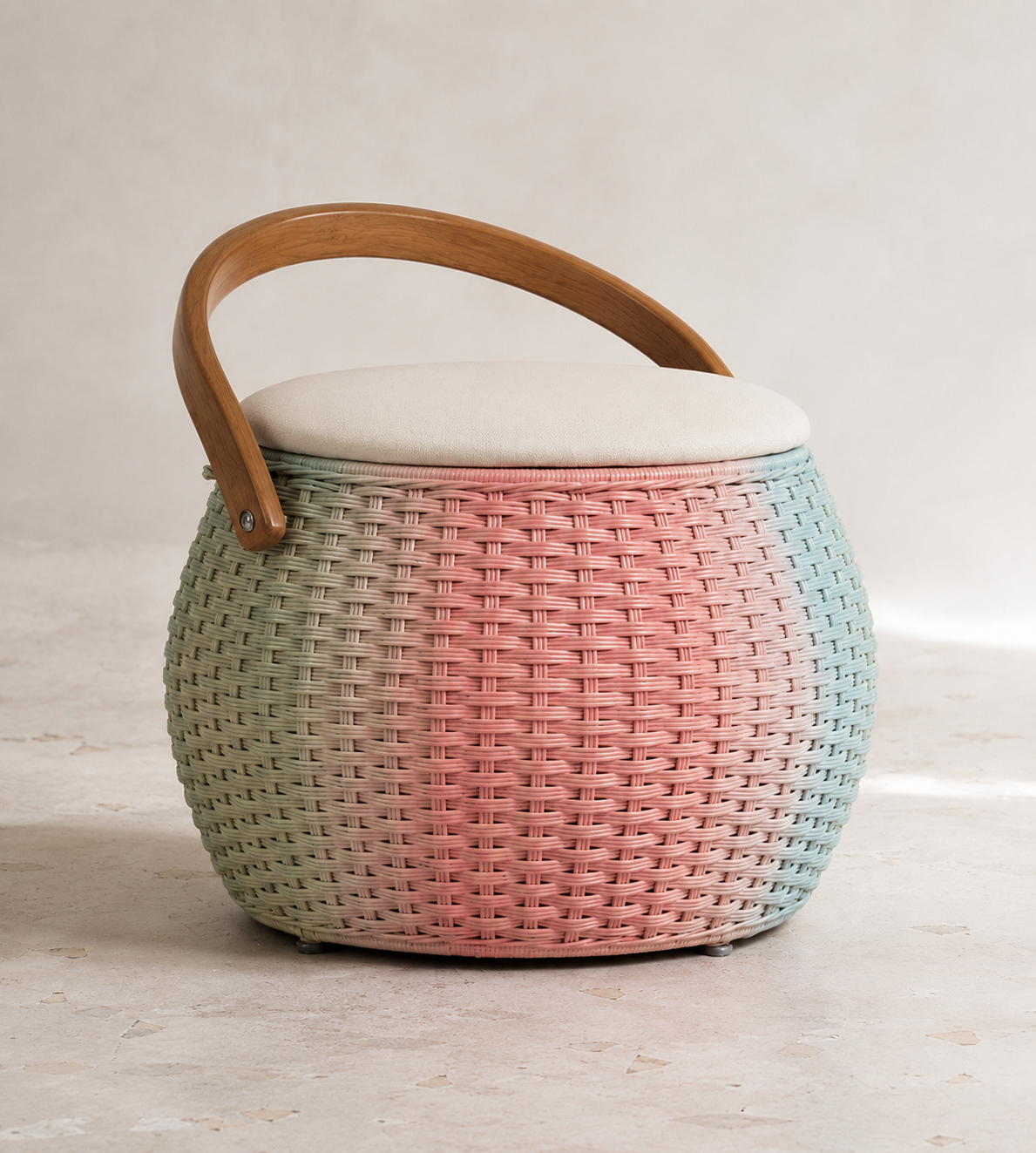
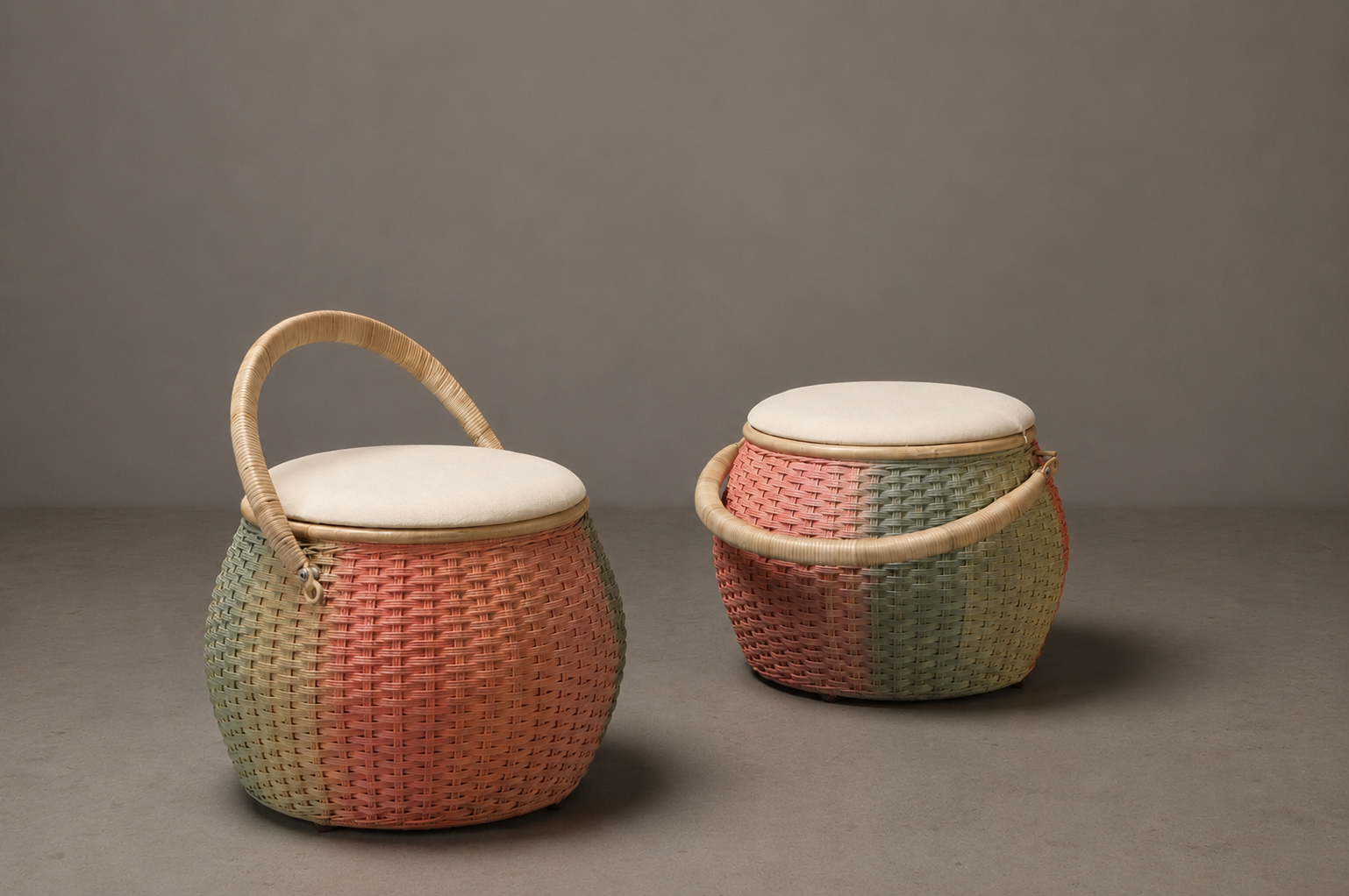
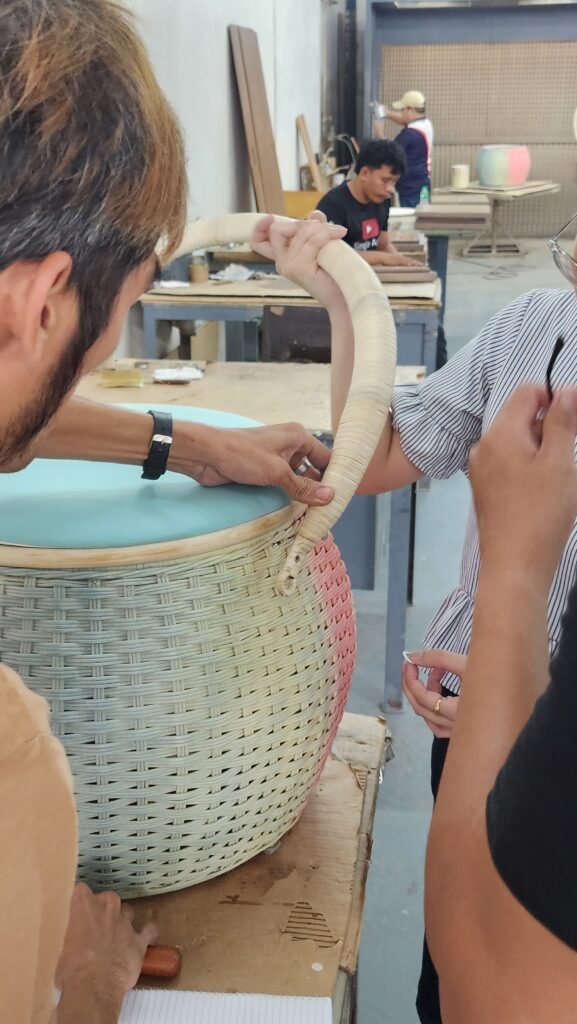
The belief that design follows feeling carries into Vinta stools, Aguila’s collaborative creation with Calfurn, an Angeles-based furniture manufacturer that has worked with indigenous and sustainable natural materials since 1976. Showing at the Tomorrow booth as part of NEWFOLK’s Philippine spotlight showcase at Jia CURATED 2026, the stools invite interaction with their rounded geometries and vivid gradients, mirroring the strident sails of their namesake traditional outrigger boats. They are transportable, a traveling vessel in itself, with a wood handle built into the backrest for easy carrying, fitting for a designer whose own career has moved as freely between materials as the boat that inspired it.
The NEWFOLK theme of Tomorrow asks designers and manufacturers to reconnect with nature and culture. What did that phrase mean to you, before it gave your creation form?
Jasser Aguila: Reconnecting with our culture and nature is really looking within ourselves as Filipinos. With today’s technology and social media, it’s easy to chase global trends, and we as Filipinos tend to look outside for our look or design direction to be accepted and comfortable with ourselves. But for me, the strongest ideas already exist around us, in our everyday lives and local materials, landscapes, and traditions, things that have been passed down through generations of makers. Every new piece this group of designers creates becomes part of the design culture we are building. I wanted the Vinta stool to respect where it came from while giving it a modern feeling and inspiration.
Calfurn: Tomorrow begins with understanding what we already have. Nature and culture have always been part of our manufacturing foundation. Since 1976, we’ve worked with indigenous and sustainable natural materials, particularly woven materials. For us, the future is about carrying that knowledge forward, finding new forms and applications that keep traditional materials and techniques relevant to contemporary life. The Vinta stool reflects this idea: a familiar Filipino material and craft tradition expressed through a fresh, contemporary language. It’s about honoring where we come from while exploring where we can go next.
Vinta suggests the vibrant colors of the indigenous boat itself. How did that translate into the stool’s form?
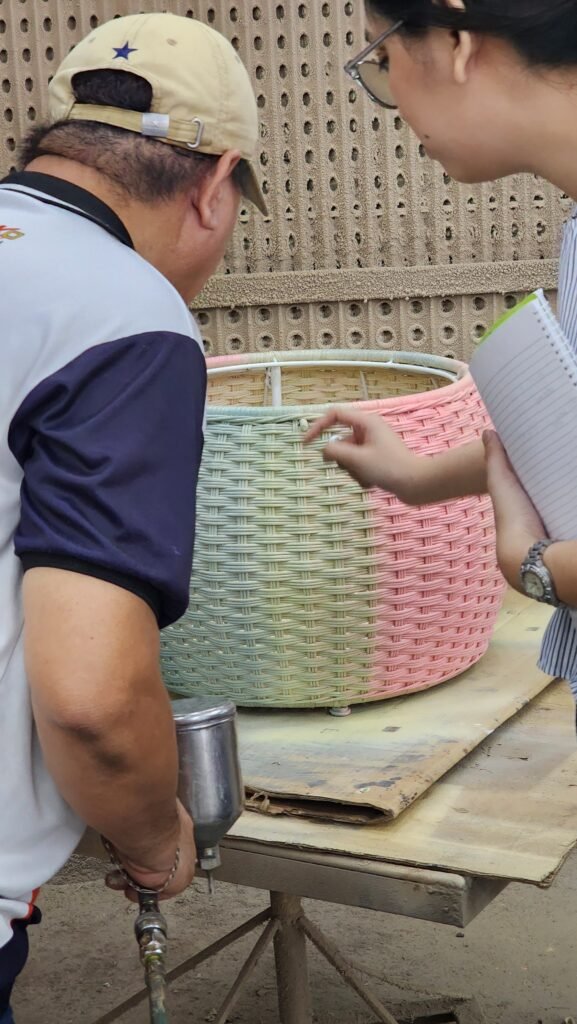
Jasser Aguila: More than its shape, I was inspired by the vinta’s use of vibrant colors that contrast boldly against our blue Philippine seas. Vinta sails stand out with confidence, vivid, striking, free. I wanted to celebrate that spirit through a woven seat, using gradient color as a symbol of Filipino identity.
The stool is round because I wanted it to be approachable and easy to move around, something you could carry anywhere and gather friends around. For me, it celebrates color, warmth, and the freedom to express our Filipino spirit through the seas.
Calfurn: What interested us was the contrast. Instead of literally reproducing the vinta’s angular form, the design translates its sense of movement into a softer, rounded silhouette. This worked naturally with rattan, which lends itself to curves and continuous forms. The result captures the spirit of the vinta through color and movement, while allowing the material and craftsmanship to speak for themselves.
Tomorrow calls for pairing a young designer and a legacy maker. What did you each have to learn from the other to make your pieces possible?
Jasser Aguila: I really enjoyed working with Calfurn. Their team is really accommodating and open to new ideas. Collaborating with a company like Calfurn, experts in the industry, reminded me that good design isn’t just about having a concept but finding the right people who can help make that concept possible in a way that is both well-crafted and hopefully appreciated by the market.
As designers, we can imagine almost anything, but manufacturers understand the limitations and real applications of materials, construction, and production. While conceptualizing and prototyping the piece, we had to find middle ground. The Vinta stool may look simple, but we went through a lot of trial and error. Having a team willing to collaborate, solve problems, and push the idea made the process really fun.
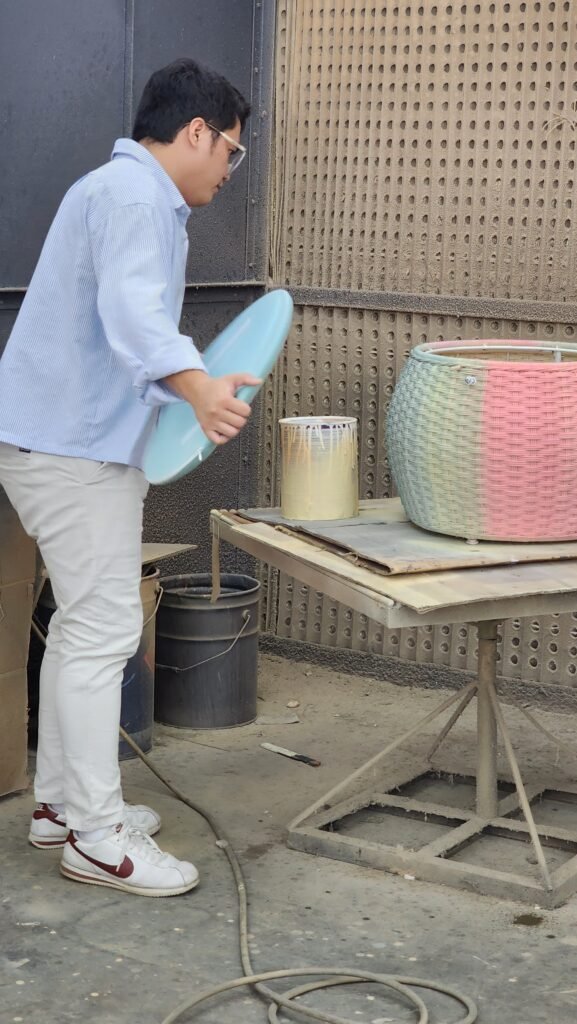
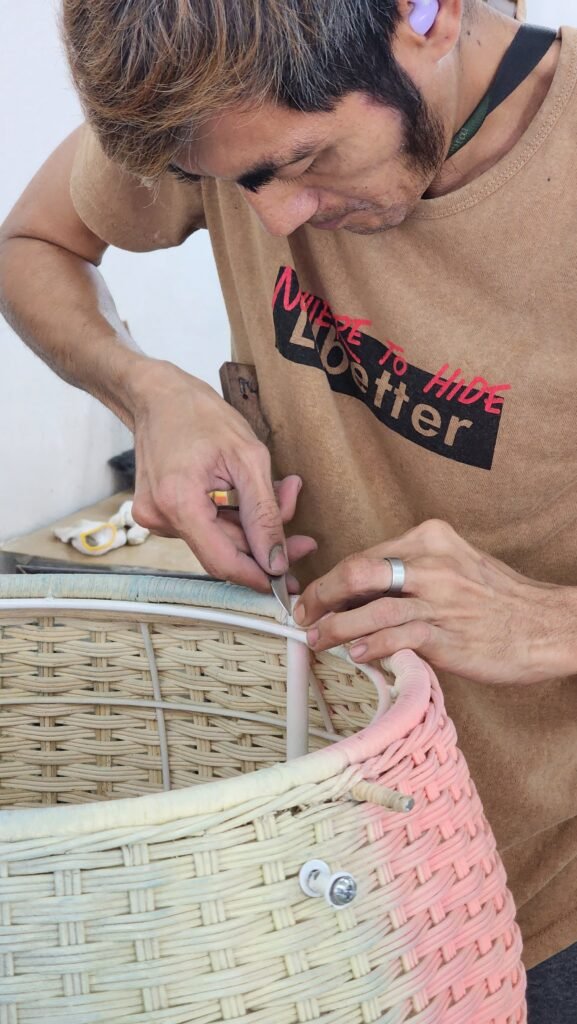
Calfurn: The most valuable part of the collaboration was the exchange between Jasser’s design vision and our manufacturing experience. We brought our knowledge of rattan, weaving, and forming, while Jasser pushed us to explore the material in a fresh way. That balance is reflected in the finished piece: the natural texture of rattan, the warmth of the wood handle, and the vibrant ombré finish using water-based materials. Each element works together to create a piece that feels both expressive and light. The process was about understanding rattan’s natural qualities and letting them guide the design. Ultimately, it became a true meeting of design and craftsmanship.
For Calfurn, is there a technique or piece of your own history this partnership allows you to share with people who have never seen it before?
Calfurn: Yes. For us, it is the knowledge behind weaving and forming natural materials. People often see the finished surface of a woven piece and immediately recognize it as handmade, but they may not realize how much technical judgment goes into achieving that result. At Calfurn, artisans have passed these skills down through generations, combining precision, patience, material understanding, and experience. The Vinta stool gives that craftsmanship a contemporary stage, showing that Filipino artisan expertise is not only part of our history, but an important part of our future.
What would you like international audiences to understand about the nuances of Philippine design through Vinta?
Jasser Aguila: I think many people already associate the Philippines with beautiful craftsmanship, but I also hope they recognize the Filipino spirit of innovation. I hope people see that our way of creating pieces is built on the conversation between designer, craftsman, and material, through our own local stories, materials, and our own way of solving problems.
Calfurn: We want people to see Philippine design as more than simply “tropical” or “handcrafted.” There is deep technical knowledge behind Filipino furniture making, especially in how artisans work with natural materials and adapt them to contemporary forms. The Vinta stool shows that craftsmanship and modern design can coexist. It carries cultural memory while remaining fresh and contemporary. Working with Jasser also showed us how to reinterpret Filipino references without being literal. The Vinta captures the boat’s spirit through color and movement while expressing it in a new form, showing how Philippine design can be rooted in culture while looking toward the future.
You apprenticed under rattan master Kenneth Cobonpue early in your career. Working with Calfurn on Vinta stools brings you back to the material. Does this feel like a homecoming to rattan, and if so, what are you doing with it now that you couldn’t back when you were training?
Jasser Aguila: Working and learning under Kenneth Cobonpue early in my career gave me a deep appreciation for rattan, not just as a material, but as something that carries so much craft, culture, and possibility. That experience taught me to respect the people behind the process, and to understand what it takes to turn an idea into a beautifully made object.
Coming back to rattan with Calfurn feels different, because I now have my own design voice. When I was training, I was focused on learning technique and understanding the material. Today, I am more interested in exploring how rattan can express my own stories and identity as a Filipino designer.
Calfurn: For us, working with Jasser continues a material conversation that has shaped our history for decades. Rattan has always been part of our foundation, giving us a deep understanding of its flexibility, strength, and versatility. What is exciting about working with a designer who has also developed a relationship with rattan is that the material is approached with both familiarity and curiosity. Today, we use that shared knowledge to explore new silhouettes and contemporary forms, where heritage craftsmanship meets new possibilities.
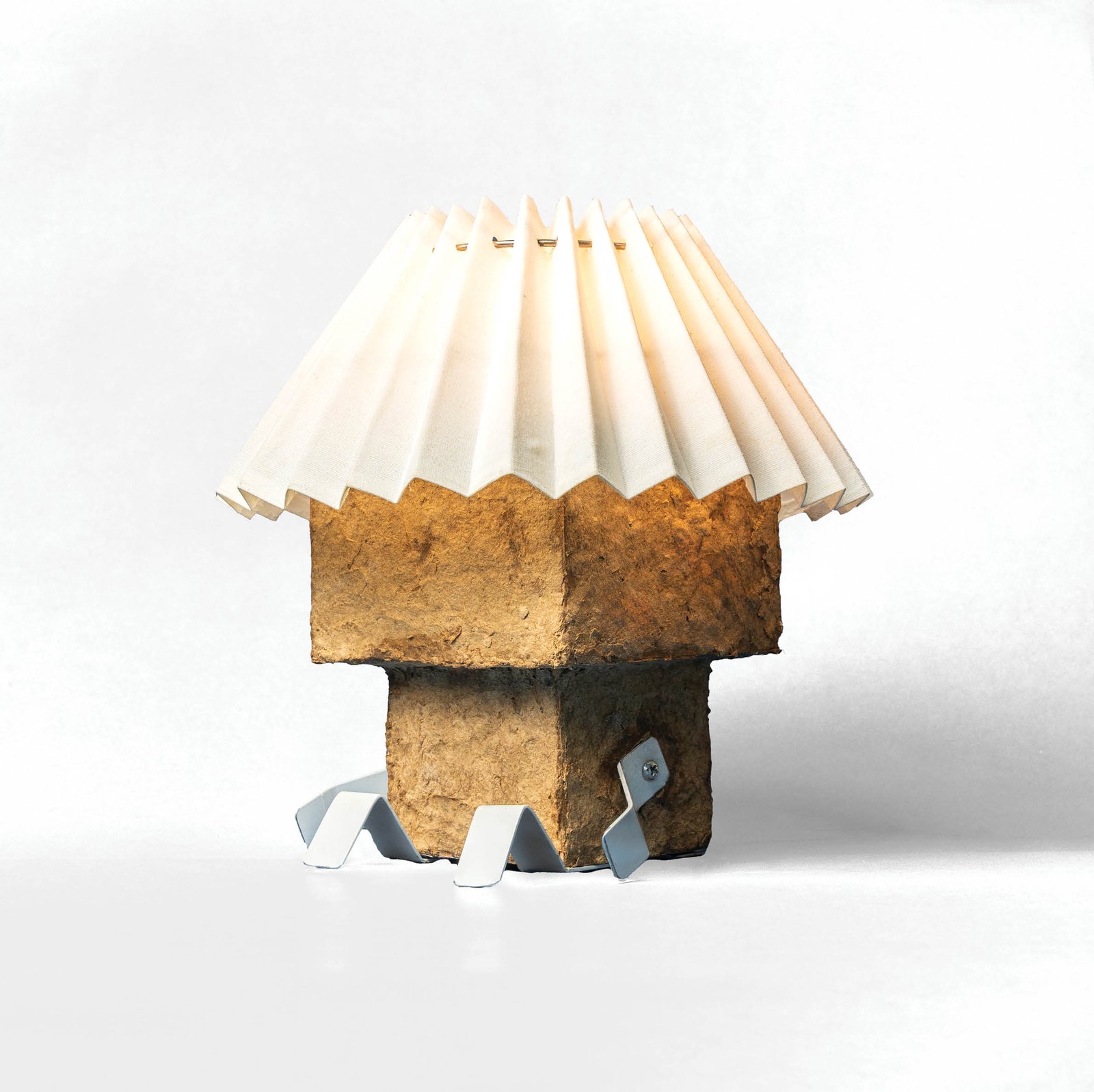
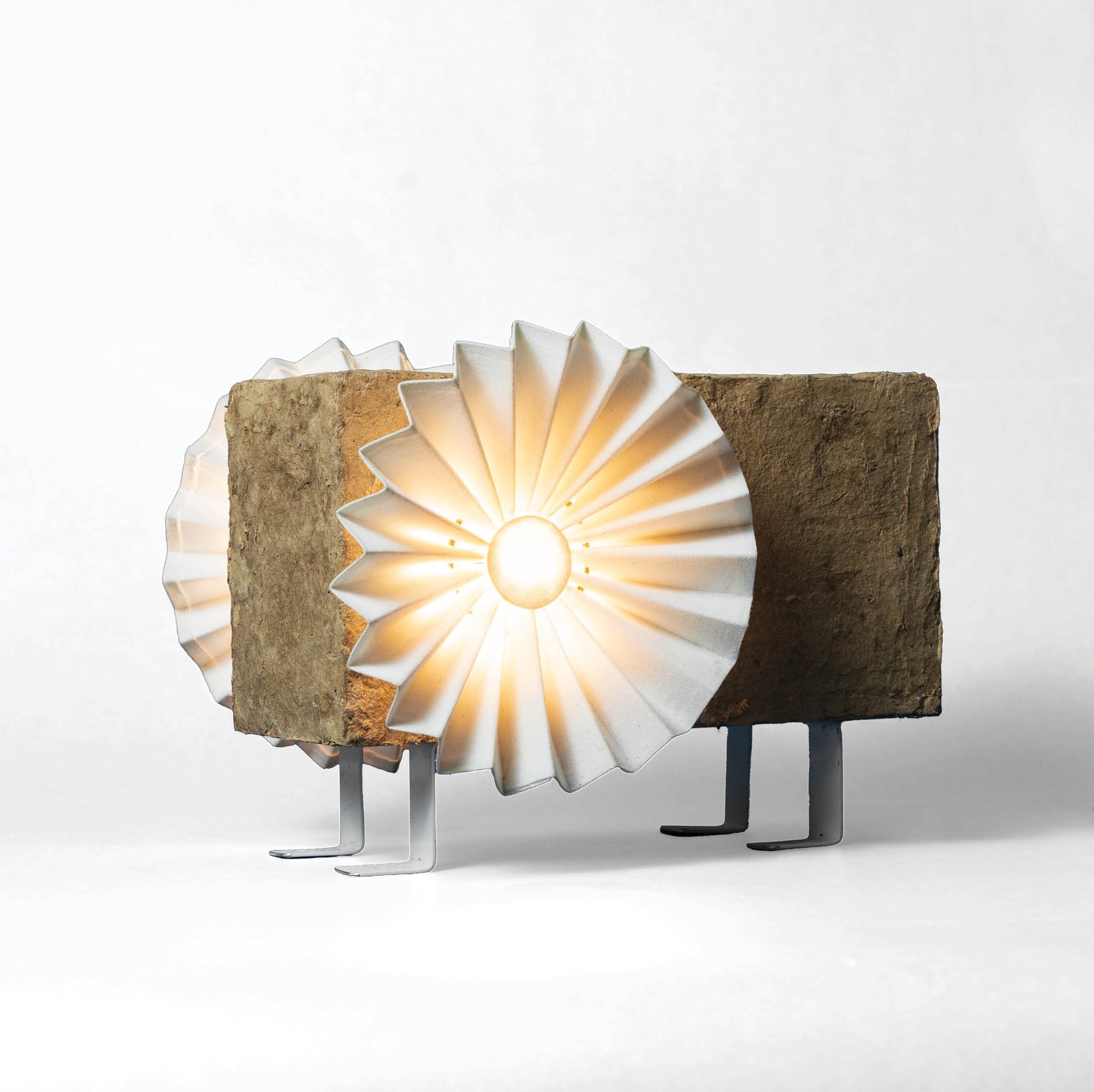
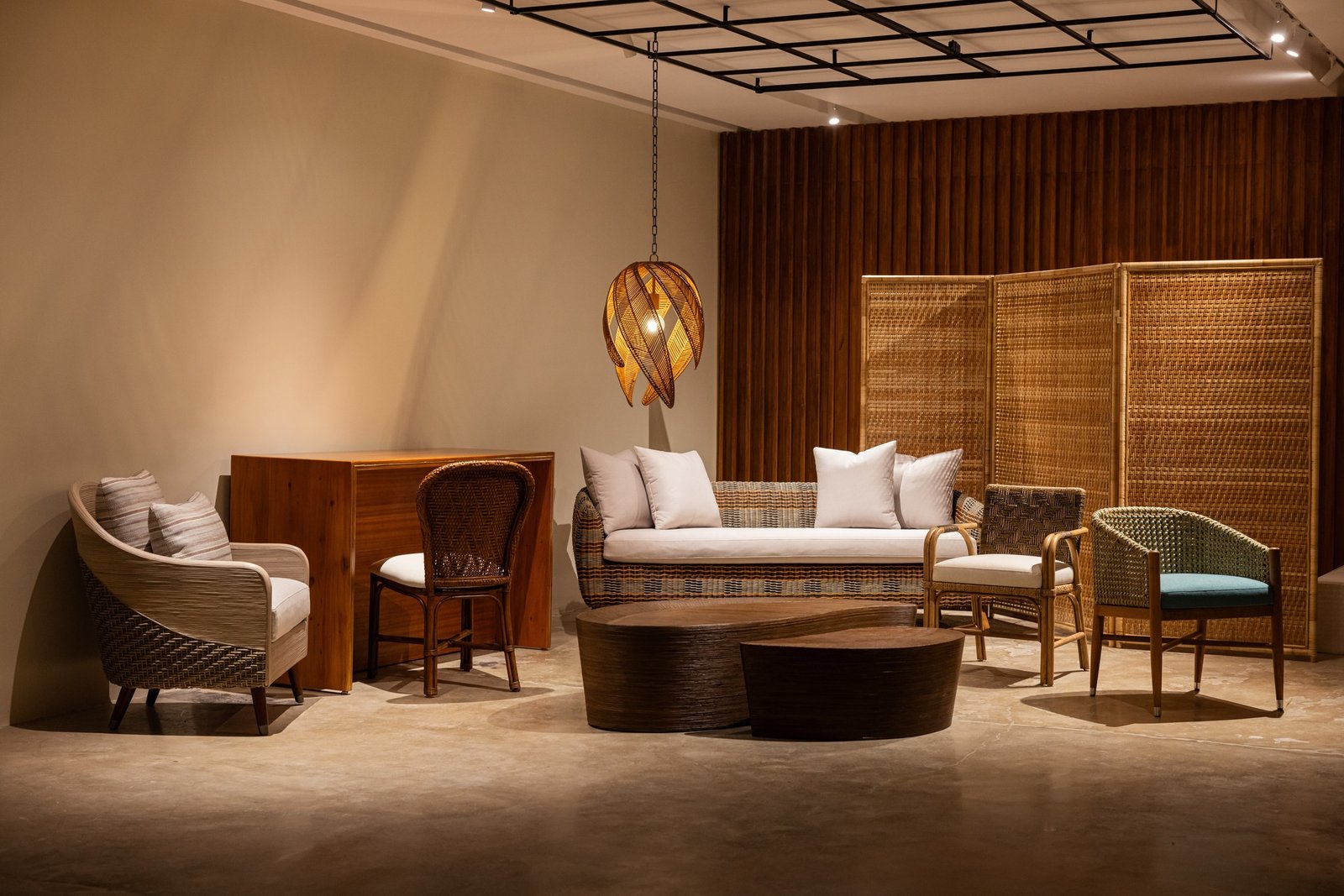
Aguila’s Iba-iba collection for EMERGE 2024
What did you personally value about Calfurn as a material and construction partner for Vinta?
Jasser Aguila: I think the final piece reflects both my vision as a designer and Calfurn’s years of experience as makers. It was a genuine collaboration, and I really value that.
Calfurn: On the flipside, what we enjoyed most was Jasser’s openness to the material. He came with a strong point of view while staying receptive to our artisans’ knowledge, making the process genuinely collaborative. We also appreciated how he interpreted the vinta through movement, color, and form without being overly literal. For us, it was an ideal partnership: fresh design thinking grounded in the experience and craftsmanship of the people who make it.
Vinta looks light, breezy, almost effortless. Is there woven engineering or structural innovation on Calfurn’s part working beneath that ease, something that helps the piece hold its shape and structural integrity as a seat, despite how light and portable it looks?
Calfurn: Yes. The Vinta stool’s apparent simplicity comes from carefully balancing rattan, wood, and construction. Its strength depends on how the frame, joints, bends, woven elements, and wood handle work together. Our artisans draw on decades of experience to manage tension, reinforcement, and rattan’s natural flexibility. The result is a piece that feels light and effortless while remaining strong, functional, and visually balanced.
Our role in this partnership was to translate the design into a durable, finished piece without losing its character. Our experience with natural materials was key, particularly in balancing form, flexibility, weaving, and structure. We work with the material’s natural qualities to shape each piece. We also value being involved early in the design process, allowing craftsmanship and manufacturing knowledge to shape the piece alongside the design.
NEWFOLK’s own framing of this show leans on padala, the practice of sending gifts to loved ones. If you can send Vinta as your padala, who would be at the receiving end?
Jasser Aguila: I would send it to someone who has never been to the Philippines. I would want them to experience a piece that reflects our craftsmanship and culture in a subtle, everyday way. For me, good design can start conversations, and I hope the Vinta stool sparks curiosity about the stories, traditions, and makers behind it.
Calfurn: We would send it to a Filipino artisan who has spent decades working with their hands but may never have seen their craft represented on an international design stage. For us, that makes the Vinta stool a meaningful padala. It carries not just the designer’s or manufacturer’s name, but the knowledge and skill of the Filipino makers who prepare, shape, weave, and finish it. We would want them to feel that their craft has traveled and become part of the global design conversation. •