Words and interview The Kanto team
Images Selena Placino, VENZON, and Bien Alvarez (Jia CURATED 2026)
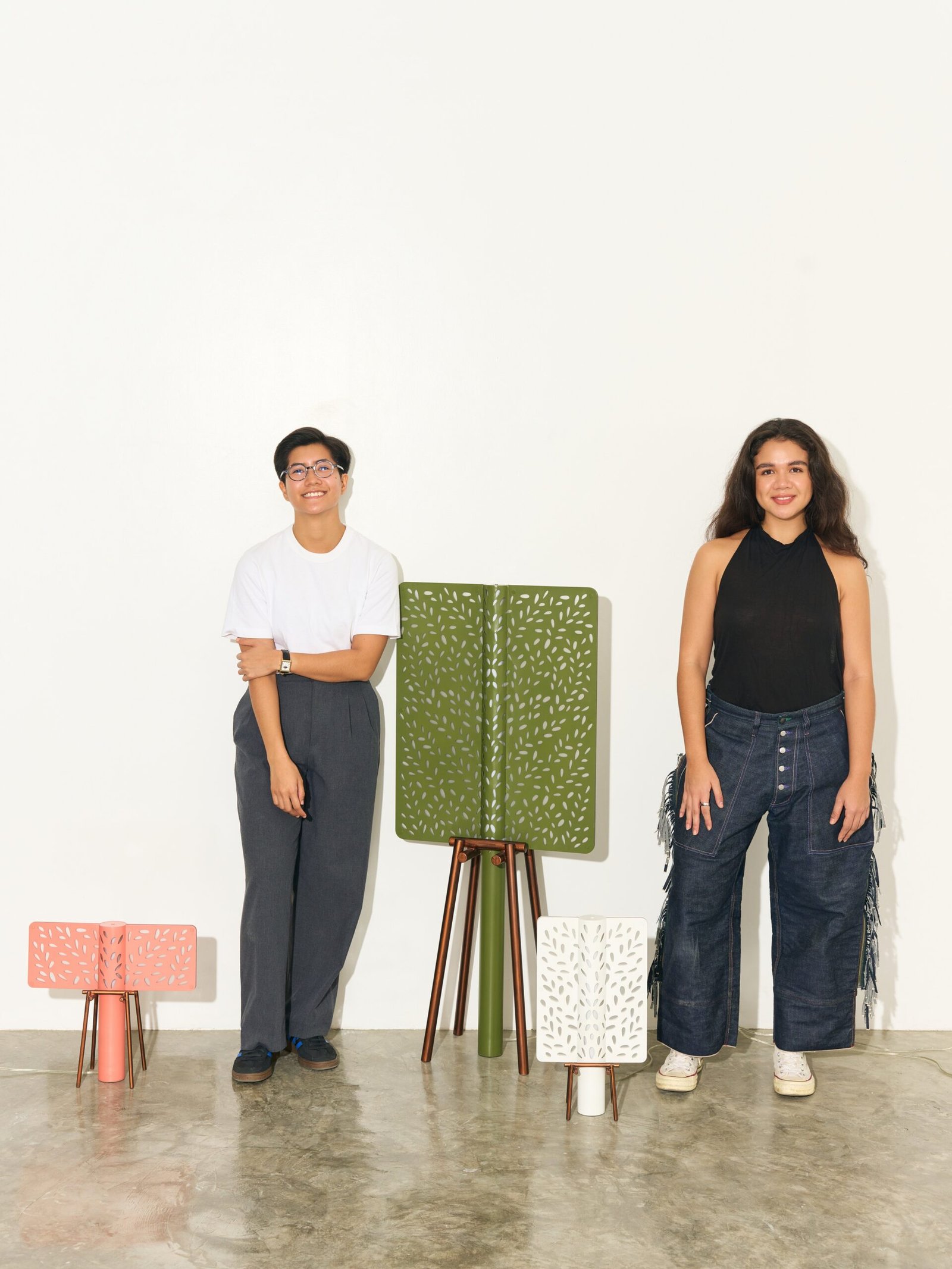
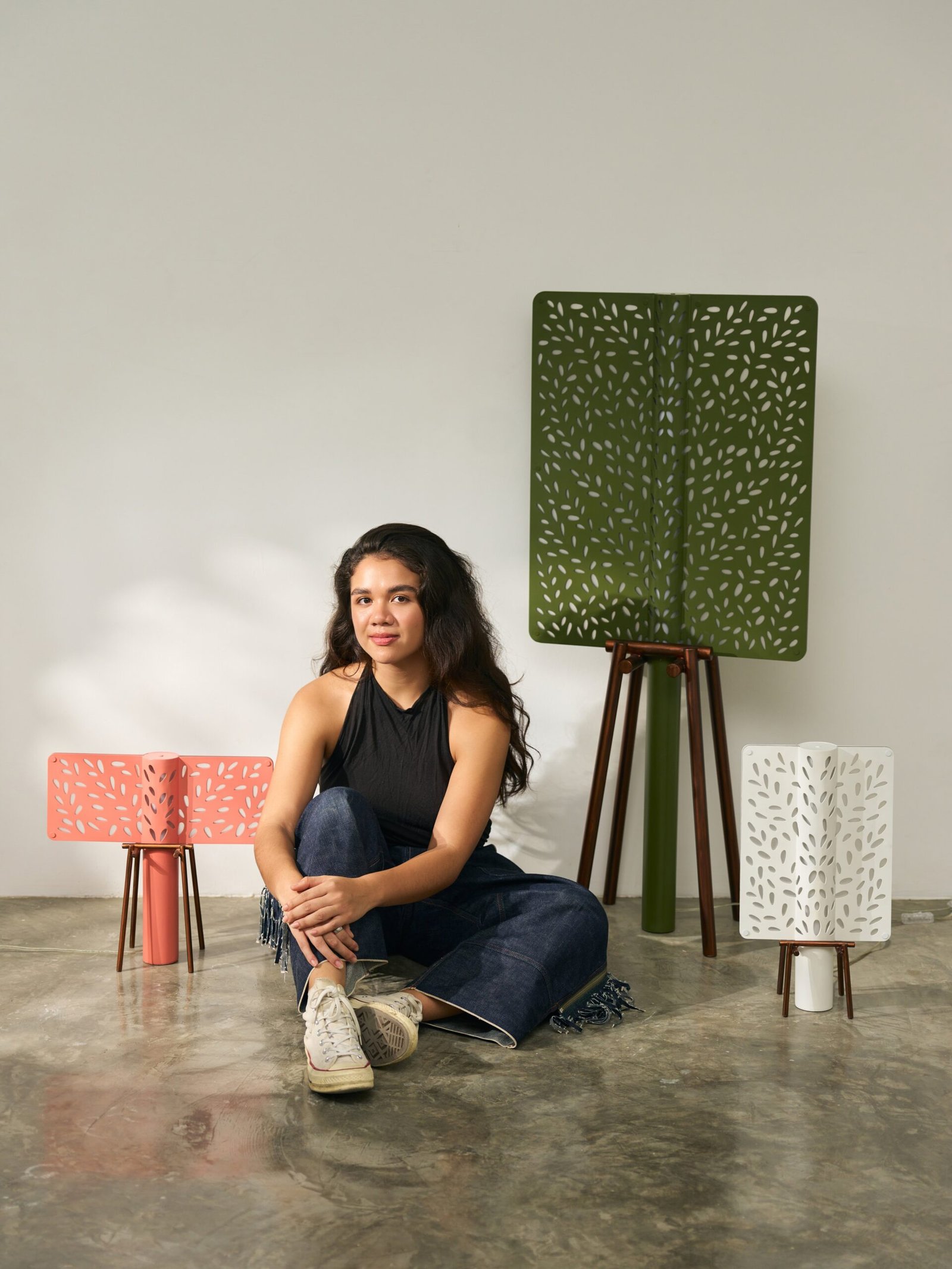
Alexis Venzon and Selena Placino had admired each other’s work for years, crossing paths at events without ever really connecting. VENZON, the family lighting business her parents built in 1984 on nature-inspired metal craftsmanship, had only once before taken this kind of chance on an unfamiliar young designer, a 2015 collaboration Alexis watched her father pour himself into as a teenager. A decade later, it was her turn to lead one, and Selena had been the only designer she’d wanted to work with since college.
Placino, on the other hand, has been slowly and steadily making waves in local and international shows with a brand of furniture design that straddled pragmatism with simple visual play, or as the Daily Tribune calls it, “reimagining the mundane.” Her Taho bench is memorable for incorporating taho canisters as the legs of a usable bench; her Good Design Award Philippines-winning Ihawi room divider creates a sound-absorbing wall panel with the use of rotating non-woven felt mounted on wooden rods, recalling skewers on a grill.
What eventually brought the two of them together, though, wasn’t a studio meeting or an industry introduction. It was a chance run-in a world away from either, at a temple in Bali, months before either knew Jia CURATED existed for them at all. Seasons, the resulting piece, part of Tomorrow, NEWFOLK’s Philippine spotlight showcase at Jia CURATED 2026, is now showing at the very place where Alexis and Selena’s friendship began.
Tomorrow asks designers and manufacturers to reconnect with nature and culture. What did that phrase mean to each of you, before your shared creation gave it shape?
Alexis Venzon, VENZON: I was actually quite nervous about this theme, because VENZON has always represented a departure from the traditional expression of nature and culture, and I struggled to trust that people could feel those ideas within our work. Growing up in the Philippines surrounded by design and manufacturing, I have always seen our creativity expressed through natural materials, long an identifier of Filipino culture. But my parents built VENZON around nature-inspired metal craftsmanship instead, something that sometimes felt difficult to justify as Filipino design, since we do not have as much history or context behind that kind of practice.
So, I was honest with Selena from the beginning: I didn’t feel comfortable pushing the design toward a literal expression of nature and culture, and I encouraged her to go the complete opposite direction, toward something more abstract. We asked each other what the feeling of nature and culture meant to us individually, and how we could create something personal and specific to both brands while still universal enough to connect beyond ourselves. That is where “form follows feeling” came from, because a feeling transcends limitations the same way nature and culture do.
Selena Placino: Initially, Alexis and I struggled with the theme, because metal is not usually the first material that comes to mind when you think of nature and culture. As we discussed possible directions, we were led to the idea that human emotions and feelings are also part of both nature and culture. That became our interpretation. Alexis brought up “form follows feeling,” and we both agreed we wanted to create a piece that people could relate to universally, not just as Filipinos, but as human beings. We wanted the object to connect with people through something innate to all of us: how we feel.
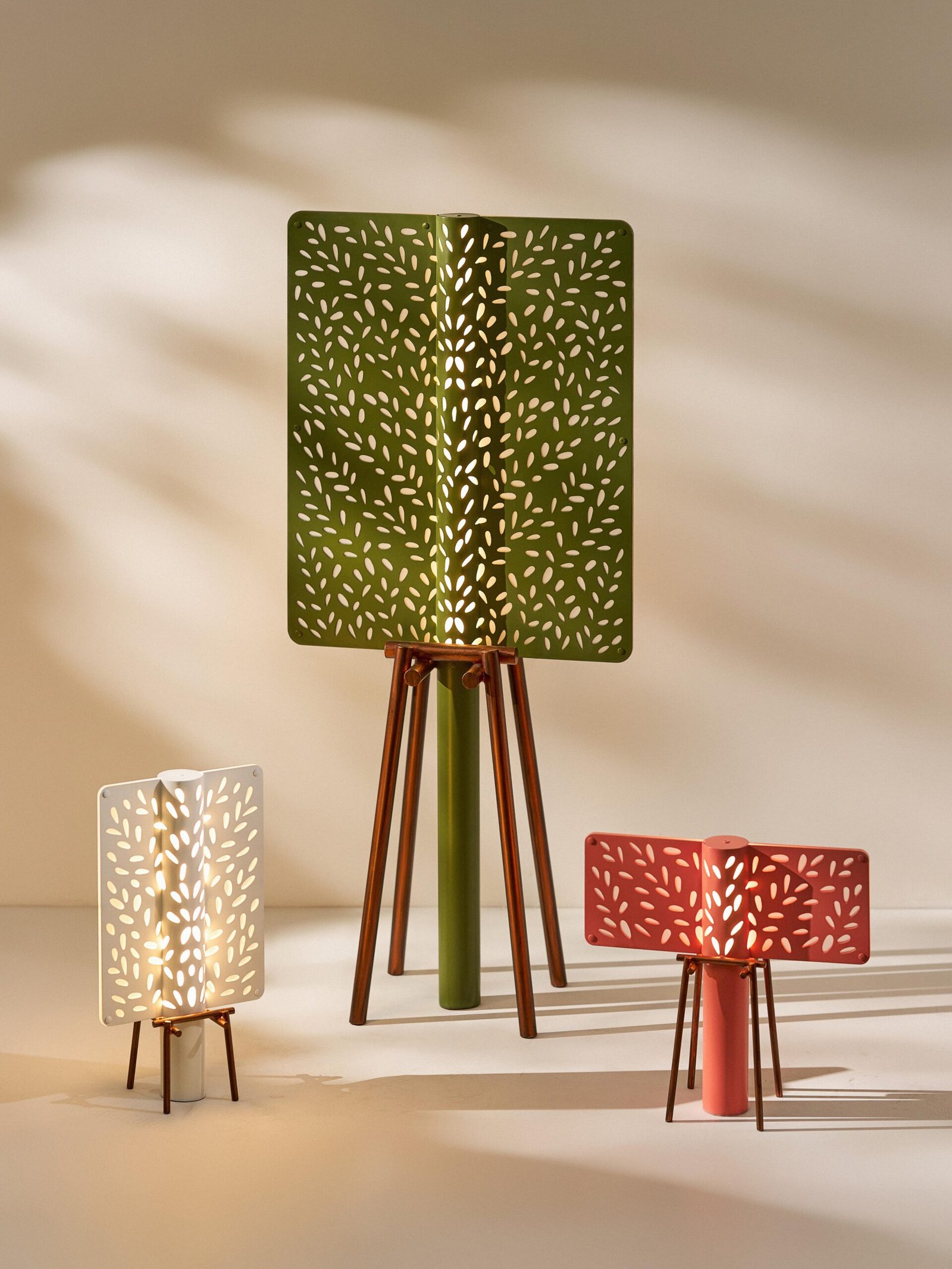
Selena, since your work usually draws from very local, specific Filipino sources, Seasons is a change of pace by design. In the pursuit of something ‘universal,’ how did you both land on the cycle of trees and seasons as your visual anchor? What made that image the right one for what you both intend to communicate?
Selena Placino: We wanted to create a design that everyone could relate to, especially since we would be launching the collection in an international setting. This was also the first time I was asked to tap into feelings and emotions as the starting point for a design, which was challenging at first because it was completely new to me. My design process, however, isn’t strictly inspired by Filipino references. It also comes from my everyday experiences, observations, and the things I find interesting or become curious about.
While developing the piece, I took a solo trip to Japan during the transition between winter and spring. Walking through the parks alone, I noticed that despite growing in the same soil, exposed to the same environment, some trees had already bloomed while others remained completely bare. It reminded me of how I would often compare myself to others and feel like I was falling behind. But seeing those trees made me realize we all have our own timing.
I also noticed the Japanese practice of propping and supporting young or growing trees. One bare tree with supports around it stayed with me. I saw myself in that tree. I was also going through a period of change, feeling like I was in between seasons. It reminded me of my friends and family who had been supporting me through that period, especially when I felt stuck and bare. Sometimes the people around us can hold hope for us until we’re ready to renew ourselves.
As a designer, I usually design for others, but for the first time, I felt that I was also designing something for myself. Seasons became a reminder to myself, and hopefully to others, that life has its seasons. Even when things feel dark or uncertain, there is a natural cycle to growth, and we can learn to remain hopeful and trust in our own timing. This also became my connection to Jia CURATED’s theme of nature and culture. The act of propping and supporting trees reflects the relationship between humans and nature: our instinct to nurture, protect, and sustain growth. While I encountered this practice in Japan, the act of supporting nature is not unique to one culture. It is something that exists in different forms around the world, making the image of the tree, and the idea of its seasons, something that can be understood universally.
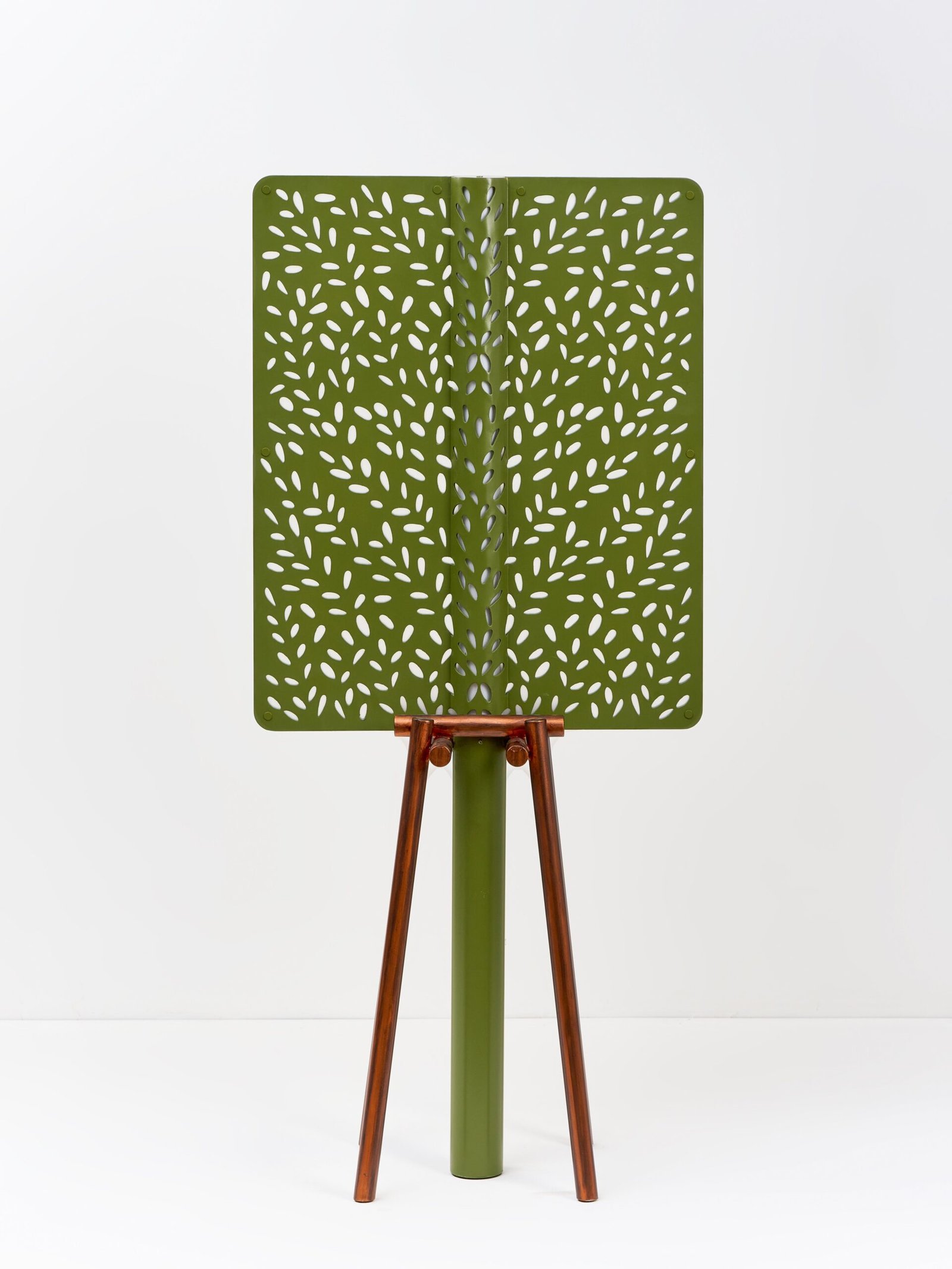
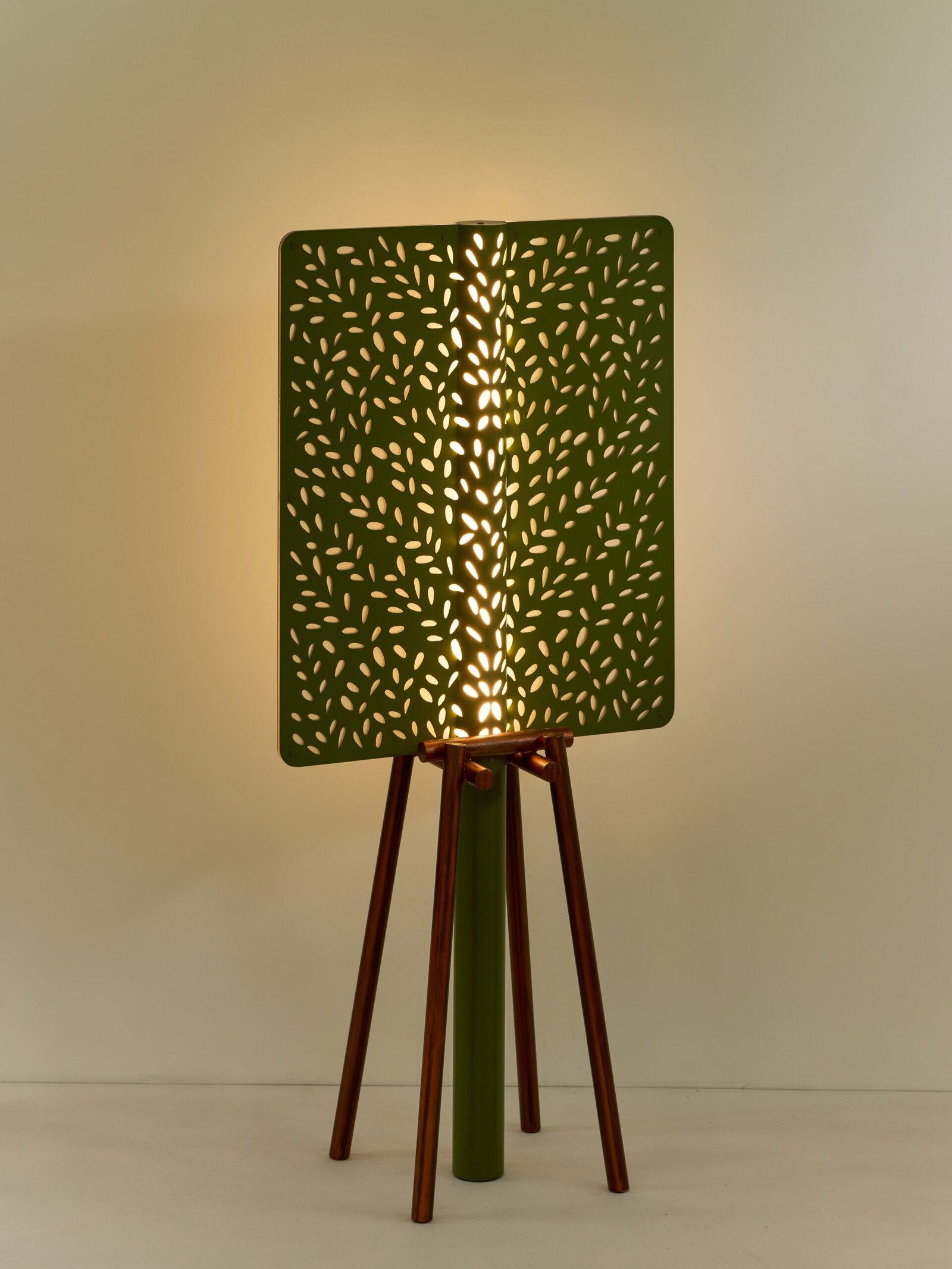
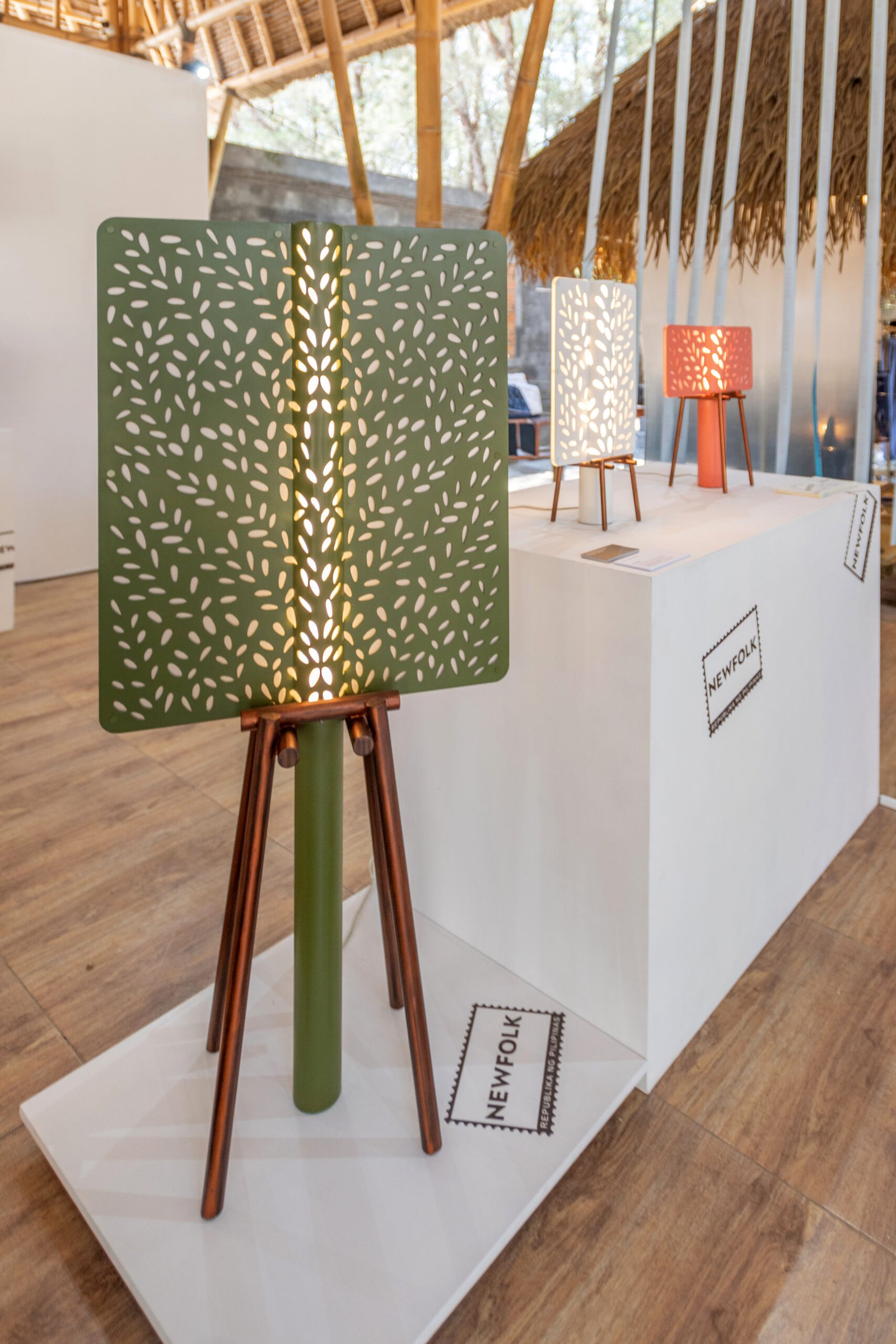
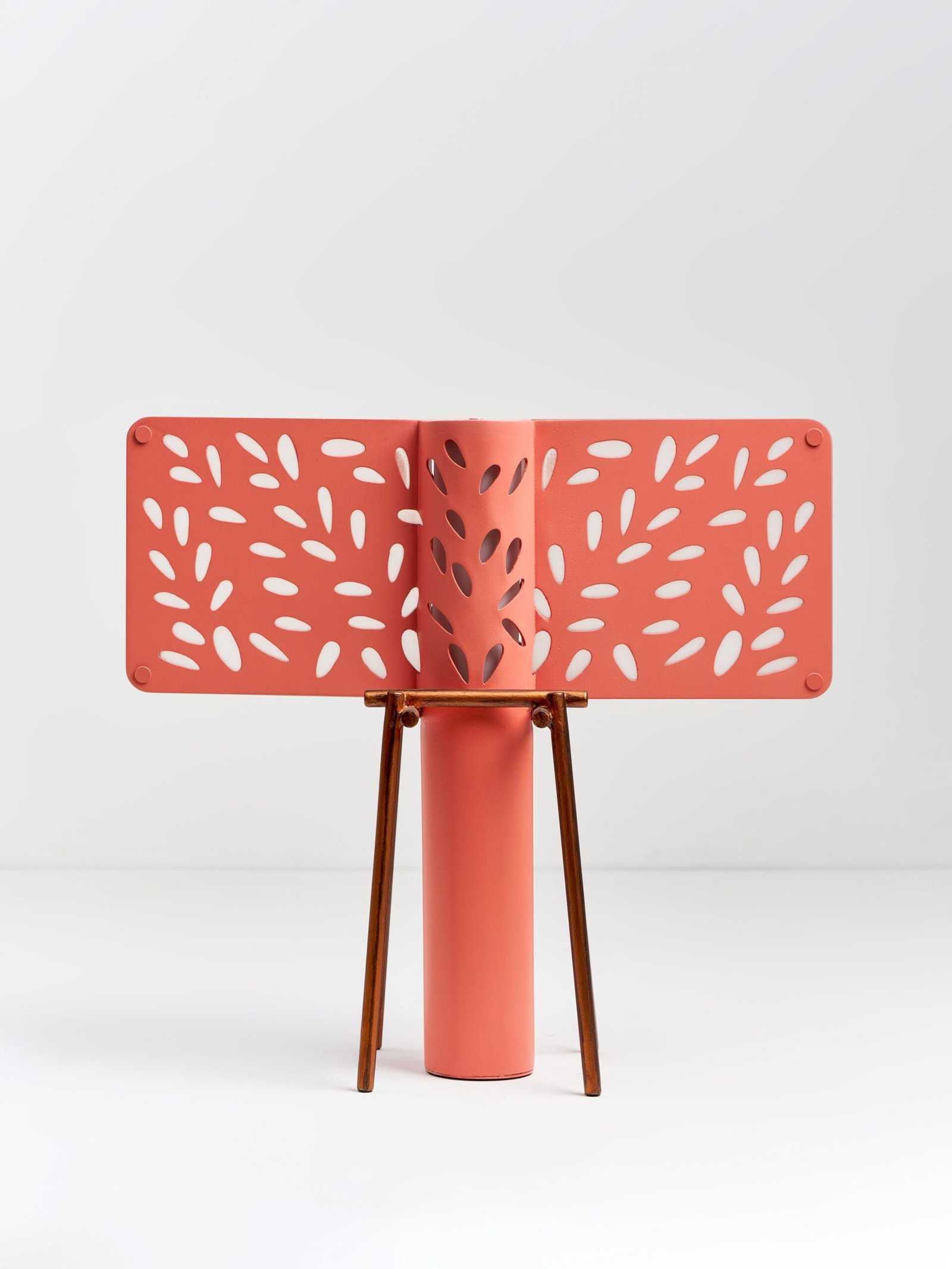
Seasons’ floor lamp has a broad, flat, fan-like head sitting on slender legs, a top-heavy shape by nature. How did you and Venzon keep that form stable without losing the light, airy look?
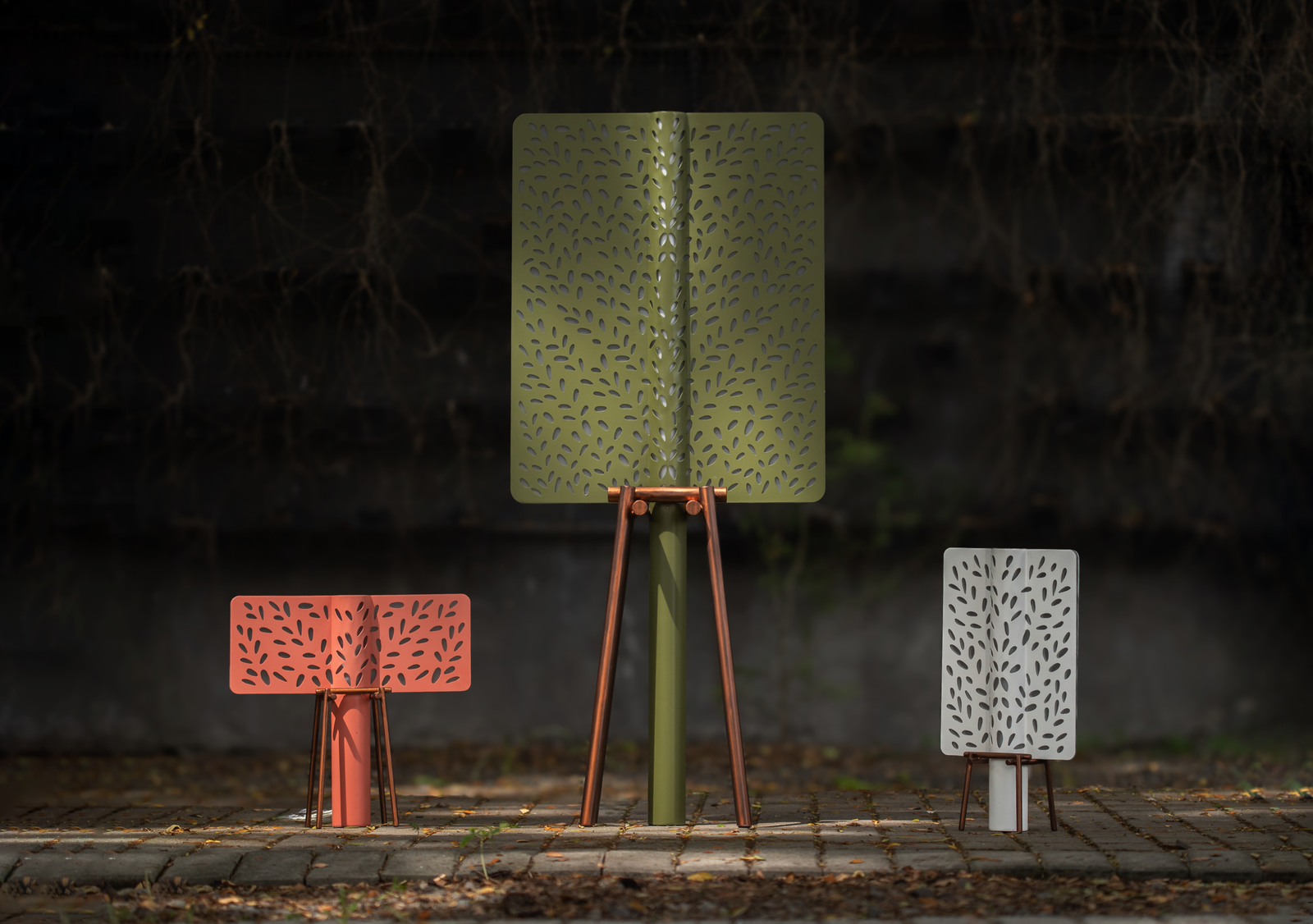
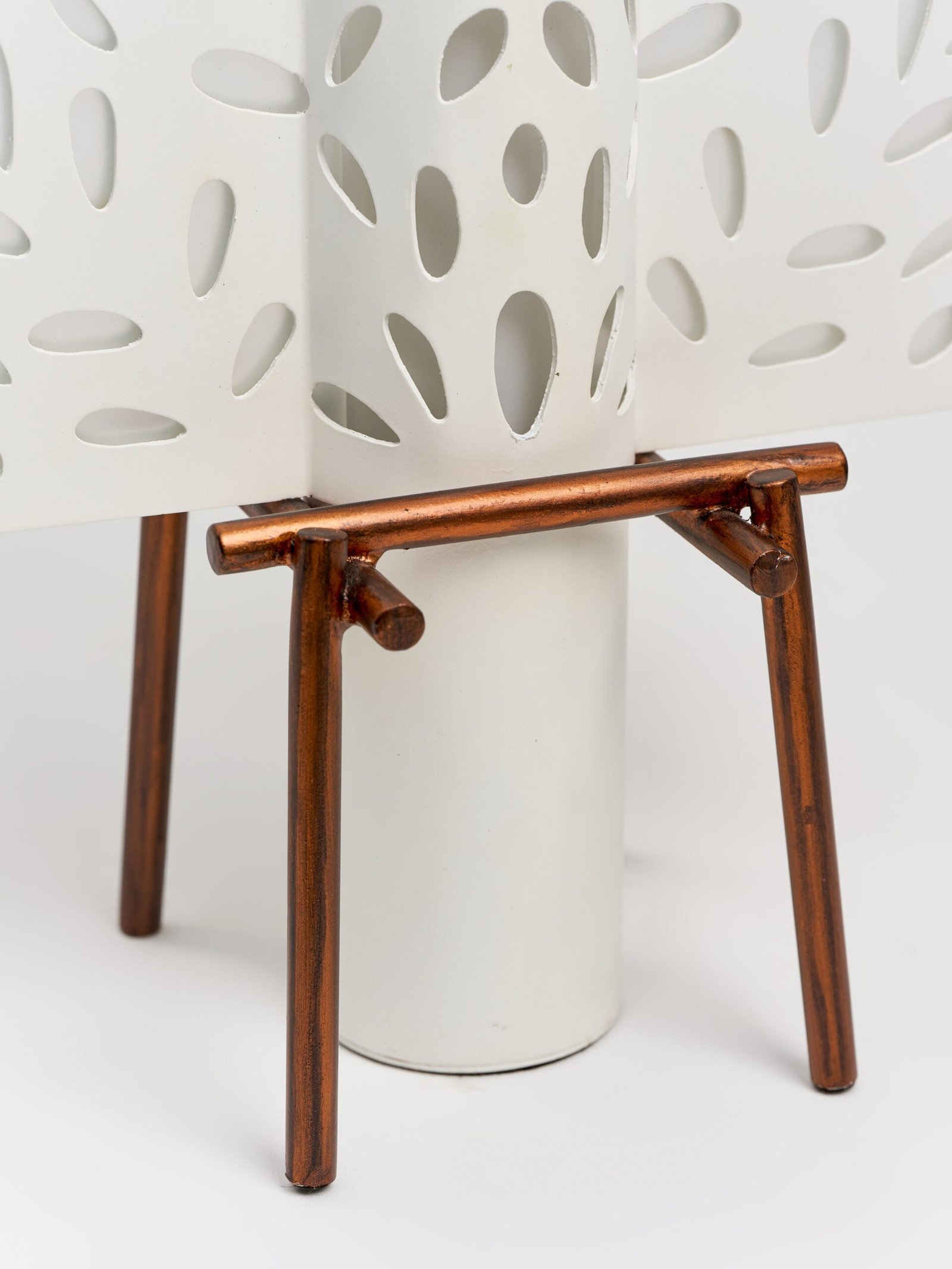
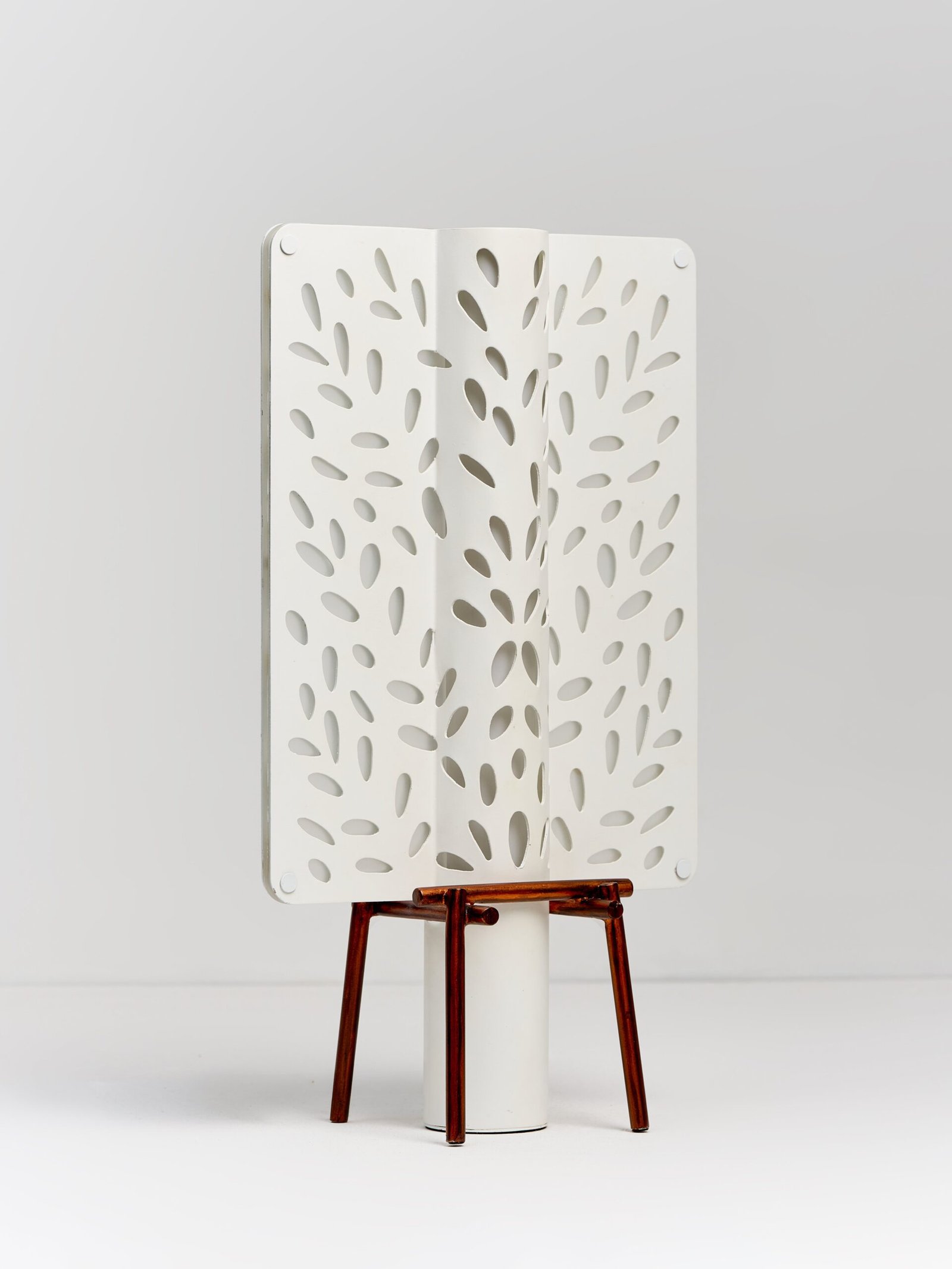
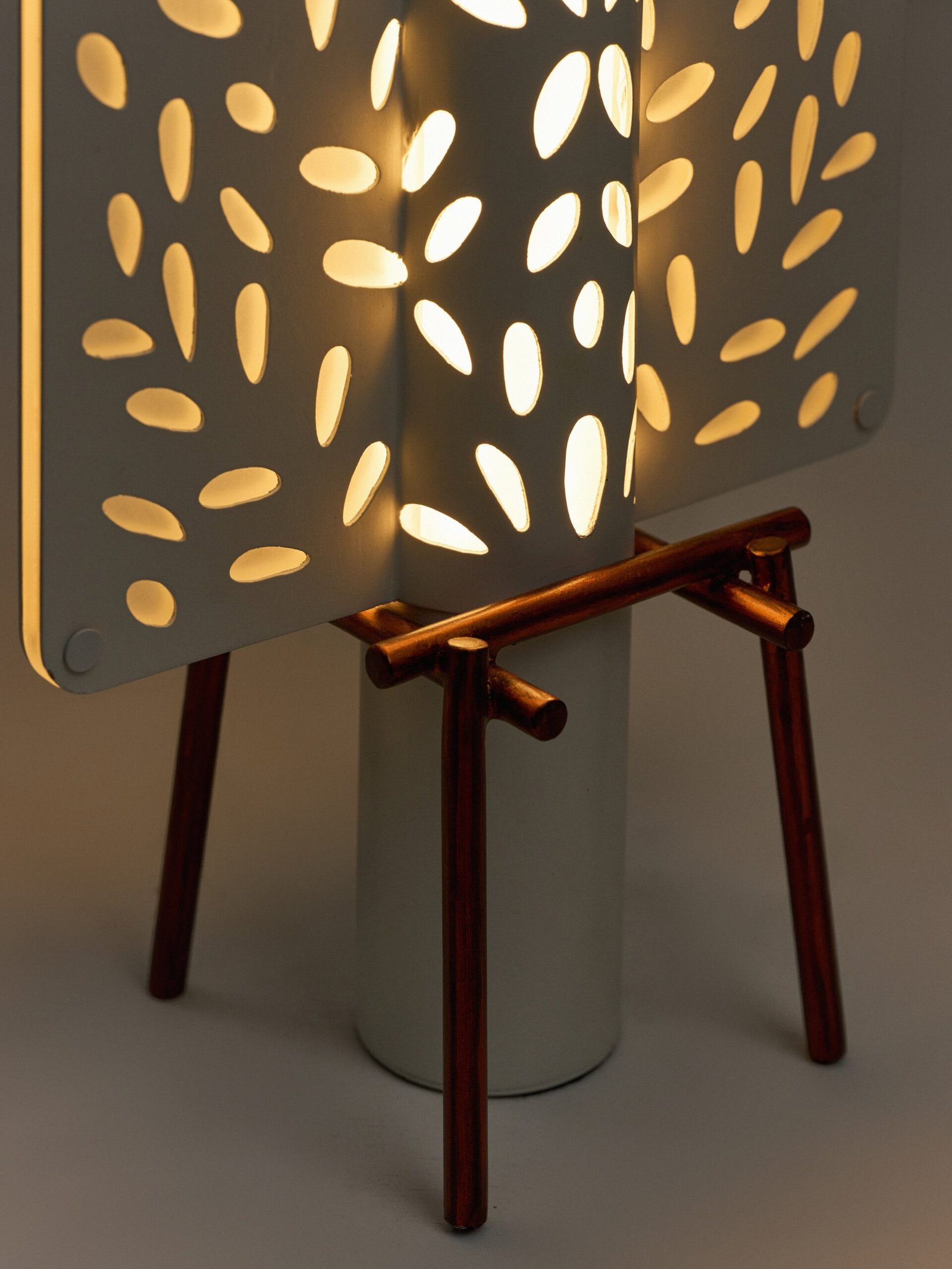
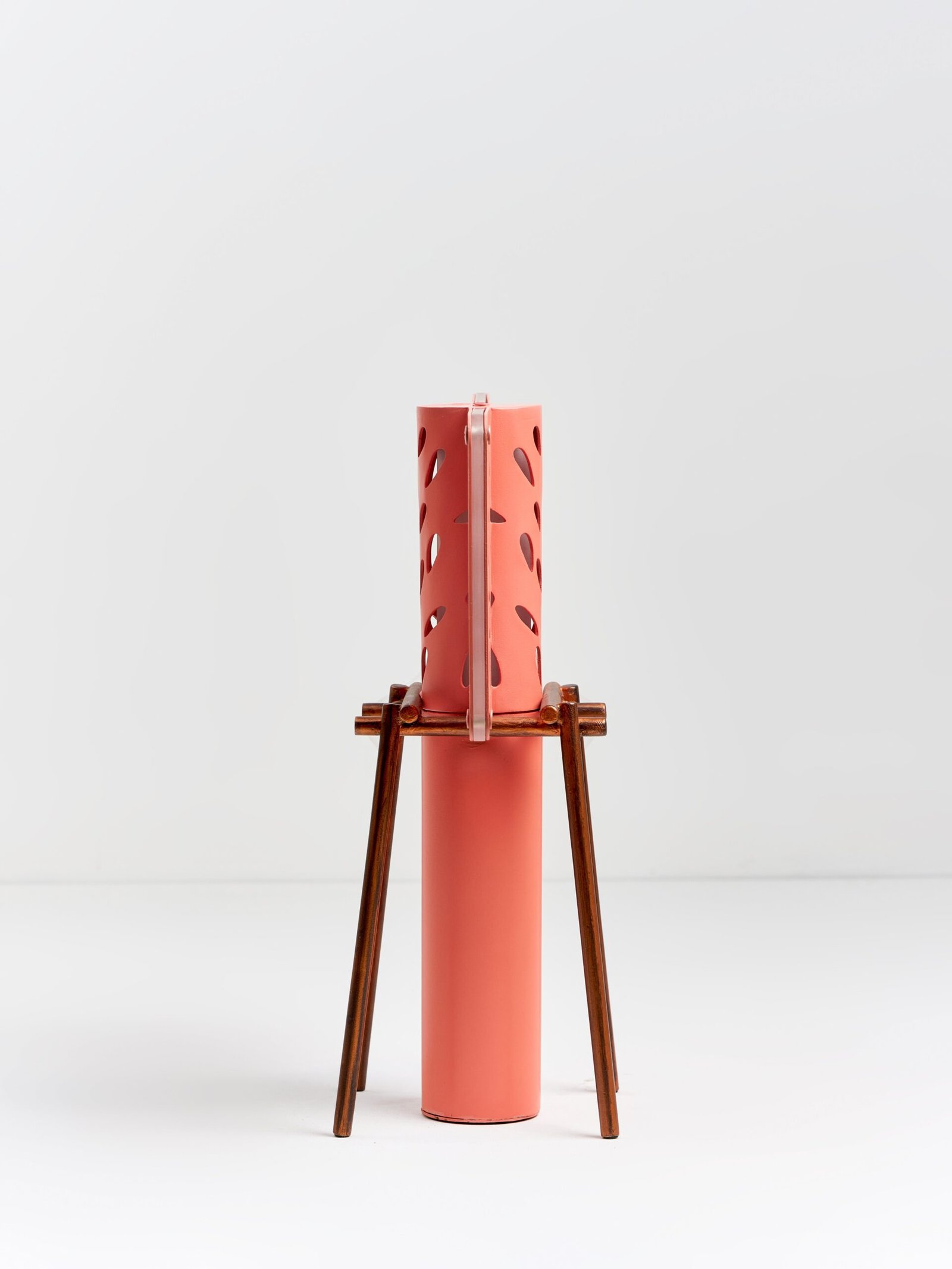
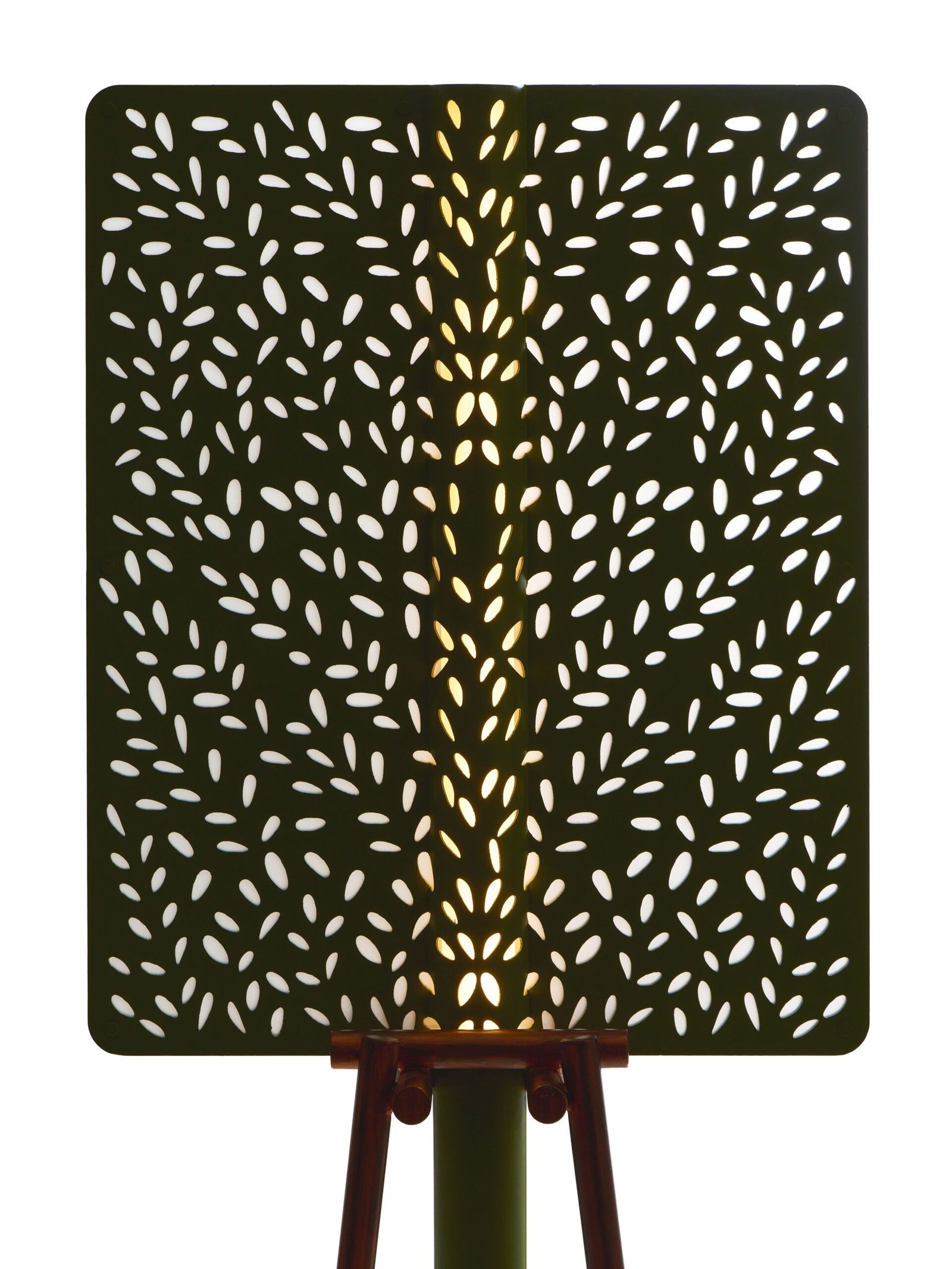
Selena Placino: We made sure the supports were structurally stable enough to properly support the lamp. Referencing the angles and structural logic of tree propping, we adapted a similar structure using solid metal. To maintain the light and airy quality of the design, we took advantage of VENZON’s expertise in laser cutting and metal manipulation. The leaf pattern is carefully cut into the metal, allowing us to retain the strength and stability of the material while creating a lighter visual presence.
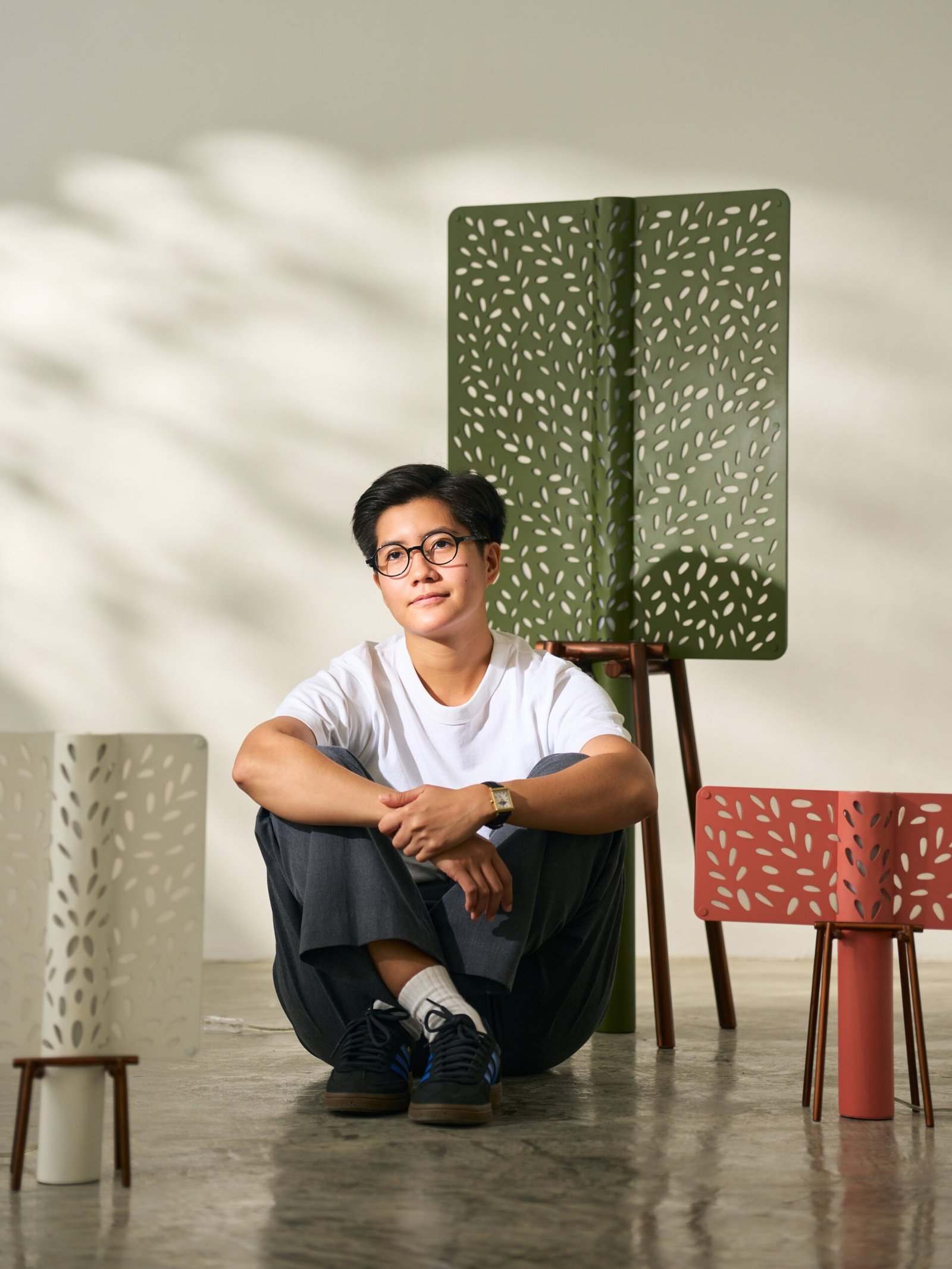
A question for VENZON; is there a technique or piece of your own history this partnership gives you a chance to put in front of people who’ve never seen it before?
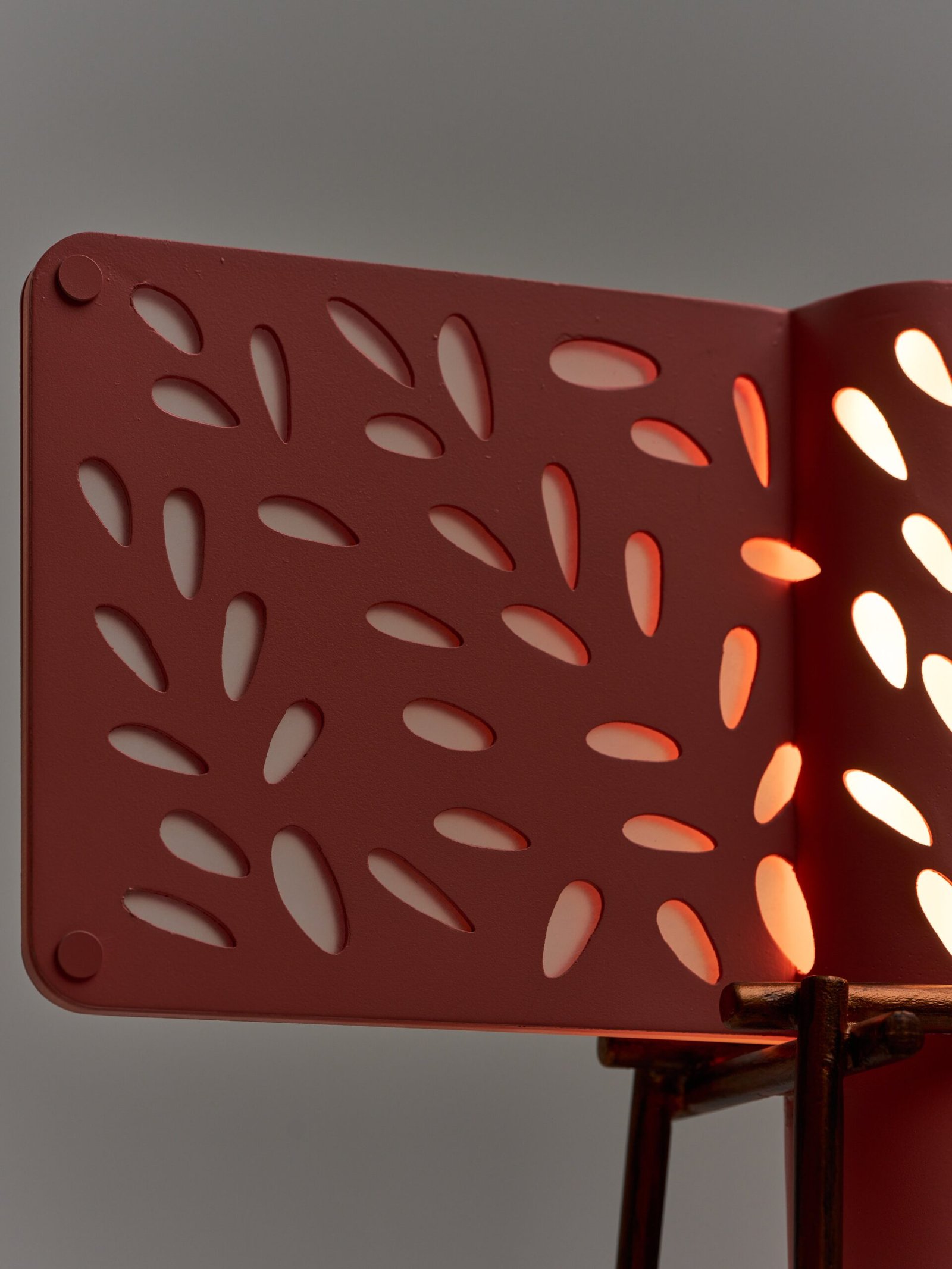
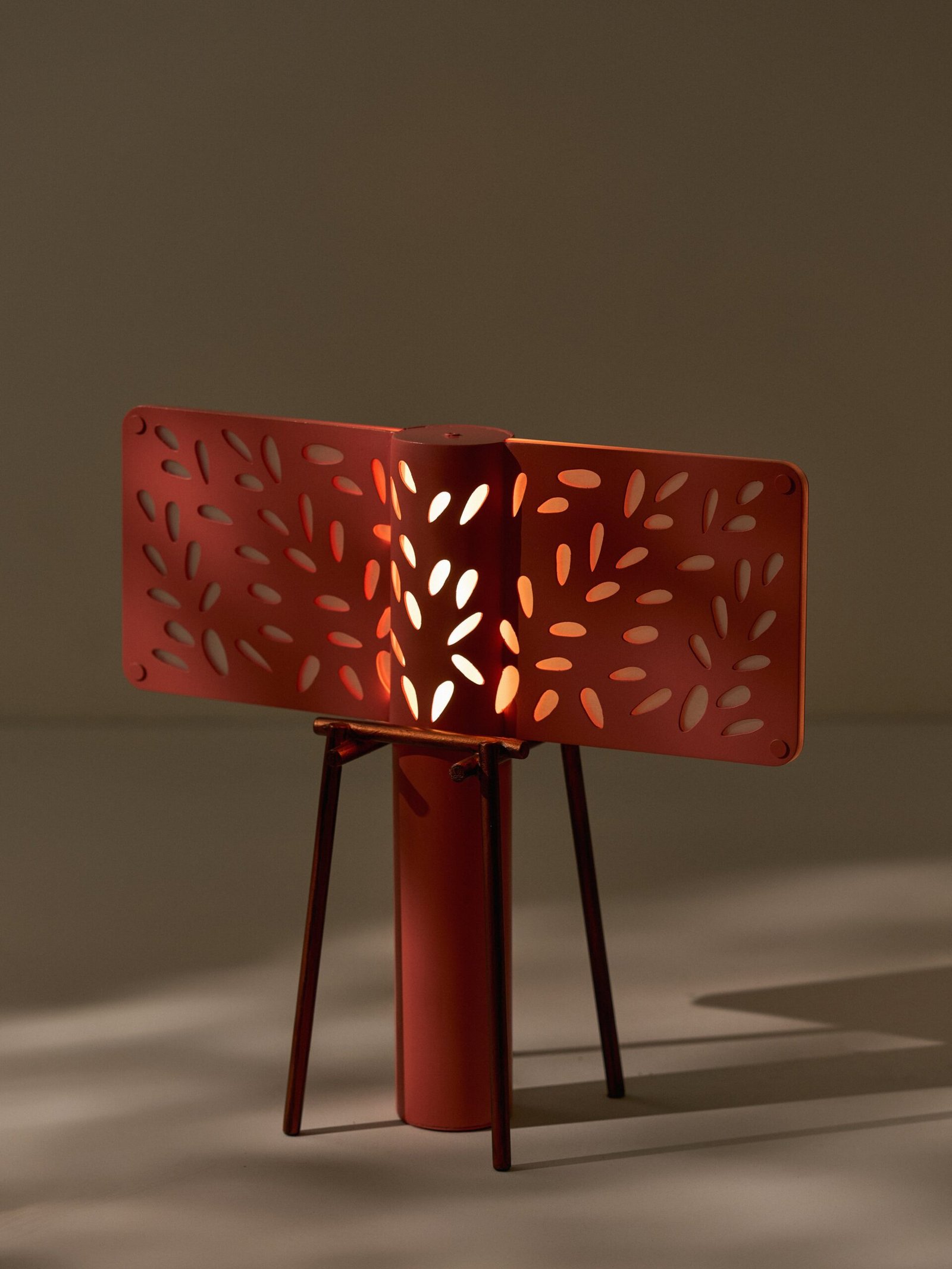
VENZON: It will always come back to our precision metal craftsmanship, engineering, and innovation in lighting. Selena closely studied VENZON’s techniques and history before beginning the concept for the collection, and I really appreciated that. This allowed her to honor our limitations while also pushing our strengths. She was initially inspired by our laser-cut metal patterns and how dramatic the bokeh effect could be when light passed through them. Her original concept was a single laser-cut metal panel with one central light source shining through it. But we realized the light wouldn’t disperse evenly, so my dad proposed adding an acrylic panel to enclose the light source in between two metal laser-cut panels with the leaf pattern Selena designed, allowing the light to spread evenly across the piece.
Instead of creating a bokeh effect, the piece now glows from within. It’s something I’ve never seen VENZON do before, but it was engineered and innovated by my dad and our team. I hope people see that this innovation was the culmination of our collaboration, a moment where VENZON’s expertise in lighting went beyond function and into beauty, drama, and storytelling.
Tomorrow encouraged a pairing between a young designer and a legacy maker. What did you each have to learn from the other?
VENZON: The biggest challenge for me was creating from a place of complete faith and trust, since this was the first time I would be spearheading a collaboration with a designer that VENZON did not already have a relationship with to build upon. The last time VENZON worked this closely with a young, up-and-coming designer was with Jim Torres in 2015, for the Red Box Design Talent. I was 15 years old then, and I remember watching my dad pour his heart into that collaboration because of how excited he was to work with a young designer despite the uncertainty of where the collection would take them.
To this day, it’s still one of the collaborations my dad is most proud of. There were a lot of things VENZON learned from that experience and wanted to do better this time around, and I was given the opportunity to take on that responsibility for the company with the guidance and trust of my parents, which was a lot of pressure.
I’ve been a fan of Selena’s work since 2022 and have followed her journey as an admirer ever since. When I started working for the family business three years ago, she was the first person I asked my parents if we could collaborate with. So, when the opportunity to go to Bali and work with her landed on my lap last year, it felt like a wish I had prayed for so long finally coming true. I kept coming back to that reminder whenever we encountered challenges with the collection, whether it was production delays or moments of doubt where we questioned why we were even doing this collaboration in the first place.
Working with a young designer like Selena constantly reminded me of who VENZON is, and who VENZON could become as a platform that genuinely advocates for new voices in Philippine design. It has been such an honor to be a part of her journey in that way.
Selena Placino: Working with VENZON has been a privilege because they were very open to my ideas and even pushed me to explore my design process beyond what I am used to. I believe this is also the first time I’ve really played with full-on color in my work, rather than relying on the more natural tones of materials like wood and steel. One of the challenges was testing whether my concepts would actually work in reality, since the way the light would glow from the center to the sides was just a theory.
But I felt confident because I knew that, with VENZON’s expertise in lighting and metal fabrication, they would be able to help translate the vision into something tangible. I think that trust went both ways, there was room for me to push the concept, while knowing that I had an experienced maker who could challenge, refine, and ultimately bring the ideas to life.
Alexis, recent work like Luz de Flores with J.J. Acuña has shown VENZON pushing into new territory. What did Seasons let VENZON push further, and why was Jia CURATED the right platform to show it?
VENZON: Seasons really pushed us to expand our ability to trust and work closely with new designers, and to completely surrender to each other’s vision. I feel like Luz de Flores and Seasons represent the vision of what VENZON could become: a maker that creates pieces representing a point of view beyond just one person. I think VENZON has always stood for something bigger than just one individual or one perspective, and I wanted to bring more people into that, to share that platform and champion their talent, their truth, their stories, and their ideas.
Jia CURATED was the only platform where this collection with Selena could have been shown, because it is actually where we first truly connected. I had long been a fan of Selena’s work since 2022 while I was still in college. We had crossed paths throughout the years, but never really connected beyond saying hi. Then last August in 2025, we both found ourselves attending the ASEAN Youth Furniture Conference in Sanur, Bali. Part of the three-day conference included visiting Jia CURATED. I had never even heard of it before, so I went in completely blind. When I experienced it, it opened up an entirely new world of what Southeast Asian design could be.
The funny thing is that during the conference itself, Selena and I barely interacted. It was only after everyone had gone their separate ways that we unexpectedly ran into each other again. I had booked a solo trip to another part of Bali and was visiting a temple in Uluwatu when I heard someone call my name from a passing car. It was Selena. We ended up grabbing dinner, went back to my hotel afterward, and spent the entire night talking about how inspired we both were by Jia CURATED, and how we wished something like it existed in the Philippines. That night I told her I had always dreamed of collaborating with her.
About a month after Bali, she told me the Philippines had been invited to exhibit at Jia CURATED the following year, and that young designers would be paired with manufacturers. I immediately told her VENZON would only do it if she was the one we were paired with, because this was the moment I had waited for. Even now, I still cannot believe we will get to present our collection to the world in the very place where our friendship began.
Selena, your other lighting work, the Rebound collection for Lamana, came together in three related sizes. Is working in triads becoming a genuine pattern in how you approach lighting design?
Selena Placino: Personally, I just think things look better in “trees,” haha! If there are only two, it somehow feels a little bitin (incomplete) to me. There is something more visually balanced and natural about having three. But beyond that, I like how a trio allows me to show variation within the same design language. With Seasons, for example, I wanted to reflect how trees can naturally differ, some are shorter and wider, while others are taller and more slender. Having three variations gives the collection a sense of rhythm while still allowing each piece to have its own character. It also gives the user more flexibility. Rather than prescribing one particular configuration, the different sizes allow people to choose what works best for their space.
Jia CURATED puts Philippine work in front of an international audience that may be encountering it for the first time. What do you want them to understand about Philippine design through this object?
VENZON: The most important thing I learned throughout the creation of this collection is that Philippine design is not possible without the personal relationships and trust we nurture, which I believe is inherently a Filipino value. Relationships and trust are pretty much all we have in a country where our formal systems and institutions in design are still emerging and being forged. The talent has always been there. The ideas have always been there. The resources have always been there. But it’s those deep, personal relationships that allow something like this, at this level, to emerge despite the limitations working against us. We are people who are always willing to trust and take a chance on others, and I do not see that as a weakness at all.
Selena Placino: I hope the object challenges the perception that Philippine design is only about craftsmanship. We have an incredibly rich maker culture, but Filipinos can also design, conceptualize, and create our own narratives. For a long time, the Philippines was known as a place of production, making designs that were conceived elsewhere. I want this object to communicate something different: it is not simply made in the Philippines, but designed from the Philippines.
We are now at Jia CURATED, and there is a very real chance a kabayan will stand in front of this piece. What would you want a fellow Filipino to recognize in it as made specifically for them?
VENZON: I want them to feel the love, pride, talent, and excellence that were poured into this collection. Every single moment that led to this piece was built on love, truth, trust, and faith, things that you cannot really quantify or materialize in a literal sense, but things I know every Filipino understands without needing much explanation.
Selena Placino: This piece doesn’t traditionally look Filipino, and I think that is what makes the idea of kabayan interesting in this context. You can see it subtly through the base and supports of the lamp, which reference the way trees are propped and supported. But beyond the physical structure, that idea of support is also what kabayan means to me: the Filipino instinct to look after one another and help each other. The supports are not just structural; they represent the people who hold us up when we need it.
So, if a fellow Filipino were to see this piece, I would hope they recognize that meaning in it: that we do not have to go through life alone. There is always a support system, whether it be family, friends, or even strangers, who can help us through the seasons of life until we are ready to stand and grow on our own.
NEWFOLK’s own framing of this show leans on padala, the practice of sending gifts to loved ones. If you had to send this piece off as your own padala, who would you send it to?
VENZON: I would send this piece to everyone who has believed in VENZON since my dad started his journey in the lighting manufacturing industry in 1984. There have been so many people who took a chance on us and gave us their trust, and this collection is really a culmination of that trust and love that people have poured into us, and what I hope we continue giving back.
Selena Placino: I would padala a lamp to anyone who is going through a change of season in their life, especially those who feel like the good days aren’t coming, or that the waiting has been taking too long. Some trees are already blooming while others are still bare, but that does not mean the bare tree is any less alive, or that it has stopped growing. Life is the same, we all have our own timing. It is okay to be in between seasons. You are still growing, even when you cannot see it, and there will always be another season waiting to come. •