Words and interview The Kanto team
Images E/lou Furniture Studio and Patrick Kasingsing
(Jia CURATED 2026)
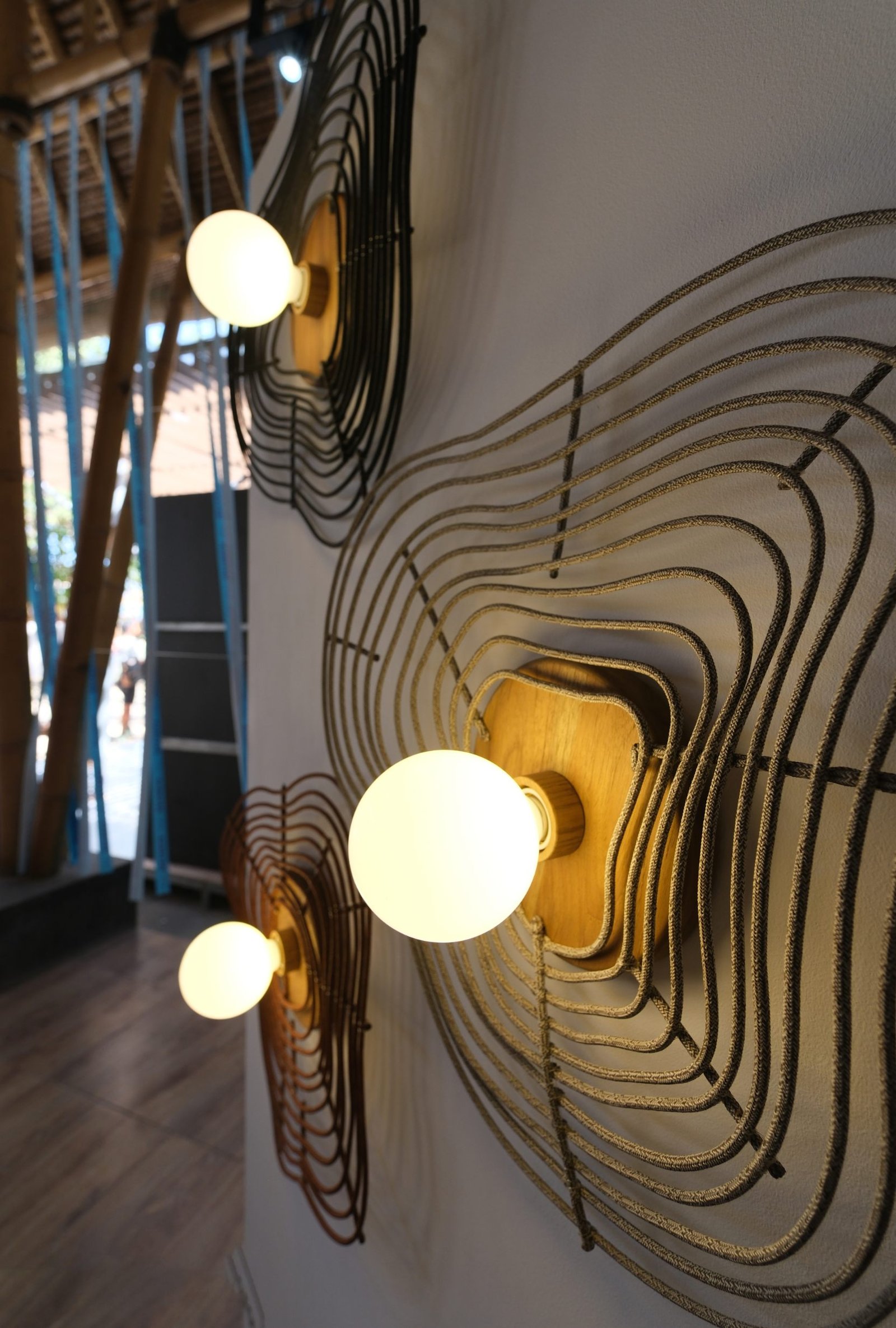
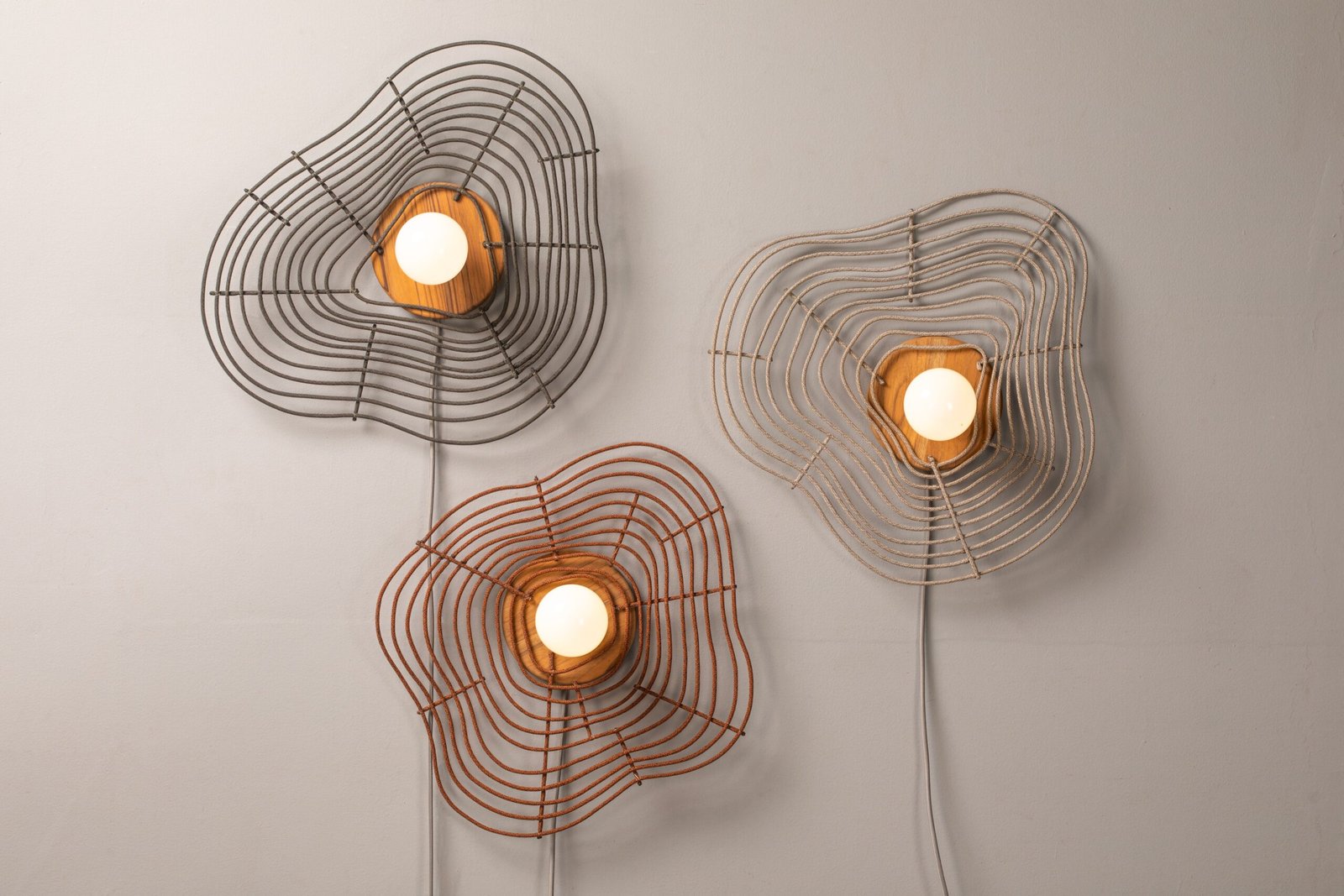
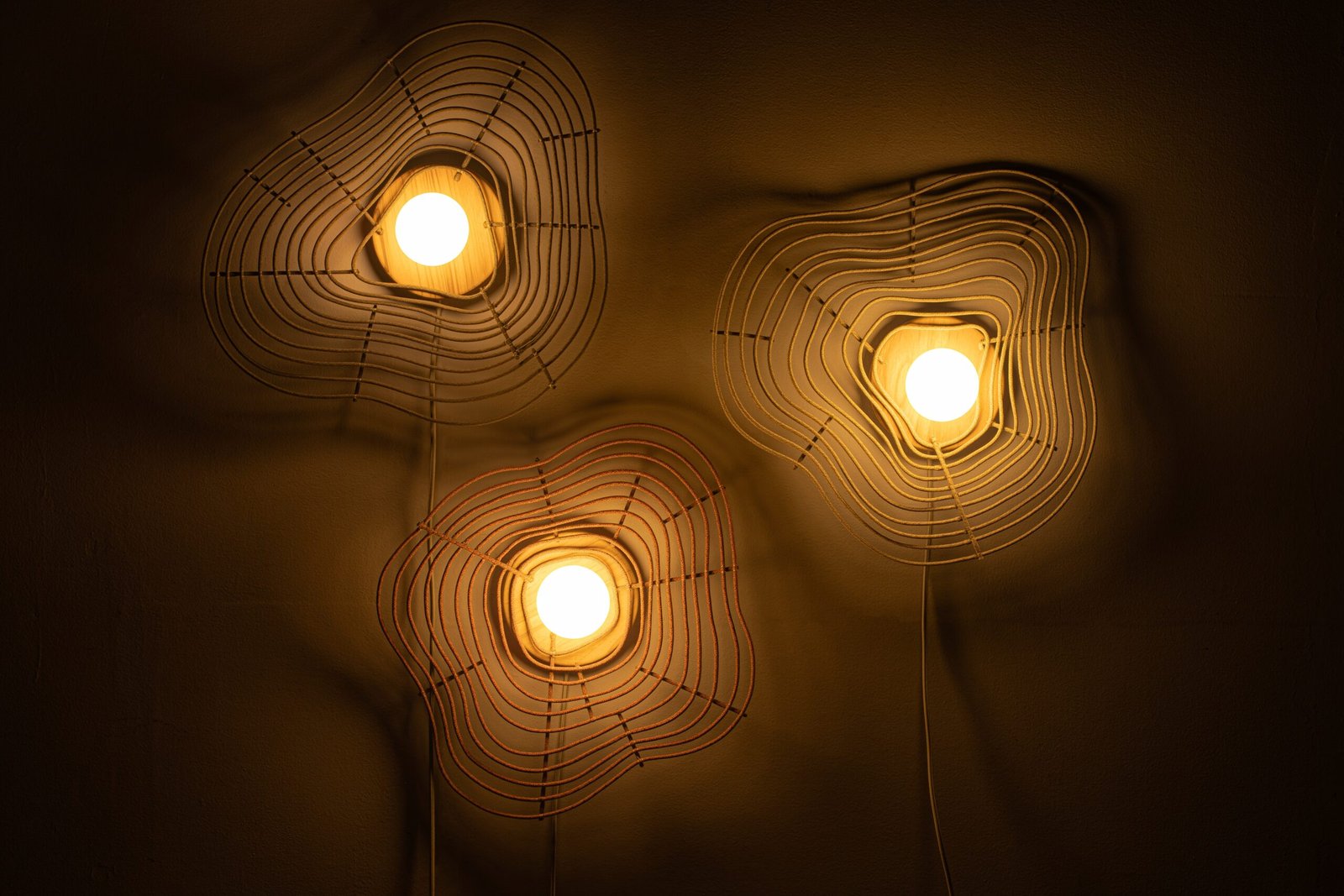
E/lou Furniture Studio and A. Garcia Crafts’ Pearl of the Orient wall lamps almost weren’t called that. Sibunga’s original concept centered on the silhouette of tree growth rings, until a technical constraint forced the design to expose a singular light source instead. That detour led him to the concept of “accretion,” the layered, imperfect way growth accumulates in a tree ring, an oyster shell, or the coastline of an archipelago.
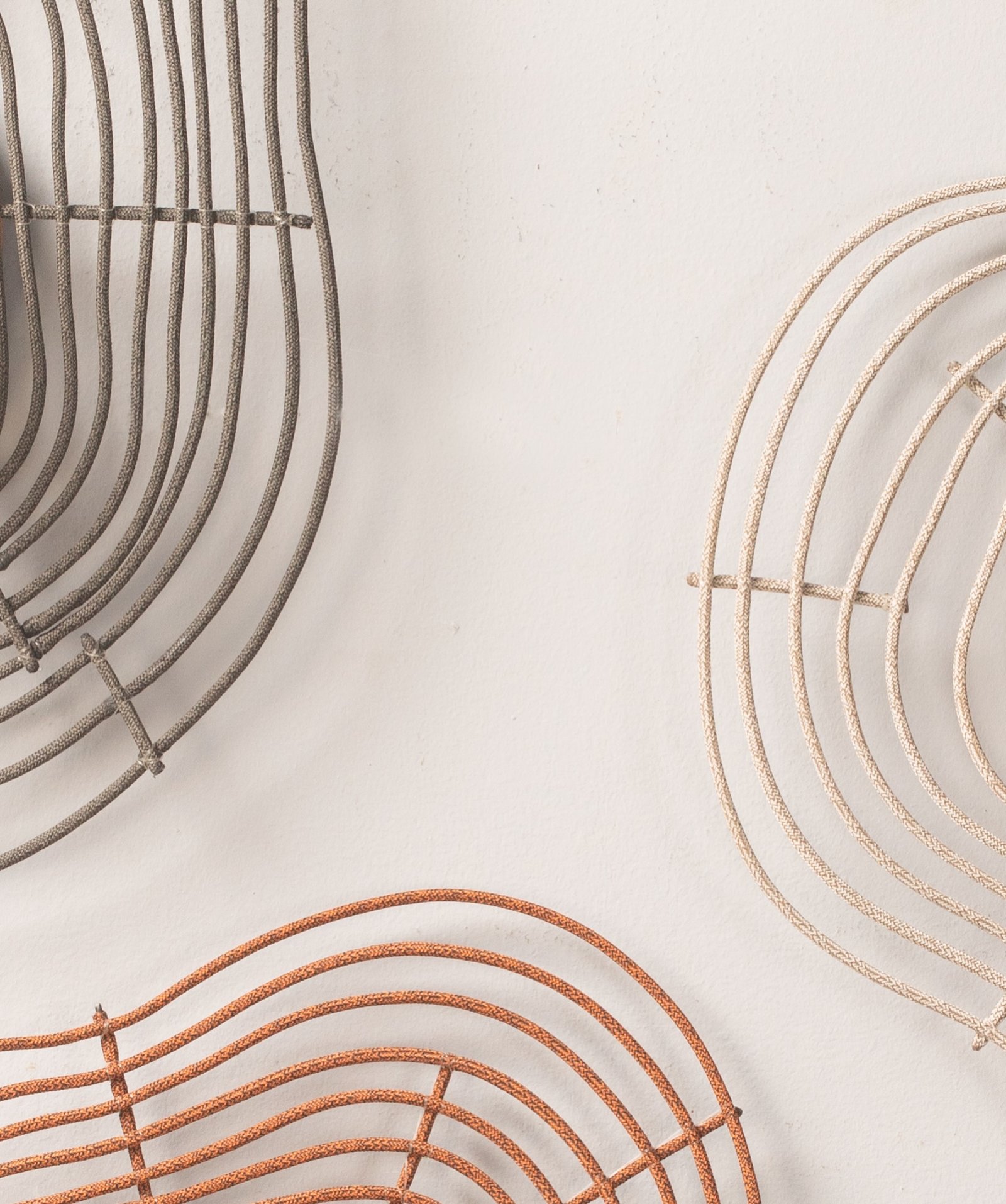
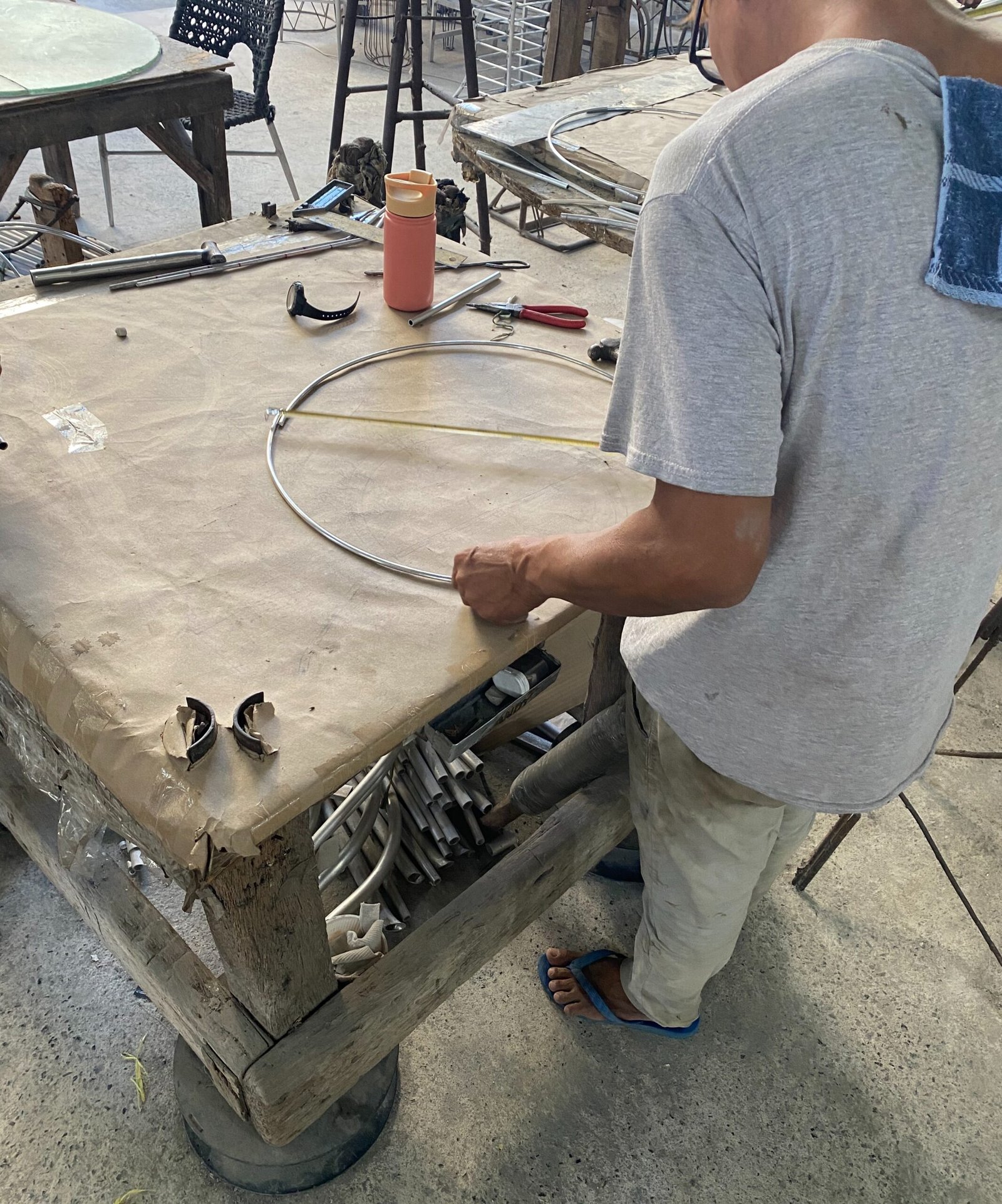
This proved a match with A. Garcia Crafts’ own specialty: wireframe furniture hand-formed from metal rods, a technique perfected from over thirty years of producing hardy outdoor and indoor furnishings. The two ideas met in an invented technique: a metal rod hidden inside olefin rope, giving a freeform material actual shape memory. This creation, born out of the natural rhythms of archipelagic realms, registers as both a voyage and a homecoming, a design journey that pushed both designer and maker past their usual limits. The fruits of that pairing are now part of Tomorrow, NEWFOLK’s Philippine spotlight showcase at Jia CURATED 2026.

Pearl of the Orient is a phrase with its own history; outsiders have long used it to describe the Philippines in both glowing and exoticizing terms. Was that history part of why you chose it as this piece’s name, or was the choice more straightforwardly about the pearl and ripple imagery itself?
Edward Sibunga, E/lou Furniture Studio: History was definitely part of it. Jose Rizal used it as a metaphor for the archipelago’s stunning landscapes, abundant marine life, and unique cultural heritage.
Part of it was accidental. Part of it was me wanting to summarize what the Philippines has to offer, since it’s our first showcase in Indonesia. Accidental, because the original concept was just using the silhouette of tree growth rings as the main inspiration. But due to technical constraints, we had to alter the design and expose the light source, the big bulb. This led me down a rabbit hole of discovery, where everything clicked into a much deeper meaning. While studying how tree rings form, I encountered many scientific terms: topography, isolines, accretion. What struck me the most is the word “accretion,” which means growth or increase by the gradual accumulation of additional layers or matter. With accretion, the shape is not always perfect (which I relate to hand-building; Not always perfect). I also realized that tree growth rings shared similar concepts with different things, like mountains or seashells. An oyster shell is jagged because it fought the currents; a tree ring is narrow because it survived a drought; a coastline is wavy because it resists the crashing waves.
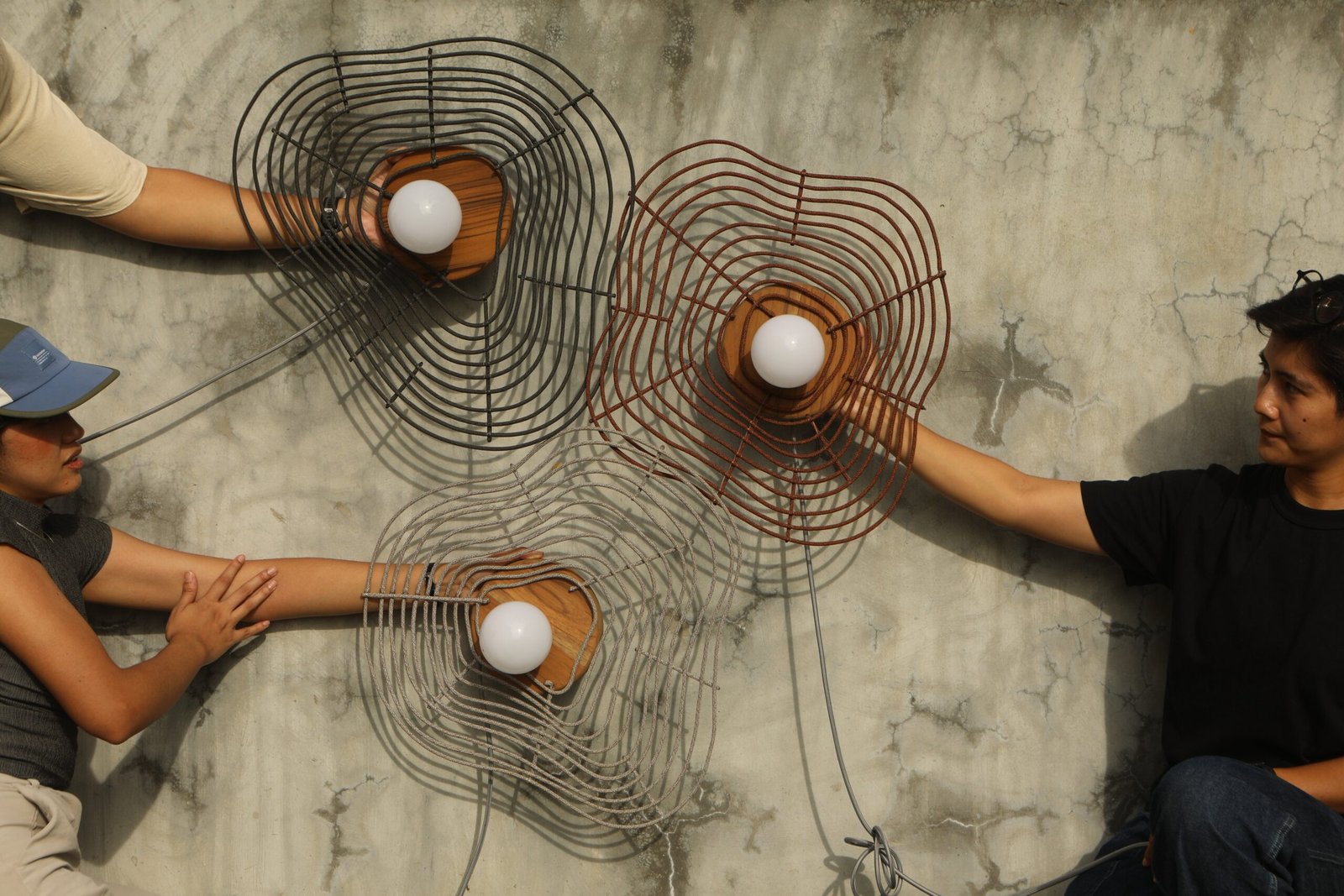
After my research and seeing that the exposed bulb kind of looks like a pearl, everything fell into place, and it was bigger than my original idea. It led to interpreting the different forms of “accretions” into the Philippine archipelago, which is rich in natural resources and culture, hence the title Pearl of the Orient.
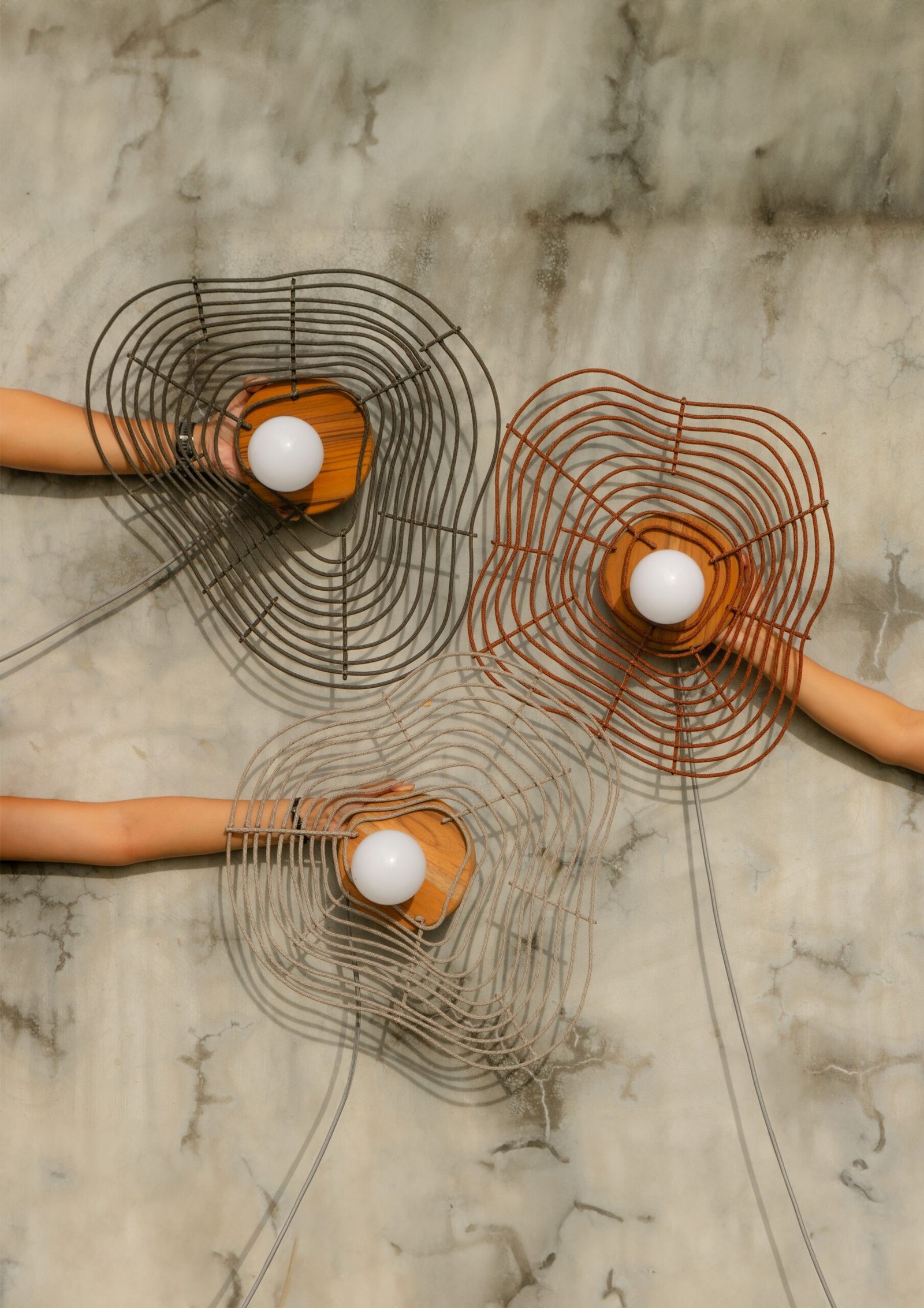
Fabric, wire, or certain plastics could arguably bend into a similarly organic, rippling shape. What made rope, specifically, the material that could carry your idea?
E/lou Furniture Studio: It is a mix of professional and personal choice. Olefin rope is a newer material the company was pushing, and personally I wanted to mix that with their mastery of wireframe furniture.
A. Garcia makes wireframe furniture by hand, like the Pamela wire chair, formed manually from metal rods. So, we tried mixing both concepts. We made the pieces with olefin rope and metal rods. Rope is freeform and cannot hold a pattern on its own, so we developed a new way for it to bend and keep a shape by inserting a metal rod inside the rope as a support. This makes the material relevant to the design direction, while still showing the company’s mastery in manual form manipulation.
The show calls for pairing a young designer and a legacy maker. What did you each have to learn from the other to make Pearl of the Orient a reality?
E/lou Furniture Studio: As a designer-maker, I’m used to working alone from start to finish. I realized I needed to up my game, since the company has a professional workflow and I didn’t want to disrupt that. That means proper product development, working hands-on throughout the process with everyone on the A. Garcia team.
Working with them was a breeze! I think it helped that I have some production knowledge, so I could communicate my intent more clearly.
Andy Garcia, A. Garcia Crafts: During the development phase, we discussed how we can make pieces using our signature materials to be manufactured with ease. I think we’ve achieved this with a new technique we developed for the pieces we are showing at Jia CURATED.
The theme of Tomorrow asks designers and manufacturers to reconnect with nature and culture. What did that phrase mean to you?
E/lou Furniture Studio: What first came to mind is touching grass more deeply, paying attention to the small details that have long existed and the things we take for granted.
A. Garcia Crafts: Creating forward-looking pieces, adaptive to any space, and using eco-conscious materials.
Jia CURATED puts Philippine work in front of an international audience that may be encountering it for the first time. What do you want them to understand about Philippine design through your creation?
E/lou Furniture Studio: Most people expect Philippine design to be rattan, bamboo, or something tropical. I love those, but I think our design culture is bigger than that. I want them to see that the Philippine design scene is evolving outside those traditional materials.
Throughout the creation stage, I observed many local artisans prefer to work with their hands, especially the older ones. I realized how patient and madiskarte (gumptious) our local artisans can be, and this ingenuity is what makes our work unique.
A. Garcia Crafts: The Philippines has been at the forefront of manufacturing and design in Southeast Asia for ages. Showcasing now at Jia CURATED with a different audience hopefully revives that momentum, with a new set of designers and manufacturers.
The show’s concept also surfaces the unique sense of camaraderie we have when we see a Pinoy abroad. Suppose a kabayan is standing in front of this piece, what would you want them to recognize as made with them in mind?
A. Garcia Crafts: We want them to know that Philippine design and manufacturing is still as creative and skillful as before.
E/lou Furniture Studio: I want them to remember the abundance of the Philippines as a whole. I want it to be a quiet reminder that despite the current issues, there is still so much good, so much warmth, and so much beauty inside our country. •