Words and images Jared Llagas & Cedric Valenzuela
Editing The Kanto team
Cities accumulate densities unevenly and such is the case for Metro Manila where pockets of intense activity emerge while other spaces remain underutilized. In Guadalupe Nuevo, Makati, the pressure of urbanization continues to compress living, working, and transit into increasingly suffocating areas.
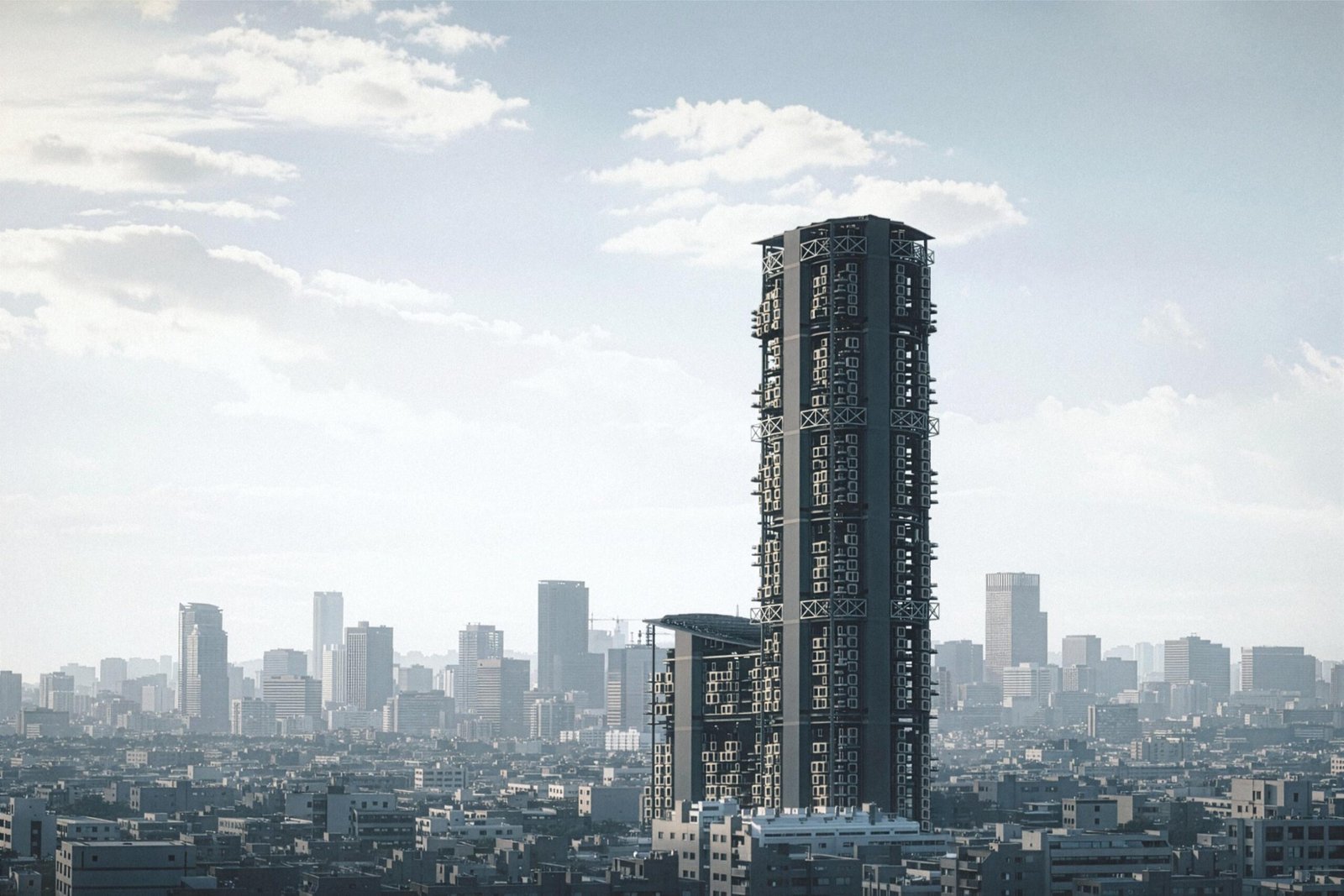
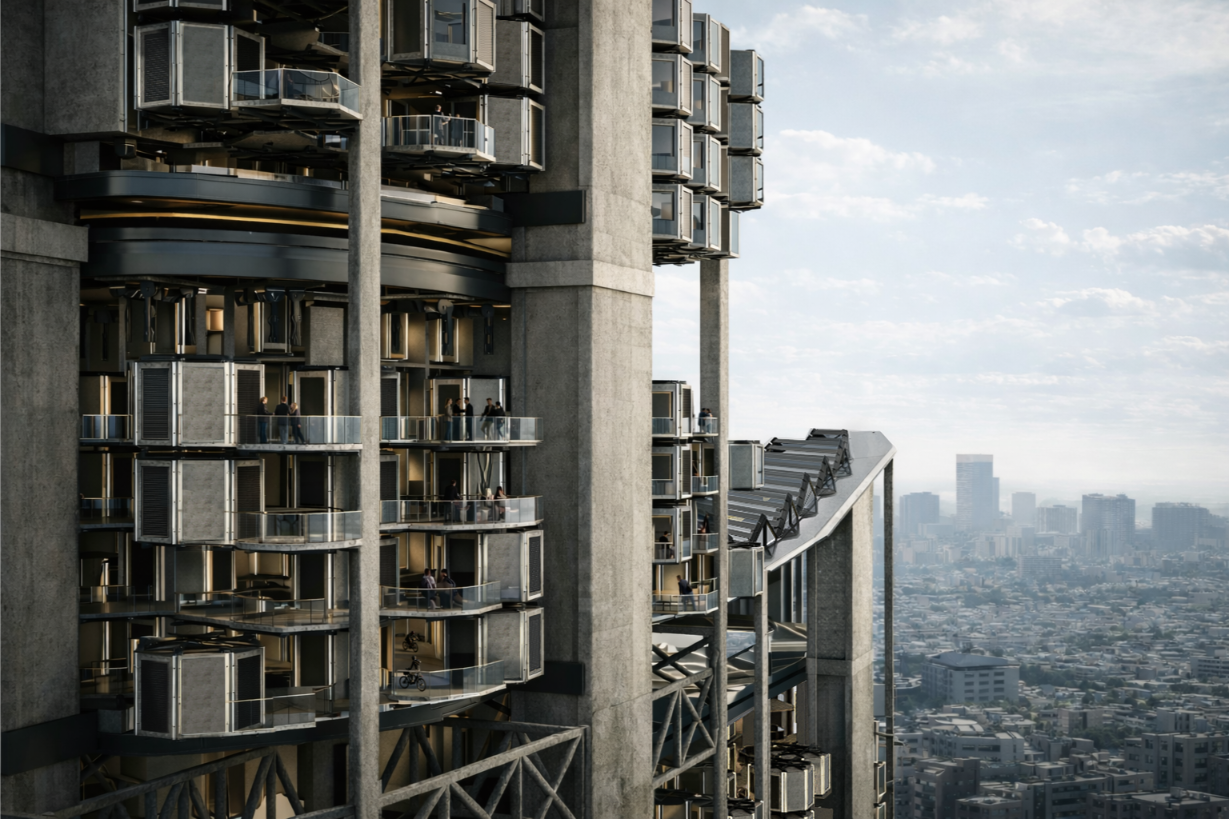
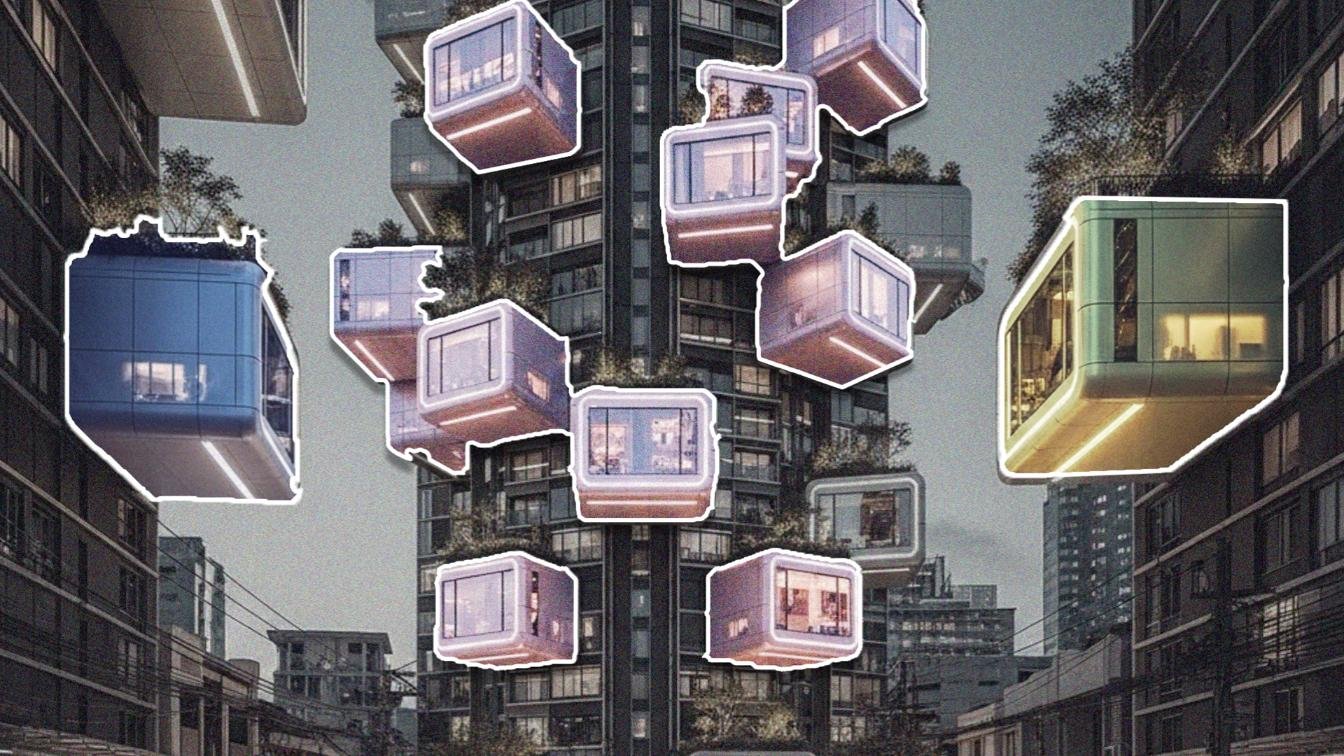
The project responds by proposing a reality where vertical architecture is capable of adapting to shifting patterns of urban life. By designing a modular high-rise tower composed of interconnected units that reorganize spaces through pulley-driven systems, spaces become active. In doing so, the tower operates as a spatial network capable of adapting to the rhythms of the city.
Studio Premise
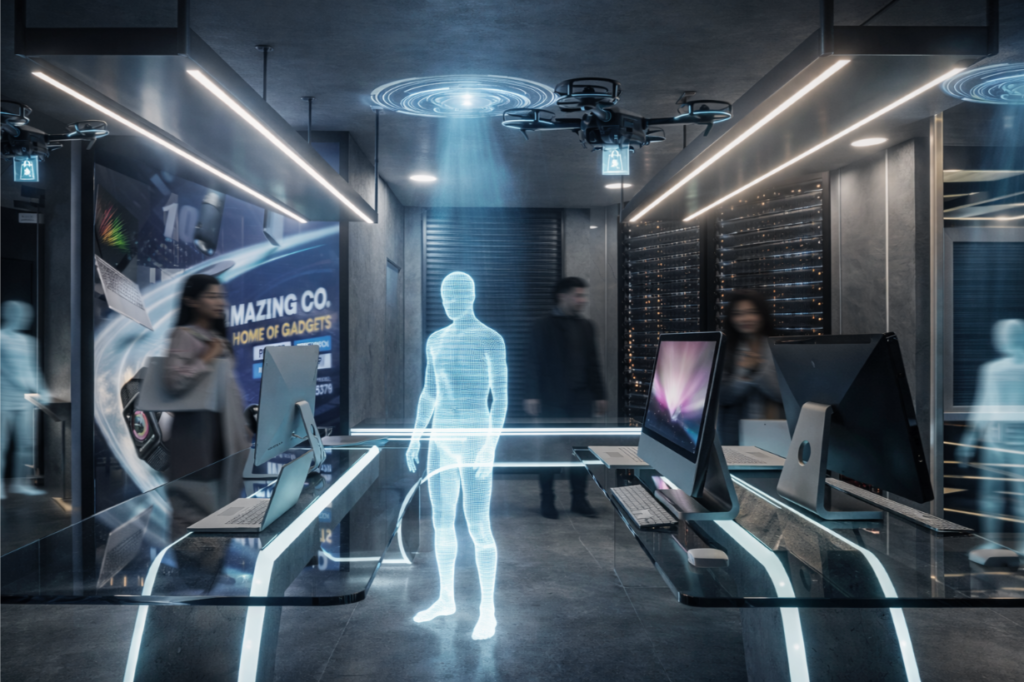
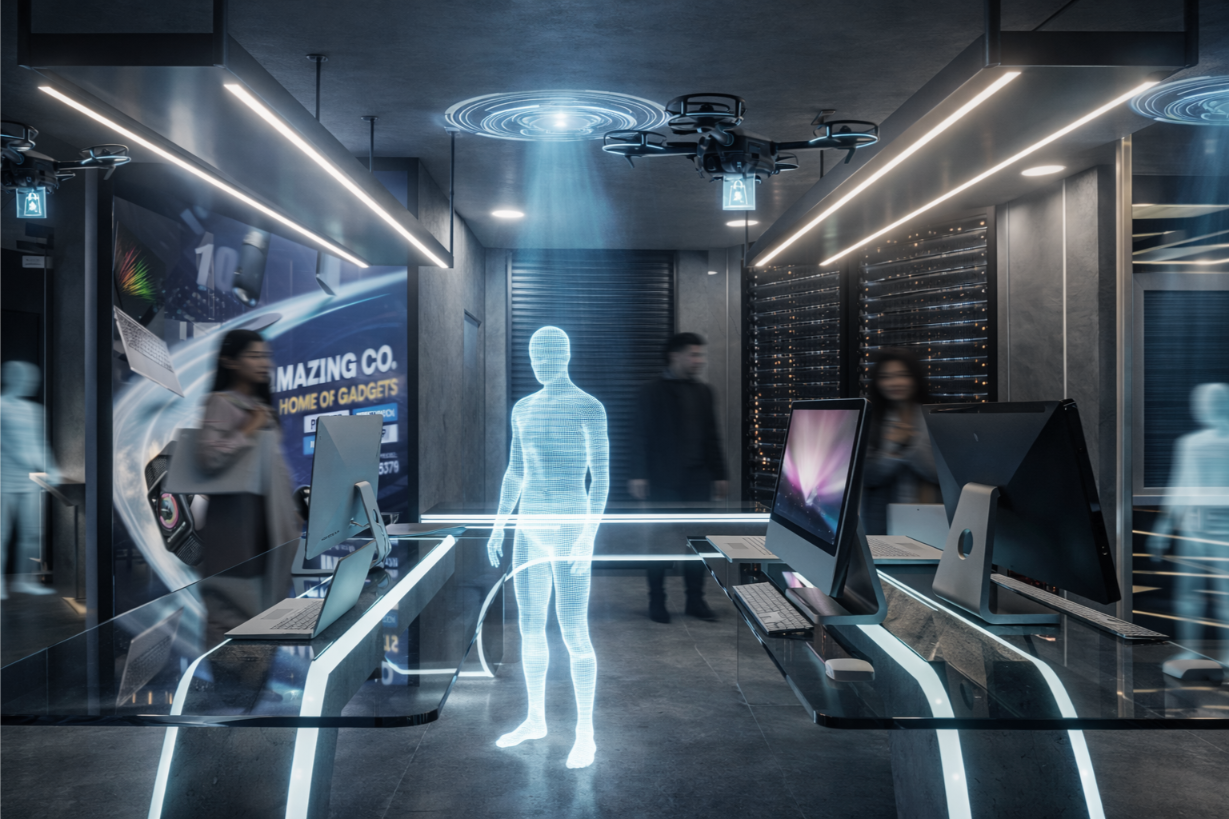
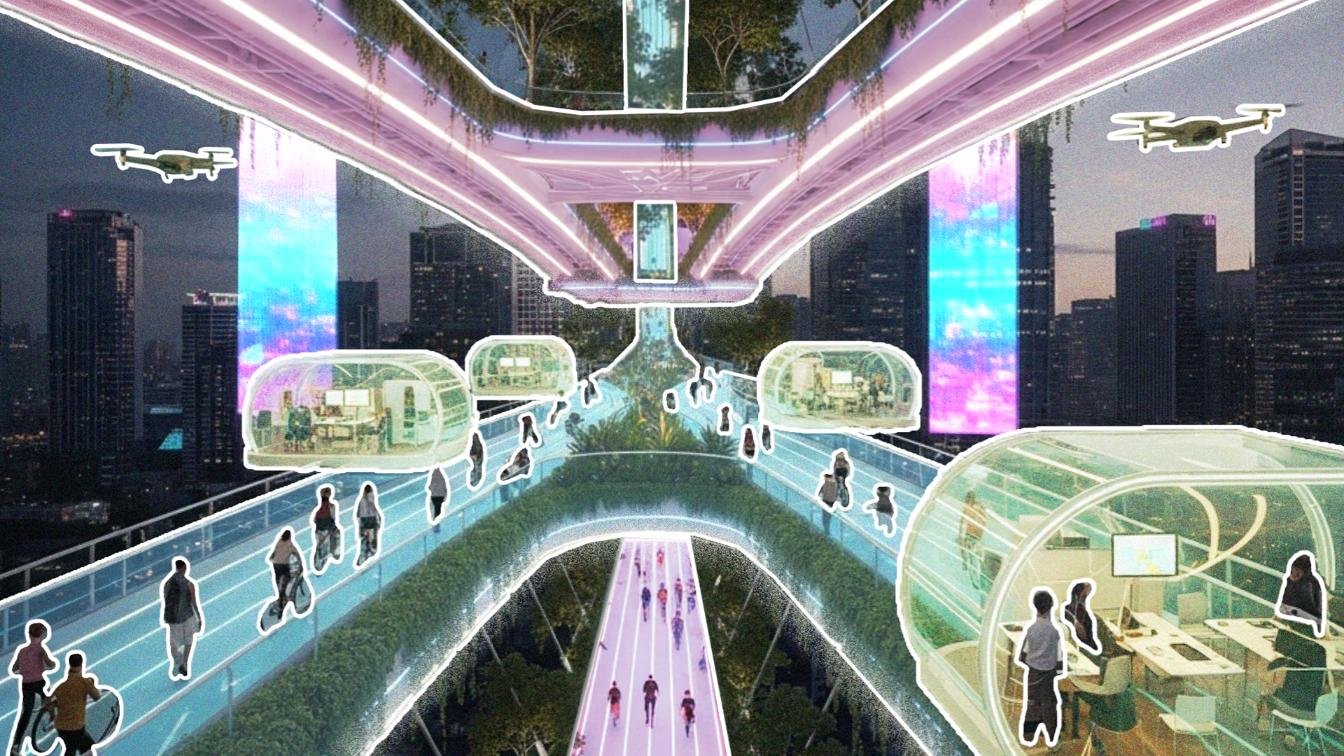
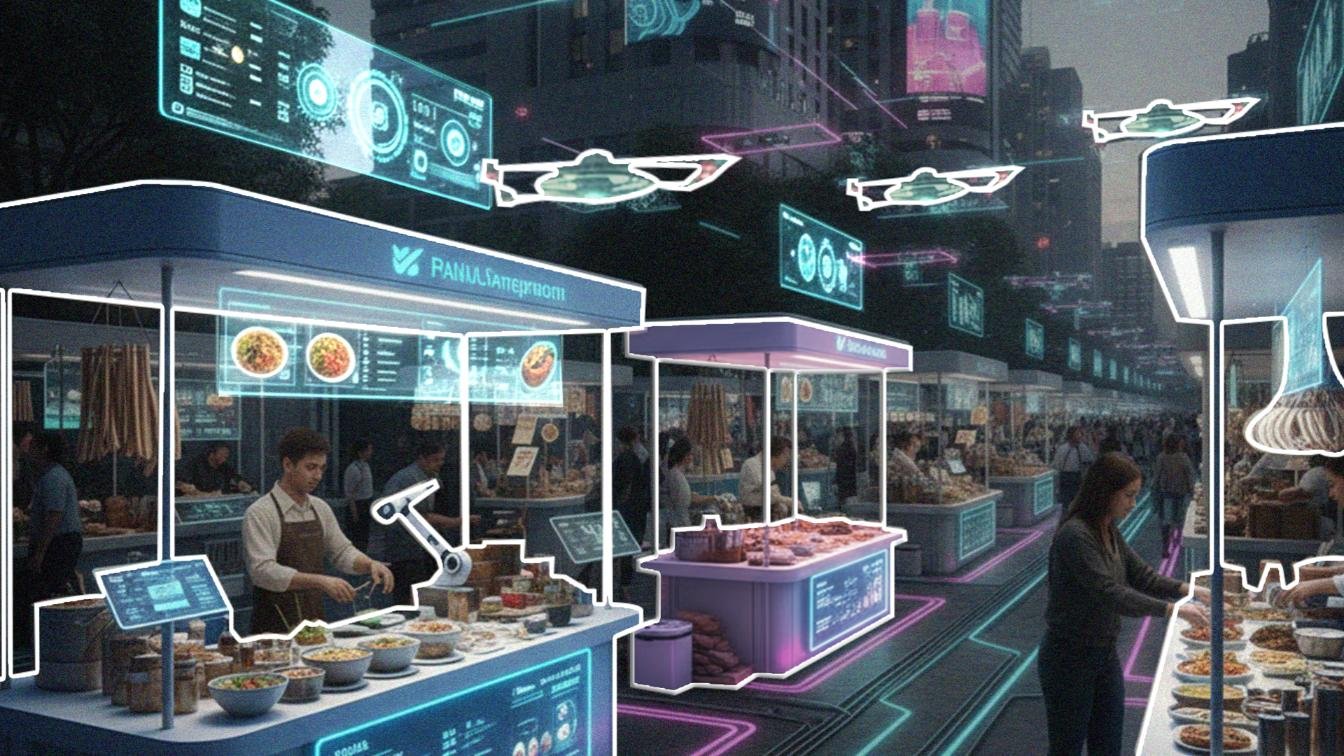
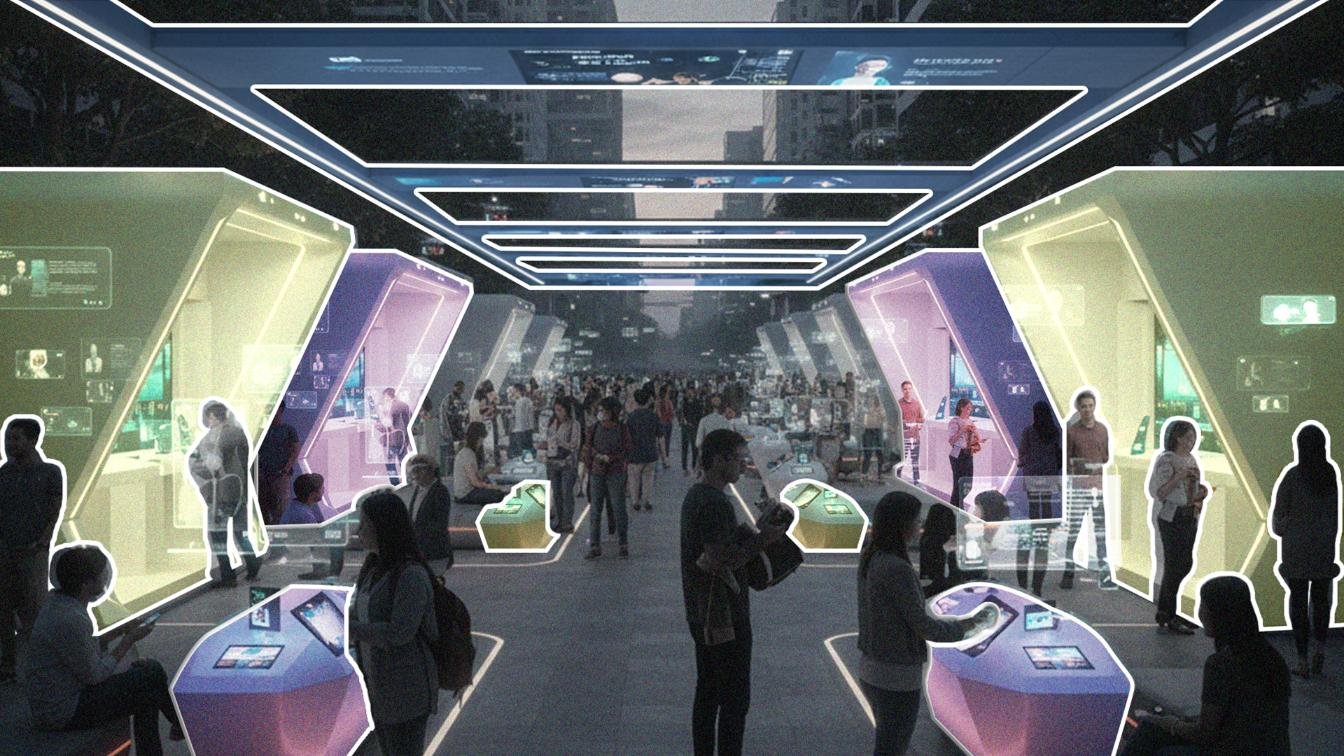
Following Scenario-based Design, the project starts with the creation of forty speculative scenarios which envision the possible futures for Makati by the year 2040. Among these were eight scenarios identified to be particularly relevant to the context of Guadalupe Nuevo, namely with spaces transforming into drone-operated food bazaars, makerspace cubescapes, mixed reality markets, active canopy walks, pipe transit systems, networking streetscapes, recreational green spines, and drawer resting spaces.
All of these scenarios highlight the central theme of the increasing population and activity density within limited areas of the city. As a response, the project explores vertical decentralization and the demand for spatial flexibility that comes with it.
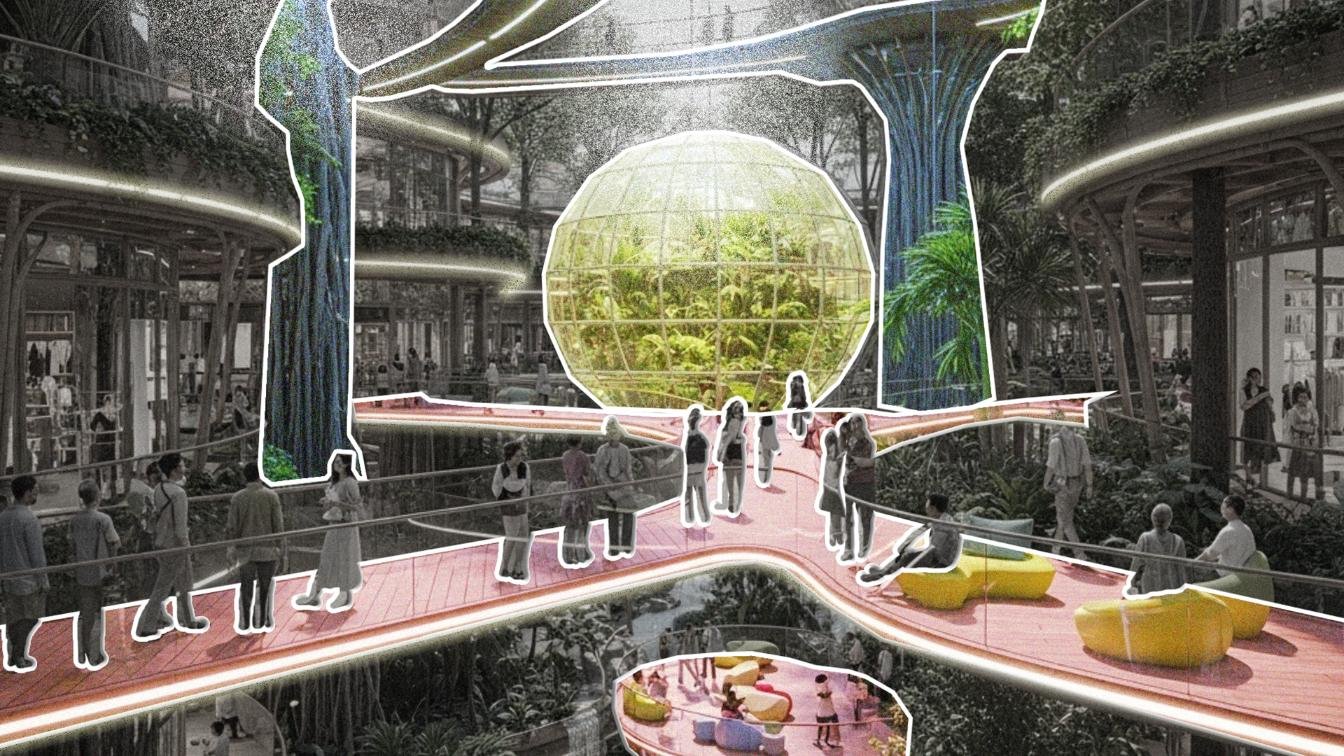
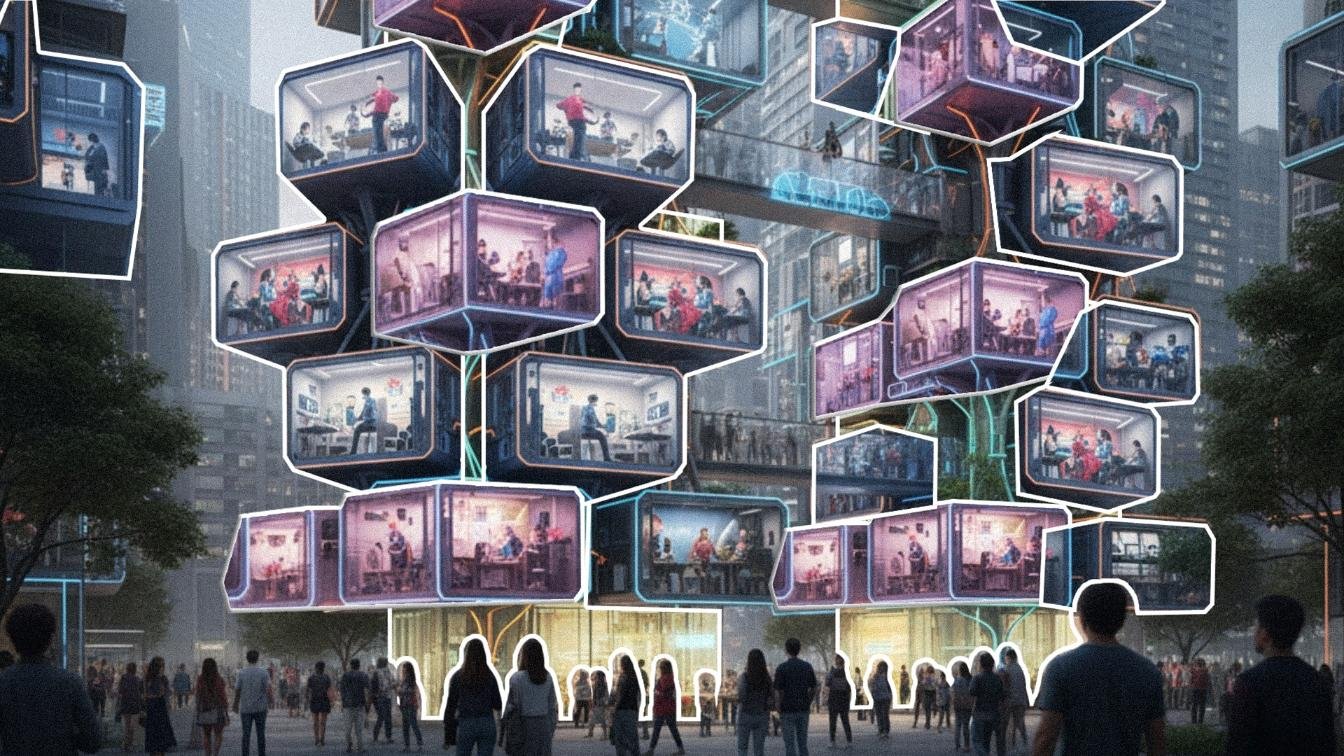
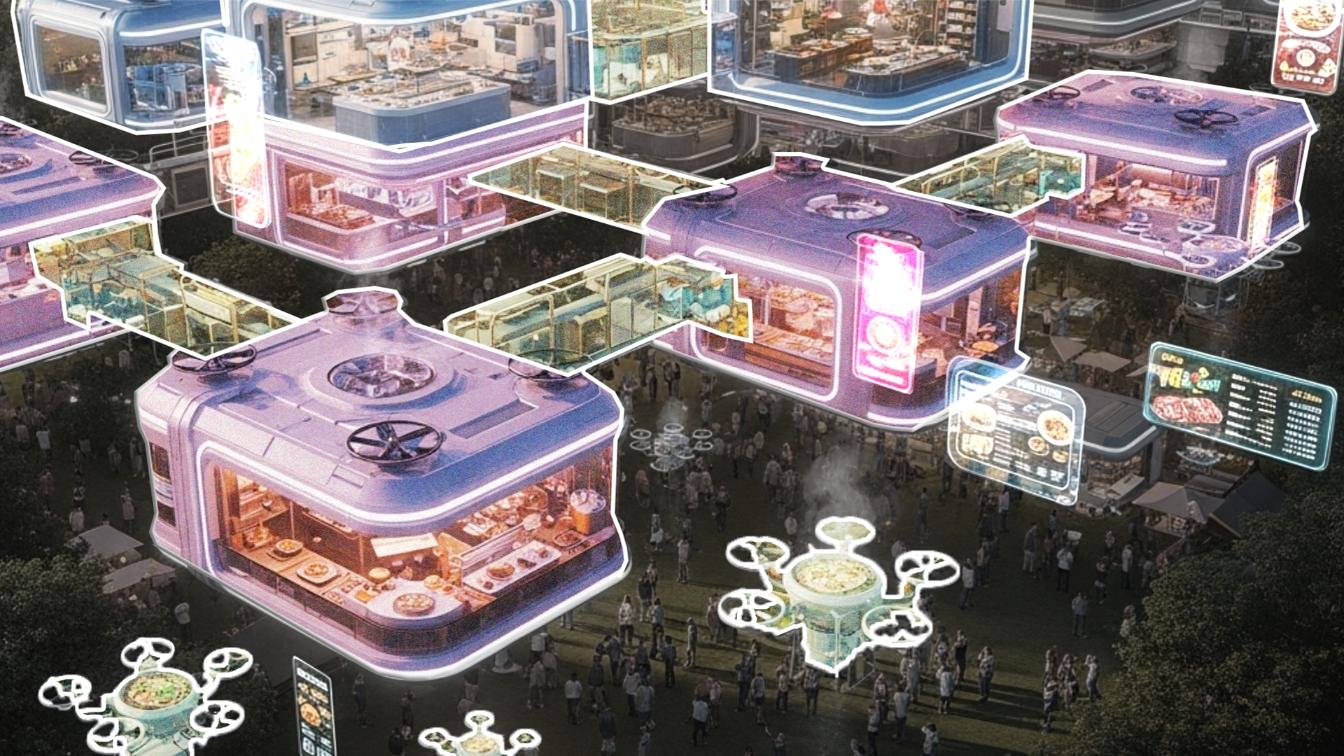
Modularity
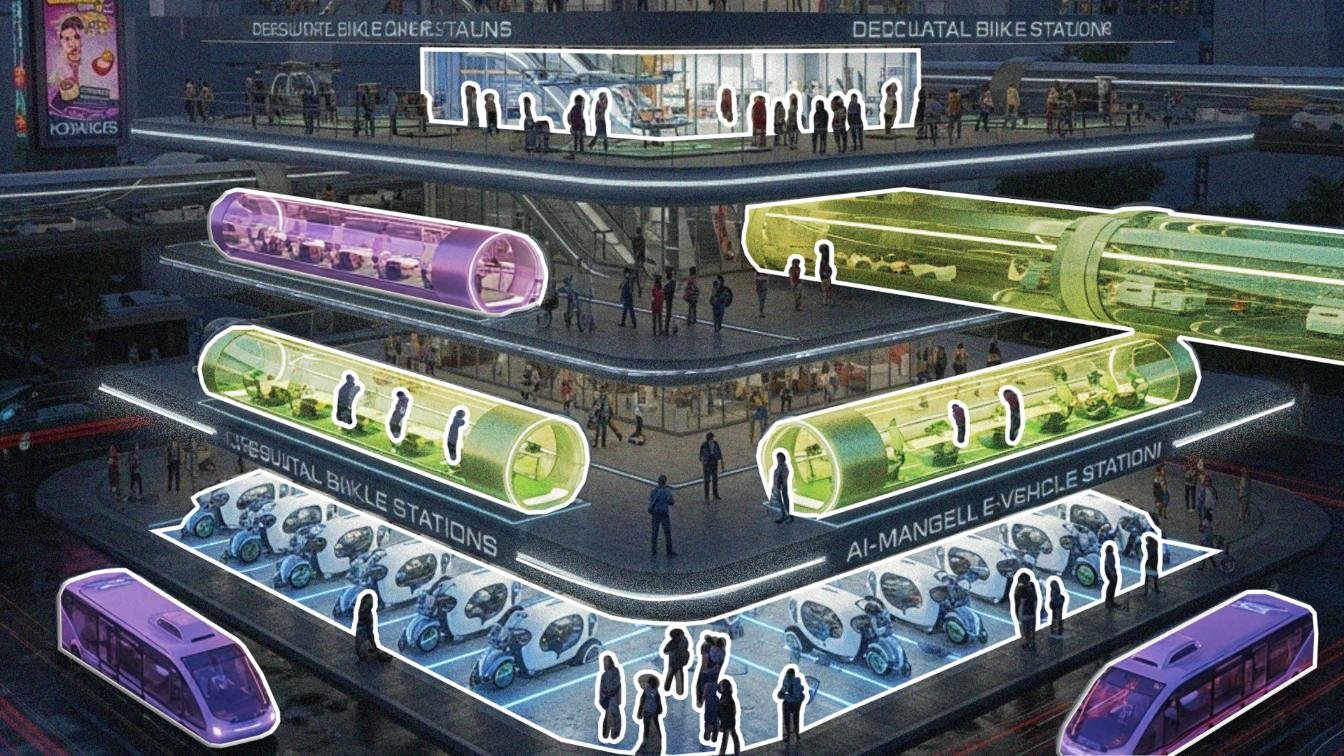
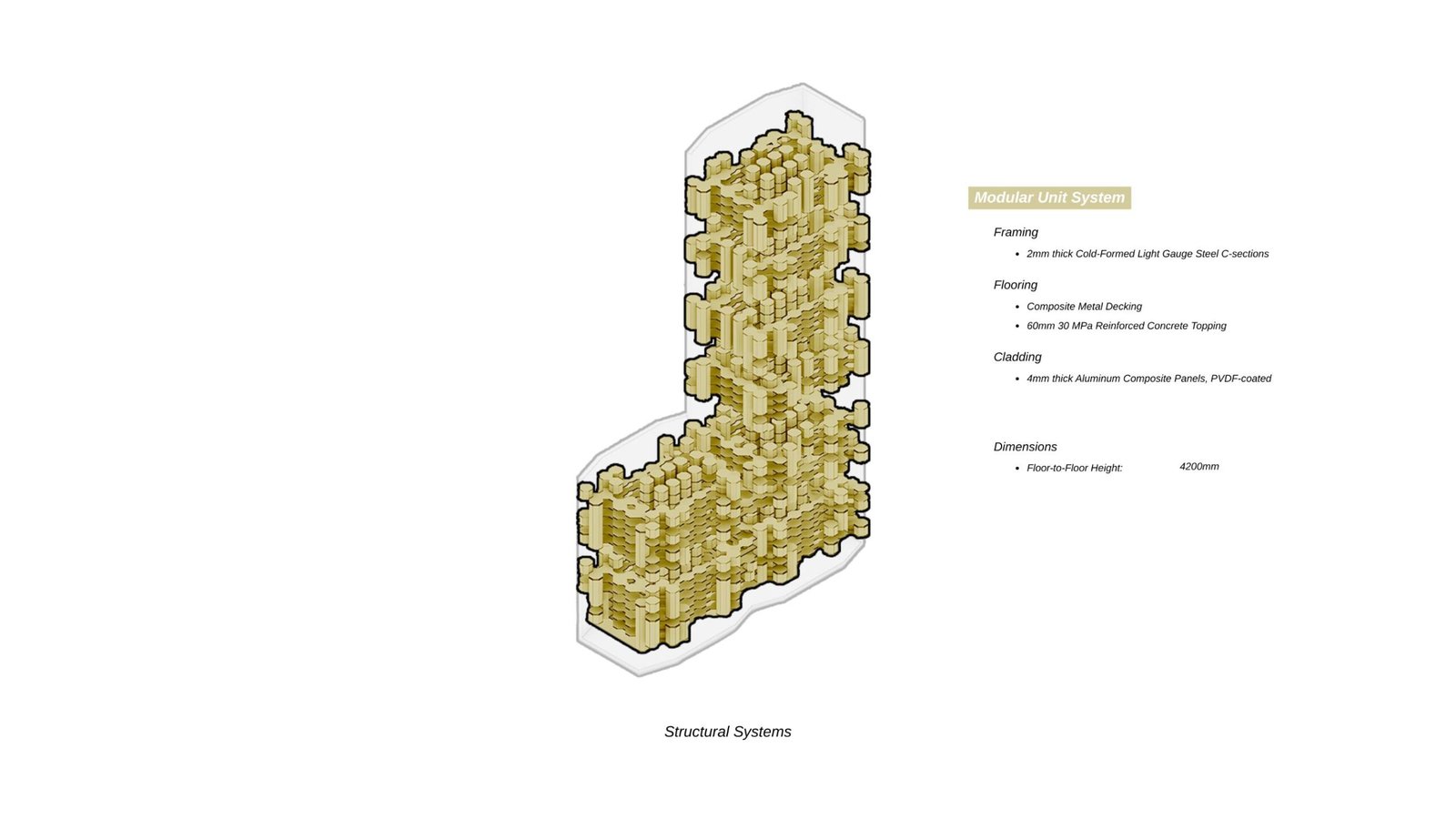
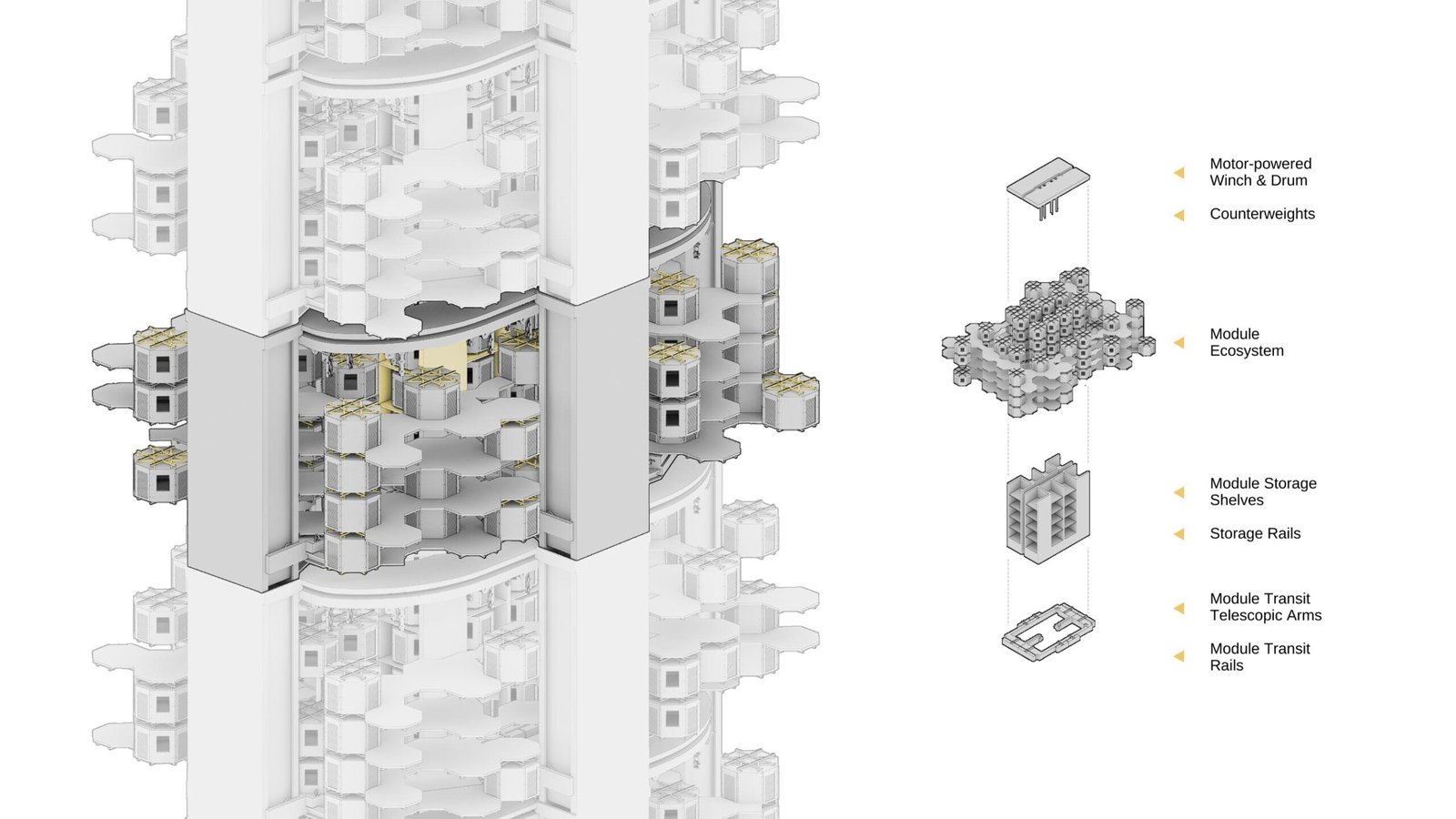
The core of the design is based on the design strategy of integrating modularity. The project involved creating modules capable of operating along the x-, y-, and z-axis by utilizing pulley systems integrated on its edges. Moreover, different variants of modules were created to facilitate activity generation and building circulation across the vertical environment.
With this, the structure transforms into a structural component meant to house modules capable of shifting based on the needs of its stakeholders, ranging from individual spaces to larger ecosystems of spatial programs.
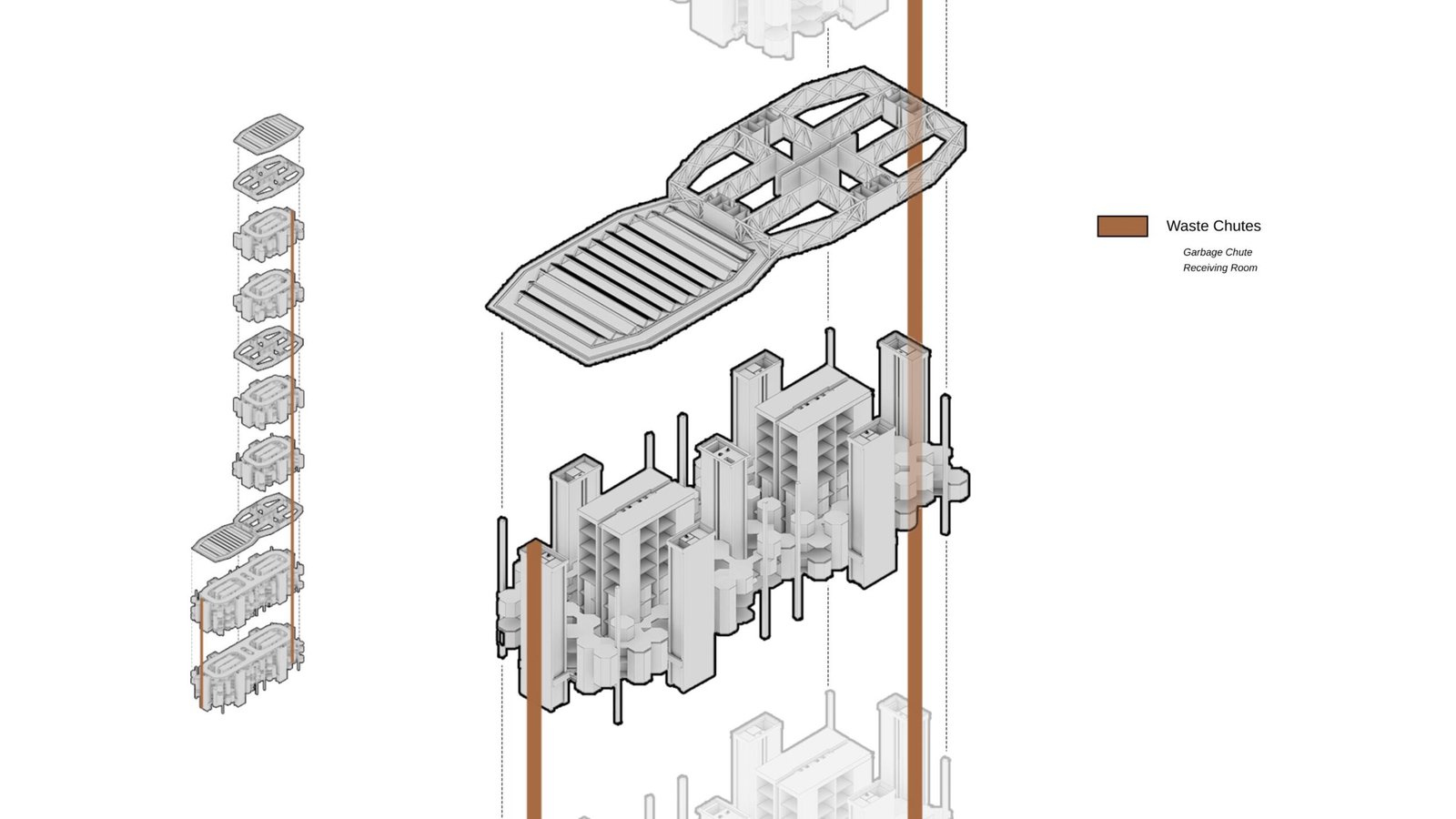
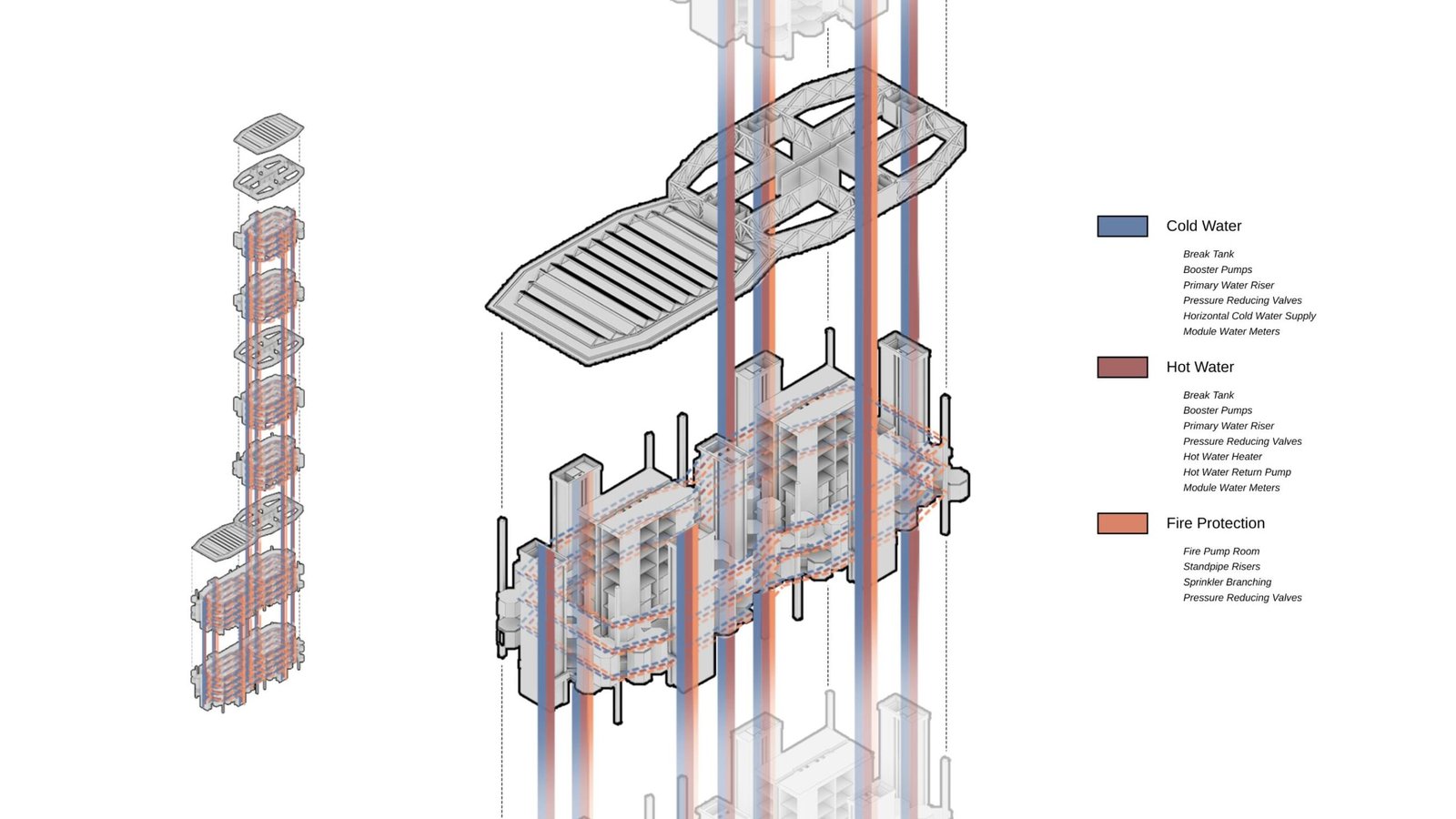
Pulley-Based Systems
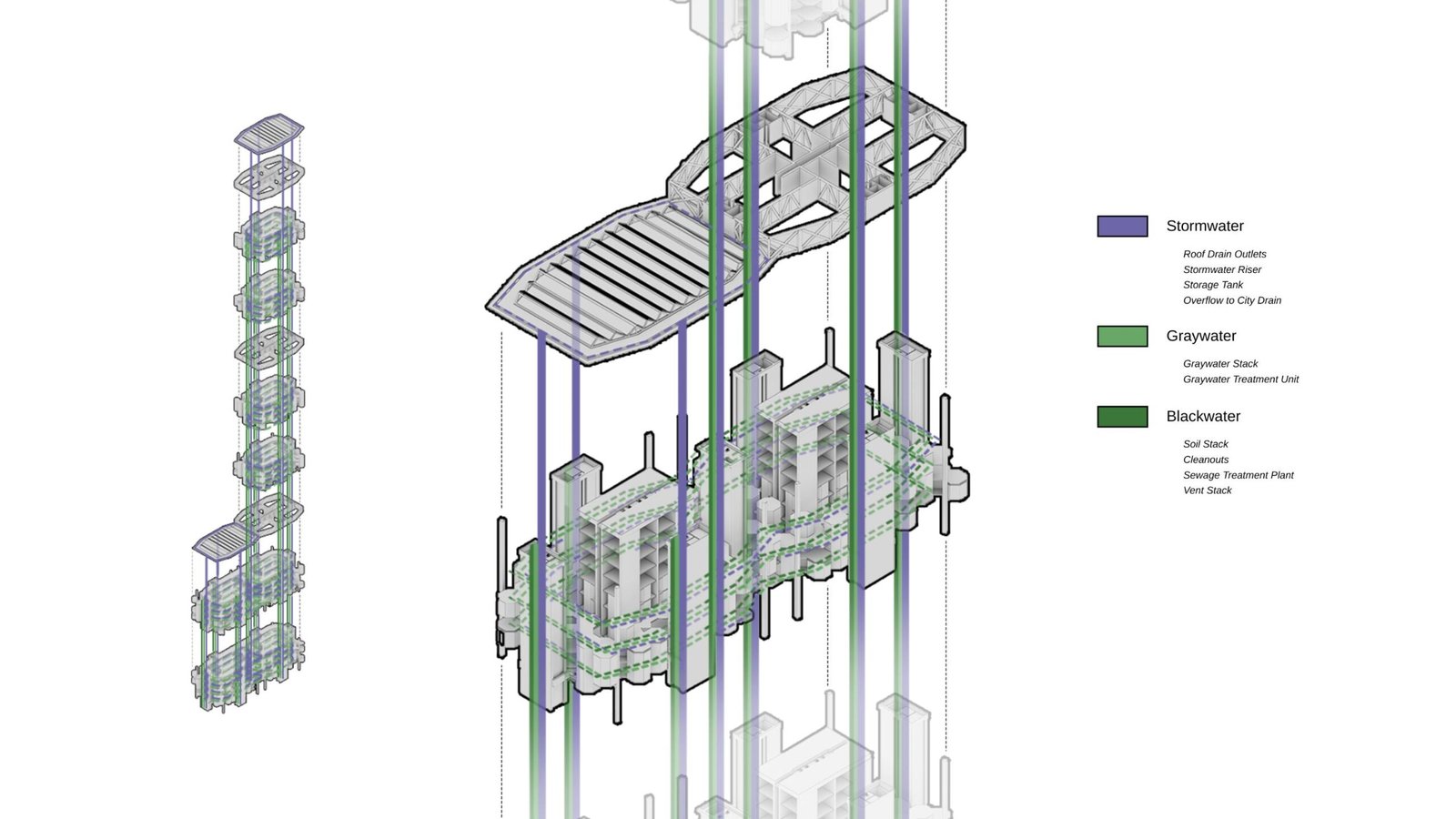
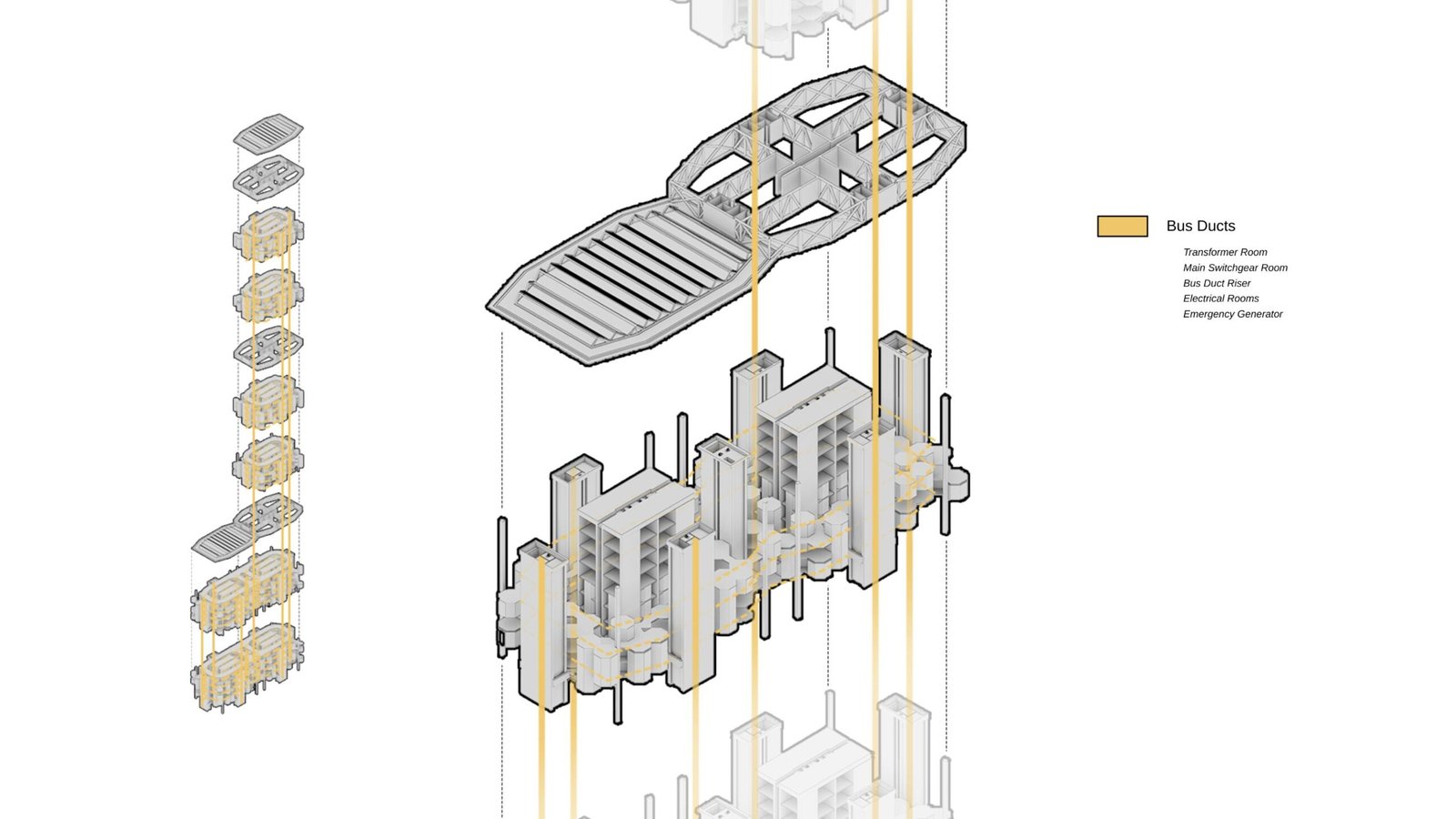
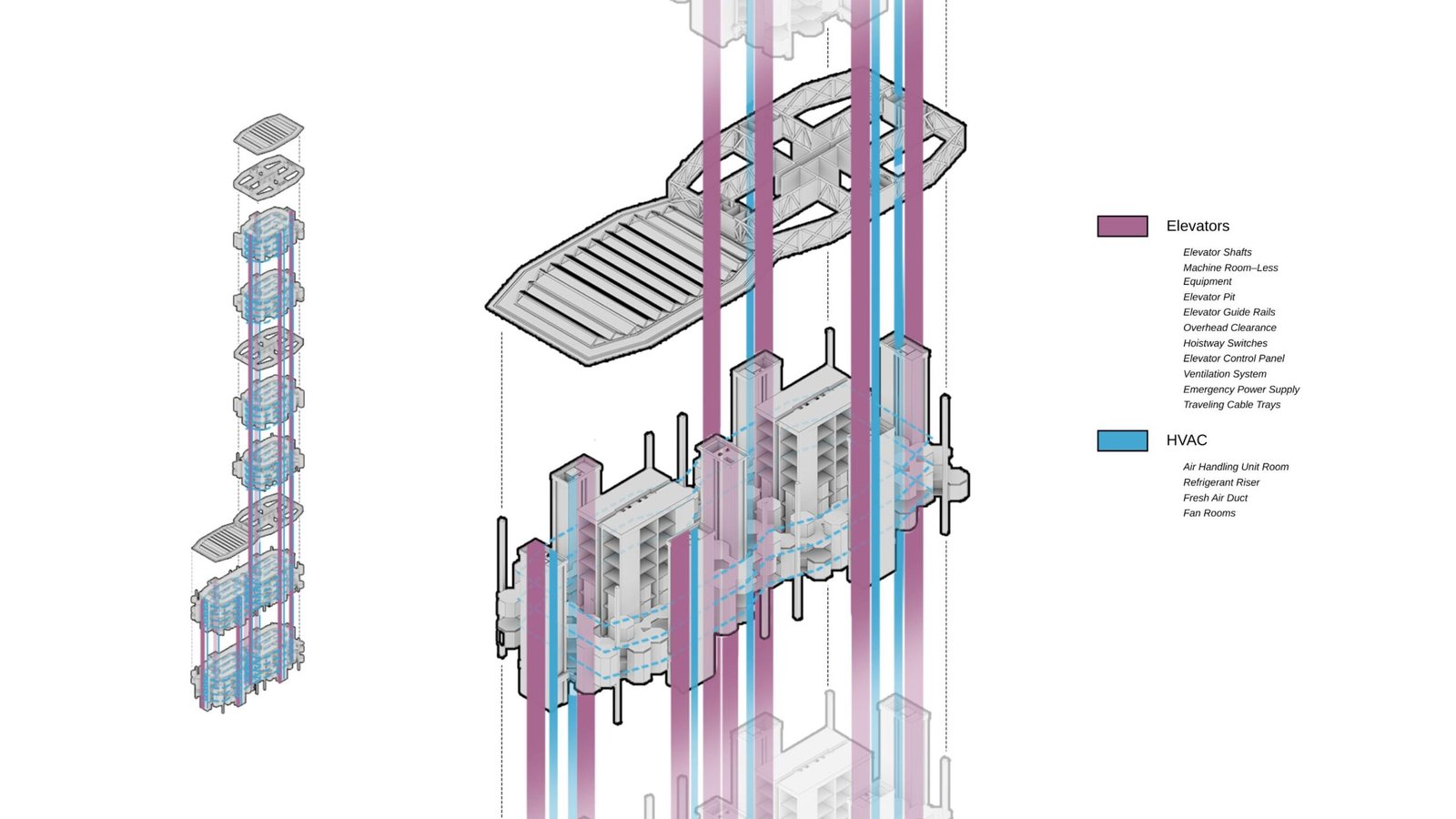
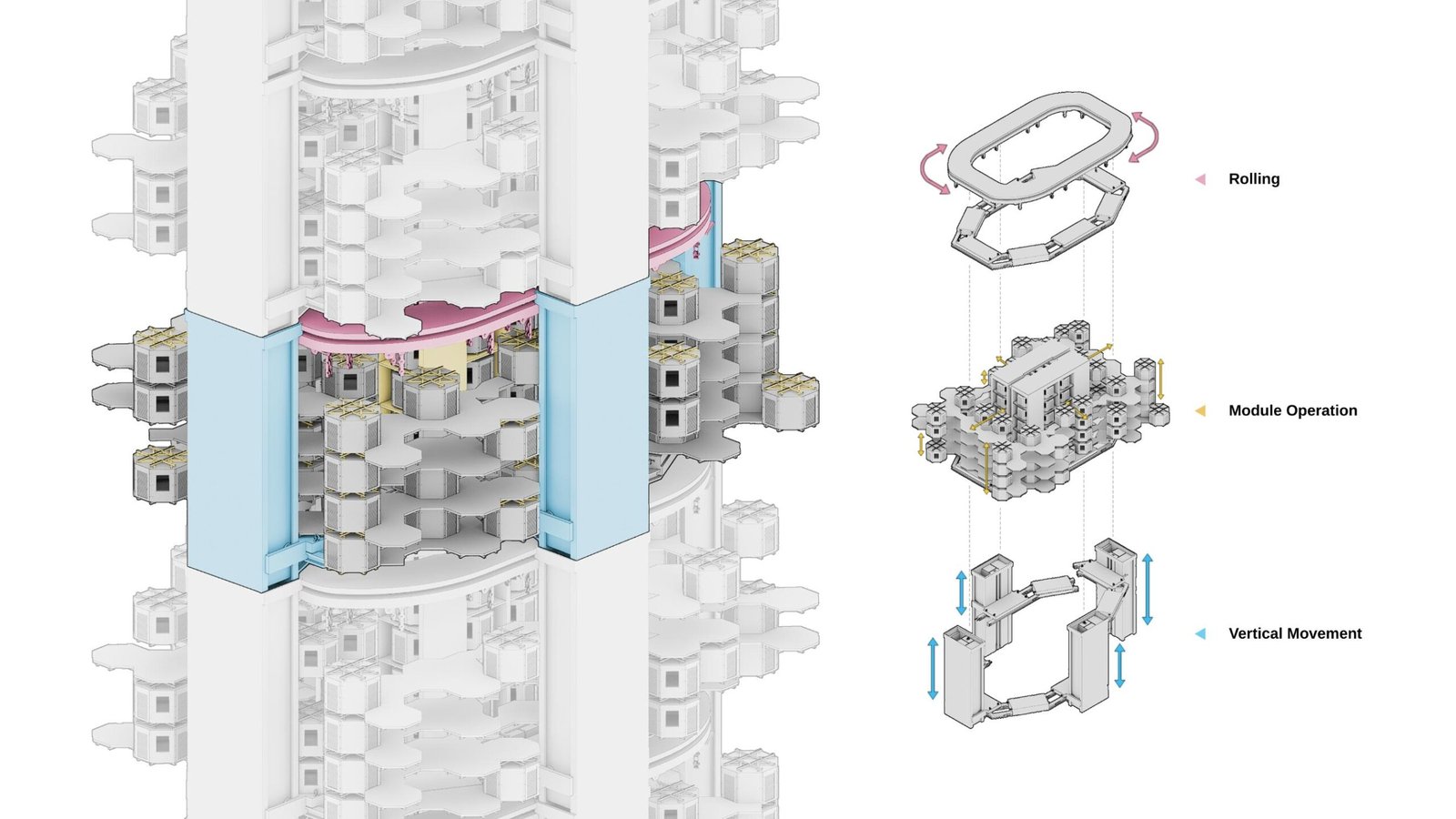
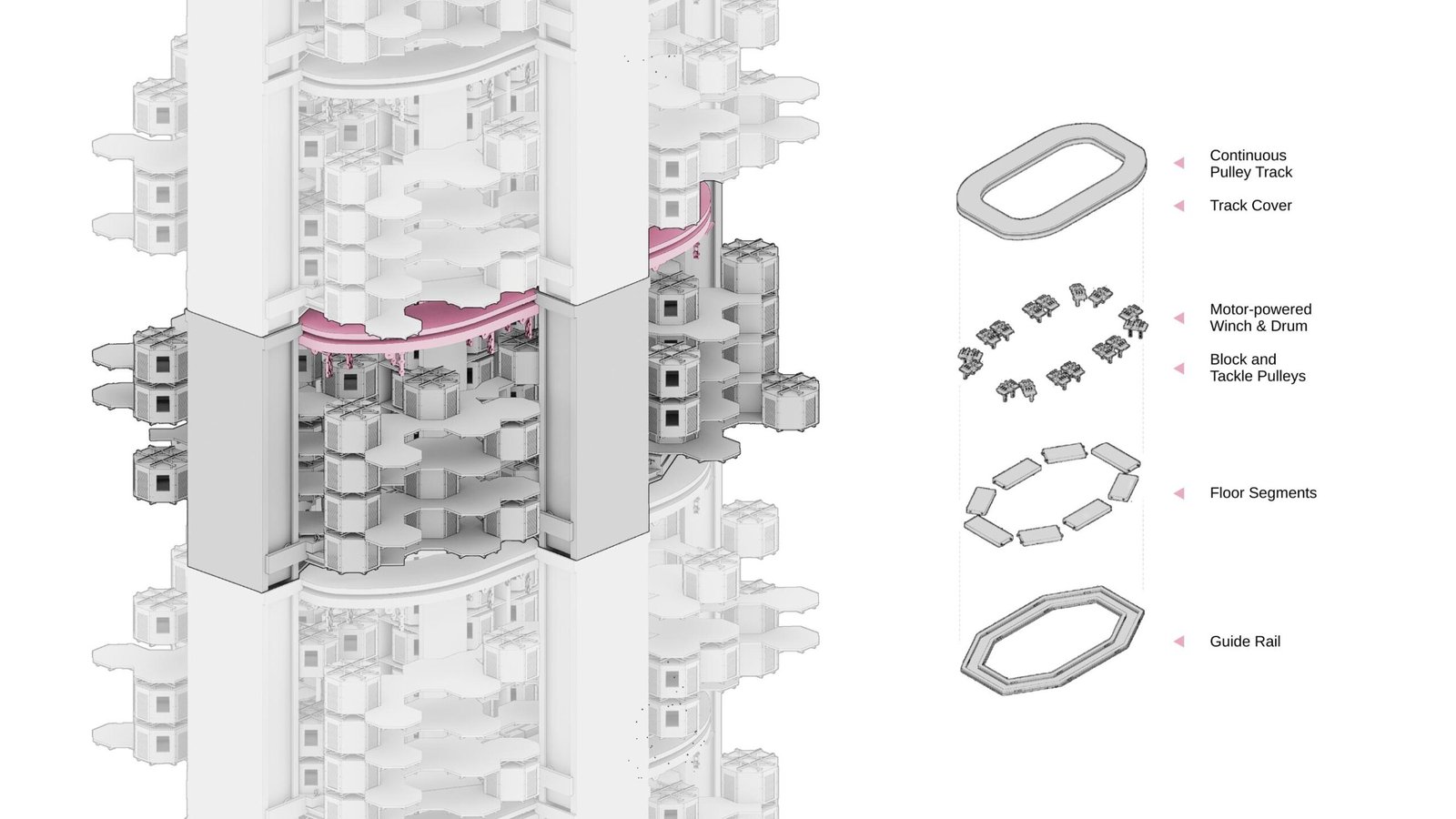
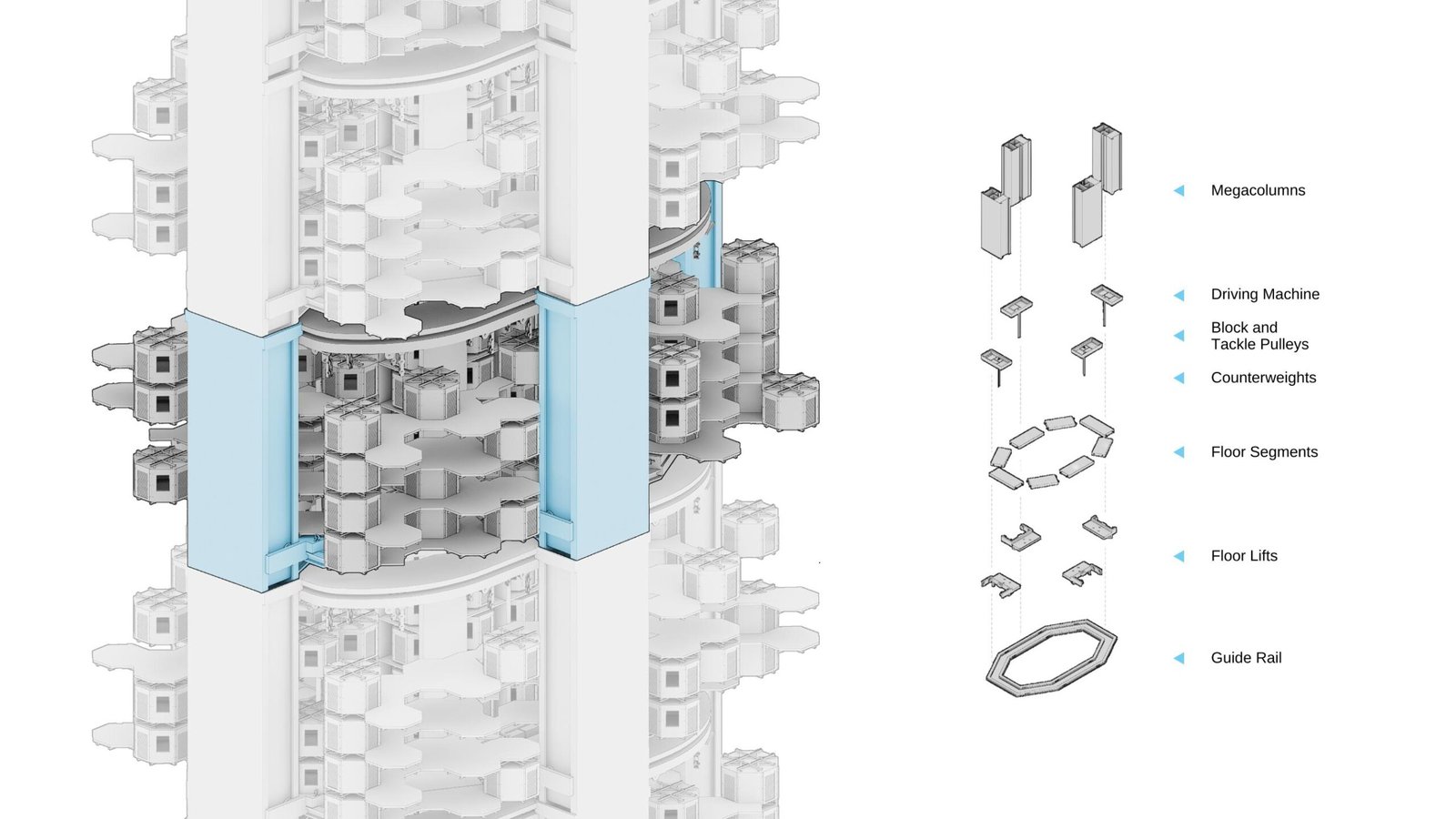
To allow the design to enable the dynamic movement of modules, three pulley-based systems were designed to allow for specific module movements: rolling, module operation, and vertical movement. The rolling system allows for modules to transfer between the towers, module operation facilitates the module movement from their storage to the active spaces, and vertical movement creates variants in floor segment levels to produce necessary connections and voids when necessary.
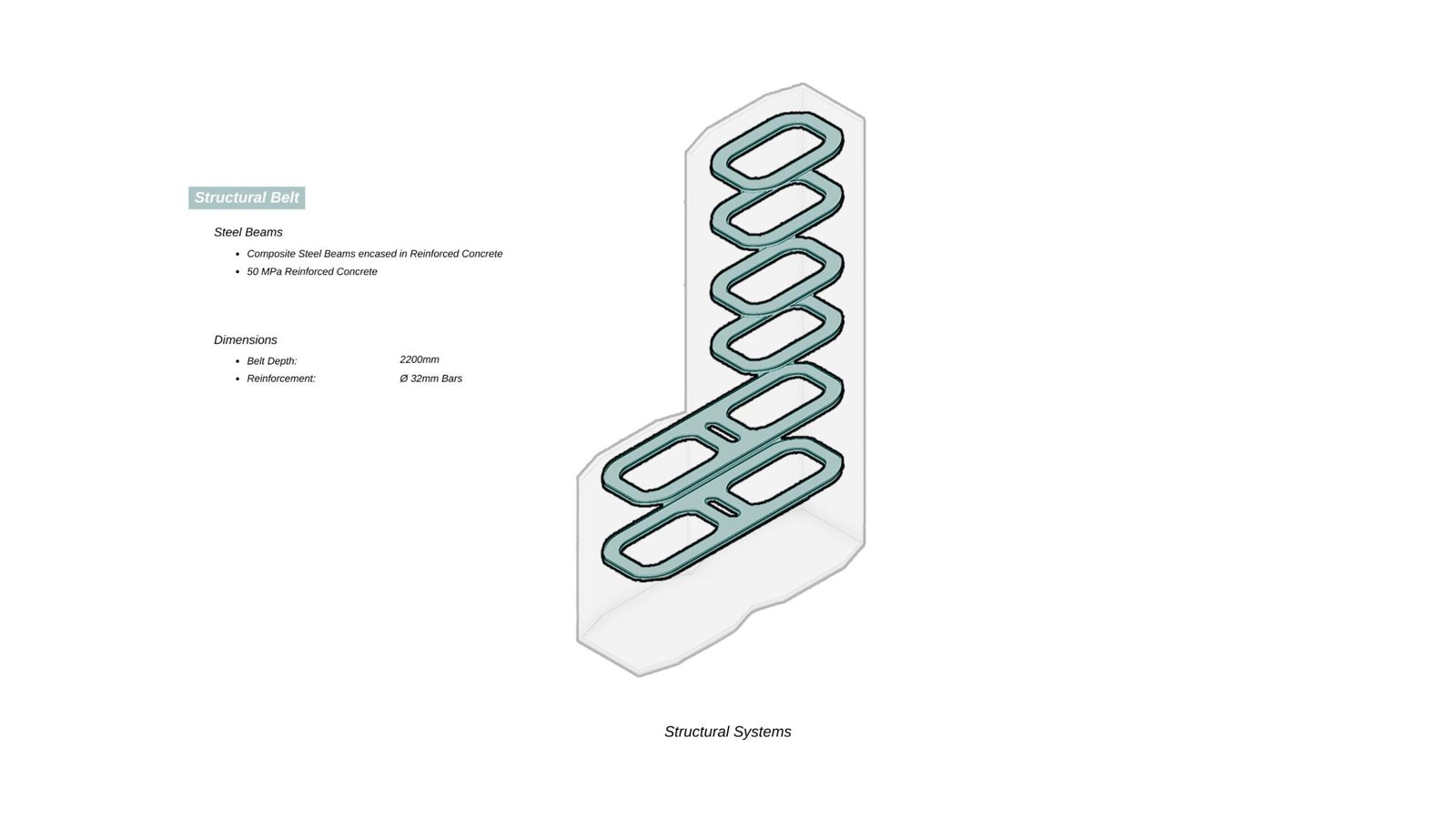
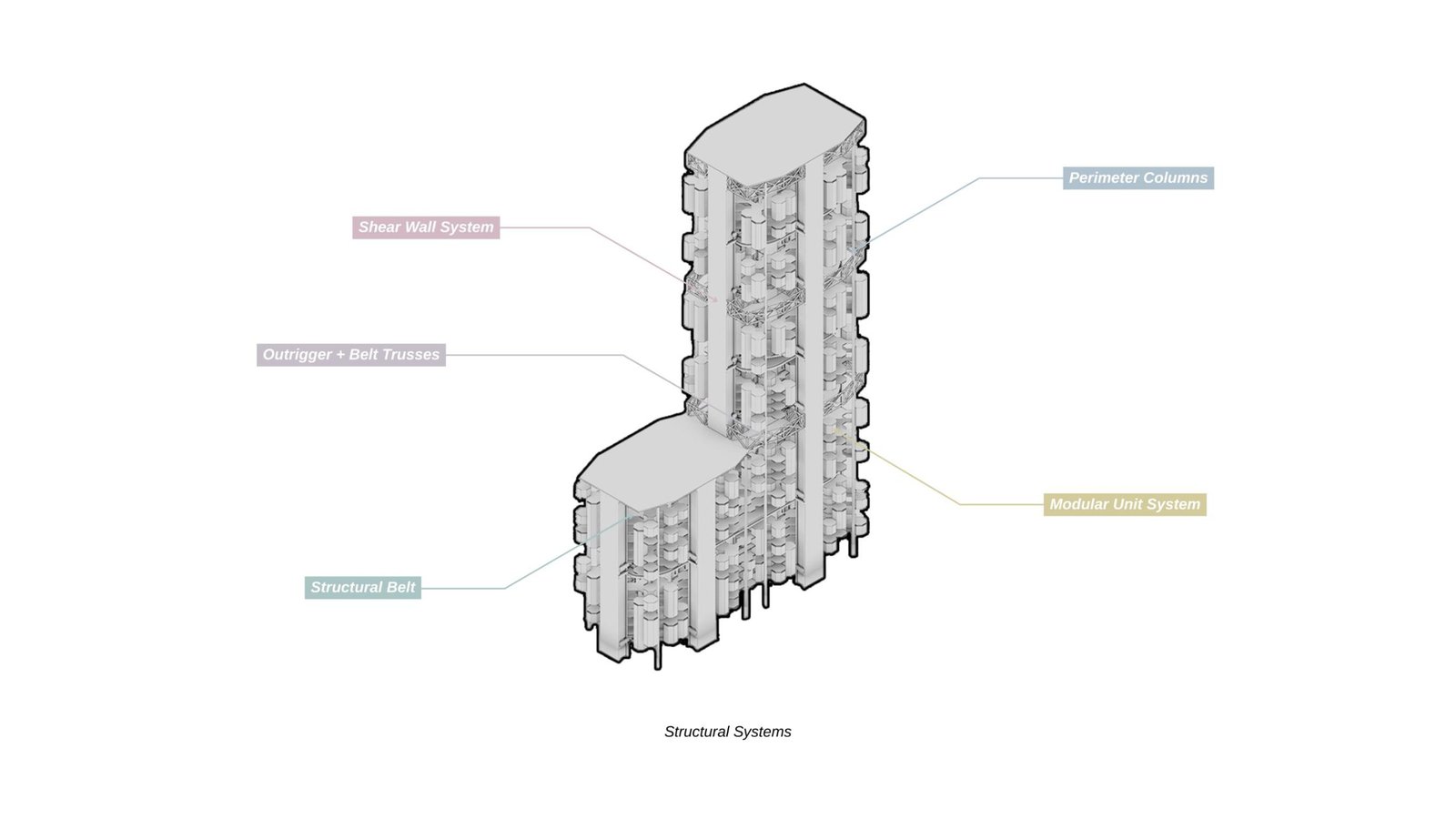
Operative Maps
The design process was guided by operative maps which translated urban data into specific design interventions. These maps reveal realities of centralization which contribute to congestion and uneven spatial distribution in Guadalupe Nuevo and evaluate the site’s accessibility, urban fabric, and activity distribution in the area to pinpoint the appropriate location to establish the project on. It also dictates how the design can harness wind behavior as a key parameter in organizing the modules, specifying which areas can house open modules that allow natural ventilation, semi-open spaces that filter wind and rain, and enclosed areas that support sheltered units.
Tower Design
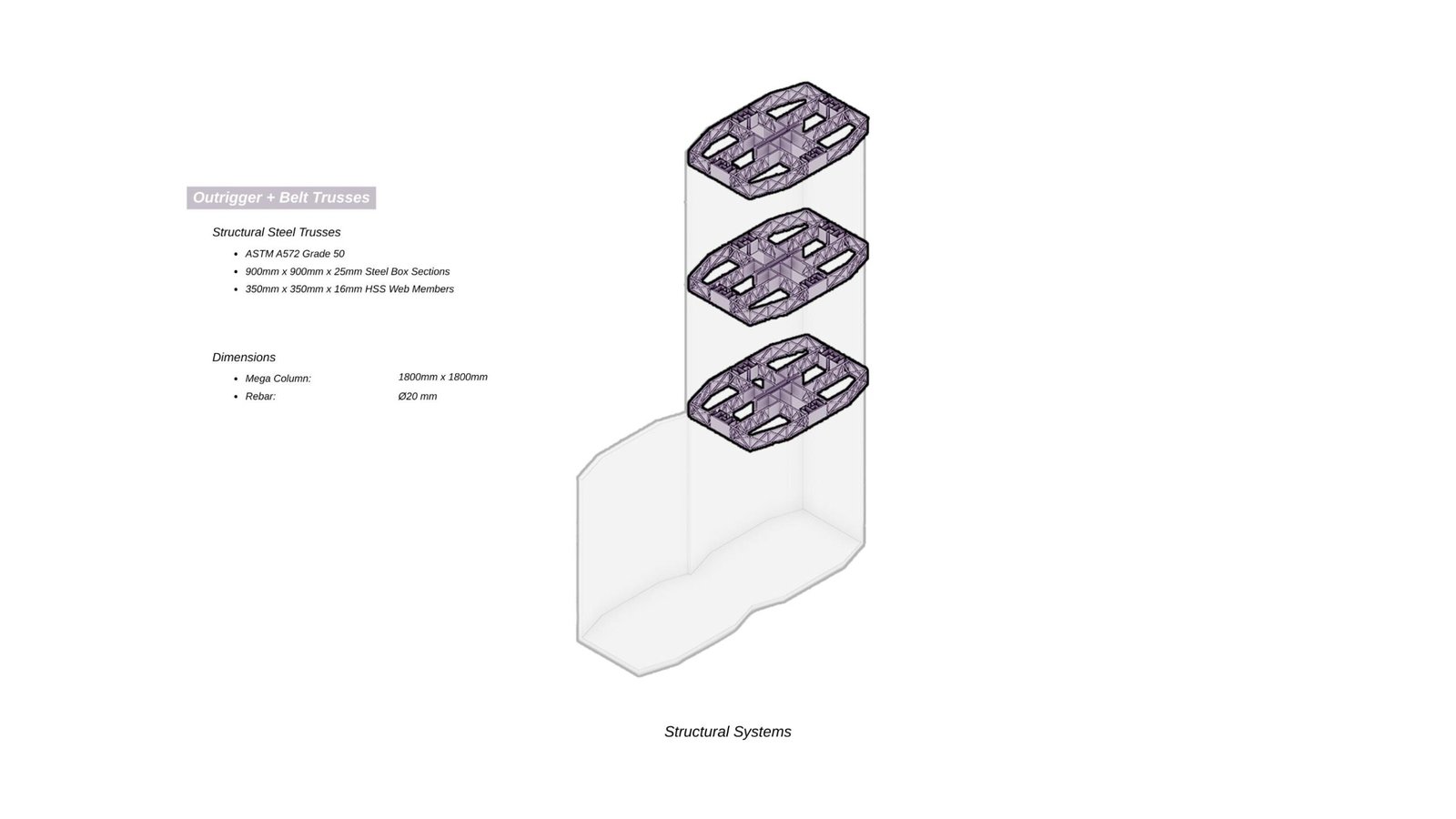
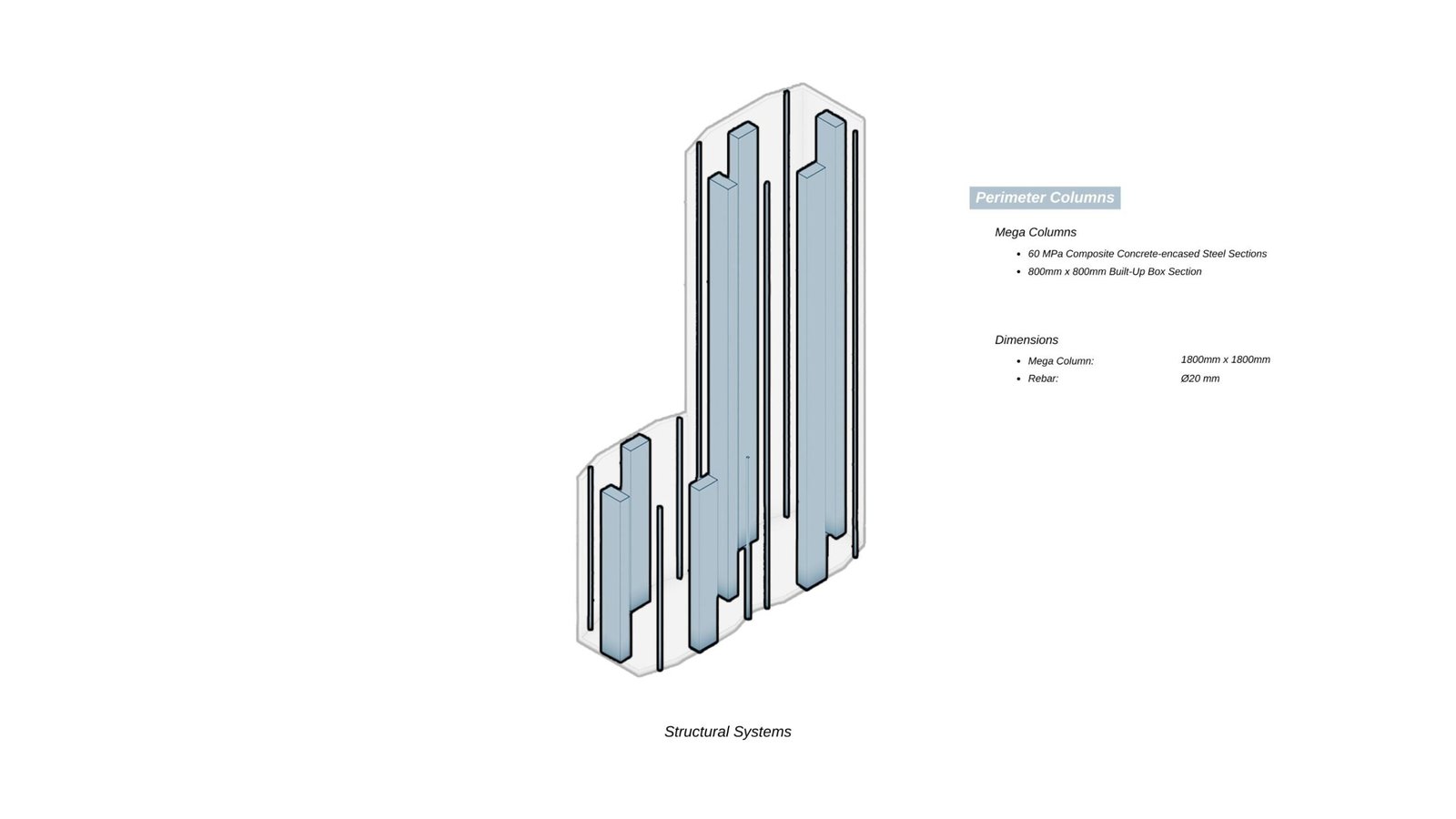
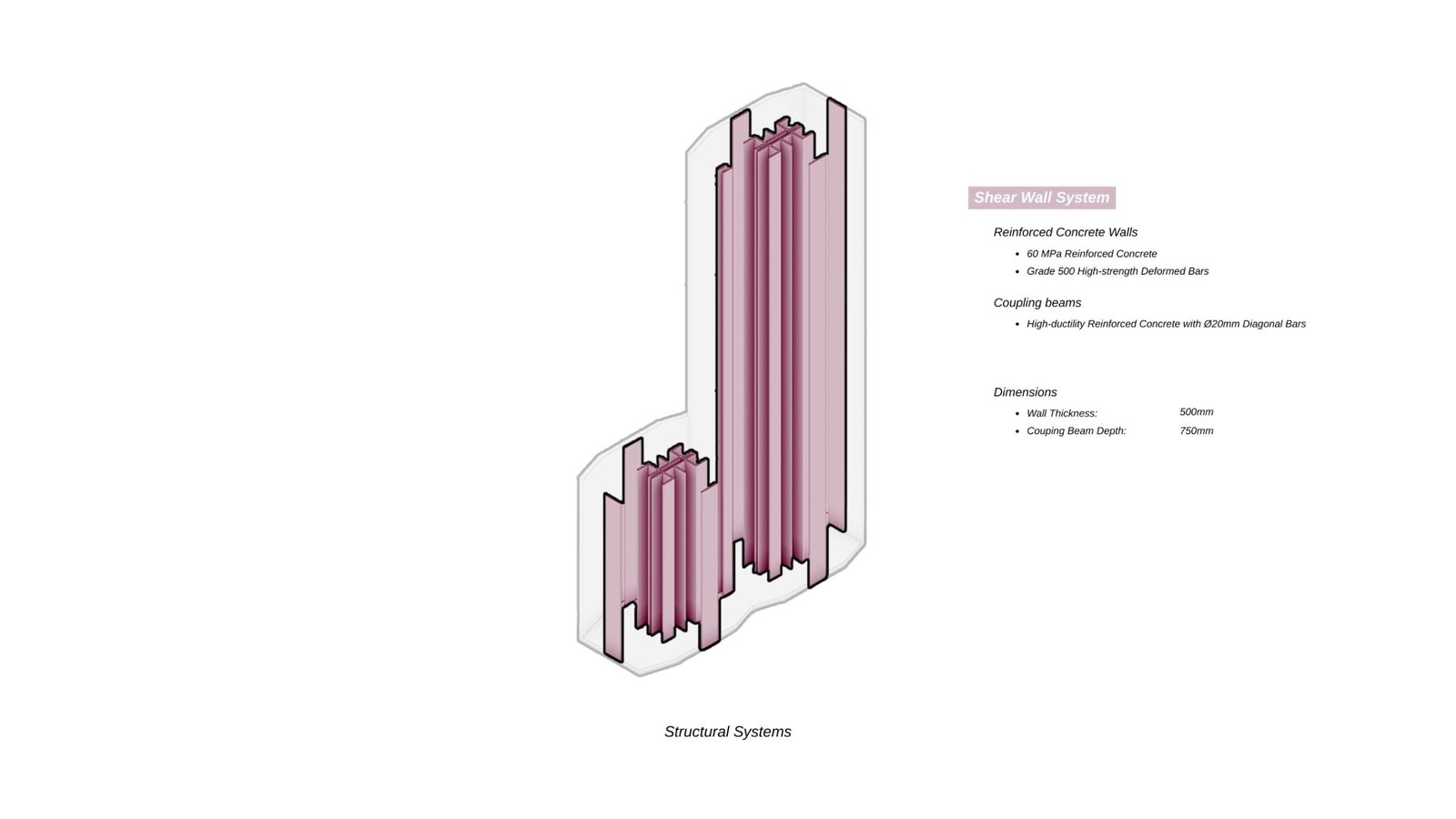
The final output of the project features a decentralized and adaptive vertical tower capable of supporting different types of dynamic modular units. These modules are distributed according to activity type and design and house the activities projected for Makati 2040. By turning speculative scenarios into architectural form, the kinetic modular tower serves as a proposal for how future environments can decentralize urban life within our inevitable, increasingly dense cities. •