
Introduction and interview Gabbie de la Cruz
Images Ysa Peñas
There is this word that is often used in queer discourse: reclaim. Because the system was conditioned to leave the marginalized out of the conversation, a massive part of navigating queerness has become reclaiming language, identity, or even one’s place in society.
In the context of the built environment, the concept of safe spaces began not on a blueprint, but within the margins. It was born out of the need to carve out venues of visibility and identity, making queer experiences and memories count in a landscape that is manipulated to leave them out of the equation.
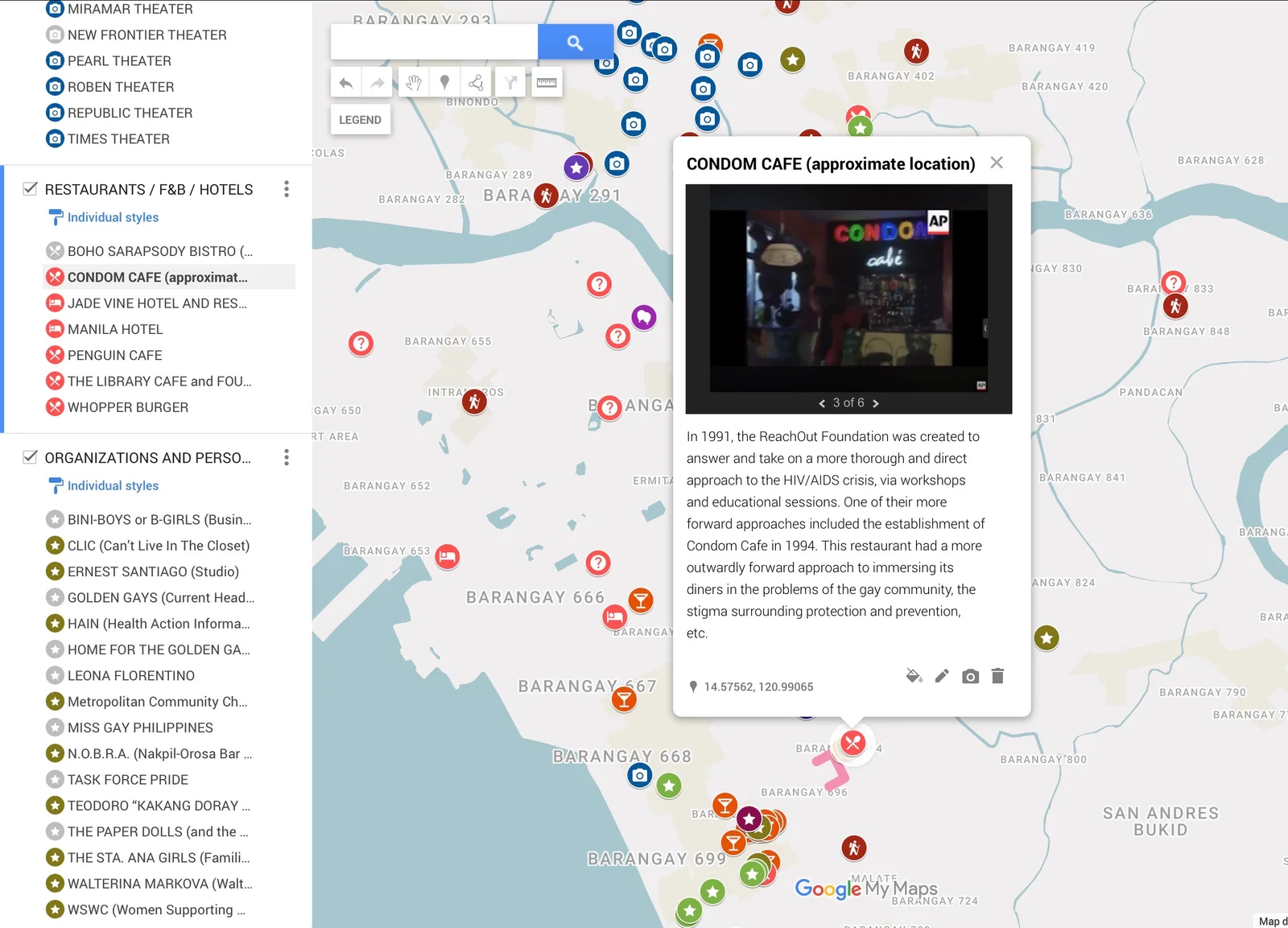
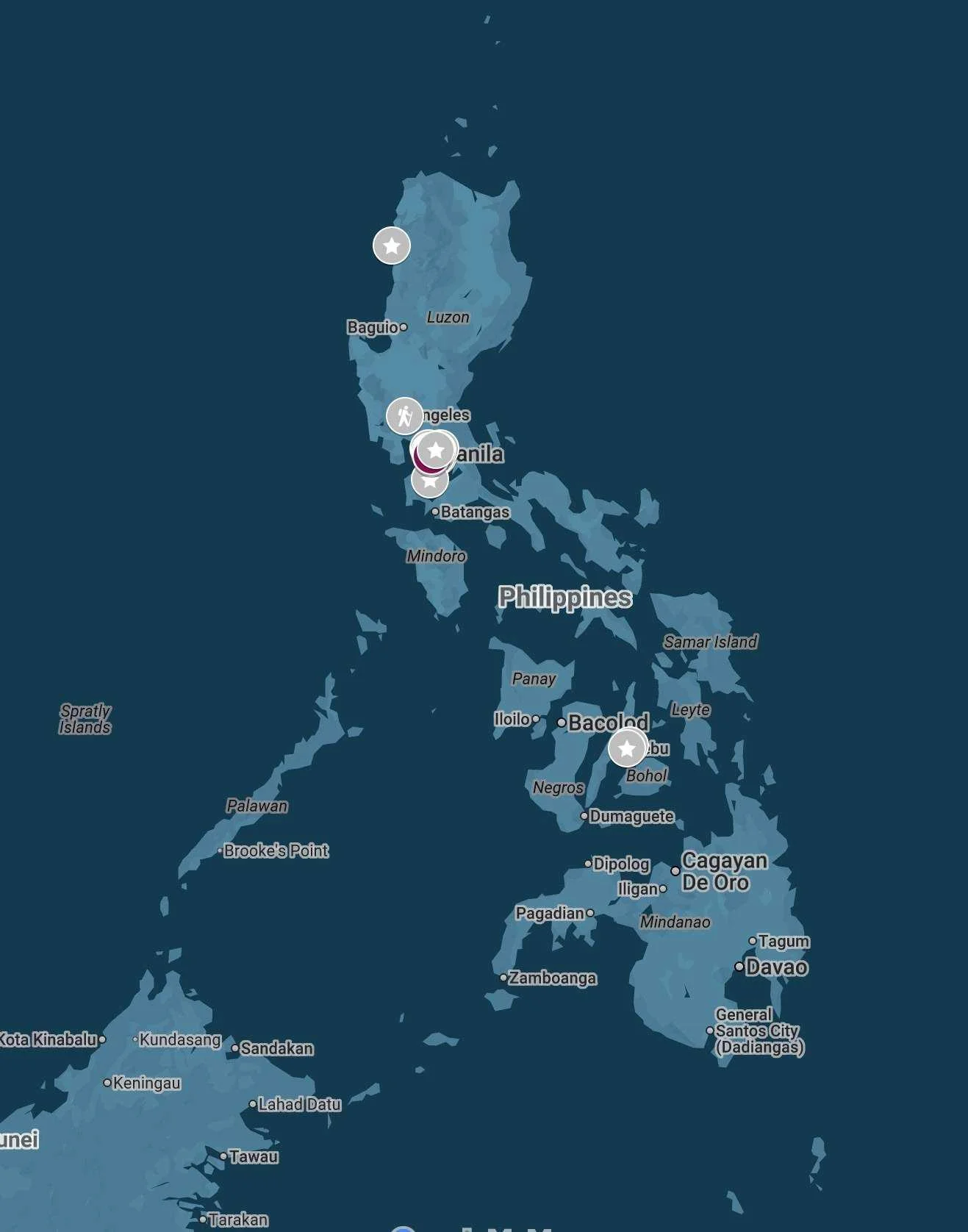
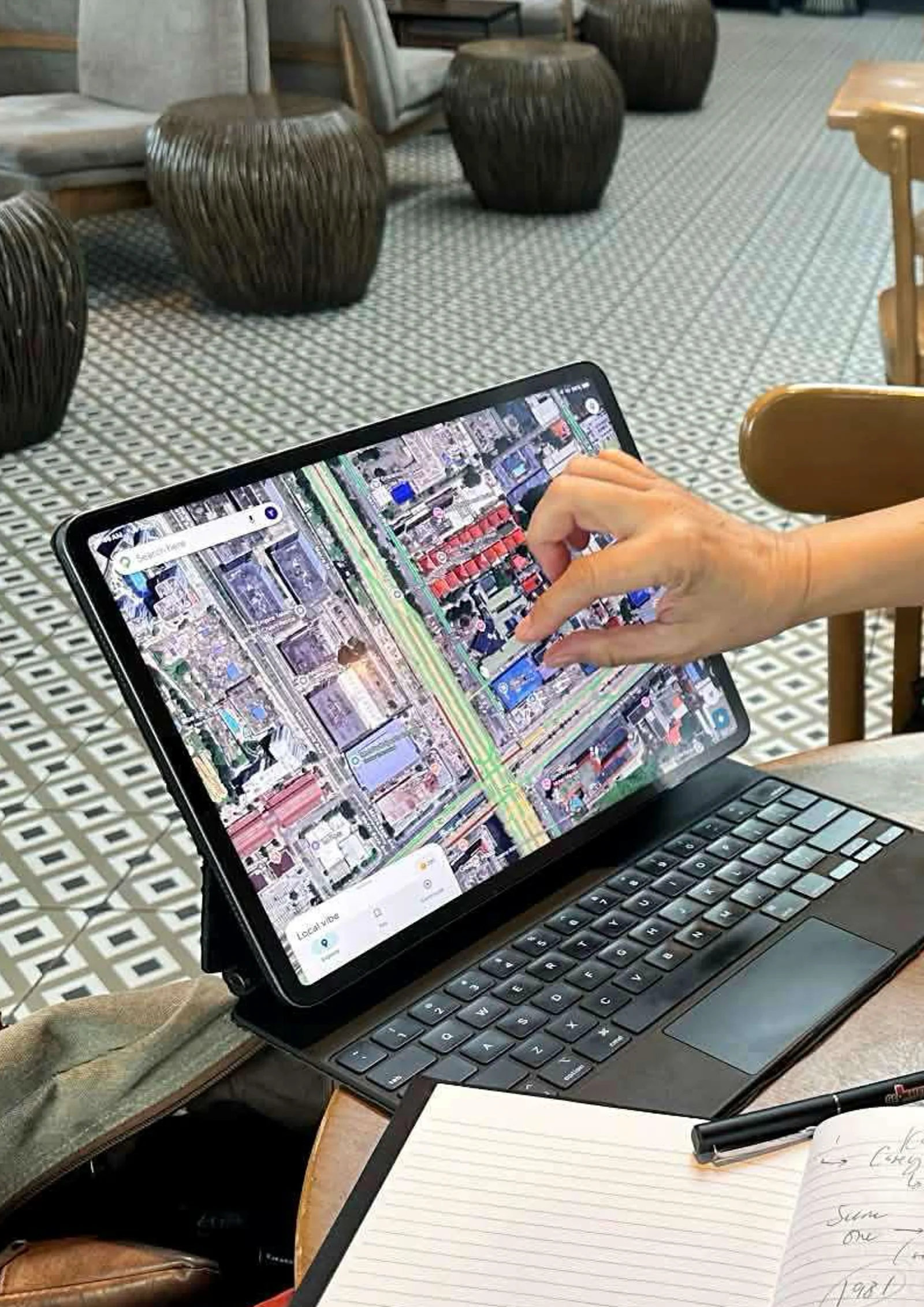
Architect and heritage advocate Ysa Peñas explores this fragile geography within Metro Manila in her master’s thesis. Through a digital map, she plotted coordinates that translate queer memories into permanent marks in the urban fabric. She emphasizes that queer architecture is not built by inherent queer structures, but by radical adaptation. “Our spaces weren’t included in the conversation of traditional built environments, hence the queers are driven to carve their own and dress otherwise heteronormative environments as queer; occupy voids which were rejected or unused by society, and code or reclaim spaces in the default pursuit of queer acts such as sex and community.”
Starting point
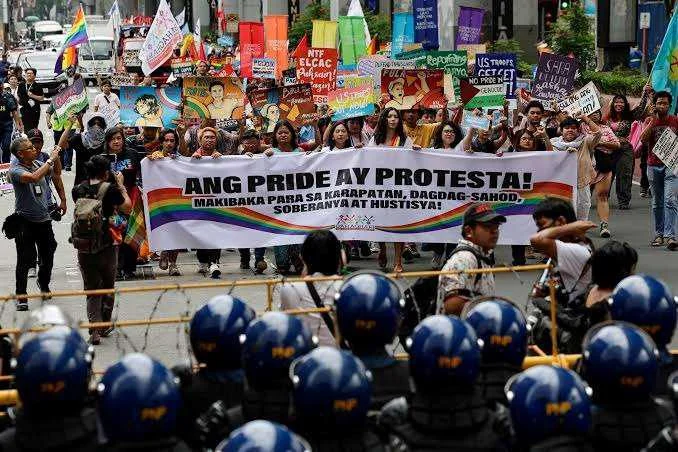
Happy Pride, Ysa! Prior to crafting these questions, I came across a reel which mentioned that most spaces that matter to queer people are those that weren’t initially intended for them—a hidden night bar, a pocket of a public park, or a small café. How does the map mirror this concept of reclaiming spaces?
Ysa Peñas, queer architect and heritage advocate: Hi Gabbie! Happy Pride! Thank you to Kanto for having me. Interestingly, we’ve seen the same reel from Sindren! What I find fascinating about that reel is that he mentions one of the key references in talking about Queer Spaces, which is Aaron Betsky (1997). I’ll dig in a bit from my current thesis research here as well, by putting out George Chauncey’s (1996) stand on Queer Spaces. Both authors point out that there is no inherent queer space; only spaces put to queer use.
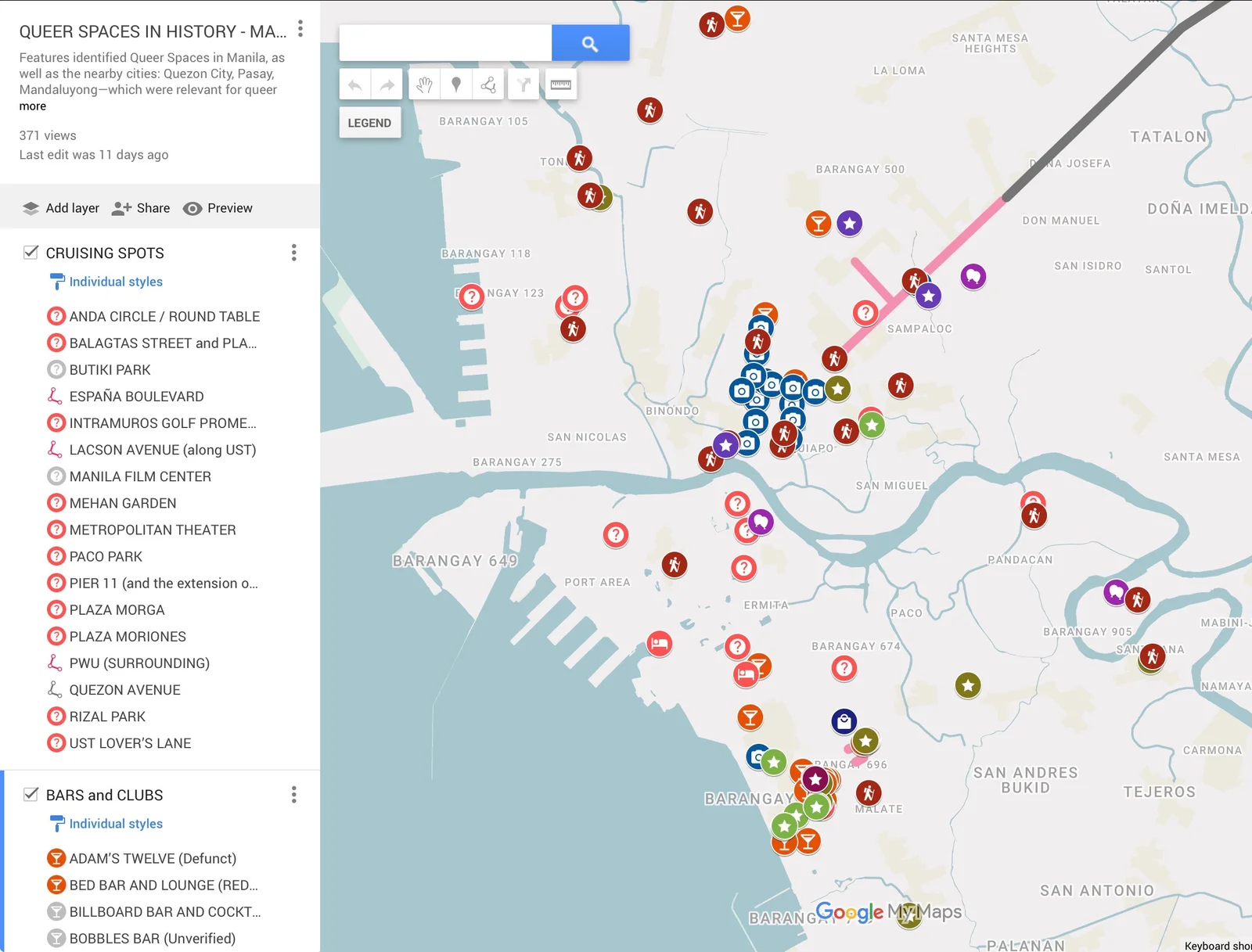
The working map involves a variety of entries that cover the most private to the most public areas, as it was coded or put to use over history, from being used for gay cruising or jouissance to moments of protest and public presence. As it was put in the video, even the most obscure dive bars or a commonly-enjoyed public park can have the highest relevance and meaning for queers. It is mainly because these are the spaces where they find themselves a level of visibility and identity, from the hidden to the generally nuanced ones.
What urged you to work on this map? Was there an exact point that made you realize our traditional archives were insufficient to illustrate how queer people navigate and take up space?
The entire project came from a personal frustration with one of the tasks from my former workplace, where we had to help our principal gather instances of Queer Heritage within the Philippines for a talk. The idea was pretty novel to my co-worker and me at the time, Mr. John Brian de Asis.
As we did our research, the most prominent, or rather, the aspects with the most recall were only that of Walterina Markova and that of the Malate gay culture. Don’t get me wrong, there were a ton of materials to work with there. But it was mainly geographically constraint in just one district. It made me ask so many questions about queer erasure, seeking any semblance of recognition for queer heritage within our local laws and especially within our National Heritage Law.
From your perspective as a heritage advocate and queer architect, how far behind is the Philippines in recognizing these lived experiences as architectural heritage?
The journey of working on the maps opened Pandora’s Box for me, in good and bad ways. I realized that we are in a terrible race against time as our physical queer spaces, which could be considered heritage, are being demolished and rewritten in front of our eyes. Being a marginalized sector due to our lack of legislative protection, our histories aren’t even just thrown to the margins—the history of queer people are the pages that are turned over and skipped to the point that some queer people do not believe it exists, too. We do not exist outright within most historical archives and books, and if anything of that note exists, it is usually viewed from a heteronormative lens, which treats our existence from points of mystery, correction, and expulsion. It truly is a sickening thing to realize while taking on a project like this.
However, it is not all doom and gloom. What matters is that queer presence and memory are having more people on their side, and more are starting to realize that instances, people, and places like Malate need not be stuck in the realm of melancholic nostalgia—we can do something and dedicate digital and physical space for this memory. At its core, this project is but a small effort in the race against queer memory decay and shunning—a collection of counternarratives rooted in space which has codified itself as a Queer Heritage archive.
We are taught how to classify, assess, and map potential cultural properties and entries for our National Registry, as there is a wider institutional framework that is recommended to be followed in doing so. However, the type of history that is well and acknowledged to have a priority or even be considered as widely valid, is heteronormative and state-sanctioned. The phenomenon for the latter is called “Authorized Heritage Discourse” from Laurajane Smith, where she criticizes that heritage that will most likely survive memory decay are those only deemed “official” and “valid” by the scholars, system, and powers that warrants to officialize remembrance. The system that was made to document our cultural heritage automatically discounts the narratives that fall outside of its umbrella.
It was a eureka moment during my first year in my Graduate studies, when we had this GIS (Geographic Information System) class, which challenged us to create maps with an intersection of our research topics. I had recently pivoted to Queer Heritage from my initial entry research topic, and that was when I began this idea of creating specific categories for Queer Heritage, but still basing or “following” the UNESCO and NCCA Cultural Mapping Framework. The output was focused on Malate Queer Heritage, and it went relatively well as it was also presented in the Philippine Queer Studies Conference in 2024.
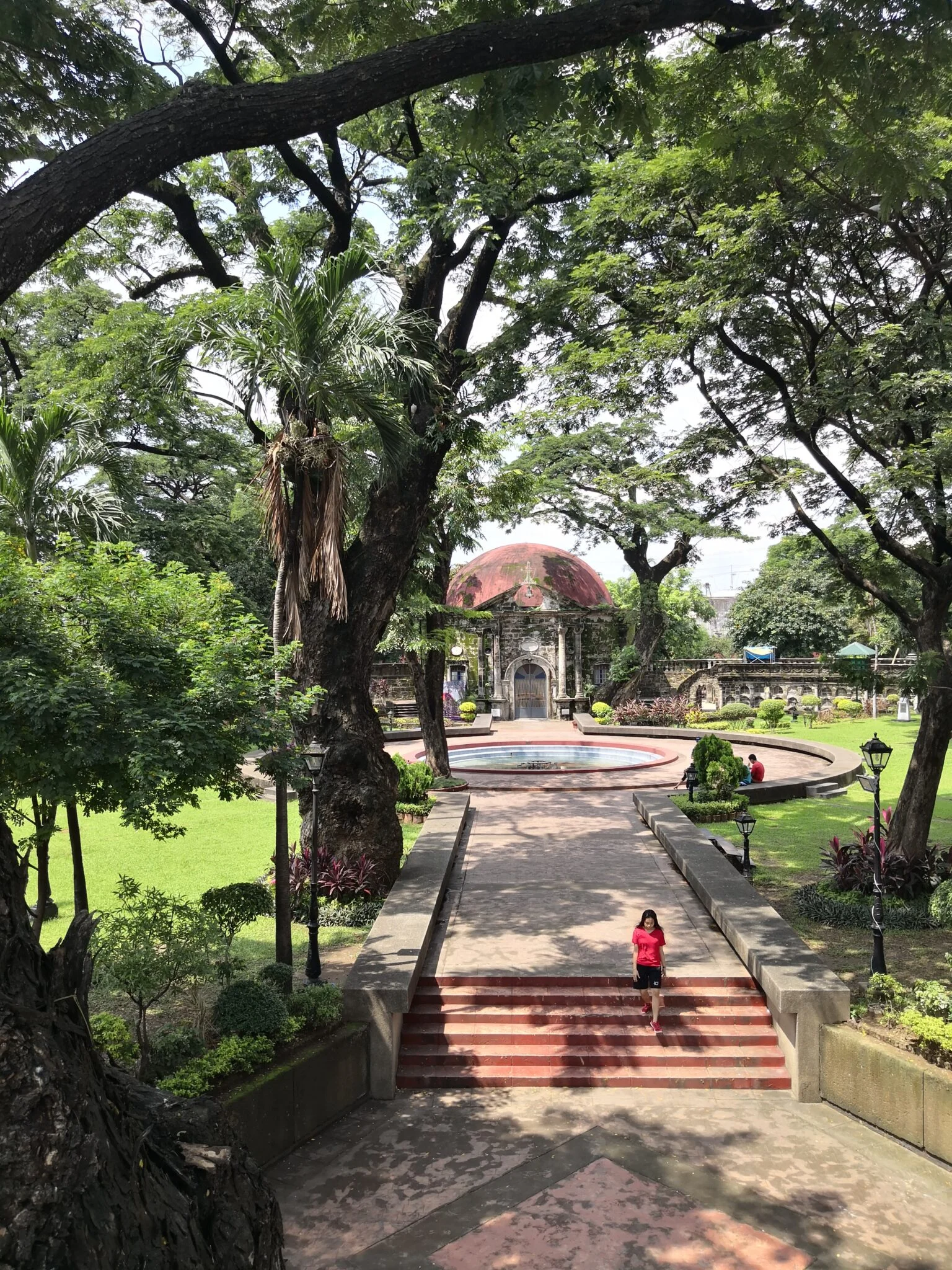
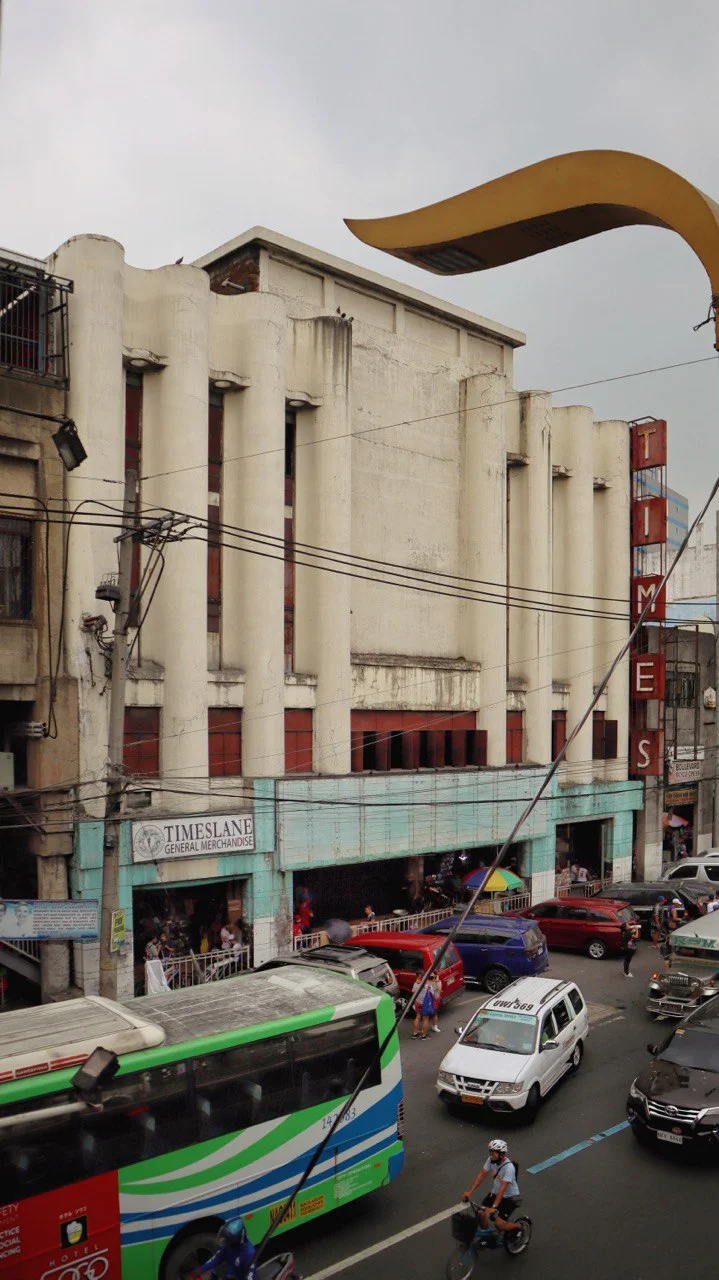
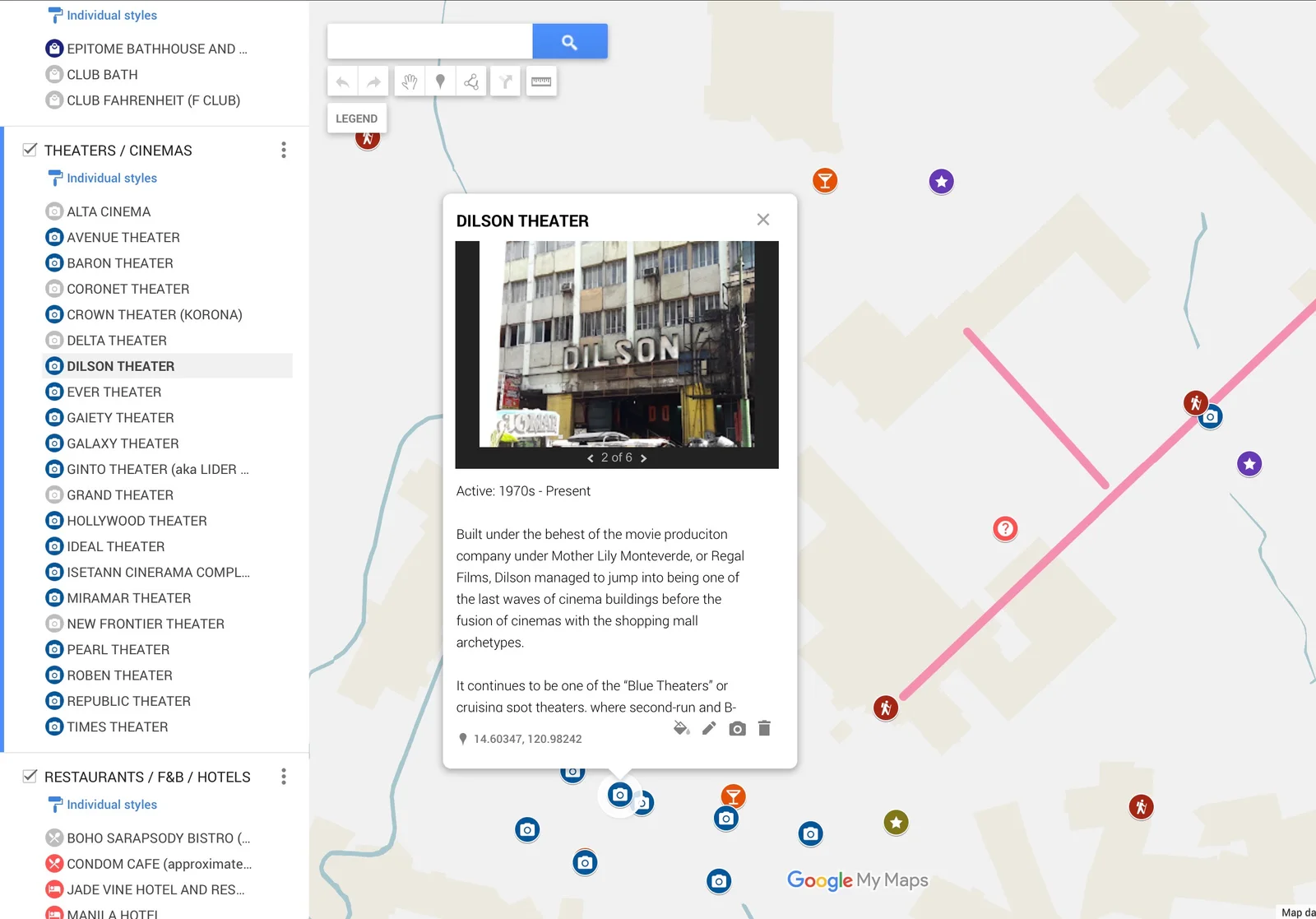
Paco Park and Times Theater in Manila are both plotted on the map. Photography by Patrick Kasingsing
Community coordinates
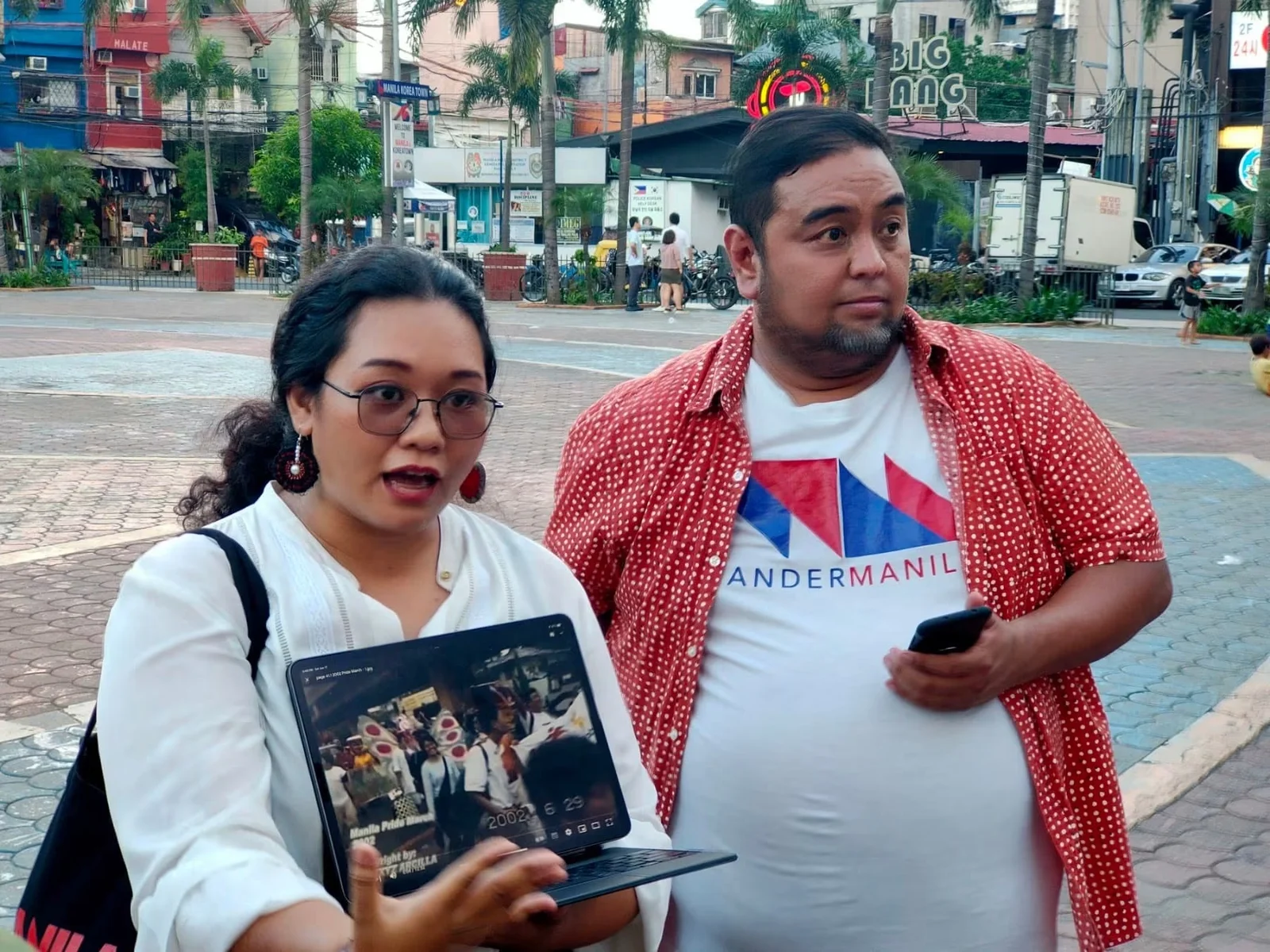
Women loving women aged 30 and above were selected as the demographic for the study, introducing a profound layer of historical memory. “It must be recognized that even if queer protest and public queer presence began in the West decades before, it was because of sapphic and lesbian women in the Philippines that wider visibility slowly saw the light of day,” Peñas underlined. For the study, the research inquiry started with every interviewee’s experience as a queer person, uncovering narratives and not just coordinates to plot. “We often begin by asking whether they are aware of the concept of queer heritage, until we get to ask about familiar places. They then become inclined to share anecdotes and stories.”
Can you walk us through your data-gathering process? How did you build trust with the participants to map their private geographies?
The scope of the project invites narratives and insights from queer people or those who fall under the queer spectrum, and it also includes queer women who are 50 years old and older, aside from sourcing leads from other platforms such as social media (netnography), archival research (periodicals and magazines), and other media (photos and videos, audio recordings are also considered).
As part of research ethics, the participants can withdraw from the interviews anytime and revoke their permission to be recorded, while their submissions can count as impartial narratives where leads can still be derived from. These interviews were encouraged to be as natural as possible, following a simple set of points for talking, and exploring leads via a “Think-Aloud Process”, where the interviewer needs to pay close attention to things mentioned while the participant is in full recollection of their memory. The process felt familiar and comfortable with me, since I’ve also been handling interview-type research methods before. I had to build rapport past the very formal means of reaching out to the participants, which were mainly via email or via social media messages, first to get their emails so that I could send formal letters.
I didn’t want to completely come off as the super formal researcher; humanity is much needed in handling this type of project because it deals with unfolding very personal memories, where there may or may not be leads to expound on and jump on to after the interview. With the women, there was this genuine familiarity and true sense of sisterhood, and understanding that even within the conversation of queer heritage and history, the narratives of women—sapphics and lesbians in particular—remain under wraps. Some may even ask, as they bring up a mention of a certain place, group, and event, to clarify if it can be considered a viable entry. The process of validating (or invalidating) their voice must be taken with great care.
Once a single space or place is mentioned, that usually leads to a mention of another place, and another name, and another set of districts, until it forms a loop. This forms an entire set of shared history and past, where the researcher usually tries to connect and corroborate with the other interviews verbally, creating a link from one interviewee to another, even if they aren’t really personally connected. This process is what I would liken to a small hovel or bahay, like a house of memories where everyone brings their own photo of the same place, event, group, or memory; and where this happens is a venue that is protected and where their comfort is of utmost importance.
Aside from the fact that these are women who navigated Manila long before digital spaces or modern advocacy groups existed, why was it crucial for you to center this demographic? Did their spatial recollections teach you anything about how queer joy and survival change the ways one experiences a place?
The concept of tying public space with public queer visibility became a reality with the very action that Filipina lesbians started during the 1993 Women’s March, where the group The Lesbian Collective announced their statement aboard a float truck, as they were not really given a formal venue. It was this generation of women who carved a new type of queer visibility. One of the interview participants was the woman who read the statement on that fateful day, Ms. Giney Villar.
There were a lot of instances and mentions of sapphic and lesbian queer joy, but only within closed doors most of the time. Lesbians and sapphics had created their own invite-only clubs, often mainly for the more financially capable. One of these spaces was the now-defunct (and burnt down) nightclub called The Power Station in Pasay. There was an accurate description of how sapphic cruising occurs within the space, albeit not as intensely sexually motivated compared to gay cruising. The space was also vividly recounted and described, with the inclusion of a ramp, winding stairs, loft seating, and the discotheque on the ground floor. One glaring realization was that it was safe because it was hidden. It was considered a space where queer women can act on and express their sexuality, because the only gaze in action was that of women as well.
I place great importance on the role of queer women in placing public queer visibility, mainly because their means of queer survival were not imagined to be demonstrated in the wilderness. That was pretty surreal to hear and correlate, to be honest. It also developed this huge gratitude towards this generation, and that their queer memories deserve archiving and preservation.
Being part of a community that has often had to exist behind closed doors, how did the respondents define visibility in the context of Manila’s urban fabric? Is it always about being seen, or is it sometimes about the safety of mutual recognition?
What is interesting about their responses is that they didn’t suggest their leads or operate their narratives on the basis of visibility or on their technicality. They simply mentioned them because they did exist and develop in those areas, and created memories within them. The thematic classification of Queer Visibility and Identity was applied after the leads were narrowed down and itemized.
If we want to discuss how they were drawn to the spaces and places that they mentioned, I think the umbrella term that encompasses both being seen (perceived) and recognized, coupled with mutual safety, would be belongingness. It could be separately studied on how there’s also a mercurial relationship between the two when it comes to defining visibility within queer spaces and among the subgroups within the LGBTQIA+ spectrum, but belongingness is created by community regardless of where along the spectrum of visibility it operates.
Mapping technicalities
The map democratizes the traditional process of heritage mapping by going beyond old monuments, churches, or colonial buildings and including spaces that people might not expect or notice. Peñas shared that the project is an exercise against Authorized Heritage Discourse (AHD), which highly favors specific types of histories and only recognizes particular forms of histories worthy of preservation. “In allowing AHD to run our institutional memory, we also permit the erasure of all other types of histories.”
How did you approach documenting spaces that lack architectural grandiosity but hold immense emotional and cultural weight?
The sad thing is, people have this stereotypical image of what history looks like: mainly macho-masculine, monumental, and whitewashed in so many ways. This has formed an internalized dismissiveness when we are brought face-to-face with cultural assets that fall out of our default understanding of culture and heritage. The good thing is, there has been improved cultural mapping and significance frameworks in effect since 1979 and 2013 under the UNESCO Australia Burra Charter, which has helped widen the scope of cultural significance application to even indigenous objects as well.
But as a counterculture, or a culture out of the defined norm, queer culture is not afforded this lens by default. However, it remains that this has extant elements for us to work with. For example, under the Social Significance, with a certain place tagged as an asset, it can be described that it mattered to a group or community that had relevant presence within it. The point here is that it still mattered; there was care within its use, and that carried into longevity because there was an active remembrance of queer culture within its walls. That merits documentation in itself.
Despite AHD, I documented nonetheless, because this is what it means to fight against it. To create an archival space for the counterculture that we are considered to be.
Select spaces mentioned in the map may have already been demolished, gentrified, or repurposed at present. What does this map teach us about dealing with the loss of physical spaces? What role does digital documentation play in addressing historical erasure?
In heritage conservation, it is noted that change, as decay, is inevitable; agents of deterioration are agents of change. This does not just apply to material conservation; memory of the intangible is also subject to decay. The role of heritage conservationists, including archivists and historians, is to manage the rate of this decay and not be an accelerant at all. Methods such as cultural mapping, memory archiving, and actual site or material preservation are steps to manage this change, so that it can reach and remain relevant to more generations and not just to the current one.
Personally, I believe that current cultures and countercultures can inevitably turn into heritage when provided care, longevity, and significance. These assets are built to be heritage over time, maintained and remembered consciously, and their changes should also be recorded properly, reducing this historical erasure.
Maps record changes over time, and digitally documenting these changes creates an archive for the present, and anyone can do their own documentation at their own skill level. Creating layers of information to show these changes and settling in with them allows us to develop a reaction to the change. That reaction can either lead to being jaded enough to not act anymore and let despair envelope us, or it can lead us to act faster and document more urgently. After all, the first line of defense of conservation is documentation. Before any actual on-site work can happen, documentation needs to exist as a basis for an intervention.
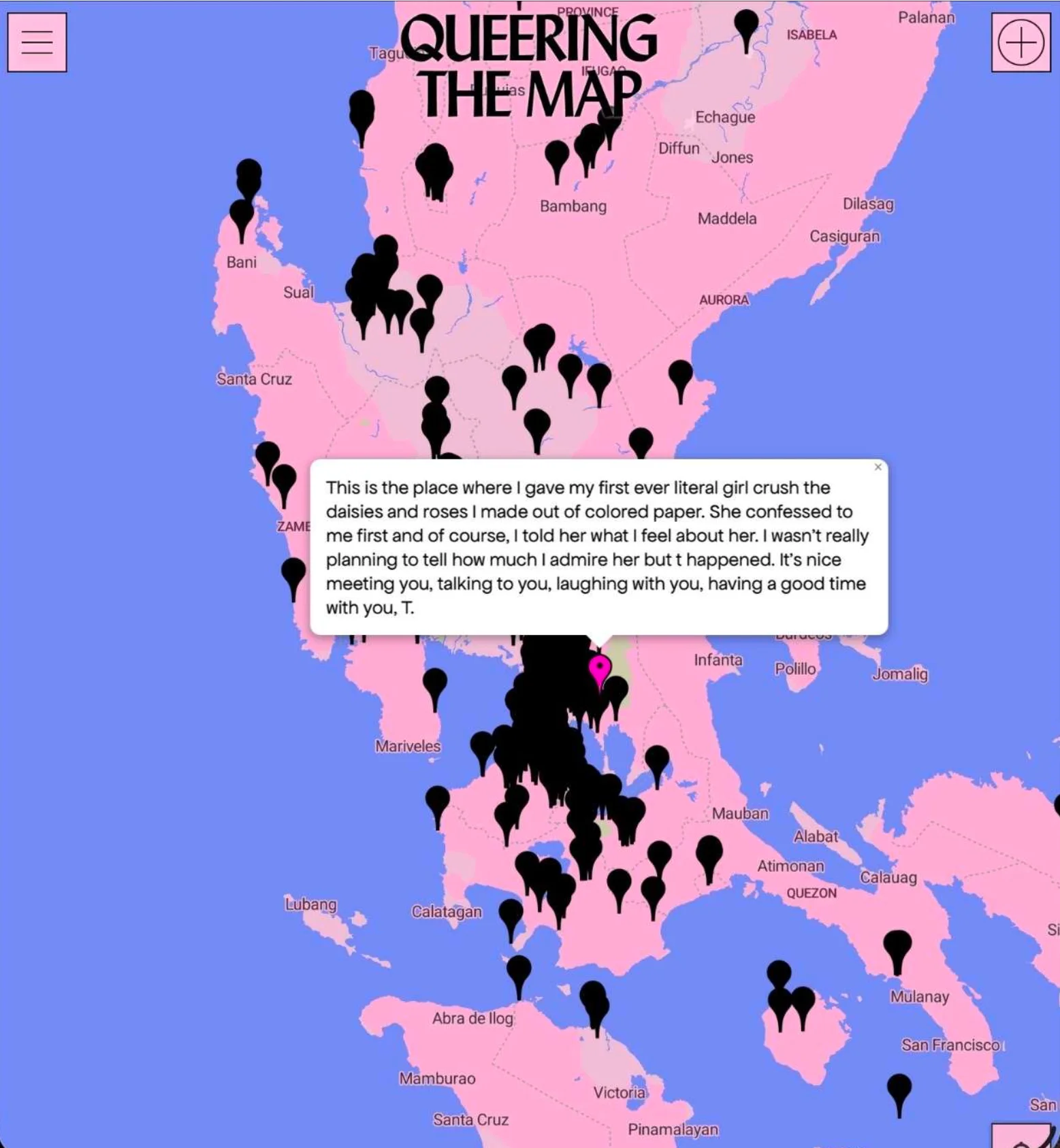
This project reminds me of Queering the Map, which allows queers from all over the world to record moments and events relevant to their experiences. Both your projects challenge the usual lines, pins, and boundaries, defining queer spaces as fluid or deeply personal. What were the challenges of translating queer memories of identity and joy into fixed coordinates?
Yes! Queering the Map (2017) by Lucas LaRochelle is proof that we can map moments and events with queer relevance. That map’s entries are crowd-sourced; it’s counter-narrative placemaking at its finest! A key aspect of that project is how information is supplied and consented to by the participants themselves, which I would regard as the first challenge throughout this research.
It was already a given challenge that the pool of respondents may be narrower than usual due to consent. Visibility in this manner is not always welcomed since perception can also invite that of harm. Some stories were definitely too private to share in detail, but leads were still derived and still warrant geographical representation.
There is a category within the working map that refers to Queer Activity per District of Manila, which are not geo-located, but marked within common district locations. These instances are mentioned less specifically due to the instructions and level of consent provided by the people who gave them as leads. It was a little heartbreaking, because there was the struggle to be recognized, yet there was this pull because of what this visibility could unconsentingly provide.
Queer has always been here!
Have you shared the map with the respondents so far? If yes, what were their reactions to seeing queer memories mapped out on a digital platform for the first time?
This is the only part that is not yet done, since the project was still a work in progress as part of an academic output pending grading (which is now postponed) and due to life happenings. However, it is part of my process to return the information to the stakeholders once it’s partially approved (which was only until last week). Maybe there’s this part of my anxiety that still thinks it’s not worthy to return unless it’s been really perfected. But this question does remind me to touch base with them soon, and publish the working document publicly for comments as well. I am very excited about it, though, and maybe I’m also preparing myself for the lead feedback loop to continue once more to expand the entries on the map.
Aside from the respondents, I think it’s also been spread around a lot more than I had expected since I haven’t publicly shared it, as it currently stands with 370 views as of this interview. That already is an honor (and honestly overwhelming) for me.
This map tells us that heritage isn’t just about what is old; it is about what is felt and lived. If you were to step outside the bounds of your formal research and add a place that represents your own intersection of identity, architecture, and visibility to this map, what would it be, and why?
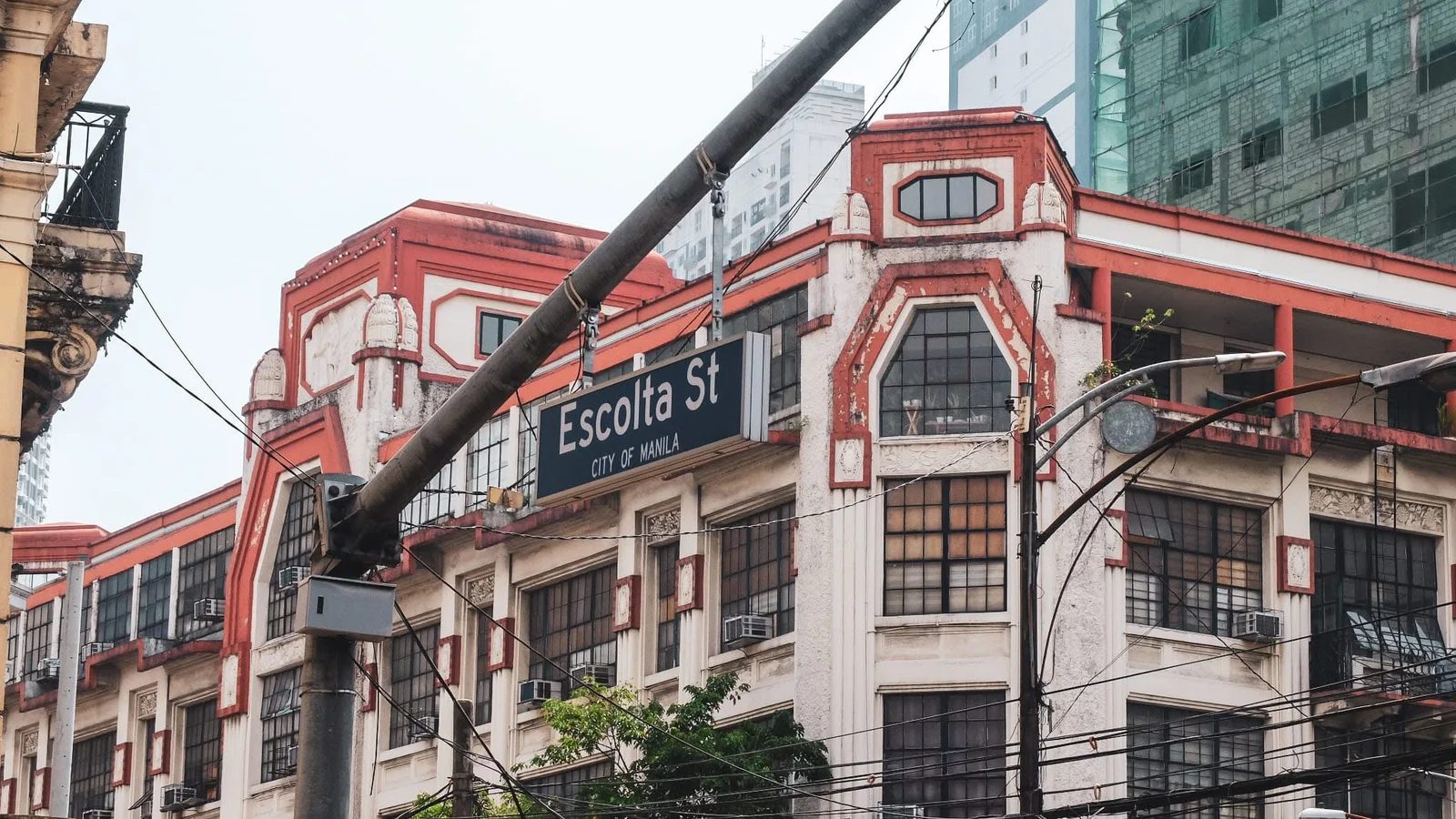
Wow, this question left me really blank. Not that I don’t have places in mind, but I realized that a lot of the places that are relevant for me are already on the map—Escolta, Malate, QC Circle, Coco Banana. It’s bizarre. Maybe because I see this project as a total intersection of my queer identity and my heritage advocacy, I have ascribed queer importance to them as well.
If I were to choose someplace specific, perhaps it would be the First United Building in Escolta. That is where I first fell in love with heritage per se (exposure is another, that is in Quiapo) with its Art Deco intricacies and sheer historical breadth; where the community that takes care of it has high queer and counterculture energy and is unapologetic in its visibility, and where it truly feels like home all the time. I feel that I can be 100% queer and 100% heritage nerd here, knowing that the people around me are similarly so.
My friend Stephen Pamorada usually says this: “Heritage is people.” Let me allow that into myself as an intersection of these fields: Queer is people. I just hope that every queer person has a place where they can express themselves freely, while seeing their history mixed within its own. •
Gabbie de la Cruz started writing about architecture and design in 2019. She previously wrote for BluPrint magazine and was trained under the leadership of then editor-in-chief Judith Torres and previous creative director Patrick Kasingsing. In 2026, she launched Type B or typebabaebading.com, a website that aims to amplify and connect queer voices. Read more of her work here and follow her on Instagram @gabbie.delacruz and @typebabaebading.