Introduction and interview Vanini Belarmino
Images Ajamsali (The Alchemical Interludes)
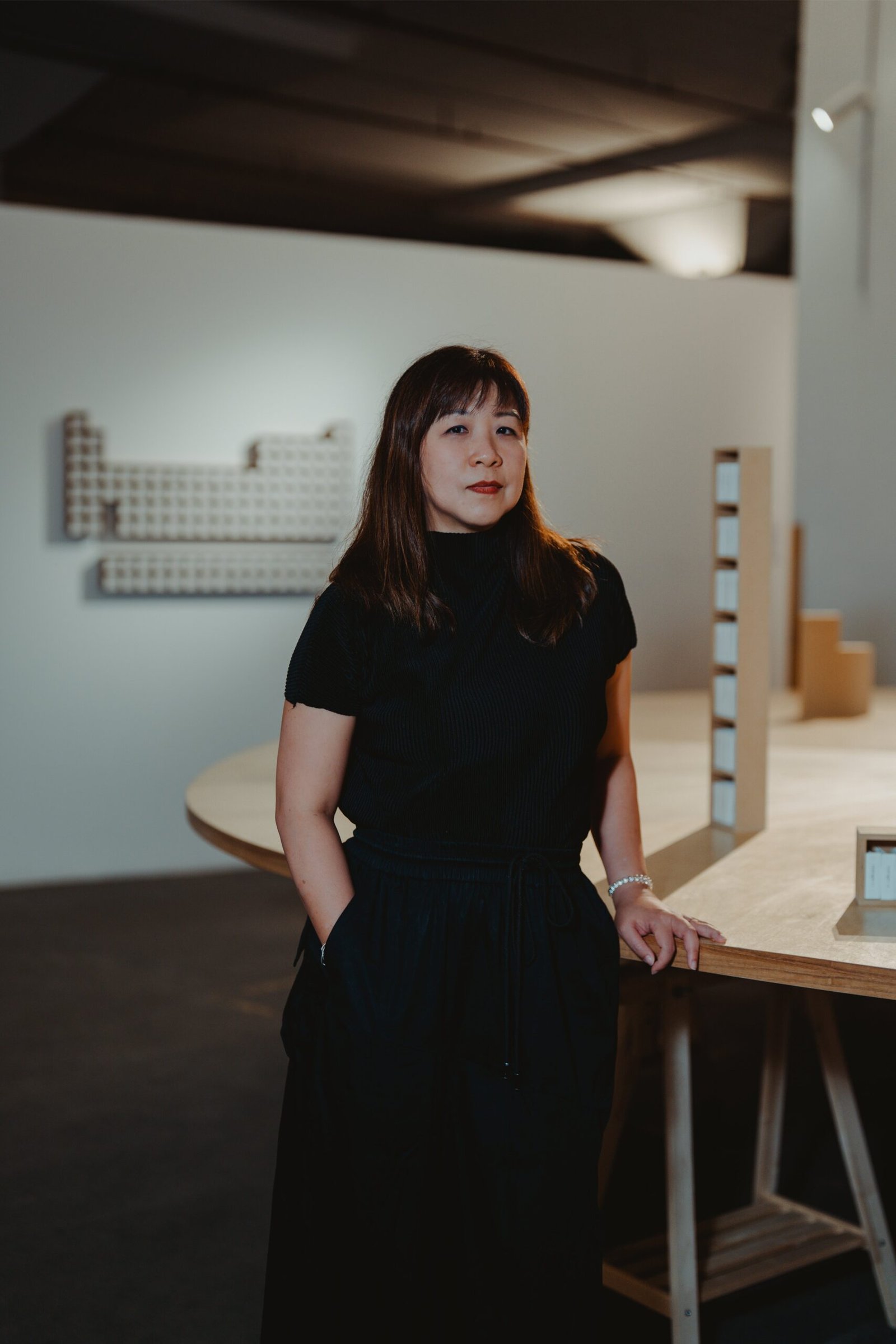
How do we perceive color? Beneath more than 10 million hues and tones lies a material reality shaped by minerals, pigments, and chemical structures. In her practice, Hazel Lim approaches color not merely as a surface or sensation, but as a condition formed by elemental properties, systems of classification, and processes of transformation.
Her new exhibition, The Alchemical Interludes, places color at its center, examining its fundamental nature through a collective, interdisciplinary framework rather than a conventional solo or group exhibition. Expanding this inquiry through ongoing collaborations with artists Andreas Schlegel, Ang Song Ming, Edric Chen, JJ KEAT, Jeremy Sharma, Lynn Loo, and Samantha Lee, the project engages sound, painting, moving image, installation, and performance. Borrowing from the logic of the periodic table, the exhibition proposes that color emerges from chemical relations, temporal intervals, and material transitions rather than from images alone. Through this open-ended and collaborative approach, The Alchemical Interludes moves between system and disruption, order and drift, structure and unfolding, thus allowing the project to continually evolve through different encounters, interpretations, and material forms.
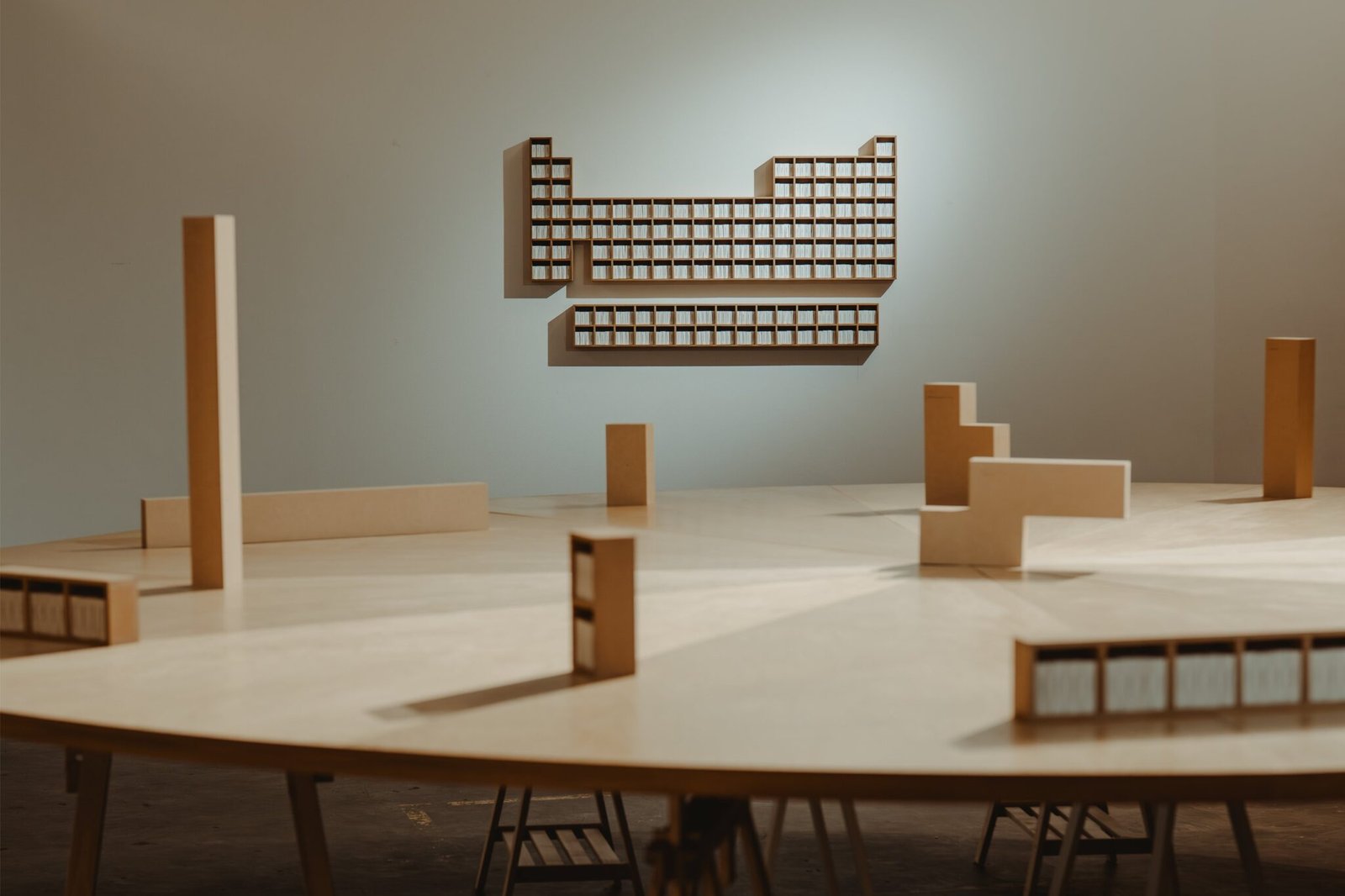
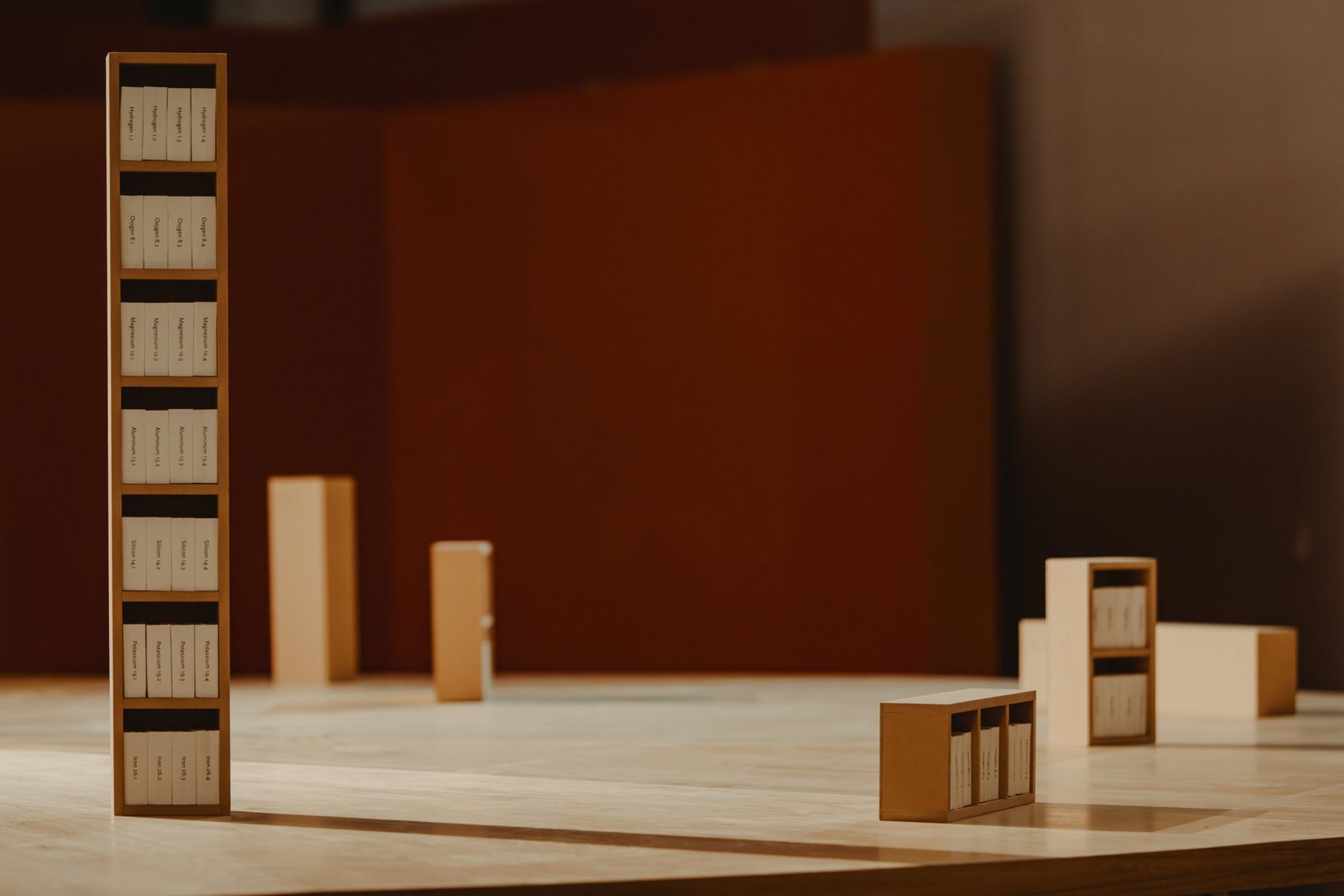
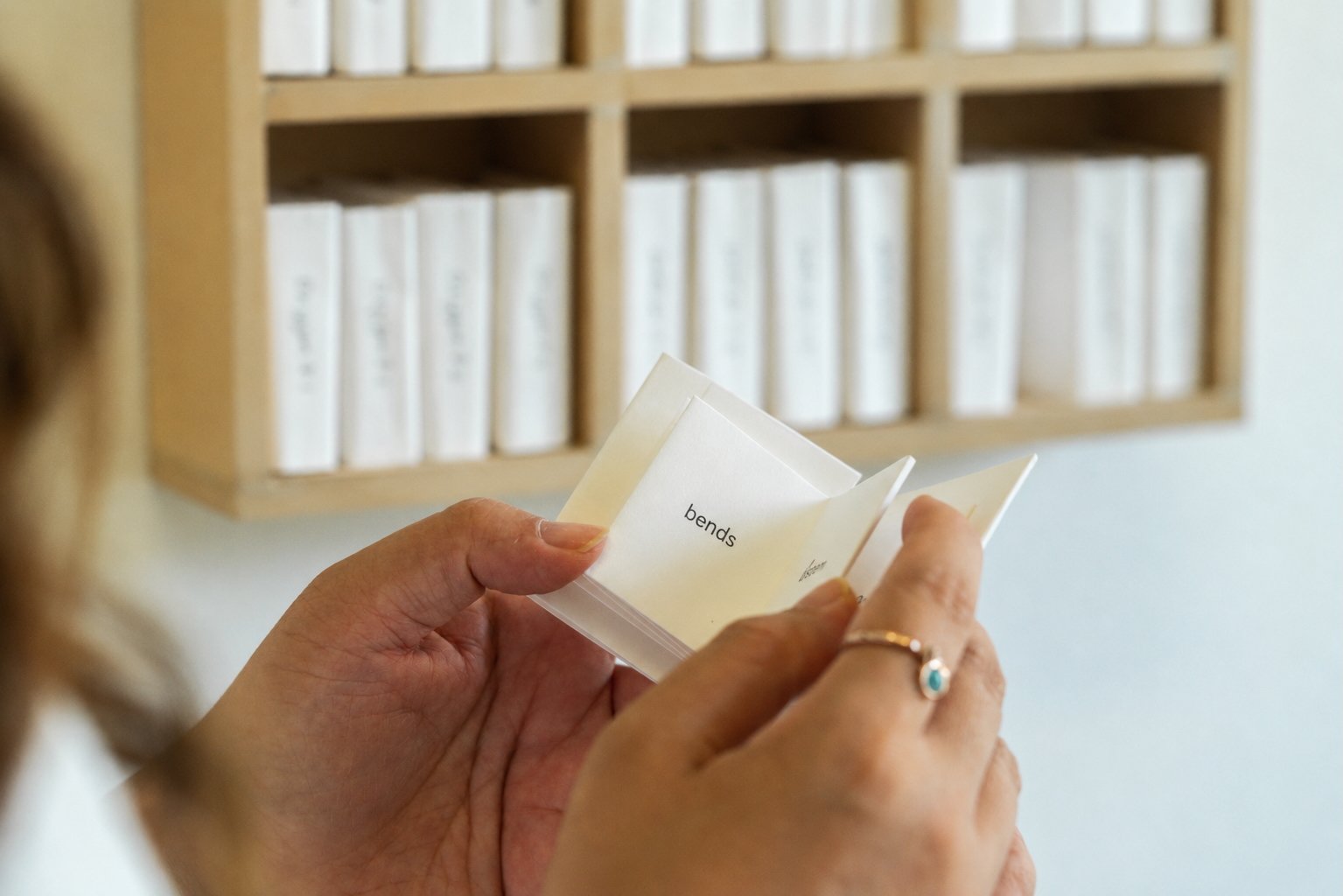
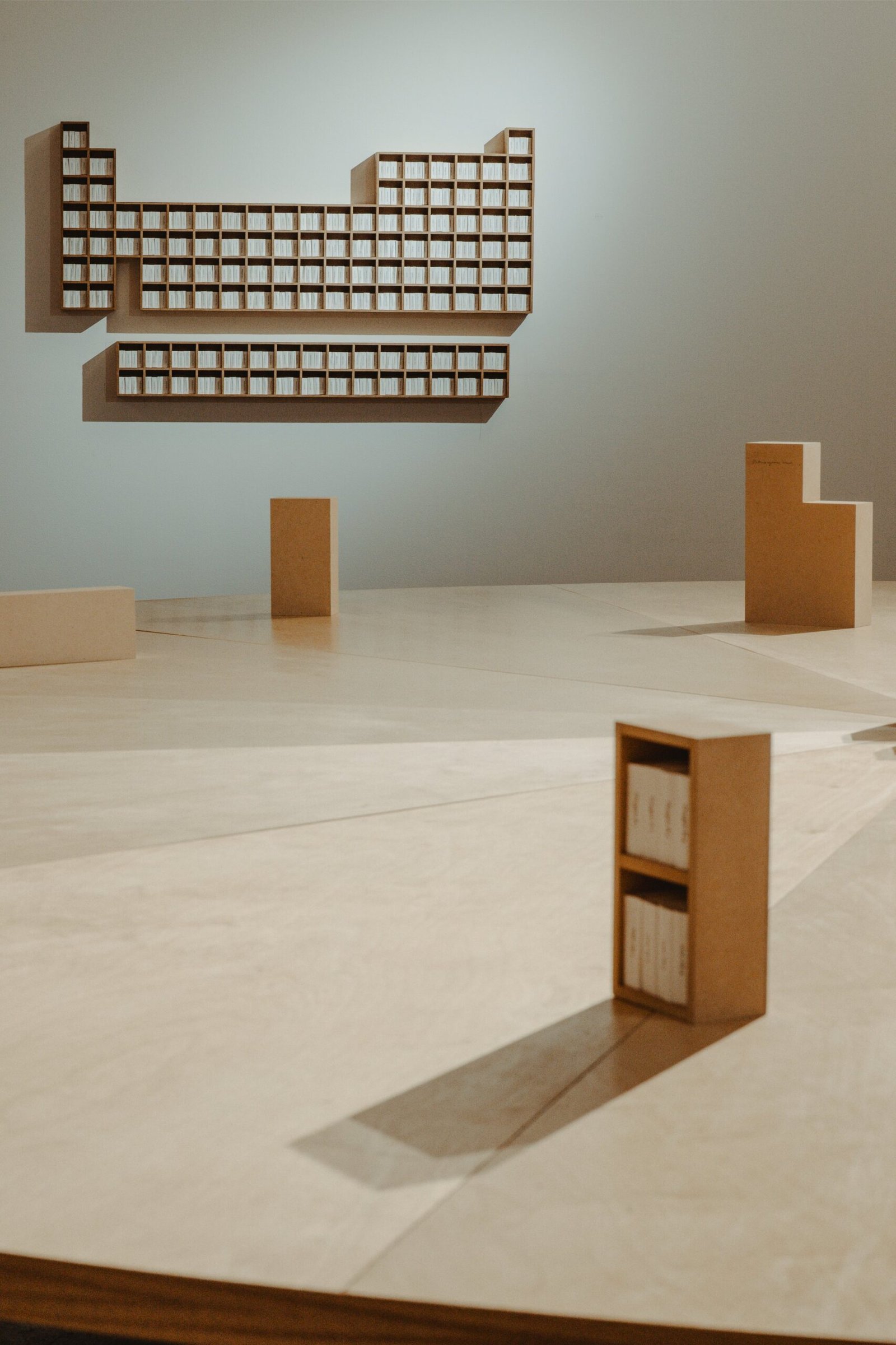
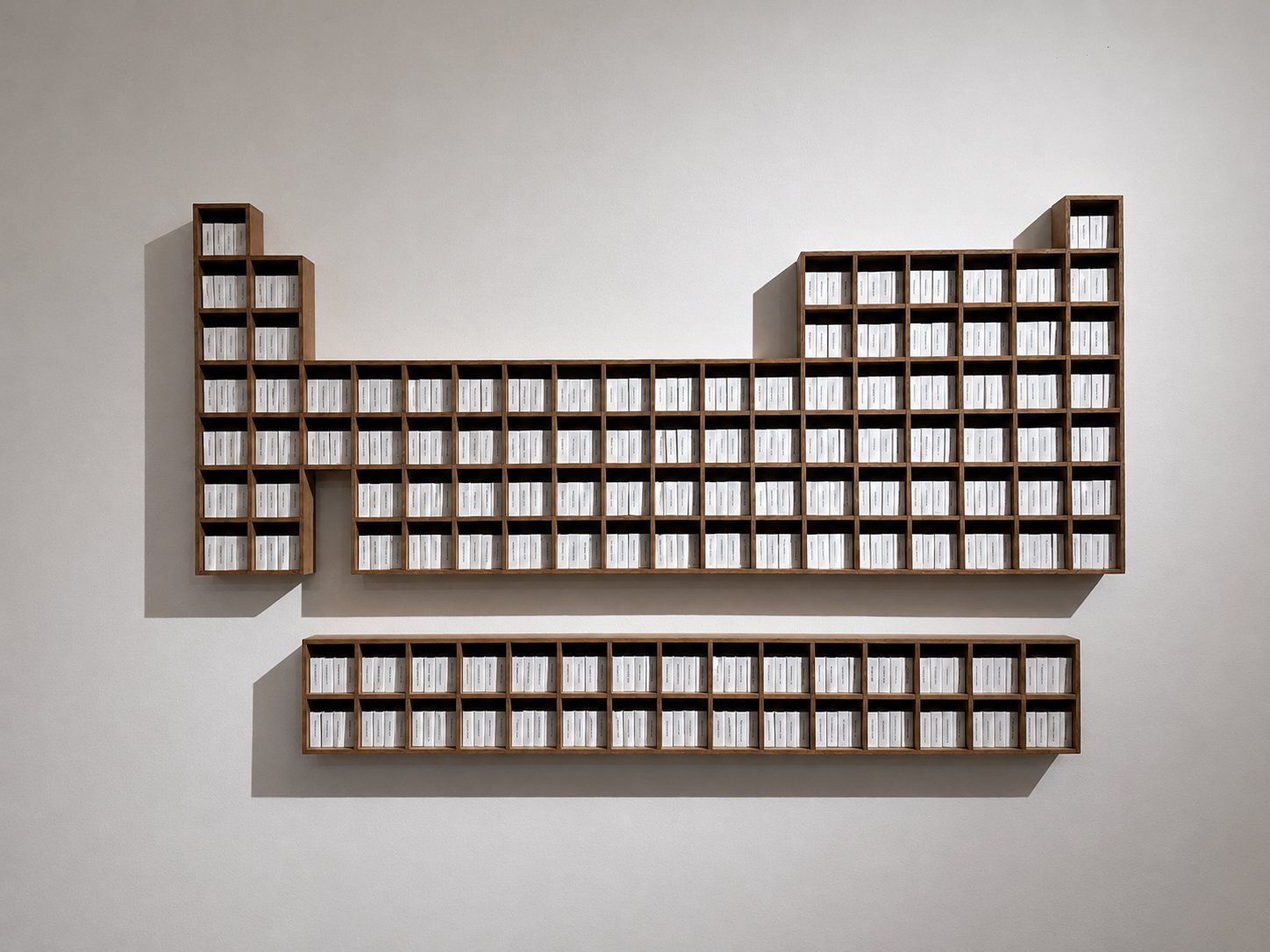
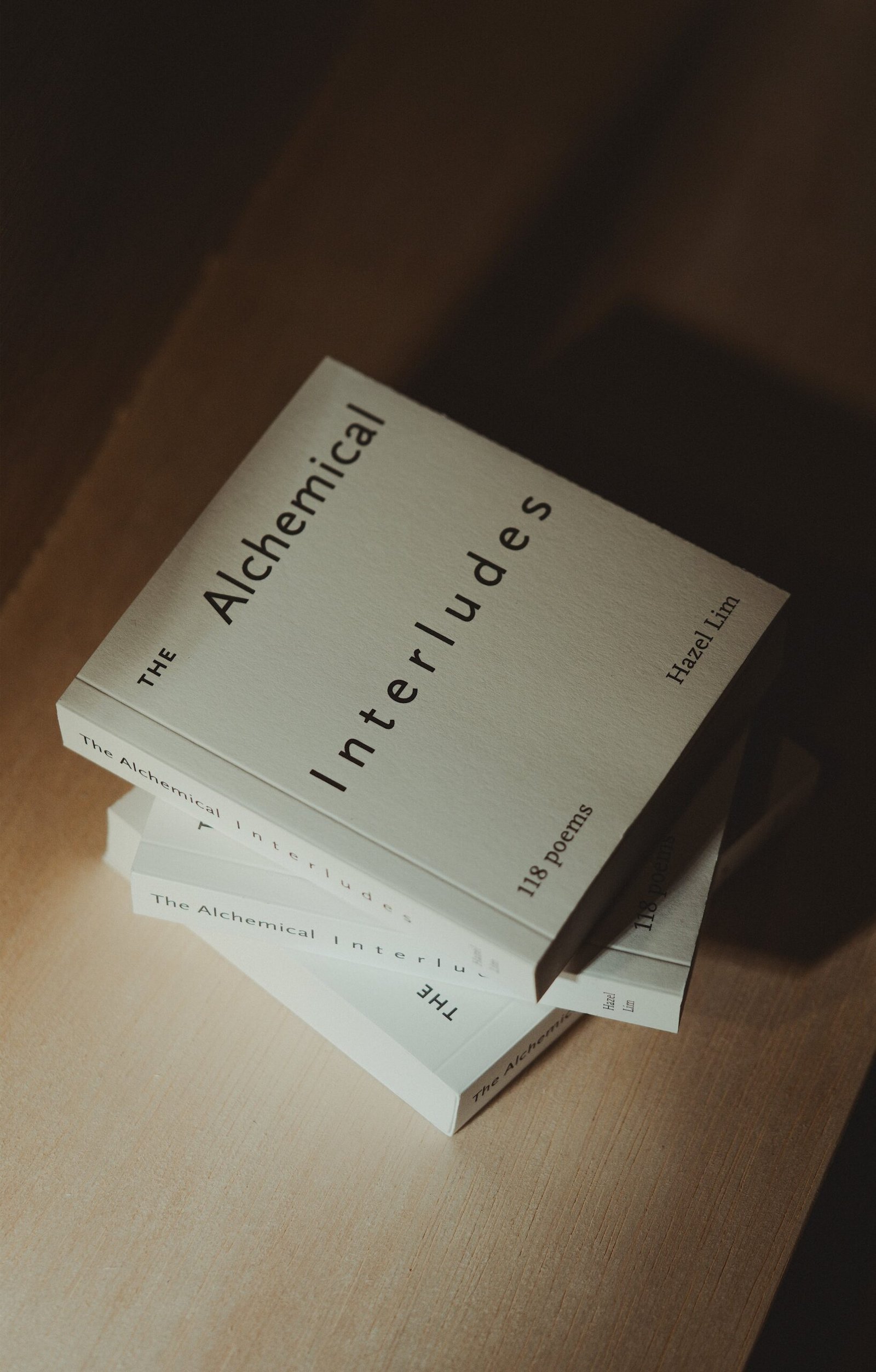
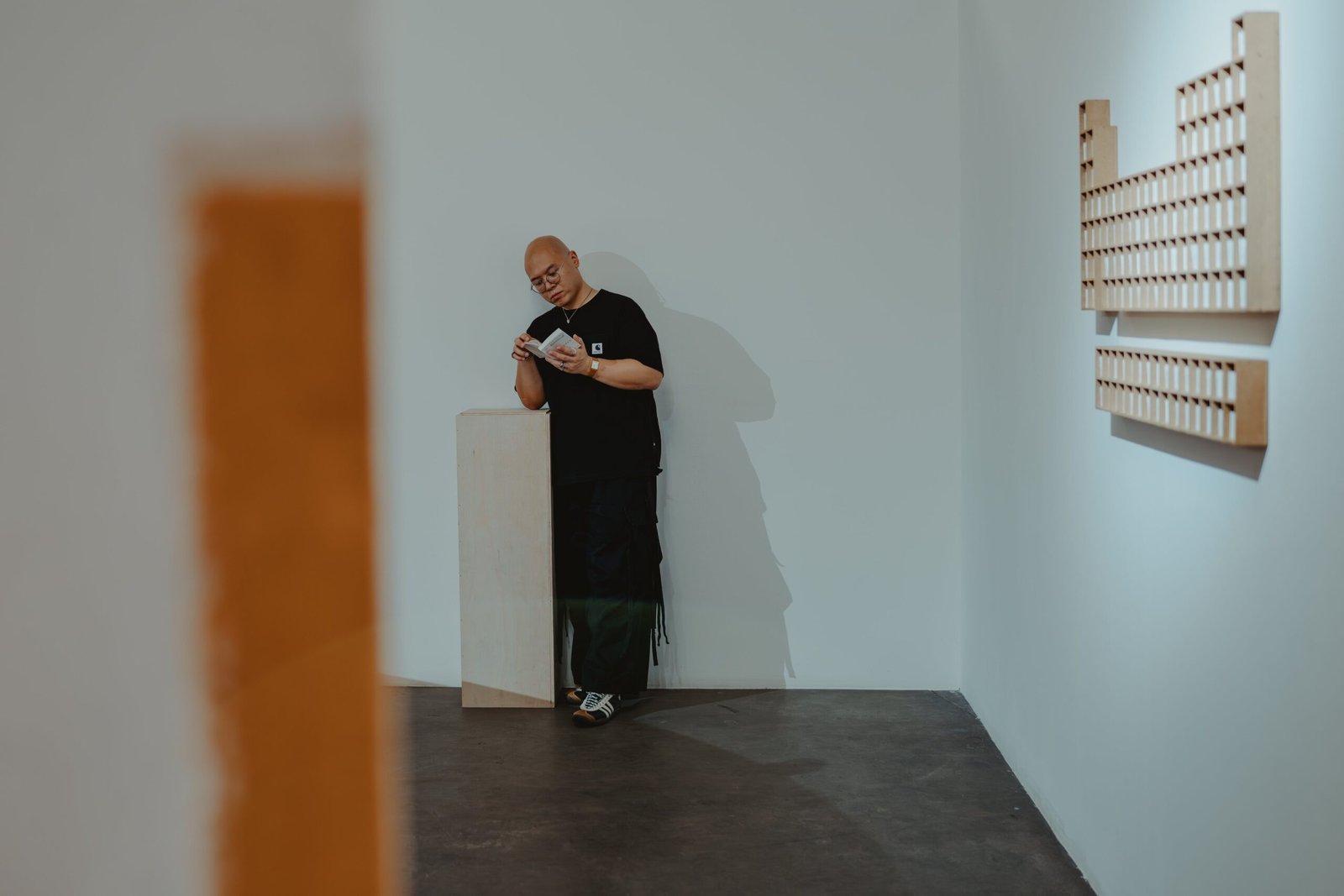
Installed within the industrial setting of Supper House, Singapore, the exhibition positions Lim’s reimagining of the periodic table as its point of departure. The artist’s work introduces 118 handcrafted white folded books, each corresponding to a chemical element. Intimate in scale, these palm-sized structures bring together poetry and material inquiry through four stanzas of eight syllables, each attempting to hold the specificity of matter without fully resolving it.
This inquiry builds on Lim’s dissertation, Colours Indicted, which argues that color is never innocent or neutral, but shaped by systems of perception, naming, and judgment. Color becomes not simply what is seen, but what is constructed through histories of looking, language, and meaning-making. In this formulation, color exists simultaneously as material and argument—continually framed, interpreted, and conditioned by the structures that produce it.
In this conversation, Hazel Lim reflects on how The Alchemical Interludes reveals what often remains unseen beneath the visible world.
The Alchemical Interludes begins with a decomposition of painting color, traced back to minerals, elements, and atomic structures. What prompted you to approach color as matter rather than as an image?
Hazel Lim, artist of The Alchemical Interludes: It is interesting that you describe it as a decomposition—I have not used that term before. I tend to think of the process in terms of fragmentation or disassociation. As someone trained in painting, I inherited a way of thinking about how colors, forms, and shapes are composed toward coherence or resolution. Very often, that process is tied to producing an image that attracts attention or sustains visual desire. This work is, in many ways, an antithesis to that. Instead of composing, I began by breaking color down, asking what it is made of, tracing it back to its material conditions: minerals, elements, atomic structures. By moving into these minute, atomized qualities, I am trying to undo the dense web of associations that color carries—meanings that are often difficult to disentangle. It is only through this kind of decomposition, as you mentioned, or even destruction, that other assemblies of meaning might become possible.
A key influence on this way of thinking came from reading Jeanette Winterson’s Art Objects: Essays on Ecstasy and Effrontery. In that text, Winterson speaks about the term ‘art object’ as having dual conditions: on one hand, we tend to treat it as something that exists for our interpretation, as if it has no agency; on the other, it can be understood as something that resists or objects to being read in a fixed way.
If we take that as a point of departure—if the art object can, in a sense, object—then the question becomes: what is it resisting? For me, this shifts the emphasis away from image and representation. If representation no longer takes precedence, what remains are the material conditions of the work itself—in this case, the pigments, forms, and substances that constitute it. By foregrounding these elements, I am attempting to unsettle the inherited meanings attached to color and open up a space where more fluid, less fixed associations might emerge.
In your dissertation, Colours Indicted, you position color as framed and conditioned by systems of judgment. How does this exhibition continue that inquiry, and where does it begin to shift your understanding of color itself? While this research began in 2007/2008, how do you plan to reflect on the inquiry from your current position? In short, what do you think would be different or new? And whether it is necessary to move forward from the initial research?
Hazel Lim: This inquiry was shaped in part by my earlier training in sociology. At its core, it was a response to what I see as the danger of singular narratives—of meanings becoming fixed, dominant, and unquestioned. The challenge, then, is how one might cultivate a more open and plural field of interpretation. At the same time, I recognize that complete openness can feel untenable; it risks becoming too diffuse to hold meaning. So we construct frameworks—systems that help us make sense of the world, and over time, these structures become naturalized, even eternalized.
In Colours Indicted, the color chart, or periodic table, functioned as a device through which to speak about this kind of superstructure: a system where meanings are accumulated, stabilized, and collectively agreed upon. This approach extends into my broader practice, where I often work through existing systems of knowledge, whether mathematical structures, diagrammatic orders, or craft methodologies. Across these bodies of work, I am interested in reinterpreting such systems and searching for new languages through which they might be reframed. In that sense, my practice feels less like a linear progression and more like a constellation of related attempts.
This exhibition continues that line of inquiry, but shifts the emphasis more materially. Rather than focusing primarily on how color is framed through systems of meaning, I am turning toward what color is made of, its physical and elemental conditions. It is a way of extending the earlier research by moving both deeper and sideways: not abandoning the question of systems, but approaching it through matter rather than representation.
In the initial stages of the research, I had imagined it unfolding over a much longer duration than was possible within a one-year postgraduate program. While I was able to complete the periodic table and its accompanying poems, I could not fully realize its trajectory. That trajectory included expanding into the material components of color and eventually inviting other artists to respond to the poems and interpret and reimagine the “colors” I had recomposed through language and association.
From my current position, what feels different is perhaps a greater willingness to let the work remain open-ended. Earlier on, there was a desire to complete the system, to see it through to its final stages. Now, I am less concerned with resolution and more interested in how the inquiry can continue to unfold across time, through different forms and collaborations. So rather than moving on from the initial research, I see this exhibition as a return to it, one that allows for new material, conceptual, and relational possibilities to emerge.
While color is conceptually the protagonist of this project, its visual presence in the exhibition may not always be explicit or spectacular. How are you thinking about the distance between color as an idea and color as something encountered in the space?
Hazel Lim: I am very grateful to Supper House for inviting The Alchemical Interludes to unfold within its space as the project’s first iteration. The large, cavernous, industrial interior became something I wanted to work with rather than against, allowing the research to respond to and inhabit its existing spatial and material conditions.
When you enter, you encounter The Alchemical Interludes: the books and the expanded periodic table that anchor the research, along with the 118 individual poems. On the large round table, I have arranged a series of color compositions that map across the space. They function almost like a score or point of orientation.
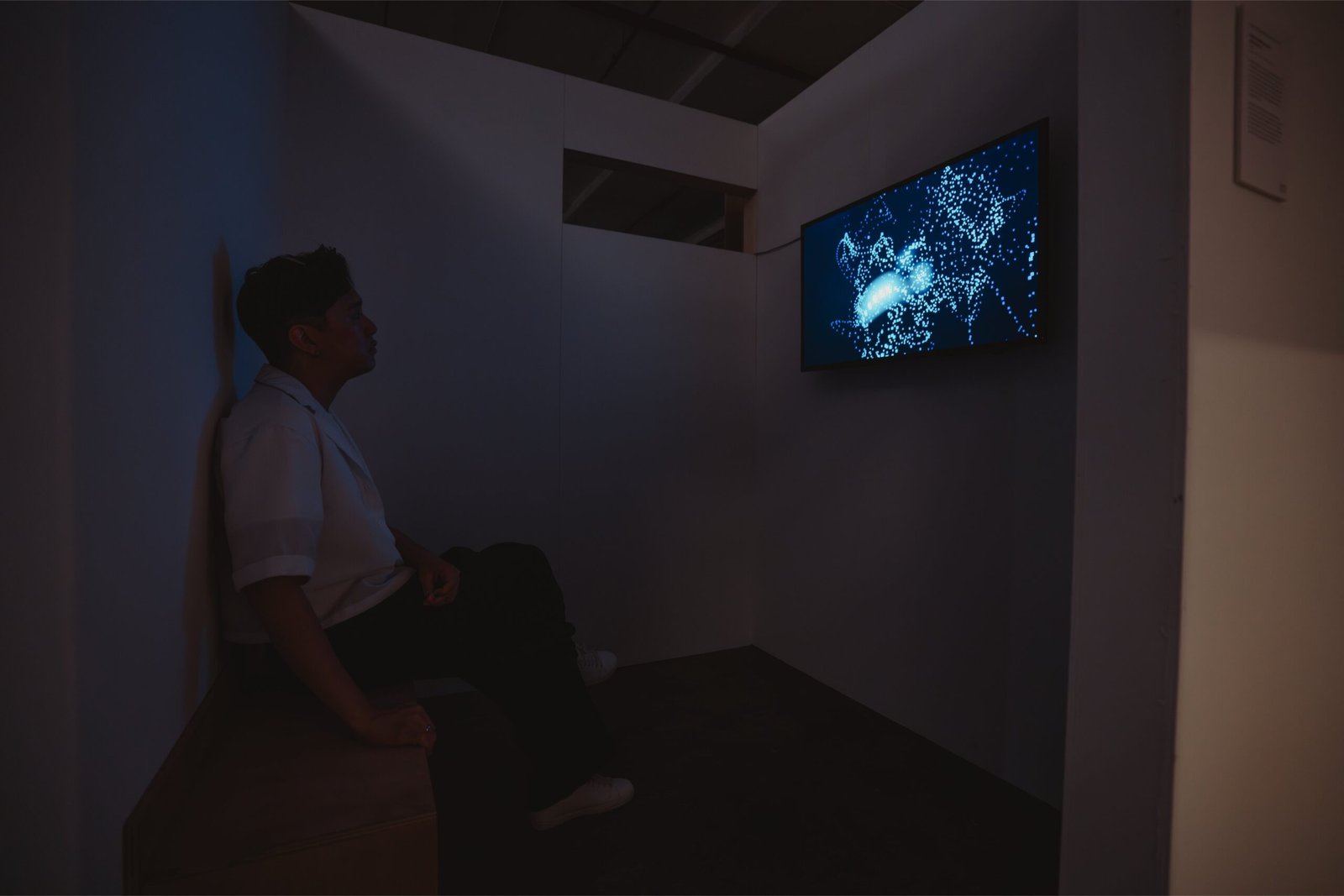
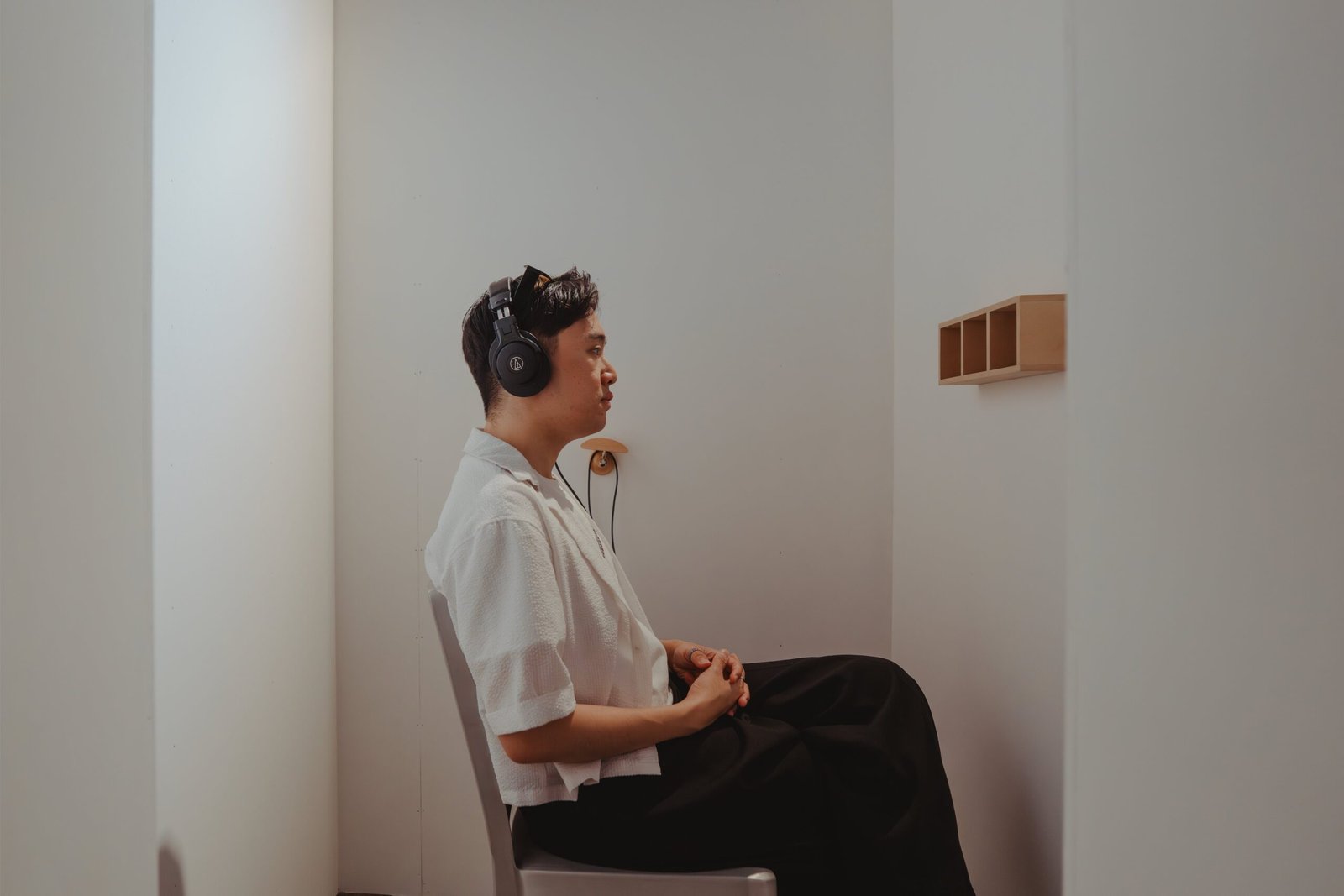
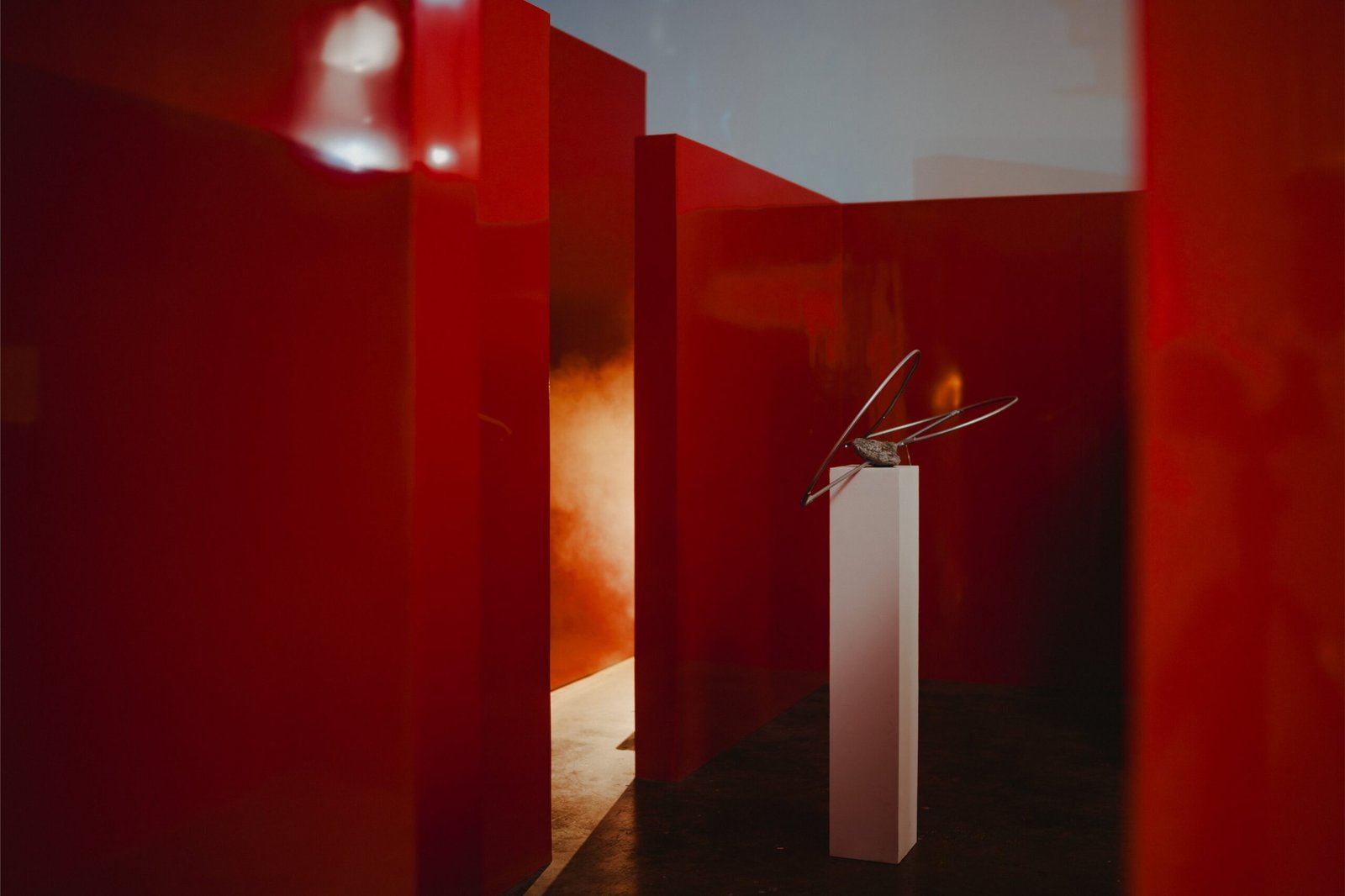
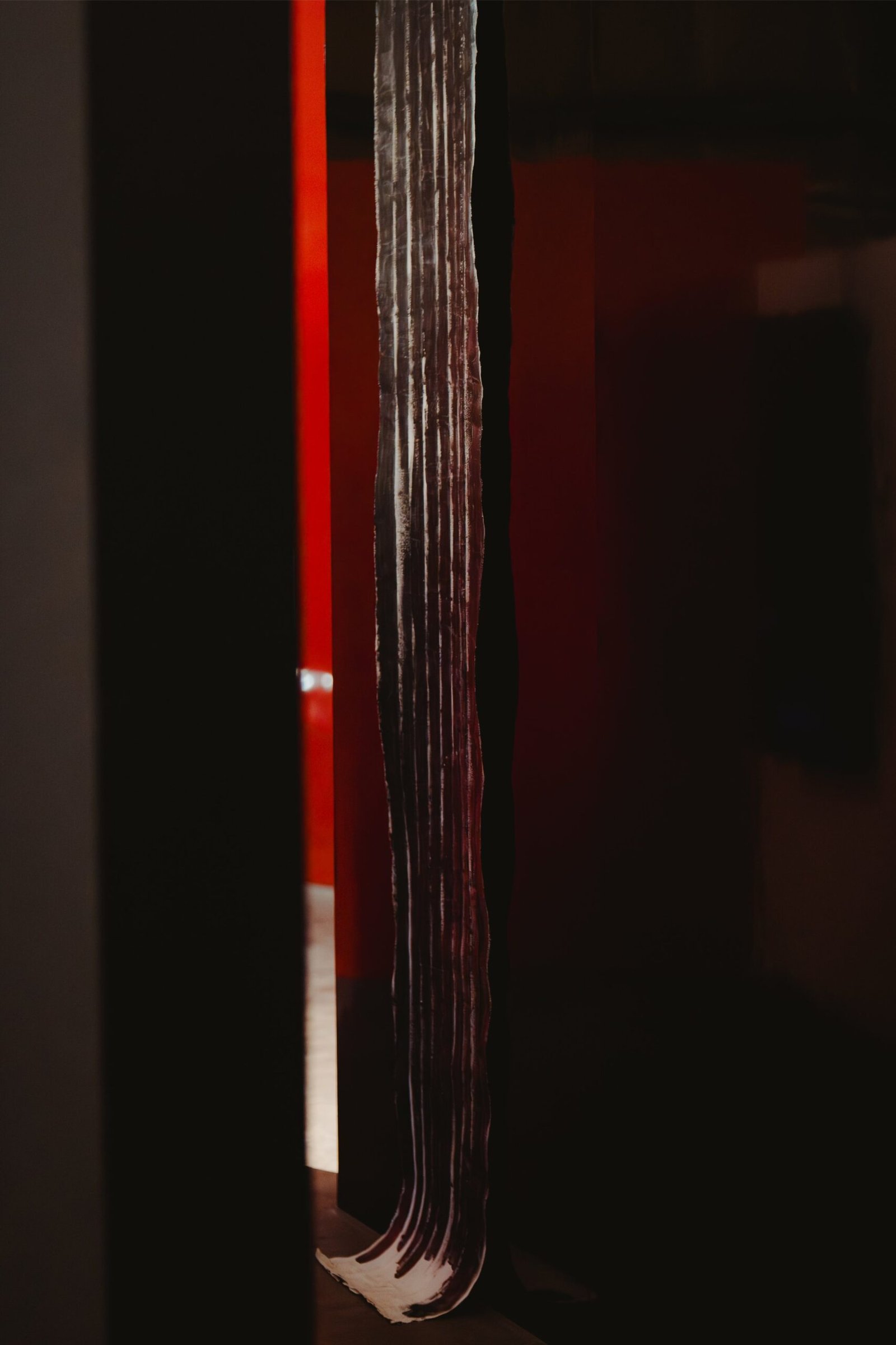
As one moves through Supper House, these compositions reappear in different forms. Some are situated within enclosed, cocooned spaces or tucked into smaller nooks; others emerge more diffusely in open areas or within the maze-like tunnels formed by the black-and-red enameled walls. Rather than presenting color as something immediately visible or spectacular, I am interested in how it can be encountered gradually—sometimes optically—but at other times through sound, atmosphere, or bodily sensation.
So the distance between color as an idea and color as an encounter unfolds through movement. The works at the entrance offer a kind of framework, but they only fully activate as one navigates the space. I hope that viewers become aware of their senses and bodies in relation to the works: that color is not only seen but also registered across multiple perceptual nodes and assembled through experience, rather than given all at once.
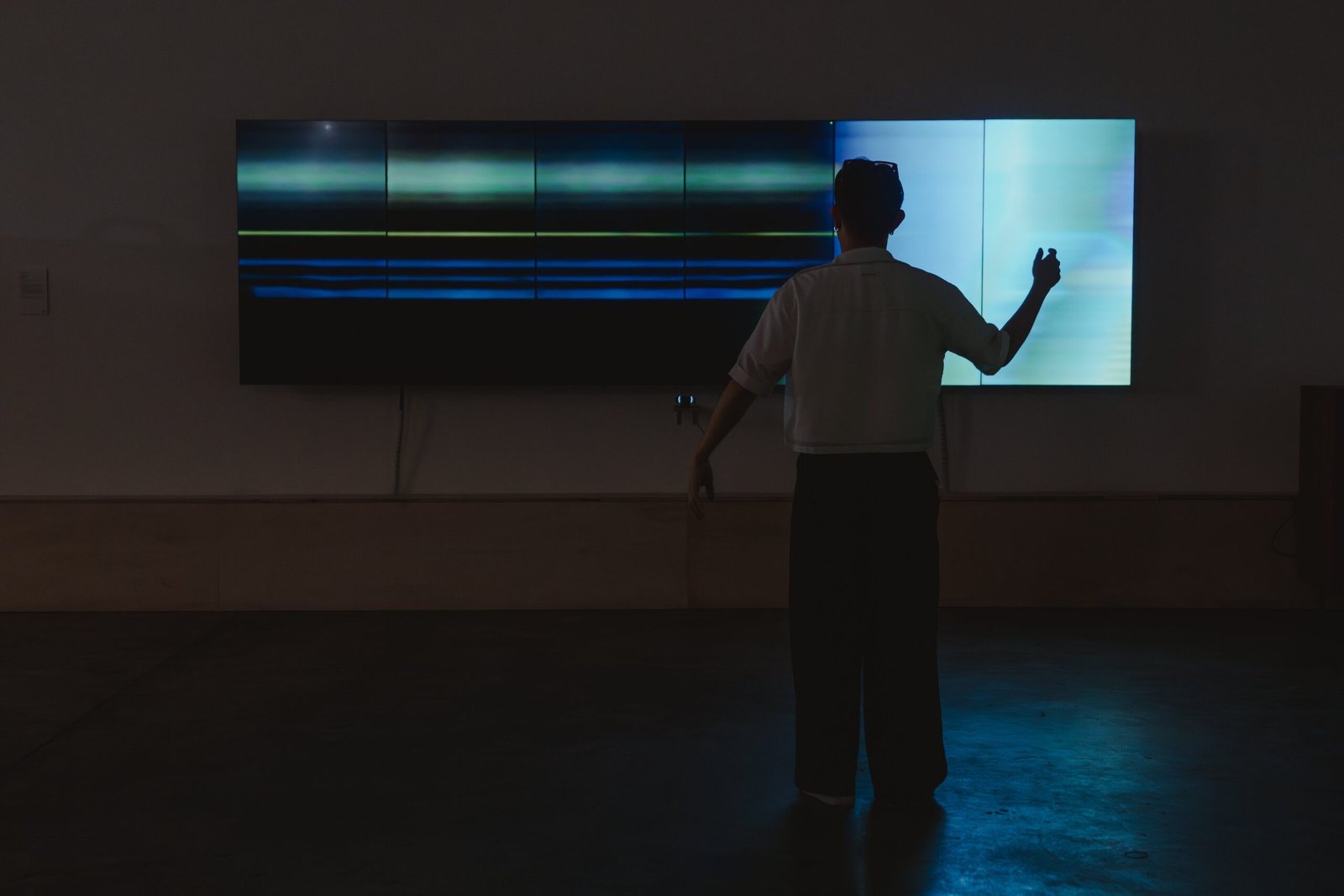
“Rather than presenting color as something immediately visible or spectacular, I am interested in how it can be encountered gradually—sometimes optically—but at other times through sound, atmosphere, or bodily sensation.”
HAZEL LIM
Your engagement with Primo Levi’s The Periodic Table reveals a system in which matter becomes narrative, and classification becomes story. How did this influence your use of the periodic table as both a structure and a poetic device?
Hazel Lim: In the early stages of this project, I began with a much simpler model, something like a red + blue = purple equation. I assigned red and blue their own sets of characteristics, imagining that purple would emerge as a kind of composite narrative shaped by what each color embodied. It became a way of thinking about relationality, almost like a chemistry of meanings.
I soon realized that this approach was not quite doing what I wanted. It remained too symbolic, too dependent on pre-existing associations. What I was really interested in was the underlying structure that produces those associations in the first place. That led me to move away from color mixing as a metaphor, and instead to look more closely at the chemical composition of pigments, tracing them back to their elemental basis. From there, the periodic table became a compelling structure through which to unpack, decompose, and reconfigure color.
During this time, Lee Weng Choy, who was supervising my dissertation, introduced me to Primo Levi’s The Periodic Table. Levi’s book was an important reference point. As a chemist and Holocaust survivor, he uses the periodic table as a narrative framework, structuring a series of short stories in which elements become carriers of lived experience, of memory, trauma, and survival. Matter, in his writing, becomes inseparable from narrative.
That approach resonated strongly with what I was trying to do. I began researching each of the 118 elements in depth—looking into their properties, histories, etymologies, and uses. These became the building blocks for the poems. Each poem draws on those layers of information, translating scientific description into a more open, associative form. In this way, the periodic table operates both as a structuring device and as a poetic system, one that allows material matter to generate narrative, while also resisting fixed or singular meanings.
You have translated the 118 elements into intricately and delicately folded books that serve as “paintings” that collapse and unfold into objects. What does this transformation allow you to access that painting, as a more fixed or monumental form cannot? In this exhibition, can you imagine expanding your work into a different format?
Hazel Lim: It might be more accurate to say that the 118 elements, or poems, function as composites of potential colors. Depending on how they are rearranged or assembled, they can form the basis for paintings, but they are not quite paintings in themselves. The “image,” in that sense, is not fixed; it remains something that can be reconstituted, perhaps through the responses of other artists in the exhibition, some of whom are drawn toward that more recognizable visual form.
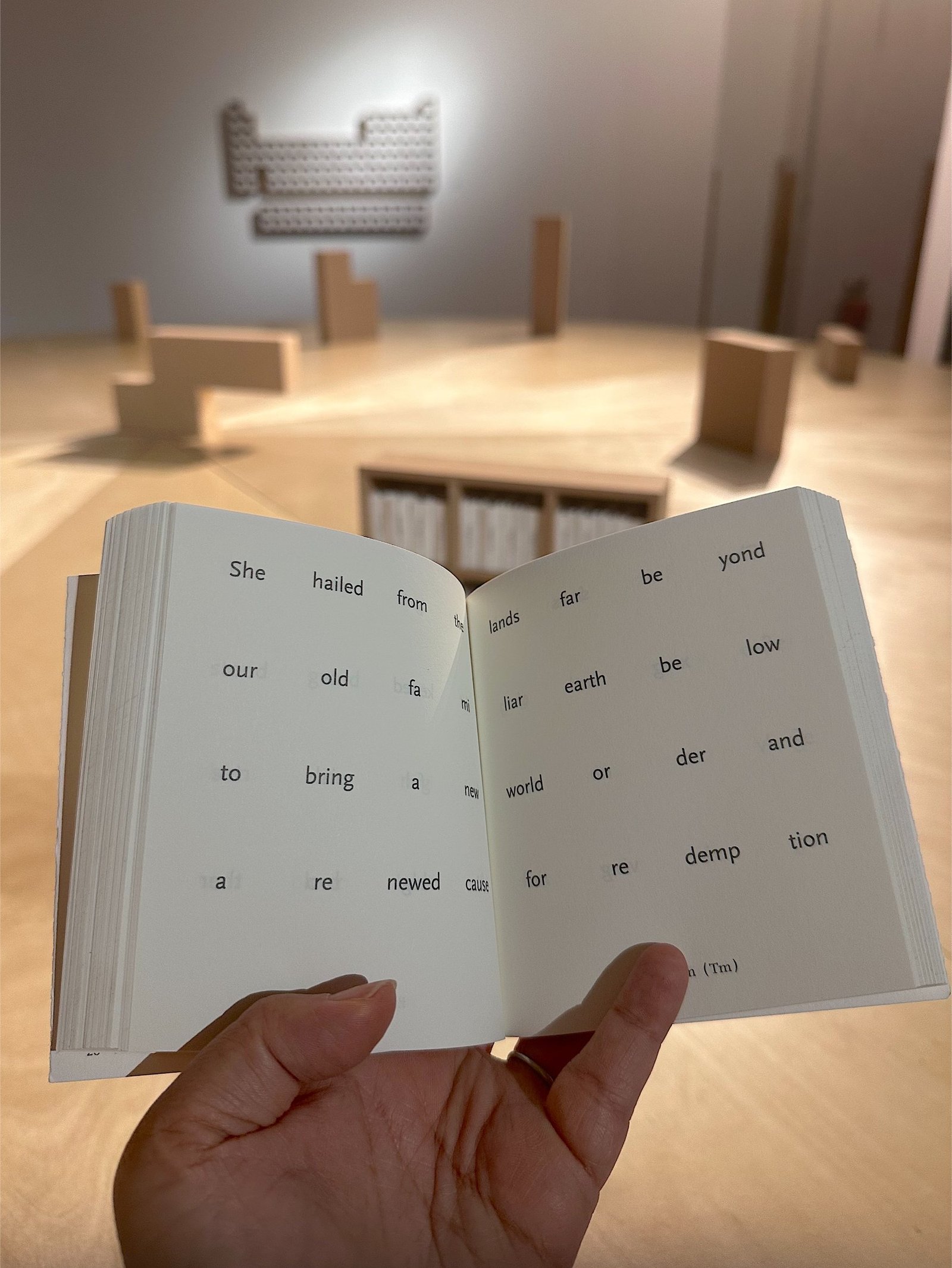
For my part, I am interested in resisting that direct association. I want to keep the work open, to allow it to remain expansive rather than resolving too quickly into an image. The books are therefore not intended to be handled or read in a conventional way. They operate more as objects that hold or index the texts, rather than as vessels for immediate access. The poems themselves will be available in a separate published volume, which can be browsed, offering a different mode of engagement that is more intimate and sustained, yet distinct from the spatial experience of the installation.
In working closely with the designers on the publication, we wanted to retain something of the original logic of the origami books. The poems are typeset according to their syllabic fragmentation, allowing language to unfold rhythmically across the page rather than as continuous blocks of text. The layout was conceived almost like a musical score, where spacing, pauses, gaps, and repetitions become part of the reading experience itself. Gideon and Jamie, the designers of the publication, were also drawn to the typefaces Scala and Scala Sans, originally designed for a concert hall in Utrecht in the 1990s. Their association with music felt particularly resonant for this project, especially as the poems operate through rhythm, intervals, and breath as much as through semantic meaning. At the same time, the typefaces carry both visual and literary qualities: their forms possess a certain physical presence while also receding quietly into the texture of reading. That balance felt important to the project as a whole.
The scale of the origami books is intentional. Each one is quite small, around 4.5 cm in height, reflecting the atomized quality of color at its most elemental. When they are arranged to suggest color compositions, they expand slightly to about 6.5 cm. This shift in scale gestures toward how color might move from a minute, material condition into something more perceptible.
From there, the translations by other artists open the work into yet another spatial register. Their responses can take on a more expansive or even monumental presence, extending the project beyond the intimacy of the books. So rather than moving from one fixed format to another, I think of the work as unfolding across different scales and forms, each iteration offering a new way of encountering what color might be.
Each element is expressed in a precise poetic structure: four stanzas of eight syllables. How did this composition shape your approach to describing matter through language, rhythm, and reduction? On a related note, how did you learn poetry as you came to understand the minerals?
Hazel Lim: I began with the desire to contain the text within a frame, much like how a painting exists within the limits of a canvas. It is a way of focusing attention: delineating what can be seen or, in this case, read. Around that time, I came across an origami method for folding a single sheet of paper into a small, eight-page book, almost like a letter or a concealed message. I was drawn to its collapsible quality: a flat, legible surface that gains volume through folding, allowing meaning to be partially hidden within its creases.
This structure became the basis for how I composed the poems. The eight-page format offered a precise constraint, a container that is both simple and resistant to direct reading. Within it, I began to break language down further by distributing the text across pages at the syllable level. In doing so, words become rhythm, or beats, rather than immediately legible units of meaning. The act of reading is slowed, fragmented, and made more provisional.
The decision to construct each element as a set of four books came later, and was also spatial and architectural in its intent. When placed together, the four units sit neatly within a square compartment of the periodic table. This echoes earlier exercises I encountered as a painting student, particularly color chart studies, where each mixture is usually contained within a square. So the poetic structure, the book form, and the spatial arrangement all converge as interrelated systems of framing, reduction, and recomposition.
In terms of learning poetry, it was not something I approached in a formal or literary sense. Instead, it emerged alongside my research into the minerals and elements themselves. As I spent time with their properties, histories, and uses, I began to translate that material into language through constraint, allowing rhythm, structure, and reduction to guide the writing. In that sense, poetry became less about expression and more about a method: a way of organizing and reconstituting matter through language.
The exhibition is structured around the periodic table, an apparently complete system of 118 elements, yet the experience often seems to reside in transitions and intervals. How do you imagine viewers moving through this balance between system and interruption?
Hazel Lim: I came to understand the poems as the inner workings of the exhibition, like a set of cogs that quietly turn beneath what is visible. The periodic table, as a structure, suggests completeness and order, but the way the work is encountered does not necessarily follow that logic. Instead, it unfolds through moments of interruption, transition, and partial access.
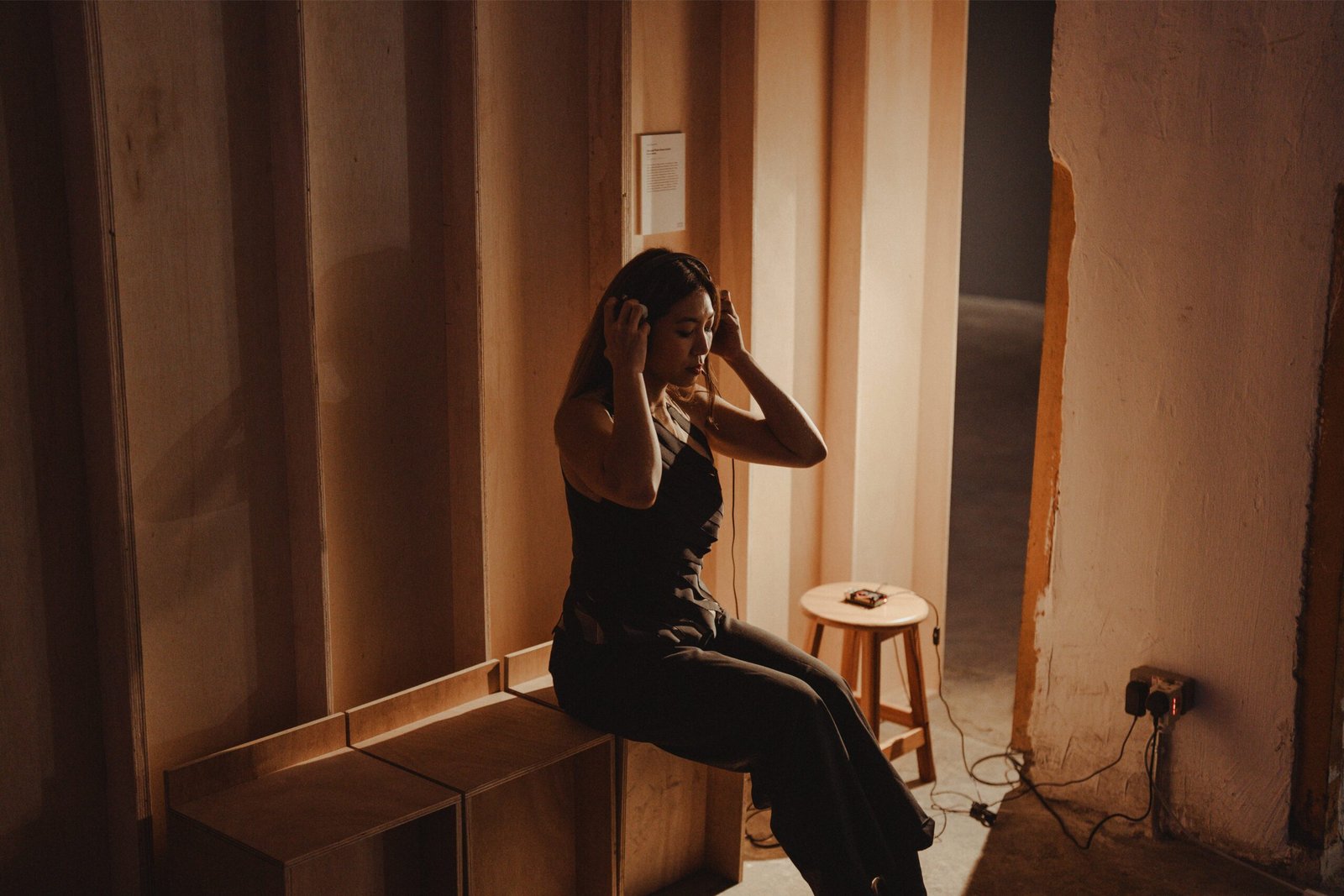
Because of this, I decided not to have viewers handle or browse the origami books directly. Instead, the “readings” are made available through two parallel formats: a published volume containing all 118 poems, which can be browsed and read, and a video in which I read the texts from selected color composites. These become alternative entry points into the system, which may be less immediate but perhaps more reflective. At the same time, it is equally important to me that the works can be experienced without the text. Each “color,” or configuration, can stand on its own as an encounter. But there is also the knowledge, whether explicitly accessed or not, that each of these forms is underpinned by a set of instructions, a textual structure that informs its making.
So in that sense, the balance between system and interruption is not something I resolve, but something I want viewers to move within. The periodic table offers a framework, but the exhibition’s experience is deliberately less fixed, shifting among what is seen, what is sensed, and what remains just out of reach.
You invited seven artists with distinct practices to respond to pigments and elements derived from your system. When you extended these invitations, what kinds of openness or divergence were you hoping to foster? What do you hope to make visible in this unseen protagonist?
Hazel Lim: I am still very much in an experimental phase with this aspect of the project, particularly when it comes to inviting other artists to respond to the texts. The selection of artists stems from admiration for their practices and ways of thinking. In a way, just as chemistry underpins the structure of this research, I feel that a kind of “chemistry” also guides these collaborations – an intuitive, less visible force that shapes how people come into one another’s orbit.
What I offered, through this project, is a framework: a set of poems and a system that situate the research. But within that, I want to allow for as much openness as possible, for divergence, misreading, and transformation. The responses are not meant to illustrate or translate the poems directly, but to take them somewhere else entirely.
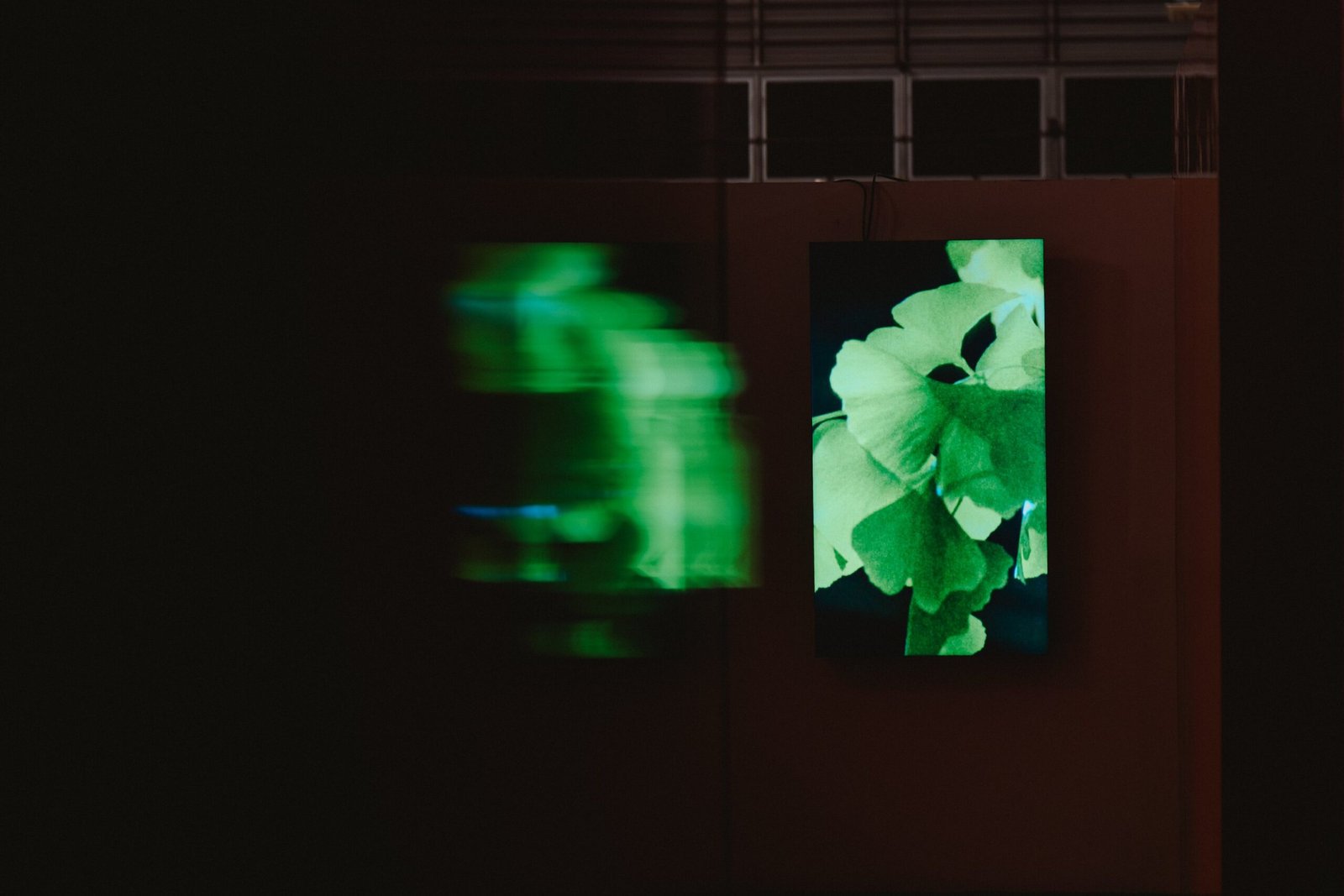
I have been particularly interested in working with artists whose practices move across different modalities—those who translate visual material into sound, movement, video, or code. There is something very compelling to me about how the poems can be transmitted into other forms, expanding the field beyond the visual and into other sensory or temporal experiences.
In terms of what this might make visible, it is less about revealing the “unseen protagonist” in a singular way and more about multiplying its presence. Each response offers a different articulation—partial, situated, and contingent. Together, they suggest that what underlies the work is not fixed but continues to shift as it is encountered, interpreted, and reimagined.
How do you navigate the tension between openness and intuition within these collaborations? While you describe the project as allowing for divergence, misreading, and transformation, I imagine you might still carry certain expectations or visualizations of how artists would respond to the periodic table and its elemental structures. Could you share a bit on the different responses of the invited artists?
Hazel Lim: There is always a tension between openness and intuition in any collaboration. Even when one wants to allow for divergence or unpredictability, there are inevitably certain affinities or instincts that shape the selection of particular artists for the project. So while I tried not to impose a specific outcome, I was also guided by an intuition about how each artist thinks, translates, or inhabits material.
What interested me was not whether the artists would remain faithful to the “system” I constructed, but how far that system could stretch while still retaining some connective thread. Some artists were immediately drawn to the framework of the project, perhaps because they were trained within particular visual or compositional systems, for instance, Jeremy Sharma through his practice as a painter/musician, or Lynn Loo through film. Their responses seemed to intuitively grasp the periodic table not only as a scientific structure, but also as a compositional and visual language. Others entered the work from very different directions, and that variation was important to me. In that sense, the collaborations became a way of testing the elasticity of the framework itself.
The responses by Samantha Lee and Edric Chen are good examples of this. Samantha’s engagement through semiconductors and technological materiality, and Edric’s return toward pigments themselves, both depart quite significantly from the mineral basis through which I initially approached color. But I didn’t experience these departures as contradictions. Rather, they revealed how the project could continue unfolding through adjacent systems and material histories that I had not fully anticipated.
In fact, I found those shifts exciting because they prevented the framework from becoming too closed or self-confirming, or limited only to the “color palettes” I had designed from within the confines of painting. If the collaborators simply reproduced my own logic, the exchanges would risk becoming illustrative rather than generative. Instead, their responses exposed different dimensions of color—as technology, substance, code, and transmission—and, in doing so, expanded the project’s field beyond my own authorship.
I think what I have come to value in these exchanges is precisely this movement between structure and intuition. The periodic table provides a point of departure, but not a fixed destination. Each collaborator enters the system differently, carrying their own methods, sensitivities, and preoccupations. What emerges is less a unified interpretation than a constellation of responses that continue to test the framework’s limits and possibilities.
At this stage, I see the project as still unfolding. The collaborations are not conclusions to the research, but iterations of it—ways of testing how the work might continue to transform through different encounters. Rather than arriving at a definitive understanding of color, I think the project keeps returning to the question of how color might be sensed, translated, and continually reconstituted through different bodies, materials, and forms.
Although this began as a solo exhibition, it opens into a shared field of making. How do you see your role shifting among author, initiator, and participant within a structure that others are also transforming?
Hazel Lim: Although the project began as something I developed independently, I do not see authorship here as fixed or singular. My role shifts depending on the stage of the work. The project begins with me constructing the system—the framework, the texts, the conditions that hold it together. In that sense, I operate as an initiator, setting propositions into motion. Once the work opens up to others, that position inevitably shifts. I am no longer the sole author of meaning. Instead, I become one participant among others, witnessing how the system is interpreted, extended, or even unsettled through different practices. That movement is important to me because it allows the work to exceed my own intentions.
I think of the structure less as something to be preserved and more as something meant to be activated and transformed. The contributions of the invited artists do not sit outside the work; they become part of its ongoing formation. So, my role is not to maintain control, but to sustain a space where these different trajectories can coexist, and where the work can continue to evolve through encounter. In that sense, authorship becomes distributed. It is not something I relinquish entirely, but one that is shared, negotiated, and continually reshaped through the process of collaboration.
Across your practice, there is a sustained focus on what cannot be fully seen, such as particles, energies, and transformations beneath perception. As someone working between images and statistics, how do these ways of knowing coexist or inform each other today?
Hazel Lim: I have long been drawn to what exceeds our capacity to fully know or perceive. There is a tendency to assume that everything can eventually be understood, measured, or proven, but I do not think that is entirely possible. The human mind is finite, and there are always material, energetic, or other conditions that escape comprehension. That sense of limit, and the unease it produces, sits quietly beneath much of my work.
I also think that the faculty of sight is often privileged as the primary means through which we come to know the world, particularly in painting, where vision is typically assumed to occupy a central position. Thus, I have become increasingly interested in what escapes that dominance, what exists beneath or beyond immediate visual perception.
This is partly why I am drawn to phenomena that sit at the edge of explanation – the spectral, the supernatural, even the possibility of extraterrestrial life. These are often framed as things that science will eventually account for, but I am less certain of that resolution. Scientific frameworks offer forms of access, but they are always partial, and they do not eliminate opacity or fully dissolve secrecy.
What fascinates me about mathematics and science is their duality. On one hand, they are grounded in logic, structure, and rationality. Yet at the same time, they open onto something deeply philosophical, even mystical. For me, science is not simply a tool for explanation, but also a way of confronting the unknowable.
In my practice, image-making and statistical thinking become two different ways of approaching this. Image-making allows me to work through material and process, through what becomes visible, but also through what is withheld or latent. Statistical thinking, by contrast, engages with abstraction: patterns and structures that are not directly visible, but inferred. Both operate through a kind of unfolding in which knowledge emerges gradually, never all at once.
There is value in what remains partial, withheld, or in the process of becoming. I think my practice sits within that space, where perception is continually shifting, and where meaning resists closure. •
The Exhibition
The Alchemical Interludes
Hazel Lim
Featuring works by Andreas Schlegel, Ang Song Ming, Edric Chen,
JJ Keat, Jeremy Sharma, Lynn Loo, and Samantha Lee
Opening and book launch: 25 June 2026
Exhibition: 26 June – 1 August 2026
Venue: Supper House, 37 Tanjong Pagar Distripark, #04-02, Singapore 089064
Performances and events: 18 & 25 July, 1 August 2026