Words The Kanto team
Images Before Deadlines (Milo Naval)
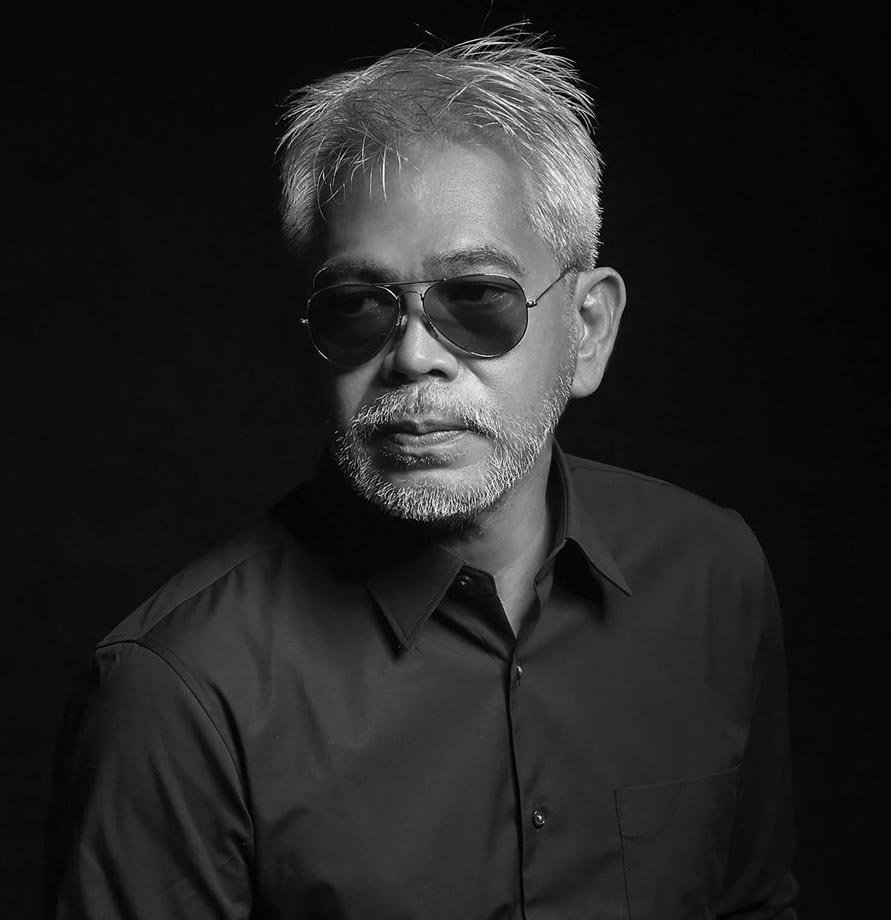
The artist plays with fire
Yakisugi, the technique, wasn’t new to Milo Naval when Yakisugi the show opened. As a designer, he’d drawn on this Japanese technique for years, the charred wood showing up as, in his own words, “a point of conversation,” be it in his furniture or interior spaces for a devoted clientele. His ongoing show at APHRO is where the method finally becomes the whole point, made on his own terms for the first time.
For the uninitiated, Naval initially trained in architecture at the University of Santo Tomas before pursuing interior design at the Philippine School of Interior Design, work that led him to become one of the founding members of the influential design group Movement 8 and later build OMO Furniture. It was a career premised on creation, and wood was among his materials of choice, yielding work that carried Evolve Designs’ furniture into international design showcases across Spain, France, Italy, Germany, and the United States. For Yakisugi, wood is now the protagonist, albeit one whose beauty and meaning are to be found in its “destruction.”
Naval’s answers kept circling back to something broader than technique when Kanto pressed on the specifics of this shift, a disposition toward destruction he’d clearly worked out long before the show existed. “It’s all about being [adaptive],” he says. “It’s all about having good thoughts about what seems to be destructive. Finding solutions.” Asked why nature needs his hand to become art, Naval answers by turning to a way of seeing: art, in his account, exists to help people find something good and beautiful in what looks like ruin. “Art may [us] help look at things in a better way,” he says.

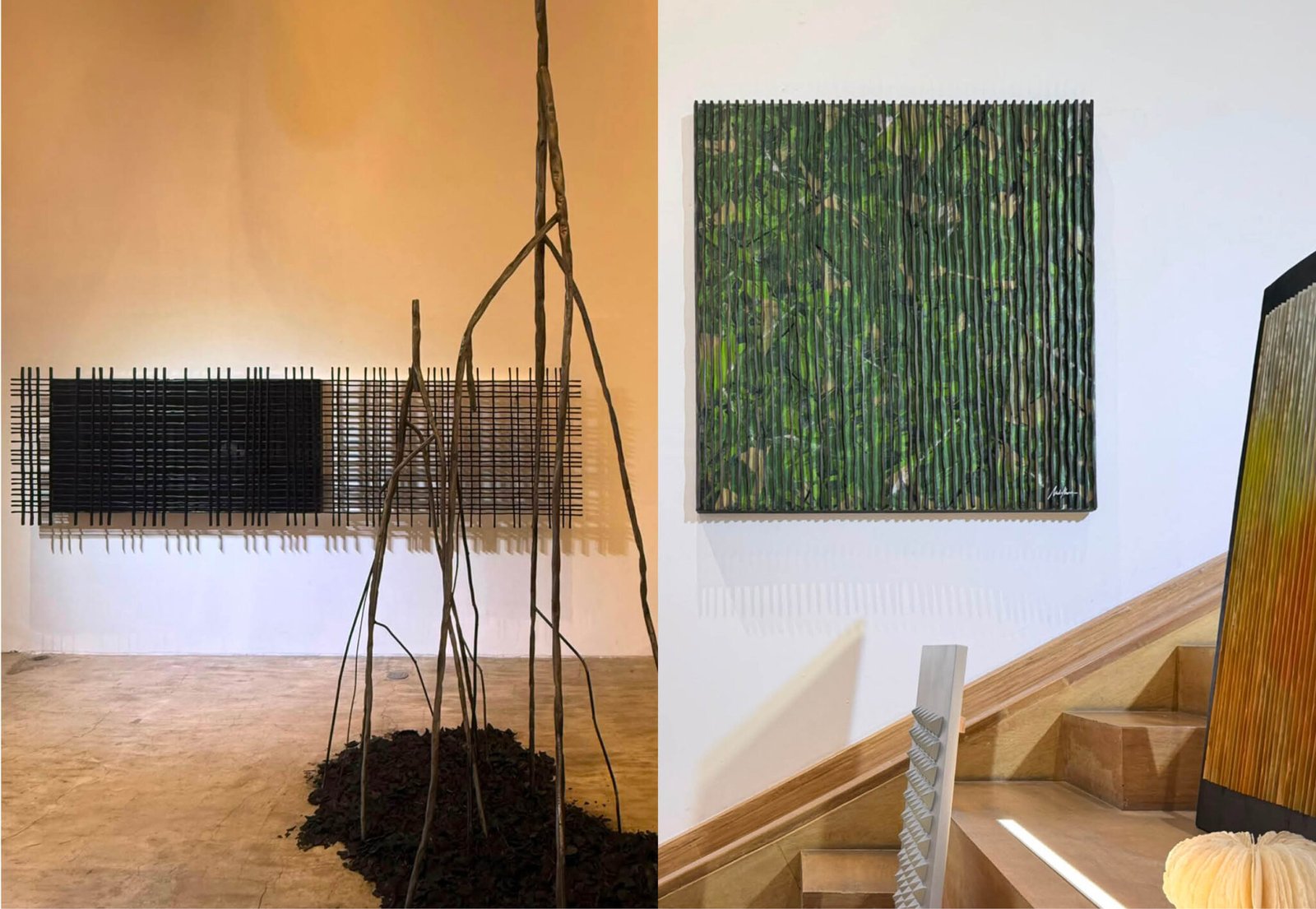
Rainforest at Yakisugi by Milo Naval Kidlat at Yakisugi by Milo Naval
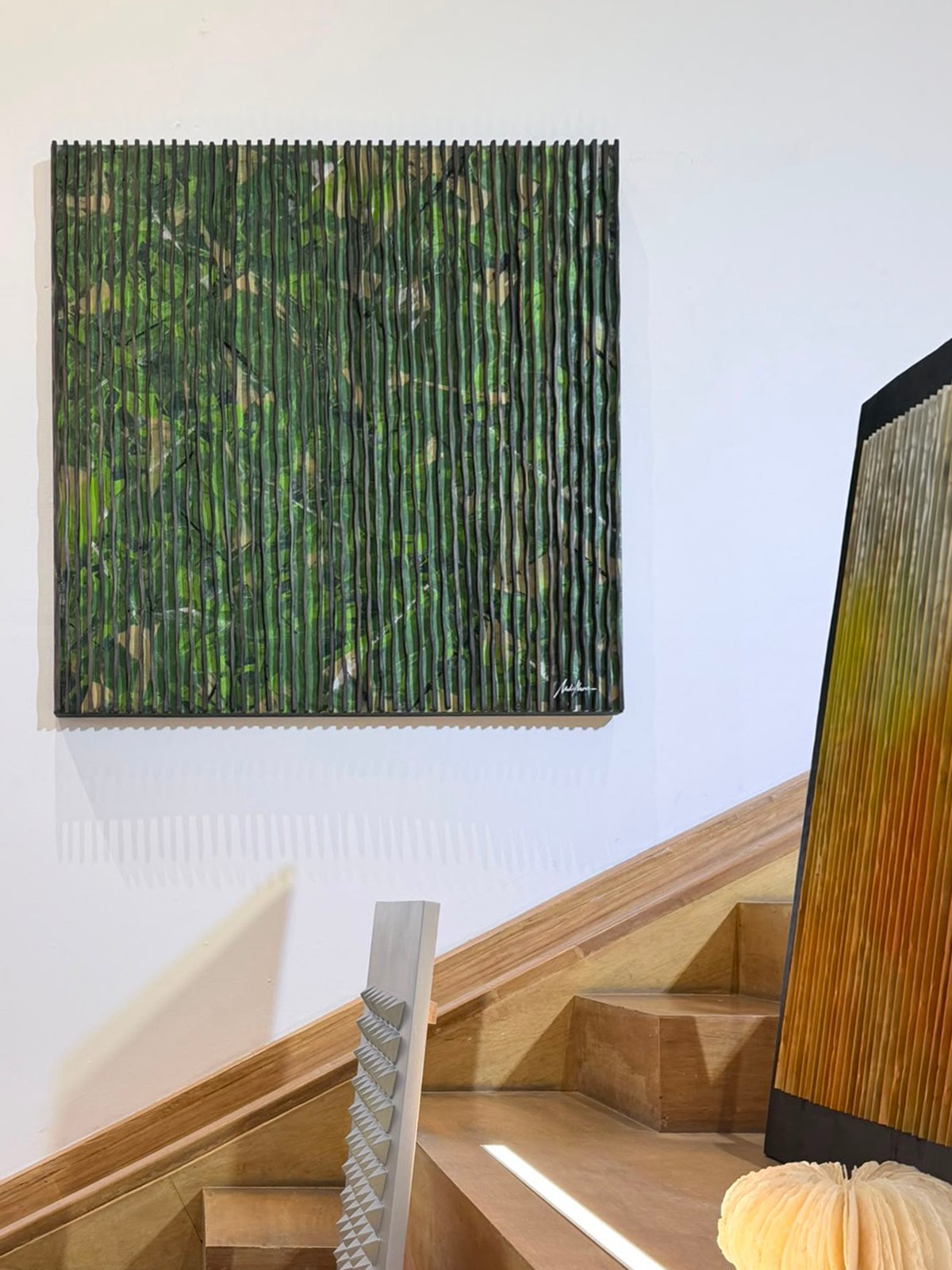
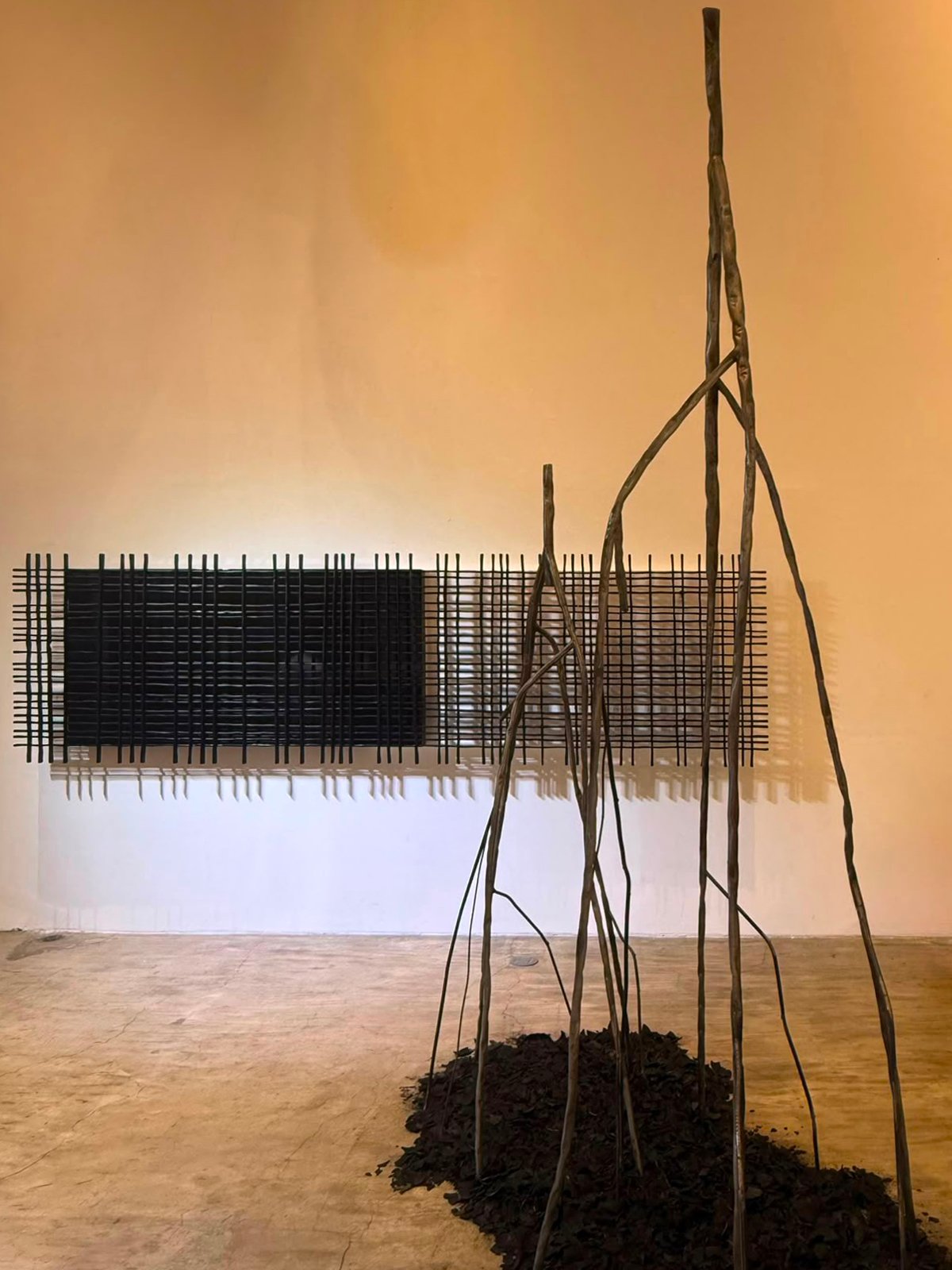
Having built his own home in Sorsogon and designed both Siama Hotel and Siama Surf along the Gubat coastline, Naval locates this disposition in a specific place: a province of natural beauty visited by violent storms as part of the yearly calendar, ordinary enough that communities return to daily life almost immediately after a calamity passes. He once recalled watching schoolchildren trooping toward class through a storm, as if it were nothing unusual.
But Naval’s brand of “destruction” is not at all the kind that destroys and depletes: a quick survey of his body of work and favorite materials across OMO and initiatives like Design x Pinyapel reveals a practice that draws from what a place already provides without needing to alter it first. When Kanto asked the 69-year-old designer to connect that history to yakisugi’s chemical-free process of charring, Naval shares: “For me, it is and always have been my advocacy.”
Will the technique itself be something he intends to keep pushing as an artist or is but a stop in an ongoing artistic journey? Naval leaves the door open: “[Ideas] will never run out when fueled.”
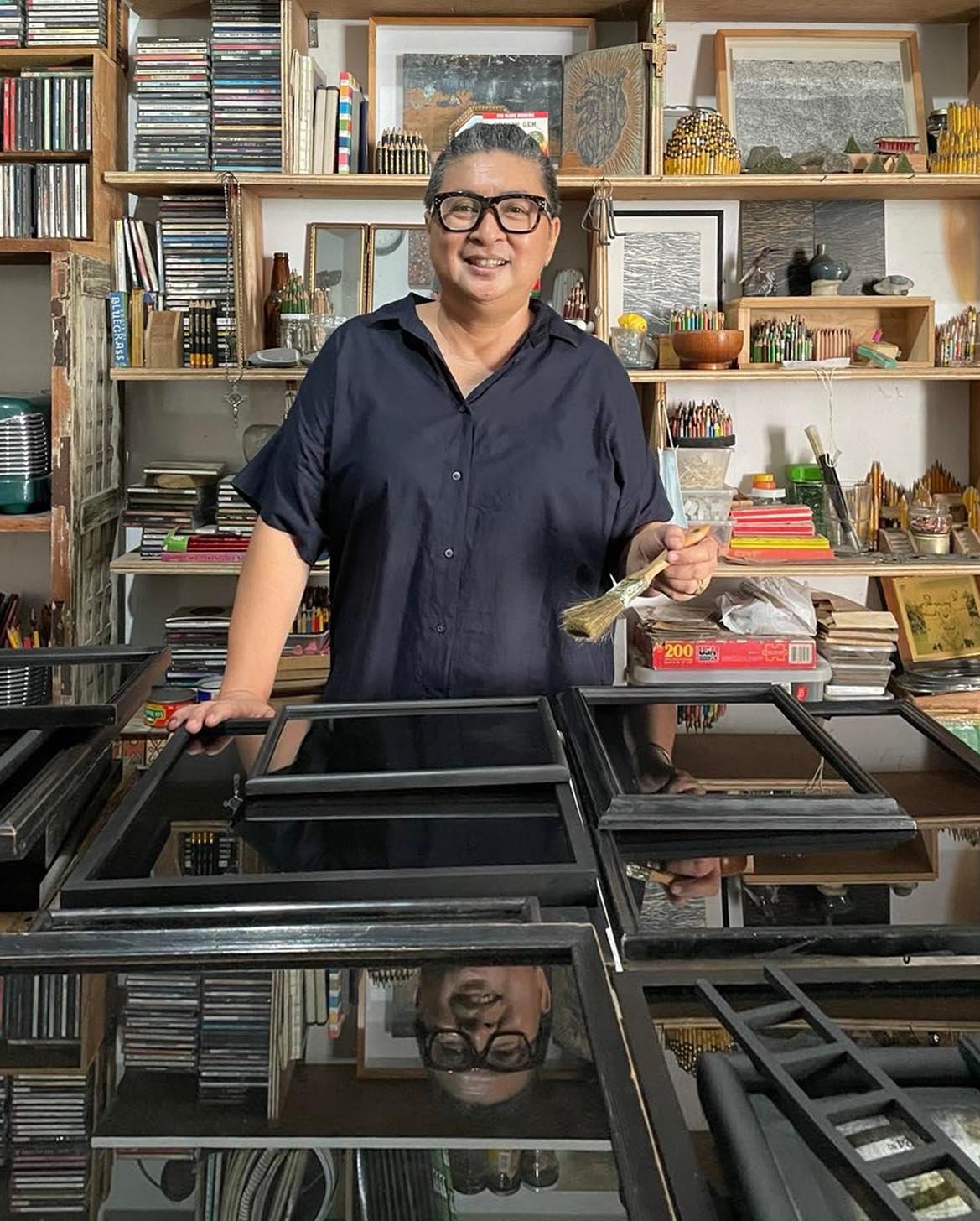
The artist becomes the curator
Someone had to decide what of Naval’s new work belonged to APHRO’s stepped space, and that decision fell to Christina “Ling” Quisumbing Ramilo, stepping into a curatorial role built around a single artist for the first time. She describes the brief: “It was crucial for me to show Milo Naval’s range as an artist and highlight his shift from furniture design.” This solidified the show’s walk-through. “In shaping the exhibition, I chose pieces that work in harmony with APHRO’s unique space, arranging them so viewers encounter distinct compositions from every angle as they move through the gallery,” she says.
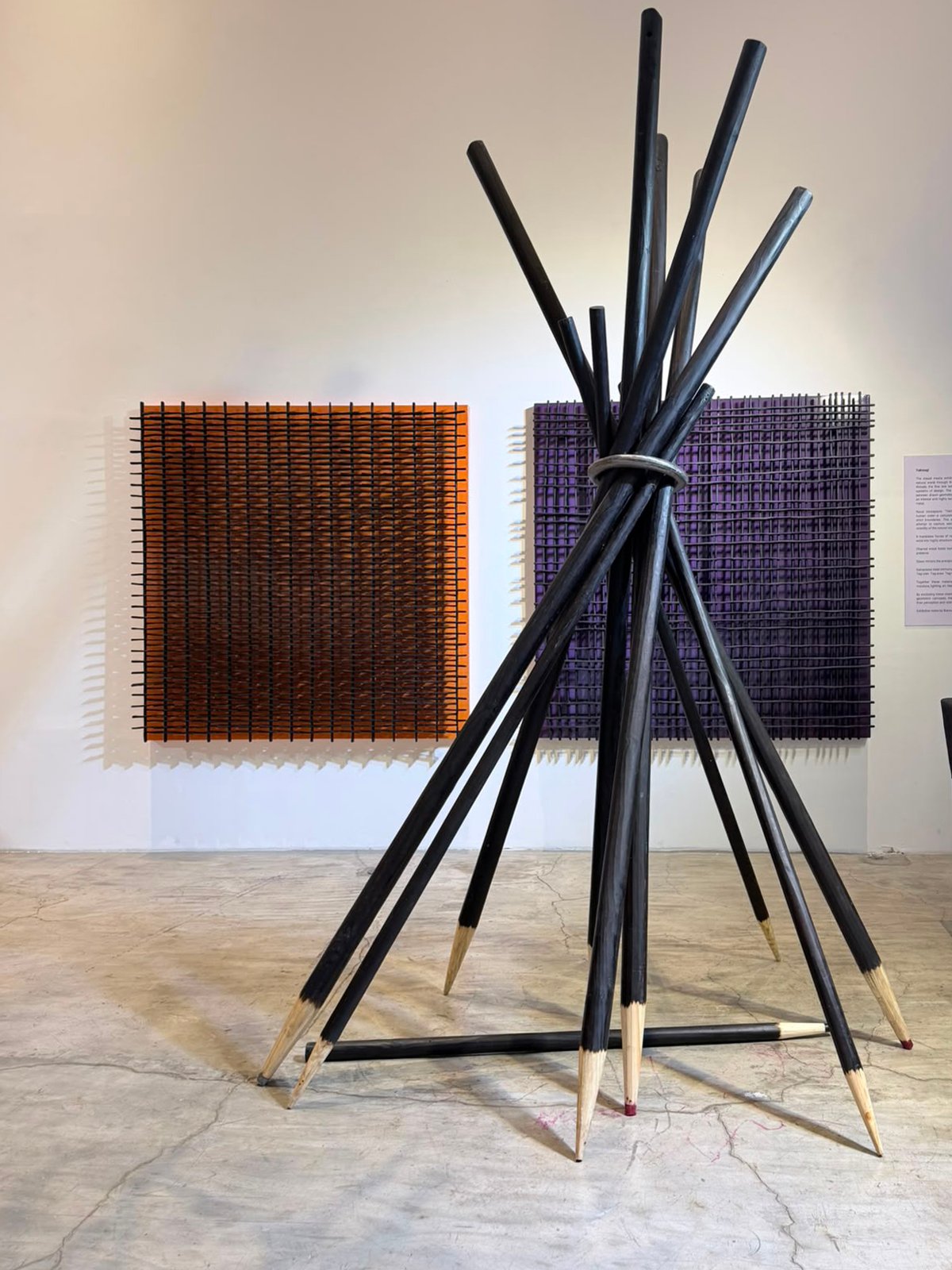
“In shaping the exhibition, I chose pieces that work in harmony with APHRO’s unique space, arranging them so viewers encounter distinct compositions from every angle as they move through the gallery.”
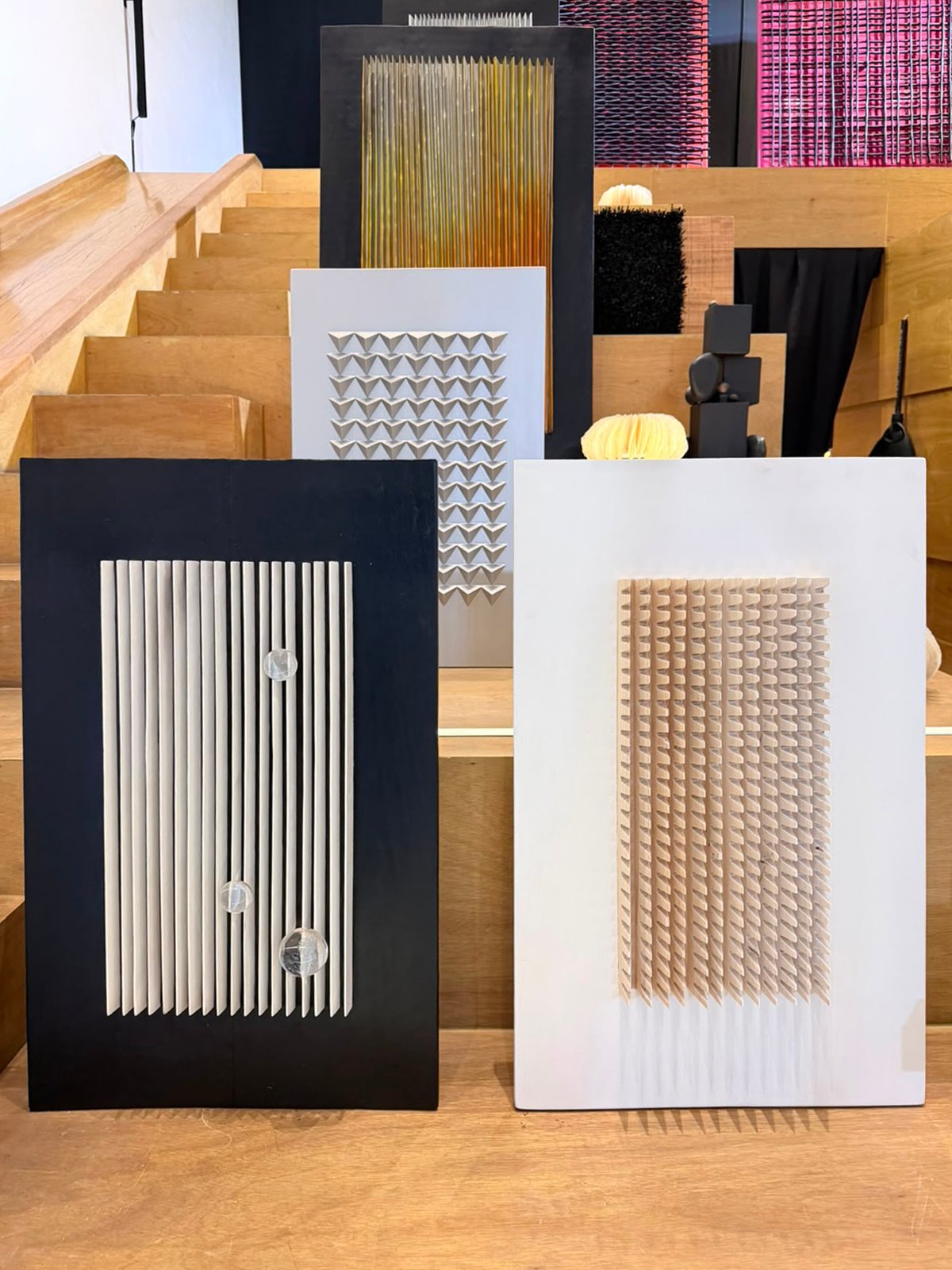
Quisumbing Ramilo’s own practice runs on found and discarded materials bearing someone else’s history; Naval’s wood only starts carrying its history once he burns it. Asked how she saw that juxtaposition between curator and the curated, Quisumbing Ramilo offers: “While we share a common passion for wood as a material, our artistic sensibilities remain distinct. As an artist, my curatorial process is organic and intuitive—grounded in an active, ongoing dialogue with the artist and their vision.” Among the works she was drawn to immediately, by her own account, were Ebony and Ivory, Kidlat 1 and 2, Monolith 10, and Rainforest, “pieces that spoke to me right away,” as she puts it.
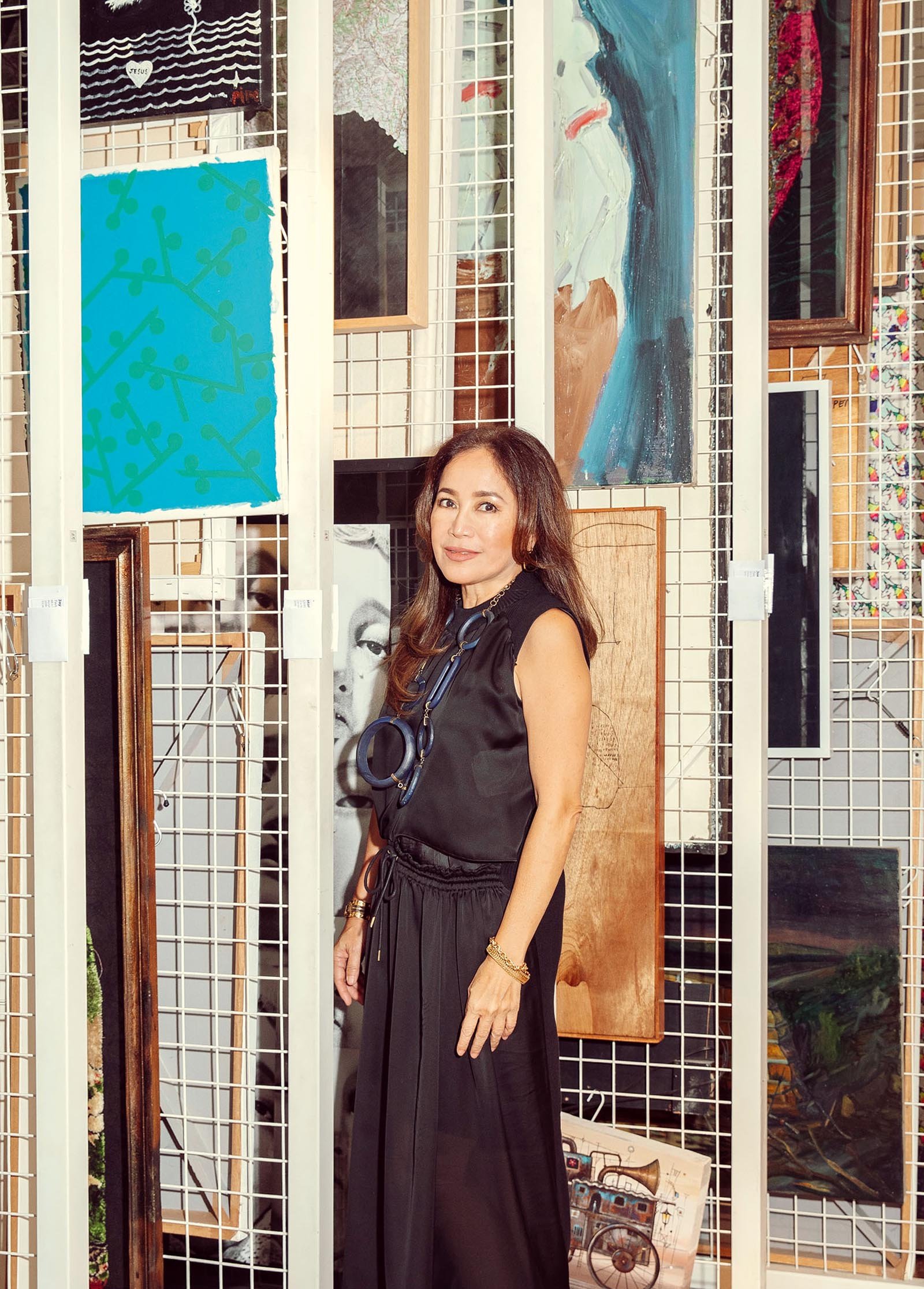
The artist peopling a temple to art
What drew APHRO founder and fellow artist Tina Fernandez to Naval, beyond his stature, was something human. “Despite being a very prominent designer, he is very humble and generous,” she says. “I knew that he would be receptive to ideas and work with a curator.” Her process for saying yes, by her own account, was intuitive: “I always go by feel. And as I got to know Milo, I knew that we could do great things together.”
Asked how his work sits inside the four archetypes she’s said the store-gallery was built around: Aphrodite, Zeus, Dionysus, Persephone, Fernandez doesn’t pick one. “All four personas comprise APHRO’s energy, and Milo’s show embodies all qualities.” Counting ten years since APHRO, designed by Jagnus Design Studio, first opened its doors to patrons, we quizzed Fernandez on what Naval has brought to its evolving “mythology” that hadn’t been there before, across everything it’s shown in a decade. She replies: “Mastery of materials and process.”
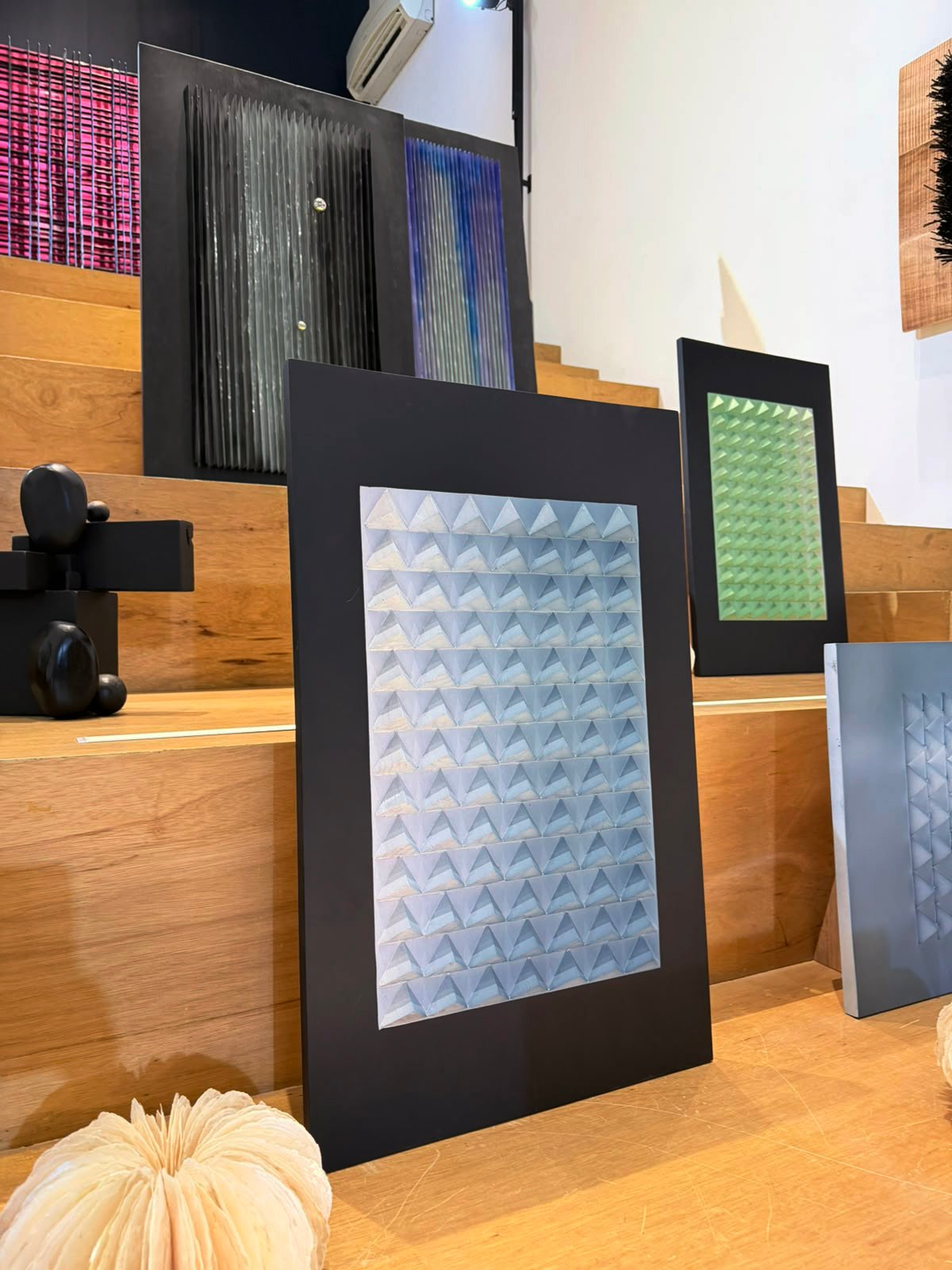
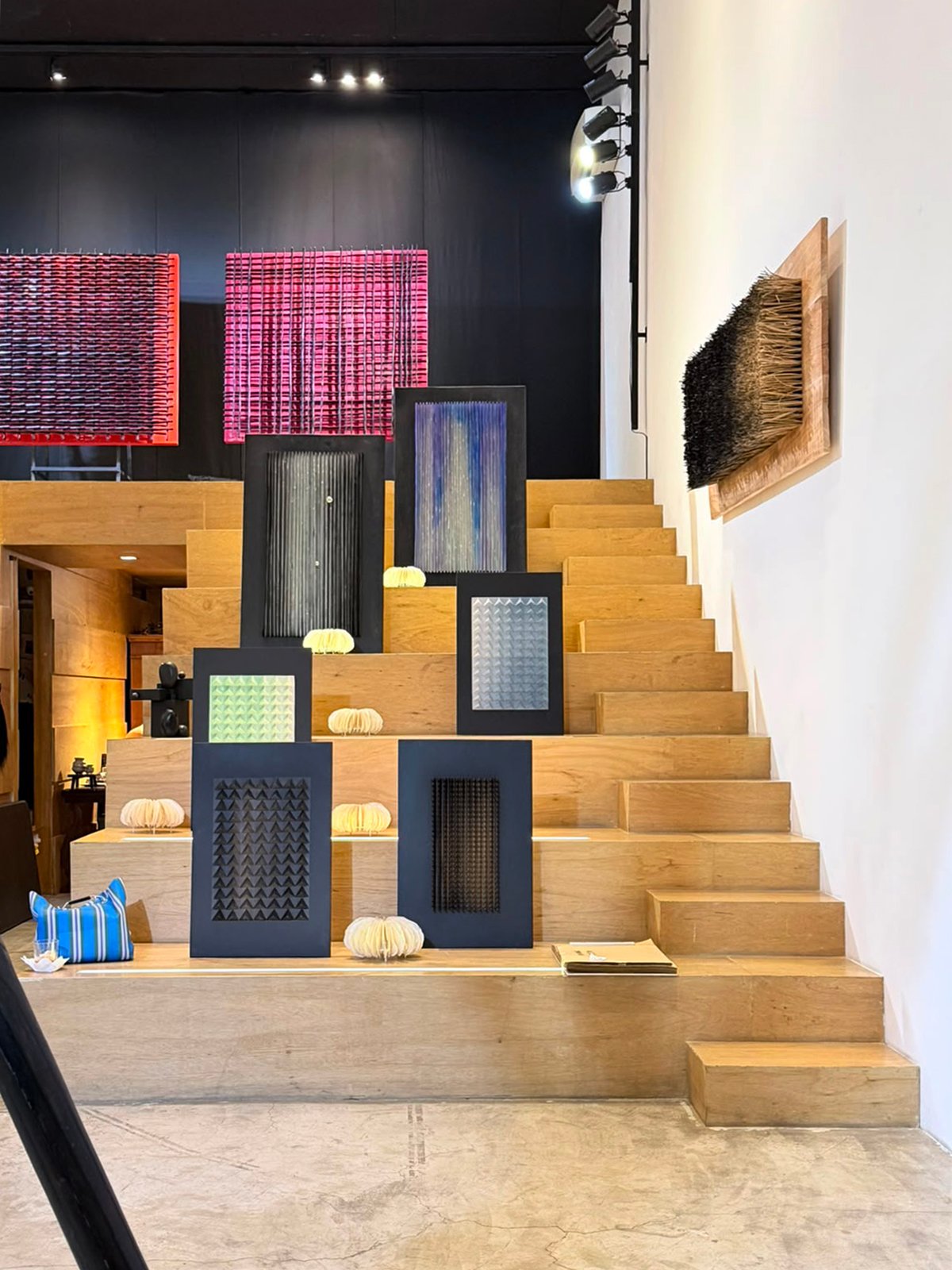
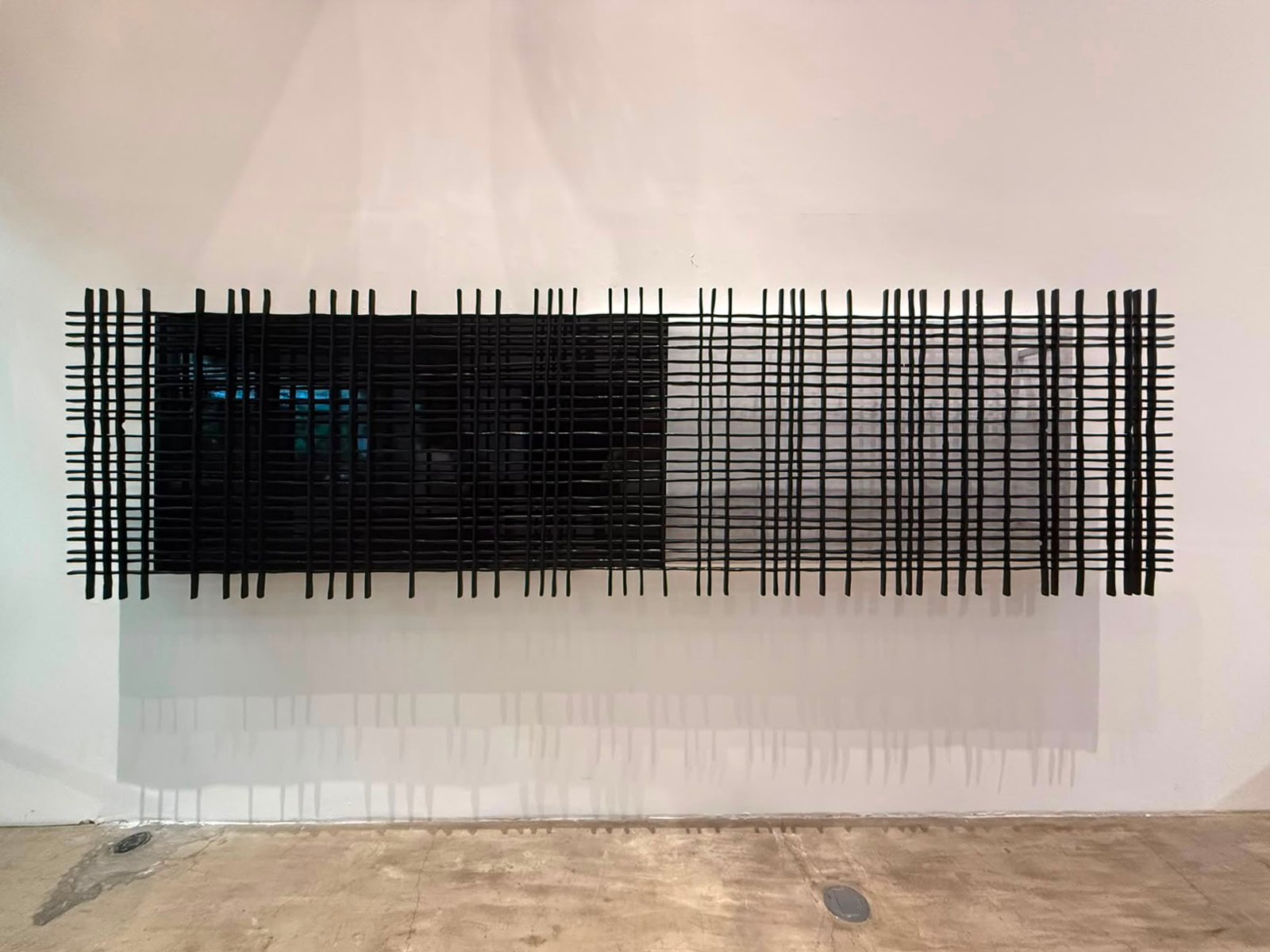
Yakisugi by Milo Naval at APHRO
On the chronology of things, Pablo K. Capati III’s solo pottery show was APHRO’s first proper art show, but Milo Naval’s marks its own milestone: the first solo show APHRO has built specifically around fine art, arriving after years in which exhibitions ran mostly as group shows of pottery, functional art, or young artists. By her telling, Yakisugi is a harbinger of more solo shows, with a Michelline Syjuco and Joel Lobsiger showcase on the horizon.
“A lot to watch out for!” Fernandez ends. •
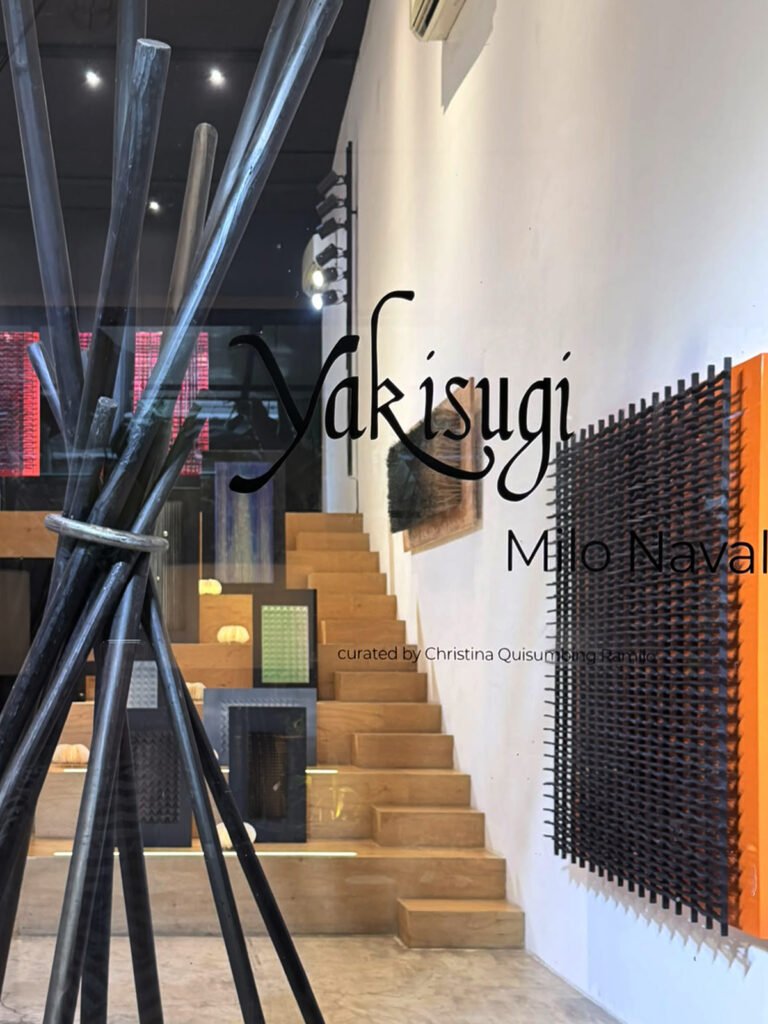
Milo Naval’s YAKISUGI runs at APHRO, The Alley at Karrivin, 2316 Chino Roces Avenue, Makati City, from July 21 to August 22, 2026.