Interview and images DAZE Creative Studio for Slow Craft
Introduction and edits The Kanto team (Siglo)
Siglo
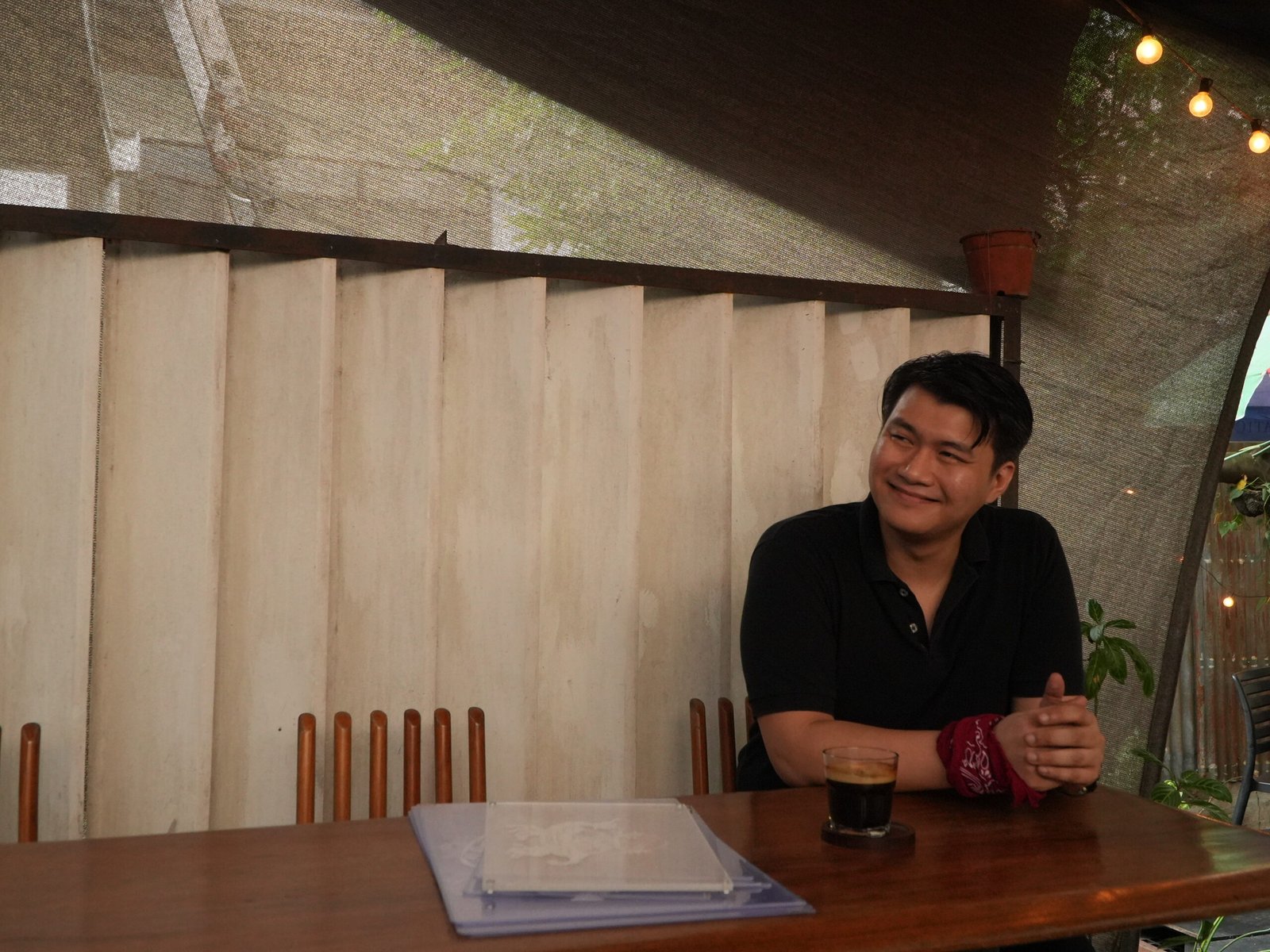
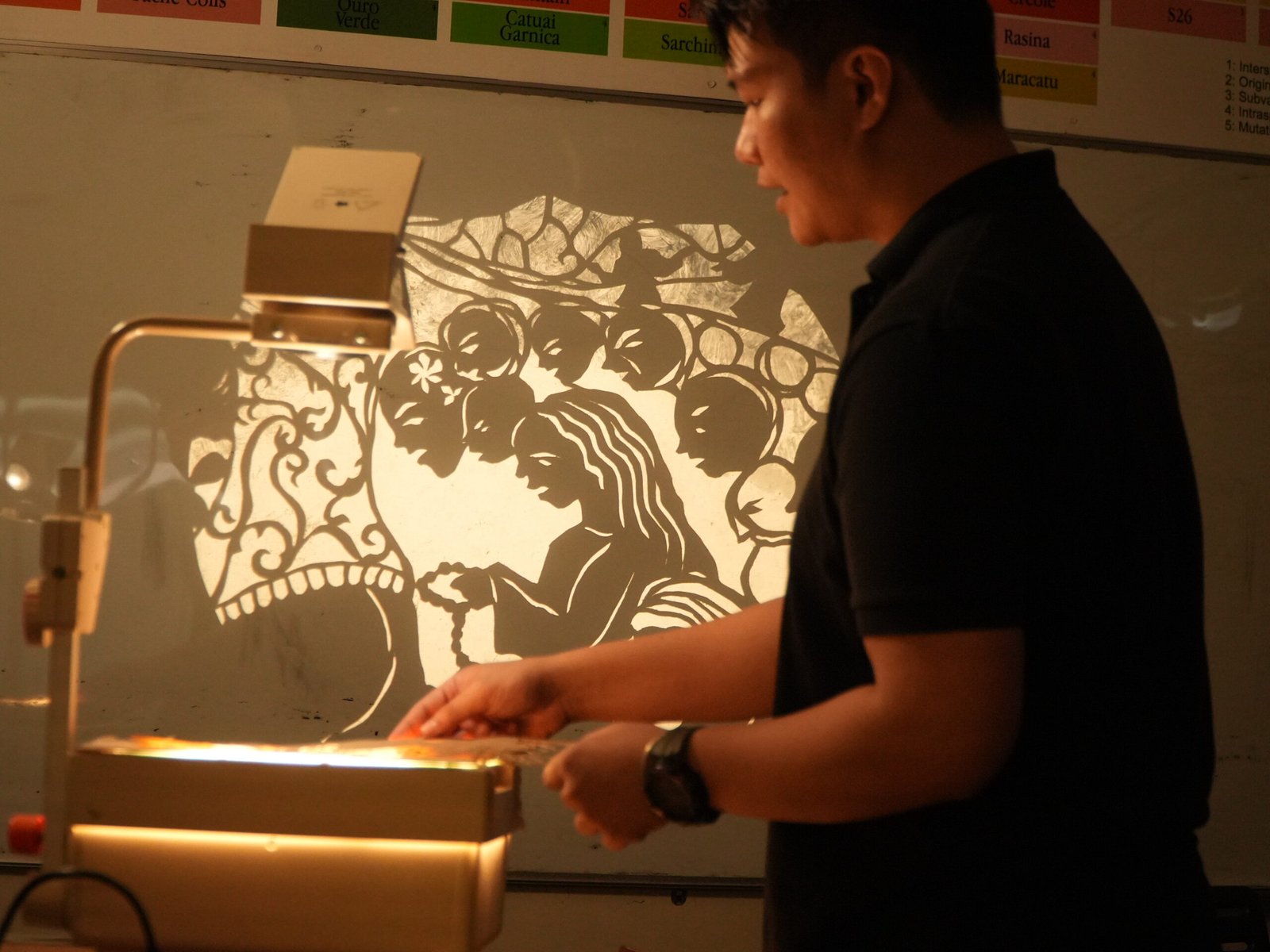
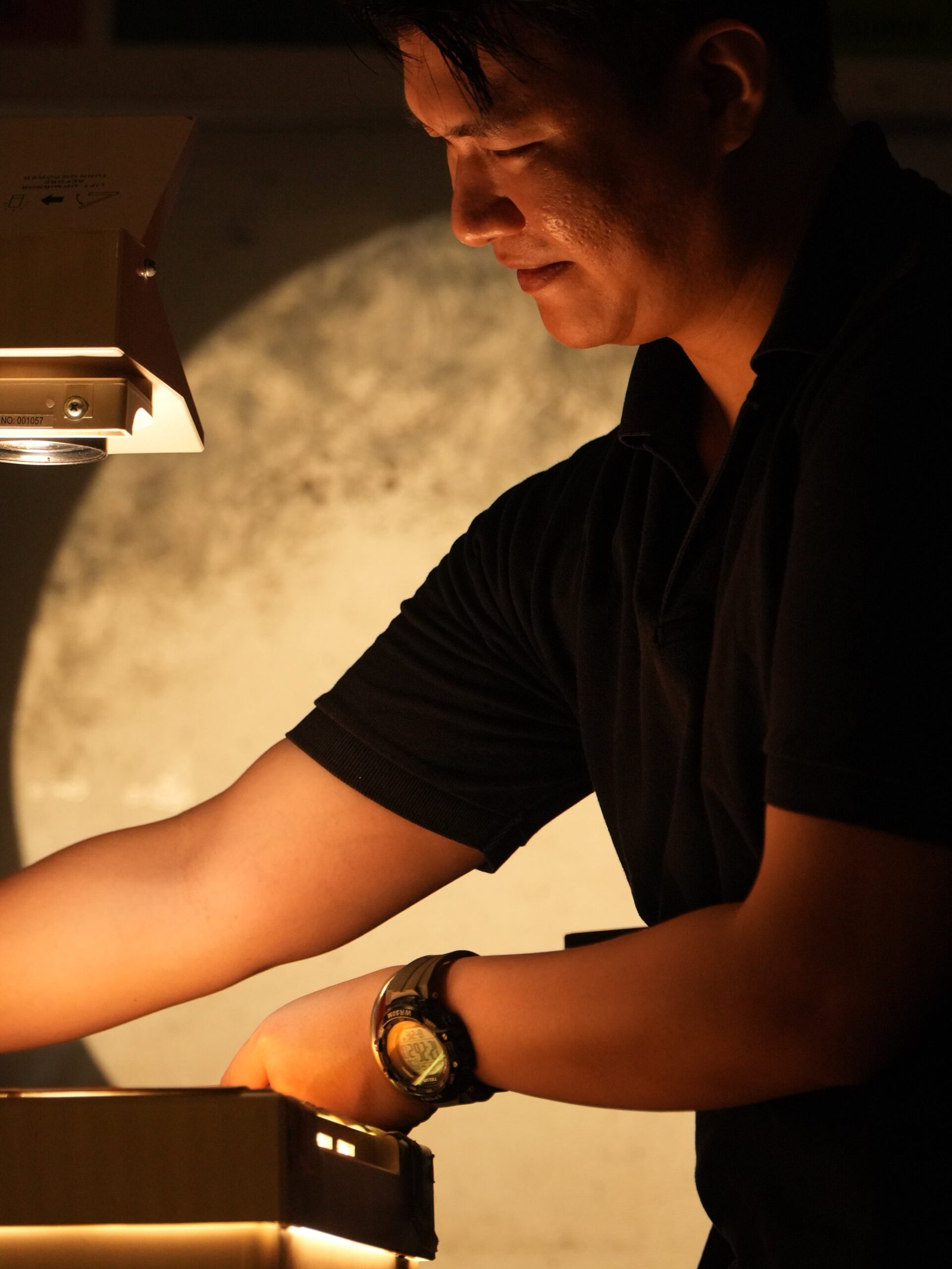
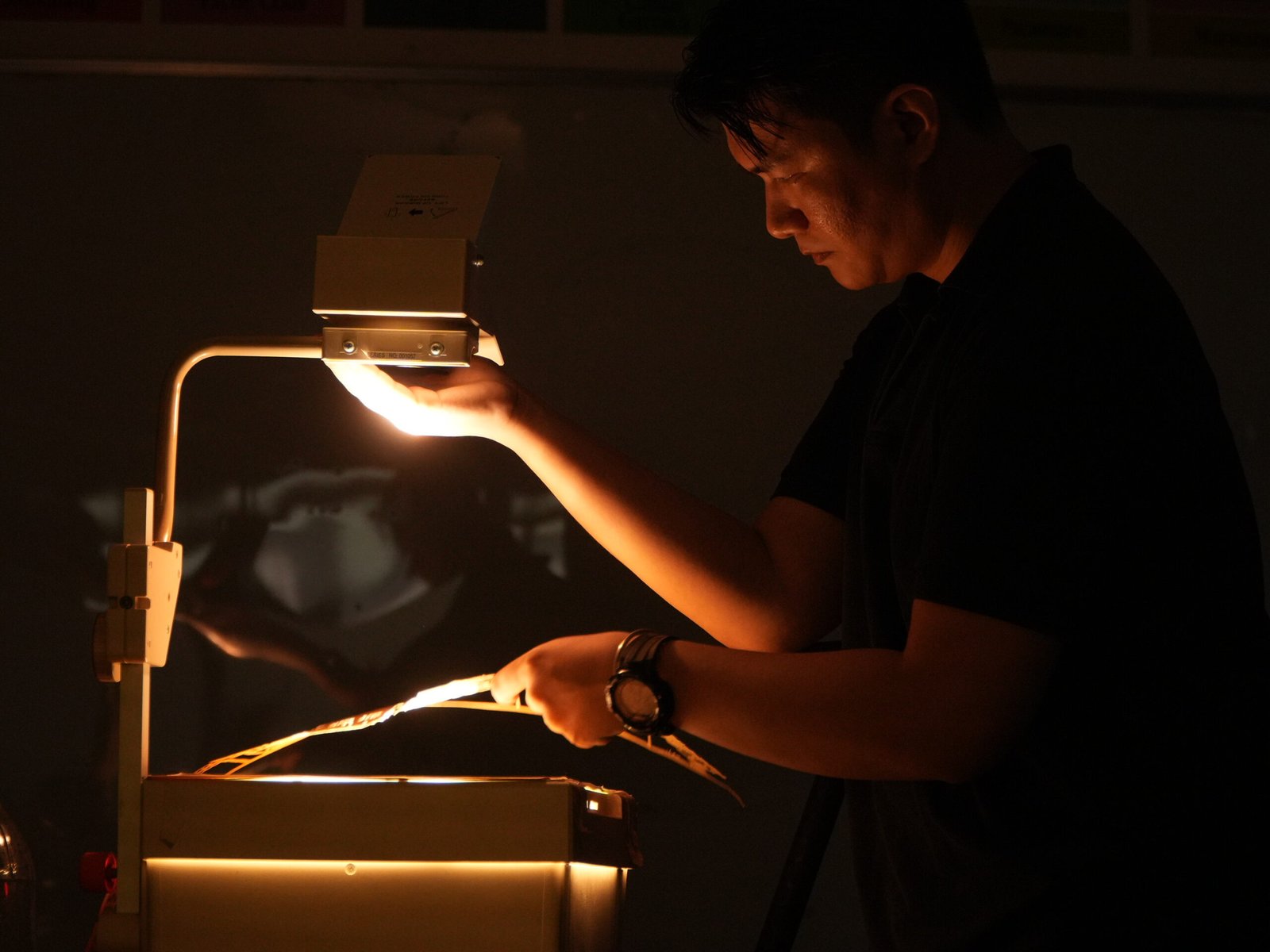
When shadow puppet designer Sigmund Roy Pecho took his cutting kit to a cafe to shoot this episode, a makeshift trash bin came along, ready to swallow the harvest of 200gsm watercolor paper slivers his blade scythed through. The intricate pieces he works on, either for the camera or stage, can easily take four unhurried hours or more, coffee and conversation included. Yet for all those hours, his creations, be they the silhouettes of folk heroes or fantastical creatures, only come to life when the overhead lights are turned off, and a flashlight comes on. The 35-year-old puppeteer, who goes by the moniker of Siglo, calls the resulting pieces shadowcuts, with himself as a shadowsmith.
Using the absence of light to evoke stories is a craft Siglo took up with resolve. He first learned the ropes as a theater student at the University of the Philippines in 2011. Apprenticeships followed under the late shadow play artist Don Salubayba and later Amihan Bonifacio-Ramolete, now artistic director of Teatrong Mulat ng Pilipinas, a troupe founded by the Mother of Philippine Puppetry herself, National Artist for Theater Amelia Lapeña-Bonifacio. In the years since, his shadow designs have graced Dulaang UP’s Tisoy Brown: Hari ng Wala and Teatrong Mulat’s The Bread of Salt.
Among his more recent credits are puppets for the Hiraya Storytelling Festival and, this year alone, Dulaang UP’s Ang Kaliitan ng Kasalukuyan, PETA’s Ang Babae sa Septic Tank 4, and the touring excerpt of PETA’s Mga Kuwento ni Lola Basyang. A residency in Japan and Taiwan came about a decade into his practice, and he picked up stop-motion shadow play animation during the 2020 pandemic. Siglo also co-founded Mahiwaga St, which describes itself as “an art-duo with a third wheel performing mahiwaga [magical] exchanges.”
For this episode of Slow Craft, DAZE Creative Studio’s documentary series on Filipino creatives, Siglo talks with director and producer Mauro Daez about discovering and magnifying hiwaga (wonder, magic) in the folk creatures he grew up with and the inner demons he cuts to tame.
Responses have been edited for length and clarity. Translations in brackets are Kanto’s.
Paper and light
What is shadowsmithing, and how did you come up with the term?
Siglo: I call myself a shadowsmith, but something that predates that is the moment I told myself I was working with shadowcuts. If you see it, you’ll think it’s a papercut. It is. But every now and then I use a flashlight to see how it interacts with light. By nature, it’s a papercut, but I’m after the hiwaga of the interaction between the paper and the light source. When I called it shadowcut, I accepted that maybe I’m a shadowsmith, creating that interaction between papercut and light source. Many puppeteers see it as the art of telling stories through shadows. You let the shadows be the main characters. I honor where I took root. This is rooted in shadow puppetry. I continue to be a student of the form, and part of that is articulating it through shadowcuts and shadowsmithing.
First cues
How did you enter the field?
Siglo: 2011 to 2012 are the two crucial years that led me to puppetry. In 2011, Dulaang UP staged a production called Umaaraw, Umuulan, Kinakasal ang Tikbalang. That first adaptation of the short story was staged as a mixed-media production. A shadow play artist, Don Salubayba, was invited. He taught us how to do shadow play. I was the stage manager, calling cues during rehearsals. I needed to learn everything he was teaching us so that, if something happened, I would know how to call the cue. At the same time, I was invited to join a theater thesis centered on the use of puppetry with Teatrong Mulat ng Pilipinas.
I learned shadow play in Dulaang UP, and I also designed shadow elements for the production of Pabulayan. It’s a play of Papet, Pabula’t Bayani [Puppet, Fable, and Hero]. It retold the lives of Bonifacio and Rizal. Those two productions helped me find this magic and love for puppetry. I felt like I was practicing as a theater student, but I was also introduced to another form of performance: puppetry. Sige [All right], I’m really taken by this world. I took on the role of designing shadows. The following year, I apprenticed to Don Salubayba, and then I joined another production with Teatrong Mulat. Eventually, I became deeply involved in shadow play. My basis is shadow play, but I learned the different forms of puppetry with Teatrong Mulat.
Was this the first time you heard of shadow play?
Siglo: In 2011 and 2012, I’d been hearing it a lot in Asian theater classes, but the concept of shadow play in the Philippines was the first time I encountered it.
What was your impression of it, and how did it change?
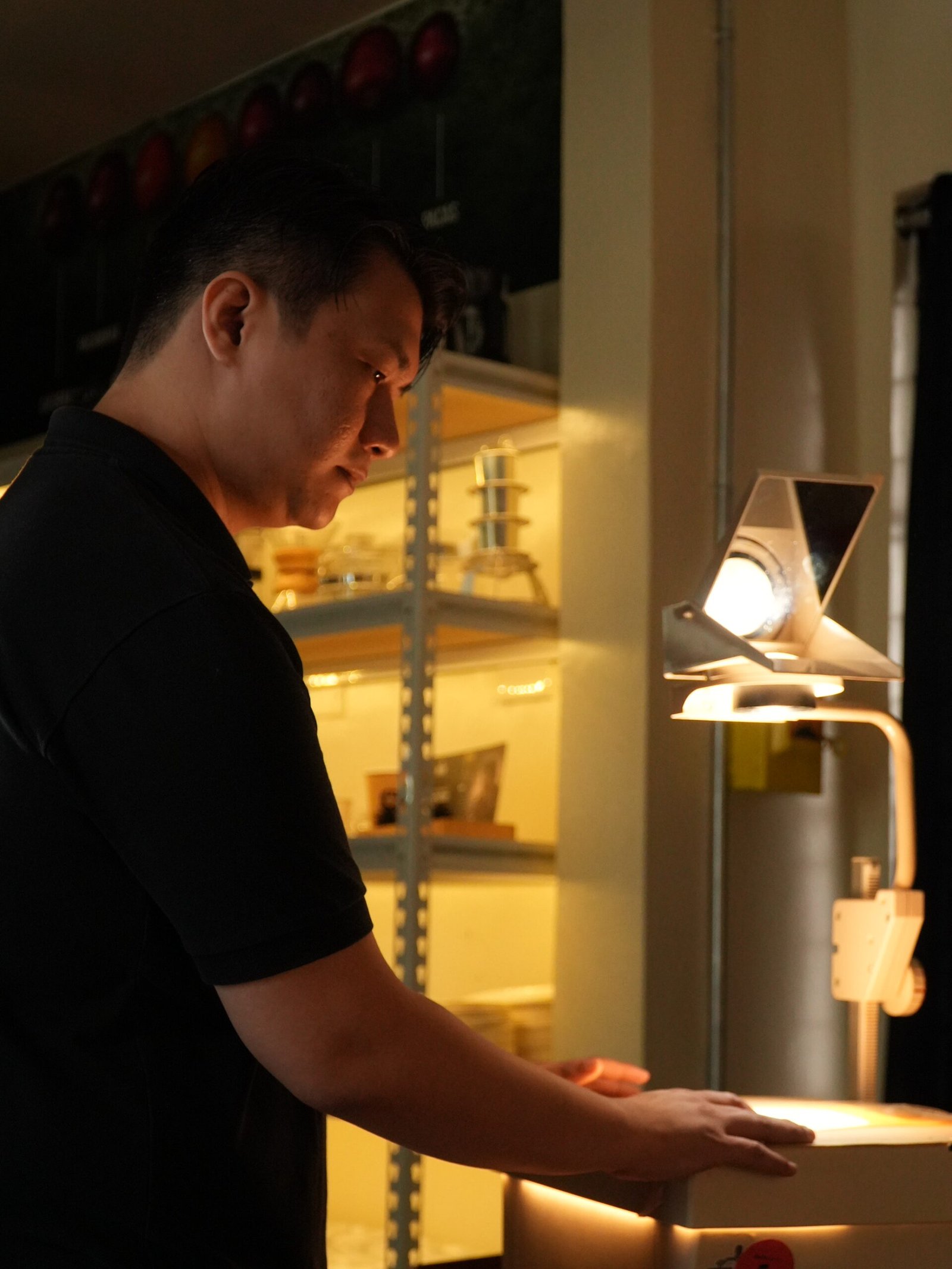
Siglo: The main difference from our Asian neighbors (Indonesia, Thailand, Taiwan, China, Malaysia, Singapore) is that their shadow play tradition is rooted in faith and ritual practices. It deals with the stories of myths and heroes in their religious practices and rituals. Because it’s their heritage, malakas yung idea of folk sa kwento [the idea of folk runs strong in the stories]. The difference we have here is that we use technology. Ours is very contemporary in nature. We use flashlights, overhead projectors, and even LCD projectors to tell stories of myths, legends, heroes, and contemporary issues we deal with as Filipinos, and a lot of stories we think are important to be told. The one in neighboring countries is rooted in heritage. The one in the Philippines is very contemporary, kung paano natin nakilala yung shadow play [in how we came to know shadow play].
Are Filipinos accepting of it?
Siglo: Filipinos are accepting of using technology to explore the craft of art. Mataas din yung regard natin sa paggamit ng technique and skills [We also hold the use of technique and skills in high regard]. Mahalaga yun [That matters] for Filipino people, to see how well you’ve crafted your material, your puppet, how well you’ve executed your performance. Even in barangay-level [village-level] productions, mataas yung regard natin for talent or skill. Even with the rise of technology, we’re very keen on using talent in our own practices. By challenging each other and working through the uncertainties of clay, we created something neither of us had approached in quite the same way before.
Learning to play
Is there one thing your mentors said or did that you still hear in your head?
Siglo: My mentors always remind me to enjoy. Playing is part of the process. Mas mahalaga yung nakikilala mo at nae-express mo yung sarili mo [Knowing and expressing yourself matters more] with that freedom to play and enjoy. Hearing them tell me to play, that the stage is your playground and the paper is your tool, doon pumapasok yung idea na kahit may liberty to play, lagyan pa rin natin ng certain parameters or goals [that’s where the idea comes in that even with the liberty to play, we should still set certain parameters or goals]. It’s a mix.
How do you draw the line between creative discovery and keeping the practice prestigious, so you don’t disrespect the craft?
Siglo: It stems from the genuine love for the craft or the art form. Once you have that, you always have the two inseparable: the creative exploration and the deep regard, the reverence, for the craft. You want to stretch as much as you can, explore, and see how magical it can still be. Then you have the deep regard for the craft: you respect the process, value clarity, and trust your audience to take inspiration from what you’re doing.
What was it like becoming an apprentice? Did it cost you anything?
Siglo: My time training with my mentors and seniors in the field, older puppeteers, masters, was time well spent. I invested myself in the practice. Time. But I understand that it’s something I gained through experience. I find it a memorable journey to spend part of my life here on Earth in those situations. I learned a lot, and that made me grow as a human being.
That’s what I loved about learning from different artists. They don’t teach you about art alone; they teach you about life. You and I were talking earlier about you finding that voice. Part of that was spending time with the people you’ve learned from, people you buy food from, you buy your supplies from, you commute with, kasabay mong huminga ng hangin [who breathe the same air as you]. All of those things are necessary.
At the cutting mat
On paper and blades
Siglo: In shadowsmithing, my favorite part is always the cutting. After drawing, rough sketches, and finalizing the design, the cutting is the pinaka-exciting [most exciting] part.
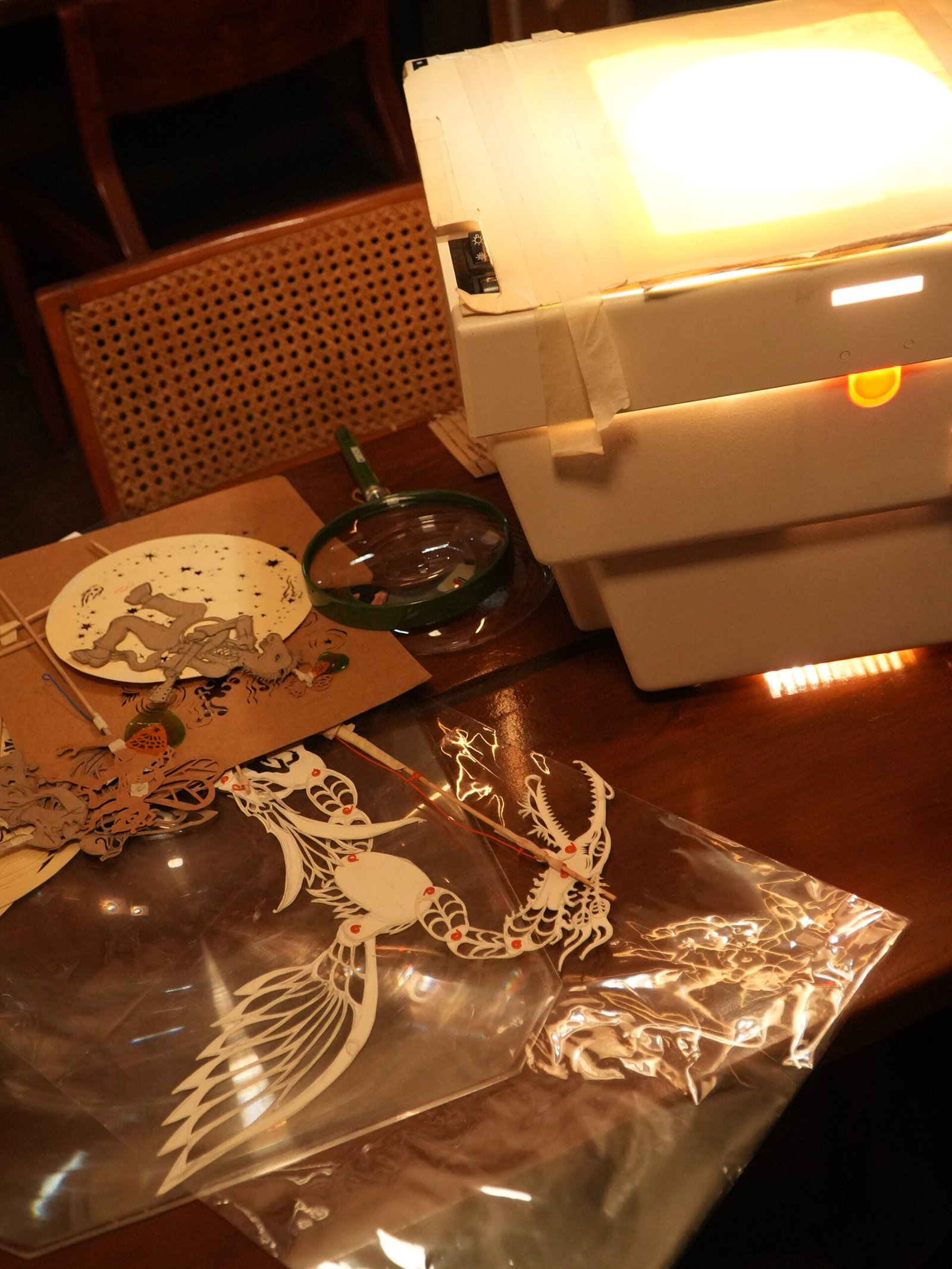
I use a panyo, a bandana, or a handkerchief to protect the paper from my own hands and from moisture. When you overwork, your hands sweat from time to time, especially in a tropical country, mas mainit [it’s hotter]. If the paper I’m using is not a folder-type or cardboard, I use a thicker-grade paper, a watercolor type. This time I’m using a 200gsm watercolor paper.
Sometimes I bring my own kit. I bring out my cutting mat, secure it with glue tack or tape, and prepare a makeshift portable basurahan [trash bin], para [so that] when I leave the cafe or anywhere I’m cutting, it’s easy to crumple and throw away. Nandoon lahat ng remnants of the shadowcuts [All the remnants of the shadowcuts go in there].
After drawing the design, I cut the details first, then the silhouette last. If you cut the details first, the design is still attached to the main body, so it feels stronger. You don’t worry as much about it tearing. In some countries, they cut the silhouette first, then the details, but that’s because they use leather. We use paper, so it’s more prone to tearing. The process is baliktad [reversed]. With leather, your tool should be thicker, I think, but still sharp. Most cultures use chisels or different chisel edges.
It’s always important to balance the thin lines and the thicker ones. You always have a play of the negative and positive, of how much light you can allow to pass through the shadow cuts.
Wala rin namang nagsabi ng bawal [Nobody said it’s forbidden, either], as long as I get the cut that I want. It’s really about your own diskarte [way of doing things] with cutting. You develop that through the years. If I’m working with a large-scale shadowcut, nasa floor na siya [it goes on the floor]. I set up the cutting mat on the floor, then I tape the puppet. If I ask someone to cut it, I add notes. Artists who want to help me cut know how to cut it. When I do it myself, I draw the image and figure out where I want to cut.
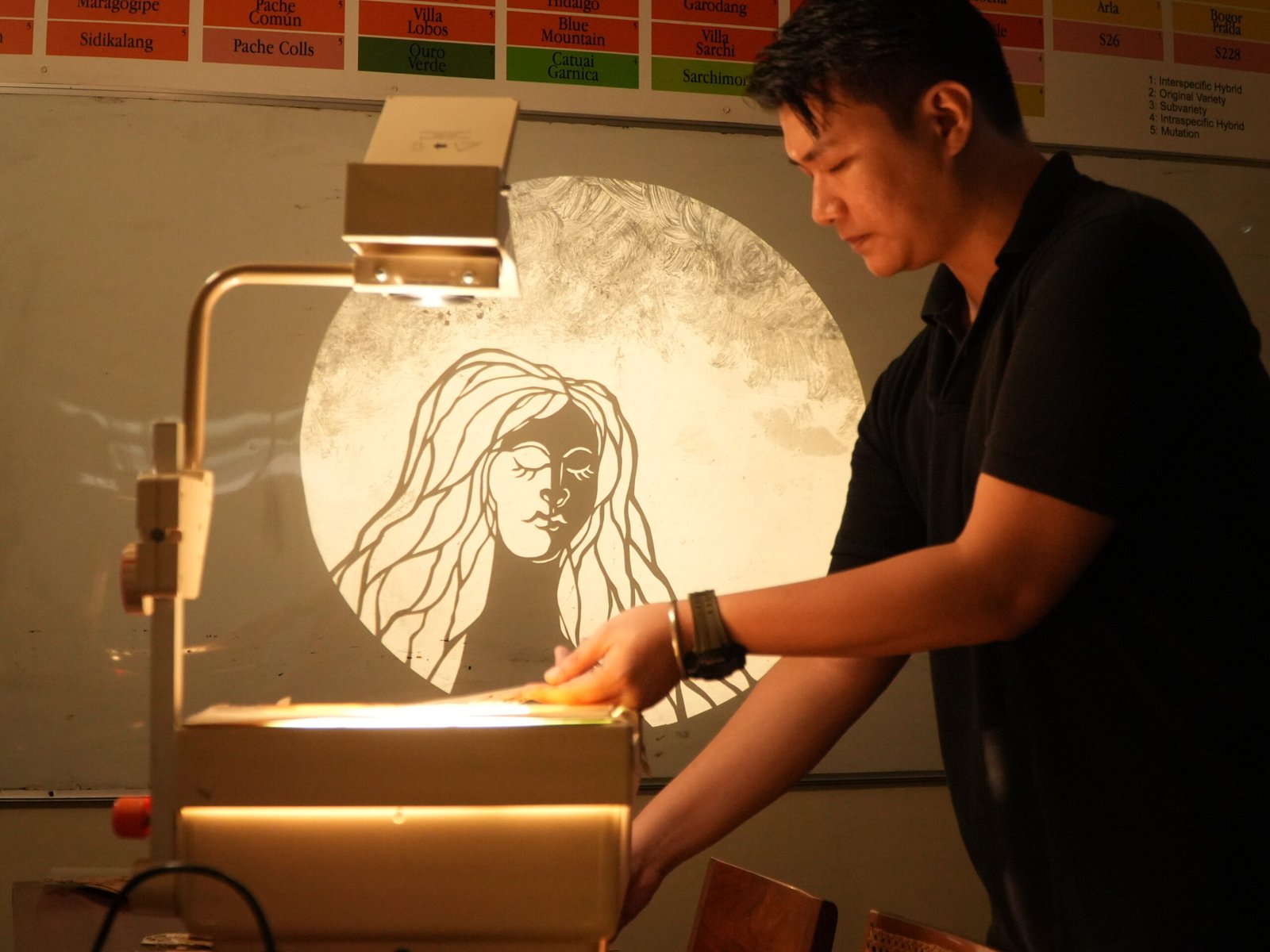
“You always have a play of the negative and positive, of how much light you can allow to pass through the shadow cuts.”
S I G L O
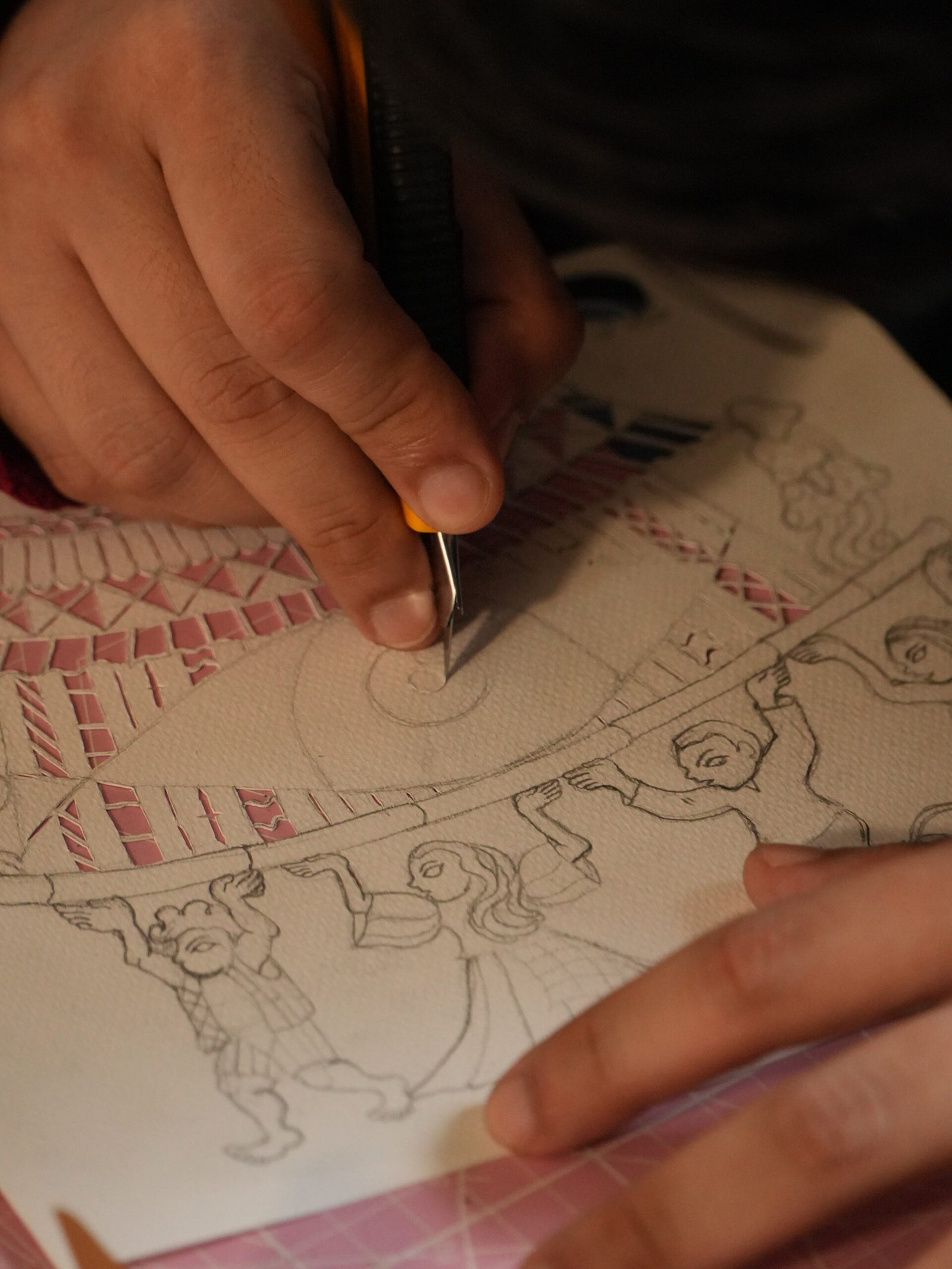
On storyboards and puppets
Siglo: When I’m creating a scene or a story, I start with rough sketches. I just draw a lot. From there, I gather the parts that I want to retain or fuse together. I count how many puppets there are. It’s not one frame, one puppet. If it’s a background frame, then it’s just one count, but if you have multiple elements, then you count them all. You can repeat your puppets in certain parts.
The good thing about storyboarding is that you get to know how you can present your scenes. I have that mental preparation for how the cueing will go. What’s the experience of seeing a more negative image than a silhouette-type where there’s more light? It prepares your eye. From the storyboard, I list all the puppets, sketch them one by one, and cut them one by one. With moving parts, the last part of the process is to join them together and put sticks. Sticks are easy to put in; you can use tape. It won’t be seen in the shadow performance. There are cases where I also use wires.
How long would it take you to finish the piece you’re cutting?
Siglo: It already took me three hours to start sa may roof [around the roof]. I guess the entire thing would take five hours to finish, all in all. That includes breaks, another shot of coffee, or conversing with friends. If I want to speed through it, hyperfocused, around two hours.
Which do you prefer?
Siglo: I prefer a chill one. Even while preparing for two recent exhibits, I had the luxury of taking breaks during the entire process. It helps my hands and eyes rest. Sa process, minsan yung light also matters [In the process, sometimes the light also matters]. When you’re cutting for eight hours, mahapdi na siya sa mata [it stings the eyes]. May tumutusok sa dulo [Something starts to prick at them]. That’s when I know I need to take breaks. For breaks, I just eat or drink lots of water. Hihinga lang [I just breathe]. Manood sana ako ng film or series [I’d like to watch a film or series]. Sometimes I need to close my eyes for a long time to recuperate and prepare for the next wave of cutting.
Is it easy for you to enter a flow state? What does it feel like?
Siglo: Yeah. Interestingly, with the flow state, it’s really you trying to organize how you’re going to cut it, then may relationship ka [you have a relationship] with the craft or art piece. Laging may excitement [There’s always excitement]: how will this turn out? How will it interact with the light later on? Of course, there are times I’m getting impatient, but I also enjoy the process of the blade slicing through this piece of paper, then makikita mo eventually na tanggal na yung part na kinut mo [you eventually see the part you cut come loose].
It takes patience. If I let impatience control me, I might tear some part of it. I love the idea that I need to be careful in the entire process. Otherwise, if I cut something, I have to widen the detail a bit, and sometimes I intend it to be really thin. If I accidentally tear something, syempre [of course] I get frustrated, but I think it’s part of the process, because you learn to be more conscious of how you cut and more careful with how you handle your tools. I love the idea of having good and sharp tools.
At what point in the process does it stop being technical and start being you?
Siglo: There’s a sweet spot where it’s always technical and always part of my expression. Even I am confused about when the technical starts and when the “you” starts. But I think the technical aspect is you knowing how to do things: the methodology of step one, step two, how you do this part, how you challenge yourself to create a new puppet that moves a certain way, how you create a cue for a moment of magic that captures the audience. Those are both technical and personal to me as an artist, because I try to figure things out from the experiences that I acquire in life. While crafting, there’s always that flow. Once pumasok na yung flow of creation, dire-diretso na [Once the flow of creation kicks in, it just keeps going]. There’s always that marriage of the technical and the “you” expression.
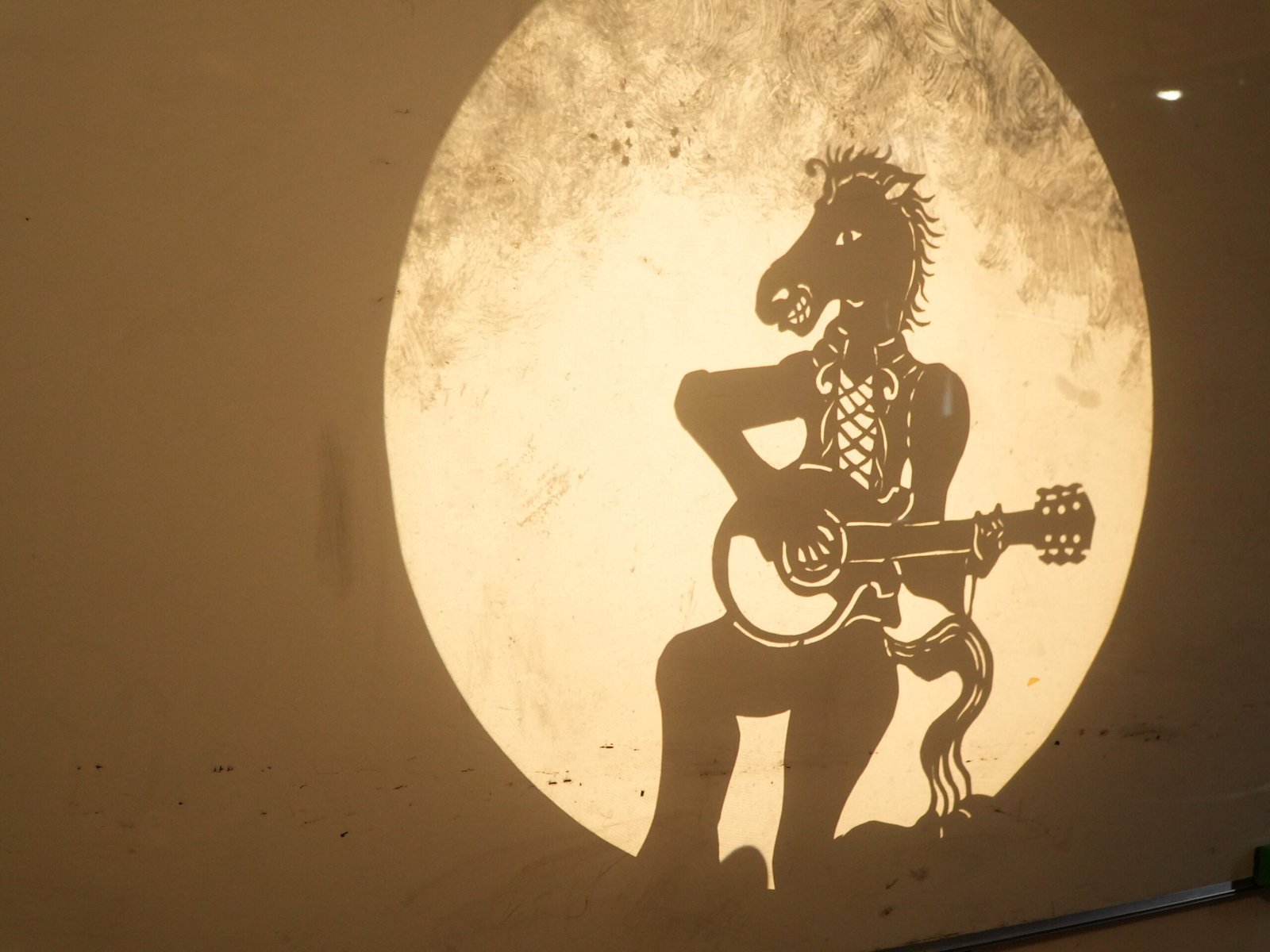
Folk and detail
Is there a happy accident, or a limitation, that became part of your style?
Siglo: Interestingly enough, I’ve been too exposed to [wayang kulit] because I searched a lot about it. Yun yung alam kong inaral ko na aesthetics or style [That’s the aesthetic or style I know I studied]. Because of that, the first works I did as a young learner of shadow play were really influenced by it. Ang ingay ng mga designs [The designs were so busy]. Eventually, sasabihin sa ’yo na [they’ll tell you to] find balance and harmony in details. When you get to feel the ideas or learnings, nananamnam mo siya [you savor them], you develop your own style. I’m still fascinated by details. It’s a happy accident to be too in love with that form. Balance ng bagay-bagay [Balance in all things].
Is there anything in your current artworks that shows that Indonesian style?
Siglo: I would say something close. They always work with profile. Yun ay mga godlike figures nila [Those are their godlike figures], or gods, monstrous representations, or one of the characters. Even with the nose, I consciously borrow from days of researching shadow play. There’s no moving part here, but if there were, it would be the limbs. Nag-evolve na talaga [It has really evolved].
How did the Filipino elements in your work come about?
Siglo: I’m very fascinated with the stories of the Filipino folk tradition. I grew up listening to a lot of stories ng mga manananggal, tikbalang, kapre [of the manananggal, tikbalang, and kapre: the self-severing winged ghoul, the horse-headed trickster, and the tree-dwelling giant of Philippine folklore]. I grew up in that kind of neighborhood or setup na talagang we take time to talk about those things, ng mga mahiwagang nilalang [where we really take time to talk about those things, about enchanted creatures]. It inspired me growing up to express myself through my own stories and identities.
Bilang Pilipino [As a Filipino], you breathe air in the Philippines, second nature na lumalabas siya sa lahat ng ginagawa mo [it comes out as second nature in everything you do]. You listen to the news, you respond to it, you walk out into the street to see spaghetti wires. Naging part na siya of your consciousness bilang Pilipino na nabubuhay sa kalsadang Pinoy [It becomes part of your consciousness as a Filipino living on Filipino streets]. That continues to inspire me to incorporate Filipino-ness in everything that I do. I’m usually drawn to things that are tied to Filipino consciousness, identity, and culture. I noticed I’ve been drawing a lot of bayanihan-themed [communal unity] shadow cuts.
What influence did your parents have on your craft?
Siglo: My parents love performing in their own ways. They love telling stories. They’re good storytellers even if they’re not in the field of art making. The moment they gather us in the living room or in the dining area, we always share stories, whether it’s a story from their childhood days, or hiwaga, or a story that inspired them to be who they are as human beings. Those are the moments that inspired me to share stories.
Is there one specific story your parents told you that you’ve tried to put into shadow art?
Siglo: Wala pa. Gusto ko sana [Not yet. I’d like to]. I want to test our stories from my parents’ storytelling time when I was younger. Ngayon, nasa bucket list ko siya [Now it’s on my bucket list]. I want to know family stories that I feel are important to reshare. Yes, I want to try working on that. No, di ko pa siya ginagawa [No, I haven’t done it yet].
What’s your thought process when you build a story?
Siglo: What I want to say, and how I can conjure elements that can allegorize or fable-ize. Magpapasok ka ng [You bring in] elements of animals and the supernatural; those things just appear. Magiging part na lang [They just become part] of the storytelling. Even if it’s a story about anti-bullying or anti-war, may moments na pumapasok yung mahiwagang elements [there are moments when the enchanted elements come in] in the Filipino consciousness. If hindi naman siya bagay [If it doesn’t fit], I won’t force it.
I think it’s about what I want to say as a human being first, before anything else. It’s also rooted in my own set of values and philosophies as a human being. Sometimes I don’t think about it as “this is what I want to say” way; minsan it just comes in the form of images. I draw images, then I find meaning, dire-diretso na siya, nagkakaroon ng storyboard [it becomes a storyboard]. Eventually, a narration follows.
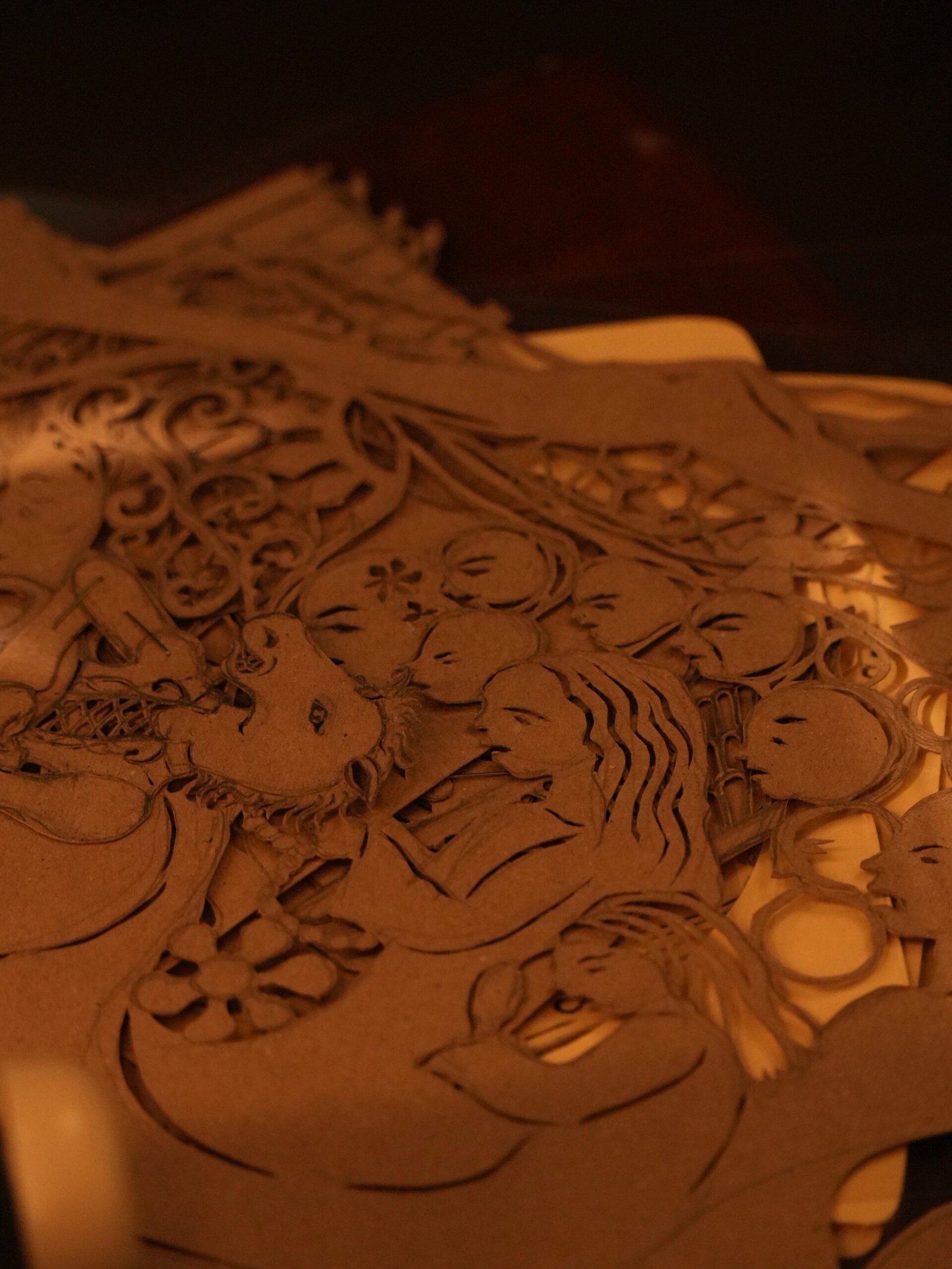
Shadow works
On shadow work and inner demons
Siglo: Recently, I had an exhibition that started as a joke: a shadowsmith doing shadow work. I combined the psychological process into the creation of the shadow cuts I exhibited. Lalo tuloy ako nagkaroon ng affinity sa term na shadowsmith [It deepened my affinity for the term shadowsmith even more]. Interestingly, the process of doing shadow work and shadowsmithing together is understanding yourself through how you create, your art, how you express yourself. There’s a therapeutic process where I cut the “inner shadows” or “inner demons” I’m trying to tame inside of me. Minsan naaawa ako [I feel pity] when I cut it. Minsan I cut it, then see how light can pass through the shadows of these creatures. Yun yung mga interesting discoveries [Those are the interesting discoveries].
Before, I saw shadowsmithing as a therapeutic process, but it involves more of you and your hands. With the fusion of shadow work and shadowsmithing, it’s a very contemplative journey for myself. Pwede palang pag-isipan yung mga takot, minsan mga insecurities or inner demons that you pray na ma-tame or mabawasan [Turns out you can reflect on your fears, sometimes insecurities or inner demons that you pray will be tamed or lessened]. It’s a way to understand yourself better in a process that I’m familiar with and fond of.
When something traumatic comes up, what happens?
Siglo: I really take time. We call it cocooning. I need to cocoon. It’s something I need to process in solitude, in silence. When that time comes, it draws inspiration to express in different ways, sometimes through performance or storytelling, but most of the time it’s in shadowsmithing. You grab a paper, your supply of cutting mats and cutters, so sige, magcu-cut ako [I’ll cut]. A lot of it comes from my own experience, individual expression, how I live in this city, ecosystem, neighborhood, community. The issues that have been very crucial in our lives as Filipinos, collectively speaking, affect the themes I’m working on.
What did you learn about yourself during a dark period that you felt was necessary to become the artist you are now?
Siglo: Art making is really completed with the experiences that we have as human beings. It’s very important for you to experience life where you feel so high and so grateful about the experiences you have, but it’s also important for everyone to hit rock bottom. When we say rock bottom, hindi siya fetish, or “gusto kong maranasan ’to.” Hindi eh [it’s not a fetish, or “I want to experience this.” It isn’t]. You understand that it’s part of growing. It helps us become more human and connect with other people. Knowing that, art making becomes more meaningful to you and to others who connect with you.
When you make art, you want to share something about yourself. When someone acknowledges that part of you from the artwork you created, sarap sa feeling na nagkaroon ng relationship ang story mo sa story ng ibang tao [it feels good that your story has formed a relationship with someone else’s story] and how they resonate with it.
Hiwaga
Why do you practice, and continue making this your career? What feeds you?
Siglo: It’s always a core memory moment for me na pag lumabas na yung shadow [when the shadow appears], there’s a “wow” in the audience. They find hiwaga in the hiwaga that you’re also sharing. That’s what drives us as well: to find that connection, what you poured into the work, sa matatanggap ng work [to those who receive the work]. It’s not always about the applause, but masaya sa feeling [it feels good] that they acknowledge you.
Can you describe the first time you felt that hiwaga?
Siglo: The first time it happened to me, for some weird reason, I was kinilig [giddy] and humbled at the same time. I’m into this field, into this life work, and I know that I’m dedicating this portion of my life to share experiences, life, through this art form. It’s a very strong moment for me to keep driven to share this magical world of shadow play with more audiences. I’d be much more humbled and happy to know that a lot of people in the future would be involved in this creation, not just a few people who have been practicing it for decades. I hope that more people will invest more time to learn about it, to also have their own voice they can discover through it.
Is shadowsmithing hiwaga, or work?
Siglo: I always feel like there’s magic in shadowsmithing, or hiwaga. I always find the moment when I light it for the first time, when it’s finished, and every time it happens there’s this “whoa.” A human hand and human mind and soul invested time to have this work become alive. Magandang experience [A beautiful experience]. It’s not a mayabang [boastful] note. Nandun siya: ano pa pwedeng mangyari? Pwedeng mabuhay? [It’s there: what else can happen? Can it come alive?] A constant search, trying designs, new combinations, and patterns.
Live life
What do you feel you haven’t explored yet?
Collaborative productions pa [still]. I want to test more of the masks with shadows. I learned that before and want to test it again, along with a mix of overhead projector and LCD projector. I’m also interested in those methodologies in performing. Although we’ve tested that before, alam ko lang na gusto ko pa siyang mapalawig [I just know I want to expand it further] in my own practice, as well as in Mahiwaga St. I also want to try a magic box. Dahil nasa Pilipinas tayo [Since we’re in the Philippines], I want to call it mahiwagang box: a peek-inside, little theater show, but mixed with shadows. Dami pang bagay na pwedeng malaro [There’s still so much to play with]. I want to test a full-scale production na puro shadows [of pure shadows]: a human shadow, masks, puppets.
What’s the most memorable life lesson you’ve learned from this?
As cliché as it may sound, the love for the form makes you grow more as a human being. You have a high regard for the art form, and when I knew that I love this form, that’s when I learned how to borrow its strengths and convey what you can say through it. Sumusunod na [It follows]: if you love something, you find ways that can help you become a better human being. That’s a hard lesson to learn.
What is the meaning of loving the craft, or the life work that you have, or the career path you’ve chosen? It’s hard to learn, and memorable as well to understand and comprehend. It encapsulates a lot of things: your respect to study it, your devotion to stretch out what you’ve learned, to continuously test things, to devote your time to it, sharing it with others, advocating for it. Kaya feeling ko, love talaga [That’s why I feel it’s really love]. Love is the answer.
If somebody from another generation came across your works, what would you want them to take away? Honestly, it’s live life. You express who you are, be with other people, take care of your loved ones, live life to the fullest, and maybe you’ll find your own voice and your own way to create more magical moments or interactions. It may not be in the same art form; it may be a different life path or journey, but devote your energy to it. Basically, just live life and share it with the people around you, your generation, your contemporaries. Fight for what you believe in, your advocacies, as long as you respect humanity, respect the ecosystem, the greater life. •
Editor’s note: Slow Craft is a documentary series by DAZE Creative Studio exploring, in the studio’s words, “Filipino artists, designers, craftspeople, and the lives behind their work.” Siglo’s episode was directed and produced by Mauro Daez, with cinematography by Kiko Navasca, camera operation by Vince Aaron Bercasio and Jessica Daez, and editing by Gabby Rosales and Vince Aaron Bercasio. It was filmed at SGD Coffee Bodega. Kanto presents the episode’s conversation in edited written form through a content-sharing partnership with DAZE Creative Studio, and thanks the studio for making this interview possible. Watch the full episode on DAZE Creative Studio’s YouTube channel.