Interview The Kanto and Novice teams
Images Metrobank MADE, with Raphael David
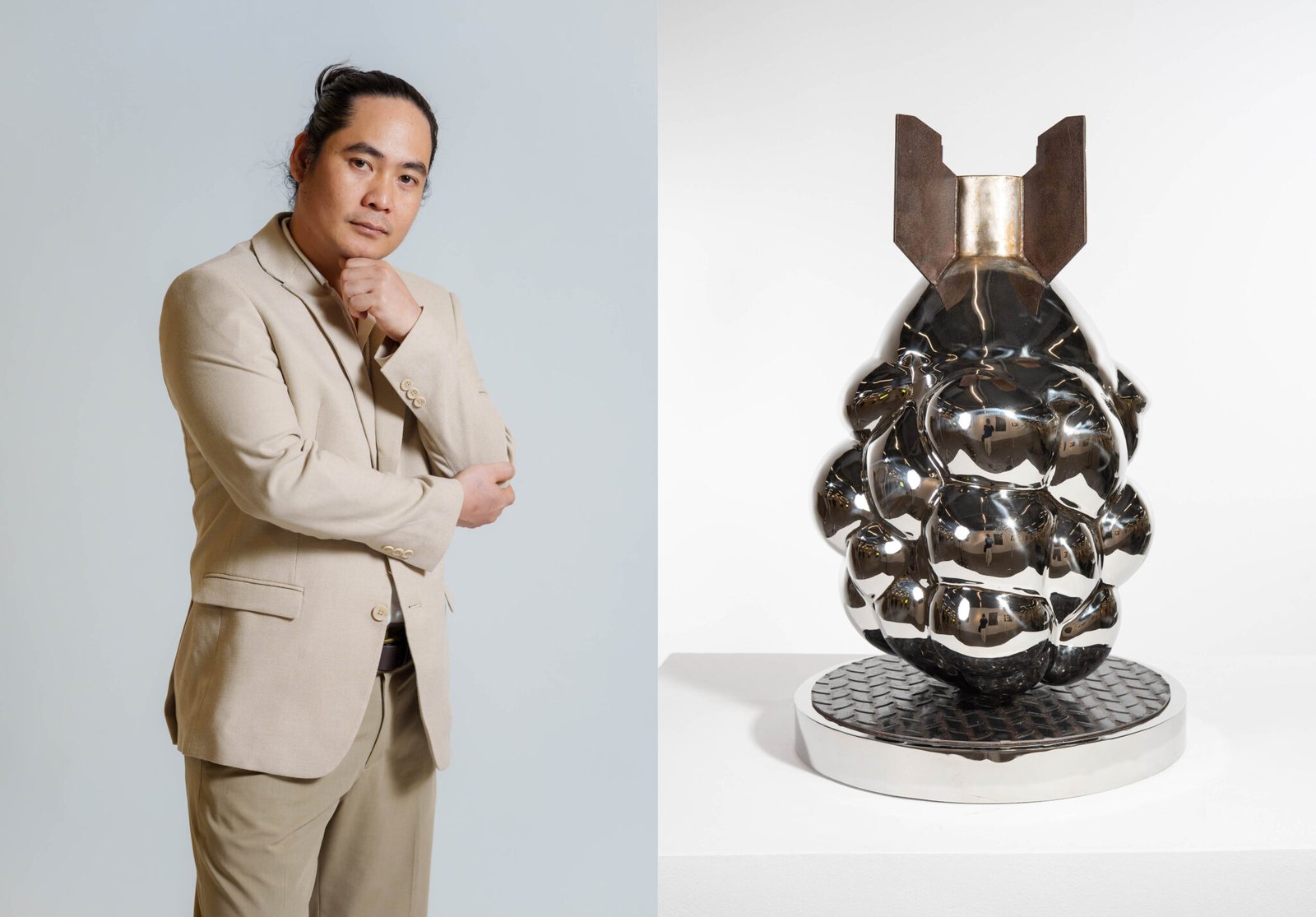
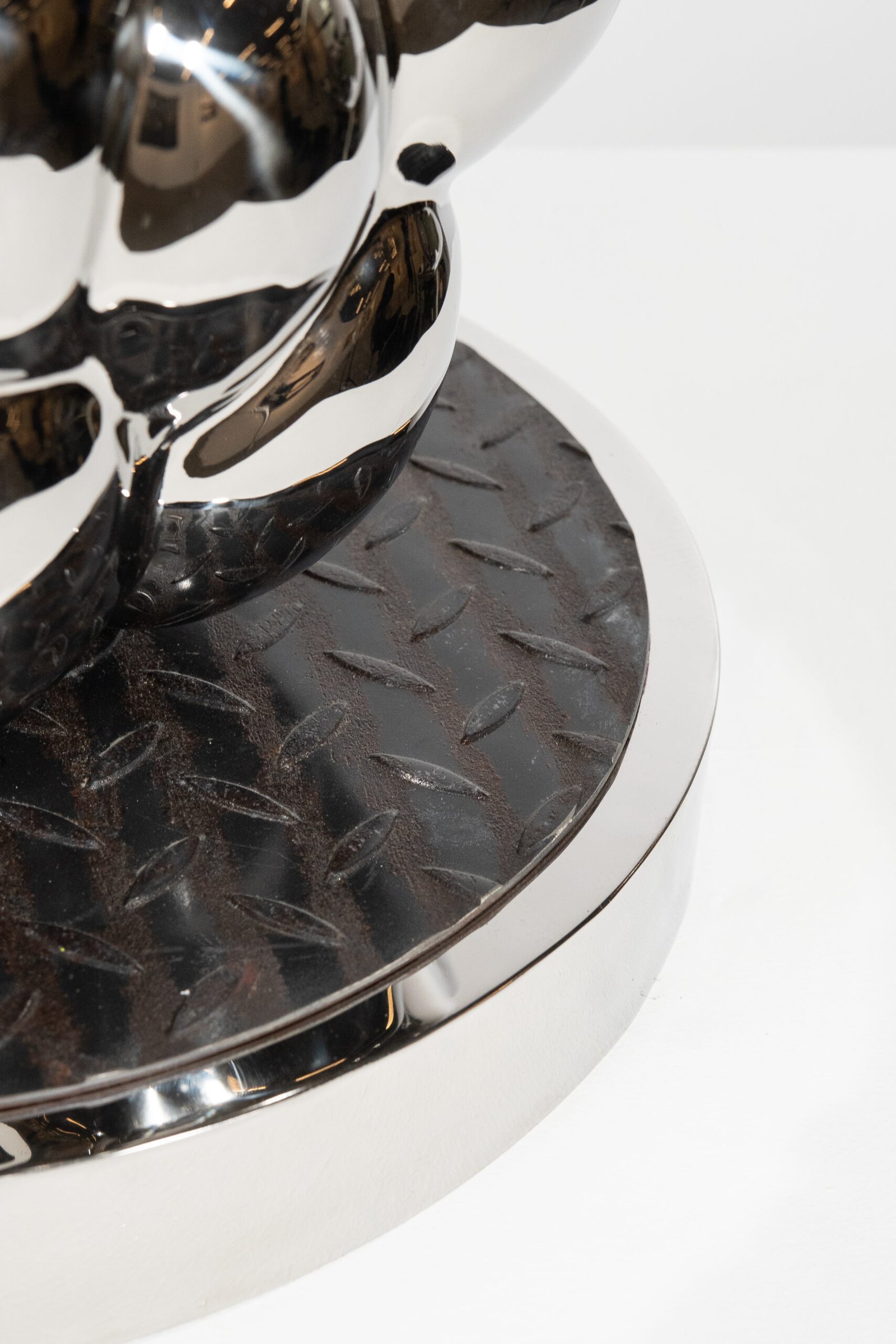
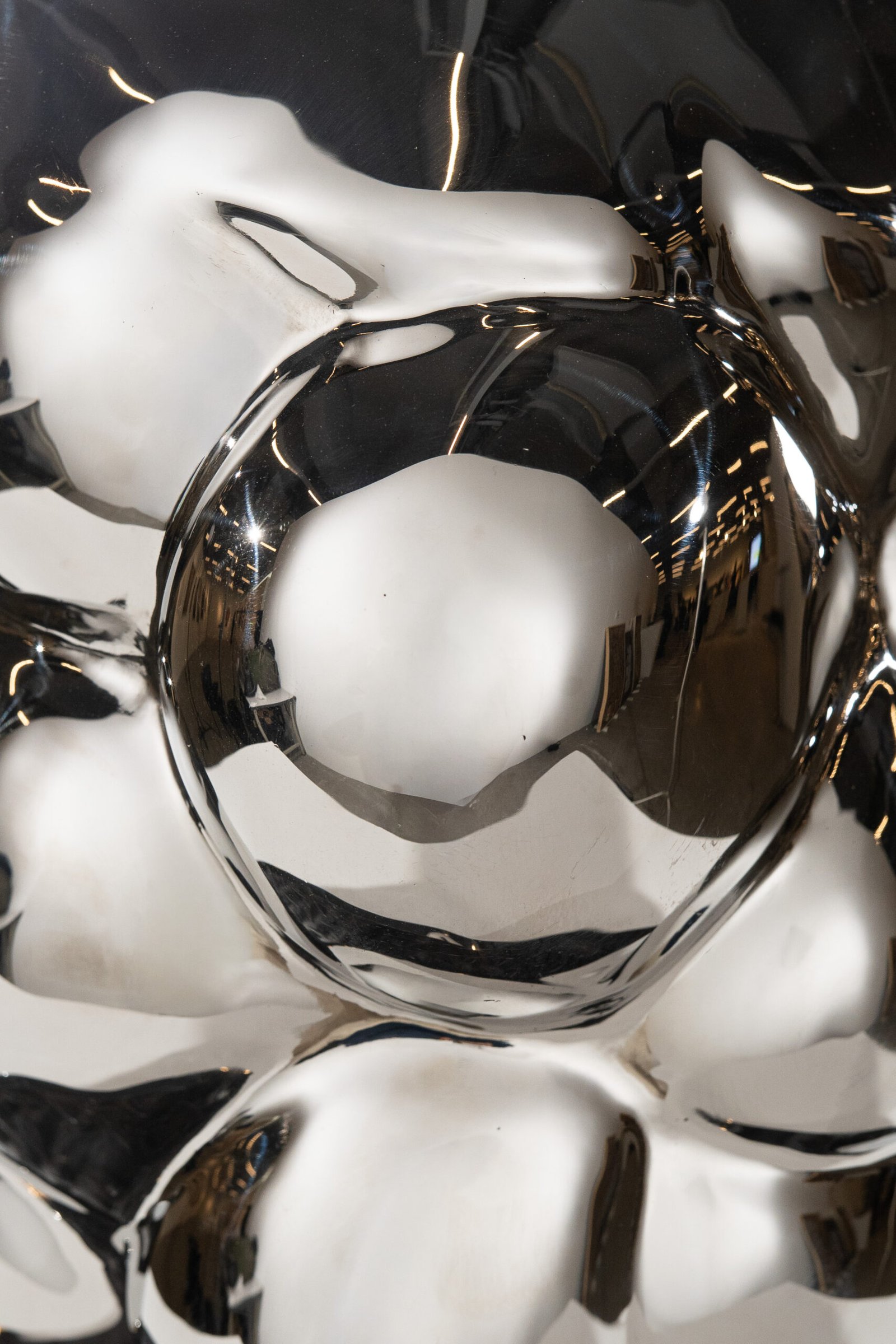
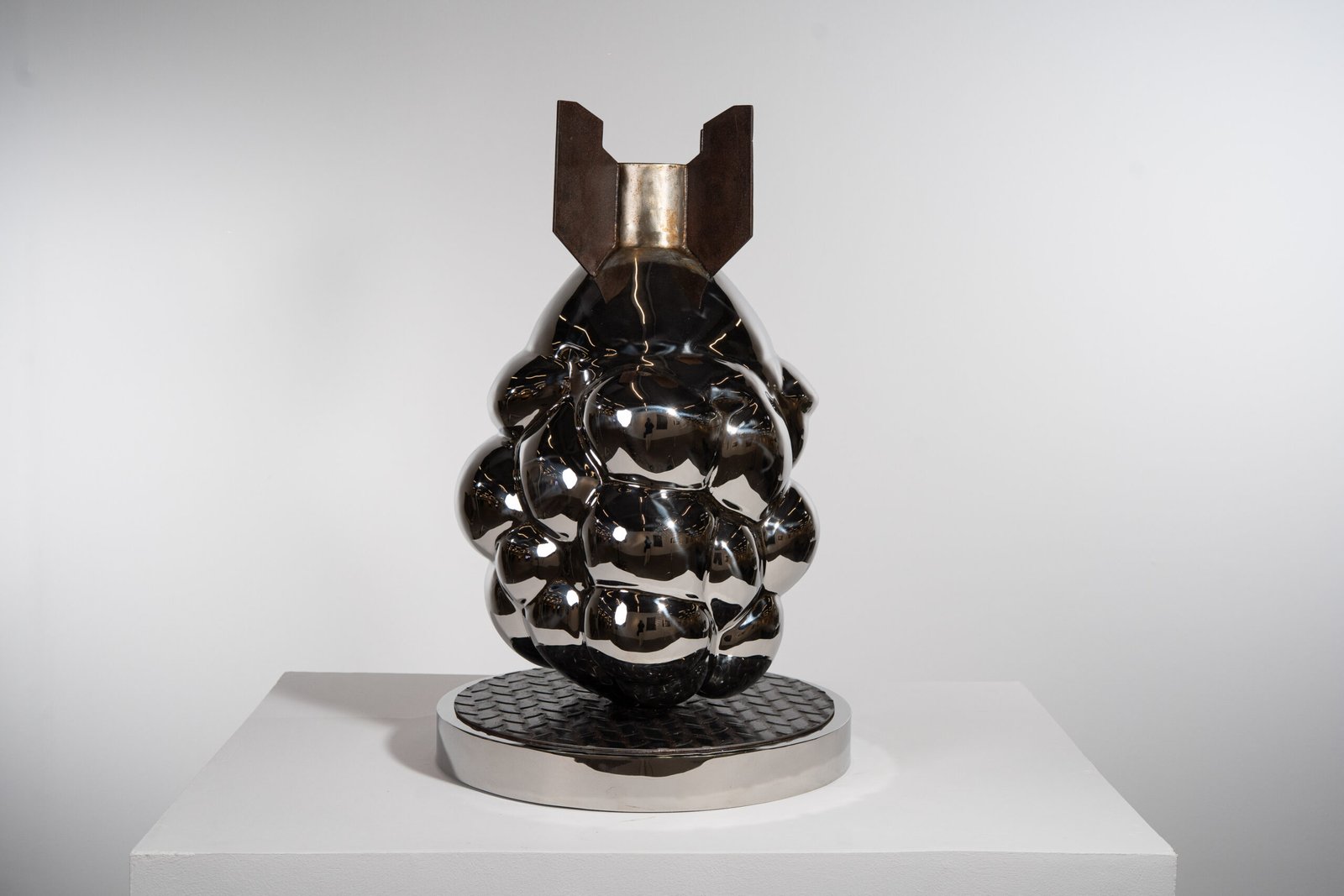
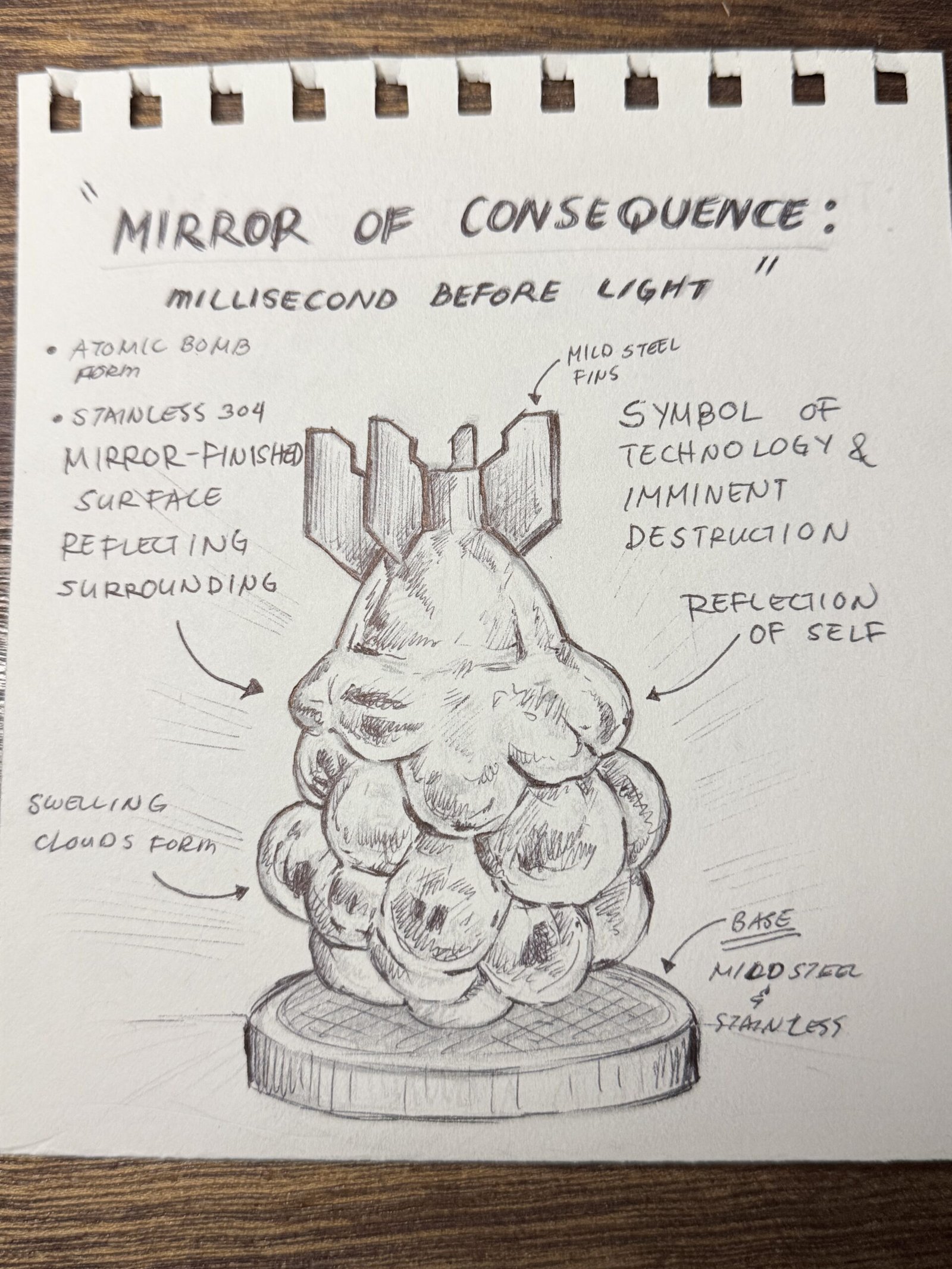
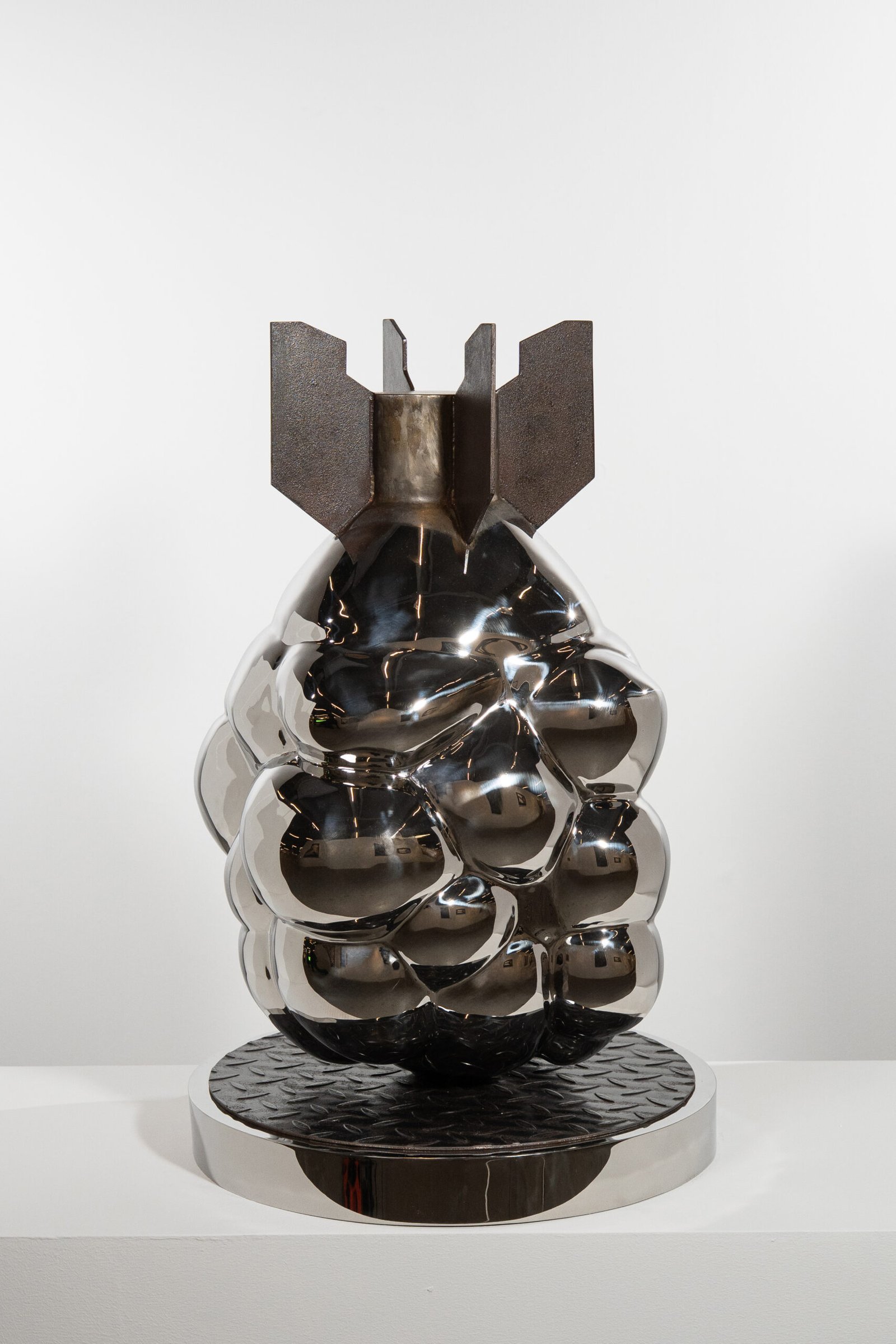
Mirror of Consequence: Millisecond Before Light takes the form of an atomic bomb: a swelling mushroom cloud in mirror-polished stainless steel, crowned with fins of mild steel. Sculptor Raphael David chose the mirror finish specifically; anyone looking at the moment before detonation finds their own face with clarity in the smoky wake.
That reflection is the crux of the piece’s final question: whether the same technological progress that defines us might also be engineering our own extinction. David has worked with stainless steel for years, shaping, welding, grinding, and polishing organic, biomorphic forms that usually tell stories of growth. He now bends this discipline toward something considerably darker and truer by the day. Shaping the sculpture’s two-millimeter steel was, in his own words, the hardest part of bringing it to life: loud, physically demanding work, a departure from the quieter practice of painting that he also keeps.
This year’s MADE theme, “Traverse: Creativity in Motion,” matched a shift already underway in David’s thinking, anchoring this conversation with Kanto about constructing a piece that asks more questions than it answers.
Hi, Raphael! Congratulations on your MADE win! Before we get into the piece itself, most artists point to a moment or a person that first pulled them toward the arts. Who or what was yours?
Raphael David, MADE 2026 special citation for sculpture: Thank you! I think art has always been around me growing up. My mother studied Interior Design, my older brother is an illustrator, and I also have uncles who are artists. So being creative was something I was exposed to at an early age.
But my own journey really started with drawing and painting, and later I became interested in special effects and working with different materials. When I studied Fine Arts at UP, I started exploring materials like resin, plaster, and eventually metal. That was when I realized I really enjoyed creating things with my hands, and eventually, that led me to sculpture.
Every artist carries around more ideas than they can make room for. Something about your work won out over the rest at MADE. What was your big idea for your winning work? Did anything else almost take its place?
Raphael David: The big idea was about the tension between human progress and destruction. We keep advancing through technology, but at the same time, the same technology can also be used to harm or destroy us. That led me to the question: are we also engineering our own extinction?
I had other ideas and sketches, but this concept stayed with me the most. For the material, I was already sure about stainless steel because its reflective surface allows the viewer to see themselves in the work. In a way, it makes them part of the question.
There’s usually a piece of the finished work only the artist knows about, like a material swapped in last minute or perhaps, a detail handled a certain way for reasons known only to you. What’s that detail in this piece?
Raphael David: For this piece, I stayed very close to my original drawing. There weren’t really any hidden changes or last-minute decisions. What you see in the finished sculpture is almost exactly how I originally imagined and designed it.
Where or what aspect of your piece would you want someone to slow down, and what would they find at the end of the wait?
Raphael David: I want the viewer to slow down and engage with the piece beyond just its physical form. For me, it’s meant to be interactive and cerebral, it asks you to think, question, and reflect. I want the experience to be more conceptual, where the meaning comes not only from what you see, but also from what the work makes you think and feel.
Craft has its difficulties that cost the most sweat but draw the least attention. What gave you the hardest time technically in bringing this piece to life?
Raphael David: The most difficult part was shaping the 2mm stainless steel. Stainless is a very hard material, so forming it takes a lot of time, effort, and patience. The process can be physically demanding, dangerous, and very loud. Unlike painting, where the material is softer and the process can be more serene and quiet, working with steel is almost the opposite, there’s hammering, grinding, welding, heat, and noise. But despite all that, there’s a strong sense of fulfillment when I finally see the finished piece.
Stepping back from this piece and looking at your practice as a whole, where does it sit against everything else you’ve made? Is it treading familiar ground, or is this a work that pushed you further out than you usually go?
Raphael David: In terms of material and process, it’s still familiar ground because stainless steel has been part of my practice for a long time. I’m already familiar with shaping, welding, grinding, and polishing it, and I’ve always been interested in organic and biomorphic forms.
But conceptually, I think this piece pushed me further. A lot of my previous works focus on growth, nature, movement, and transformation. With this piece, I explored something darker and more uncomfortable, conflict, destruction, technology, and the possibility that our own progress can also become a threat to us.
It also pushed me to think beyond creating an interesting or beautiful form. I wanted the sculpture to carry a question and create tension. The reflective stainless steel is not only there for its visual quality; it also brings the viewer into the work through their own reflection.
So, in a way, the piece still carries my visual language and my way of working, but the direction and the questions behind it pushed my practice into a different territory.
David working on Millisecond Before Light
Stepping back from this piece and looking at your practice as a whole, where does it sit against everything else you’ve made? Is it treading familiar ground, or is this a work that pushed you further out than you usually go?
Raphael David: In terms of material and process, it’s still familiar ground because stainless steel has been part of my practice for a long time. I’m already familiar with shaping, welding, grinding, and polishing it, and I’ve always been interested in organic and biomorphic forms.
But conceptually, I think this piece pushed me further. A lot of my previous works focus on growth, nature, movement, and transformation. With this piece, I explored something darker and more uncomfortable, conflict, destruction, technology, and the possibility that our own progress can also become a threat to us.
It also pushed me to think beyond creating an interesting or beautiful form. I wanted the sculpture to carry a question and create tension. The reflective stainless steel is not only there for its visual quality; it also brings the viewer into the work through their own reflection.
So, in a way, the piece still carries my visual language and my way of working, but the direction and the questions behind it pushed my practice into a different territory.
Of all the platforms and spaces open to a Filipino artist today, you brought this piece to Metrobank MADE under this year’s theme, “Traverse: Creativity in Motion.” What made the competition the right home for it?
Raphael David: I felt that Metrobank MADE was the right platform because the theme “Traverse: Creativity in Motion” connects with where I am as an artist right now. For me, it’s about moving forward, exploring new ideas, and pushing myself beyond what I usually do.
This piece reflects that. The material and process are familiar to me, but the concept is more challenging and thought-provoking. MADE gave me the opportunity to share that direction and also challenge myself as an artist.
Metrobank MADE has been part of the landscape of Philippine art and design recognition for forty-two years now. In your own words, what does the program represent to you as an institution?
Raphael David: For me, Metrobank MADE is an important platform for Filipino artists. For more than four decades, it has given artists the opportunity to share their work, challenge themselves, and gain recognition. I also see it as a platform that encourages artists to keep growing and exploring new ideas.
Being part of MADE means becoming part of a long tradition that supports and celebrates Filipino creativity.
This piece is now part of MADE’s history, and by extension, Philippine art’s. What do you hope it contributes to that bigger picture?
Raphael David: I hope this piece contributes a question rather than just an answer. It reflects some of the realities of our time, rapid technological progress, conflict, and the uncertainty of where humanity is heading.
As part of MADE’s history, I hope it becomes a reflection of this moment and shows how Filipino artists can respond to what is happening around us. And hopefully, years from now, the work can still make people think, question, and reflect. •
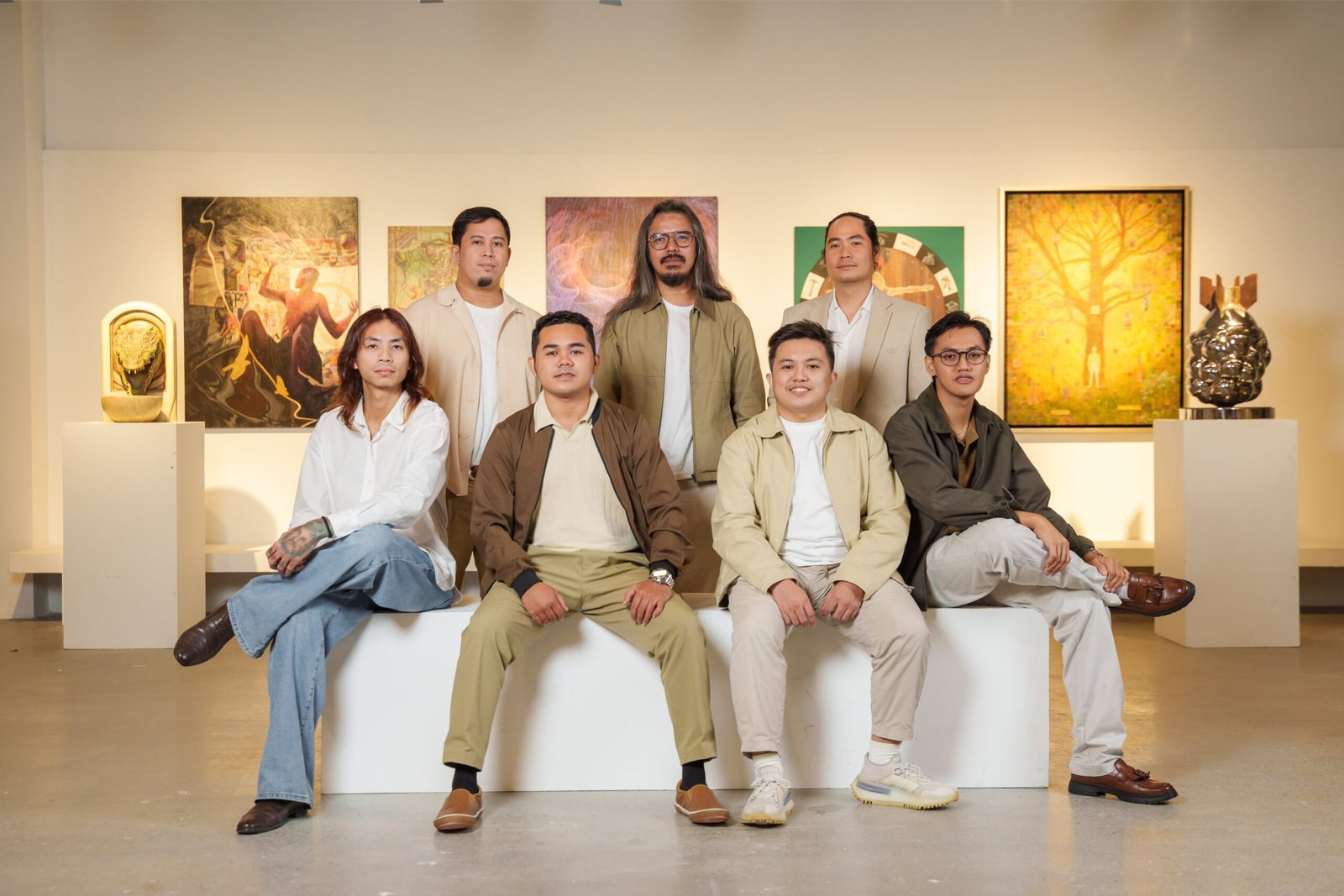

Our MADE 2026 coverage is in synergy with Novice