Interview The Kanto and Novice teams
Images Metrobank MADE, with Aldrin Olaguir
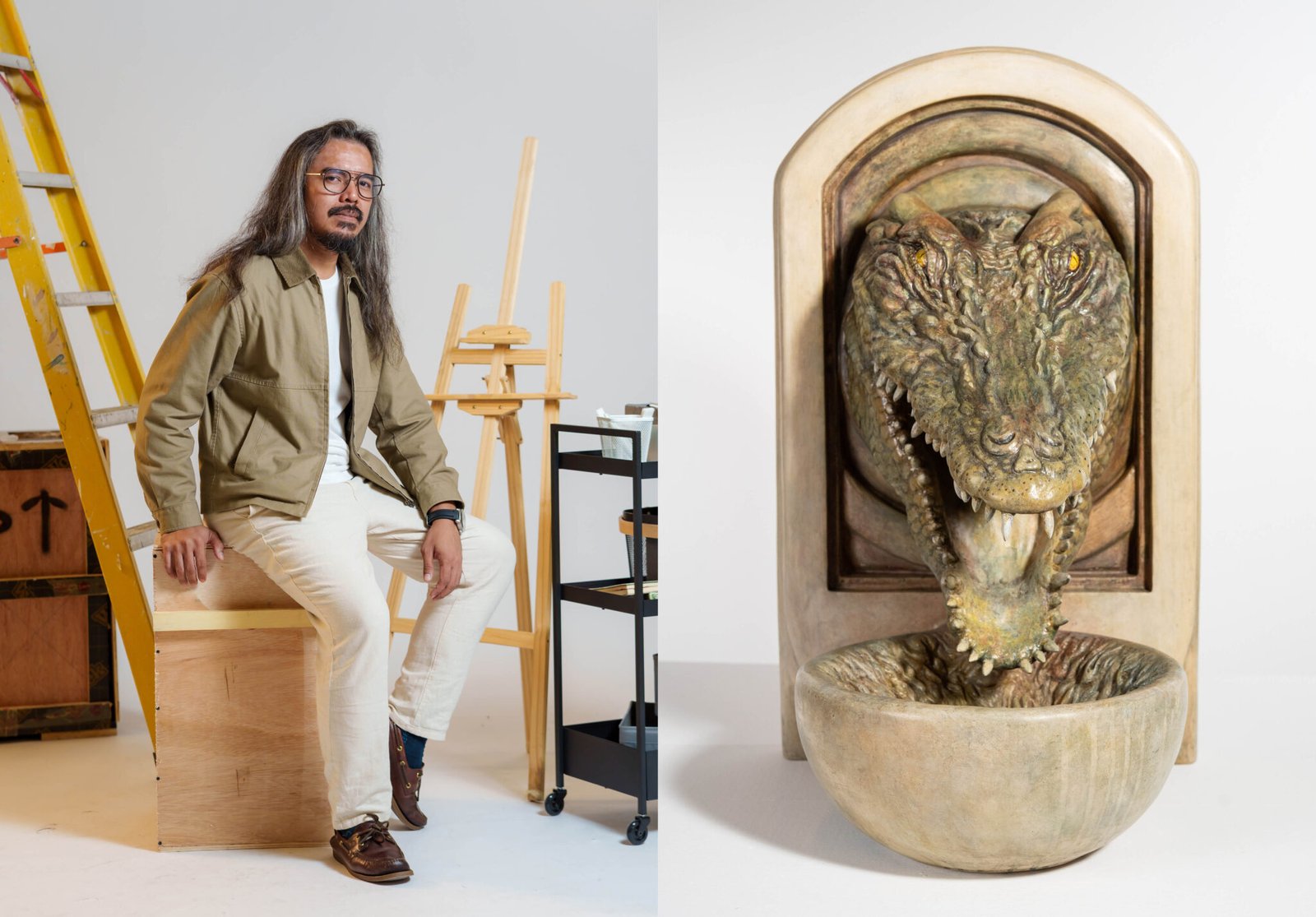
Aldrin Olaguir watched someone make the sign of the cross at his sculpture. Hinahalal, Binabanal takes the shape of a holy water font, its basin left deliberately dry; in place of a sacred figure juts the menacing head of a crocodile rendered in stainless steel and marine epoxy, finished to look like marble aged over years. Despite the disjointed imagery, Olaguir watches with bewilderment as the figure went through the motions one does when entering a church.
The piece’s title translates to “the chosen, the sanctified,” which gets to the heart of the work’s message: the process by which a choice, repeated long enough, calcifies into faith. Olaguir calls it a familiar tension for Filipinos: between devotion and power, morality and what we tolerate, built into the sculpture’s form.
This year’s theme, “Traverse: Creativity in Motion,” gave Olaguir the opening to talk with Kanto about making the piece, the moment a stranger’s instincts proved his point, and what he thinks an institution like MADE means for the artists it recognizes.
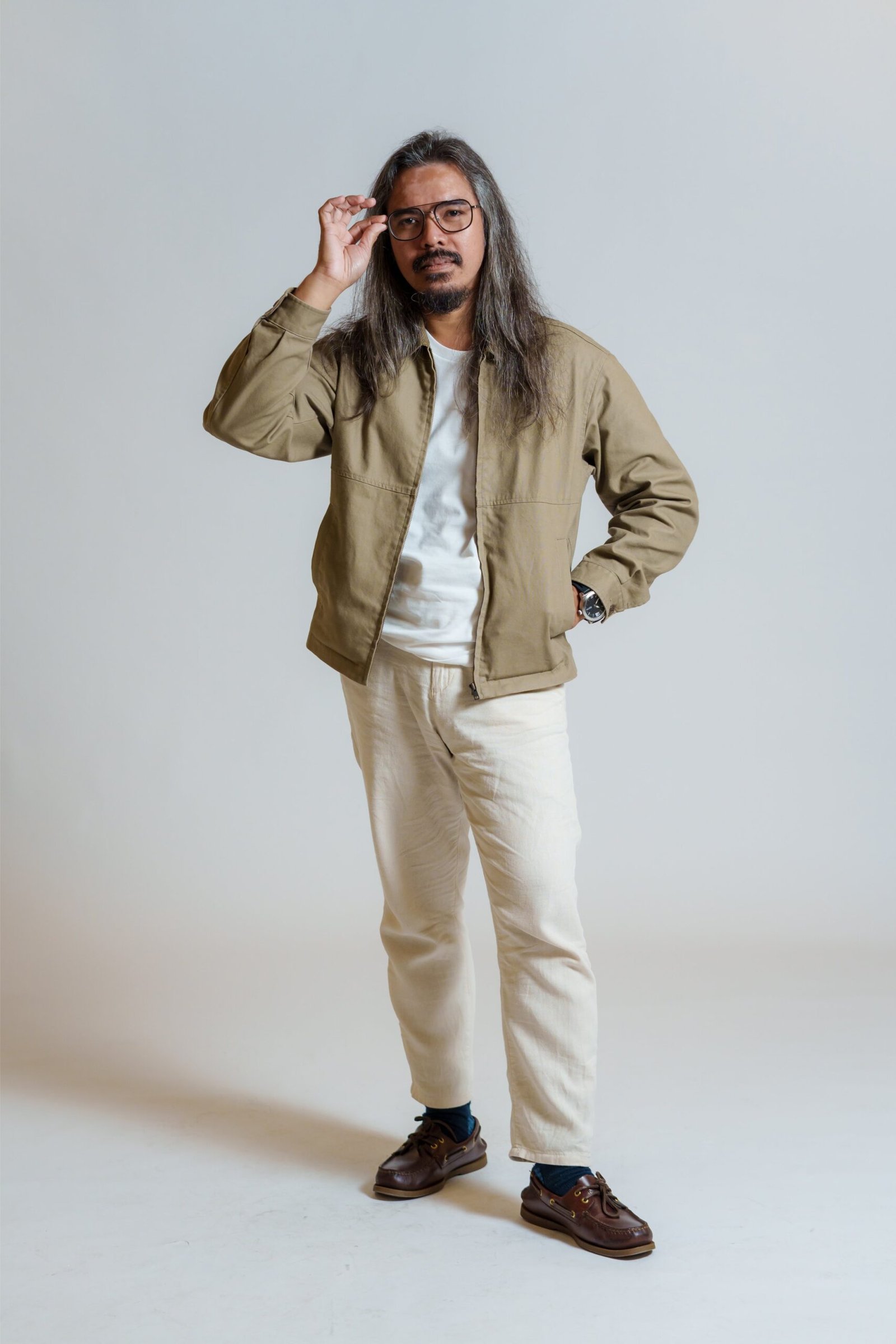
Hi, Aldrin! Congratulations on your MADE win! Before we get into the piece itself, most artists point to a moment or a person that first pulled them toward the arts. Who or what was yours?
Aldrin Olaguir, MADE 2026 Grand Awardee for Sculpture: As far as I can remember, I was already drawn to the arts at a very young age. My earliest memory is from when I was around six years old. One clear memory is of drawing Tweety Bird while my mother was ironing clothes. I was especially excited to draw the three pointy strands of hair. At that time, I was watching Voltes V and other cartoons.
What I did was probably what any other kid would do; we copied what we saw. But eventually, we started drawing our own robots. I guess it was a man’s dream: creating and riding our own robots. Hehe.
Later, when I entered high school, I took drafting as an elective. That’s when I started focusing more on technical drawing and freehand drawing. Eventually, my friend and I won an international competition in Hong Kong. We received government funding to attend the awards ceremony at City University of Hong Kong.
That trip was a turning point for me because it was the first time I really broadened my horizons. I saw so many different styles and techniques from competitors around the world.
At the same time, I was a bit confused because I saw that some of the other competitors had submitted digital prints and digital works. I didn’t even know those things existed, or that they could be used the way they were in the competition. At the time, I knew art as painting, drawing, mixed media, and sculpture. Digital art was completely new to me.
That was the first time I asked myself, “What is art?”
That competition made me realize art isn’t defined by a particular medium. So, if it’s not the medium that defines art, then what is it?
That was probably my very first big question about art. And I think that’s where everything began.
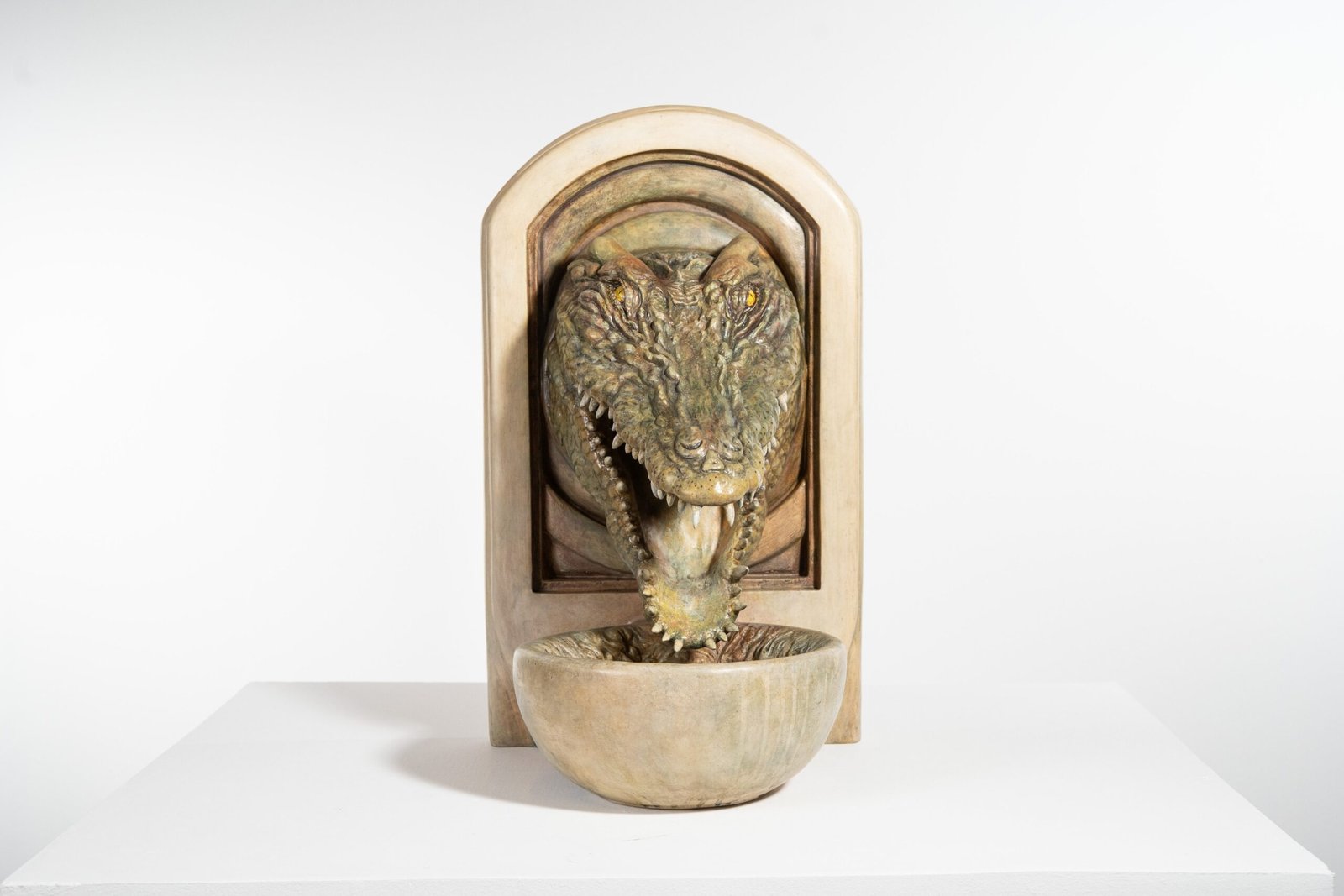
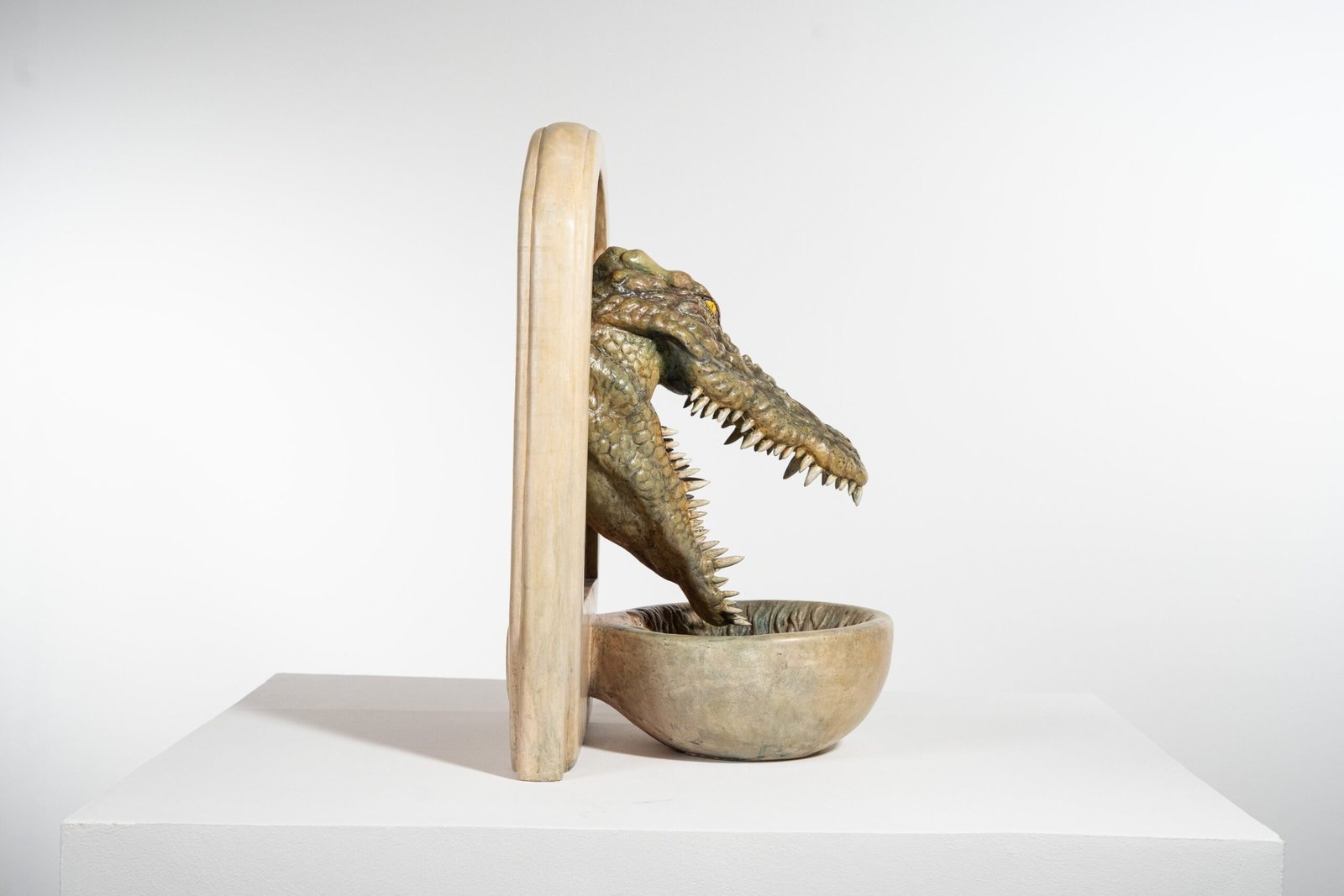
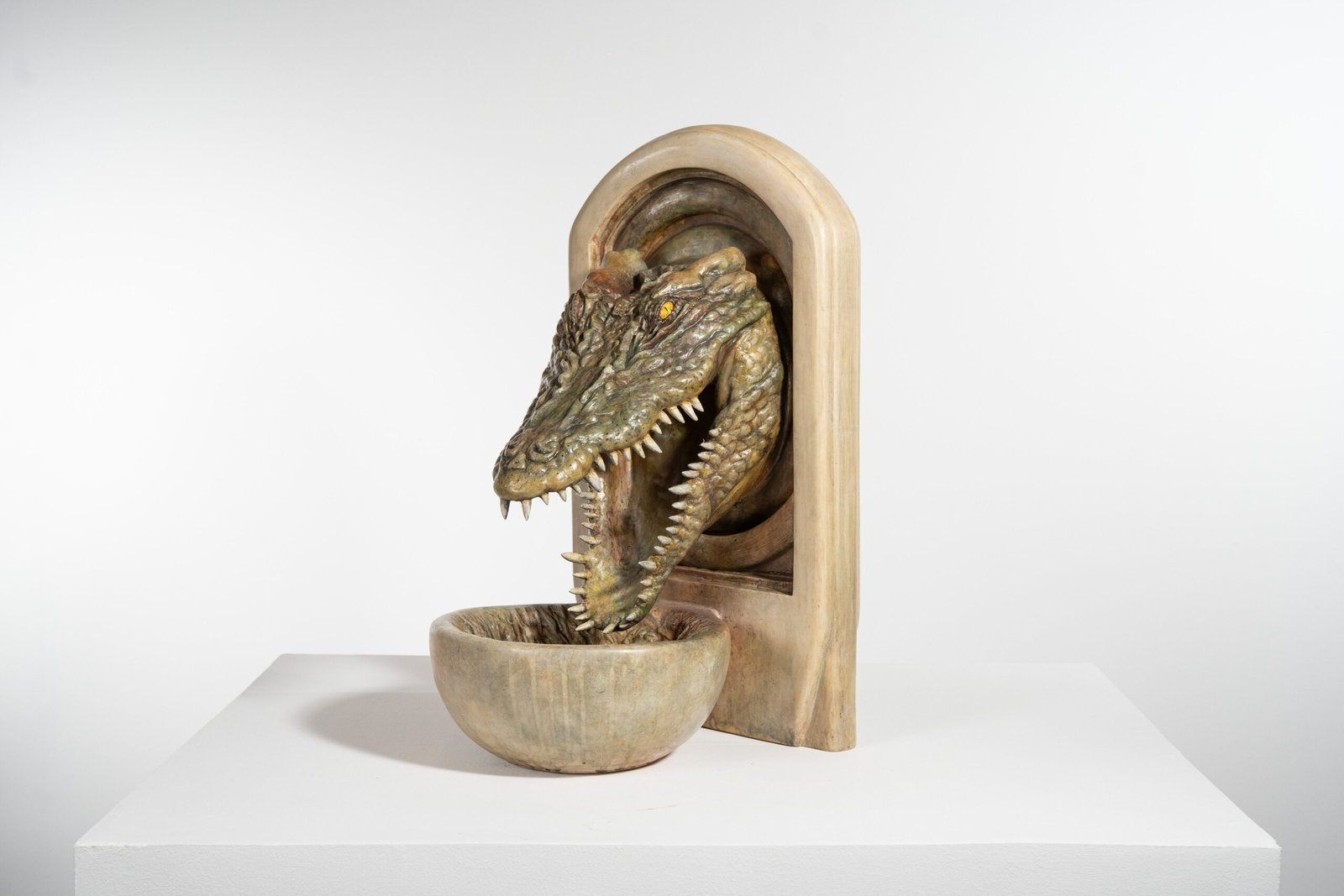
Every artist carries around more ideas than they can make room for. Something about your work won out over the rest at MADE. What was your big idea for your winning work? Did anything else almost take its place?
Aldrin Olaguir: The big idea behind Hinahalal, Binabanal came from something I think is very familiar to us as Filipinos: the idea of choosing something, and then somehow making that choice sacred.
The sculpture takes the form of a holy water font, but instead of something purely sacred, I created a crocodile. The basin is also deliberately dry.
For me, that creates a tension between faith and choice, devotion and power, morality and what we are willing to tolerate. The crocodile becomes a familiar symbol of something predatory, but it isn’t presented as a monster from outside us. It’s something we have chosen to place there.
The title Hinahalal, Binabanal, the chosen, the sanctified, became important because it turns the question back toward us. What happens when the things we choose, repeatedly, eventually become normalized or even sanctified?
There were definitely other directions I could have taken. I considered ideas that were more complicated visually and more obviously connected to my previous sculptural work. But I realized that this particular idea became stronger when I simplified it. As the saying goes: “the more literal, the more logical.”
Instead of adding more symbols, I wanted the form itself to carry the contradiction.
There’s usually a piece of the finished work only the artist knows about, like a material swapped in last minute or perhaps, a detail handled a certain way for reasons known only to you. What’s that detail in this piece?
Aldrin Olaguir: For the crocodile, I originally planned to make all of its teeth out of stainless steel. But the stainless steel I bought turned out to be a little too small for what I needed. I also didn’t have enough time to procure another set because it would have taken a lot of work to grind and shape each individual tooth.
So, in the end, I used the stainless steel as the armature and covered it with marine epoxy to form the teeth.
I actually like how it turned out because, although the stainless steel is still there underneath, what you see is something that was shaped and finished by hand. It’s one of those details that you probably wouldn’t notice unless you knew how it was made.
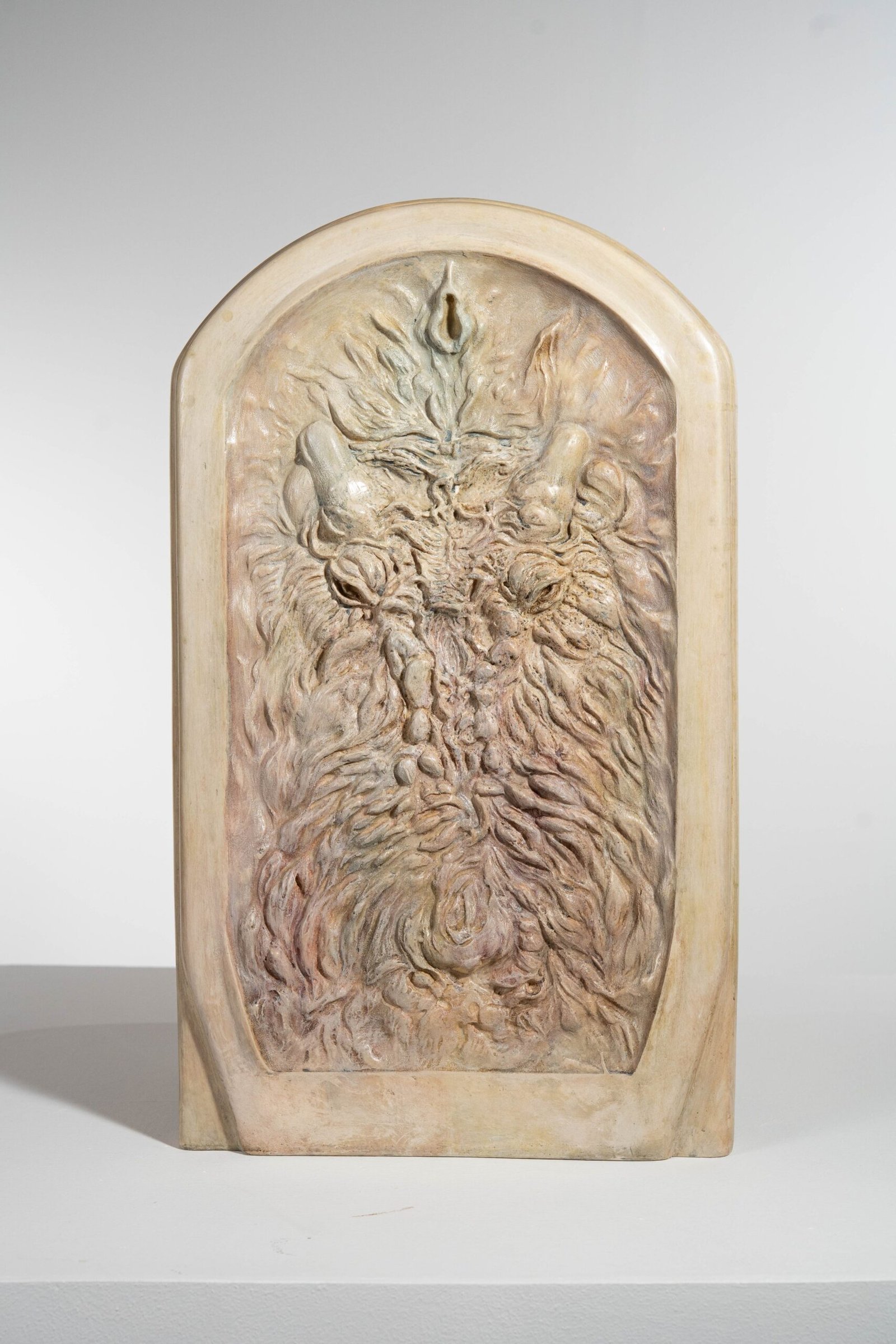
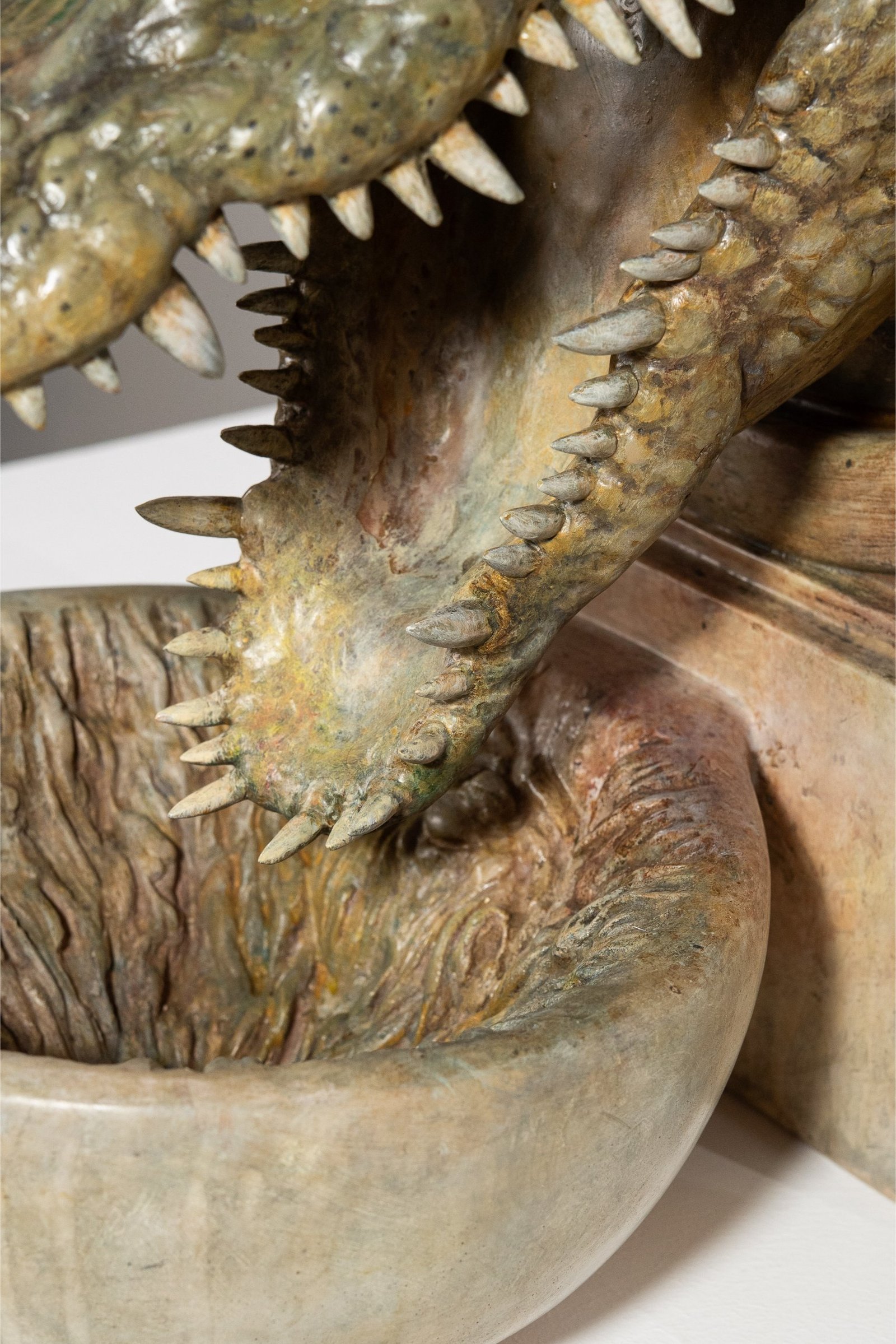
Hinahalal, Binabanal by Aldrin Olaguir, 32.5 cm x 33.5 cm x 56 cm, resin, marble powder, fiber glass, stainless steel, marine epoxy, and acrylic paint, 2026
Where or what aspect of your piece would you want someone to slow down, and what would they find at the end of the wait?
Aldrin Olaguir: work as it resonates with the uncomfortable truths we have neglected or negotiated within our own hearts.
I want them to feel that they are standing in the presence of something sacred, and yet, at the same time, something unsettling: the presence of the false holy.
Craft has its difficulties that cost the most sweat but draw the least attention. What gave you the hardest time technically in bringing this piece to life?
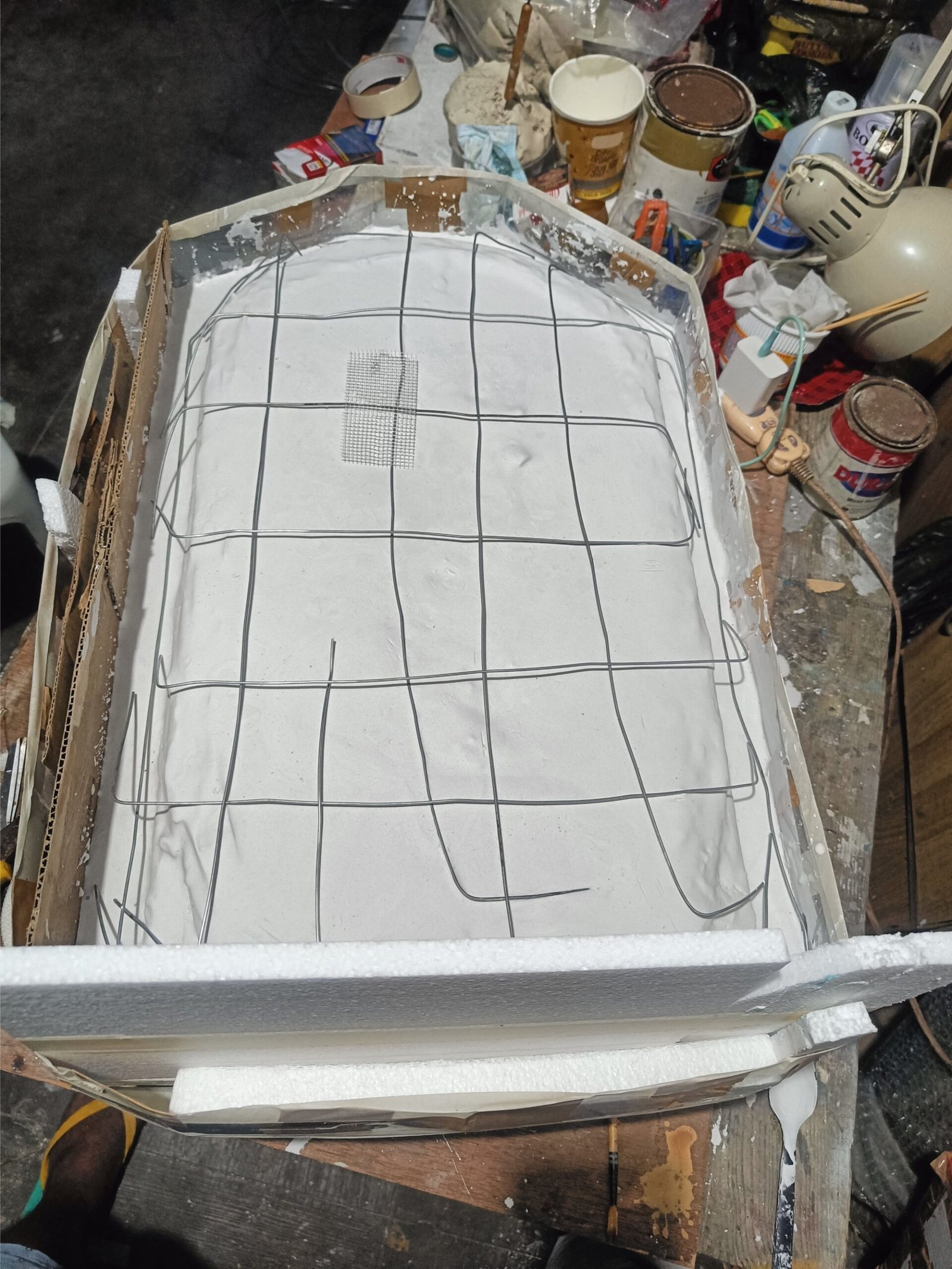
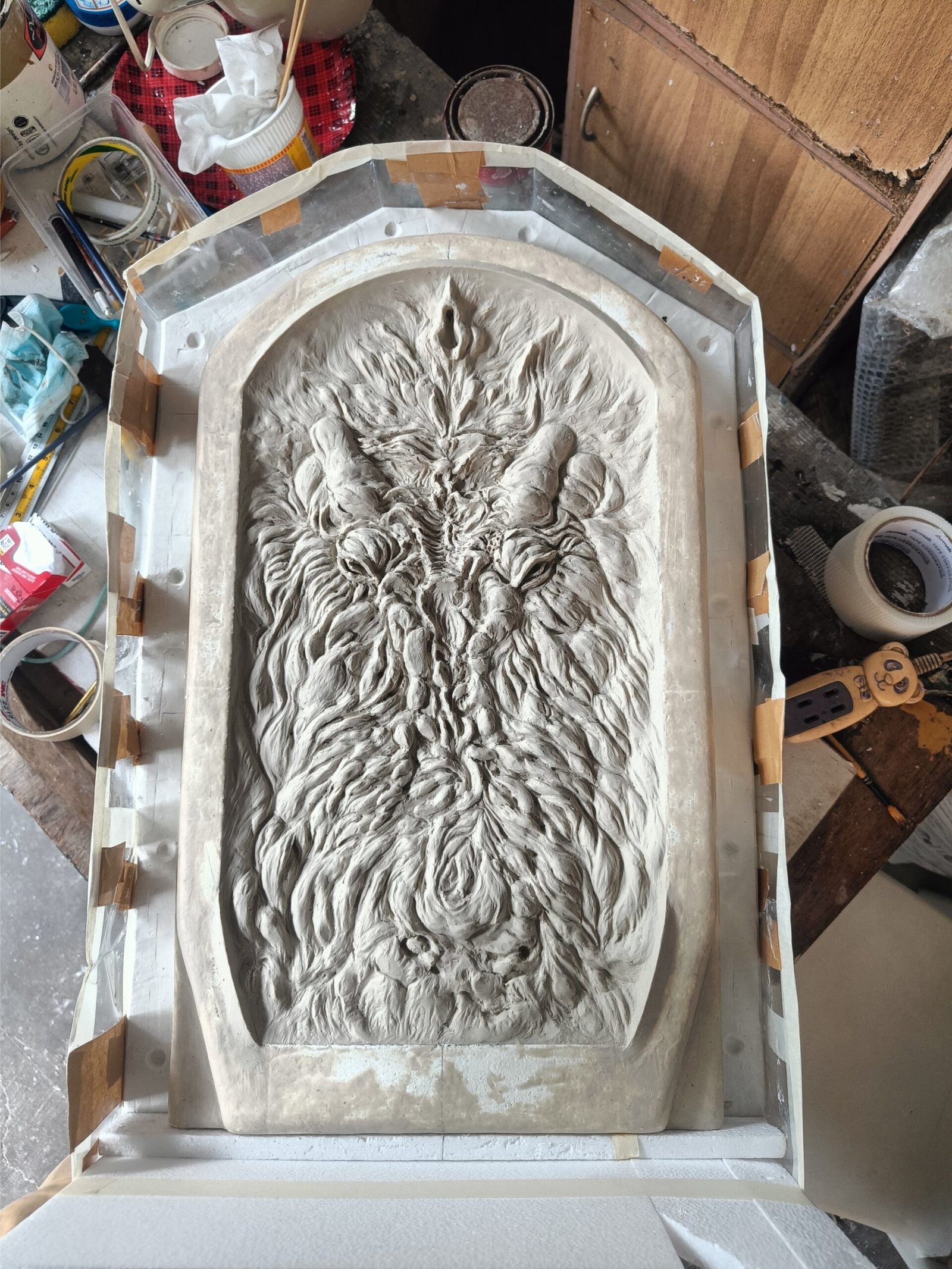
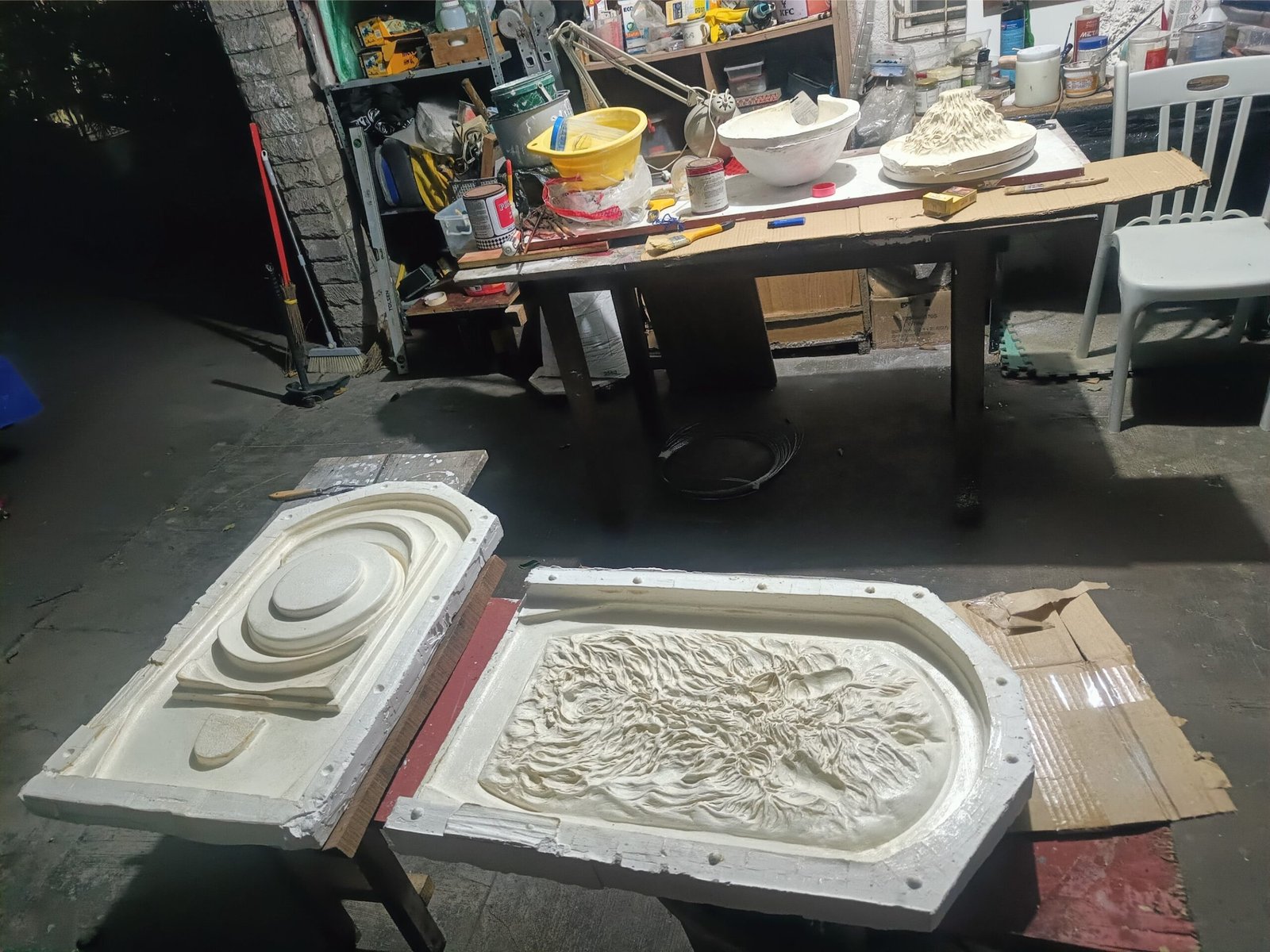
Aldrin Olaguir: My biggest challenge was actually in the finishing touches, figuring out how to retain the authentic feel of marble, particularly the appearance of naturally stained or aged marble, in keeping with the iconography that the work is derived from.
I wanted the surface to feel like real marble that had existed and aged over time, rather than simply making it look like a new marble object. So, in a way, I was really showcasing my faux-finishing skills. Hehe.
For me, the challenge was finding that balance between making the surface convincing and still allowing the material to support the meaning and character of the work.
Stepping back from this piece and looking at your practice as a whole, where does it sit against everything else you’ve made? Is it treading familiar ground, or is this a work that pushed you further out than you usually go?
Aldrin Olaguir: I see this work as connected to my previous practice, but it also pushed me somewhere different.
A lot of my earlier work deals with the body, wounds, memory, distortion, and the things we carry internally. I often use creatures and distorted forms to talk about those conditions.
Hinahalal, Binabanal still has that DNA, but the language is more direct.
Instead of creating an entirely invented creature or mythology, I took something culturally recognizable, a religious object, and placed a very recognizable Filipino symbol within it.
That pushed me to think more about collective behavior rather than purely personal experience.
So I don’t see it as a complete departure. I see it as another door within the same practice.
It’s still about the things we carry and the things that shape us, but this time I’m looking beyond the individual. I’m asking how our personal choices, beliefs, and compromises can accumulate and become part of something larger than ourselves. At what point does something we choose become something we accept, and eventually, something we sanctify?
What has someone told you about what they saw in the piece that surprised you?
Aldrin Olaguir: Because of the MADE restrictions, only a limited number of people have actually seen the work so far. But there are two responses that really stood out to me.
First, some people have seen the work as very current. They felt that it was directly connected to, and almost literally reflected, what is happening in our social and political reality right now.
The second one was something I actually witnessed myself. I saw some of the audience touch the basin. That was okay, I expected that. But then I saw someone actually make the sign of the cross.
I was horrified. Hehehe. I was literally thinking, “Waah!” I was about to stop them. But then I thought, it’s done. The deed is sealed. It’s already over.
I was worried that people with genuine faith might see the work as creating some kind of blasphemous sacred object or fetish. The ritual of the work was supposed to be suspended, but in that moment, the viewer somehow completed it in an unexpected way.
Of course, I don’t think they did it knowing the consequence or implication of what they were doing. I think they simply responded through a semiotic association, through a familiar gesture they’ve learned through habit, culture, and religious practice. They saw the form, recognized its association with something sacred, touched the basin, and instinctively performed the ritual.
And in a strange way, I think that further legitimizes the idea behind the work, because it shows how powerful these symbols are. Even when the ritual is deliberately suspended, our familiarity with the symbol can be strong enough that we instinctively complete the meaning ourselves.
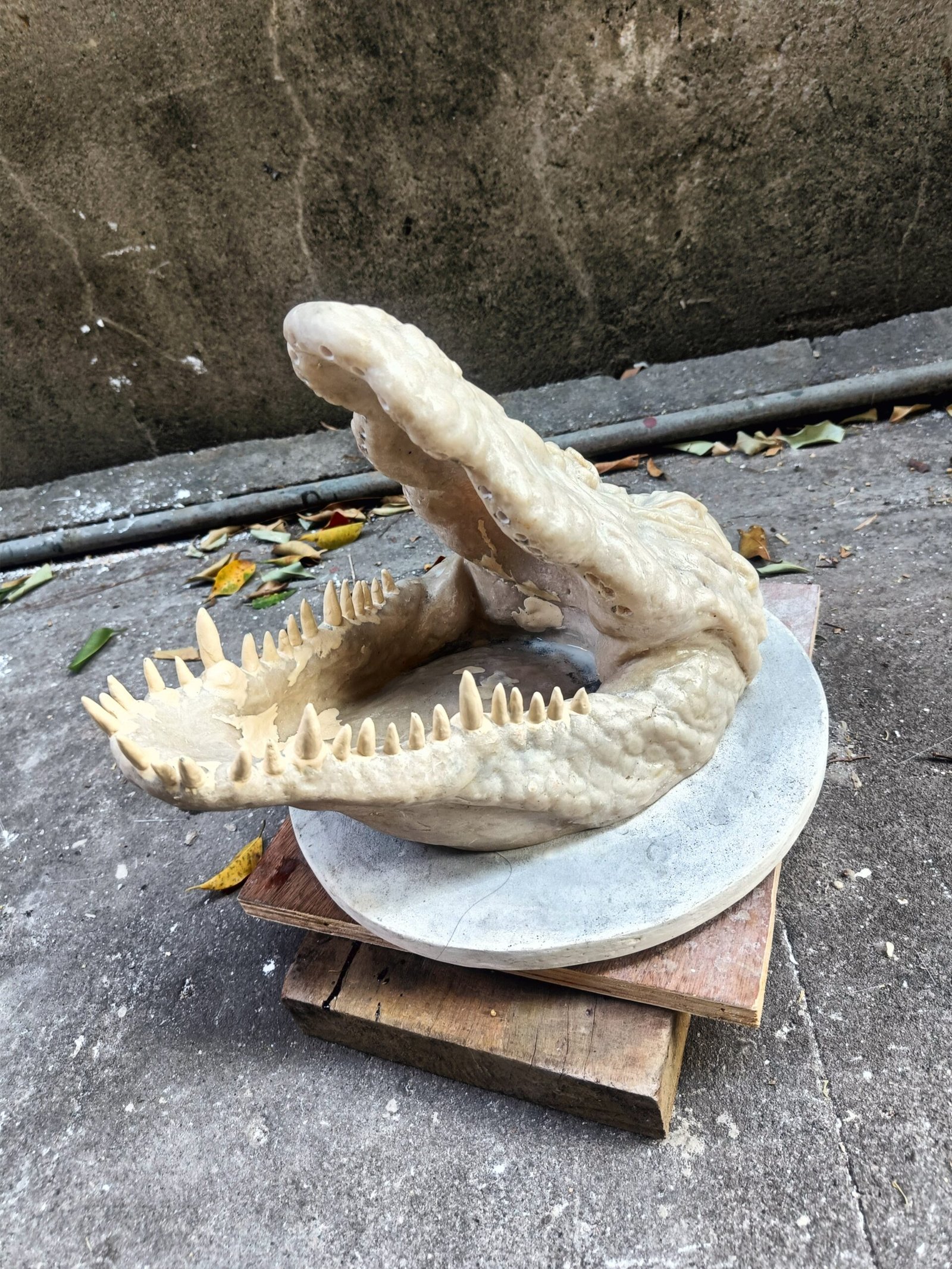
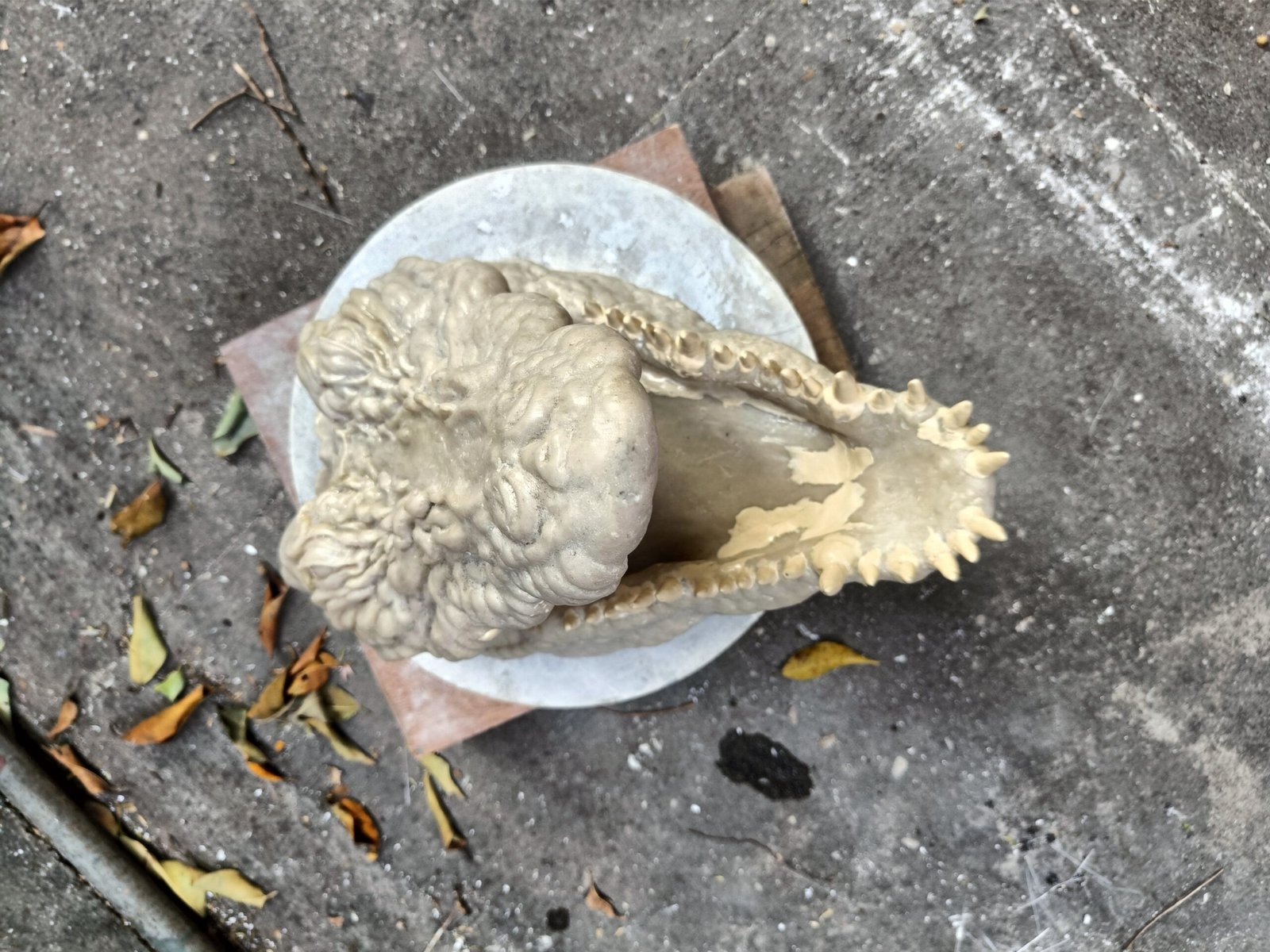
“[Hinahalal, Binabanal] is still about the things we carry and the things that shape us, but this time I’m looking beyond the individual. I’m asking how our personal choices, beliefs, and compromises can accumulate and become part of something larger than ourselves. At what point does something we choose become something we accept, and eventually, something we sanctify?”
Of all the platforms and spaces open to a Filipino artist today, you brought this piece to Metrobank MADE under this year’s theme, “Traverse: Creativity in Motion.” What made the competition the right home for it?
Aldrin Olaguir: Hinahalal, Binabanal deals with things that are very familiar to us, faith, power, choice, morality, and the symbols we have learned to respect. But I didn’t want the work to exist only within the context of my own studio or my previous body of work. I wanted it to encounter a wider audience and see how people would respond to it.
The theme “Traverse: Creativity in Motion” also resonated with me because I think the work itself is about things in motion. A choice can move into a habit; a habit can become accepted; and something that was once questioned can eventually become normalized, or even sanctified.
In that sense, the work is not static. Its meaning moves depending on who encounters it and what they bring with them.
And I think that is also what MADE offered me at this moment, a chance for the work to move beyond me. To be seen by people who may not necessarily know my previous work, my process, or the ideas behind it, and to allow them to bring their own experiences and interpretations into the piece.
So, for me, MADE wasn’t simply a competition or another exhibition opportunity. It became a place where I could test whether this idea could move beyond my own practice and become part of a larger conversation about where we are as a society right now.
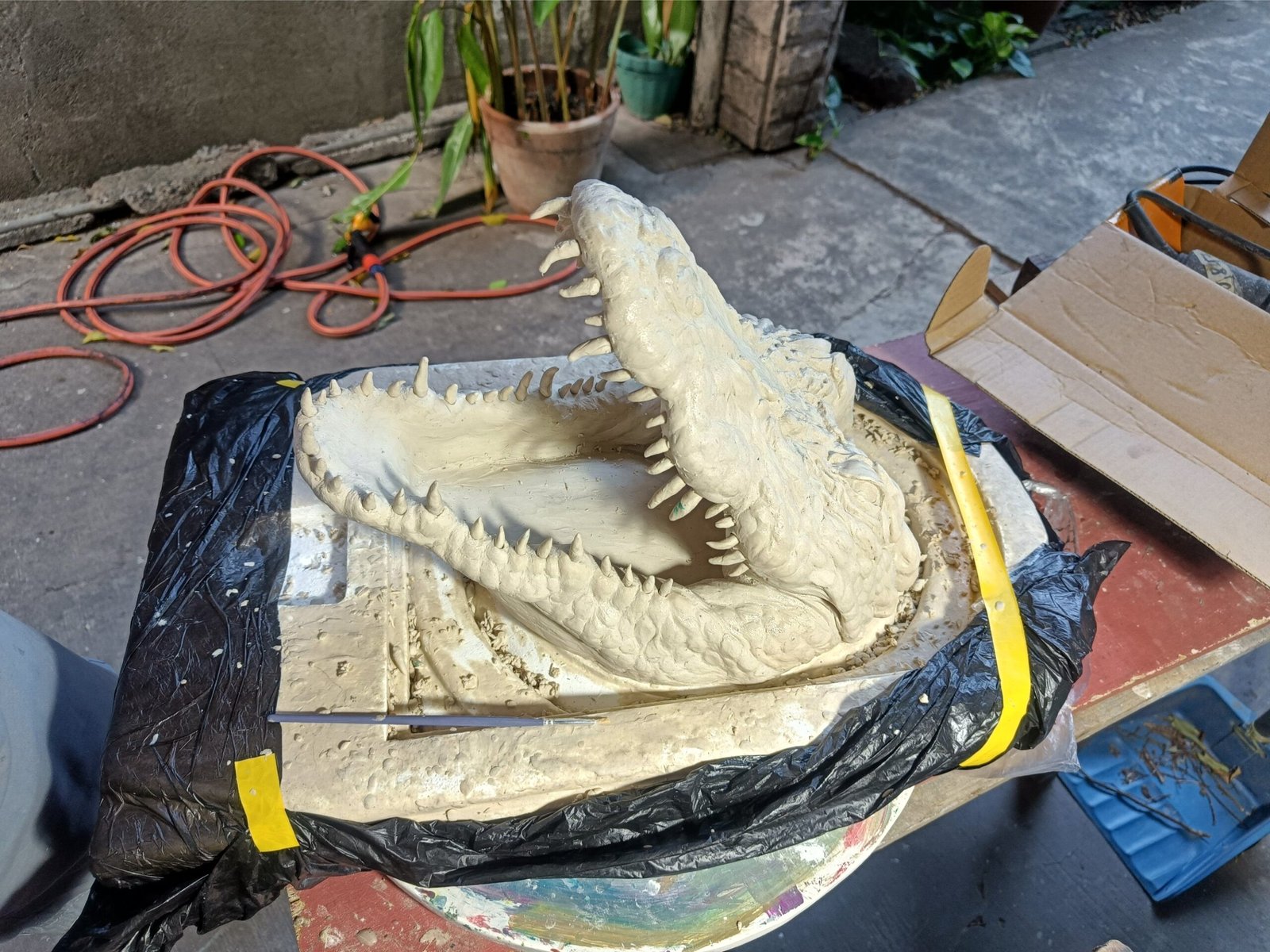
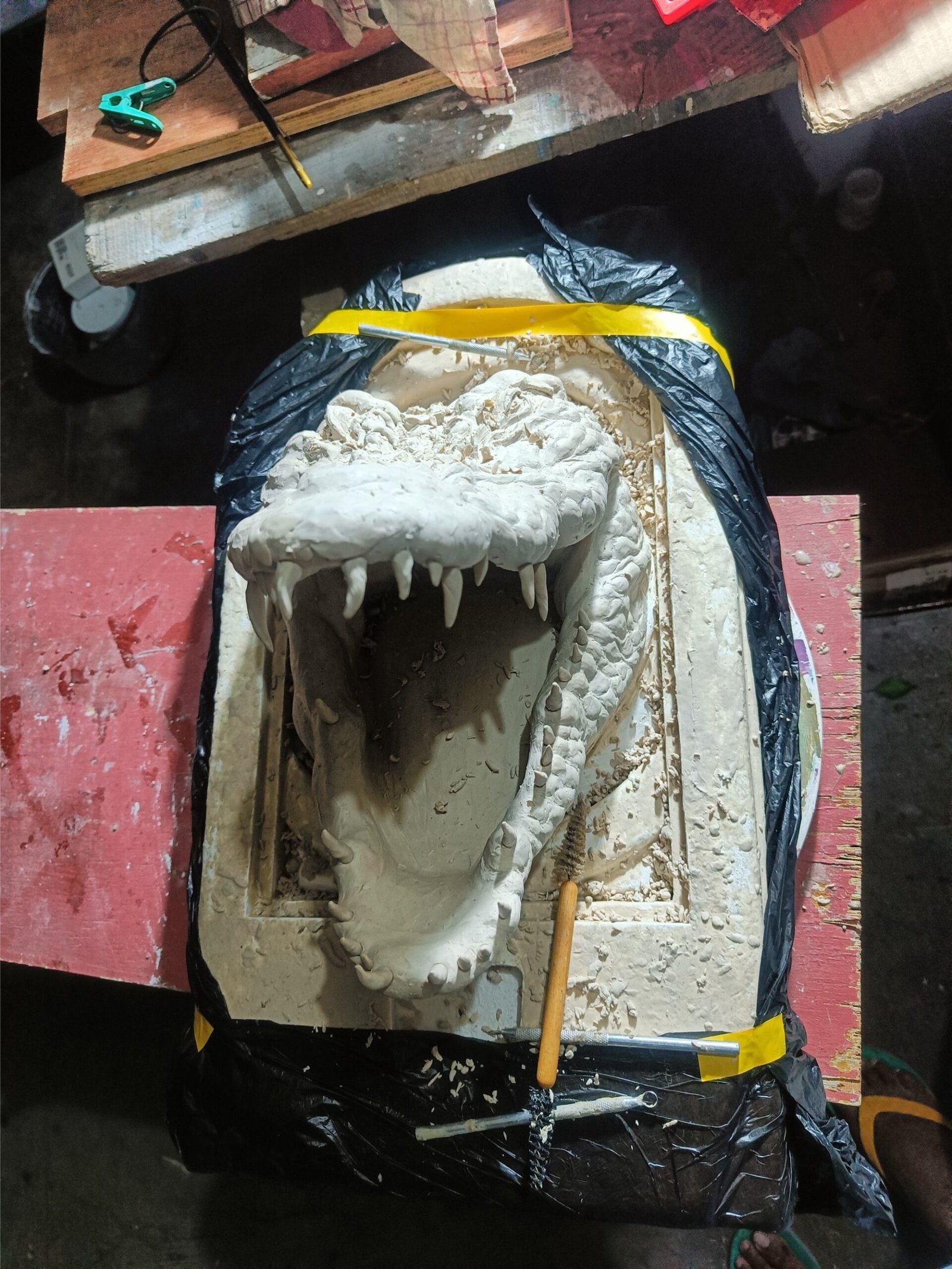
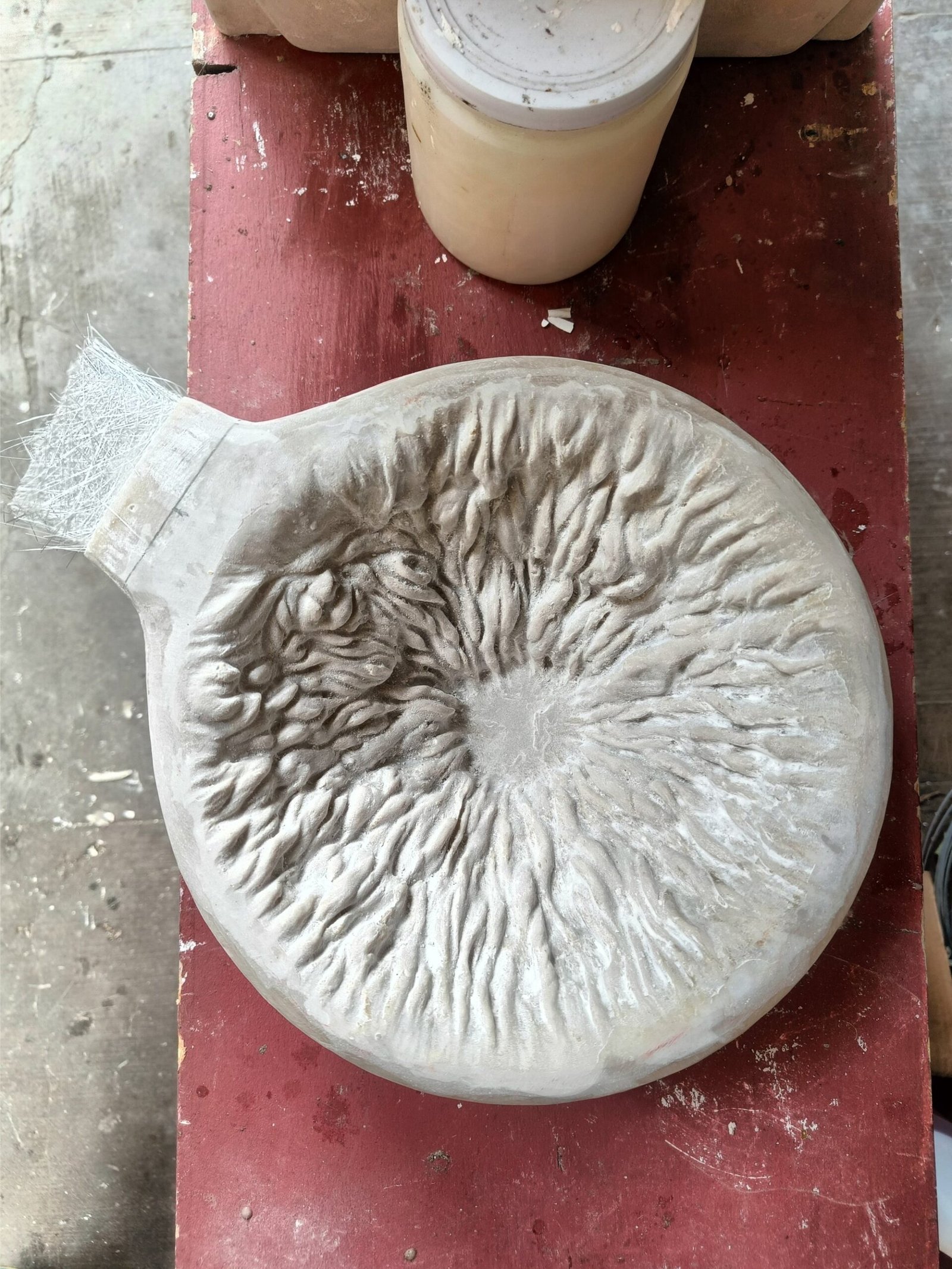
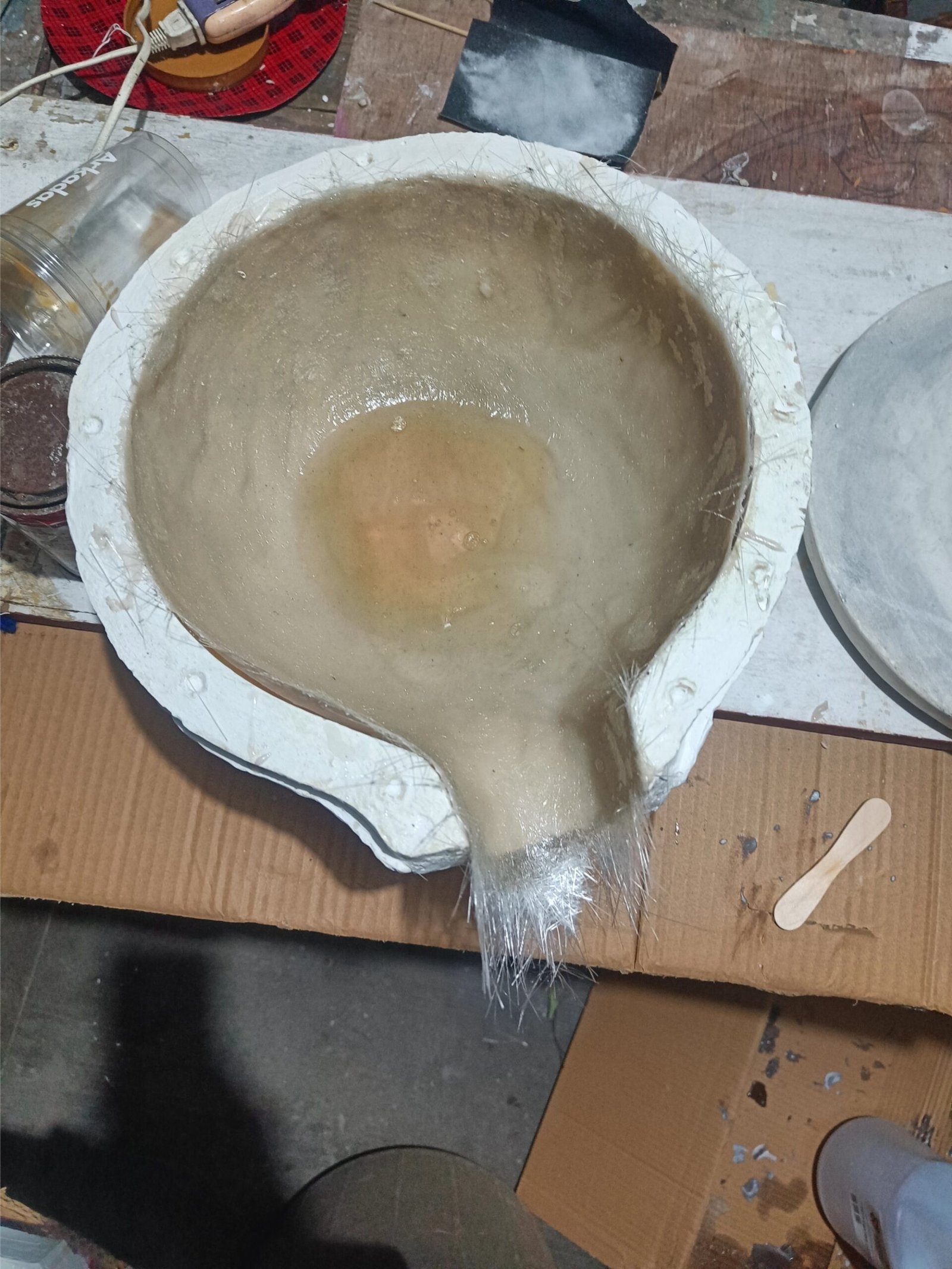
Creating Hinahalal, Binabanal
Metrobank MADE has been part of the Philippine art and design recognition landscape for forty-two years. In your own words, what does the program represent to you as an institution?
Aldrin Olaguir: For me, we’re all aware that there are many art institutions in the Philippines. But I think many artists have a complicated relationship with the word “institution.” You may have heard stories about artists feeling they were treated unfairly or that their voices weren’t given enough space. I’m not going to go further into that here, but those who know, know.
Many underrepresented artists still don’t always get the opportunity to be heard.
And in our Philippine situation, I think we can sometimes be very drawn to what is shiny, labels, credentials, exhibitions, sales, and other markers of achievement. I experienced this myself. Before people would really pay attention to your work or listen to what you have to say, they would often ask: How many shows have you had this year? How many of your works have you sold?
Sometimes it feels like the credibility of your art is being measured by how much it has already succeeded in the market.
It reminds me, in a strange way, of something Mao Zedong said about theory: that having a good theory means very little if it remains something you simply talk about and never put into practice.
But I think our reality today has another uncomfortable condition: even if you have something meaningful to say, even if you put it into practice, if nobody buys it, people can easily assume that it has no significance. Because in today’s reality, the truth must sell.
And this is where I see the importance of MADE.
Among the institutions and programs that support Filipino artists, MADE has a particular visibility. It can take an artist’s work and give it a platform where more people can see it, encounter it, and engage with it.
So, for me, MADE is not simply an institution that gives awards. It is an institution that helps an artist’s voice become visible.
And after receiving this recognition, I can proudly say that I see MADE as a friend of the artist, an institution that gives artists the opportunity to illuminate their work and, hopefully, to be heard.
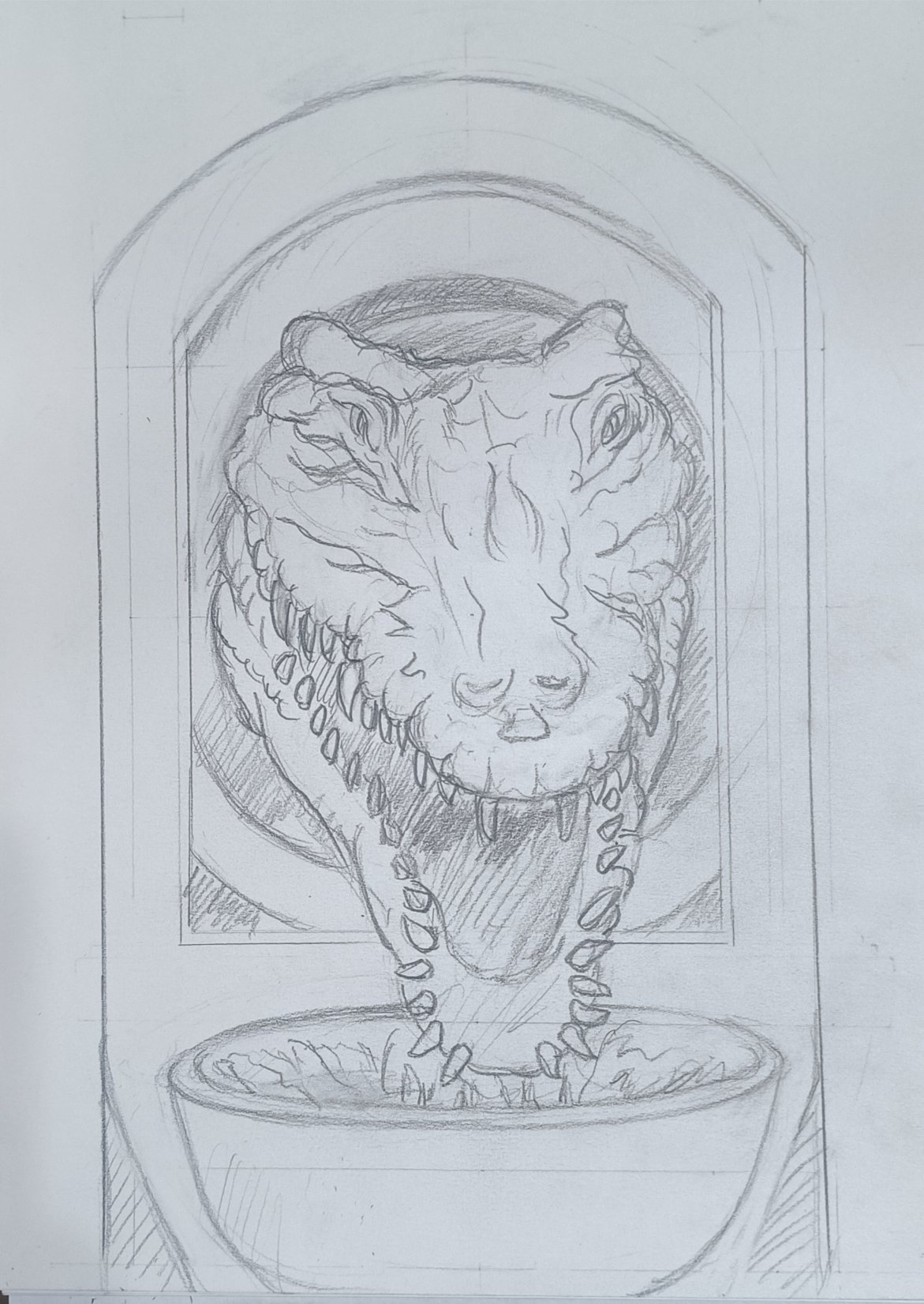
This piece is now part of MADE’s history, and by extension, Philippine art’s. What do you hope it contributes to that bigger picture?
Aldrin Olaguir: I hope Hinahalal, Binabanal contributes to the conversation about Philippine art by encouraging us to examine our choices, our contradictions, and the things we allow to become normalized or even sacred.
Now that this work has become part of MADE’s history, I also see it as becoming part of a much larger conversation in Philippine art. More than being remembered simply as an award-winning work, I hope it makes people pause and reflect on what it means to make art as a Filipino today, to question, reinterpret, and even turn our symbols and beliefs upside down.
We have so many things that are familiar to us, our symbols, our beliefs, our histories, but I think art can do more than simply represent them. It can also ask us to look at them differently.
If this work leaves that kind of reflection with the viewer, then I feel it has contributed something to that bigger picture. •
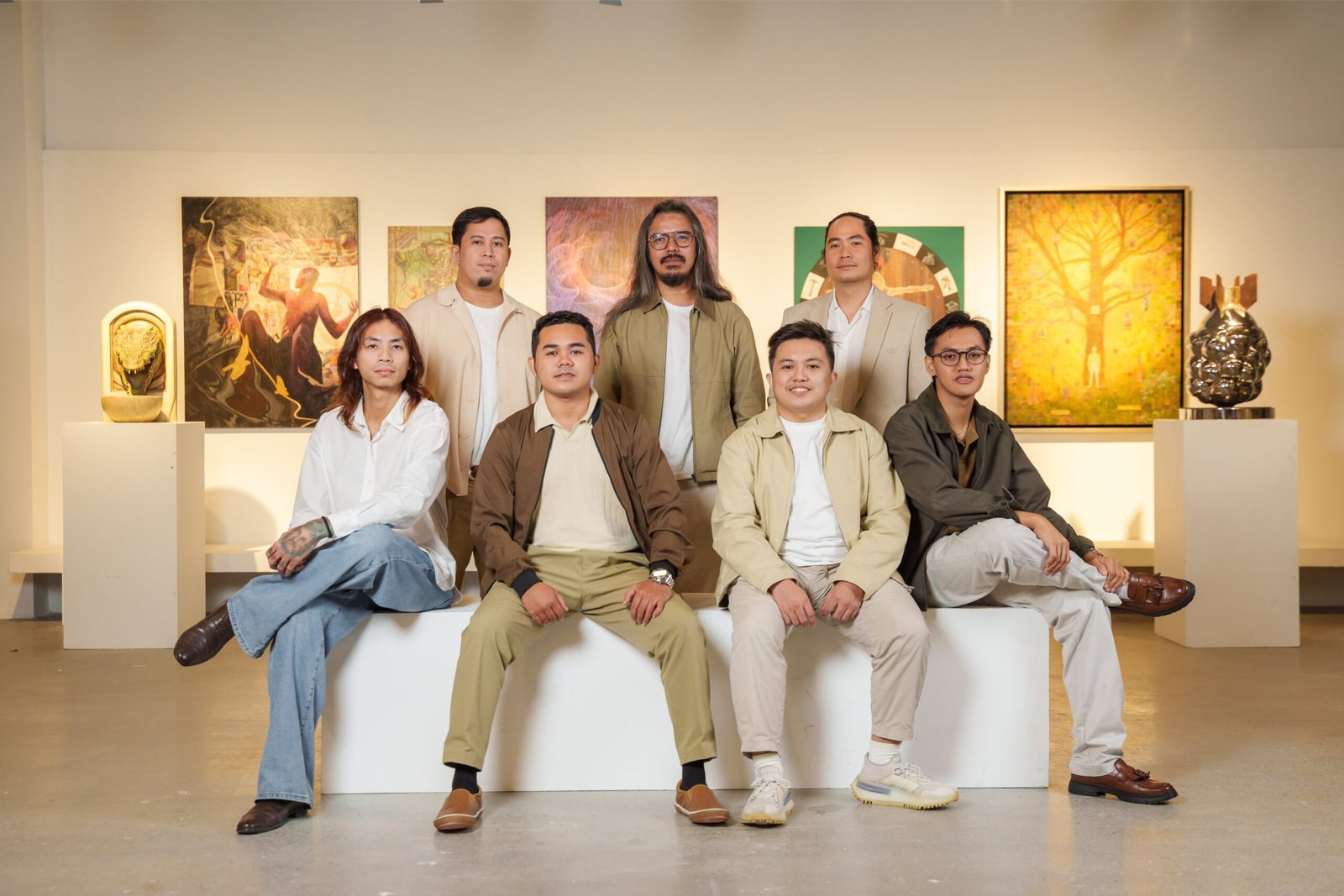

Our MADE 2026 coverage is in synergy with Novice