Words and images Bien Alvarez
Editing Gabbie de la Cruz
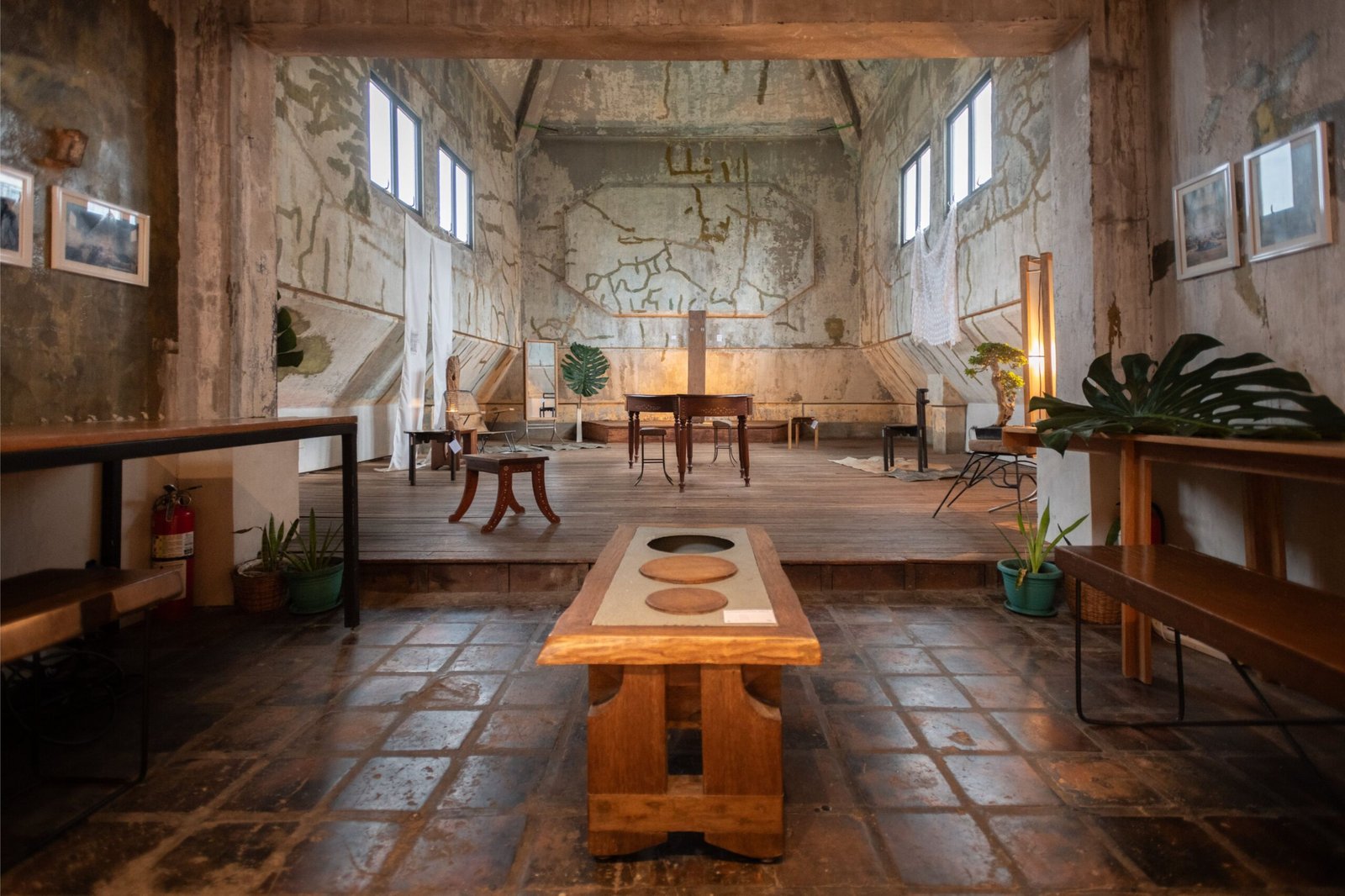
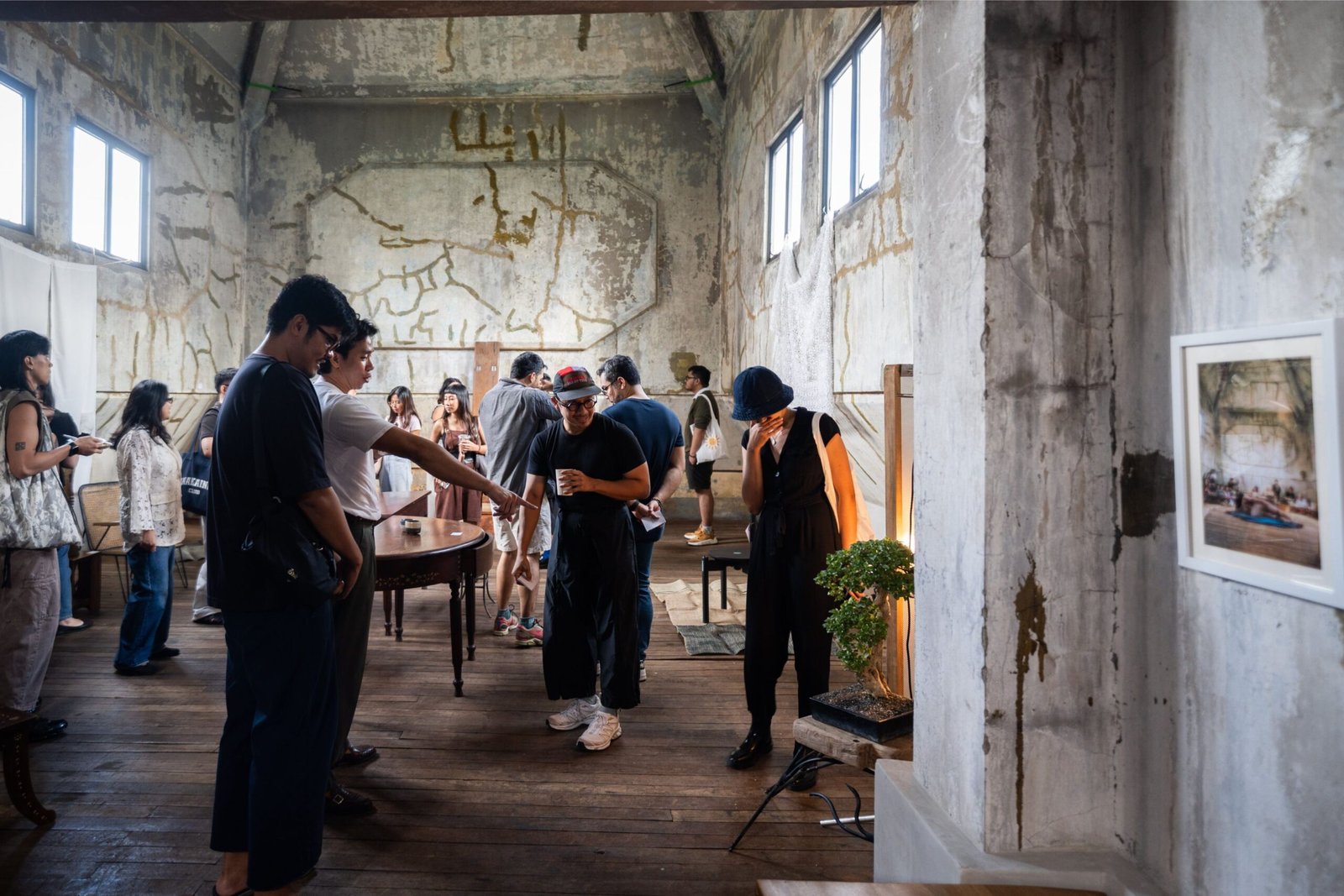
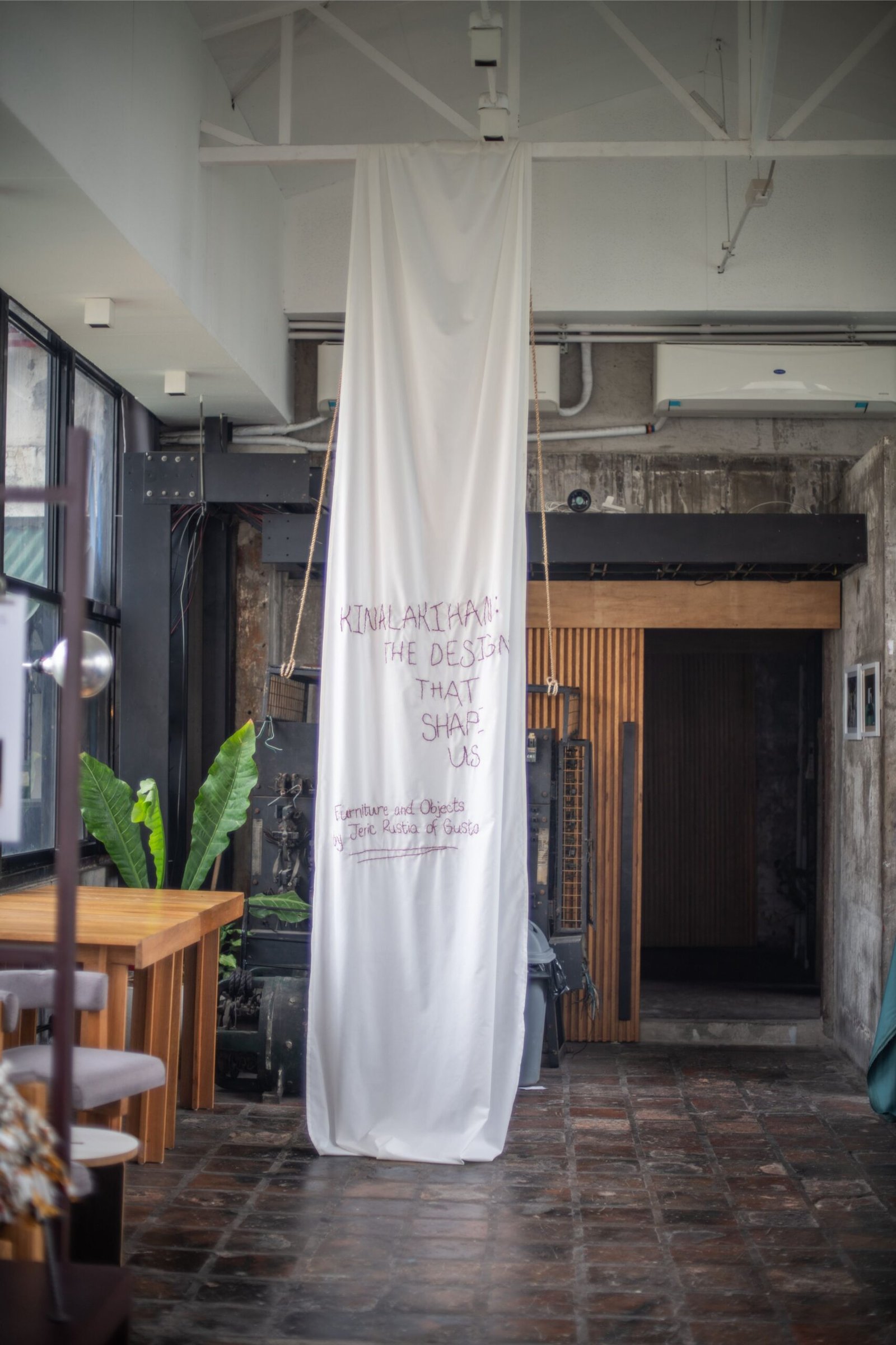
Editor’s Note: This article by Bien Alvarez reflects on Kinalakihan: The Designs That Shape Us, an exhibition that brought together architect and furniture designer Jeric Rustia’s contemporary work and the pieces he grew up with. Kinalakihan was presented by Sit First at The Dome of First United Building in Escolta from July 11 to 12, with select works from the show remaining on view at the HUB: Make Lab from July 13 to August 15.
The display is set. Family heirlooms, salvaged materials, and pieces made or repurposed by different generations alongside Rustia’s own furniture.
Some have already lived through decades of daily use. Others are only beginning to. Together, they trace the evolution of a design practice, and the slower process of recognizing what shaped it all along.
“Kinalakihan was about reflection—the stuff I grew up with,” Rustia said. “More or less, the stuff I took for granted, but then, going through design work and being influenced by a lot of things online—or the stuff I see when I travel—I go back to these things and have a new eye all the time and I started to appreciate every one of them.”
The title itself carries that idea. Kinalakihan speaks of where and what someone grows up with, including the things that become so familiar they disappear into the background. A bench that has always been there. A dining table used every day. A stool pulled closer without thinking. Sometimes it takes time and distance to see them differently.
Sit First approached Rustia for Kinalakihan, but left the concept open so the designer could lead with his own story. “The collaboration is a dialogue,” shared Mika Burbano of Sit First. She starts conversations “with a blank slate,” allowing designers to share their story on their own terms. For Rustia, that meant creating a less formal, welcoming space at The Dome where he could showcase his heritage alongside his contemporary work. Sit First served as a sounding board throughout the process, helping execute that vision while leaving the final selection of objects to Rustia.
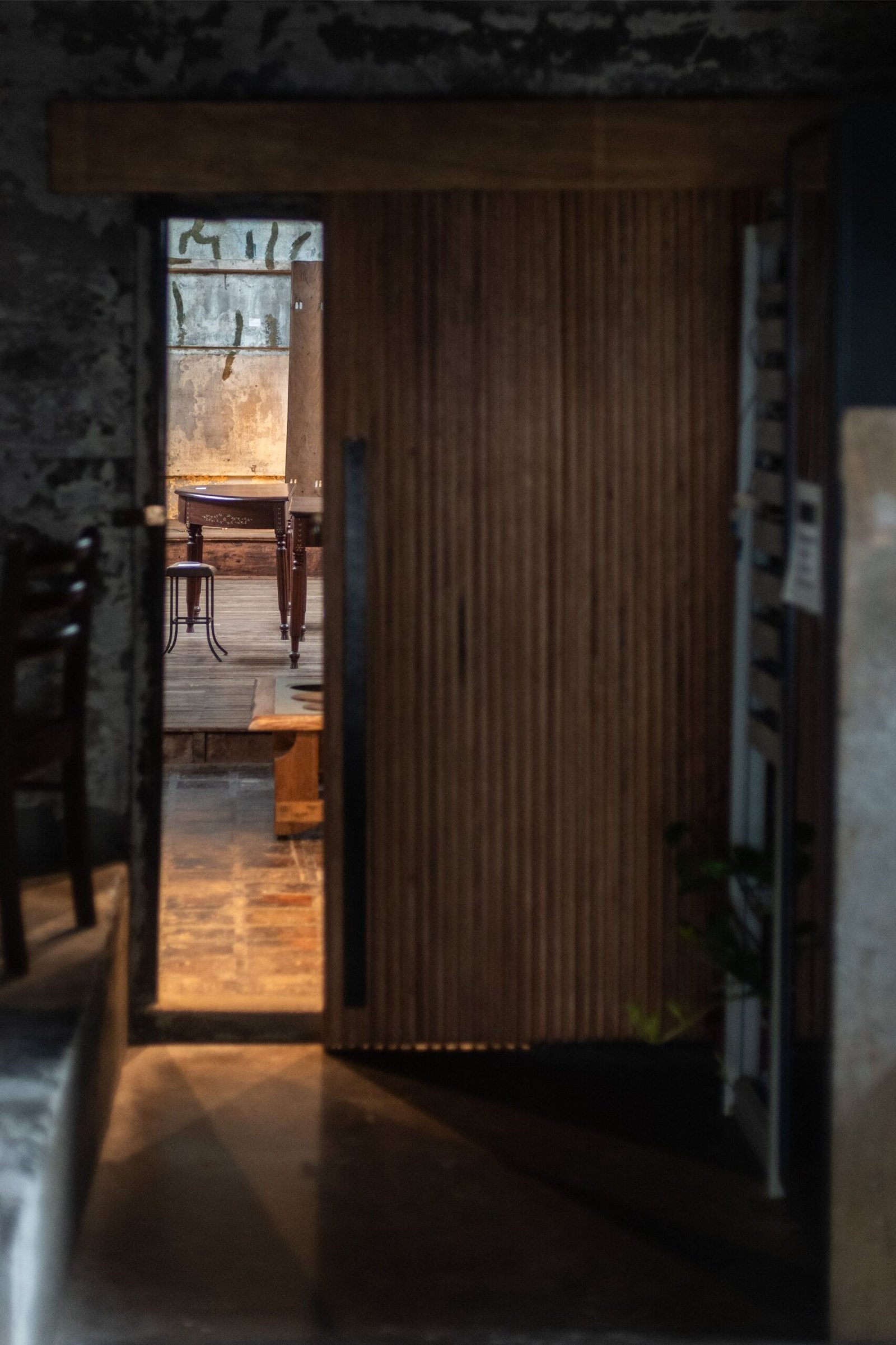
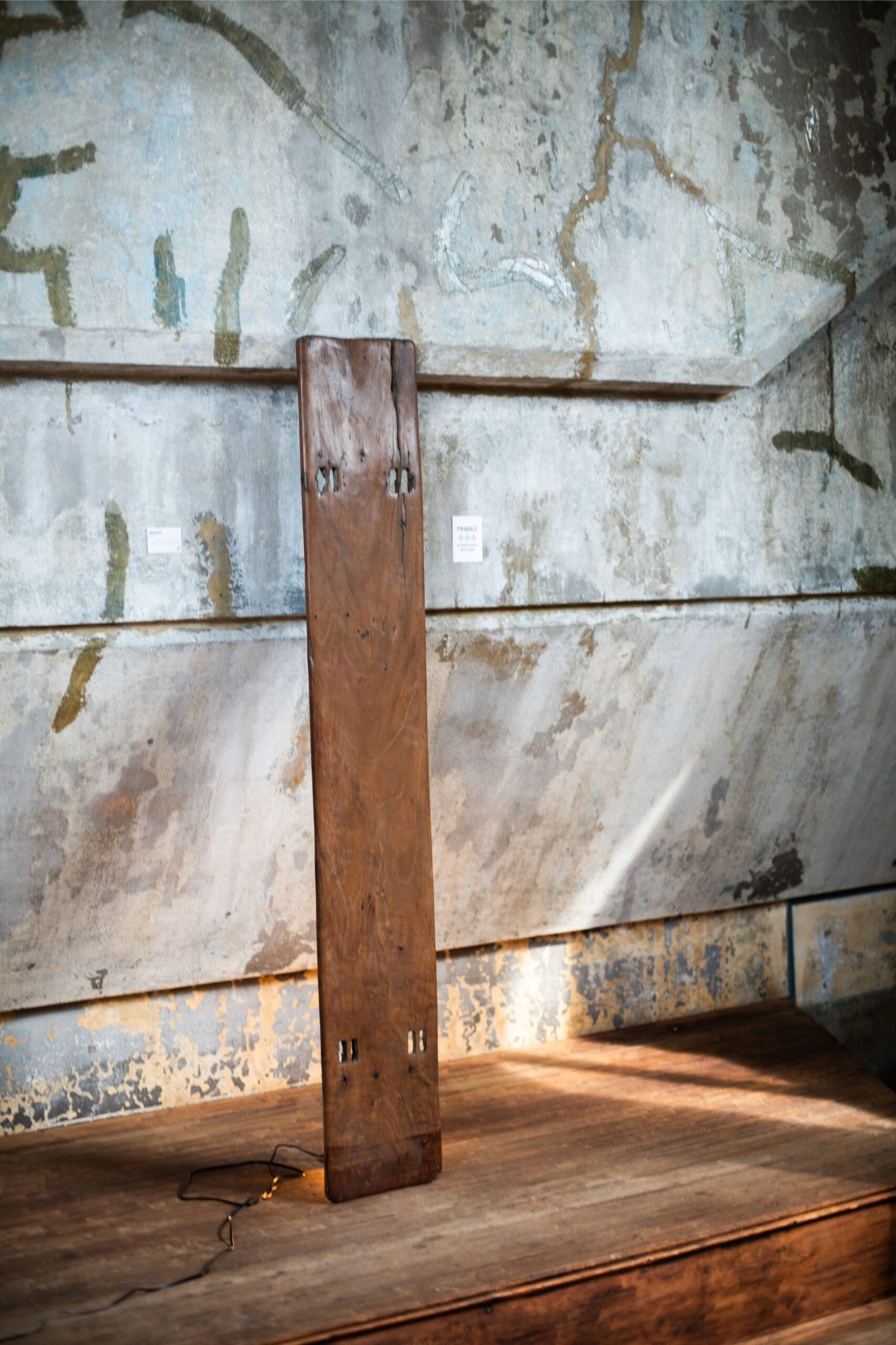
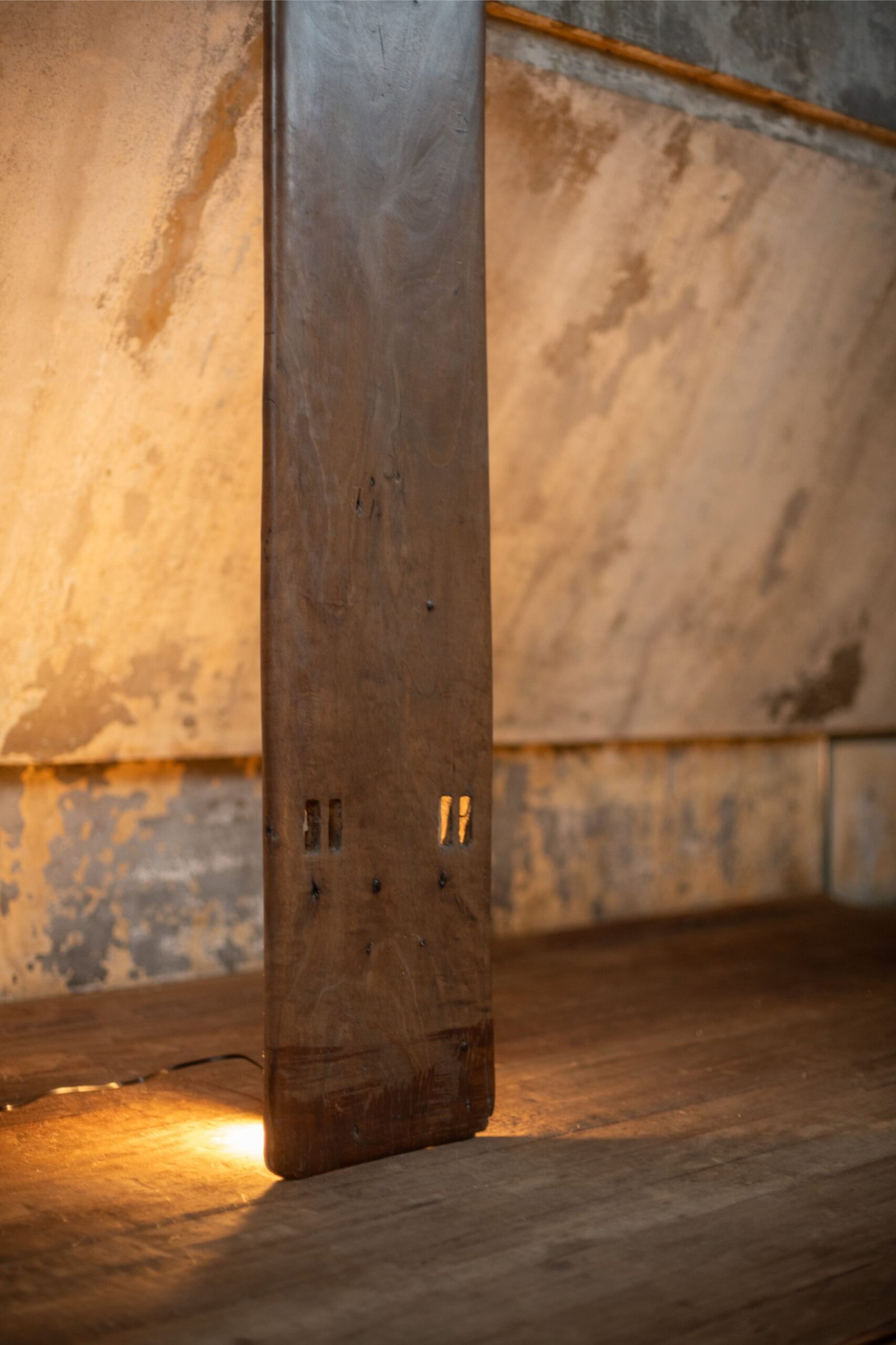
From the entrance, the eye catches what appears to be a massive wooden slab slanted against the wall, raised by a platform. “We’ve been sitting on that bench since I can remember,” Rustia said. For most of his life, it was simply the bangko at their family’s home in Cavite. Only recently did he realize that its story stretched far beyond his own childhood.
When he mentioned it to his mother, she replied almost casually, “Oh, kami rin. That’s always been there… Akala ko ako lang, but my lolas and parents, titos and titas have known that bench.”
The realization changed the object.
Without anyone deliberately preserving it as an heirloom, the bangko had carried generations of the family. It had been sat on so often that no one thought to tell its story. Like many things that remain useful, it had become almost invisible.
Rustia also sees something else when he looks at it now: “From a technical point of view, as a designer, you can’t get these pieces of wood anymore.”
As a child, he knew the bench by sitting on it. Years later, he could look at the same object and recognize its material, construction, and how well it had lasted. Long before he understood timber, proportion, or craftsmanship, he had already been living with them.
That question of how things last runs through Kinalakihan. The older objects in the room have already had decades to prove themselves. Their meaning continued to accumulate through use. Rustia’s own furniture has not had that much time yet.
The house he grew up in offered other lessons, though he did not necessarily think of them as lessons at the time. His father had a habit of keeping things in circulation. Materials were rarely discarded after their original purpose had ended. They were repaired, adapted, or transformed into something else.
The Lutuan Coffee Table, for example, began with a thick iron cooking plate recovered from the family property in Bulacan. When Rustia brought it home, his father recognized it immediately. “Uy, ito yung lutuan namin dati.”
The plate had once been part of a cooking setup using wood and charcoal. Later, it found another use in his father’s workshop. With legs made from old flagpoles, it eventually became the Lutuan Coffee Table.
Railroad tracks were just as familiar around the Rustia household.
“Growing up, the house was filled with railroad tracks because Dad used to work in heritage.” They became fence posts, supports, shelves, stools, or whatever the household happened to need. Rustia remembers one stool for a much simpler reason. “If I needed something high, I would use it,” he said. “Pinangpipitas ko ng lanzones yan.”
There were driftwood lamps made by his father too. Taken together, these pieces show a way of working Rustia grew up around: materials could continue to be useful after their first purpose had ended.
At the time, he didn’t really consider it design. He simply thought it was home.
Years later, he would find himself doing something similar.
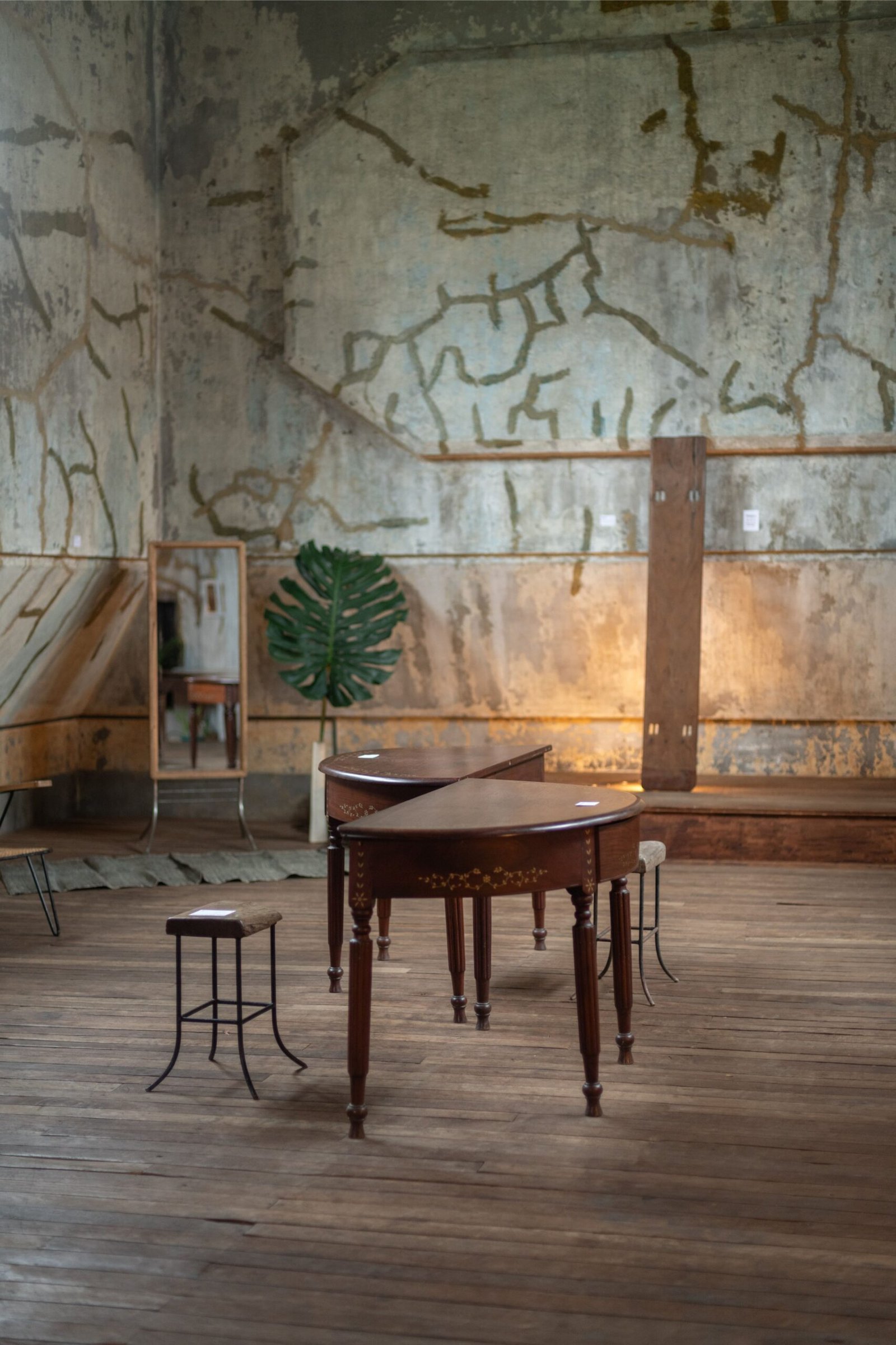
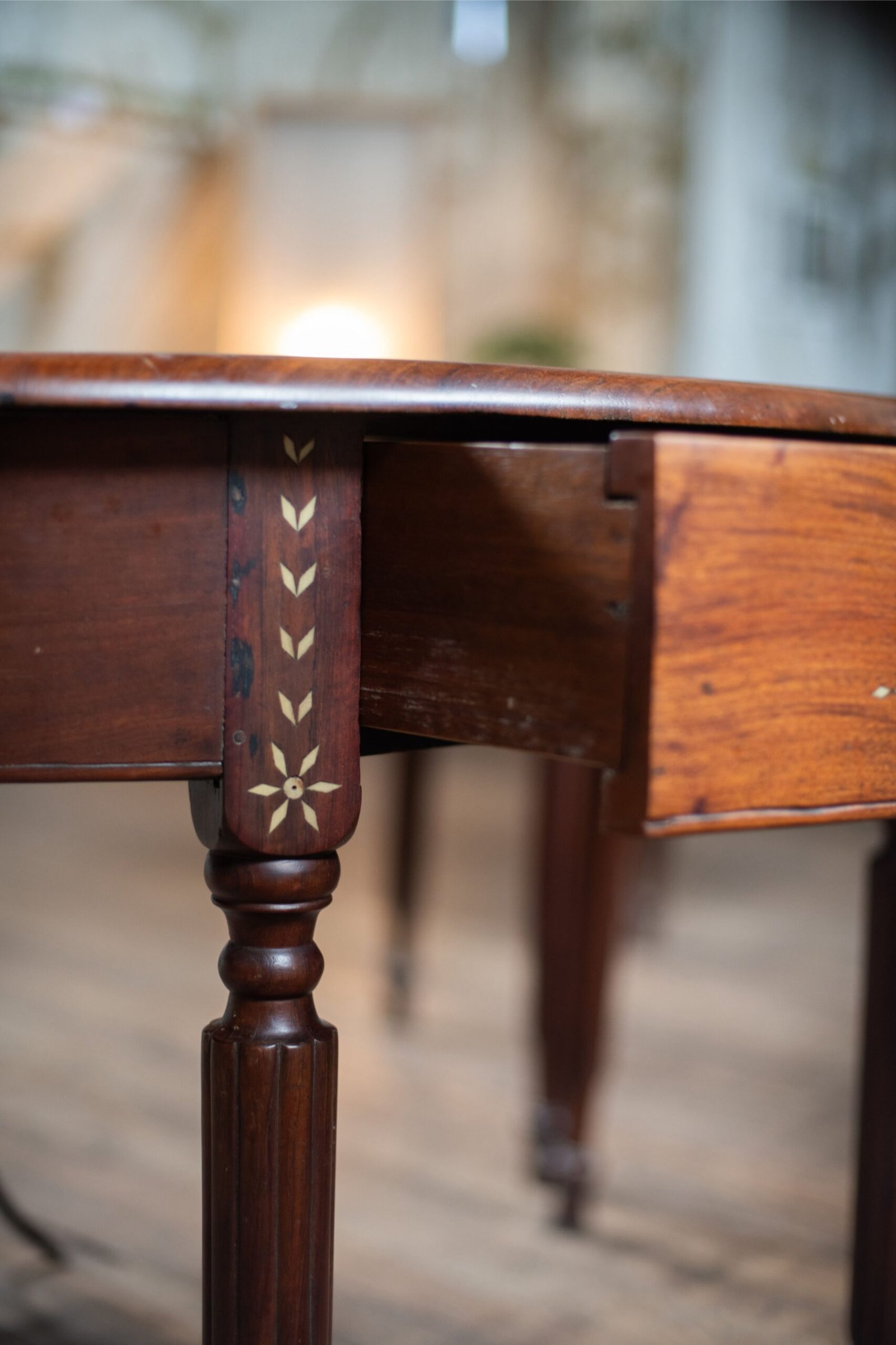
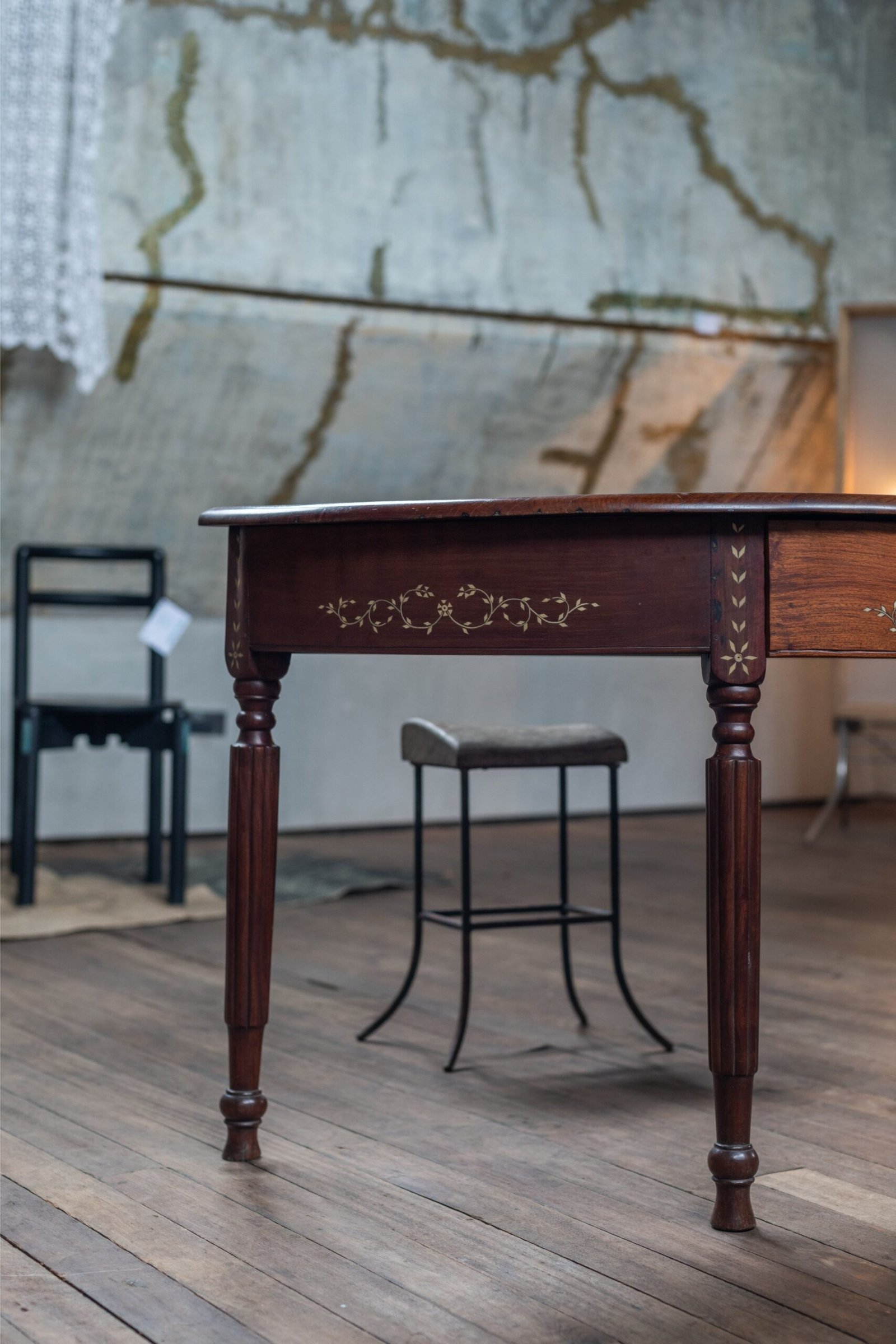
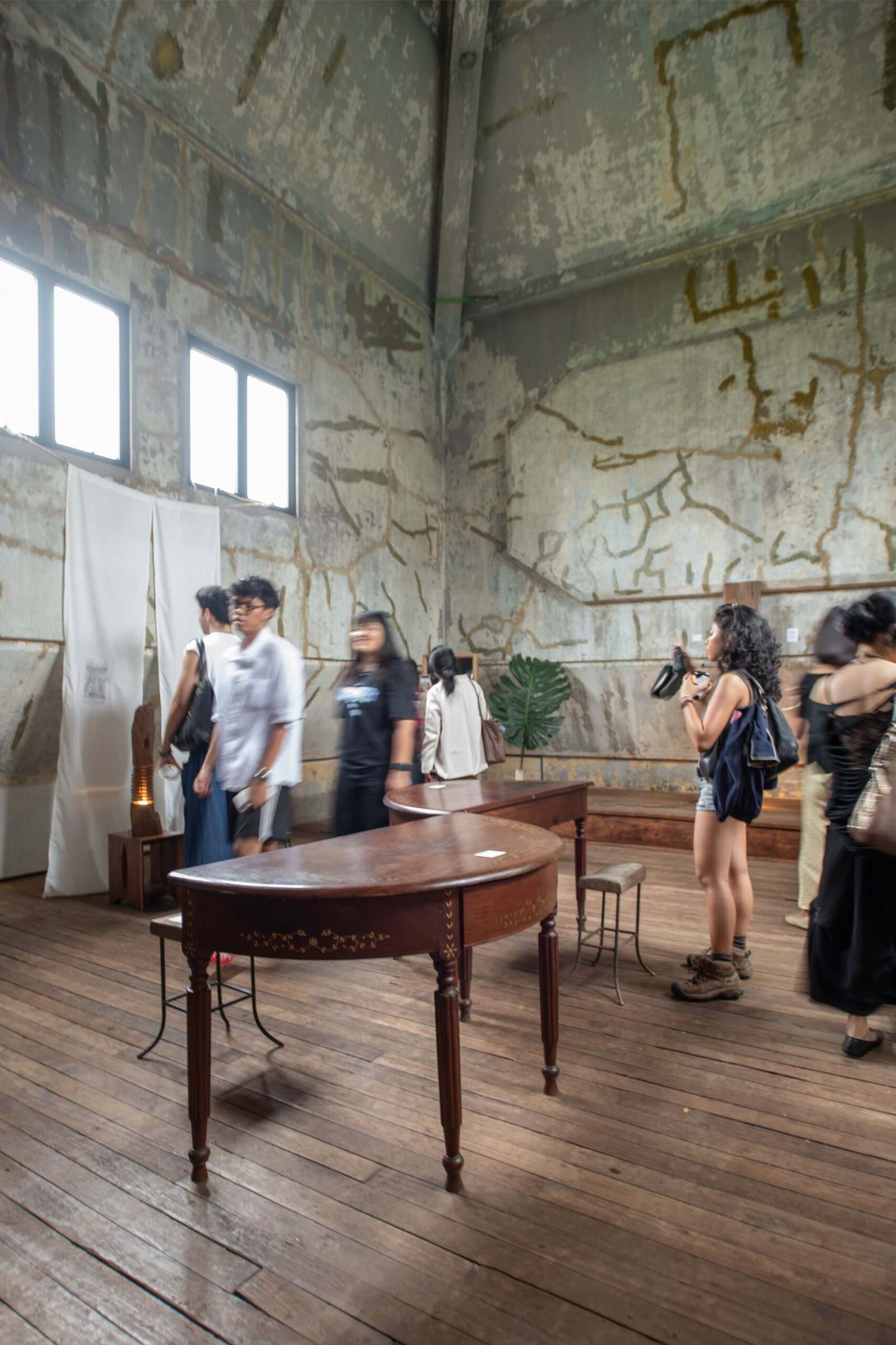
Inlay Dining Table
One of the exhibition’s biggest revelations came through a family dining table.
For years, Rustia had been exploring inlay through his own furniture, experimenting with capiz, mother-of-pearl, and tahong shells in what would become the Union collection. He approached the materials through curiosity, testing what they could do and how they might sit alongside wood.
Then his father asked, “Alam mo si Ina gumawa ng inlays sa tables sa Bulacan?”
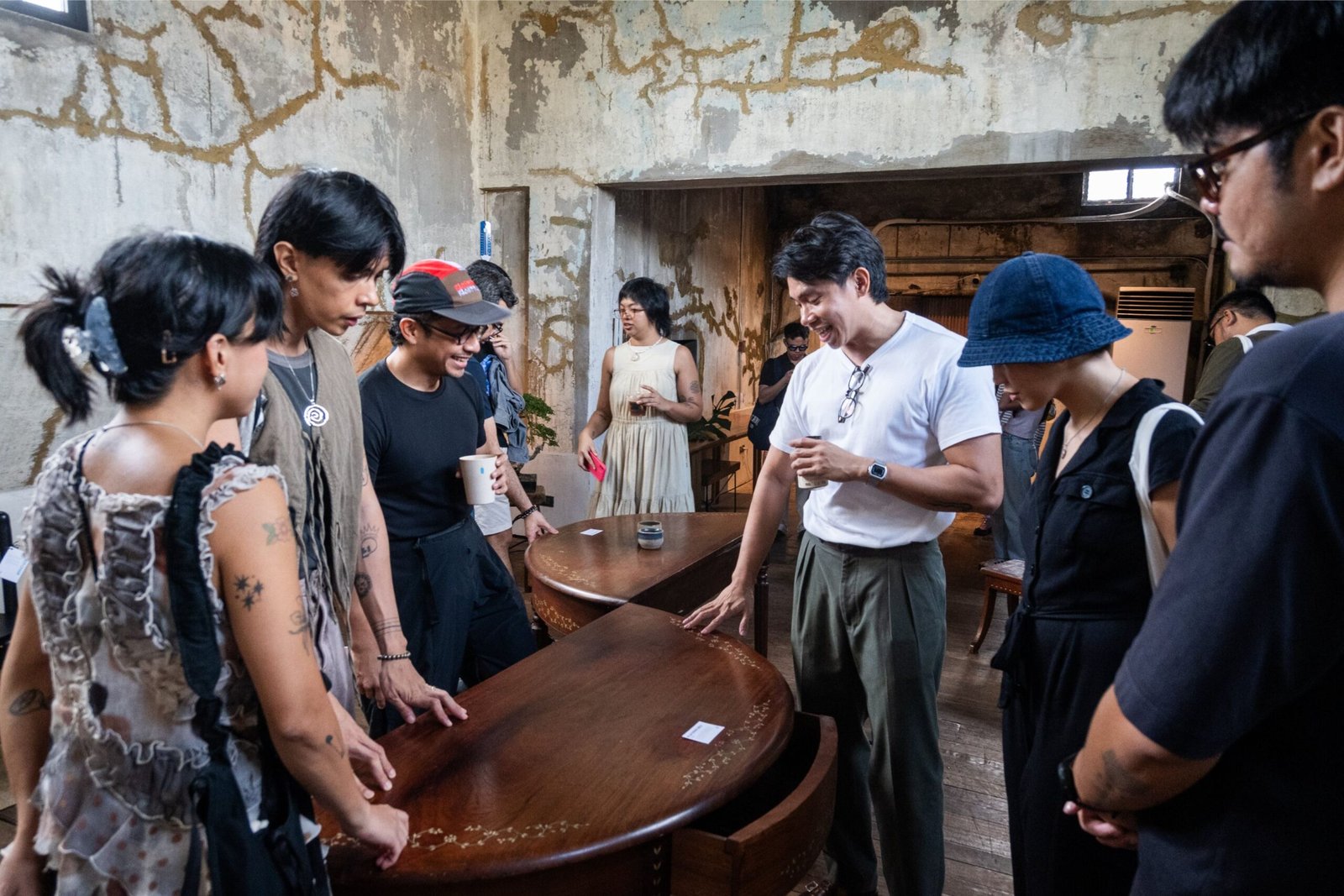
Displayed in Kinalakihan are surviving sections of that family dining table, their intricate bone inlays commissioned by his grandmother decades before he began making furniture himself.
“I didn’t know these stories until last year,” he shared.
The timing surprised him. By then, he had already spent nearly a decade practicing architecture and years developing his own furniture. “I had been doing design for almost ten years as a licensed architect and furniture design for eight years. Na parang I didn’t know these influences were already a part of me.”
Rustia had not seen his grandmother’s table and decided to repeat it. His own interest in inlays had already developed before he knew the family story behind them.
Once he did know, he started seeing the connections everywhere.
Looking at his Nesting Table beside his grandmother’s dining table, he joked: “That’s the nesting table, same as my lola’s dining table. I’m pretty sure ako nagkutkot nung inlays niyan.”
What had felt like an independent material interest now had a family connection Rustia had never known about. It made him wonder how much of what he thought was new to him had actually been around him for years.
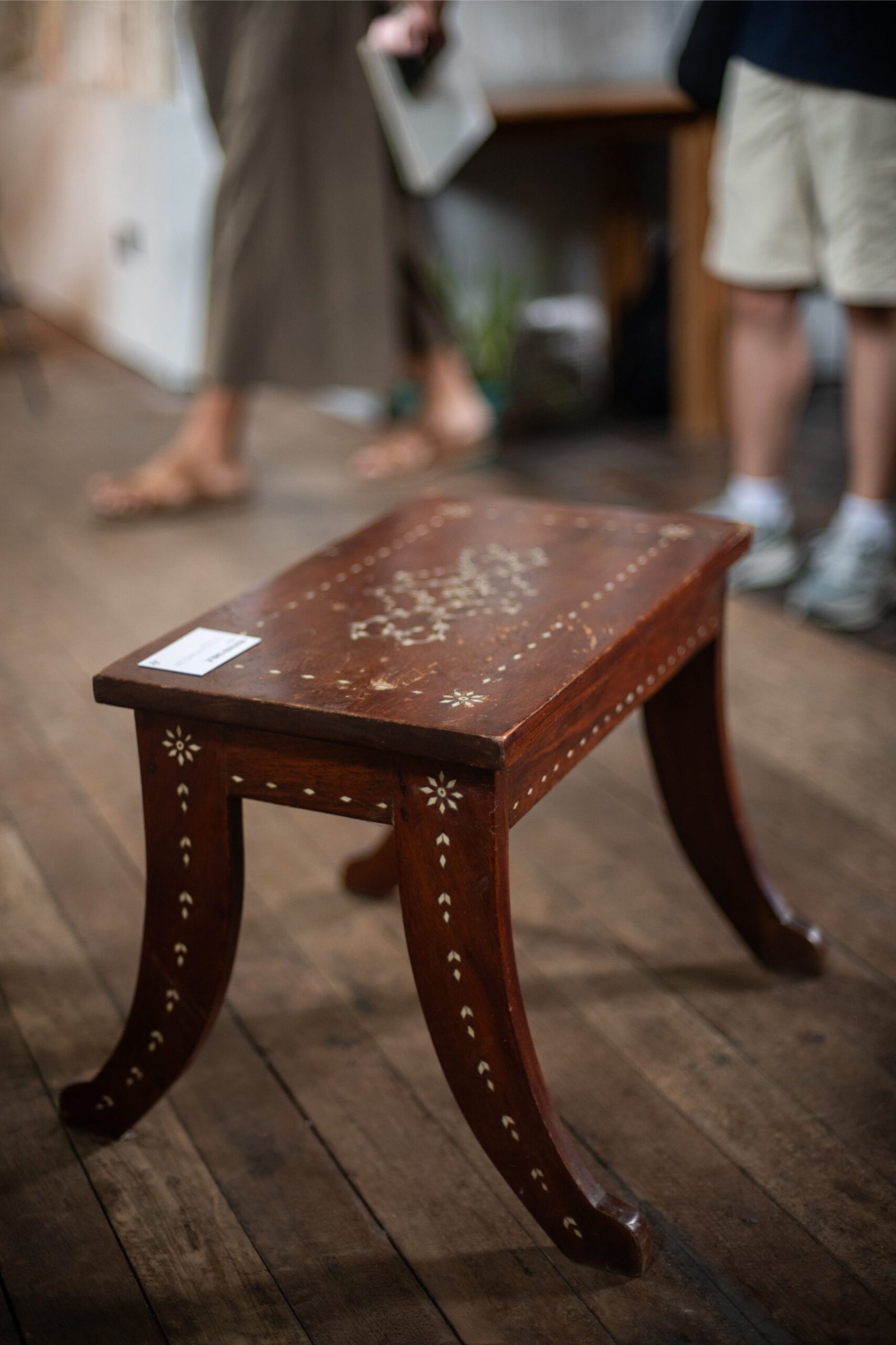
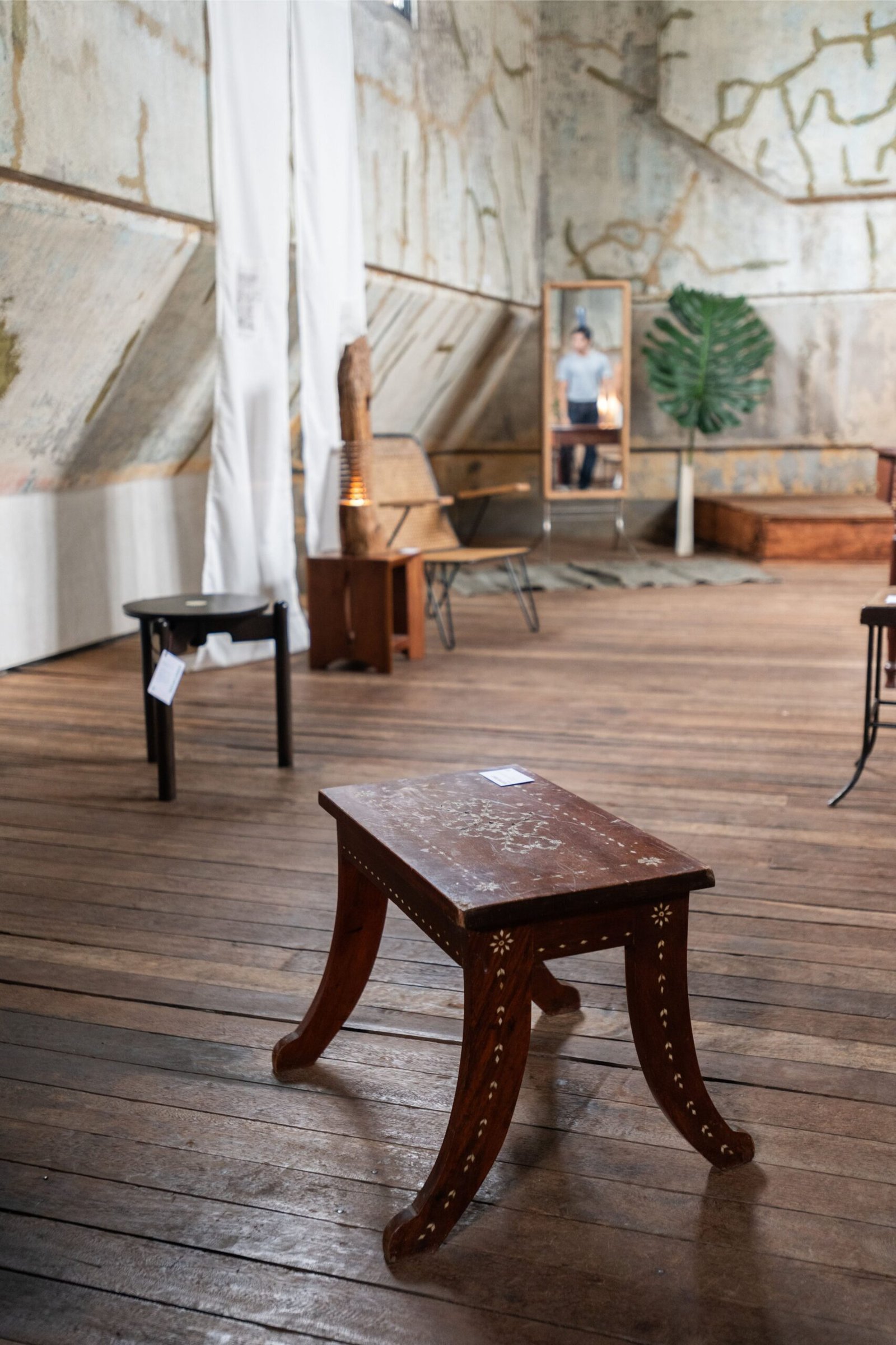
Nesting Table
The Divider Light gave him another version of the same experience. Completed only a day before Kinalakihan opened, the piece begins with something that had already lived another life.
“It’s actually made of a diffuser that I admittedly stole from the site which was being demolished,” Rustia said as he let out a laugh.
The translucent panels had once softened fluorescent lights inside a building. Rustia salvaged them before demolition, convinced they could still be useful.
Then, looking at the finished piece, he noticed something he had never intended. The steel legs curved in a way that reminded him of the railroad-track pieces his father had made years before.
“Oh, shit, it’s literally… magkamukha like derivatives of each other.”
Again, the connection came after the object already existed.
The same thing had happened with his grandmother’s inlays. Rustia would make something first and understand the family connection later.
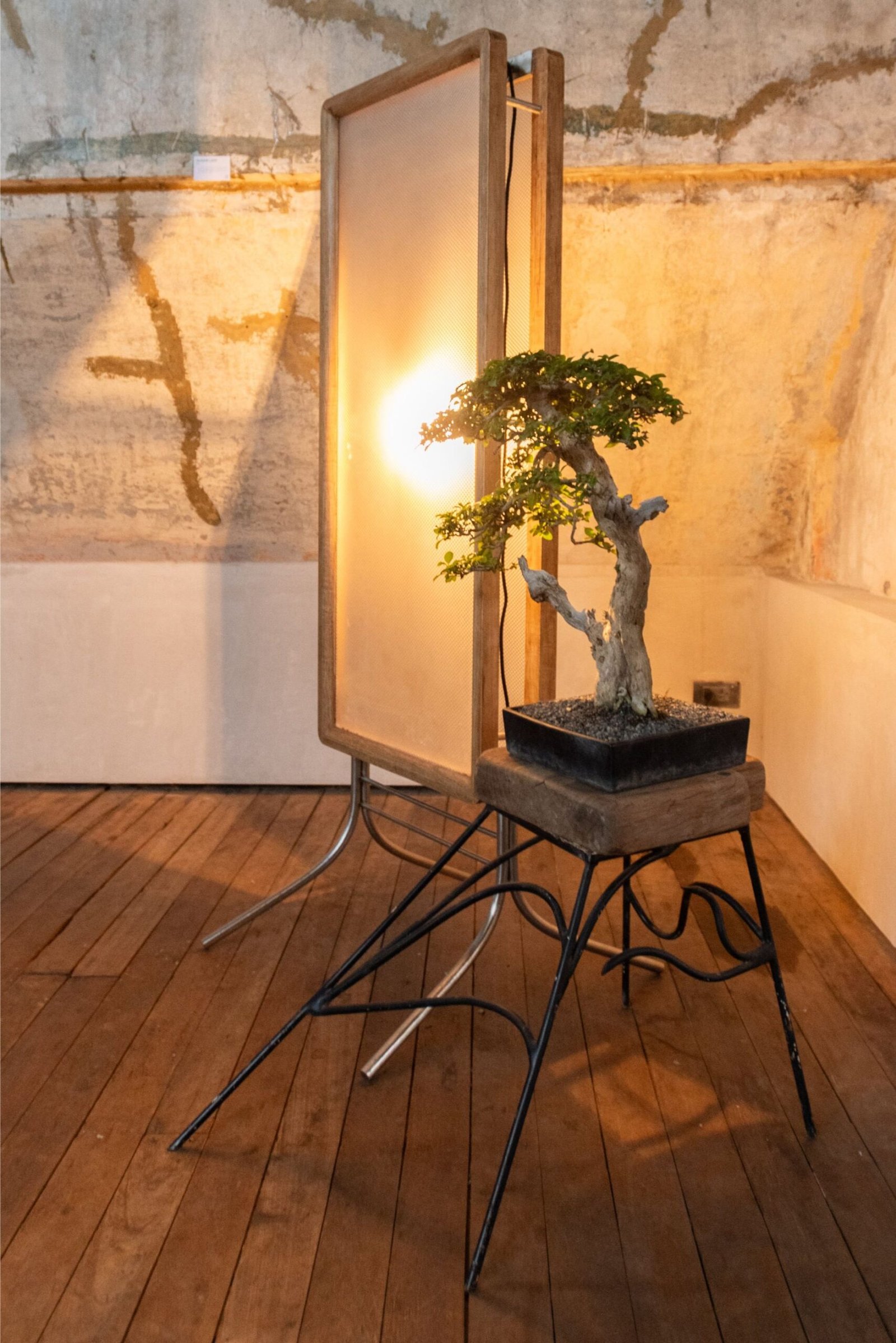
Rustia is just as open about the parts of his practice that still need work. Standing beside the Divider Light, he revealed something many designers might hesitate to admit about a piece already on display.
“I don’t believe in this one. I have to make a better version of this.”
For Rustia, exhibiting something does not necessarily mean considering it finished. The Union Chair, for instance, went through three versions as he worked out the height of its backrest. Each adjustment brought him closer to what felt right.
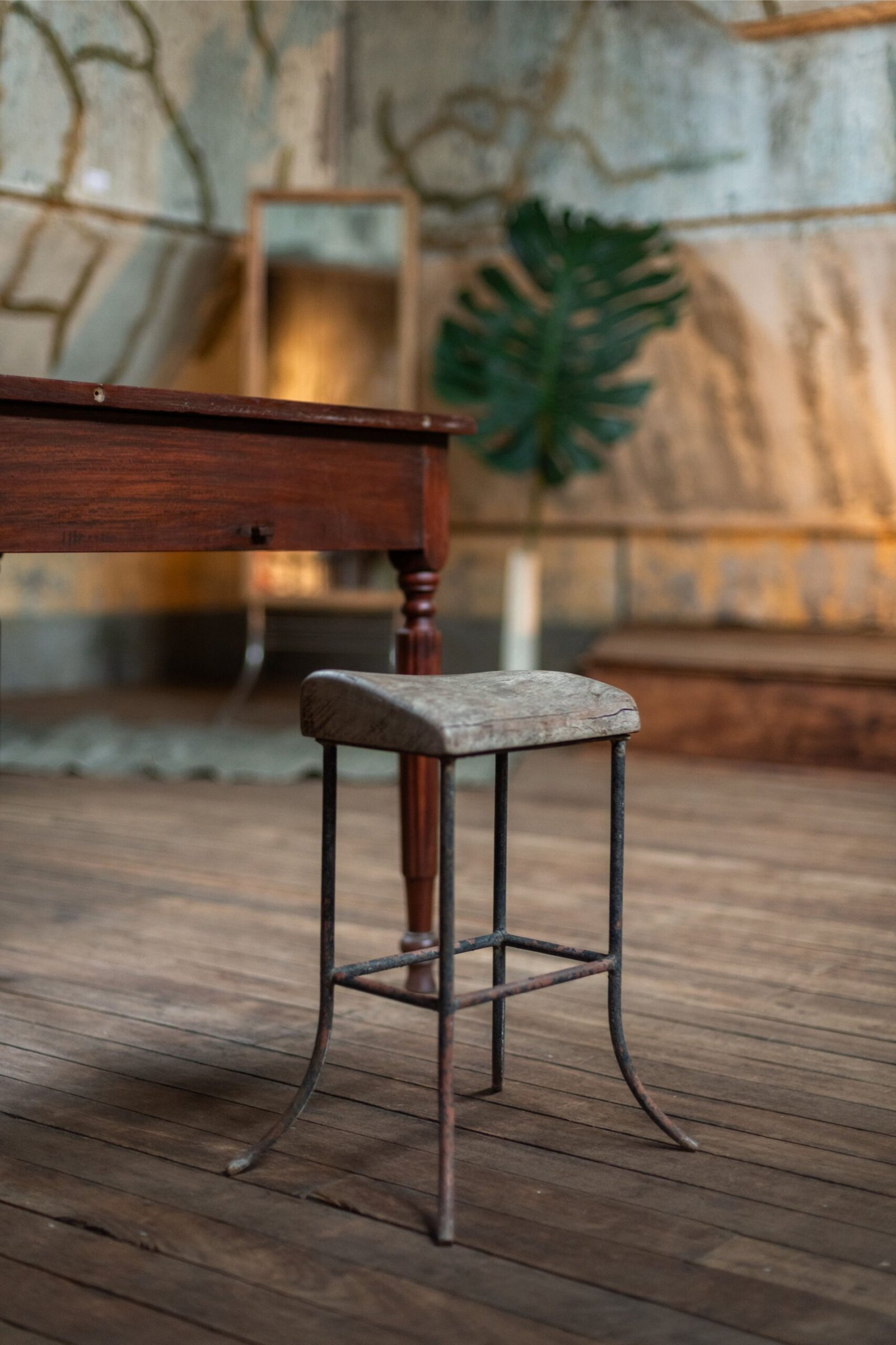
The Union Stool presented a different kind of lesson. Its wood continued to move and warp after fabrication, showing Rustia that some things only become clear after a piece has left the workshop.
Growing up, there was already a phrase for learning this way. Whenever something went wrong, his father would tell him: “Pag may mali ka, charge to experience. Bata ka pa naman. You’ll get it next time.”
“You can avoid making mistakes, but if you make a mistake, treat it as a lesson. Be accountable for it. Always make sure you can make up for your mistakes.”
Some problems reveal themselves while something is being made. Others take much longer.
“At some point, you’re just happy the thing is standing up. What remains is, ‘I hope this one lasts.’ Only time can tell.”
The older objects surrounding Rustia have already answered that question.
The bangko has carried several generations. The dining table survived long enough for its story to reach Rustia decades later. Other pieces have been repaired, repurposed, moved, and kept. Their meaning continued to accumulate through use.
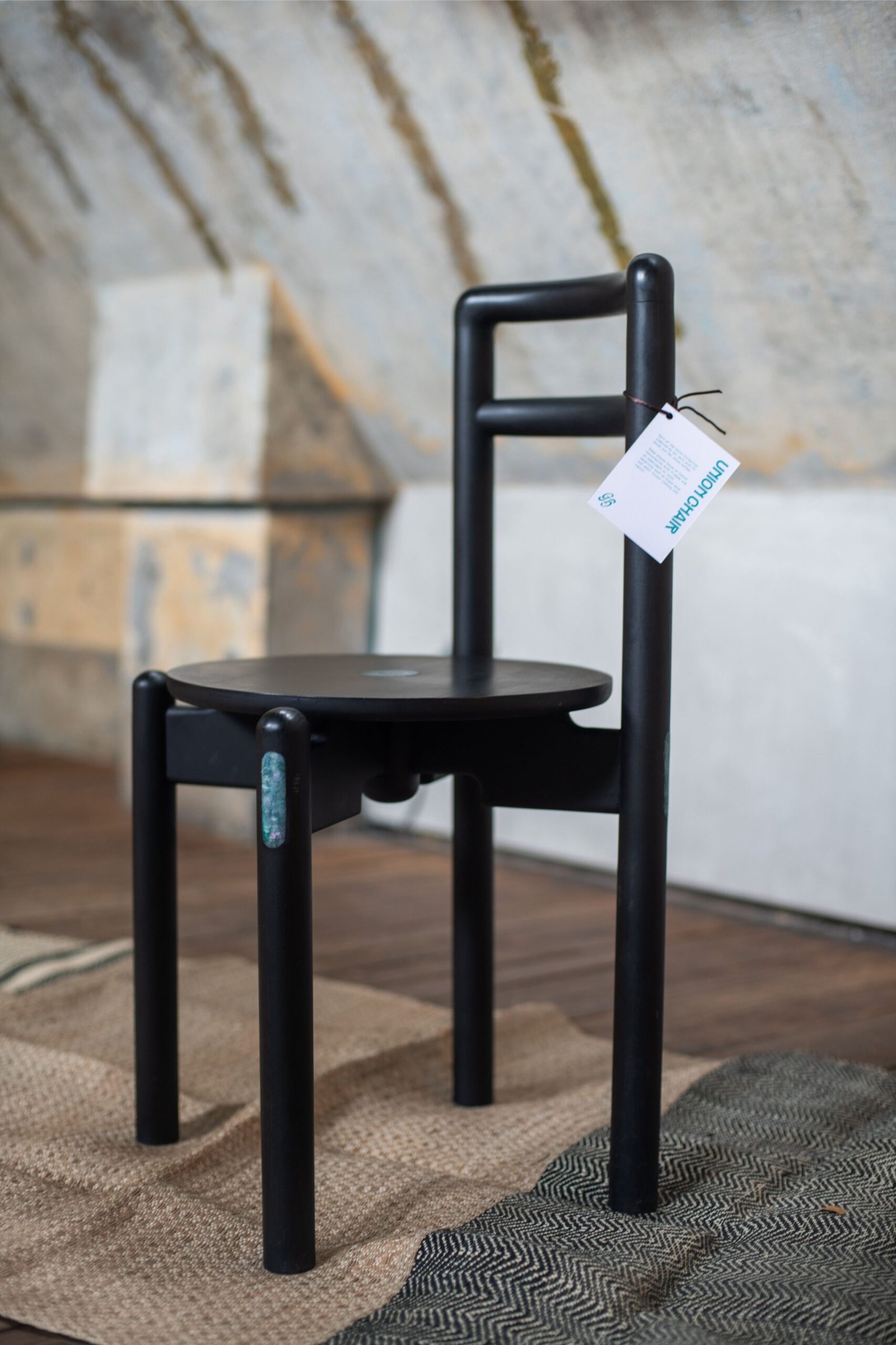
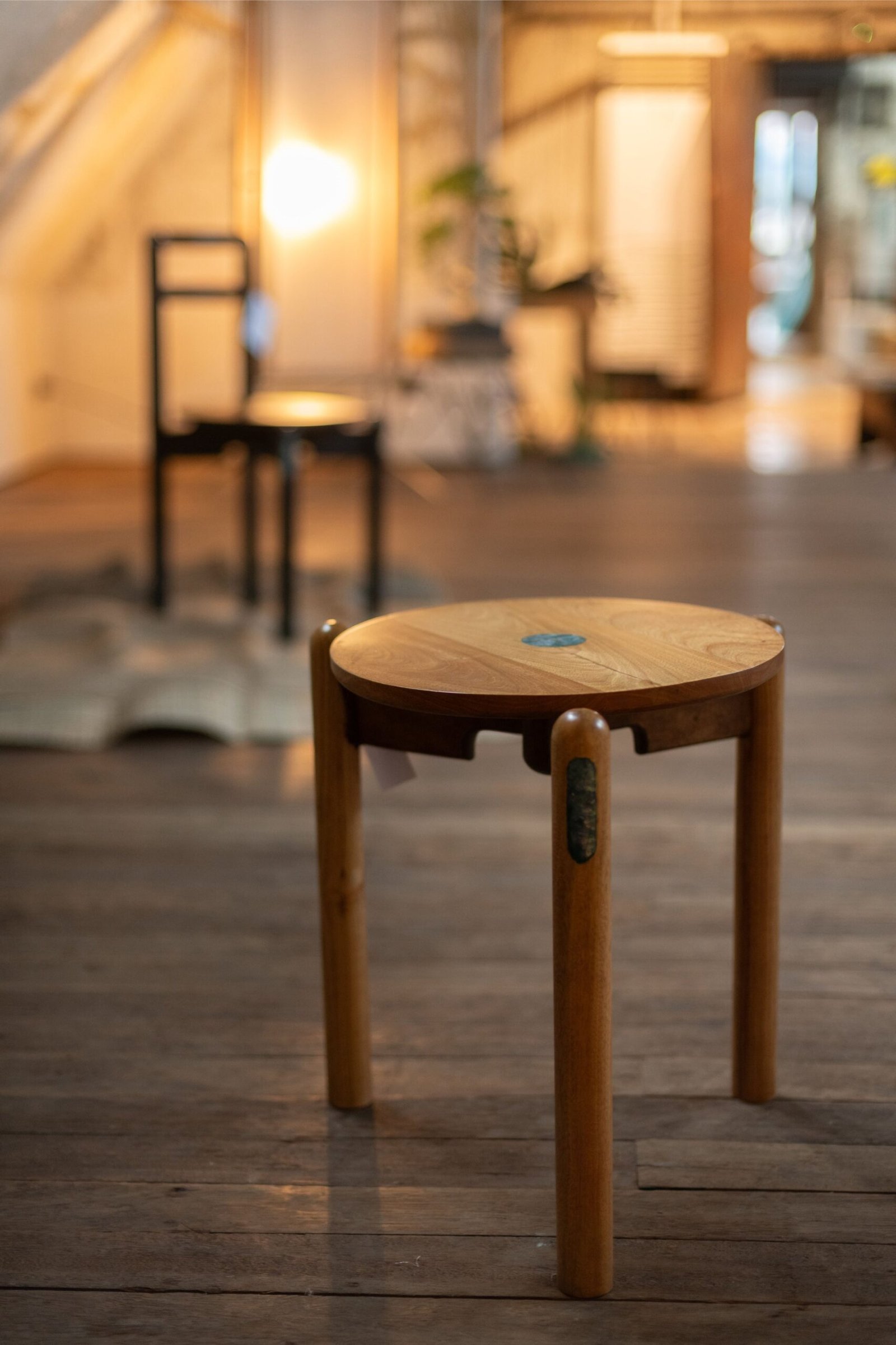
Union Chair and Union Stool
Rustia’s own furniture has yet to accumulate that kind of history, and that is why he remains cautious about letting some of it go.
“Apprehensive lang ako about selling some of the pieces that I made, because I really want to make sure that they are as close as possible to the quality and standards of what I grew up with.”
He knows wood moves and warps. Materials and manufacturing have their limits. A drawing can predict proportions and a workshop can test construction, but neither can show him exactly what years of living with an object eventually will.
“But now, I feel like no other thing can inform my practice more than time—how these things would age and warp.”
The bangko means what it does partly because it lasted. It stayed in the family long enough for several generations to sit on it, and long enough for Rustia himself to know it first as an ordinary bench and later see it with the eyes of a designer.
Time changed the way he looked at it, and that matters because Rustia does not understand furniture through sight alone.
“Design is 5% seeing; a lot of it is feeling, being in space, being comfortable.”
He likes when people touch his work. He talks about the warmth of a lamp, the smell of fresh wood and wax, and the difference between stainless steel and wrought iron beneath the hand. Sometimes it is simply sound.
“Sometimes it’s nice to hear a rocking chair creak, or to hear the solihiya of a chair stretch because you put weight on it.”
A restored solihiya chair in the exhibition makes the point simply. Its woven seat is meant to flex. The chair is meant to receive weight. Like the bangko, it makes more sense once someone sits down.
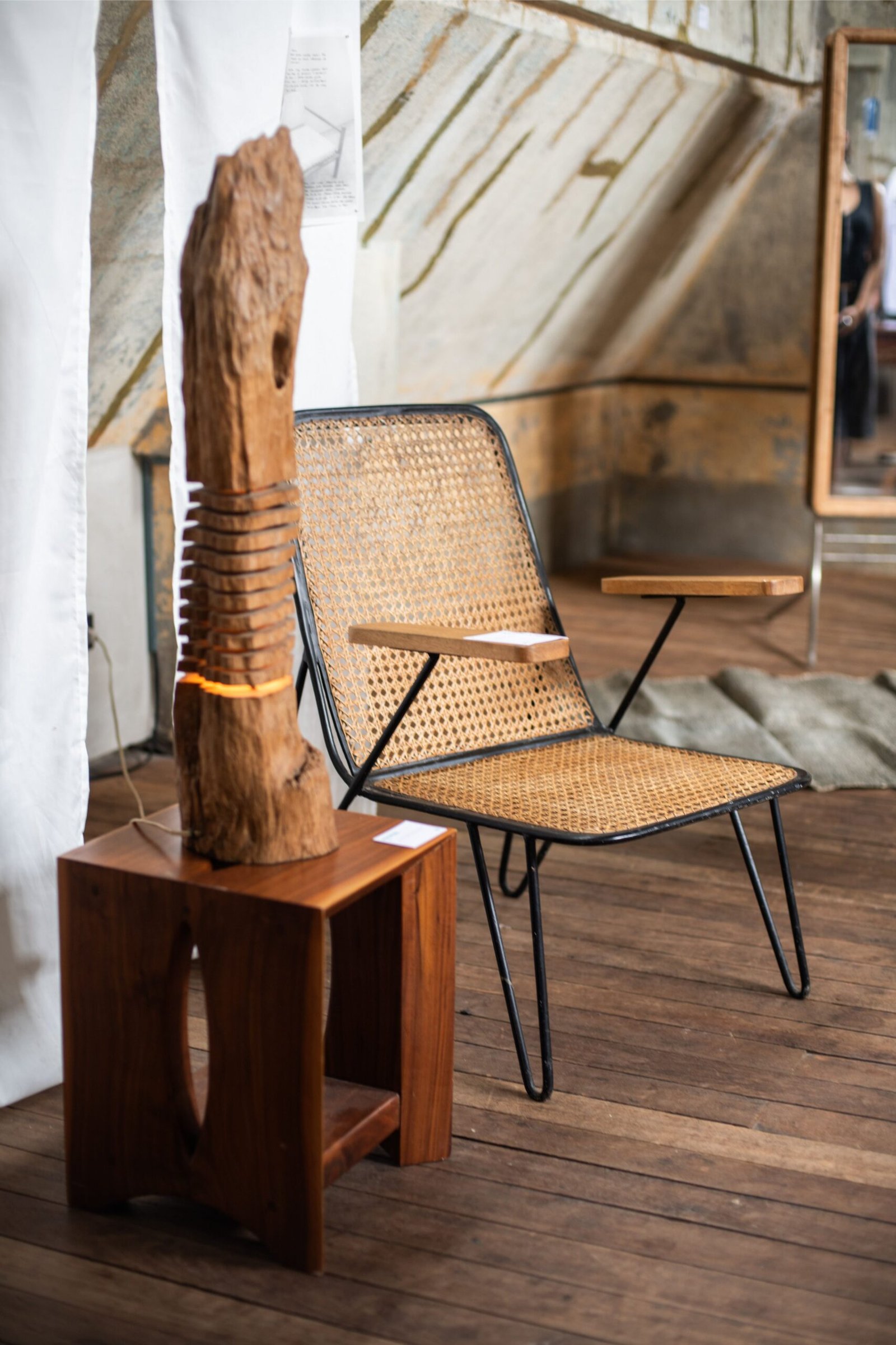
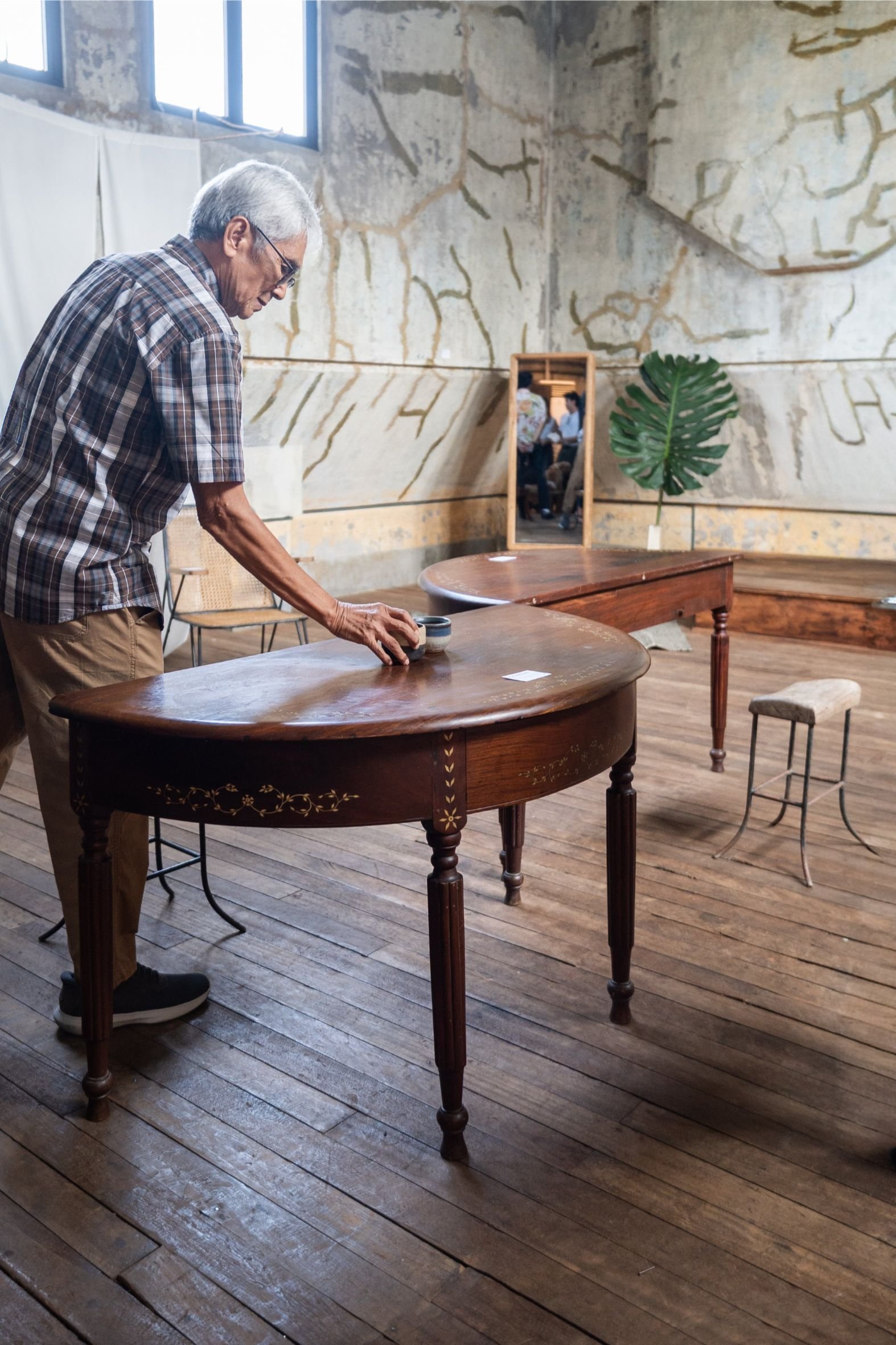
Left: Box Stool and Solihiya Lounge Chair. Right: Rustia’s father at the exhibition.
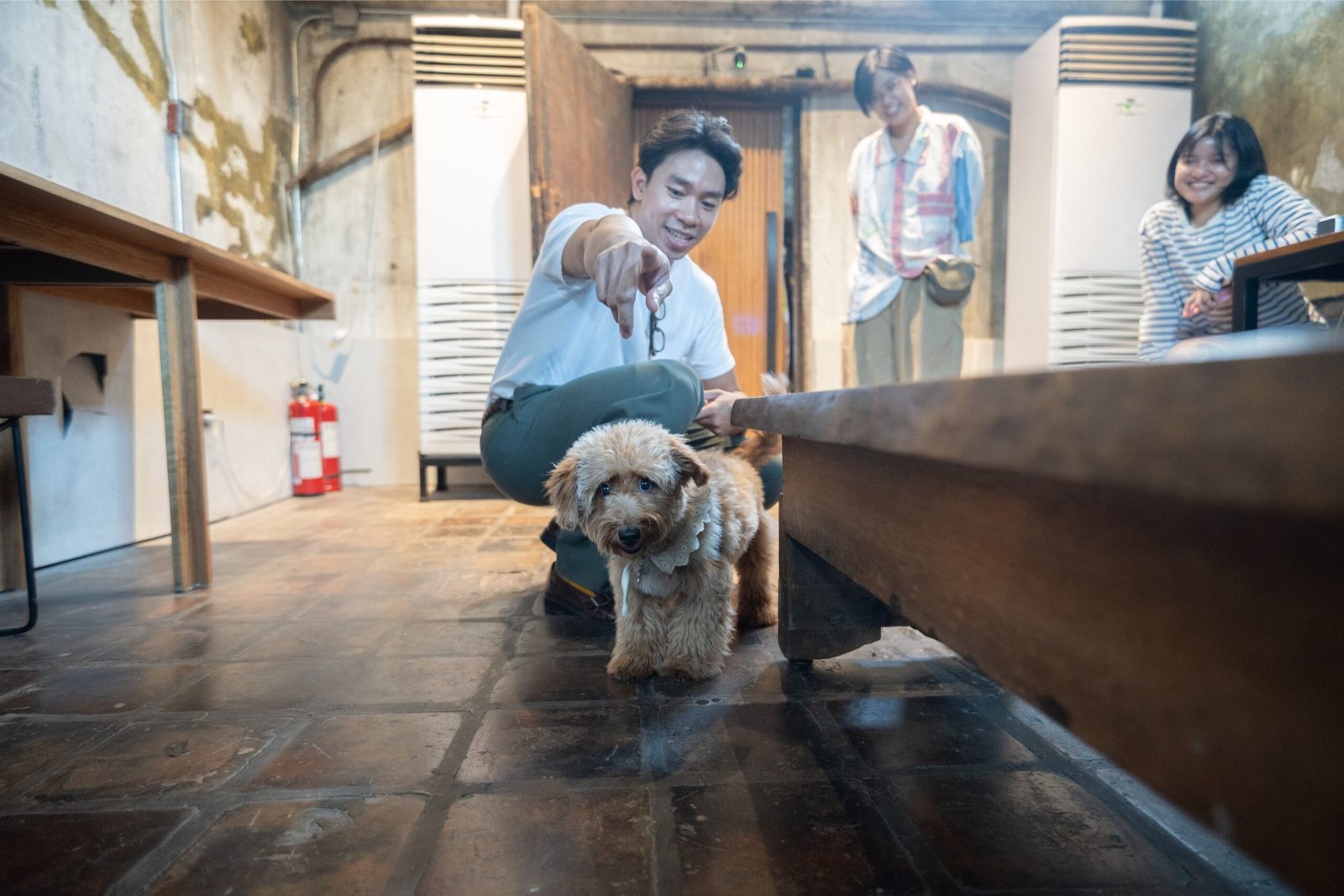
On one of the tables sit two ceramic cups made by Rustia and his father. They are a small detail, but for a moment they make the arrangement feel less like a display and more like a place someone has just been using.
That is also why Rustia hopes visitors leave Kinalakihan thinking about the objects waiting for them at home.
“Even if you don’t have these kinds of pieces at home, I want you to reflect on the stuff that you have.”
The invitation goes beyond heirlooms or handmade furniture. Rustia talks about wearing his father’s shoes. He has had trousers made from fabric that belonged to his mother. Even a blender older than he is remains in use at home. Things that do not need to be valuable in the usual sense to be valued.
“I’m not saying that you should never buy from H&M or IKEA, or that everything has to be old. But we should appreciate things that can last and that we can continue to value.”
Sometimes appreciating design begins with paying closer attention to what has never left.
First United Building gave Rustia one more reason to do exactly that.
The building was already familiar to him. In 2019, he had taken part in PROTO: An Object Fair at First Coworking on its fifth floor. Organized by one/zero, the fair was devoted to handmade everyday objects and conceived as a response to hyper-consumption.
Years later, he returned to First United Building for Kinalakihan.
That open format reflected Sit First’s approach of letting each designer set the tone.
Only on the exhibition’s opening day did Rustia learn that his grandfather had once held office there.
By then, Rustia had already found his own way into the building through design. Like the inlays and the resemblance between the Divider Light and his father’s work, the family connection arrived afterward.
None of those histories changed. Only Rustia’s understanding of them did.
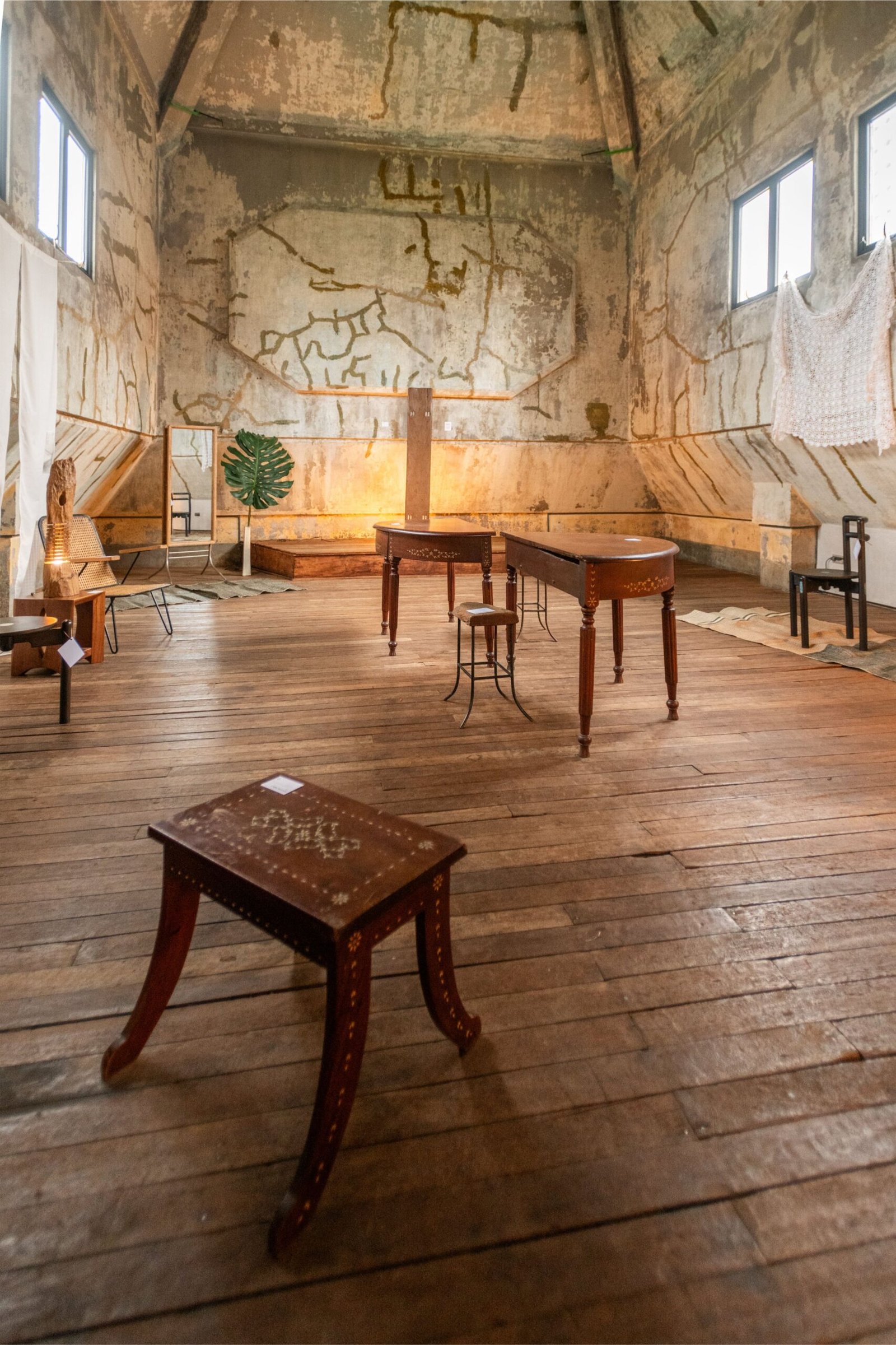
After Kinalakihan, his contemporary pieces will leave the exhibition and enter a much more ordinary setting.
“All of these pieces are going to my condo.”
There, they will enter daily use. Rustia will have the chance to see how the materials move, how the pieces age, and what he learns from living with them. Whether they will last long enough to carry the kind of history he grew up with is something only time can answer.
The stories had been there before he knew them. Years spent designing, traveling, and encountering other people’s work gave Rustia new references, but also a different way of seeing what had surrounded him from the beginning.
“I had something good. I just didn’t know it.” •