Words Angelo Dionora
Images Gajah Gallery Manila (BenCab)
(Aesop Antithesis)
“It is a fascinating process to see how artists come to a conclusion,” James Page tells me as we survey a few sculptures in the storage room of Gajah Gallery Manila. The foundry director points to pieces by artists like Charlie Co and Mark Justiniani—housed at the back in the meantime to make way for another exhibit—and elaborates on how different artists translate their ideas into tangible forms. When is a work truly finished? When does it finally resemble the shape of the artist’s idea?
These questions become even more interesting with sculpture, which introduces more dimensions, surfaces, and textures to consider. Should a mark be sanded down, or left as it is? Should an etching or a gash be added to the surface? And what happens when an imperfection in the original model carries over into the finished sculpture?
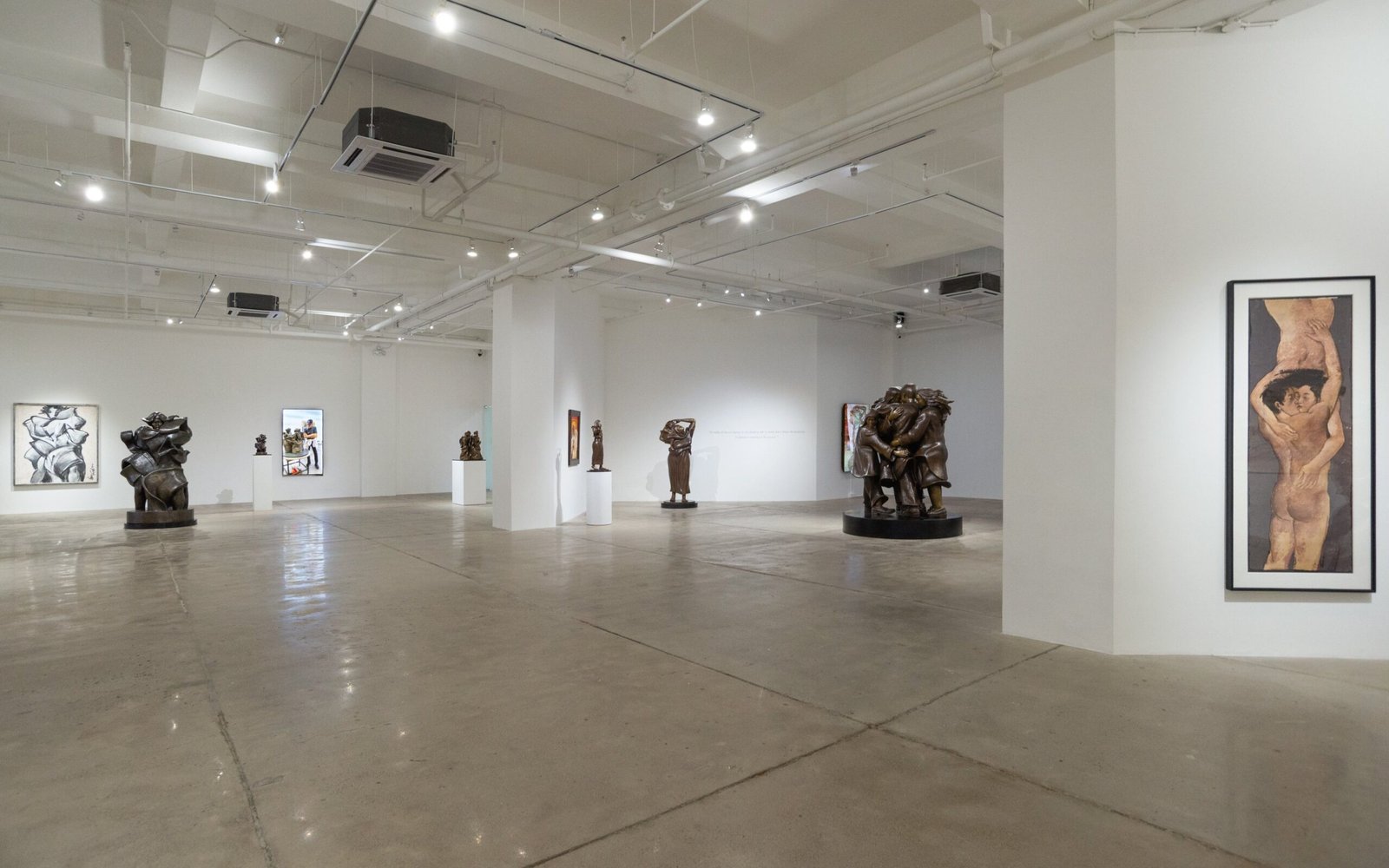
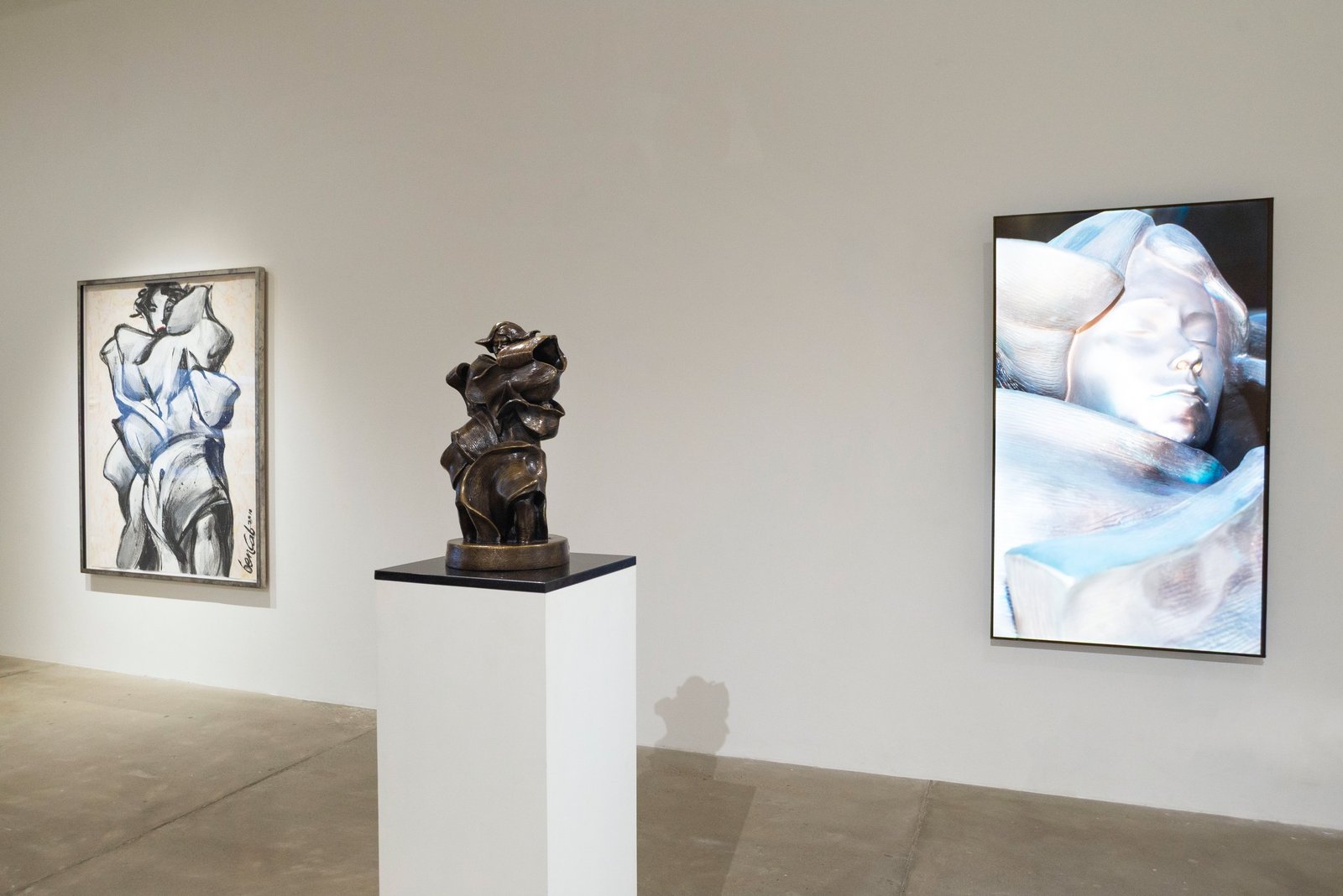
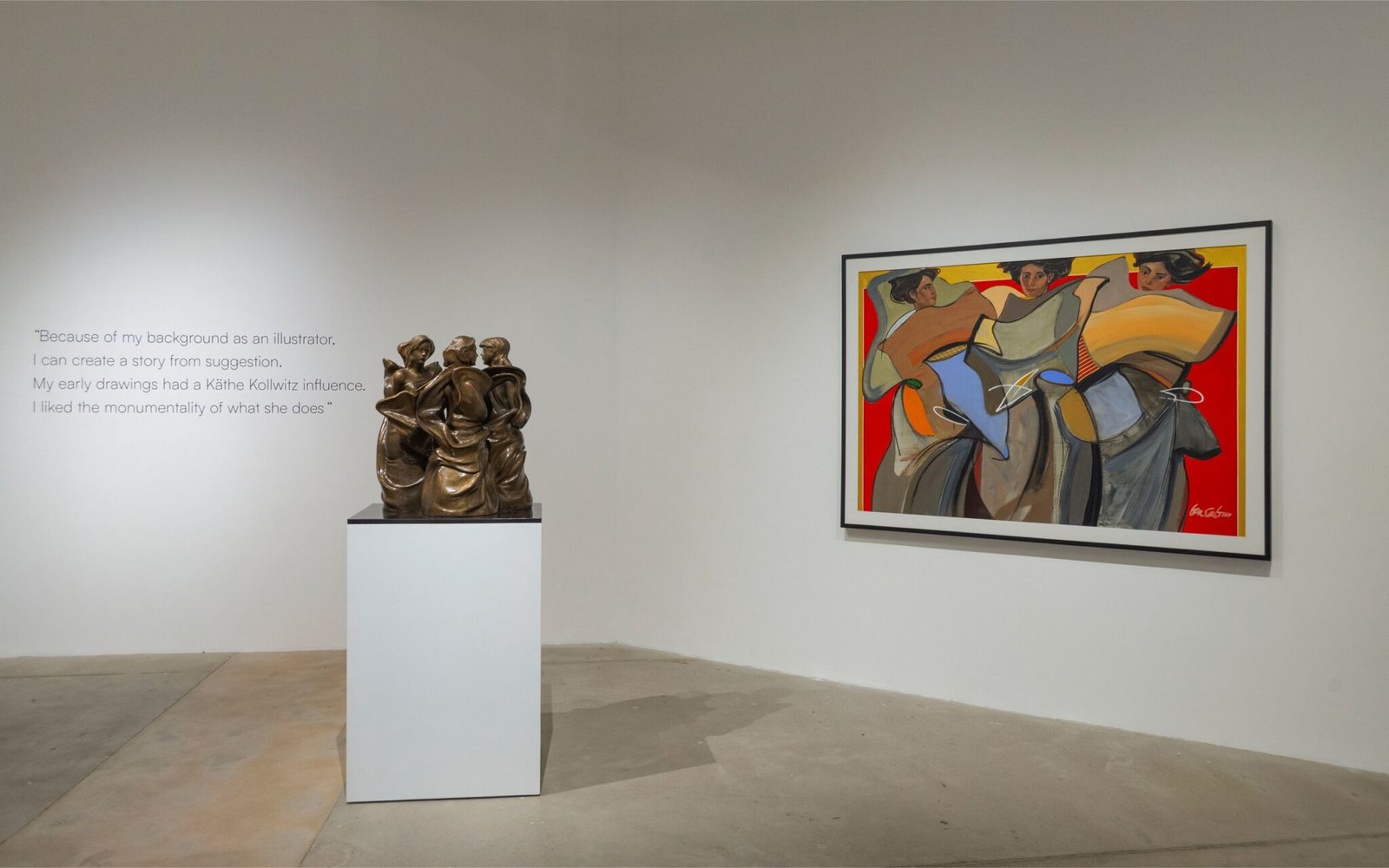
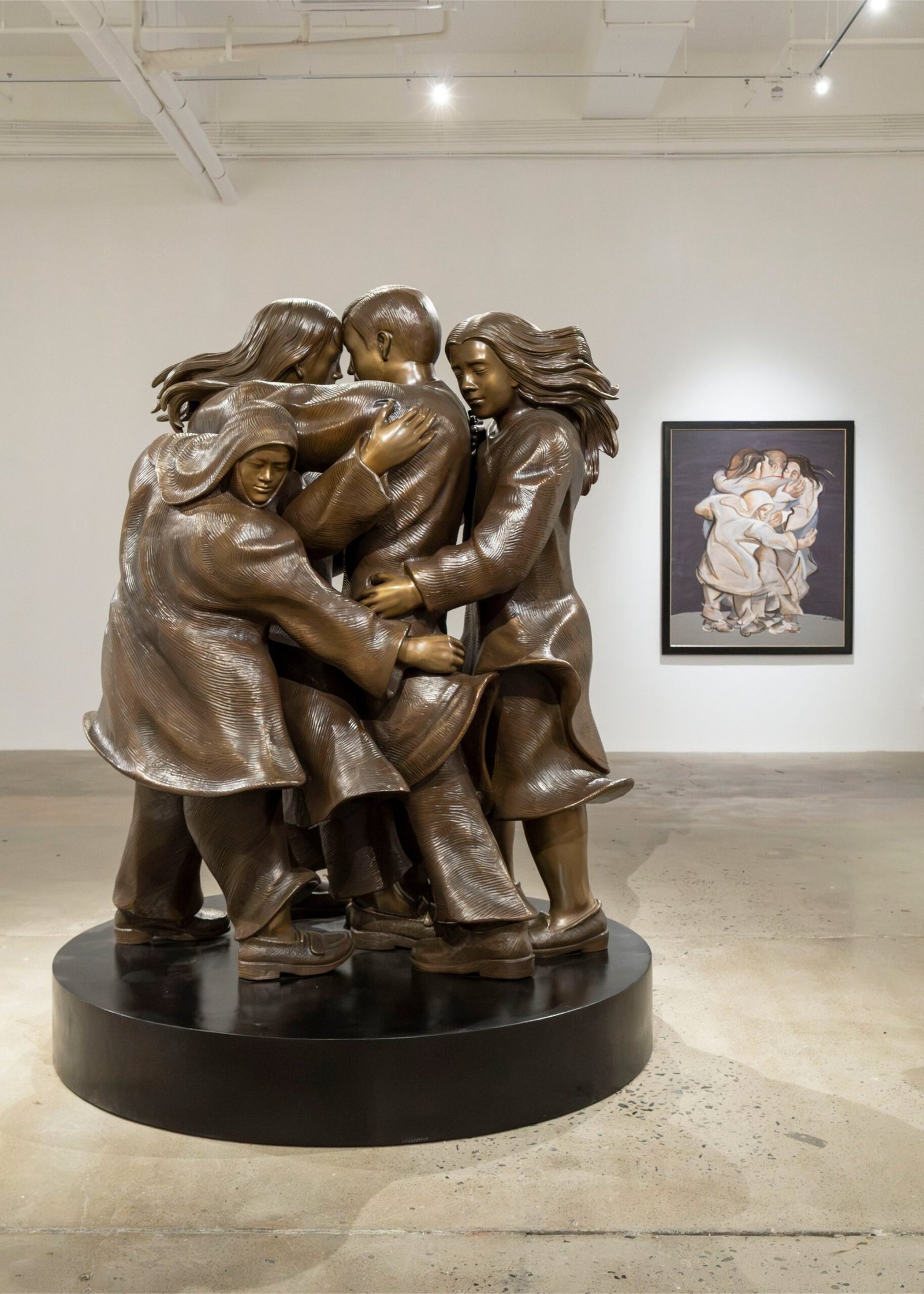
National Artist Benedicto ‘BenCab’ Cabrera grappled with these questions over the past three years while working on In Honor of Form, his first formal presentation of his sculptural practice. Currently on display at Gajah Gallery Manila, ten bronze sculptures that bring BenCab’s iconic paintings to life in 3D stand alongside the very portraits that they are based on.
The exhibition comes at a time of milestones for the Singapore-based Gajah Gallery, which celebrates 30 years of championing Southeast Asian art in 2026. The Manila branch is its fourth location after Singapore, Jakarta, and Yogyakarta, and it is celebrating its first anniversary this November.
Both BenCab and Page note that it was challenging to determine when a sculpture was considered ‘finished.’ The push and pull could get exasperating, but the process is also part of what gives a sculpture its character. Even with the convenience of using 3D printing instead of clay for the molds, there is a case to be made for embracing the irregularities and unpredictability of working mostly by hand. The tension between retaining ‘imperfections’ and correcting them is contingent on the skill and taste of the sculptor.
Page has had the privilege of seeing artists from all over Southeast Asia revel in and agonize over these challenges at Yogya Art Lab (YAL), the Indonesia-based foundry and production arm of Gajah Gallery. Founded in 2012, YAL has provided avenues for prominent and emerging artists to work with local artisans, create sculptural works, and experiment with new materials and methods. A few years ago, the folks at YAL visited the national artist’s eponymous gallery and came up with the idea of reimagining the paintings in bronze. Once the project was green-lit, BenCab and YAL worked on the sculptures from 2023 to 2026 in Yogyakarta, Indonesia.
In Honor of Form realizes possibilities. “It challenges your imagination and existing knowledge,” BenCab says, pointing to the back of one sculpture. For years, audiences have seen Sabel and the fabrics that drape and flow around her, but only from the front. What does the back look like? And how do you give it form when the original image can only give you clues from one perspective?
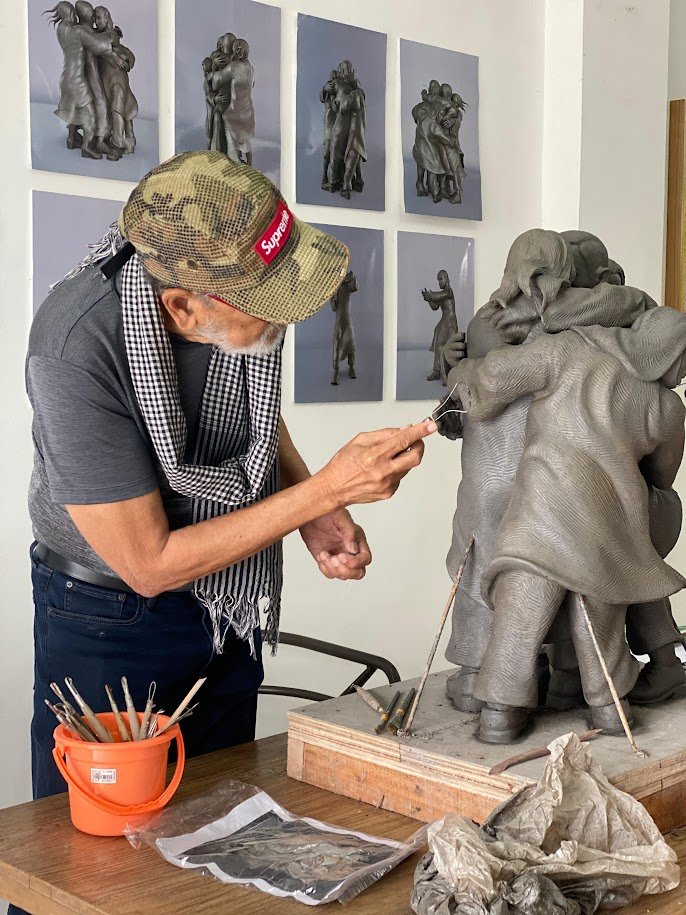
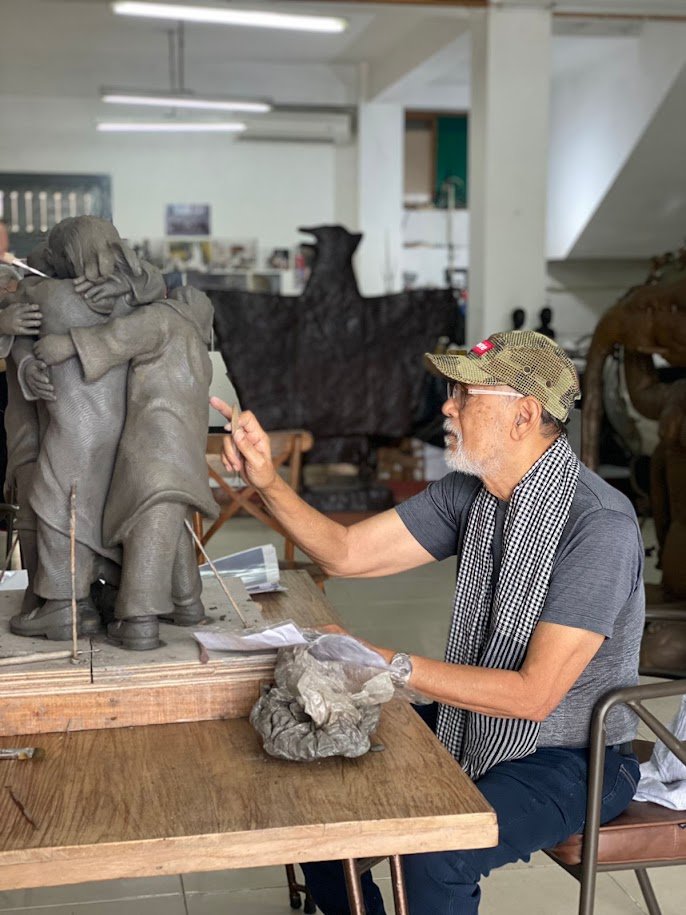
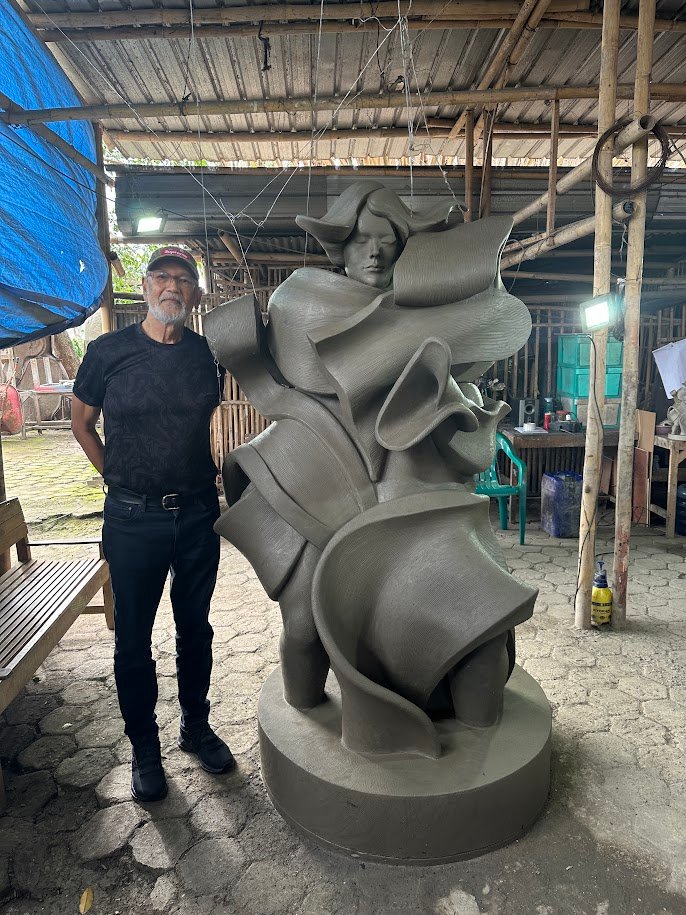
BenCab working on Reunion
This is where newer technology comes in handy, Page adds. Digital rendering allows the team to explore how the fabrics might move and drape around the figure, using BenCab’s paintings as a starting point. Once the artist signs off on the renders, the team models the form in clay, creates the necessary molds, and casts the sculpture in bronze.
The process follows a fairly linear but laborious sequence. A humanoid sculpture, standing less than two feet tall, can require six to eight molds for its various components, from the arms and legs to the head and torso. Once cast, these pieces must be welded together, much like a jigsaw puzzle. The points where the pieces are welded are then sanded down until the sculpture reads as a coherent whole, with its surface finished to the artist’s specifications.
Now imagine doing all that for a woman surrounded by flowing fabric, rendered in bronze and weighing hundreds of kilos. But for all the physical and logistical challenges of the exhibit, BenCab doesn’t seem to mind. “I always like to work with my hands,” he reiterates.
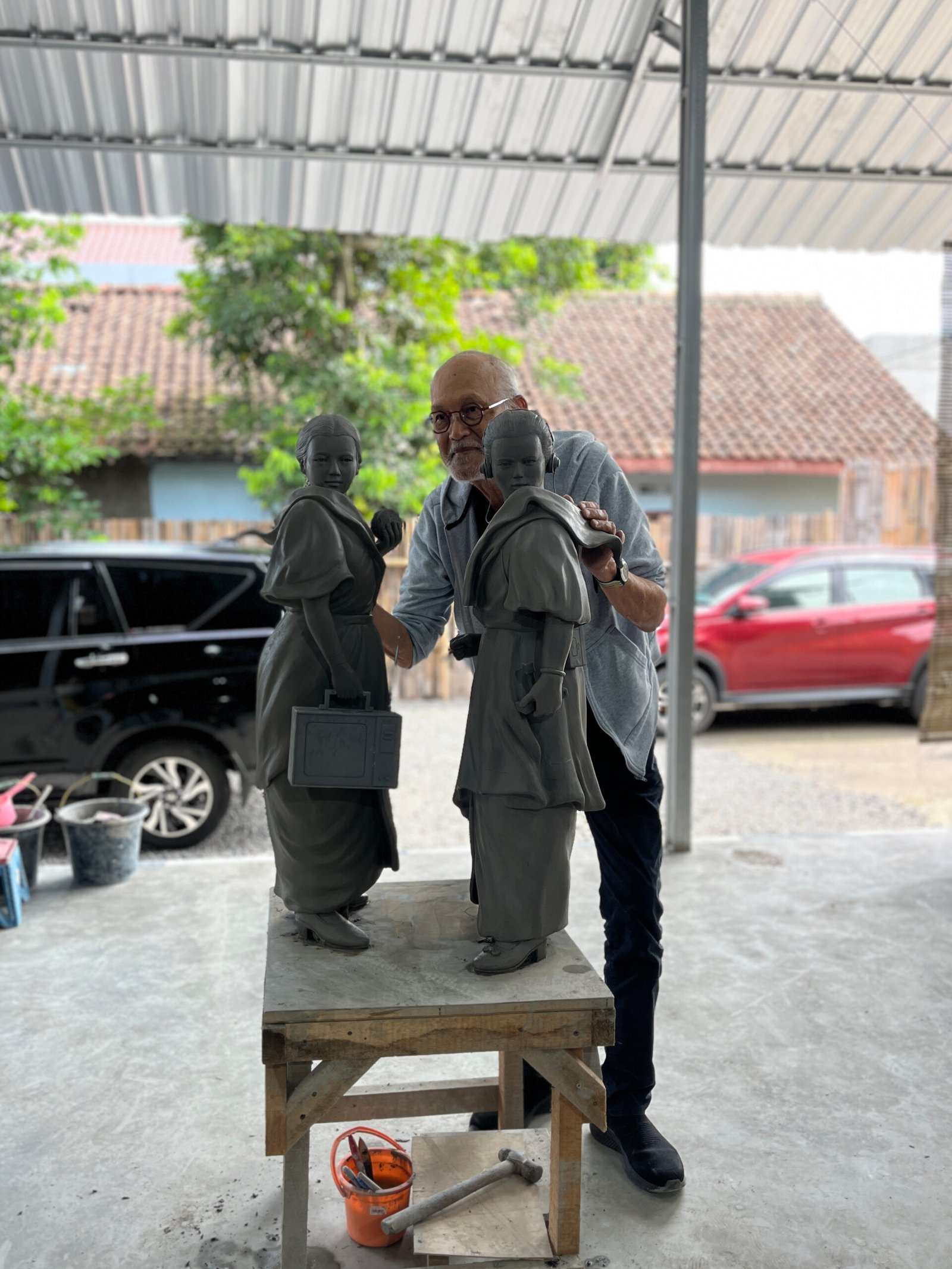
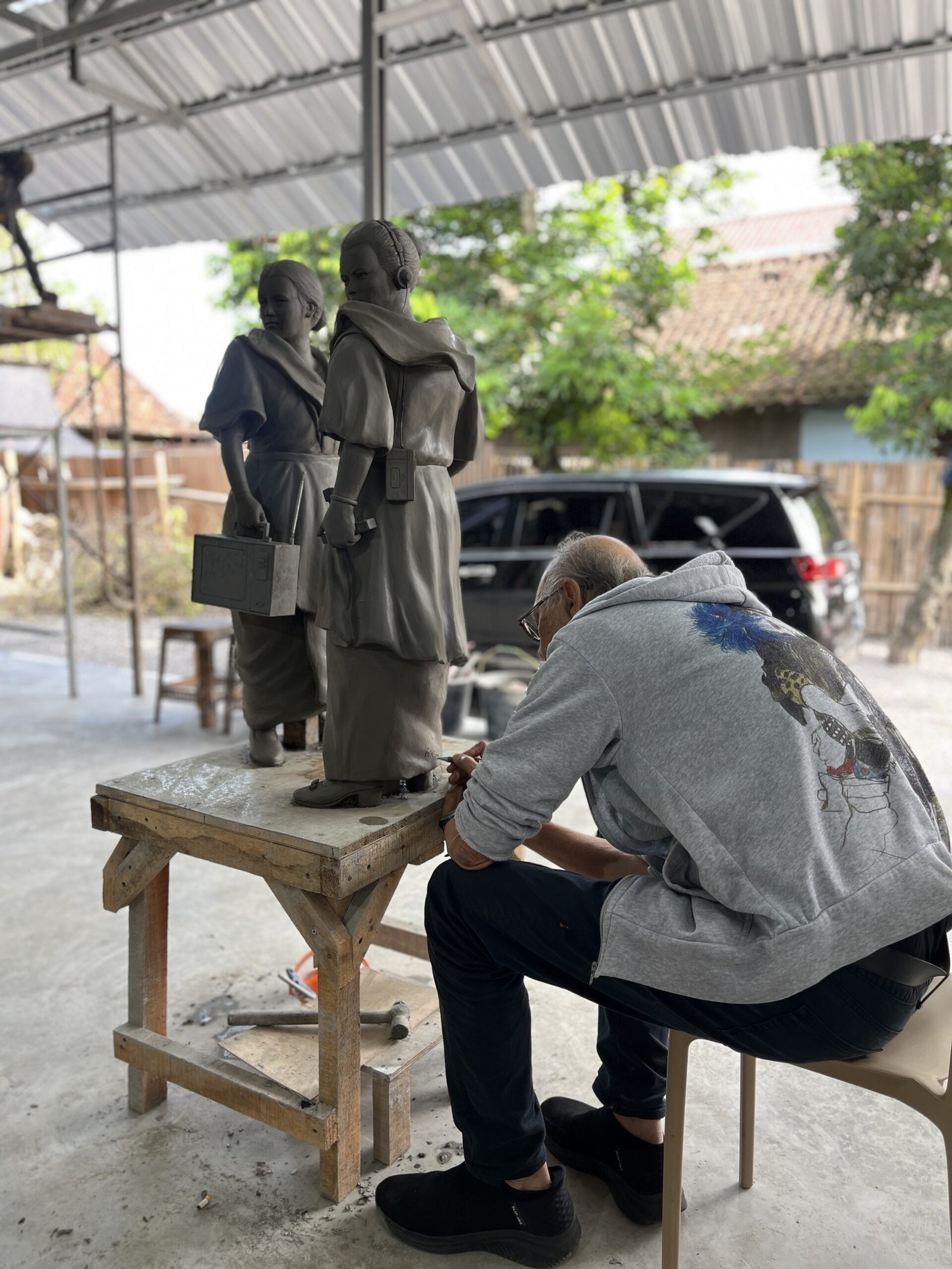
In Honor of Form encapsulates what happens when an image leaves the canvas and takes on a life of its own. The artist must now account for every side, every fold, every surface. But for BenCab, it’s more a new possibility to explore than a problem to be solved.
It also reflects a longstanding curiosity in BenCab’s practice. He may be best known for his paintings, but his interests have extended to other forms of making, from printmaking to carpet-making, each with its own demands on the hand and the imagination.
But even at 84, he doesn’t seem interested in limiting himself to what he already knows.
“I really enjoy sculpture. I describe it as drawing in the round,” he says. “I don’t restrict myself. Your curiosity must be kept open.” •