
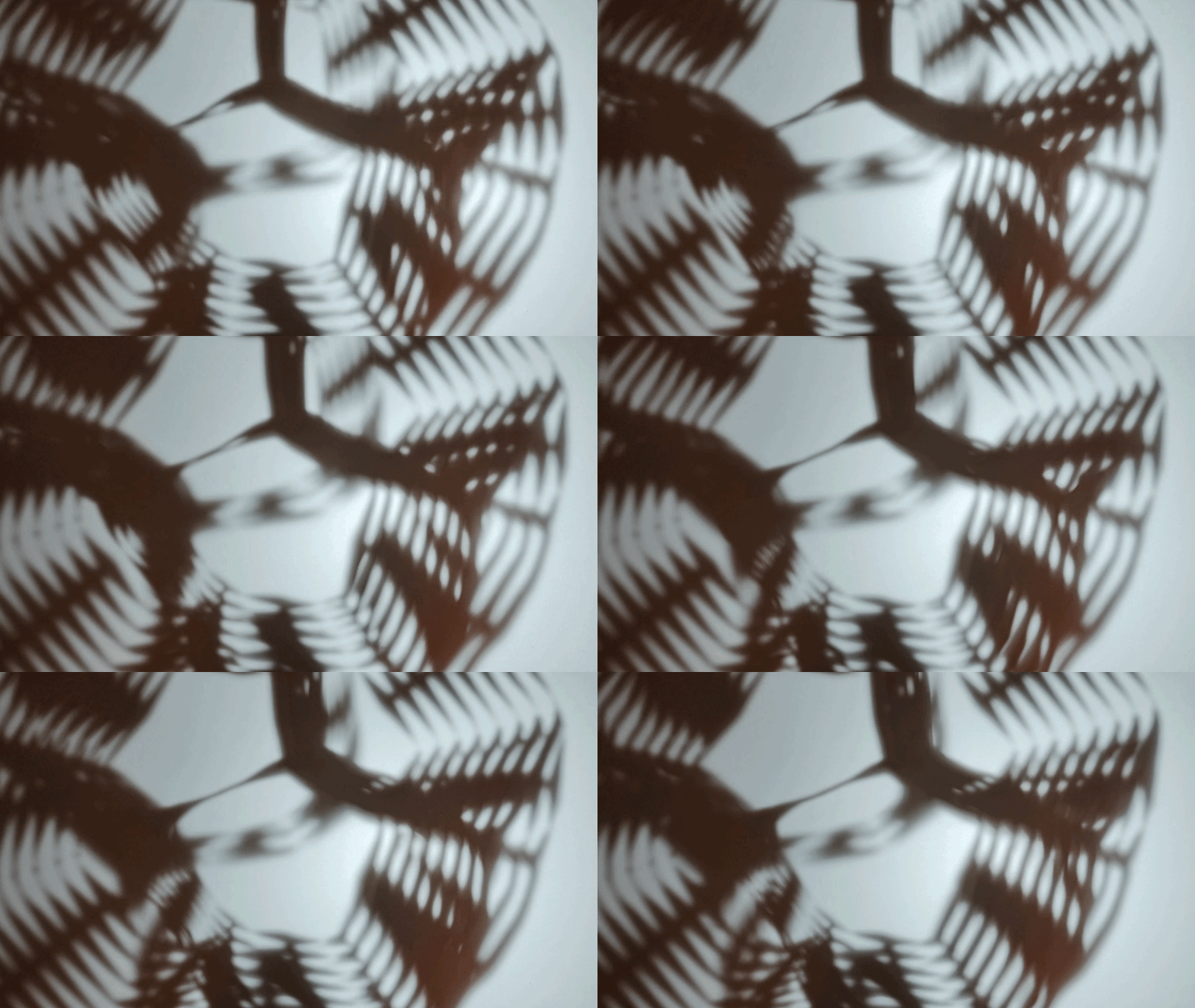
Introduction and interview Patrick Kasingsing
Images Adrian Ardiente and Mei Lim (Olafur Eliasson: Your curious journey)
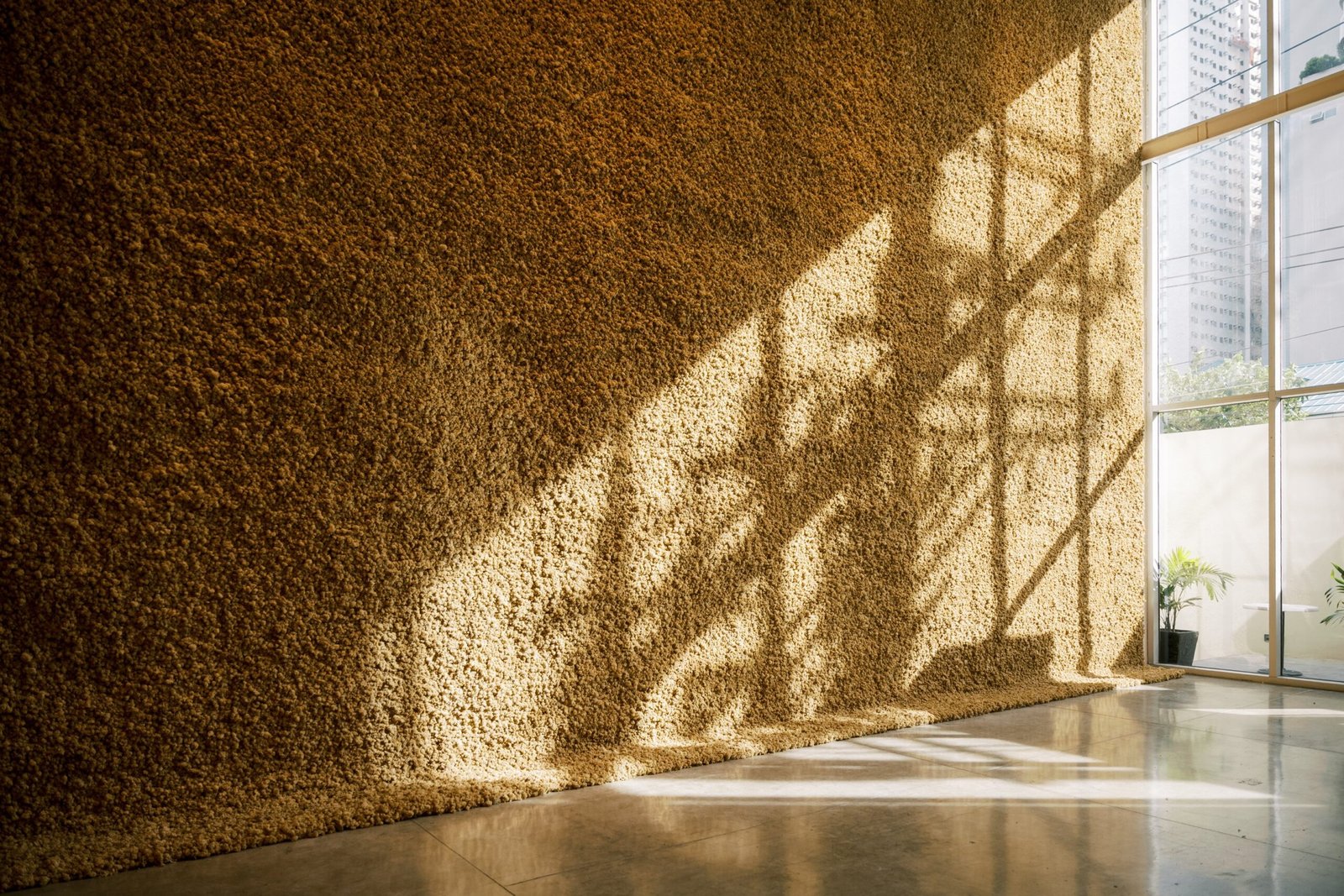
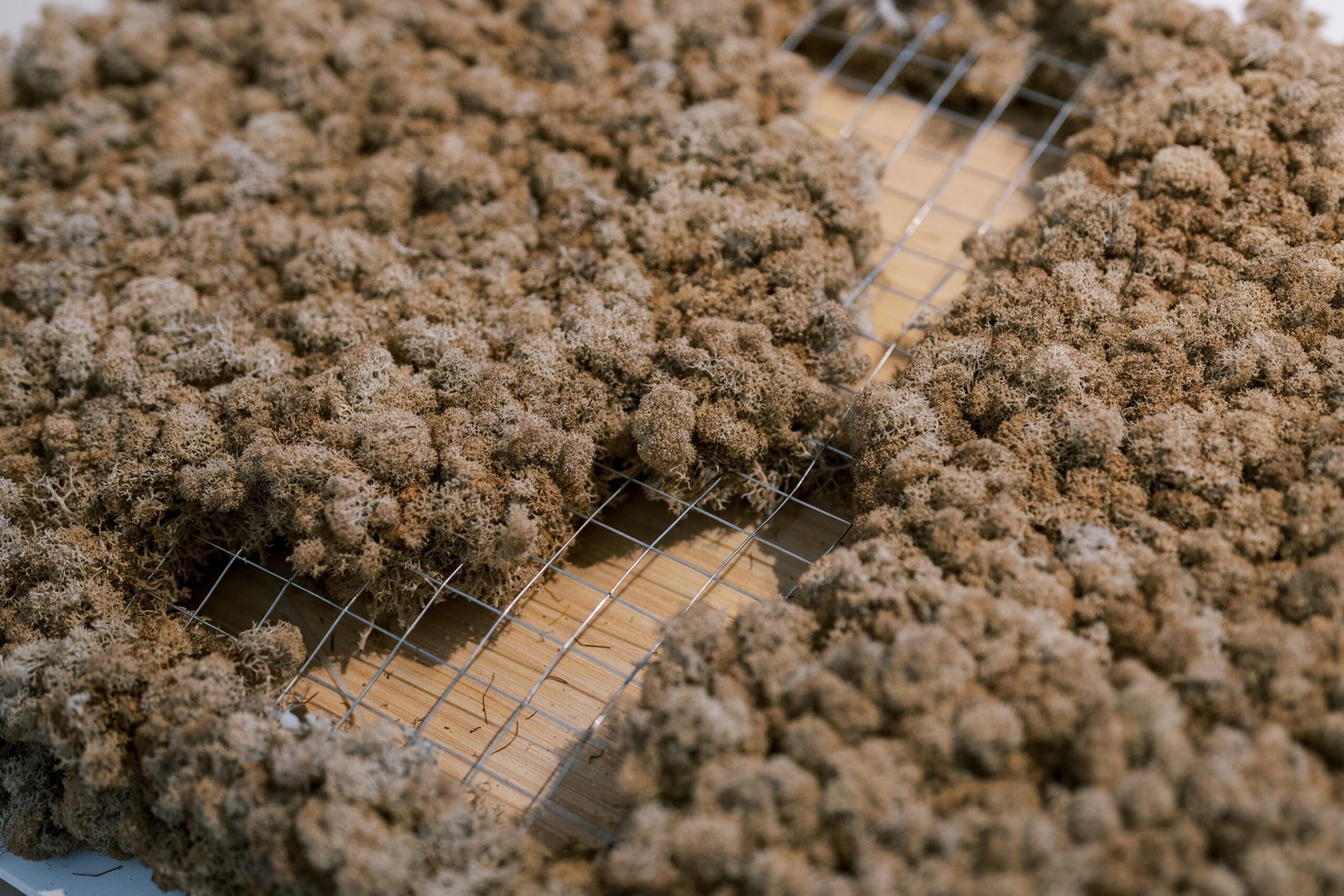
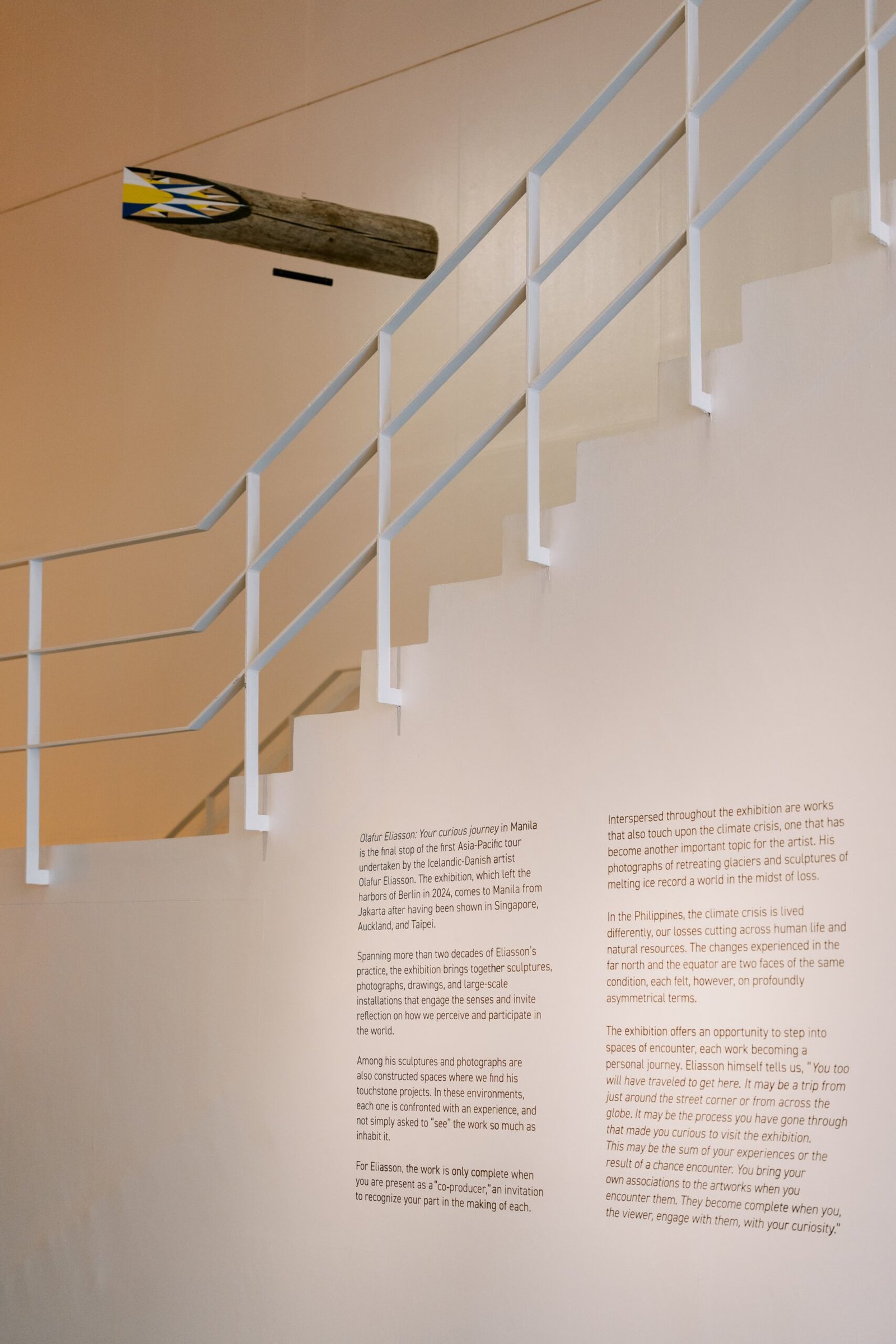
The title of Olafur Eliasson’s traveling exhibition, Your curious journey, alludes to a plea: to seek self-experience, to embark on a path, a shift in point of view from finding out what the artist meant to seeking the meaning yourself.
On my visit during the opening of the show, I was enraptured by the beauty of the forgotten natural world Eliasson has surfaced, the breaking down of light into its component colors, the magic of summer rain, the comforting whiff of sleepy reindeer moss acclimatizing to its new tropical home, but also the startling reality of what we have been doing to our environment. Eliasson, whose work has always delved into the fragile relationship we have with the natural sphere, makes no explicit statements or incriminations, instead letting his understated, beguiling visionscapes allude to this tension between creation and destruction.
In the following interview with the Icelandic-Danish artist, the uncertainty that lies between this tension is the point.
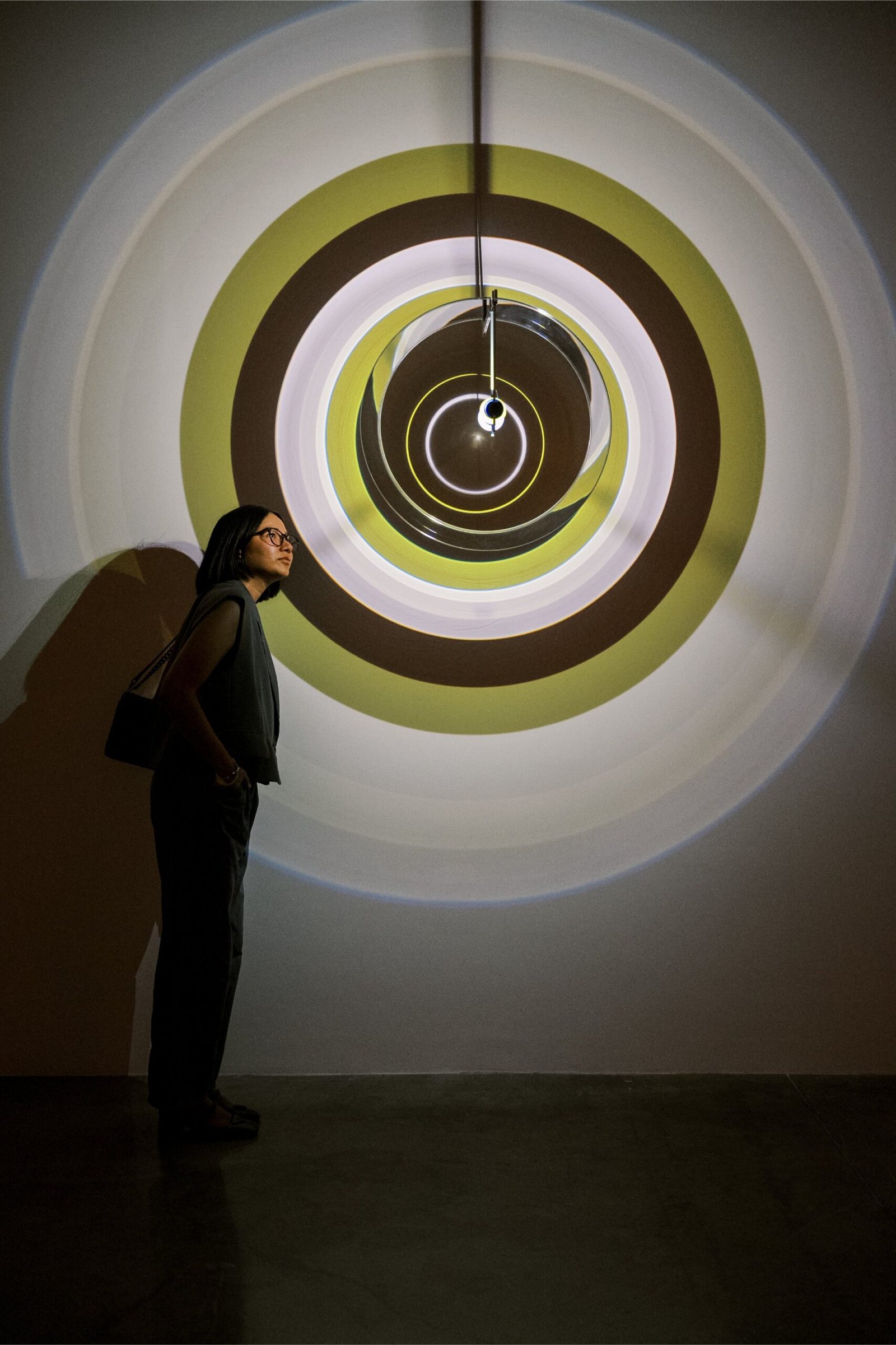
Welcome to Kanto, Mr. Eliasson!
Manila is where Your curious journey ends; after Singapore, Auckland, Taipei, and Jakarta, the works return to your studio in Berlin from here. The Philippines is among the countries most acutely and immediately affected by the climate crisis: rising seas, intensifying typhoons, and with communities already suffering from the climate disruption your work has long warned about.
What does it mean to bring this particular exhibition to this particular place at this particular moment? Did the Philippines’ position on the front lines of the climate emergency shape how Your curious journey was configured for Manila?
Olafur Eliasson, artist, Your curious journey: This is the first time that I have exhibited in the Philippines, which is incredibly exciting for me because I love the opportunity to bring my art to places it has never been previously. I hope the artworks in Your curious journey resonate with the audience in Manila in whatever ways the people visiting on location find. The works are intentionally not about prescribing any particular reaction or how anyone should feel or think.
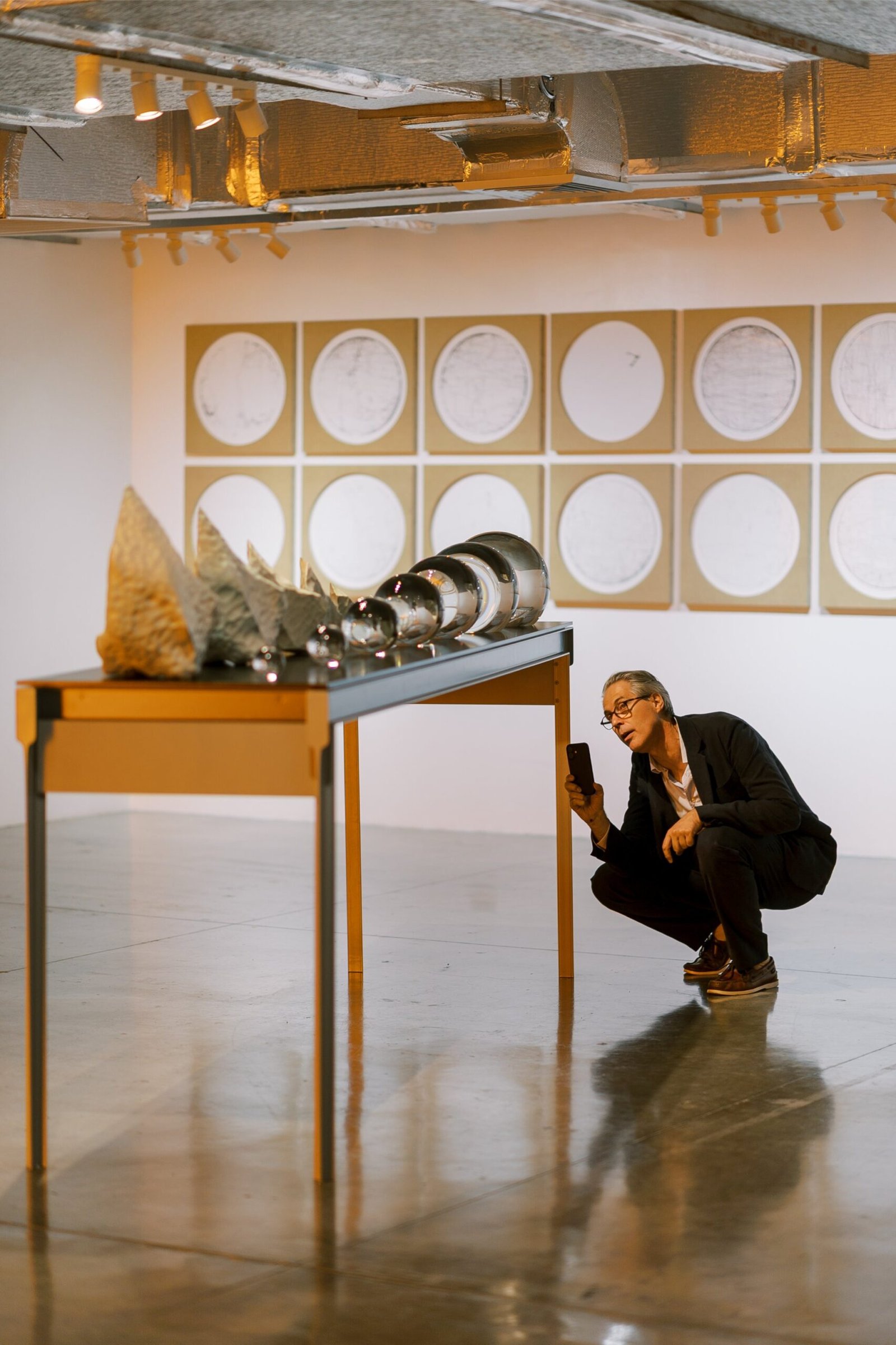
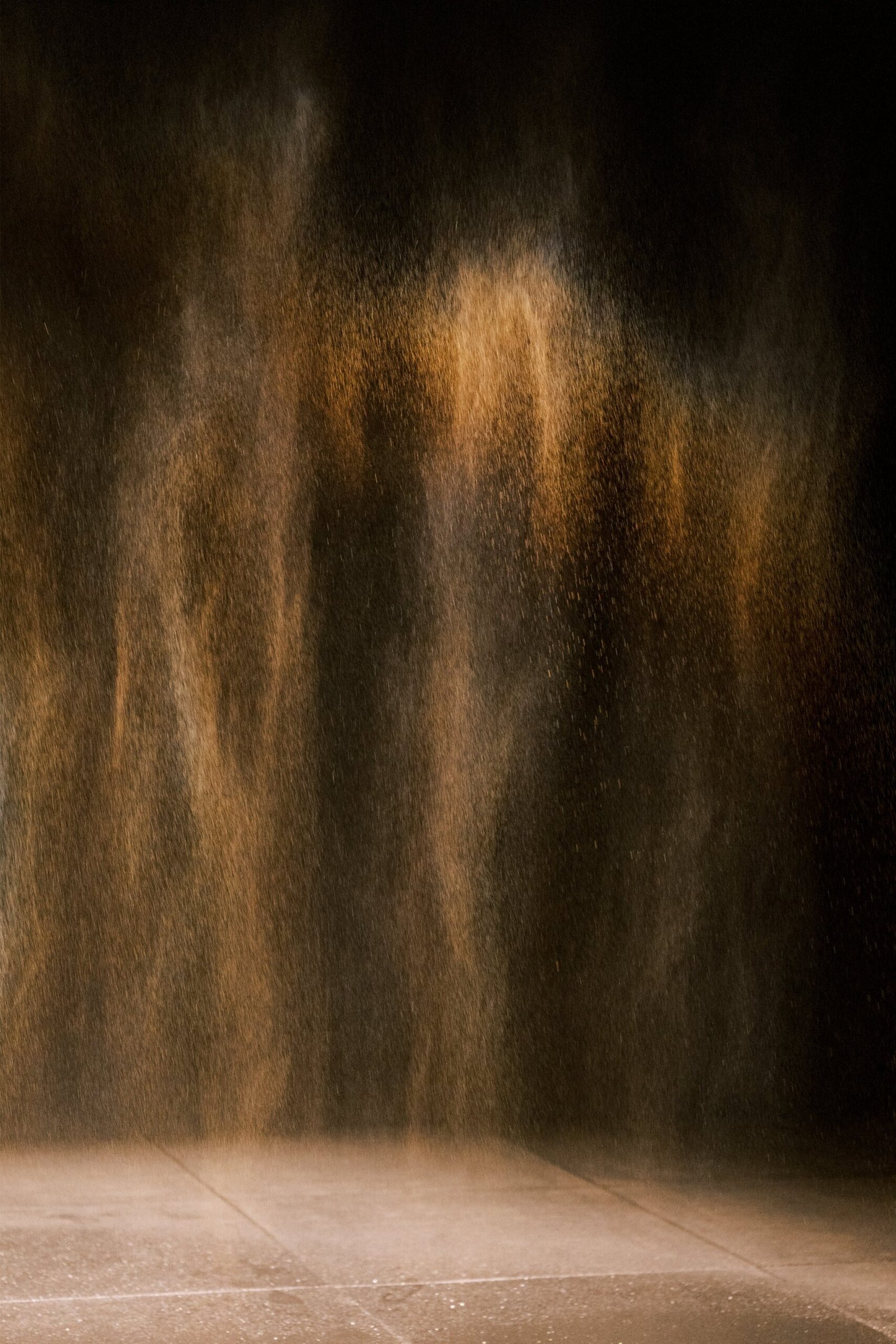
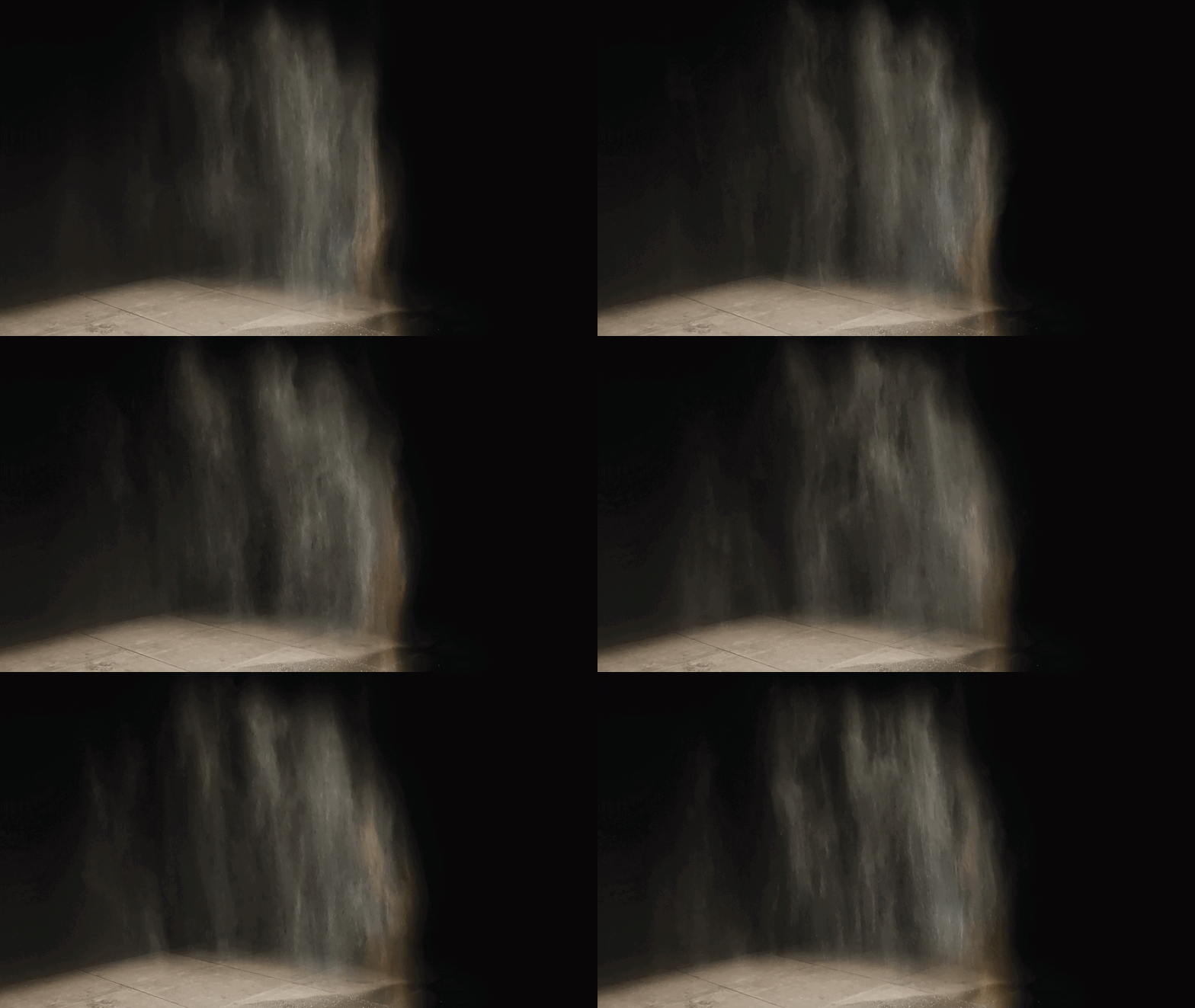
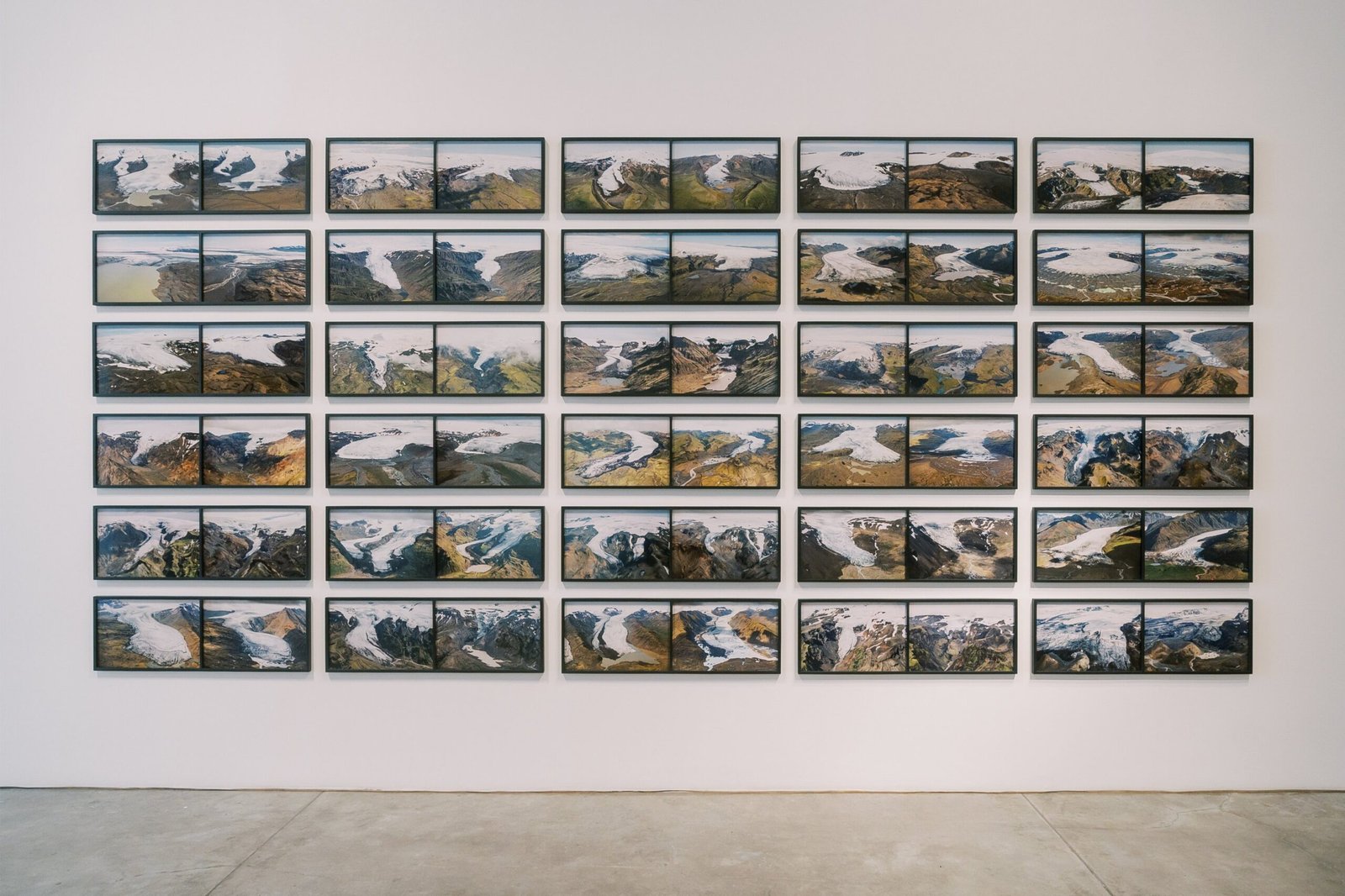
In the context of Manila, The glacier melt series 1999/2019, which is a work that does, in fact, address the climate crisis, is perhaps less about convincing visitors here that the world’s glaciers are disappearing — the climate crisis that people are faced with here looks different from what it does in the Icelandic Highlands. But the two are connected, and I hope the work can make visible the presence of absence, so to speak, to help us relate to the scale of the crisis.
Coming to Manila raises questions for me personally about how we navigate our personal journeys. If one only focuses on everything that is quantifiable, definable, measurable, like the borders between countries, then I believe it masks the ability to reckon with our sense of responsibility. The intensifying winds or the typhoons you mention do not start or stop at borders.

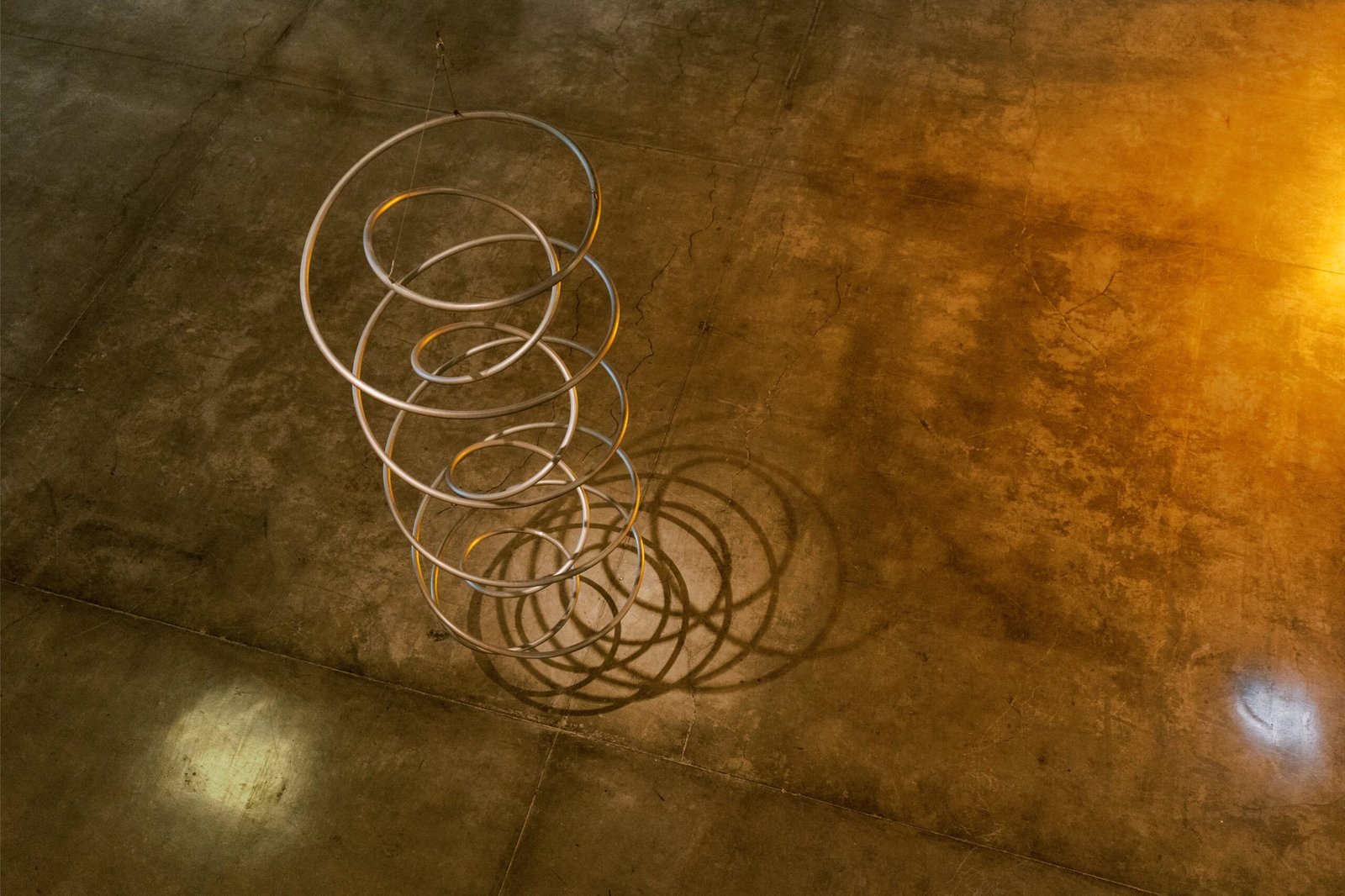
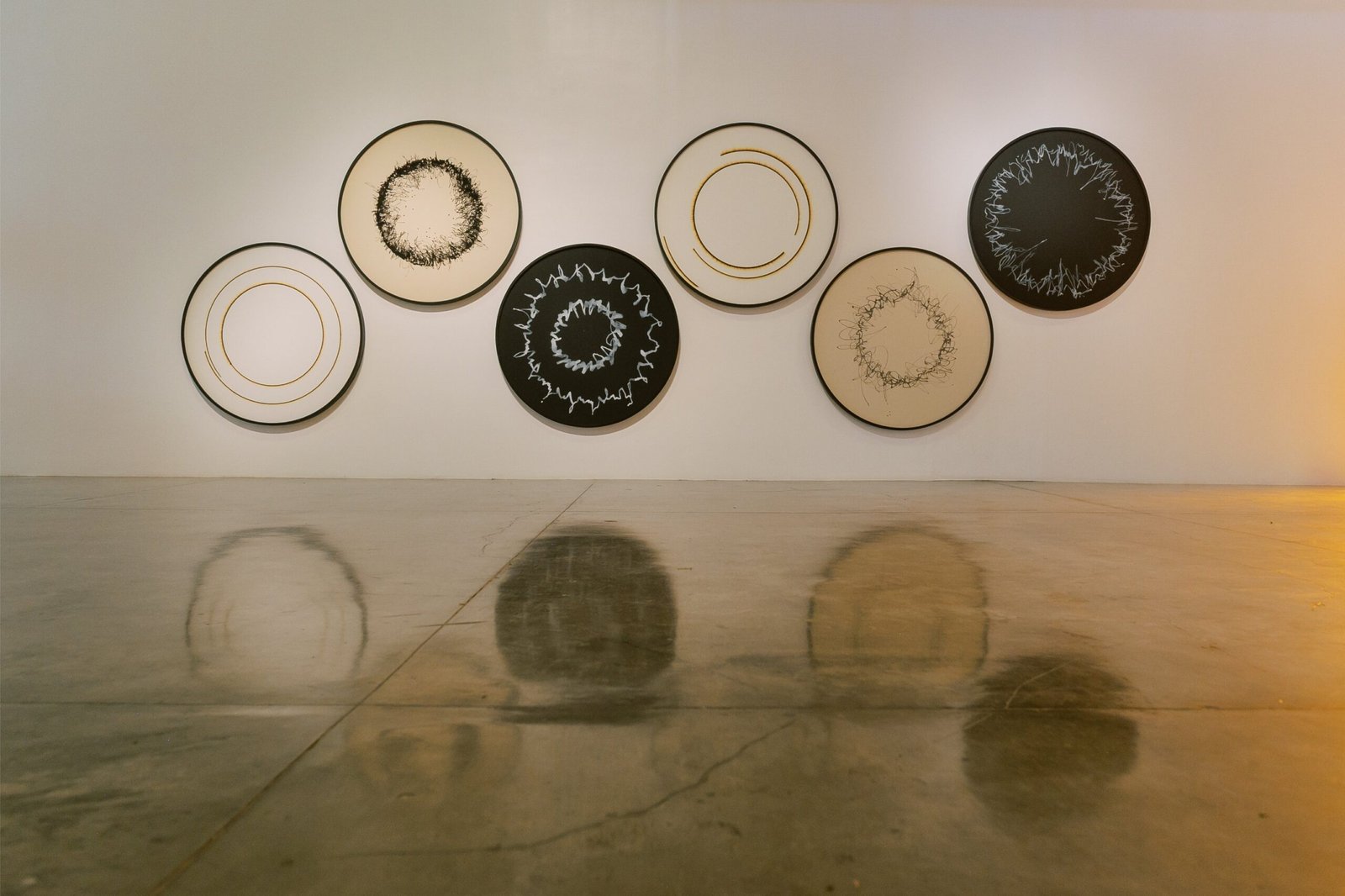
The last seven days of glacial ice, 2024. Olafur Eliasson: Your curious journey, Museum of Contemporary Art and Design (MCAD) Manila, Philippines, 2026. © 2024 Olafur Eliasson. neugerriemschneider, Berlin; Tanya Bonakdar Gallery, New York Adrift compass, 2019. Olafur Eliasson: Your curious journey, Museum of Contemporary Art and Design (MCAD) Manila, Philippines, 2026. © 2019 Olafur Eliasson. neugerriemschneider, Berlin; Tanya Bonakdar Gallery, New York
© 2001 Olafur Eliasson. neugerriemschneider, Berlin; Tanya Bonakdar Gallery, New York
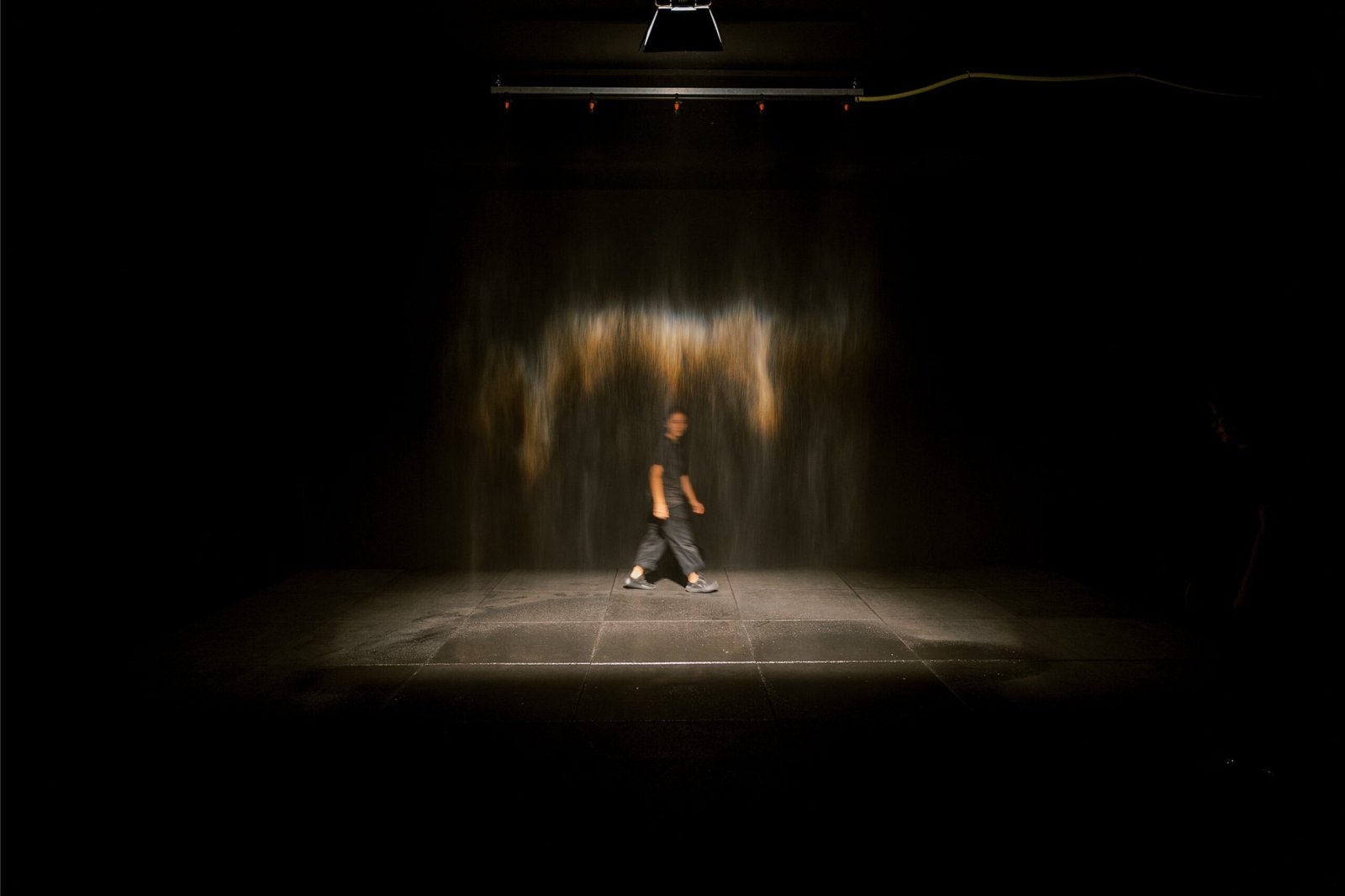
Your body of work operates in an unusual register: it addresses urgent, sometimes frightening environmental realities through beauty, playfulness, and sensory wonder. Beauty (1993) is a rainbow; Yellow corridor (1997) is a perceptual puzzle; The glacier melt series documents loss through images that are as formally stunning as they are alarming.
Is this tension between the ‘beauty’ or levity of the experience and the gravity of what it alludes to deliberate? Is beauty in itself the alarm?
Olafur Eliasson: To any encounter with art, we bring a self that is always becoming with many, to paraphrase Donna Haraway. It is an embodied, thinking-feeling-sensing self. And if meeting up with the artwork deeply touches you, you may walk away a slightly different person, transformed.
The colors in a piece like Beauty or Yellow corridor may be striking, but it’s not just the beauty itself I’m interested in. It’s the way that beauty engages us, makes us aware of our own perception in the act of perceiving. In our willingness to see ourselves differently, and not as passive observers of the world, but as participants within it.
A traveling exhibition of this scale (Five museum stops, two years) naturally carries its own environmental cost: shipping, crating, energy, air miles, and so on. Your team has sought to offset some of this through changes in installation practice, packaging, and energy consumption. But the tension is there: a show about ecological awareness traveling the world to make that case. What concrete decisions or provisions were made on this global tour to reduce its carbon footprint?
Olafur Eliasson: This is an important question, which my studio and I have been grappling with for several years, as we try to find ways to reduce our carbon footprint while remaining true to the artistic vision.
For Your curious journey, which travelled from 2024 to 2026 across Southeast Asia, my exhibitions team selected artworks that were already located in the region, in order to reduce the need for long-distance transport and keep emissions as low as possible while still fulfilling the show’s curatorial aims. More broadly, all my exhibitions and public artworks are now planned with enough time to ensure that works can be transported by train, ship, or truck rather than air. Weight and size of crates matter too, so we’ve rethought our approach to packaging and to how works are selected for survey shows like this one.
We’ve also introduced a climate clause into our contracts with institutions. Once it’s agreed between the studio and the museum, we jointly commit to providing the data needed to calculate the exhibition’s emissions, to producing a report that can be shared publicly at the close of the show, and to offsetting those emissions with a partner of our choosing.
None of this resolves the tension entirely, and I don’t think it should be presented as though it does. We’re always balancing the desire to work sustainably with the studio’s broader mission of realizing my artistic visions in the world.
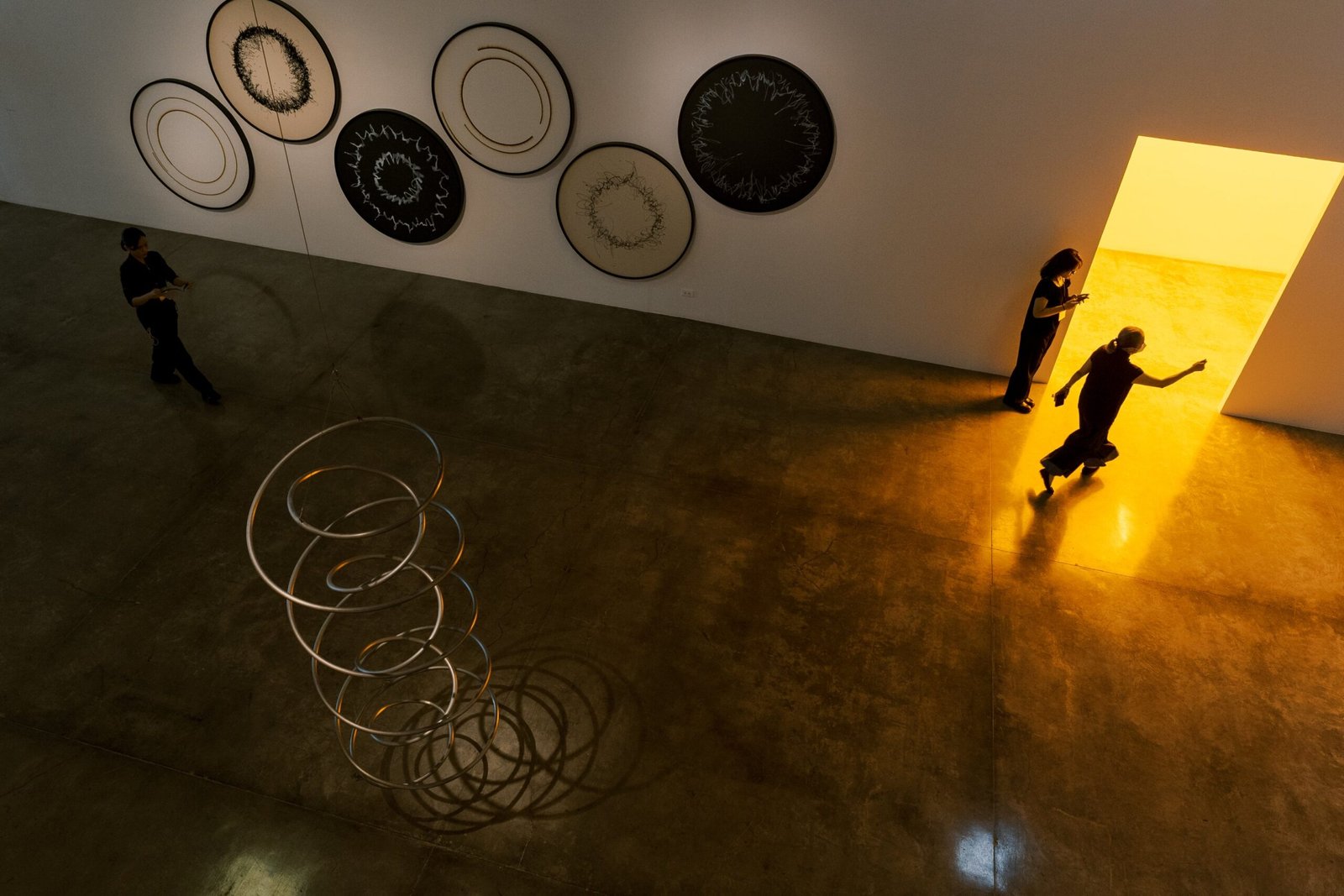
“The colors in a piece like Beauty or Yellow corridor may be striking, but it’s not just the beauty itself I’m interested in. It’s the way that beauty engages us, makes us aware of our own perception in the act of perceiving. In our willingness to see ourselves differently, and not as passive observers of the world, but as participants within it.”
OLAFUR ELIASSON
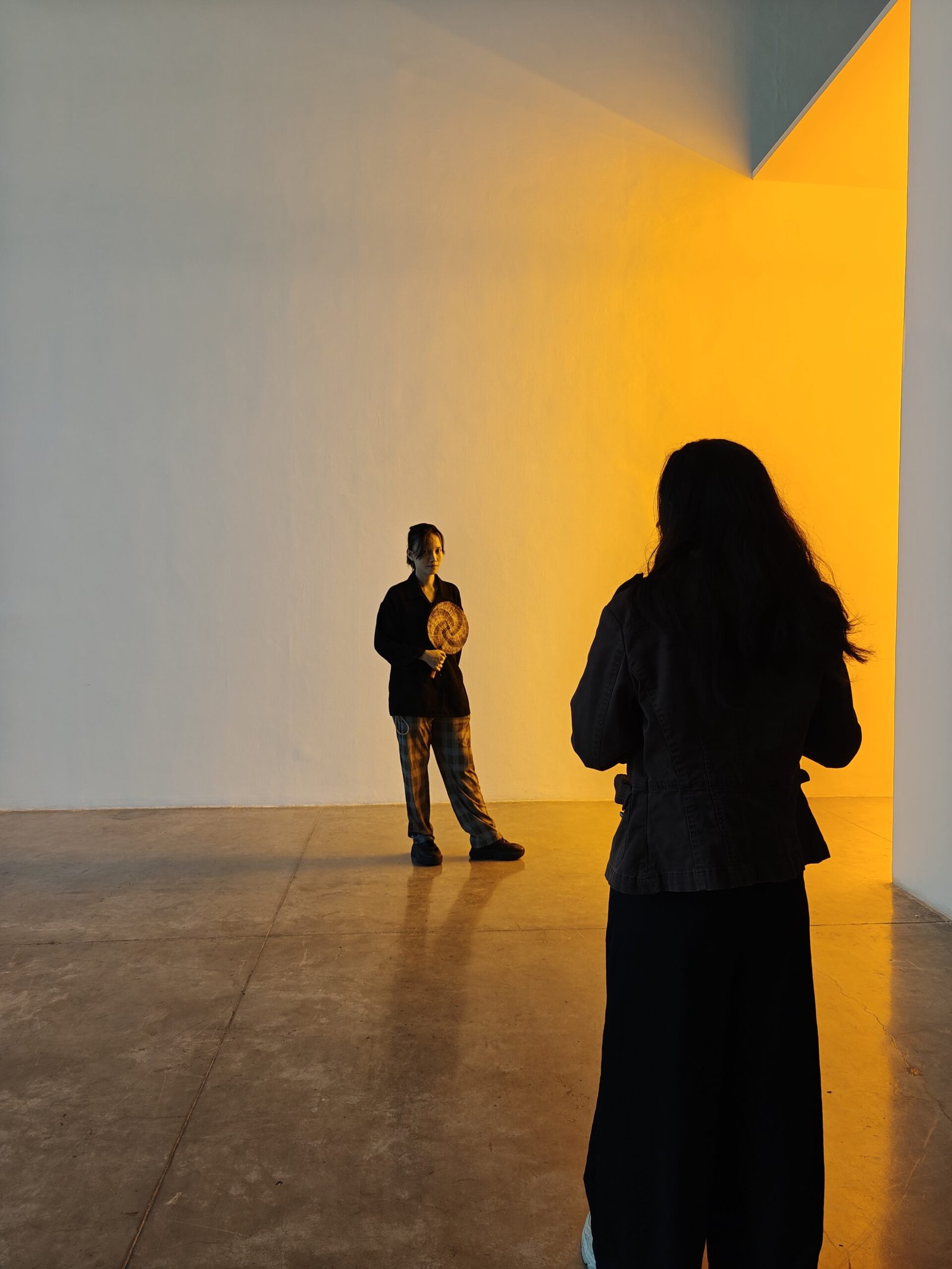
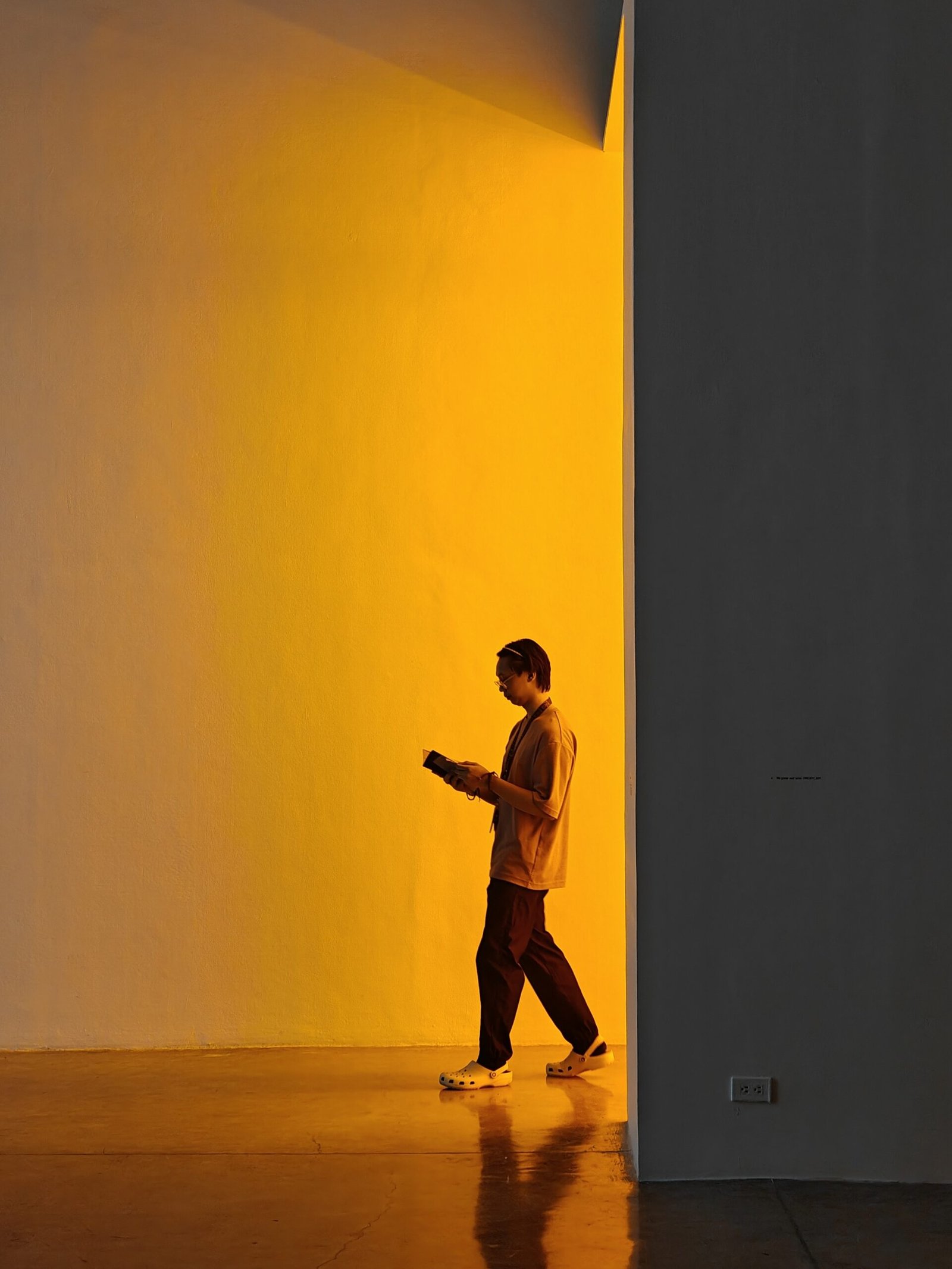

Interactive, immersive art lives in two realities: the one experienced in the body, space, and real time, and the one that becomes content, cropped within the confines of a phone screen, ready to be shared.
Beauty makes for a good photograph, and so does Yellow corridor. You’ve said that your work is only ever complete through the viewer’s active engagement, but the viewer who photographs it and leaves is also engaging with it in their own way. Where do you stand on this duality? And how does this, personally, affect the way you communicate with us, your viewing public, through your art?
Olafur Eliasson: A photograph is never a neutral copy of an experience, of course, as it’s already an interpretation or a kind of new work. So phone photos of Yellow corridor are made by the viewer, out of the encounter. I worry that the photographs take the place of slowing down and having a closer look, that they bypass that interaction by creating new content to share elsewhere for individual reasons. That’s perhaps less an issue with photography and more a symptom of the times we’re all living in, where, as one is regularly told and taught, attention has seemingly become scarce.
At the same time, I accept that this is how people interact with the world today and with each other, and I do not want to be too pessimistic about the potential of these interactions, as I know that photos shared online can help the work reach a much broader public. An intern who once worked at the studio described how, as a young artist growing up in Karachi, she did not have access to a well-stocked art bookstore or library, and so she printed out images from the internet to make her own books of artworks she liked. You never know how people are actually consuming material that they encounter online, so I also embrace the possible encounters that are made possible through social media.
Every long journey accumulates a particular memory (or memories!) that makes it all worthwhile. Across this multi-year, multi-nation artistic odyssey, what is that memory for you? And as Your curious journey reaches its final gallery space, if a visitor walks out of MCAD Manila leaving with one thing or learning, what do you hope that is?
Olafur Eliasson: I see culture as a fundamentally messy presence in all parts of society. Despite its own systemic inequalities and complexities, it’s still able to support and inspire us — it is, in fact, a type of power or energy. Artists, dancers, musicians, filmmakers, writers — they’re able to reflect the situations and aspirations and connect with the feelings of people and communities.
The kind of opportunity that art offers here is that when visitors enter the museum, they don’t leave the world outside behind them. In fact, I feel art can host a way to get closer to what we know. In this way, I hope visitors to Your curious journey feel seen and met, and perhaps leave with questions rather than single answers.
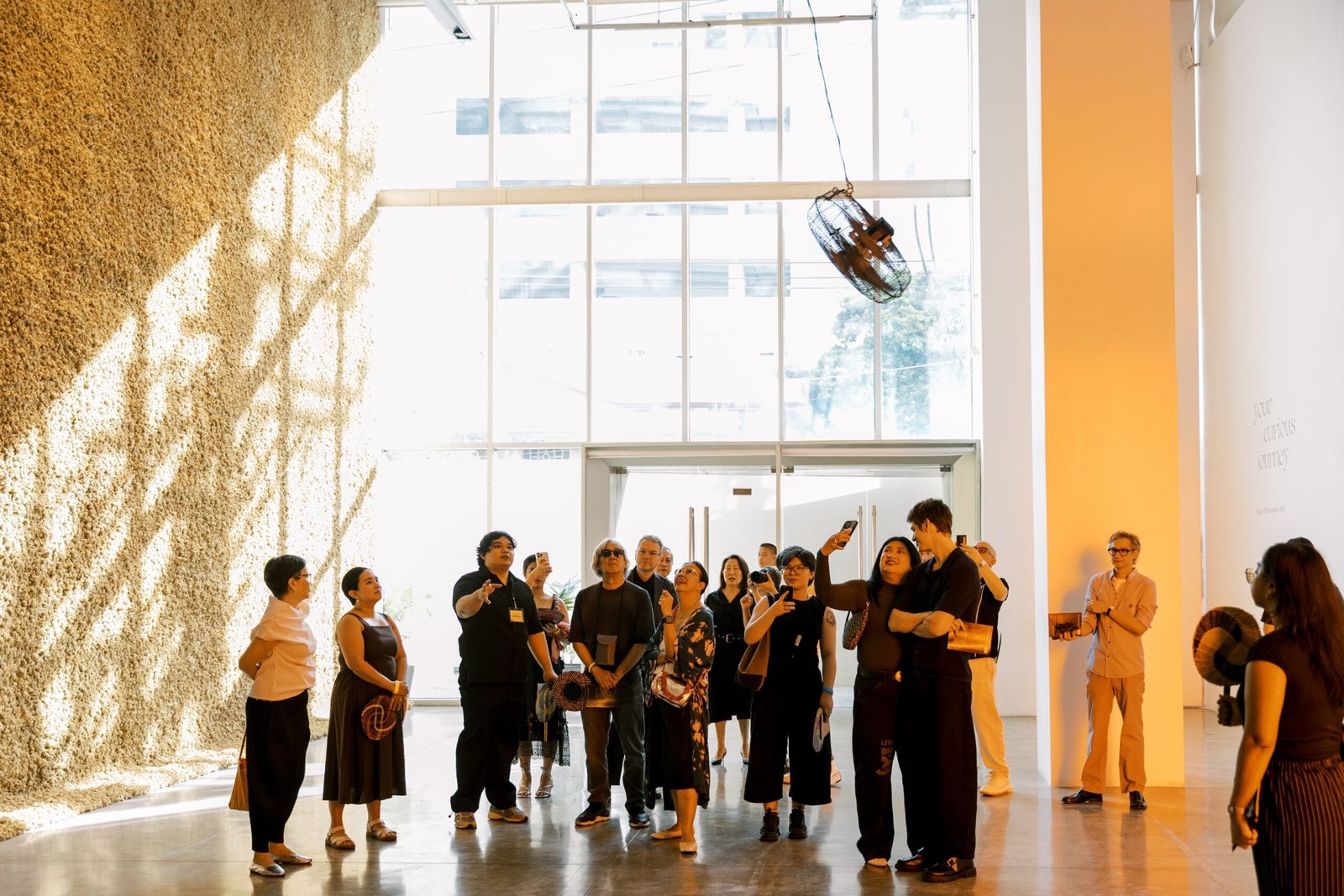
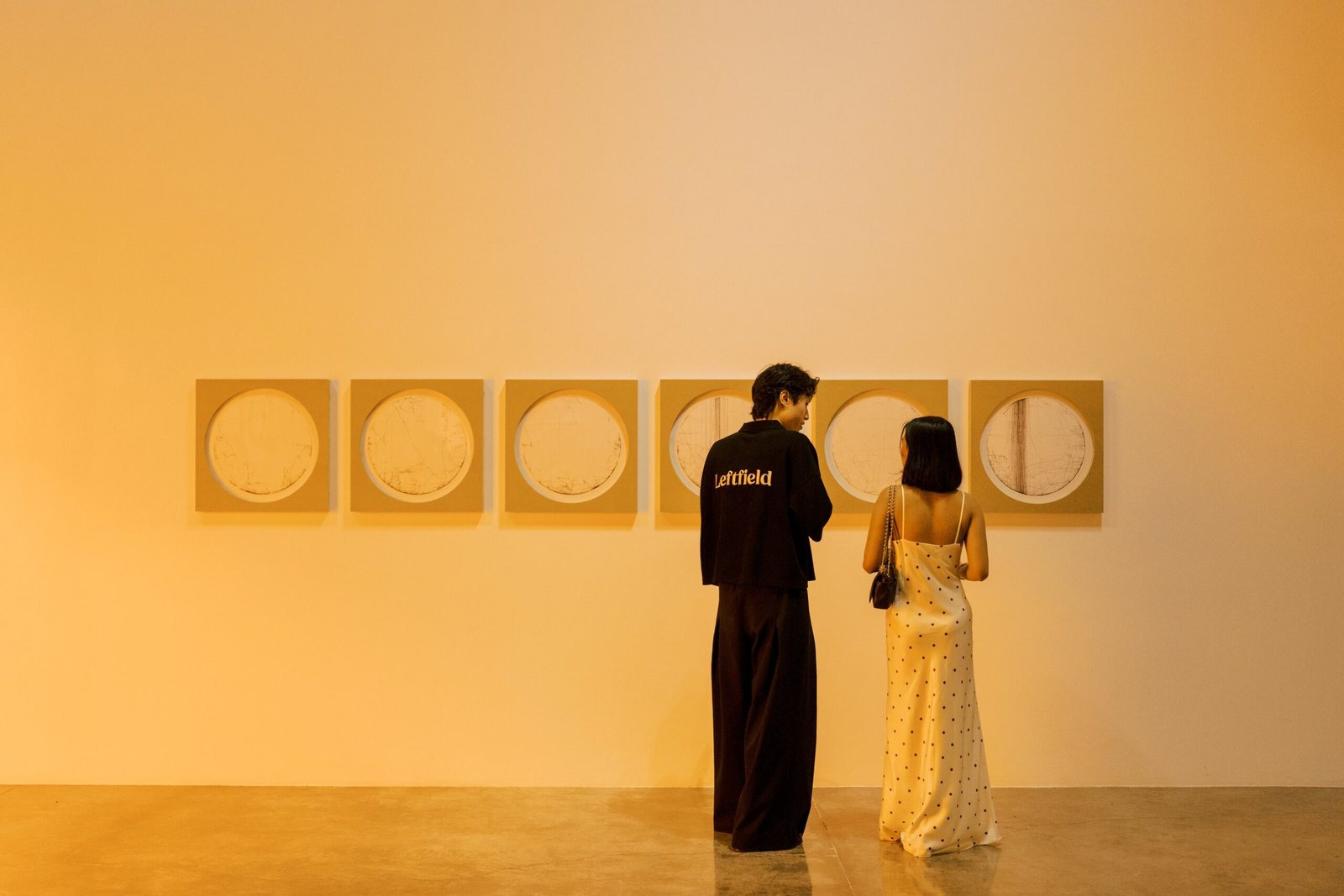
And if you’ll indulge me one last question: When the works finally return to Berlin, what does the next thirty years of a new journey of curiosity between art and the planet look like?
Olafur Eliasson: Uncertain. Rebecca Solnit likes to quote Virginia Woolf, who famously said, ‘The future is dark, which is the best thing the future can be, I think’, as a kind of mantra of the radical unknowability and openness of the future. As an artist, I find it important to live with this uncertainty, to create within the space of not knowing. •
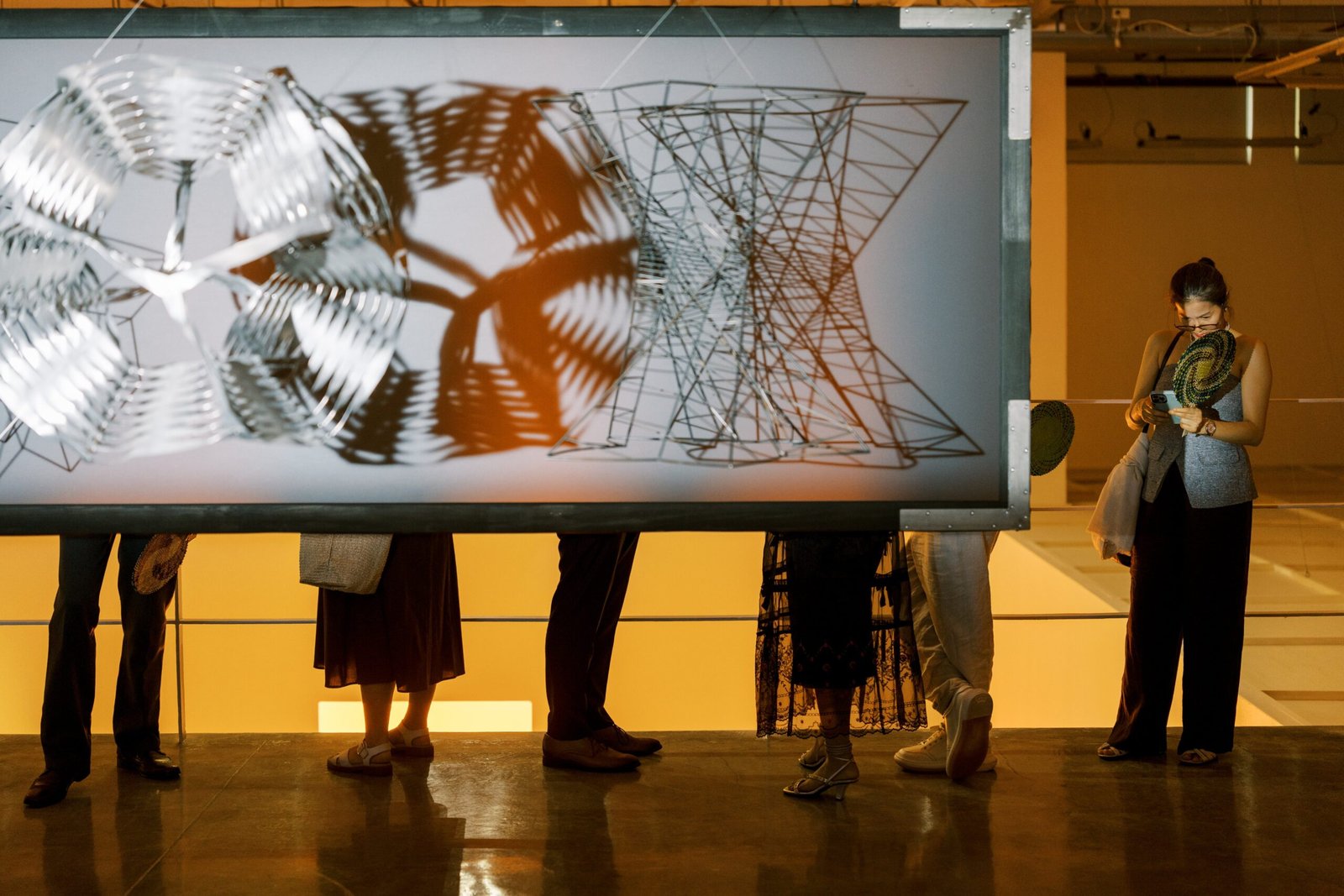
Olafur Eliasson: Your curious journey
9 July – 15 November 2026
Museum of Contemporary Art and Design (MCAD) Manila
950 P. Ocampo St, Malate, Manila
Open Tuesday to Saturday, from 10:00 AM – 6:00 PM
Free admission