Words Eldry Infante of Mede Studio
Editing The Kanto team
Images Mede Studio
(Aesop Antithesis)
I’m from Pampanga, an alluvial plain named after the community living along the banks (pampáng) of the Pampanga River. It is said that when Pampangeños talk and laugh loudly, it is because our ancestors frequently shouted to their neighbors on the other side of the river. Unfortunately, this was the only folk belief that remained that embodies our meaningful relationship with our bodies of water.
But when Mede Studio did our fieldwork in Dingalan, I immediately observed and then later learned that Domaget life was attached to the majestic Umiray River. Its changing depth and shape, and its ice-cold water, streamed down from the Sierra Madre mountains. As with most Indigenous Peoples globally and across the country, and as nomadic people (lagalag), the Domaget retain a close relationship with the movement of the world around them: the sun casting shadows at different times of the day, the gust of wind, the lush terrain, and the dance of trees and plants.
I did not know that movement, this movement, would be something that would guide all of us through this journey.
Mam R, as we lovingly call our curator and project leader, Roselle Pineda, taught us the way of meandering. A process of making and going through the project through the concept of pagpapaliguy-ligoy, where we become attuned to, and to a degree be shaped by, the ever-changing conditions of community-engaged work, community life, conversations, and the environment that cradles all these elements. As an architect who learned the art of the built environment and, to an extent, controlling the environment, this lesson would prove to be one of the hardest but, at the same time, the most valuable lesson I’ve learned in this project.
Our prompt was to collaborate with the Domaget community in helping them realize their dream of having a space of their own: a tribal hall that would serve as an evacuation center, a school of living tradition, a livelihood hub, a community center, a space for receiving visitors… a dingsalan or a gathering place. It was part of a long-term conversation between the Domaget community, through their current Indigenous Mandatory Representative (IPMR), Bernaldo Pagaragan, and the Aurora Artist Residency Program and Space (AARPS). Having known Mam R as a former client of Mede Studio, along with researcher Andre Magpantay, we were invited by AARPS as artist-collaborators to conduct a cultural mapping and co-designing workshop with the community, focusing on the Indigenous concepts of place-making and spatial aesthetics.
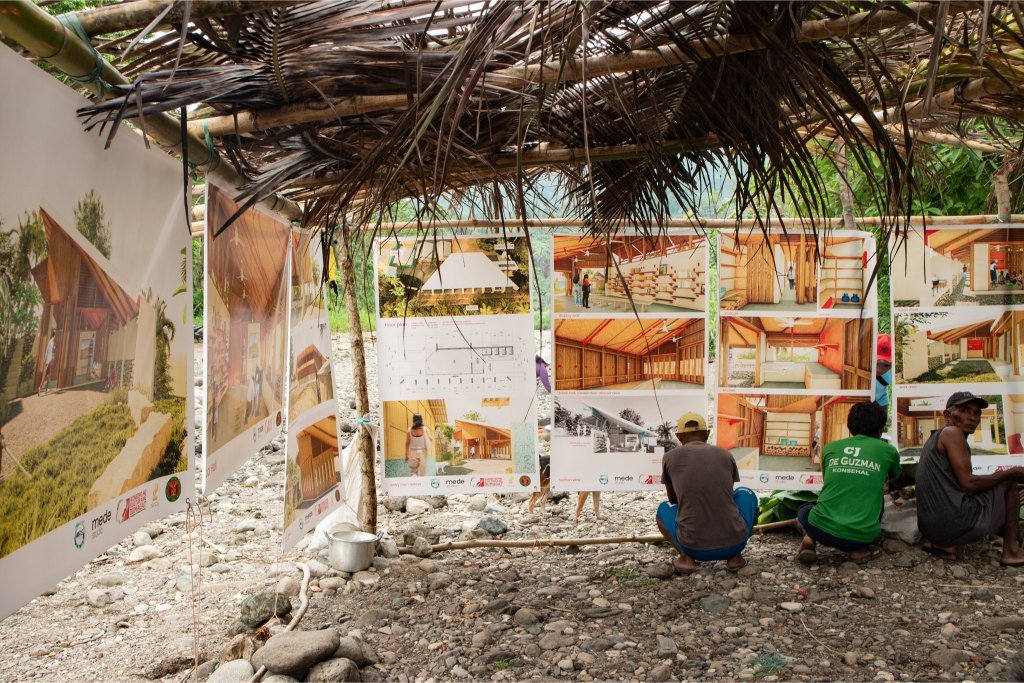
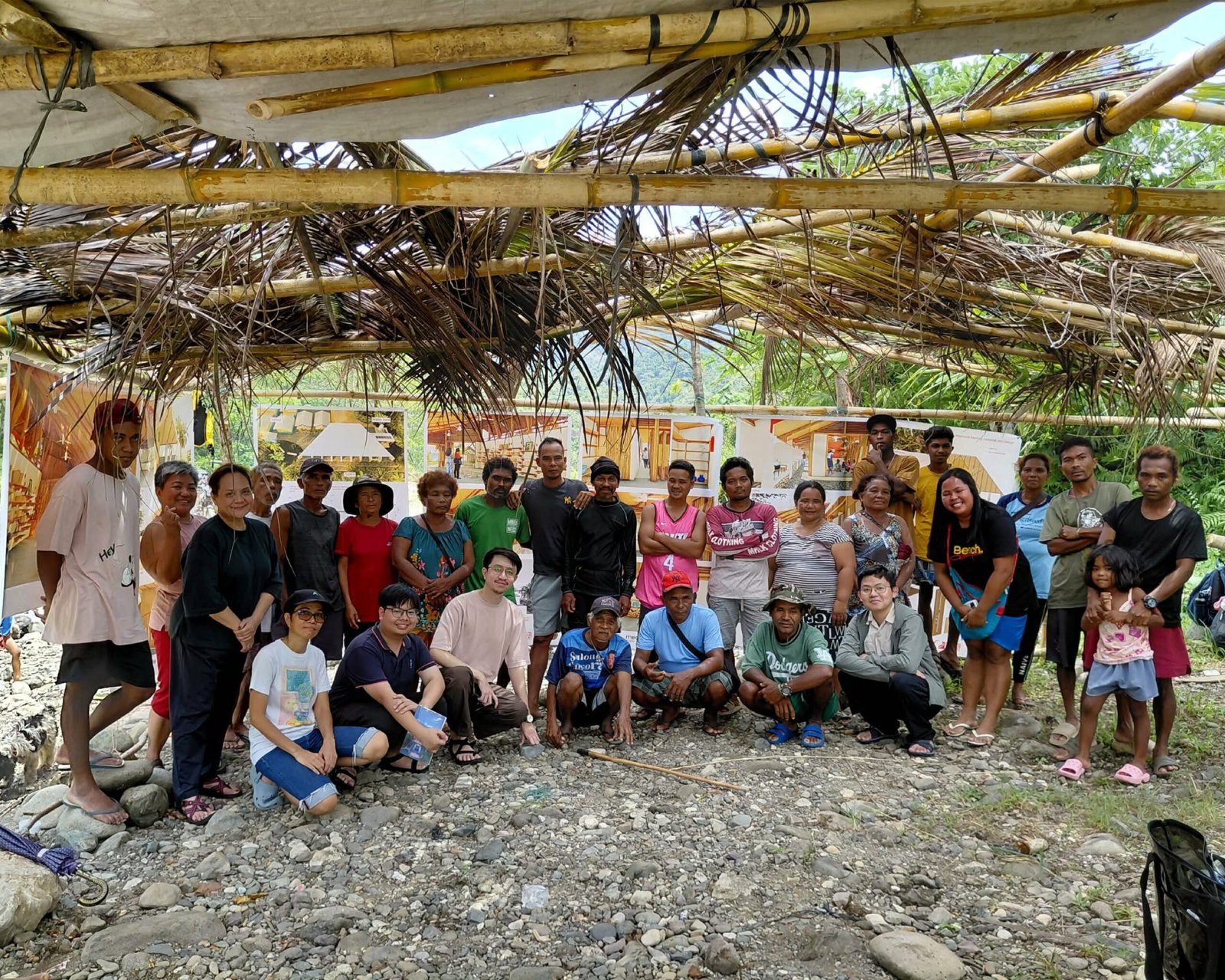
After a warm welcome and pagpapakilala with the community beside the riverbanks and under the shade of a damara, or temporary gathering tent, I started the participative design with the question: What does your tribal hall need?
As an architect, I expected to hear space requirements like toilet facilities, a large gathering space, a kitchen, and sleeping areas, which, of course, came later, but the first answer we got from the community was pagkakaisa (unity). It was an unexpected answer, and at first it made me pause. But remembering the lesson and way of meandering—which meant following the ever-changing path of a flowing river and embracing a non-linear approach to thinking, designing, and relationship-building—as a creative, this has allowed me to widen and shift my perspective from the conventional, single point of view to one that is moving, dynamic, and relational. So, from that answer, we let their ideas flow freely, without expectations, and with openness.
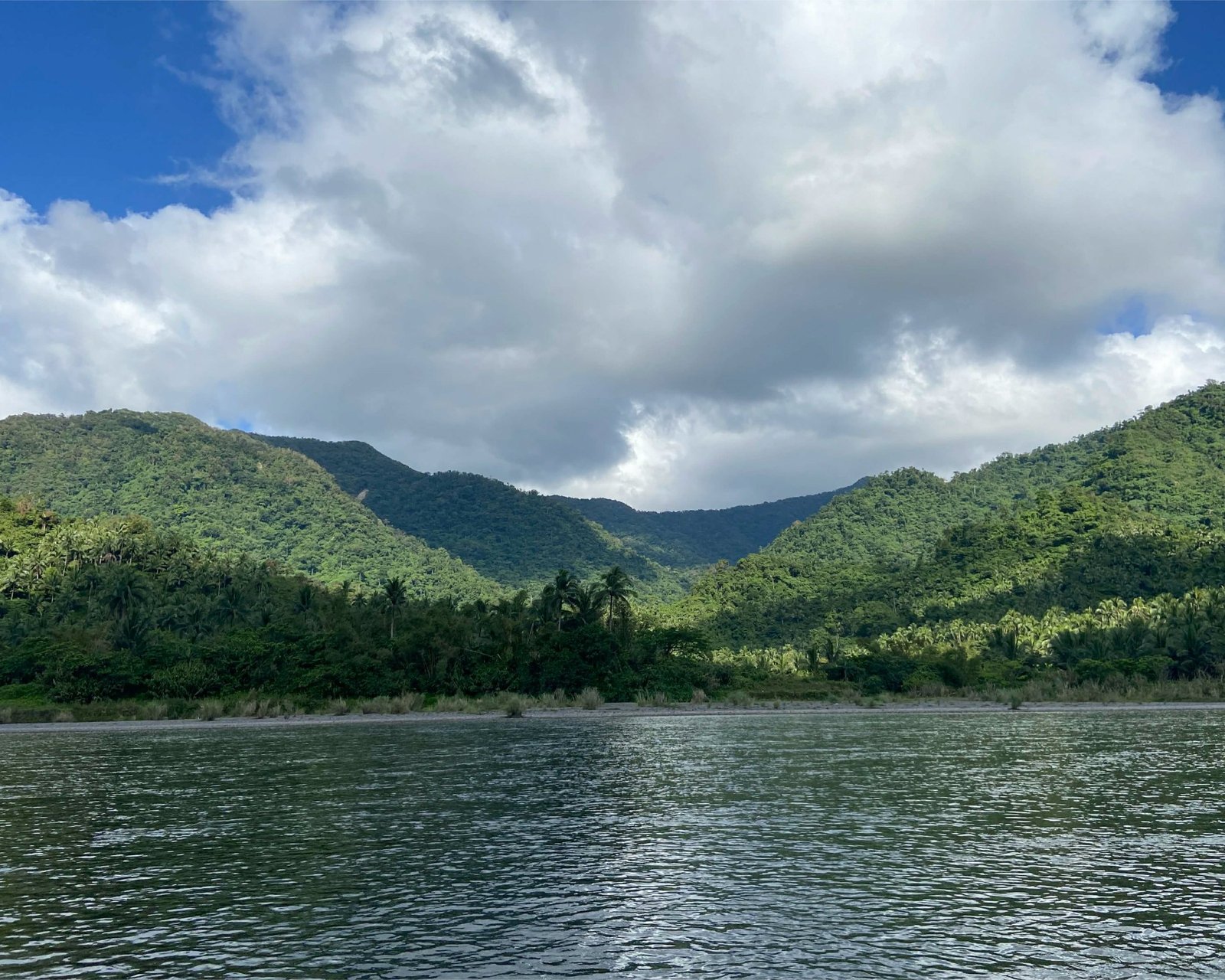
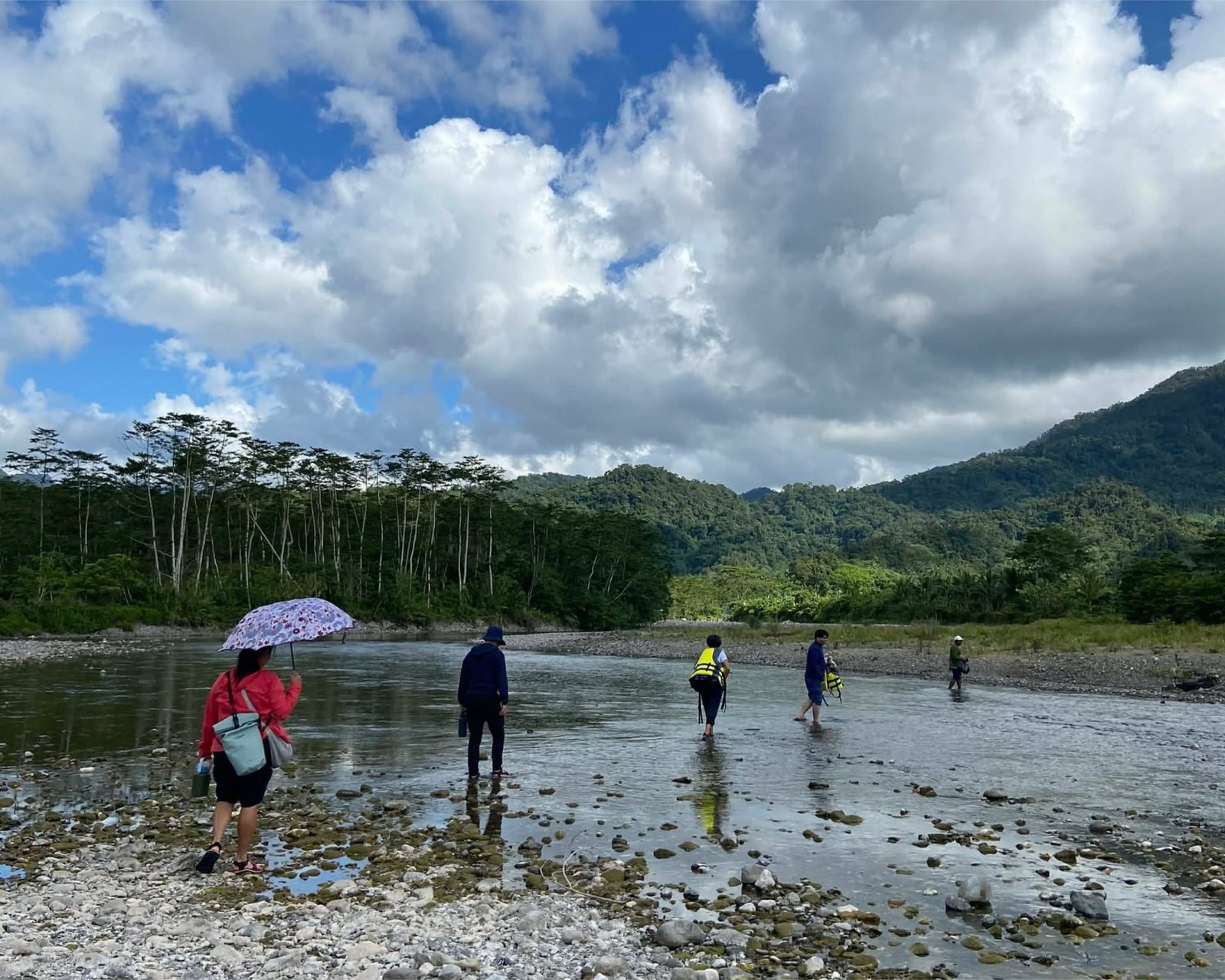
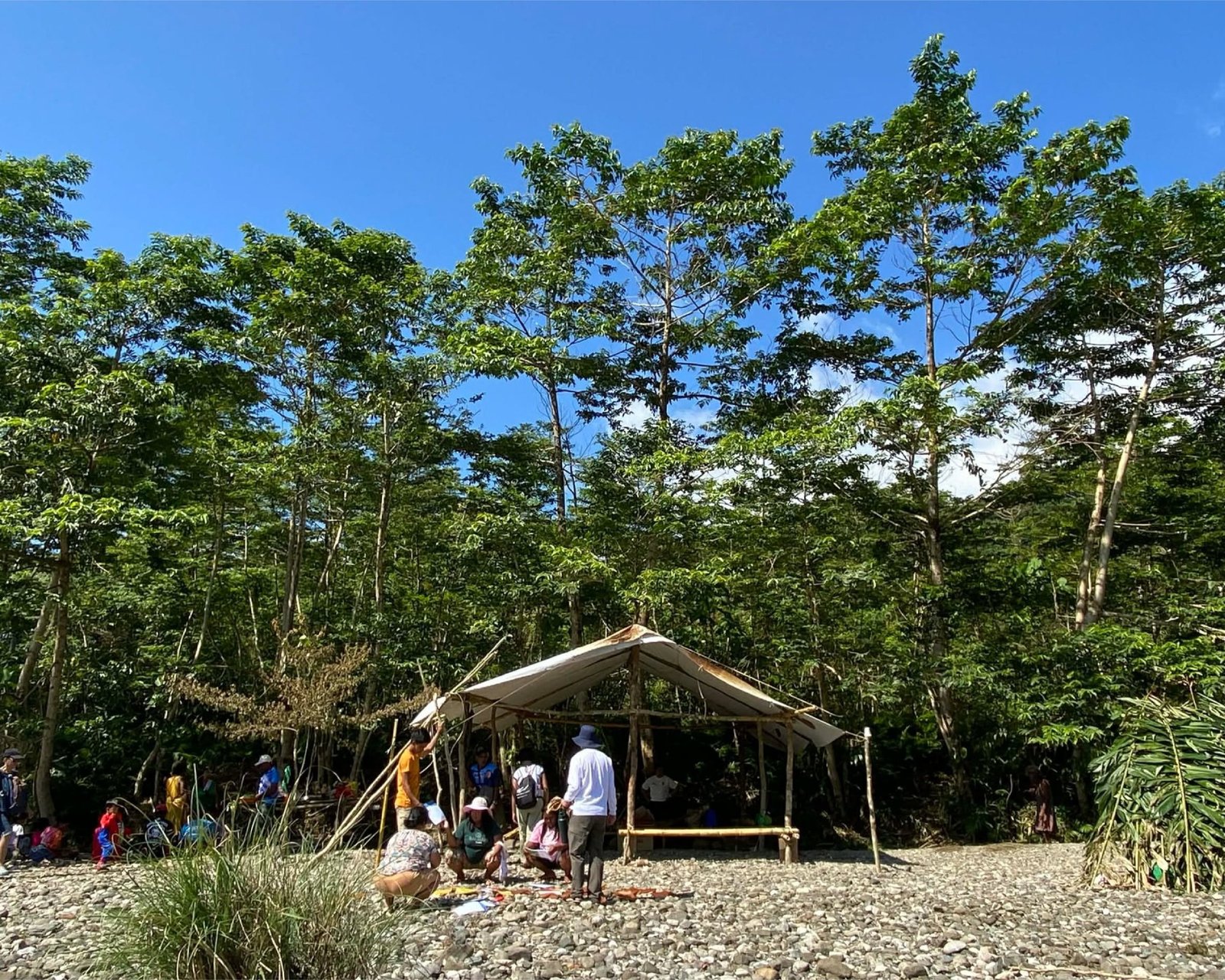
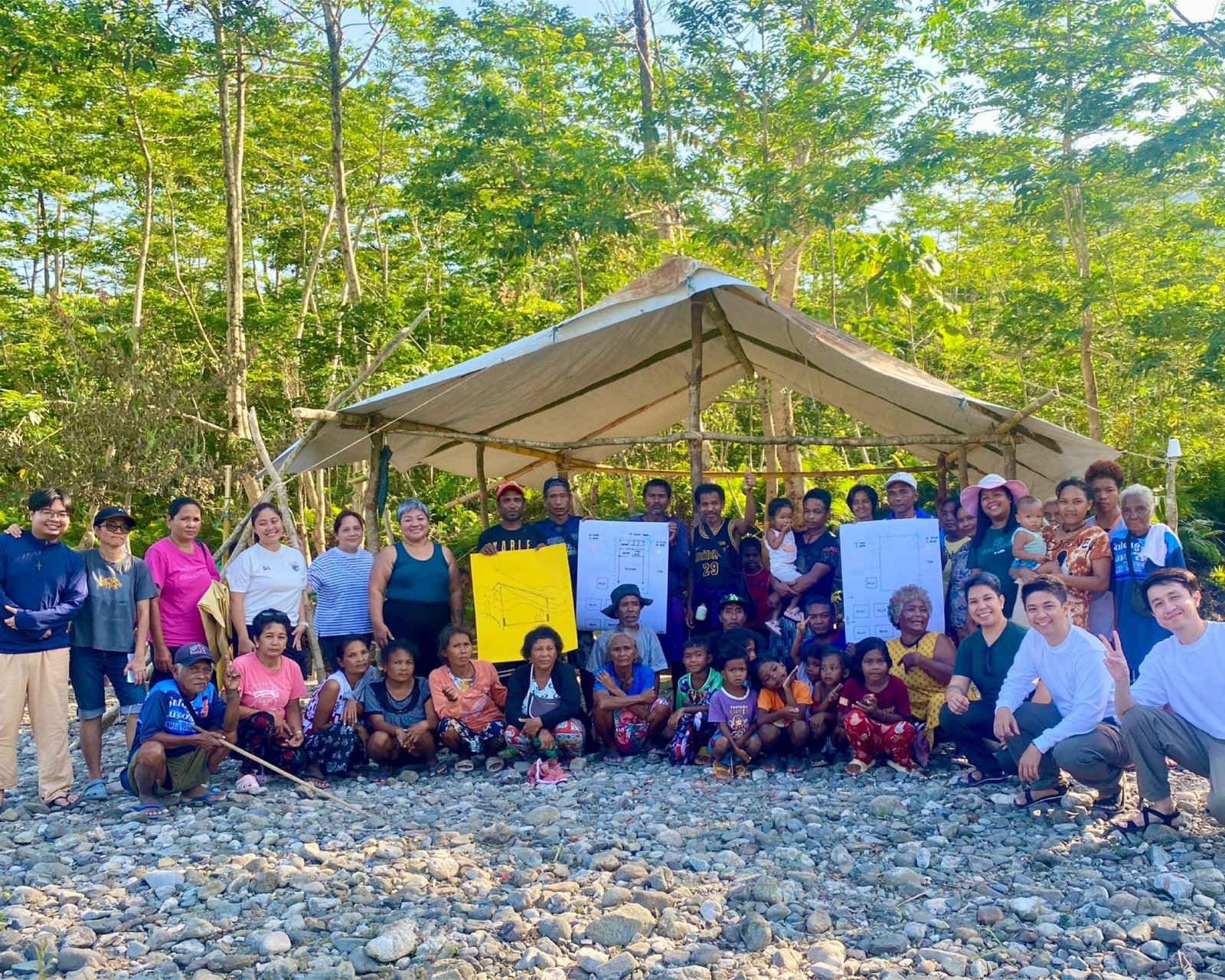
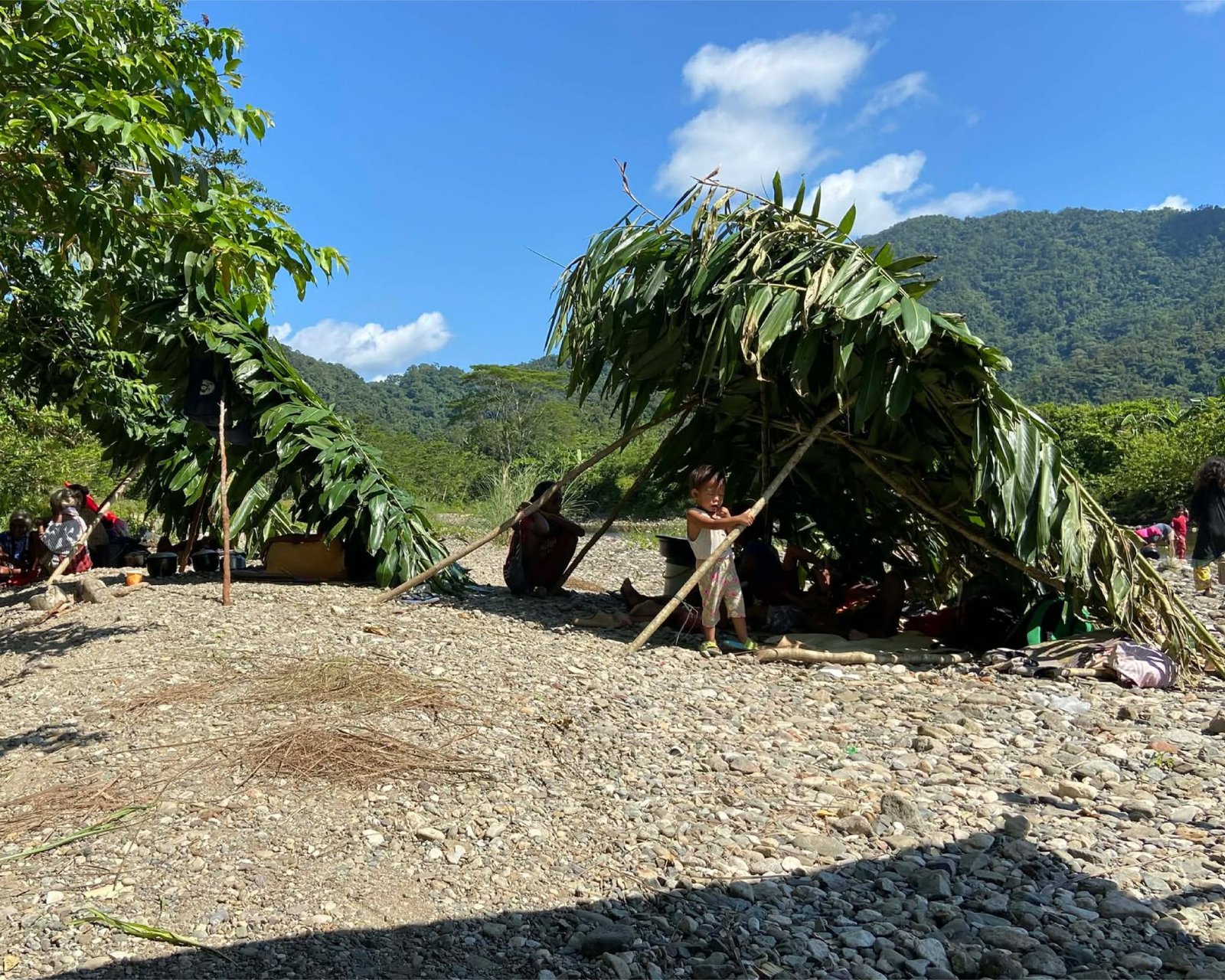
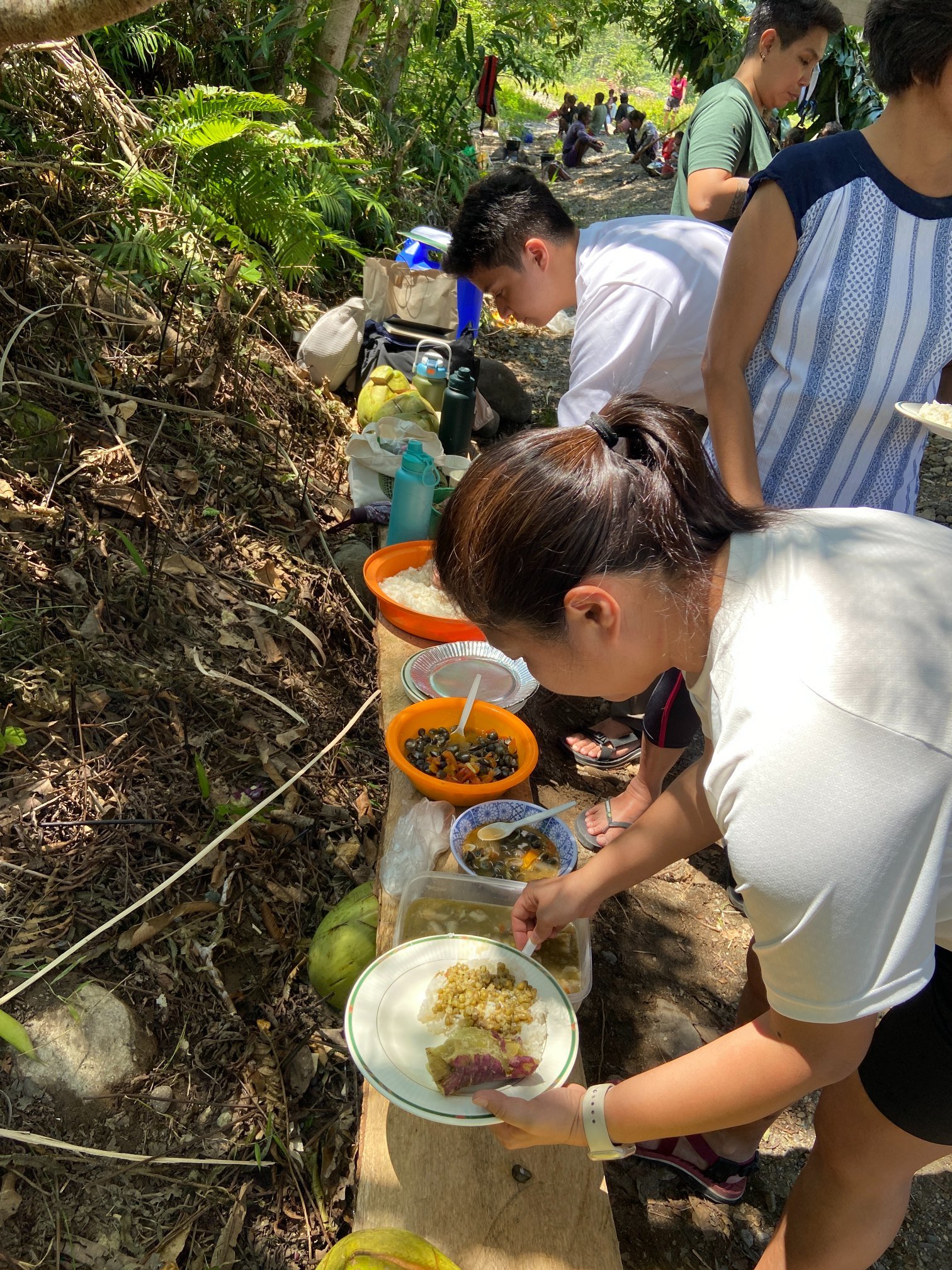
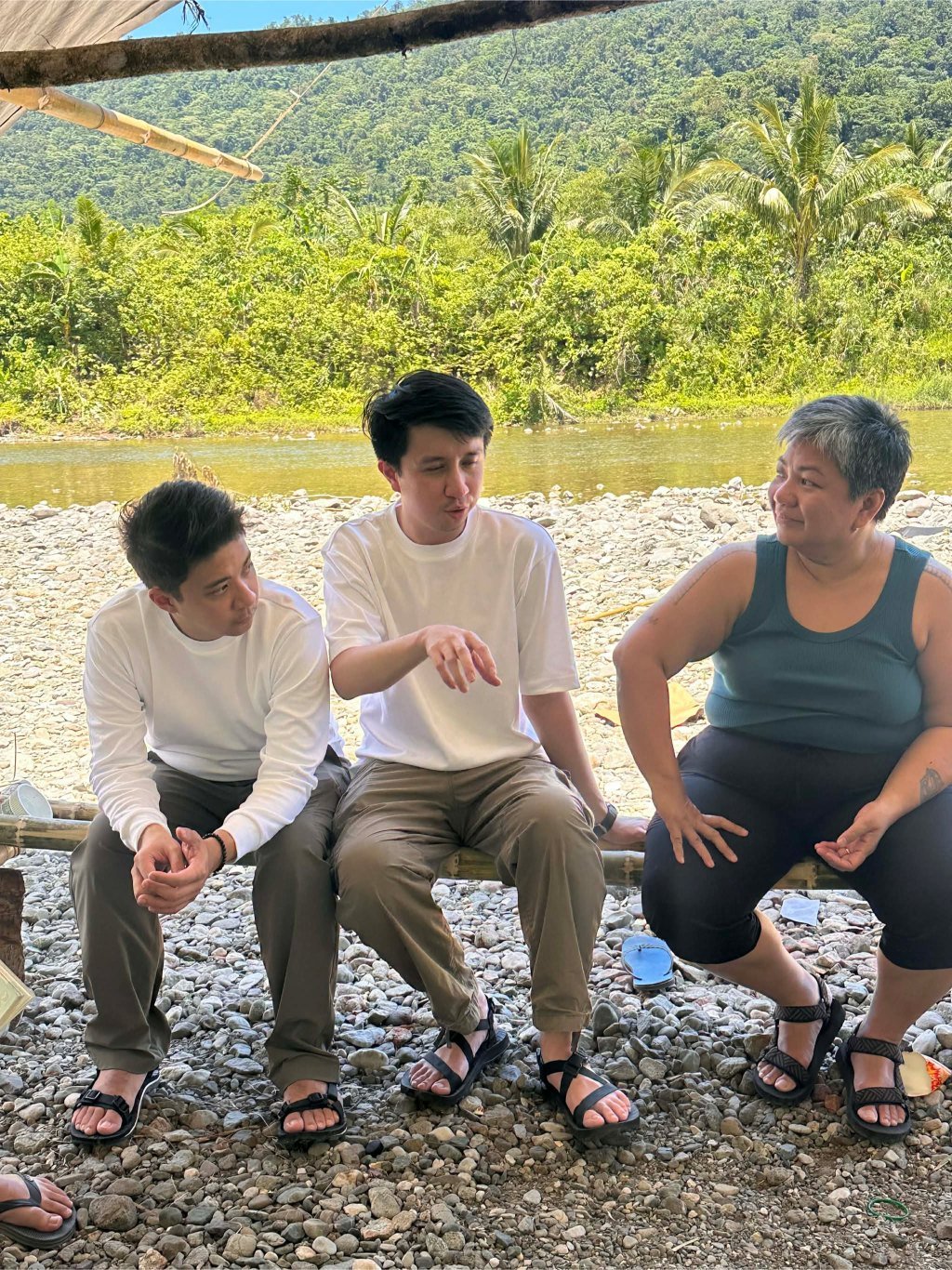
Fieldwork at Dingalan with the Domaget Community
That response also served as a gateway to surfacing Domaget’s ways of thinking, systems, and practices related to place and organizing space. For Domaget, spaciousness is a qualitative concept. It is not defined by dimensions alone, but by a constant awareness of their environment, comfort from having sustenance and close community relationships, safety from immediate threats from the climate and forest, and mobility from the changing elements, which all lead to a stable emotional state (panatag na loob). As Tatay Nixon, a Domaget elder, explained:
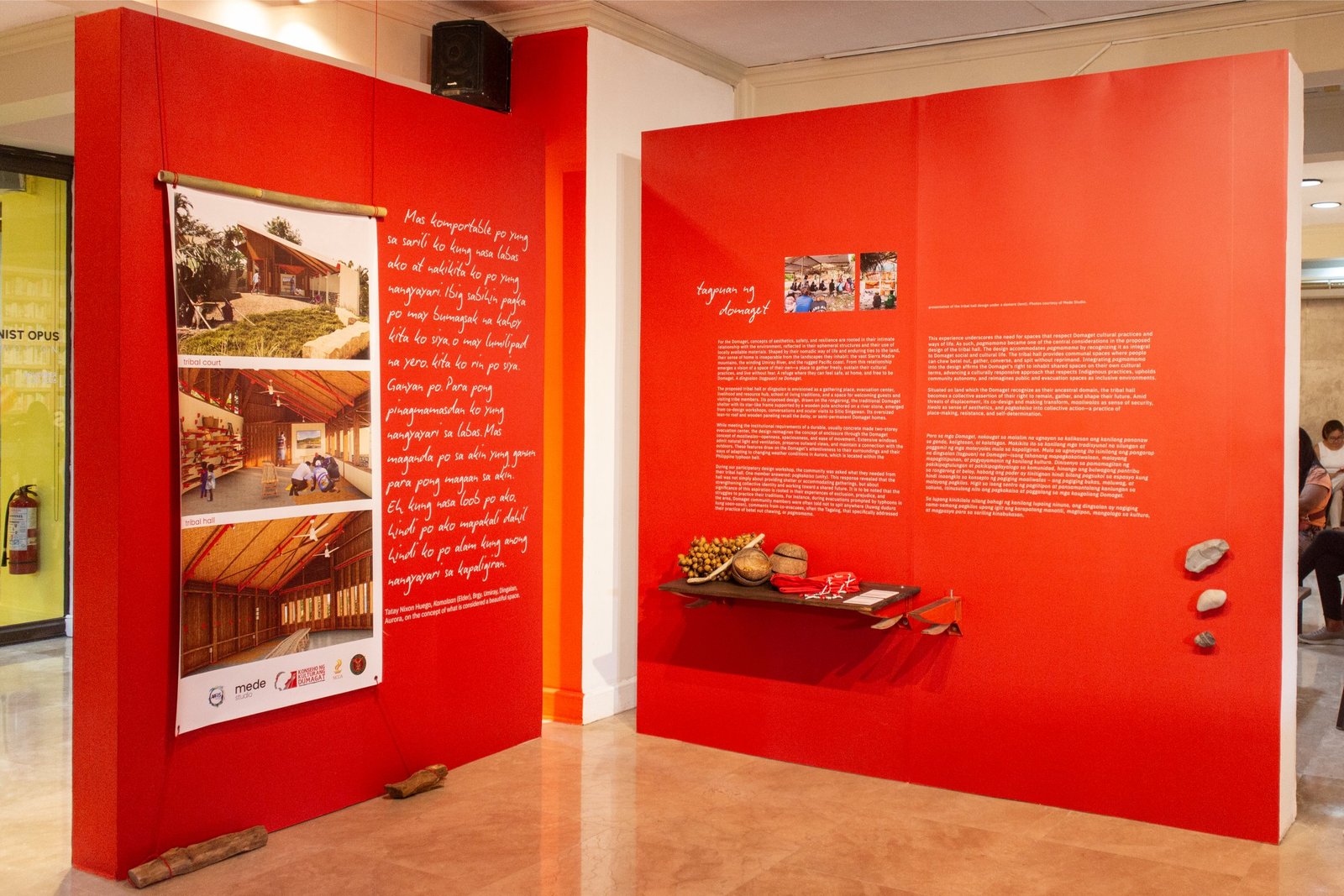
Mas komportable po yung sa sarili ko kung nasa labas ako at nakikita ko po yung nangyayari. Ibig sabihin ‘pagka po may kahoy na bumagsak, kita ko siya, o may lumilipad na yero, kita ko rin po siya. Ganyan po. Para pong pinagmamasdan ko yung nangyayari sa labas. Mas maganda pa po sa akin yung ganun para pong magaan sa akin. Eh kung nasa loob po ako, hindi po ako mapakali dahil hindi ko po alam kung anong mga nangyayari sa kapaligiran.
[I feel more at ease within myself when I’m outside and can see what’s happening. That means if a tree comes down, I see it, or if a sheet of roofing iron goes flying, I see that too. That’s how it is. It’s as if I’m keeping watch over what’s happening outside. I much prefer it that way; it feels lighter. But if I’m inside, I can’t settle down, because I don’t know what’s happening around me.]
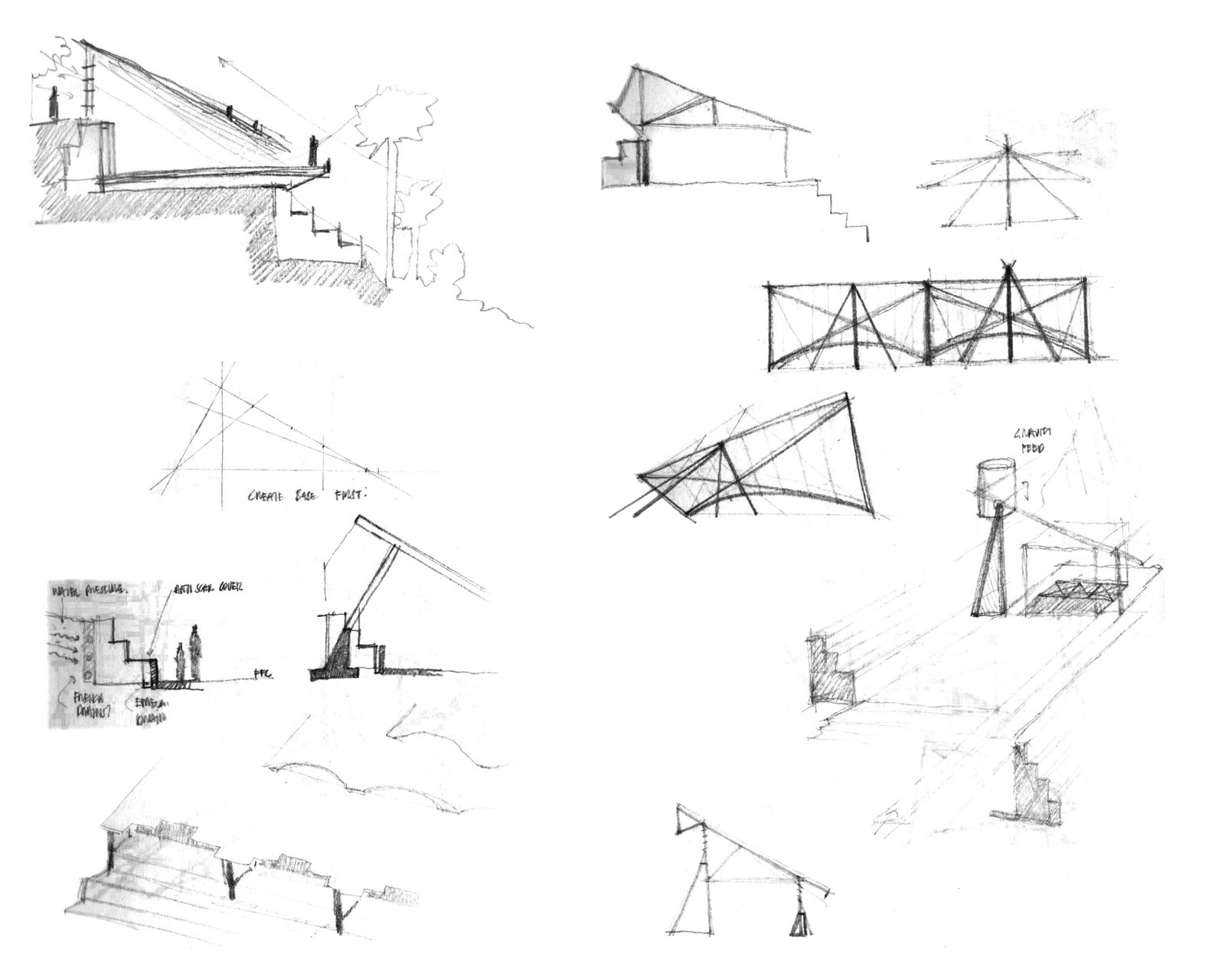
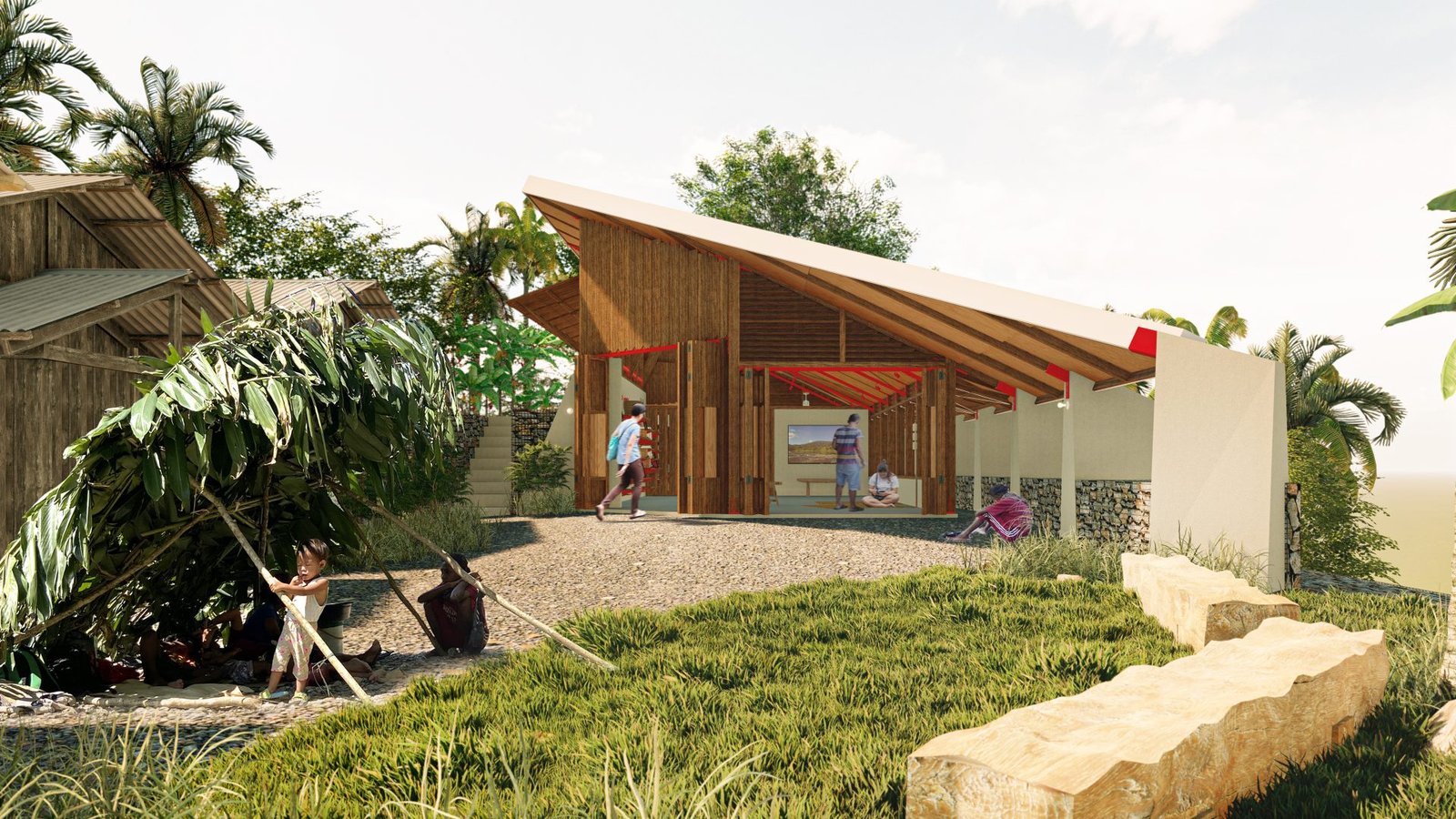
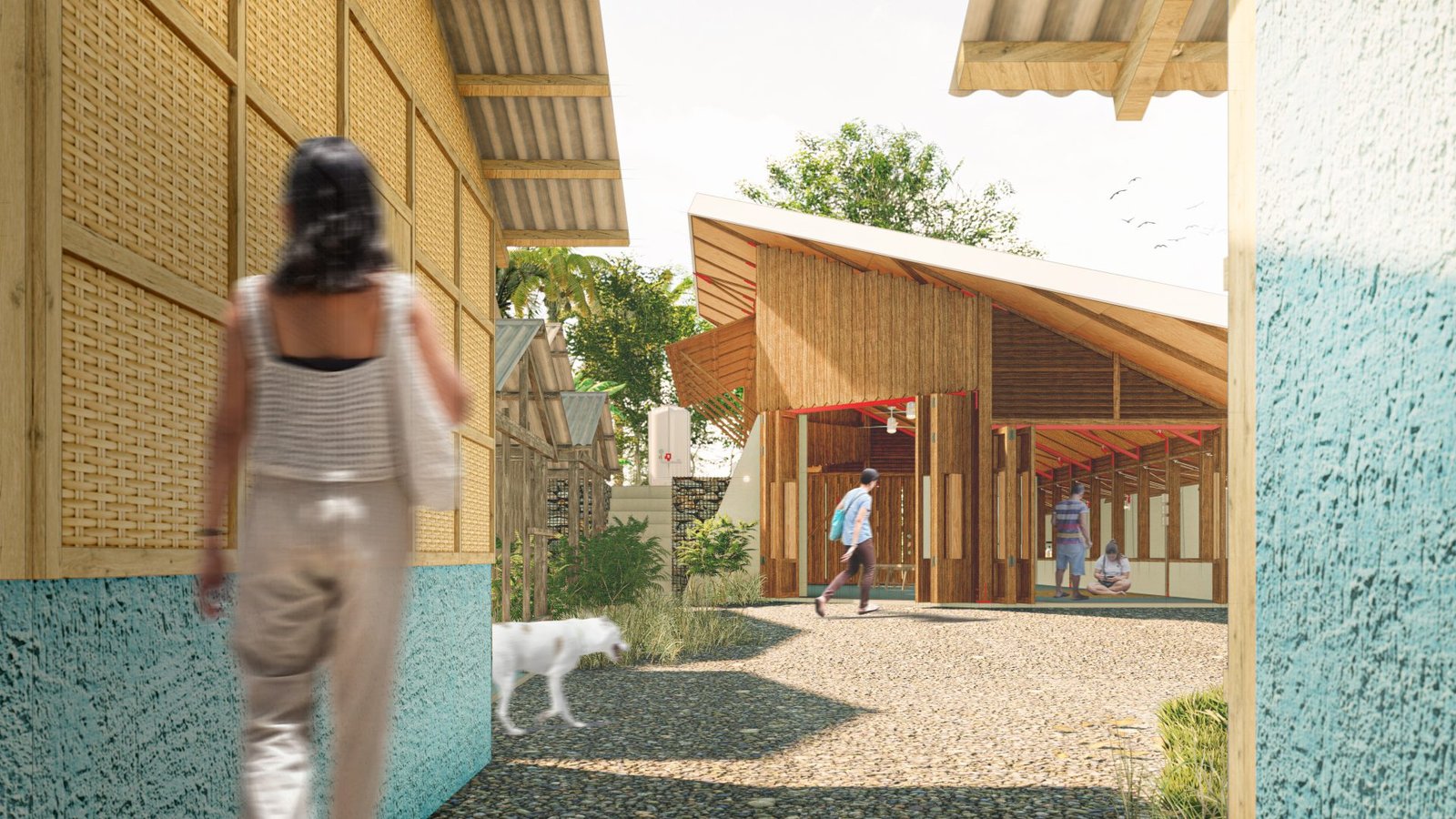
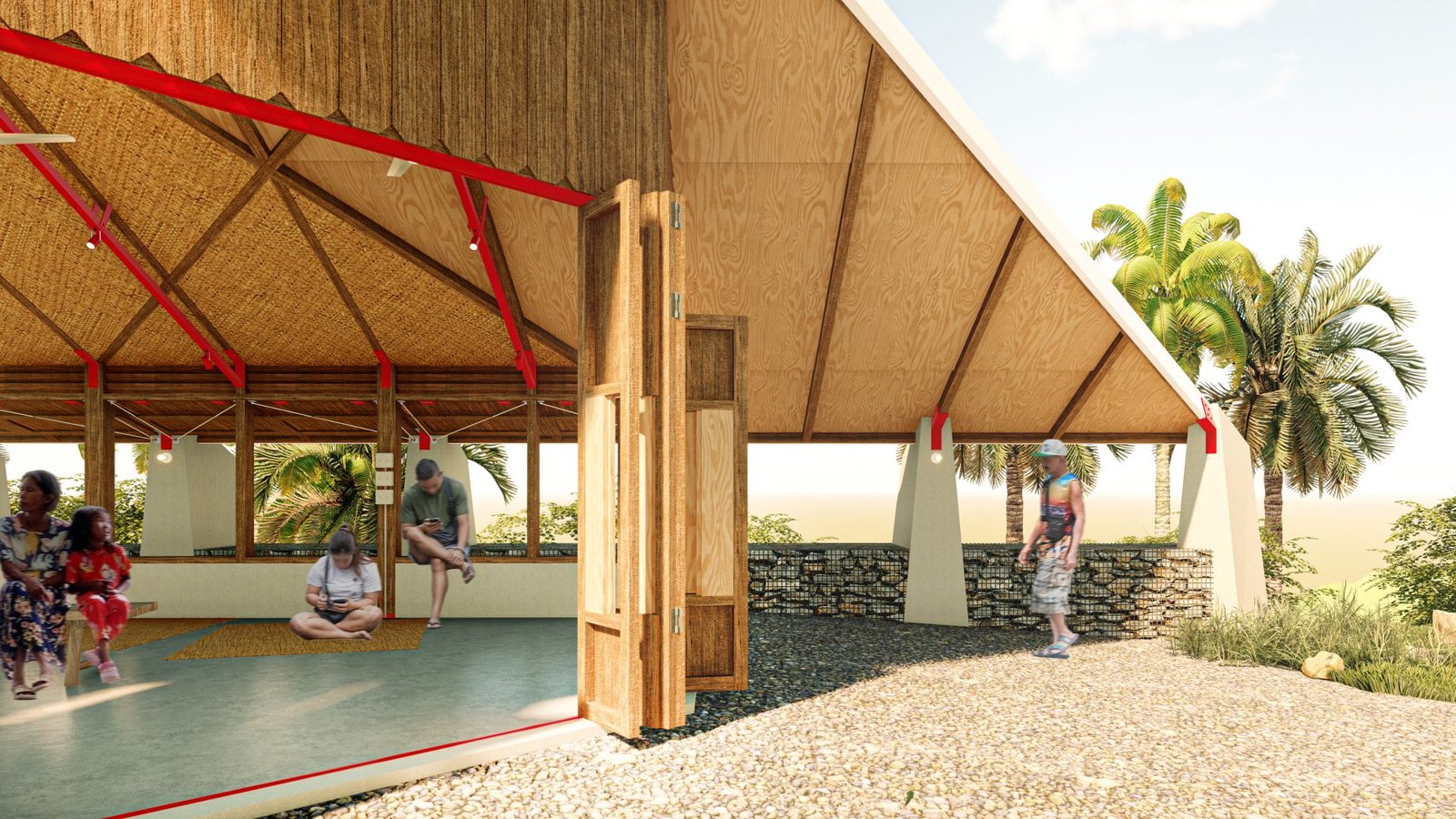
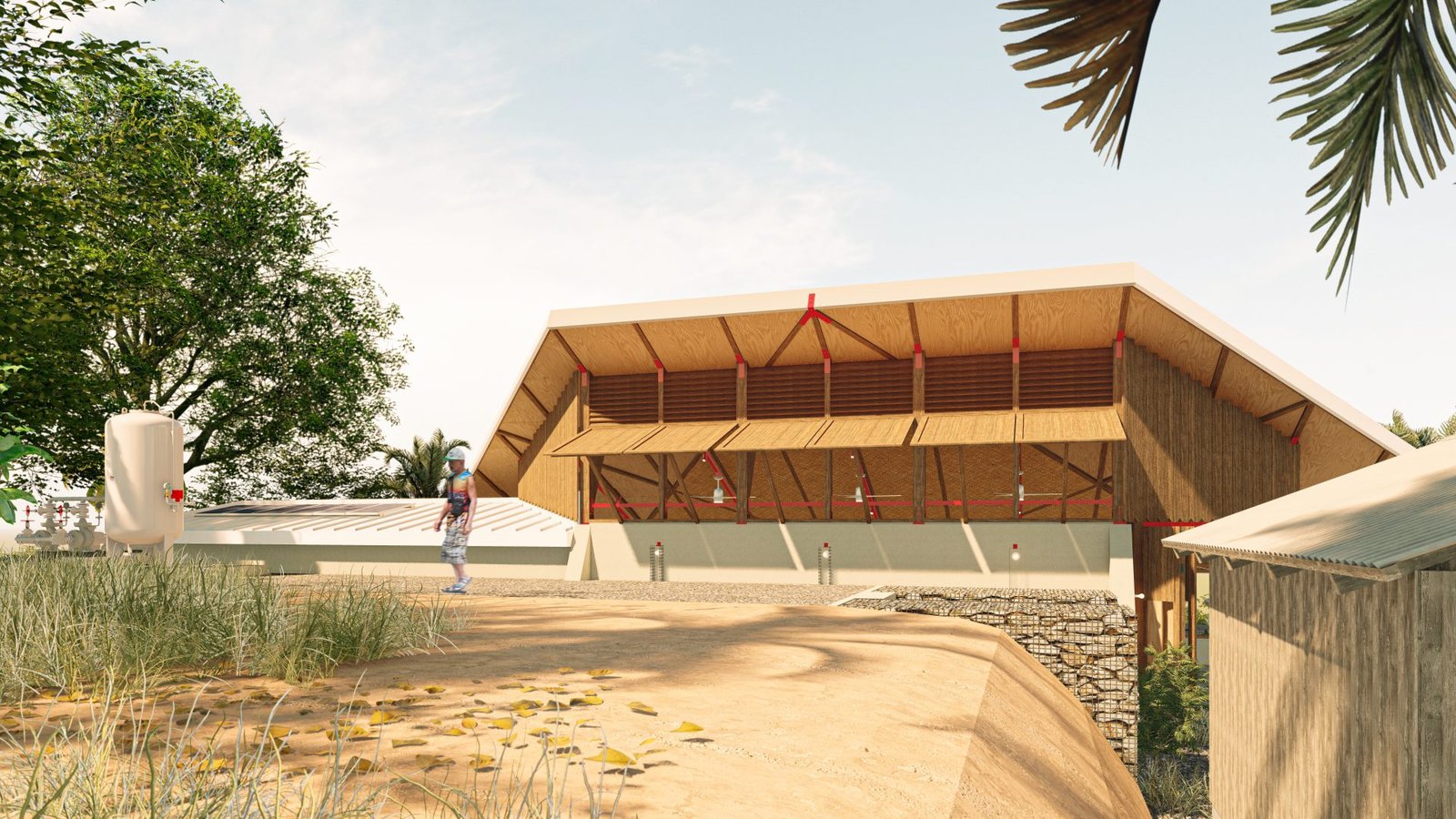
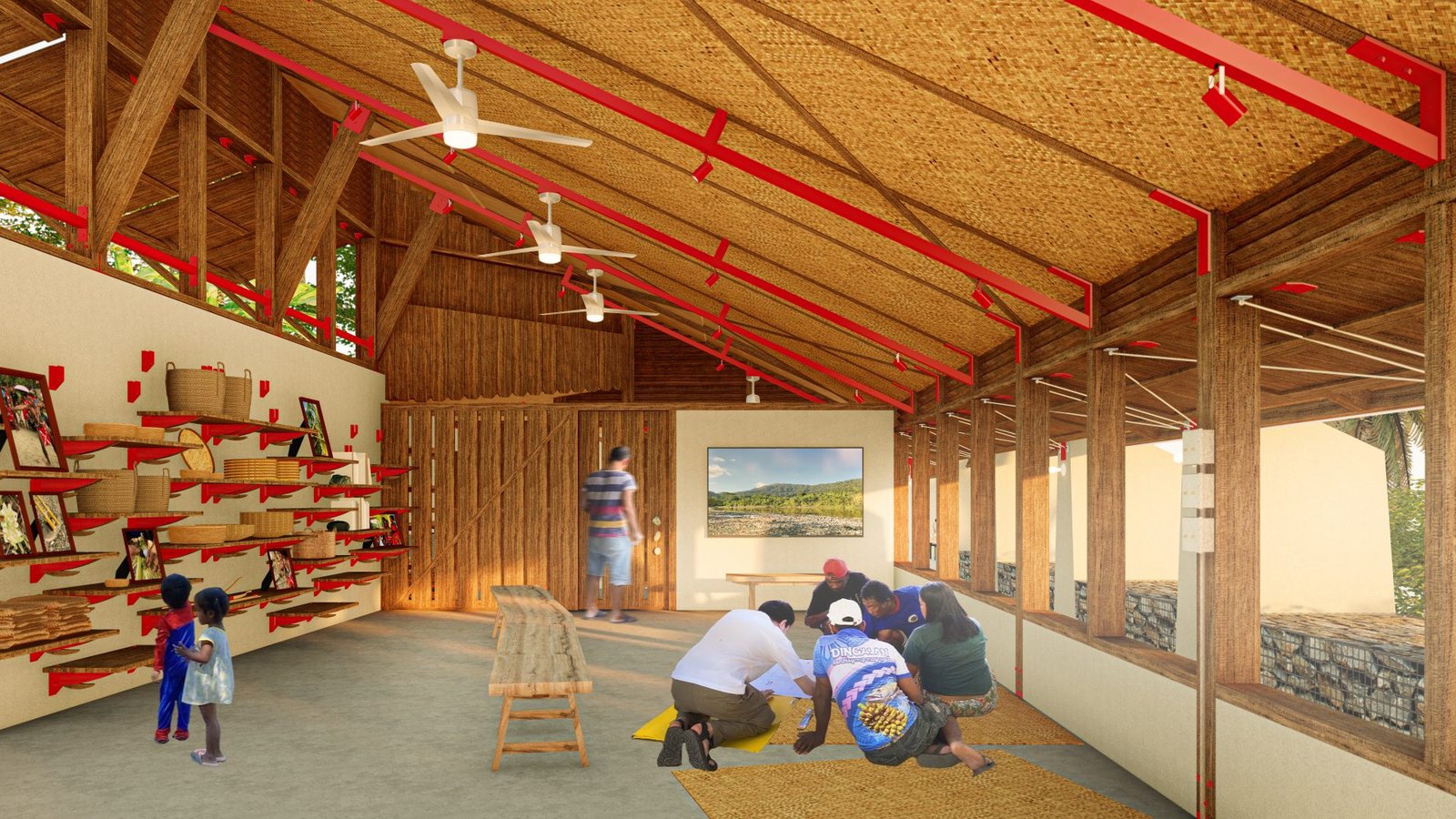
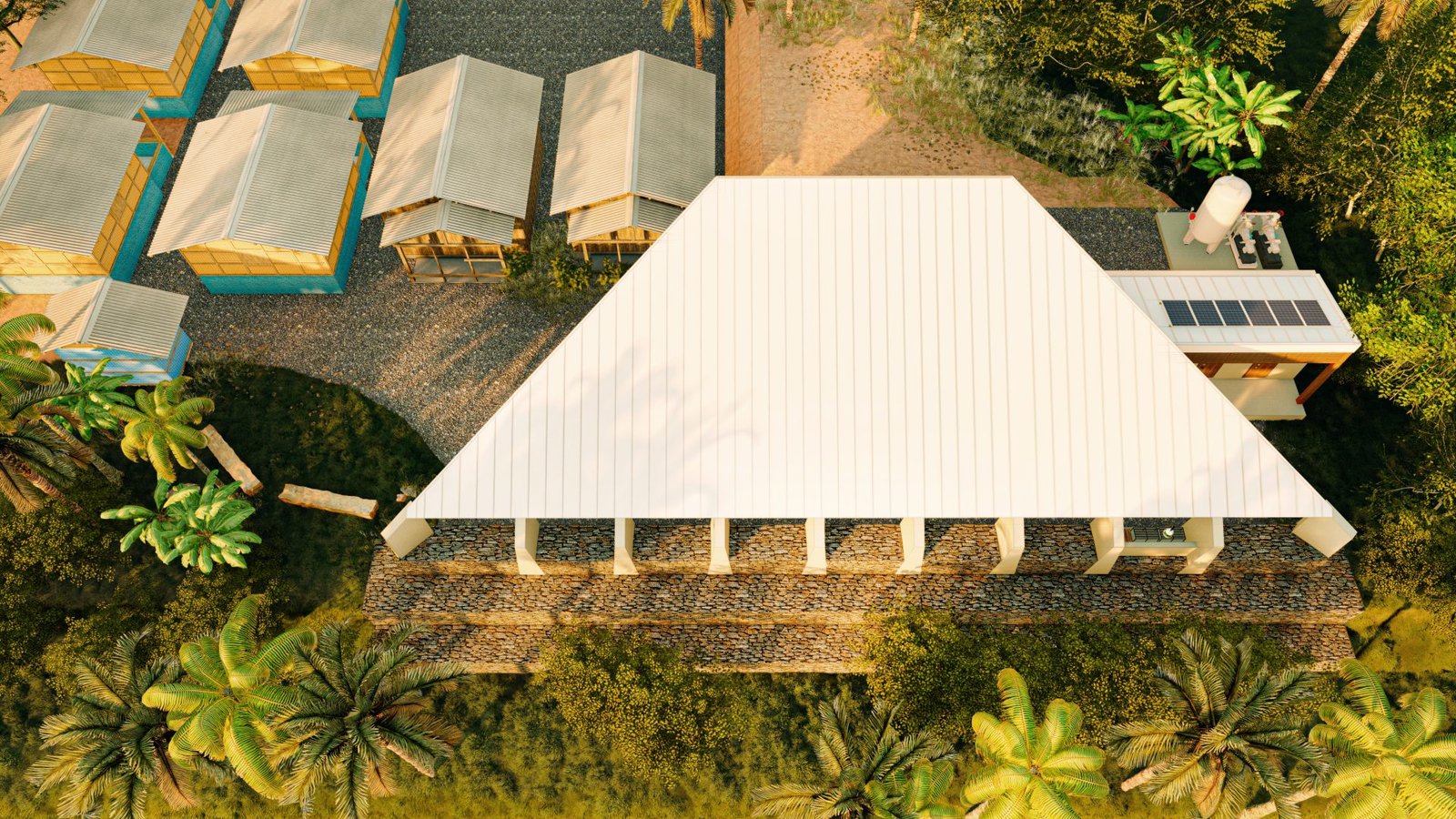
The porousness of the tribal hall acknowledges this ideology. Because Aurora sits on the Philippine typhoon belt, a robust and ideally sloped roof covers the gathering space. They’ll know which window or door to close when environmental threats are imminent. Because the tribal hall site is nested within a residential hill, the adjacent outdoor areas will serve as spill-out space while still allowing observation through generous openings.
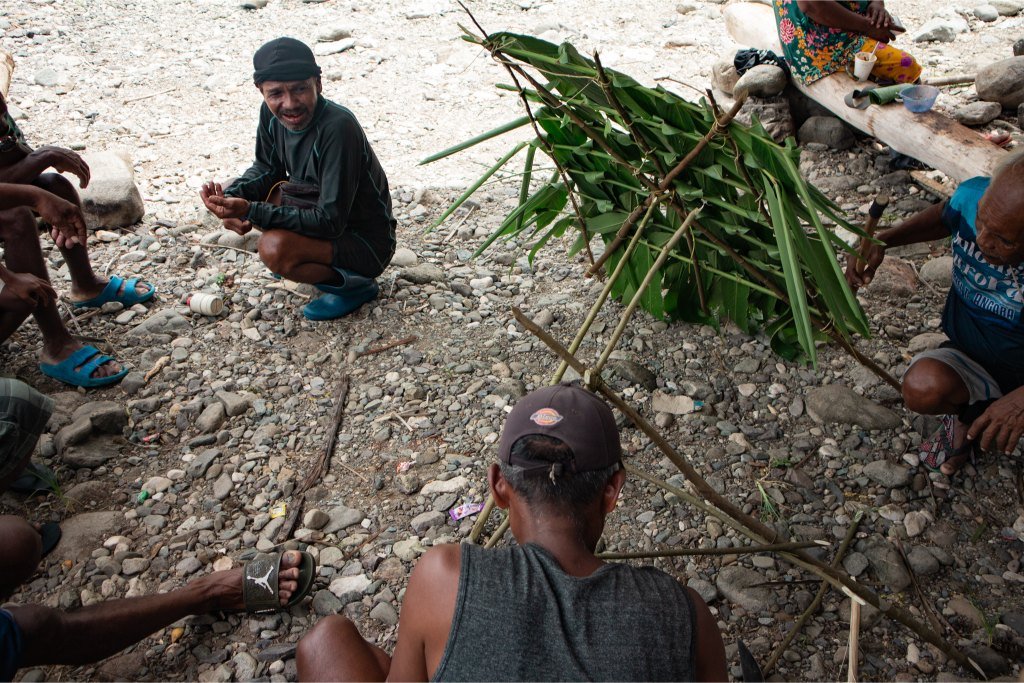
We also embraced mimicry, a design tool that shows what Domaget has is useful, meaningful, and beautiful, with occasional cultivation through artisan-to-artisan exchange when needed during the build stage. Because the Domaget do not trust a structure if the making or maker is unknown, they are more than willing to participate in their tribal hall’s construction.
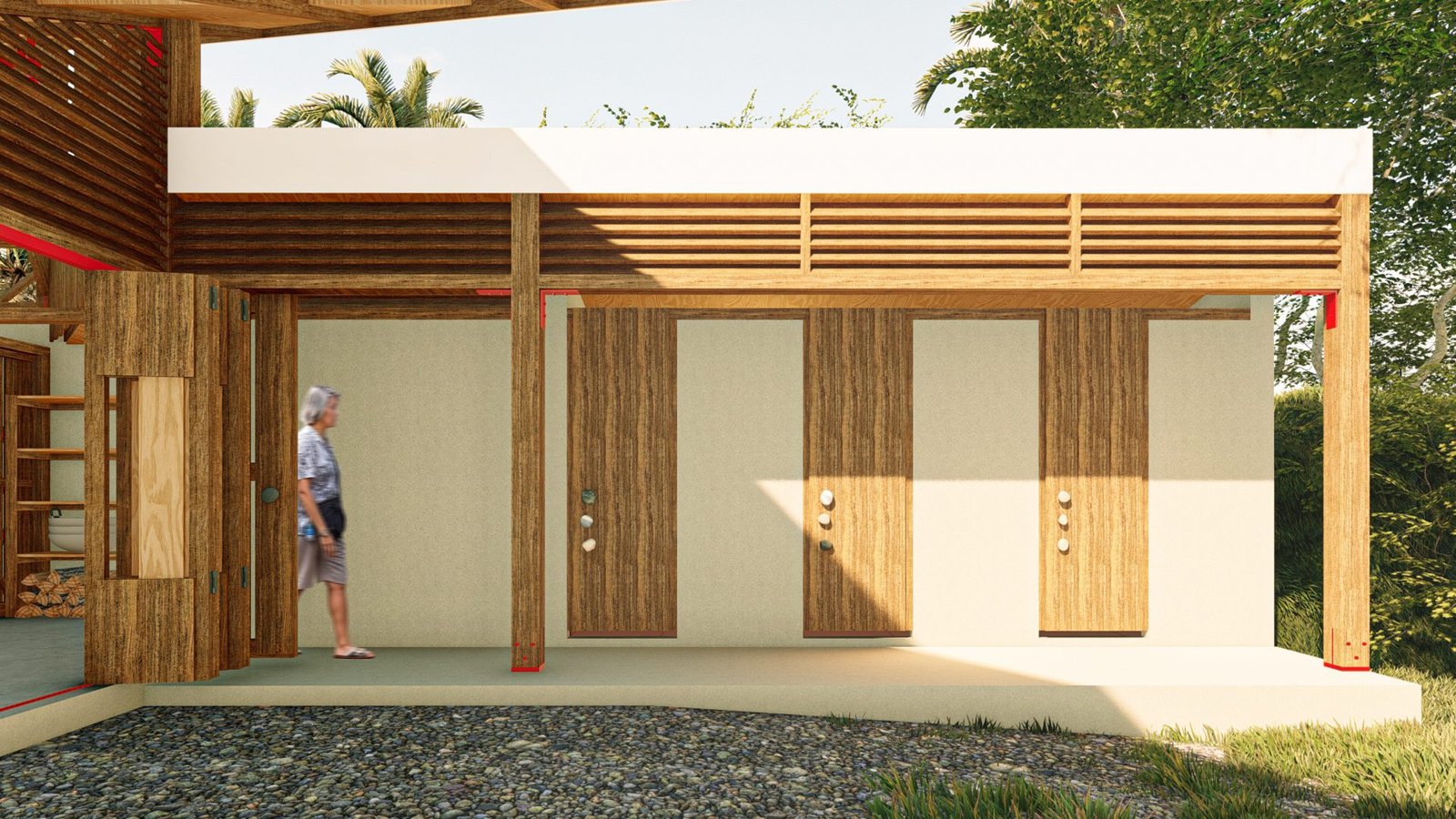
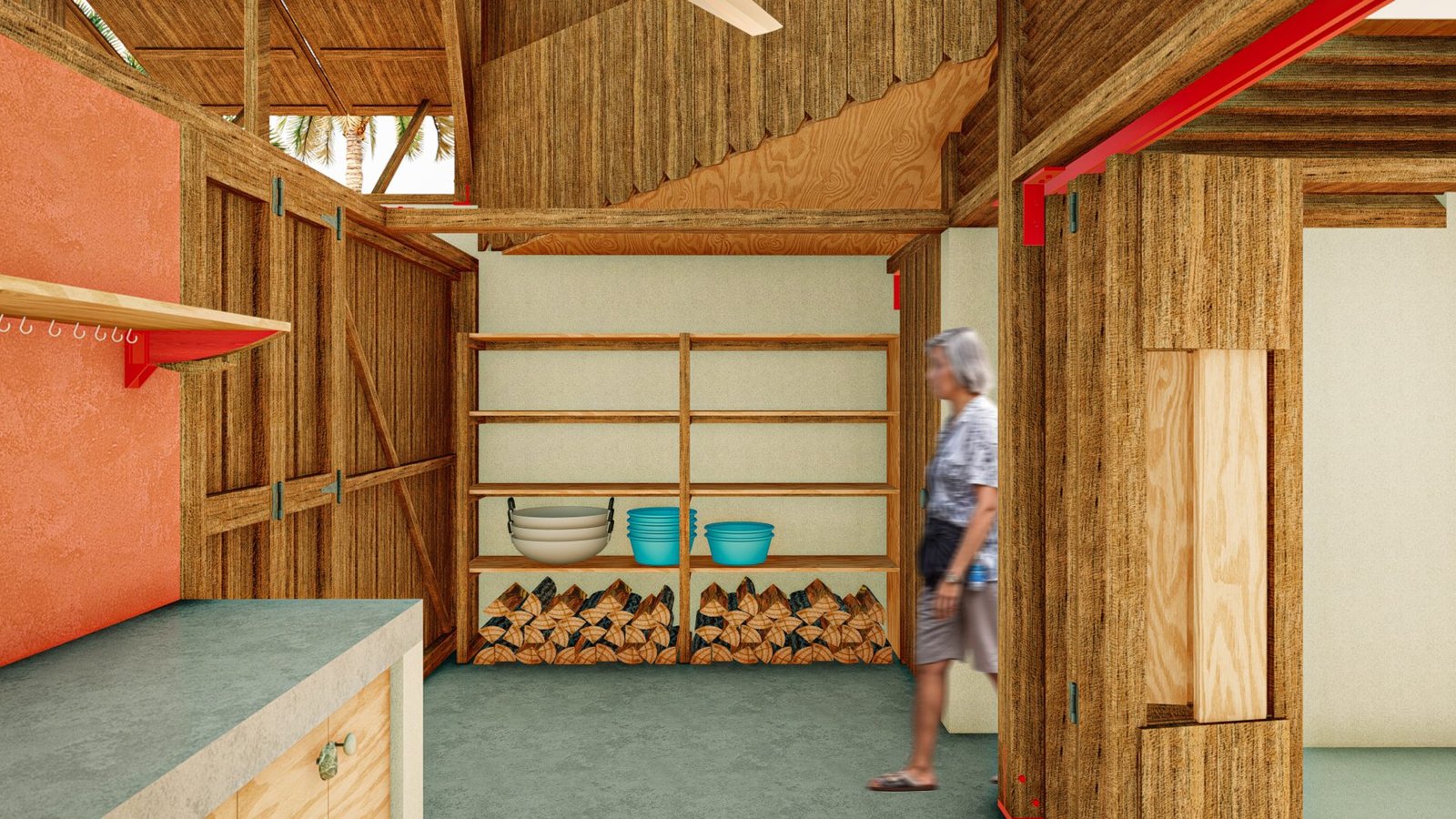
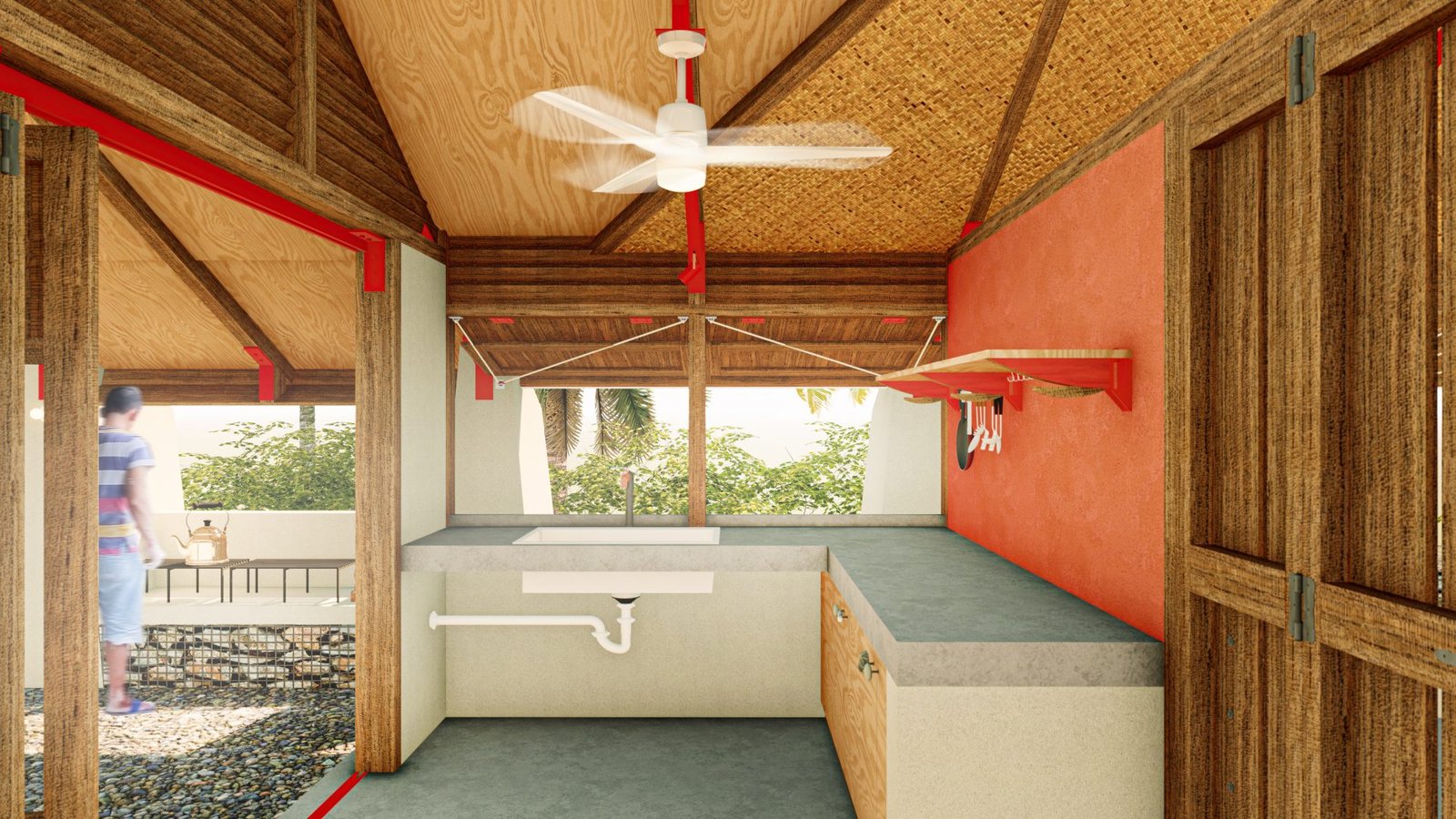
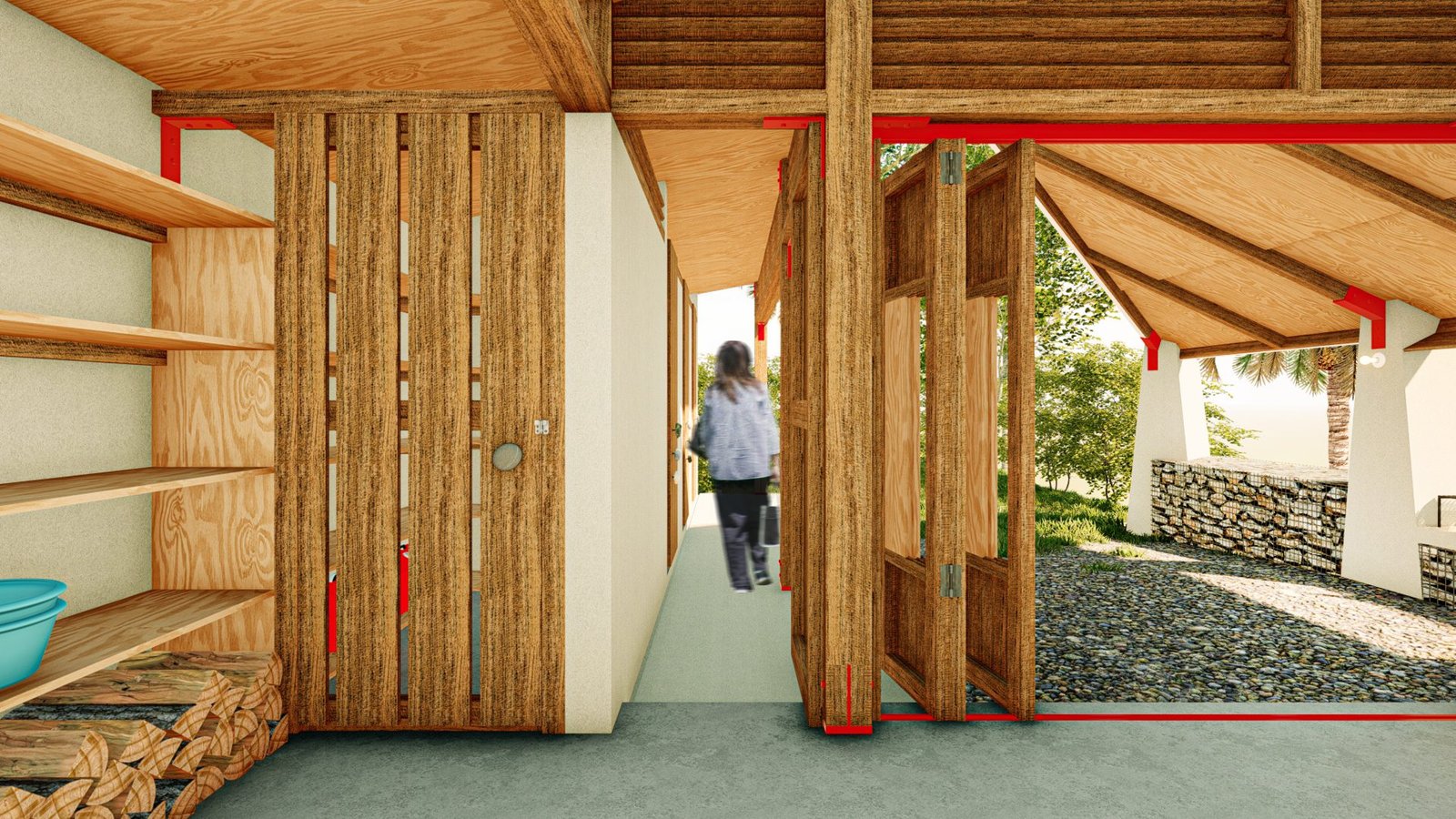
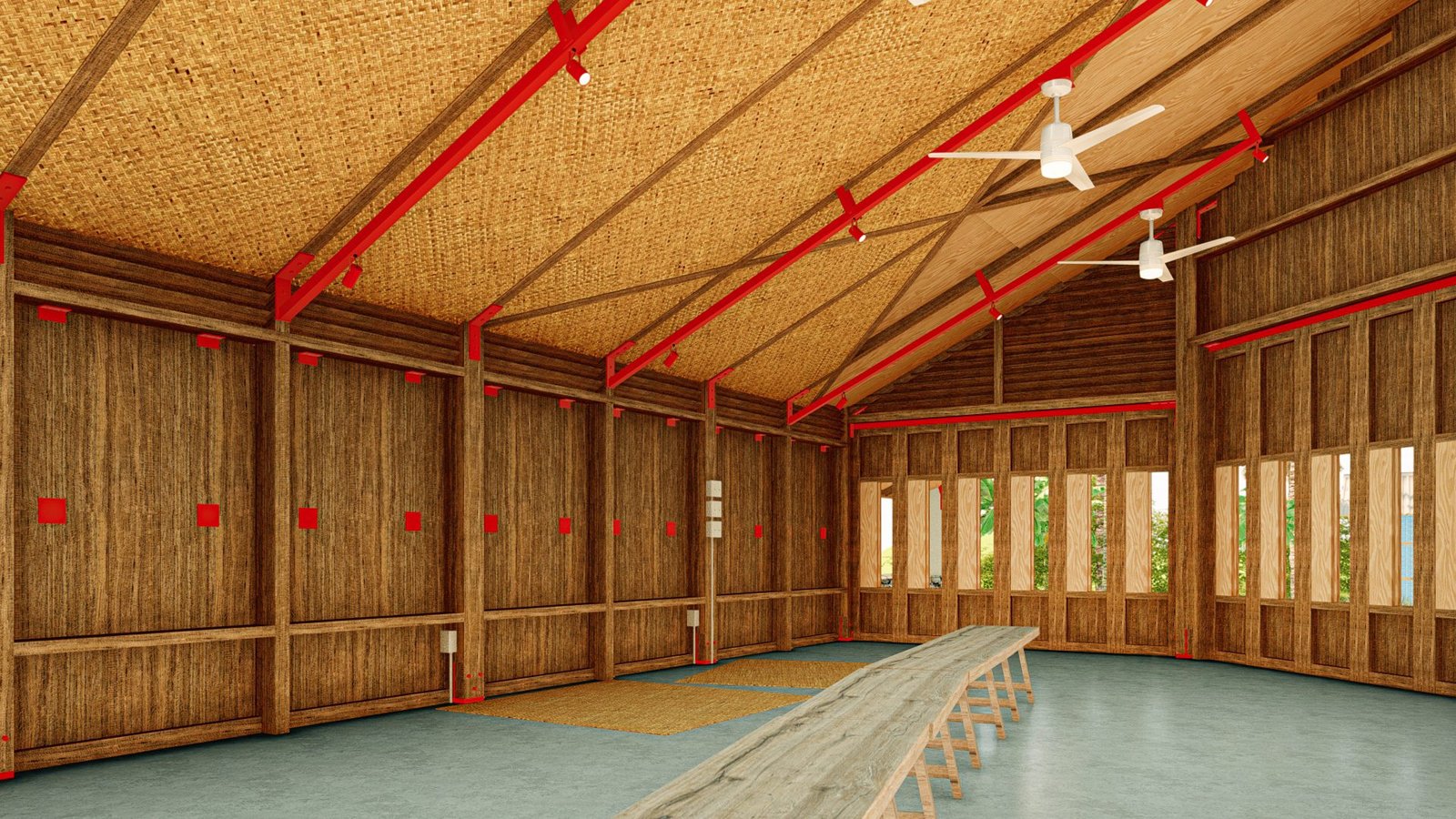
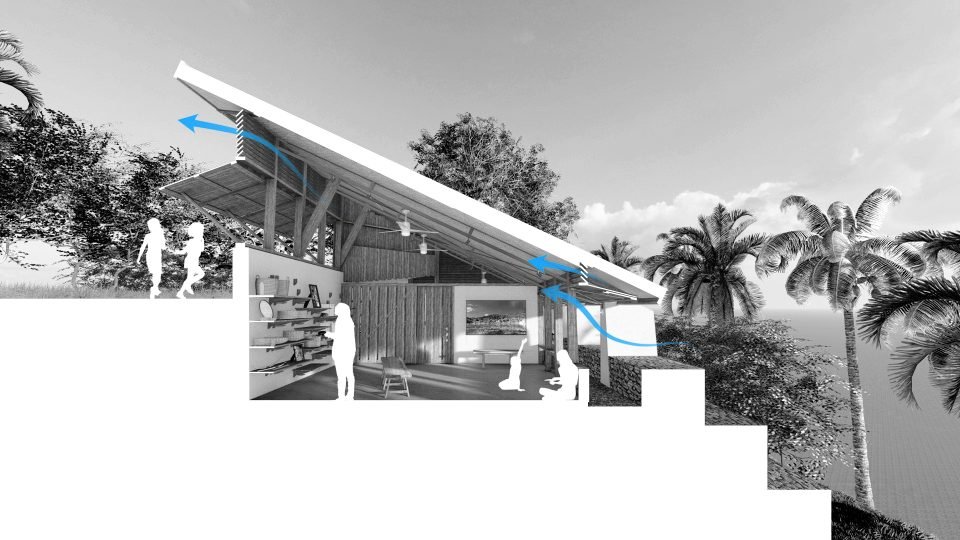
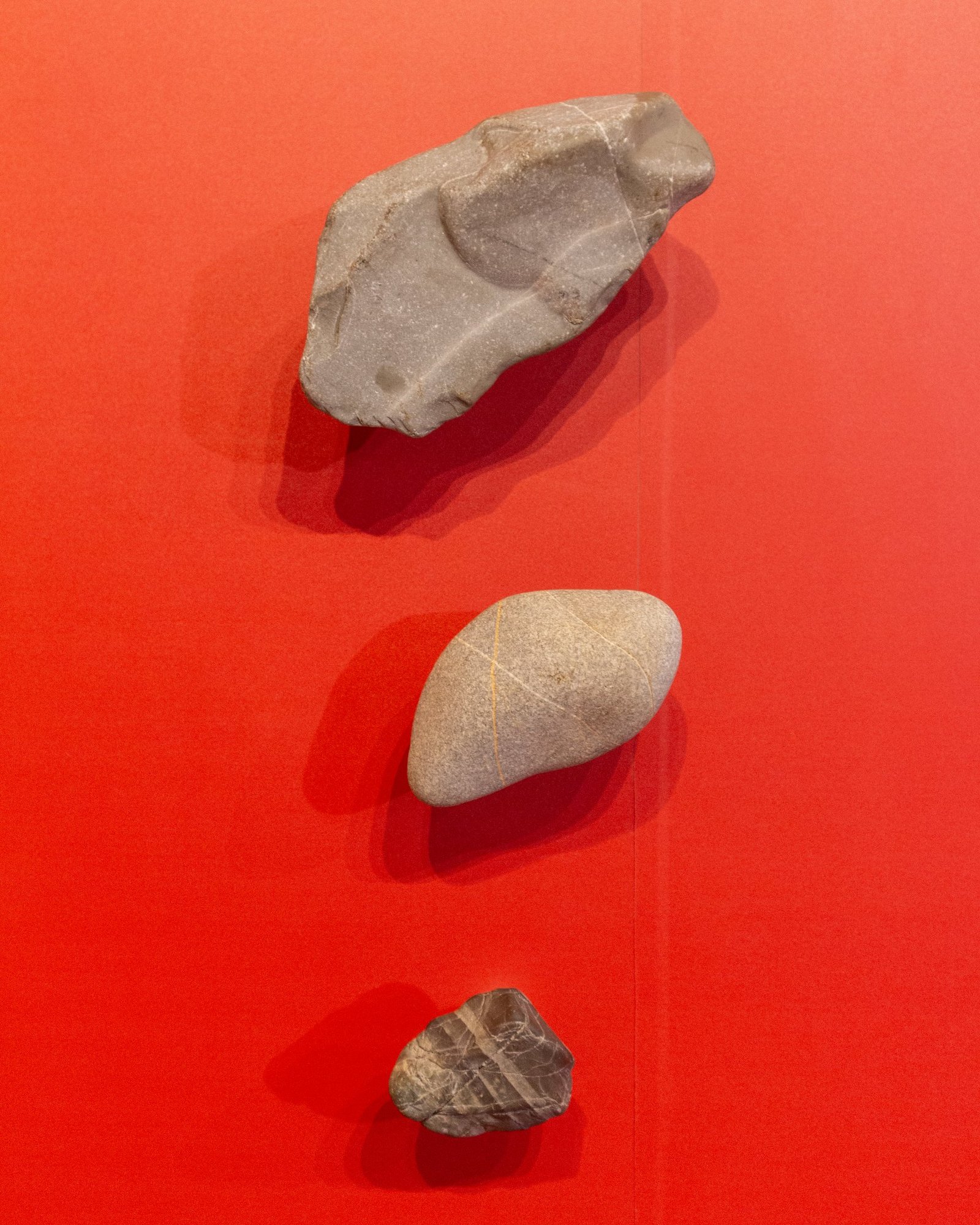
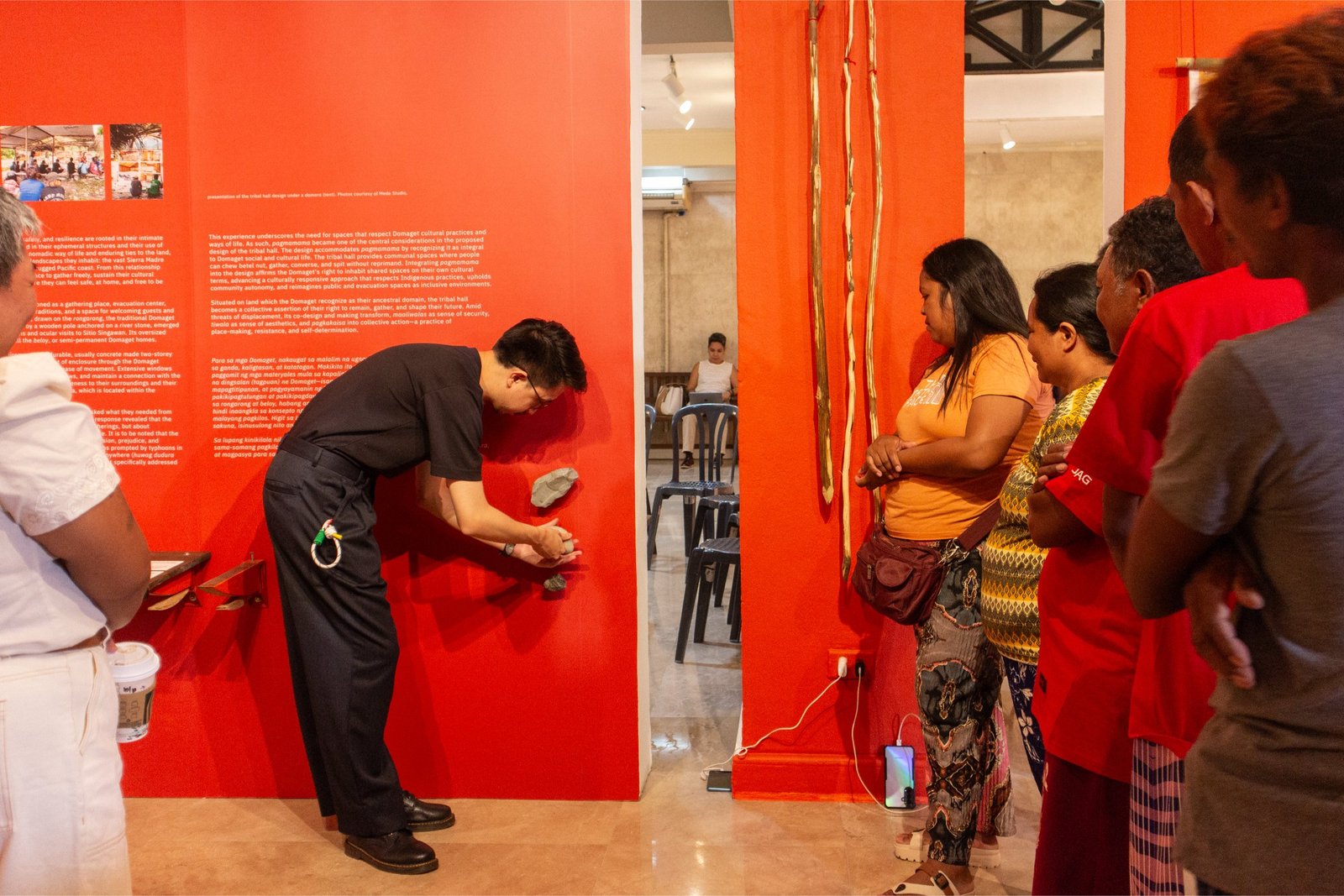
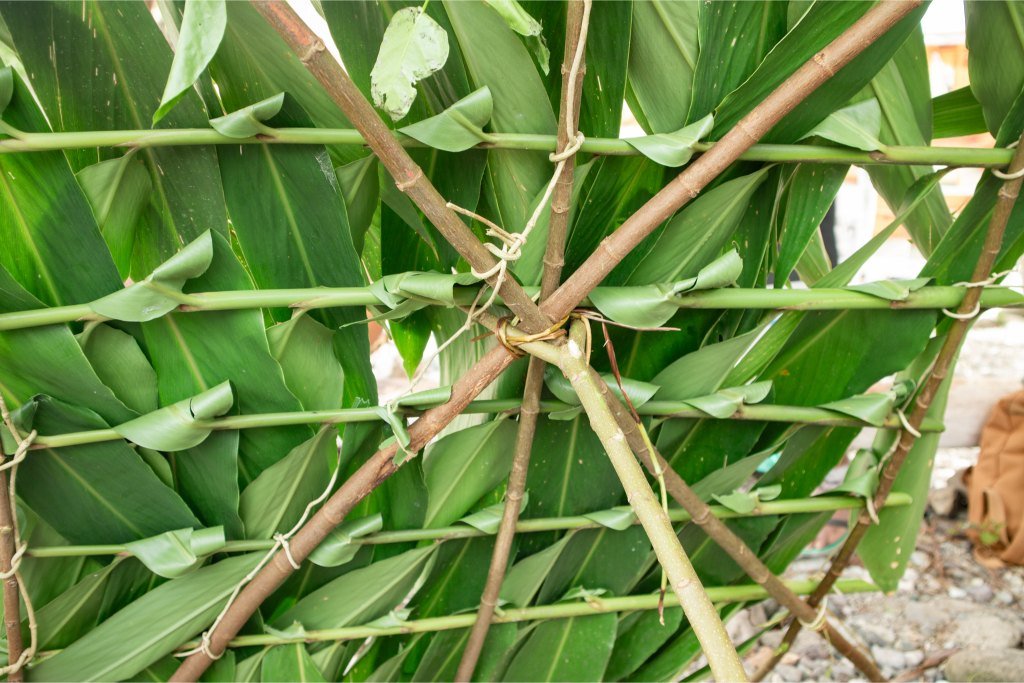
Their main structures are lean-tos called saolan, rongarong, and tinupi/talikod-mundo, which we observed during our fieldwork. The choice of which ephemeral structure to use during their nomadic journeys is actively negotiated with the environment. Intended use, location, the availability of plant and wood materials, and prevailing weather conditions all inform which shelter is built and how long it is expected to remain in place. We mimicked the lean-to’s shade-making shape for the tribal hall, with walls made from solid wood planks used in their semi-permanent homes (beloy). Their symbolic flower, dapdap (Erythrina variegata), is fashioned into a display bracket system, a blooming wall for Domaget craft display. We also used river stones as doorknobs installed at varying levels for accessibility to all ages. The Domaget were great co-creators, fully open, willing, and generous, with an environment that became a well of creation.
Amid growing calls for sustainability in response to climate change, the Domaget’s movement through their ever-changing rivers, mountains, and forests remains relational, symbolic, compassionate, and deeply contextual. Their ways of designing and making with the environment offer valuable insights into reimagining a truly sustainable world. As architects, a young architect at that, we can not only learn a thing or two from these Indigenous ways of making, but also recognize that they could hold the key to a truly sustainable future.
This project and the lessons I have learned here have changed me forever, and I will always be grateful and honored to have learned new ways of making through conversations and meandering with the whole team, the AARPS, the Domaget, the river, the forest, and the mountain. The river still flows, and there is still space in our boat.
To the readers and all who will visit our exhibit, we hope to gain more support for the building of the tribal hall. •
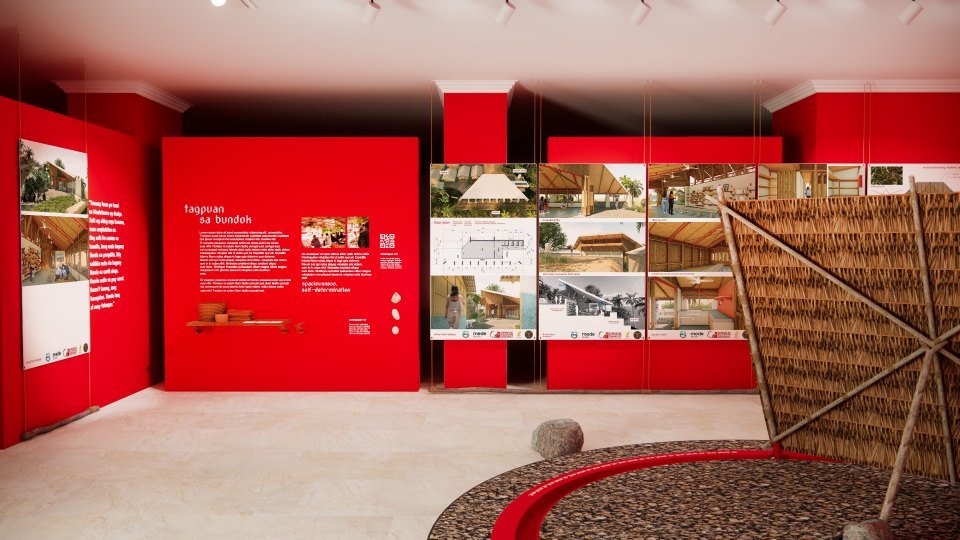
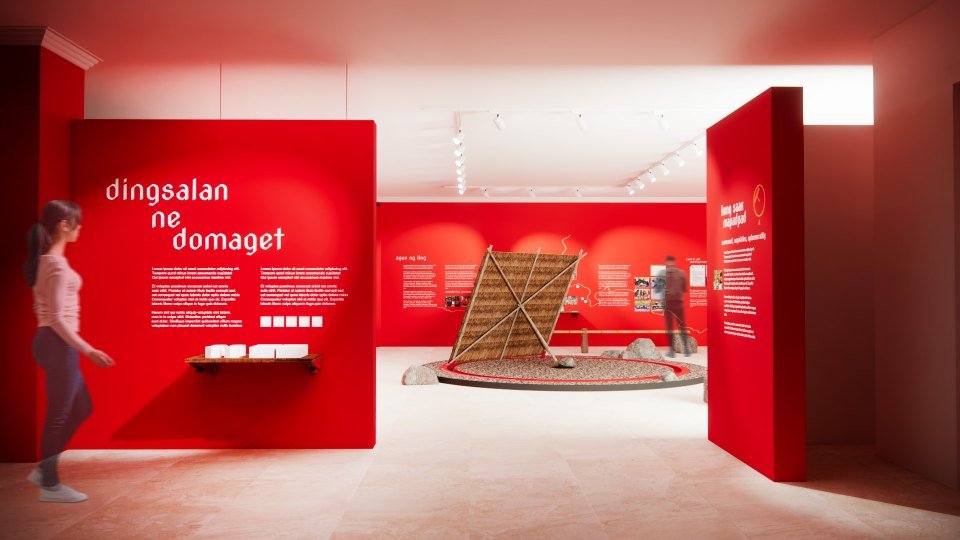
Dingalan ne Domaget: The Exhibition
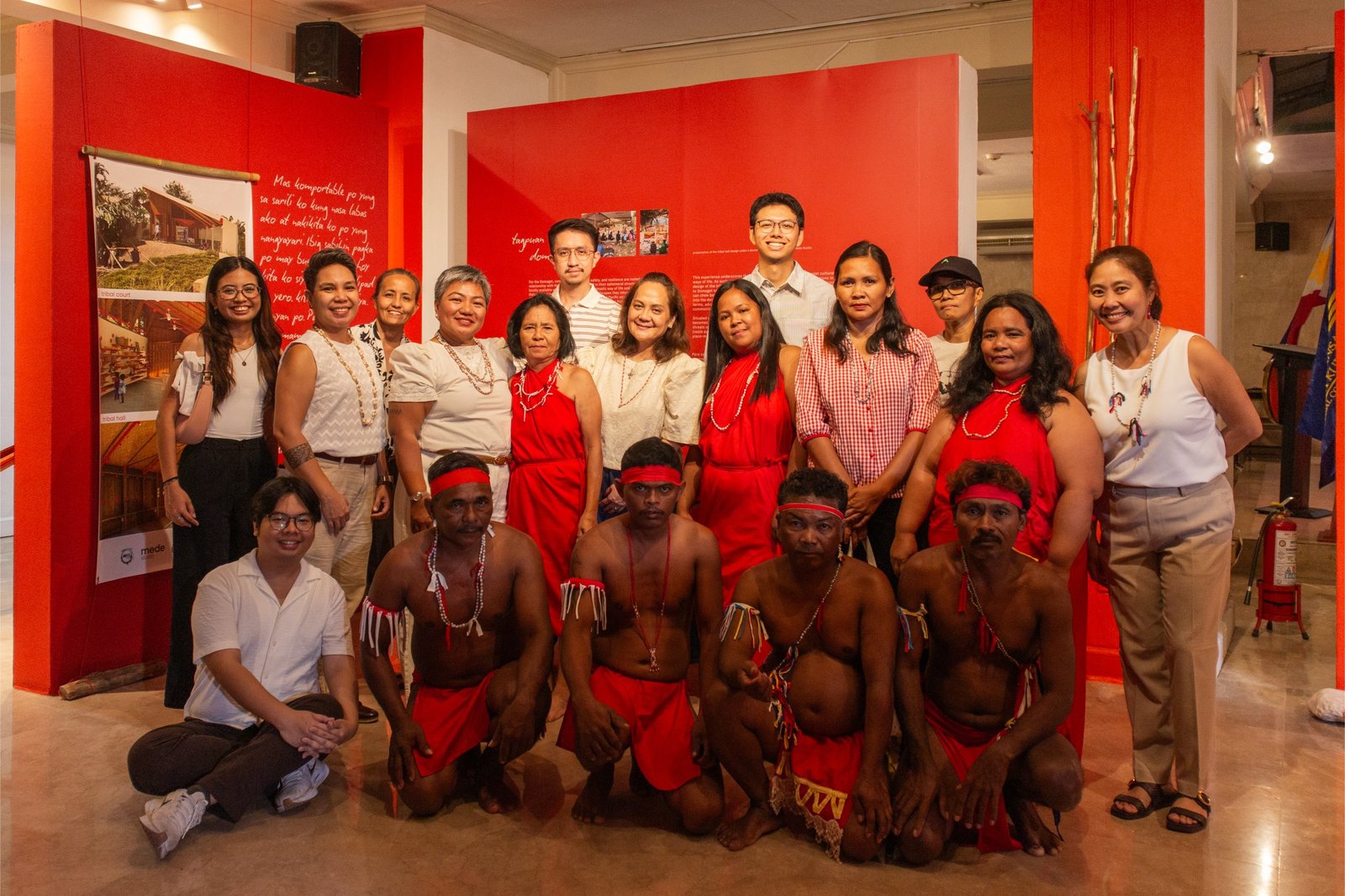
This exhibition captures a multi-year collaboration between the Domaget-Bulos (Dumagat) community of Sitio Singawan and the Aurora Artist Residency Program and Space (AARPS) in Dingalan, Aurora.
Far from a passive display of artifacts, the exhibition serves as a living testimony to a creative process that is intentionally community-led, process-led, and creative/research-led. Guided by curator Roselle Pineda’s concept and method of meandering/paliguy-ligoy, the exhibition unfolds through prompts that invoke Domaget nomadism, their fluid relationship with the river, and their environment more broadly. Rejecting a rigid, linear structure, the curatorial approach to both the project and the exhibition winds, pauses, and flows alongside the community’s lived rhythms of purposeful wandering, weaving, and walking.
In this process, the traditional boundaries of authorship dissolve; community members are recognized as co-researchers, co-designers, and co-authors of their own narratives and material realities. These conversations take shape through different forms of expression, whether through a festival, a performance, or the dingsalan tribal hall itself.
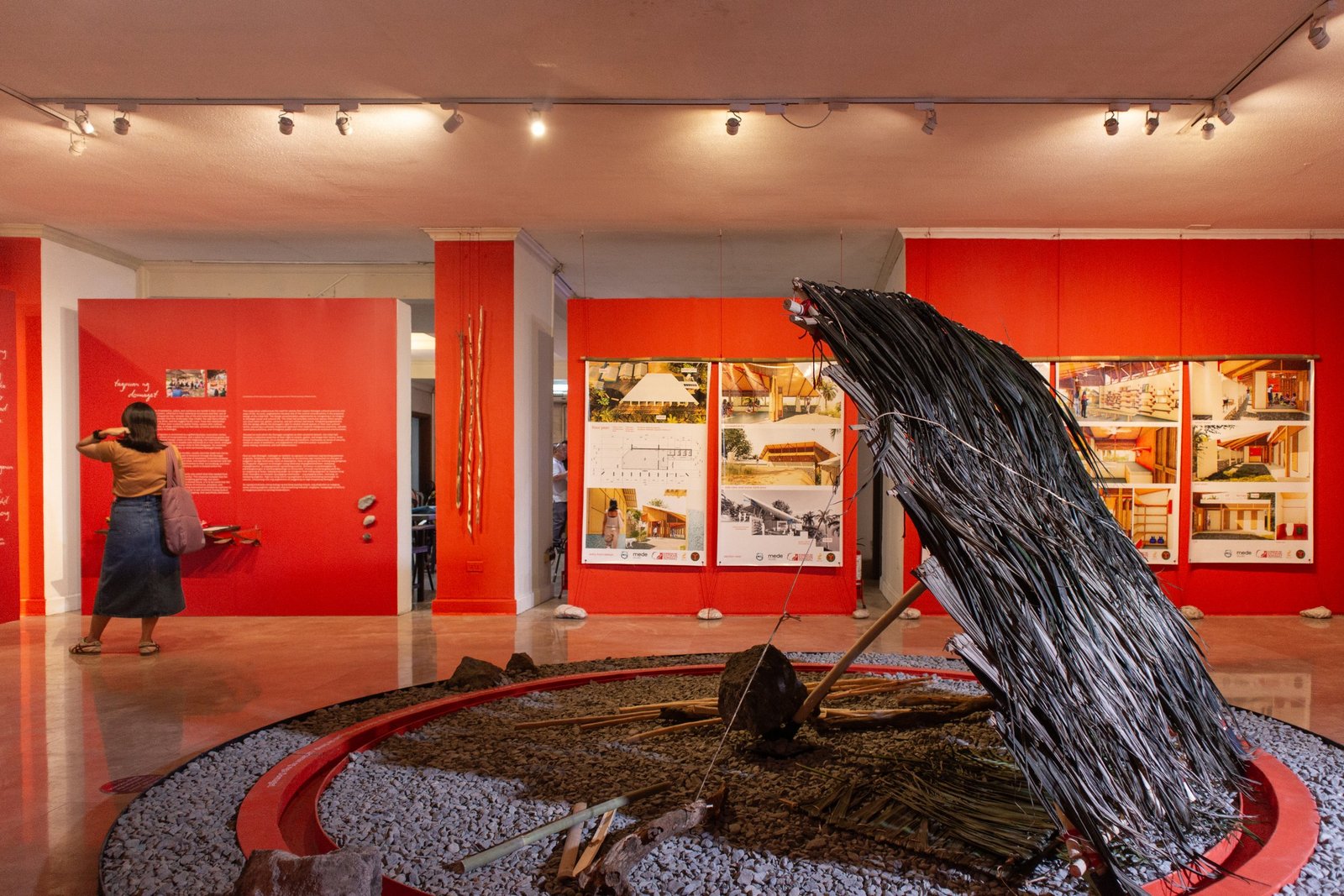
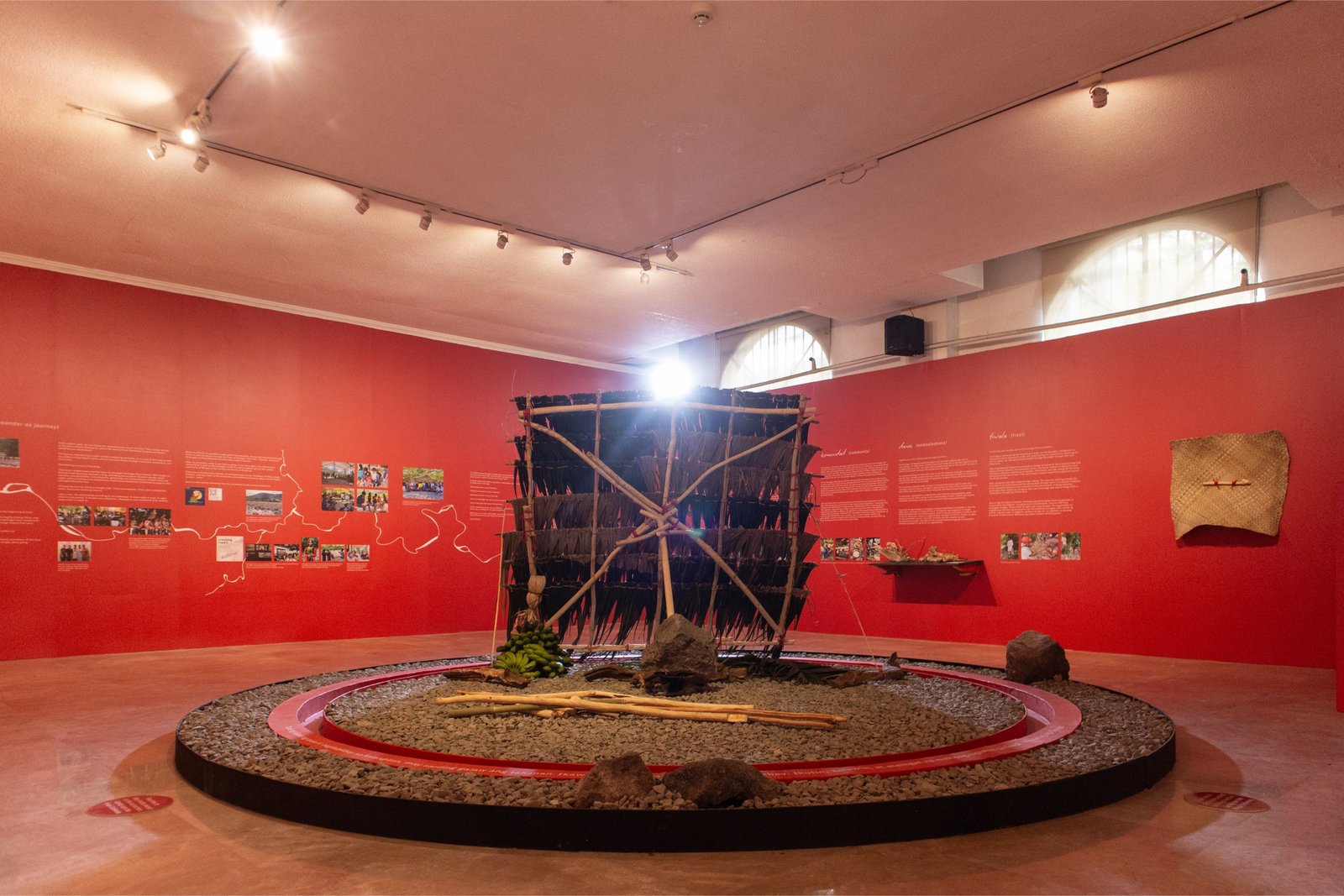
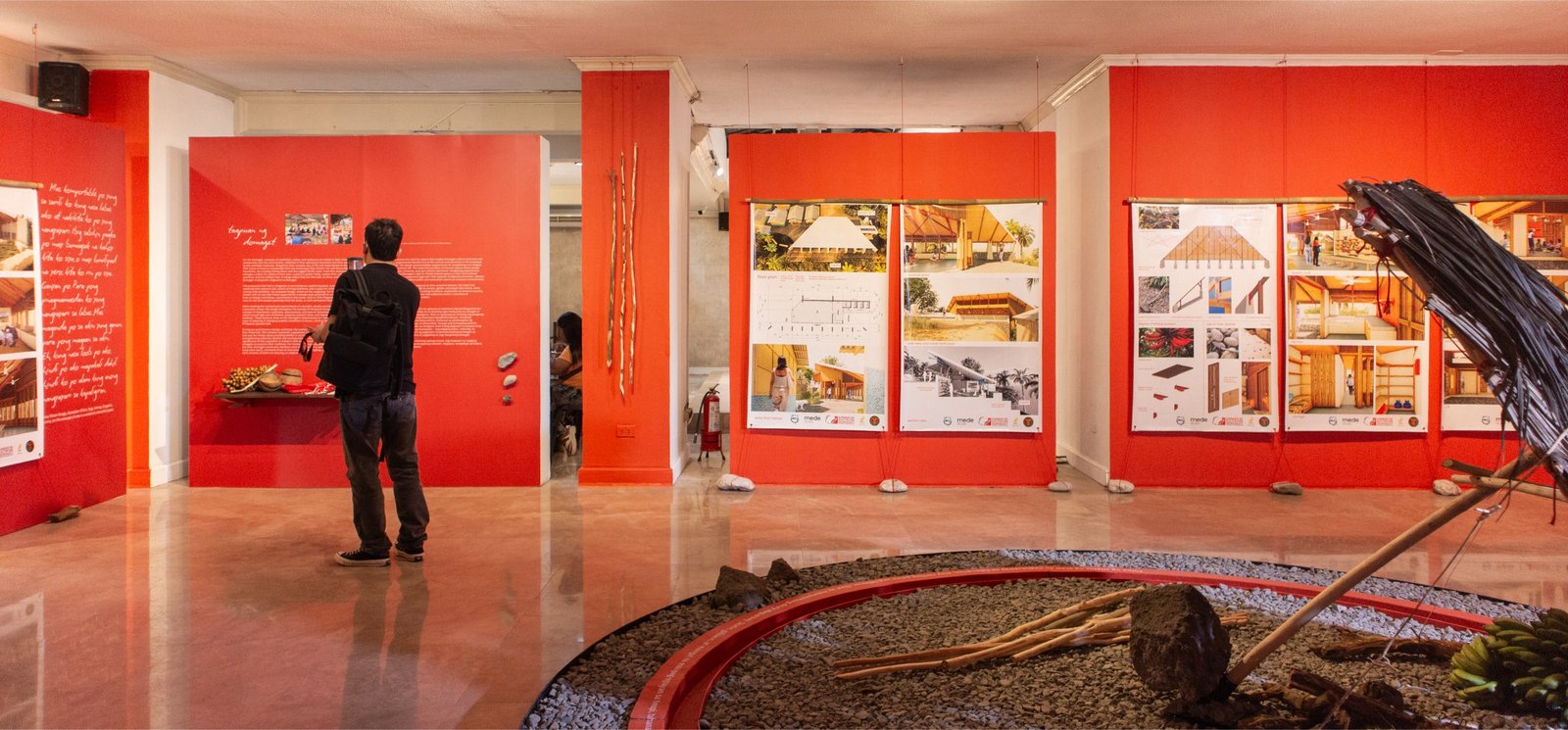
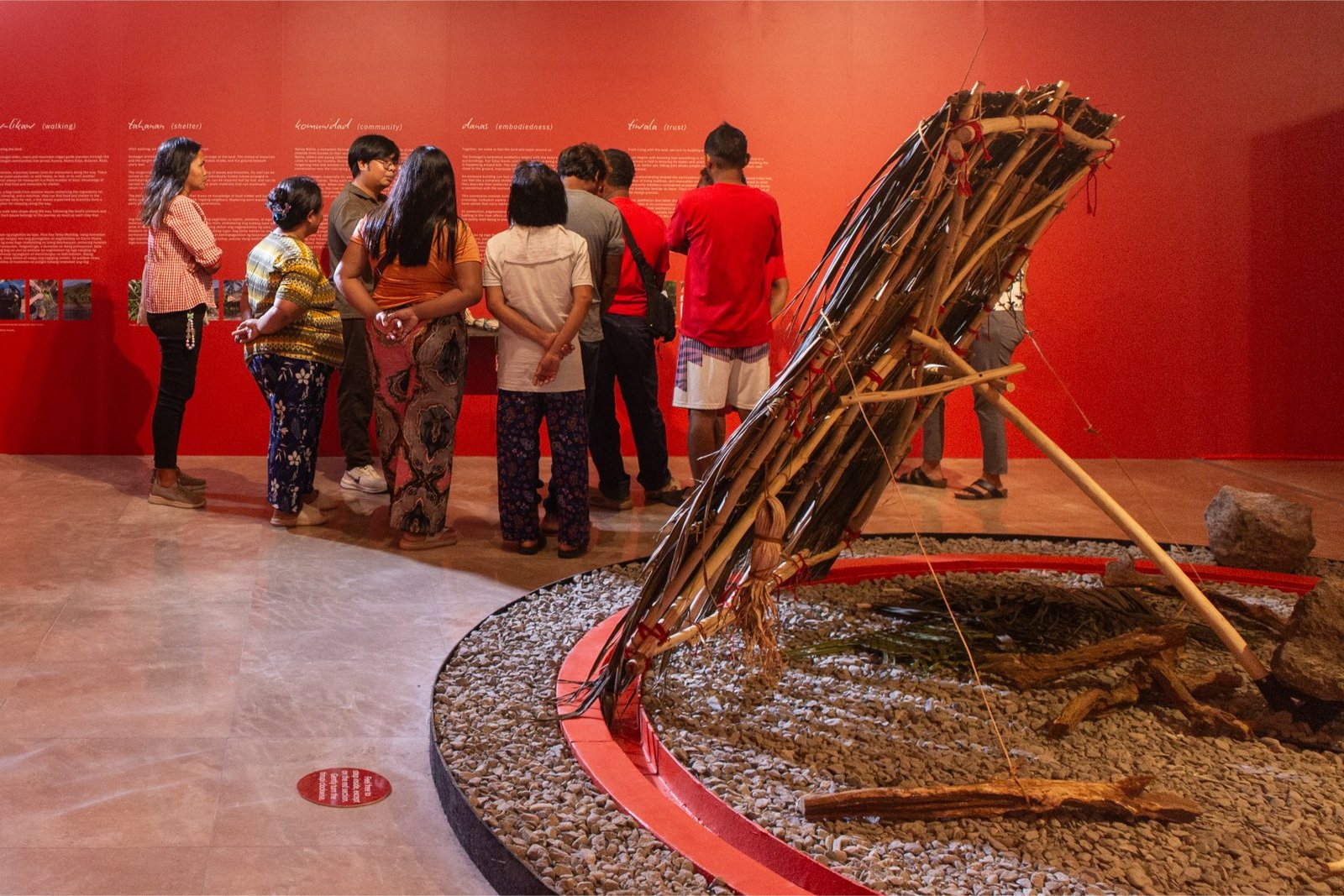
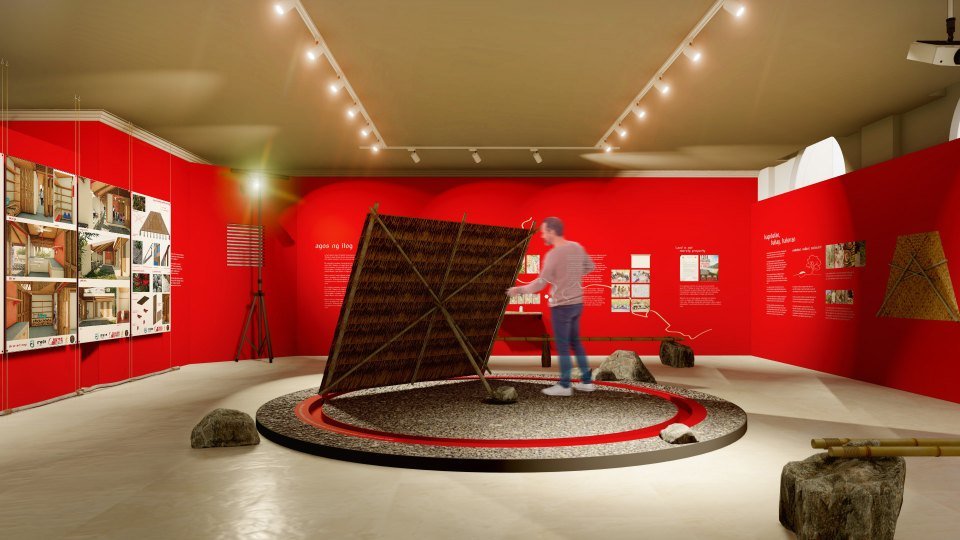
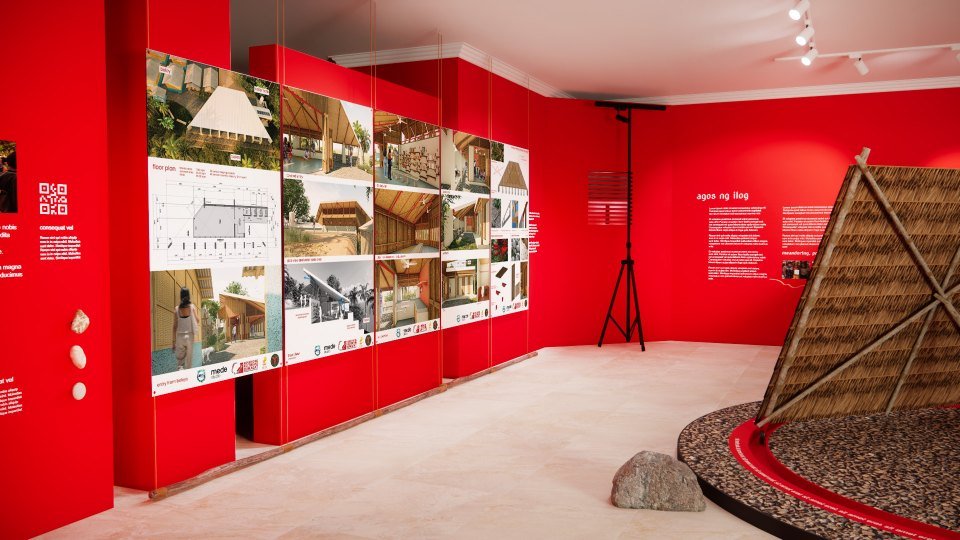
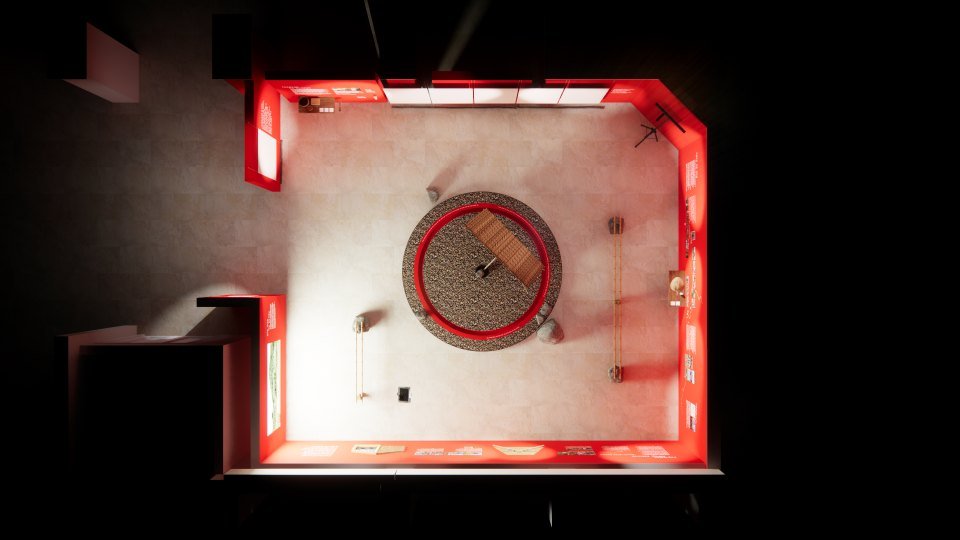
In this iteration, the gallery unfolds into a series of immersive, interconnected nodes set against bold red walls that evoke love, bravery, power, and the Domaget’s deep-rooted connection to the land.
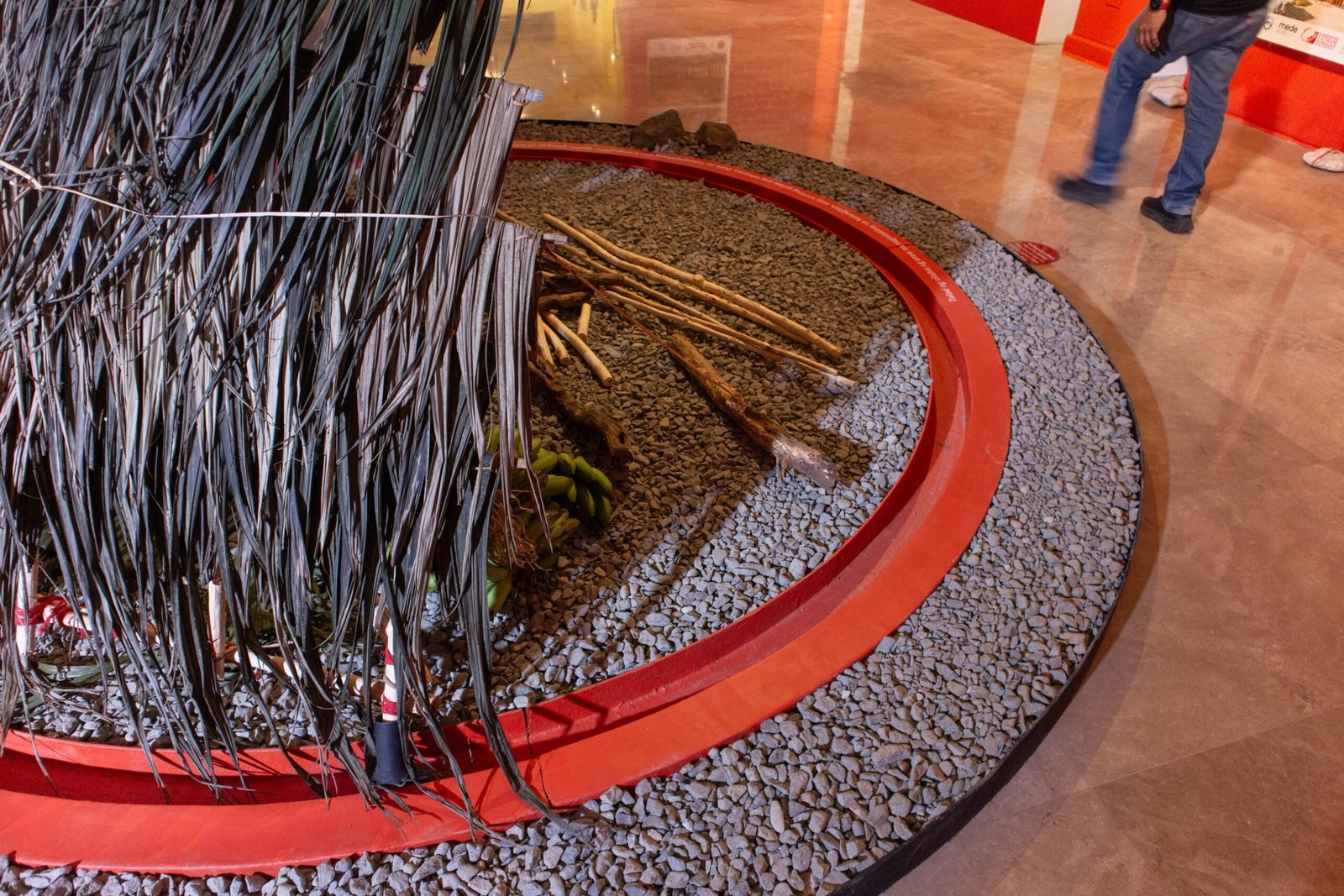
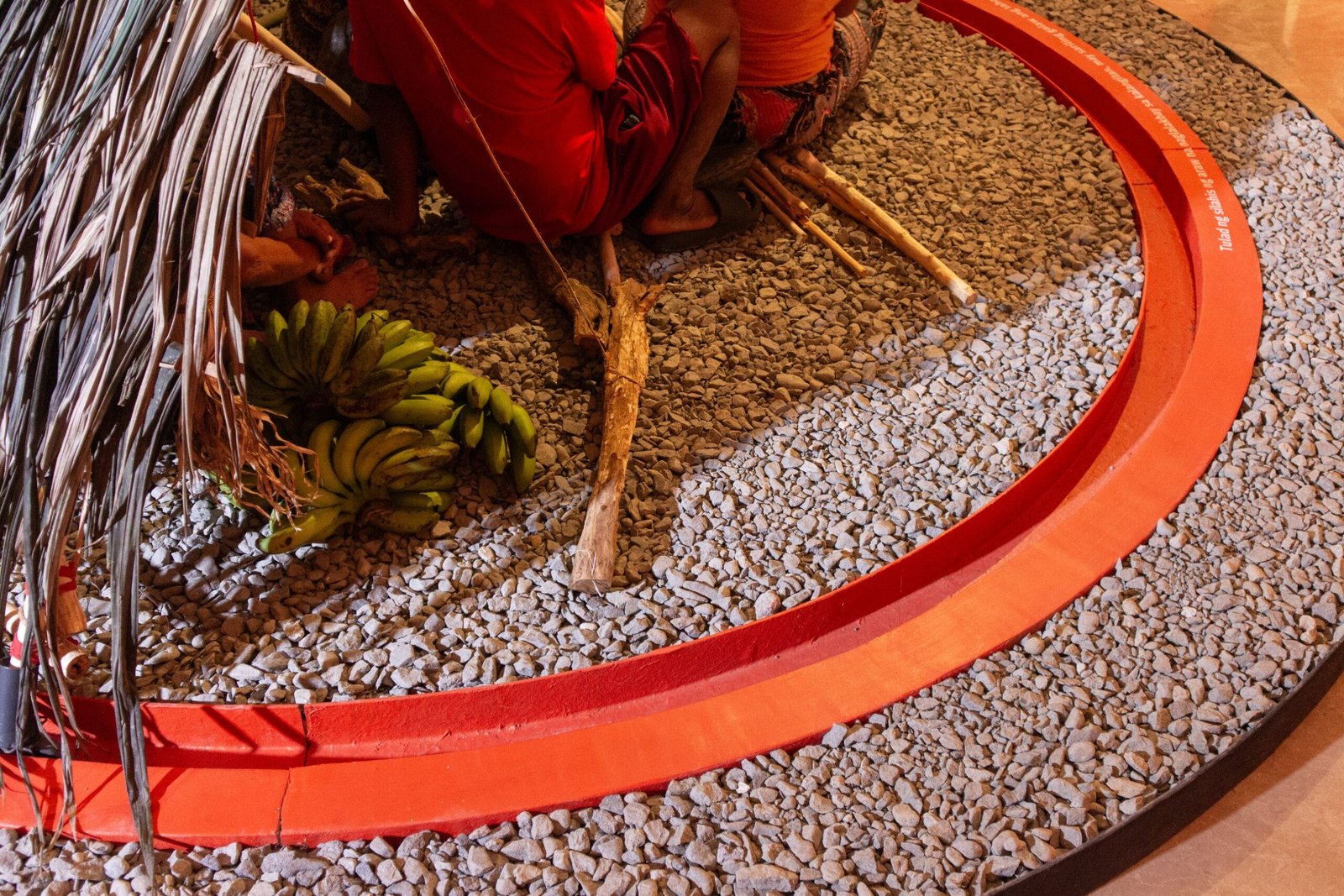
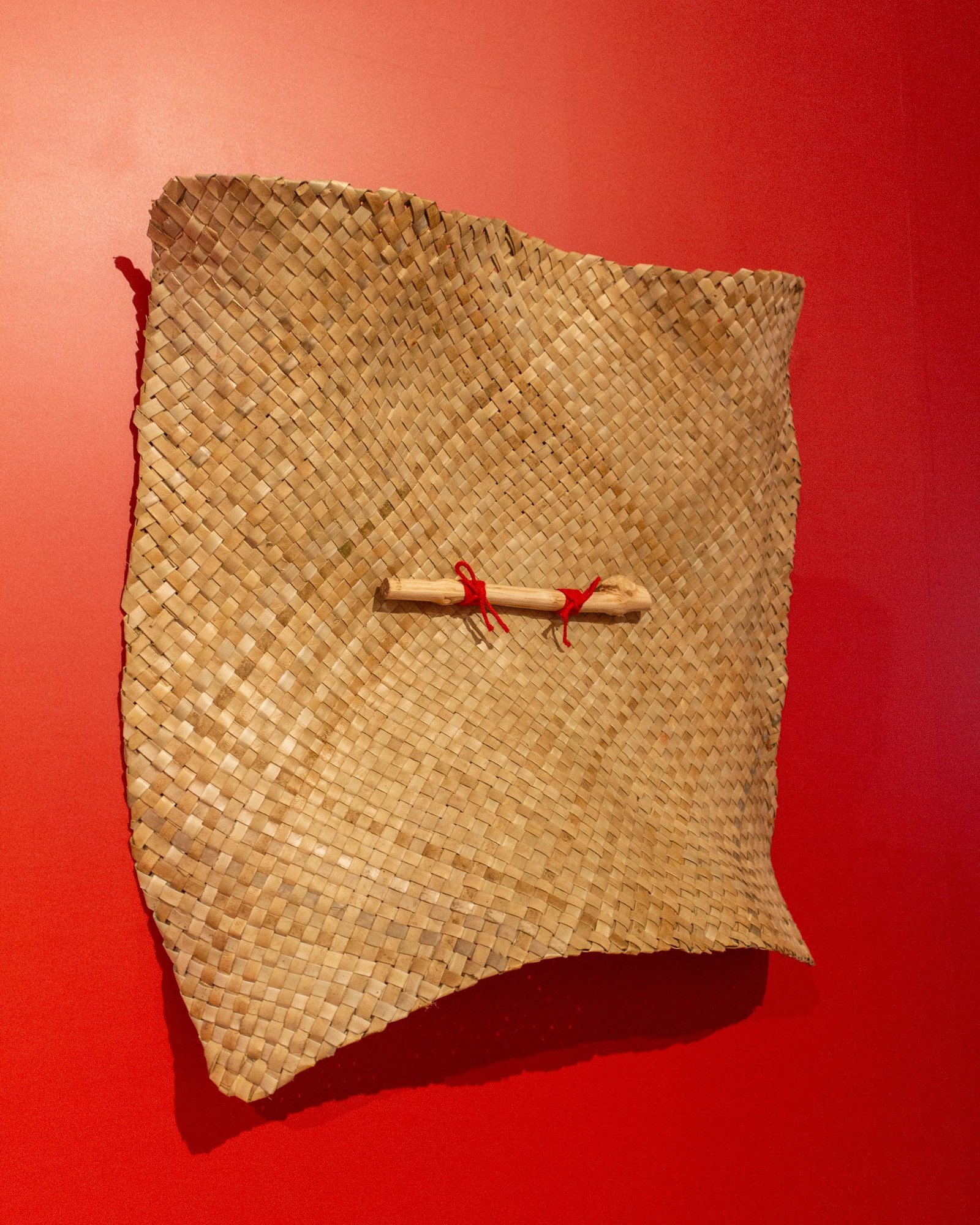
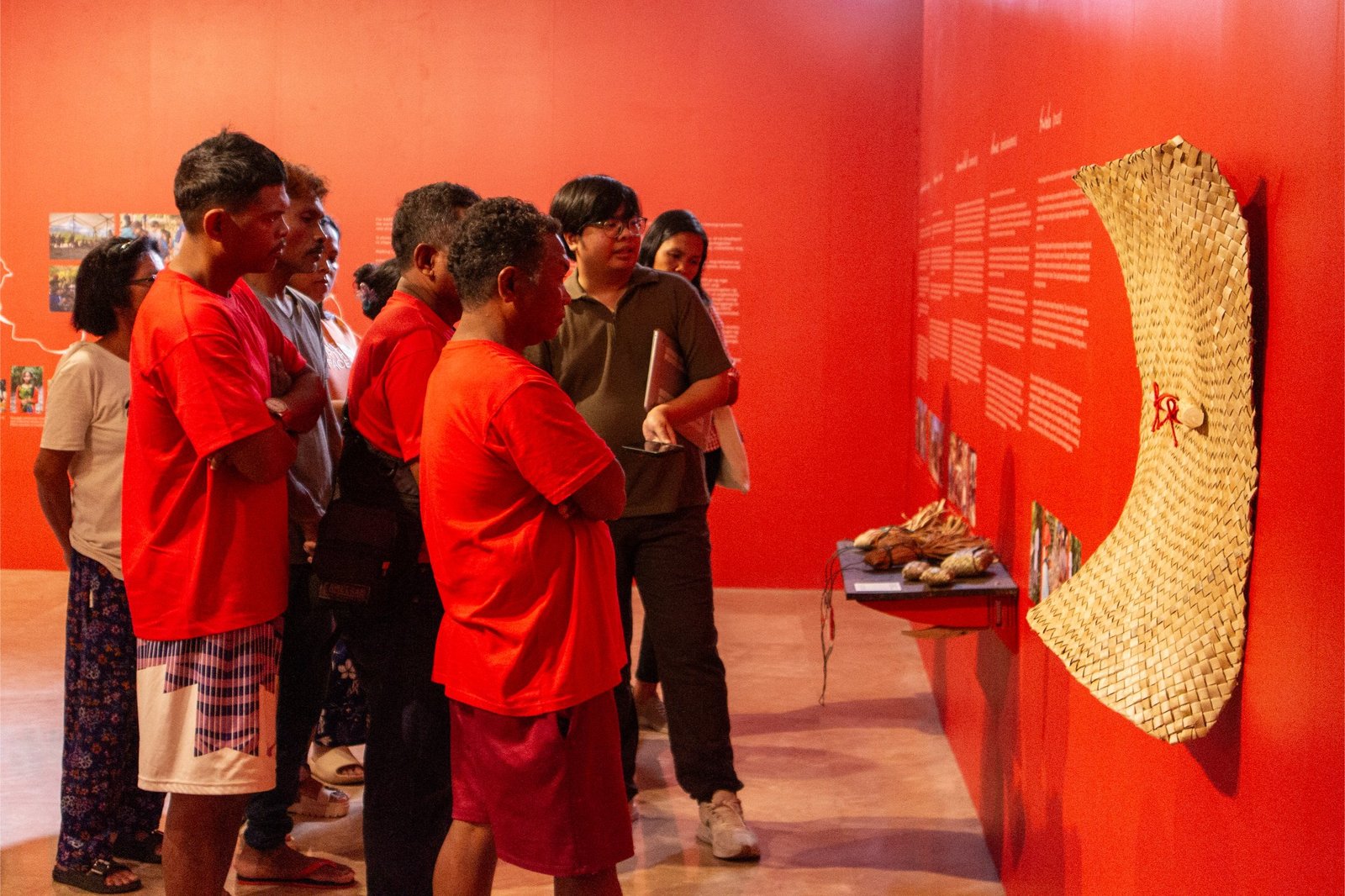
At the center of the exhibition, the tinupi node serves as a spatial anchor, foregrounding Domaget place-making and knowledge of dwelling and movement. Featuring a manually rotating model of the traditional Domaget tinupi, framed by a coconut-leaf shade structure woven by community members, the node evokes the ingenuity and ephemeral character of Domaget lean-to construction. Anchored by pebble stones, it offers a point of orientation from which visitors can trace the exhibition’s interconnected narratives of place, mobility, and belonging.
The surrounding nodes extend this central motif through distinct but interconnected sections alluding to the project journey, ambient/video showing place, Indigenous Knowledge and Systems Practices (IKSP) pertaining to space, and design. Together, they map how spatial design can serve as a tool for self-determination in the face of development aggression and displacement. Through textual and tactile encounters, visitors are invited to become fellow meanderers in the ongoing story of making that has shaped—and continues to shape—the Dingalan project.
Dingalan ne Domaget stands as an assertion of Indigenous sovereignty, agency, and cultural survival. It envisions a future in which Indigenous knowledge, self-determination, and ancestral belonging remain central to the pursuit of sustainable communities.
The exhibition runs from November 9-30, 2026, at the NCCA Gallery, Intramuros.
Project Team
Curator: Roselle Pineda
Community partners: Domaget Community, Sitio Singawan, Dingalan, Aurora (through the leadership of Indigenous Peoples Mandatory Representative Hon. Bernaldo “Berting” Pagaragan)
Visuals: Ar. Eldry John Infante, Ar. Martin Gabriel Quiambao, Jennifer Gamboa, Rowena Bayon, Teta Tulay, Angela Curioso, Lokalpedia, and Aldous Reyes
Exhibit designer: Mede Studio
Writers: Roselle Pineda, Andre Magpantay, Ar. Eldry John Infante, Reena Manalo-Quijano
Exhibit fabricator: Domaget Community, Sitio Singawan, Dingalan, Aurora, Stratera Design and Printrich Digital
Exhibit support: Lorezo Deang of Mede Studio, Danielle Bolas and Mario Vista of NCCA
Acknowledgments: The exhibition gratefully acknowledges the support of the University of the Philippines Diliman (UPD), through the PhD Incentive Award; the National Commission for Culture and the Arts (NCCA), through the Exhibition Grant Program; and the Urgent Action Fund (UAF), through the Shifting the Narratives Fellowship.