Words Caryn Paredes-Santillan
Images The Kanto team (Poet of Concrete: Leandro Locsin)
On the second floor of the Beato Angelico building at the University of Santo Tomas, there are four large portraits outside the office of the College of Architecture. Students pass them almost every day, these figures rendered in solemn dignity, framed by institutional memory and reverence. They are the college’s most distinguished sons, architects who shaped the Philippine built environment so profoundly that the nation eventually named them National Artists for Architecture. Yet for many students, these portraits remain distant presences. Their names are familiar, but their works, convictions, and architectural language often remain abstract, compressed into a few lectures in History of Architecture, briefly encountered before moving on to other demands of studio life.
I remember this clearly from my own years as a student. At the time, Philippine modern architecture occupied only a small portion of the curriculum, folded into a broader survey that attempted to cover both Asian and Philippine architecture within a single semester. It was difficult to fully grasp the depth of what architects such as Leandro V. Locsin, Francisco Mañosa, Jose Maria Zaragoza, and Ildefonso P. Santos had achieved.
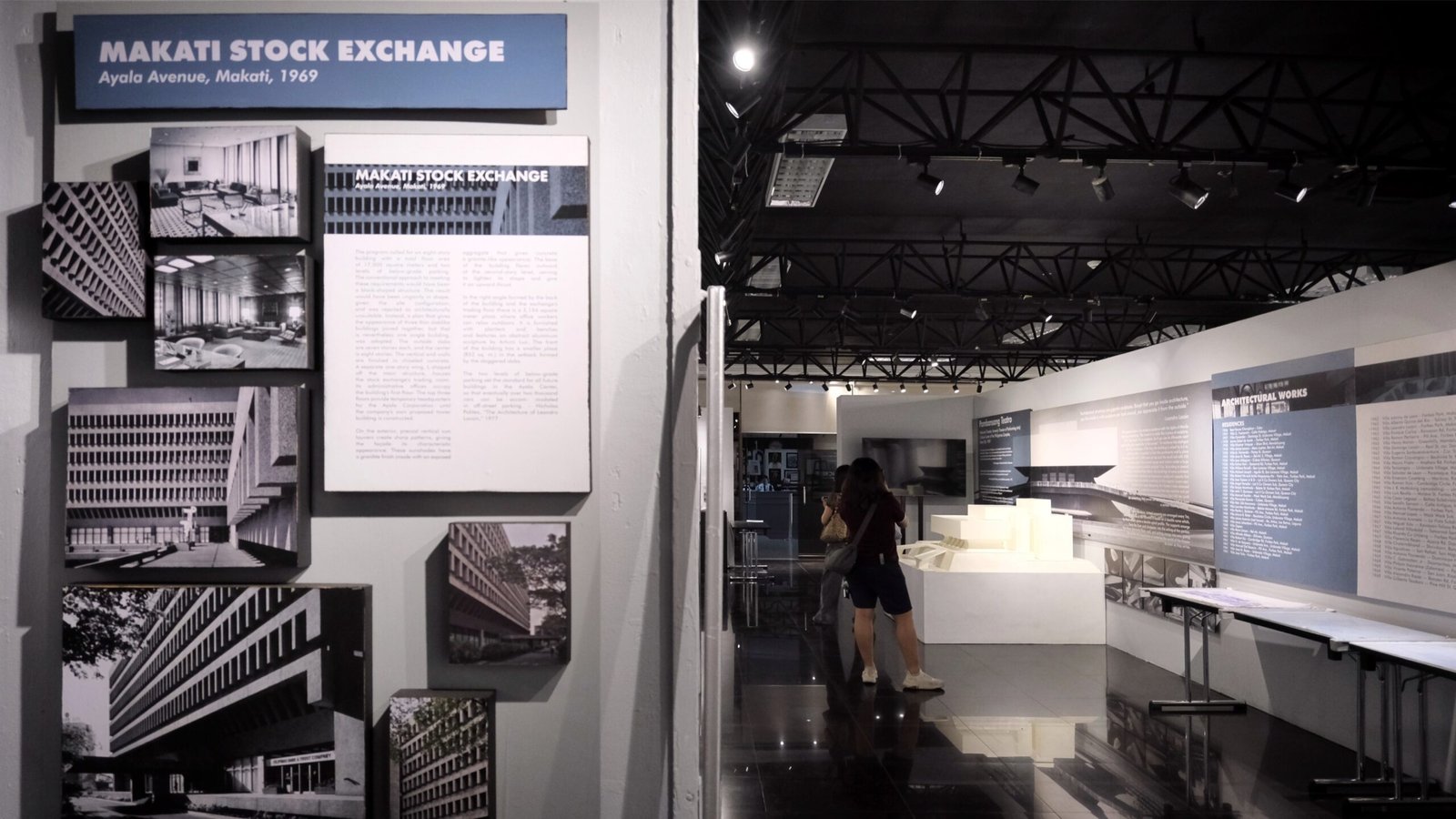
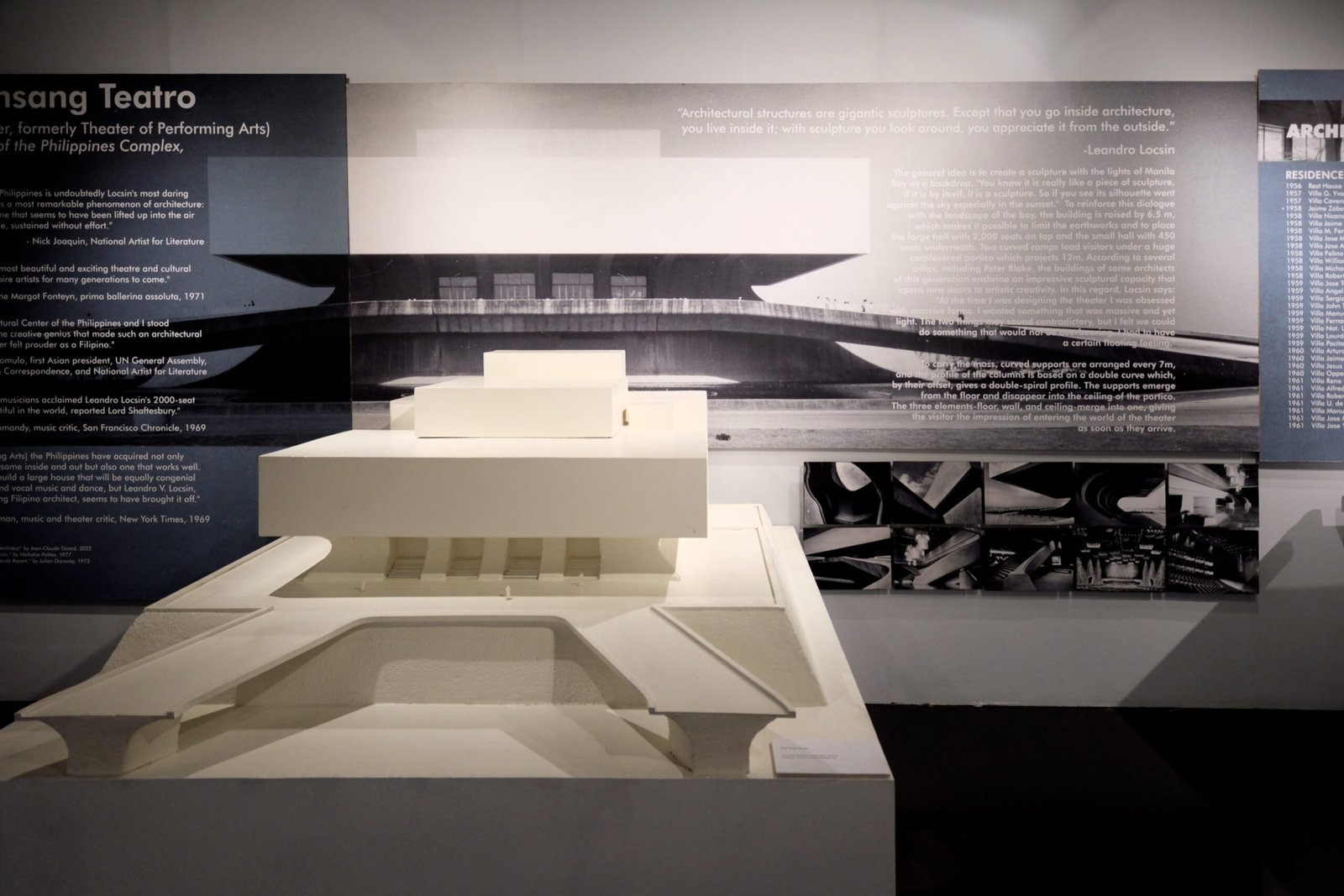
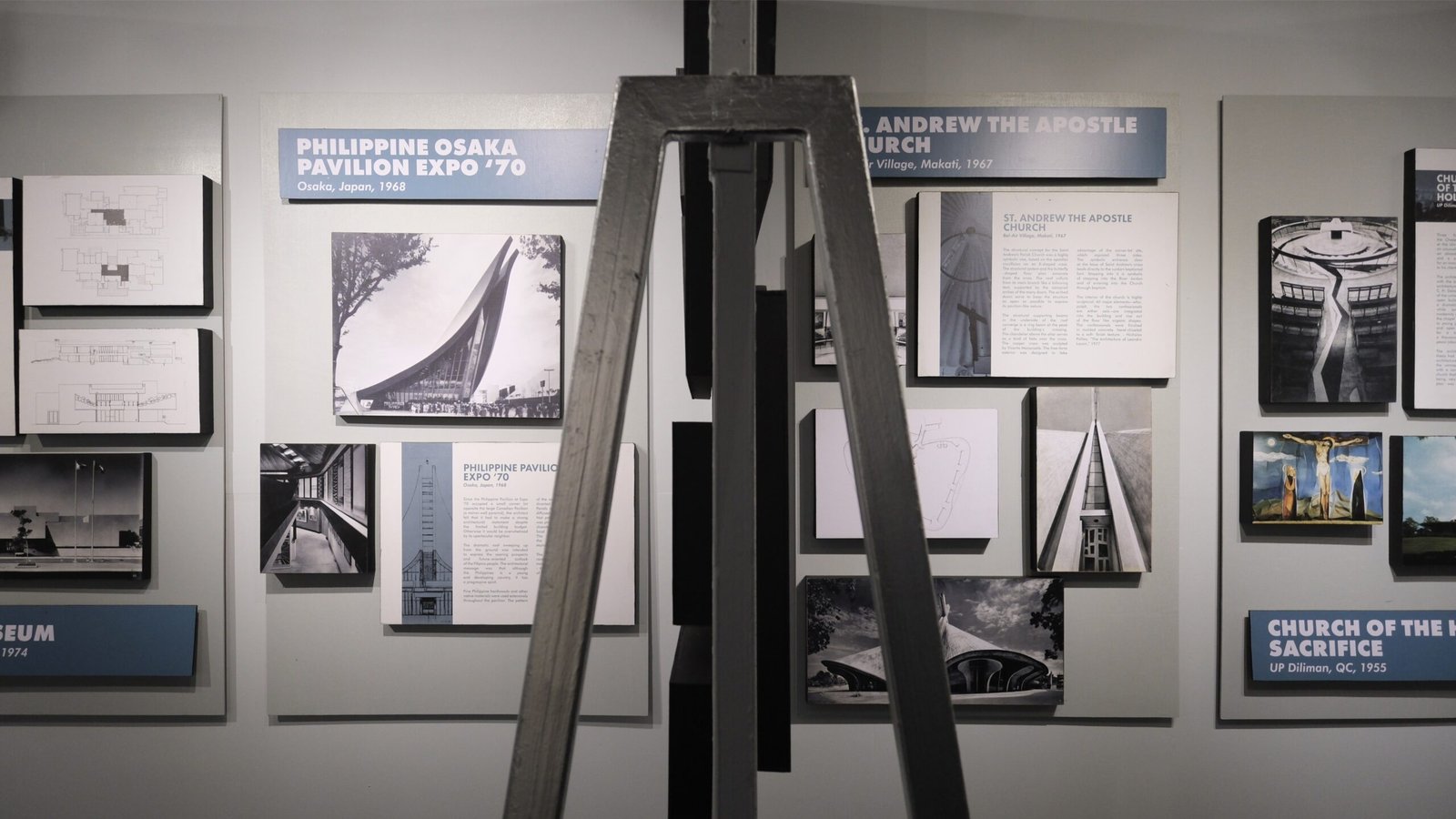
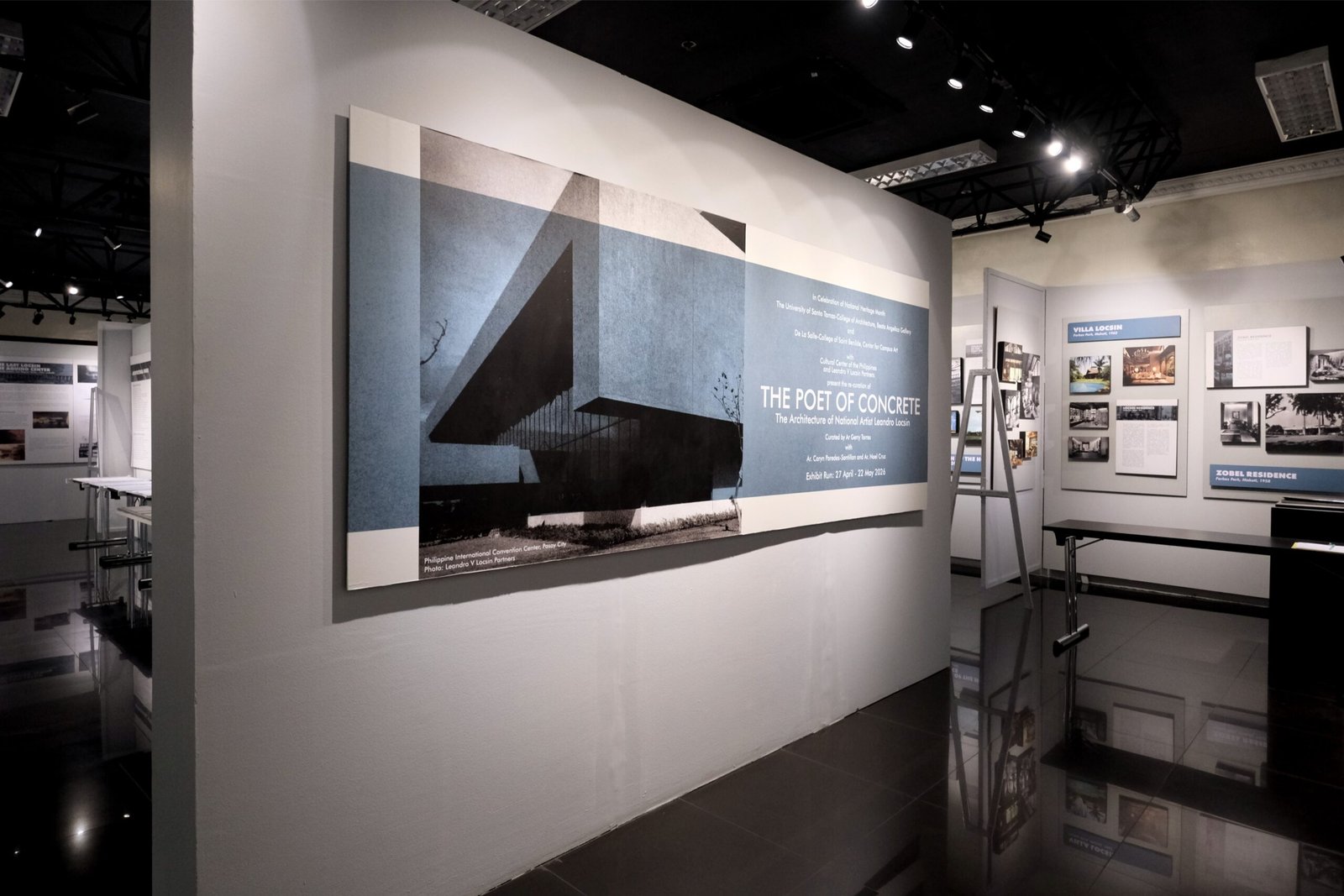
It is perhaps for this reason that the re-staging of The Poet of Concrete exhibition became more than a retrospective. It became an opportunity for students to encounter architecture not as static history, but as living lineage.
Mounted alongside the res-staging of the exhibition were selected student works from the UST College of Architecture, produced through academic exercises under the Theory of Architecture 2 course. Far from being mere homage, these projects represented attempts to understand, reinterpret, and continue the architectural discourse initiated by Locsin. They asked an important question: how does one learn from a master without merely imitating him?
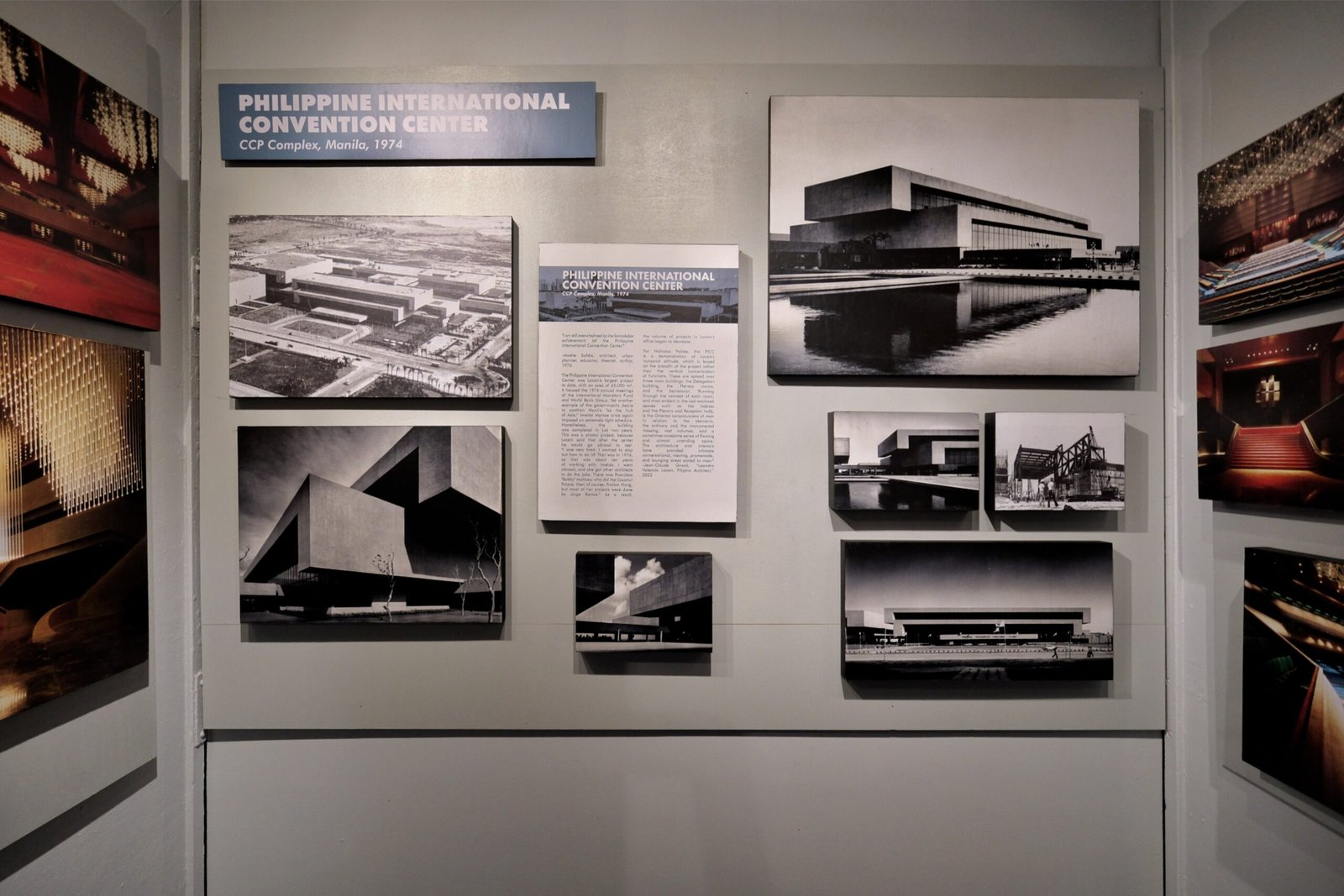
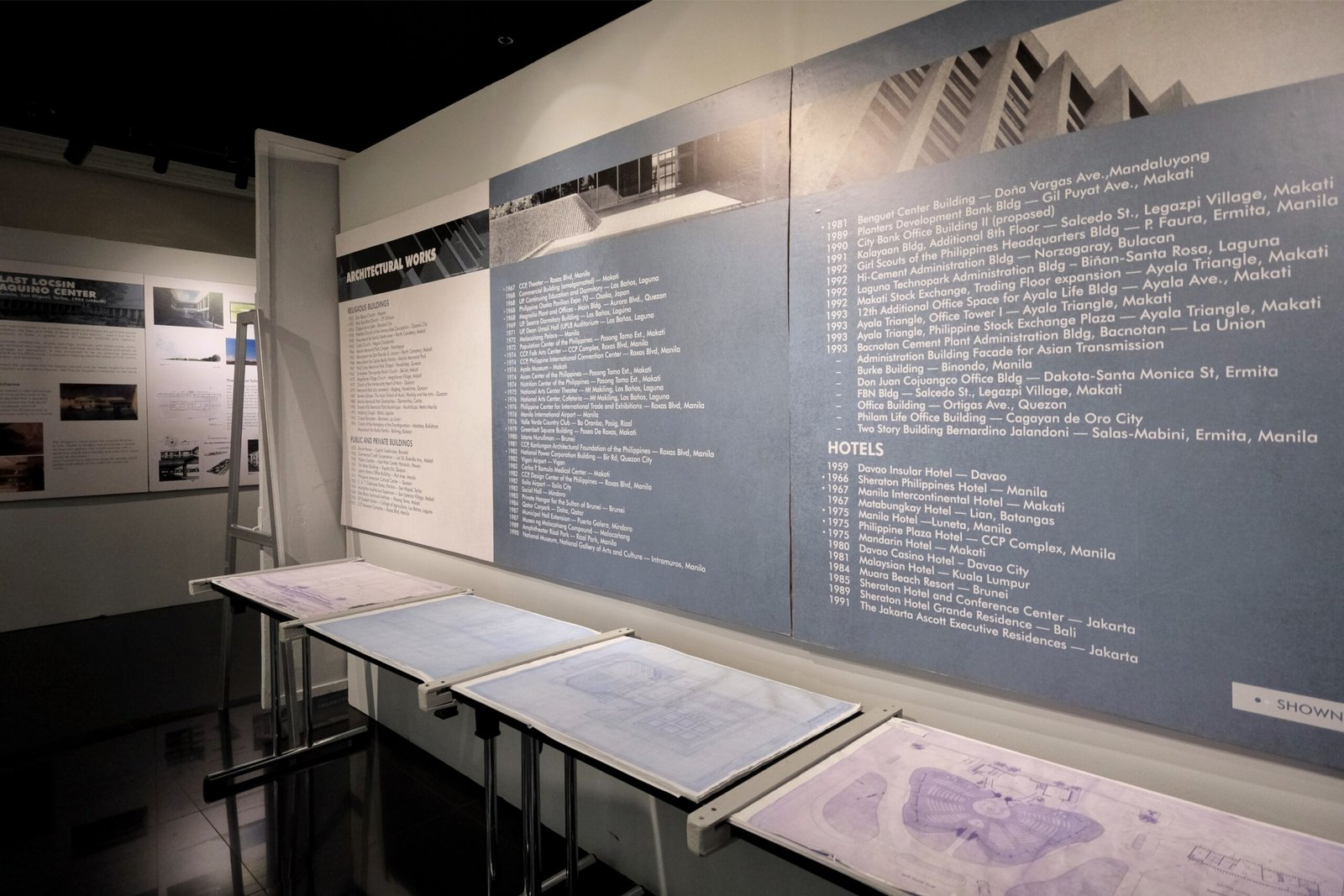
This pedagogical exercise emerged from a simple but vital premise: that architectural education is not only about learning how to design, but also about understanding continuity. Students must learn to see architecture as part of a longer cultural conversation, where ideas evolve across generations. For Filipino students in particular, engaging with Locsin’s architecture carries unique significance. His work demonstrated that modern architecture in the Philippines need not be derivative of Western models alone. It could be grounded in climate, ritual, materiality, and the Filipino sense of place.
Locsin transformed concrete into something unexpectedly lyrical. In his hands, it ceased to be heavy and inert. It floated. It framed light. It generated drama and stillness simultaneously. His buildings possessed monumentality without sacrificing delicacy. This paradox became the conceptual foundation of the student works displayed in the exhibition.
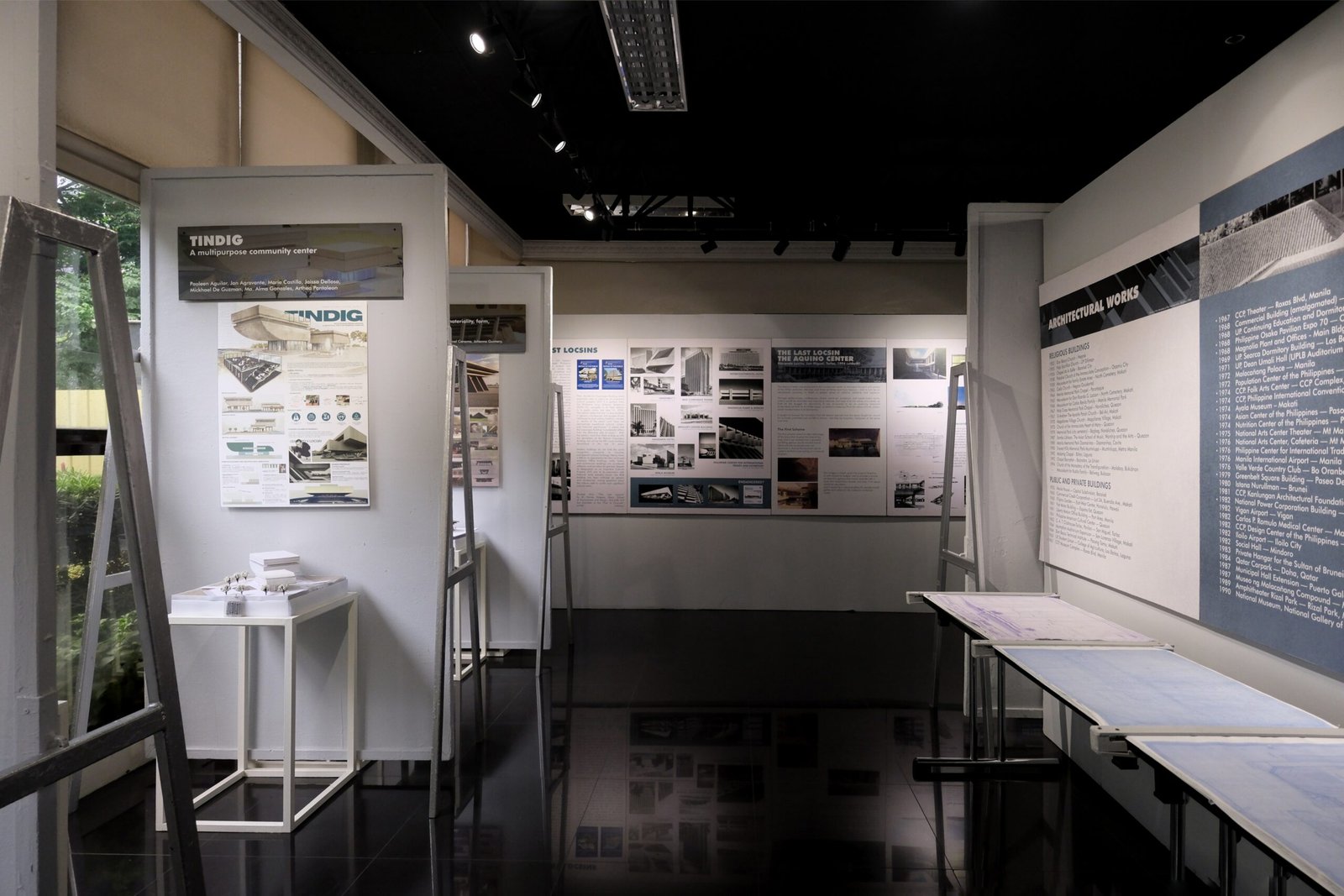
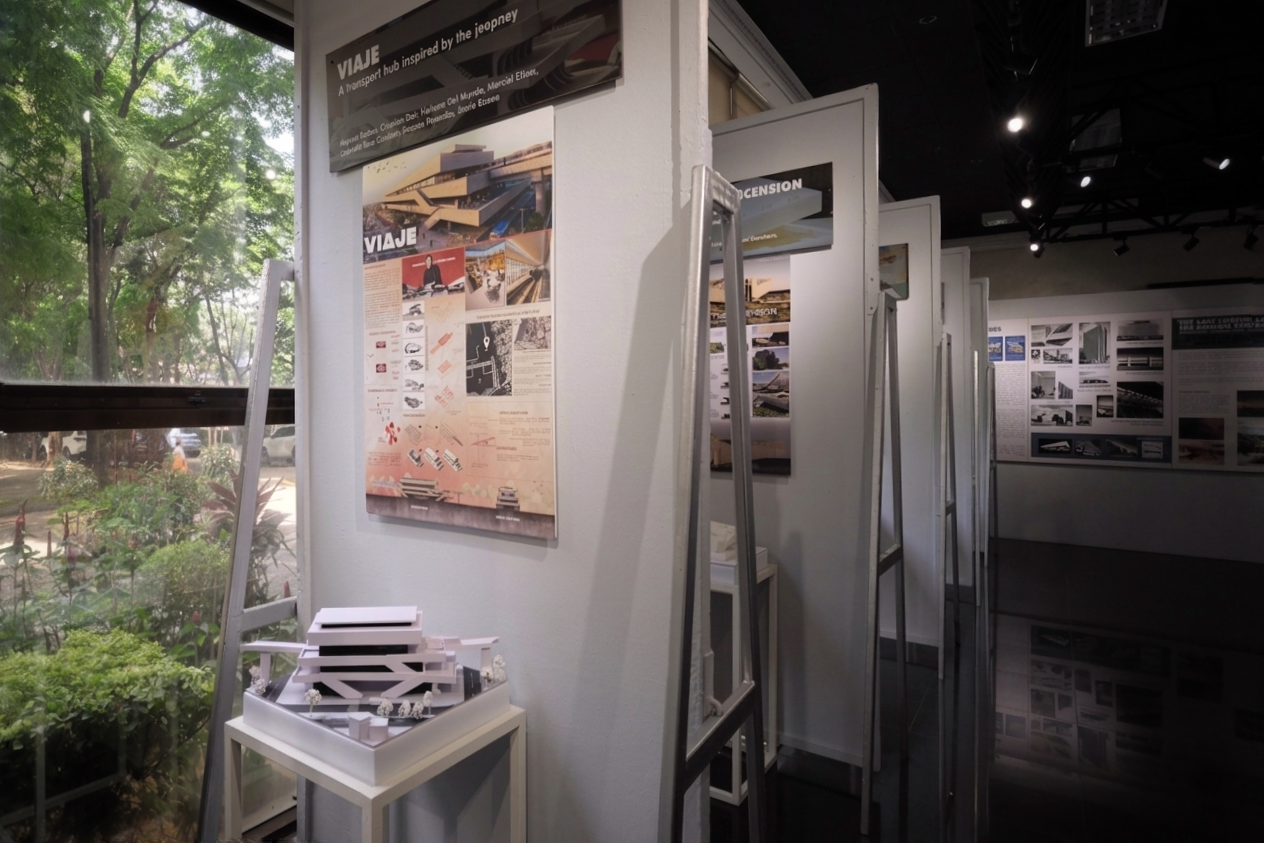
The TOA 2 Integrated Plate served as the primary platform for these explorations. Participated in by the entire batch of 2nd year students, the activity focused on three recurring themes in Locsin’s architecture: floating volumes and tectonic lightness, light and shadow as spatial generators, and material contrast as a sensory experience. Through diagrams and scale models, students were tasked not with replicating Locsin’s buildings, but with abstracting and translating the principles behind them into their own contemporary proposals.
The results revealed not only formal understanding, but also remarkable sensitivity. Out of the twenty-five group entries submitted, curator Ar. Gerry Torres selected ten which were included in the exhibition.
“Locsin transformed concrete into something unexpectedly lyrical. In his hands, it ceased to be heavy and inert. It floated. It framed light. It generated drama and stillness simultaneously. His buildings possessed monumentality without sacrificing delicacy.”
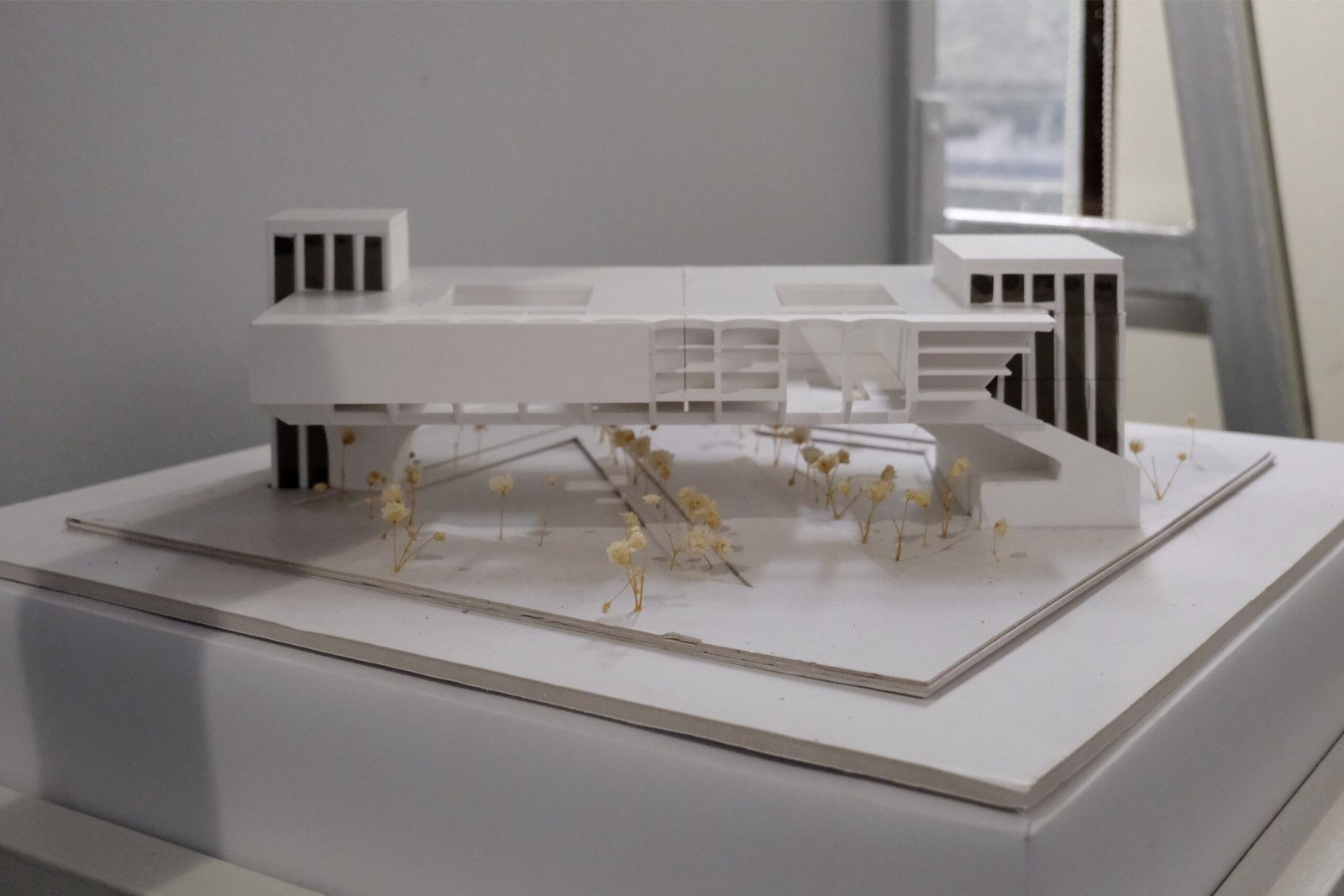
Among these was Tukod, an institutional building that explored the idea of floating mass through two vertical towers connected by a bridge. Echoing both Locsin’s monumental compositions and the enduring institutional architecture of UST itself, the project employed large open courtyards and a generous silong at the ground level. The gesture recalled vernacular Filipino architecture while simultaneously engaging modern tectonics.
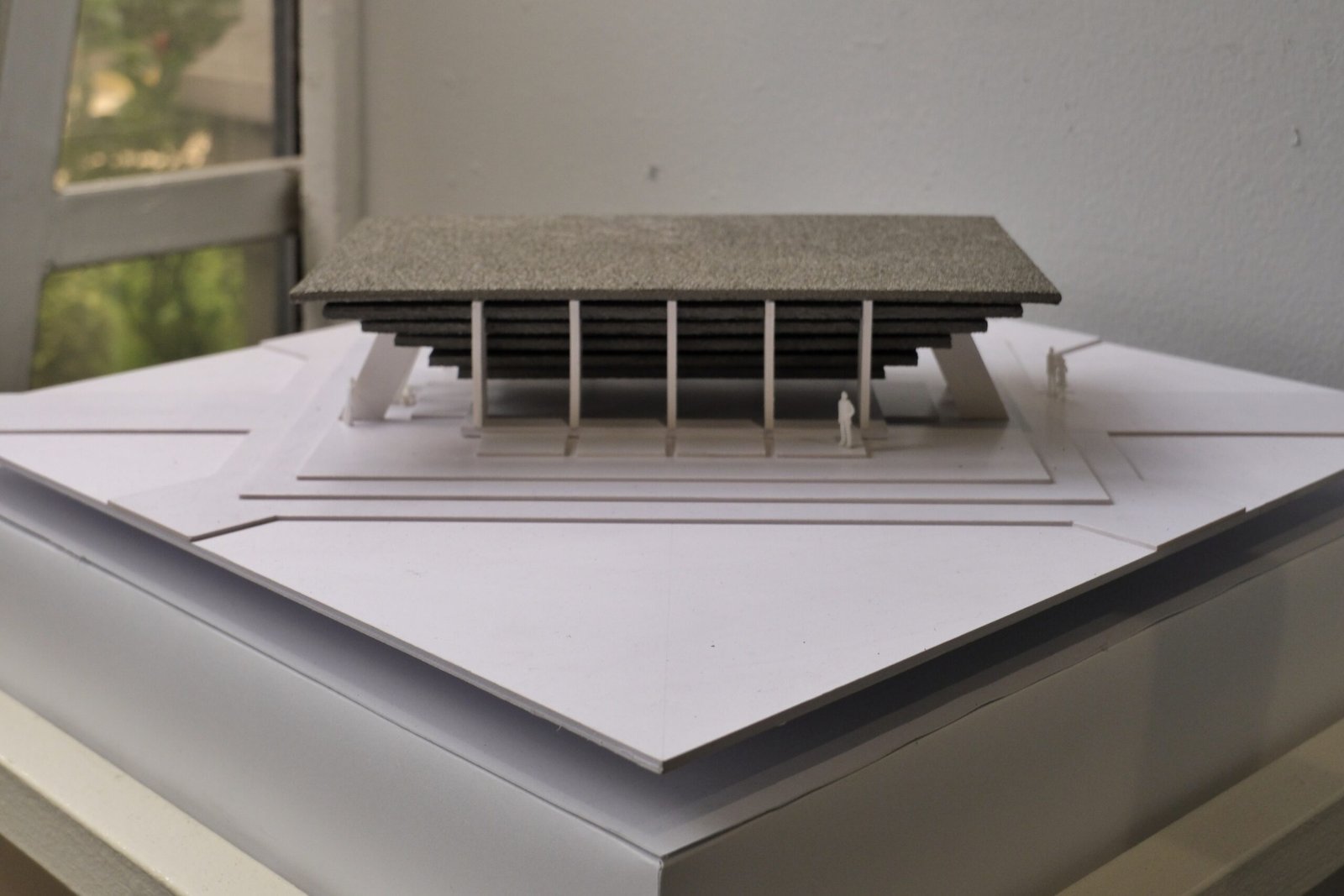
Ascendia, conceived as an exhibit pavilion, investigated the tension between roughness and smoothness, heaviness and levitation. Elevated planes tapered delicately toward the base, supported by thin oblique fins that created an illusion of instability and lightness. The exposed gray surfaces carried the solemnity associated with concrete, yet the openness of the ground plane allowed the building to remain porous and civic. It demonstrated an understanding of how Locsin often used mass not to oppress space, but to dramatize it.
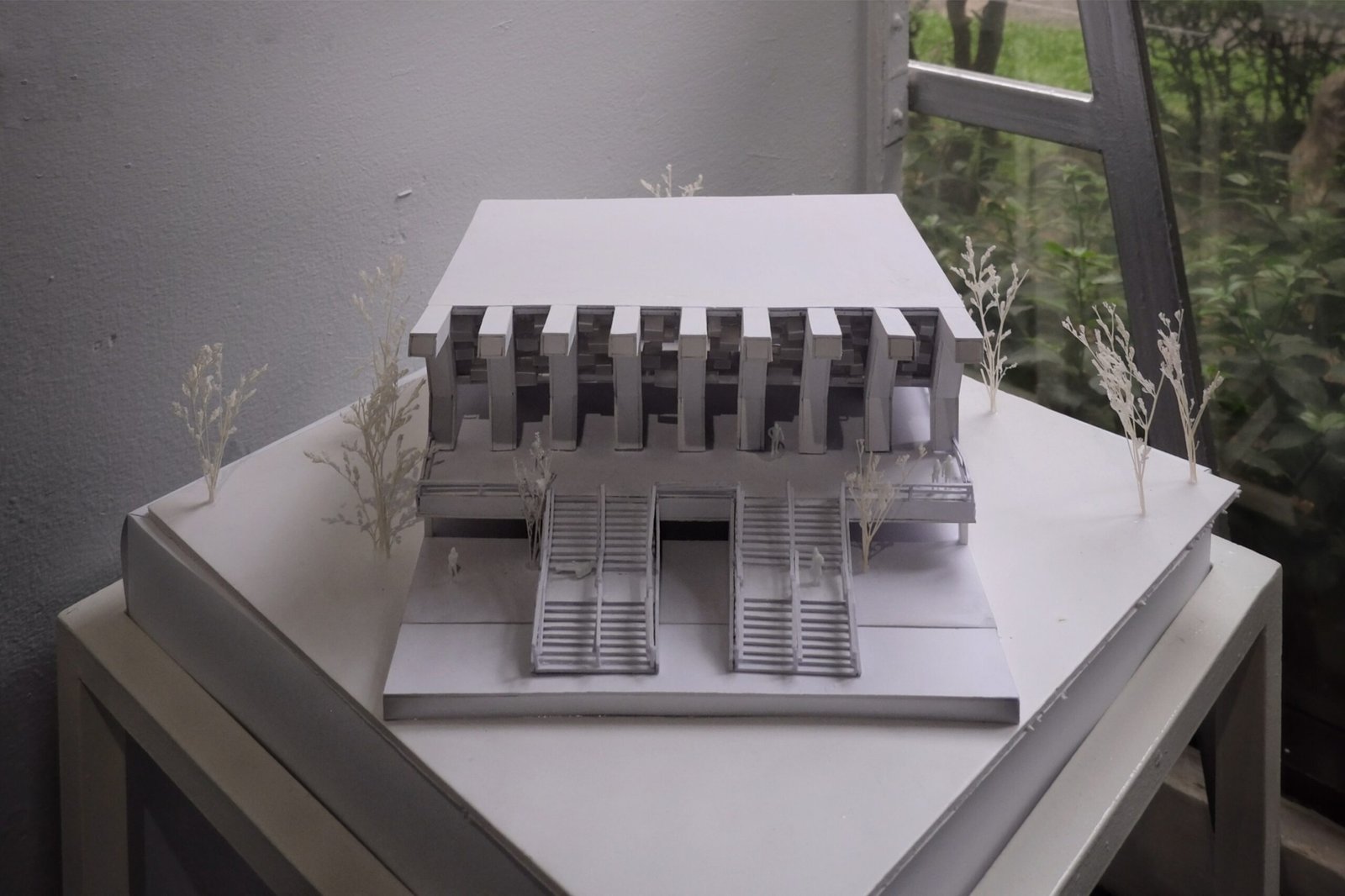
The cultural pavilion Aninag explored the relationship between architecture and light. Situated conceptually on a sloping site, the proposal fragmented its mass to avoid excessive heaviness. One could sense echoes of the University of the Philippines Los Baños auditorium in its composition, but also traces of Corbusian promenade in the treatment of stairs and circulation. Raised on stilts, the structure allowed the landscape beneath it to remain active and communal. Here, shadow was not treated merely as an atmospheric effect, but as an architectural material in itself.
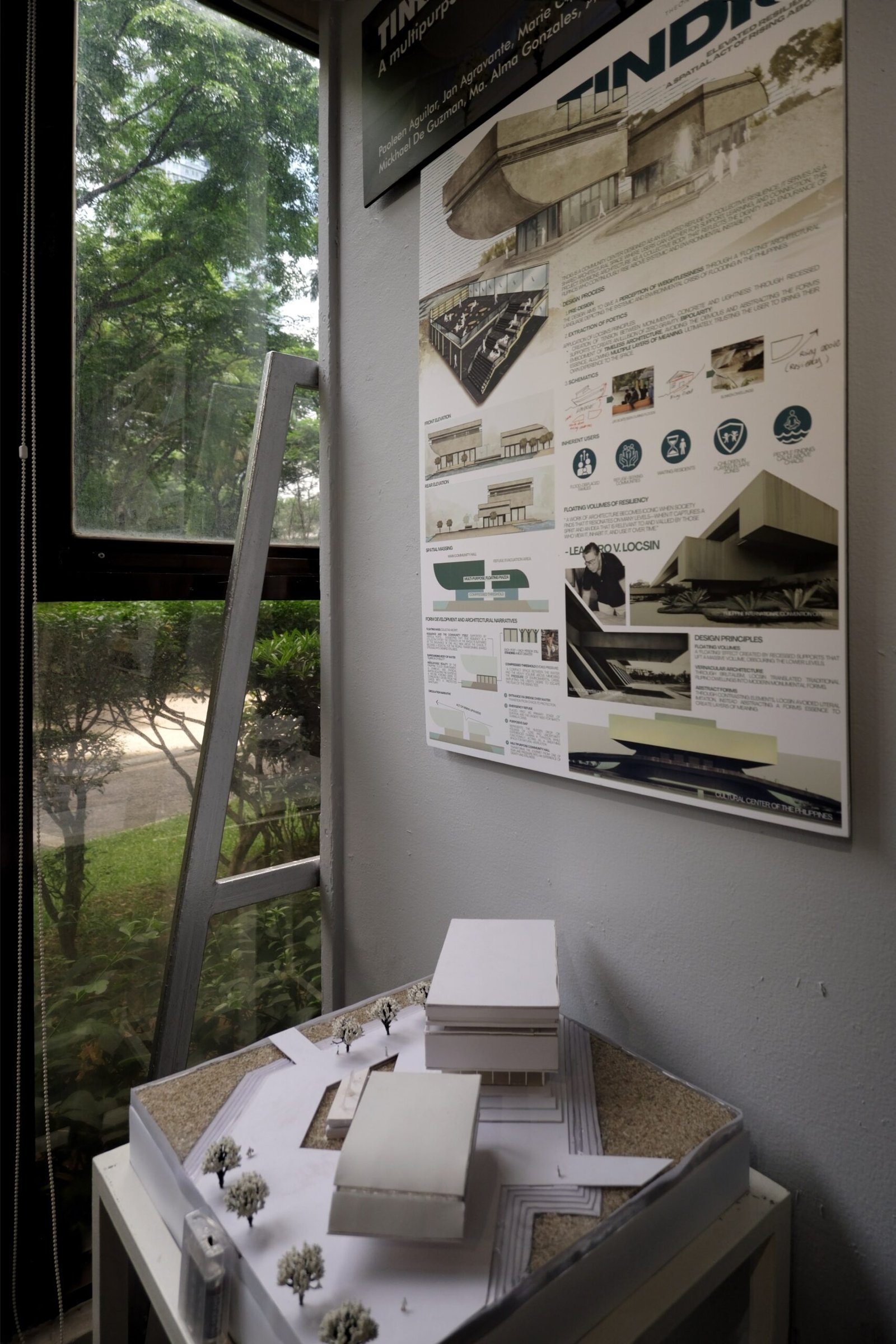
Tindig, a multipurpose community center, offered one of the clearest reinterpretations of Locsin’s floating forms. Two elevated volumes were positioned obliquely across the site, their offset alignment producing a civic void between them. Reflecting pools beneath the masses collected rainwater while simultaneously amplifying the sensation of levitation. Particularly striking was the subtle upward curvature at the outer edges of the volumes—a delicate gesture that softened the monumental forms and gave them an almost buoyant character.
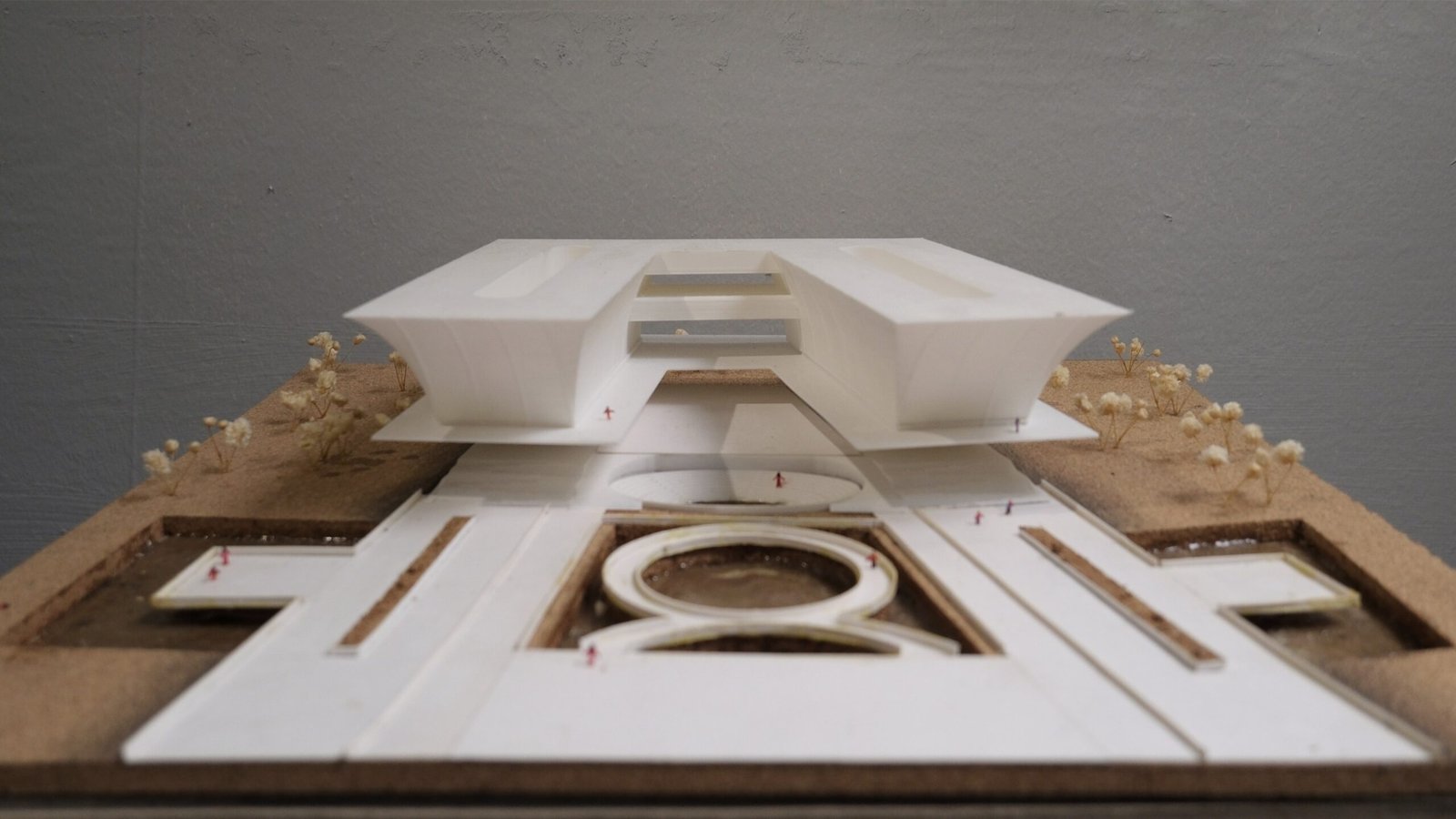
Equally evocative was Anino, a healing and rehabilitation center through the arts. The project employed a U-shaped composition lifted above the ground plane, recalling the dignified monumentality of the Cultural Center of the Philippines. Yet despite its scale, the structure retained an unusual delicateness through gently curved exterior planes and a circular walkway that unified the ensemble. The proposal understood something essential about Locsin’s work: that monumentality is not merely about scale, but about emotional resonance.
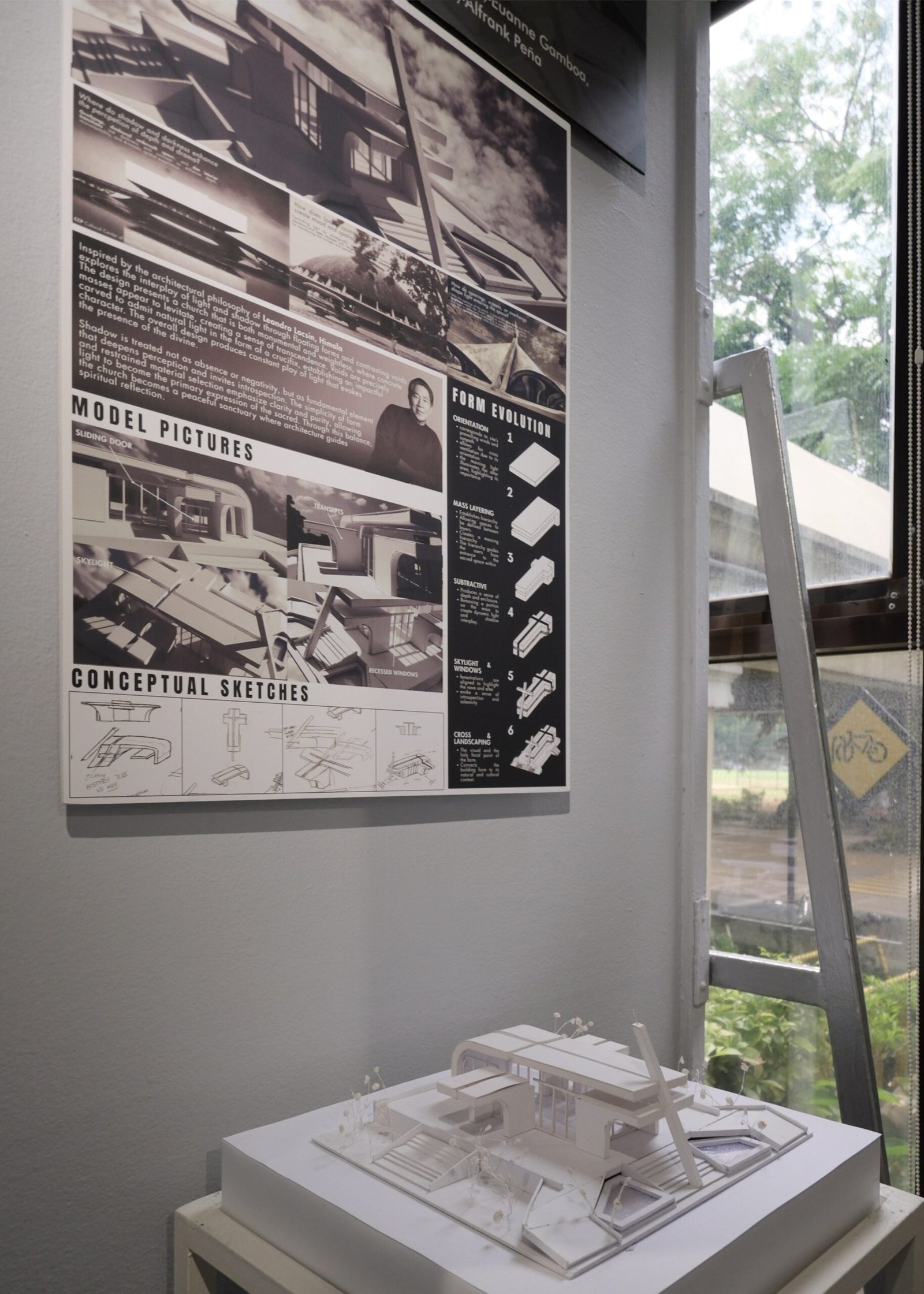
Several ecclesiastical proposals also stood out for their nuanced treatment of light and spiritual space.
Himala, a church proposal, organized itself around a cross-shaped plan articulated through layered elevated planes. The sides remained highly transparent, while carefully placed roof crevices allowed controlled shafts of light to penetrate the interior. The result suggested a sacred architecture generated not by ornament, but by illumination itself. Light became liturgical.
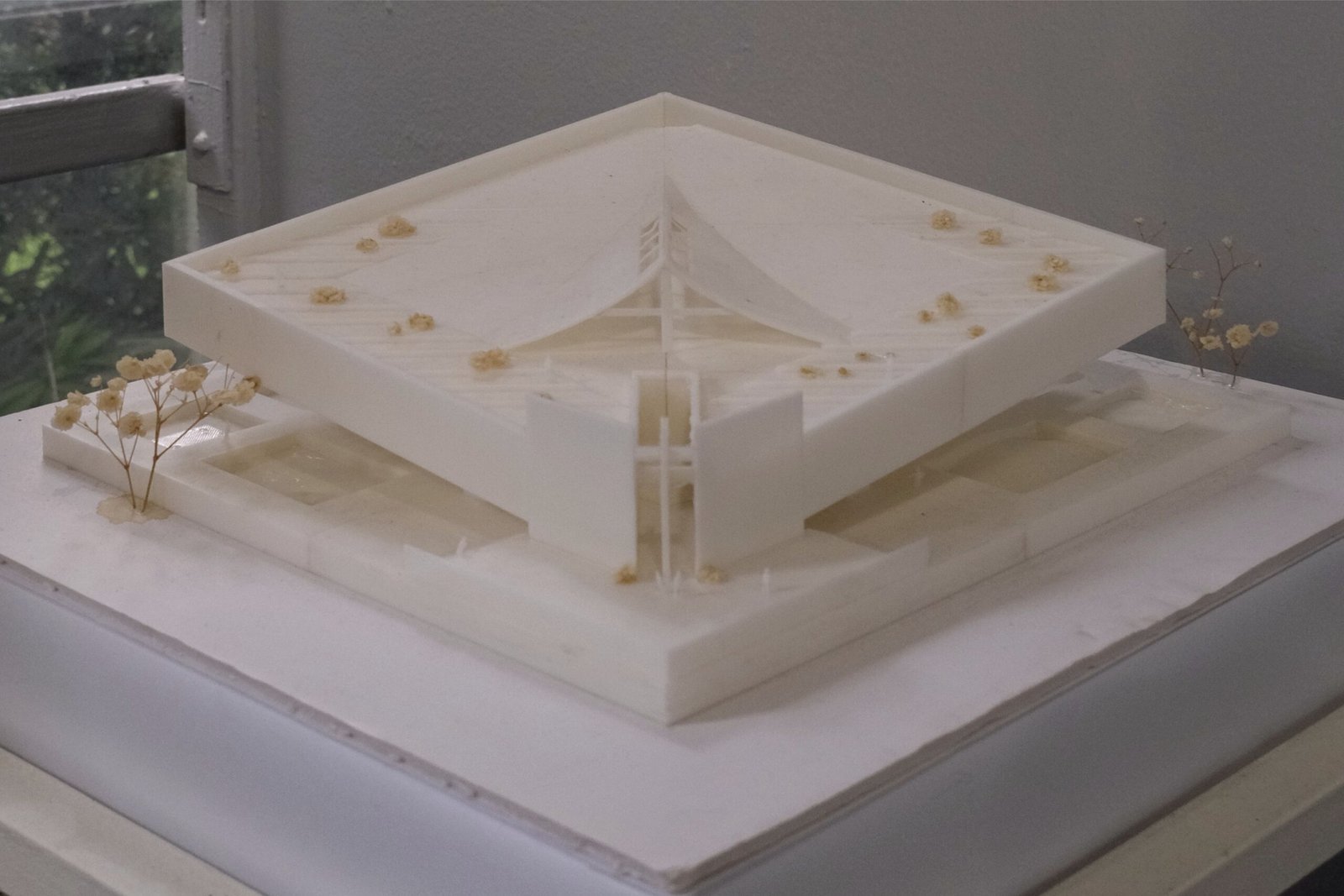
Similarly, the Church of the Ascension explored the tension between grounding and suspension. The elevated mass recalled the dramatic hovering forms of the Folk Arts Theater, yet one corner deliberately anchored itself to the earth, creating a dynamic imbalance. Above it rested a delicate triangular roof structure that seemed almost weightless against the heavier base. The composition captured the expressive confidence characteristic of Locsin while proposing its own interpretation of spiritual ascent.
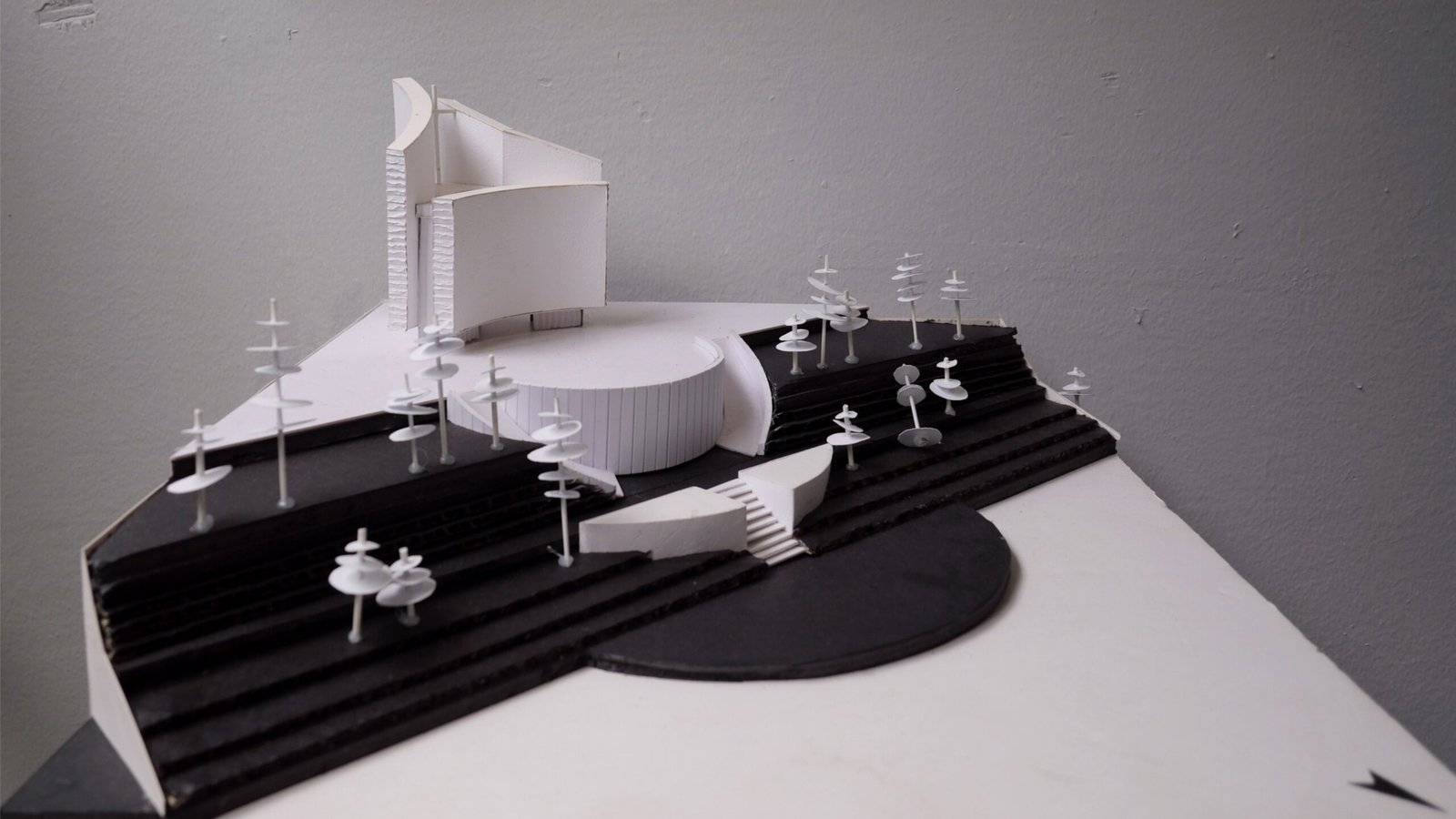
Trea Aurea, a church proposal, explored material contrast, light, and shadow through the concept of Tres Potencias, symbolizing the triadic nature of Catholic faith. Set atop a promontory, the structure is approached through a gentle ascent. Three curved walls of varying heights envelop a central void, reinterpreting Gothic verticality in an abstract, contemporary form.
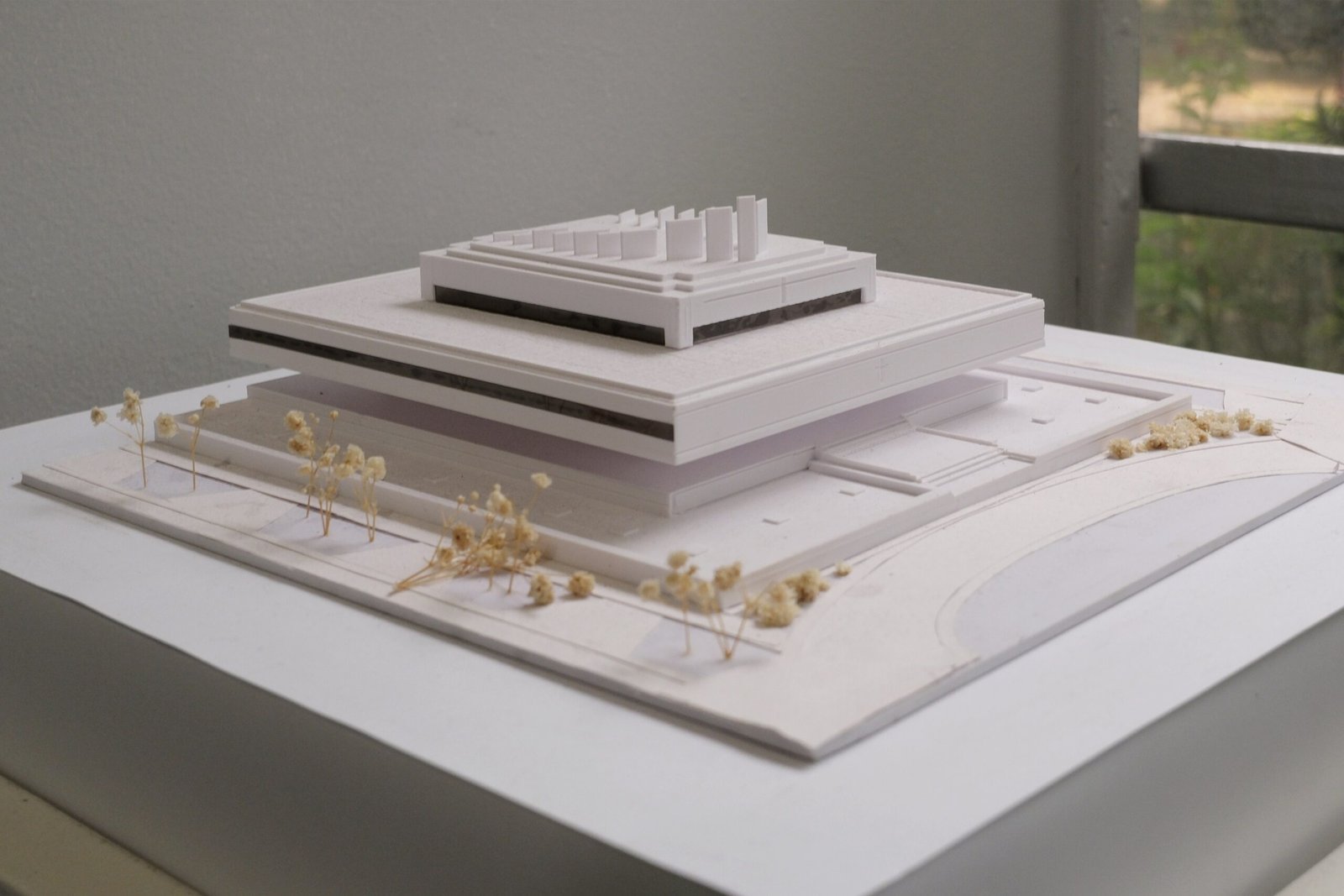
Sanctum investigated the tension between monumentality and intimacy through contrasts in mass, texture, and light. Its hovering composition recalled the Folk Arts Theater, crowned by staggered symmetrical walls tapering outward. Amidst its rectilinear geometry, subtle triangular forms emerged, while the austere exterior gave way to a warm and contemplative interior.
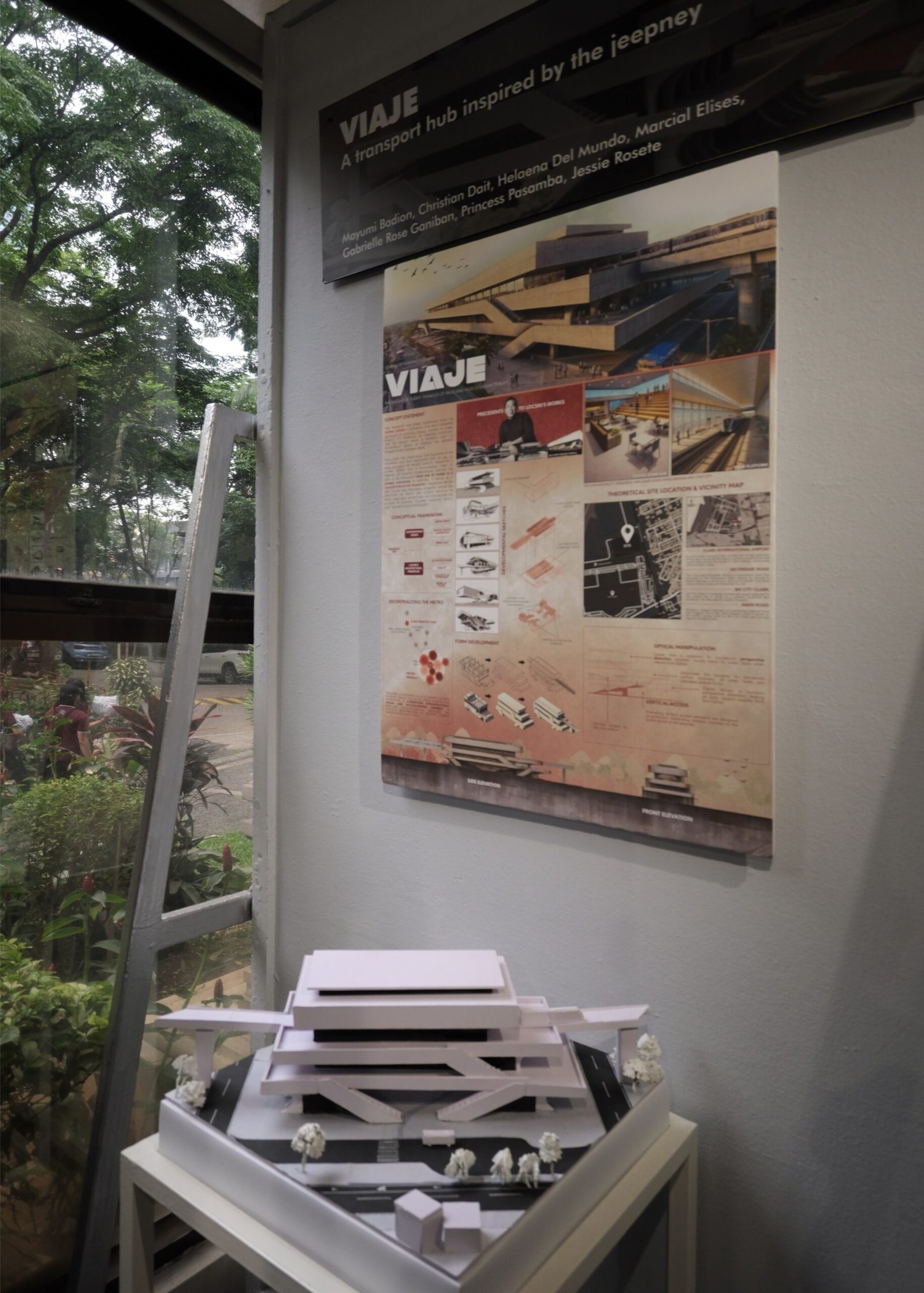
Finally, Viaje, envisioned as a transport hub, translated Locsin’s architectural language into contemporary infrastructure. Reminiscent of the Philippine International Convention Center in its sweeping horizontality, the proposal imagined a railway terminal elevated above the city. The building emphasized movement and procession, demonstrating how civic infrastructure can still possess ceremonial dignity.
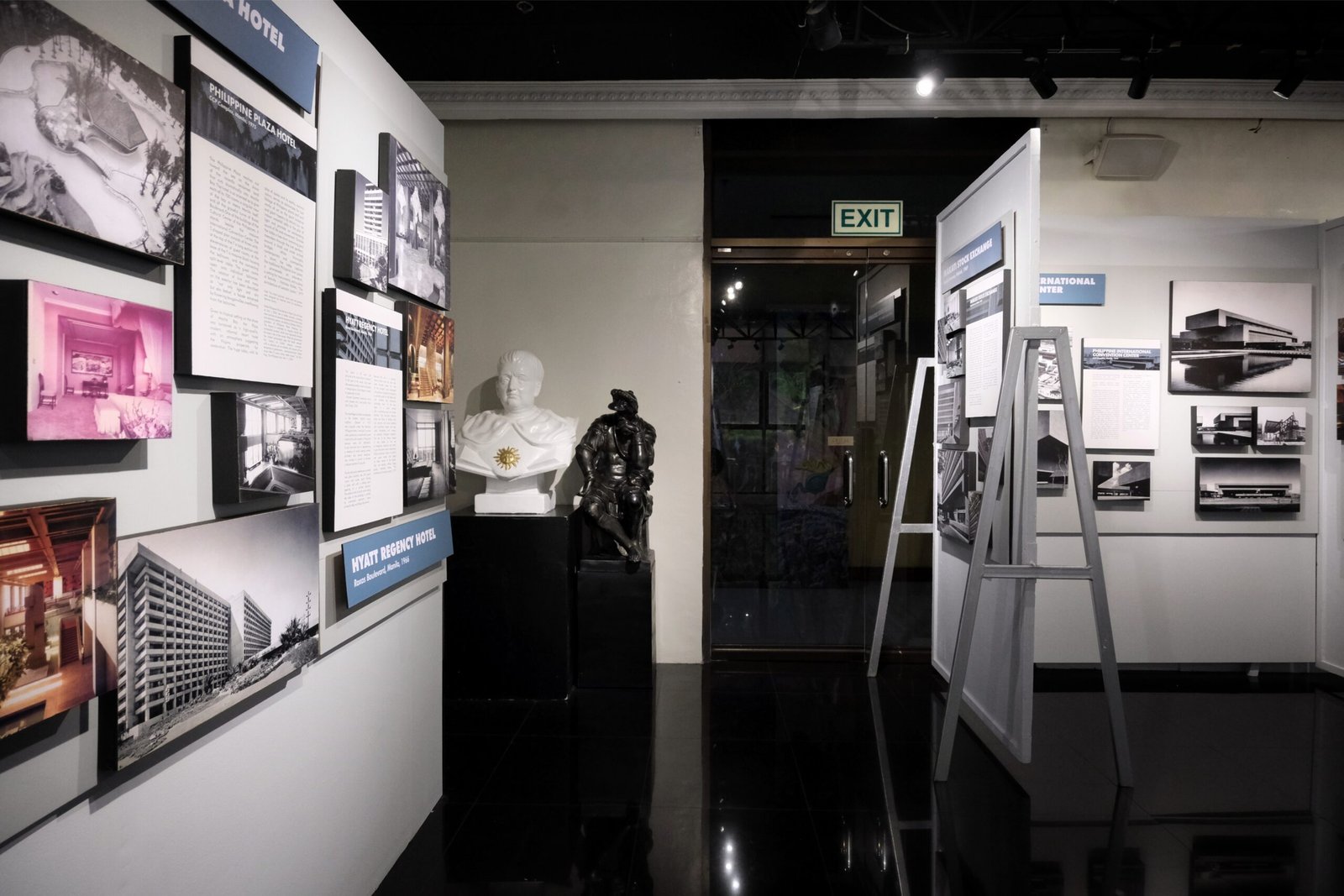
What made these works significant was not simply their visual resemblance to modernist precedents. Rather, it was their understanding of architectural principles. The students recognized that Locsin’s architecture was never solely about form. It was about atmosphere, sequence, gravity, and release. It was about how buildings shape collective memory and civic experience.
More importantly, these projects revealed an educational approach that situates Philippine architecture not at the margins of theory, but at its center. Too often, architectural pedagogy in the Philippines privileges foreign precedents while treating local works as supplementary references. Exercises such as these reverse that hierarchy. They affirm that Filipino architecture can itself generate theoretical discourse and design methodologies.
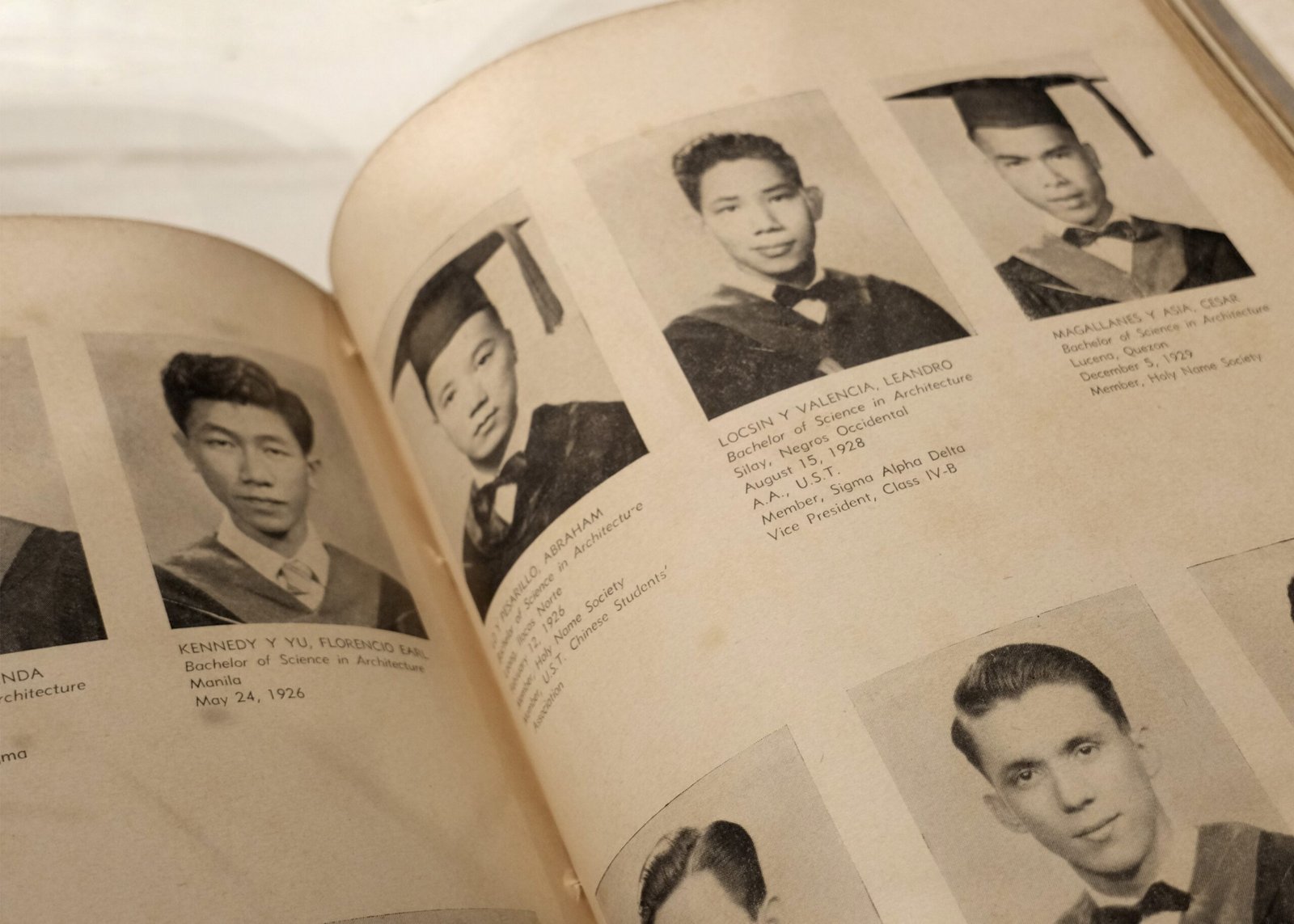
This is perhaps the deeper value of exhibitions and academic activities such as The Poet of Concrete. They do not merely preserve legacy; they activate it. They compel students to figuratively walk in the shoes of architects they might otherwise encounter only in textbooks. Through design, analysis, and reinterpretation, students begin to understand the intellectual rigor, cultural sensitivity, and spatial imagination embedded within these works.
And perhaps this is ultimately what architectural education must strive for. Not the memorization of names and buildings, but the cultivation of understanding.
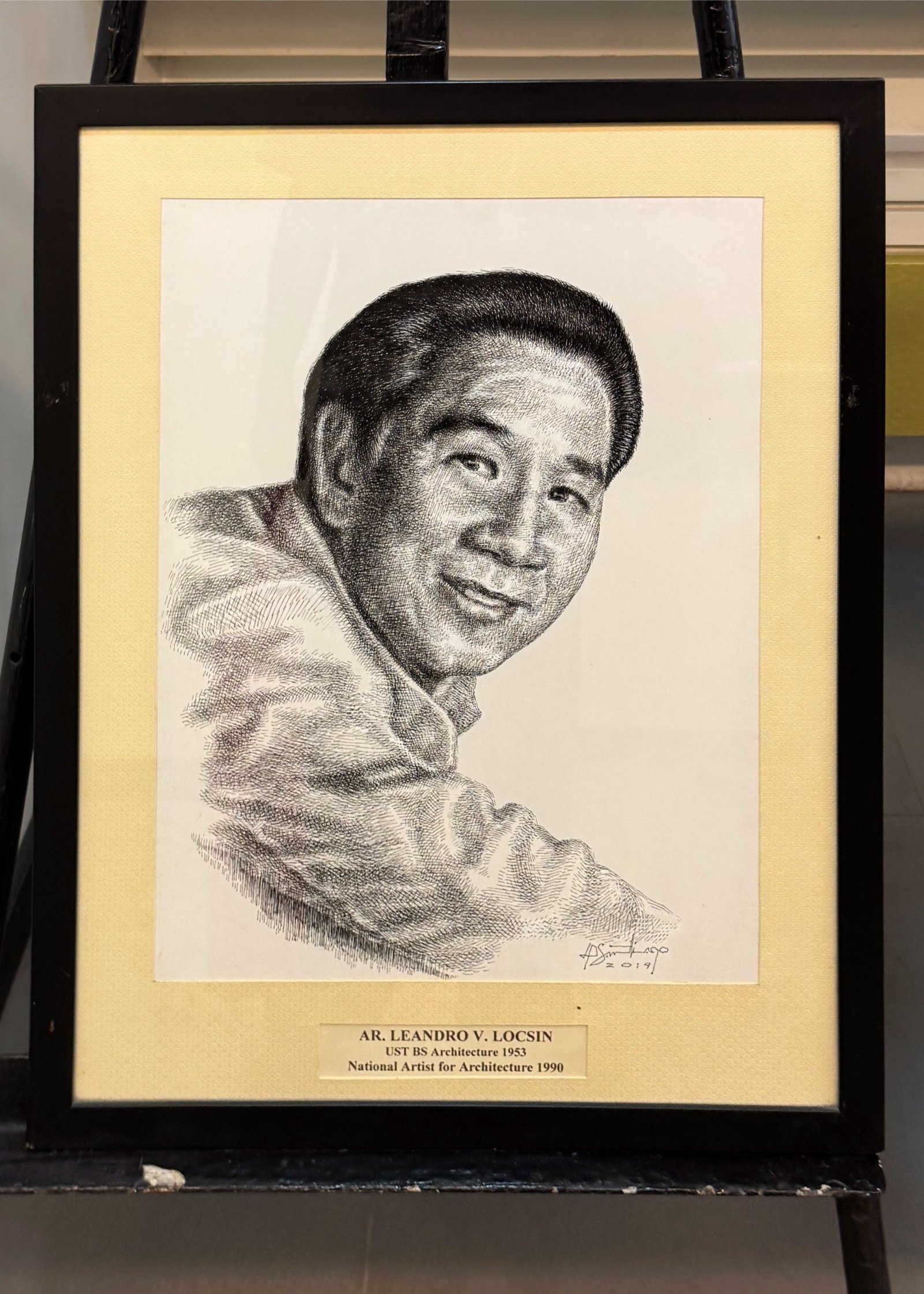
So when students pass by those four portraits outside the office of the College of Architecture once more, one hopes they no longer see distant figures suspended in history, framed only by titles and institutional reverence. Instead, they might recognize fellow architects—restless minds once occupied by the same uncertainties, ambitions, and questions that confront every young designer today: how to build with meaning, how to give form to culture, how to shape spaces that endure not merely in concrete, but in memory.
In this sense, the student works displayed alongside The Poet of Concrete were never mere appendages to the exhibition. They were proof that Locsin’s architecture continues to breathe beyond the walls of museums and archives. His work is not a fixed monument to the past, but as a living language continually rediscovered, challenged, and reimagined by a new generation of Filipino architects. And perhaps that is the truest measure of legacy: not that it is preserved unchanged, but that it continues to inspire others to create. •