Interview The Kanto team
Images RG Medestomas, JL Javier, and Xavier Mallari
for Tahanan Furniture
“Can you copy this for us?”
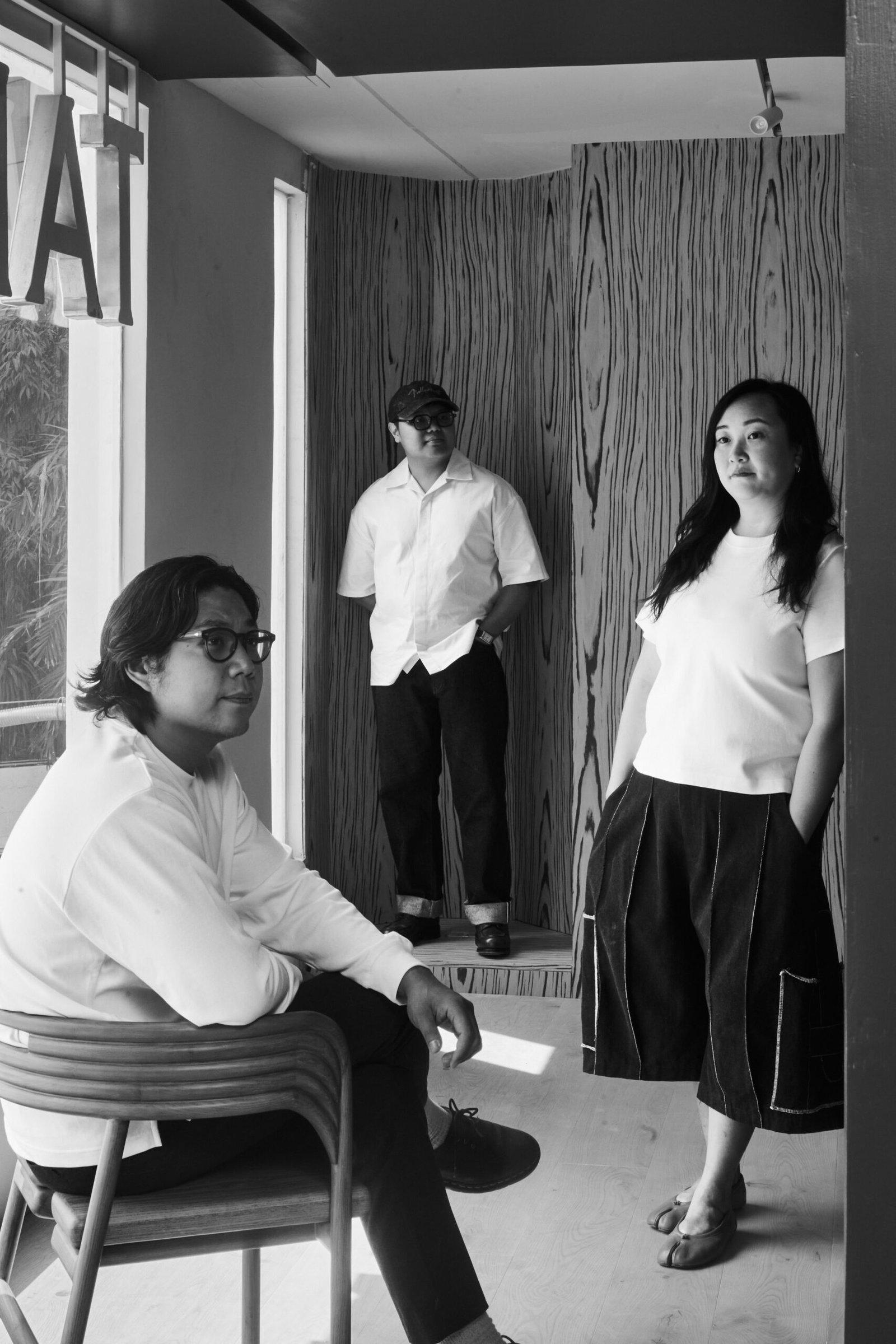
For a young design brand, few questions are more financially lucrative or creatively soul-crushing. When Thea and Carlo Yu (the same couple behind the cabinetry brand Dunwoody & Madison) founded Tahanan in 2020, they entered a market defined by the chaotic, inward-facing demands of the pandemic home boom. They already had the manufacturing muscle, with a factory infrastructure built on the precision of veneer pressing and a legacy of traditional dukit (wood carving). Yet, they quickly hit a frustrating wall.
“At first, a lot of people would show us a photo of a certain chair and say, ‘Oh, this is Tahanan.’ But it was actually all different,” Thea Yu recalls. “People would always ask us, ‘Can you copy this for us?’ or ‘Can you do this for us?’”
The turning point arrived on the international trade show circuit, including appearances at Ambiente in Frankfurt and Maison&Objet in Paris. On the global floor where a brand has a brutal twenty-to-thirty-second window to arrest a passing eye, Tahanan was blending into the background noise of regional peers. Wicker, wood, weaves…our ASEAN neighbors also had it. “We blended in with what was coming out of Vietnam, Bali, and China,” Carlo says. “That’s when it hit us; we weren’t standing out.”
While many a young business in this fraught age would have accepted the cash flow and leaned into the copy-paste requests, the Yus chose a radical, self-imposed path out of their existential crisis, a strict, two-year operational blackout, pausing all client projects to figure out what they actually wanted to be. “Eventually, my husband and I said, ‘Okay, we have to completely stop if we really want to reinvent ourselves and launch a full collection.” Thea shares.
Going glocal
What the Yus were wrestling with during those two years is a broader conundrum facing the contemporary Filipino creative across design disciplines: how does one go glocal without sacrificing one’s roots?
For the Yus, the answer appears to lie in design bilingualism, learning to speak a global design language while preserving local techniques. In post-colonial design theory, this aligns closely with cultural theorist Homi Bhabha’s concept of cultural hybridity, which argues that cultural identities are never pure or static but are constantly produced in an “in-between” space. Broadening one’s visual vocabulary to speak to global horizons, therefore, isn’t a dilution but an expansion of one’s identity. Culture and identity, after all, are never static, and there is a constant need to evolve to improve and meet the new challenges time brings.
This gamble was put to the test when Tahanan brought a preview of their new direction to Maison&Objet early in 2026. Moss Manila’s Cindy Fernandez-Beltran, former vice president of the Philippine Institute of Interior Designers (PIID), visited their booth and provided a critical vote of confidence. She noted that while the furniture looked international and current, the intricate wood carvings gave it an unmistakable, ageless Filipino flavor.
“The process is still very architectural. I start with a sketch, then I send it to the floor. You shouldn’t take shortcuts when it comes to prototyping. For a single cabinet alone, we did about eight to ten iterations before we finally nailed the dimensions.”
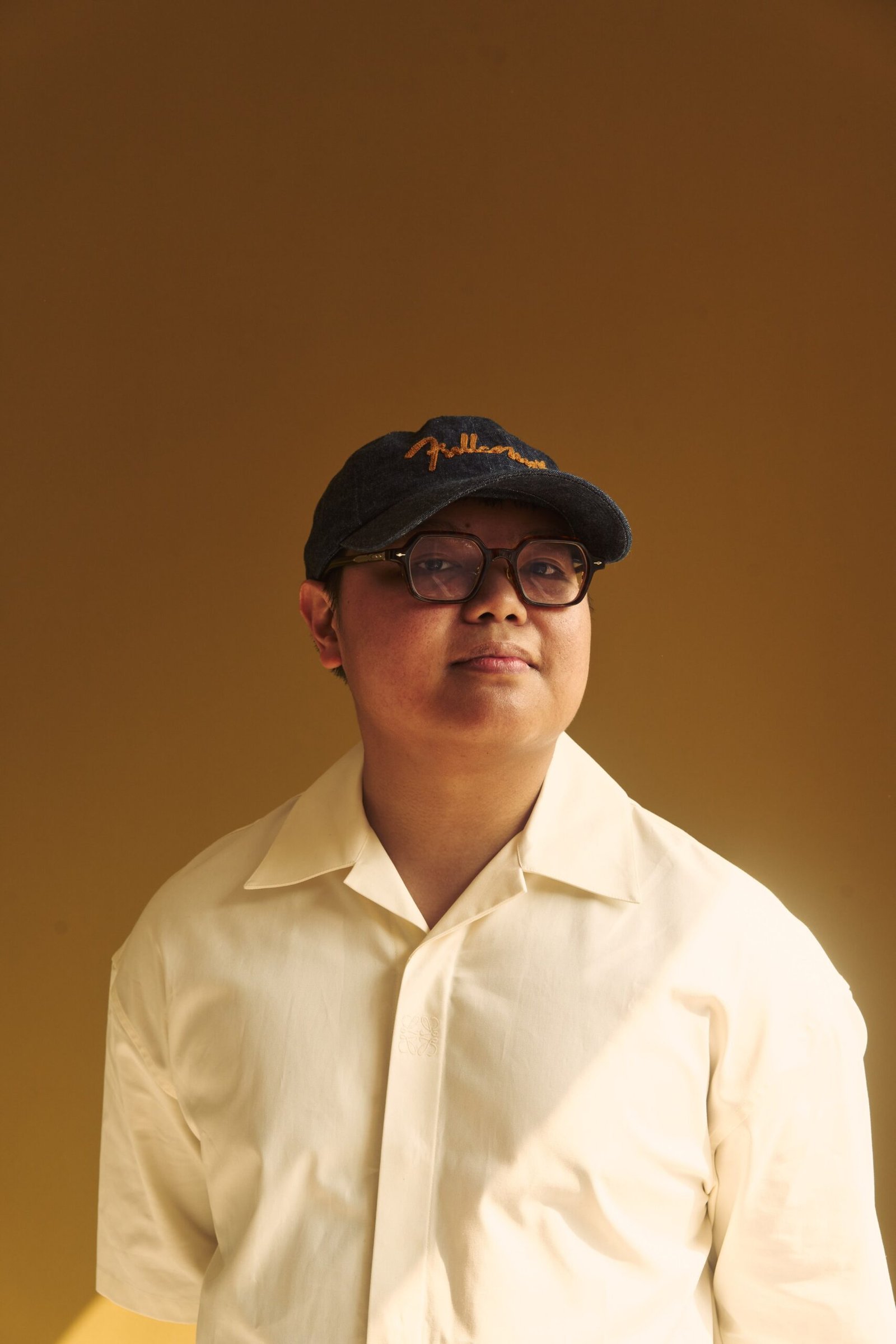
BRIAN VER
The minimalist breaks free
Breaking the two-year creative deadlock required a physical catalyst. For the Yus, that meant turning to one of their go-tos, young architect and designer Brian Ver. On paper, the pairing presented an immediate paradox. Ver is widely recognized for his work with the woodworking studio Lamana, a brand synonymous with restrained, highly disciplined minimalism. His architectural work also thrives on clean, crisp lines and restrained palettes, as shown in recent work for June Eatery and Mijo Reserva. Tahanan, by contrast, was sitting on a legacy of heavy craftsmanship and ornamentation.
But what initially looked like a conflict of interest and design voice proved to be a non-issue. Ver has always been insatiable in his search for outlets that expand his material palette and formal experimentation. Minimalism, to him, is simply one of many ways he communicates—a chosen language rather than a creative ceiling. A designer, after all, has the license to adapt their vocabulary depending on context, intent, and need.
The Yus gave him carte blanche to design a massive 22-piece rollout across three collections.
“What appealed to us about Brian is his background,” Thea says. “His work for Lamana was very streamlined and subtle, less aggressive. For Tahanan, we wanted to explore a kind of subtle maximalism. We wanted to showcase as much craftsmanship and technique as possible, but without having to shout it out.”
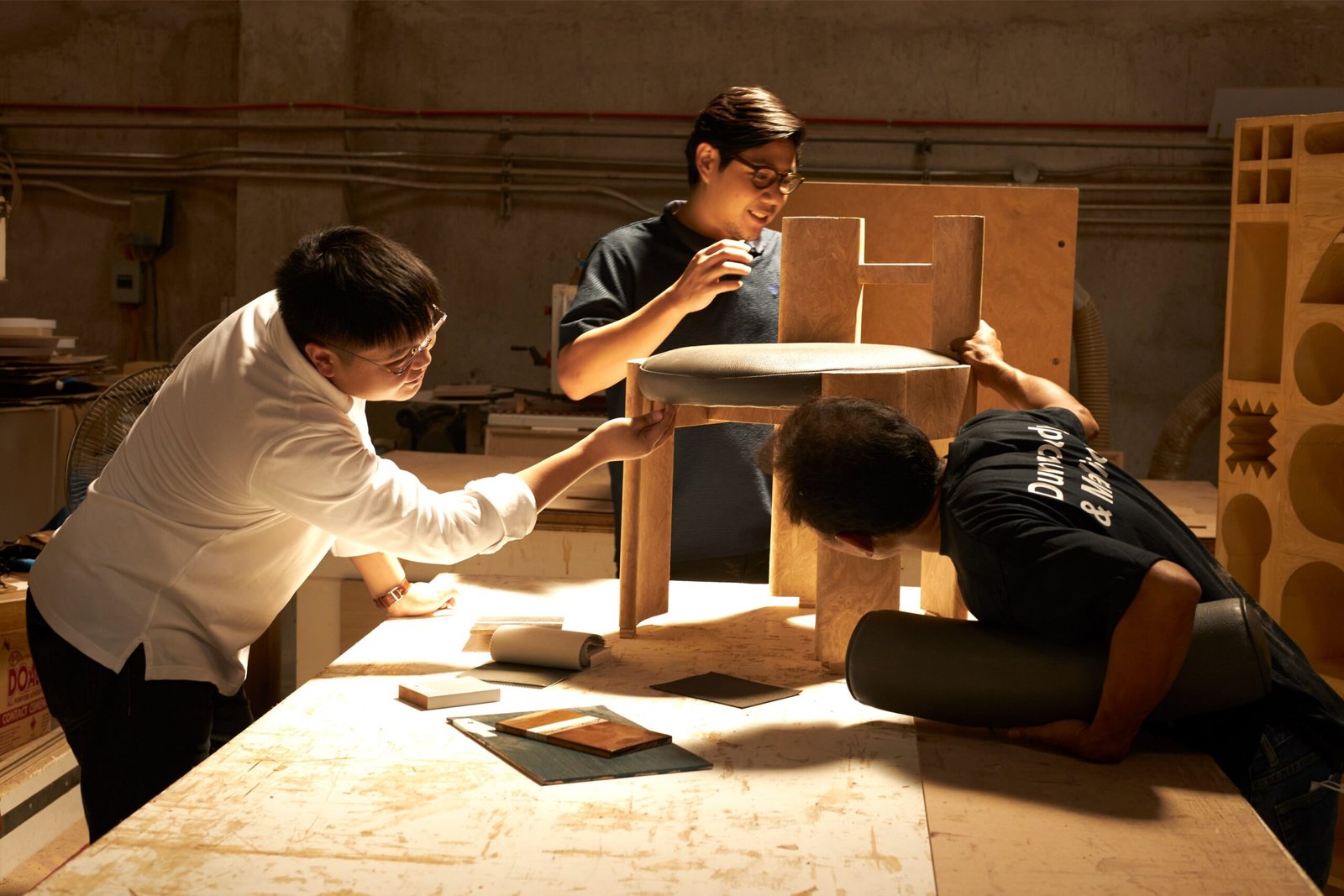
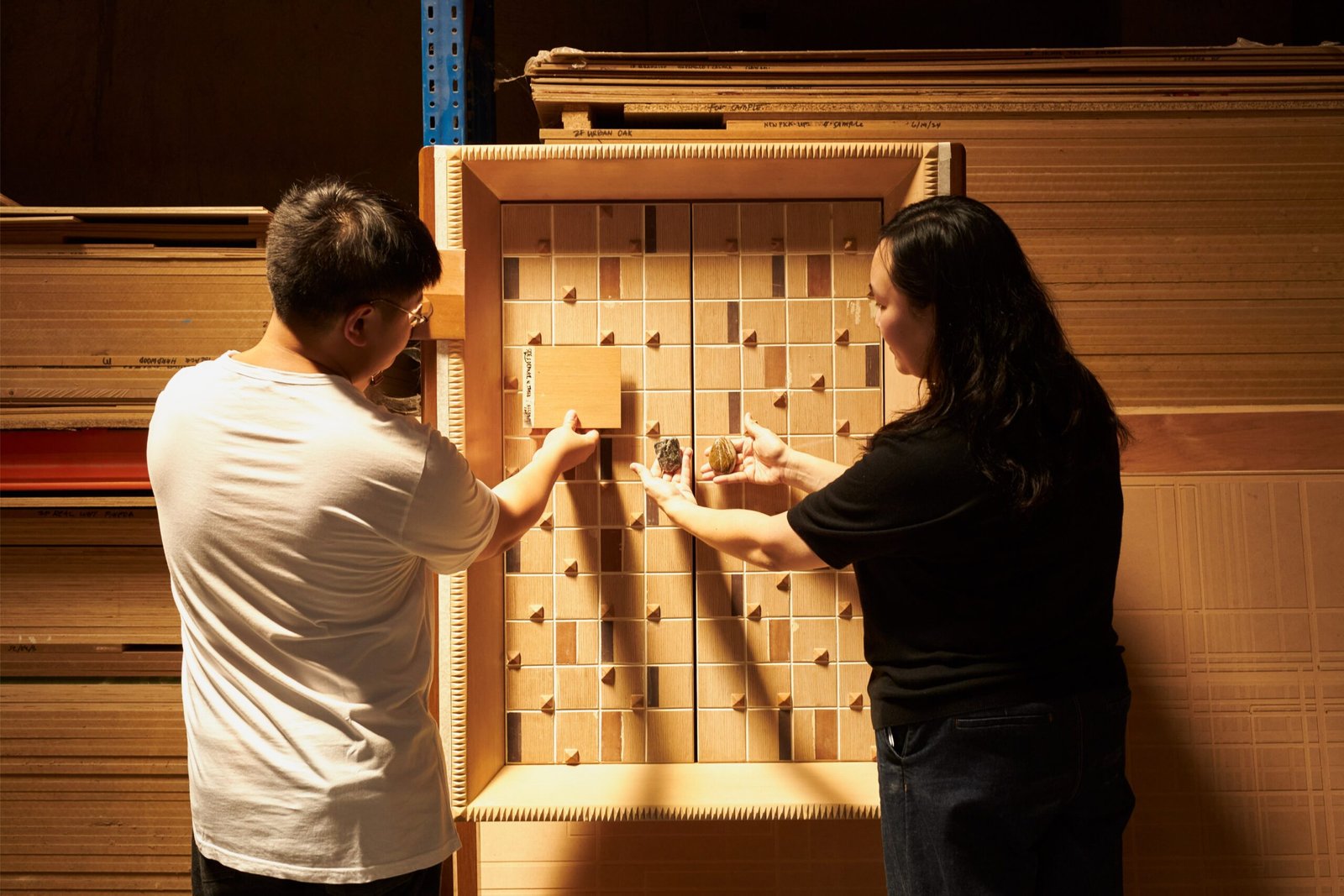
Because Ver approaches design through the iterative lens of an architect, his process belonged on the factory floor. He became a fixture at the facility, often turning up without the founders to huddle directly with the carpenters. “He is in our factory more often than we are,” Carlo laughs. “He’s a rare breed of designer who actually understands the process of physical creation. You can always tell when a designer just sits at a table and draws.”
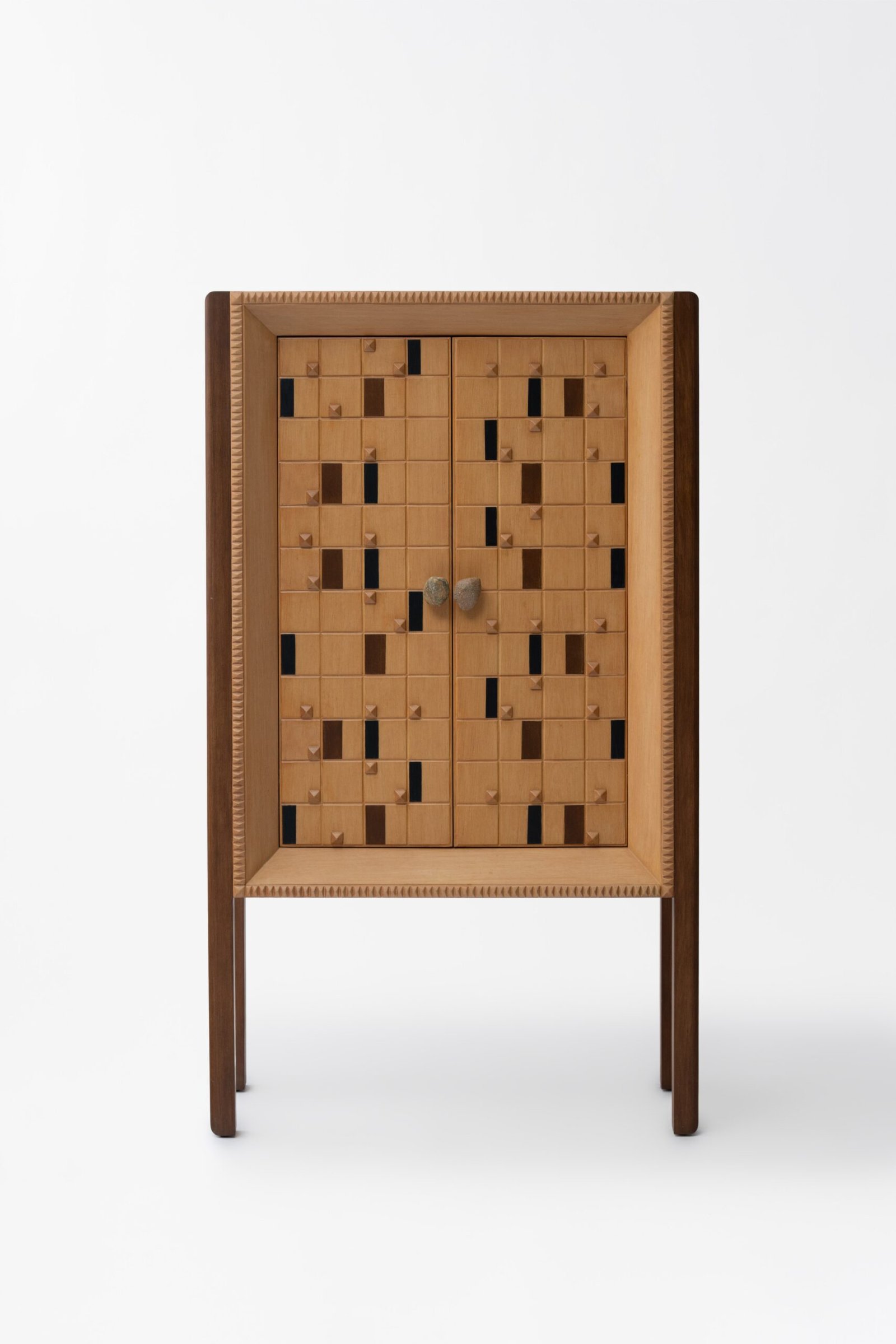
“The process is still very architectural,” Ver adds. “I start with a sketch, then I send it to the floor. You shouldn’t take shortcuts when it comes to prototyping. For a single cabinet alone, we did about eight to ten iterations before we finally nailed the dimensions.”
Tahanan 2.0
The resulting body of work marks a sharp break from Tahanan’s pandemic-era output. Crucially, the brand shifted its primary manufacturing focus away from the historic woodworking and hand-carving capital of Betis, Pampanga, relocating its core production to a factory in Taytay, Rizal. This move allowed them to integrate furniture production more closely with Ver’s base of operations.
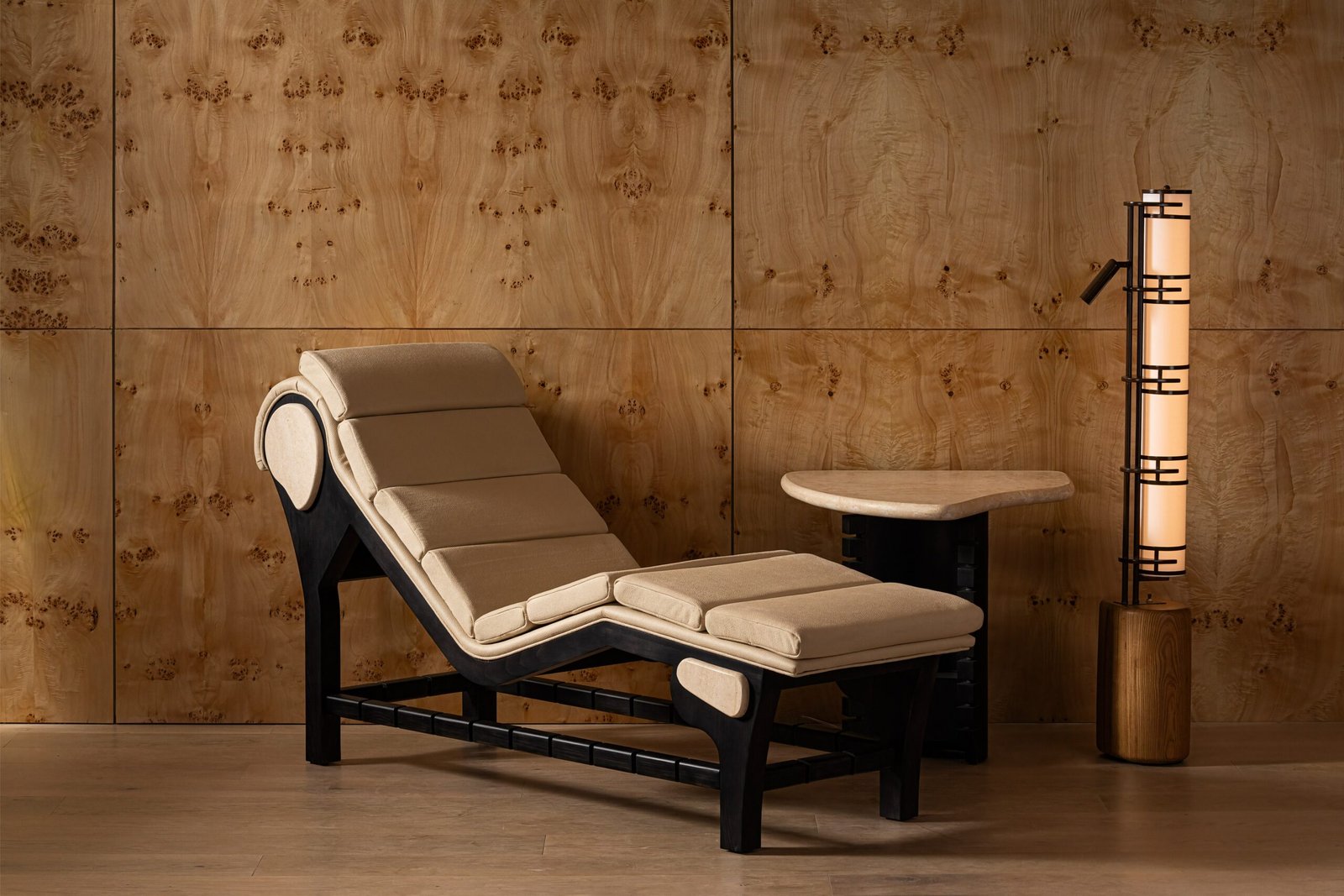
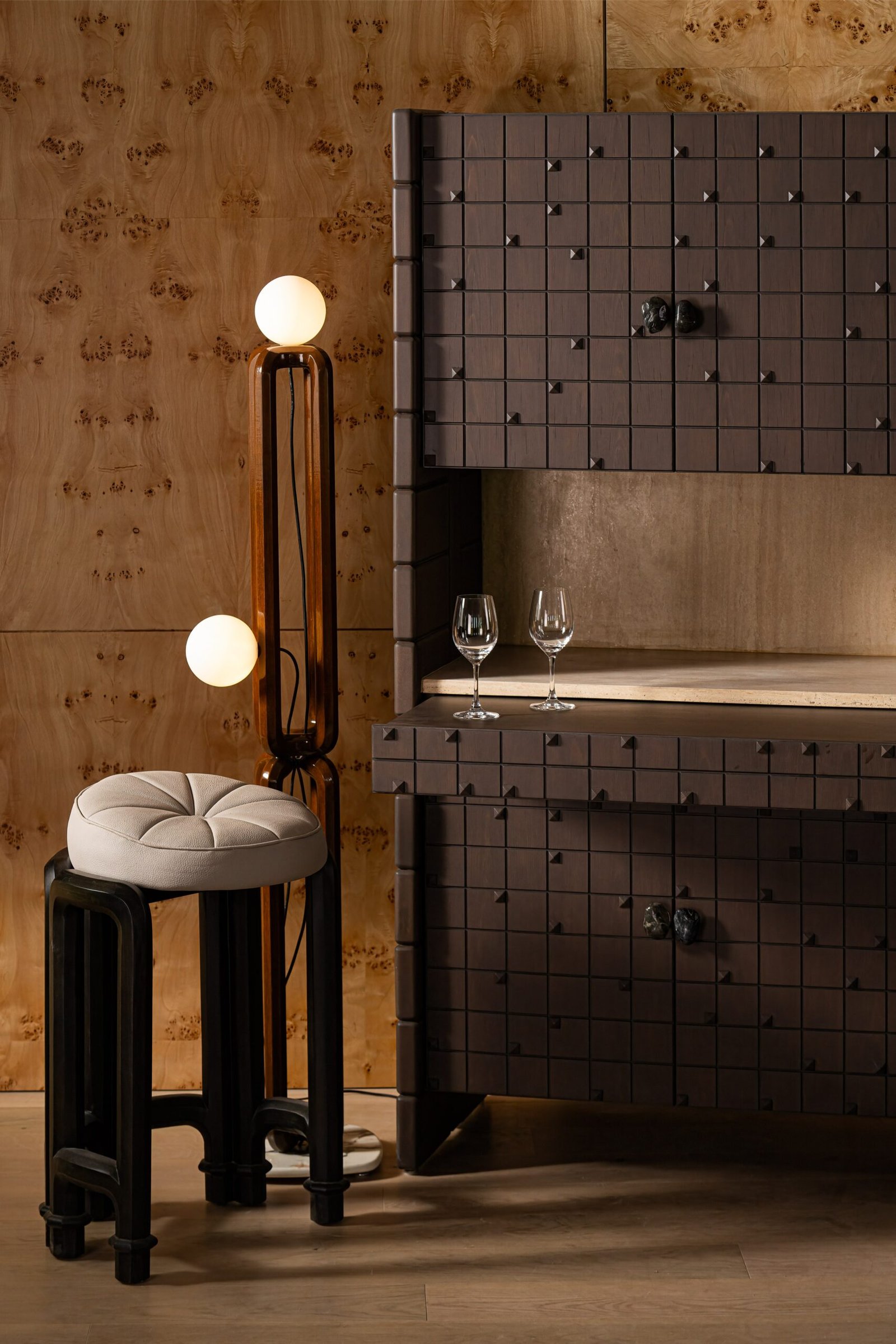
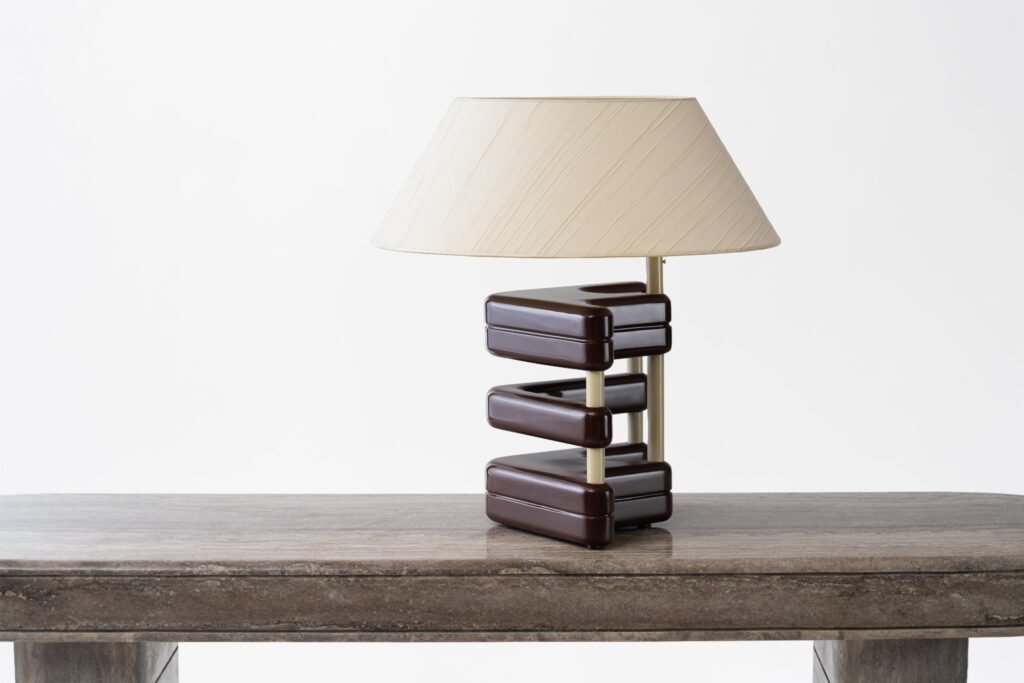
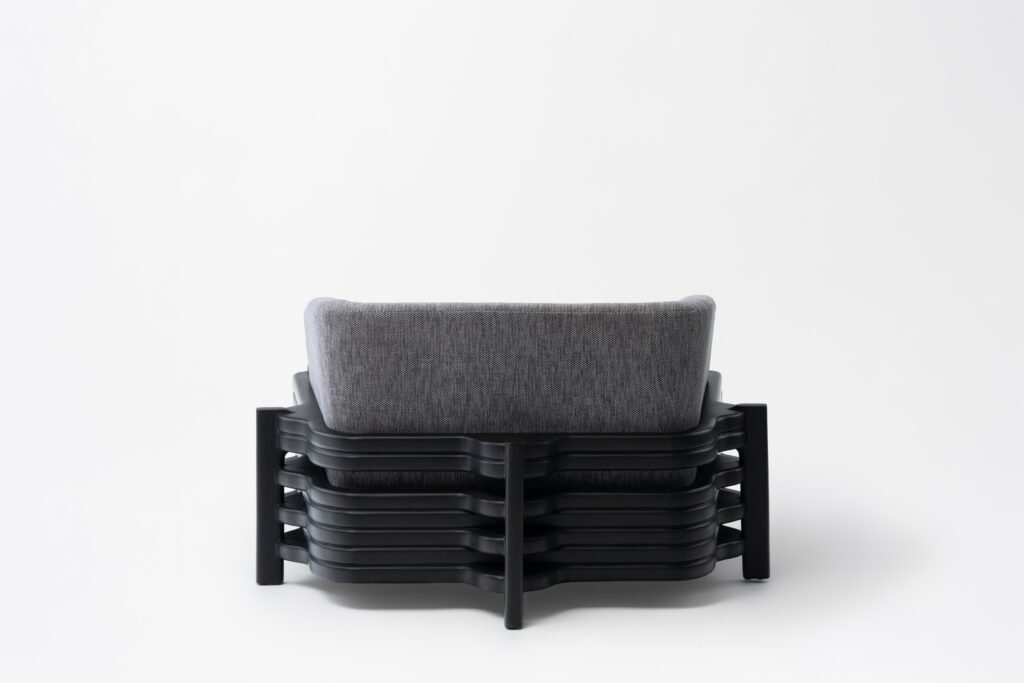
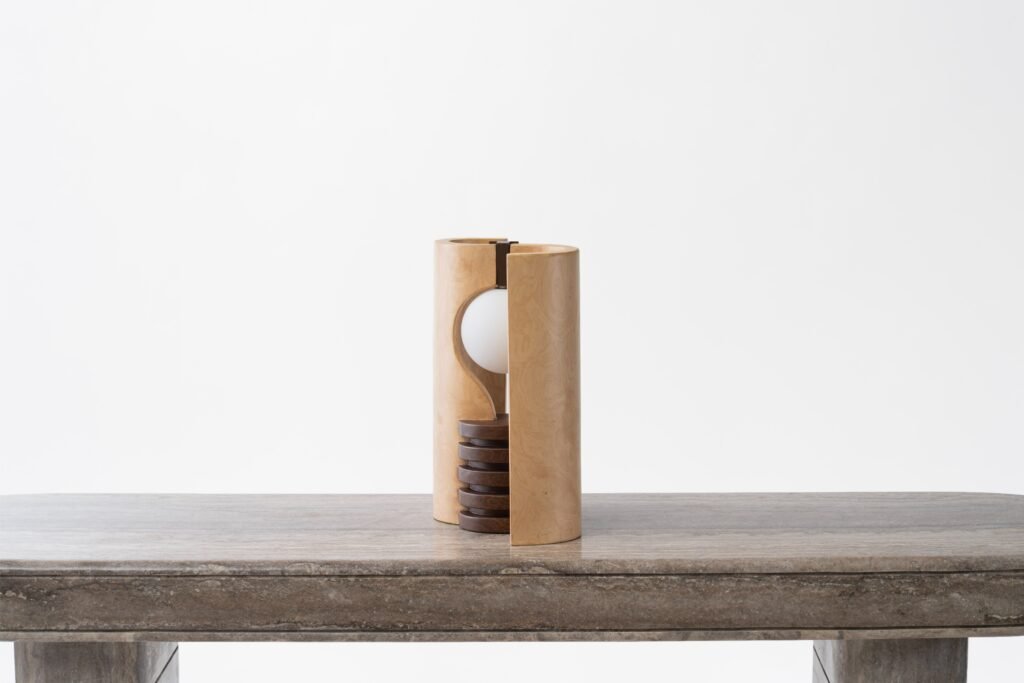
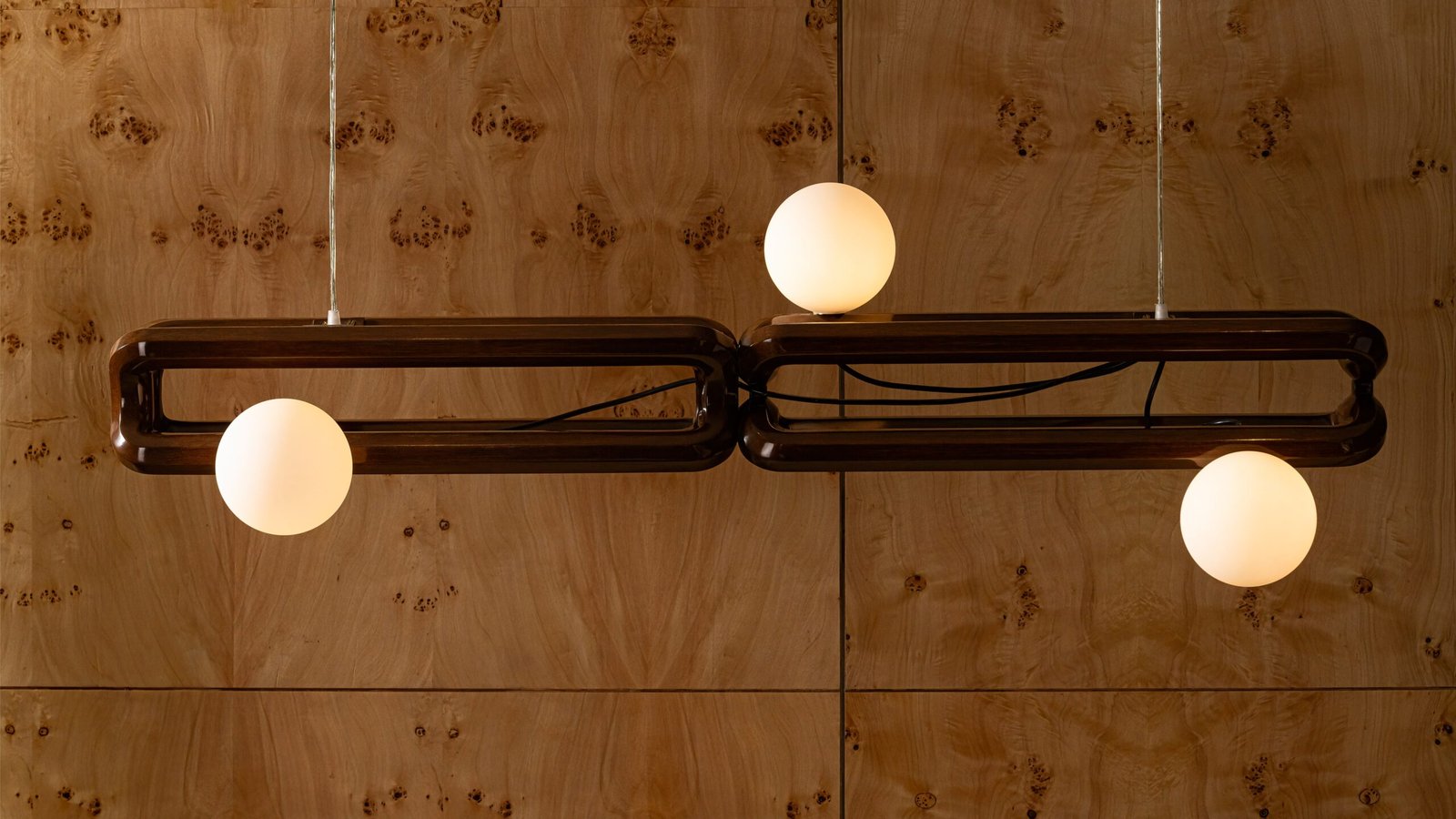
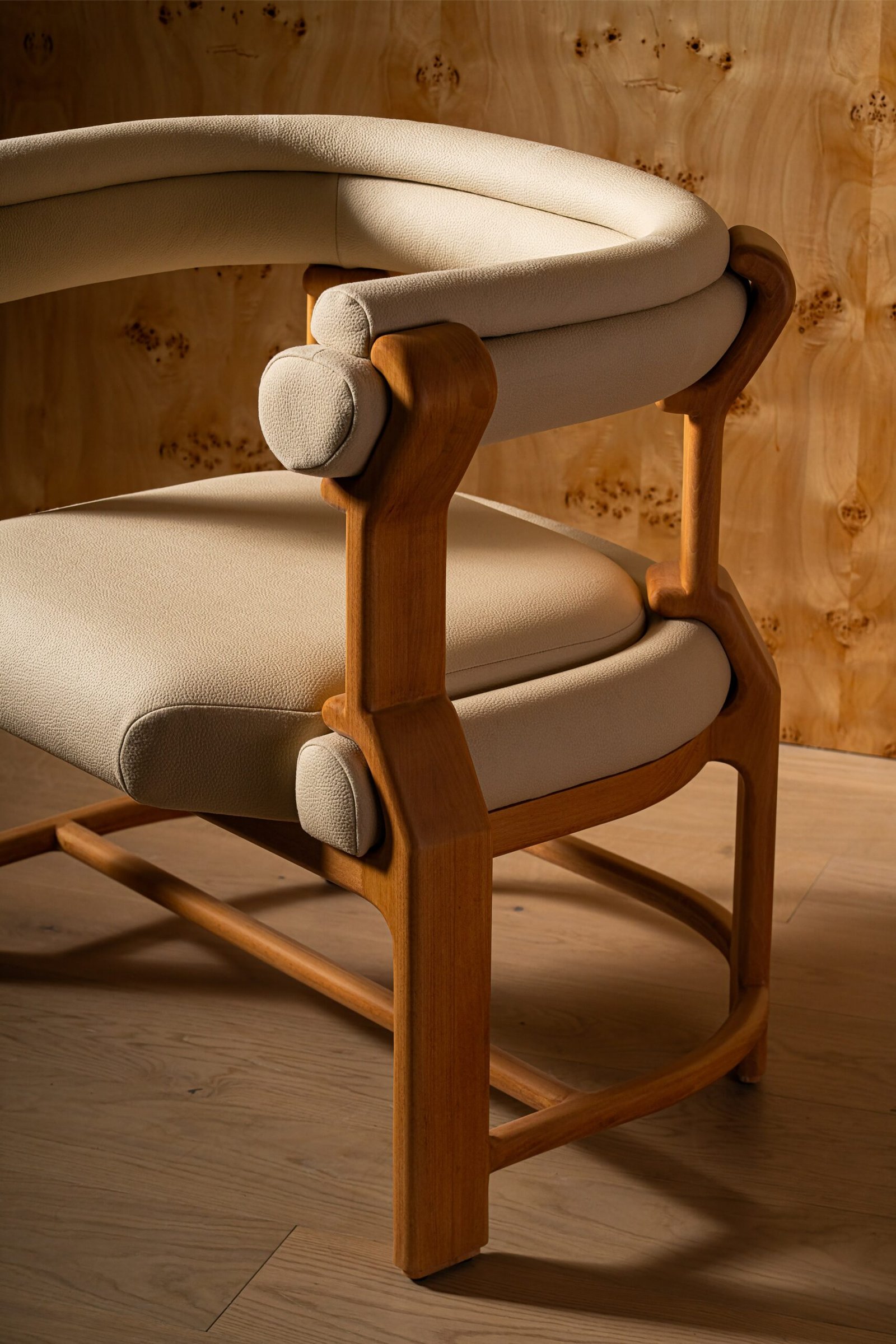
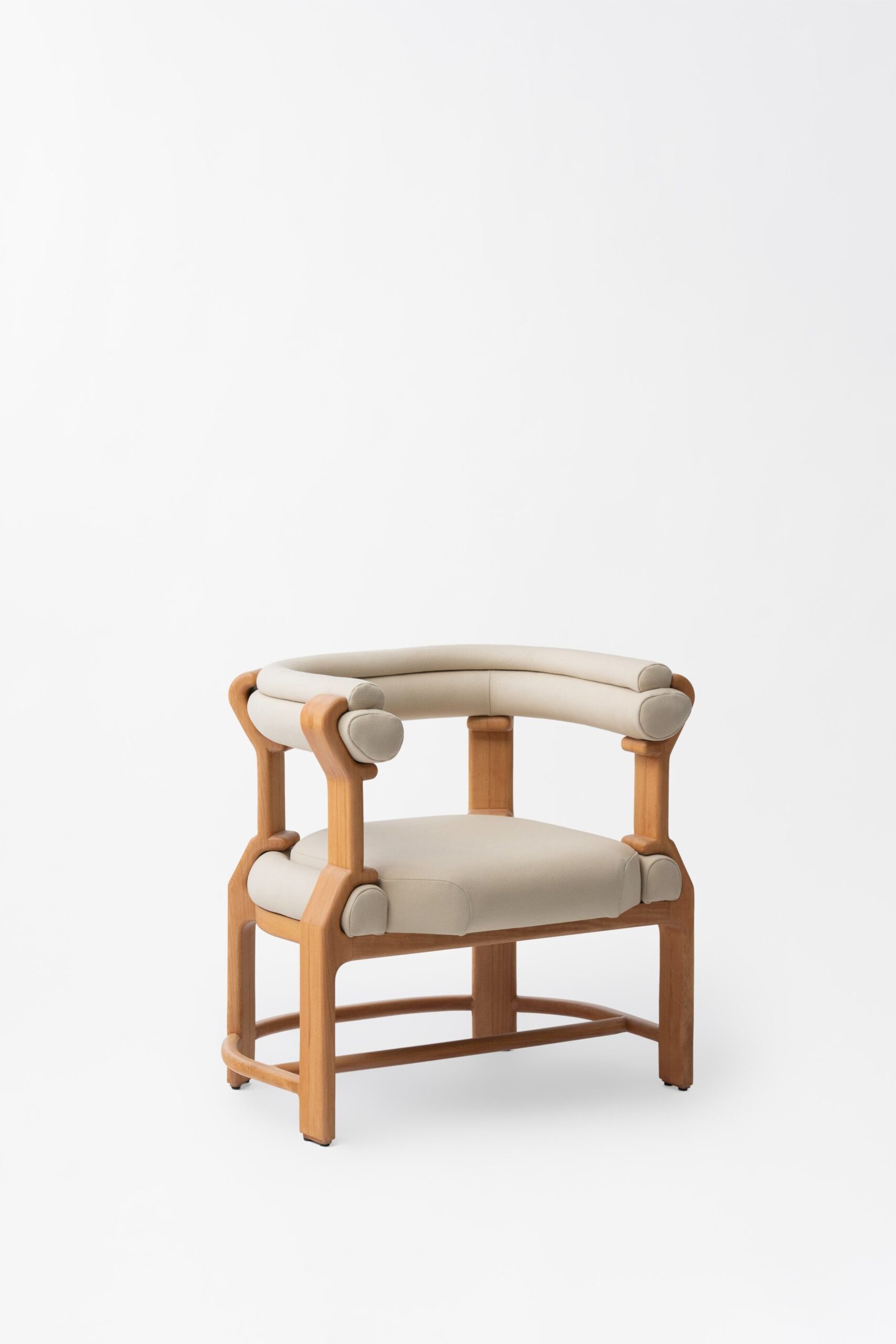
Instead of traditional, flat marquetry, Ver utilizes the factory’s veneer-pressing expertise to great effect, while also applying dukit in unexpected sections and corners. Wood still dominates the collection, but under Ver’s hand, it dances, curves, and undulates across lamps, seats, tables, and cabinets with a renewed vigor, a willing dance partner with the plethora of material finishes (Italian veneers, leather, metal trim, and even stone and pebbles repurposed as knobs) the young designer now has at his disposal.
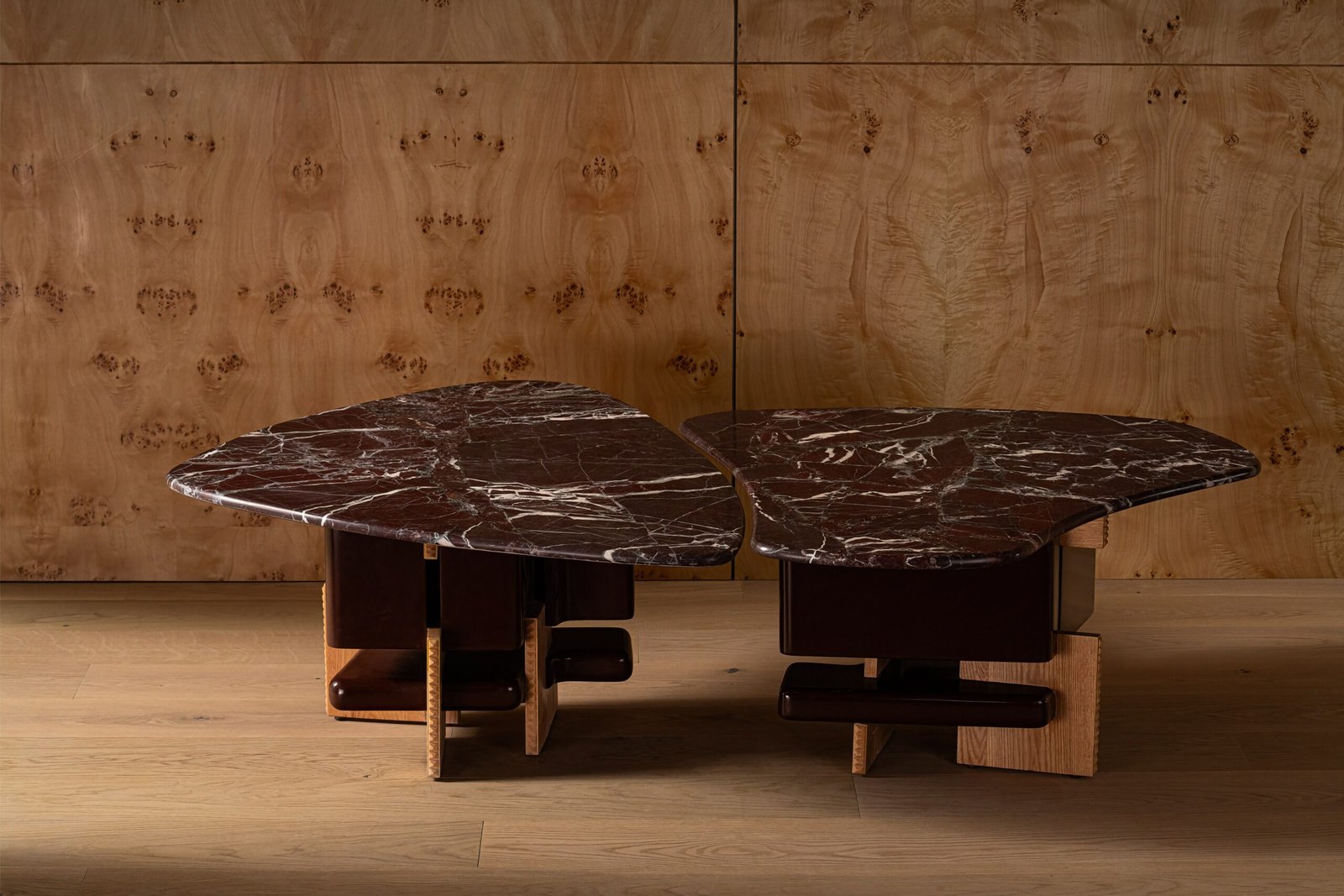
One new material Ver professed to having been challenged by is marble. Grappling with the stone’s immense physical weight and intense, dominating presence proved to be one of the collection’s primary challenges. Marble is traditionally treated as a monolithic, singular statement piece, making it notoriously difficult to integrate smoothly with other materials.
To subvert its rigid density, Ver chose to manipulate its physical and visual heft. He softened the stone into organic, puddle-shaped contours and engineered dramatic, sweeping cantilevers across the tabletops, forcing a traditionally static material into forms that feel surprisingly fluid and dynamic.
“Minimalist me is still in there, especially with the clean lines and repetition,” Ver says of his work for Tahanan. “There is a lot happening form-wise, but at the same time, the overall piece still emanates calm. I like to think of the pieces as one’s welcoming committee at home after a tiring day. The soft curves and warm textures lull you to relax and slow down.”
Of new homes
Today, the fruits of this two-year pause are on display at Tahanan’s new showroom at the YMC Building on Pasong Tamo Extension, Makati. Curated as a series of domestic nooks bathed in copious tropical light thanks to its front façade windows, the space is an extension of its inhabitants, fluid and organic, a place of high craft, but not inaccessible or snooty. It is a spatial manifestation of the brand’s core thesis: that furniture is not mere interior decor, but the very architecture of daily life.
Yet, as the doors open to a design community where almost every modern Filipino brand is now actively looking outward, the urgent question becomes: in an age when everyone is striving to be design-bilingual, what now genuinely sets Tahanan 2.0 apart?
“I think what will keep us fresh is our unwavering respect for craft and our merging of new and traditional practices,” Ver reflects. “Marquetry, for example, is very common in traditional furniture, but the application for this collection is very new. We employ the same heritage process but execute it in sleek, contemporary silhouettes. That in-between space between the old and new is where we seek to be because that’s where growth starts. It’s all about the unique process of making those paths meet and finding excitement where the new, unexplored paths that emerge can take us.”
The ultimate depth of the relaunch, however, is best captured by Ver’s reflection on the rare creative freedom the Yus have granted him, a stark departure from the typical commercial grind.
“It’s a rare opportunity to design furniture from this perspective. In standard practice, you are usually designing pieces strictly to sell or to fit a specific commercial project. But for the new Tahanan, we designed these pieces as an exhibition of craft, to create not just functional pieces but artful objects.
I like to surprise myself. I didn’t just end up designing Tahanan’s showroom and its pieces; I’m now also designing Thea and Carlo’s actual tahanan! Just imagining the ripe possibilities when we start prototyping pieces for the house is already getting me excited!”
Only time will tell if Tahanan 2.0 gathers legs, but if the current collection is any indication, it’s looking like a home run. •