Interview Patrick Kasingsing
Images Karl Castro and Eldry Infante (Maytubig)
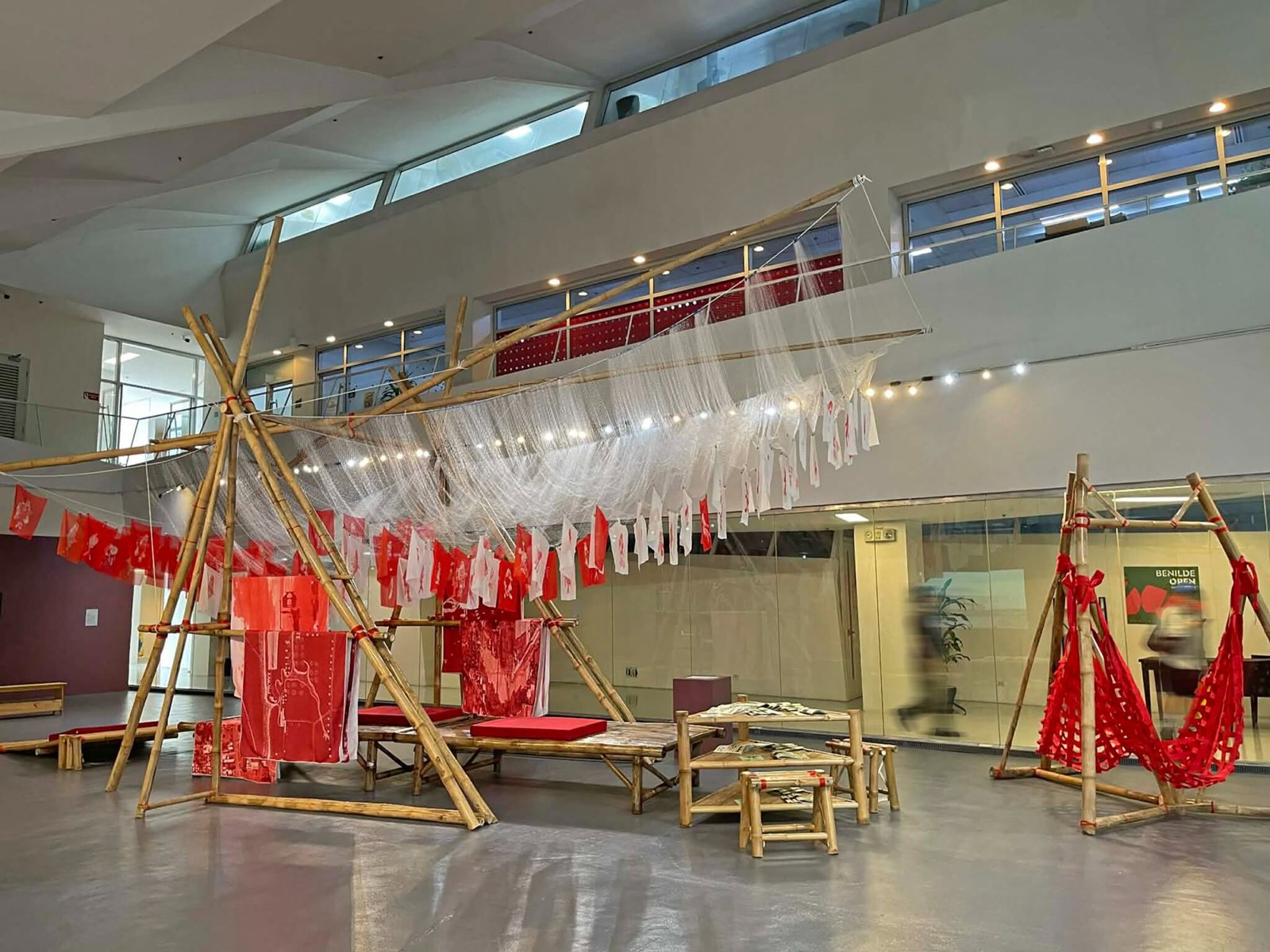
Hello, Karl and Eldry! Congratulations again for Maytubig! Let’s start with what your striking bamboo vessel provokes with its existence.
The Benilde OPEN theme is “Extension to Nature.” Maytubig chooses to challenge the future-forward theme to look back at suppressed topographies. Why was it important for you and Eldry to frame “nature” as a site of historical reckoning for the show?
Karl Castro, Benilde OPEN grantee for Maytubig: The Benilde OPEN call asks us to contemplate the “extension” of nature. But how can we extend nature when, as history would show, the state has worked so hard to destroy its waterways and green spaces? Before going any further, it’s important to know the extent of the harm that has been done to it, which aspects of it are irreparable, and what opportunities promise rehabilitation and renewal. Only in this way can we imagine extending.
Ideas of the future have always been linked to new technological capabilities centered around human needs. (Usually, the human needs of a certain race, gender, or class.) Too often, the idea of humankind as master over nature has dominated these futuristic narratives, reflecting broader imperial attitudes and colonizing tendencies rooted in ideology. And yet, if there’s anything I’ve learned from working with marginalized communities, it is the alternative view of the world: mankind living in harmony with nature, learning from its rhythms and mysteries, stewarding it for future generations. Small-scale farmers know this. Indigenous people know this. Fisherfolk know this.
As the city evolves and ongoing projects push for “sustainability” and other development goals, it’s important to reexamine not just the forward-facing hypothetical directions of these aspirations, but their historical roots and how they have concretely impacted our communities. History, after all, is not just the realm of the past; it’s also reflected in the everyday objects and choreographies of our present lives. We live in history, but we aren’t always aware of it. How can we make informed decisions about future steps if we are ignorant of legacies, track records, and long-term effects that lie under the surface?
Eldry Infante, Mede Studio: I remember when I was in college, my professor lamented that my hometown was in disarray due to patchy development that had forgotten the old waterways. He said, “Water will remember where it was”. We’re not equally good at remembering, though sometimes not in our control. Our current urban and ecological problems render the “future” an attractive resolution, but more often than not, not enough is remembered. Maytubig confronts this phenomenon by embodying a state of remembering as a toolkit for threading a future that is more sympathetic and collective.
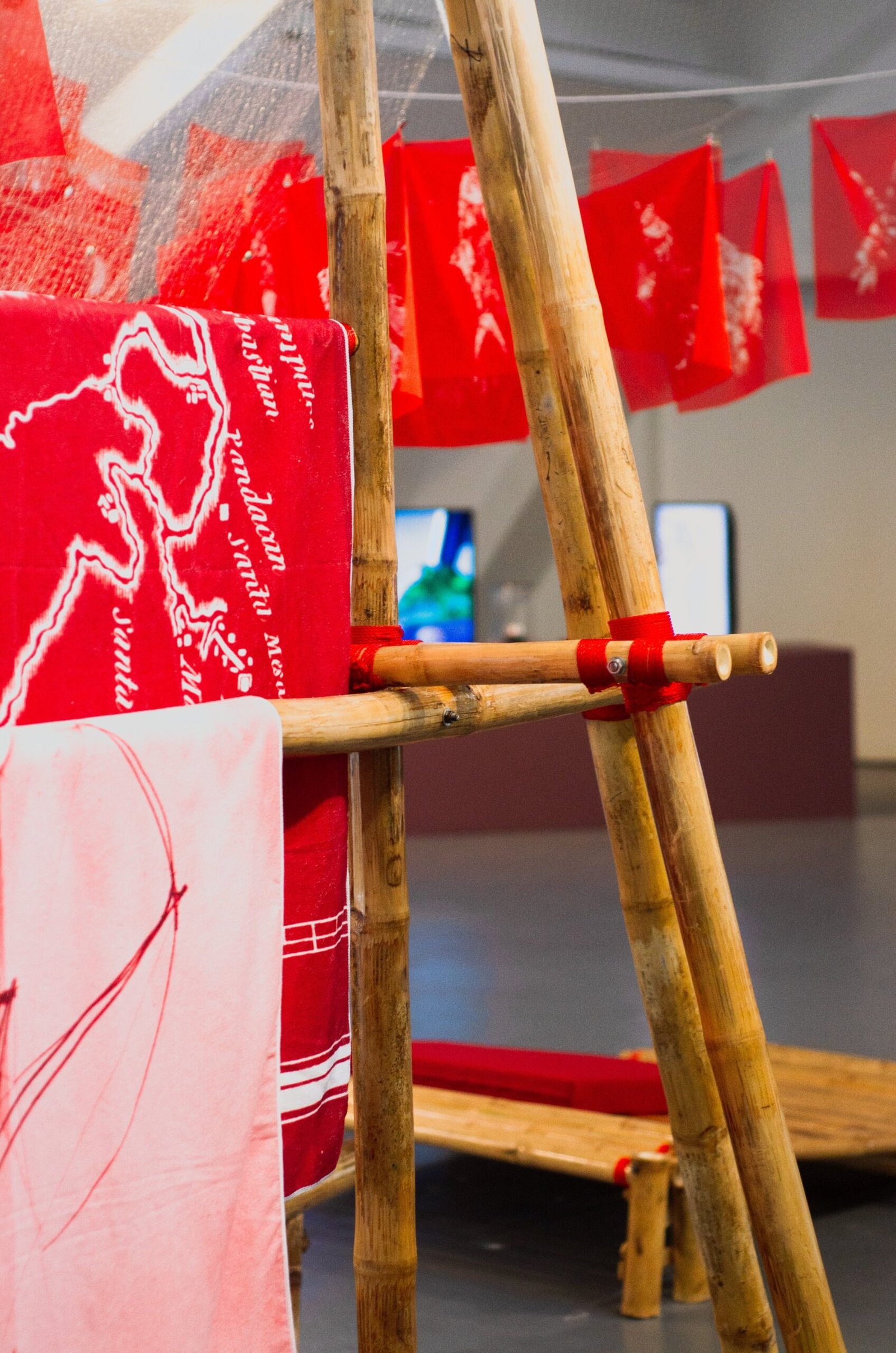
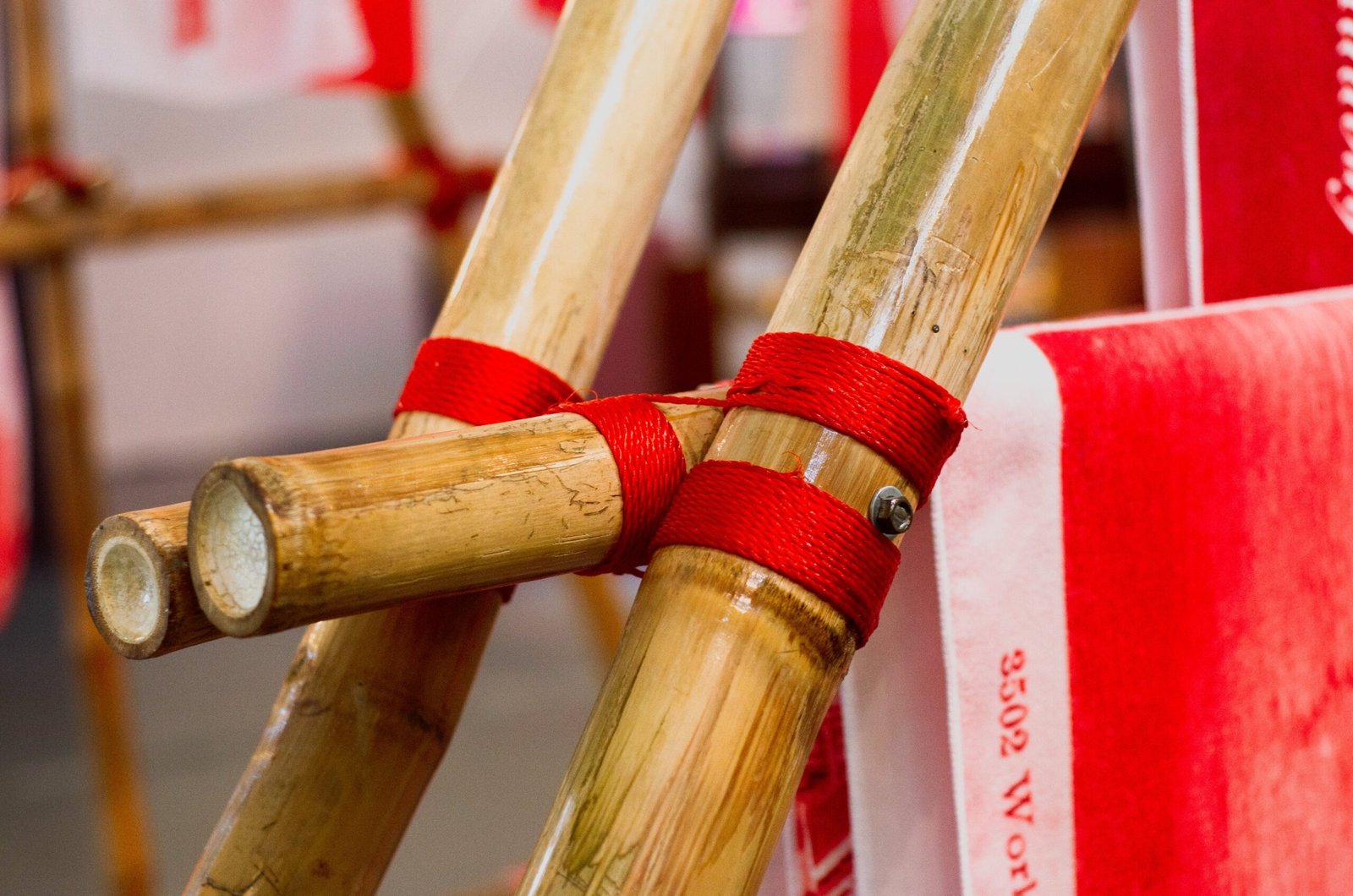
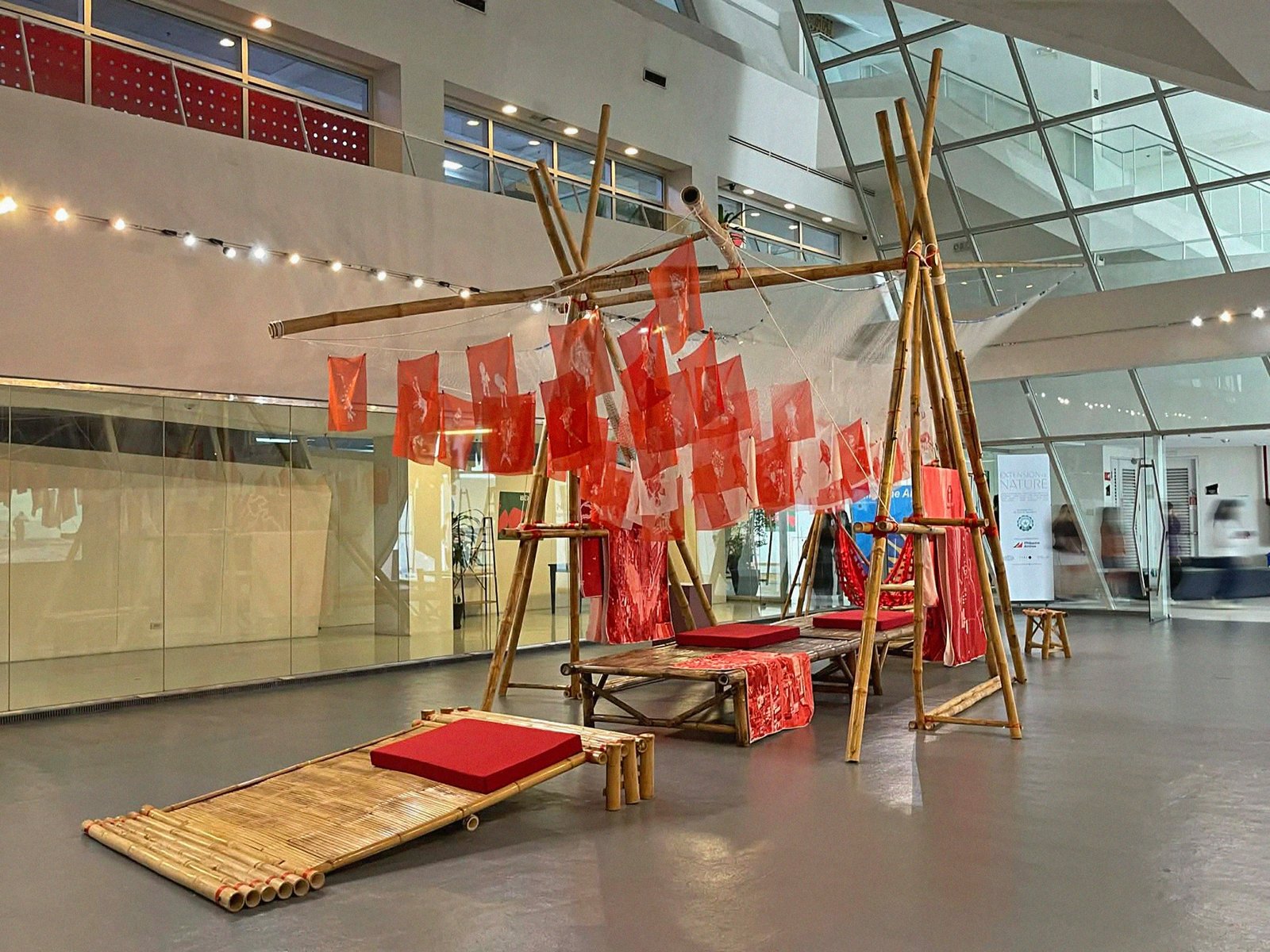
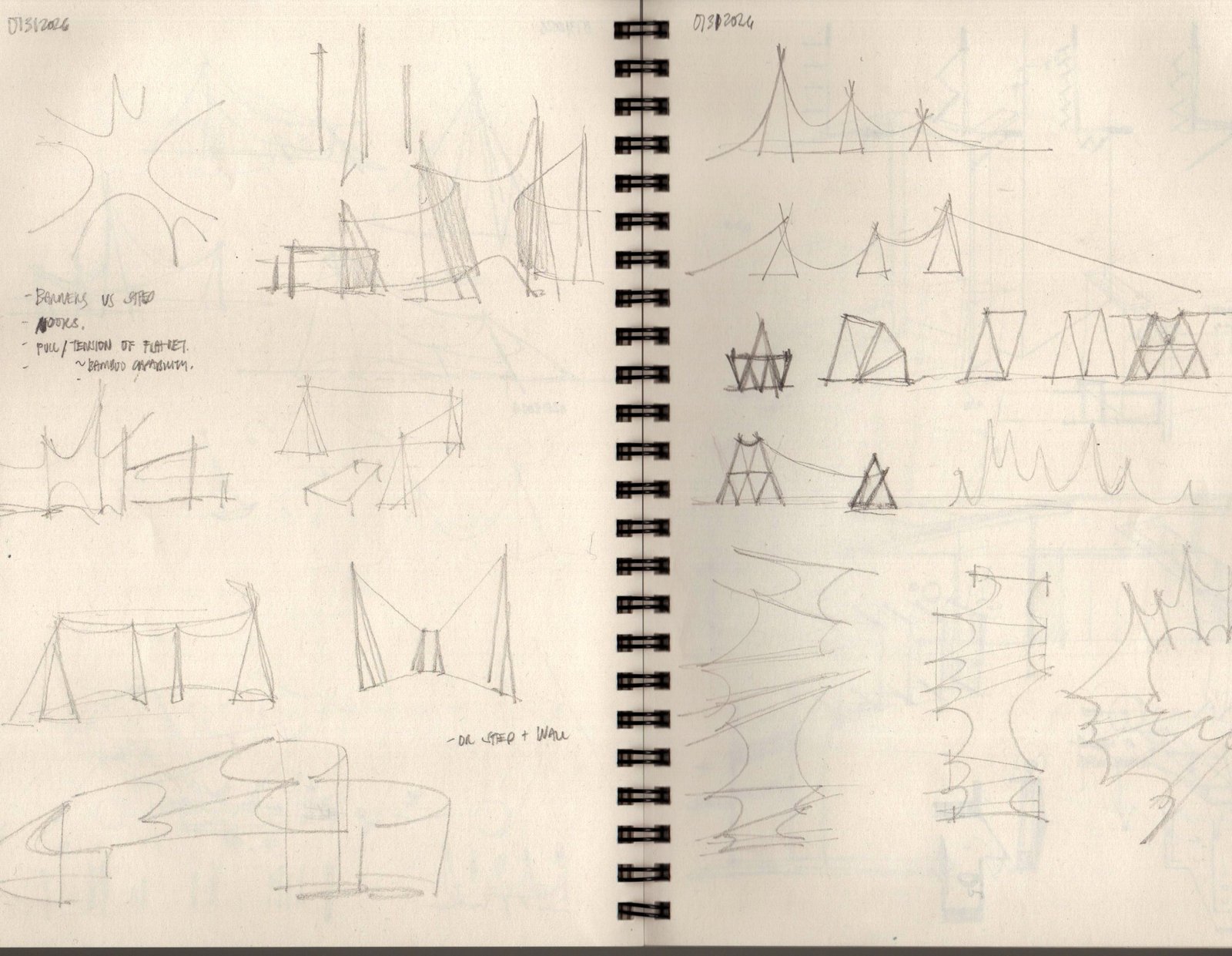
You’ve described the bamboo installation in your zine as an “analog kinetic sculpture” that critiques the “Smart City” fetish for control. How do the material constraints (and possibilities) of bamboo and manual lashing create a mode of gathering that a technicalized public space cannot?
Karl Castro: I think the idea of sculpture is an interesting concept. There are large-scale sculptures as well as small-scale architecture. There are sculptures and architecture meant to represent and immortalize people and events, but there are also sculptures and architecture that are provisional, temporary, and non-representational. The main difference is that architecture has an inherent assumption of use, of dwelling or sheltering. Sculpture does not. What is it like to live with a thing framed as sculpture rather than architecture?
It is the gray area of the “sculpture” framing that interests me. As a form associated with symbolism or decoration rather than utility, there is much more freedom and fluidity in its function and meaning. In the case of Locus Pocus, as an artist, I understand it as a sculpture that resembles architecture. It is that fluidity that is important to me, because it is that fluidity that escapes the technological control of smart cities, and reveals what humans do that machines cannot.
The logic of data is the logic of granular, singular meanings. Interpreting this data, and making ethical, moral, philosophical decisions, these are things that escape that logic. Today, in the age of AI, machines can simulate or mimic that ability, but they cannot actually, genuinely exercise that human discernment.
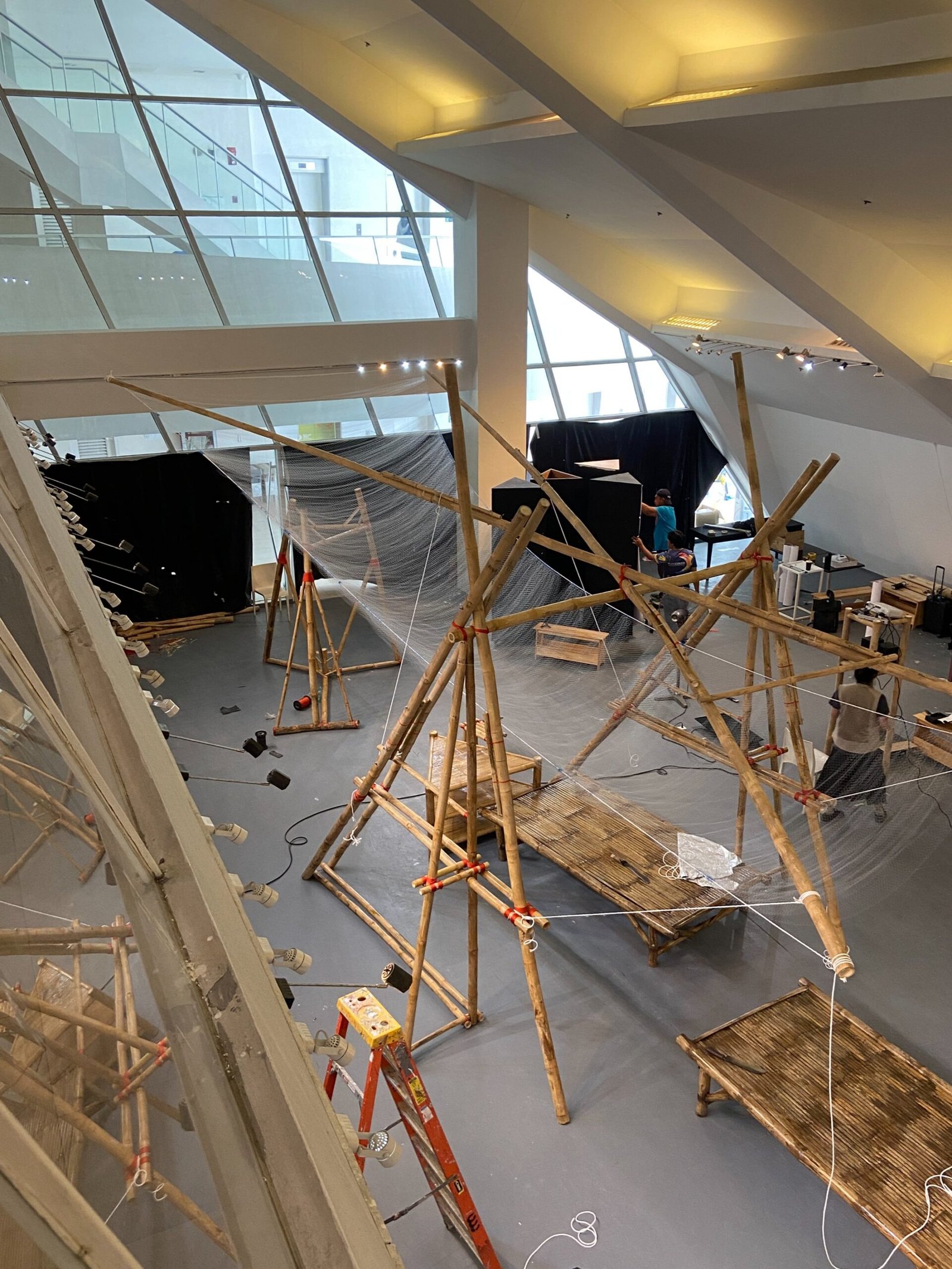
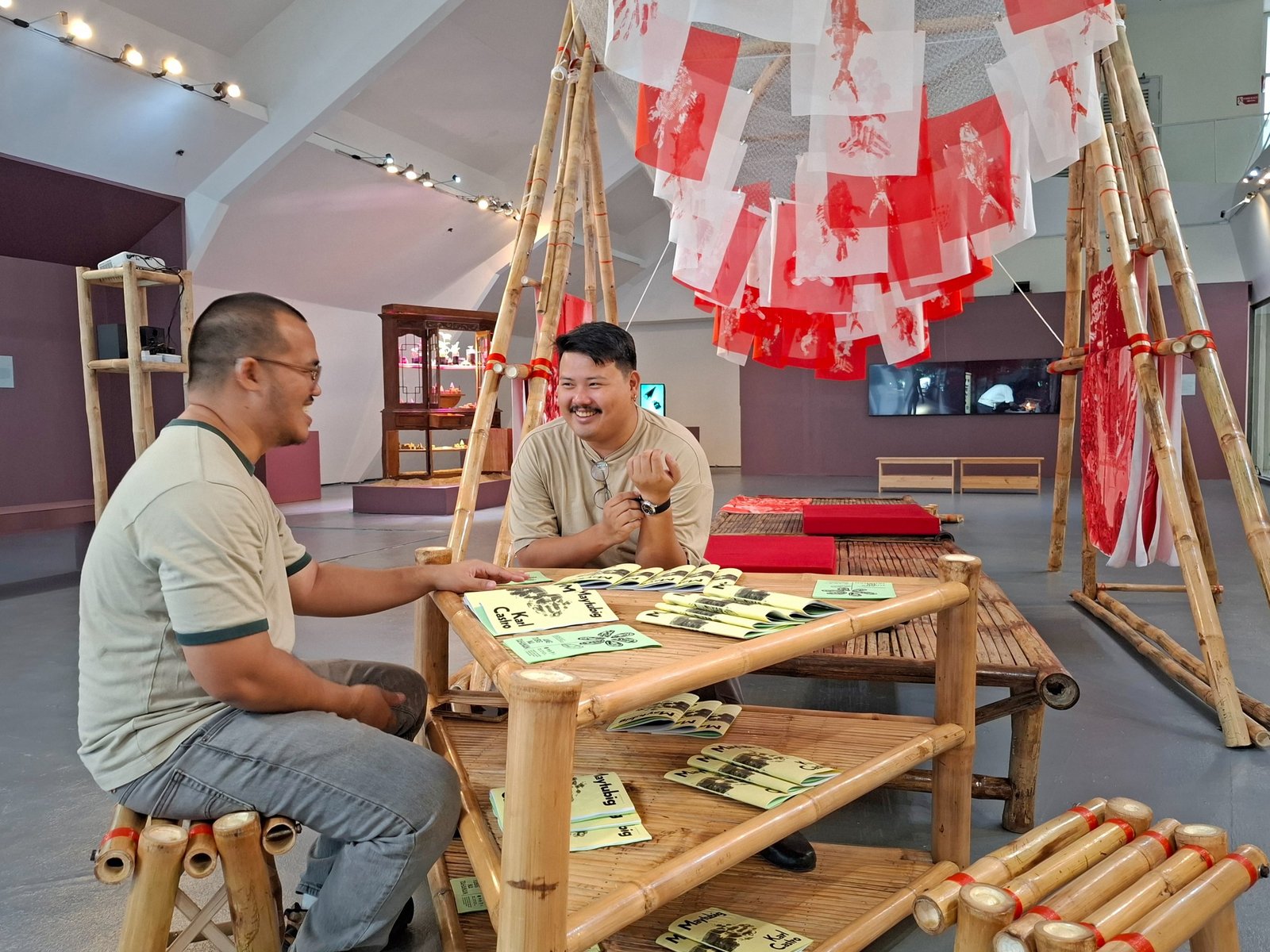
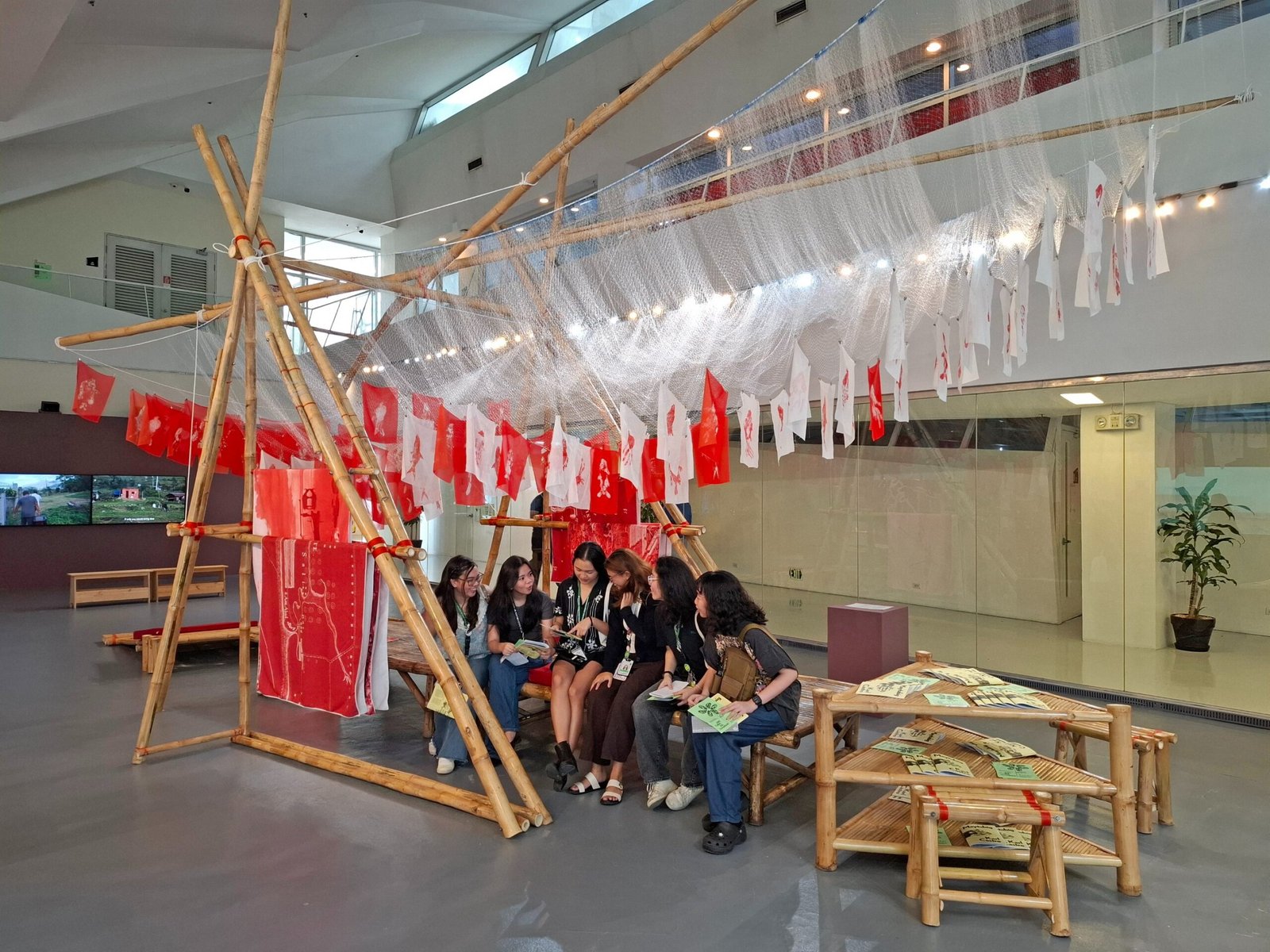
The use of bamboo and manual lashing, and the intentional process of working with fisherfolk and evolving the project based on a dialectical balancing of interests, limitations, and concerns, is not just a means to an end but part of the point itself. To me, using these materials and techniques is the design counterpart of touching grass, of forest bathing. When did you last nap on a papag? Have you actually touched a fishing net? In my previous iteration of this series, UFIND, I realized that many city-raised people are unused to the choreography of being with nature.
Do you fear the wilderness, or are you fascinated with it? Are you one with the vista, or do you take pictures of it? Do you put your shoes on the papag or do you let your bare feet sense it? I think creating this temporary structure made of materials that represent a different view of “modern” or “future” is an entry point, a rupture in the urban material and sensory palette, that can help surface or revive an ecological and historical sensibility in the audience’s body.
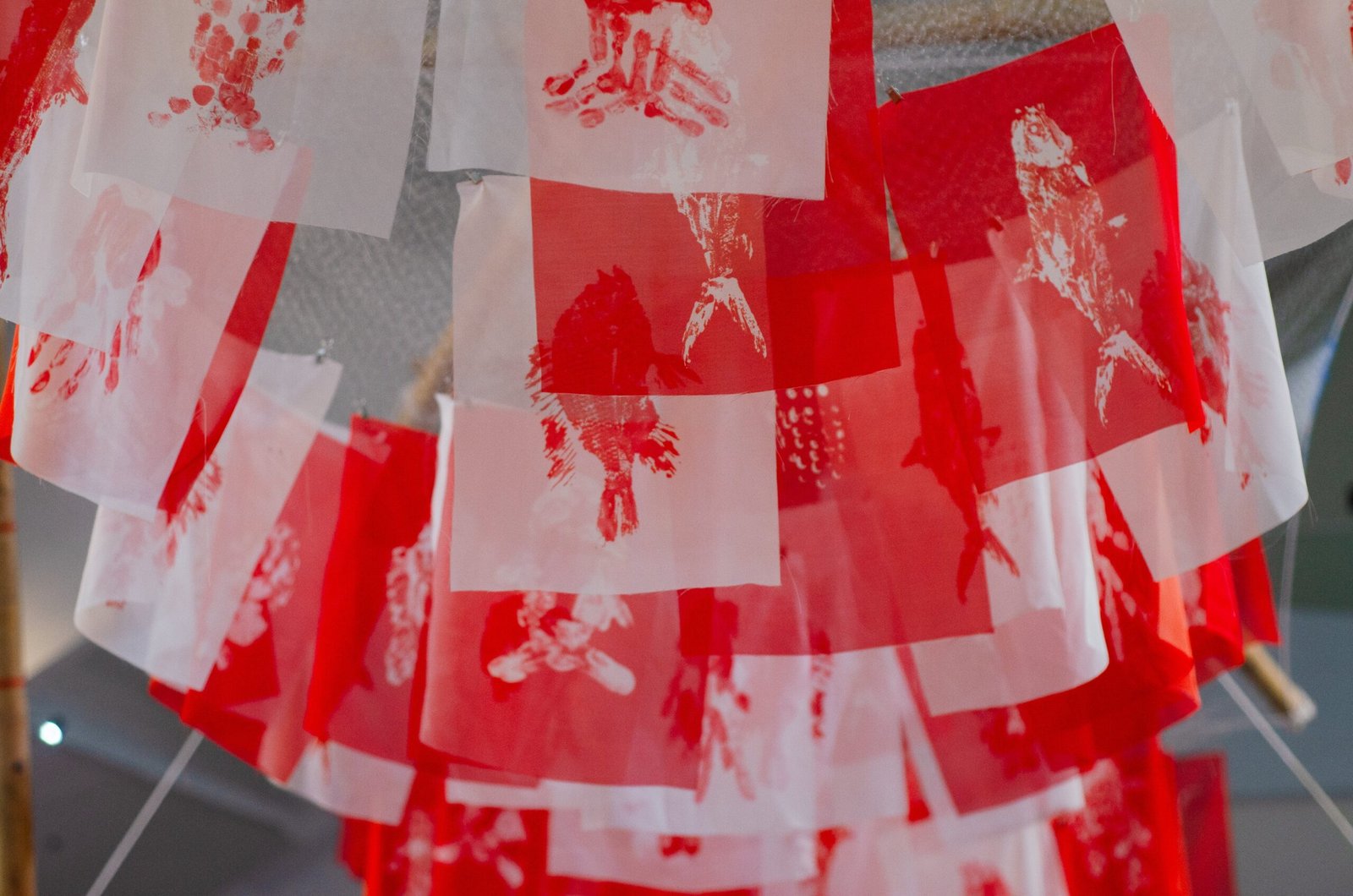
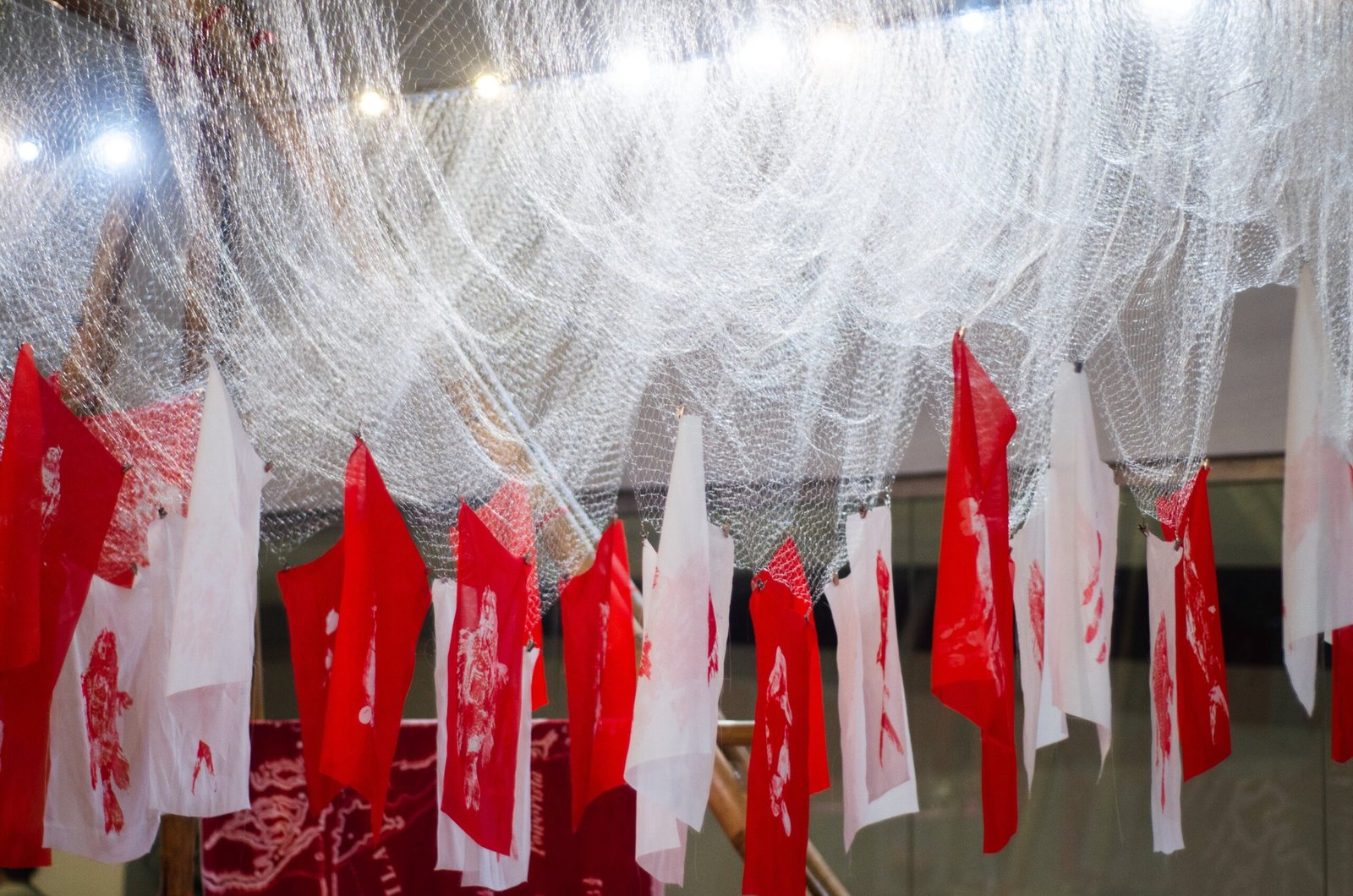
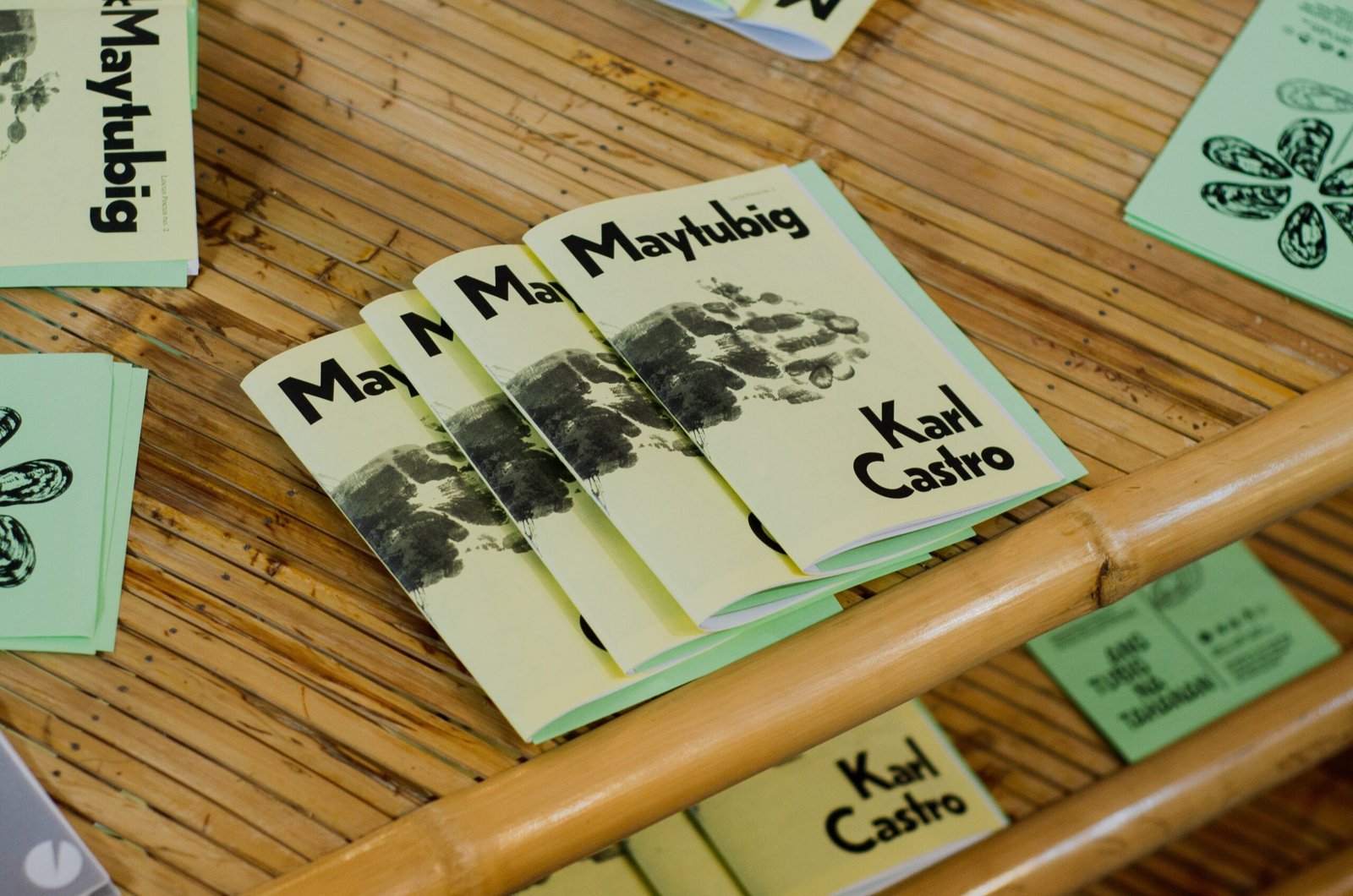
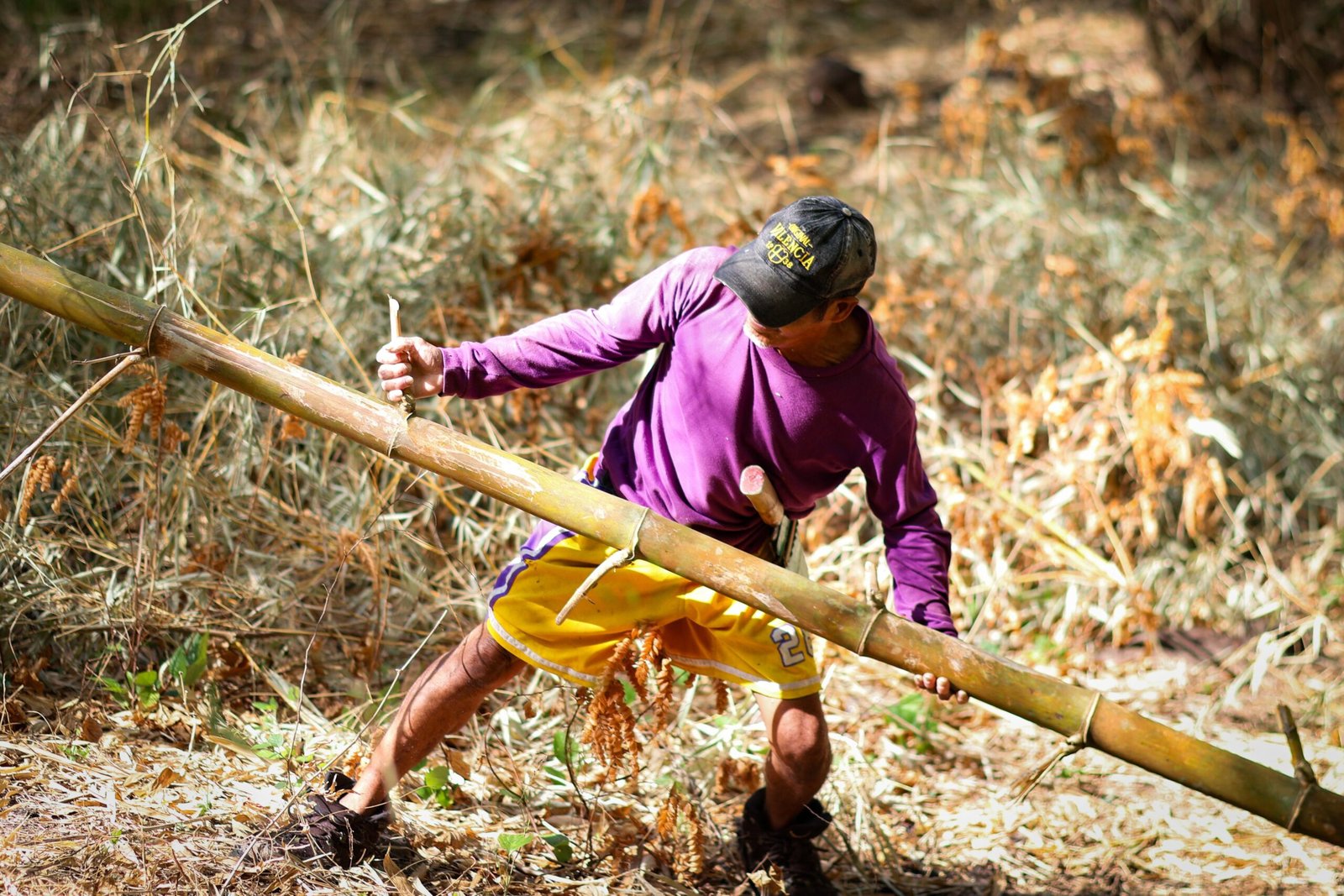
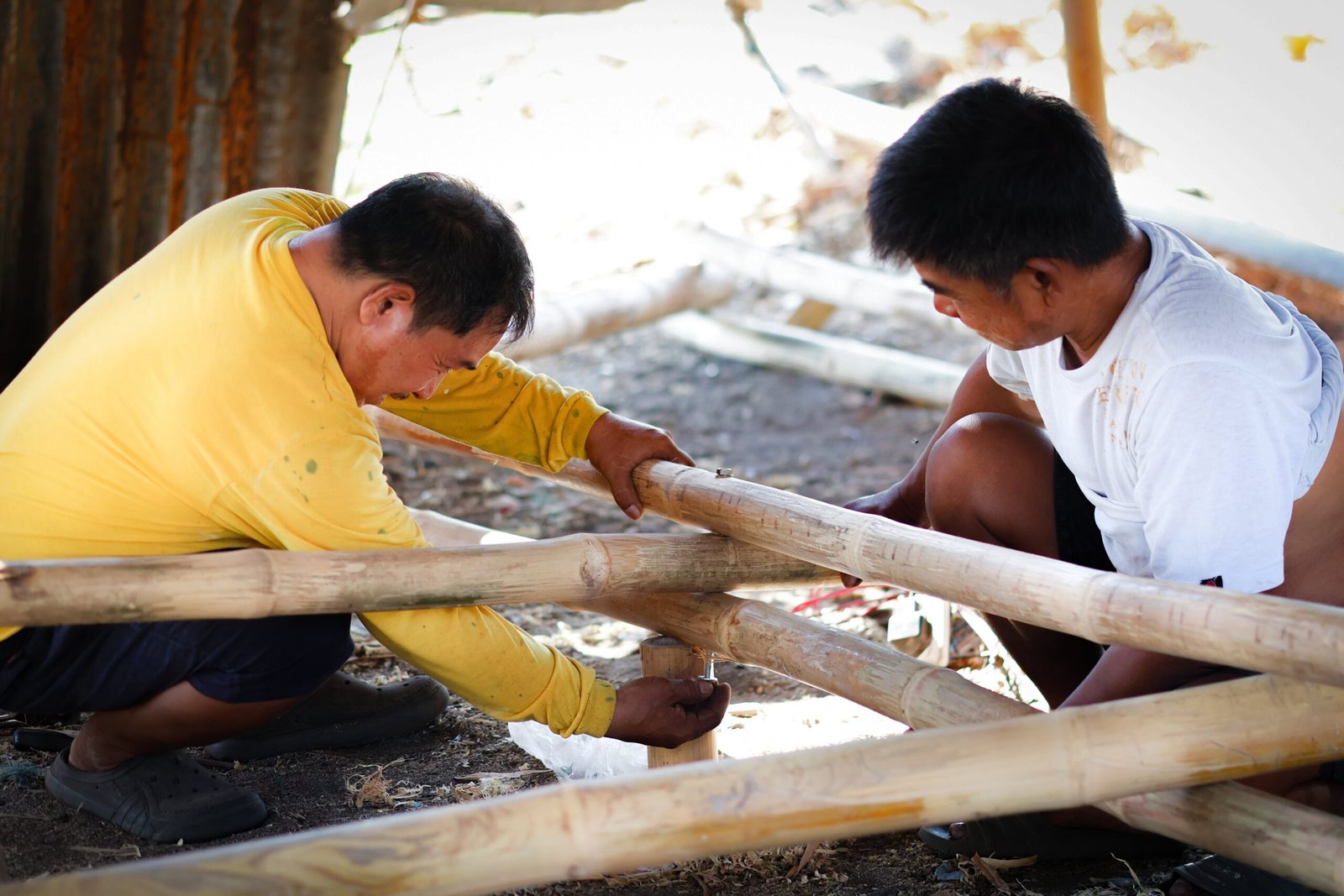
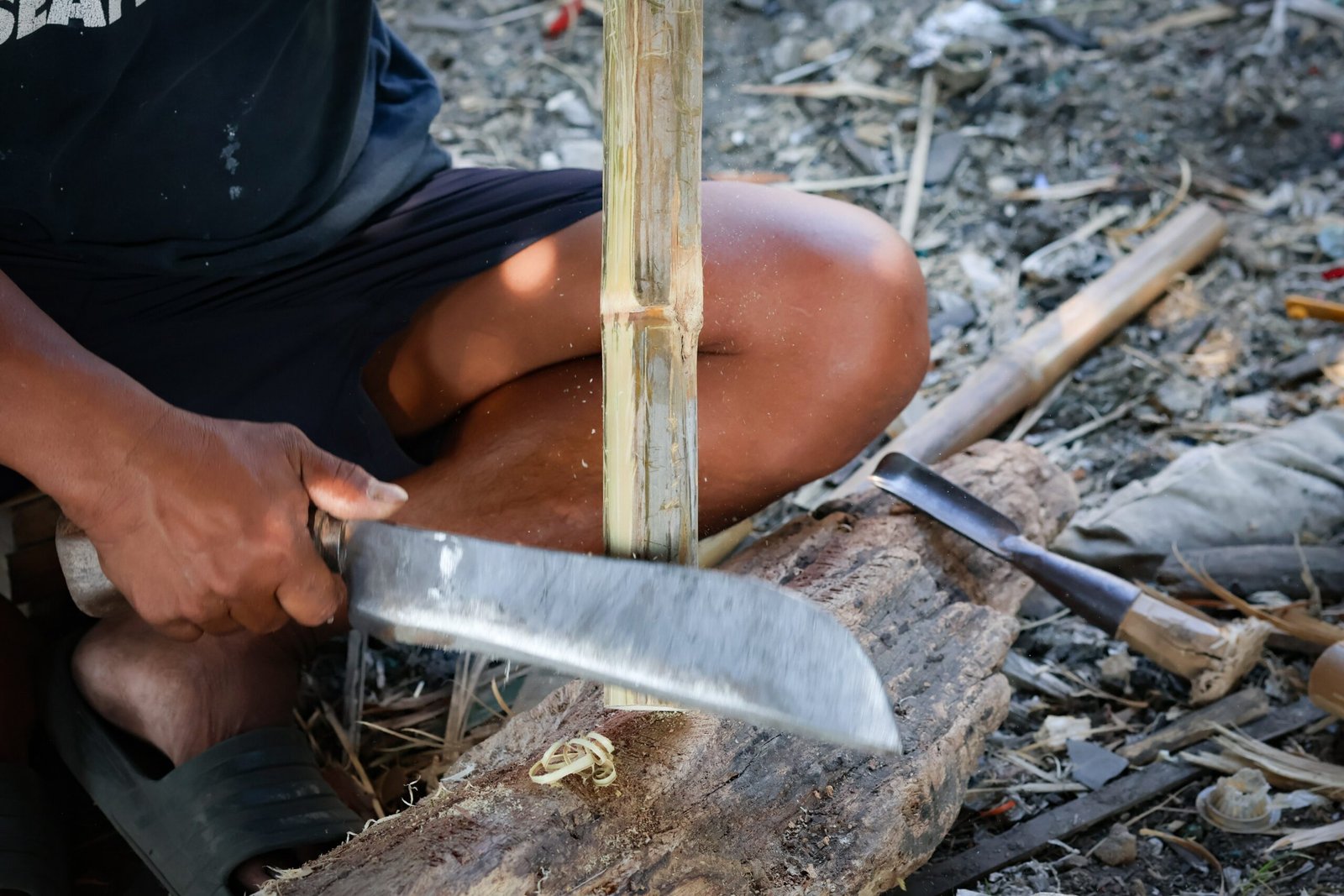
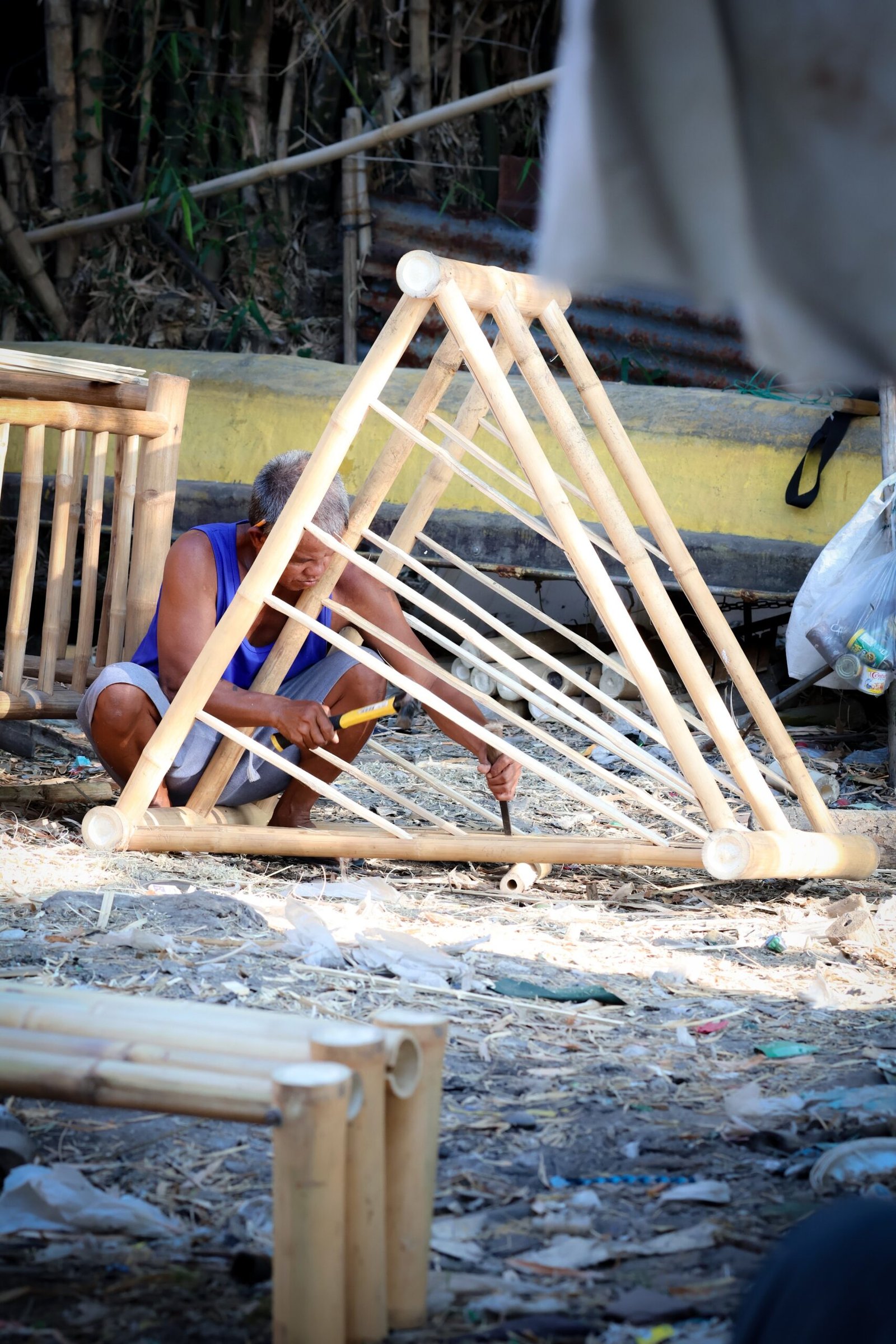
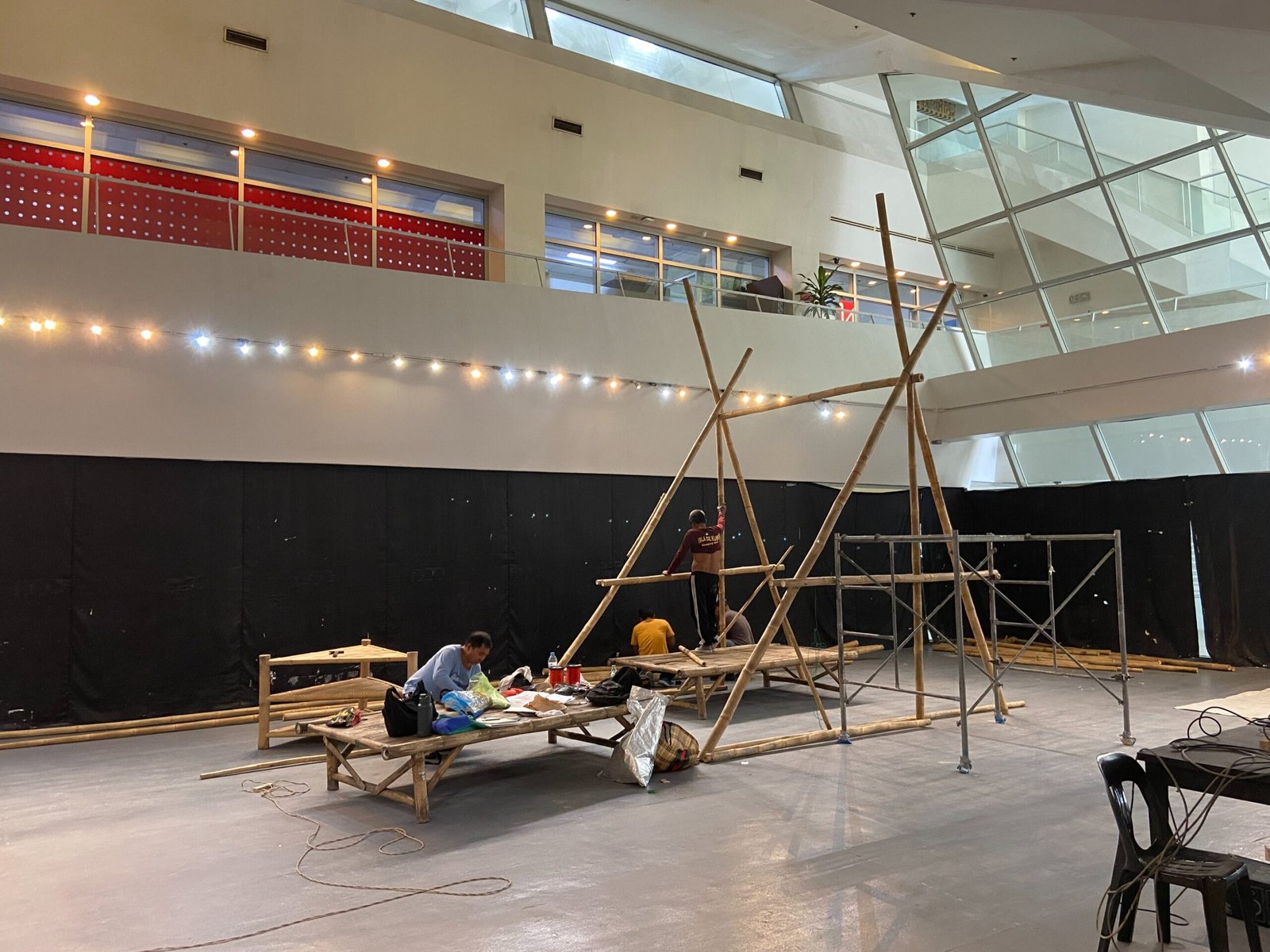
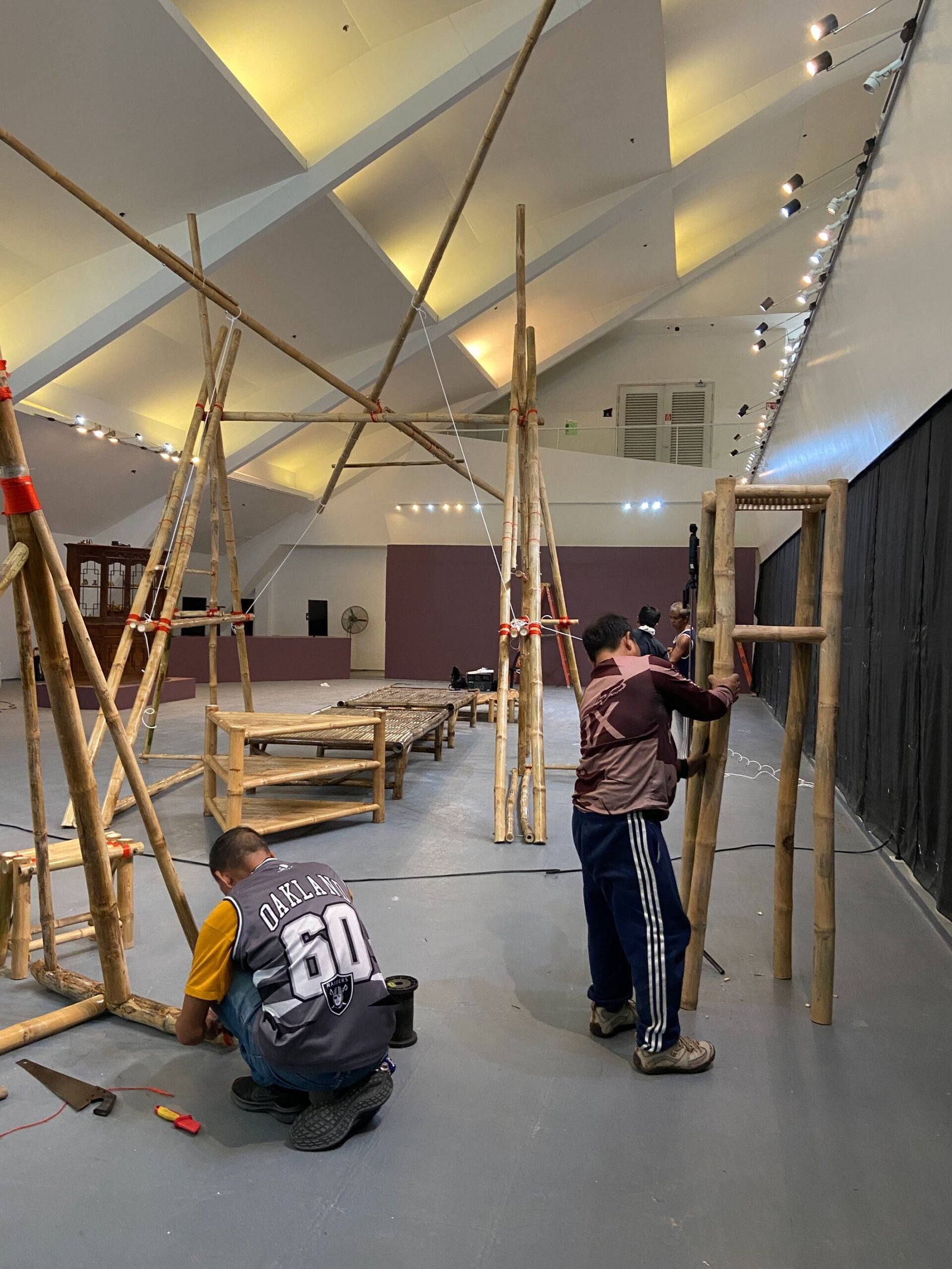
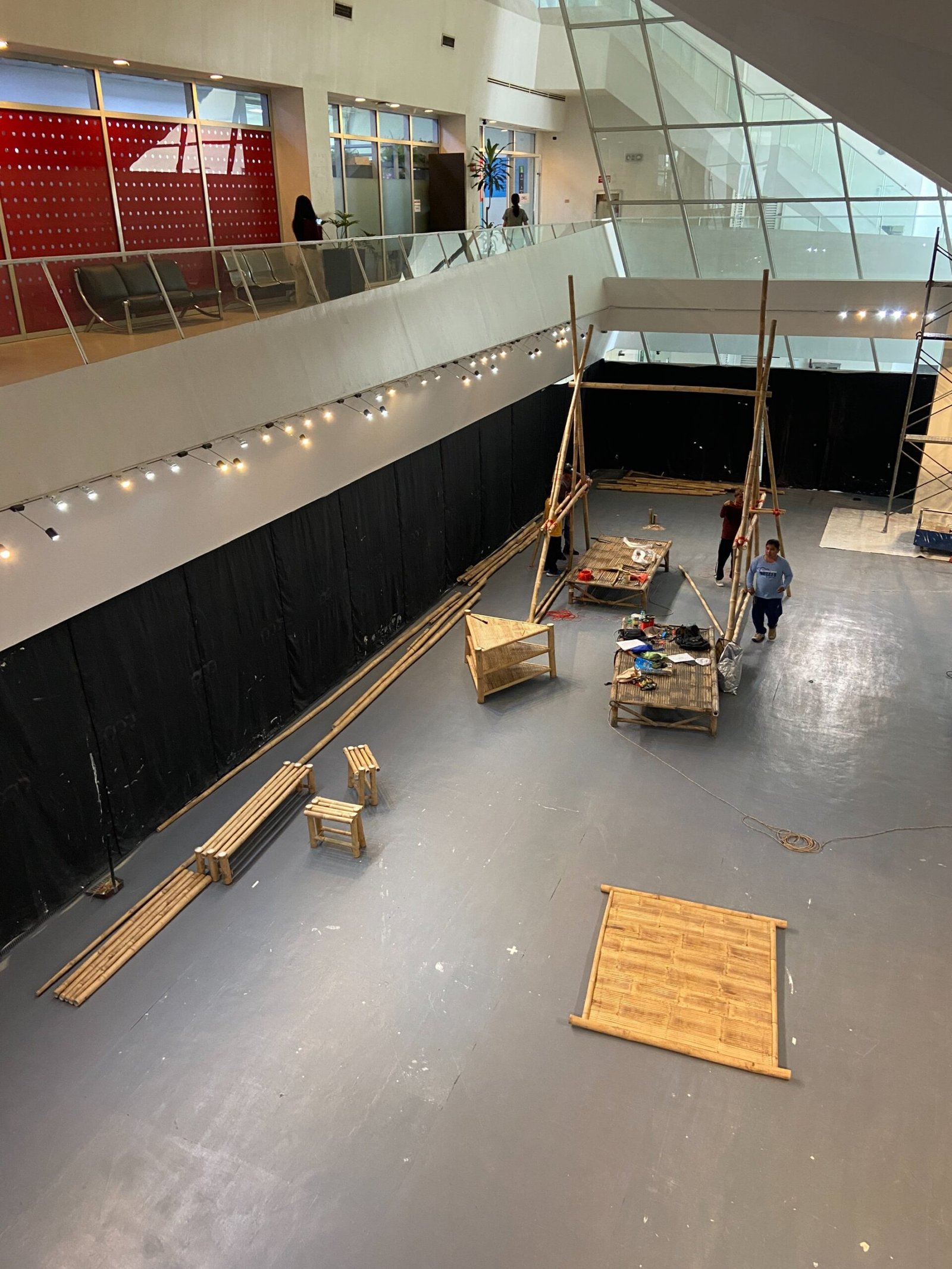
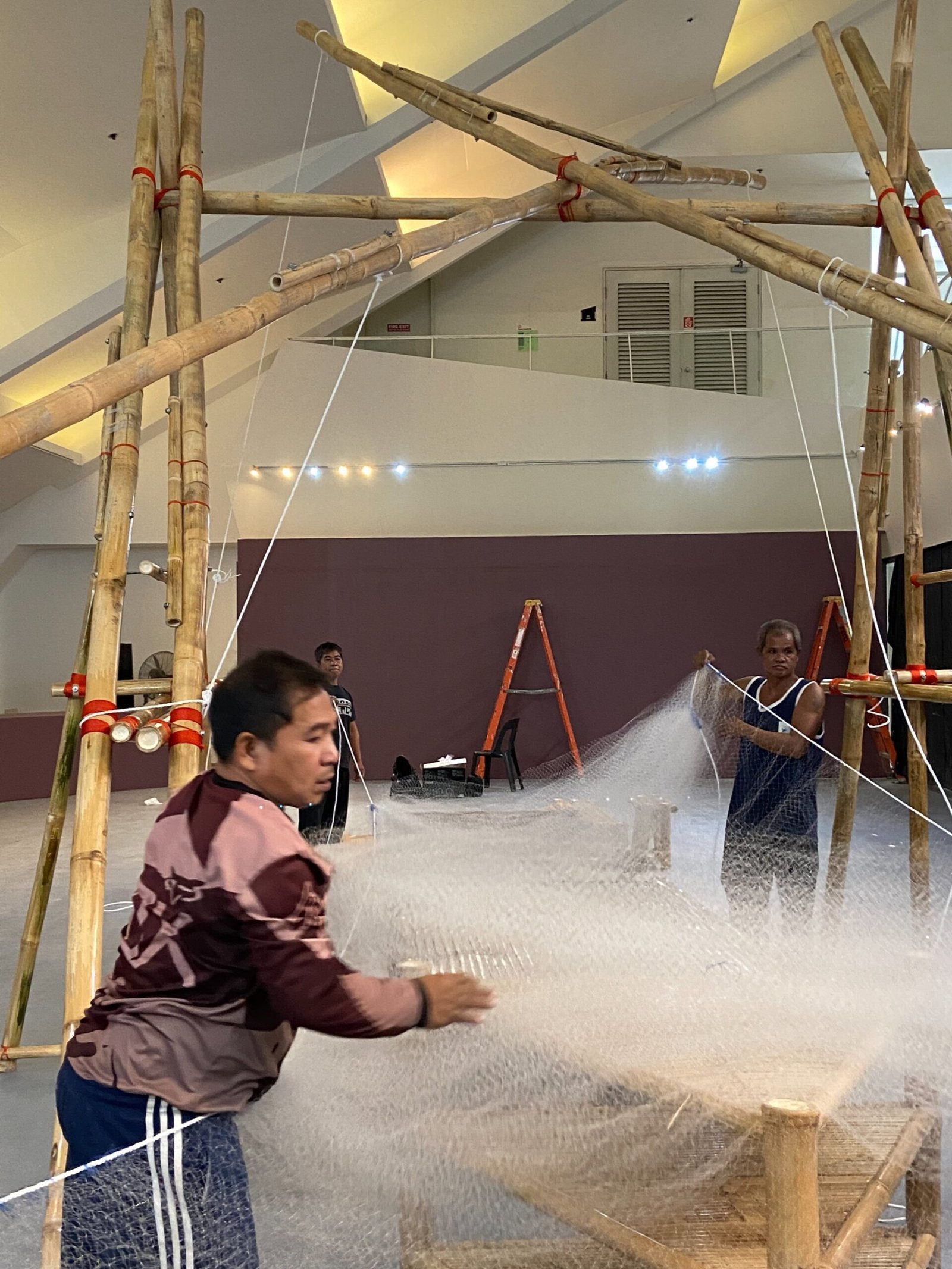
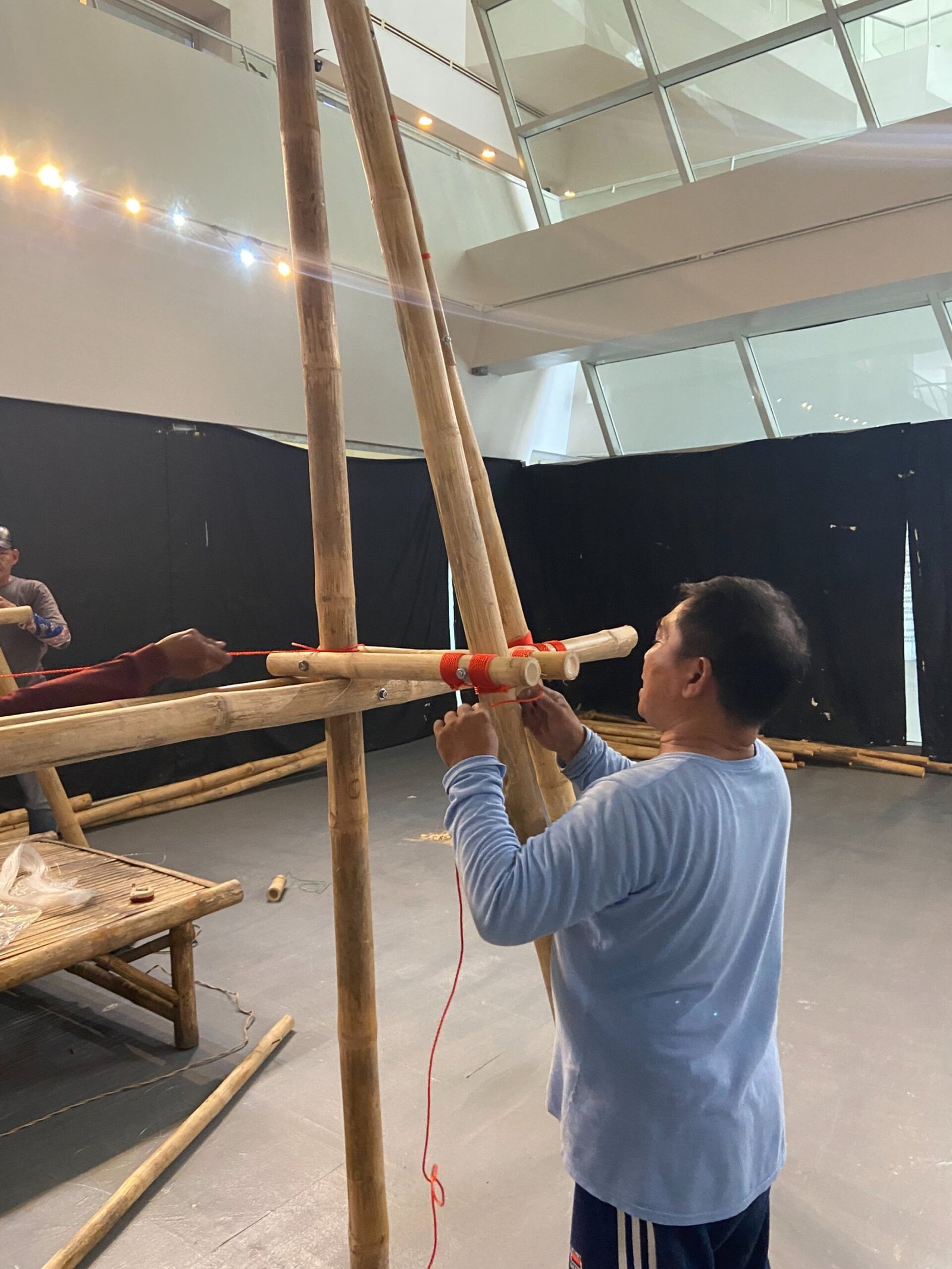
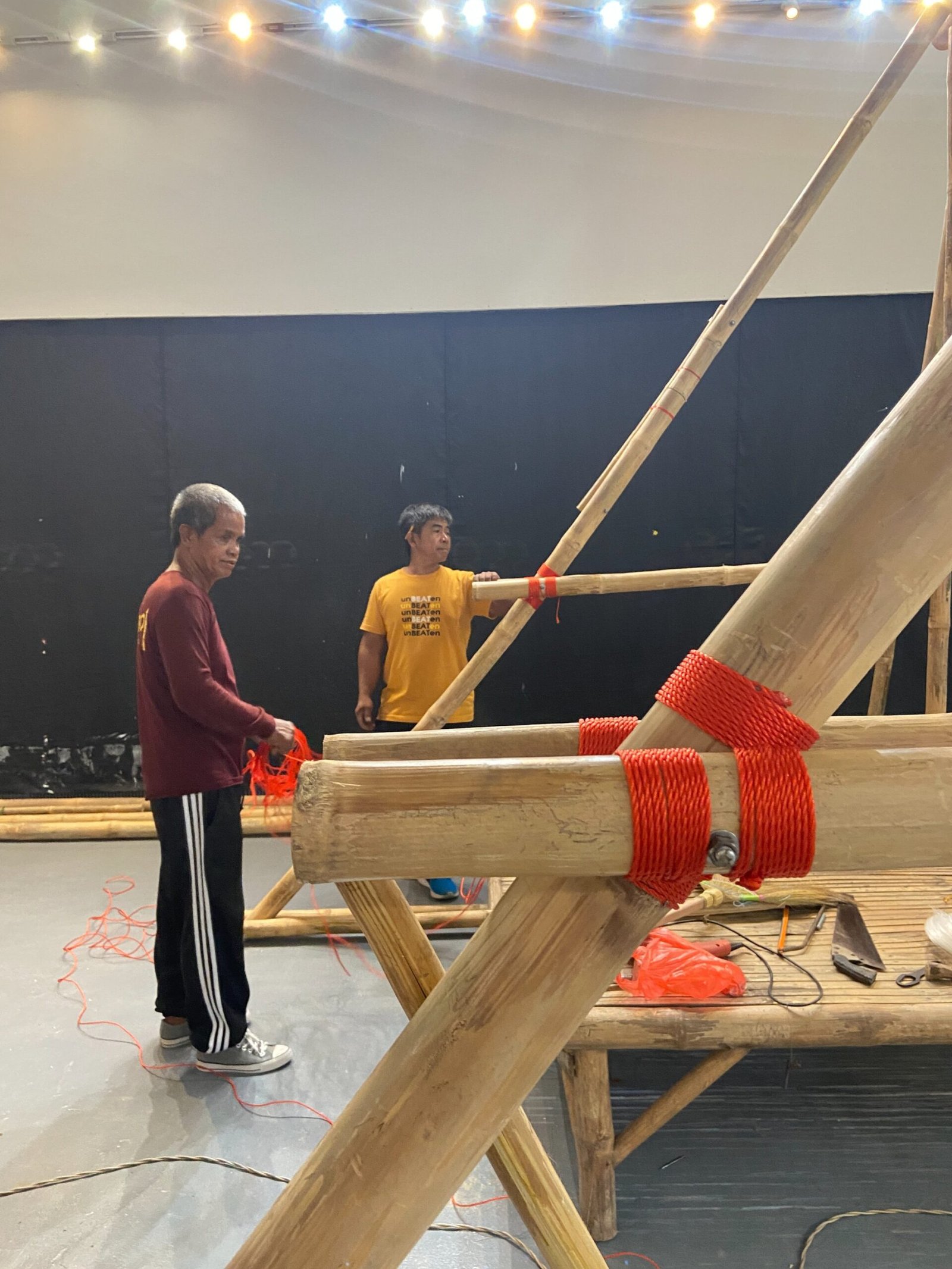
Eldry Infante: One of Maytubig’s key aspects is imprint. Either through making or participating. For the making part, Karl ensured it was a congregation of active participants, an antithesis to a “smart” future where a highly technicalized few decide the future of many. This time, we wanted to highlight the backgrounds of our workers from Talim Island, who have skills in building fishing infrastructure and tools.
If you check the working drawings for the installation, you’ll see tweaks made as a result of a dialogue with them about how to improve the structure. The bamboo and lashing were chosen based on the impermanent nature of the work, but it’s really about the making and who’s making it. A mode of gathering that is grounded in skill sharing, development, and community participation.
“I think creating this temporary structure made of materials that represent a different view of “modern” or “future” is an entry point, a rupture in the urban material and sensory palette, that can help surface or revive an ecological and historical sensibility in the audience’s body.”
KARL CASTRO
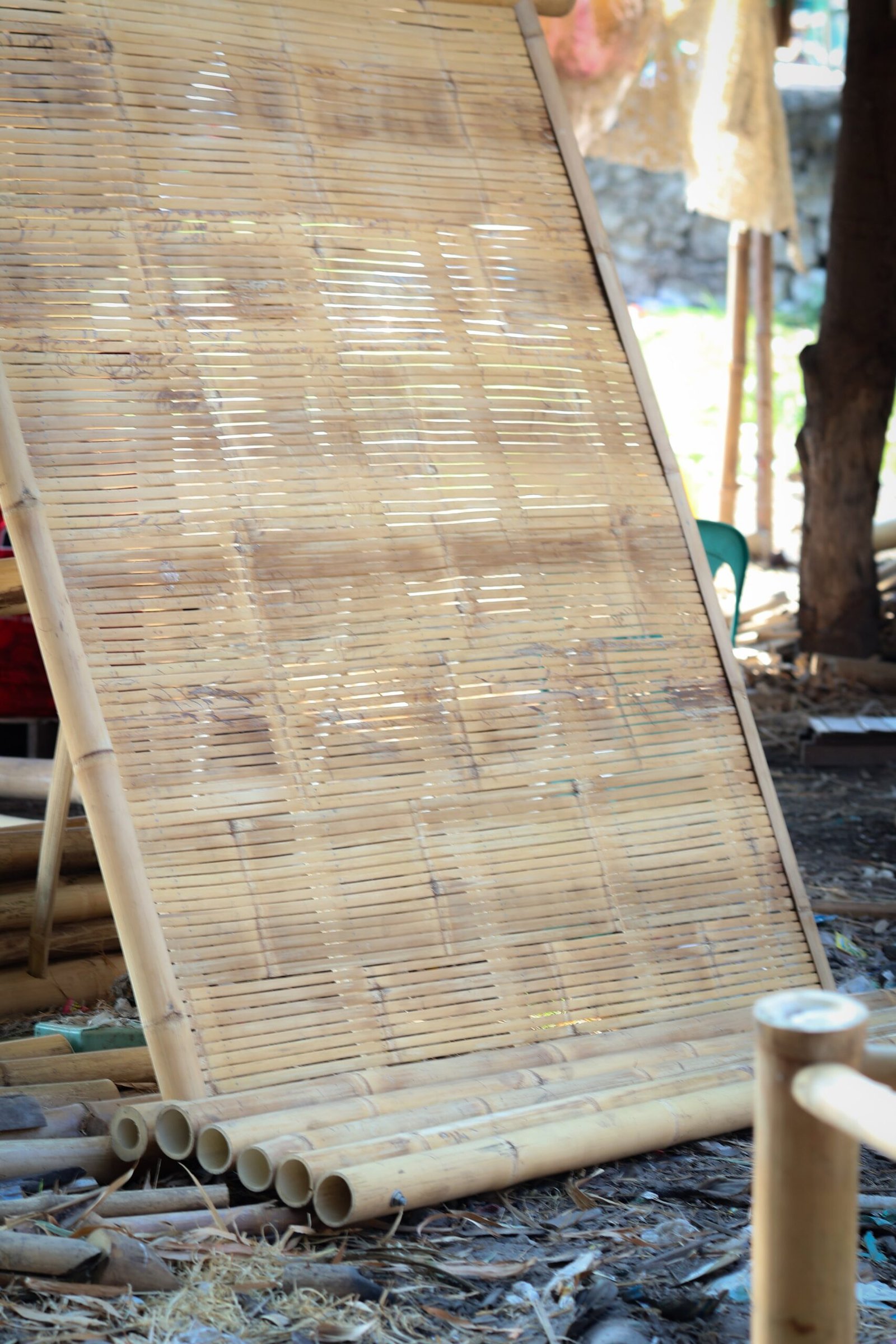
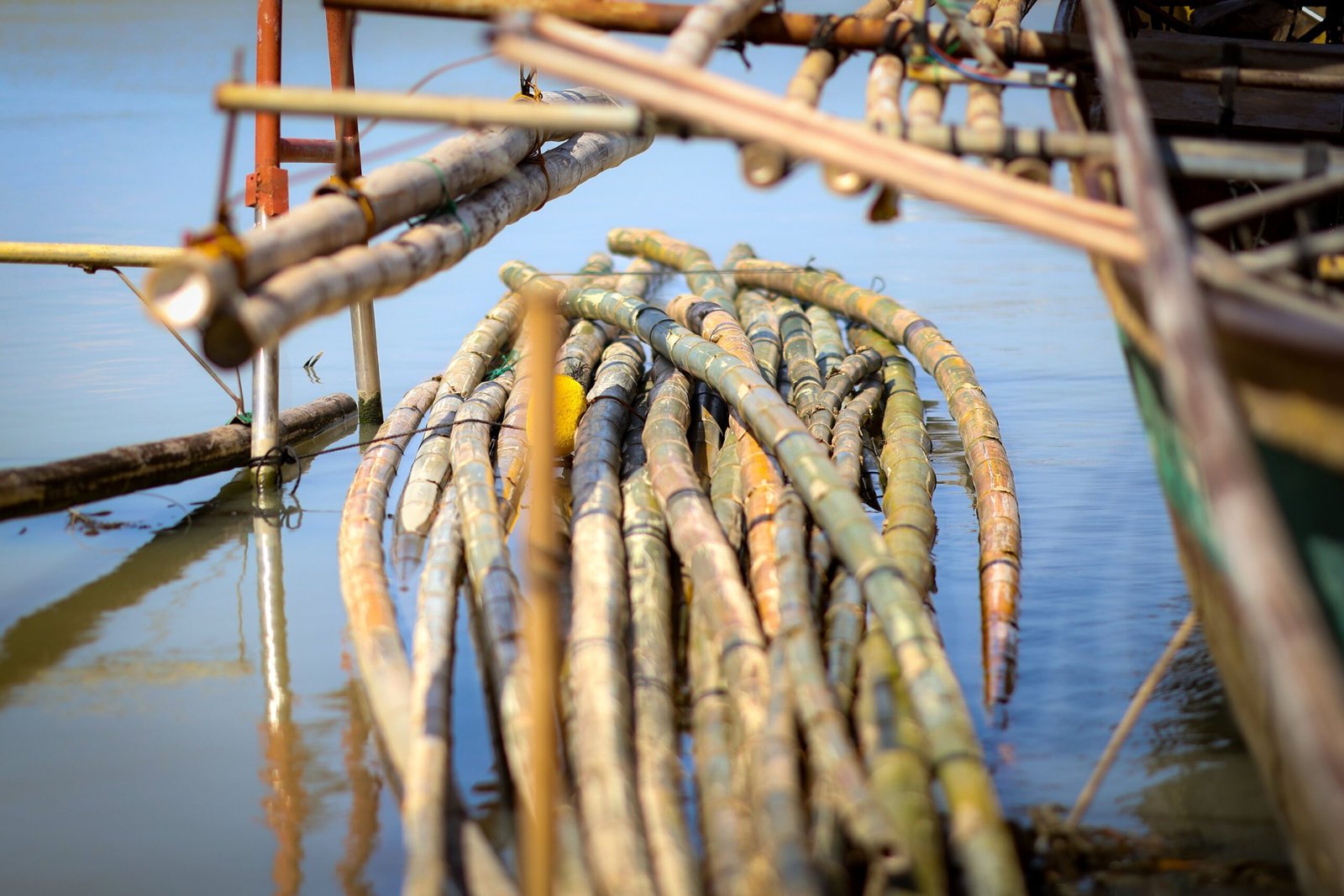
Maytubig is a beautiful and inviting third space, whose core is a non-neutral argument against systemic erasure. How was the installation designed to both allow artistic flourish and physical comfort in interacting with the installation, while remaining an effective conduit, and not a distraction from the ugly truths you’re asking the audience to confront?
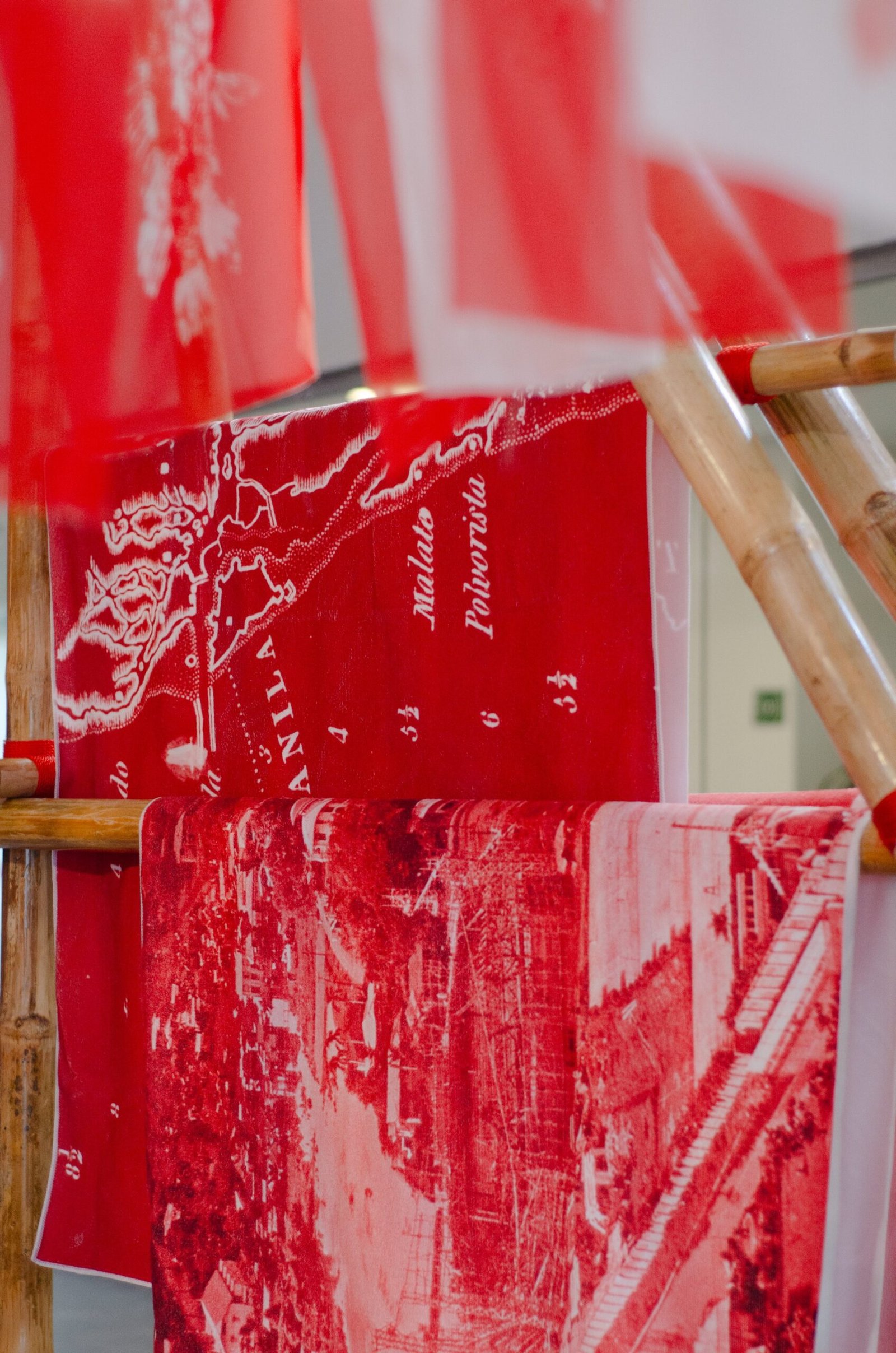
Karl Castro: I cannot speak in definite terms, as for me it is also a kind of social and artistic experiment. I don’t know if it works, but what I do know is the conditions I’m trying to create. And I also know what I hope these conditions make possible. Will interaction with these materials and choreographies—bamboo, net, hammocks, sleeping, lying, free congregation, rest, photographic textiles, zines, artistic process, etc.—lead to a different awareness or sensibility? That is the hypothesis I am looking to explore, and only time, sustained interaction, and reflection will tell.
Definitely, I am not looking to distract; in designing the work, I am not interested in photographability or spectacular scale, but more of a sensorial and even intellectual experience when you interact with the work on your own terms. The material and visual language are not particularly “new”; it may even be familiar and unremarkable. But that is precisely my choice: I don’t want newfangledness or spectacle to distract from the work’s core invitation to literally sit with one’s thoughts, dwell on histories, and allow the body to feel a different rhythm from the relentless documentation, communication, extraction, and dehumanization that characterizes contemporary life.
Moreover, by putting out a zine and a compilation that allow interested audiences to delve into the process and explore on their own, it also creates opportunities for those who want to do more.
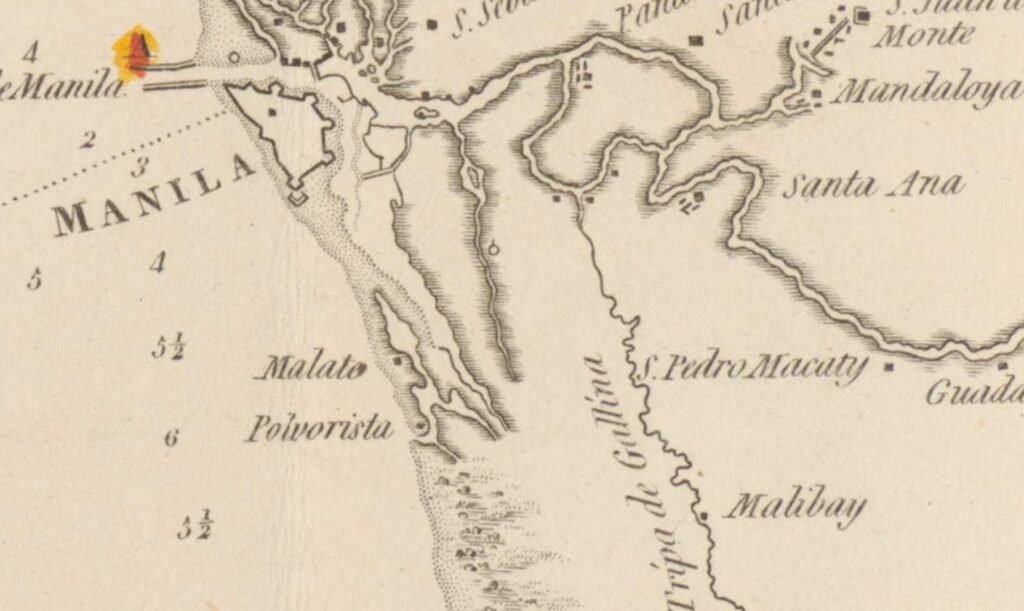
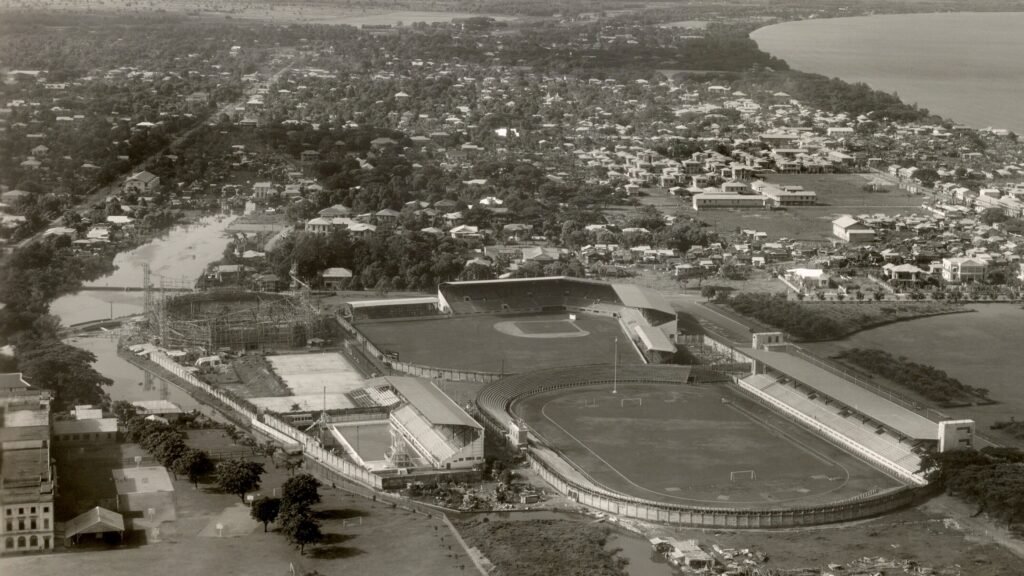
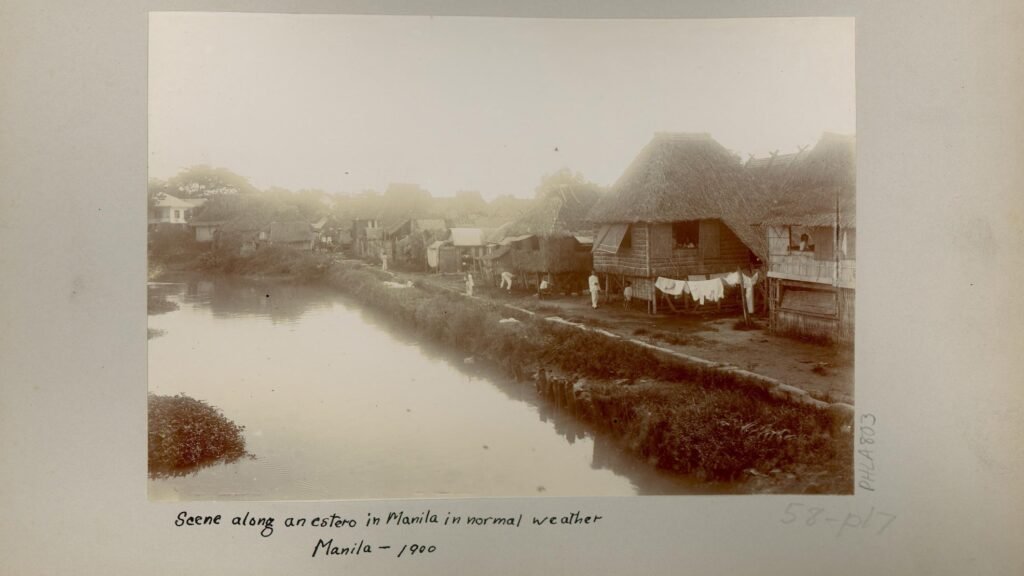
The Benilde Design and Arts Campus sits atop the buried Estero de Maytubig. In what ways does the installation negotiate its charged location? Is Maytubig an attempt to heal the building’s relationship with water through an offering? Is it an object of disruption that is deliberate in the striking, temporary questioning of its concrete logic?
Karl Castro: I think Maytubig operates on many levels. Firstly, there’s the opportunity to inform. I don’t think many in the La Sallian community are aware of the location’s ecological history, so offering an introduction to that is already an important entry point. Then there is the alternative material palette and bodily choreography. In the city, the use of bamboo is not prevalent. Rest and comfort are associated with Western forms like the sofa, the plush bed, and the air-conditioned room. And certainly, rest is not a concept associated with the academic and urban environment. The lack of parks and green spaces reflects the logic of productivity and policed behavior.
To create that kind of space is another important entry point. In the end, my goal is not to “heal” the building’s relationship with water, because that is not within my realm or agency as an artist. That is a collective decision for the La Sallian, Manila, and Filipino communities. But that shared agency will need a basis, a spark. And that is where my role as an artist comes into play.
Eldry Infante: On a campus level, in aid of it being a conduit of this confrontation, it serves the duality of the venue: a resting space for visitors and students, and a space of prolonged, embodied reflection as a gallery space.
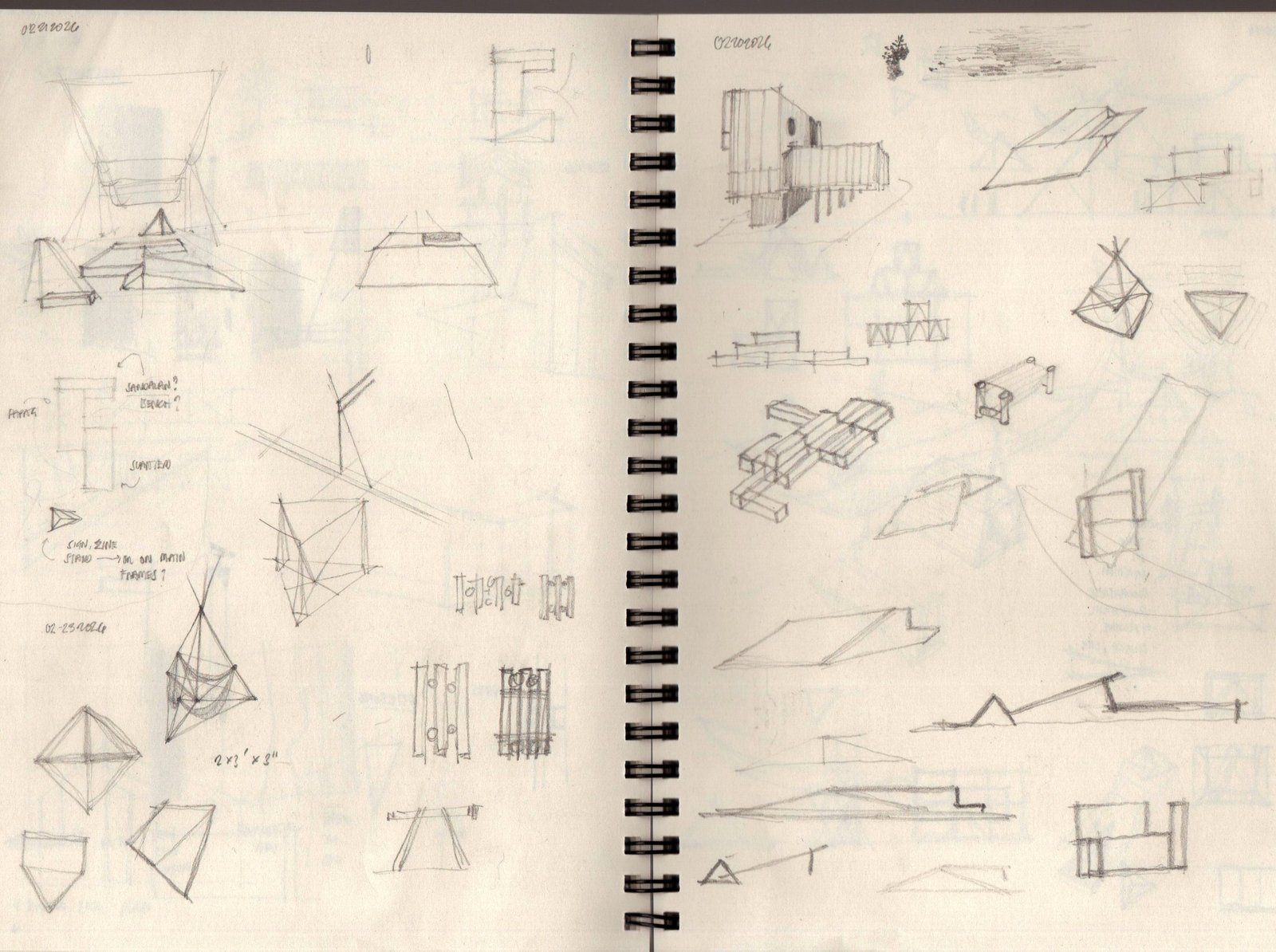
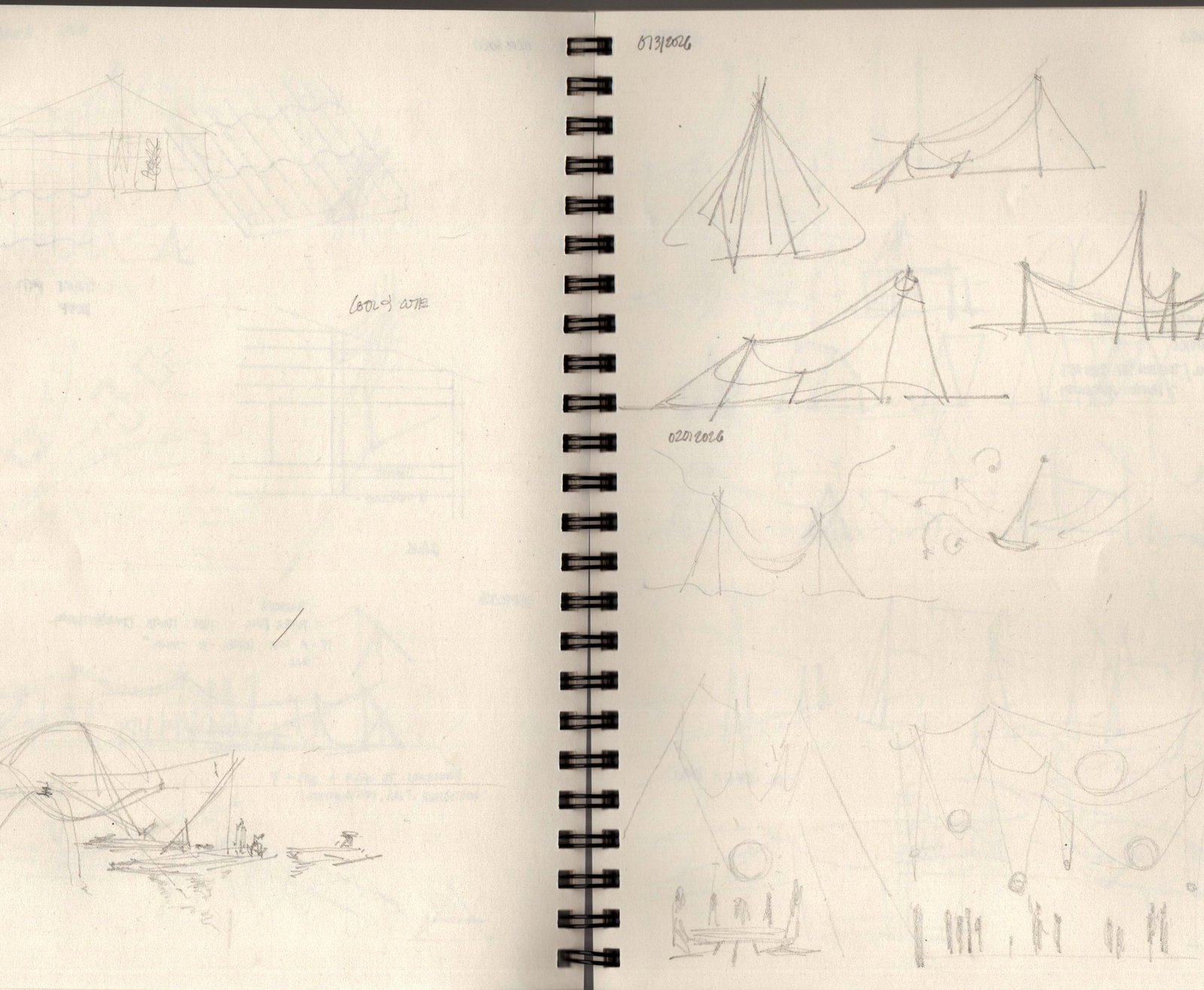
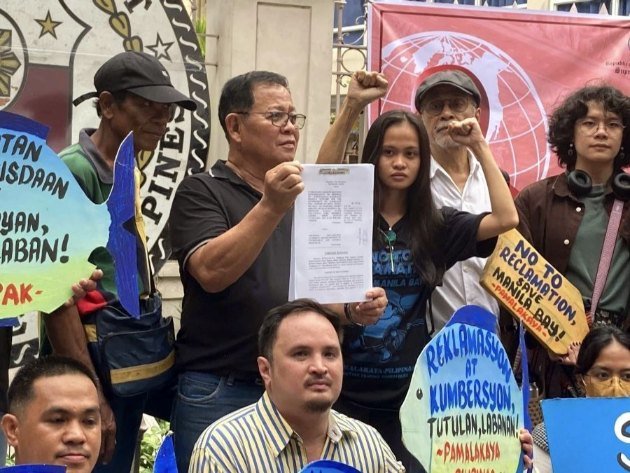
Maytubig is undeniably a project rooted in personal cause. Karl, you framed the collaboration between fishermen and activists as “social technology”; you are Petitioner No. 10 in an ongoing Supreme Court case on the Manila Bay reclamation. Beyond the symbolic and memory value of the gesture, how else does the installation function as a tangible “machine” for the ongoing legal battle to defend the bay?
Karl Castro: As with all major legal battles of a societal kind, these are won not only in courtrooms, which may be vulnerable to blind spots, conservatism, technicalities, or downright patronage. It is important that legal battles be complemented with people’s movements that create visibility and pressure, to show overwhelming public clamor and support. In this way, I see my work as an artist and my participation as a petitioner as complementary trajectories.
On a personal level, projects like Maytubig are a way for me to discover and develop my path as an artist-activist, engaging in my specific historical and material circumstances. They help sustain my investigation and inquiry. At the same time, since I like to collaborate and work collectively, this journey becomes a shared experience, and thus a richer, more complex dynamic of interrelatedness. In this way, the inquiry grows and becomes no longer simply my own.
To engage with complex matters such as Manila Bay and Laguna Lake, which have been addressed in many ways before, I think it is important to create a culture that is more aligned with communitarian and ecological ideals and more sensitive to gender dynamics and class interests. Works like Maytubig can only really provide a rupture in the daily routine and give pause, but that pause has the potential to be pivotal in cultivating that alternative culture. It is that alternative culture which can prove to be a driving force in shaping the future of Philippine waters.
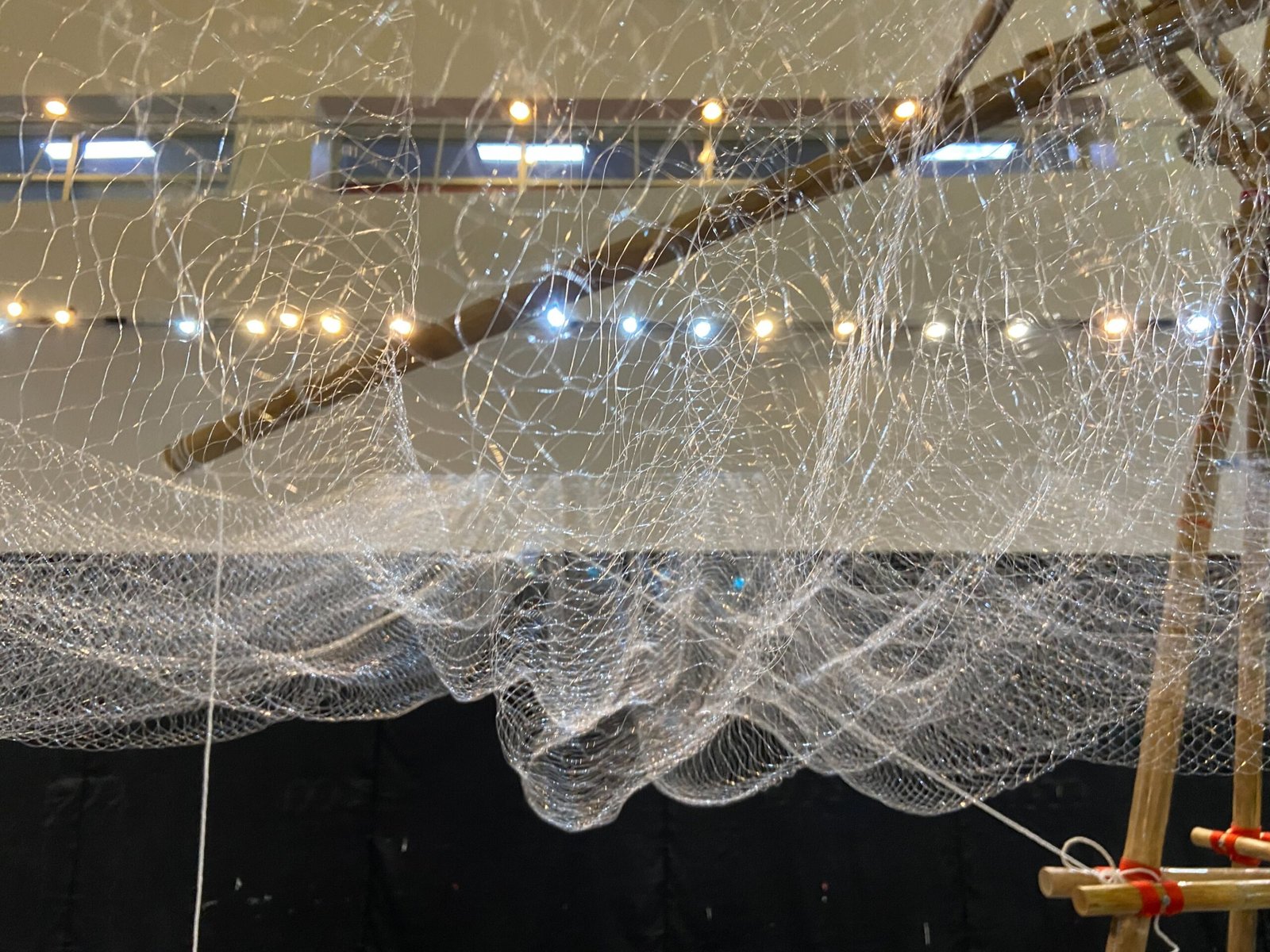
Reclamation is permanent and capital-heavy; Maytubig is modular and temporary. What is the kinetic residue you expect the installation to leave in the city’s/visitors’ collective memory when it’s time for the bamboo to be dismantled?
Karl Castro: I hope people remember the feeling of having a free, open, accessible public space. I hope they have good times relaxing and hanging out with each other. I hope people appreciate what it feels like to have kind, generous spaces that recognize, even prioritize, human dignity. And I hope people look at the landscape with new eyes, looking for nature where ecological spaces and sensibilities have been suppressed, and how they can be revitalized.
Eldry Infante: I am lucky to consider Karl one of my design mentors. Attending one of his past opening speeches, his stance on remembering as an active practice stayed with me. The permanence that we find on our shrines, memorials, and museums becomes a tool of forgetting because they’re just there. Complacency kills memory because we expect it to stay. I hope that Maytubig’s ephemerality leaves a mark like water leaves sediment or a mark on riverbeds. I hope they’re also reminded that the historical, current, and future issues the installation surfaces affect many people in many ways.
It is important to remember the grant’s “OPEN” identity and challenge to its grantees. Let’s open our minds and envision a city that regards the universal value of water as sacrosanct, a city that has no need for Maytubig, the installation, to exist. What does the future of Manila’s waterways look like to you both?
Karl Castro: Honestly, I have no idea. The future seems bleak because legal processes take time, and powers often listen to money more than to artists or environmental advocates. If the government had its way, perhaps Manila Bay would be a completely reclaimed area by now, with an AI-generated sunset to pair with the artificial dolomite beach. And the Pasig River would be the new EDSA. For now, what only seems possible is to manage–that is, dredge, mitigate, and remove trash. But that is really a failure of imagination, a lack of ecological awareness, and a weakness of political will. Until we address that, we will have to endure the indignity of all these stopgap, band-aid, aesthetic solutions at best; worse, we might even see more zany, incomprehensible ways of destroying these waterways.
The future of Manila’s waterways lies in building a strong people’s movement that will assert these rights and sensibilities, and build enough power to turn the tide. If we want to save the waterways, we have to elevate our consciousness and embrace the messy task of organizing.
Eldry Infante: I hope the future of Manila is a return to its natural systems. Control over nature and separation from it are illusions. I yearn for this city’s future to blur the boundaries and treat its waterways as equitable places for all. Where people can have memories of a clean river and a shoreline within a city. Waterways become airways to alleviate urban heat, and the pristine sunset of the bay can penetrate as far back from the shore as possible. What a joy to also use the water from the esteros for cleaning or maybe drinking? Haha, maybe too far-fetched, but why not! •
Visit Maytubig and the works of nine Benilde OPEN grantees on the 6th and 12th floors of the De La Salle – College of Saint Benilde, Design and Arts Campus. Benilde OPEN: Extension of Nature is on show till April 27, 2026