Words Anna Cabasan
Editing The Kanto team
Images Bien Zaporteza
Slowdown House, located in Biñan, Laguna, is envisioned as a quiet retreat for a young, artistically inclined couple seeking respite from the fast-paced life of Metro Manila. Originally briefed as a smaller 70 sqm rest house, the design grew alongside its owners’ aspirations. Conceived by Studio Anna Cabasan as a weekend home, it was made not just for temporary escape but as a setting that feels like home.
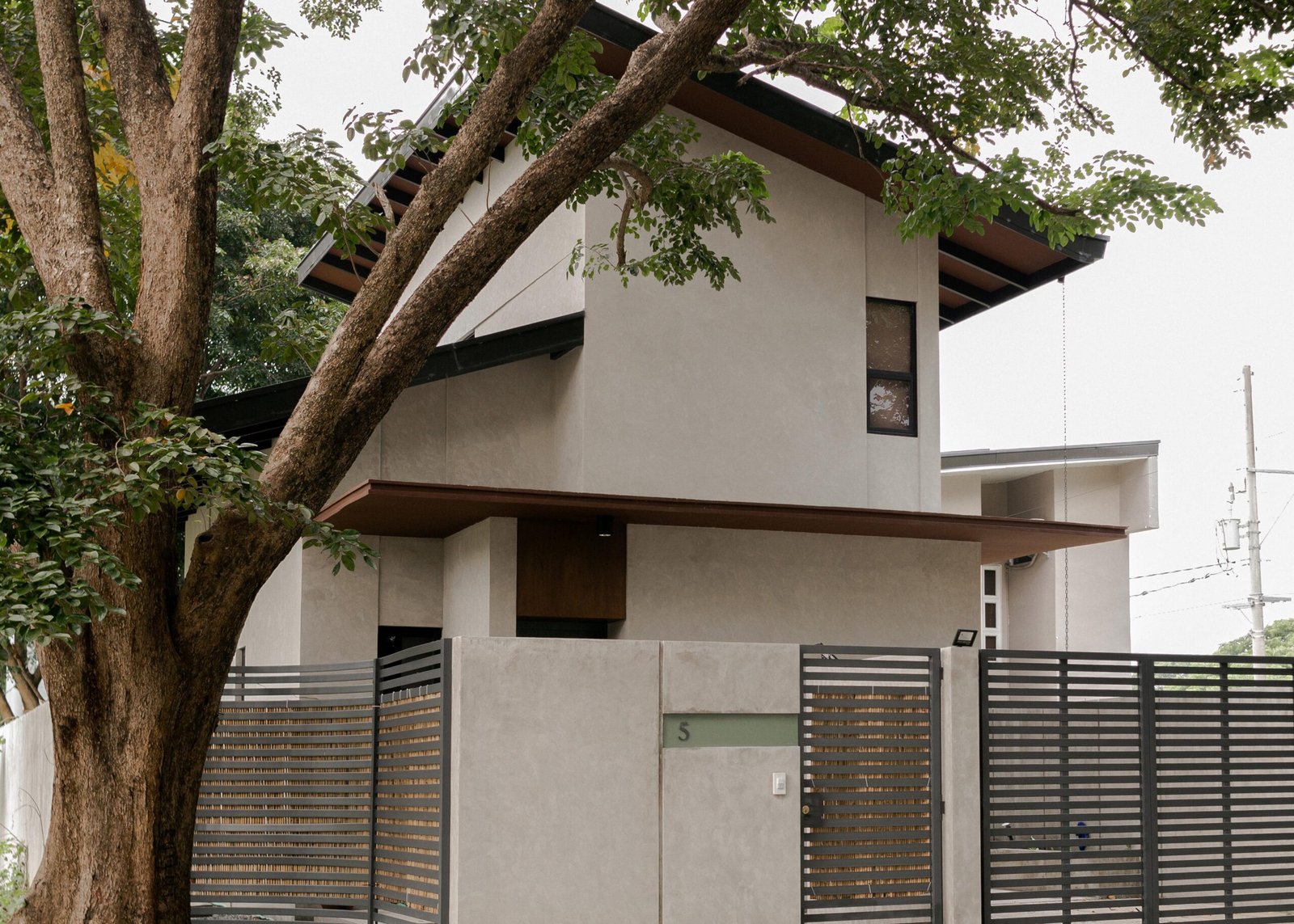
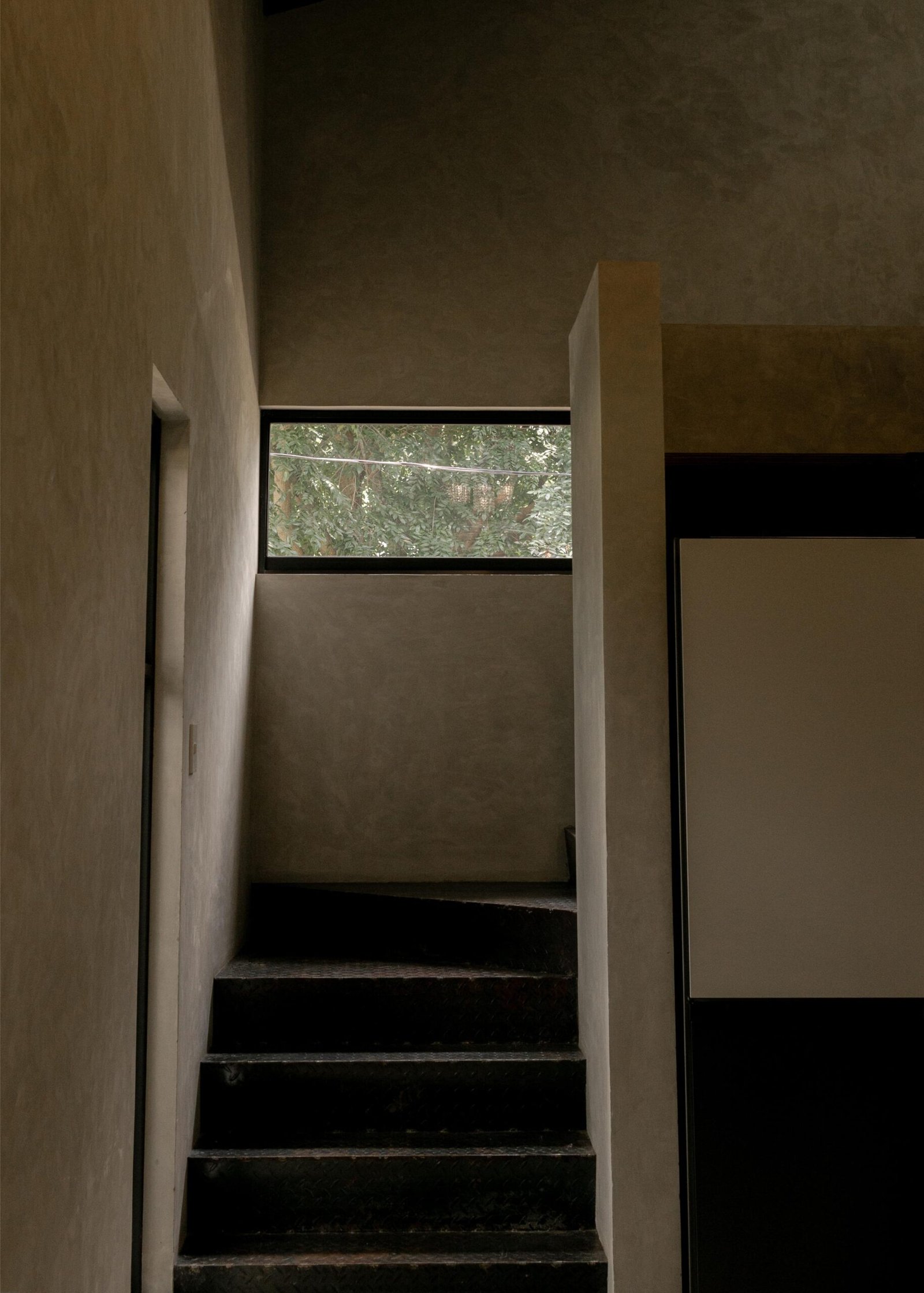
At the corner of the lot stands a mature Narra tree, anchoring the house to its setting and creating a sense of arrival. The clients primarily bought the property because they were enamored with its presence. This inspired a façade with a classic silhouette, reminiscent of traditional homes often found in childlike illustrations. While the tree technically stands outside the site perimeter, the house was carefully designed to connect with it. A concrete bench and planters along the perimeter wall allow the owners to linger beneath its shade, while its branches can be appreciated inside, especially from the second-floor clerestory window.
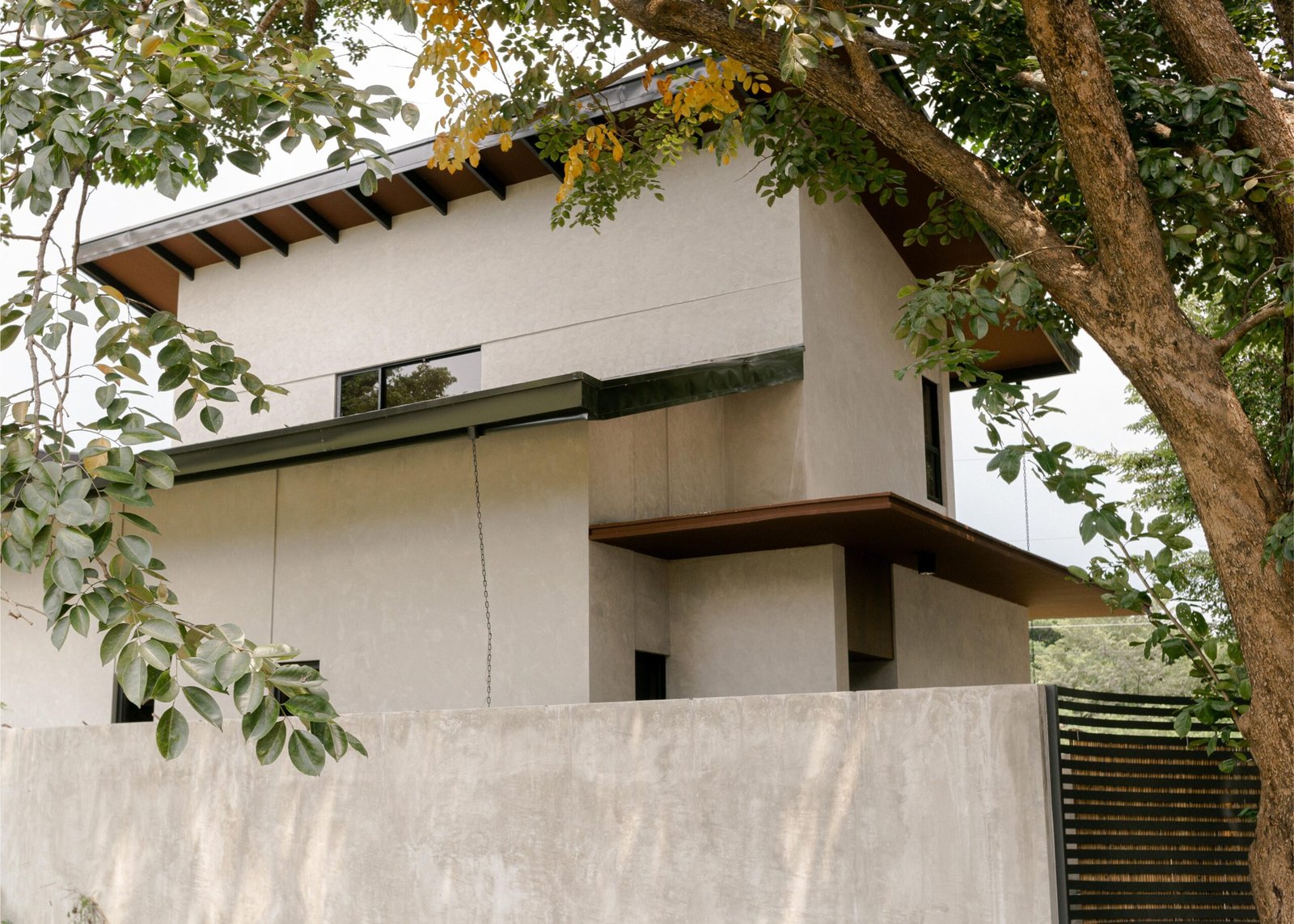
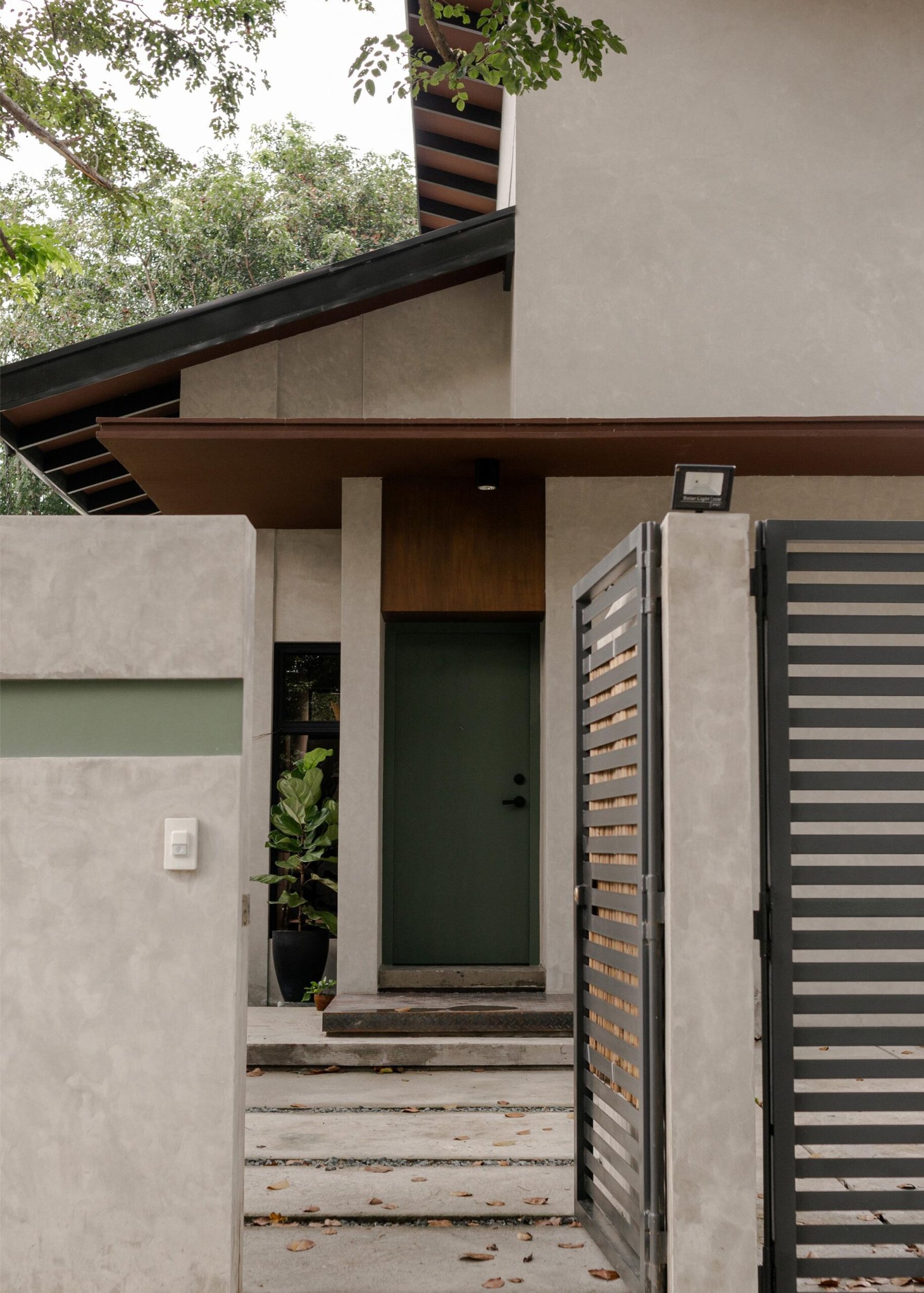
I was seeking to establish a sense of balance by introducing a softer and familiar silhouette. One that evokes a sense of home. The clients, too, wanted the house to feel rooted in the comfort of provincial living, expressed through a contemporary-industrial palette. This project marked a personal shift for me, steering away from a strictly contemporary approach toward a more nuanced architectural language.
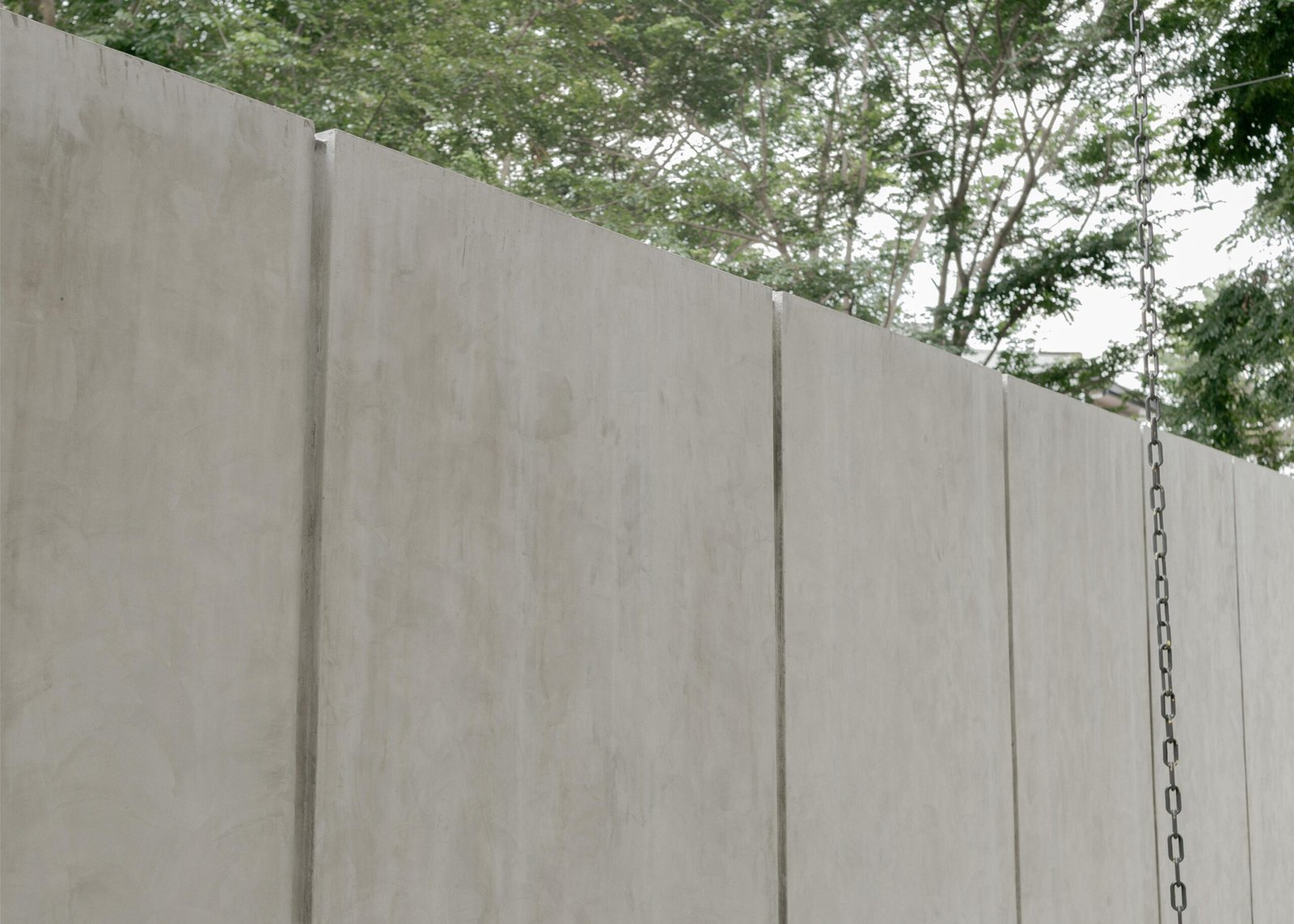
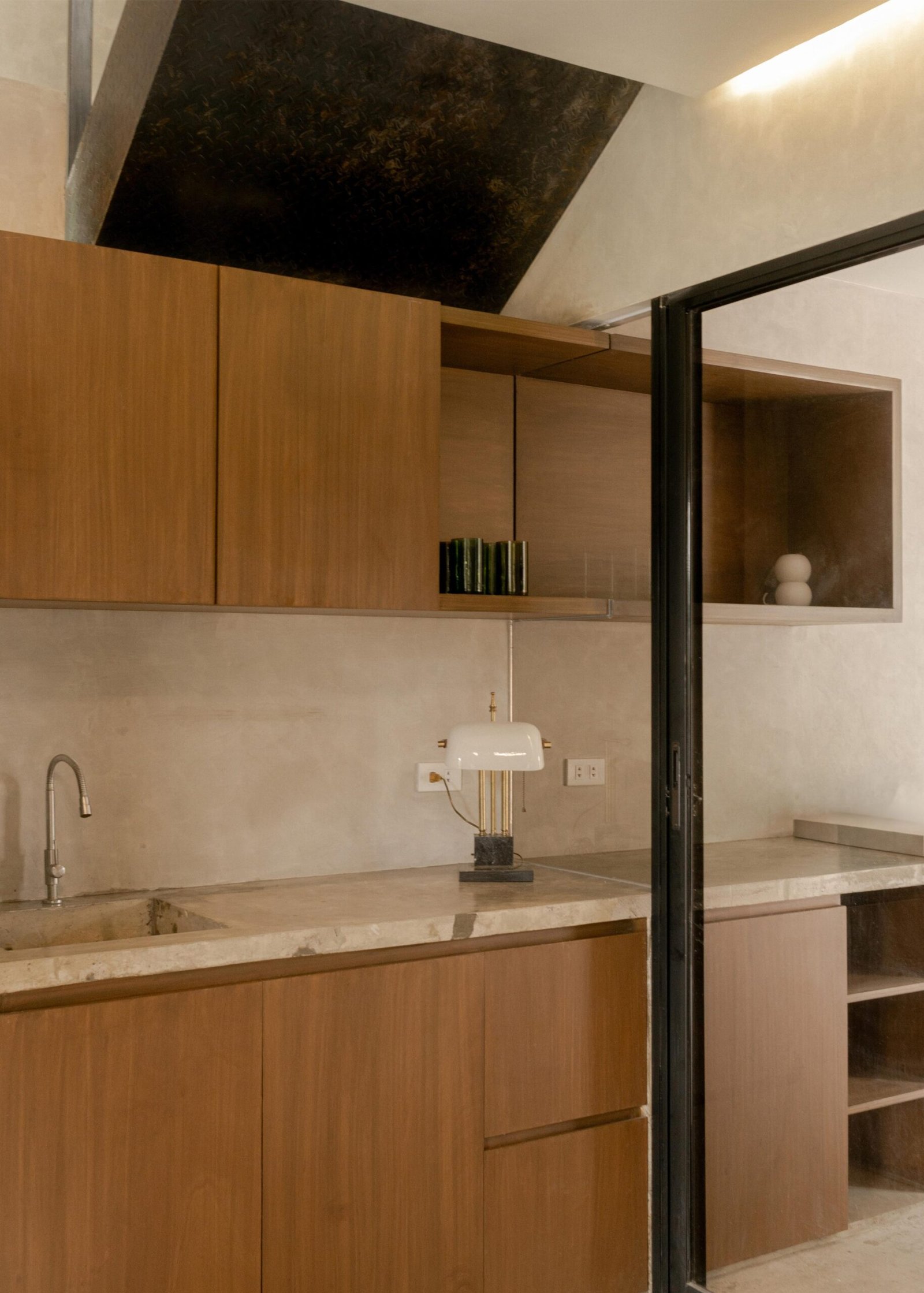
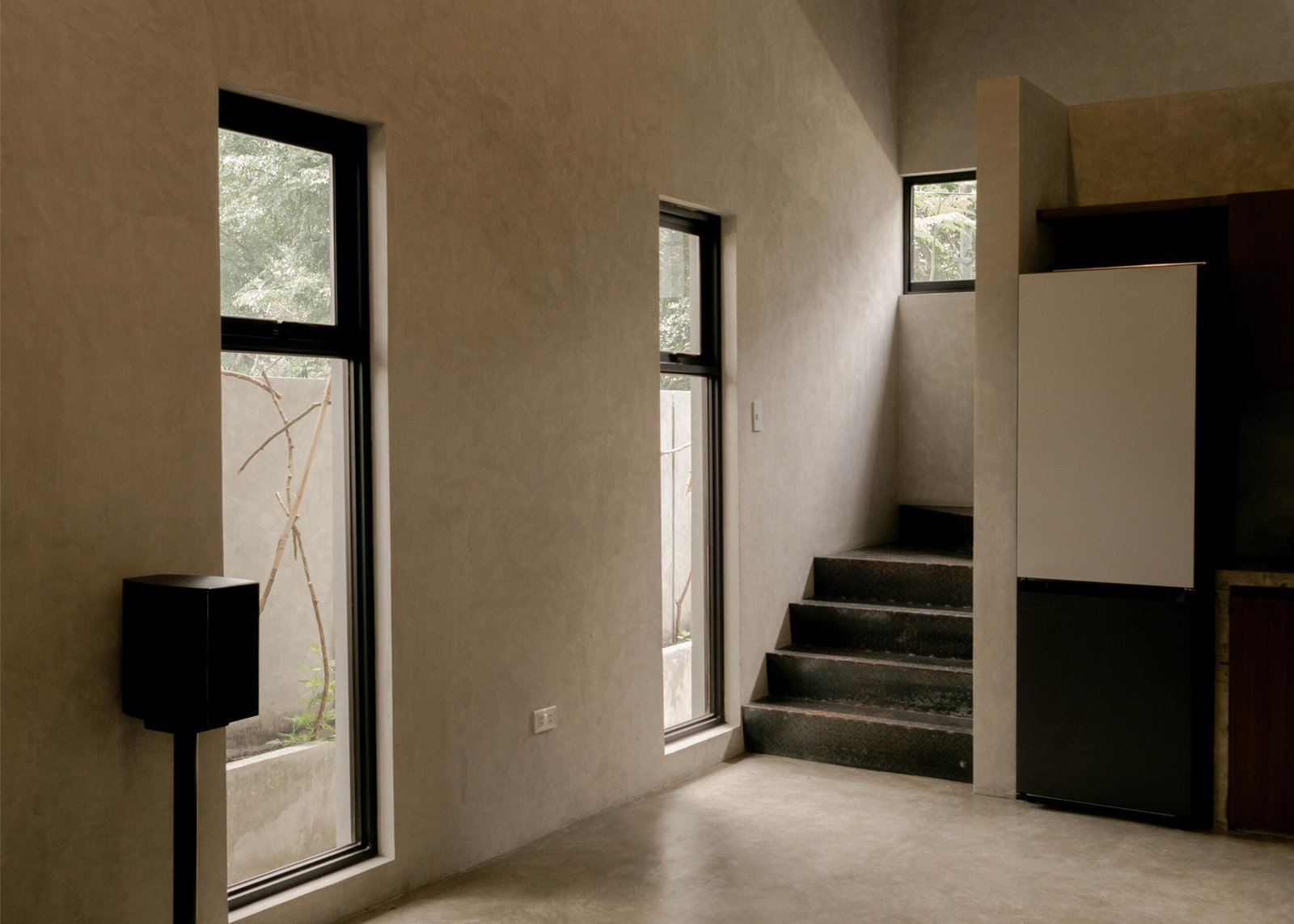
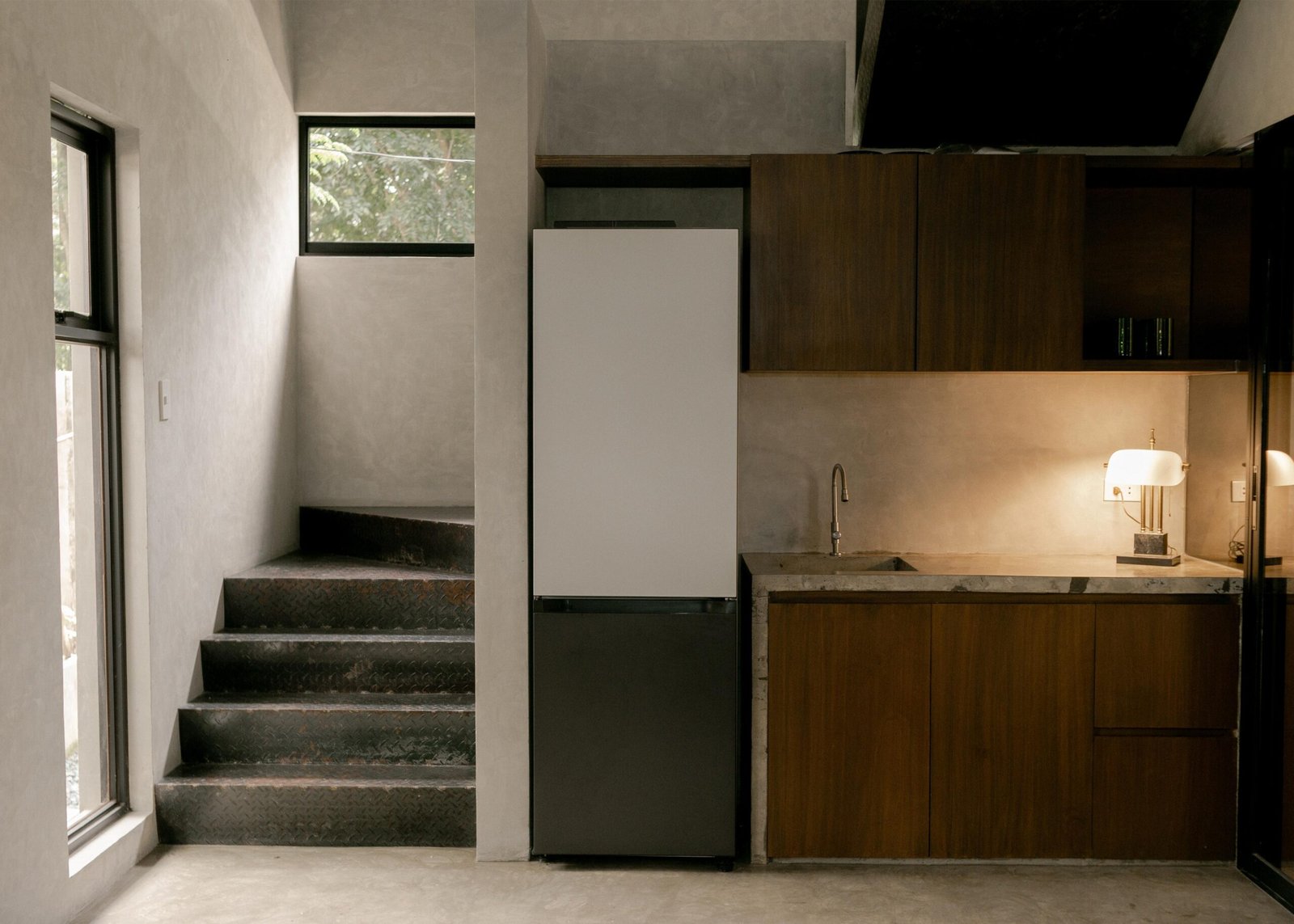
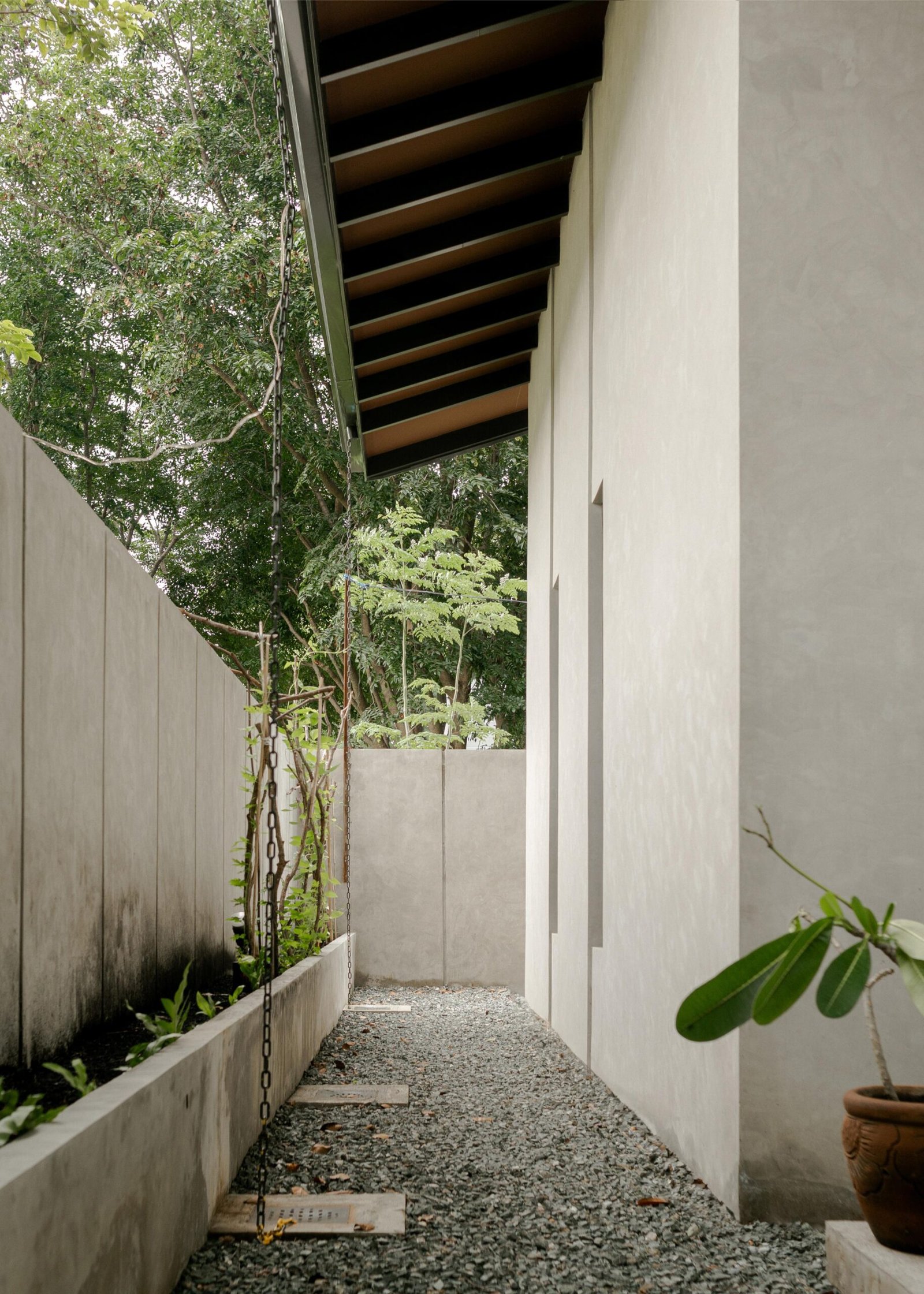
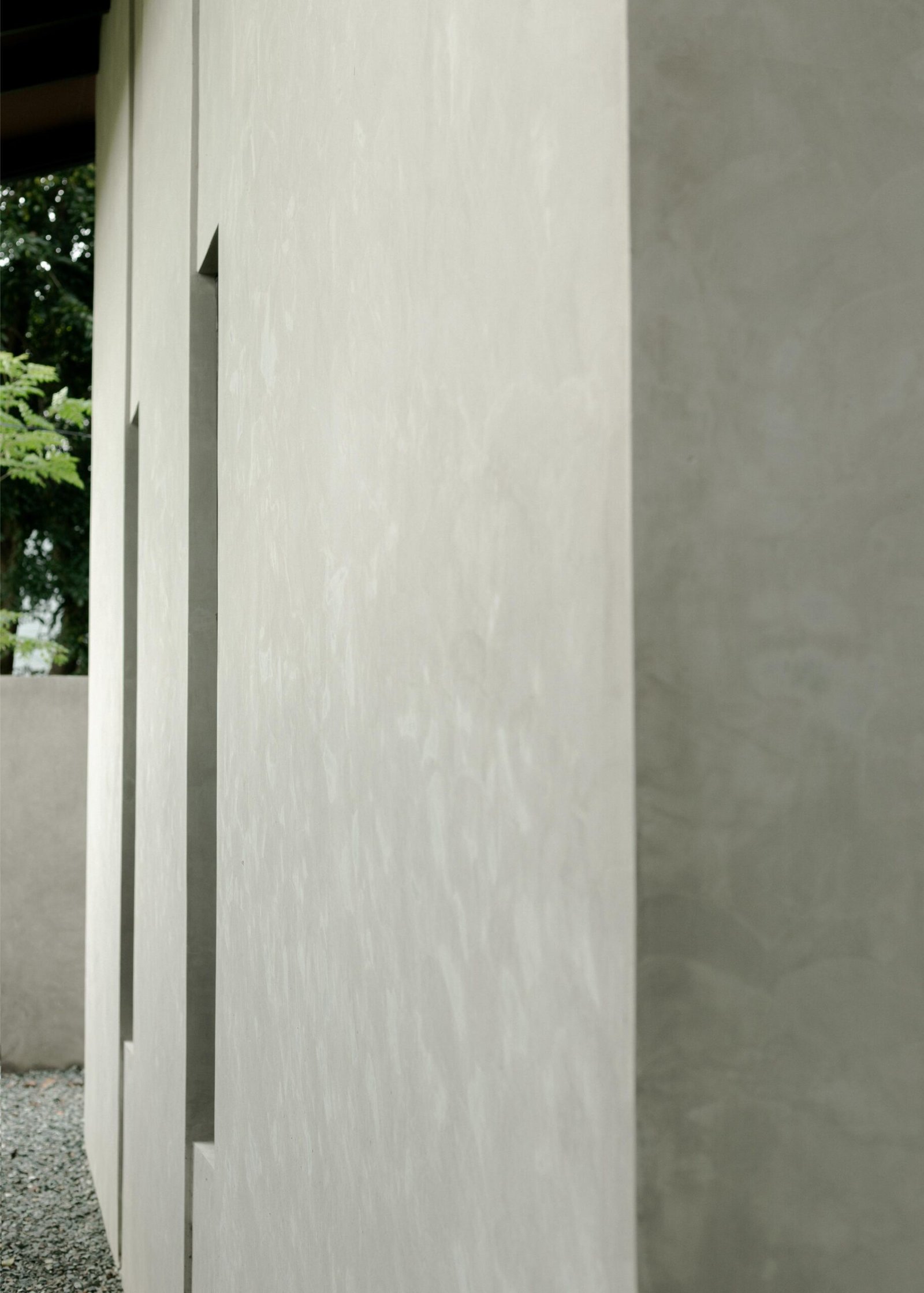
Materiality plays a key role. Raw and honest finishes were specified: skim-coated concrete walls paired with warm wood and brown-painted elements, a steel diamond-plate staircase, and a rain chain replacing the conventional downspout, turning drainage into a subtle water feature. The green entrance door also adds a playful contrast, reflecting the couple’s artistic background. One of them, Bambina Aseron, being an artist, has an appreciation for patina and how certain materials age over time. These qualities were discussed before implementation to ensure everyone understood the materials’ potential.
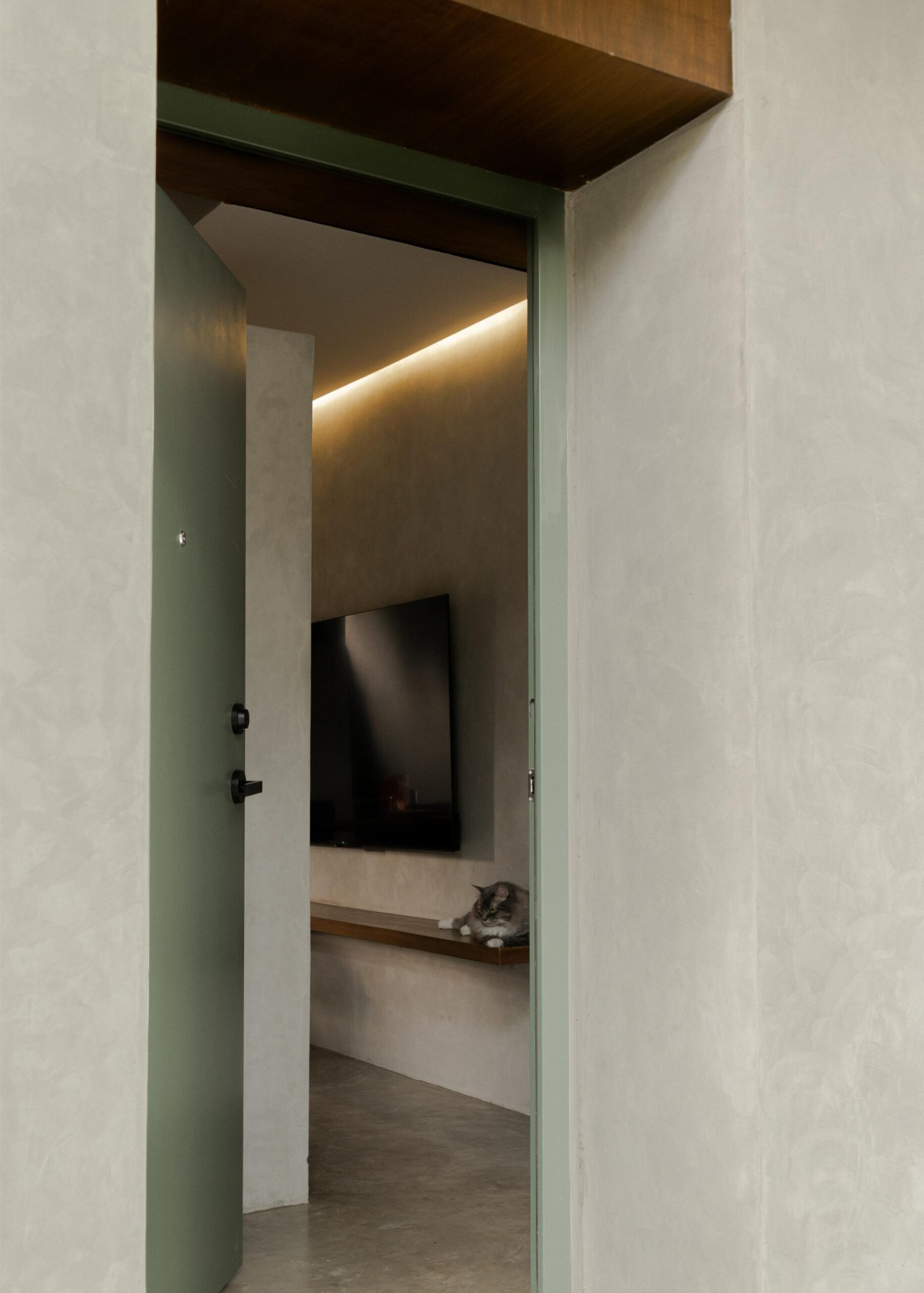
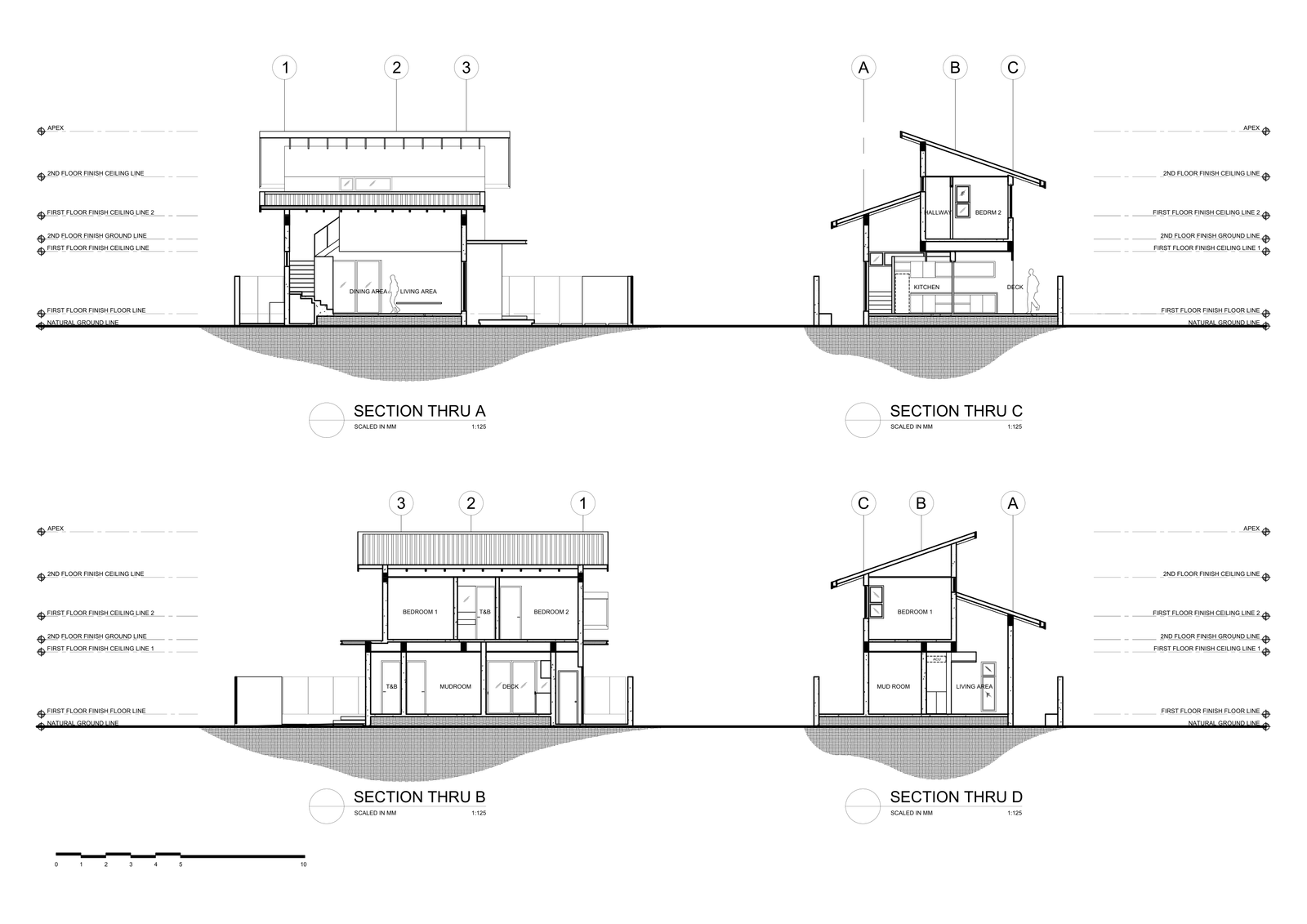
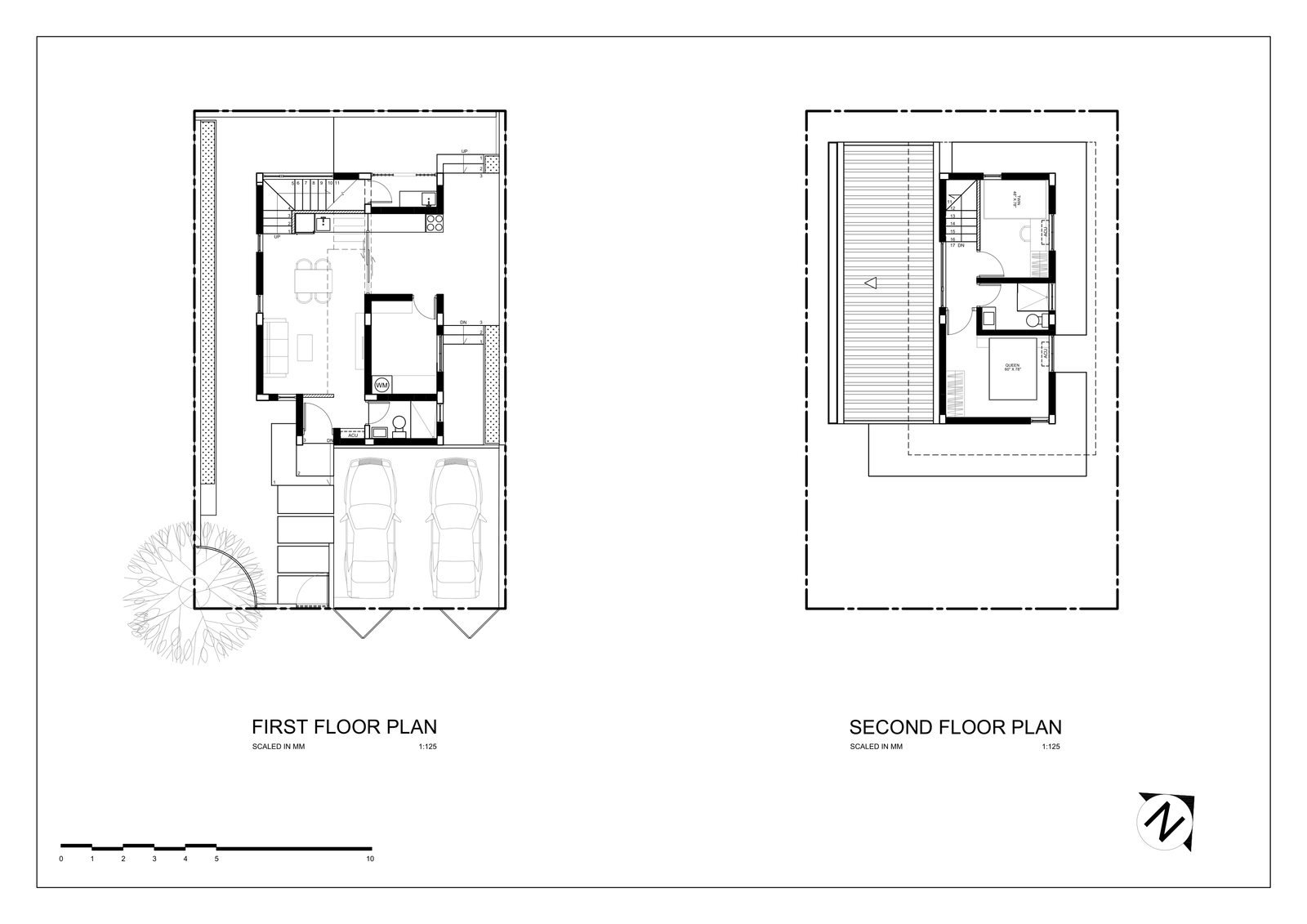
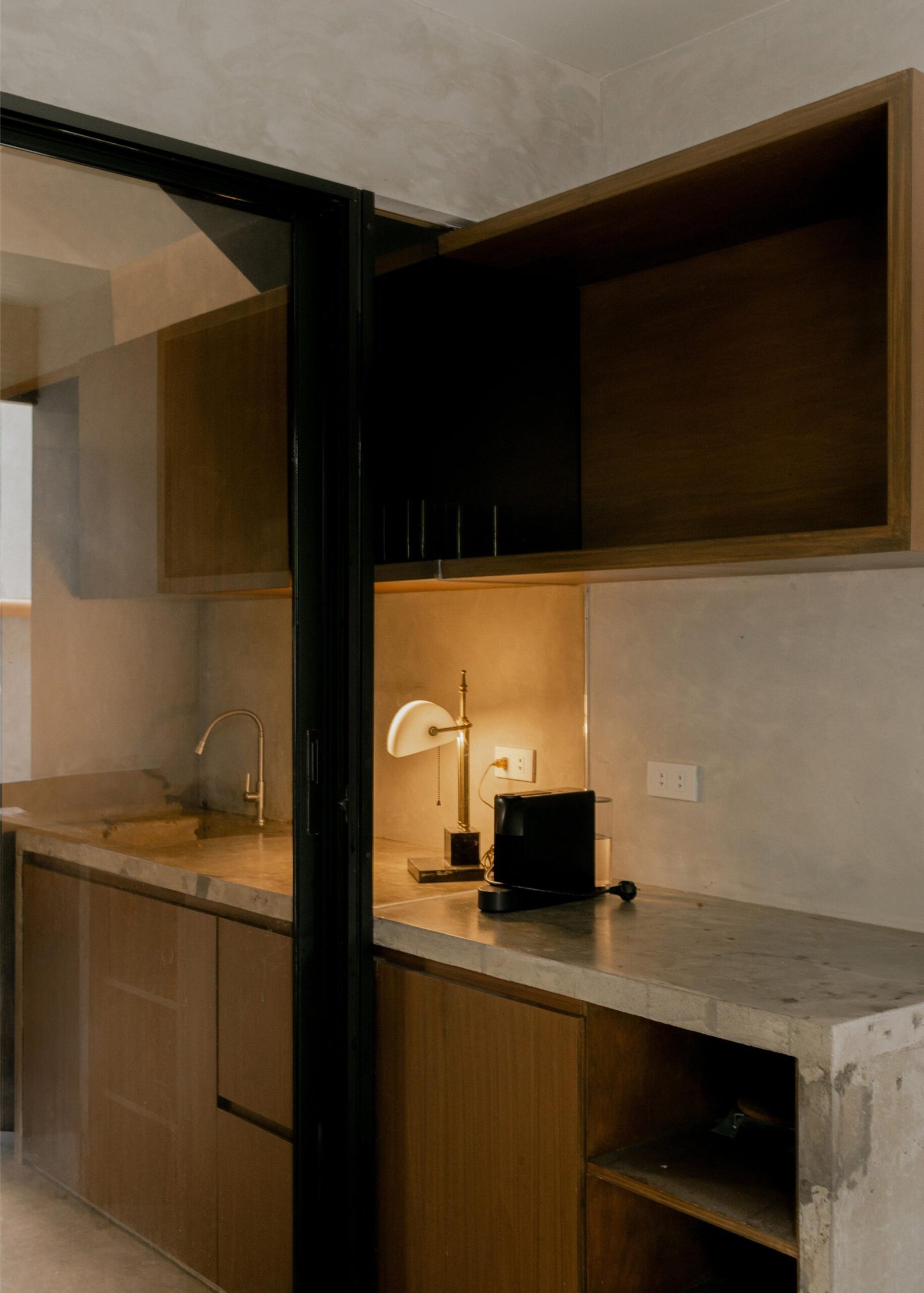
Inside, spatial openness became the main planning strategy. The main challenge was to accommodate multiple spatial requirements, such as a storage room, a mudroom, and an outdoor kitchen for hosting, while making the house feel more expansive. The ground level integrates seamlessly into a continuous volume, with the kitchen extending outward onto the deck, blurring boundaries between interior and exterior. Hosting and cooking naturally spill outdoors, reinforcing the home’s connection to its environment.
Despite the compact footprint, strategic planning involved beneath-the-stairs storage and a screened outdoor deck, maximizing space while maintaining privacy. Ultimately, the kitchen became the heart of the house, extending to the deck as a natural space for socializing.
The house also embraces sensory experiences. Designed to function as a subtle water feature, a rain chain was put in place of a downspout. This creates what the owners describe as a delicate, ausdiosensory rhythm that draws attention to the movement of water. “It really does rain heavily here in Laguna, and in this small home, you can really feel it echo. At first, it is striking, but we’ve come to love how the sound fills the space—it makes the weather feel immediate, immersive, and alive.”
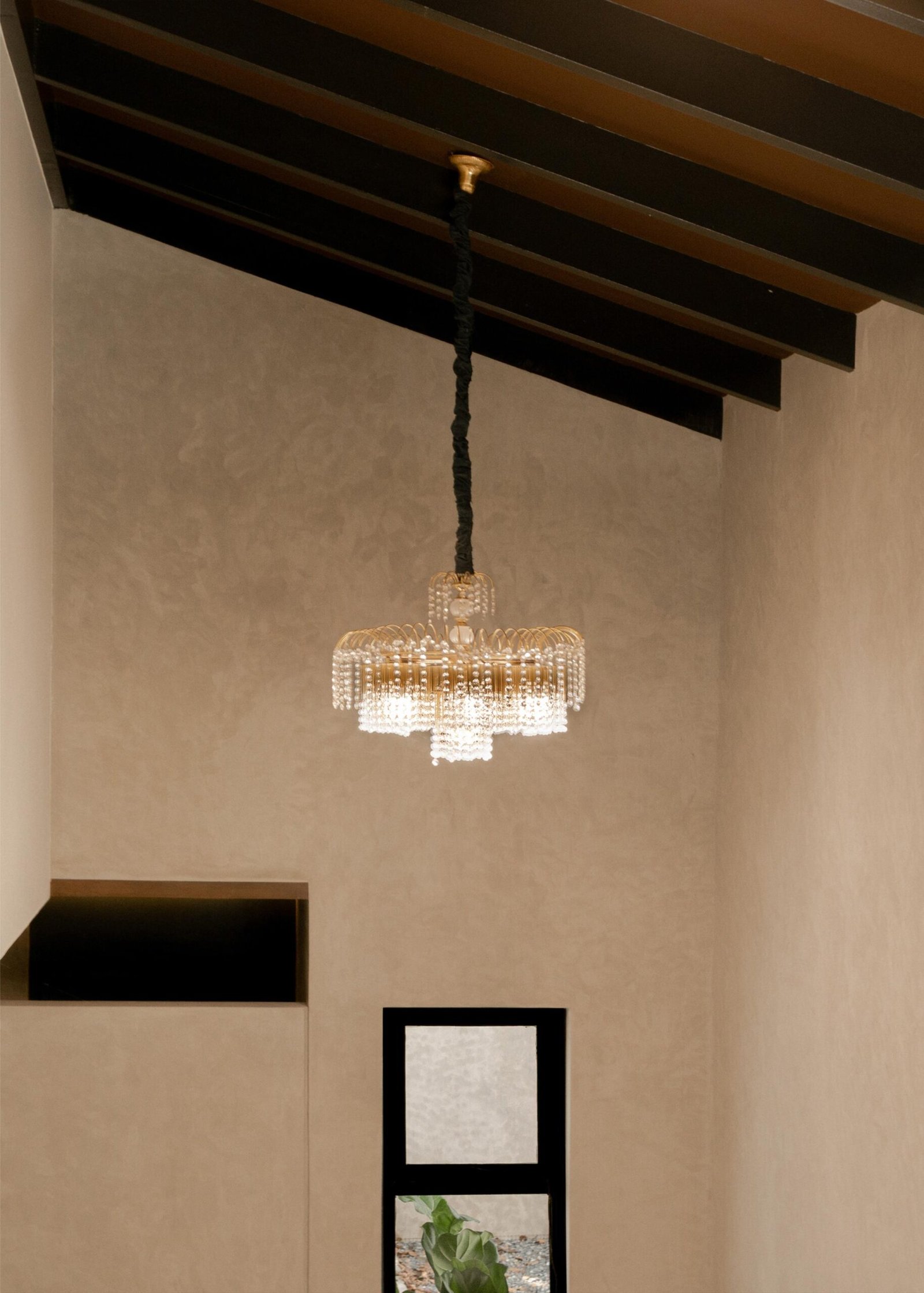
A lifted ceiling accommodates a chandelier gifted by the couple’s parents, adding spatial depth and sentiment. I have always been a fan of houses that feel lived-in. When the clients showed me the chandelier, I was immediately on board. It softened the space, bringing warmth and making the ground floor more welcoming.
Slowdown House was never intended to be immediately filled. For a time, the couple lived with only essential furniture, allowing the space to unfold naturally alongside their lifestyle. The house’s design is intentionally spartan, embracing the idea of gradual occupation and layering over time. “It was designed to blend quietly into its environment, allowing nature to take precedence,” the owners share. “Full-height windows frame the trees and Narra outside, turning them into shifting, living focal points throughout the day. In contrast to our highly stimulating work in the city, the house functions as a sensory reset. Its smaller scale heightens awareness of the breeze, natural light, and sounds of animals, creating an atmosphere that feels quiet, meditative, and restorative.”
The owners add that the details feel personal, with even the gallery flooring chosen to accommodate their pets. “Overall, the space prioritizes privacy and emotional ease,” Bambina noted. “I’m very sensitive to energy, and as a couple, creating a home that feels contained, calm, and undisturbed has been essential.”
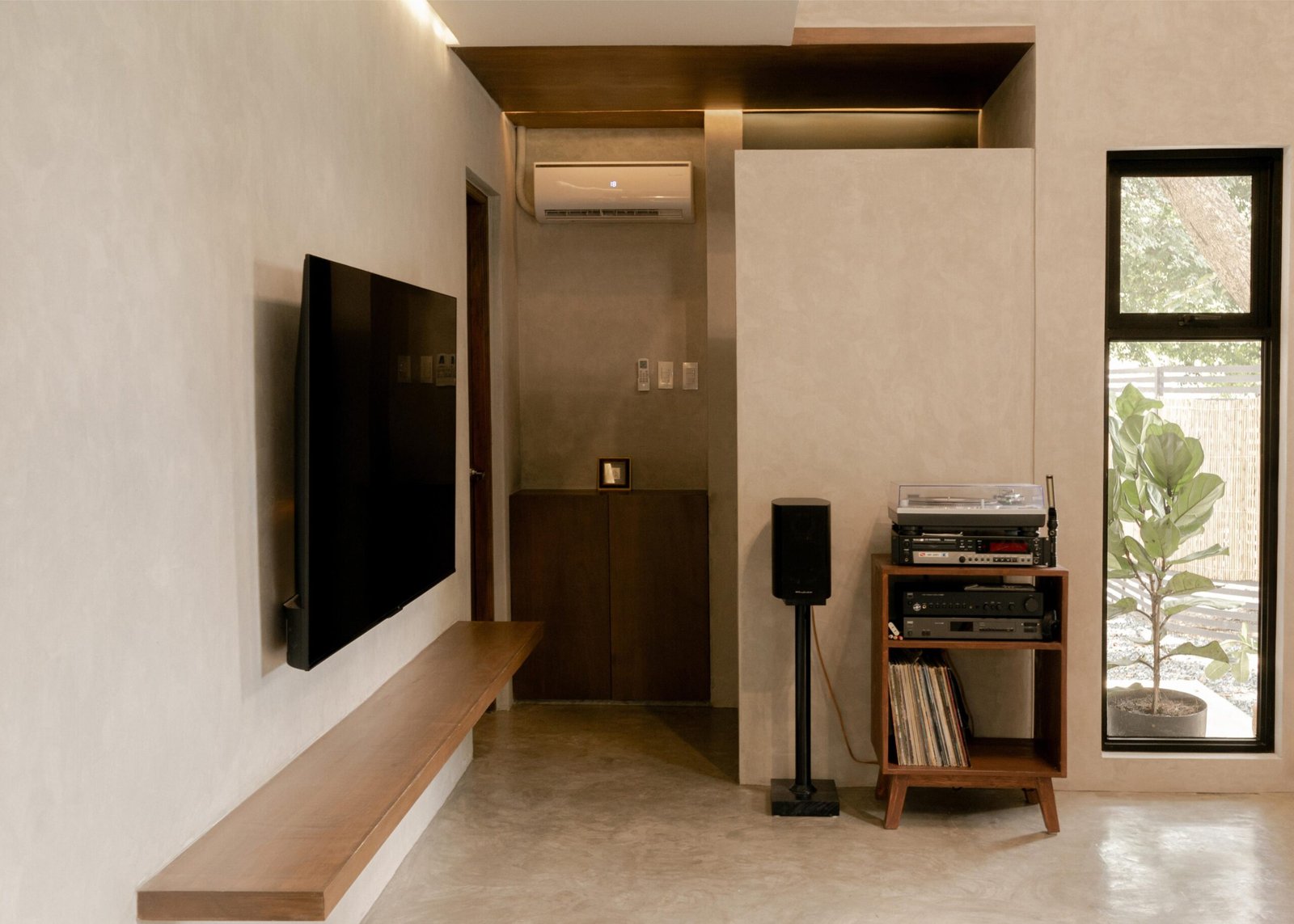
Coming from a contemporary design background, which is often guided by a consistent aesthetic, this project became a turning point in my practice. It pushed me to move beyond my own preferences and engage more with clients’ tastes and sensibilities. This made me explore how architecture mediates between differing tastes and how my own sensibilities complement rather than override. This house stands as a manifesto for a more open and evolving design identity.
Ultimately, I was fortunate to work with such open-minded clients, who share that the space has been healing, more than anything. “It’s allowed us to grow into a new chapter of our lives and prepare for a growing family, while staying connected to nature in a way that feels both grounding and necessary.” •
Project Information
Lot area: 120 sqm
Total floor area: 70 sqm
Completion: May 2023
Project Team
Architect: Anna Cabasan
Contractor: MFG Construction Services