Interview Abby Rebong
Editing The Kanto team (CRIT)
Images GROHE Philippines and Gio Prado
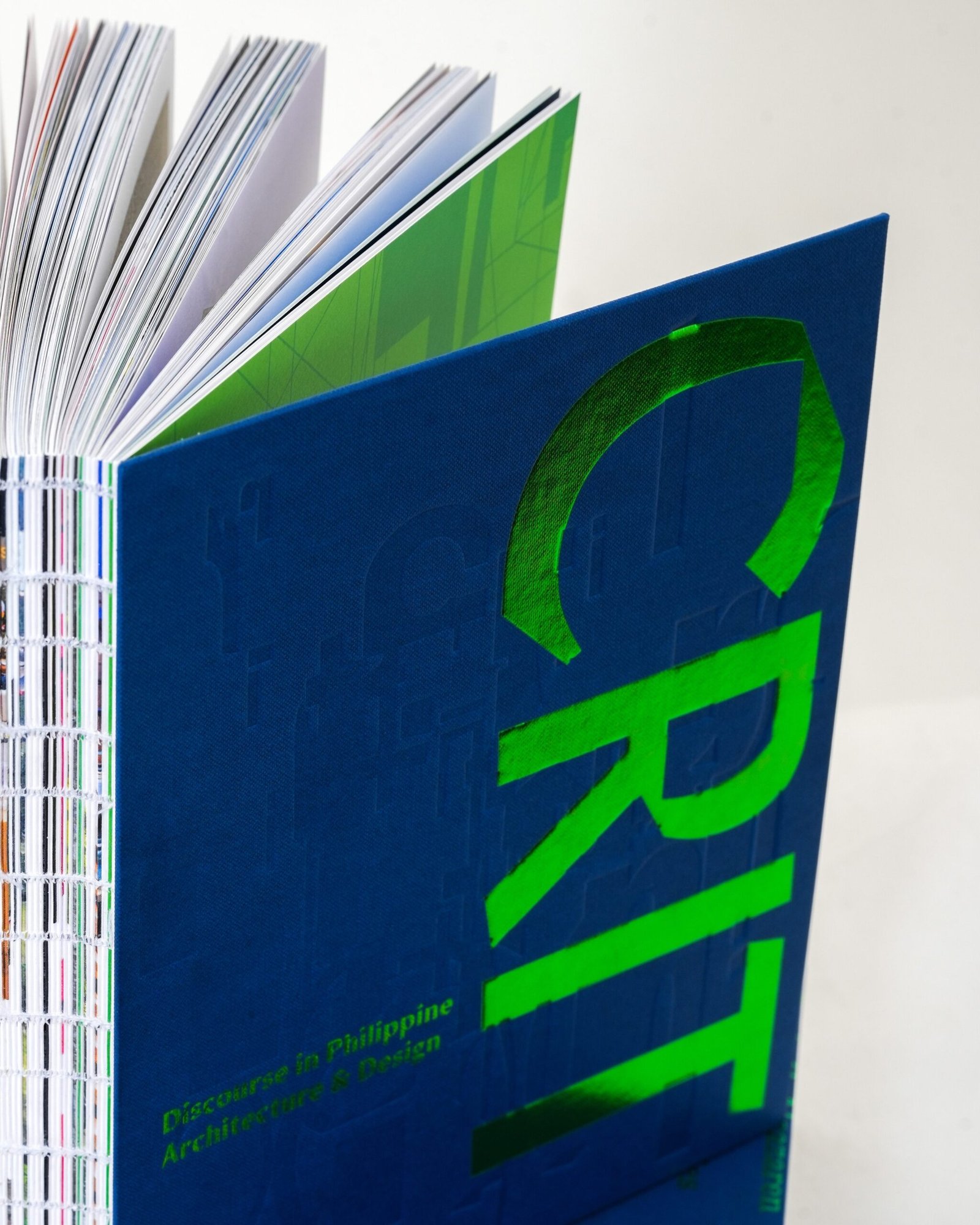
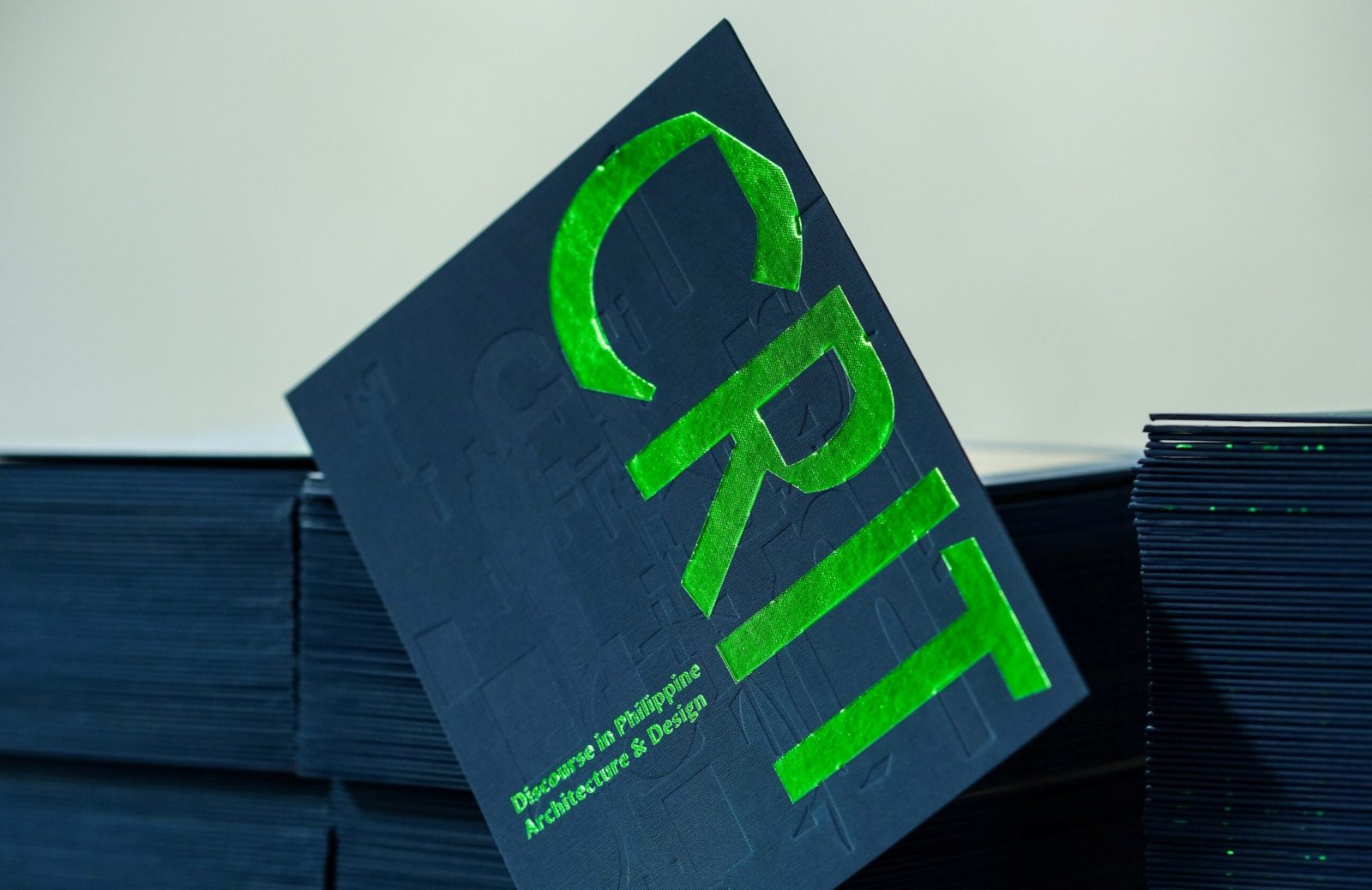
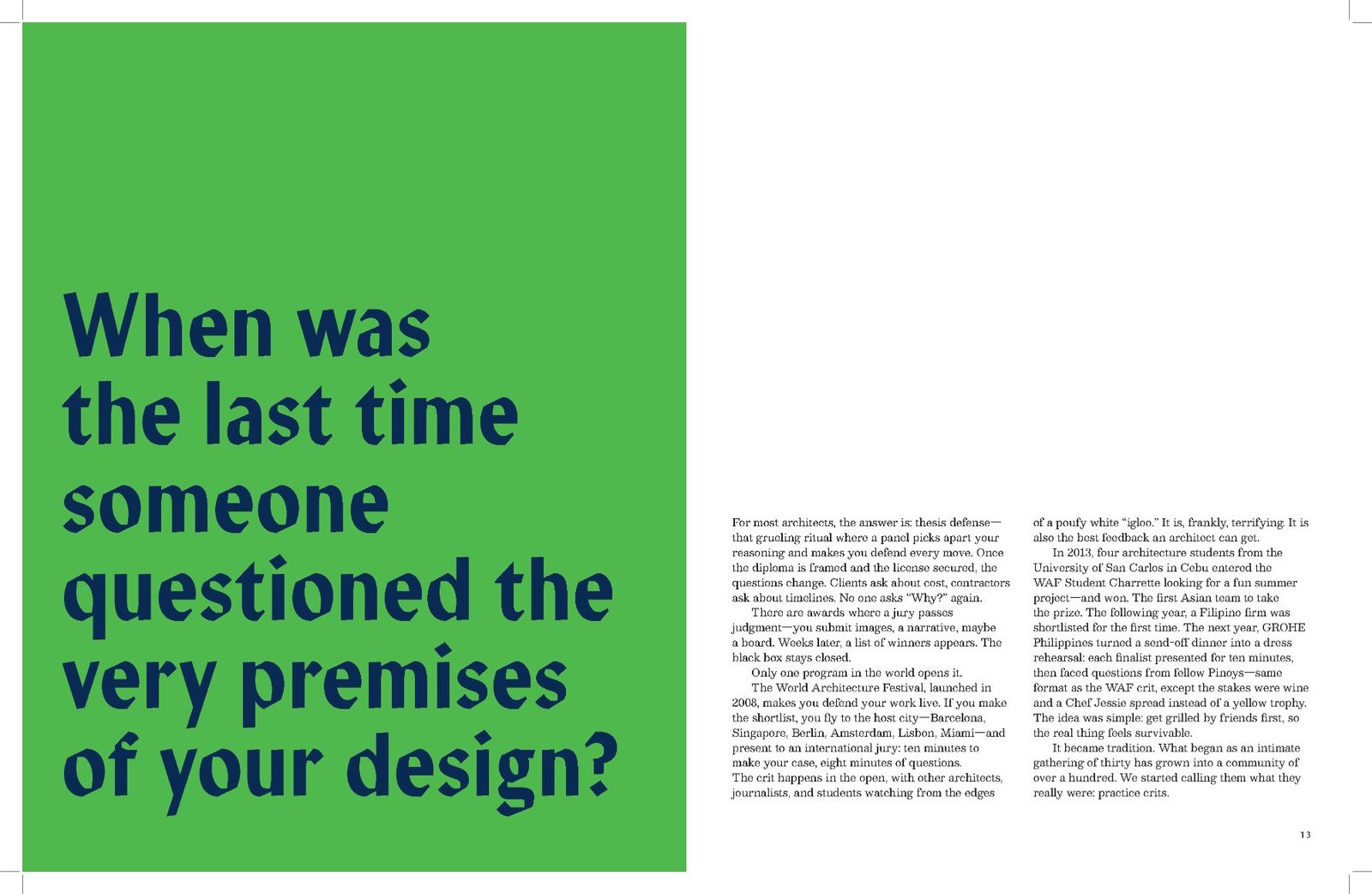
Started back in 2015, the practice crits, a dress rehearsal held each year for the Philippines’ World Architecture Festival (WAF) finalists, have inspired the creation of a book. CRIT, edited by Judith Torres and published by Kanto with the support of GROHE Philippines, took root a year ago as the idea for a commemorative volume celebrating the Philippines’ record at WAF since 2013: 84 shortlist placements, 7 Highly Commended citations, 12 category wins, and 5 overall wins.
The decision to anchor the book on this annual tradition came from how the crits answer what Torres considers the profession’s perennial pain point: “Once an architect has their license, hardly anyone asks ‘Why?’ again. Clients want to know how much, contractors want to know deadlines. The building gets erected and the public lives with the result for twenty, maybe fifty years. Critique is when someone stands in for the community and asks what the building takes from them and what it gives back.”
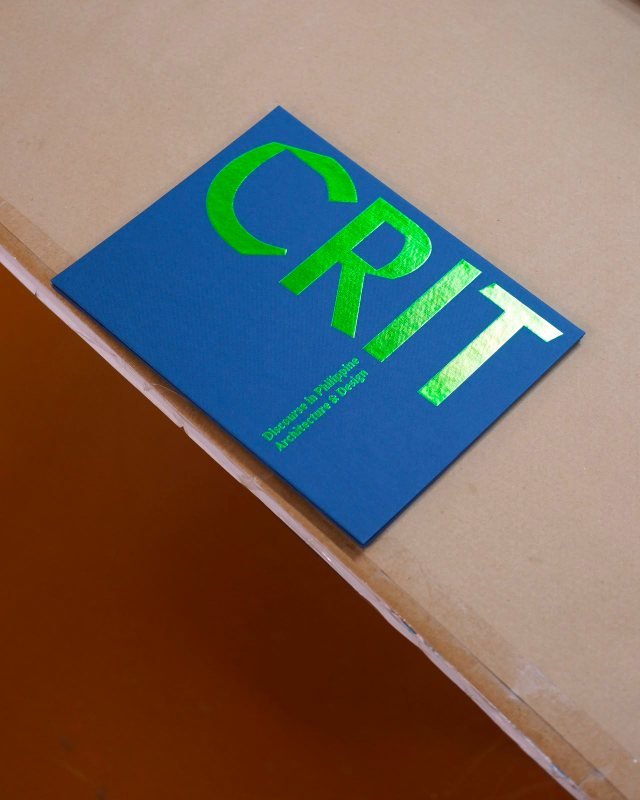
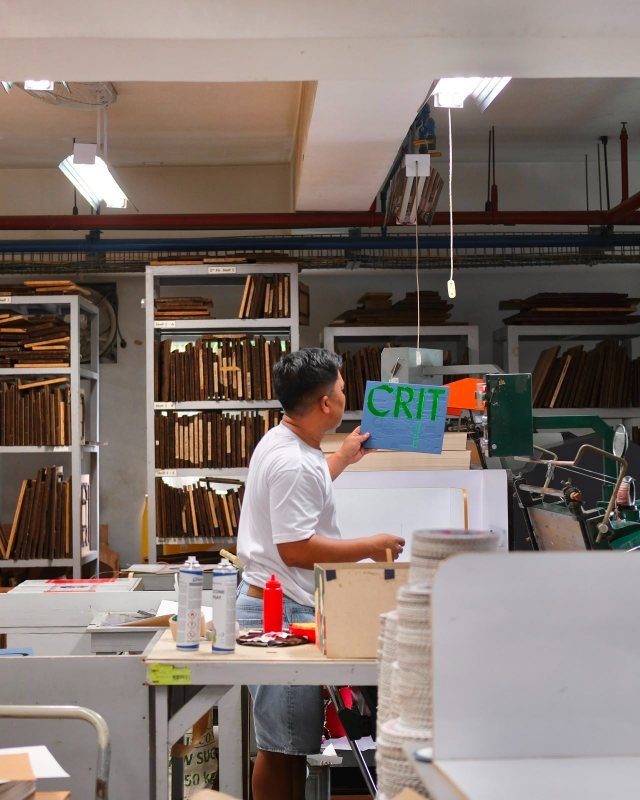
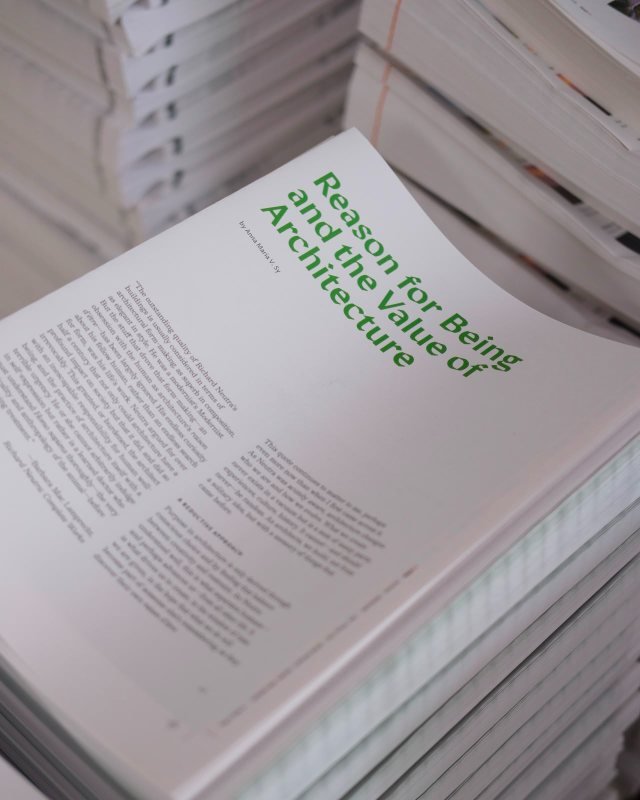
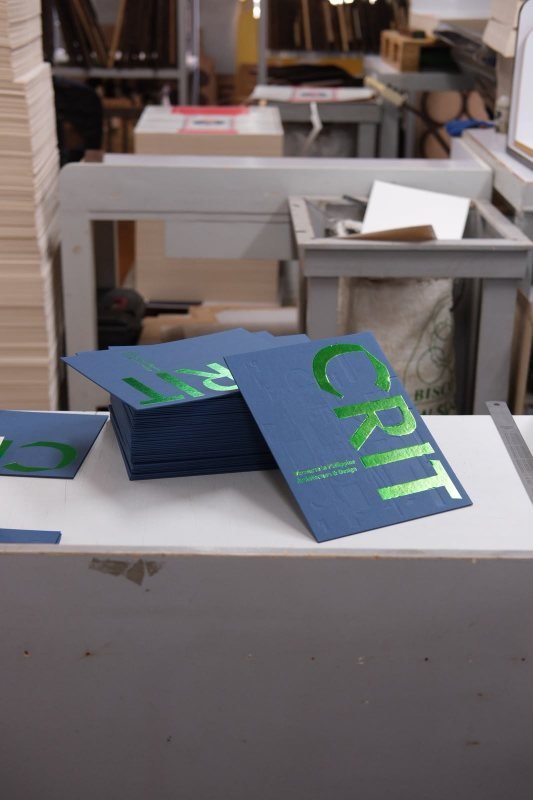
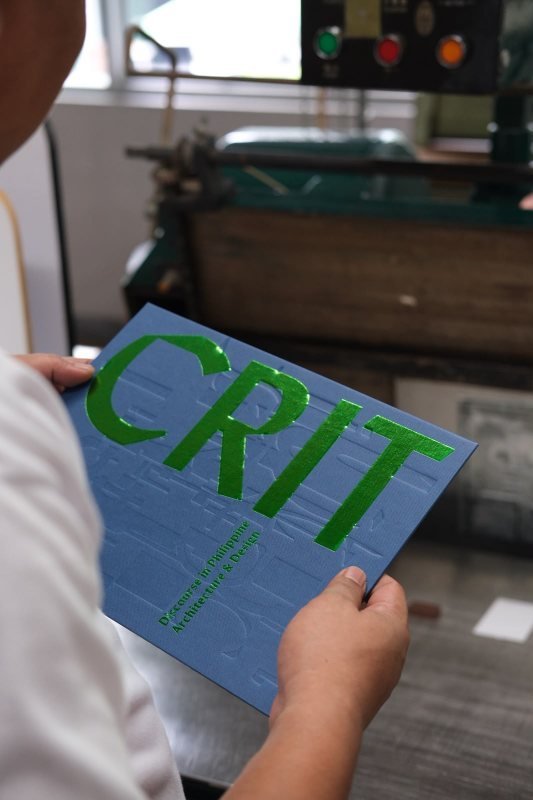
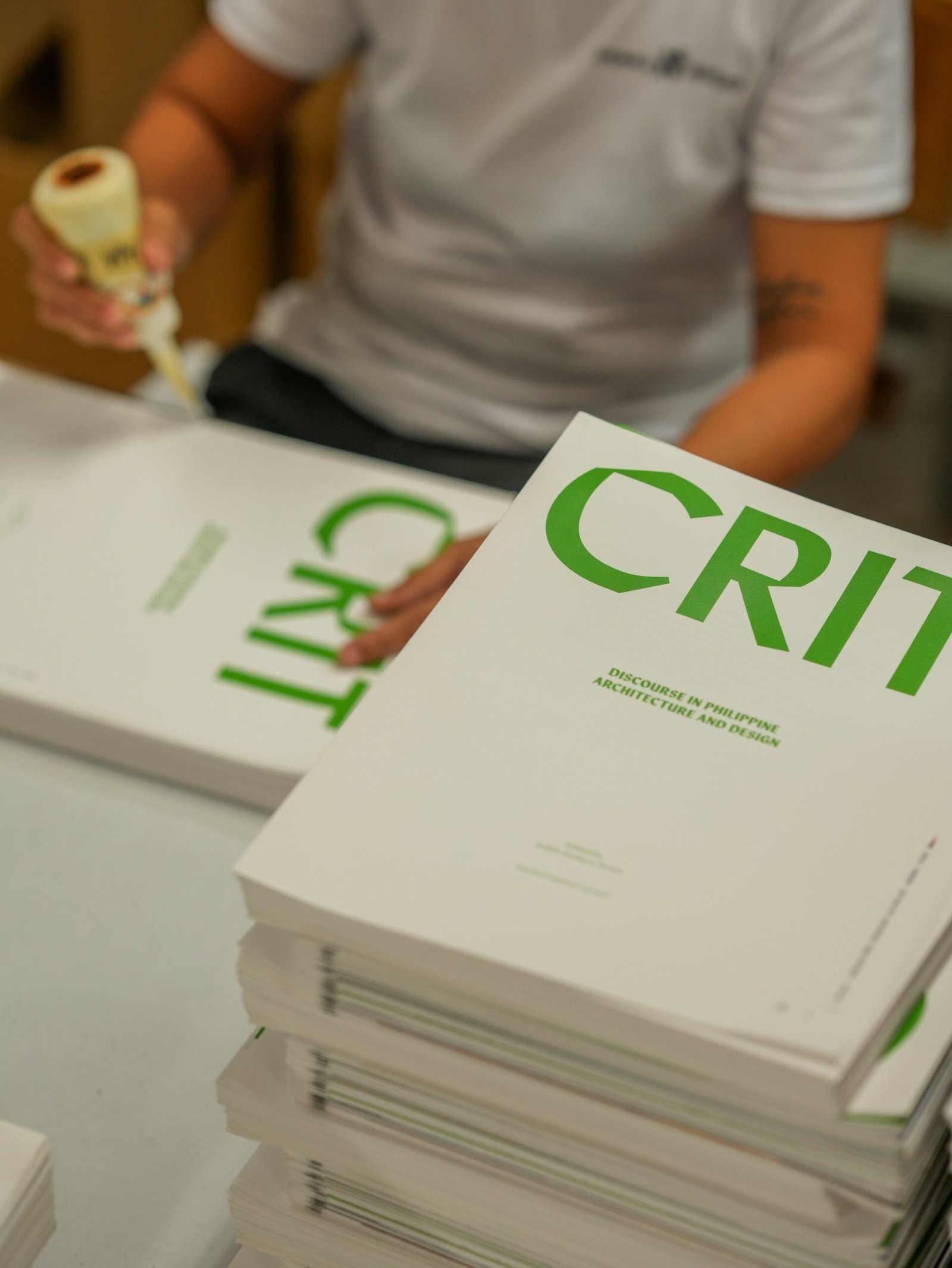
CRIT book under production at Primex Printers, photography by Gio Prado
Eleven years of practice crits, and the performance gains finalists get from them, have prompted WAF co-founder Paul Finch to write in his foreword for the book: “I know of no other country that has built such a thing for itself.”
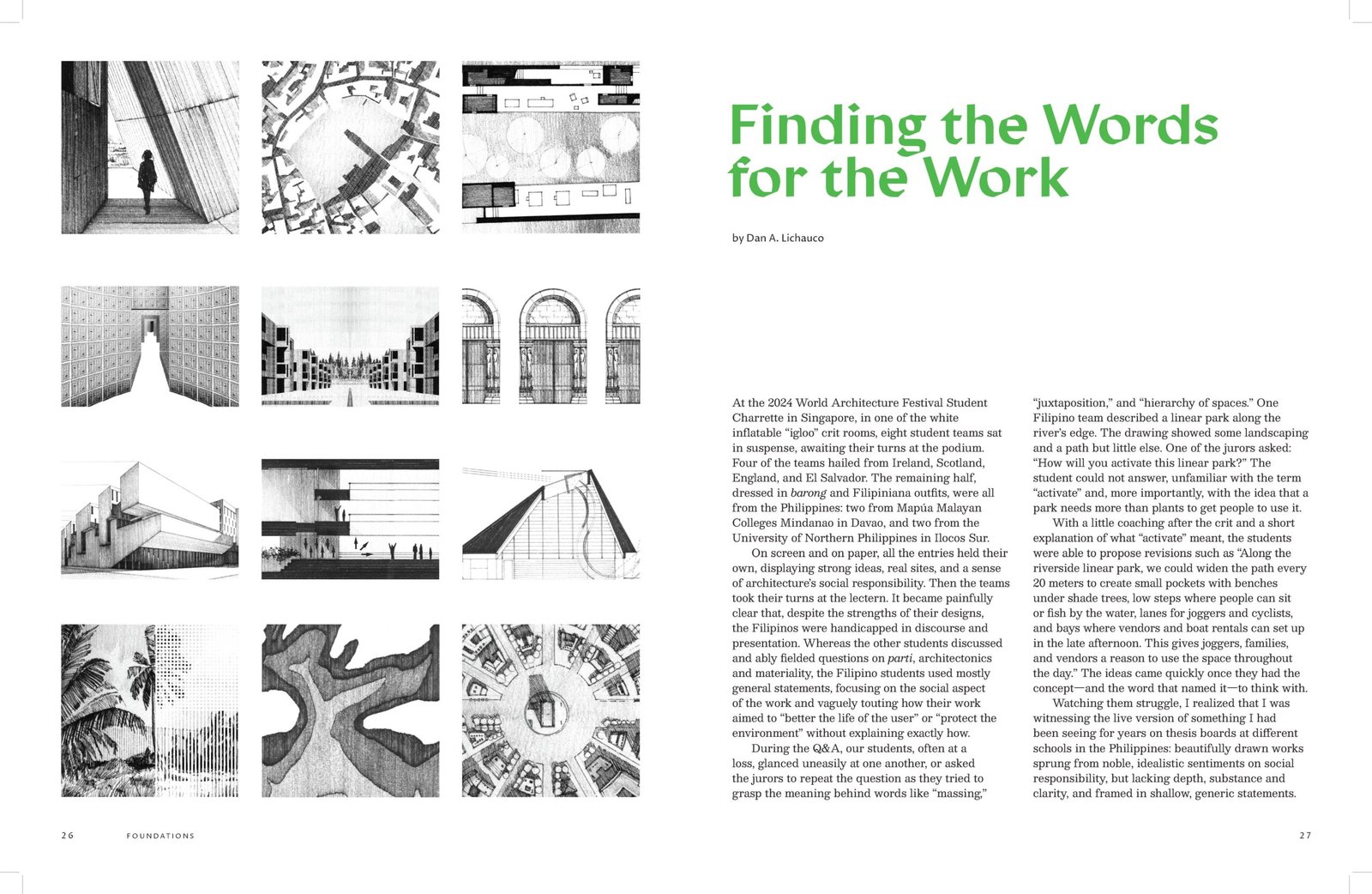
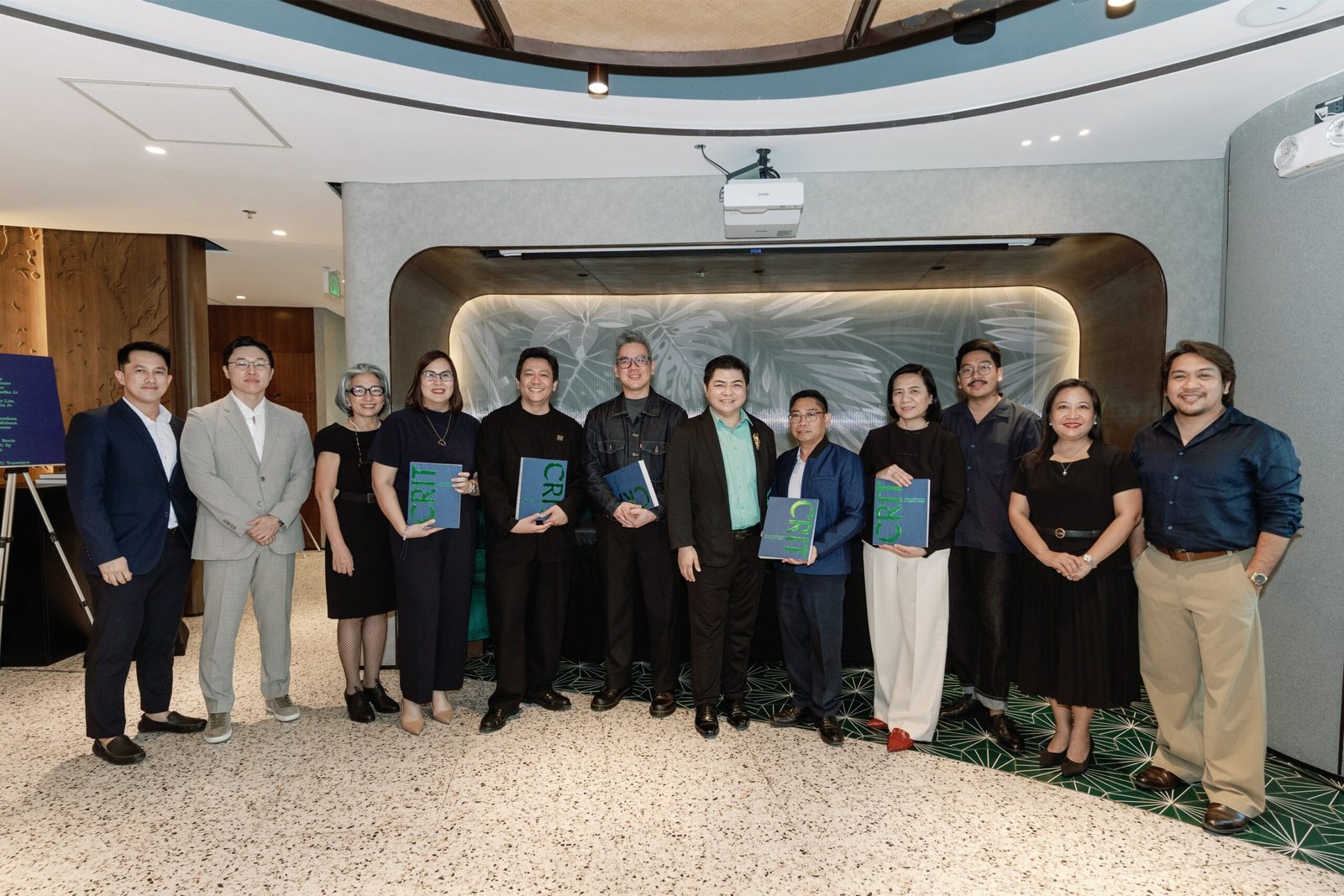
When the book launched on October 20, the volume that got into the hands of guests was what Kanto editor-in-chief Patrick Kasingsing describes as a “chimeric tome”: part design resource; part collection of essays by twenty-five of the coaches who have sat across from those WAF finalists, on what they look for when a project comes before them; and part record of more than a decade of partnership with GROHE, the festival’s founding partner, and of six years of Kanto serving as WAF’s official Philippine media partner.
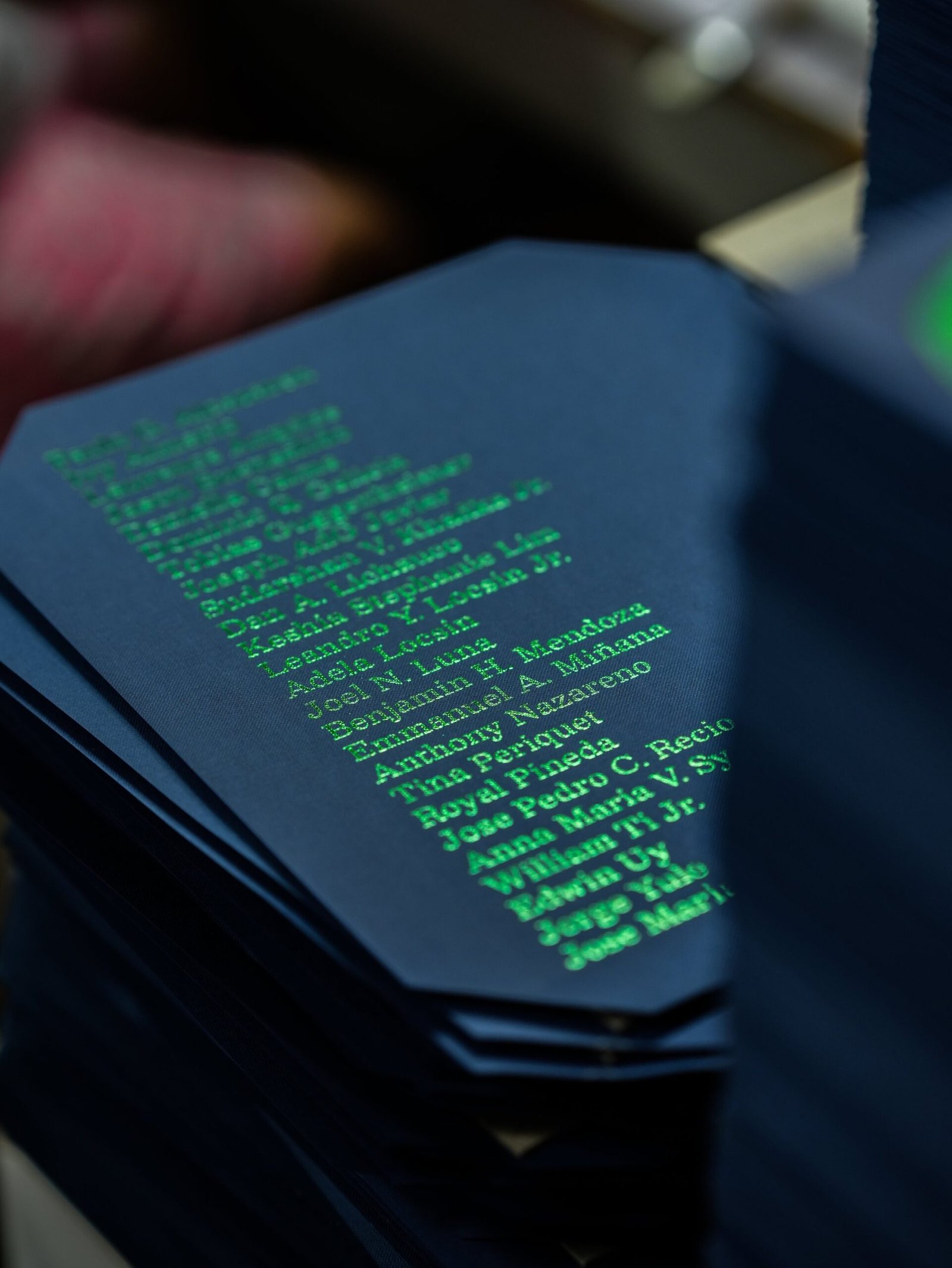
The book arrives as this year’s Filipino finalists prepare to fly to WAF 2026, held from November 18 to 20 in Fort Lauderdale, Florida. With the book out, Torres joins Kasingsing and Emily Besavilla, leader for marketing and retail at LIXIL Philippines, to talk about the practice crits that started it all, the book that resulted, and the ongoing partnership behind both.

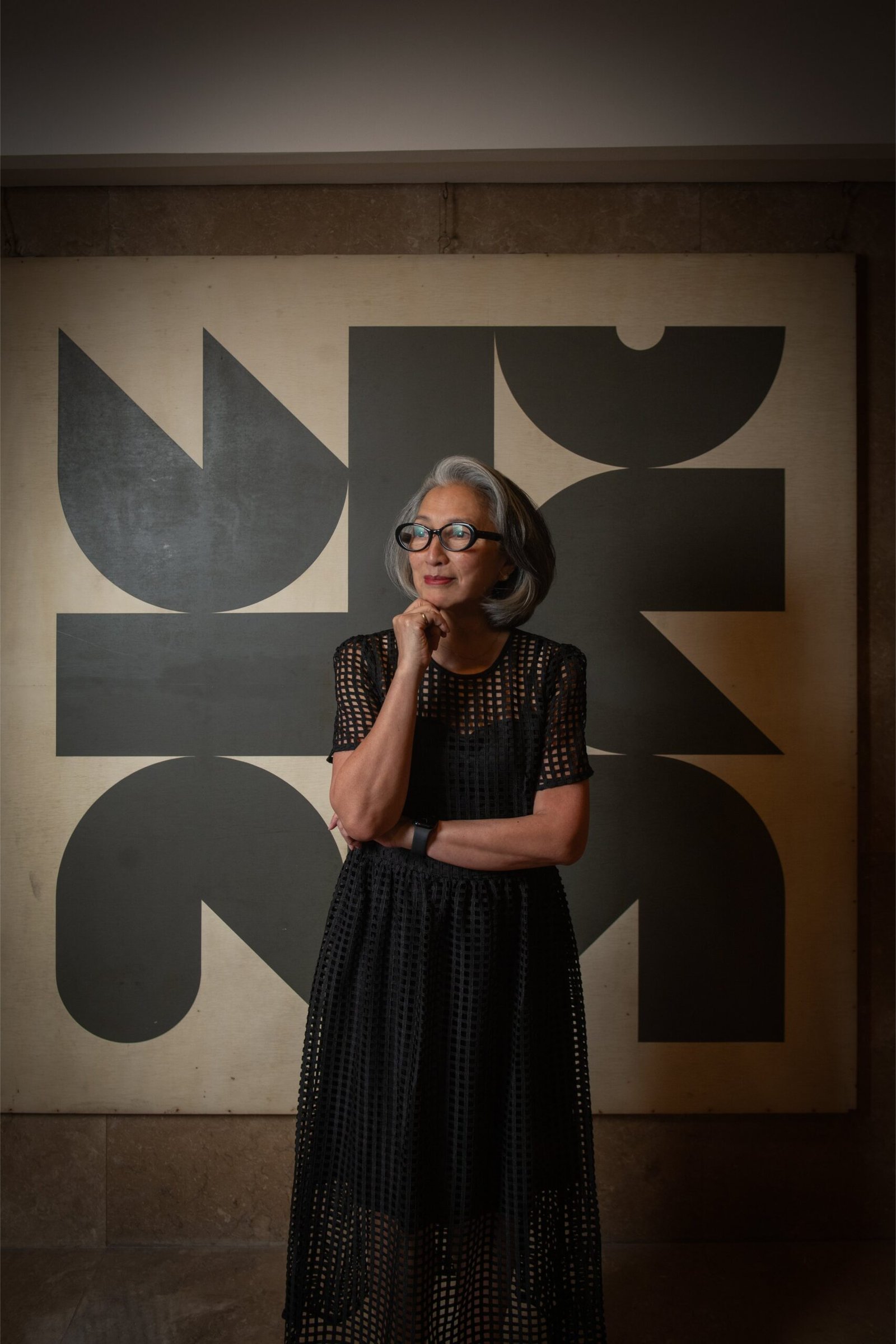
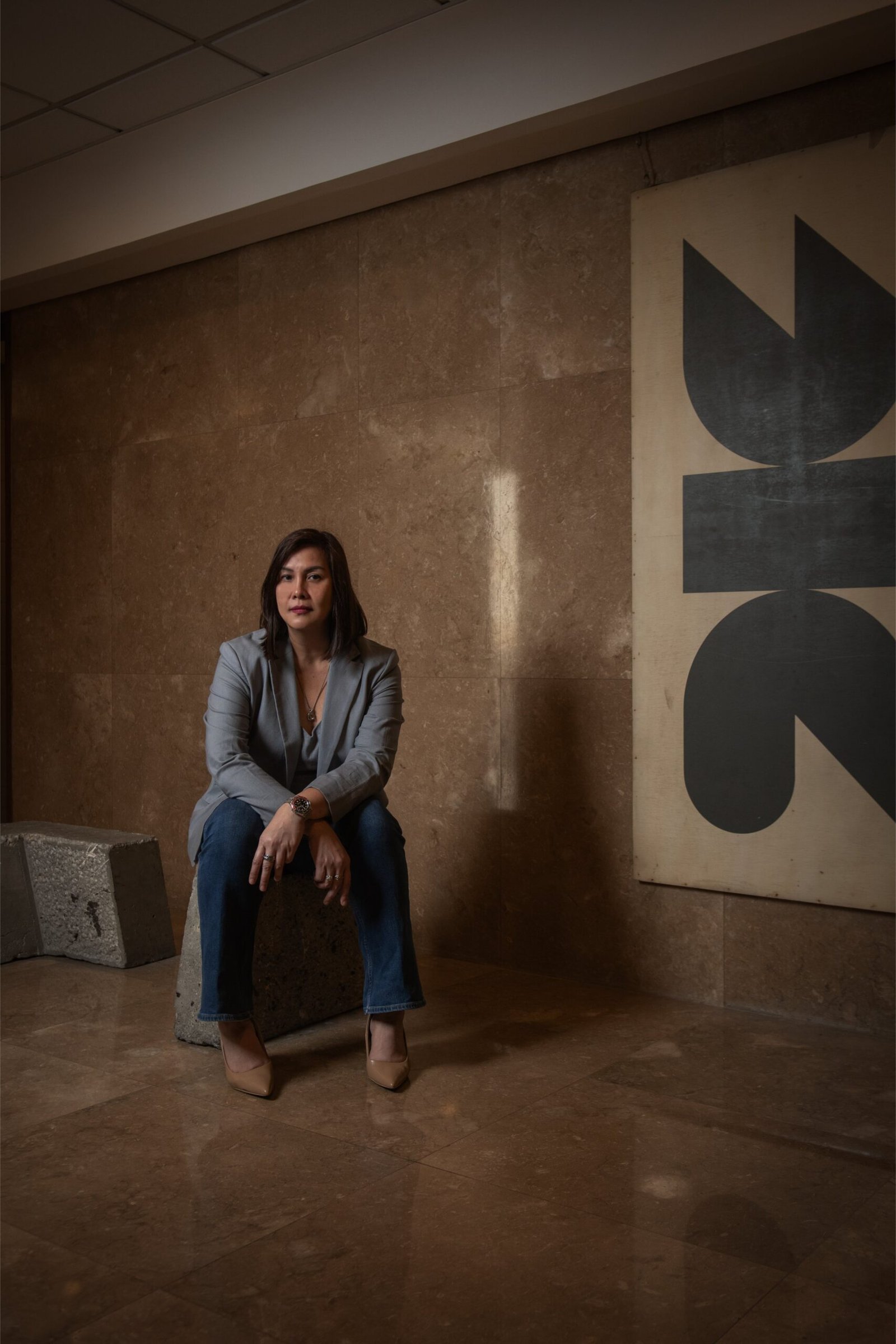
Judith Torres Emily Besavilla
Kanto is often credited with building a culture of “crit” in the Philippine design community. How have you seen that culture evolve, and what role does constructive critique play in raising the standard of architecture in the country?
Judith Torres, editor of CRIT: I should say first that the crits came before Kanto. I started them in 2015, when I was still at BluPrint, because I’d seen what a crit did for four students from Cebu who won the World Architecture Festival (WAF) Student Charrette in 2013. Their teachers and peers had grilled them mercilessly in the school auditorium before they flew out, and they came home with the trophy.
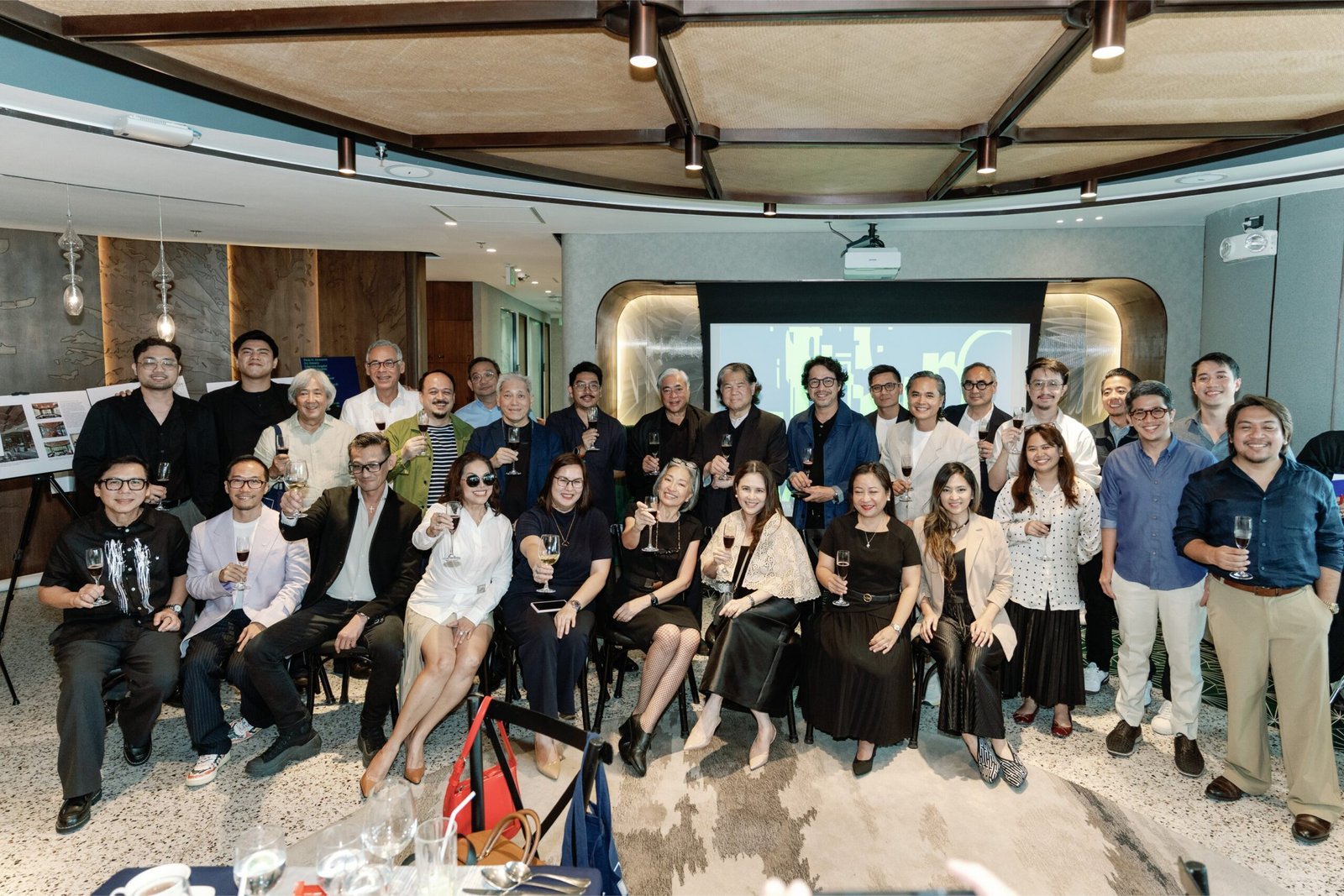
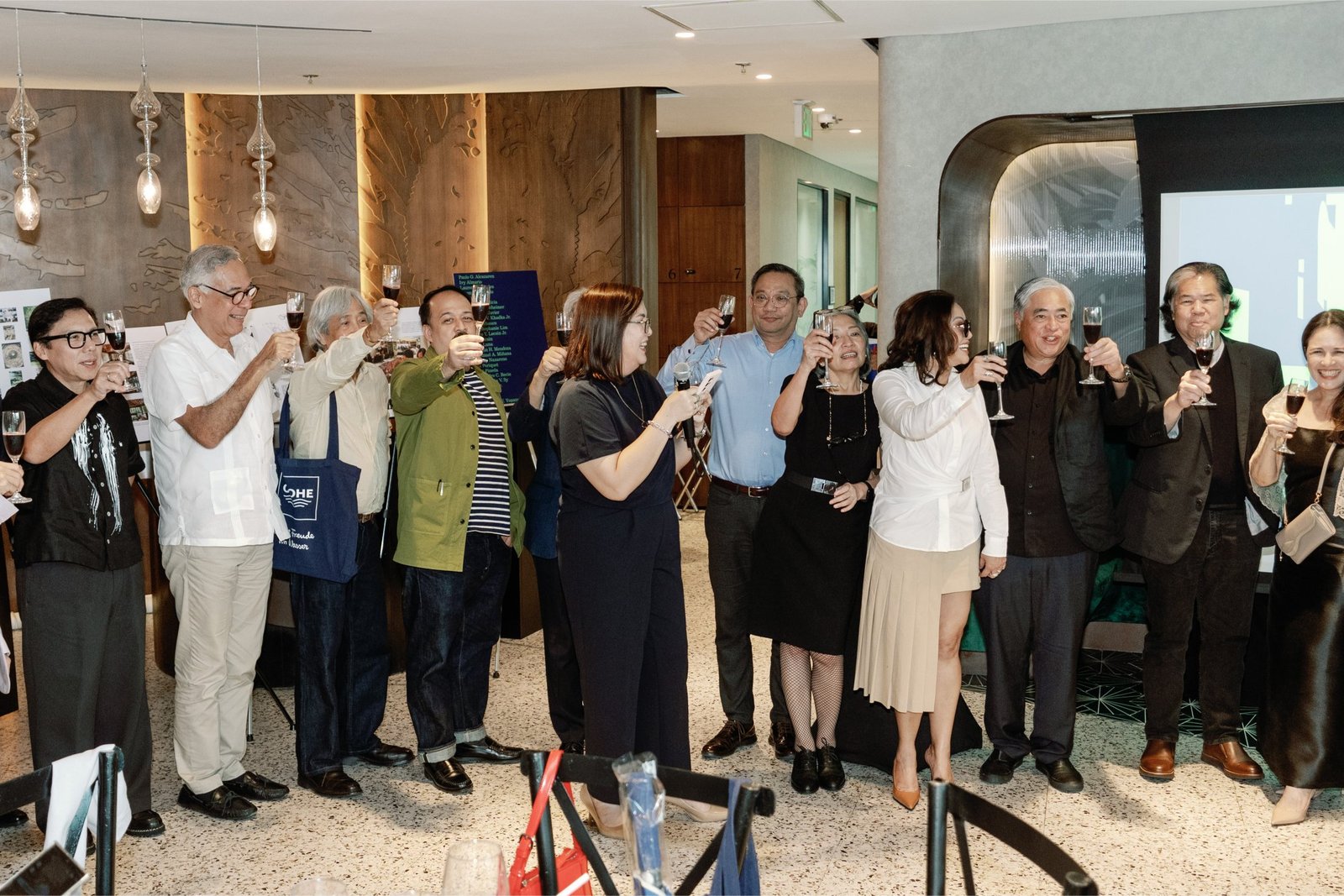
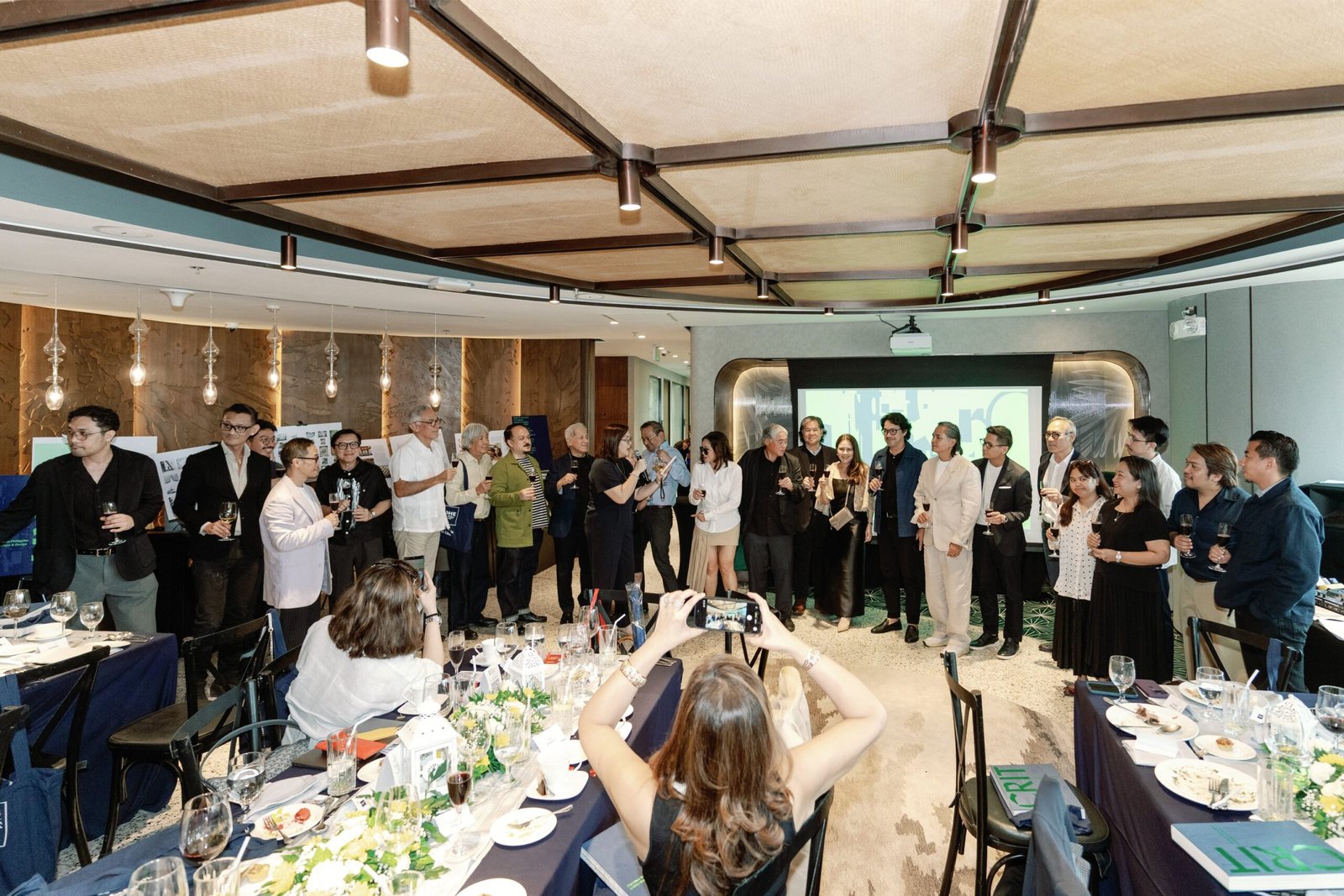
When four firms were shortlisted in 2015, I wanted the same for them. The trouble is that Filipino architects don’t take kindly to having their work picked apart in public. We’d rather keep the friendship than question the building, and the profession itself frowns on criticizing a colleague. So, I asked GROHE to throw the finalists a party instead, and called it a tribute. Thirty people came, the finalists presented, and their friends asked questions. Nobody minded. The gathering was celebratory—it still is!
What’s changed in eleven years is that nobody needs the disguise anymore. When finalists learn about the crits, they ask for more of them. Coaches who were once on the receiving end come back year after year, to do the same for whoever is next—Sudar Khadka of Leandro V. Locsin Partners, whose Tagpuro project won in 2017 after a critique made him and his co-presenter rewrite their whole script, tells that story every time we welcome new WAF finalists into the fold. We’ve gone from a showroom in Makati City to Zoom, to flying coaches to Cebu and Davao, to reaching young architects before they’ve even entered.
Kanto’s part came later, and it’s online, free for anyone to read: we ask architects to explain their buildings at length and stand behind what they say, and every year Kanto covers WAF day by day—what the jurors asked our finalists, what they argued over, why this project won and that one didn’t. A young architect in Iloilo who will never afford the trip gets the crit secondhand, the same week it happened. And now we’ve put twenty-five of our coaches in a book.
As for standards, winning is the pretext, not the point. Once an architect has their license, hardly anyone asks “Why?” again. Clients want to know how much, contractors want to know deadlines. The building gets erected and the public lives with the result for twenty, maybe fifty years. Critique is when someone stands in for the community and asks what the building takes from them and what it gives back. A crit can’t redesign a building, but it can change what an architect does in the next one.
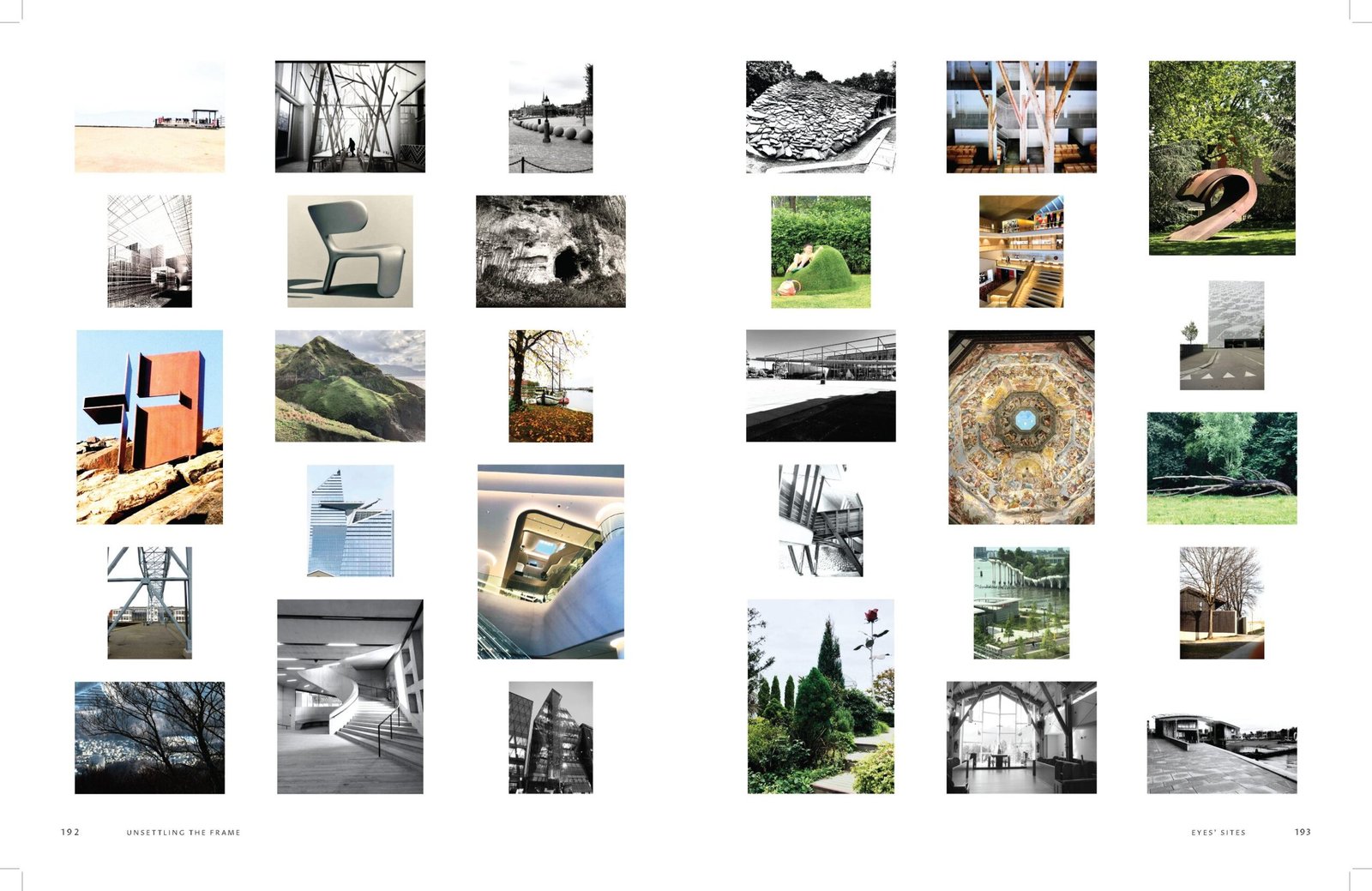
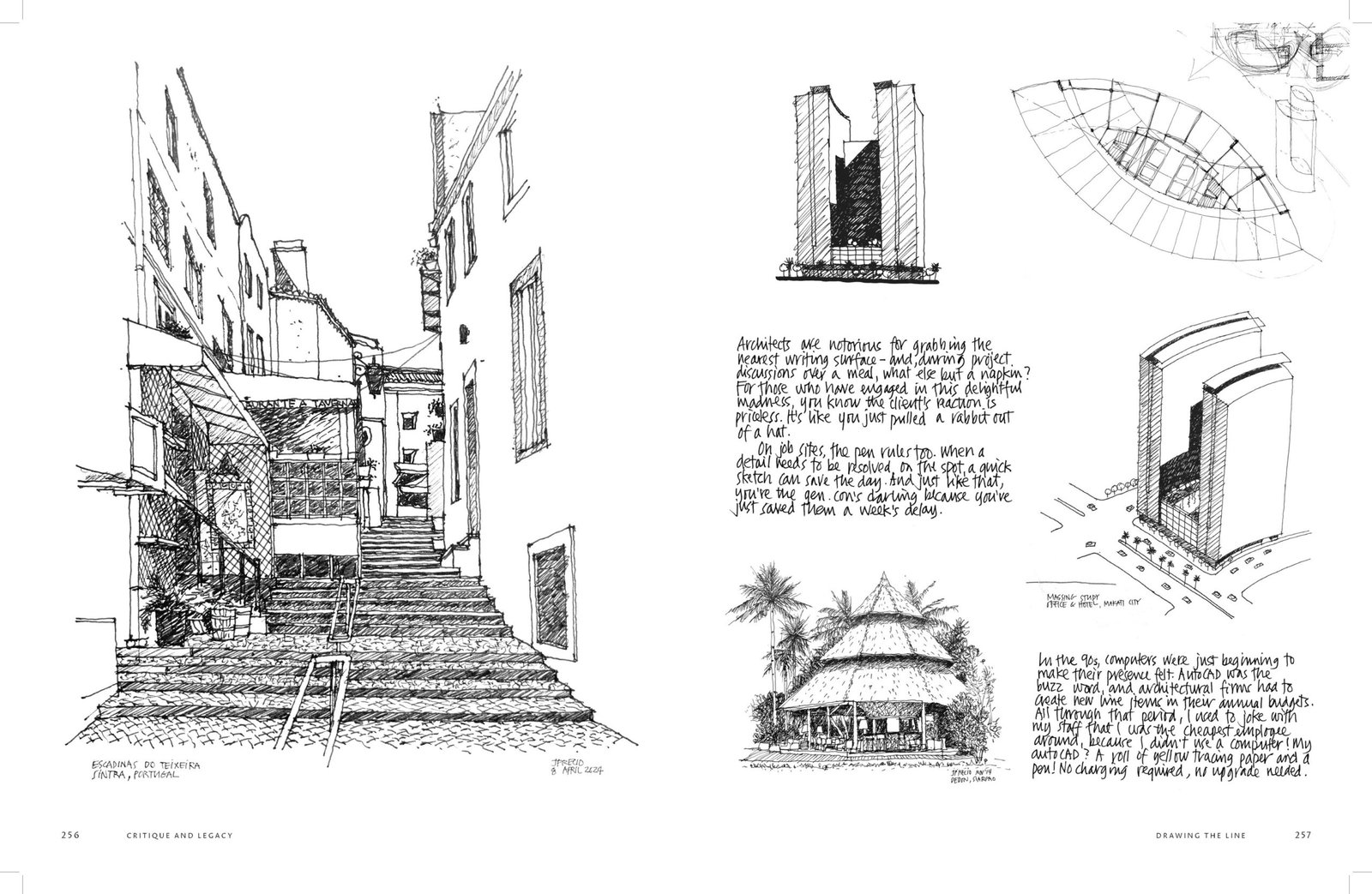
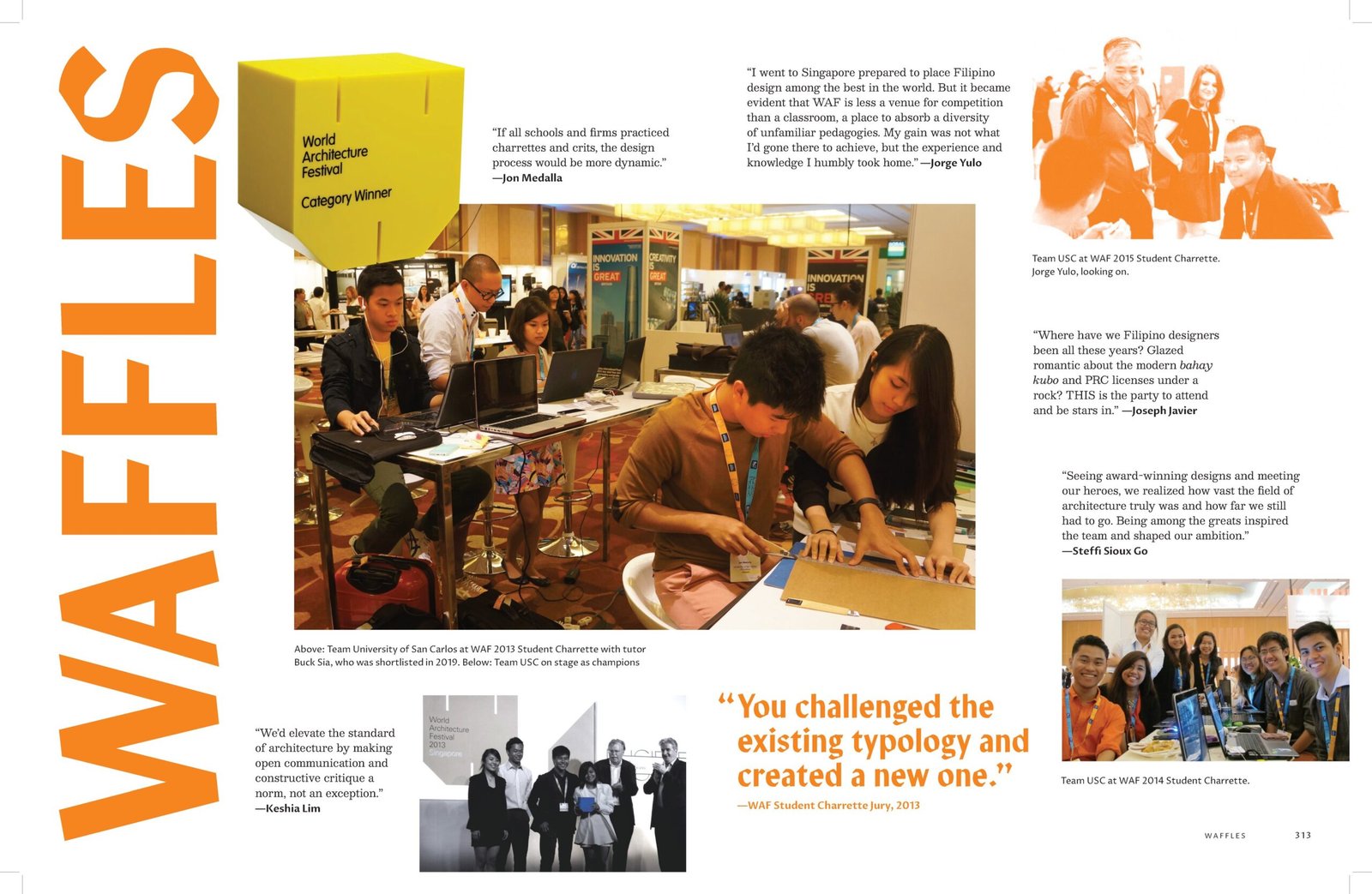
With WAF moving to Fort Lauderdale this year, Filipino architects are once again taking their work to an international stage. Going by the projects and stories gathered in CRIT, what do Filipino participants bring to the global architecture conversation that is distinctly their own?
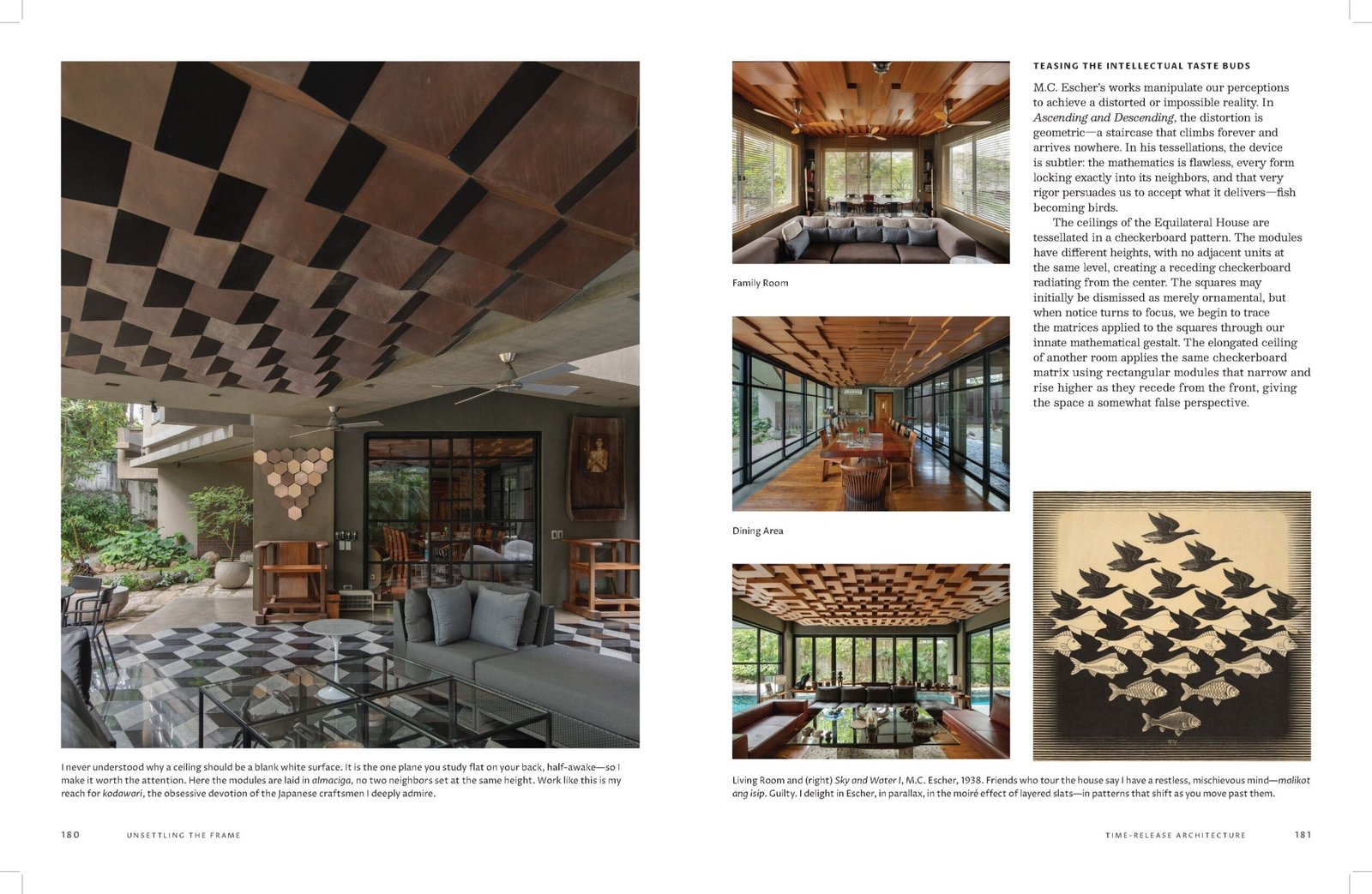
Judith Torres: What Filipino architects bring are serious answers to real problems, done with very little. Our buildings stand in the path of twenty typhoons a year, on ground that floods and shakes, for clients with half or a third of the budget a European firm would call tight. The work that wins at WAF is seldom a clever form.
It is the study center in Tacloban that typhoon survivors helped design and build with their own hands, before “co-creation” became a byword. It is a shrine for a town buried in lahar, and a memorial in Quezon City for families whose dead were taken and erased—a name, a place to return to. It’s a set of barangay halls in Pangasinan that took the government’s plans for a dreary box in every town and made each one a place its barangay could be proud of. And when the hospitals began turning patients away in April 2020, it is a sixteen-bed quarantine ward of wood framing and plastic sheeting that could be built in a week, its plans posted online for anyone to copy—3,500 beds across the country before the year was out. Here are the juries’ own words for some of our winning projects:
“A genuine good news story, whereby a community engagement process led to an authentic and high quality result.”
“A serious solution, rooted in an ecological response, to the problems of flooding and landslides caused by the eruption.”
“The project uplifts the spirit of its community—and on the added water-feature challenge, the team went above and beyond what was expected.”
Our winners aren’t fantastical forms (though we have some amazing shortlisted ones!), but projects that show what buildings and places do for people who have nothing.
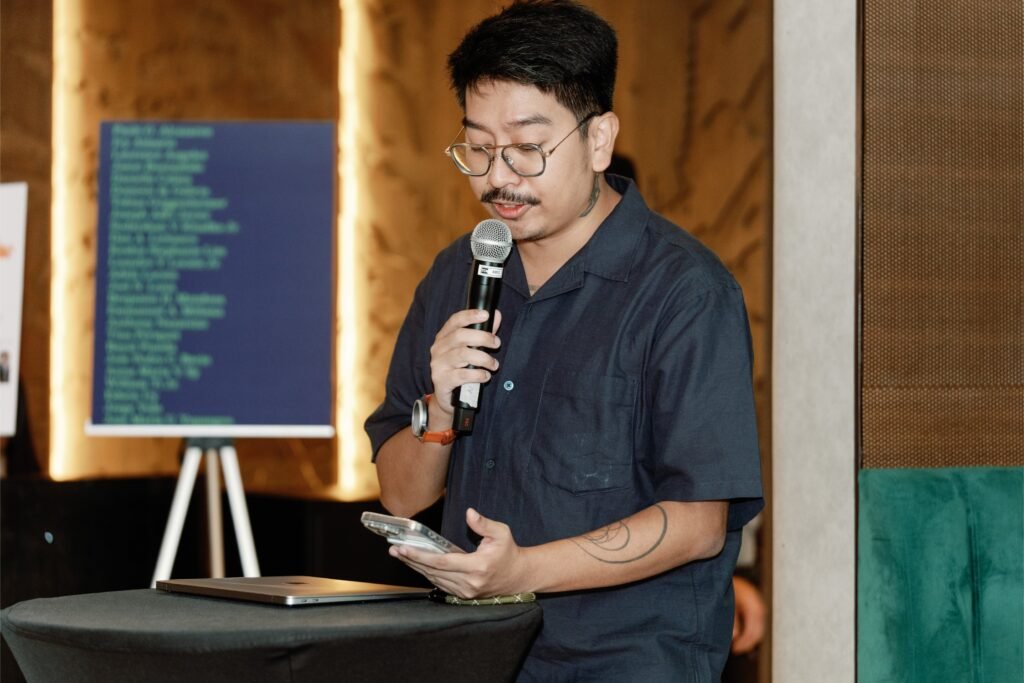
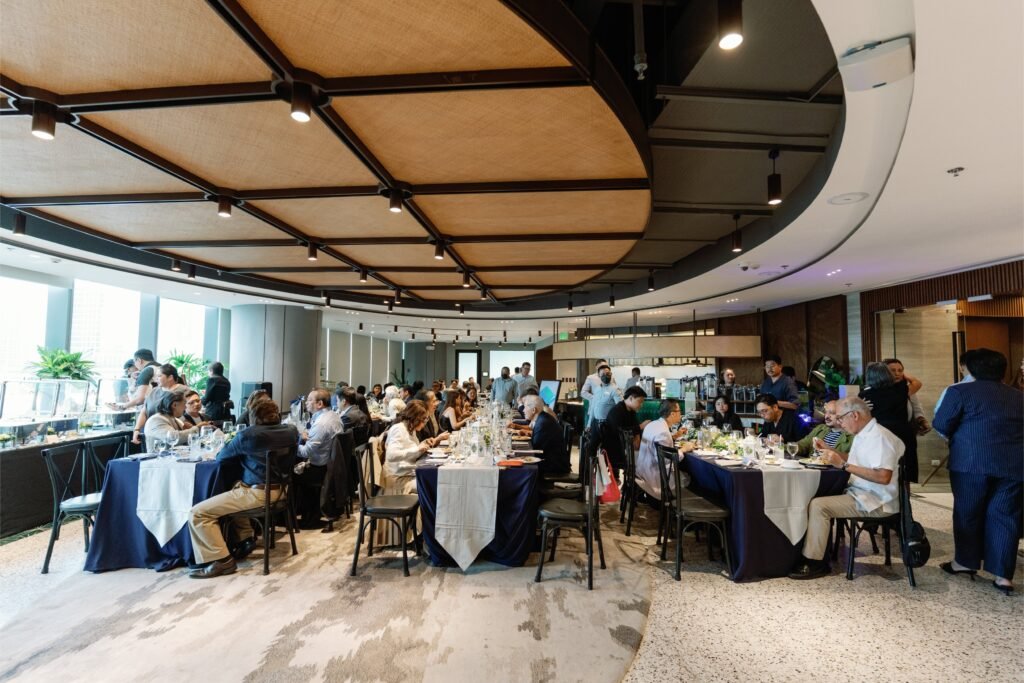
The practice crits are often described as a kind of architectural bayanihan, where architects come together to challenge, refine, and strengthen one another’s work. How does CRIT capture that spirit, and what do you hope aspiring architects take from it?
Judith Torres: The book puts on paper what until now one could only get by attending the crits. Here is what I want students in Baguio, Cebu, and Davao to take from it: that you should question buildings before they are built, your own first; that what these twenty-five architects know is yours now, to turn on your own work, on your practice, and on the profession; and that they gave it to you for nothing, so when you know something a colleague doesn’t, give it the same way.
In compiling the essays for CRIT, what was the most compelling realization you had about the current state of Philippine architecture and its community?
Patrick Kasingsing, editor-in-chief of Kanto and creative director of CRIT: Having gone through more than twenty points of view from some of the country’s most admired and emerging architectural talent, I am reminded that we are an archipelagic nation teeming with diverse readings on beauty, Filipinoness, empathy, originality, and place. Benjee Mendoza of BAAD Studio searches for a structural ethic in Filipino architecture, while Royal Pineda ruminates on authentic sustainability and on recovering what we once knew in indigenous architecture. Paulo Alcazaren reverses the traditional Grand Tour, urging readers to learn about their own country first, and Jason Buensalido embraces the identity, resilience, and plurality inherent in Philippine architecture. Far from a weakness, this diversity is the book’s proof of concept that all manner of architectural beauty can coexist.
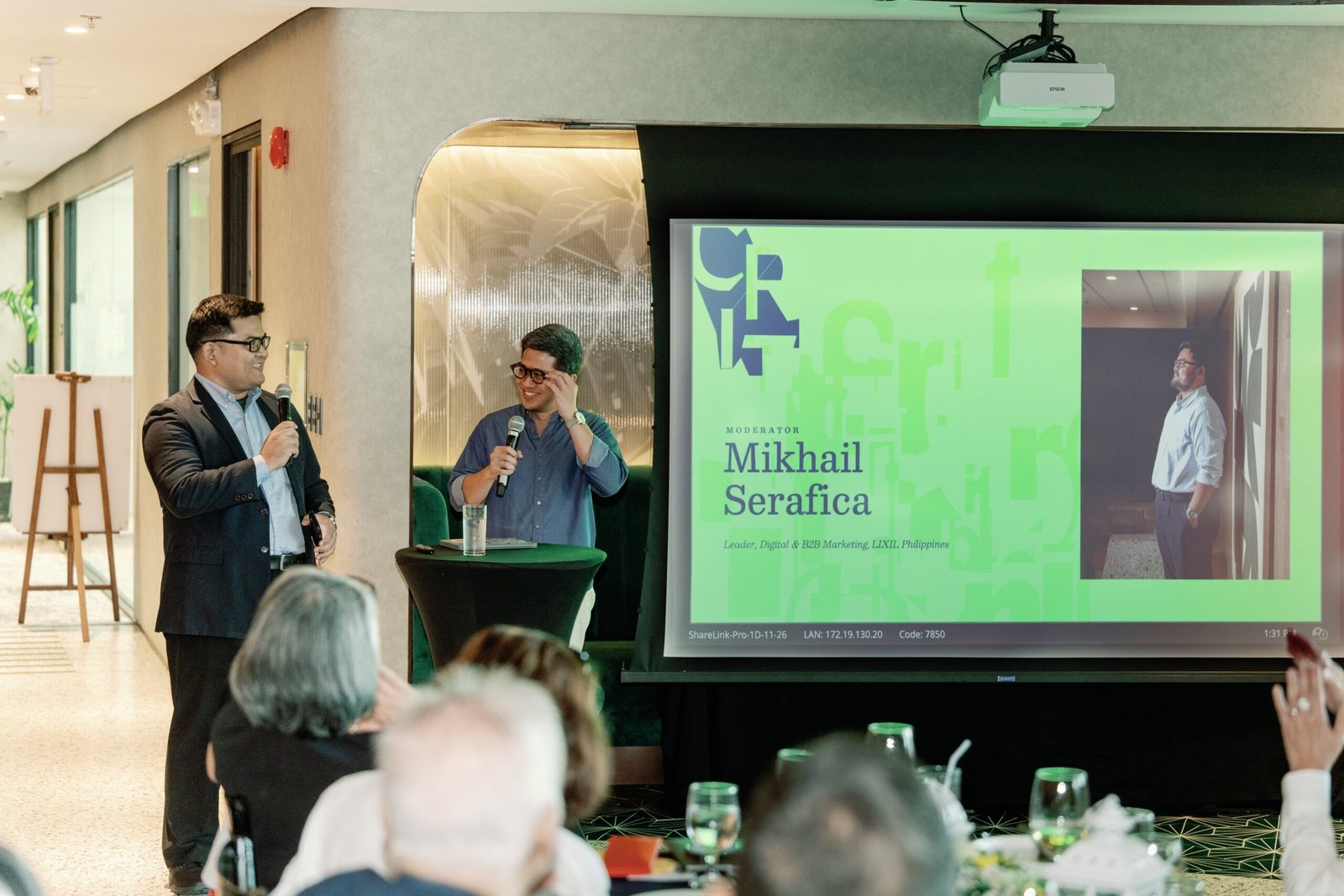
GROHE has a long-standing commitment to design, innovation, and water sustainability. Where do you see those values in the approaches and solutions of the Filipino architects featured in CRIT?
Emily Besavilla, leader for marketing and retail at LIXIL Philippines: What I find compelling about Filipino architecture is its ability to respond to real-world conditions while expressing a strong sense of identity, creativity, and purpose. Our architects work within a unique context shaped by our culture, climate, communities, and available resources.
For us, GROHE’s brand pillars are interconnected. Good design is not simply about aesthetics; it is where form meets function, precision engineering, and the exceptional experience of water. We see a similar mindset in the work and ideas explored by Filipino architects. Their ability to find opportunities within constraints, reinterpret local materials and traditions, and respond creatively to the needs of their communities reflects an understanding that innovation does not always mean introducing something entirely new. Sometimes, it means looking at familiar challenges differently and finding a more thoughtful way forward.
Water is fundamental to life, yet its management is an increasingly pressing concern for communities facing flooding, water scarcity, and the effects of climate change. As a brand whose expertise is closely connected to water, GROHE believes that responsible water use should be part of the broader discussion on how we design and experience the built environment. The CRIT book is valuable because it allows us to look beyond completed projects and understand the thinking behind them.
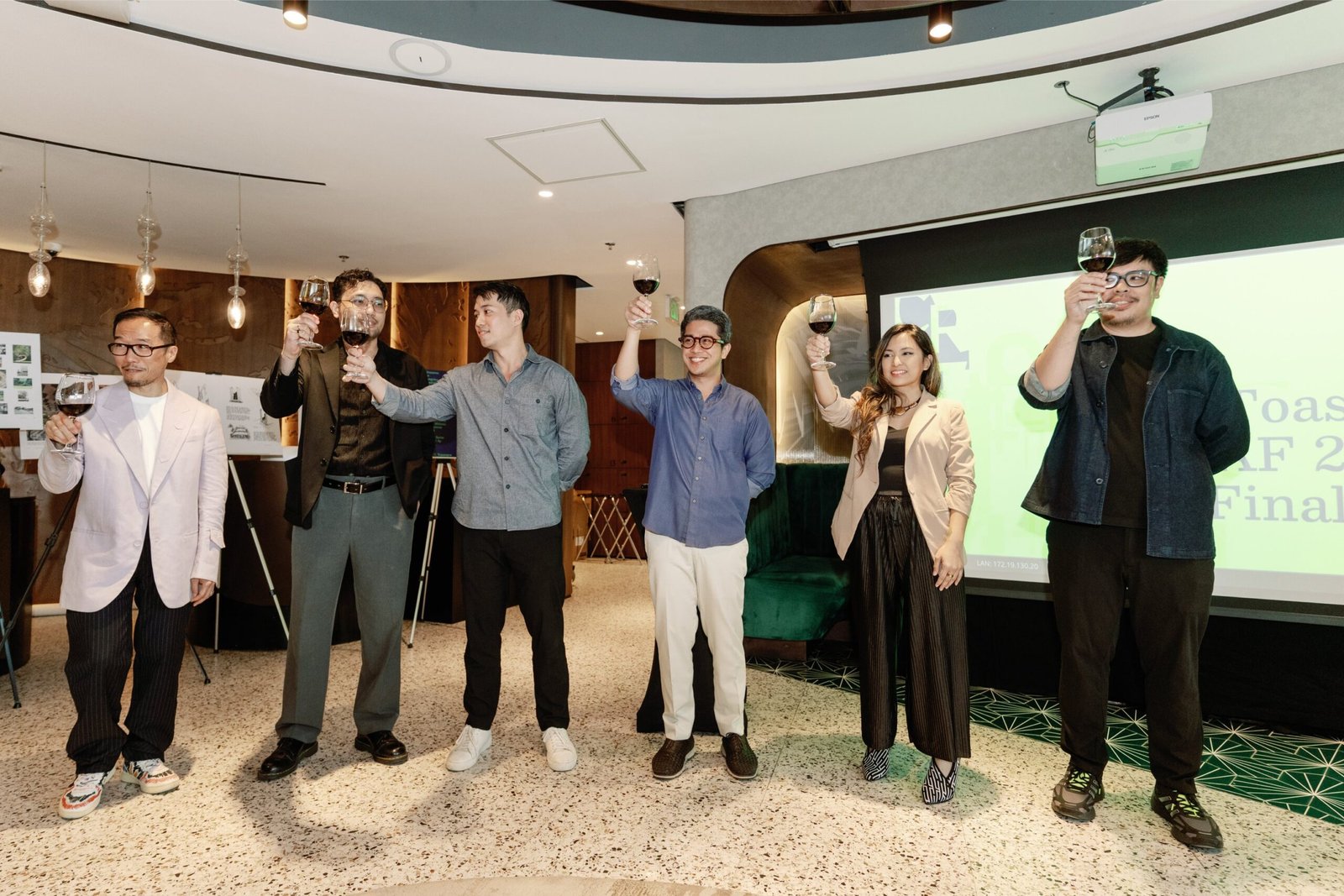
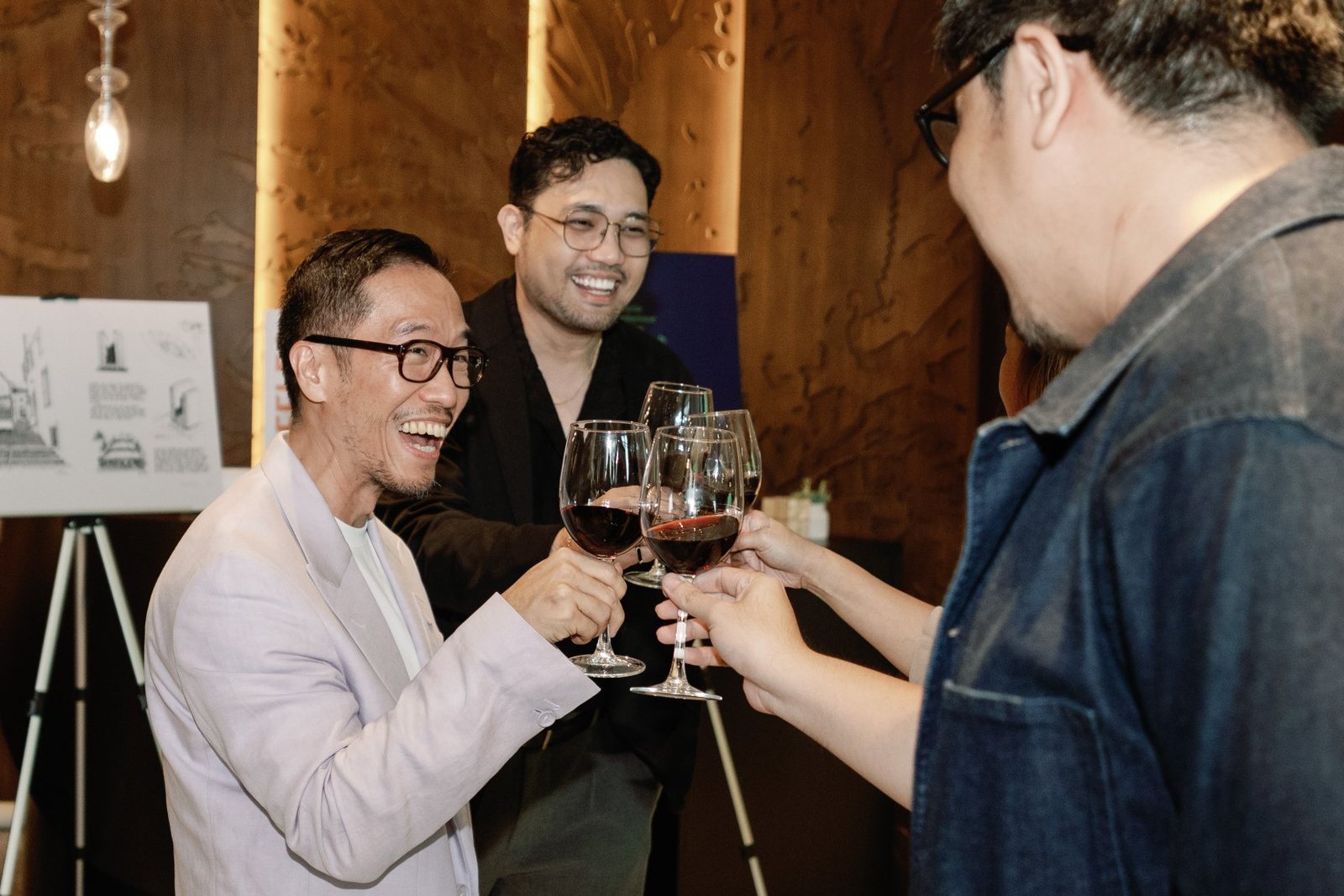
As a founding partner of WAF and a long-time supporter of the Philippine delegation, what does it mean for GROHE to see the work featured in CRIT recognized internationally, including past WAF shortlists and wins?
Emily Besavilla: It is incredibly meaningful because international recognition is not just about winning an award. It is an opportunity for Filipino architects to share their ideas, experiences, and perspectives with the global design community, and to demonstrate how thoughtful, innovative design can respond to the needs of people and places.
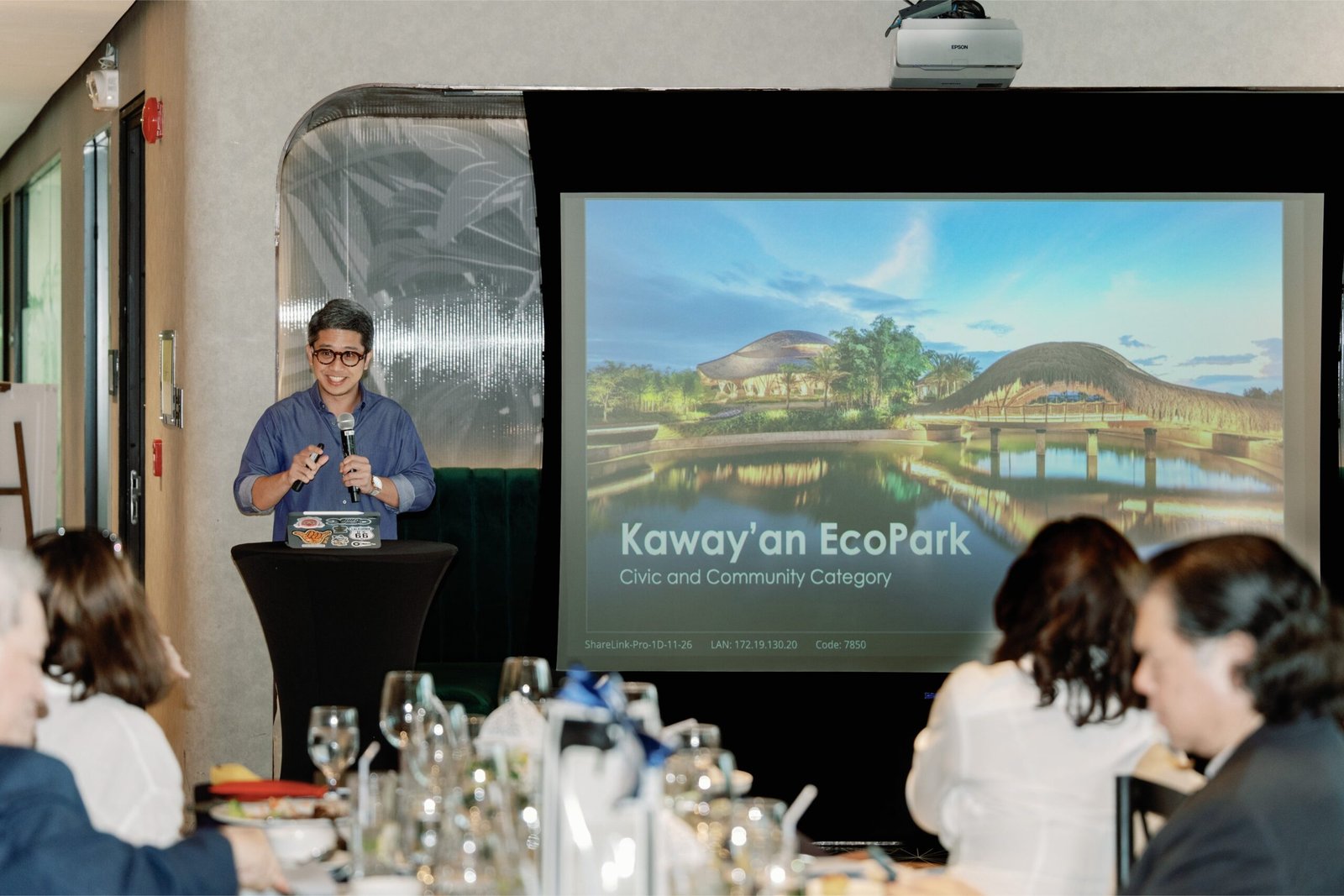
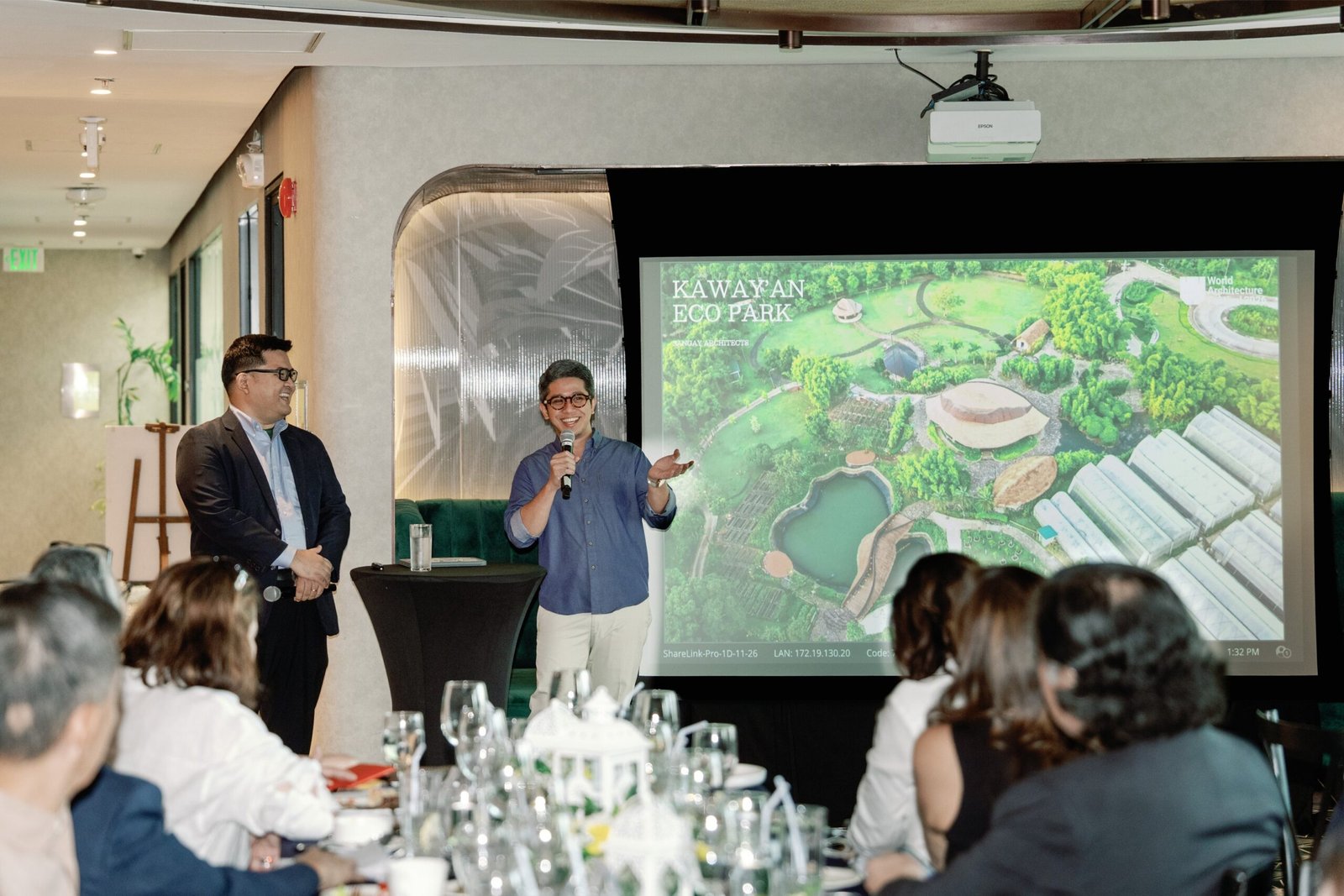
Through the GROHE Young Visionaries Challenge 2026, we supported Sangay Architects, led by Christian Salandanan and Kath Sapungay, with a complimentary submission to WAF 2026 and mentoring support to strengthen their project entry. Their project, Kaway’an Eco Park (with IBUKU and Bamboo Pure), was successfully shortlisted at WAF 2026, a significant achievement that goes beyond the opportunity to participate, demonstrating the strength of emerging Filipino talent on an international platform.
What makes these achievements even more meaningful is the collective effort behind them. An award may recognize an individual practice, but the journey often involves mentors, collaborators, peers, and a wider community that encourages one another to do better. The critique sessions embody that spirit of bayanihan, while the CRIT book preserves the conversations and lessons that make this exchange possible.
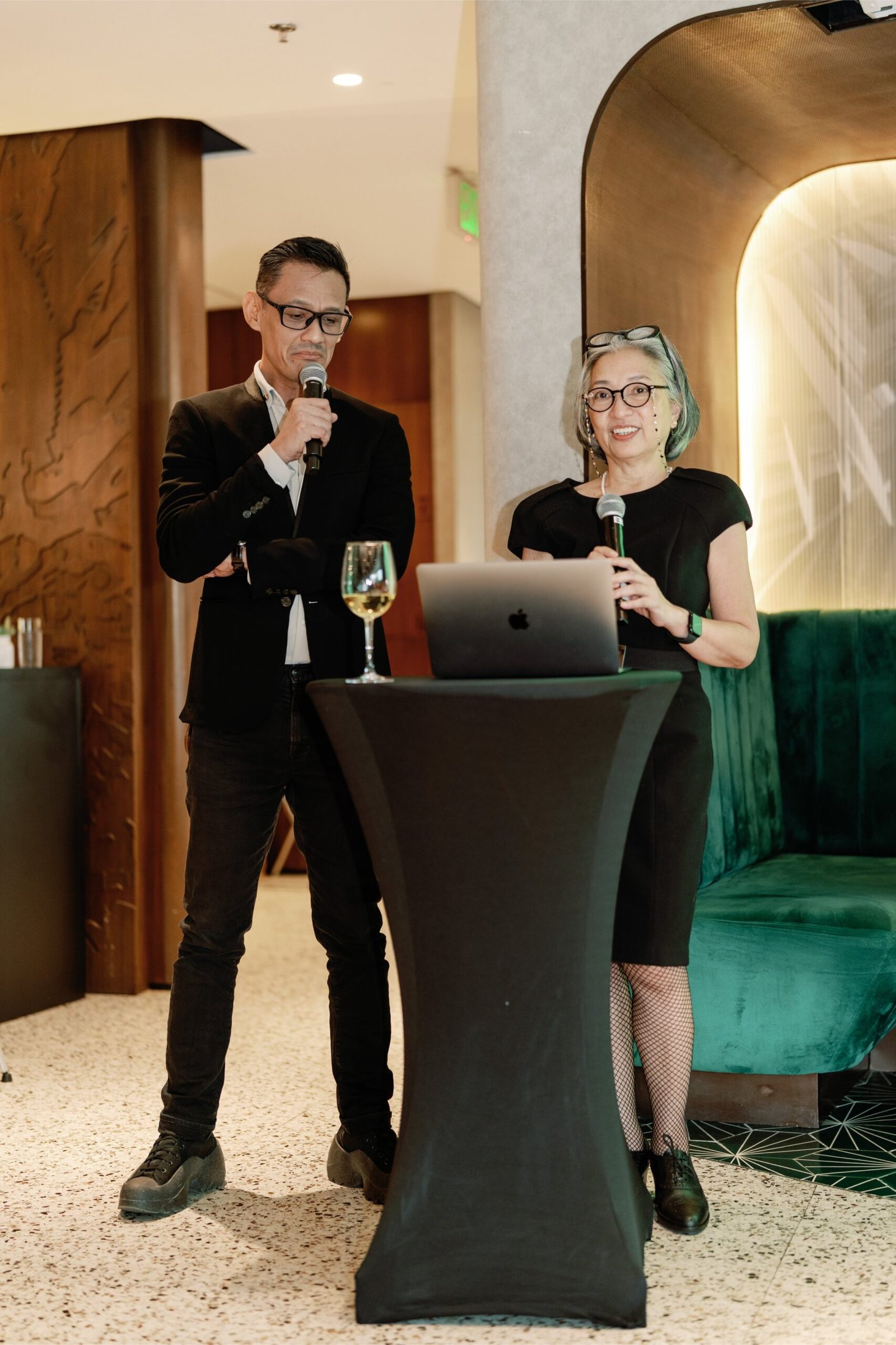
Beyond the book launch and this year’s festival, how does GROHE see its role evolving in the future of Philippine architecture and design?
Emily Besavilla: GROHE’s relationship with Filipino architects should be reciprocal. While GROHE can bring international design perspectives, technological expertise, and a global network to the conversation, we also have much to learn from Filipino architects, their resourcefulness, sensitivity to context, and ability to find creative solutions within complex conditions. These perspectives enrich the broader design conversation and remind us that innovation can emerge from anywhere.
Kanto and GROHE come from different sides of the design ecosystem, one rooted in editorial and community-building, the other in industry. How has the partnership evolved over the years, and what made a project like CRIT possible?
Patrick Kasingsing: Our partnership is older than Kanto itself. Judith and I have worked with GROHE since 2014, the year the Philippines first made the WAF shortlist, and what set it apart from the start was how generous and patient the team was with our endless prodding. That generosity took the form of practice crits hosted and produced at no cost, of send-offs and toasts for every delegation, and of flying WAF’s Paul Finch to the Philippines for a visit. It showed up, too, edition after edition, whenever the team turned out in force for a Pinoy live crit, helped me land an interview or find a corner to catch a source in, or had snacks ready after hours on my feet, none of which was ever asked of them.
Over the years, what began as a business partnership has become something closer to family. We can often second-guess each other’s needs, and we drop the formalities even in meetings, since we know we are on the same side most of the time. Out of that warmth grew our community of WAF joiners and winners, whom we fondly call Waffles and Critters (after WAF and Crit), and the camaraderie bubbling across its many Viber chat groups gave a book like CRIT the chemistry it needed to exist. The last time I reached out with another anxious ask and an apology at the ready, Emily Besavilla texted back, “Nako, no bother yan, PK! We are family naman!”
Emily Besavilla: Over the years, our partnership with Kanto has evolved from supporting Filipino architects on their journey to the World Architecture Festival into something much more meaningful: a shared commitment to building a stronger design community in the Philippines. Kanto brings the editorial perspective and the ability to create conversations within the community, while GROHE brings the industry perspective and a long-standing commitment to design excellence.
Through the critique sessions, we have seen architects open up their work to scrutiny, learn from one another, and become more confident in articulating their ideas. Over time, these interactions have grown into a community built on trust, generosity, and a shared desire to see Filipino architecture progress. For me, the CRIT book is a natural expression of that journey. It makes the learning accessible to a wider audience, including young architects and design students who may be experiencing these discussions for the first time.
As the Filipino finalists prepare to present their work before an international jury in Florida, what is the one piece of advice you would most want to give them?
Patrick Kasingsing: Soak in the moment! They have already made it in our eyes, and they can now savor the process and bask in the presence of the world’s largest live architecture festival. Though WAF is a competition, it is a once-in-a-lifetime opportunity for our architects to broaden their horizons and gather both insight and inspiration outside the country. Some of the best moments happen when Pinoy finalists meet architects they have long looked up to, or find real lessons in the criticism the live crits hand them. The networking pays off as well, as BAAD Studio found when Benjee met fellow WAF finalists TROP and Department of Architecture at the festival and went on to work with both. And since WAF is no bubble, I highly recommend stepping out to explore the rest of the host city.
Emily Besavilla: My advice would be to trust their work, be proud of the perspective that brought them this far, and enjoy the experience. When they stand before the jury in Florida, I hope they remember that they are not there simply to prove that Filipino architecture can compete internationally. They are there to share ideas and perspectives that can contribute something valuable to the global design conversation.
Of course, preparation matters. They should know their projects inside out, be clear about the decisions they made, and be ready to explain not only what they designed, but why. Just as importantly, they should welcome the questions and criticism that come their way. •