Words and interview Patrick Kasingsing, with Gabbie de la Cruz
Images Ricky Liu & Associates, with photography by Patrick Kasingsing
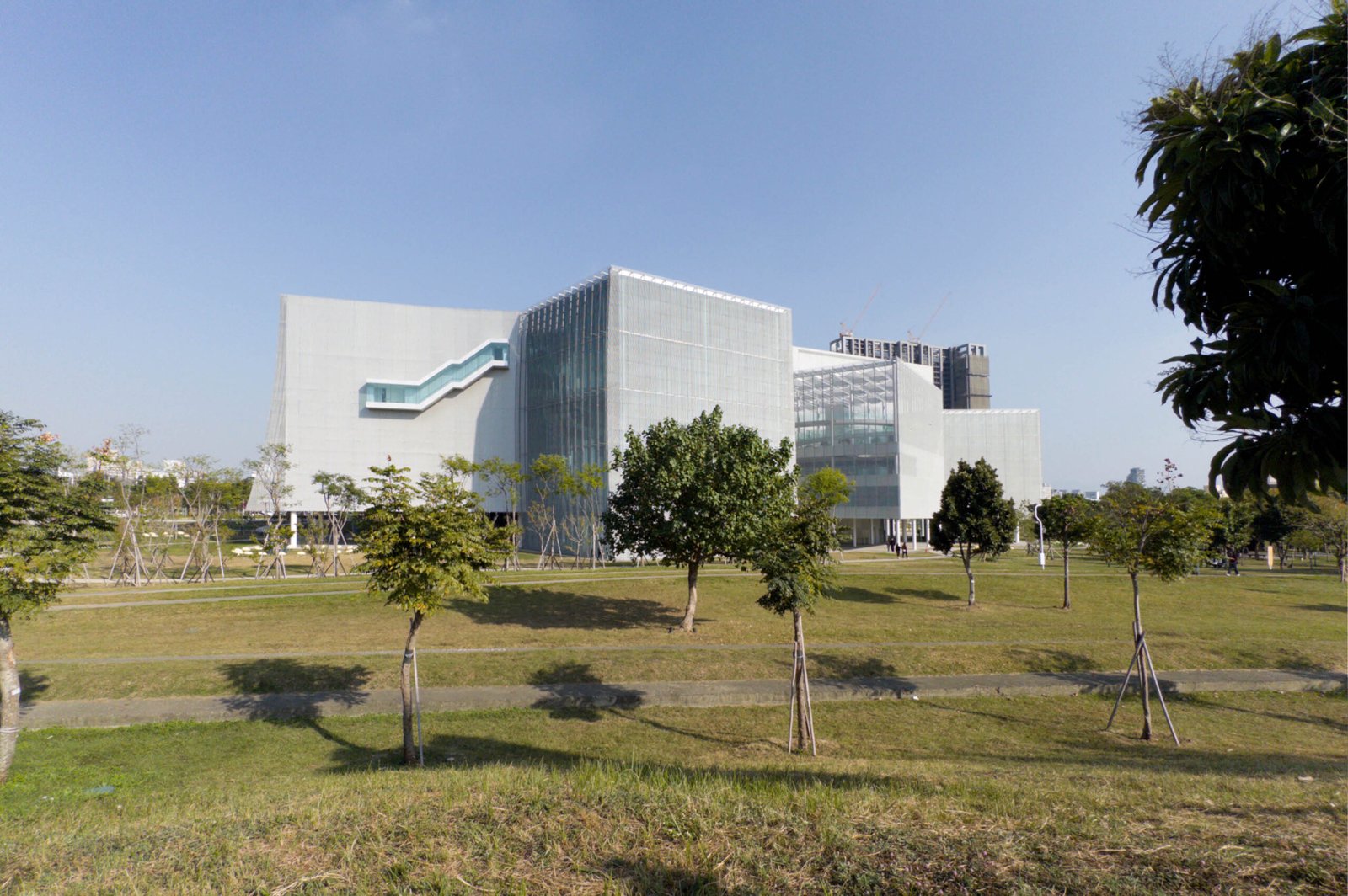
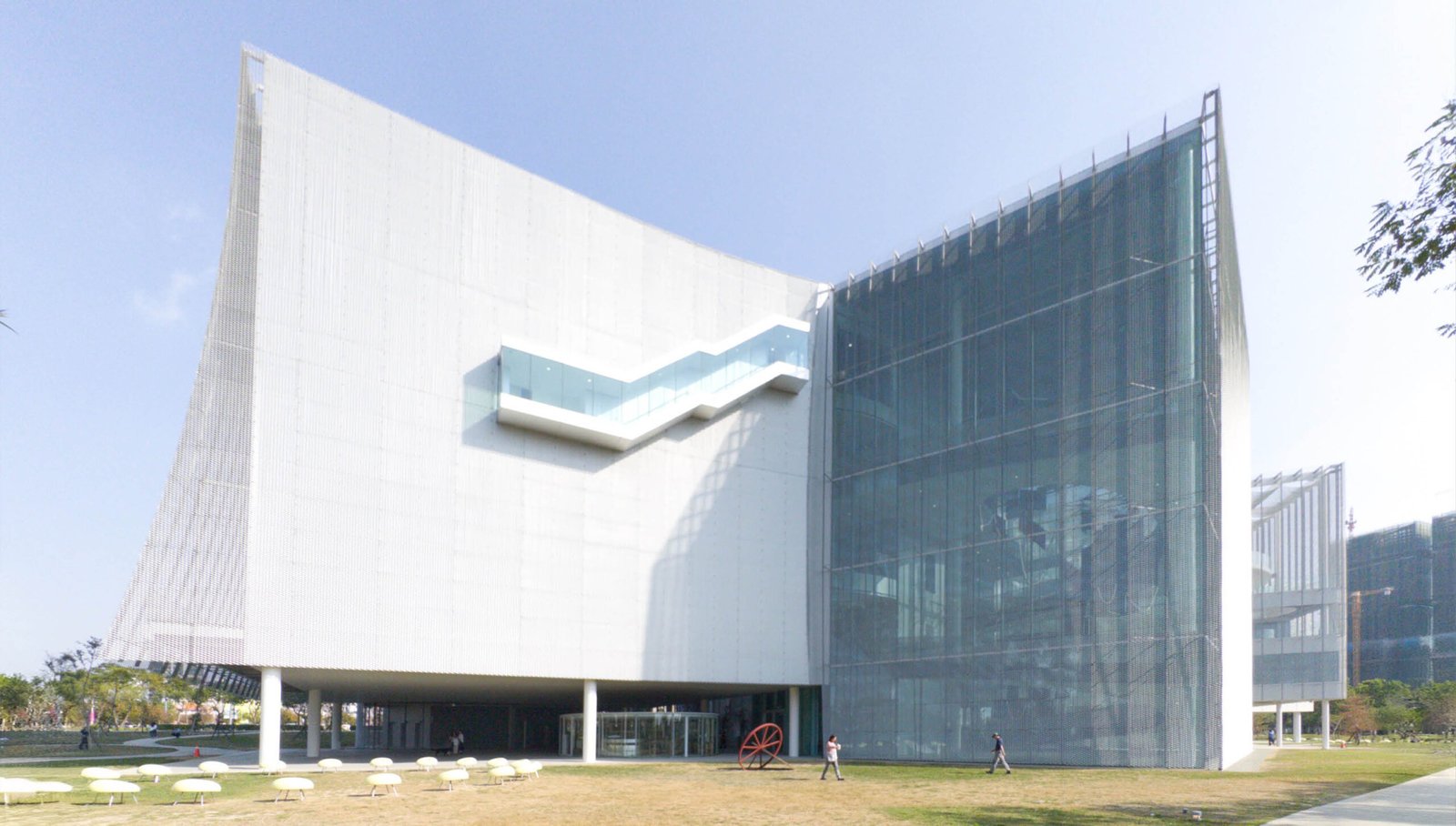
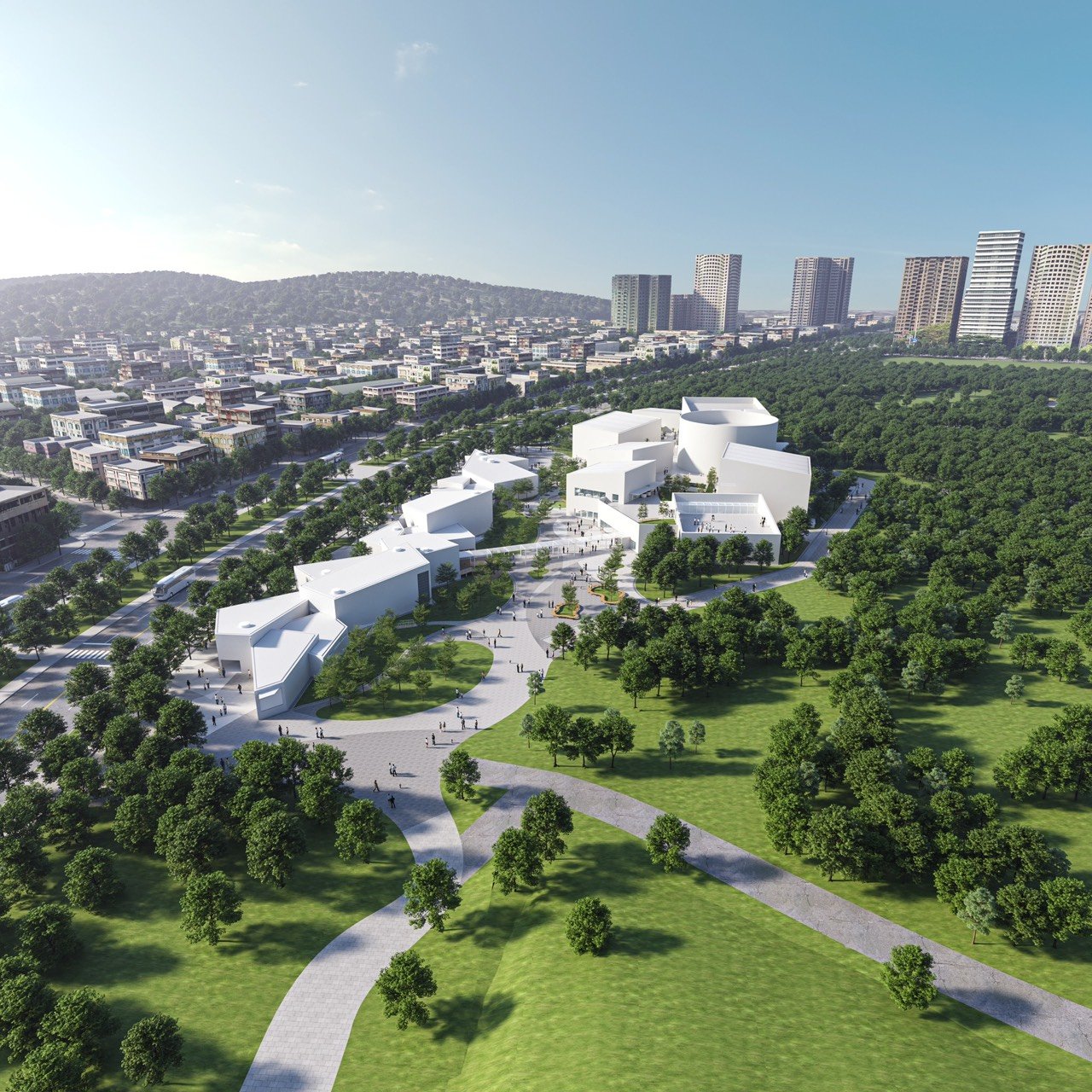
(Taichung Green Museumbrary)
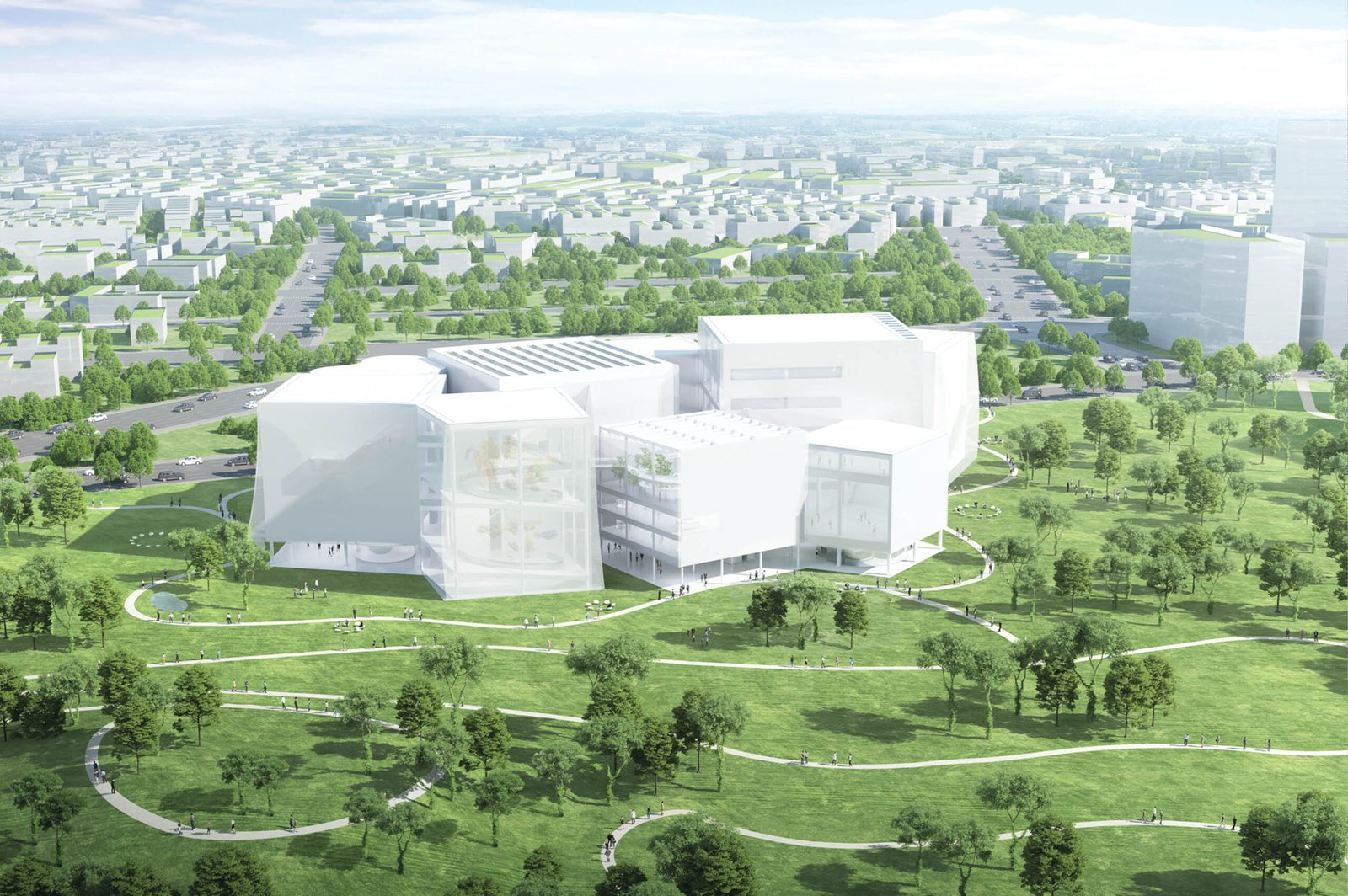
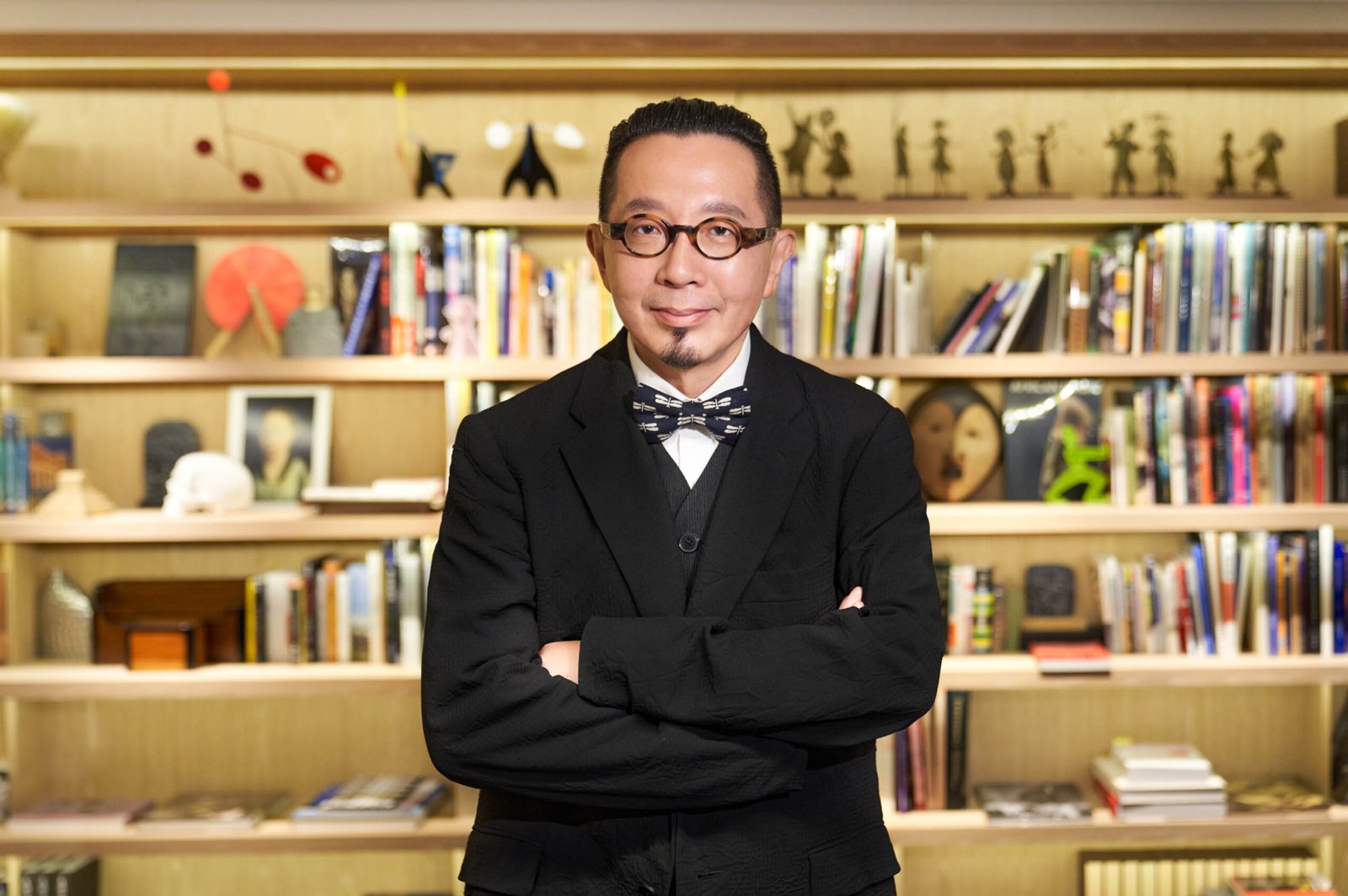
Editor’s note: For a 35-year-old practice with a footprint of 132 built works across Taiwan, Ricky Liu & Associates has chosen a nondescript building in Taipei for their 11th-floor headquarters. I was in town last December for Taiwan Design Week and an interview with the firm’s École Nationale Supérieure des Beaux-Arts and MIT-trained founder, Ricky Pei-Shen Liu. I planned to visit Taichung in the next few days to visit what was then the soon-to-be-opened Taichung Green Museumbrary, a landmark project for the city more than a decade in the making. Respected Japanese studio SANAA led the design of the Museumbrary, but I chose to pivot the project feature lens towards the architect-of-record for a change, to learn the story of the project on the ground, stripped of the PR-speak and media sheen, and how collaborations with globally renowned studios take place.
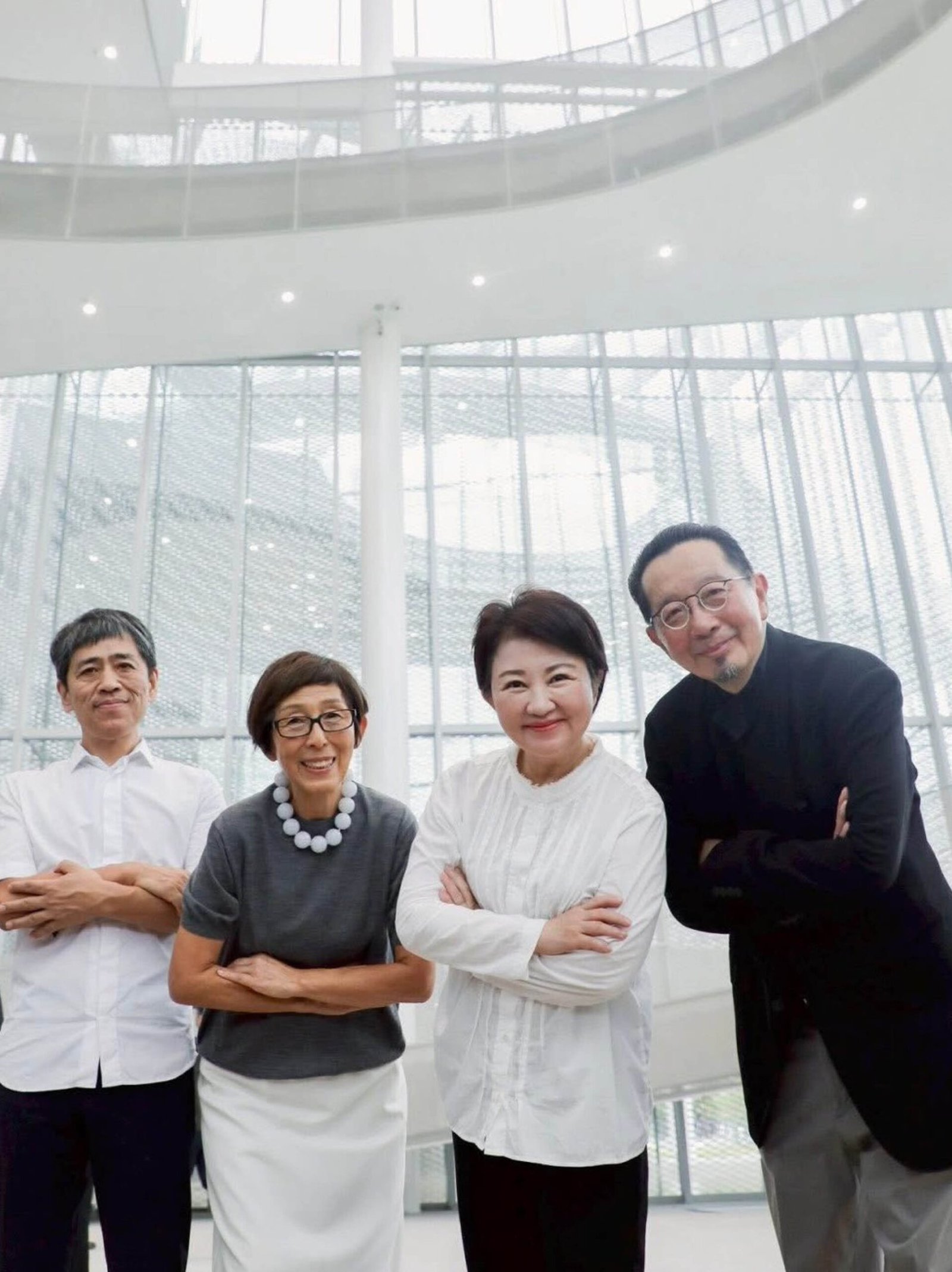
Amid cups of tea and the plush, art‑filled confines of Mr. Liu’s 300‑sqm private office, a dialogue on consistency, competitiveness, and the value of curation transpired. The office is sequestered from the rest of the white‑lit studio by way of a wafer‑thin marble sliding door. It employs a dedicated project curator to help craft project narratives. Our discussions on the Taichung Green Museumbrary inevitably took various turns and covered Ricky Liu & Associates’ favorite typology: institutional and cultural buildings. From realizing Taiwan’s largest hospitals to multiple art museums approaching completion, the practice regards every project, big or small, local or global, with the same competitive and collaborative spirit. This ethos has enabled them to be the AOR of choice for renowned architects seeking to make their mark on the Taiwanese landscape.
Competitions and collaborations
Liu revealed to Kanto that the competition to bid on the recently opened Taichung Green Museumbrary began 12 years ago, stretching past its targeted timeline due to its significance to Taiwan as a landmark and the country’s political situation. “I don’t know if that happens to your country too, but for us in Taiwan, it is common for a project to get stalled when government processes are involved,” he jested. The architect shared that he knew of 225 design proposals from 39 countries that were submitted to the competition.
“With the project’s national significance and the display of interest from various designers, we needed a winning strategy. You don’t join competitions to lose. Our solution was to form a joint venture with SANAA to give the team more energy and for fresh design perspectives,” he furthered. “Also, we’ve already built several projects here [Taichung], and our design language is no stranger to the community.
There’s also the fact that the jury often looks at who [the global studio] you collaborate with and how they will execute the work.”
Hello, Mr. Liu! When SANAA finally firmed up their concept for the Taichung Green Museumbrary, what local realities did you need to explain to them, and how did these factors shape the design both at the start and as the project developed? Can you share a specific example where a local condition led SANAA to adjust their design?
Ricky Liu, founder of Ricky Liu & Associates: Most of the jury are from Taiwan, joined by international designers. Together with SANAA, we studied the jurors. If one specializes in sustainable architecture, you have to be able to address issues they may raise. If there’s a structural engineer on the jury, then you must be able to clearly explain how the building works. It’s not about just covering these to win and please them; it also teaches you to consider all aspects.
I have also served as jury for a few international competitions, and a major challenge for the local architects in terms of execution is whether they have enough experience in dealing with the government.
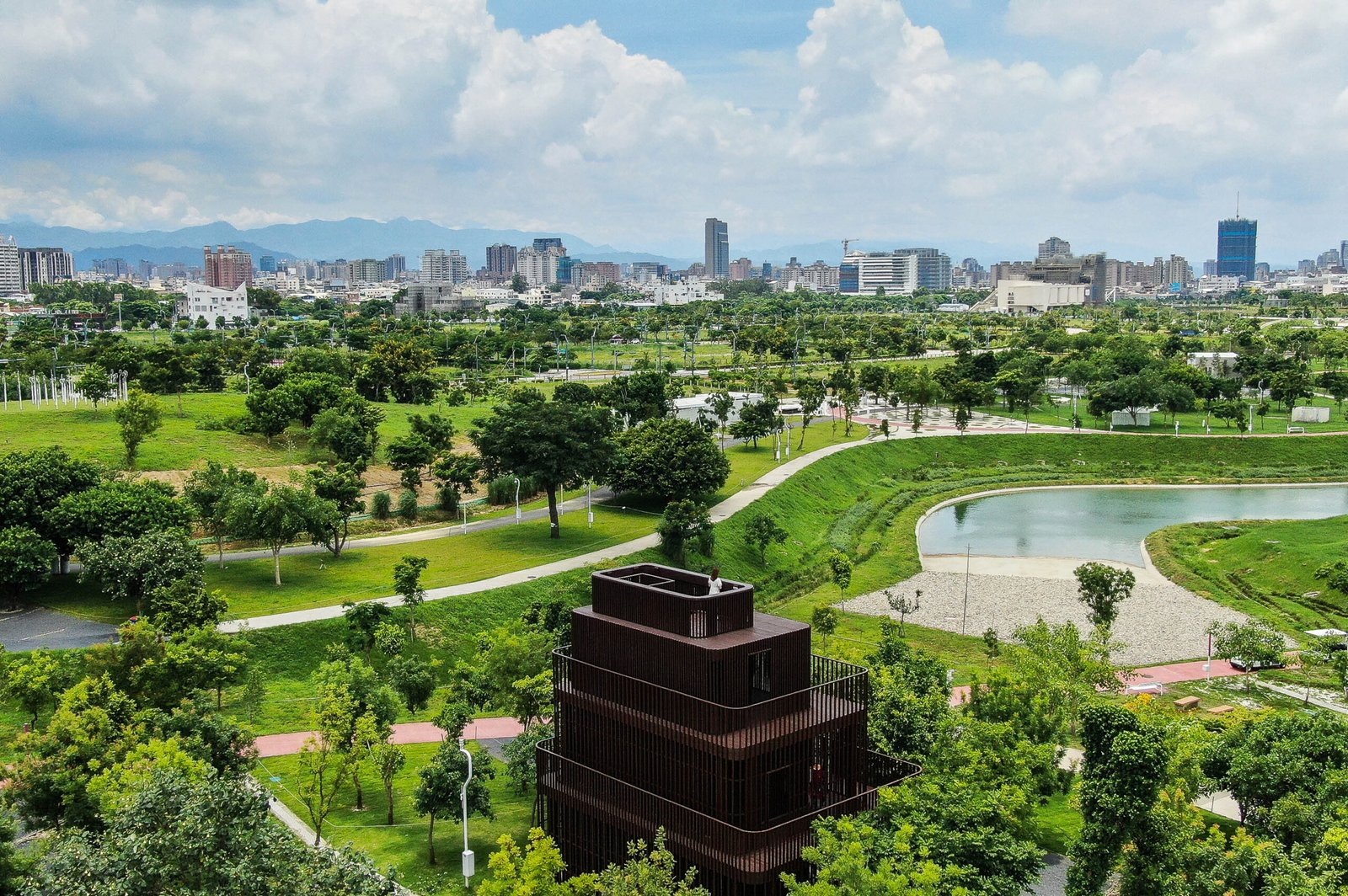
Lucky for us, we do, as we’ve worked on several projects, such as the city government building in Taichung, its city council building, and its 67-hectare central park. We’ve also participated in several competitions before, including the Taiwan Tower, which is envisioned to stand in the middle of the park. Unfortunately, that project did not come to fruition due to insufficient government budget.
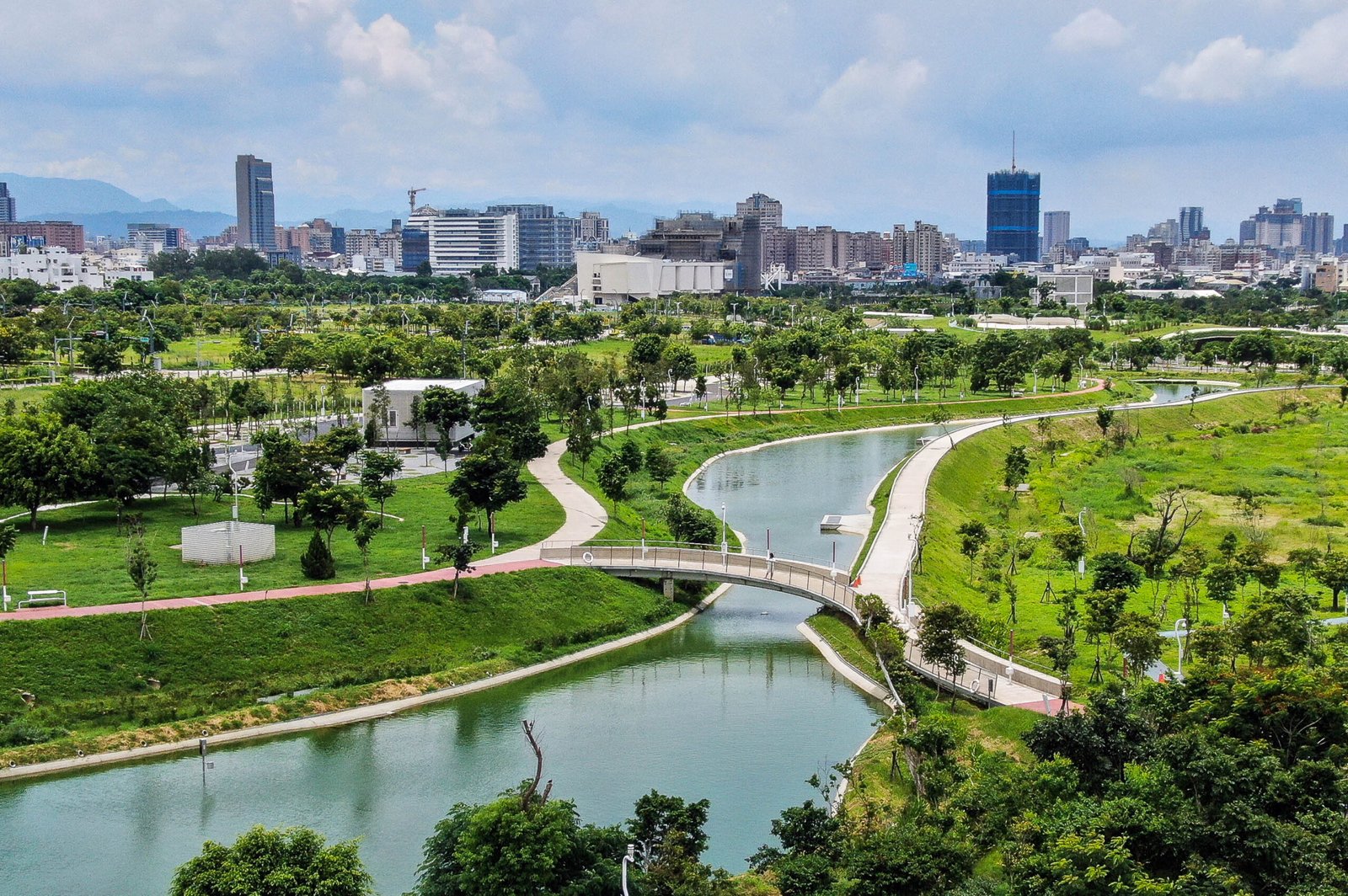
For the Taichung Green Museumbrary, our concept hinges on considering local factors such as the climate and community behavior, which we discussed with SANAA during brainstorming. First, we had to establish that the library design for the Museumbrary is entirely different from the central government library.
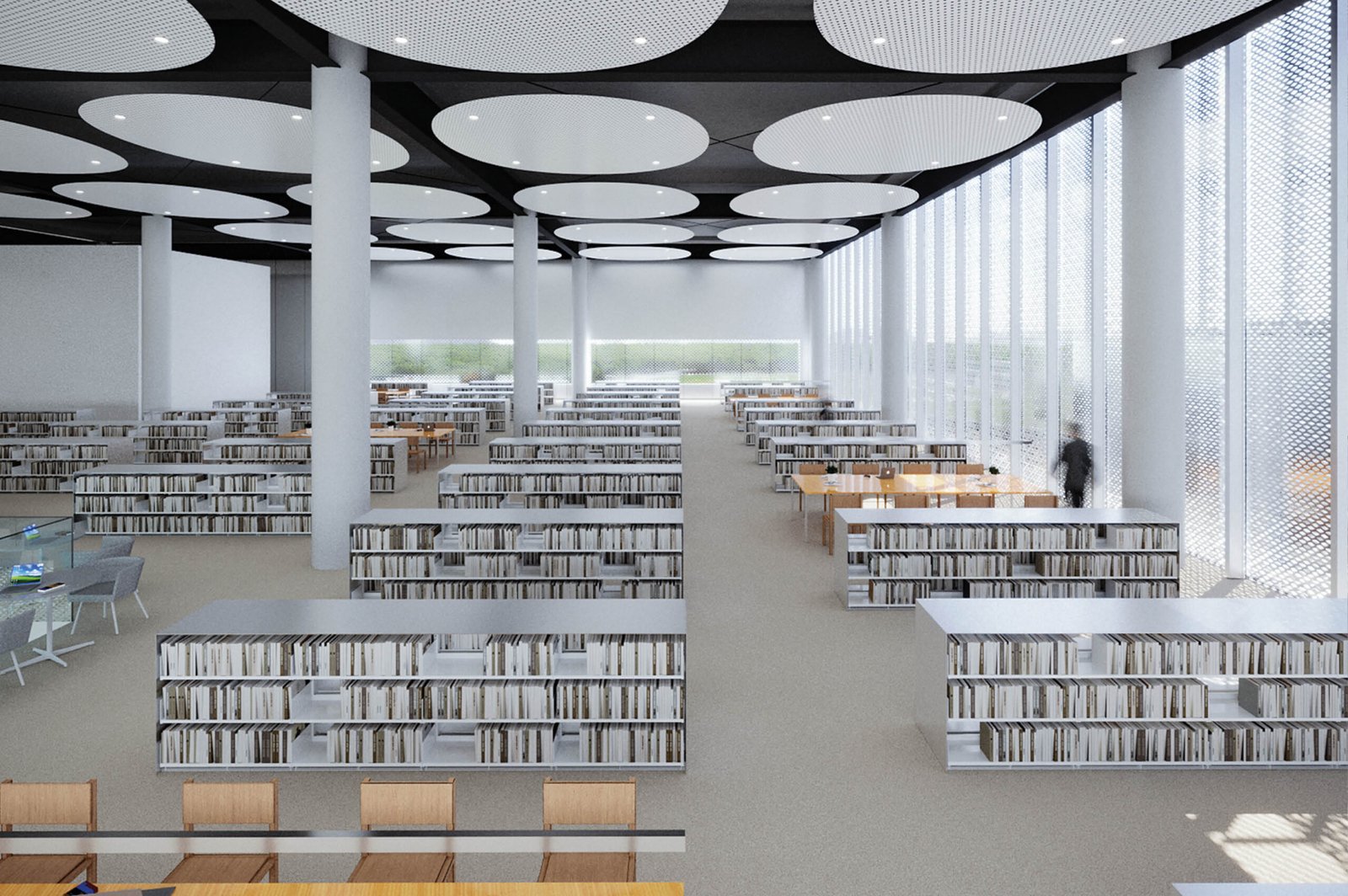
This municipal library would be like a living room for citizens. It has to be a place that a housewife would want to go to after shopping at the market, or a place that a member of the community would intentionally visit after work to destress or chat with friends. Seniors should also be enticed to go here to read the newspaper. It should be a casual, social environment.
There’s also a study room for students to prepare for exams or do their homework. A place for concentration, free from typical distractions at home. This area closes later, I believe around 10 PM, for the students’ convenience. We also find that some students prefer nighttime for studying, as daytime activities in public spaces are quite complicated here in Taiwan due to the sunlight.
I like how you described it as a “living room” for the community, hinting at its flexibility as a space. How does spatial programming for the Museumbrary work?
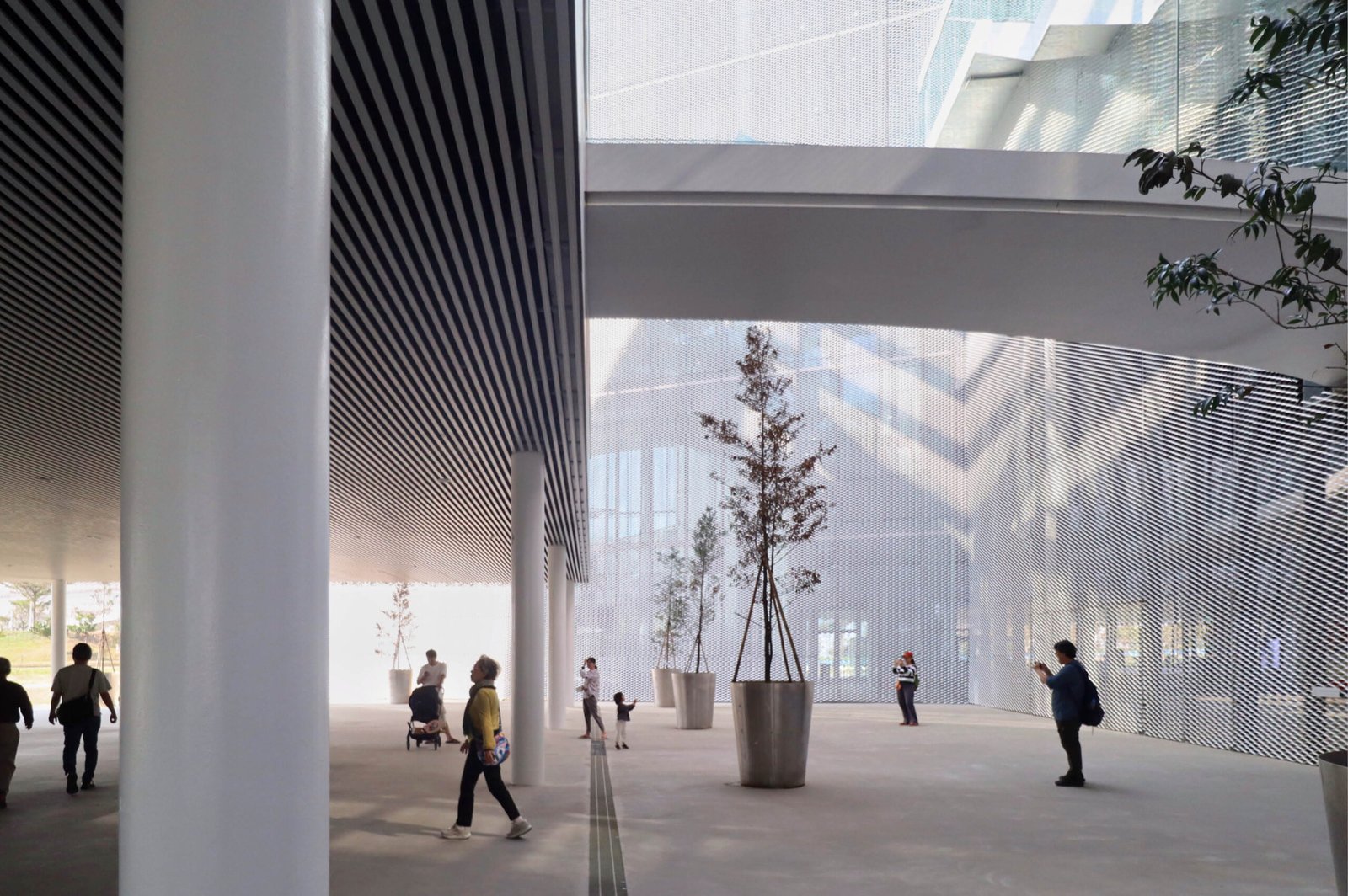
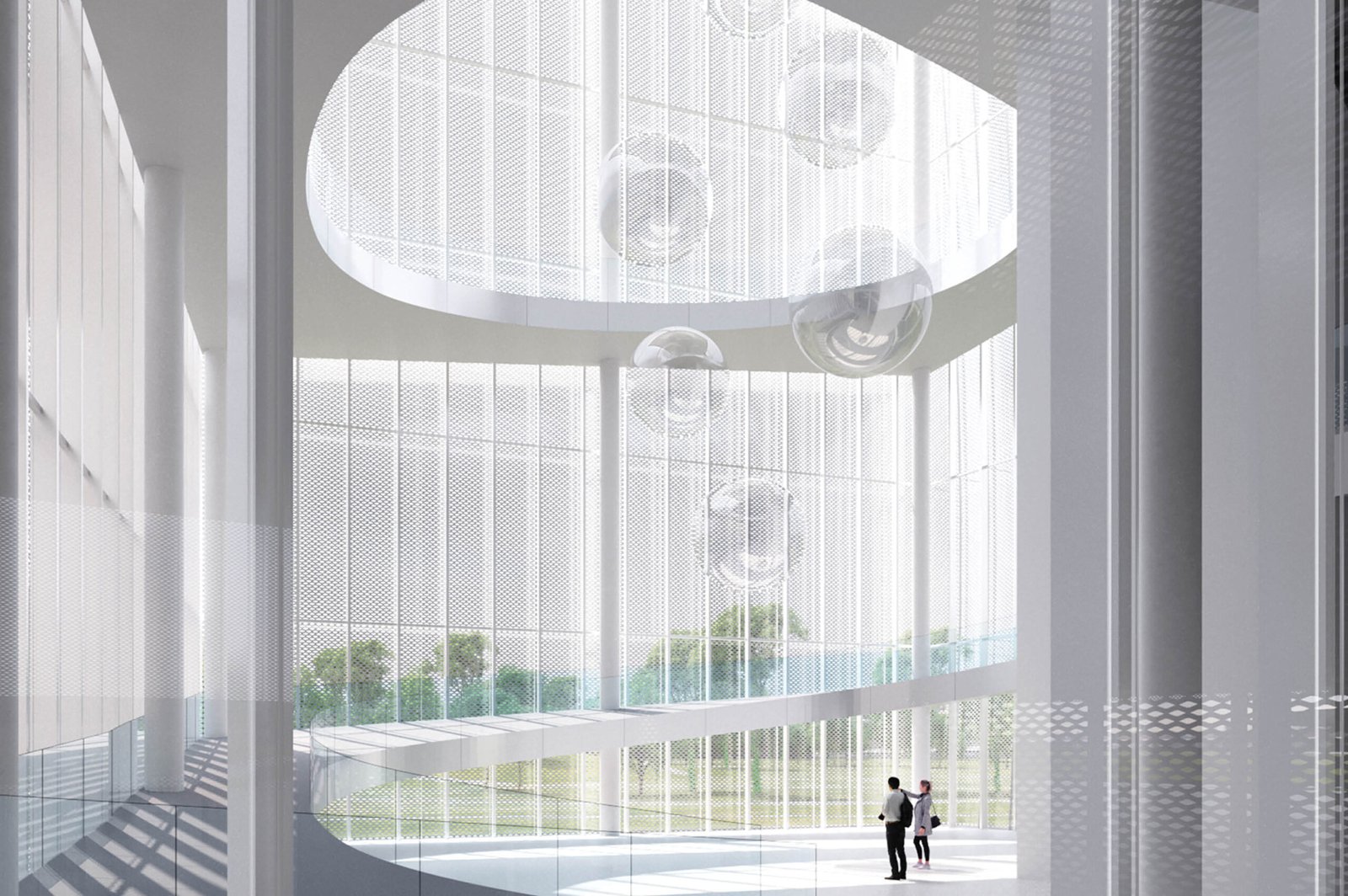
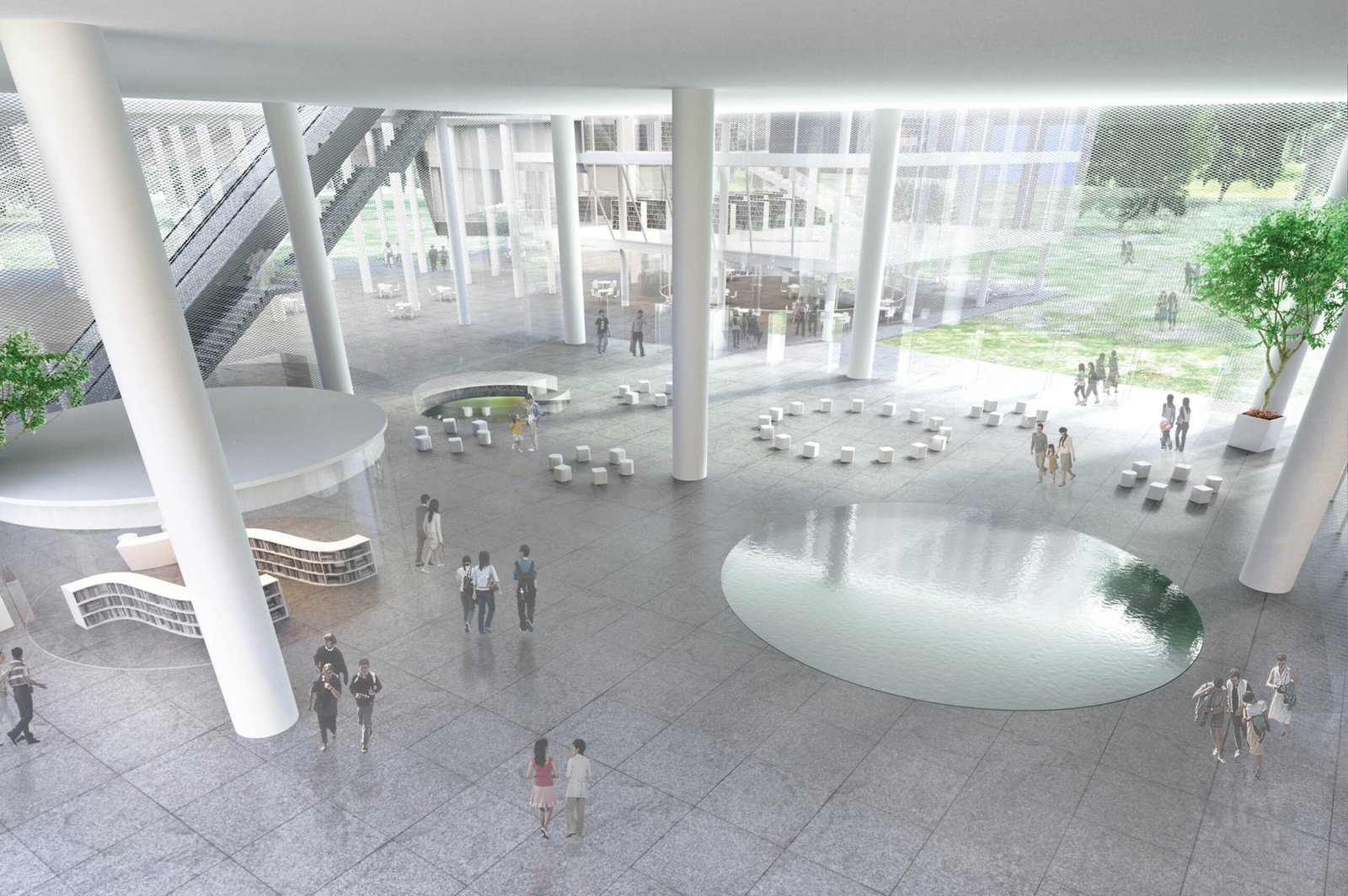
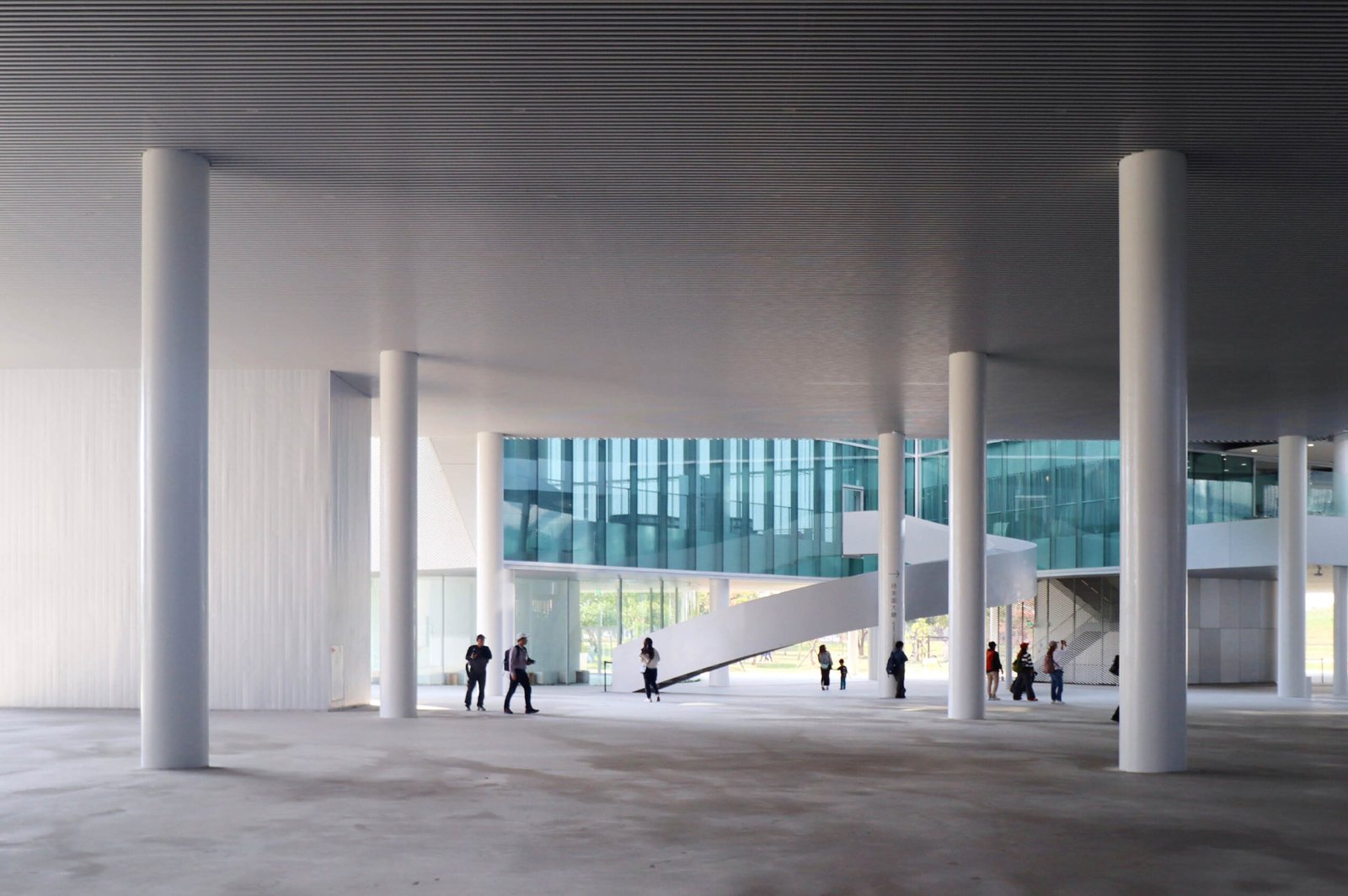
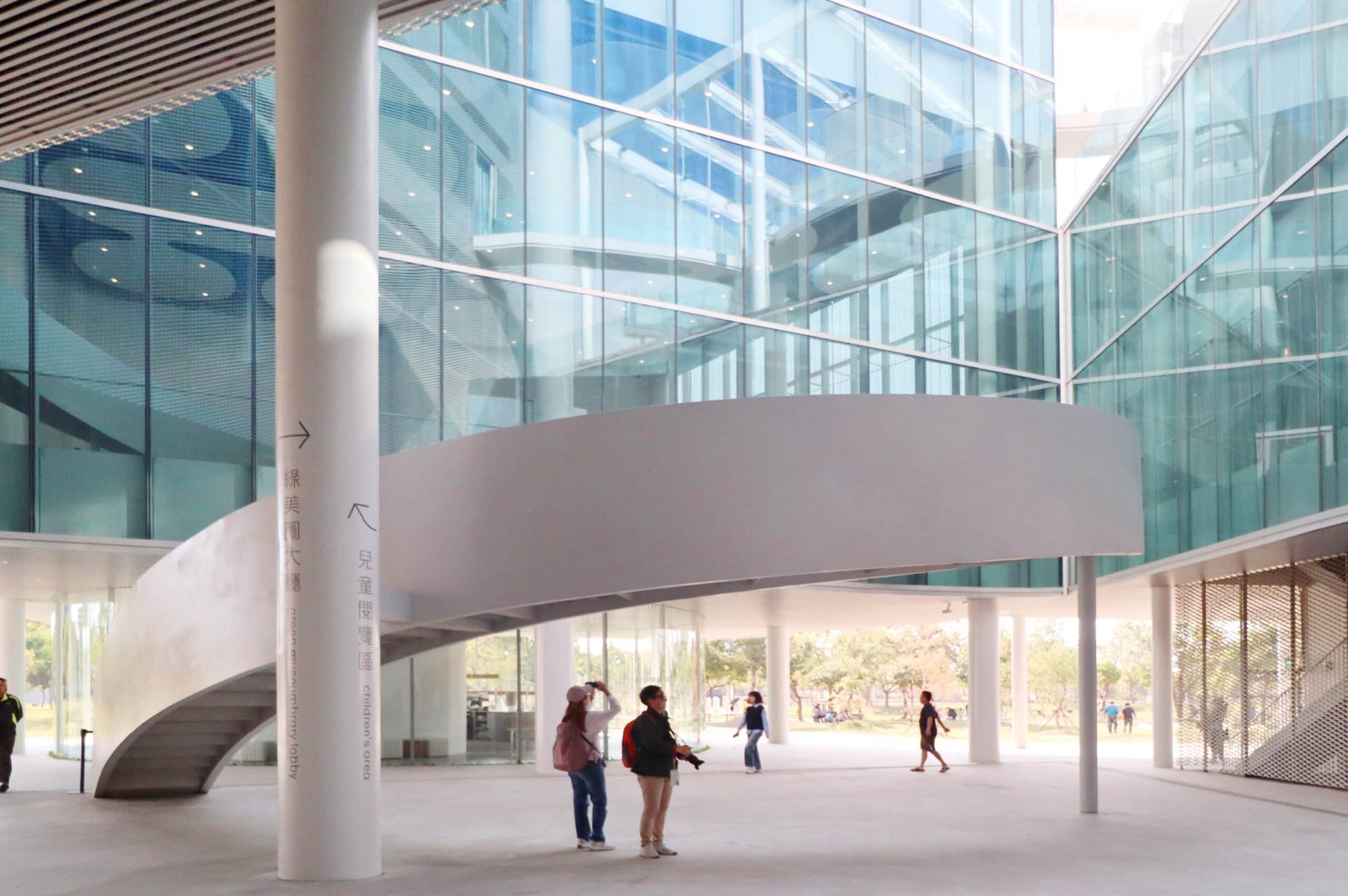
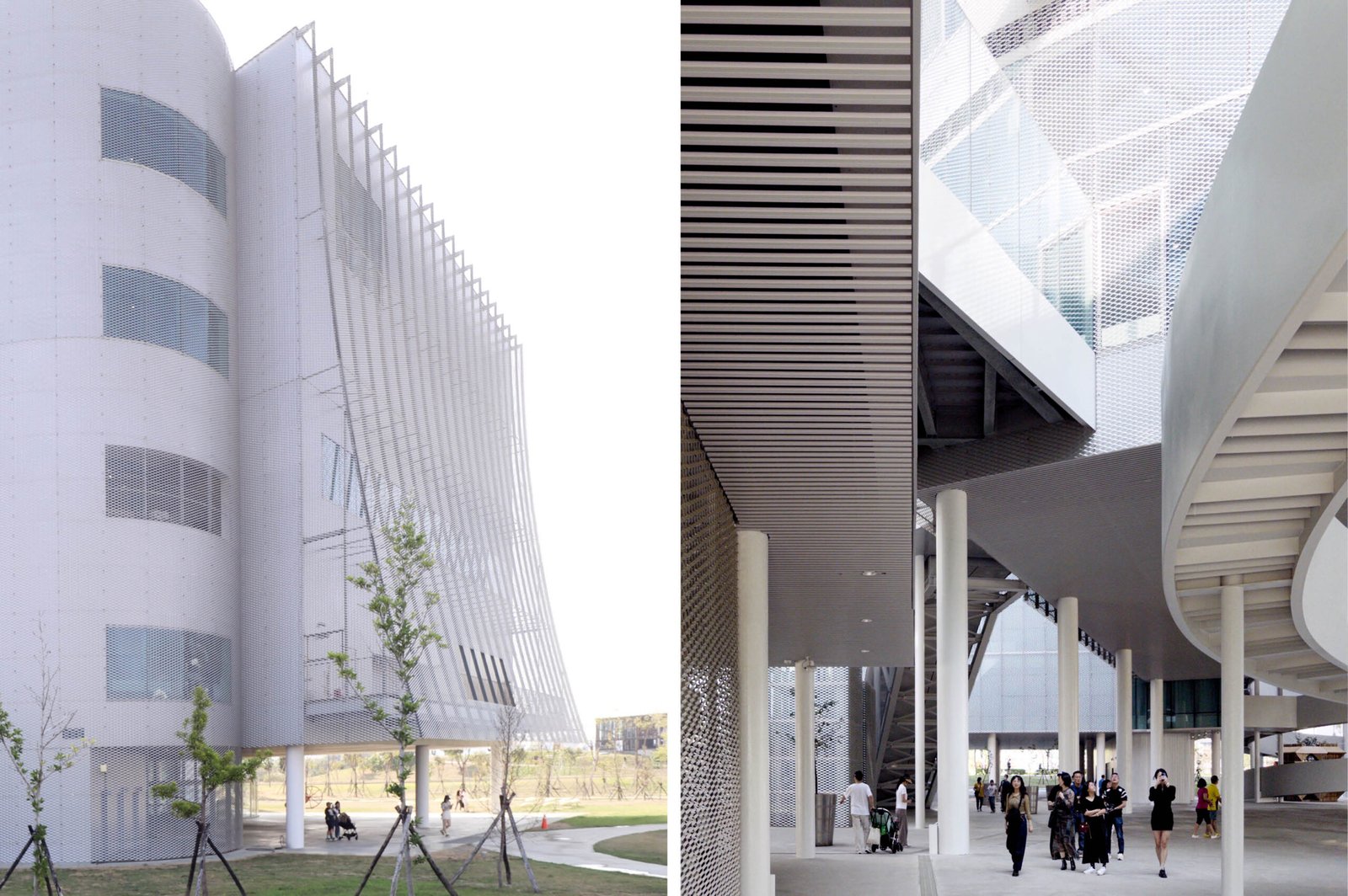
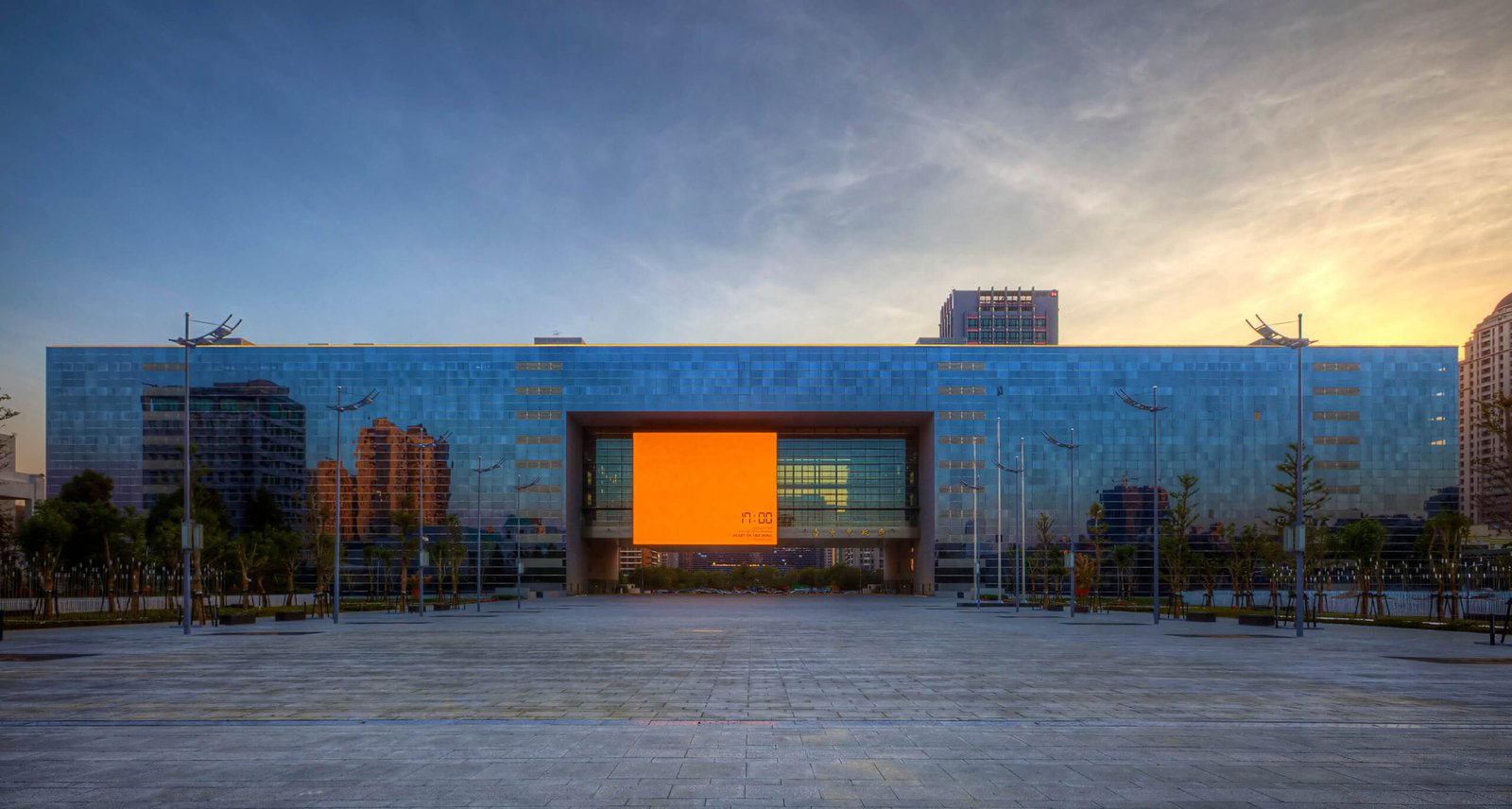
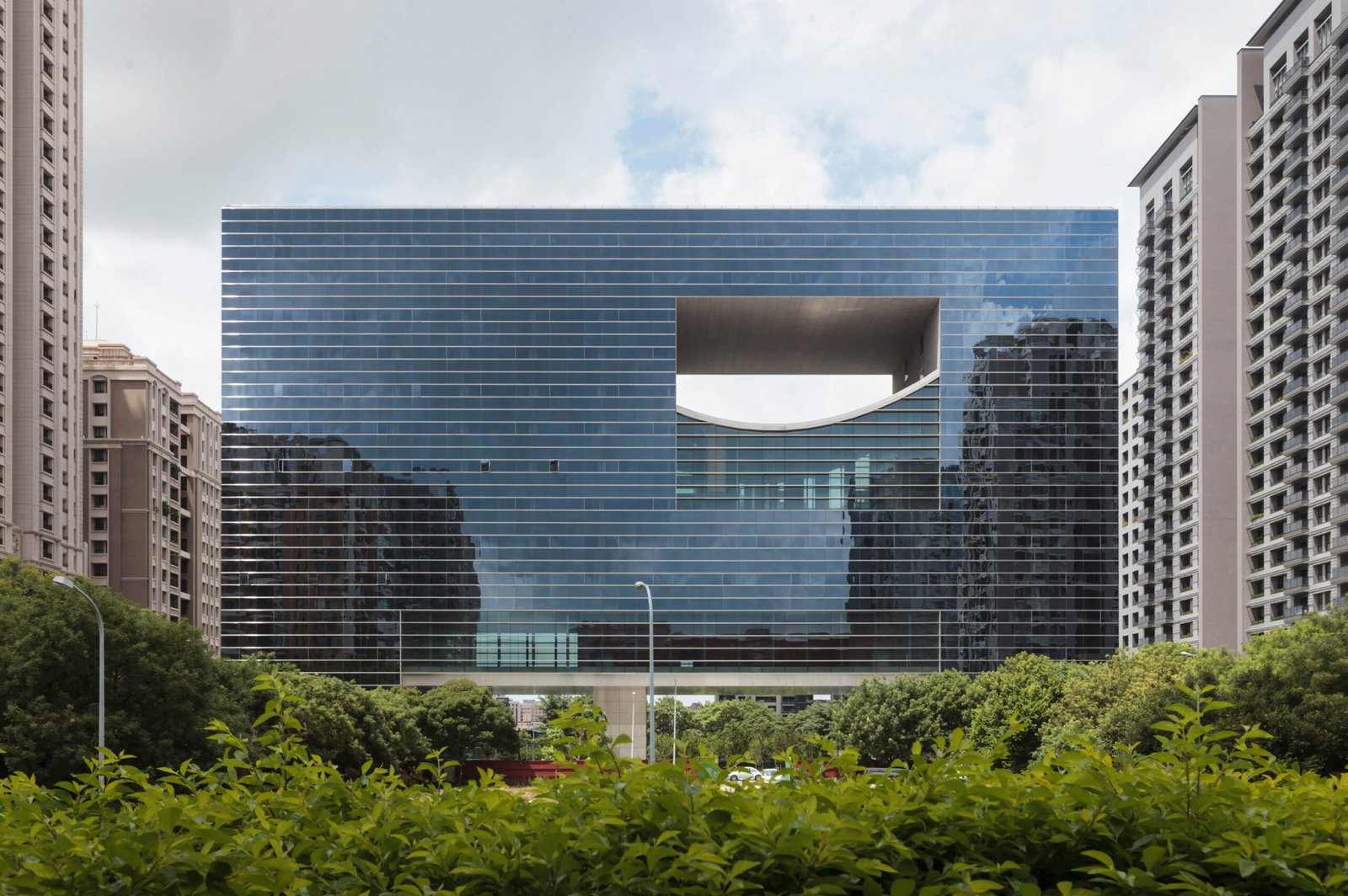
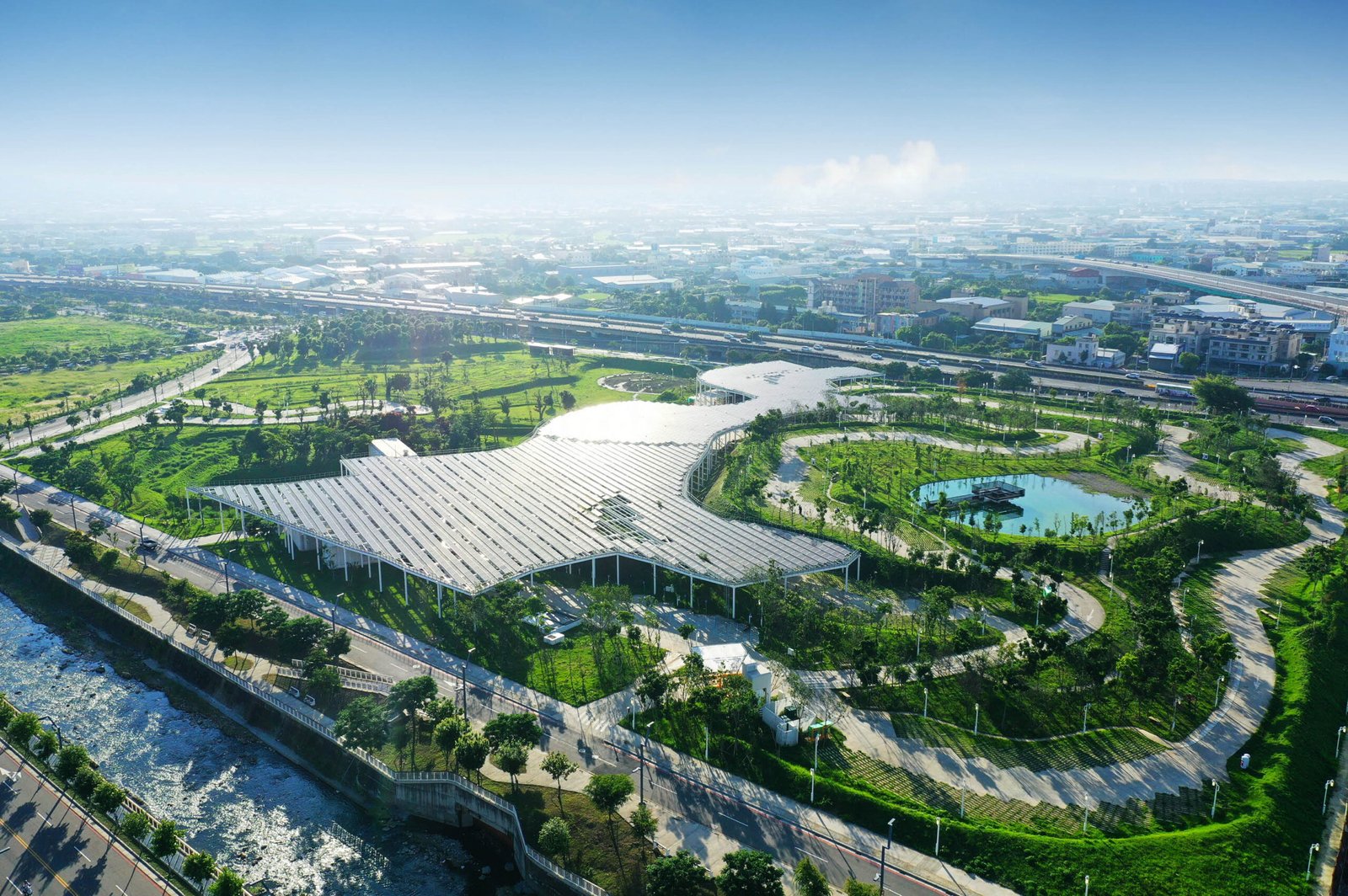
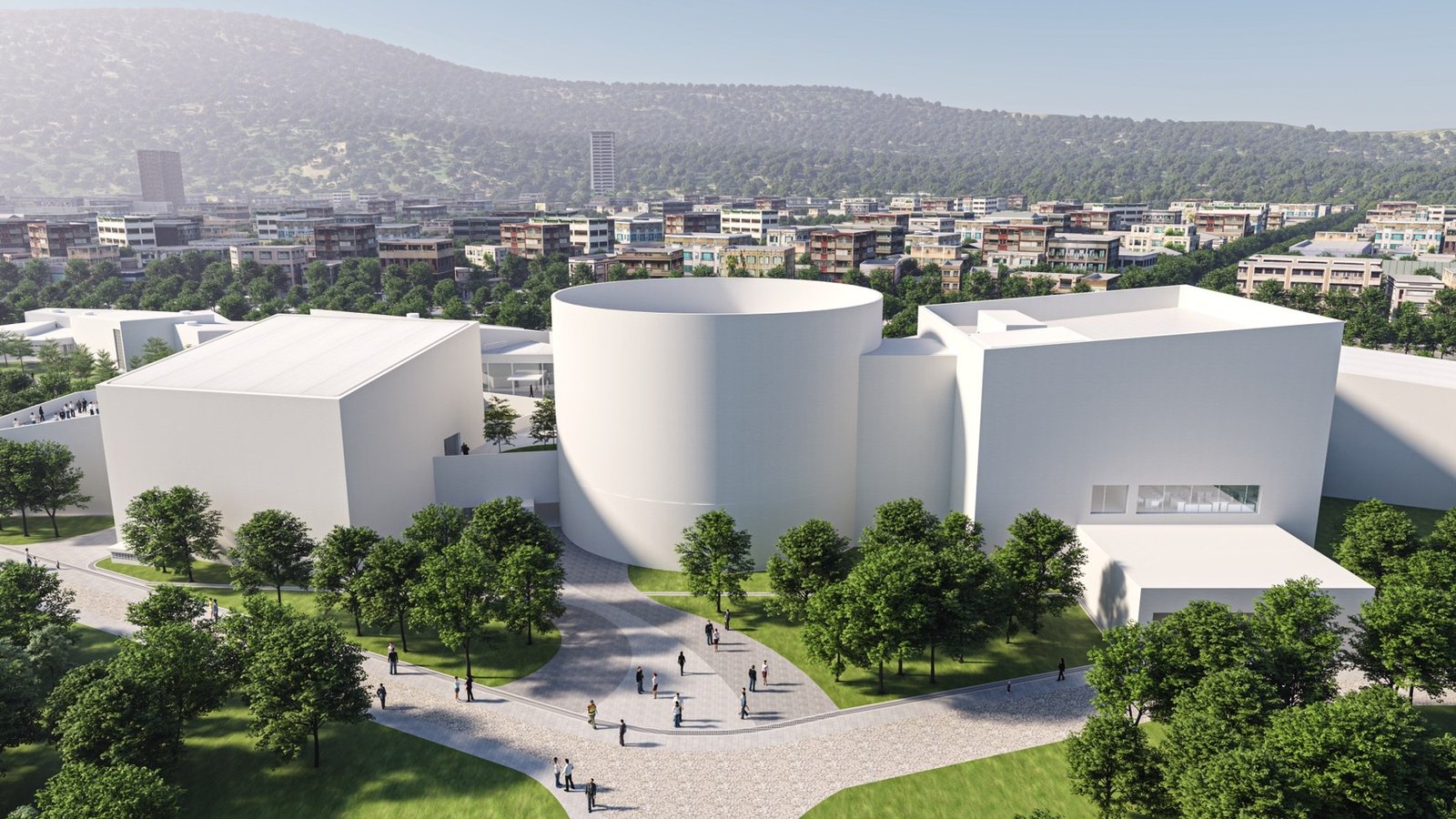
Ricky Liu: For this project, we decided to raise the entire building. A risky move, I know, as this increases your total floor area and leaves you with so much space on the ground floor.
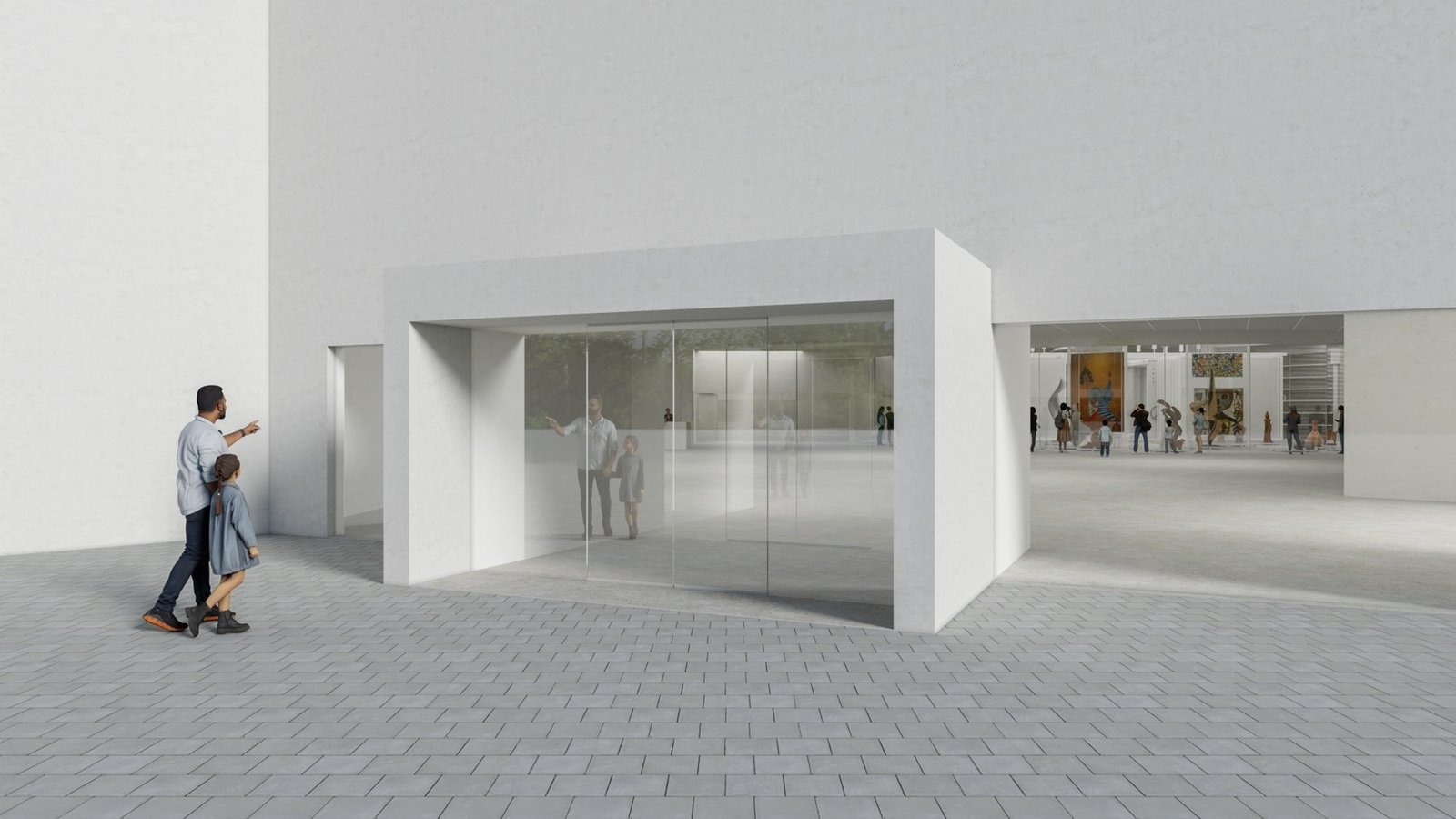
Little did we know that this floor area, which we did not include in the program, would turn out to be a good concept. Its emptiness drew people in, allowing them to use it as they pleased. Sometimes you’d find groups dancing, friends doing activities together, or people simply sitting down and gathering. It is most animated during midday on weekends, and it has received a positive response from the public. From that communal space, people can proceed to the museum, the library, the park, and vice versa. And when we designed the park, our goal was to create a favorable relationship with the buildings that surround it, even in the future.
Were you set on collaborating with SANAA from the beginning for this project, or were you considering other global architect partners?
Ricky Liu: For context, international competitions in Taiwan sometimes have two phases. For this competition, there was only one phase: designers had to meet with local partners first, then bid for the project. We did our research six months in advance because we anticipated the competition, and we just knew SANAA was the best. It didn’t take time or convincing on our part.
As a Japanese firm, SANAA’s designs are very light. Columns are often smaller, and concrete slabs are thinner. We imagined that their design would fit into what the Taichung Green Museumbrary calls for. We’ve also worked with Takenaka Corporation (Sustainability, MEP, façade consultant) for over 20 years. They were one of our consultants for the competition.
I see. Now, working with international designers naturally brings different ways of thinking. Did that create moments of tension or contrasting perspectives in the design evolution of the Museumbrary? Can you recall a moment when those differences changed the design?
Ricky Liu: We invited foreign partners because we don’t want to stretch our capacity. We wanted to make a clear division of the work. I also believe we don’t have any ego issues about who designed the project. Our firm has designed many projects over the years; there’s no need to publicize which ones we did. It’s a bonus if people recognize our designs.
When we look at partners, we know we will be working as the executive local architect. We will complete the process, and to us, our responsibility is clear. But as locals of the area, we carry the unwritten responsibility of providing the foreign architects with context.
Take bathroom practices, for example. In Japan, the number of toilets is much fewer than what we have in Taiwan. If we design a public space with an inadequate number of toilets leading to long lines, the public will complain, or worse, take it to social media. Of course, the government doesn’t want that. This may not be an issue in Japan, and they may be willing to wait, but people here are different.
In terms of tension or contrasts in perspective, yes, there were, but they existed for a reason. In Taiwan, we don’t have in-house consultants for plumbing, HVAC, structures, and the like. But in cases where we need to hire consultants, the practices here and in Japan are different.
Here, when the consultant says no to something we’ve done, we as architects need to find a solution. We get data from them, and then we adjust our design. In Japan, it’s the other way. The consultant always listens to the architect. If the architect asks for a slab to be as thin as possible to fit certain dimensions, the consultant will try to make it work.
And there’s no right or wrong in these practices. It’s just a matter of what we were used to. This also made me realize how much the Japanese focus on details, which is a good thing! You should be very precise, and if you want something, you need to go for it and make it happen.
Construction is also different! In Japan, there are many turnkey projects; in Taiwan, there are fewer. Turnkey projects are becoming popular, allowing construction to work closely with the architect. But in Japan, since the architect always gets the final say, this is less of a practice.
We also spoke with SANAA about the process here in Taiwan. Public design carries greater weight here because, aside from spending public money, architects are required to see the project through to completion. The architect is responsible for site supervision. So, even when you’ve finished the design phase, you must observe and monitor construction. It’s all in your hands.
Global made local
I like that you said that there is no right or wrong practice, because both firms want the best possible outcome. That’s why the tension exists because you’re fighting for what you believe would be best for the project.
Still, in any foreign–local partnership, the question of authority comes up: who decides what. How did you and SANAA negotiate authorship, and how did you manage the responsibility and public risk your firm carries as the architect-of- record?
Ricky Liu: When we invite people to collaborate with us, we distribute the work clearly. When we start, we make a table of our scope and responsibilities. This definition of roles is vital, especially when it comes to winning competitions. Design fee allocation, of course, should be set. Here in Taiwan, it’s usually around 75 percent for the architect, then 25 percent for the engineering firm. The simple answer is this: We have a good relationship with the government because we’ve worked with them long term and on various projects. SANAA will come to us if the government has any additional requests, and we will act as the go-between. There is no room for complications.
Thanks for that straightforward answer! Let’s dig a little deeper into the nuances of the previous question. From your experience, what aspects of working in Taiwan do foreign designers often struggle with?
Ricky Liu: I believe that Taiwanese are competent enough that foreign architects don’t need to worry too much about getting it right locally when they work with us. We can do that part for them and try to solve the local difficulties.
The way I see it is that it is our responsibility as Taiwanese architects to create the best environment for them so they can focus on perfecting their designs.
I do think there can sometimes be differences in terms of communication. Sometimes, for Taiwanese government projects that get complicated due to the process, you must respond quickly. And sometimes the foreign architects don’t get to respond as fast, so it’s our responsibility to tell them that we must speed things up. Maybe that’s one thing they struggle with.
Especially with the Japanese, because they are very focused on details, they consider everything, and need more time to do so. Sometimes, for construction, you need a response fast because the workers cannot just pause. This is where we come in. We discuss with the local government, then cascade everything to the firm. Then they will communicate with the Japan office.
You’ve previously collaborated with many international architects in Taiwan, including Toyo Ito, Philip Cox, Weber Hofer Architects, and others. Across projects, what makes your firm a preferred partner, and what do foreign designers value most about how you work?
Ricky Liu: Bringing in foreigners when we were a young practice meant bringing in foreign strength to win and adding more expertise. We have to structure ourselves to prepare for that. At that time, we also worked with them to pick something up—be it in practice, design, or skill. At one point, probably ten years ago, we slowly stopped inviting foreign architects to work with us because we felt like we were mature enough to handle things independently.
We perform rendering, animation, and model making in-house. We also have landscape, interior design, and even art and curatorial departments.
This isn’t talked about as much, but art and curation are very helpful for architecture. One time, I was talking to an American fine arts museum director from Ohio, and he said he believes architects should develop a narrative for every project. Because it’s not just about design; you need to tell a story through space and convince people to believe in your design. That’s what makes the curator’s work complex and difficult. They first have to select one topic, address a whole bunch of things under that topic, and then research. They also need to translate this knowledge into material applications, into a performance. And then from strategic material, you have to translate it into design and express the narrative culturally and graphically.
This is that rare moment where a firm talks seriously about project curation and narrative-building. You’re right, it’s easy to think of a quick story to rationalize a design, but it’s different when you perform extensive research about the culture, the people, as it makes the narrative more anchored and realistic.
How big is your curatorial team, and has curation been part of your process since you started?
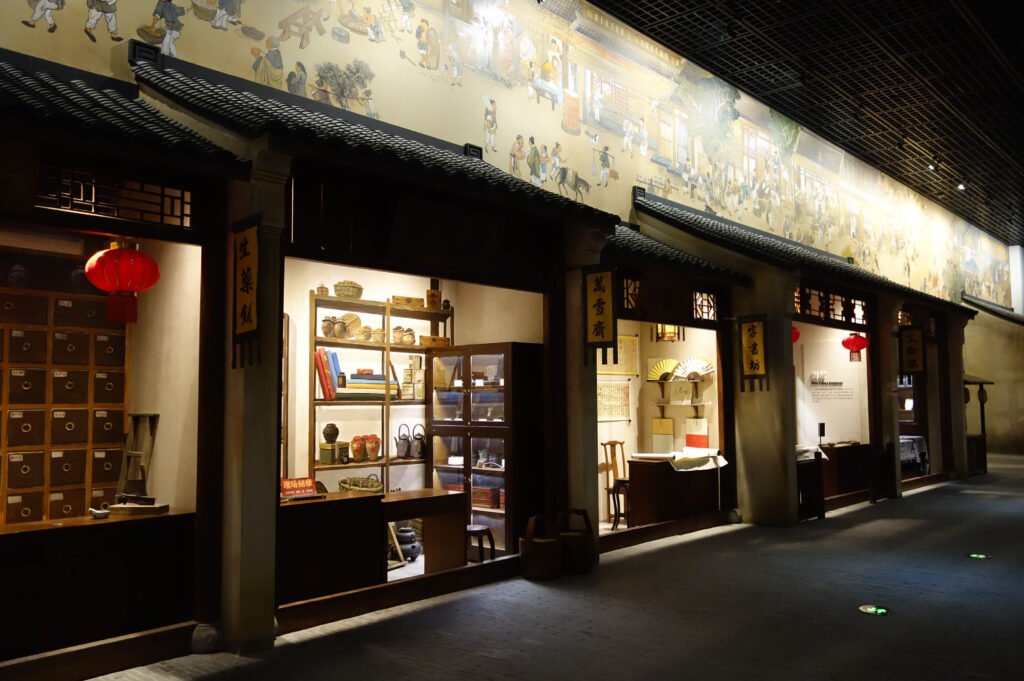
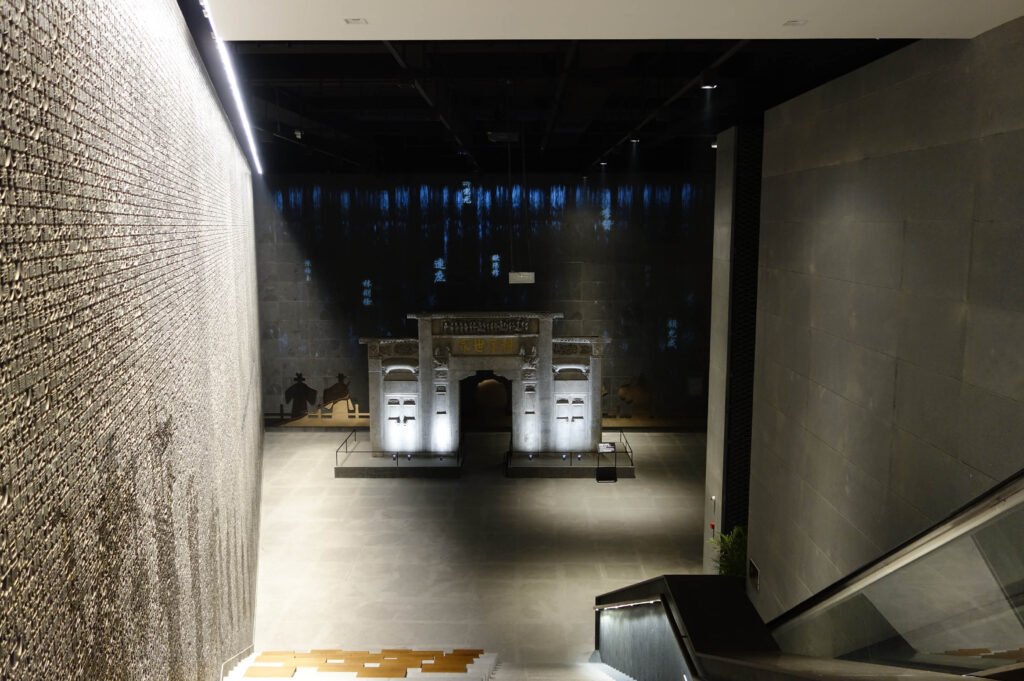
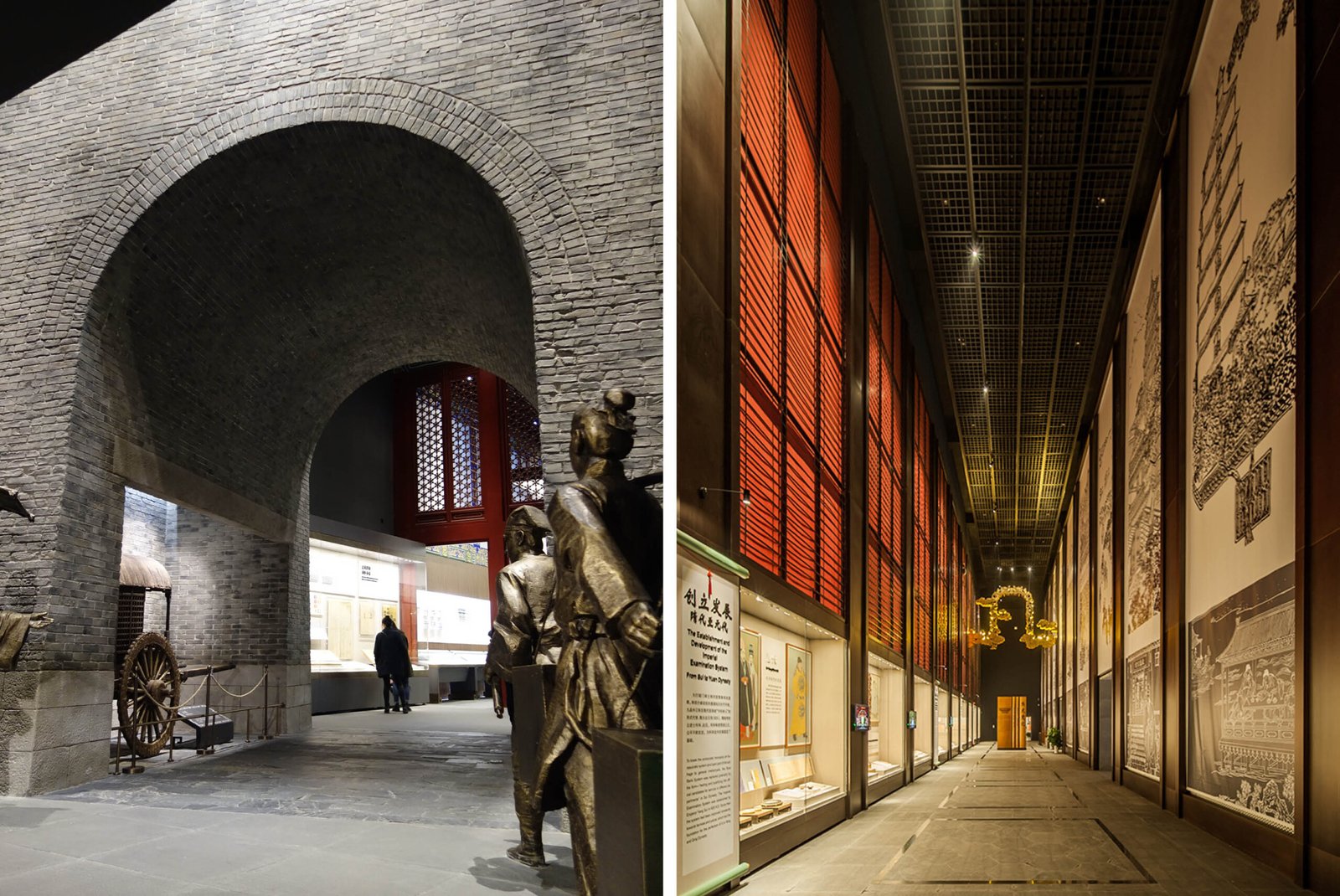
Ricky Liu: Currently, we have about five to six people doing project curation specifically. There was one time we had around ten people, when we worked on the Imperial Examination Museum in China. If a project demands more, we sometimes invite specialists to join the team.
For our first public project, we worked with foreign consultants. And the process was different in that we went through a competition and a bidding process, which was also painful. The good thing here is that when you win, you won’t be asked to drastically change your design later on. Because that would be unfair to the other participants, right?
But that’s why we found competitions attractive then, especially as a small team. To some extent, we could steer the narrative ourselves. We can insist on what we believe in based on our intention. But growing as a firm means recognizing that there is more to designing and pushing yourselves beyond what you think you do best.
“With the [Taichung Green Museumbrary’s] national significance and the display of interest from various designers, we needed a winning strategy. You don’t join competitions to lose.”
Nurturing mind and body
How would you describe the evolution of your studio in terms of how you handle projects or the types of projects you favor?
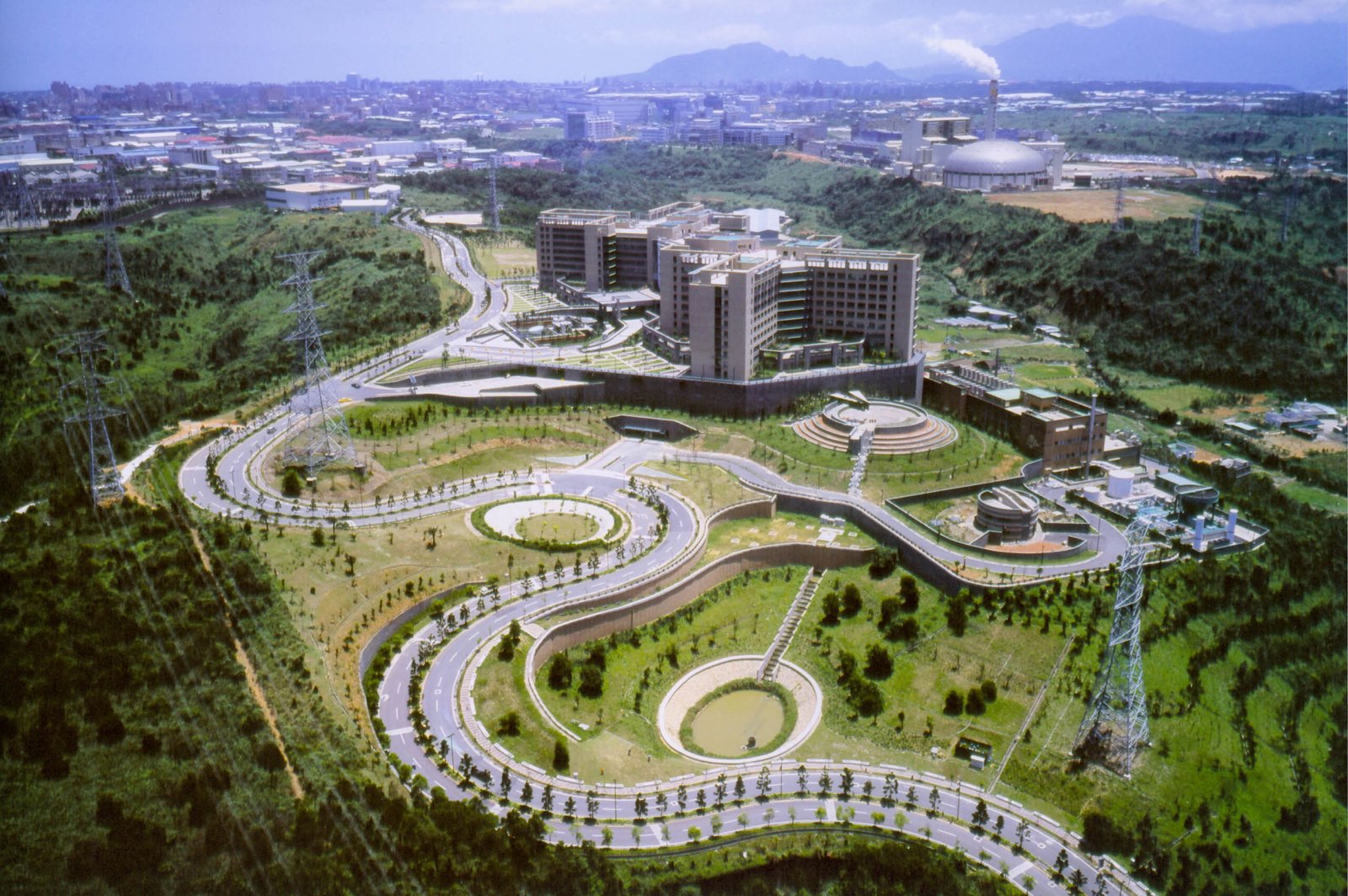
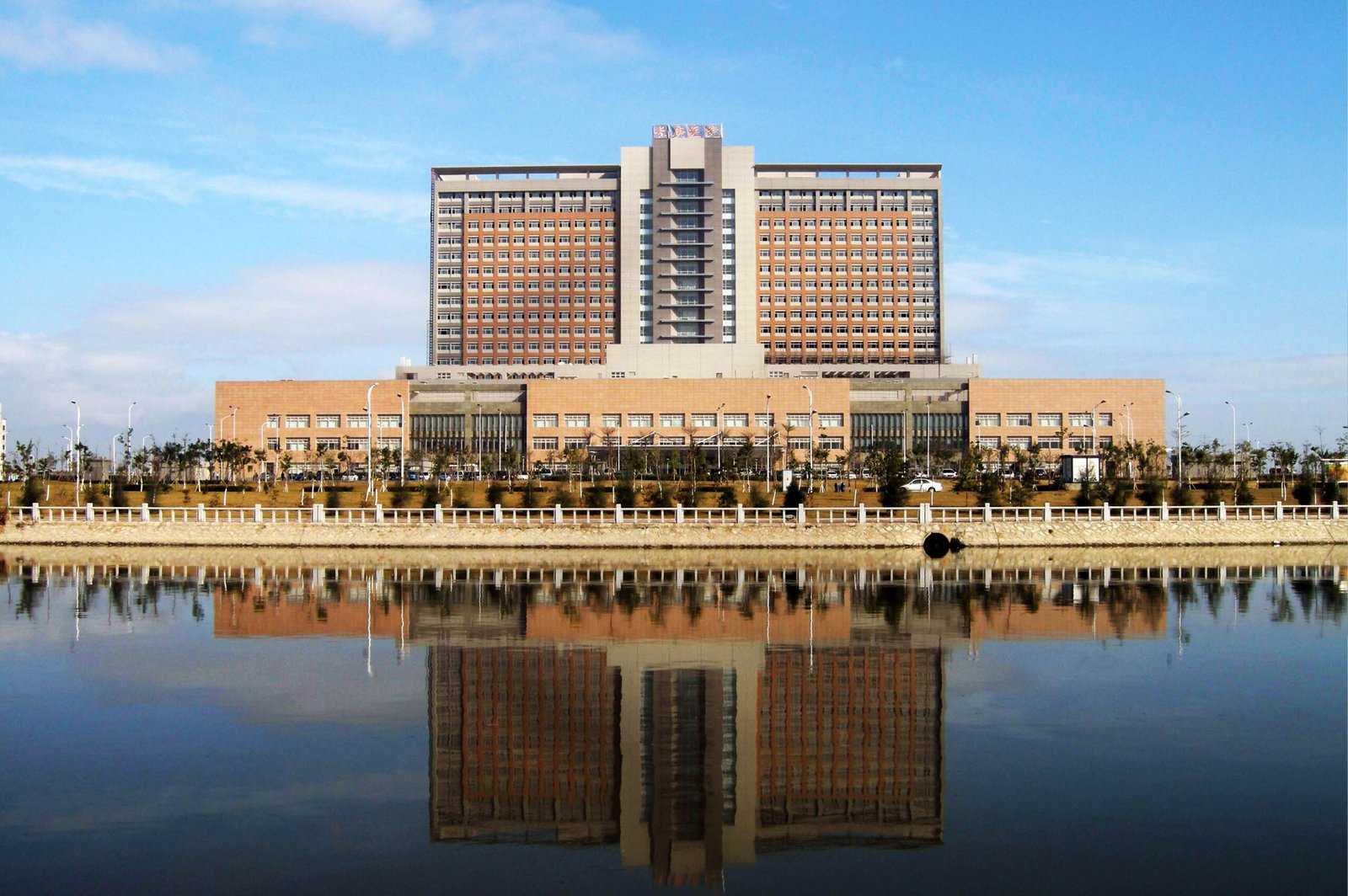
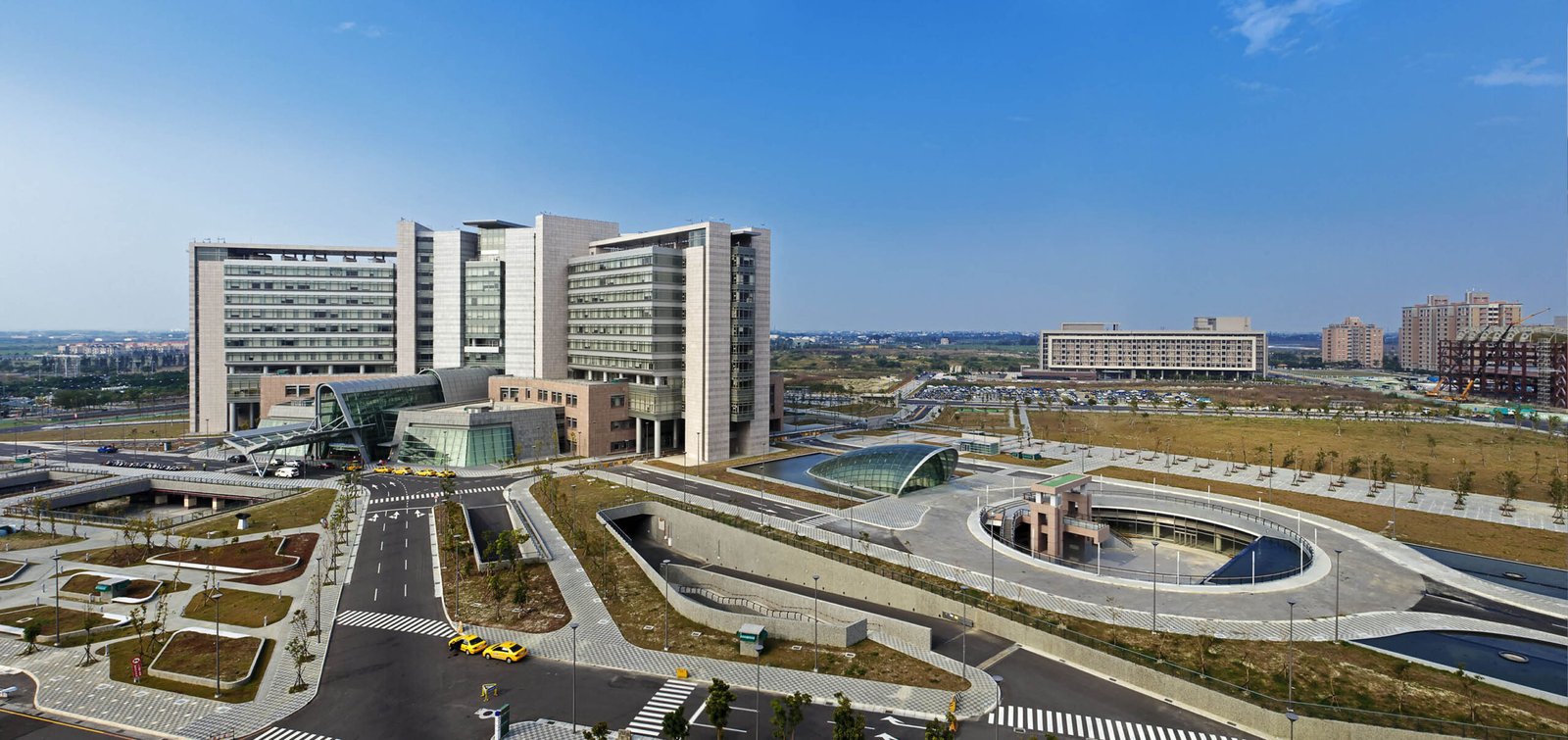
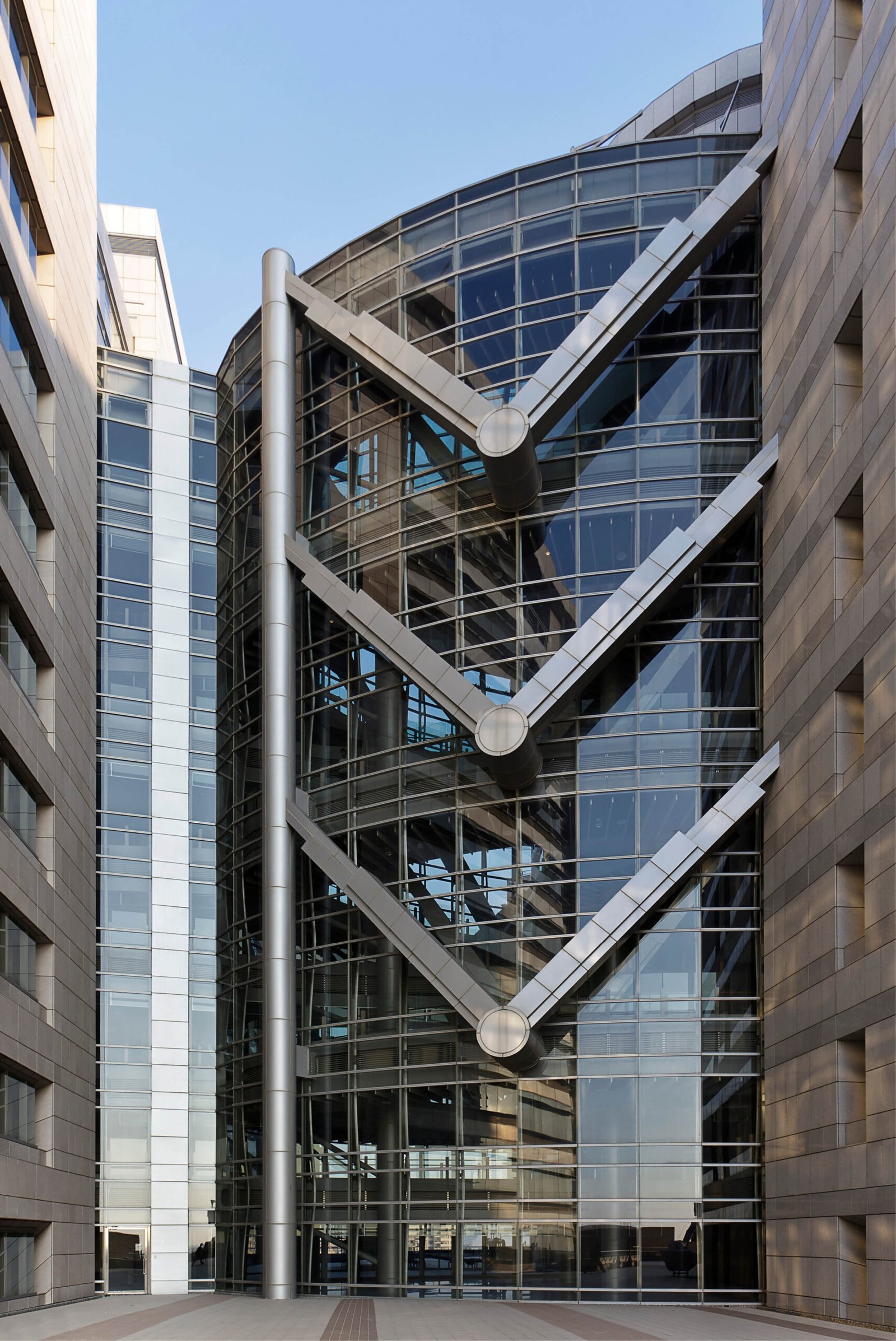
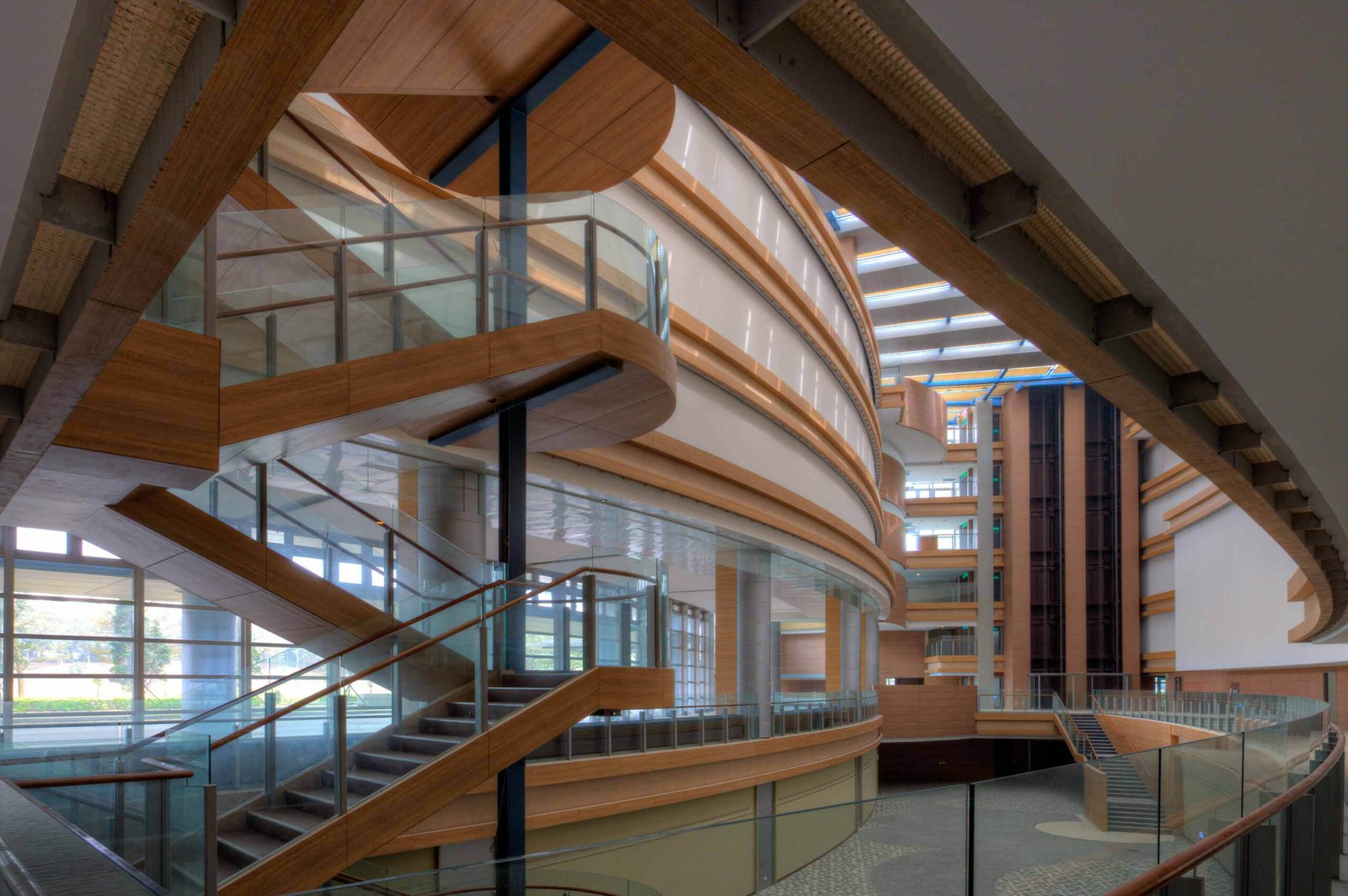
Ricky Liu: Museums and libraries are our interest, but hospitals have always been our bread and butter. We spent a lot of time gaining knowledge by having a team with hospital expertise. Because, unlike a few structures where there is more room for creative freedom, hospitals must work well all the time. It’s like a small village with different parts that have different functions, but must communicate well.
One of our most memorable hospital projects had a brief with a single sentence: Design us a hospital that can hold 3,000 beds. For a young firm, it was a shock. At that time, the project would be among the largest hospitals in Taiwan, so we were taking on a huge task. We asked them for the program, but we were even more shocked when they said they didn’t have one. We were simply asked to use up all the space allowed by the building permit and told that they wished to commence construction as soon as possible.
While this involved risk (or even danger), it forced us to think of how we can design something without a program. We started with vertical planning, arranging elevator placement, circulation structure, and access. Like in a small village, you have to start with the streets, the alleys, the ways for people to get to where they need to be. And then came hierarchy and order. How do you build this structure to be healthy in all aspects? It was like city planning within a building.
Construction began without any precise definition of the hospital’s function. Within a year, they filled up everything. And it worked. But what we learned here was that while we weren’t given a program, we had to fortune-tell for the client. To anticipate needs and come up with a concept. We also made sure to get our numbers right, like height limits. Because you can’t just leave a building and expect it to work on its own. Your job as an architect is to make it work. Many architects forget what that truly means.
Now that’s a story! Did you get to work with this client again?
Ricky Liu: The funny thing is, we did, and they once again hired us with no program! The brief was, as we expected: a single sentence. “We want to build 4,000 residential units for seniors.”
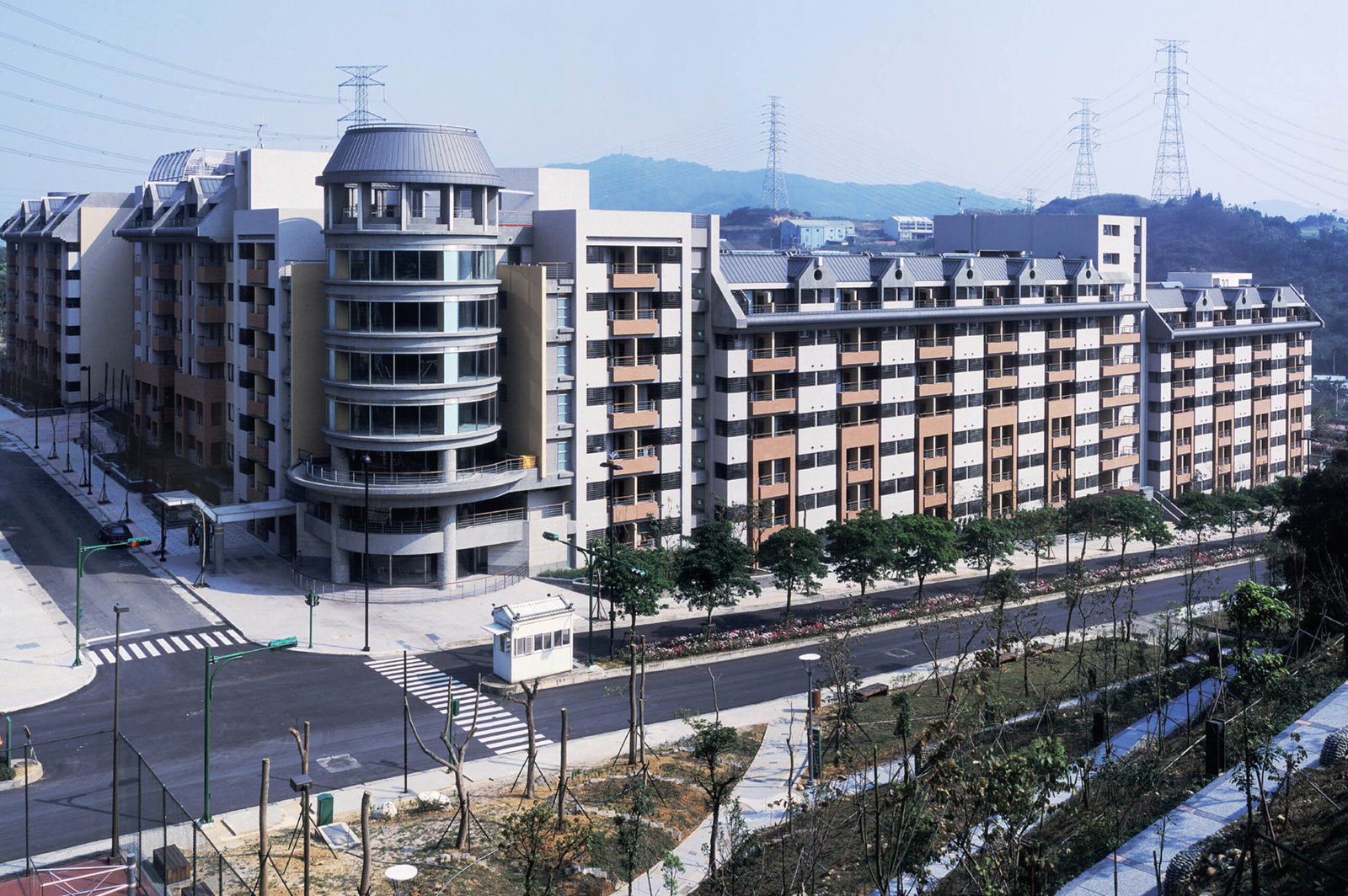
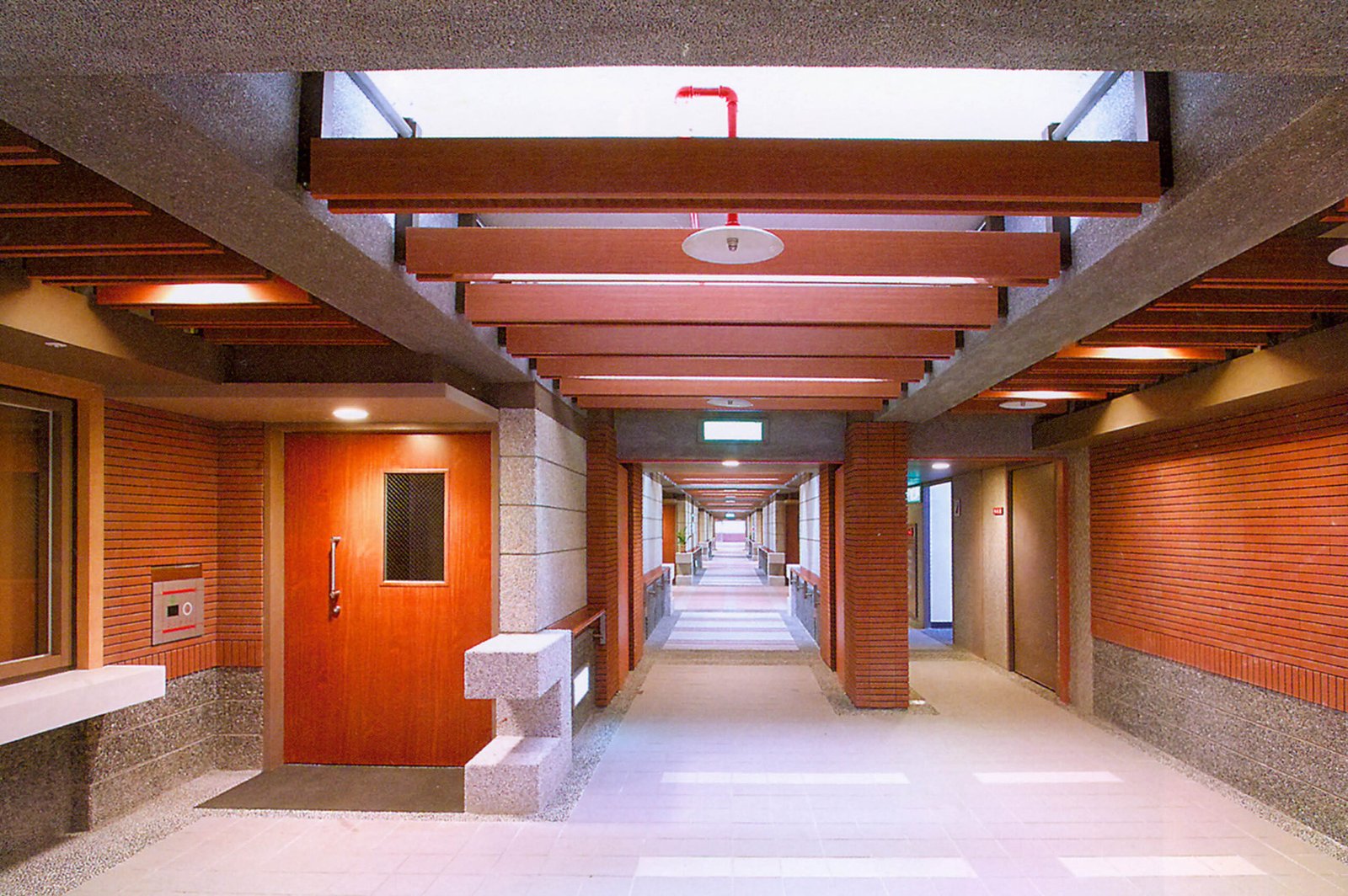
This time, we were working on a real village, about 33.34 hectares. The location was on the mountainside, so we approached this project a little differently. We did not wait for a program; instead, we looked at examples of senior retirement facilities in Europe and Japan. We compiled our learnings, went home, and then customized them for our local context.
That project was 20 years ago. It held the world record for the largest scale in terms of the number of senior-citizen residential units on a single site. We could have said no, but we realized the clients genuinely wanted to care for the elderly and give them a good retirement.
Again, as architects, we have to make the program work for them. Projects like this, especially hospitals, are not always preferred by many. Not all Taiwanese architects can handle it to date, so we try to work with them as much as we can.
Another reason we are slowly embracing more public projects is that, at the beginning, we had bad experiences with private developers who would literally draw up a plan, as if telling us how to do our jobs.
It just came down to us discerning which battles we are willing to fight. That’s how we survive in Taiwan as a firm.
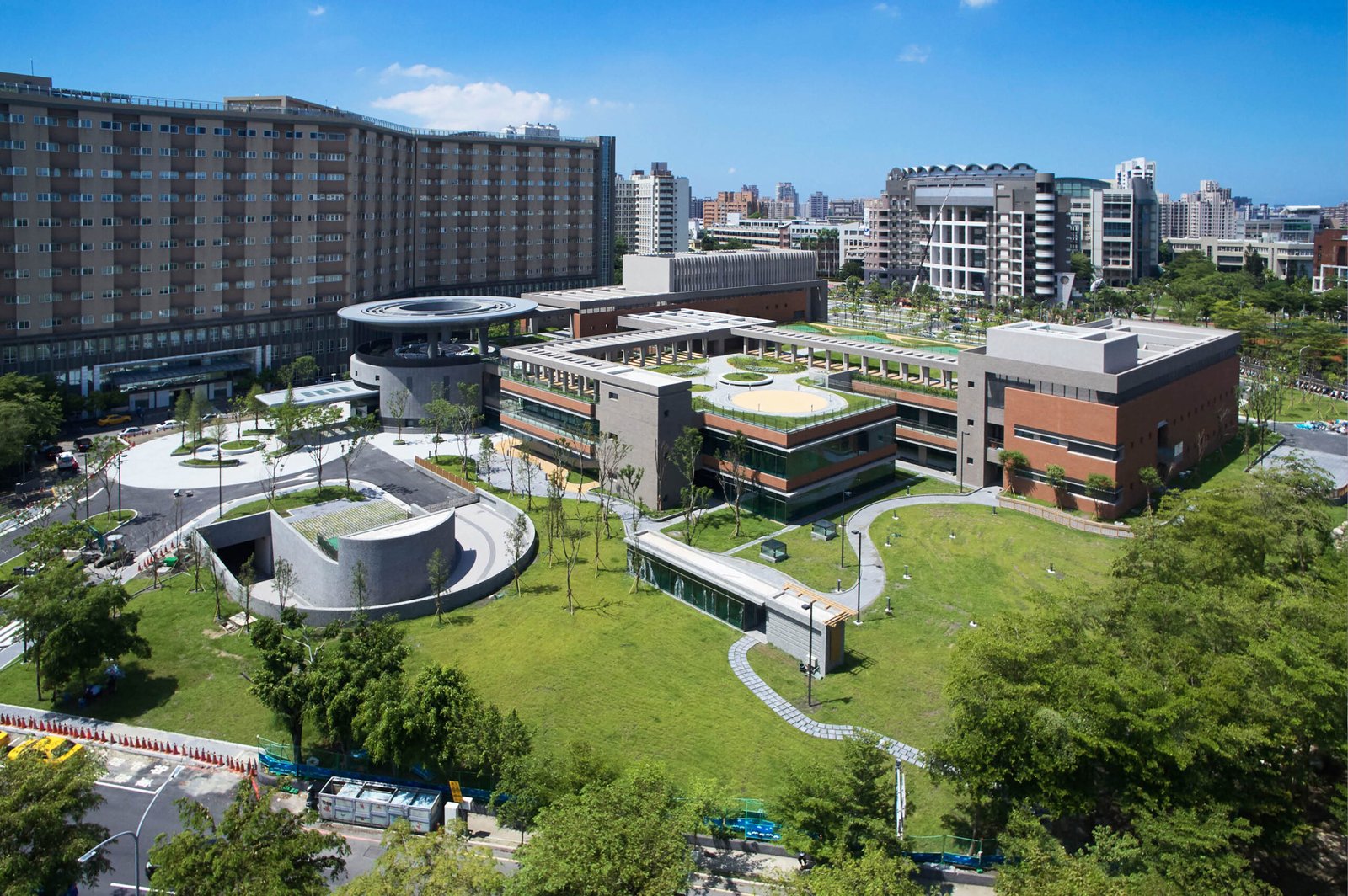
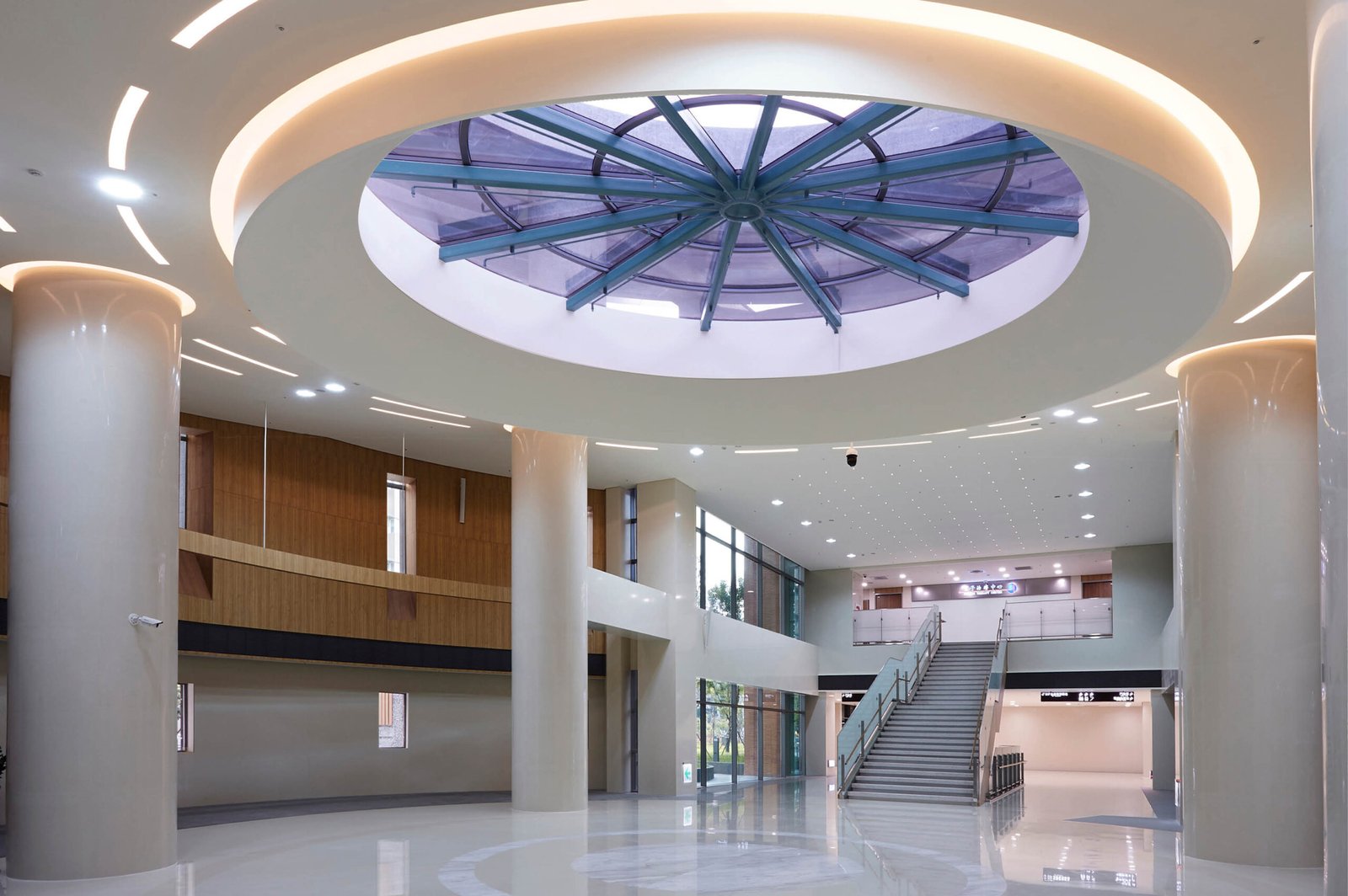
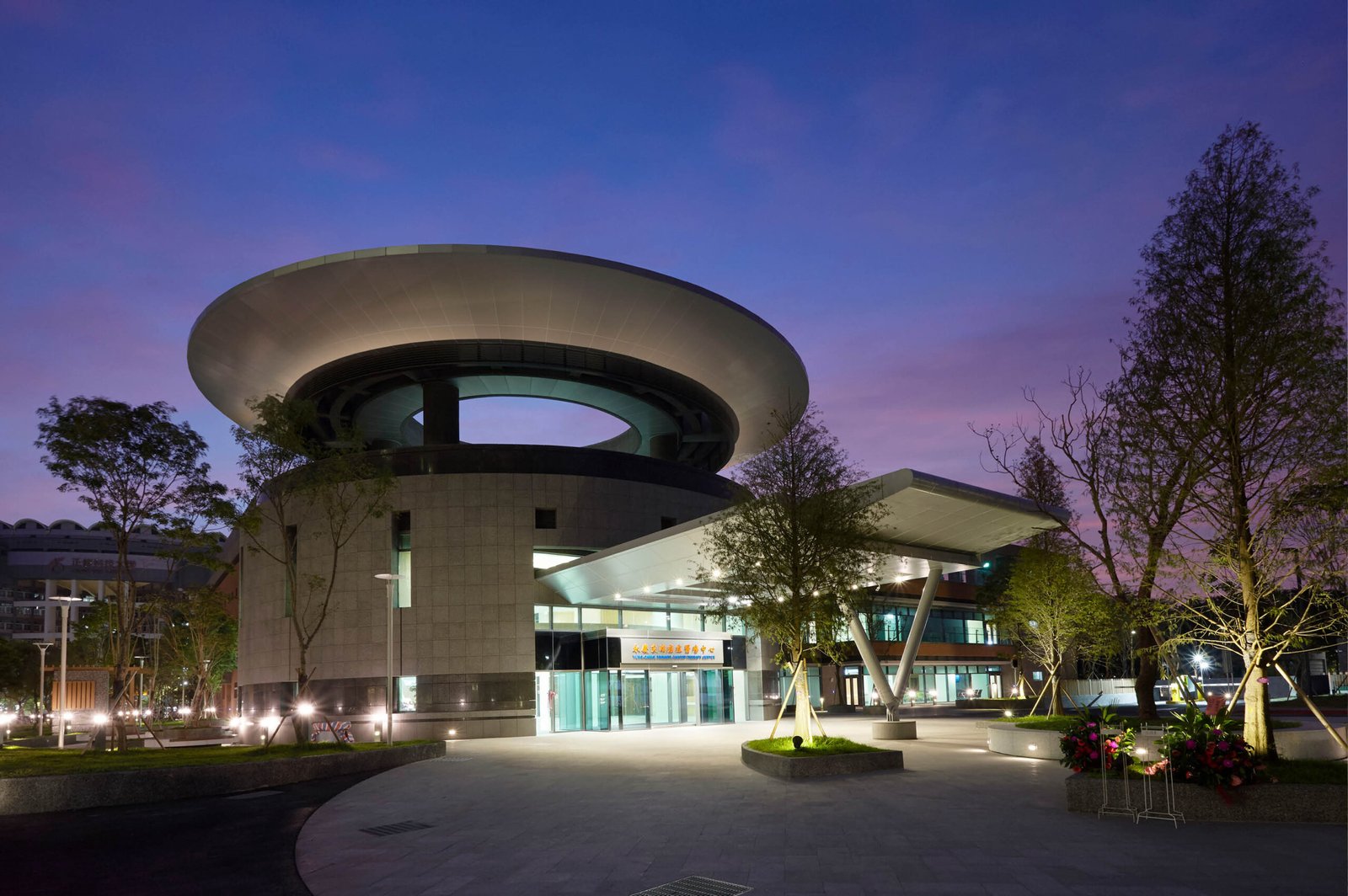
And you have been around for 35 years and taken on some of the biggest projects in Taiwan! That sounds more than surviving!
Ricky Liu: Thank you, I appreciate that! Our office is where we escape the chaos of the outside world. It keeps us at peace, therefore clearing our heads to make space for fresh ideas.
I’d now like to talk a little more about our other favorite typology: museums.
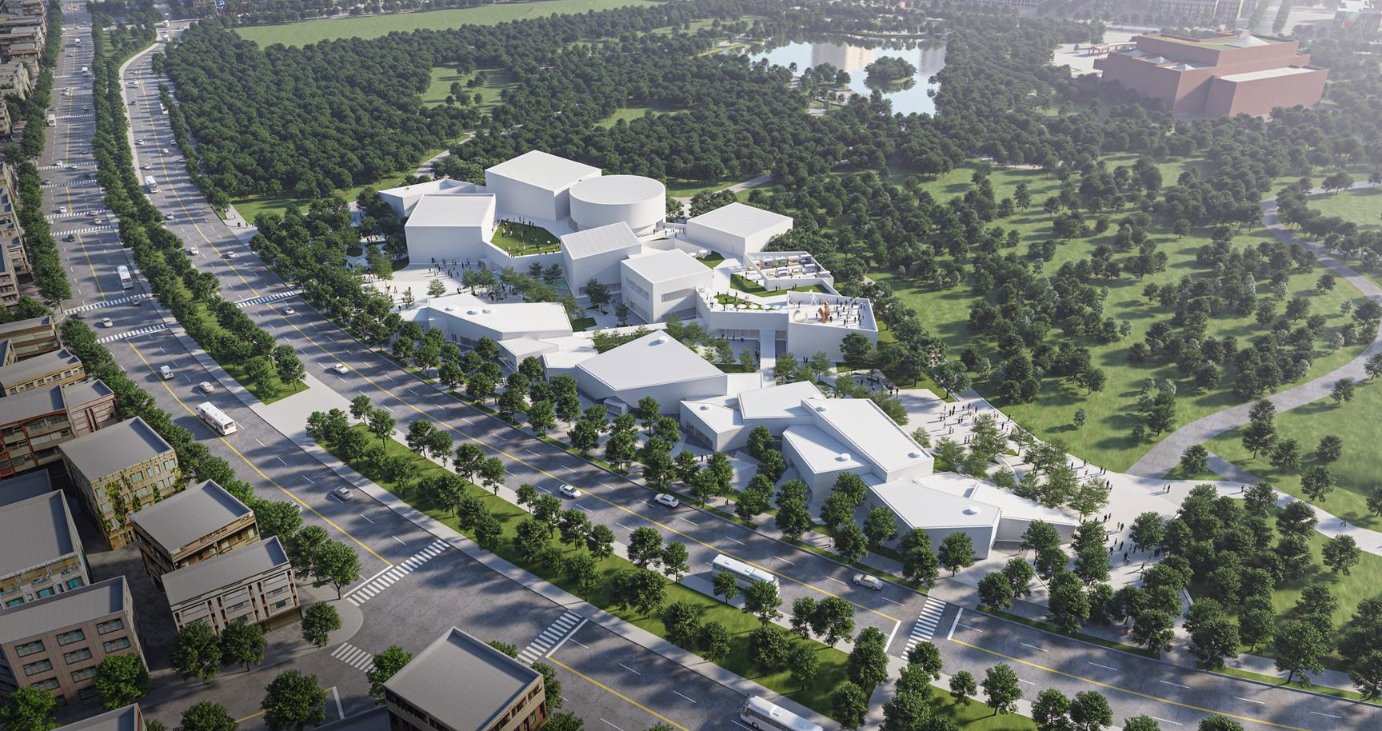
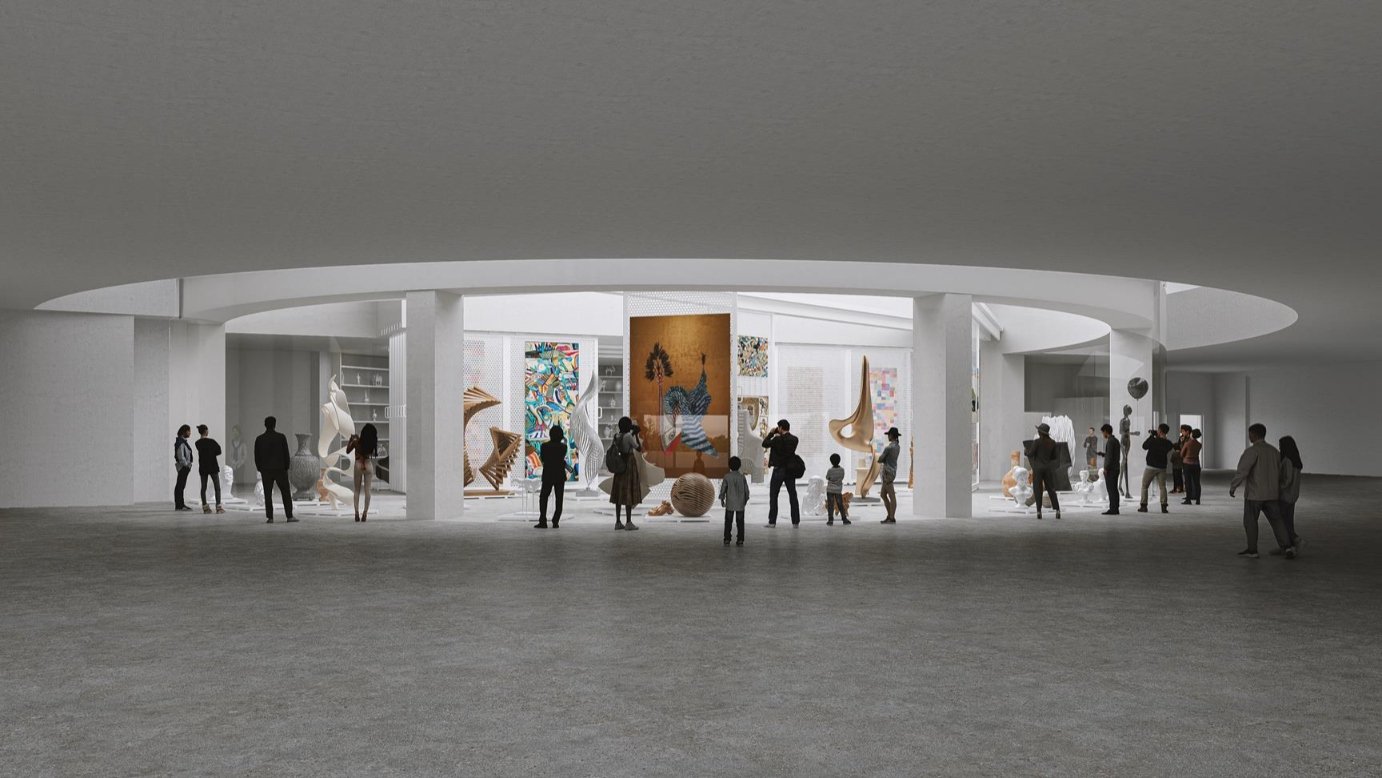
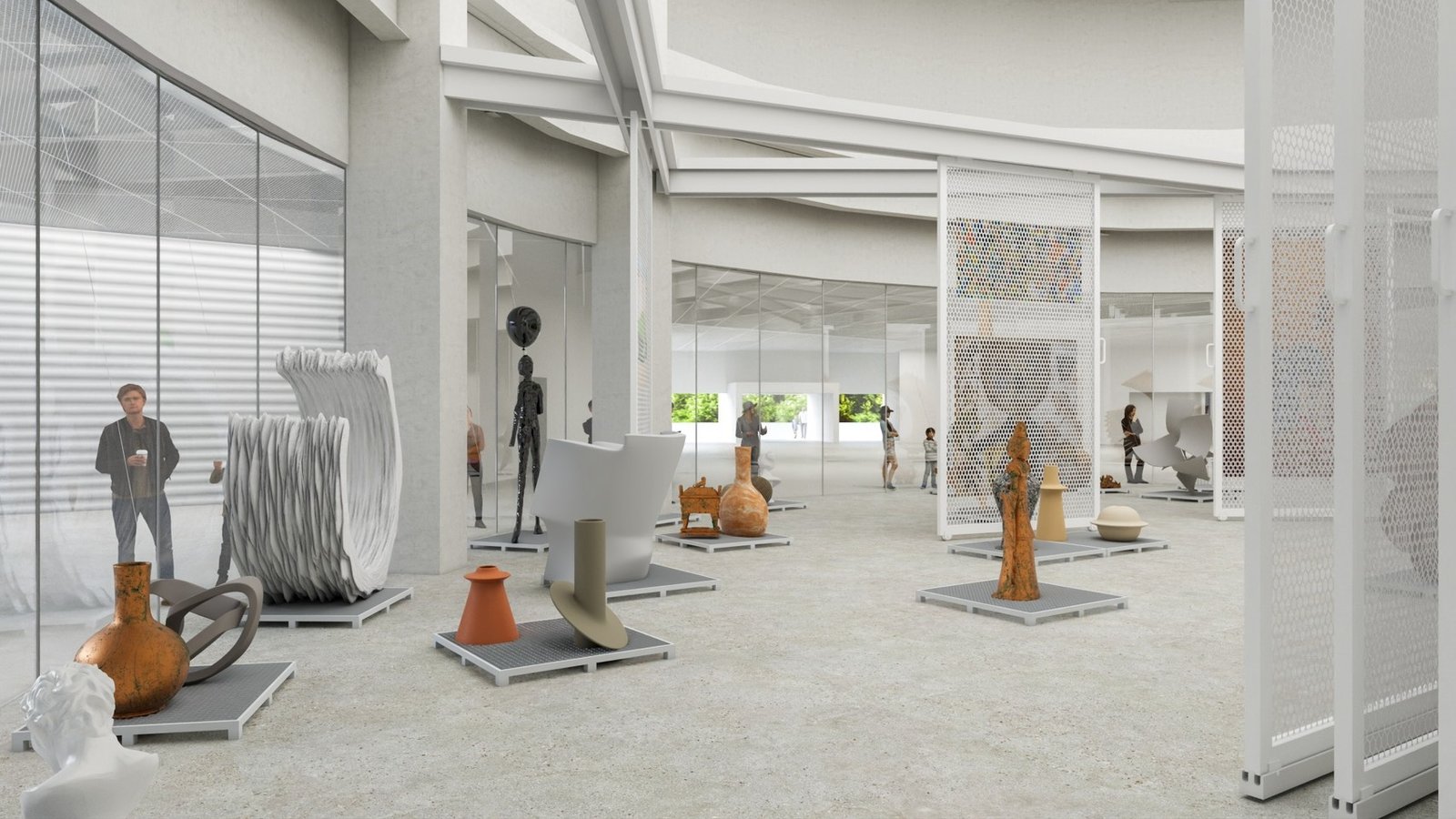
Last year, we won the competition for the Neiwei Arts Center Phase 2 Repository in Kaohsiung. The challenge, as with any public space, is how to attract people to go into what is effectively art storage. Our solution was two things: one, windows that offer peeks into the space, like those at retail stores. Two, for the program to be changed preferably every month, and display as much of the museum’s collection. We have to emphasize that some of the objects may not go on show in 10 to 20 years, but by changing the plan every month, you give the public the chance to meet them even if they are not part of any exhibition.
The good thing about having this art storage facility is that people not only go to the museum, where everything is curated, but they can also go into the storage to discover something new. They may not know what they are looking for, but they can explore to find more objects that may speak to them. It drives curiosity.
An open storage also promotes healthy communication with other museums. Someone from another country can come in and see how you made your storage work, which can encourage them to change their exhibition or open up their own. I liked this project a lot because it highlights the role of design in creating a good environment where people can enjoy and protect objects they may not even know exist.
A library of learnings
You mentioned that one reason you work with foreign architects is to pick up something from them. What did you learn from working with SANAA that expanded your own design thinking, and what do you think SANAA learned from your team?
Ricky Liu: I think they learned a lot about time pressure, although I hope we did not pressure them that much. We always urged them to respond as quickly as possible.
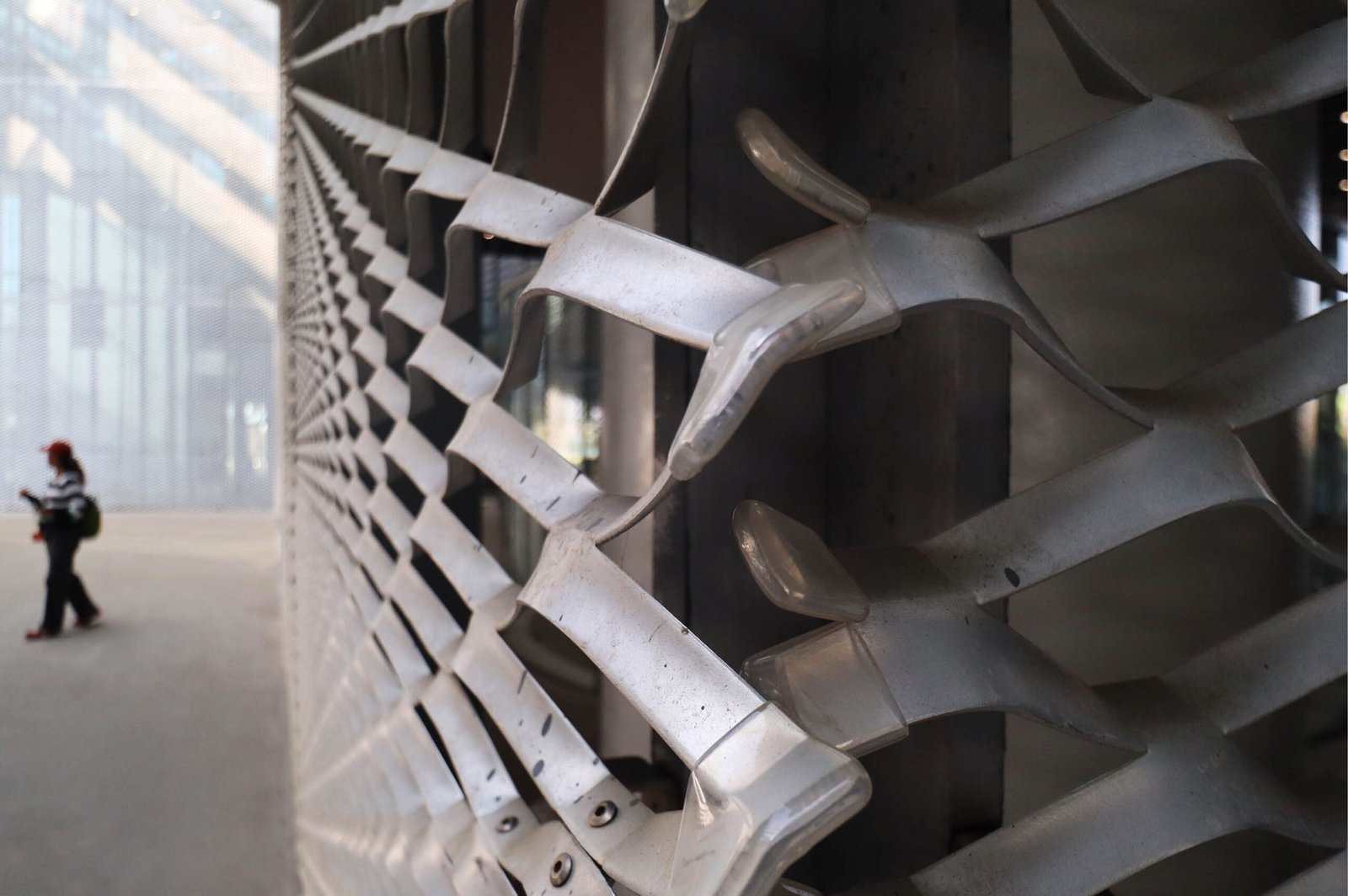
As for what we learned from them, it’s really about perfecting every detail. And I mean this even for small-scale things! For example, the surface of the wall in the art gallery in the Museumbrary needed to be really flat, which is difficult to achieve with a six-meter-high gallery space, and with natural light penetrating the room. Some would choose to compromise on such a detail to accelerate the project, but the amount of effort (and pressure) that SANAA put into ensuring it happened was unmatched!
I even had to assure them that we would work with the general contractor to deliver it as they envisioned.
I believe this is something worth picking up from them. Because the truth is, we see these things too. It’s just that details like this often involve the general contractor, who will therefore ask for more money and time, and then we’d have to be the ones to ask the government for a stretch. So, we learn to let go. But with the Japanese, we learn that sometimes we need to push for things to happen. Yes, we need to be realistic, but sometimes we can also insist.
I agree. That’s one thing I also appreciate about how Japanese designers do things. They can see how a tiny detail can affect the entire space. You can step into a space designed by one of the world’s architectural greats, but once you spot a detail that gives you the ick, it can affect your reading of, or even feeling toward, the space.
Now, looking beyond the construction and design process, what do you hope the Taichung Green Museumbrary communicates or contributes to Taichung as a civic and cultural space? How do you hope people experience it?
Ricky Liu: The main thing about this building is that it has two functions: a museum and a library.
The best example of a museum and library is the Centre Pompidou in Paris, which is divided horizontally: the top houses the museum, and the lower level holds the library. But I believe that it is not the ideal separation.
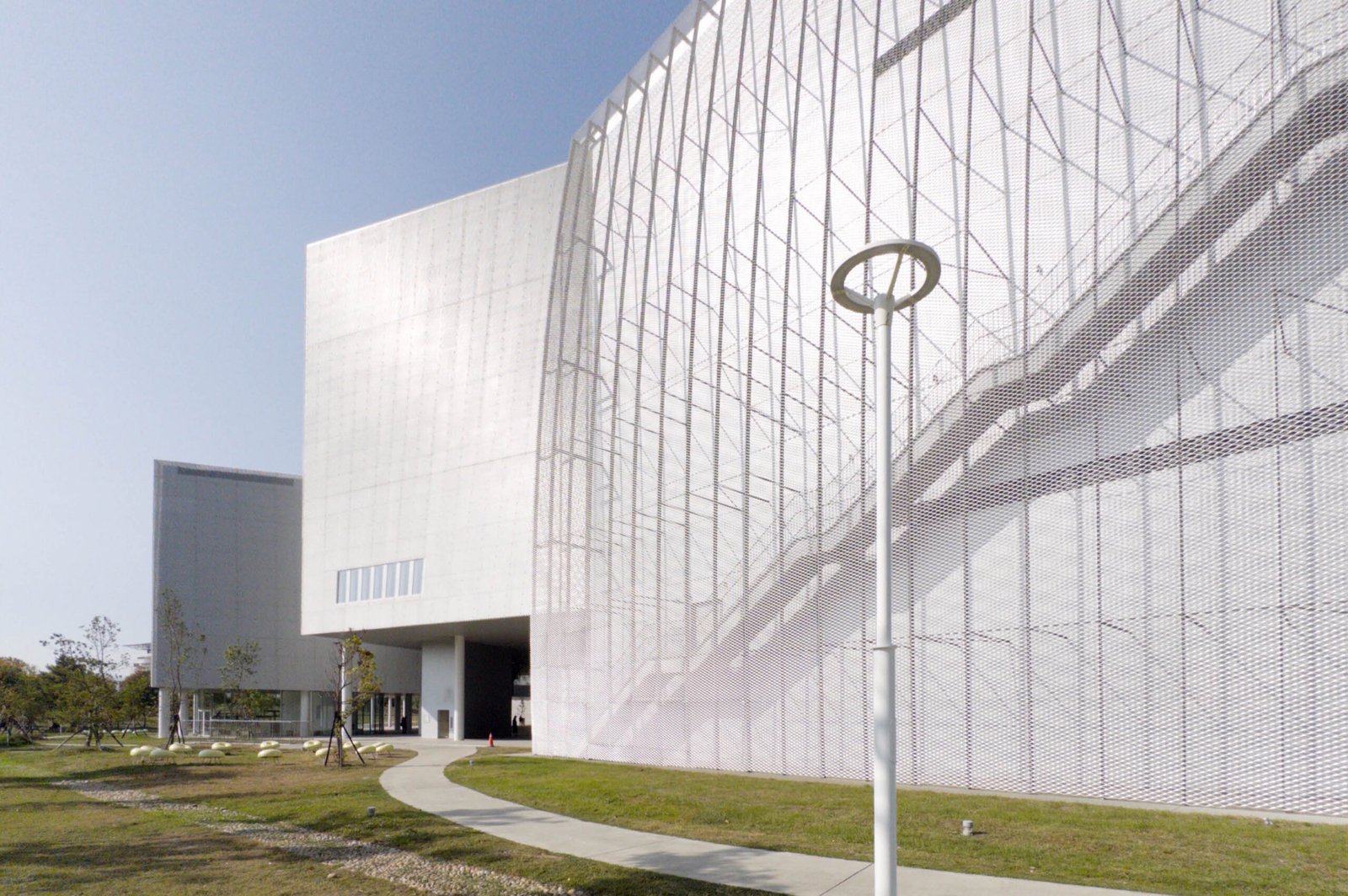
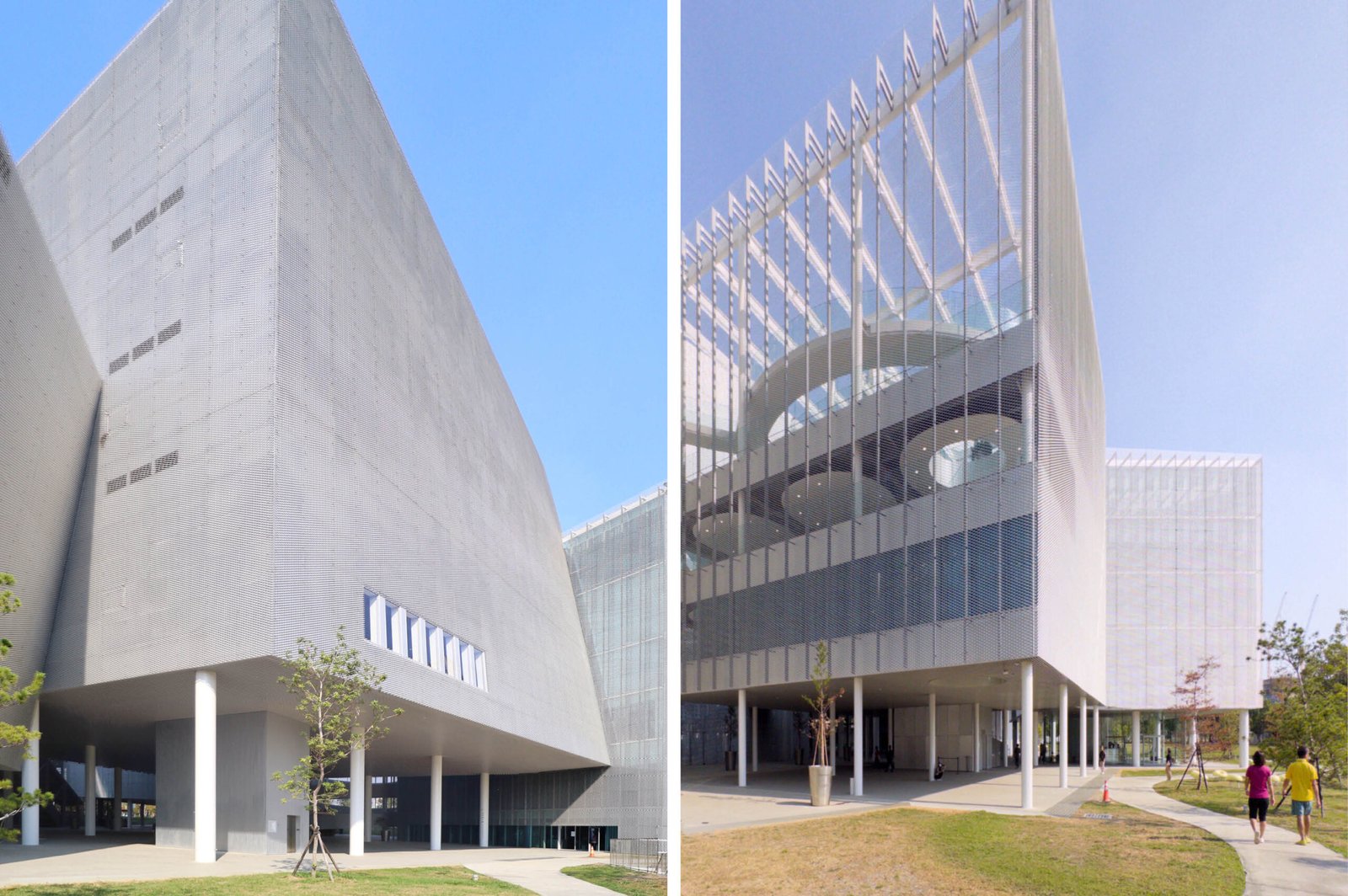
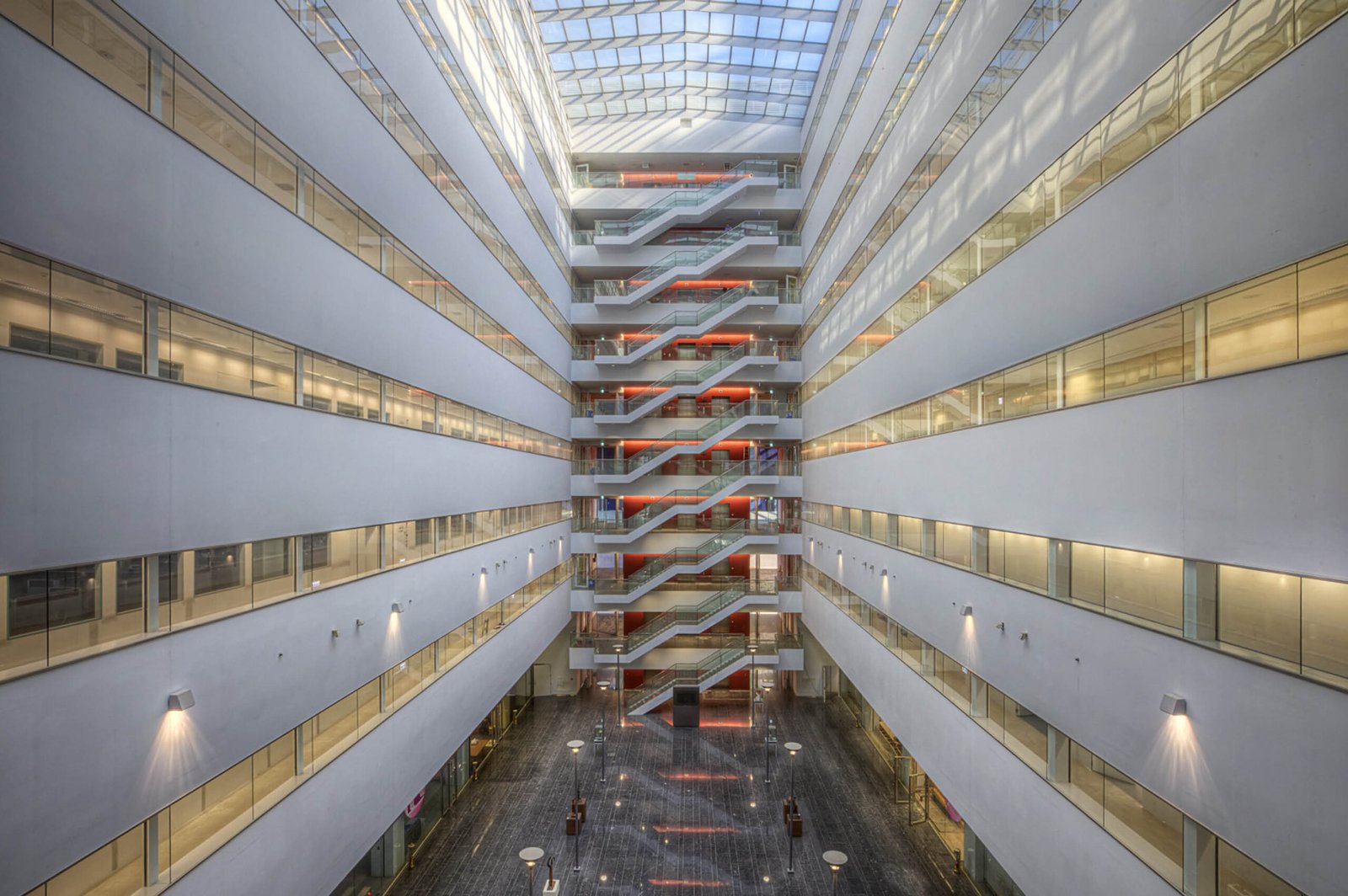
The reason why I wanted the Taichung Green Museumbrary to be vertically separated is so we can create a more attractive interface and design a true fusion space. How do we attract the readers from the library to also visit the museum? How do we drive the museum patrons to check out the library? If we design two facilities separately, we’re not adding much value to the space or to our design.
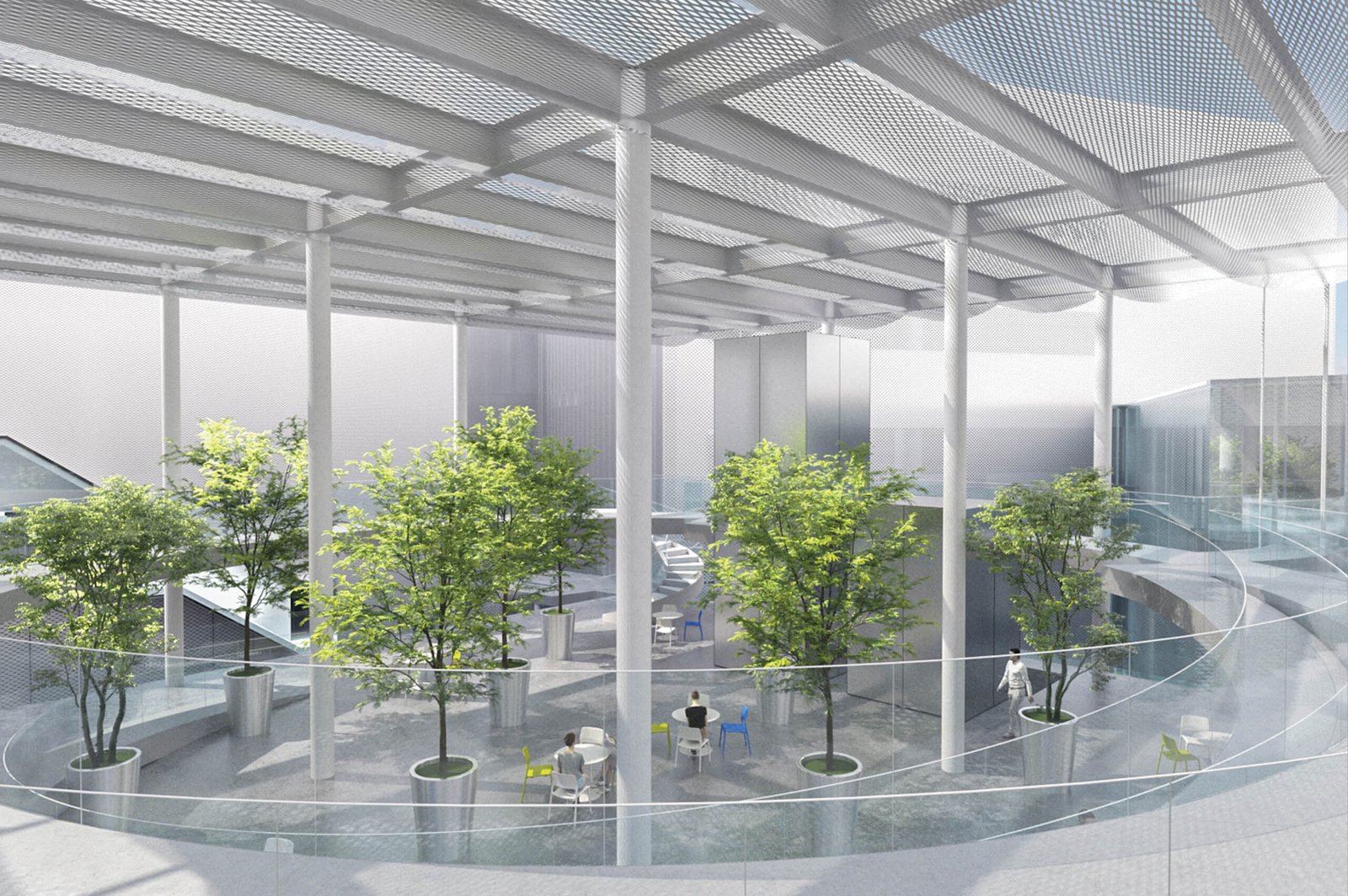
With the plan we decided on with SANAA, people are not forced to experience the spaces but are drawn to the openness. The museum is only for a small crowd at once, and it’s meant to invite you to slow down, so it does not call for a flock of people. The design of the complex intends to lure the community in and lead them to another area as they continue exploring. It’s a space where anyone can come and go easily. A temporary shelter or a shaded, cooler space where they can go after an activity and know they can stay a little longer.
There is a Chinese saying: “You are in me, and I am in you.” We work together. We have a clear separation, but somehow, we are also connected. I believe this summarizes what we have created with SANAA in terms of building a relationship with them and designing a multi-functional structure for Taiwan.
I hope the public will recognize that communicative relationship through the design.
That’s a beautiful way to express the symbiotic relationship you had with SANAA. Now, you’ve had a long and storied career since you started the practice in 1991. Looking ahead, what kinds of projects or spatial goals are still on your horizon, and how would you like your firm, or yourself personally, to be remembered in Taiwan’s architectural scene?
Ricky Liu: We never do any kind of publicity for the firm. I don’t think that’s the right way. What we target is the quality of the project because that’s how people will remember you.
Architects differ from lawyers, doctors, and other professionals in that our tangible work lasts for a long time. Your time can pass, but your work can still be there, so there is no other way but to get things right. Making one mistake can affect users, communities, and the way they live for years. It can even make them change the way they see the world!
If we can create something that allows people to breathe easy because we executed circulation perfectly in a space, or save someone’s time because we planned a building efficiently, then that’s our legacy. As architects, that’s the kind of impact we have on people’s lives. That’s how we get to be remembered. •
Kanto thanks the Taiwan Design Research Institute for making this interview possible