Words John Alexis Balaguer
Images Clelia Cadamuro (Philippine Pavilion)
At the Arsenale, the salt and silver of the sea is reclaimed as a repository of resilience. In the context of the Venice Biennale, the national Pavilion can risk becoming a static monument–a curated performance of identity designed for the global gaze. Jon Cuyson’s Sea of Love observes this impulse by proposing a living archive that is fundamentally unstable.
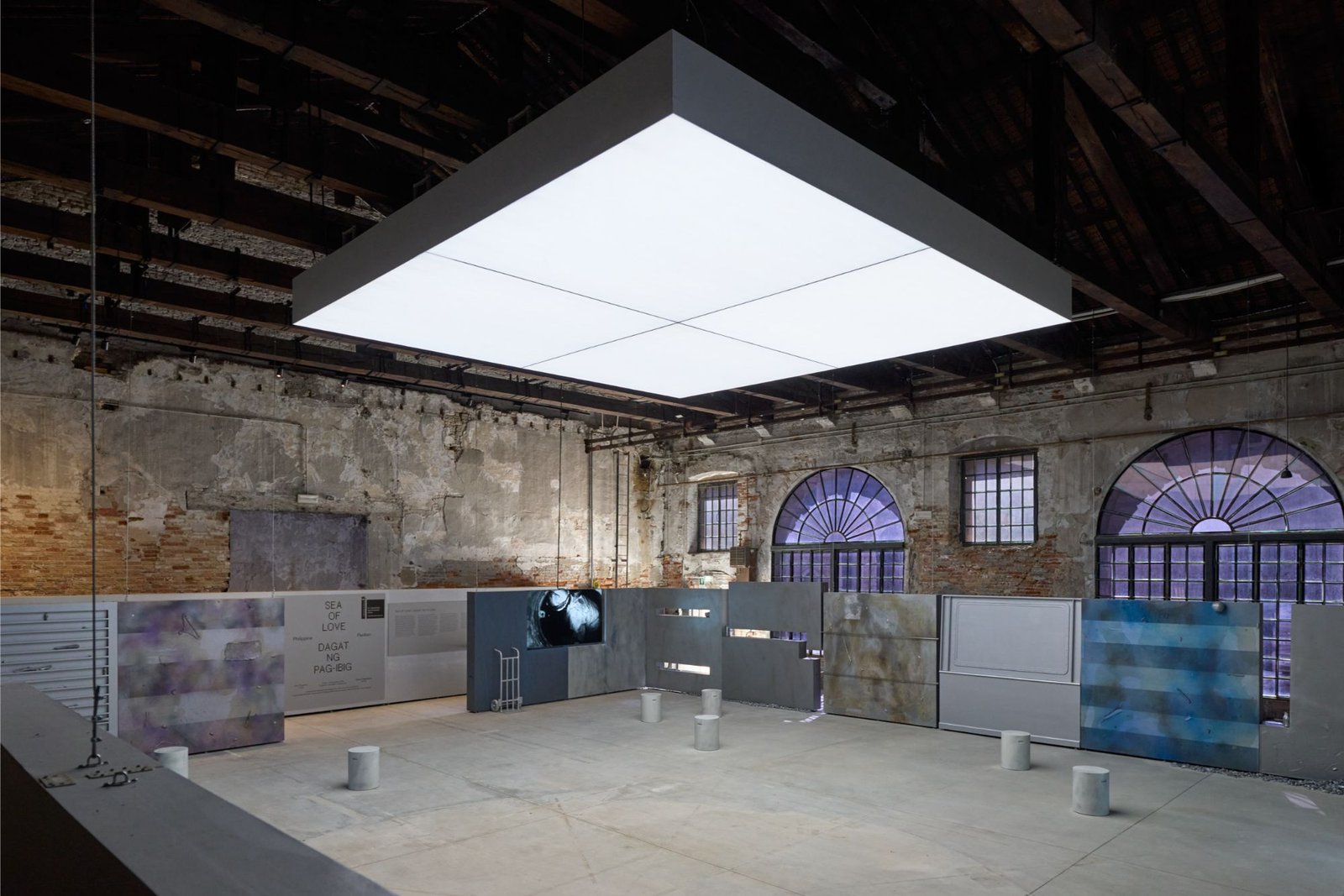
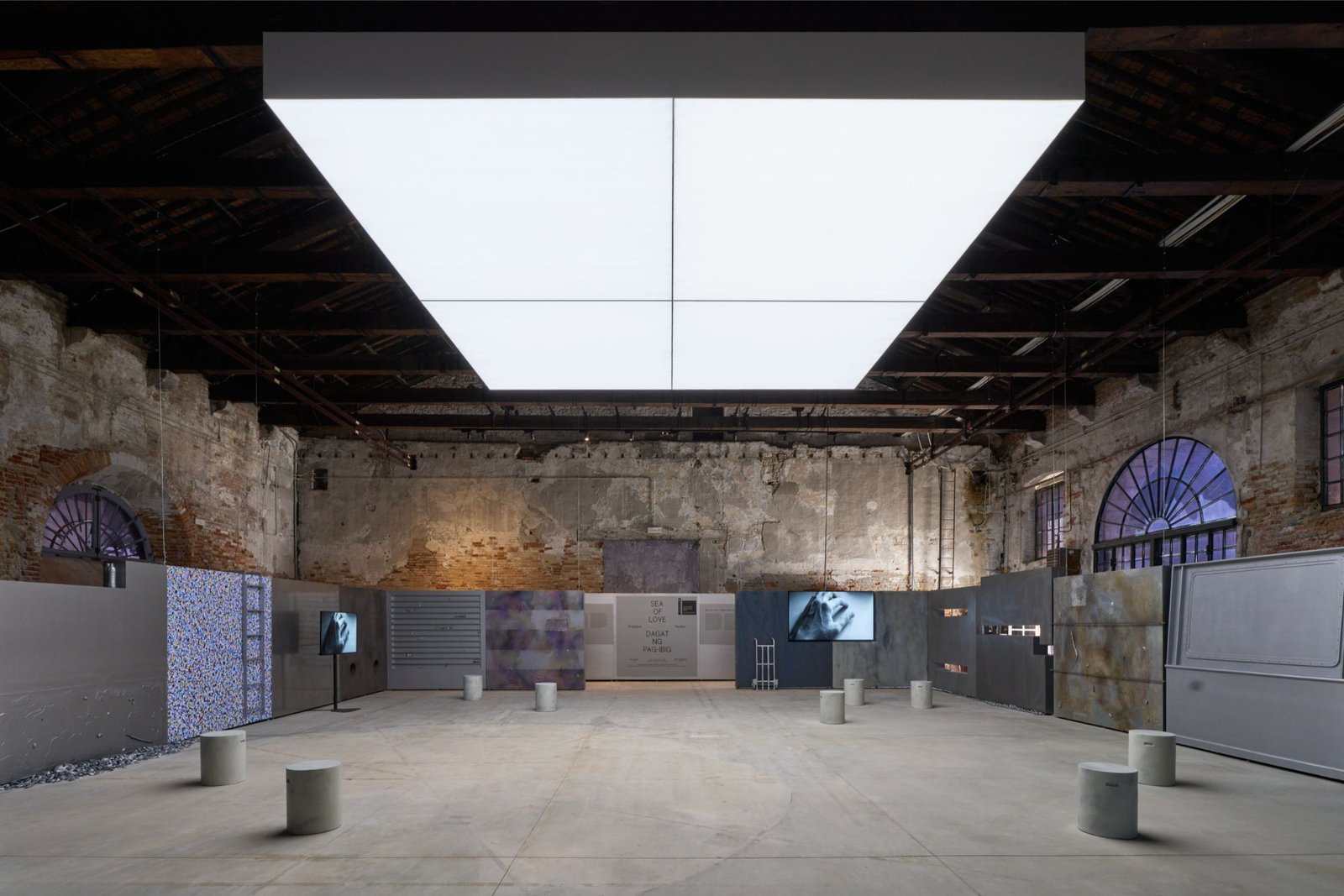
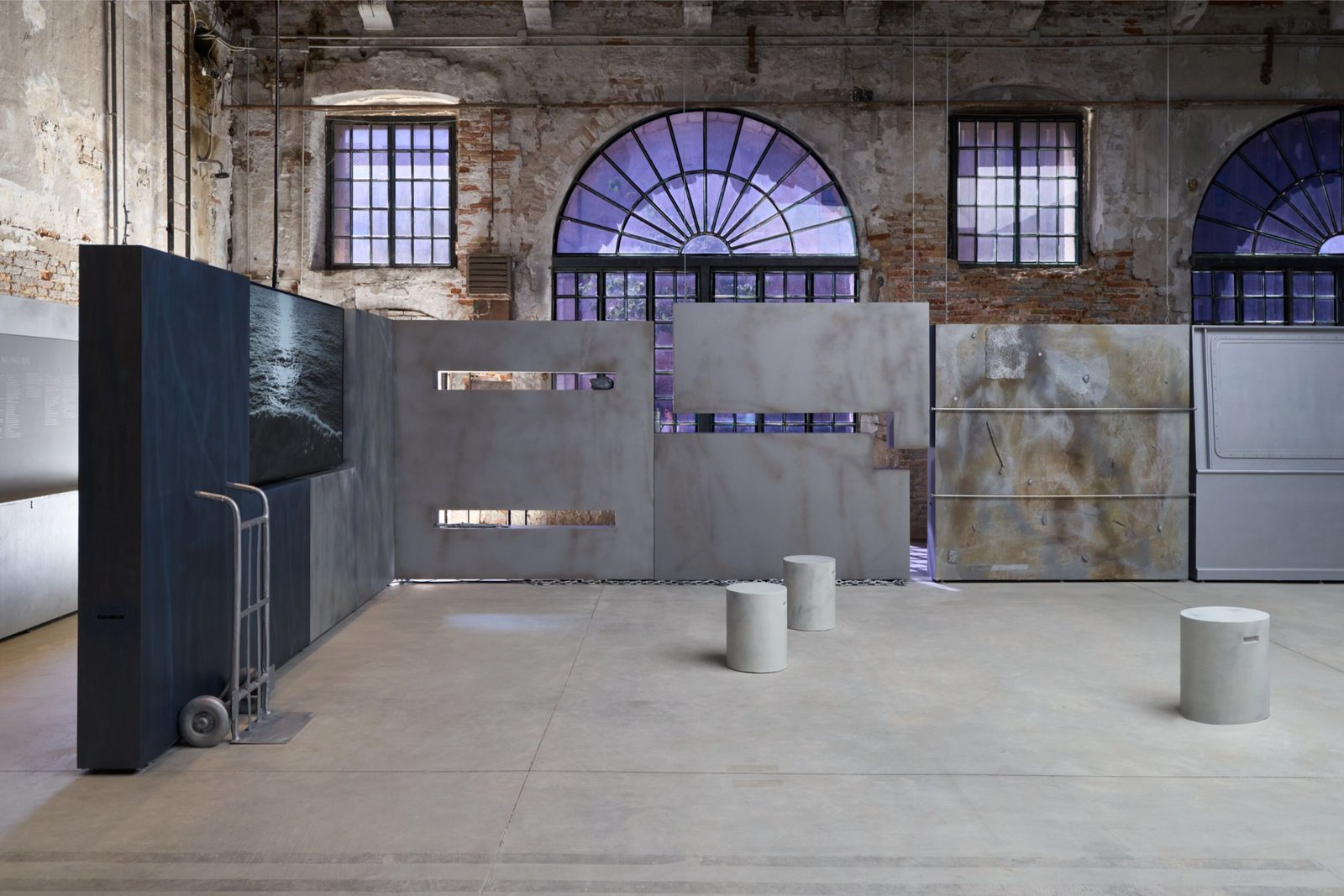
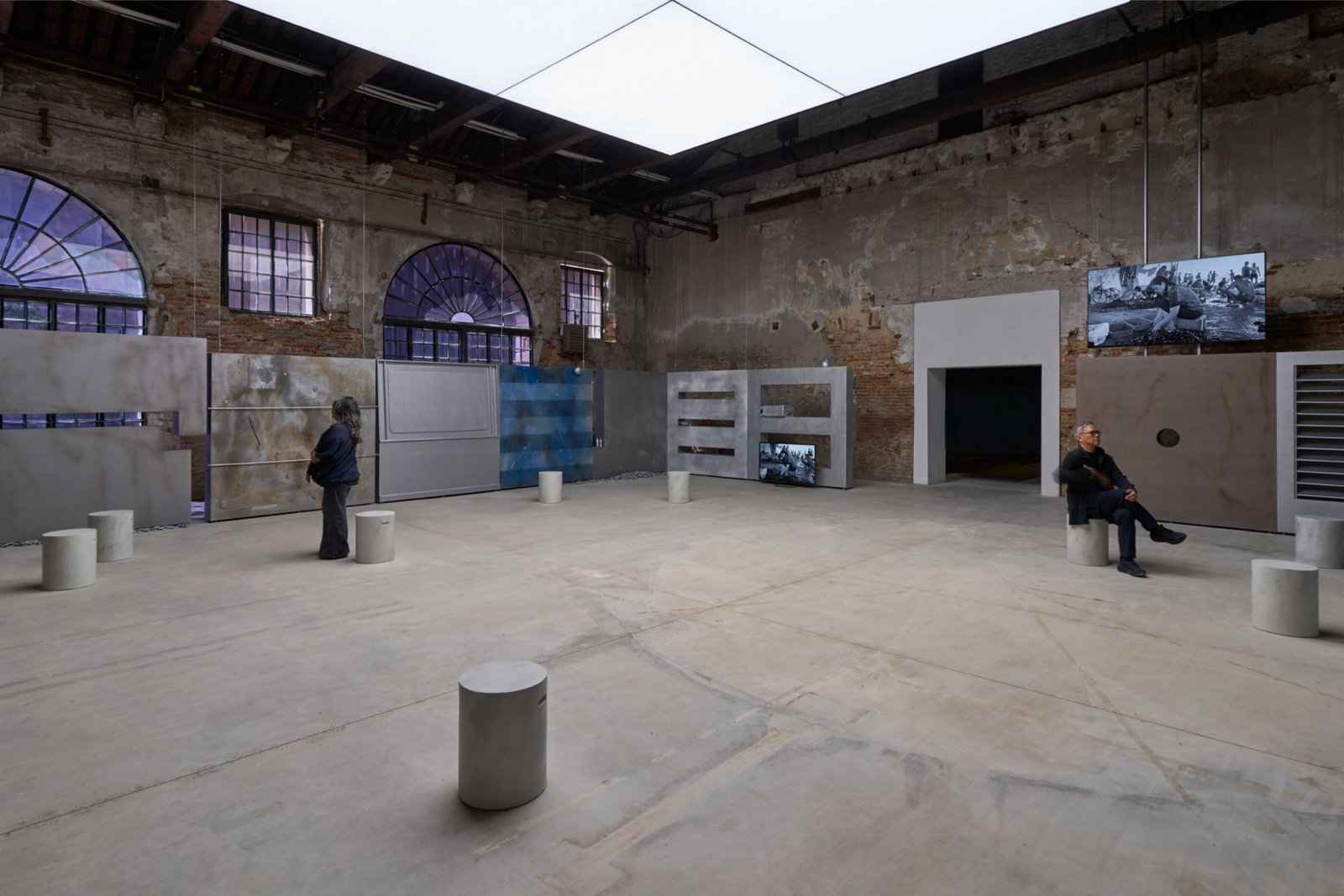
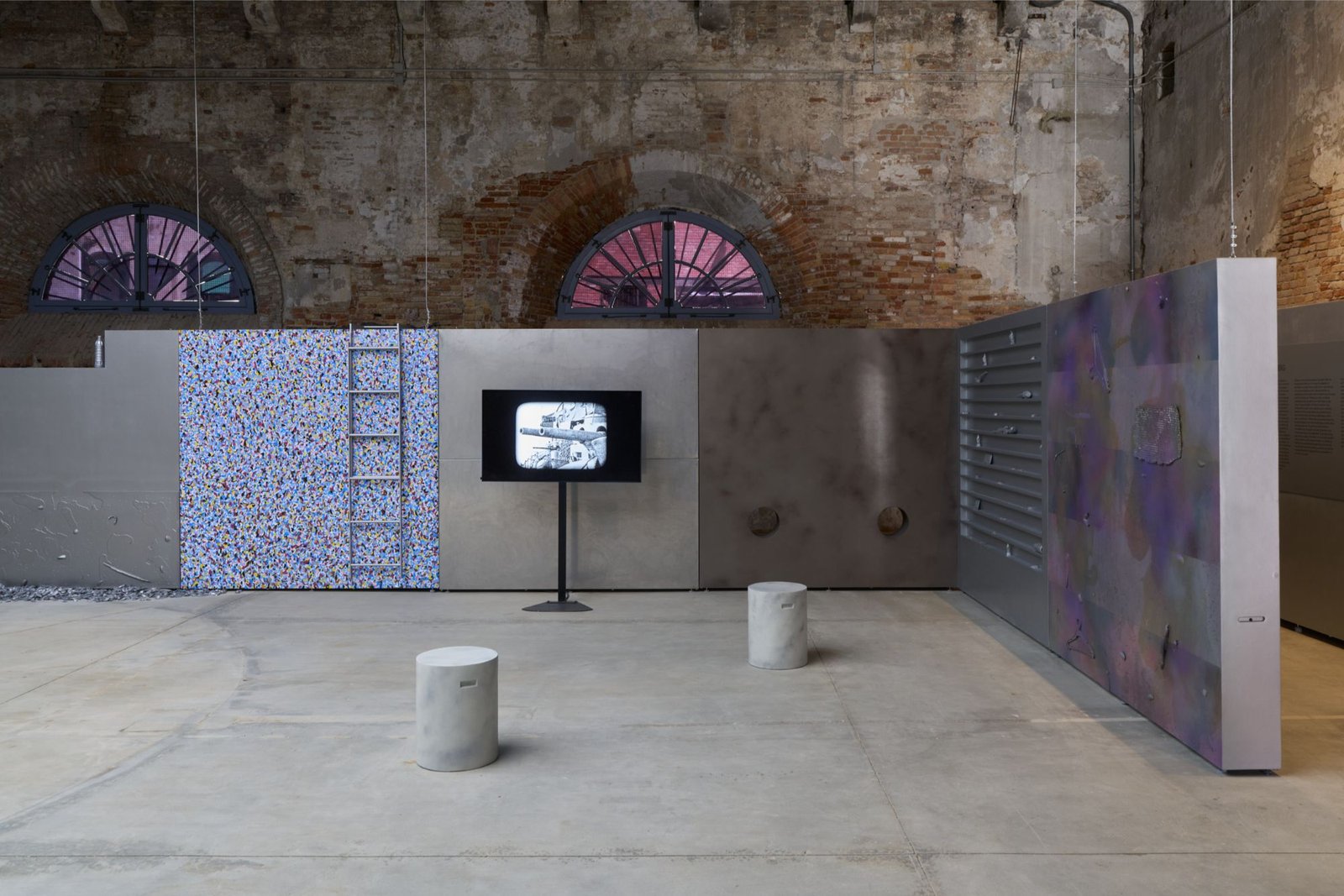
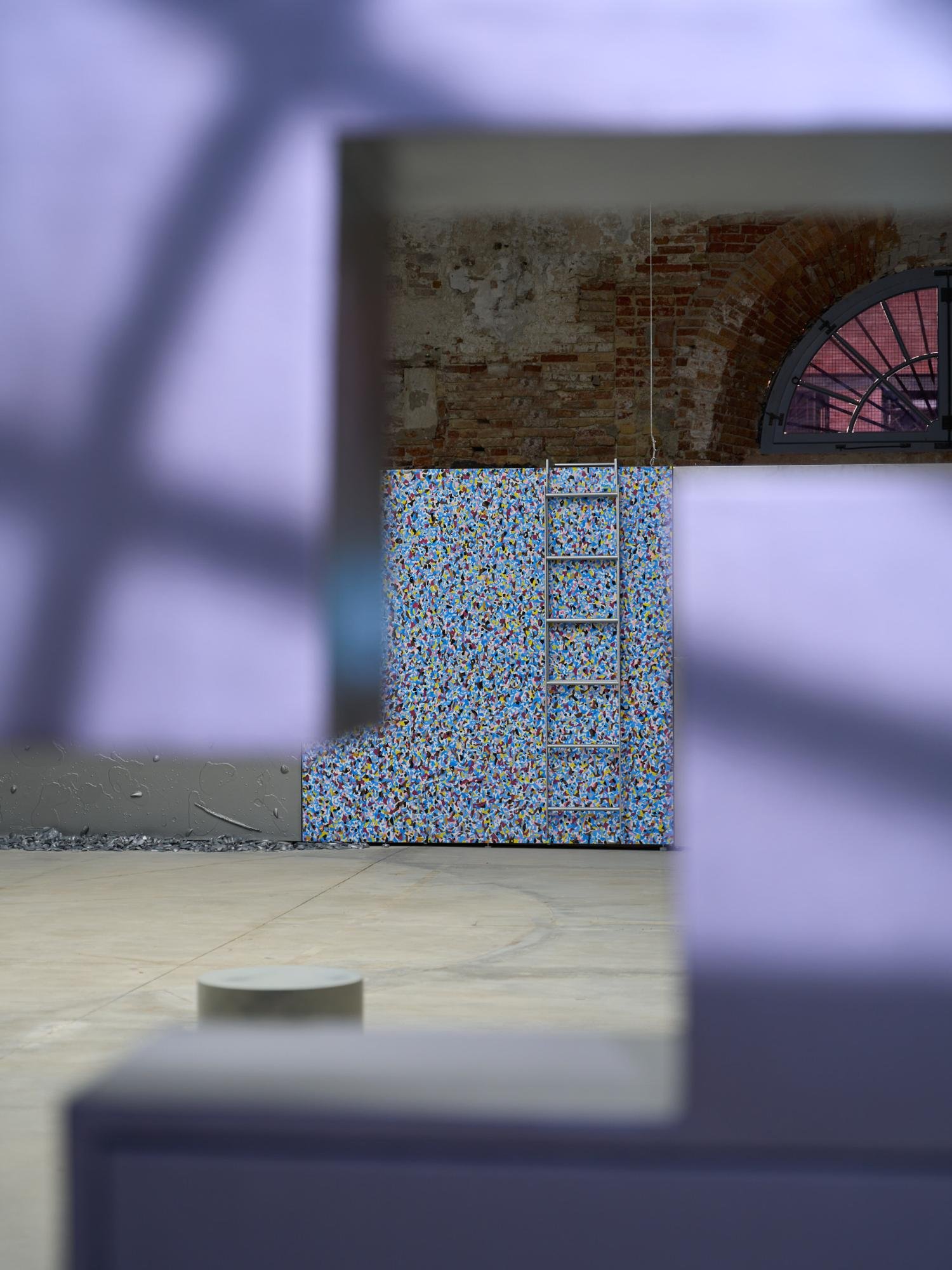
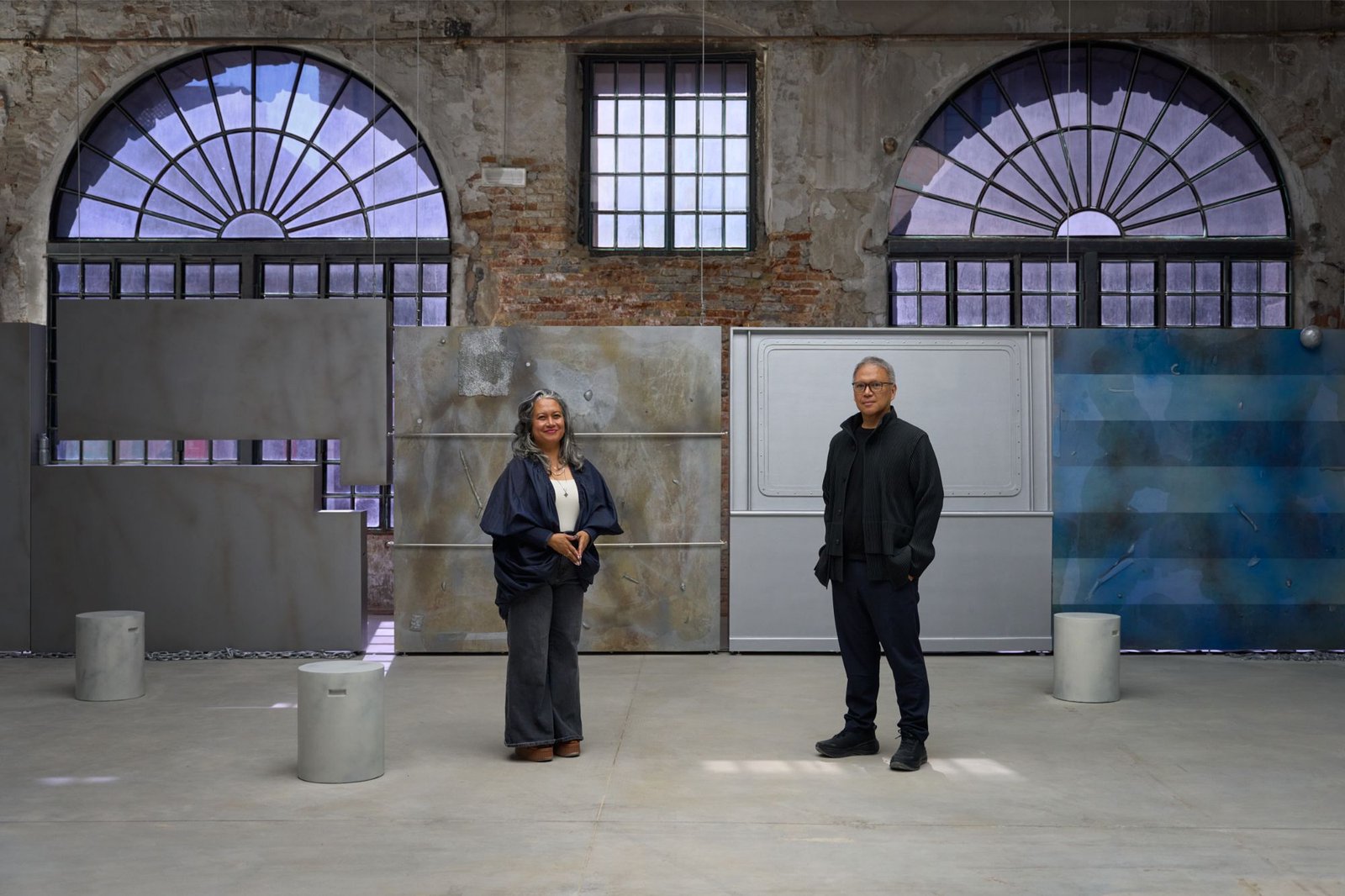
Opening May 9, 2026, at the Arsenale, the former heart of the Venetian naval fleet, Jon Cuyson’s Sea of Love at the Philippine Pavilion curated by Filipino-American Mara Gladstone, presents cinematic video work, and freestanding 7 x 7 foot canvases, dimensions that mirror the cross-section of a standard shipping container. These structures literalize the compression of the Filipino diasporic body within the machinery of global trade. The surfaces are treated with layers upon layers of silver paint that, when dried, leaves a “sun-dried mark, exposed to the elements.” In conversation, he discusses his materials with technical sobriety, but with witty edge: Cuyson embeds these canvases with resin mussels, found shells, and casts of his own mandibles, blurring human labor and biological persistence. As Cuyson notes, “The sea itself becomes a living archive. It’s about the ebb and flow, and the container.“
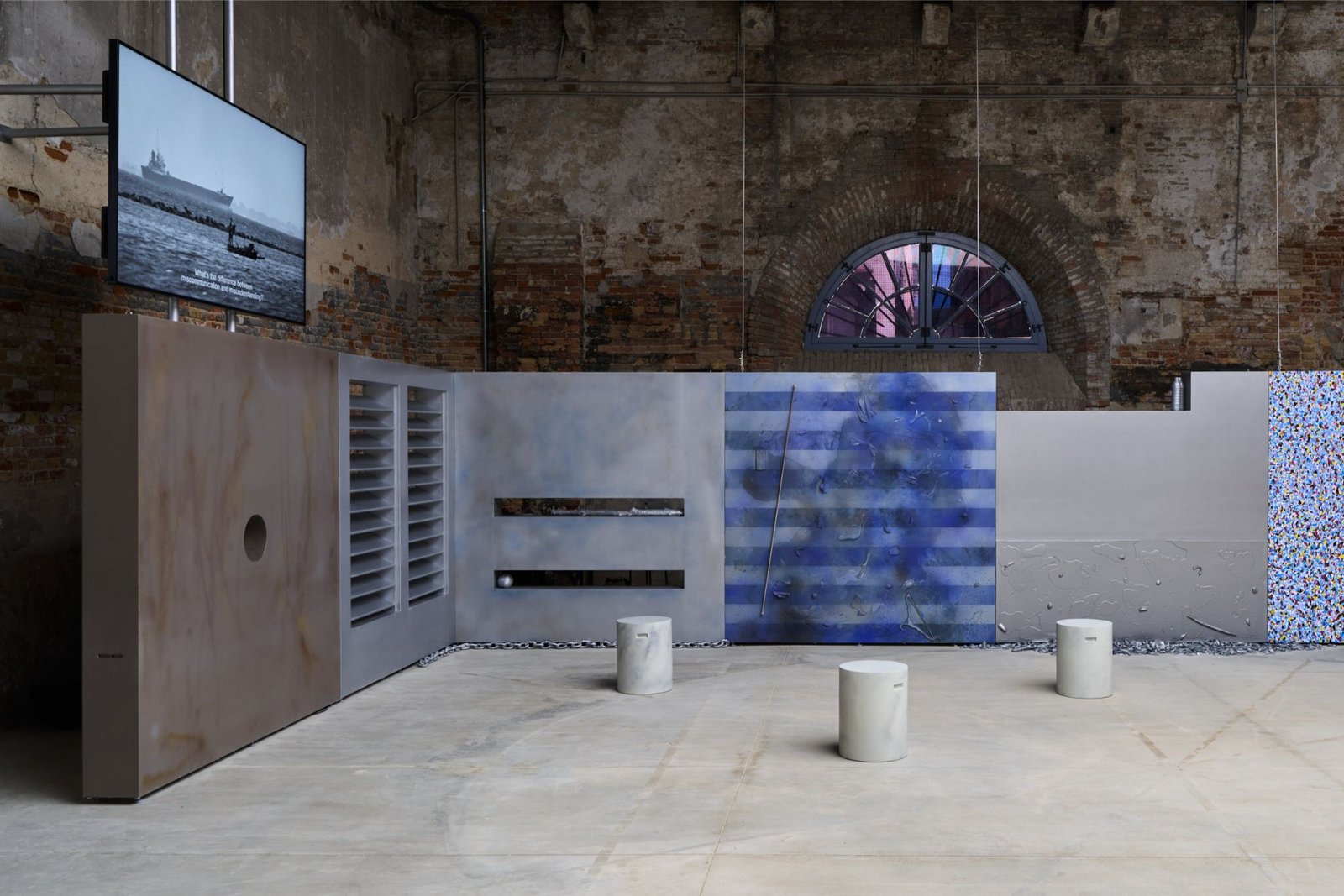
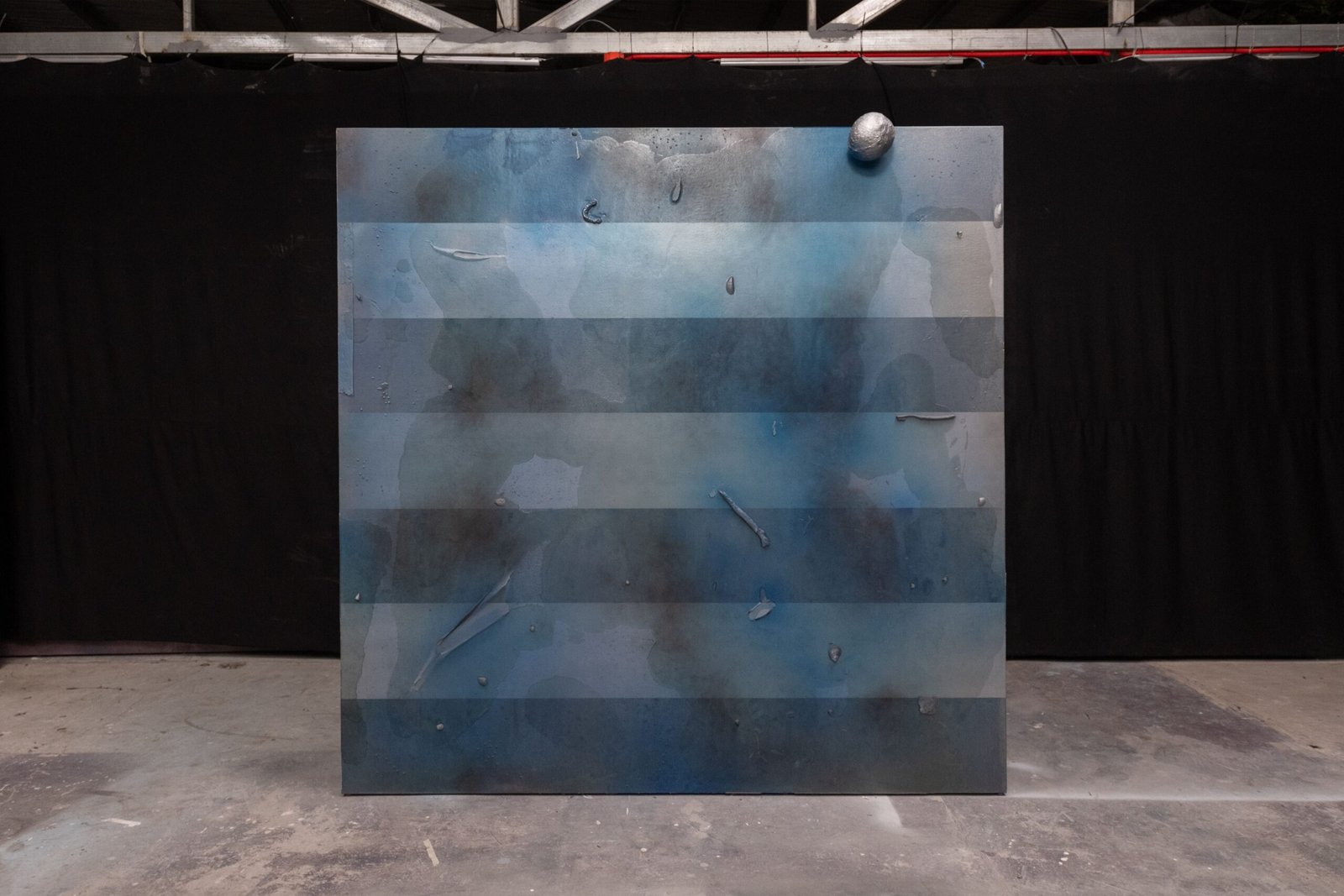
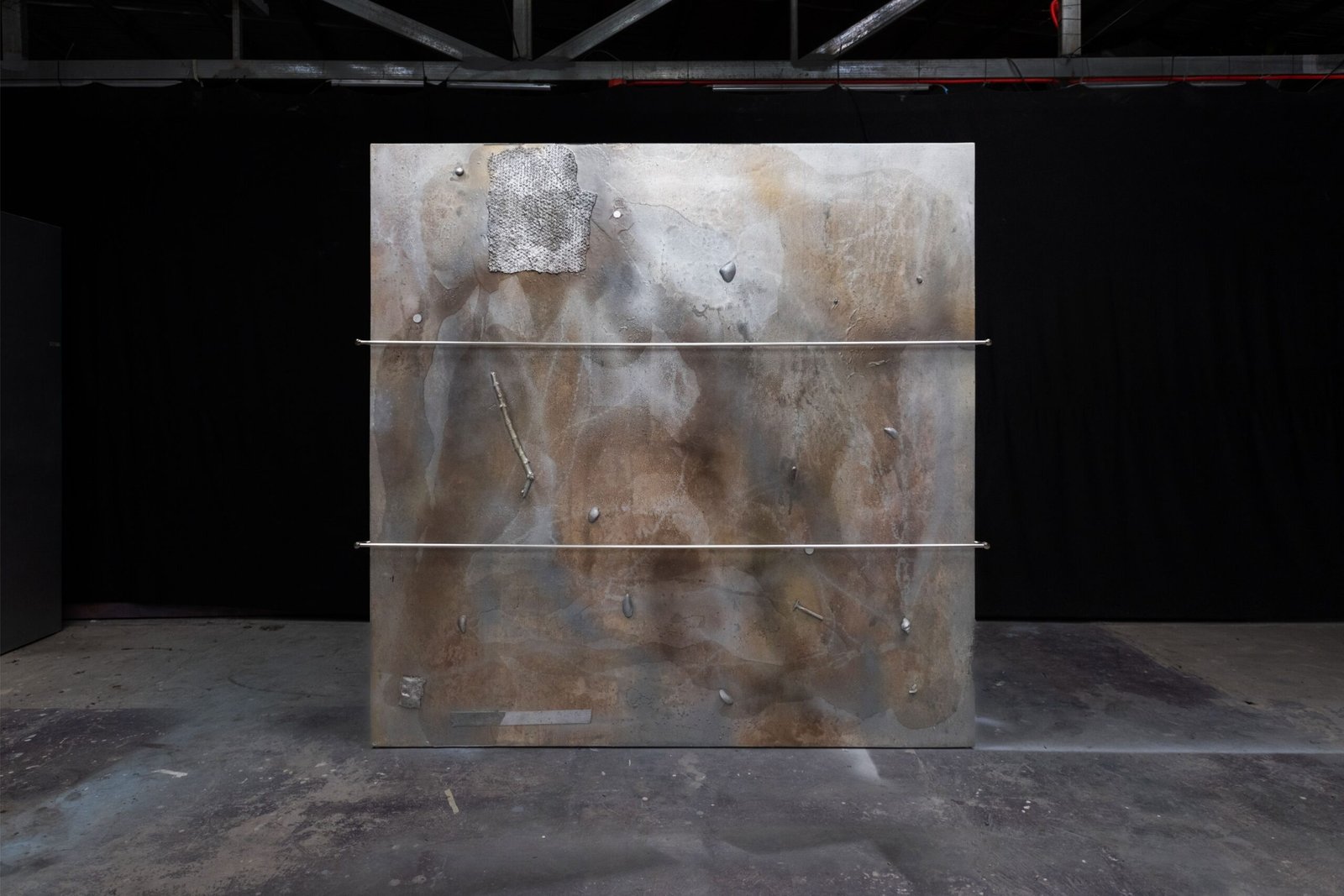
Central to Cuyson’s conceptual rigor is the framework of pag-iisip tahong, or “mussel thinking.” This metaphor, inspired by the collective survival and filtering labor of the humble Philippine mussel, serves as a decolonial alternative to individualistic agency. Cuyson reframes manual labor into a form of sophisticated, somatic intelligence. Explaining the grit required for this process: “Mussel thinking is about working, creating, living and surviving through adversity, not despite wanting it to be difficult. That’s the idea. It’s not supposed to be easy.” This thinking is performed by both body and collective, reflecting the tenacity that sustains and supports. “That’s the Filipino story. We’re quiet, we are always unseen laborers. We collect, we work with each other, and then we filter, and we work through adversity.“
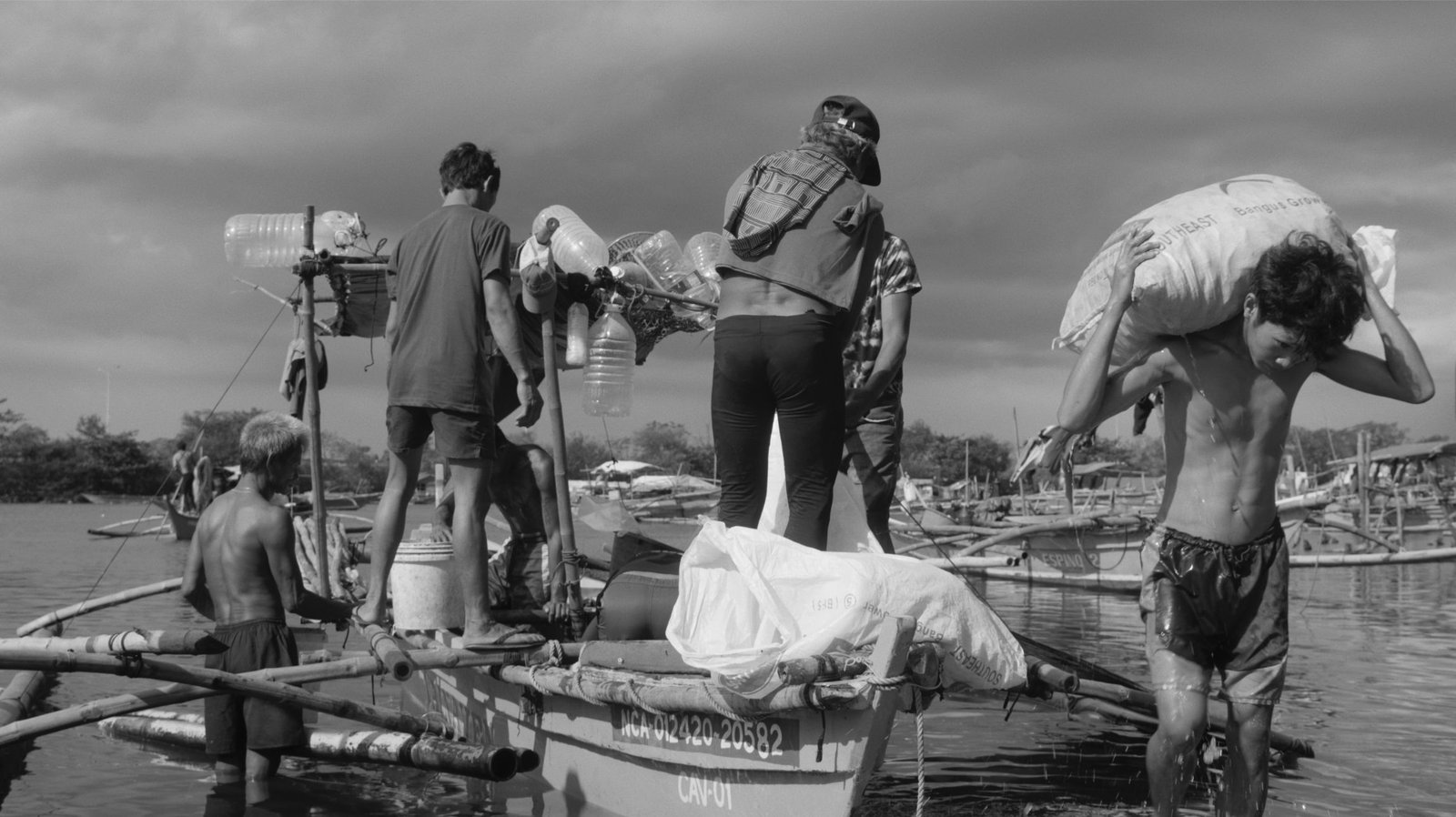
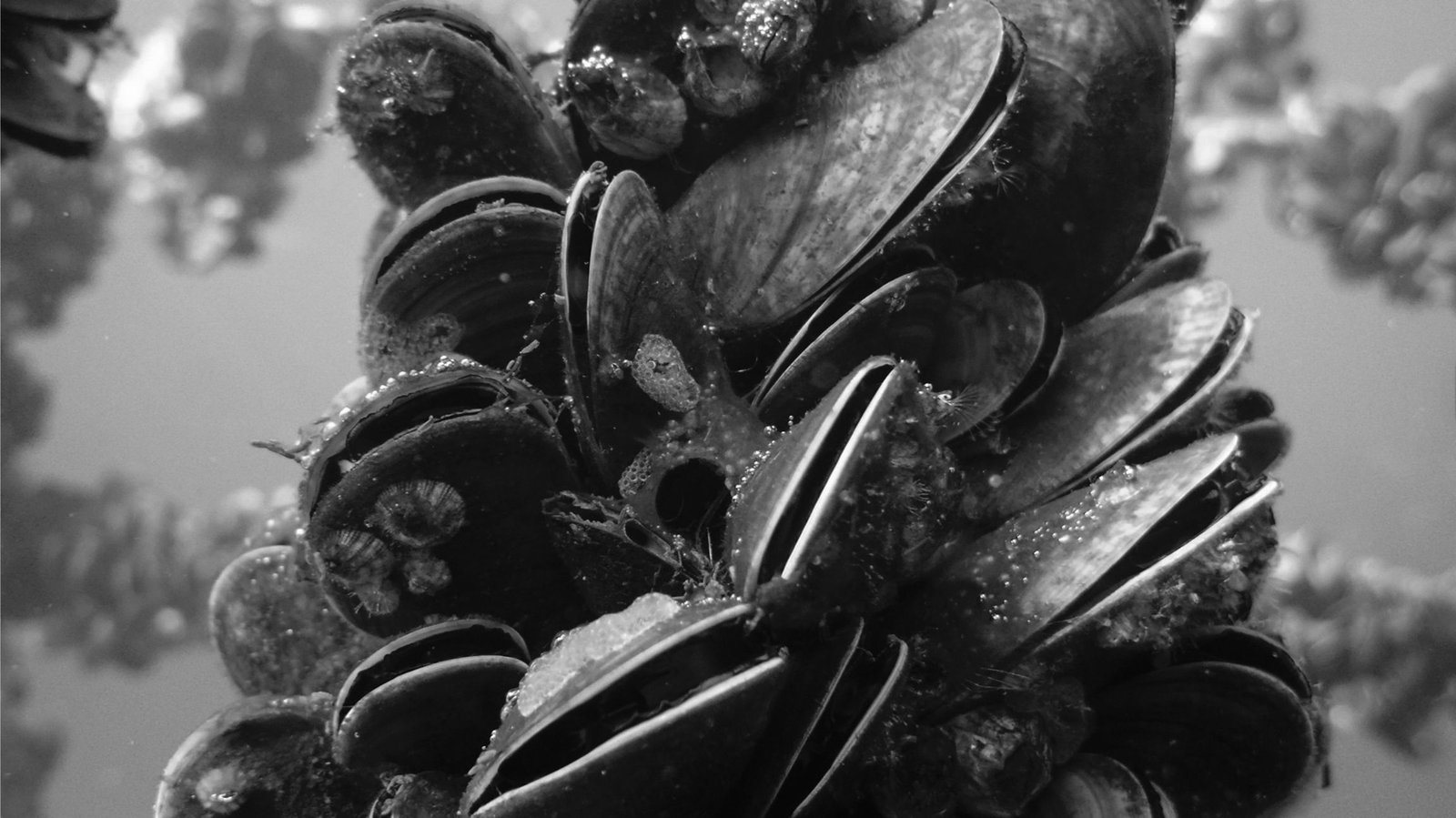
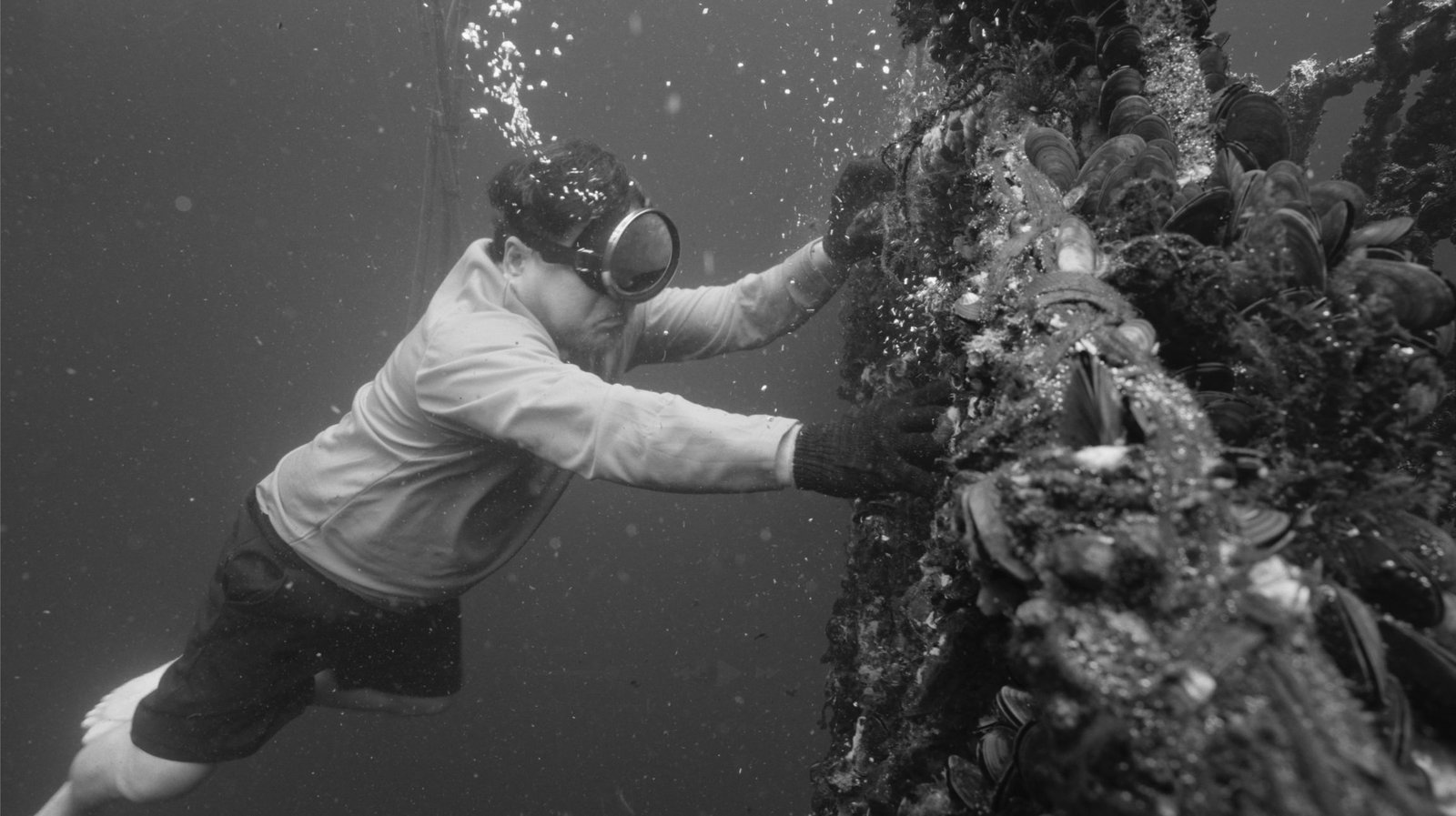
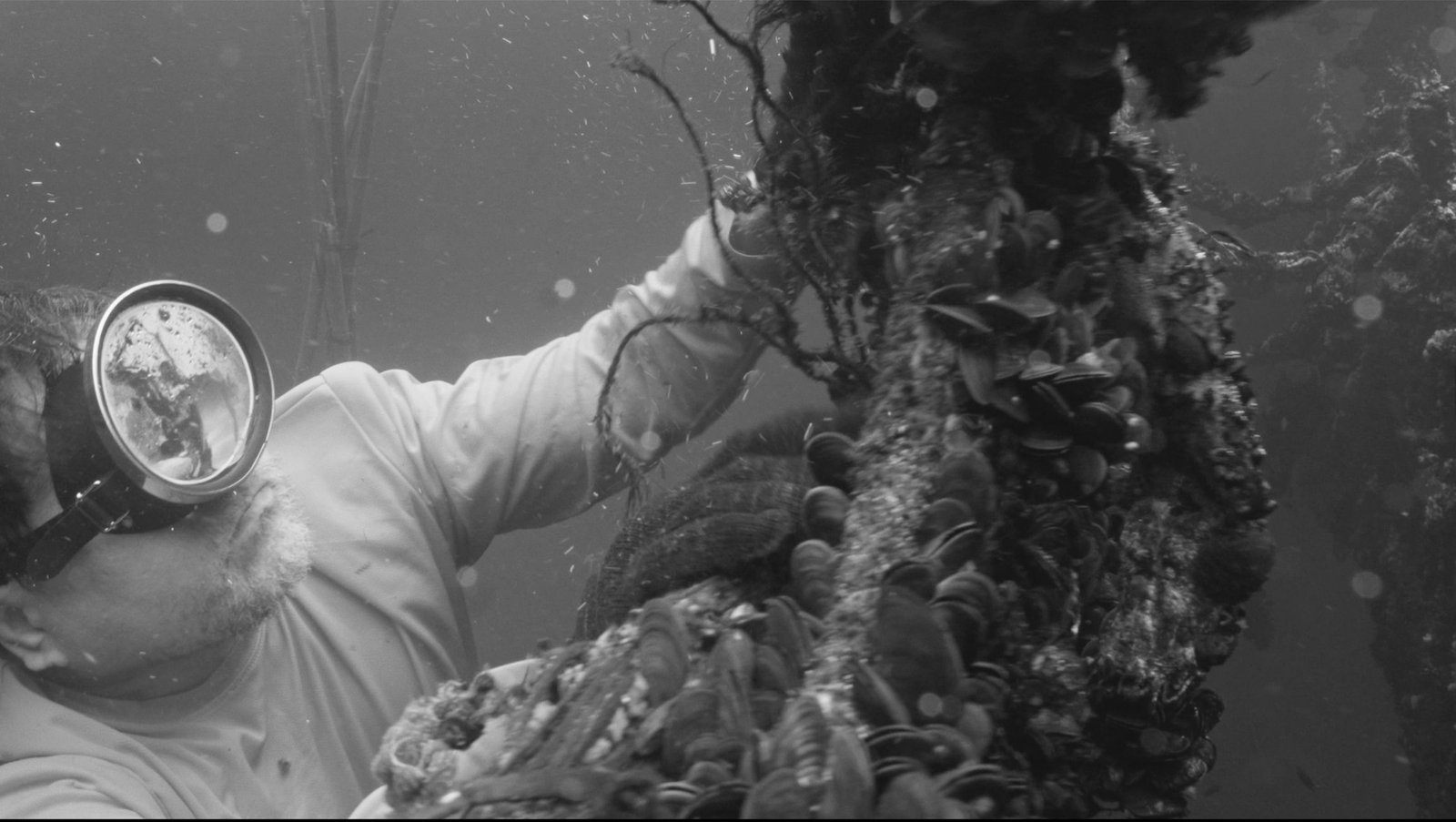
Kerel, a figure who has occupied Cuyson’s film practice for thirteen years, functions as the silent engine of the exhibition. Initially inspired by the Eurocentric queer archetypes of Jean Genet and Rainer Werner Fassbinder, Kerel has undergone a radical evolution, evolving into a Philippine-specific body, moving away from Western eroticism toward an ecology grounded in local kinship. He serves as an anchor for presenting the Filipino diaspora: the queer seafarer, the contract worker, the invisible body that facilitates the movement of global capital across the ocean–a proxy for the millions of bodies currently in transit. His evolution is explored in the video work Sea of Echoes, which uses haunting underwater footage narrated by the mussel as a maternal voice. The video suggests that survival is a continuous, exhausting process of breathing through the water and filtering just to persist. The series expands to include Mutya, his trans lover, framing queer identity as a fundamental component of the survival strategies utilized by the displaced, and Nanay Cleo, Kerel’s folk-healer mother, who ritually prays for his safety at sea: unique intersections of labor, the queer, the post-colonial, and indigenous cosmology.
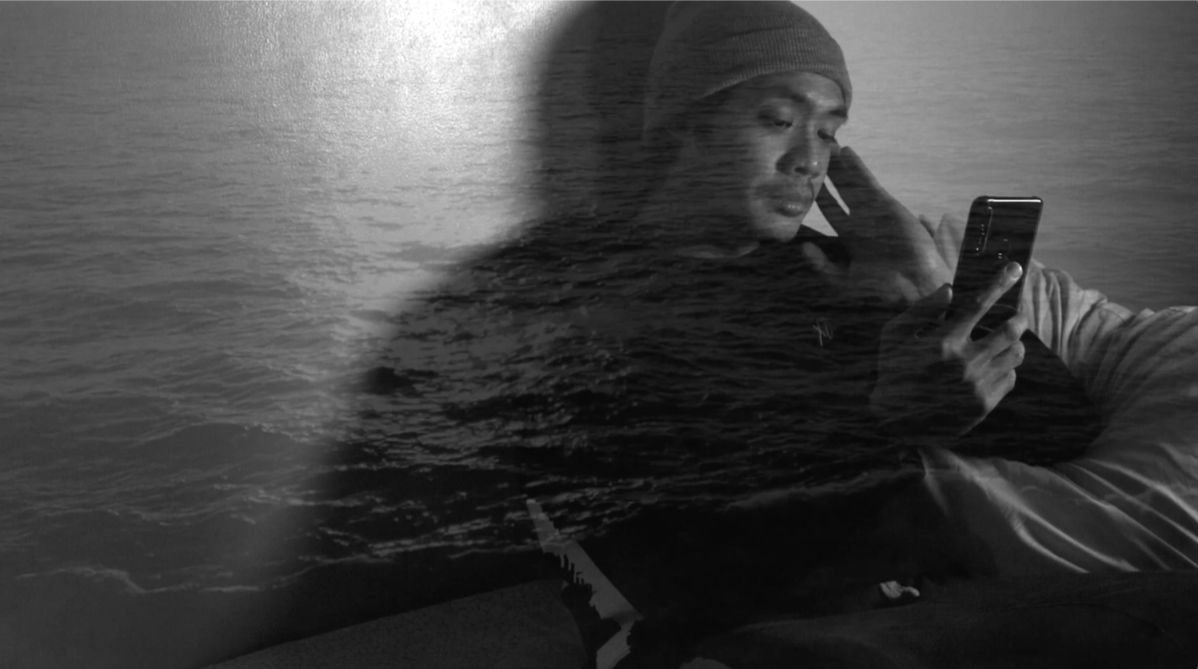
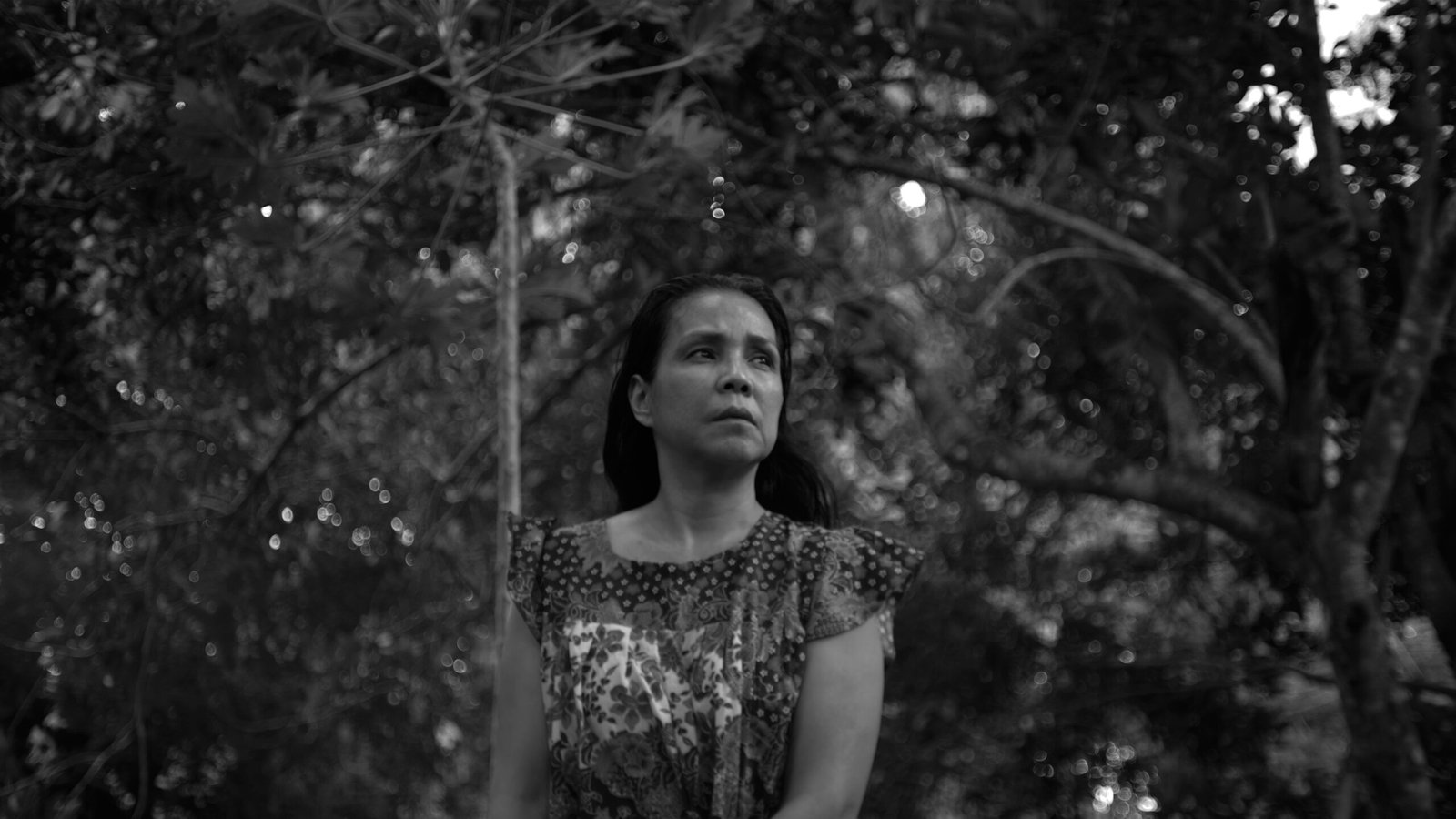
Cuyson’s background in theater also informs the scenographic ruptures in the environment of the Philippine Pavilion. Arranged as a piazza, the freestanding canvases force the viewer to navigate the space as would the seafarer. There is no totalizing vantage point; the viewer must contend with a fragmented horizon where perspective is perpetually interrupted. In such a scape, the viewer’s movement becomes its own performance, the state of floating–often seen as a state of aimlessness–becomes a deliberate, tactical mode: “The idea is for people to pass through the space and using your body to be fragmented. Imagine if you’re on the other side, you’re seeing through the gaps.“ Between these freestanding paintings, cast resin coconuts, painted suitcases, and mussel shells are witnesses to this attempt at a compression of time, undulating between colonial galleons to modern cargo ships. Floating mirrors the precarity of the maritime subject, for whom the ground is never stable and the horizon is always partial: “I want you to take your time and really just float. You just float with the work.“
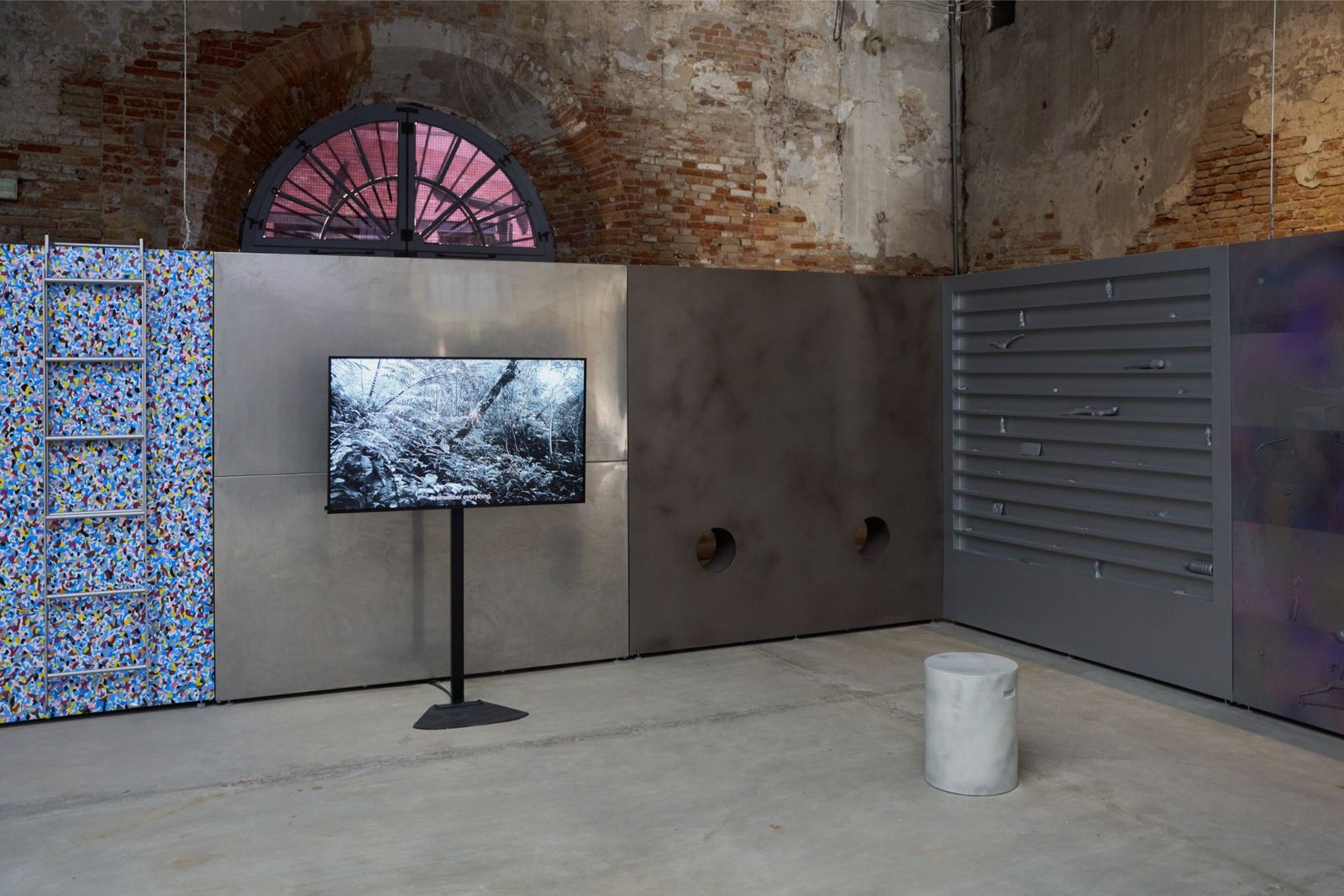
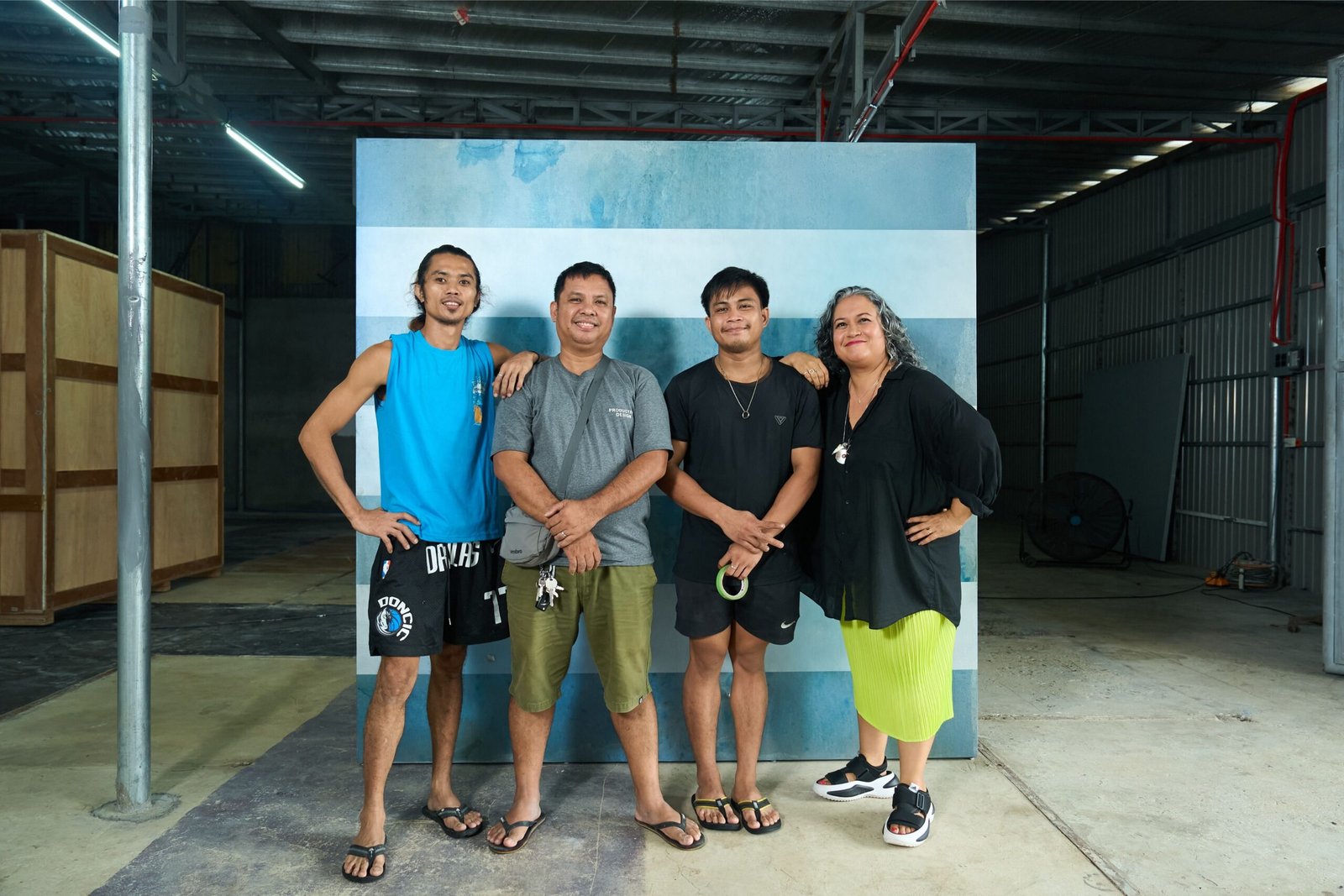
Cuyson’s process is a collaboration with professional craftsmen who understand the architecture of theater, researchers from the UP Marine Institute, and the mussel farmers at Cavite. During his time at these farms, Cuyson filmed the daily lives of the laborers, witnessing the immediate demands of survival and the precarious nature of their livelihood. The mussel, absorbing the toxins of its environment while building a life, becomes the ultimate metaphor for the overseas worker filtering the global economy. By linking the massive scale of global shipping containers to the silent persistence of a mussel bed, the Philippine Pavilion proposes that while the sea is a site of displacement, it is also the location of a collective strength. Curator Gladstone reframes this observation as “archipelagic thinking,” treating oceans not as distance or danger, but as lived space that connects communities. By centering the seafarer and the mussel farmer, the pavilion challenges the romantic view of the ocean as nature to be conquered.
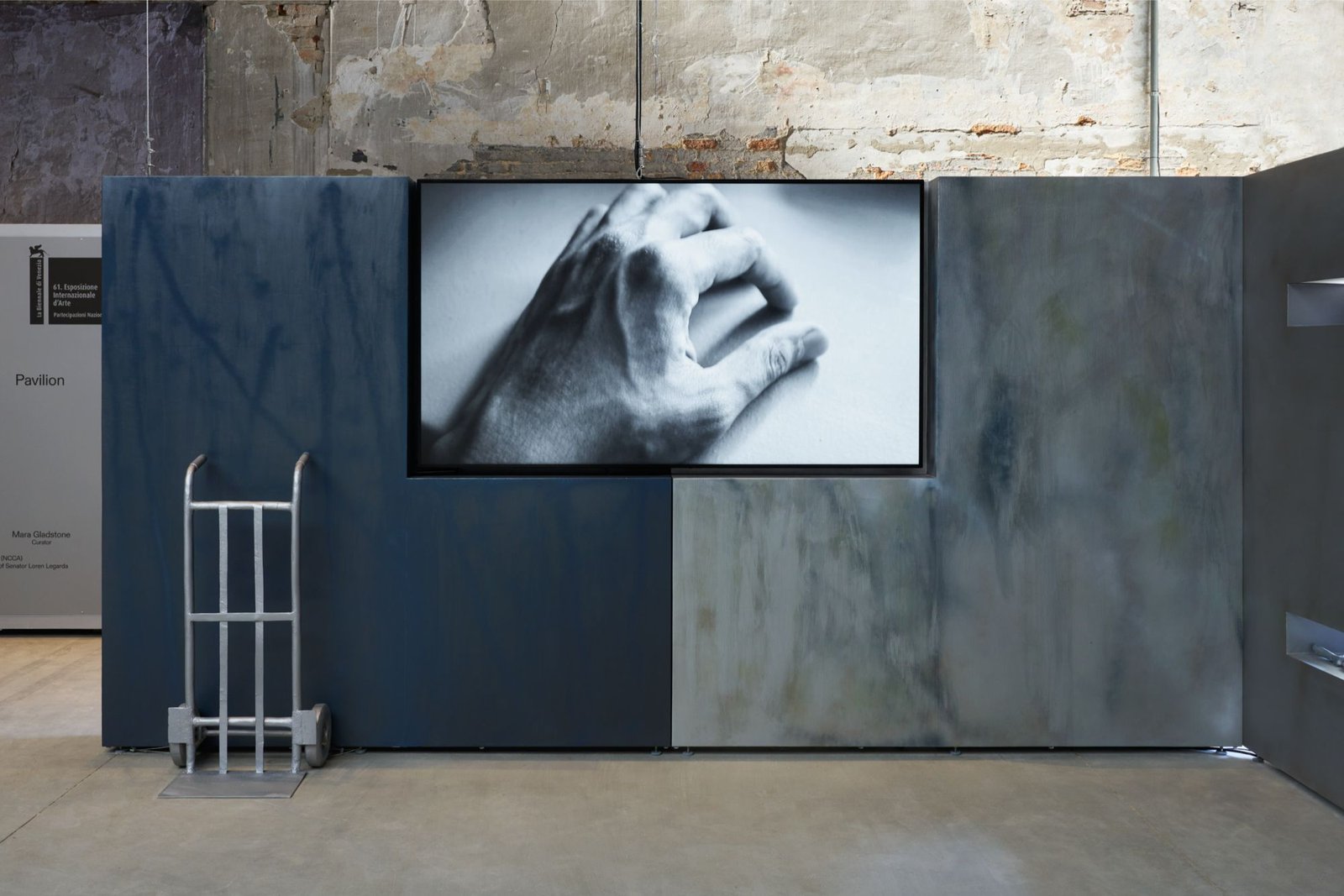
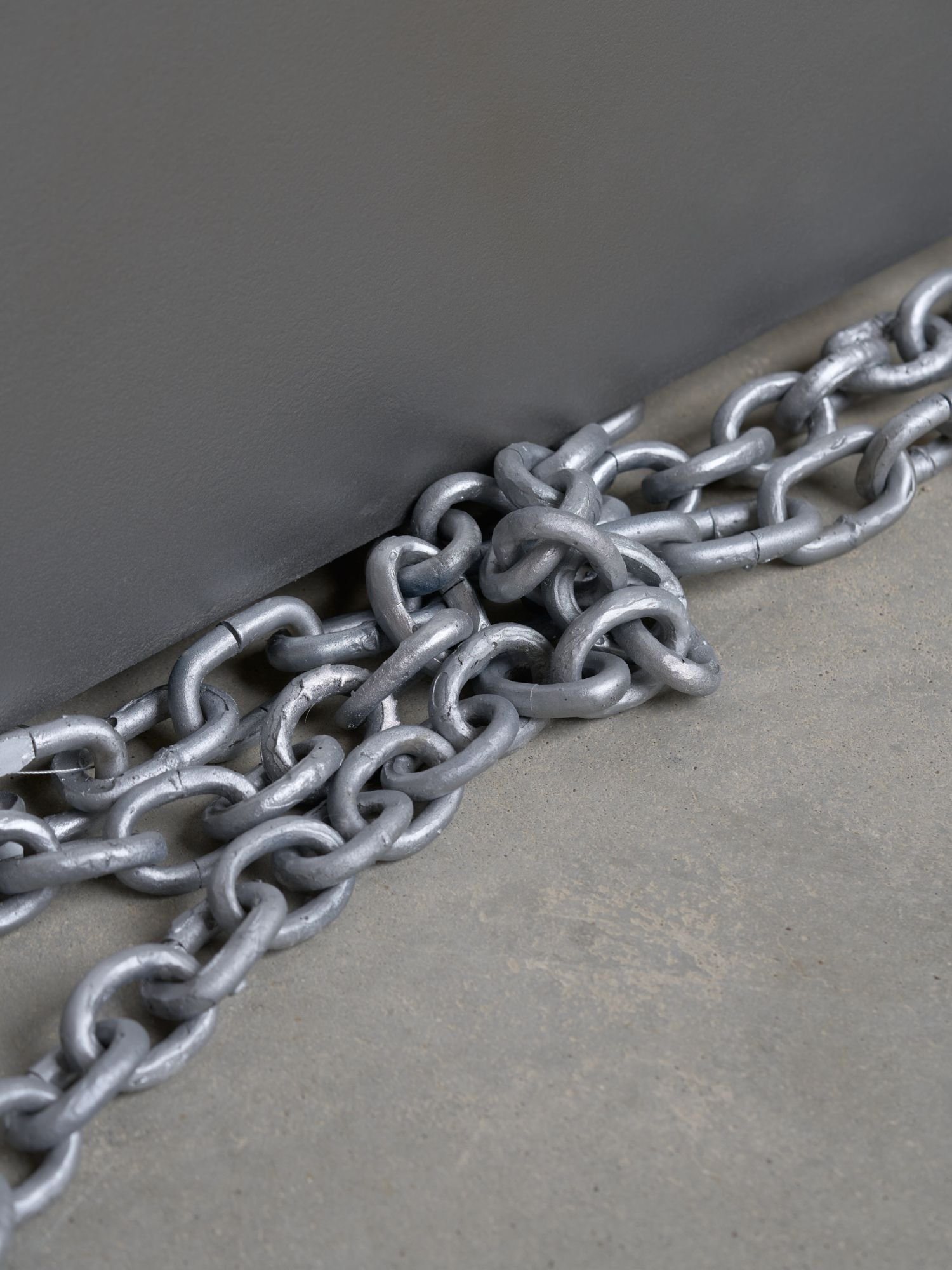
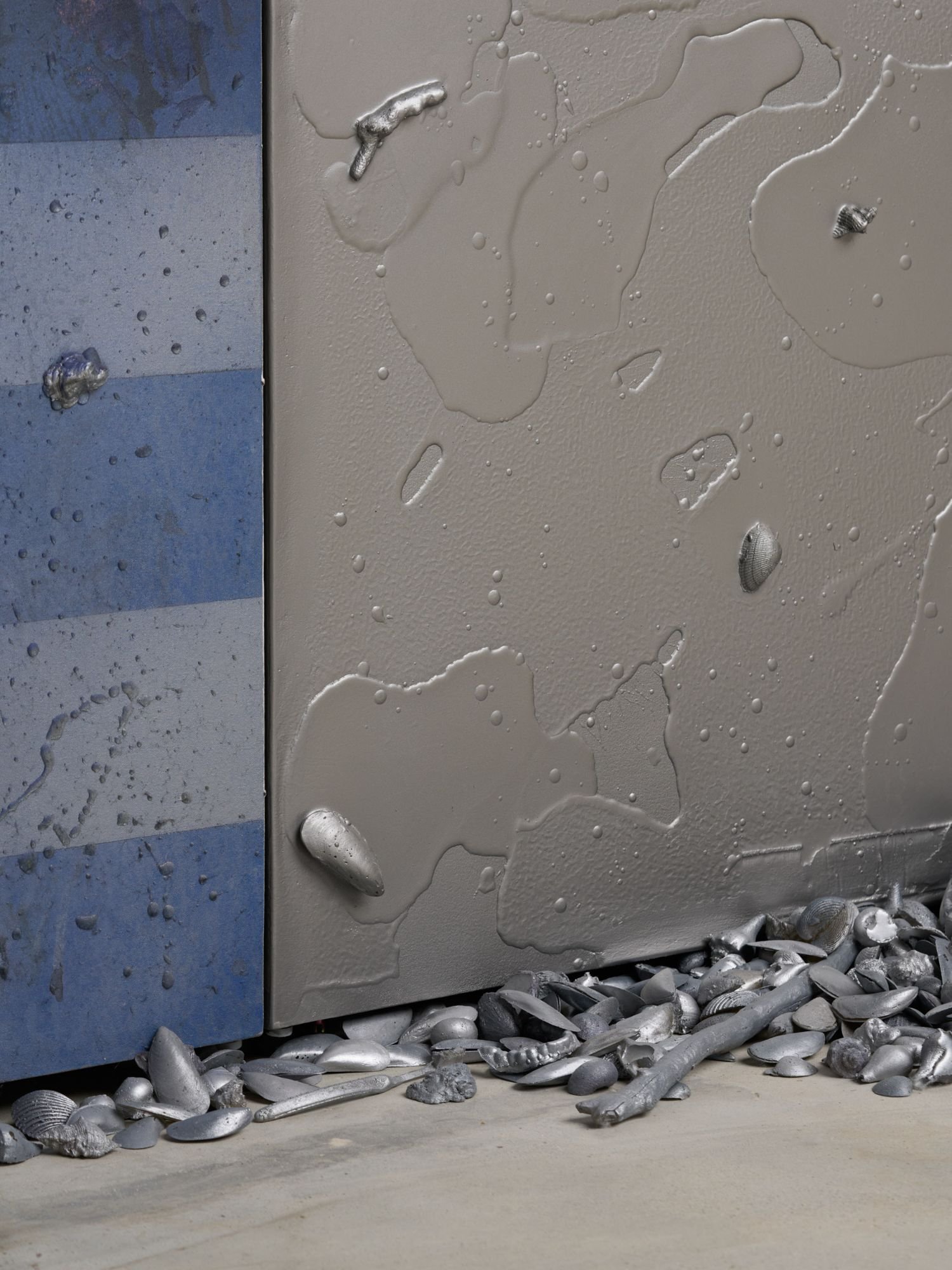
Details of the Philippine Pavilion
As our conversation concludes, Cuyson reflects on the ultimate goal: “The sea itself becomes a living archive where it contains our hopes, our dreams, our fears.” It made me think about the pavilion as a nationalizing project, which risks becoming a static monument or a curated performance for the global gaze. The Arsenale, once the pre-industrial world’s largest production center, remains a monument to the economic and military power of the Venetian Republic. In Vexed Modernity (2002), critic Marian Pastor Roces looks at the historical origins of art, power, and racial politics that shaped the foundational myths of Filipino identity. She argues that the omnipotent structure of the Western art world acts as a neutralizing force–the art world’s habit of ‘sanitizing’ radical intentions so it can be safely served to the establishment.
Can Cuyson’s contemporary living archive resist this? The potential for resistance lies in shifting from the monumental to the ephemeral. Unlike the Arsenale’s history of fleet construction, an archive of hopes and fears operates on an affective, uncontainable register. By framing the work as living, Cuyson attempts to bypass the static nature of the national pavilion. However, success depends on whether the archive maintains its radical flux or is inevitably absorbed into the Biennale’s historical narrative.
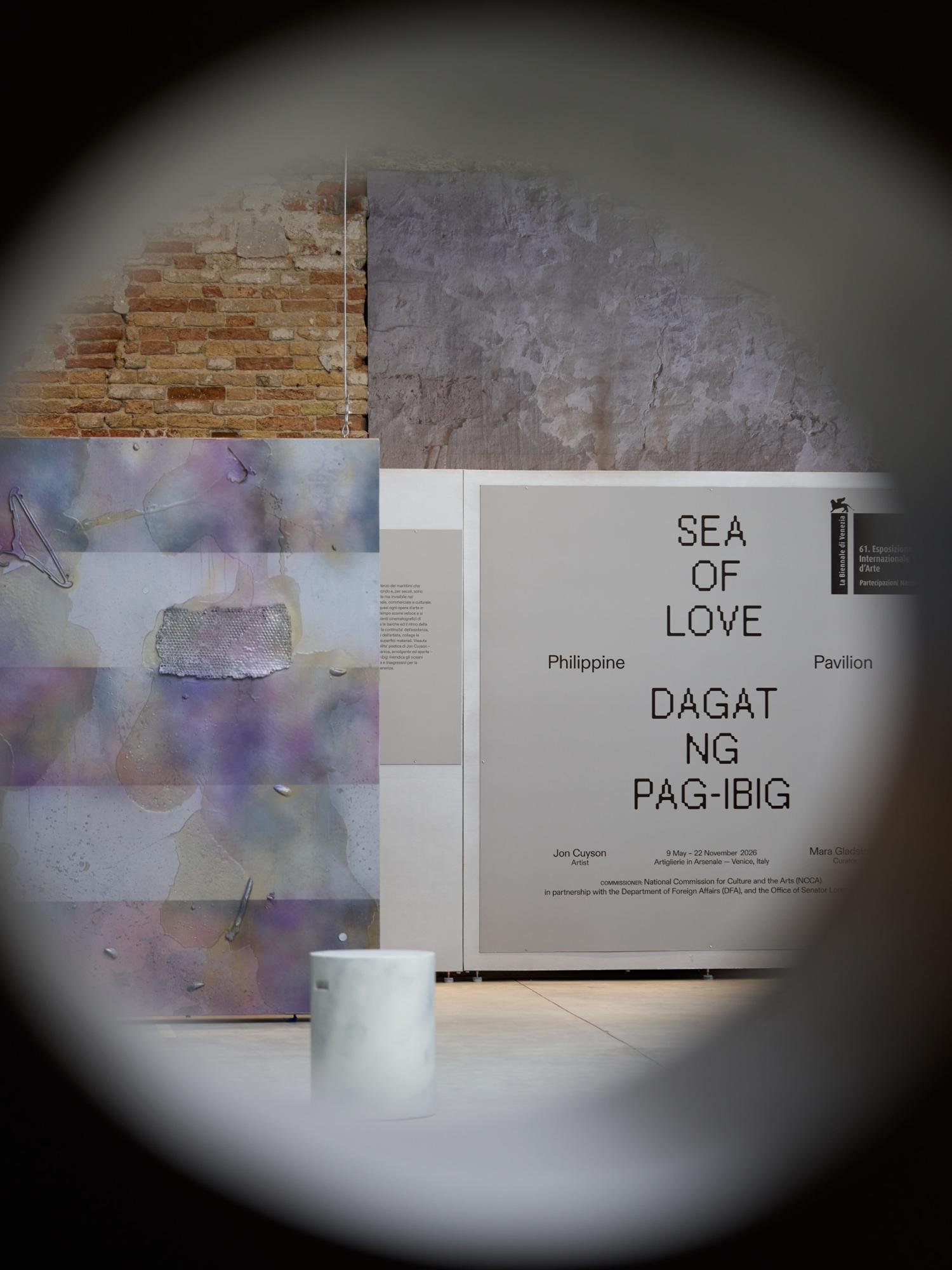
In this era of profound global exhaustion—weighted by the death of curator Koyo Kouoh and the political tensions surrounding the continued presence of Russia and Israel—art possesses the potential to activate the Biennale as a site of sensing and worlding. Patrick Flores, in Art History and the Global Challenge (2017), advocates for this process as a “more idiosyncratic narrative of sensible life” rather than a narrow focus on “art as we know it.” The objective of this worlding is to move through and ultimately transcend post-colonial critique, allowing a “different theoretical cosmos” to emerge. Against a backdrop of jury resignations protesting state-sponsored participants, Sea of Love suggests that the Philippine subject resides not in the sea as a destination, but within the state of transit itself.
Yet, while the pavilion frames the mussel as collective strength, is this filtering labor resistance, or a symptom of the multiple bankruptcies of the contemporary where life itself is minted for capital? In Sociality at the End of Art (2024), critical theorists Neferti Tadiar and Jonathan Beller suggest a sharper critique, describing a circuit of extraction where social relations become the primary medium. In this view, “Capital Art” operates by harvesting the collective imagination—the shared dreams and emotional energy of the public—to increase the work’s value for a small circle of constituents. Consequently, what appears to be a vibrant communal social life may actually be folded back into the machinery of Capital Art, where the radical act of “worlding” is repurposed as speculative fuel for elite markets.
In this context, the diasporic movement of people and gathering of mussels becomes a matrix of relations rather than a fixed geography. Kouoh’s posthumous vision for the 61st Biennale, In Minor Keys, similarly sought that while chaos rages, art should tune into “persistent signals of earth and life.” Cuyson’s and Gladstone’s archipelagic thinking justifies this, proposing that identity is forged in movement between shores rather than within static, compromised national boundaries.
If the sea is a living archive that contains our collective memories, as the Philippine Pavilion presents, then our task is to inhabit that instability rather than simply observe it. Sea of Love proposes love as a kind of tactical tenderness, forged by the diasporic maritime experience and the tidal human condition. They say all waters lead back to the sea, but until then, we remain at the filter. •
John Alexis B. Balaguer is an independent curator, art writer, and cultural worker based in Manila. He is the founder of Curare Art Space and currently teaches at the University of the Philippines – College of Fine Arts (Department of Theory). His critical texts have been published in Art Asia Pacific, Ocula, Art+, and Kanto. A recipient of the 2019 Purita Kalaw Ledesma Award for Art Criticism, he has also served as the Art Writer-in-Residence at the Salzburg Art Association in Austria (2024) and was a Fellow for Art Criticism at the Asian Cultural Council in New York (2025). His current academic pursuits include graduate coursework in MA Art Studies – Art Histories & Theories and the Certificate Program for Intercentric Art & Curatorial Practice at The New Centre for Research & Practice. Alongside his cultural and academic work, he is a certified expressive arts facilitator by The Arts & Health Institute Philippines, in partnership with The European Graduate School.