
Interview Patrick Kasingsing
Images Spaces That Matter Collaborative Studio and Bantayog ng mga Bayani archives
Photography Bien Alvarez and Kyle Venturillo
Welcome to Kanto, Erold and Chynx! To start, you’re stepping into a project with a “double load”: restoring a landscape work by a National Artist while handling a site of immense national trauma. Before starting work on the project, what did your team “do” to prepare for the weight of this specific charge?
Erold Enriquez, architect at Spaces That Matter Collaborative Studio: Thank you for having us, Kanto! Since graduating with a BS in Architecture from the University of Santo Tomas, I have deliberately chosen to pursue the field of heritage conservation. Working under a heritage consultancy firm led by Ar. Gerard Lico has helped shape my early philosophy and exposure to the practice of heritage conservation. It has opened up opportunities to work on actual conservation projects and collaborate with multiple NGAs and LGUs through the years. Alongside this work, I have maintained a parallel independent practice focused on residential design projects in my home province of Bataan, where I also assisted Ar. Rino Fernandez in the facade conservation of the Spanish colonial church of Abucay during the pandemic.
This early practice, coupled with training from various institutions in heritage conservation, enabled me to collaborate with and find like-minded, value-oriented individuals in the design community. Reconnecting with industry professionals and partnering with Ar. Chynx Bilaw allowed the creation of Spaces That Matter Collaborative Studio—a multidisciplinary studio that aims to design spaces relevant to its community through collaborations with local experts in the field.
Taking on the redevelopment of Bantayog ng mga Bayani is not an easy task. Knowing the sheer magnitude of its size and scale, its architectural significance as one of the few remaining intact works of I.P. Santos Jr. (our sole National Artist for Landscape Architecture), and its historical significance in the nation as a place of remembrance make this project multi-layered and complex.
After an initial site assessment, the first thing we did was reach out to and tap the right collaborators for the project. Acknowledging the complexity and nature of the work, we onboarded two landscape architects to work on the project: Marco Ortiz, who has worked closely with IP Santos in his later practice, and the team of Holtz Abbu, who are currently working on several public landscape projects within Metro Manila.
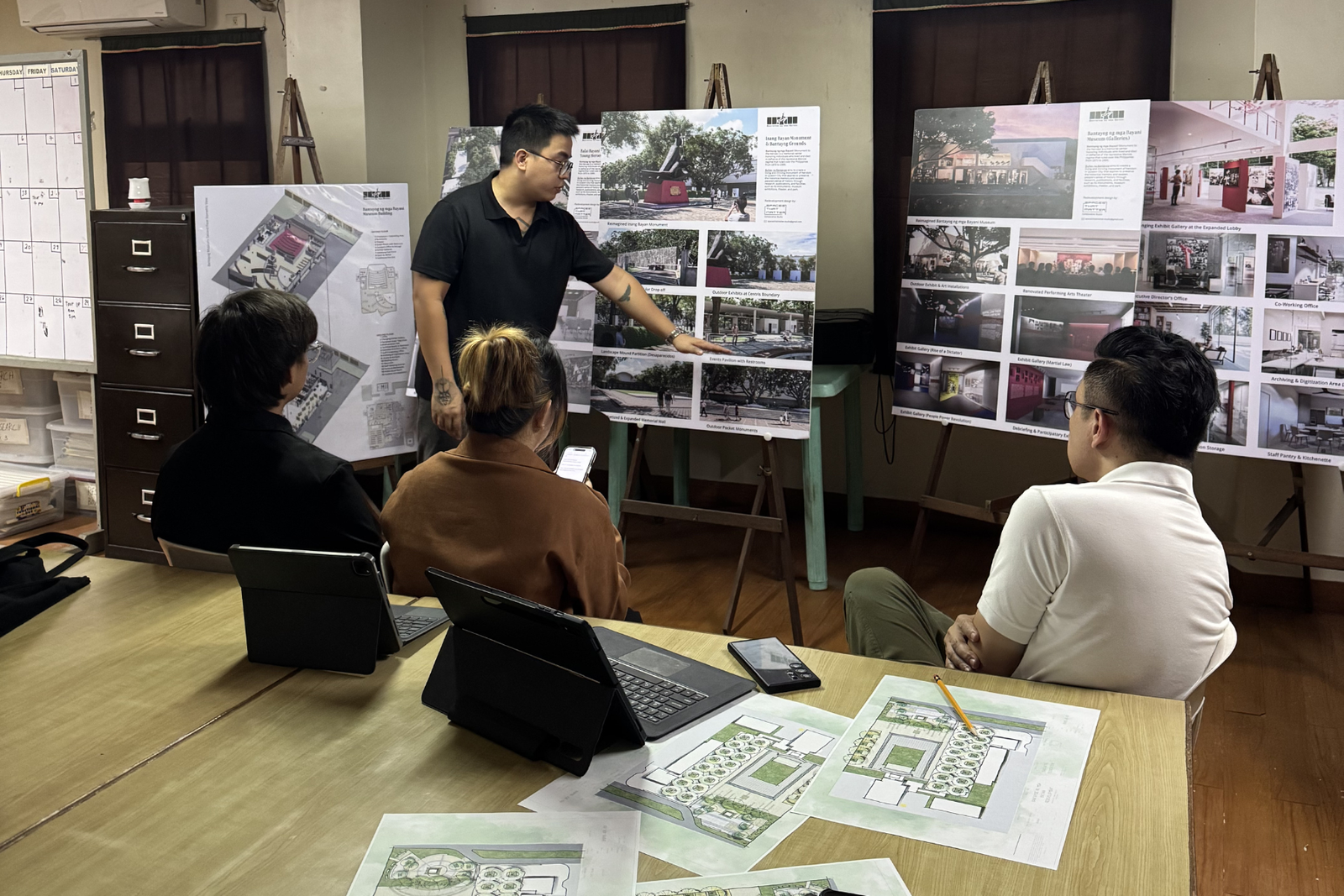
Collaborating with the right professionals is the key element in making this project happen. With guidance from these technical experts, we engaged the community of Bantayog ng mga Bayani through a participatory planning approach, including key informant interviews, archival research, design consultations, and community visioning. We are grateful that, despite not living through the actual period of Martial Law, the shared stories and experiences of the Bantayog members allowed us to understand and connect with the pains and struggles of that period. This helped us, as designers, understand how we can retell these stories through spaces and provide the commemoration these significant events deserve in our country.
These elements combined helped us understand the institution on a deeper level, which resulted in the formulation of the “Buhay na Bantayog Project,” a long-term conservation endeavor that aims to conserve, redevelop, and improve the Bantayog ng mga Bayani grounds and museum into a sustainable, youth-driven hub that continuously fights disinformation and preserves democracy in our country.
Chynx Bilaw, architect at Spaces That Matter Collaborative Studio: Erold contacted me that we will be proposing a redevelopment plan for Bantayog ng mga Bayani. Prior to taking on the redevelopment, we worked on several projects at Delab. Around January 2023, I asked him if he wanted to build a firm. He said “yes,” and Bantayog was among the major projects for which we created a proposal.
We weren’t sure whether the Quezon City government would allocate a budget for the Bantayog, given the current administration. But the direction was clear to us, so we were dedicated to designing our proposal around the intent of making it usable to the public. Fortunately, QC Mayor Joy needs to have Bantayog honor the memory of Martial Law heroes and martyrs.
In preparing the proposal, we studied and visited some of National Artist for Architecture IP Santos‘ works to understand and consider his 4 stylistic design elements.
I worked under Aris Go (90 Design Studio) and William Ti (WTA Architecture and Design Studio). Some of the projects I took on under their leadership were wayfinding in Session Road and the Pasig River Rehabilitation. I am greatly indebted to them for their knowledge in designing these spaces that really matter to the public.
Bantayog is an “island” of silence and calm amidst the city’s frenetic pace and noise. What did the team do to acoustically or atmospherically shield the site from EDSA’s chaos, while at the same time inviting visitors to venture in?
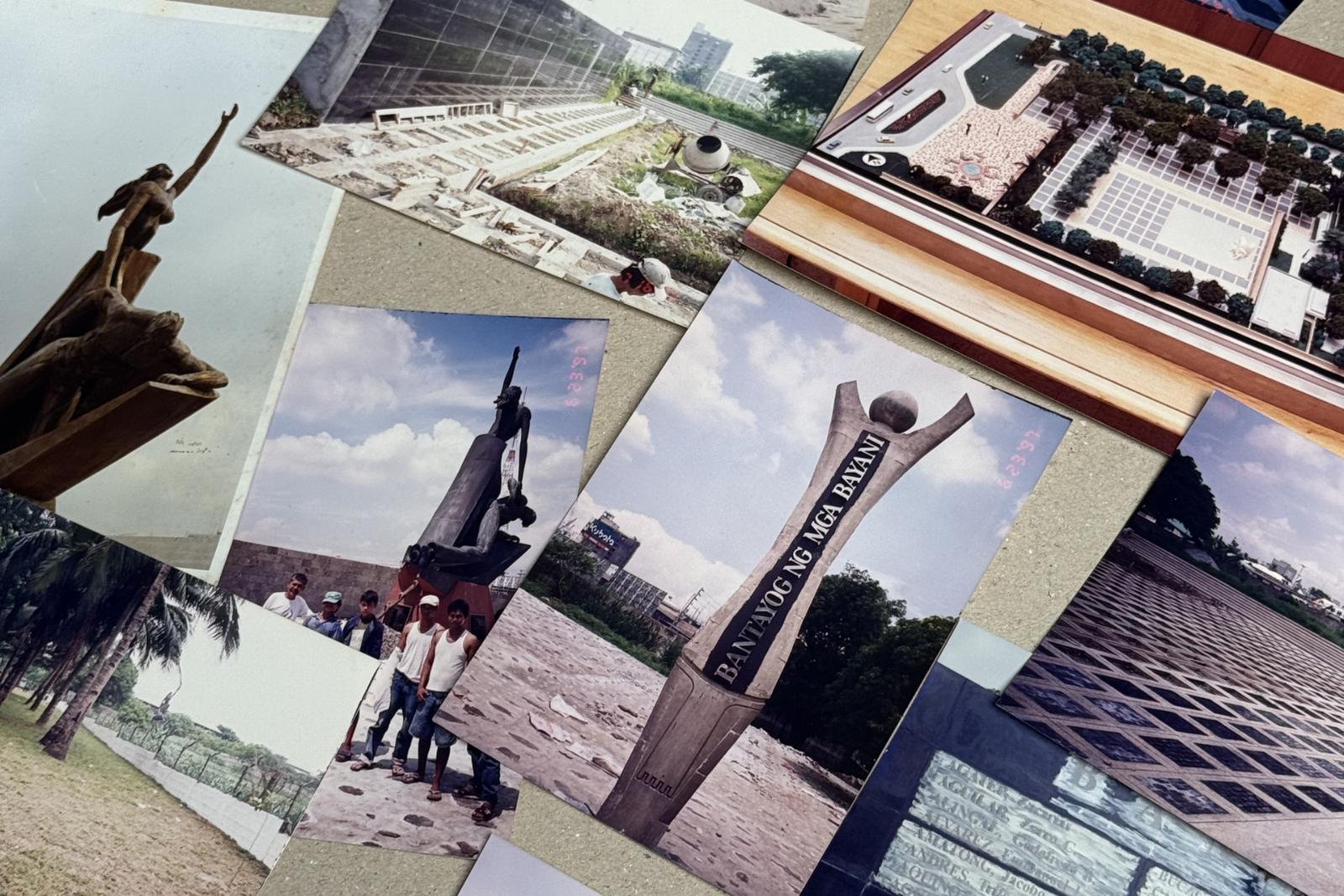
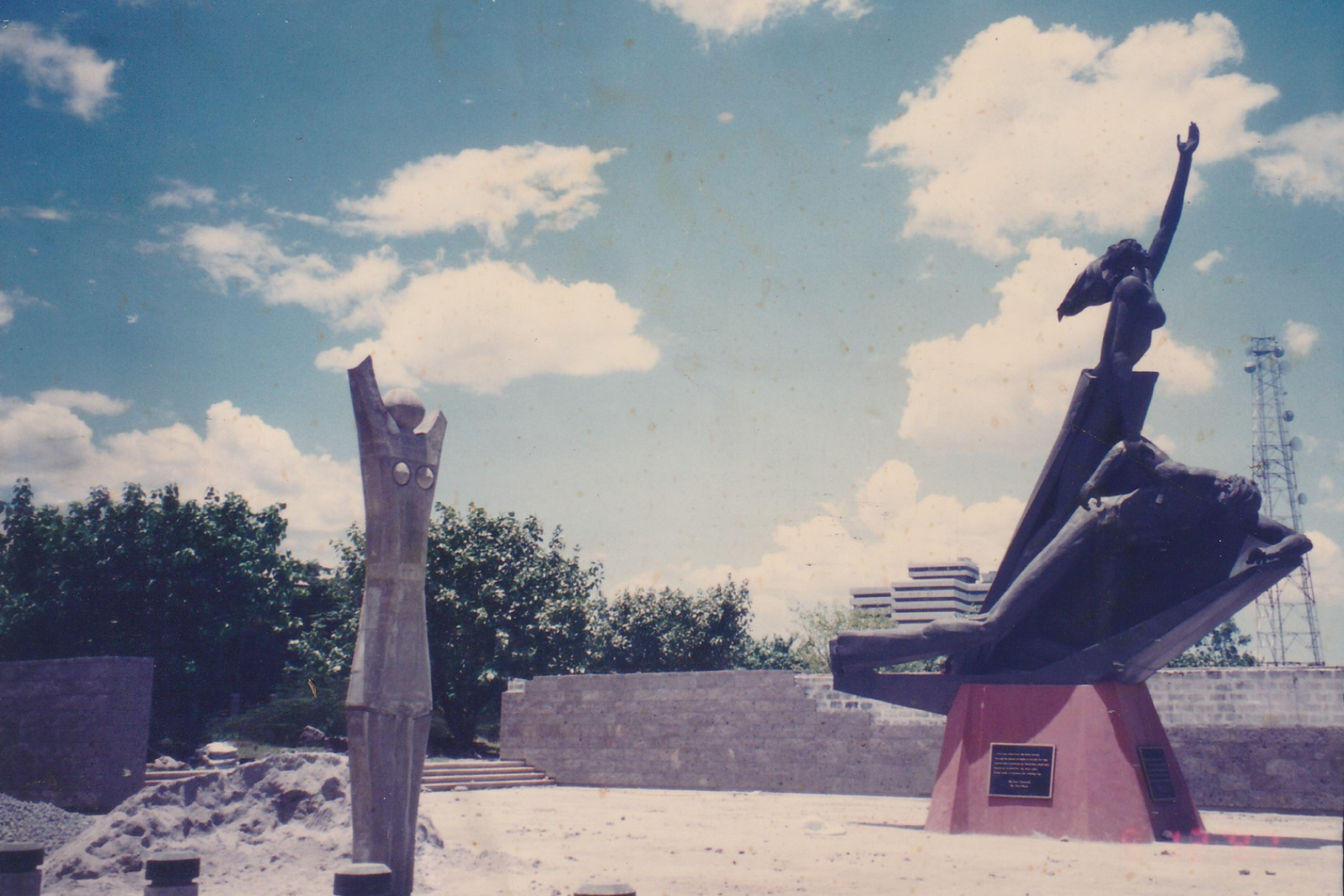
Enriquez: Since the work entails the conservation of an existing built environment, we conducted a thorough review and archival research before any intervention to examine the original design’s intent. Fortunately, the Bantayog archives retained most of IP Santos’ archival plans. We reviewed the plan elements, then triangulated the data using archival photographs and interviews. We examined the site’s context at its conceptualization in the early 1990s, when Quezon City was still undergoing major development.
We even saw Quezon Ave. lined with coconut trees, and the neighboring property (currently Eton Centris) as a grassland with goats. This gives the impression that, even though it was envisioned to become a park in the heart of Quezon City, the development has not foreseen the towering buildings currently in its vicinity.
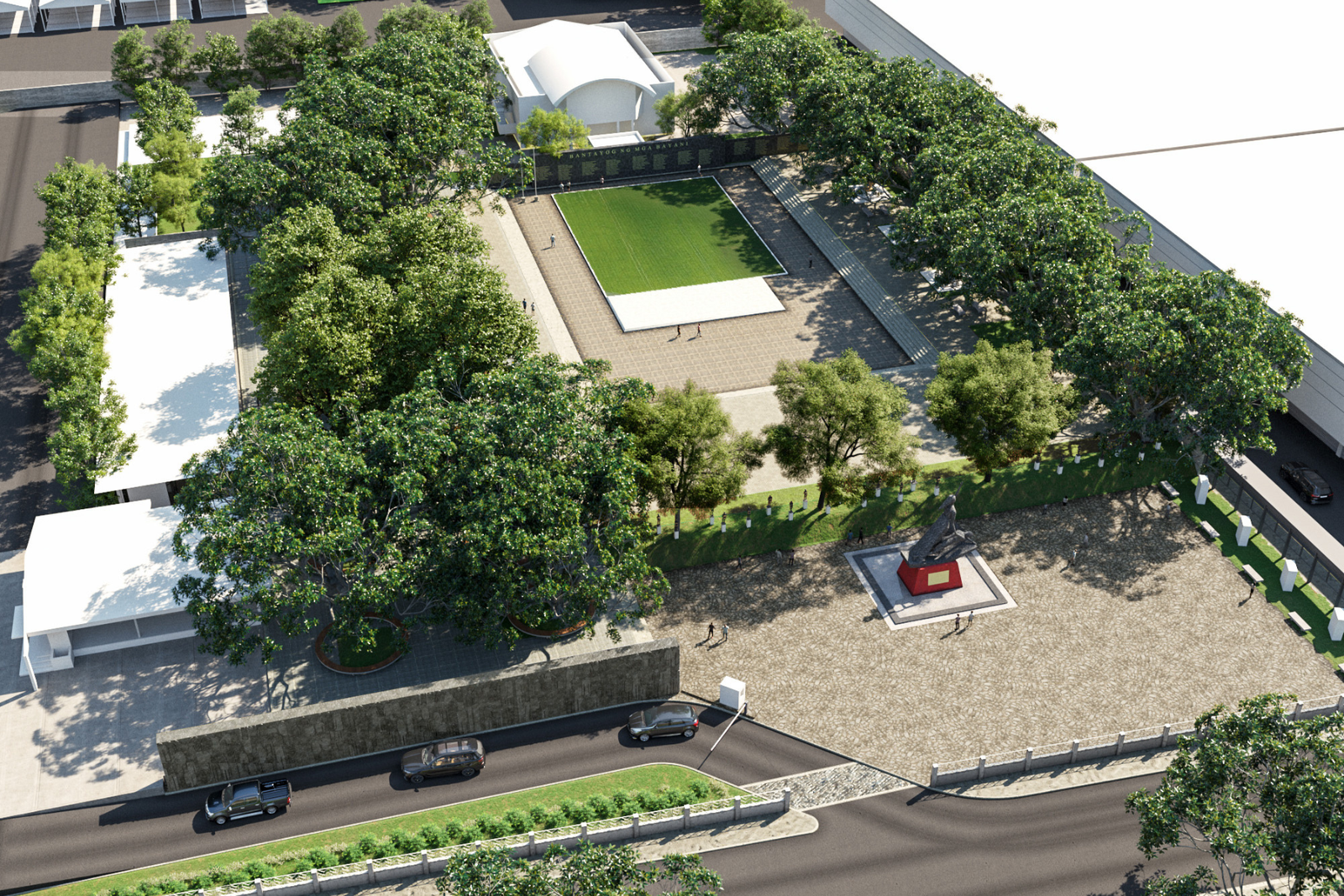
One of the design solutions proposed by the original designer is a fortress-like wall that partitions the Inang Bayan monument plaza and separates the grounds from the main road. In principle, this wall has secured the space from the bustling noise of the city, but has also, coincidentally, concealed the entire grounds and museum within the property. Years later, this partition led the general public to perceive the Bantayog ng mga Bayani as limited to the gated monument along Quezon Avenue, thereby forgetting the remaining spaces on the 1.5-hectare property.
The challenge for the team is to find the right balance between the original design intent and the site’s current context, and align it with the institution’s long-term vision. Our goal is to secure the solemnity of the space while maintaining a connection to its broader community.
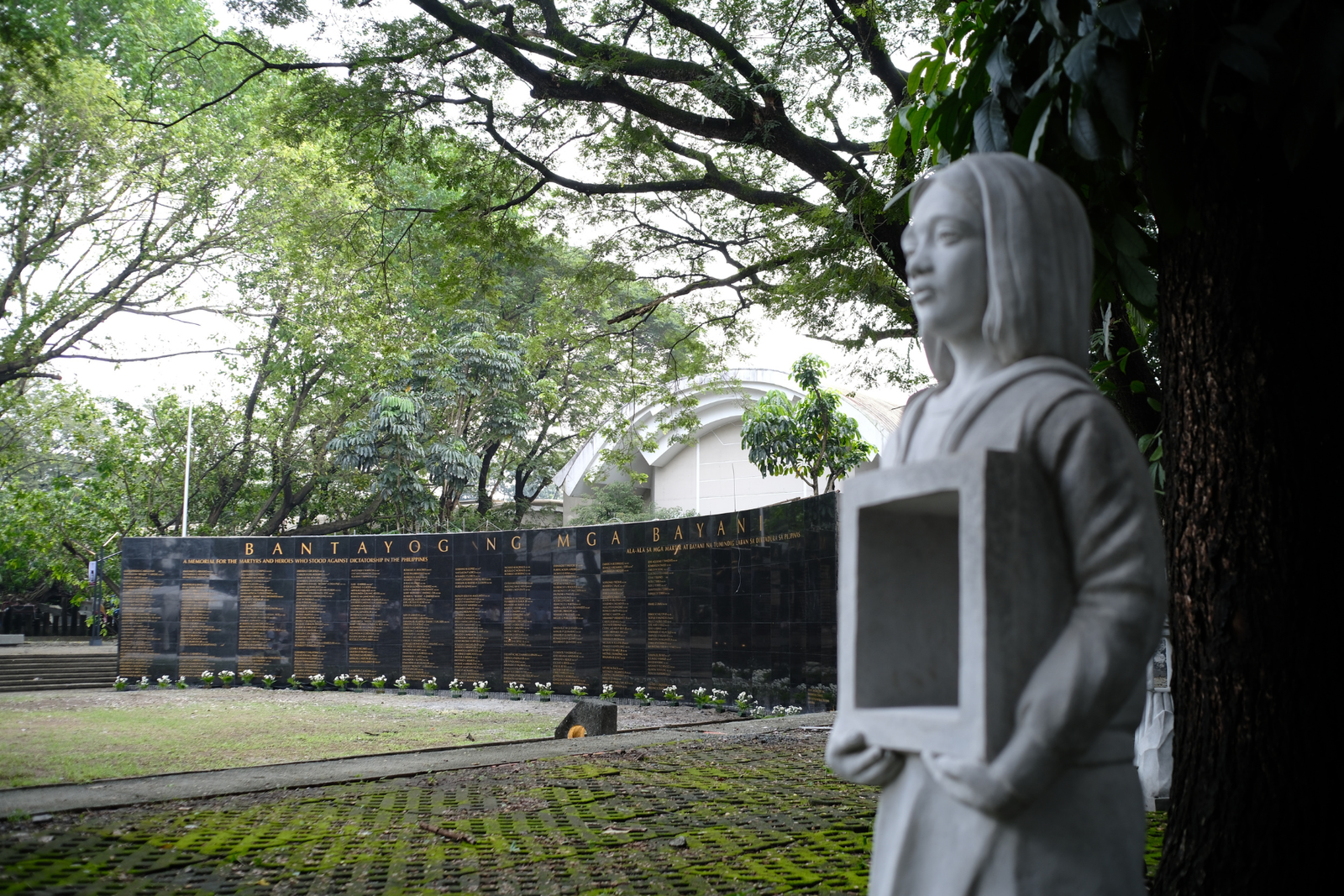
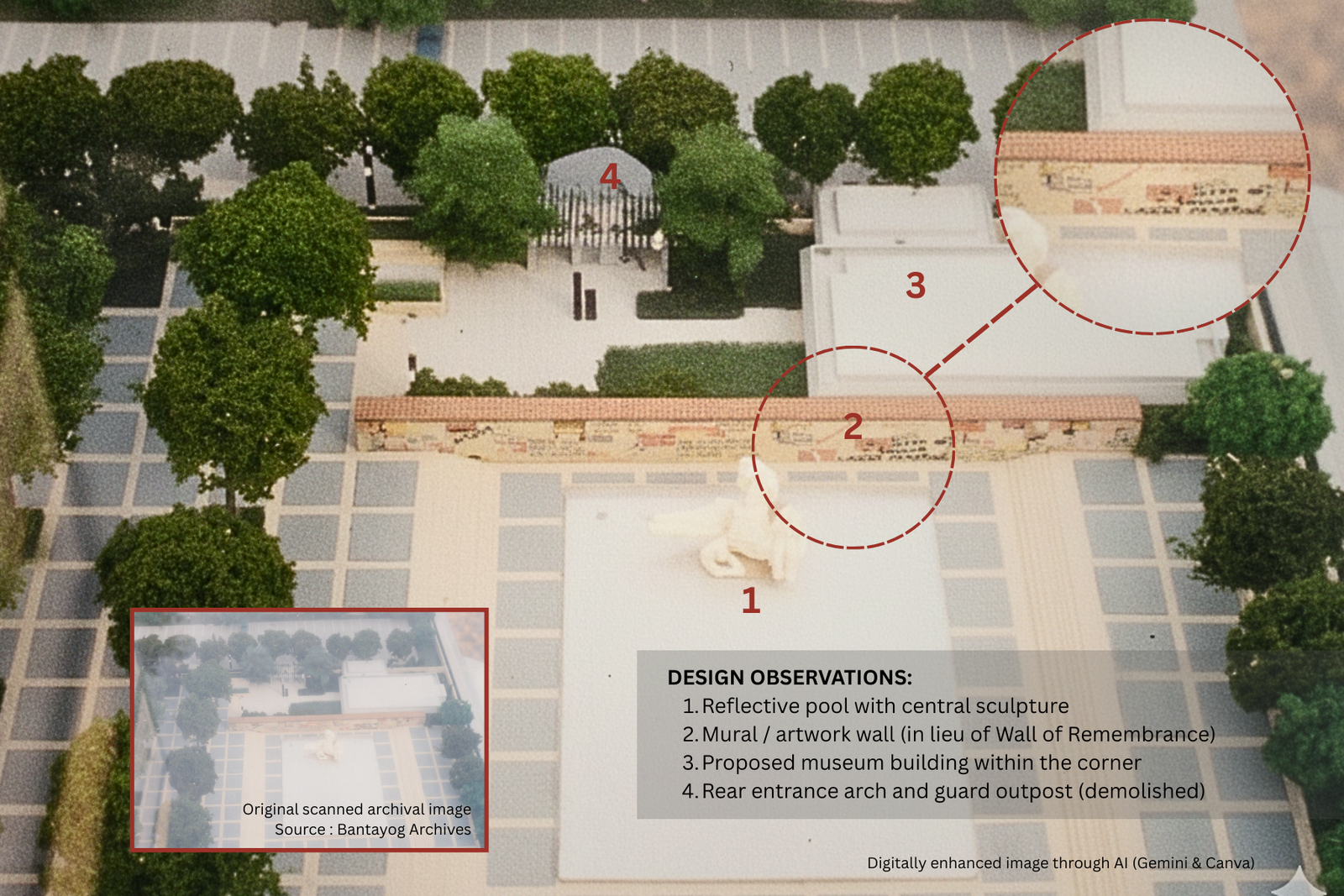
One solution was to lower the partition wall behind the monument. Maintain an ample height to provide security while also allowing visual access and connection for pedestrians and commuters. To provide a seamless landscape, a berm was also integrated, creating a sloped surface atop the lowered wall. The goal is to have a peek at the Wall of Remembrance—the heart of Bantayog, even from the outside. This strategy sparked curiosity among passersby and conveyed a sense of placemaking that Bantayog is beyond the Inang Bayan monument; it’s a park with monuments and a museum on its grounds.
Bilaw: “Pakibaba po roon sa malaking statwa“, “Mukang haunted.” (“Please drop me off at the giant statue,” “Looks haunted.”)
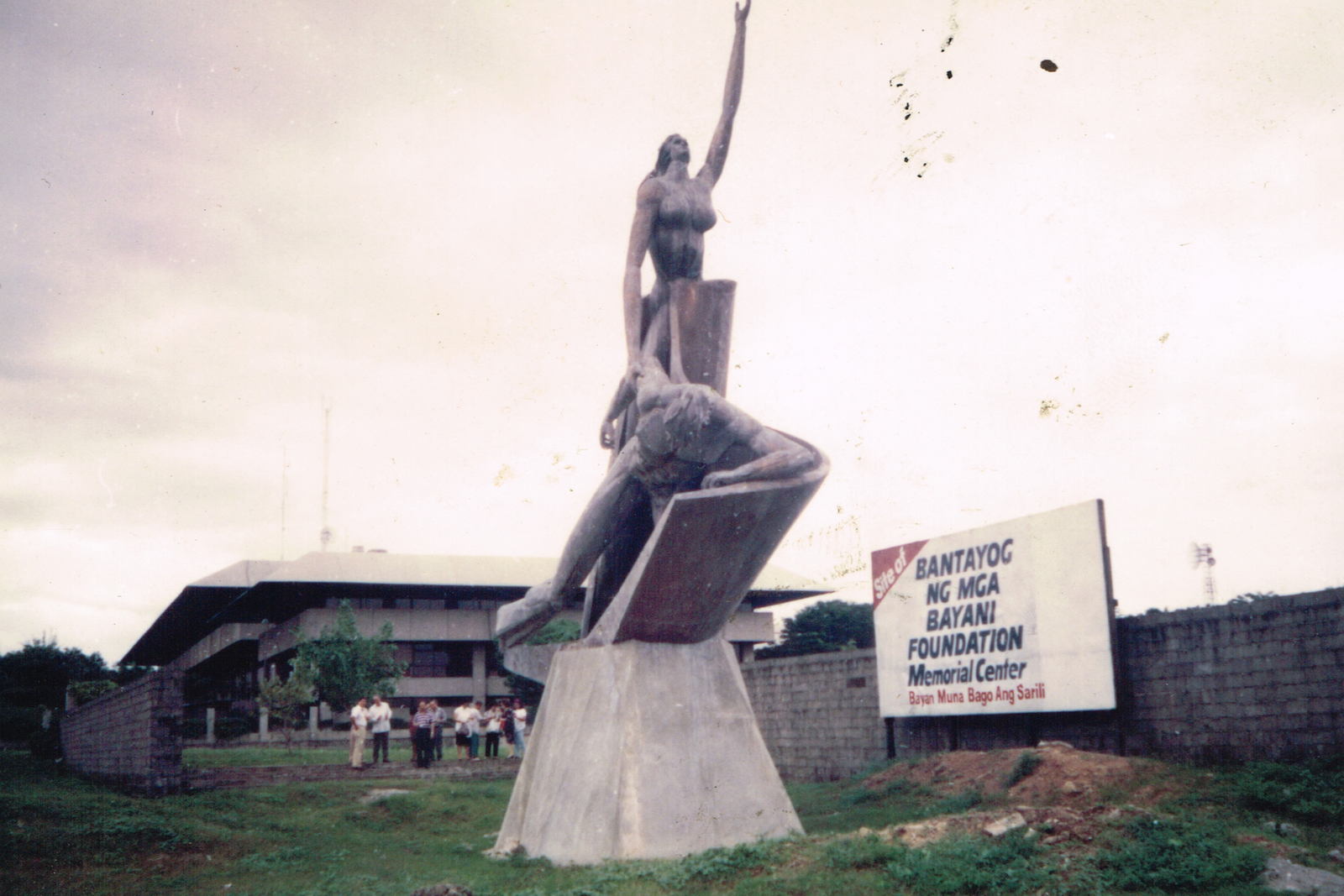
We’re placemaking for Bantayog; most of the public doesn’t know what the big statue in front of it is for. Others, on the other hand, think that the full extent of Bantayog ng mga Bayani is the Motherland statue.
One of the challenges is how to shield the Bantayog site from EDSA visually. The intention is to make the place visible and recognizable to the public, while still preserving a sense of calm and quiet once visitors are inside.
Before the redevelopment, there was a huge adobe wall behind Inang Bayan. This wall serves as a sound buffer against the traffic noise of EDSA, but one problem is that people are not aware that Bantayog is really a park).
We intend to demolish this wall and replace it with a mound and seating area for the visitors. For the acoustic buffers, we consulted with architect Holtz and his team, as well as landscape architect Marco (acting consultant for Bantayog ng mga Bayani), regarding the appropriate vegetation to use and its strategic placement to meet the design intent. Most of the landscape design will be implemented in Phases 2 and 3 of the redevelopment.
What did your team identify as absolutely sacrosanct to the site that should not be tampered with? On the flip side, what were the most immediate “pain points” your team was tasked to fix?
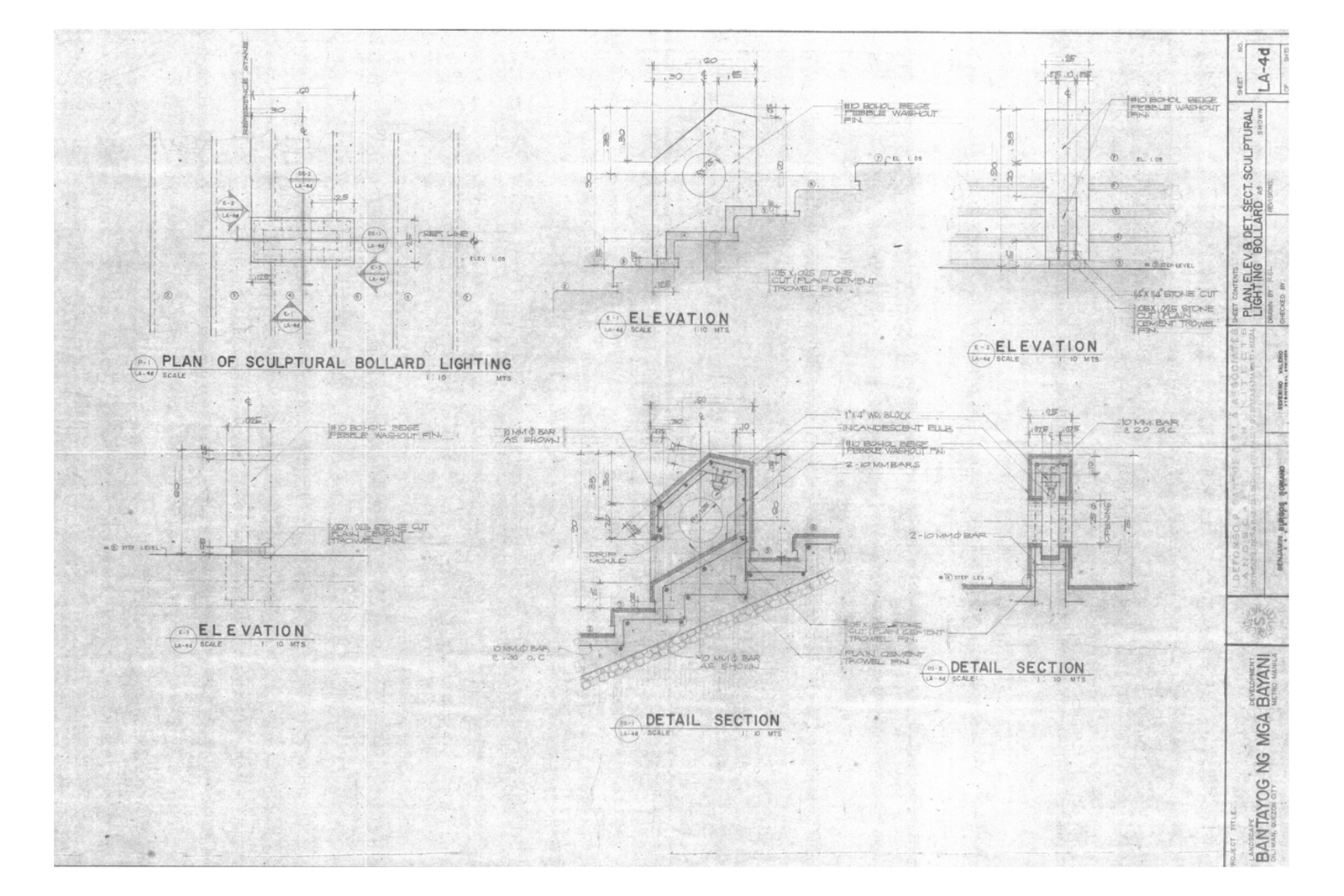
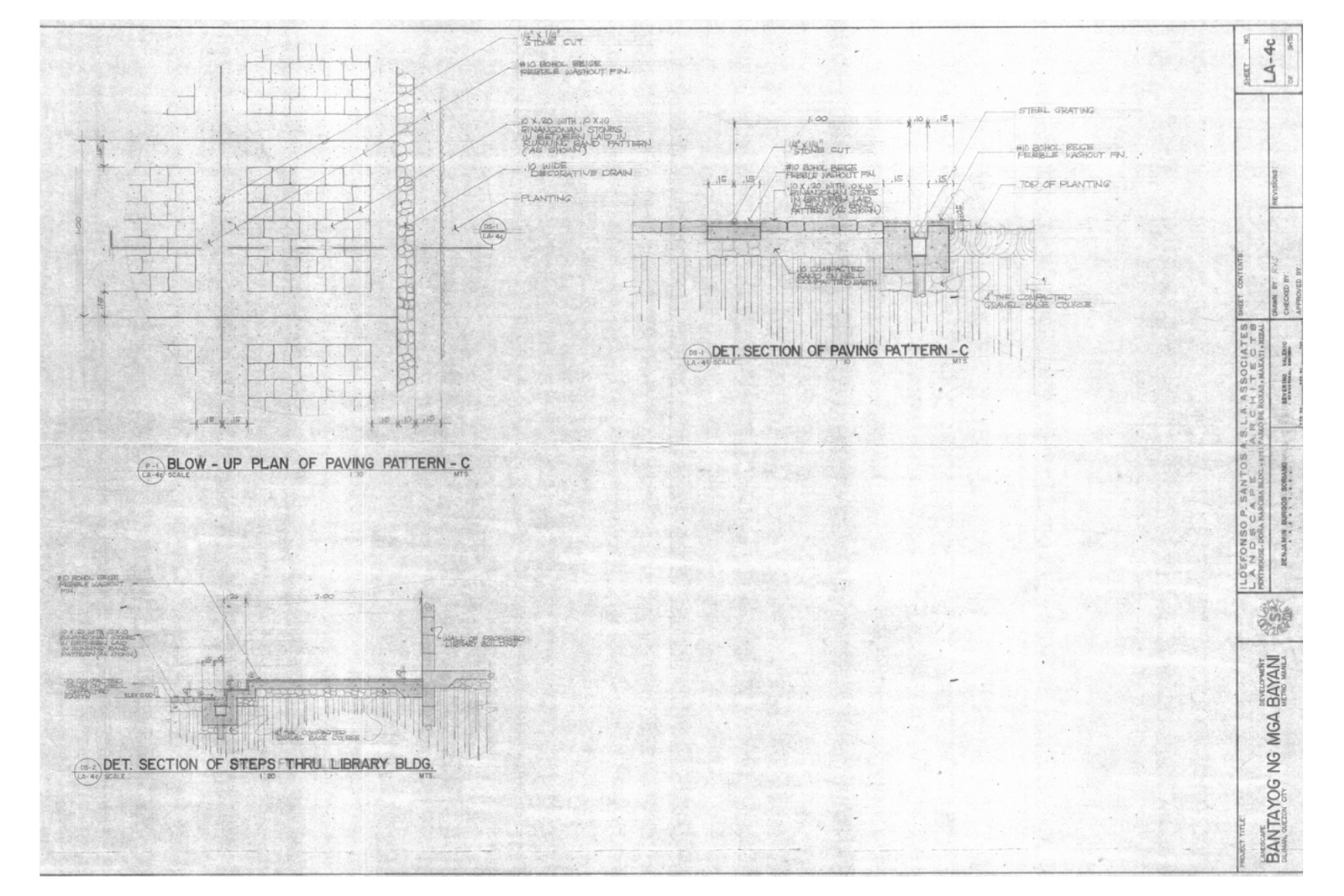
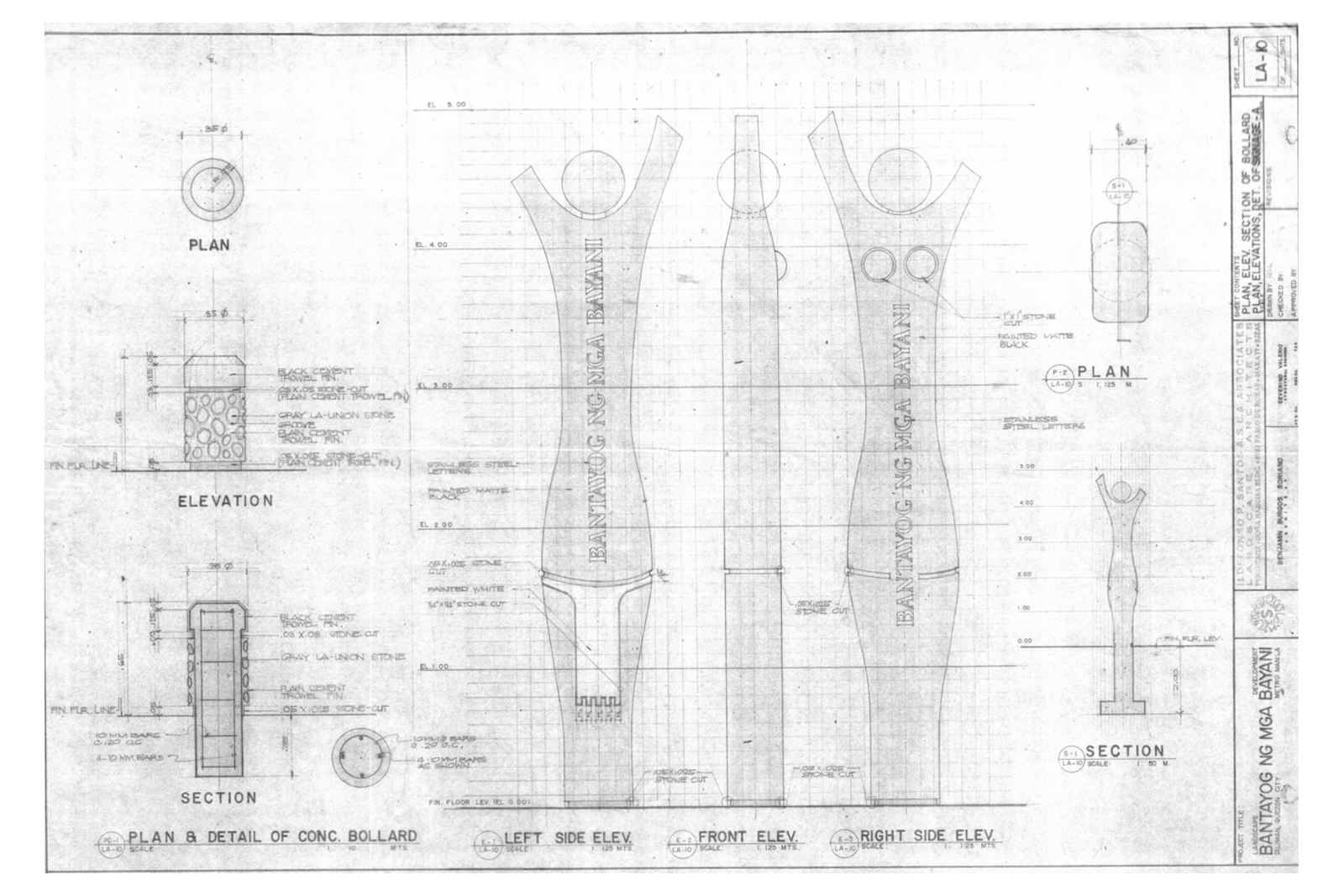
Enriquez: Since the site is a presumed Important Cultural Property by virtue of being the work of a National Artist, we have undertaken multiple measures to safeguard its significance. In the research process and design analysis, we also conducted an assessment of the elements of the site with significant value and importance. These elements were secured, and all interventions are to be compatible so as not to diminish their value. Some of these elements include the cast-in-situ sculptural lights, stone pavements, stair access, and ficus religiosa trees, among others.
Like any other conservation project, the major challenge is updating the facilities’ utilities and ensuring code compliance. Because it was built in a different generation, certain codes and standards have become obsolete over time. The challenge is to comply with these standards through necessary but minimal interventions. One of the major pain points raised by the stakeholder is the absence of accessibility ramps. The archival plans show designs for ramps, but none were present on site. We have installed code-compliant access ramps at strategic locations to improve accessibility, especially for the aging population of Martial Law survivors and their descendants.
Bilaw: I am aware of the importance of heritage conservation and preservation. Erold introduced me to the DAMANBALAP: Do As Much As Necessary, But As Little As Possible. But we also recognize that times are different now. Due to climate, social context, and users’ needs, we have to make certain changes to ensure the Bantayog ng mga Bayani can be used properly and appreciated more by the public in the current context, and to prepare the space for future redevelopment.
Architect IP Santos used four stylistic design elements in his studies: the integration of art and/or water features in landscape architecture, the use of indigenous materials in construction and/or in flora, mass planting, and serial vision.
Our team identified the following significant design elements within the site: first, the sculptures and sculptural signage by Eduardo Castrillo; second, the Binangonan ply-ply stone, also known as araal; third, the original landscaping on the grounds, where only the ficus religiosa trees were present; and fourth, the formal walkways leading to the Inang Bayan Monument and the Wall of Remembrance.
These elements remain intact and well-preserved. As architects, we have the responsibility not only to safeguard these features but also to thoughtfully enhance and enrich a place of this cultural and historical significance.
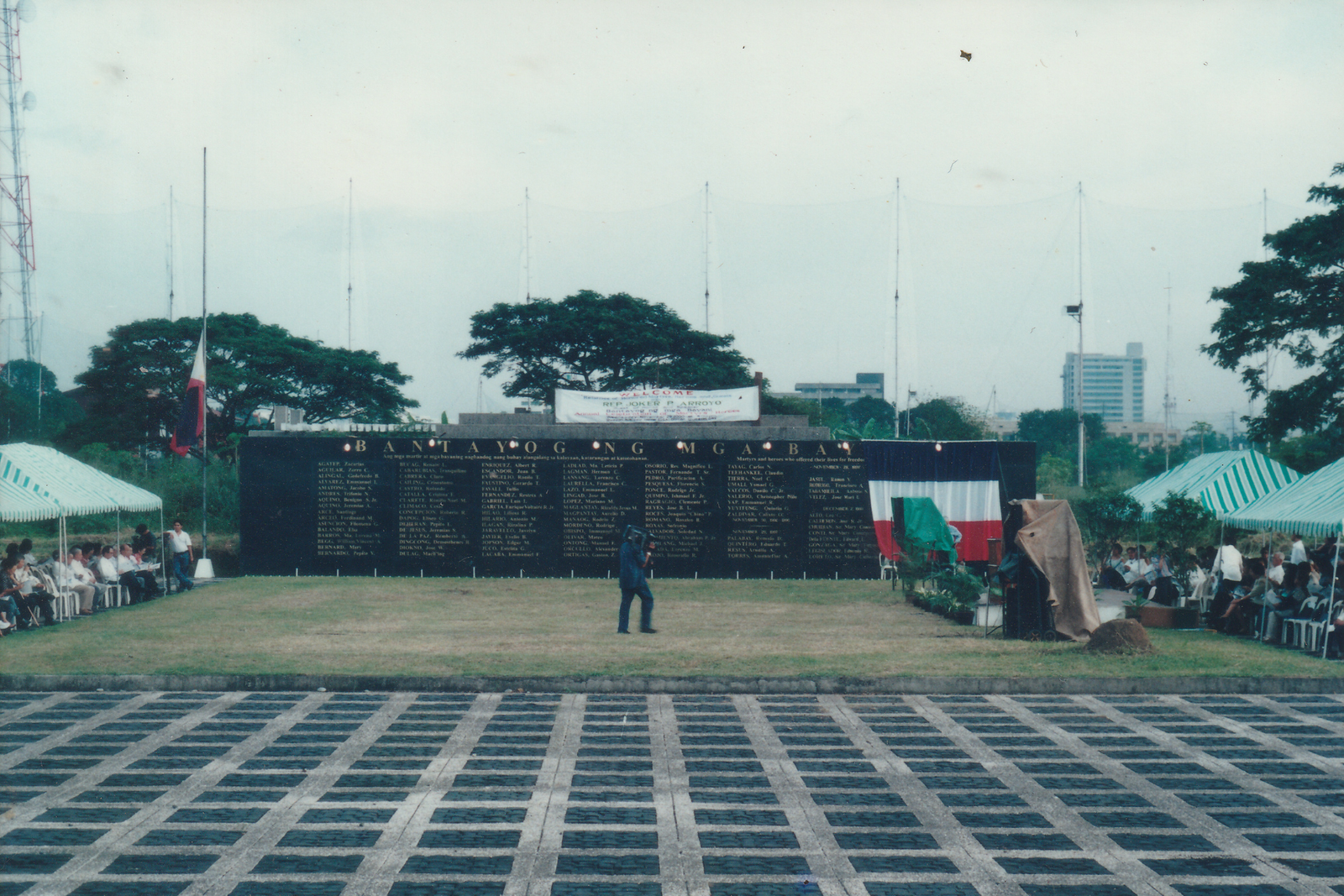
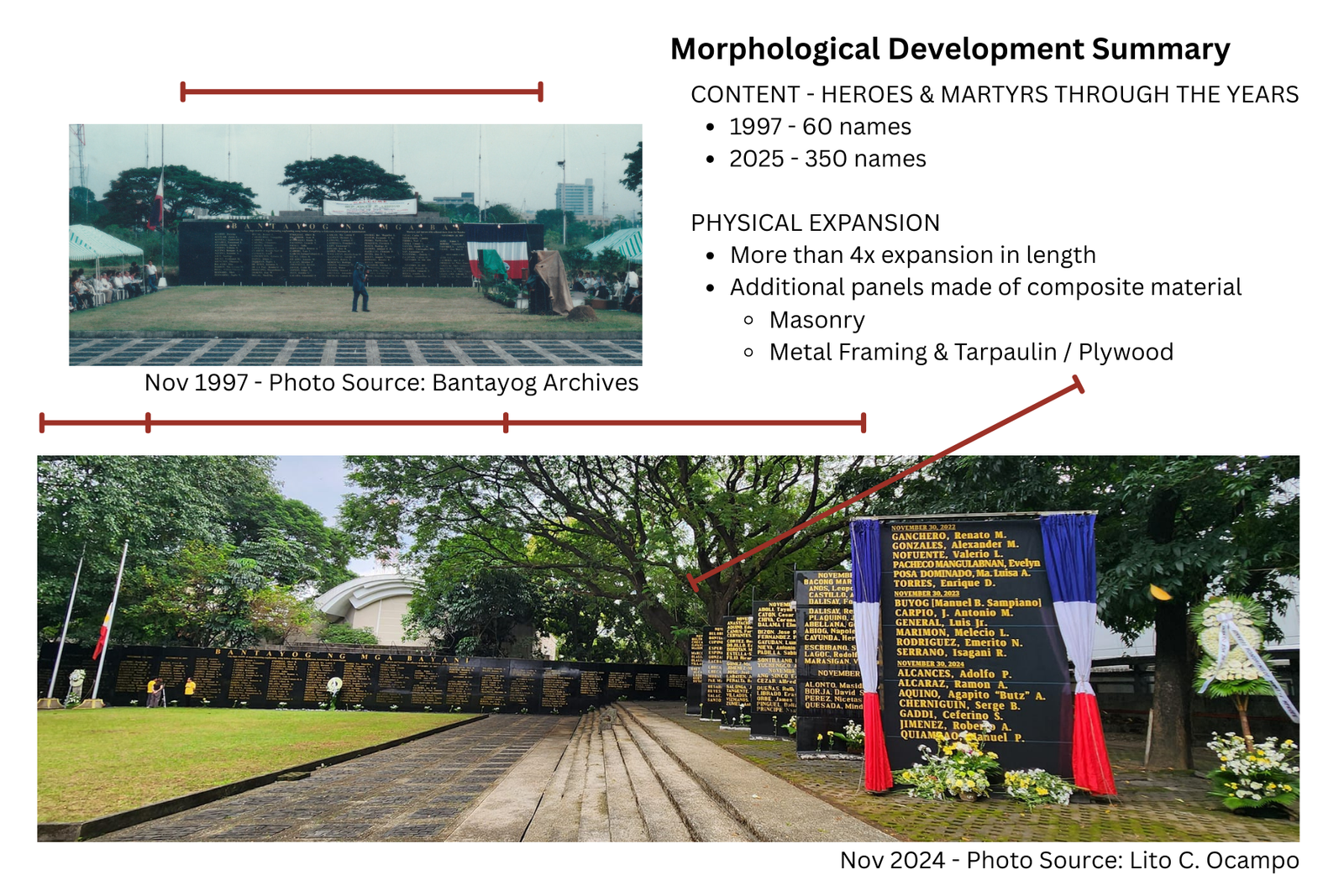
Unfortunately, the Wall of Remembrance was not future-proofed. The Bantayog Board Members requested that we revise the Wall of Remembrance to address this concern. Before the redevelopment, whenever a newly recognized person from the Martial Law period was added, a makeshift wall was constructed beside the amphitheatre to accommodate the additional names.
Several proposals for the wall were developed, followed by a series of back-and-forth meetings with the Board and the NCCA to justify the proposed changes. The team’s design intent was to reconfigure the wall into a circular or curved form to allow optimal viewing, with space to accommodate 350 names initially and an additional 150 names in the future.
The entire wall was not demolished; only the extensions were removed. Some of the former makeshift walls used black granite, which Balai Bayani reinterpreted as a design element in its flooring to subtly guide visitors toward the new Wall of Remembrance.
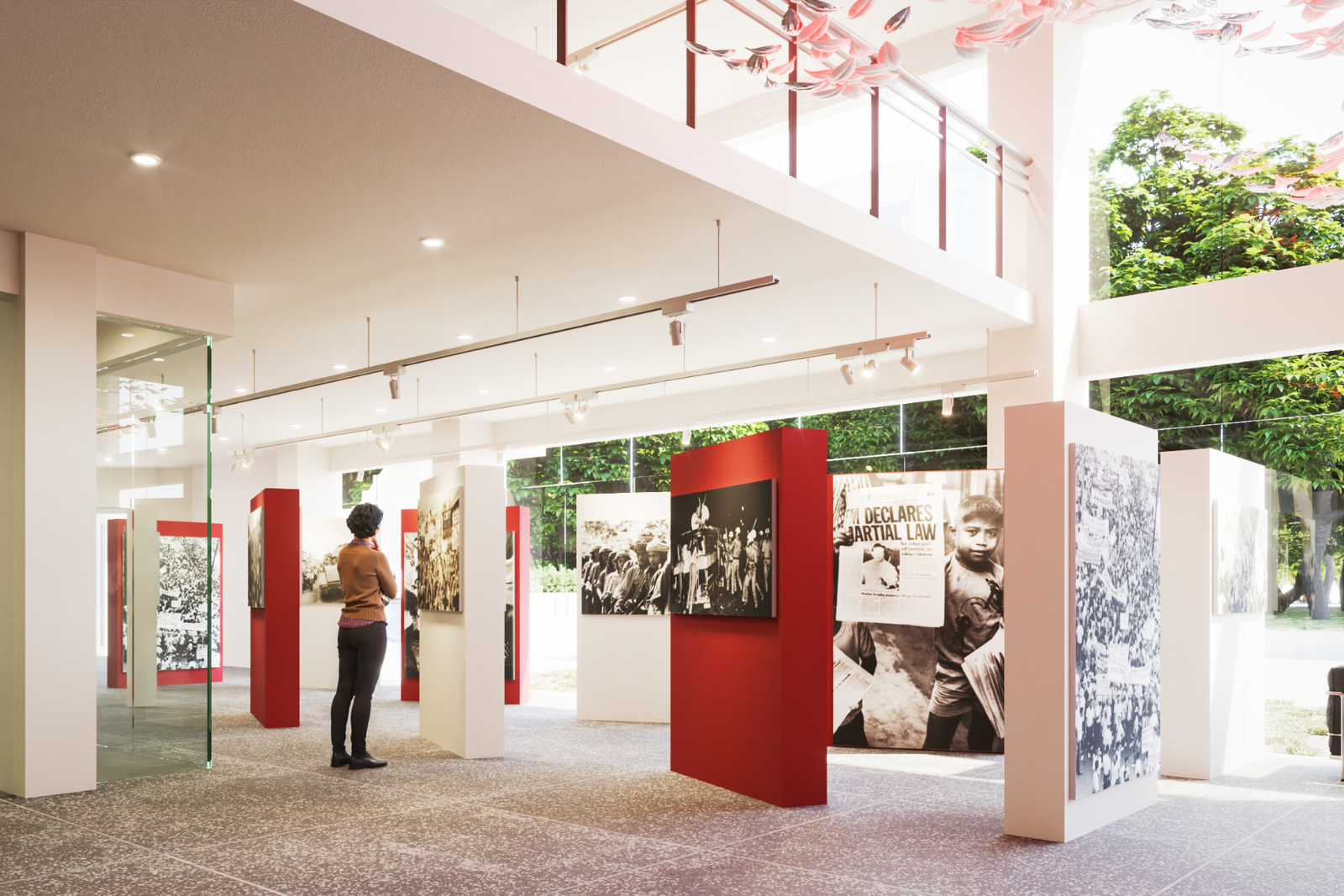
With the introduction of the new curved wall alongside the existing wall, a gap was created between them. This area is envisioned to serve as a potential exhibition space in the future.
Much of National Artist IP Santos’ vision has dulled or been damaged over the years due to a lack of maintenance and funding. What was the team’s approach in preserving what survived of his vision? How is this done while improving “visitor experience” and emphasizing the monument’s message?
Enriquez: Surprisingly, the lack of funding for new developments and major renovations has somewhat preserved the site from early, incompatible interventions, leaving it relatively intact. Material deterioration can be observed, but the level of intactness of the original materials and elements is remarkable.
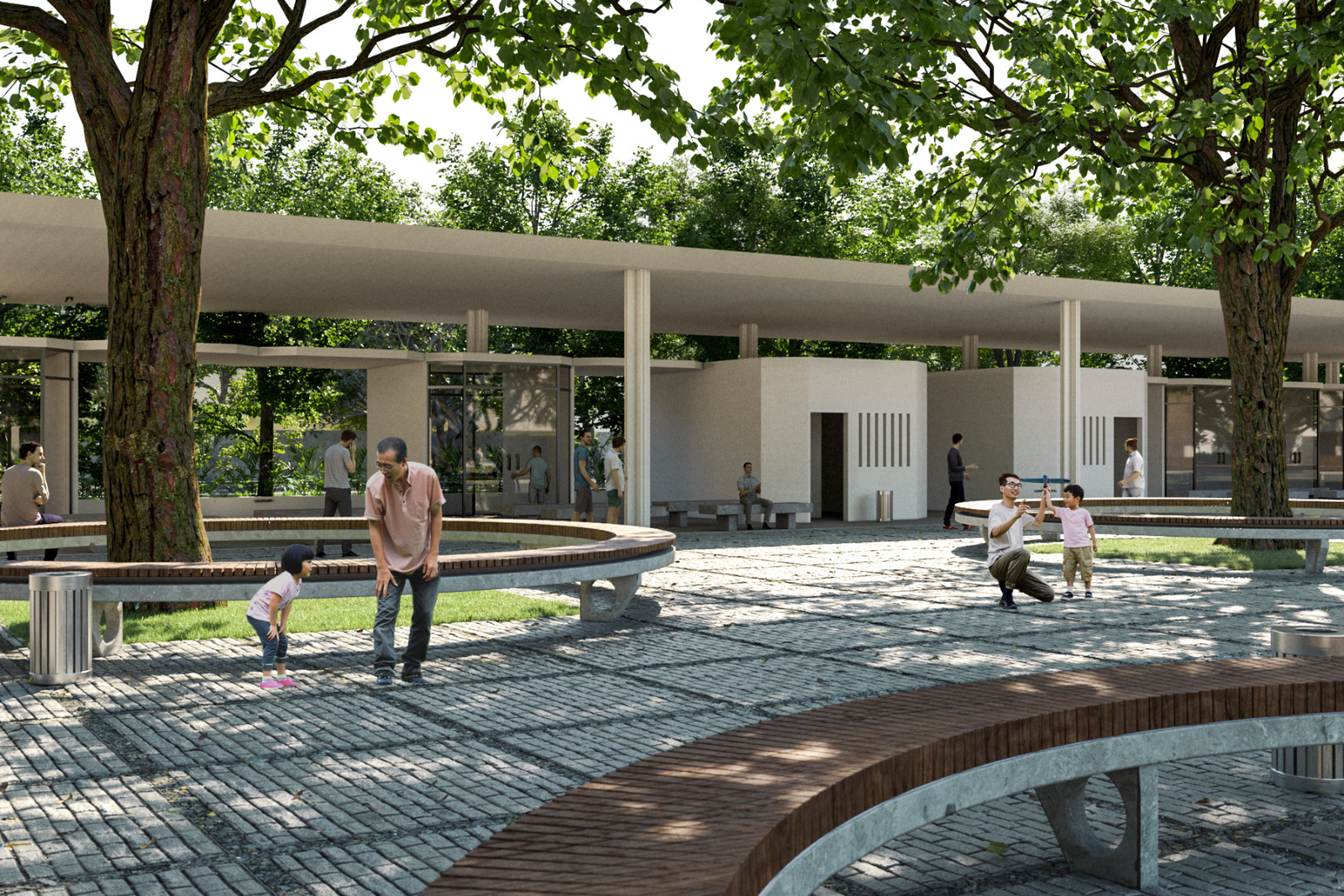
The team’s conservation philosophy is to implement the least necessary interventions while still addressing the site’s current needs and aligning them with the institution’s long-term vision. Support facilities, such as ample restrooms and seating areas, have also been provided. It is quite interesting to note that there are no seating provisions throughout the park, a pain point raised by former visitors who want to spend more time on the grounds. We have introduced semi-permanent concrete benches as new seating areas. These custom-designed benches adapt Santos’ floating-volume details but use a polished concrete finish for easier long-term maintenance.
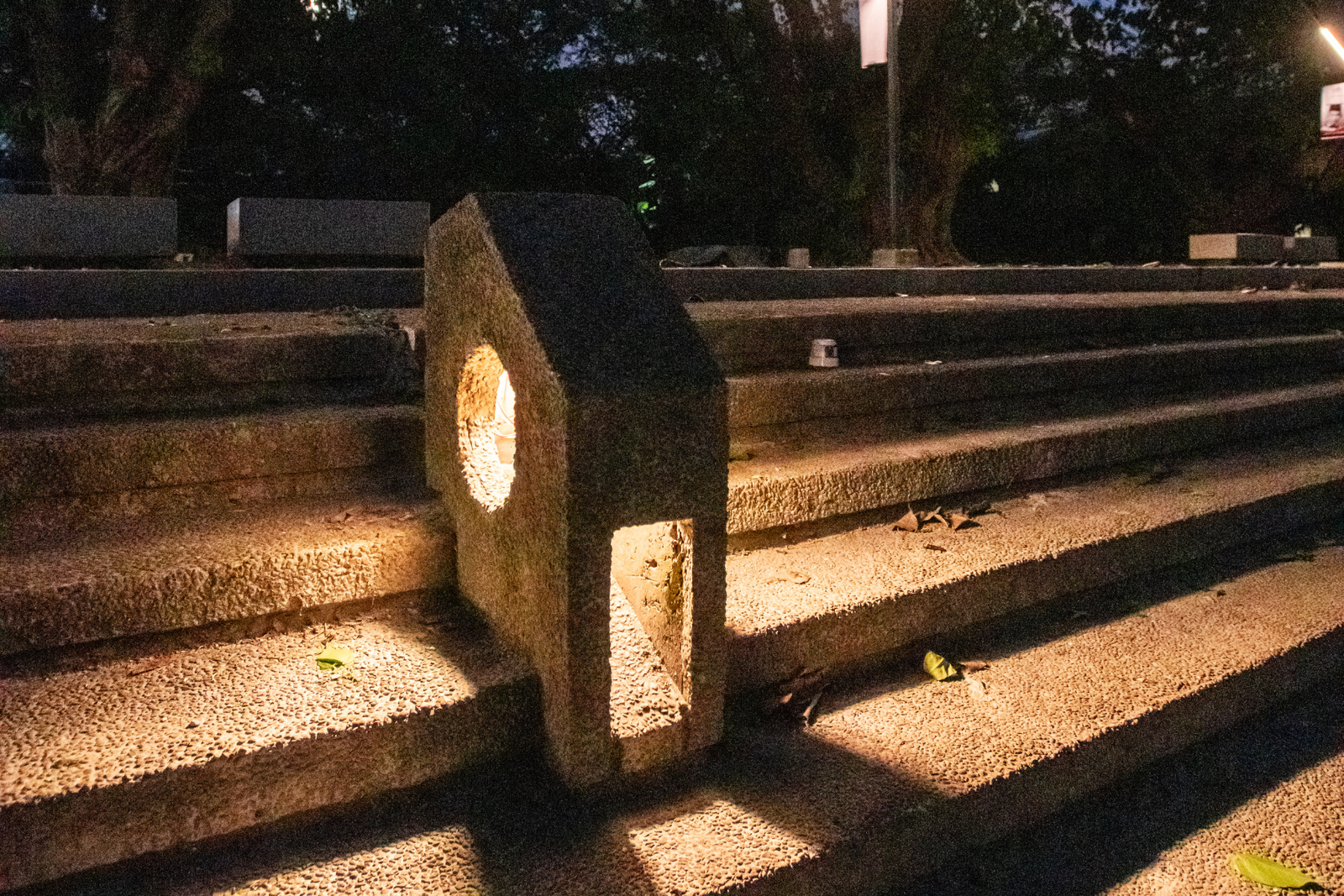
Bilaw: Honestly, the lanterns are among my favorite design elements by IP Santos within the Bantayog grounds. Over time, they’ve been neglected and forgotten. The revival of the concrete lanterns became an important point of discussion during our initial site visit. We saw that there was an existing electrical line, and it had been provisioned for them, but it no longer works. In one of my conversations with Erold, we agreed that this feature needed to be reactivated in Phase 1.
Out of genuine excitement and anticipation, we could hardly wait to see their effect restored. In that moment, we improvised by illuminating the lanterns using a flashlight from a mobile phone, just to visualize how they might once again bring light to the space.
How much was the design driven by the Foundation’s current needs versus the original 1980s brief? Was there a moment where the architectural integrity of IP’s work had to be sacrificed to meet modern requirements, like event space or digital integration?
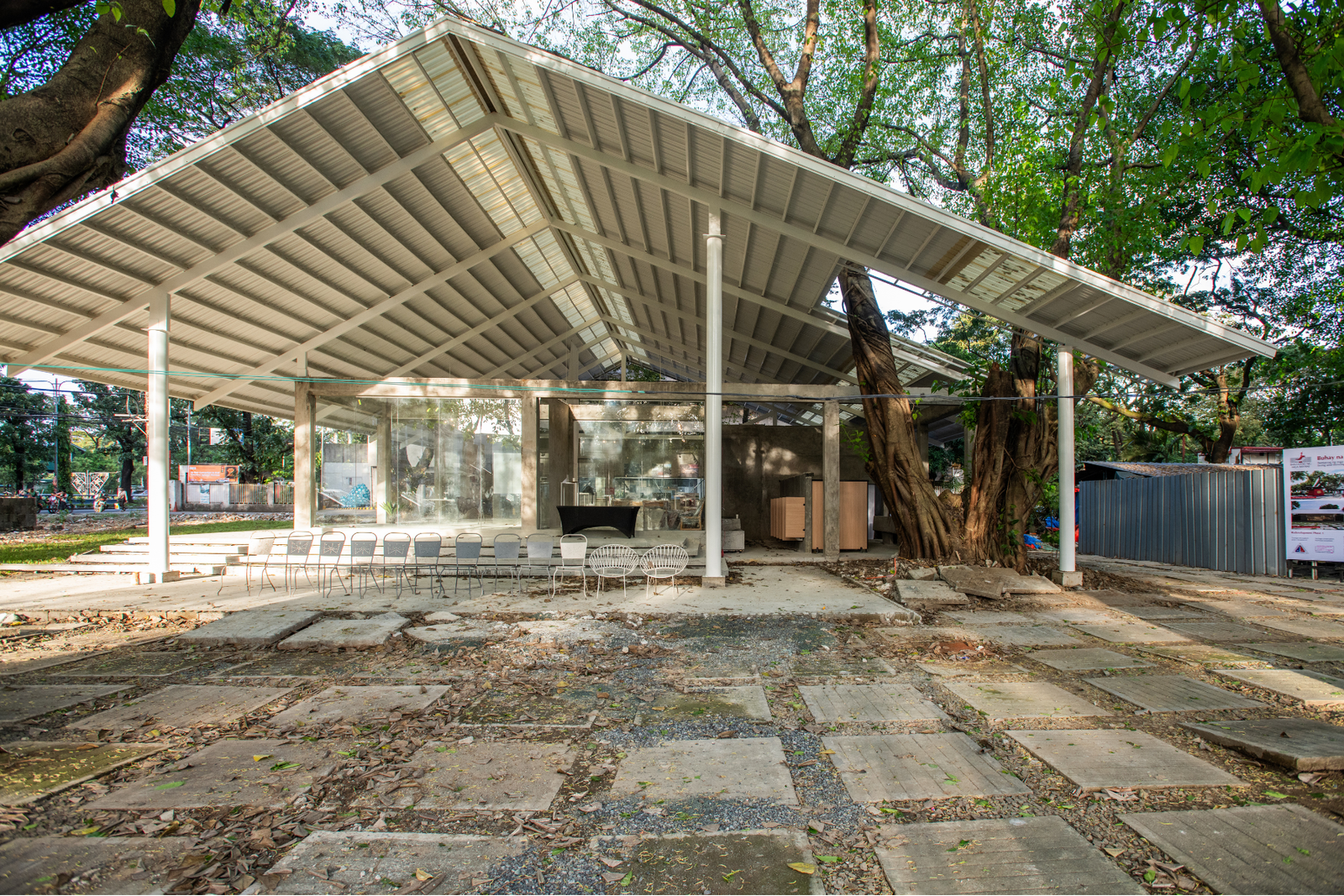
Enriquez: Early interventions in the masterplan have created a functional space for Batayog. A humble bungalow-type office space (Balai Bayani) was built in 2004 on the north-eastern portion of the site, adjacent to the neighboring NGCP building. Through a memorandum of understanding with the National Transmission Corporation, two more structures were built in 2008 (the TransCo employee dormitory and Bantayog museum building). Some of these structures were initially included in the scale model masterplan, but were located differently during actual implementation.
Other spaces, like a series of pavilions initially envisioned as a meditative space, were unbuilt. The team has reviewed the locations of these spaces and strategically placed the new support facilities within the initially intended zoning.
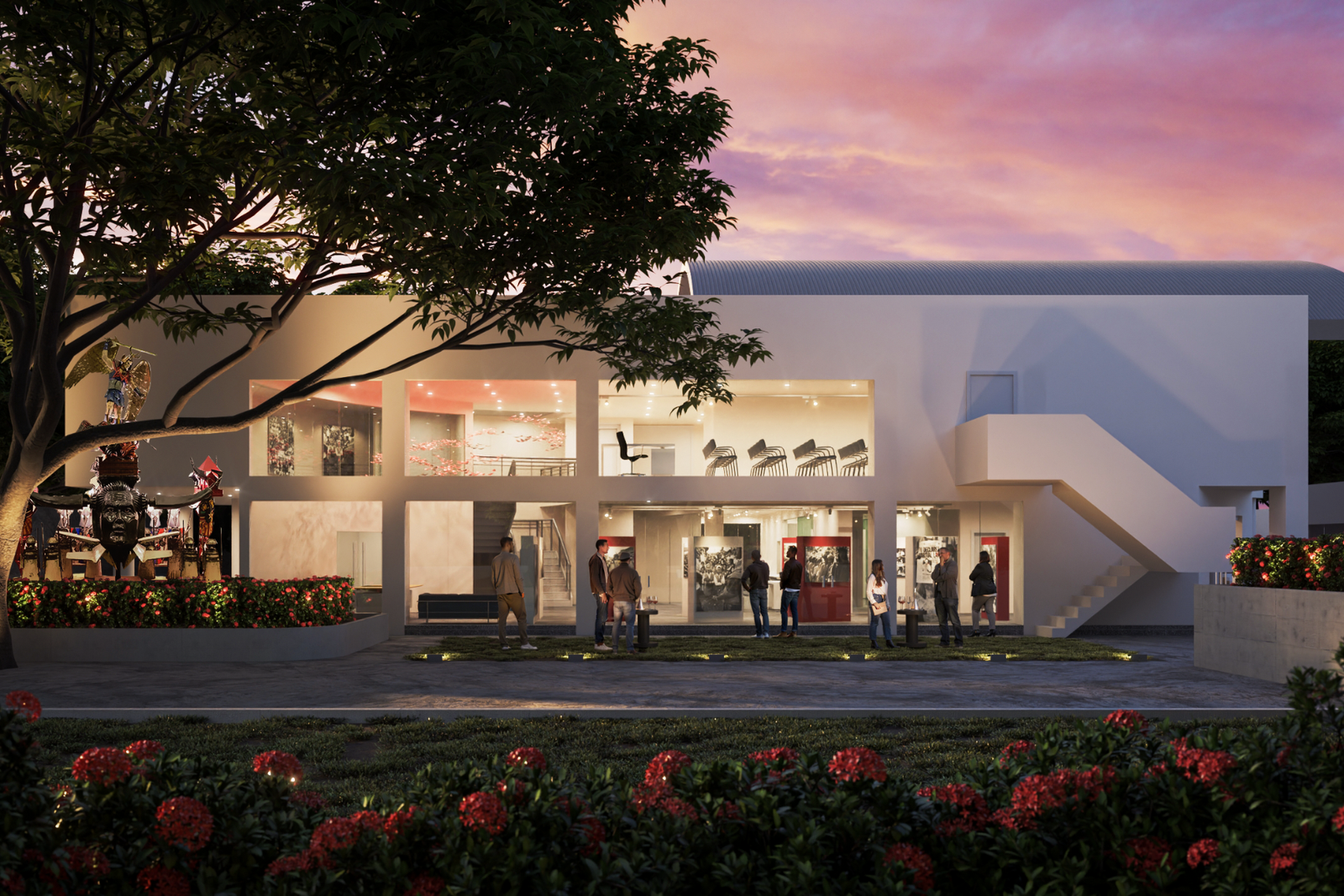
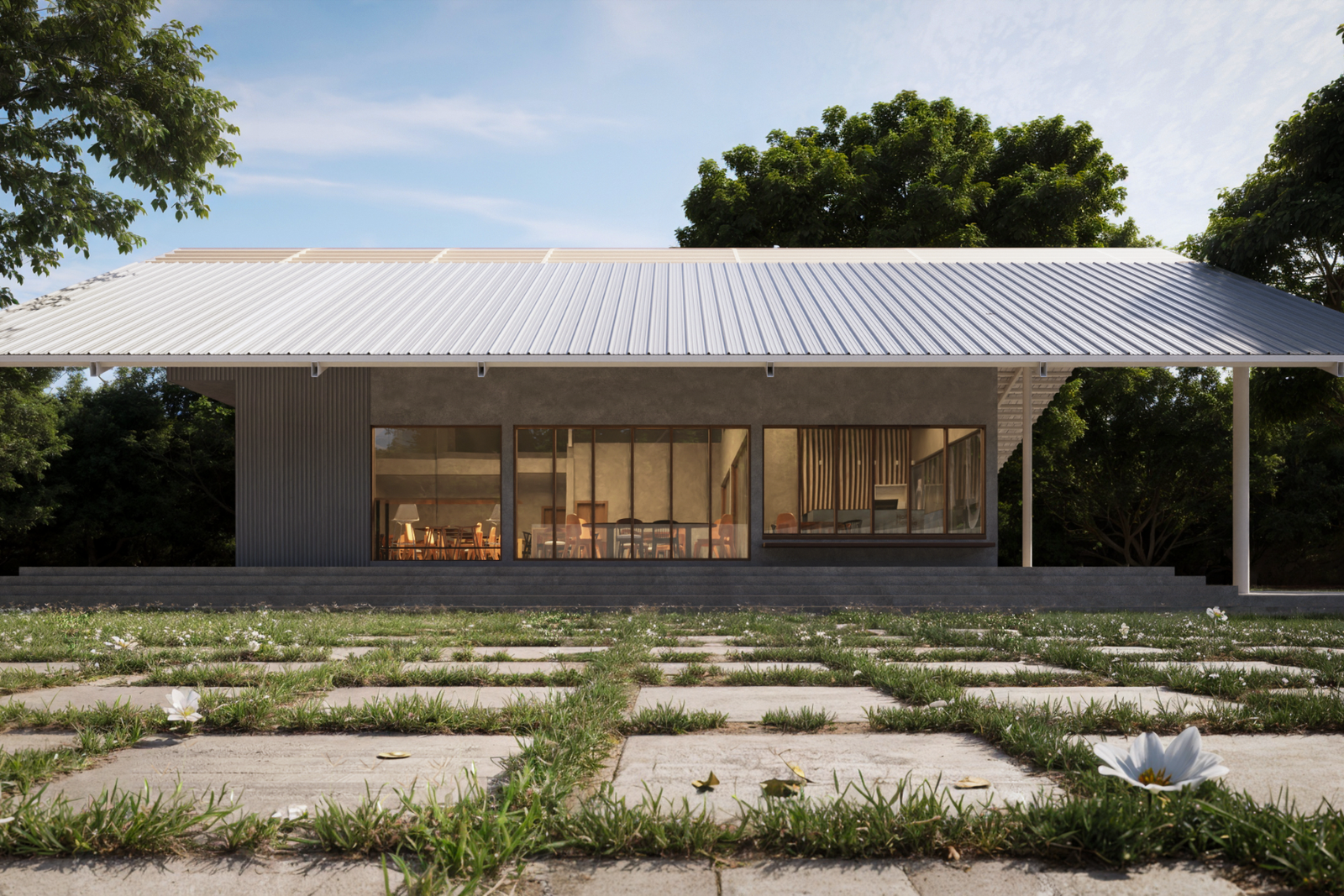
In the case of Balai Bayani, the team focused on rehabilitating the space through adaptive reuse. This allowed maintaining the building’s massing character while elevating its design to better adapt to current needs.
In the case of the ficus religiosa trees, their lush, extravagant growth has unfortunately led to site damage. What work is being done to preserve IP’s green vision for the plot while keeping its “natural inhabitants” intact and thriving?
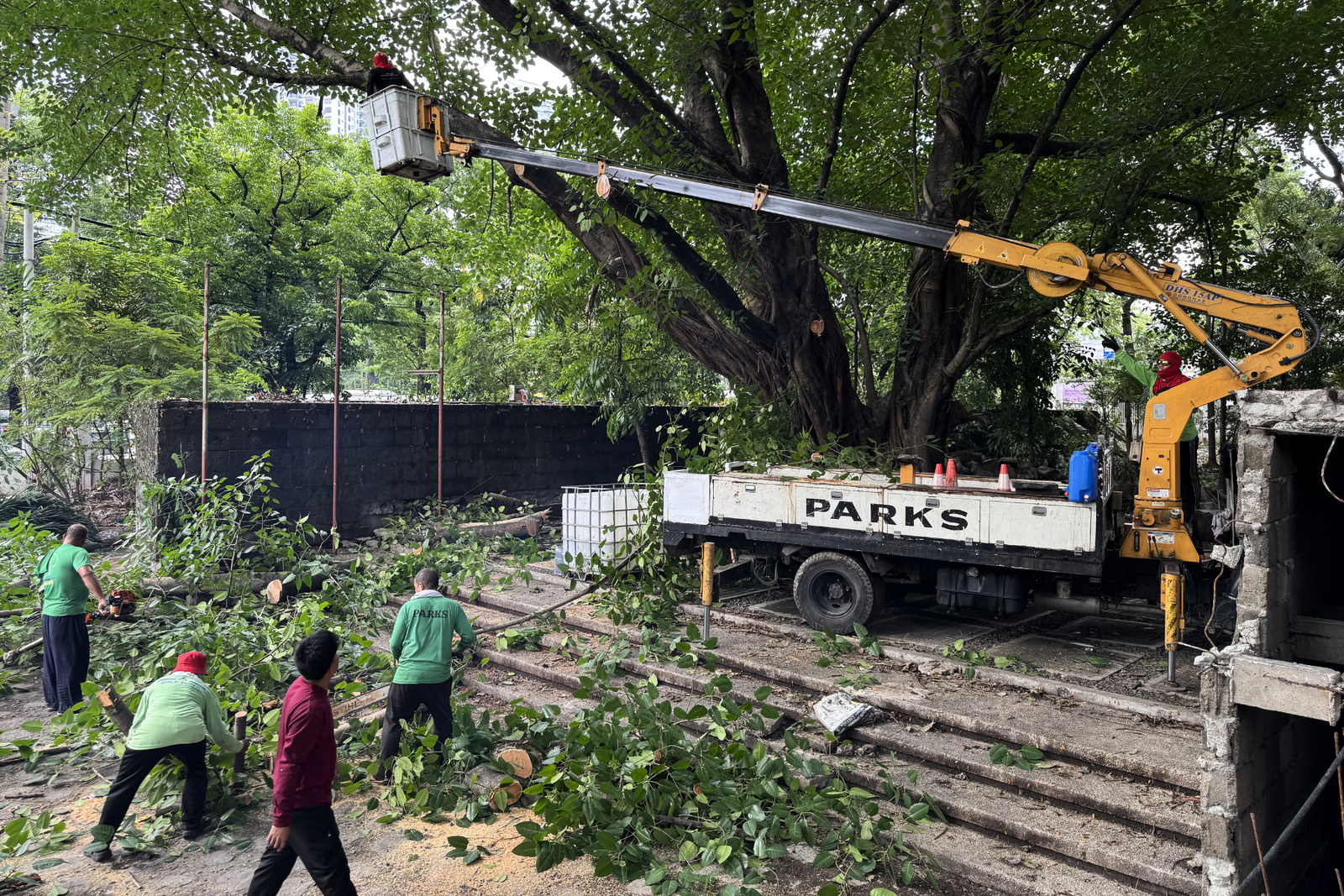
Enriquez: Bodhi trees (ficus religiosa) are among the key design elements in IP’s landscape design. These trees are also the remaining living softscape from the original masterplan. Even though the trees were properly spaced, the immense growth of their branches and root systems has caused significant damage to the concrete pavements and utility systems beneath the surface.
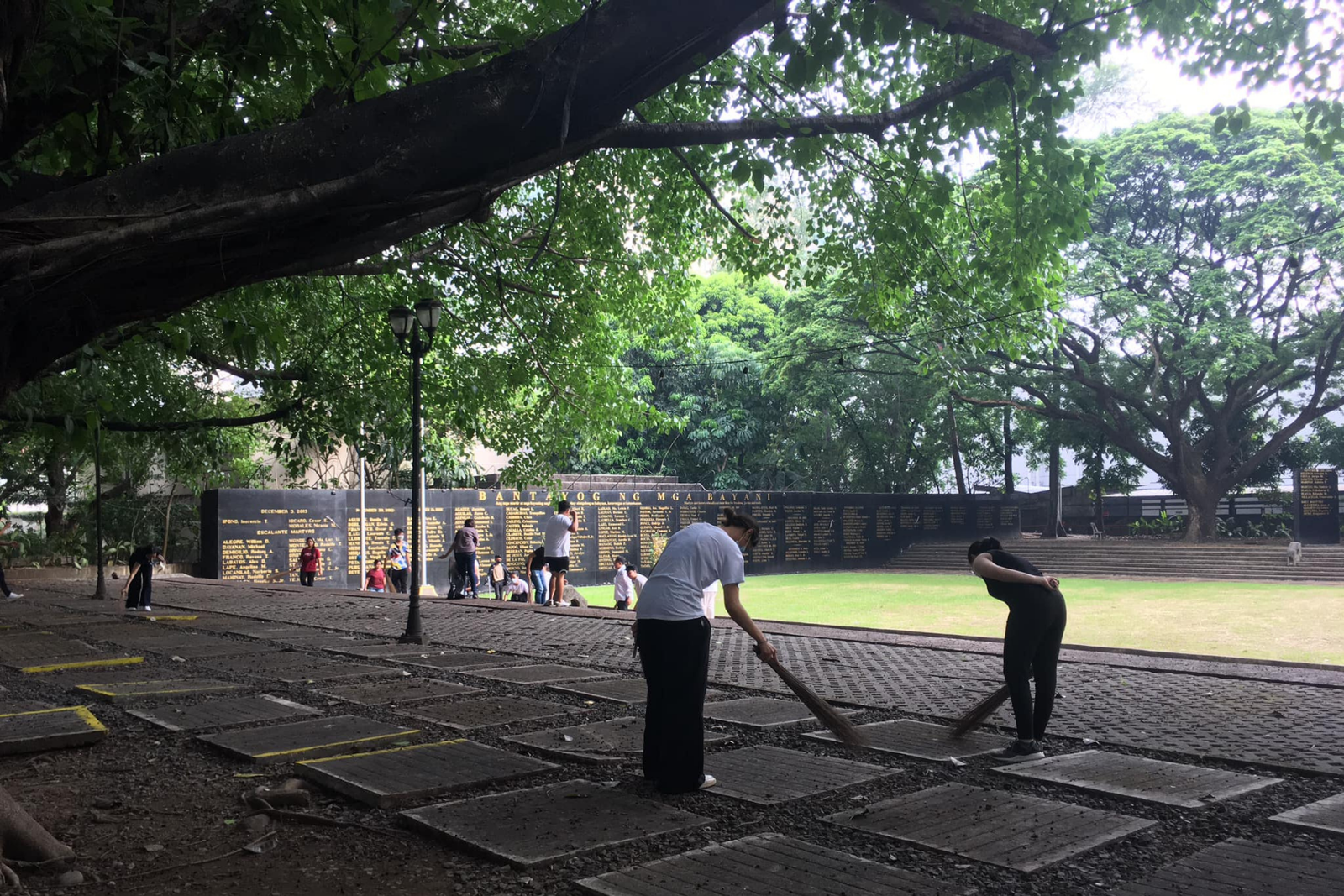
The team must save and preserve these character-defining trees. We coordinated with Quezon City Park’s Trimming Department in strategic branch trimming to prevent more fallen trees during typhoons (2 trees felled in recent years). Overgrown root systems, which were also seeping between the adobe wall cladding, were causing disintegration. These roots were carefully removed and trimmed after the stones were removed. Other overgrown root systems on the pavements were also trimmed to prevent further damage to the hardscape.
Bilaw: Before redevelopment, the branches of the ficus religiosa trees extended as far as the amphitheater and the Wall of Remembrance. Over time, the tree roots expanded significantly, causing damage to the square pavers and resulting in uneven surfaces. There were several instances in which visitors to Bantayog tripped due to these conditions.
In the forthcoming phases 2 and 3, we intend to raise the ground level to properly cover and manage the soil conditions. Upon consultation with Holtz and Marco, it was also recommended that root barriers be installed to prevent further structural damage and to ensure the long-term stability of the landscape.
The Wall of Remembrance is the memorial’s symbolic anchor. How did you approach the restoration of such a sensitive object to ensure its “futurability”?
Enriquez: During our assessment of the site, stakeholders identified the Wall of Remembrance as the site’s symbolic anchor. Initially envisioned by IP Santos as a mural wall backdrop of sculptural artwork in the middle of a reflective pool, the wall has been developed to commemorate the named heroes and martyrs during Martial Law. The wall was unveiled in 1997 by former president Cory Aquino, bearing only 60 names with a limited provision for expansion.
Annually, Bantayog honors new batches of heroes and martyrs through its continuing program and research. This ongoing work has also led to incremental physical expansion of the wall each year, resulting in overcrowding and unplanned growth over the years. Before the redevelopment, the wall had expanded four times its original length through freestanding expansions that honor 350 named heroes and martyrs, and is expected to continue expanding over the next ten years.
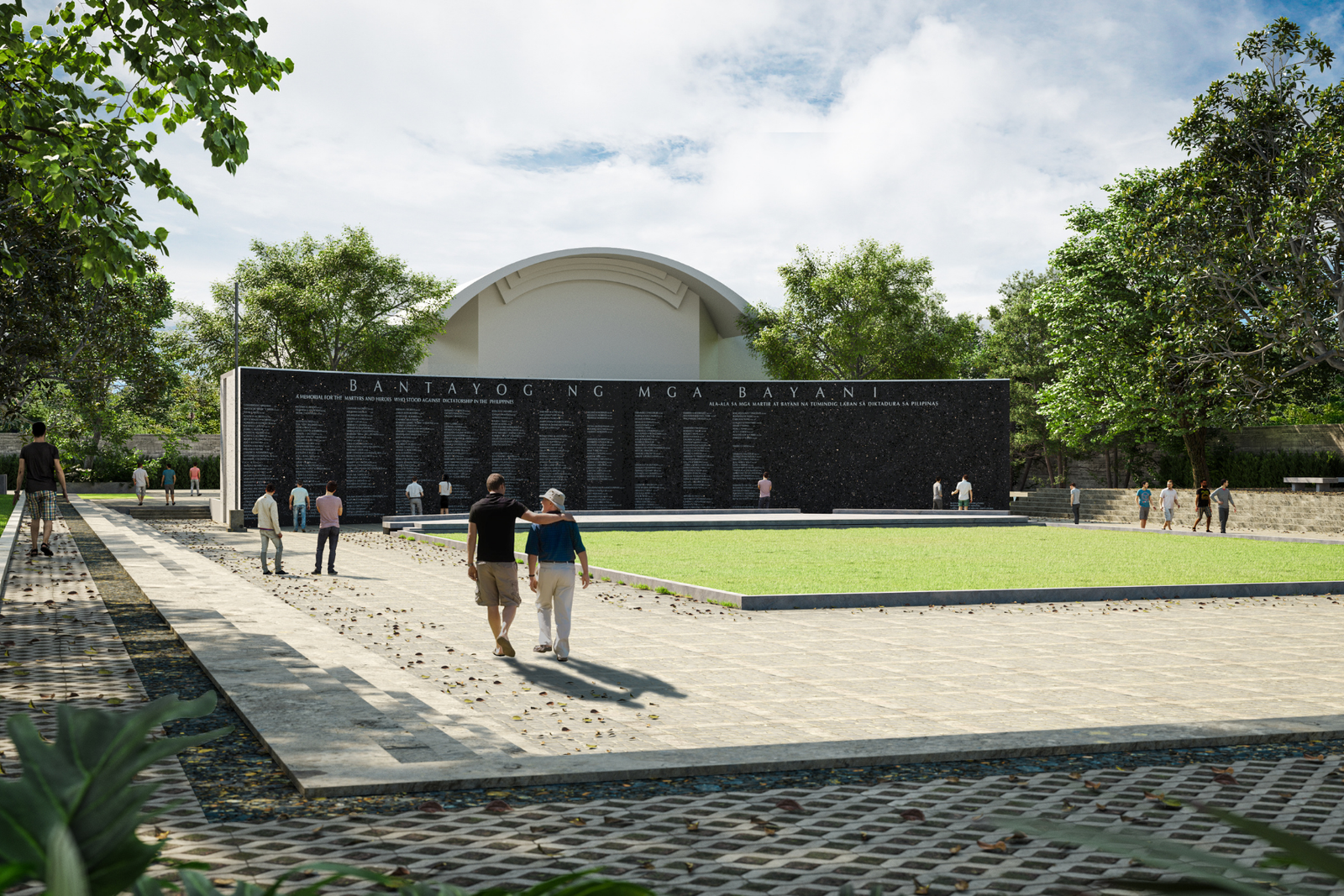
The major challenge for the wall redevelopment is its future-proofing. Consolidating all currently engraved names and restoring the wall’s original scale and proportion relative to its original design. Through thorough discussions with the Bantayog Board and the National Commission for Culture and the Arts (NCCA), a new, redeveloped wall was designed. The new Wall of Remembrance was expanded by one meter in height, providing visibility from Quezon Avenue. Expanded 1.5m on both sides from its original length to accommodate ample space for the 350 names and a projected expansion for the future. Name sizes were also reduced to accommodate more names on a limited surface while still maintaining an optimal viewing distance. This consolidation also provided an opportunity to alphabetize, add birth or death years, and add labels for the disappeared. One important design addition on the redeveloped wall is the inclusion of a statement, “Kasama ang libo-libo pang mamamayang tumindig laban sa paghahari ng diktadura sa Pilipinas” (“Along with thousands of other citizens who stood up against the rule of dictatorship in the Philippines”), remembering the unnamed heroes and martyrs who stood their ground and fought the dictatorship.
To provide an optimal viewing experience of the wall, it mirrors the curved roof of the museum building behind it, offering a more dynamic view of the wall’s entirety to visitors while still maintaining the monument’s rectangularity as viewed from the Inang Bayan plaza.
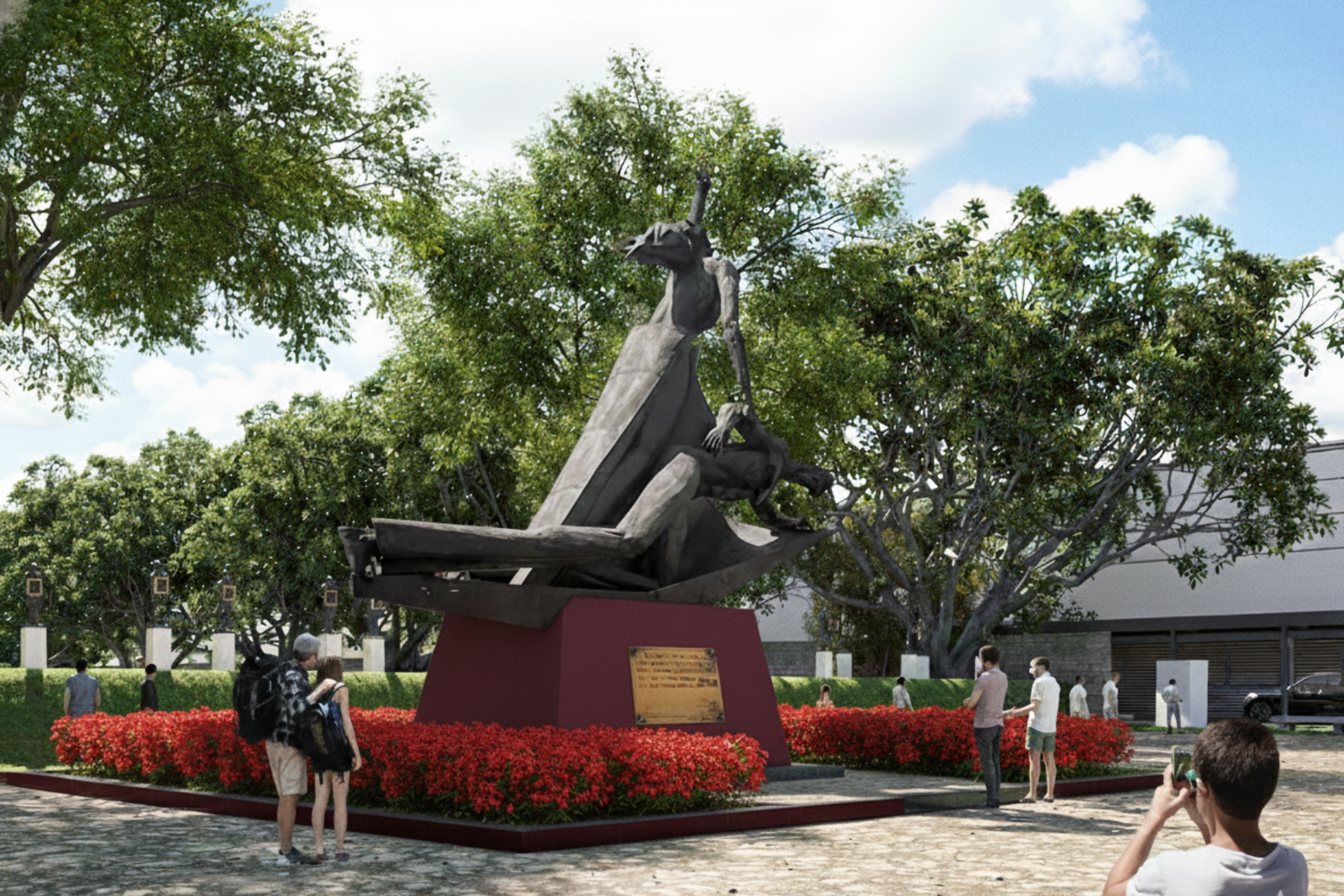
The Eduardo Castrillo statue ‘Inang Bayan’ was placed in a space IP Santos had originally marked for an unbuilt fountain. Are there any planned changes with regard to its location?
Enriquez: Castrillo’s ‘Inang Bayan’ monument will not be relocated. Instead, minimal, strategic floor patterns that double as provision for electrical utility lines will be placed to improve the visitor’s visual leading line, emphasizing Inang Bayan as the focal point of the space.
The addition of a bed of colorful blooms at the statue’s foot, while symbolically poignant (“Alay na bulaklak sa Inang Bayan”), departs from IP Santos’ original, more green and somber vision. Why make that change?
Enriquez: To open Liwasang Inang Bayan as a public plaza during the day, concerns about protecting the Inang Bayan monument have surfaced. Before the conservation work, an informal landscaping was introduced at the foot of the monument. This created a strategic buffer that limits visitors’ direct contact with the statue and reduces the risk of vandalism. An initial idea of a reflective pool aligning with IP’s signature design of a sculpture with elements of water surrounding it was conceptualized, but it was later on decided to be impractical due to its long-term high maintenance cost and the unavoidable culture of public bathing on publicly accessible ponds, as mentioned by QCPD on their experience in maintaining public parks within the city.
Given this context, the team reimagined the buffer with simple landscaping that still aligns with IP’s key landscaping design principles, including mass planting. An introduction of a clustered local flowering shrub that blooms throughout the whole year, doubling as a space buffer and a poetic tribute to the monument.
The flower bed is still unbuilt; it will be implemented in the next phase of the project.
Bilaw: One of the earlier proposals involved introducing a water feature beneath the Inang Bayan Monument. However, after continued consultation with the NCCA and landscape architects who had previously worked directly with IP Santos, the Board Members and Design team collectively decided to pursue a different approach.
Instead of a water feature, the area will be developed as a flower bed composed of various species that bloom throughout the year. In this way, the design symbolizes a continuous offering of flowers in Inang Bayan day and night.
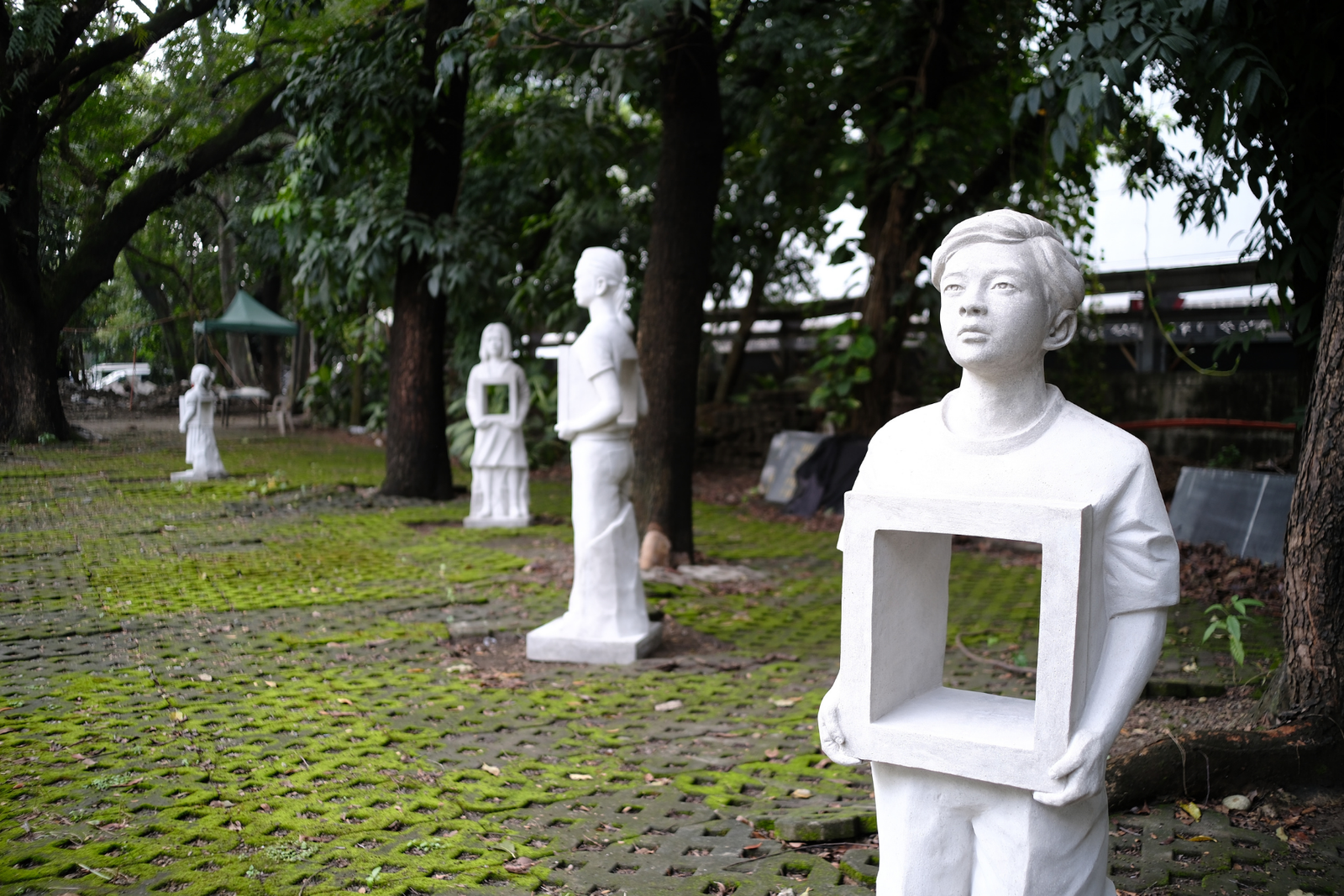
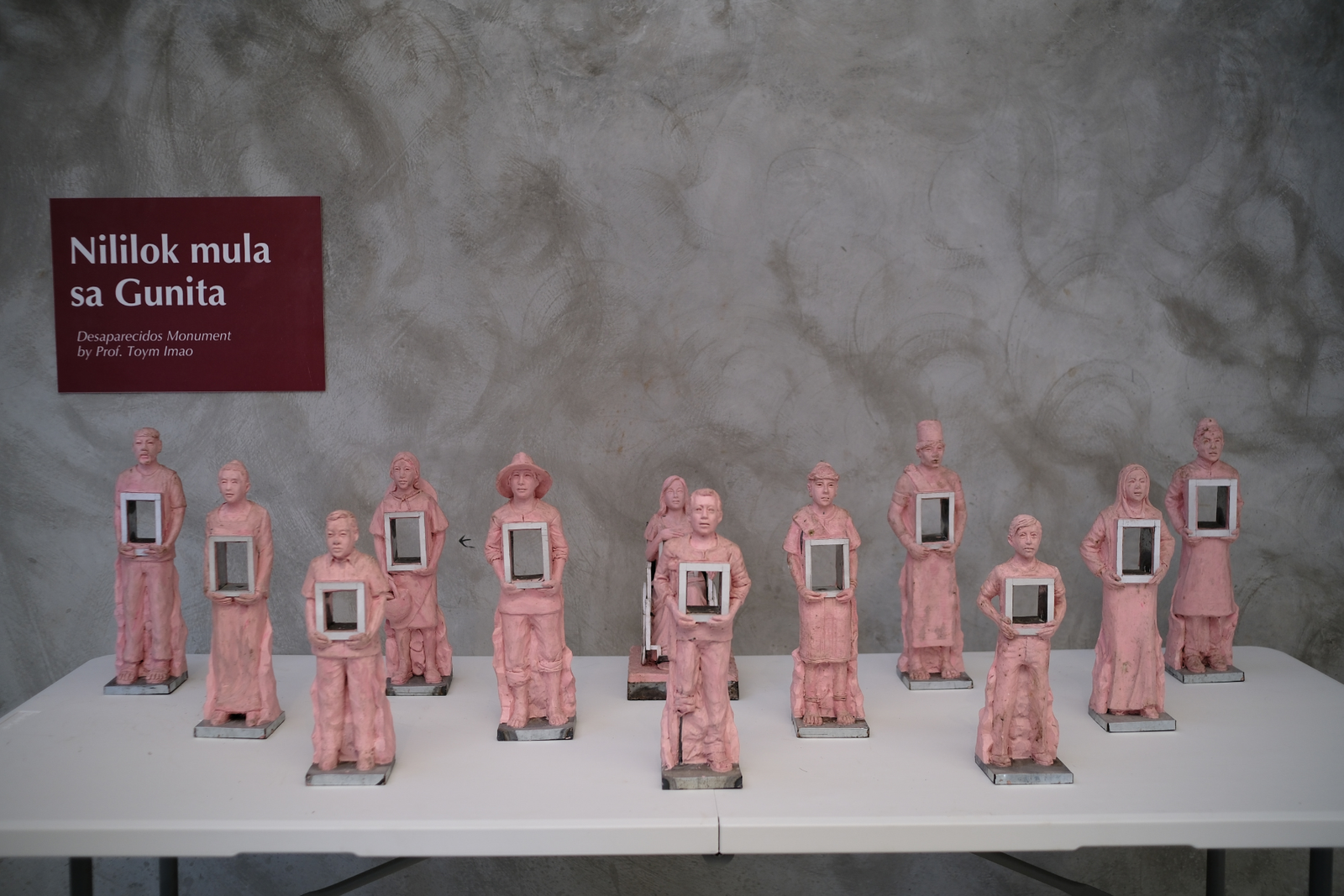
The recent restoration effort includes plans for 18 sculptures by Toym Imao to represent the country’s administrative regions. Do you feel this might detract from the solemn, minimalist vision IP originally intended? What prompted such a major addition?
Enriquez: We have to acknowledge that, through the years, there have been developments in the discussion of the Martial Law period. One particular topic that is being discussed more at present is the acknowledgement of the disappeared (desaparecidos) during the dictatorship.
Beyond IP’s design vision, Bantayog’s continued growth as an institution has been the key consideration in conceptualizing an additional monument to commemorate the contributions of the desaparecidos. Spaces of commemoration and remembrance should not be trapped in the past. Beyond what is written in history books, the ongoing discussion and retelling of the forgotten or less represented narratives must be given importance.
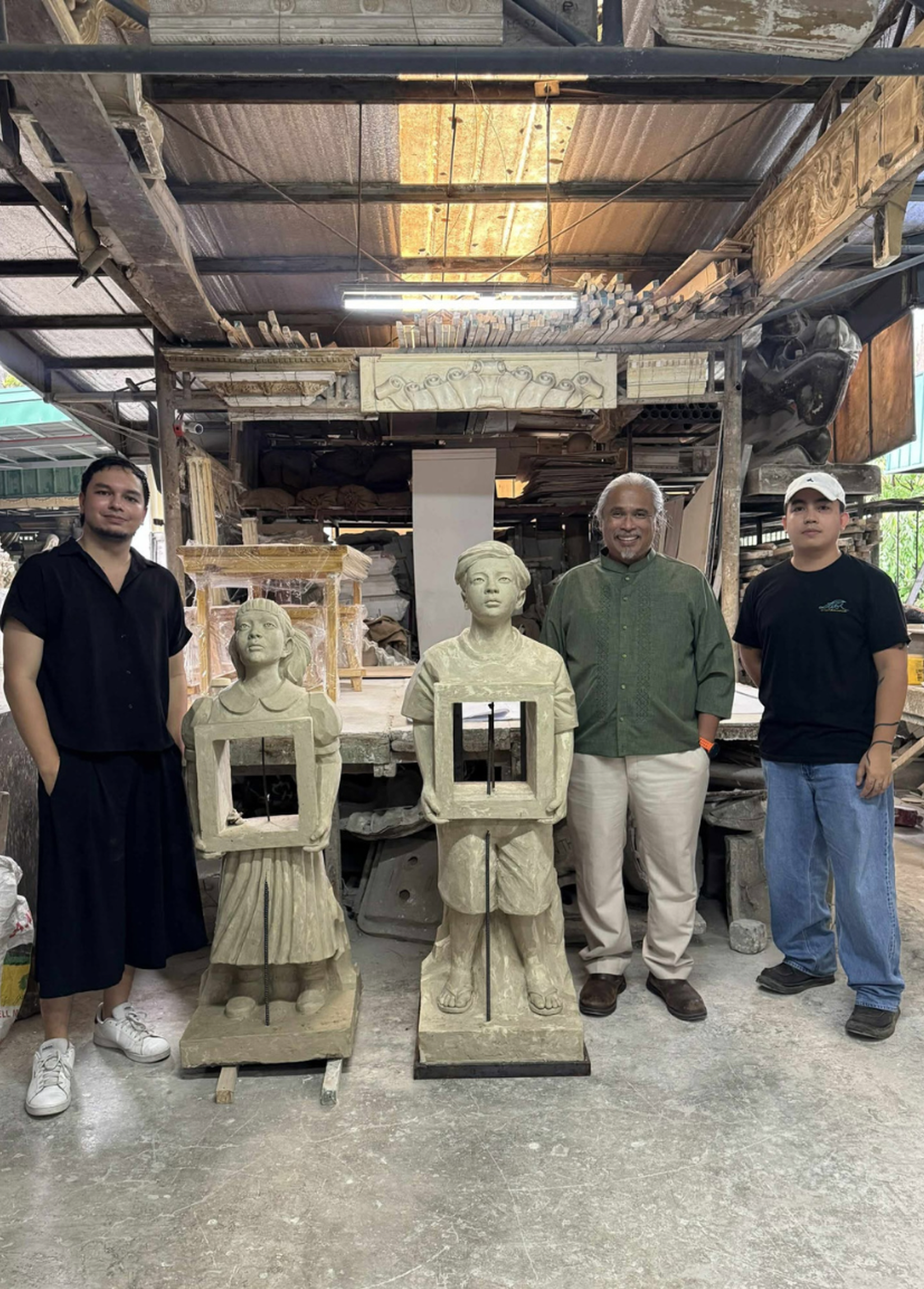
With this in mind, the designers reviewed existing artistic works that best represent the objective of commemorating those who have disappeared. One of the striking artworks that symbolically captures the memorialization of this absence is Prof. Toym Imao’s Desaparecidos. Its 2015 initial iteration is composed of a 43-figure art installation depicting the longing and incompleteness of those left behind by the disappeared. The typical silhouette of a desaparesidos descendant is a portrait of their disappeared family member. Imao interpreted this into an empty and hollow niche within the body, signifying death, lack of closure, and an absence of a part that can never be filled again. This traveling art installation has visited multiple sites over the years, with the Bantayog ng mga Bayani grounds among its exhibition sites in 2015.
From an initial placeholder in the conceptual design, the team took the plunge and reached out to Prof. Toym Imao to explore the possibility of collaboration. He generously agreed to collaborate in bringing back his Desaparecidos art installation and give it a permanent home at Bantayog, coinciding with the 10th anniversary of its first installation, from just a vision and a dream to a reality. For its new iteration, Prof. Toym reimagined his initial art installation at life-size to complement IP’s landscape design. Imao, together with the redevelopment team, conceptualized an 18-figure art installation that symbolically represents the 18 regions of the country with sectoral, gender, and generational representation.
For Phase 1 of the project, an initial batch composed of four figures was installed on the Bantayog grounds.
Bilaw: People seek representation to develop a sense of belonging and draw inspiration from narratives that affirm their own capacity to act. The 18 statues by Toym Imao serve as a powerful representation of Filipinos’ collective strength to resist and depose a dictator.
In line with IP Santos’ minimalist vision, we formally consulted the NCCA regarding the appropriate integration of these works into the site. It was agreed that the 18 statues of desaparecidos would be positioned so as not to compete with or distract from the Inang Bayan monument. Instead, they will be strategically distributed across the Bantayog grounds to ensure dignified recognition of the desaparecidos.
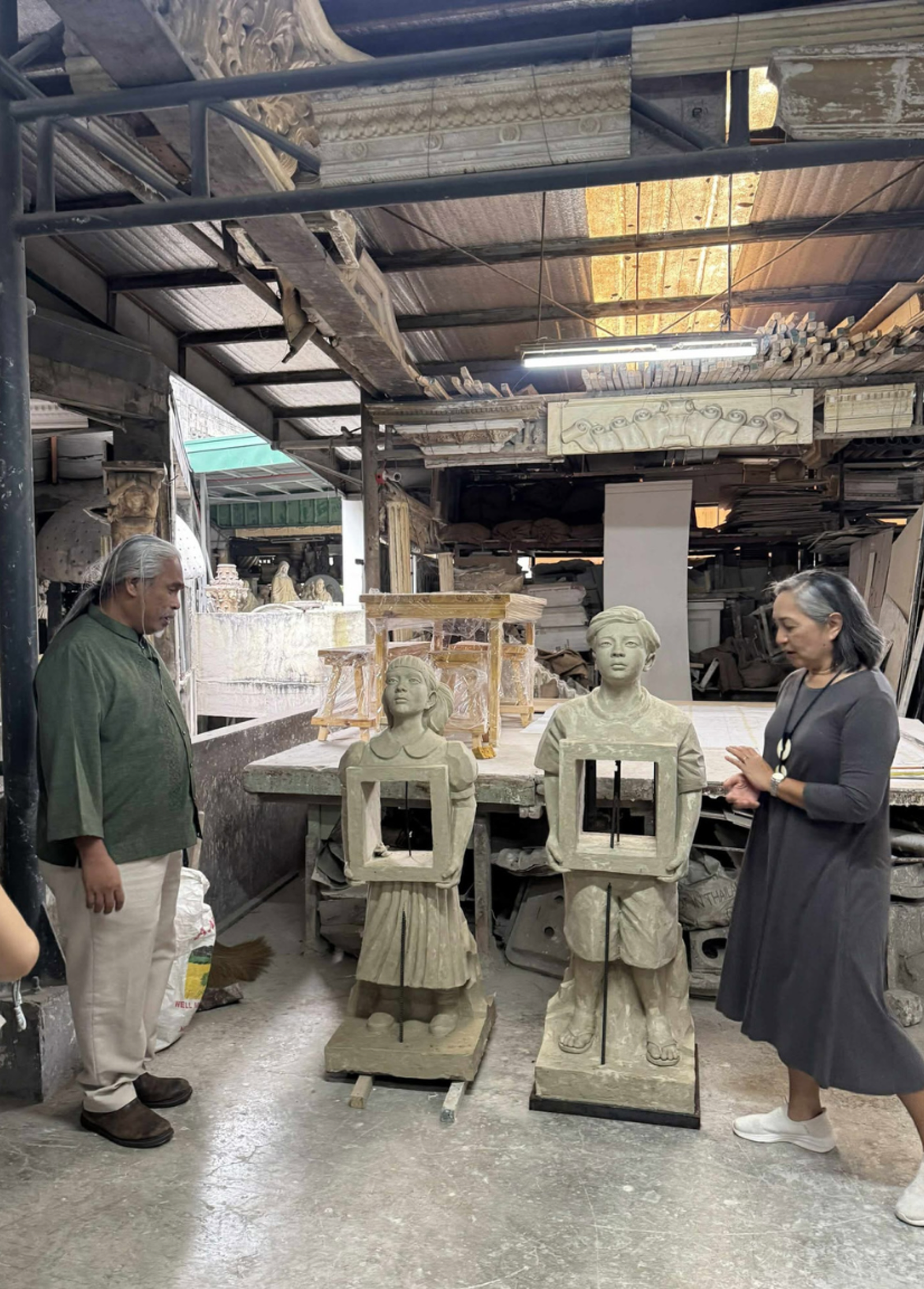
IP had very specific desired finishes. How much did you adhere to his specs, and what did you do when the stipulated material just wasn’t practical or possible anymore? Restorations of this scale often face “value engineering,” in which the poetic details are the first to be cut. Was there a specific material or design element you fought tooth and nail to keep? Is there something you had to let go of?
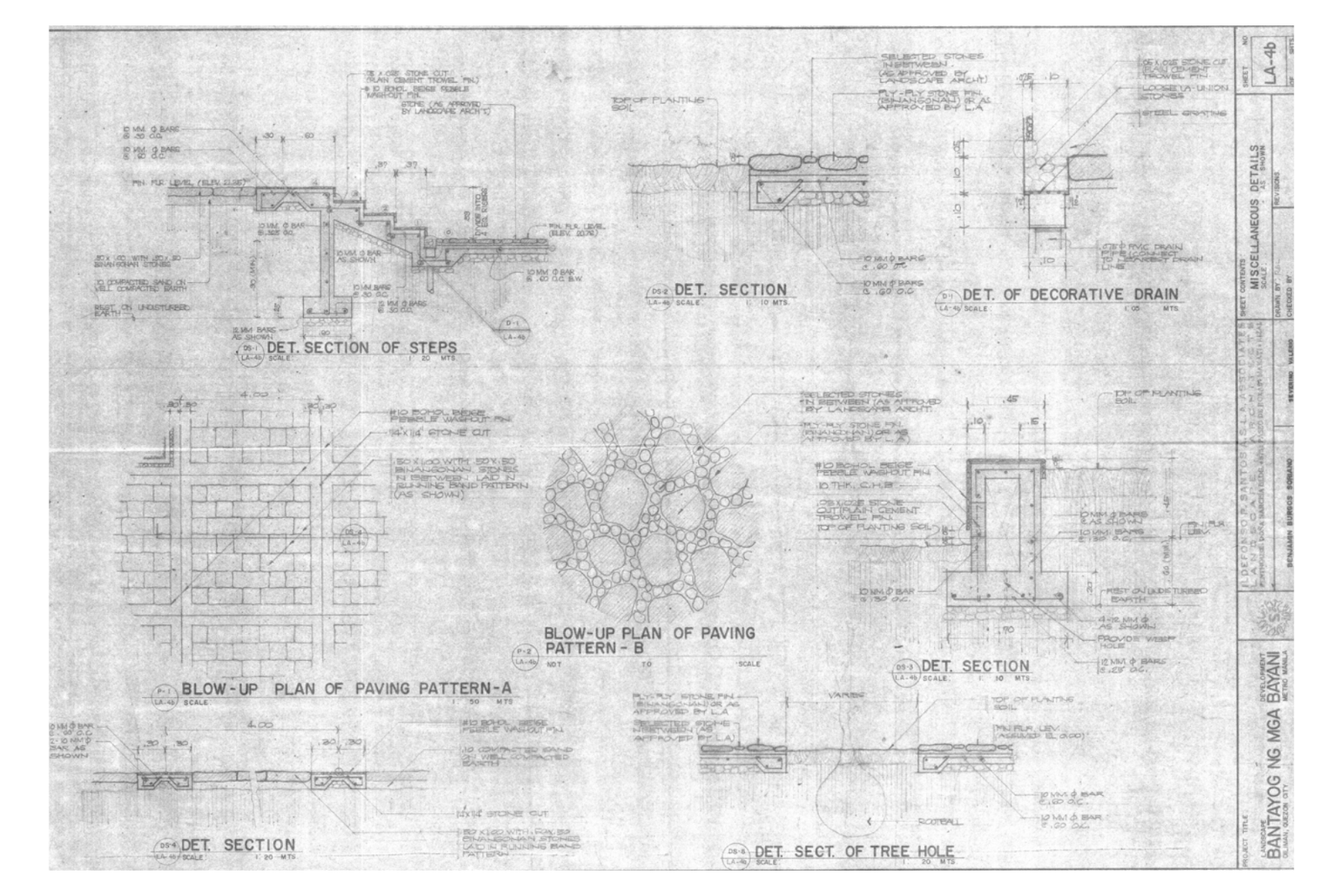
Enriquez: With the availability of the IP Santos’ archival plans, we were able to study IP’s design details, including its material specifications. One of his design characteristics is the deliberate use of indigenous/local materials. We were able to analyze specific finishes identified in the archival plans, such as Binangonan ply-ply stone, gray La Union stone, and #10 Bohol beige pebbles, among others.
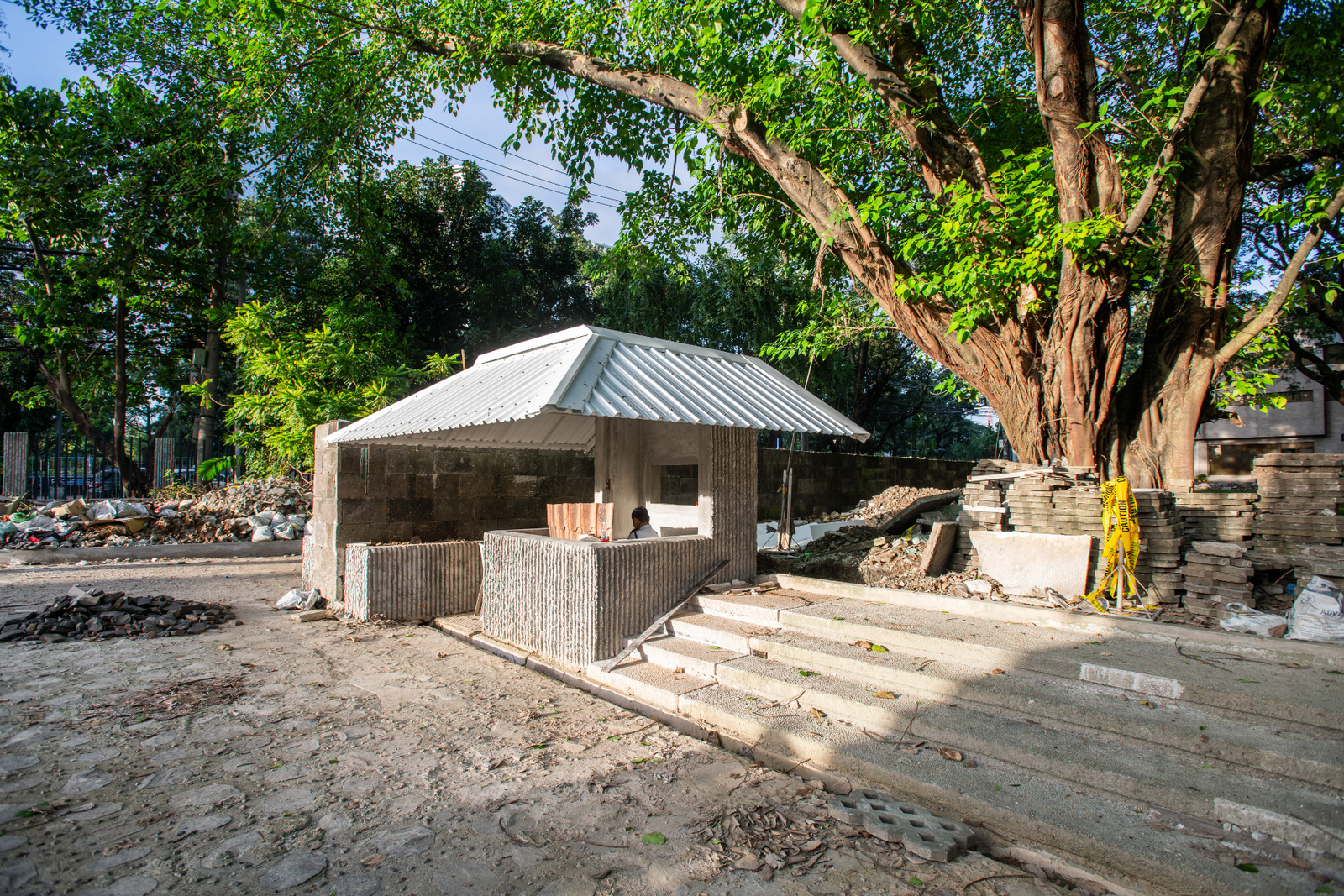
The conservation team has a clear vision on the preservation of existing material finishes on IP’s details, and that similar or compatible materials will be used in its repair and reproduction. On the newly constructed access stairs, the existing pebble washout finish was reproduced using Bohol beige pebbles, diligently selected to match the existing material. On new benches that were created, instead of adapting his signature pebble washout finish, a polished concrete finish was adapted for ease of long-term maintenance (due to the fruit debris of ficus religiosa).
New interventions can also be easily identified by a bush-hammered concrete finish, familiar and aligned with the Philippines’ brutalist period, but reinterpreted to adapt to the current context and ease surface maintenance. (The finish we use, which we don’t know what to call as of now, is inspired by what the legendary Locsin used for CCP. We’ve been using it for other projects too.)
It is also notable that all original materials were carefully removed and reused or upcycled. Adobe stones were dismantled, cleaned, and reinstalled with additional reinforcement. The black granite stones from the Wall of Remembrance expansions were removed and repurposed as tile mosaics that served as concrete inlays at strategic locations in Balai Bayani—emphasizing material memory and sustainability.
There is a very real and unavoidable danger in this country that materials will be scavenged, stolen, or defaced. What safeguards are you building to protect the monument?
Enriquez: When we first visited the site, it was unfortunate to see that the metal grill fence was almost gone. According to the grounds security, the metal grills were defaced and scavenged by thieves to be sold at junk shops. Although these metal grillworks are not part of IP Santos’ original plans, their absence poses a significant security risk in the park. To safeguard the site, the team designed a freestanding metal fence that was reinforced and embedded in a concrete base.
Former masonry walls blocking views of the park were demolished and replaced with a series of vertical tubular metal fences to allow visual access while maintaining physical security. At present, the newly installed fence allows a better appreciation of the park’s landscape, creating a visual connection between the sidewalk landscape and the park’s.
Bilaw: One of the earlier proposals for the Inang Bayan Monument included surrounding the structure with a water feature. This measure was considered in response to previous incidents involving the theft of signage and attempts to dismantle certain site components.
Following continued consultation with landscape architects, the revised proposal now incorporates a flower bed that will function as a subtle yet effective protective barrier. This design approach not only enhances the visual character of the monument grounds but also serves as a preventive measure against vandalism and other unforeseen incidents.
This is a three-phased restoration program. What other usability improvements are coming, and how do they help the monument’s message? More importantly, and going beyond the physical monument, how is the foundation running it, ensuring the futurability of its message, and preserving the memories of whom it honors?
Enriquez: Key areas were prioritized on Phase 1 of the redevelopment that aims to partially open the Liwasang Inang Bayan into an accessible park during daytime, provide a visual and physical access to the Wall of Remembrance, the adaptive reuse of Balai Bayani as an arts and cultural hub for the youth, and the installation of the Desaparecidos monument.
In the upcoming phases of the redevelopment, works will focus on providing support facilities to cater to user needs, ensuring the sustainability of the institution’s operations through resource-generating spaces, and providing key facilities to support Bantayog’s main thrust of Martial Law education.
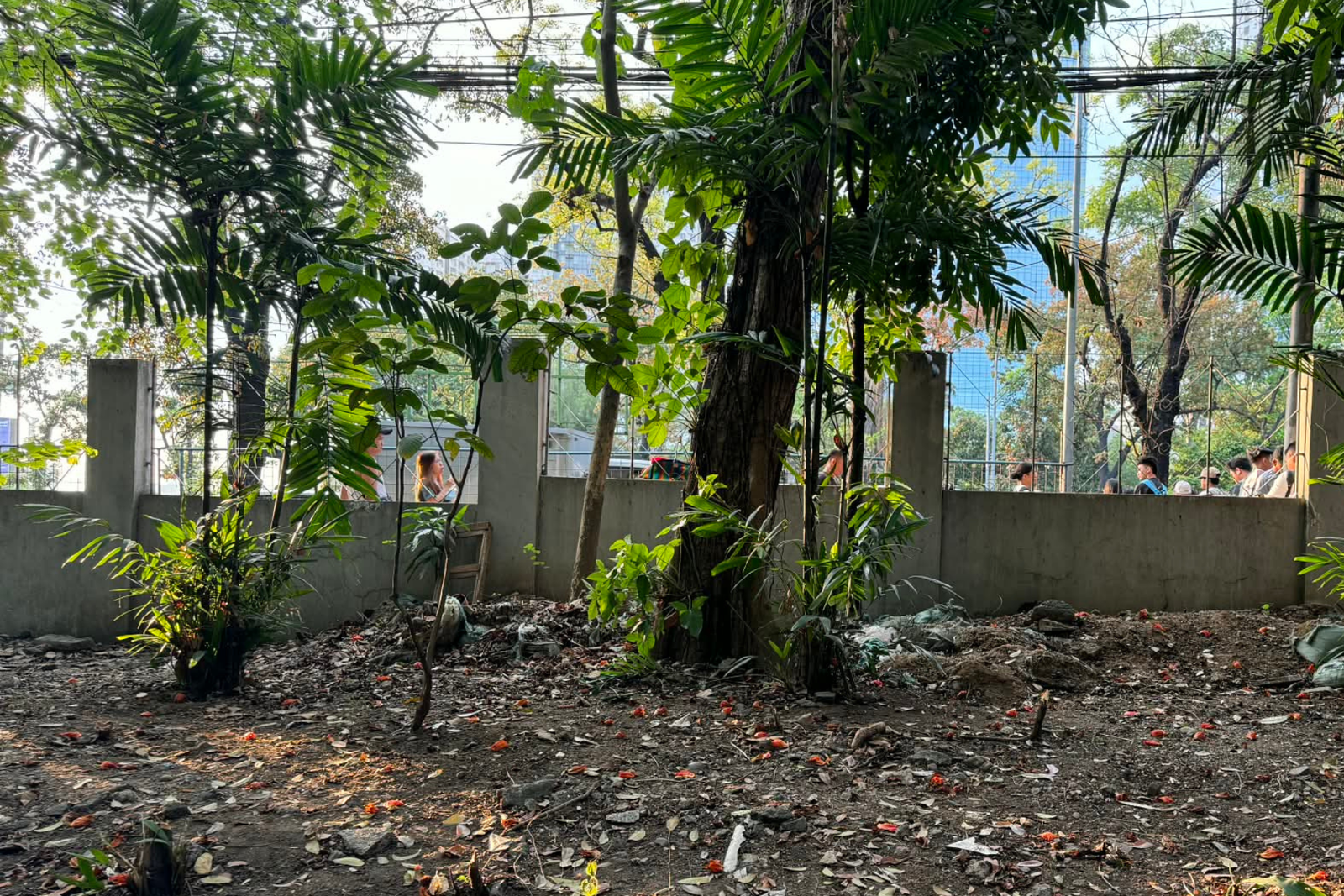
Additional public restrooms will be constructed to accommodate the high demand for large gatherings, and an open-air shed will provide a multi-use space that can be transformed into pop-up weekend markets and al fresco areas. The landscaping works for the remaining parts of the grounds will be re-levelled to accommodate the grown roots of the ficus religiosa and secure a walkable concrete paver.
The project aims for a holistic sustainability of Bantayog beyond the conservation works of its physical spaces. Through the new spaces created by the redevelopment, programs of the institutions can now be accommodated in proper spaces. This helps the institution remain a continuous bastion of memory and a space for the dynamic education of democracy and heroism.
How do you think IP Santos would respond to your design if he were alive today? More importantly, how have the families commemorated here responded to the initiative? Any specific anecdotes from the soft opening?
Enriquez: We honestly don’t know how IP Santos might respond to the redevelopment if he were alive today. But we hope that all the efforts put into researching and analyzing his design, and the conscious decision to protect its value and significance, will resonate with him positively. We hope that he also acknowledges the ephemerality of landscape design, as a living work of art that requires constant upkeep and strategic long-term maintenance/conservation. And that, through understanding the philosophies and essence of his design, it can help present conservation architects continuously protect his works and further secure their relevance in the constantly changing times.
Bantayog members, mostly composed of families and descendants of heroes and martyrs, have welcomed this initiative wholeheartedly. Some of them have already lost hope of an immediate total rehabilitation due to the scarcity of financial resources post-pandemic. For some Bantayog Board of Trustees, this redevelopment is like ‘a dream come true, a wish they did not know could still come true in their lifetime.
To be given this rare opportunity by the local government of Quezon City through the Office of Mayor Joy Belmonte was a gift to the nation. It is through the generous grant donation of the LGU that this redevelopment project has become possible. This project, which aligns with QC’s goal to develop a heritage trail along the city’s historic sites, is a clear manifestation of their recognition of the value and importance of cultural landmarks as spaces for historical education. This also contributes to the city’s aggressive target to double its public parks and green space, serving as an accessible third space where people can interact and relax.
Bilaw: He would likely feel saddened that there was a period when the Bantayog ng mga Bayani was neglected and not properly maintained. He might also be disappointed that, in some respects, Filipinos seem not to have fully learned from the past. If he were alive today, he would almost certainly offer guidance and mentorship to help improve and refine the redevelopment, drawing from his experience as a former professor at UP Diliman. It is hoped that he would be pleased with the ongoing redevelopment and take pride in the care being taken with the process.
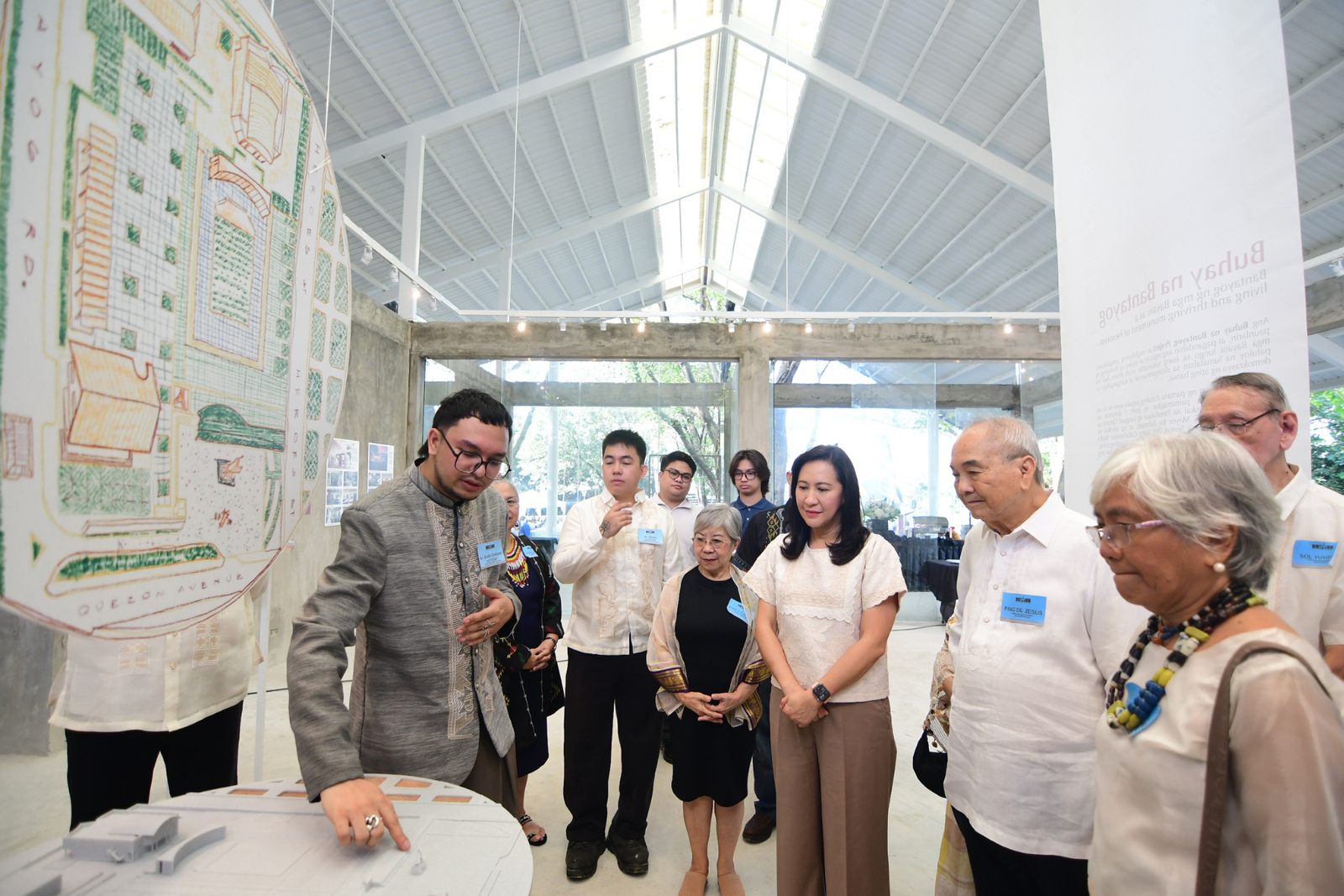
For the families who joined us on November 30, the response to the progress at the monument was very heart-warming. They expressed appreciation for having a dedicated space that serves as a reminder and a form of recognition, affirming that their loved ones are remembered and valued.
This restoration is coming at a time when the message of EDSA is getting lost amidst the chaos, or even questioned. What has this project taught you about the role of designers as guardians of our national narrative?
Enriquez: Spaces of remembrance are essential for commemorating our memory as a nation. It is through these that we can collectively remember and confront our history, learn from it, and hope we do not repeat the sins of the past. Providing third spaces like this enables us to collectively reflect on our values and hopes as a community.
The protection of our national cultural assets provides a glimpse of our brilliant artists and artisans from the past. It helps us anchor our national identity as Filipinos. As conservation architects and designers, our role is to develop cultural third spaces where stories can be told through space and to ensure these gifts are passed on to the next generation.
This redevelopment project symbolically coincides with the 40th anniversary of the People Power revolution and also historically marks the 40th anniversary of the Bantayog ng mga Bayani Foundation, a fitting gift for a nation that tends to forget its history.
Bilaw: We Filipinos need to remain impartial and responsible when receiving and sharing information. Martial Law should never be reduced to a basis for political alignment or division. As a nation, we carry the responsibility for our history carefully, particularly the lived experiences of those who endured abuse under the Marcos dictatorship.
We are not compelled to choose between colors or factions. Instead of allowing the past to divide us, we should allow it to guide us toward greater understanding, accountability, and solidarity. Wala sa dilaw o pula, mas lalong hindi makikita ang kasagutan sa kamao o rosas. (Not in yellow or red, even less will the answer be solely found in symbols like a fist or a rose.) We must choose one another, grounded in truth, mutual respect, and a shared commitment to the country’s future. •