Introduction and interview The Kanto team
Images New Office Works (NOW)
House for a Filmmaker, completed by Hong Kong–based practice New Office Works (NOW), translates the textures and spatial logic of a country house into a 2,360-square-foot urban apartment, a residential archetype characteristic of the city. Like a film, rooms shift in character and scene throughout the day, guided by sliding partitions, material islands, and bespoke details, creating moments of openness, enclosure, and discovery for its household. In conversation with the studio, we unravel the choices that guided its design, which flourishes didn’t make it past the drawing board, and how the apartment became a true co-production between its client and studio.

Hello, NOW team! Welcome to Kanto. Can you let us in on the client’s profile and brief, and the key constraints, be it spatial, structural, or personal, that shaped the project from the outset?
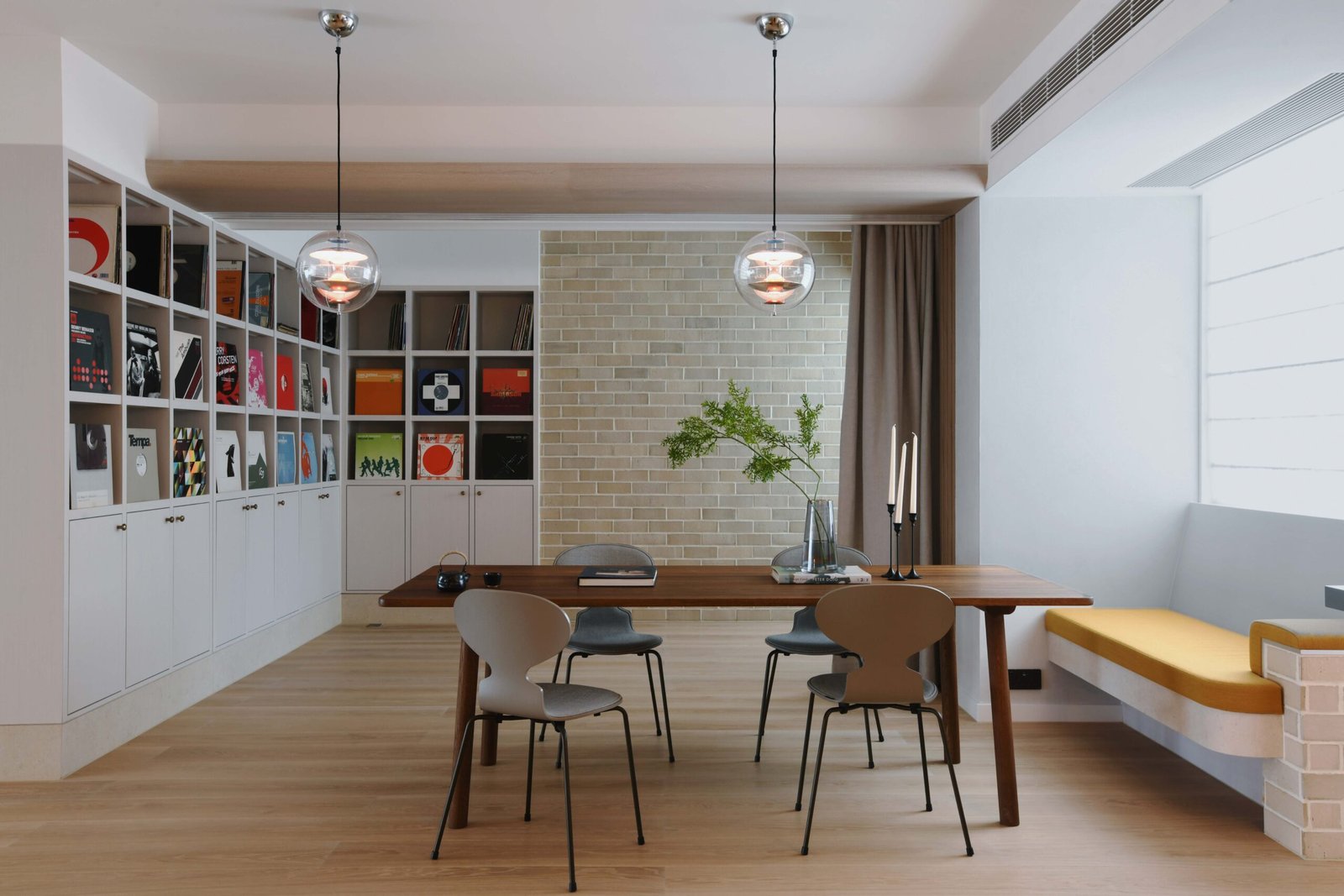
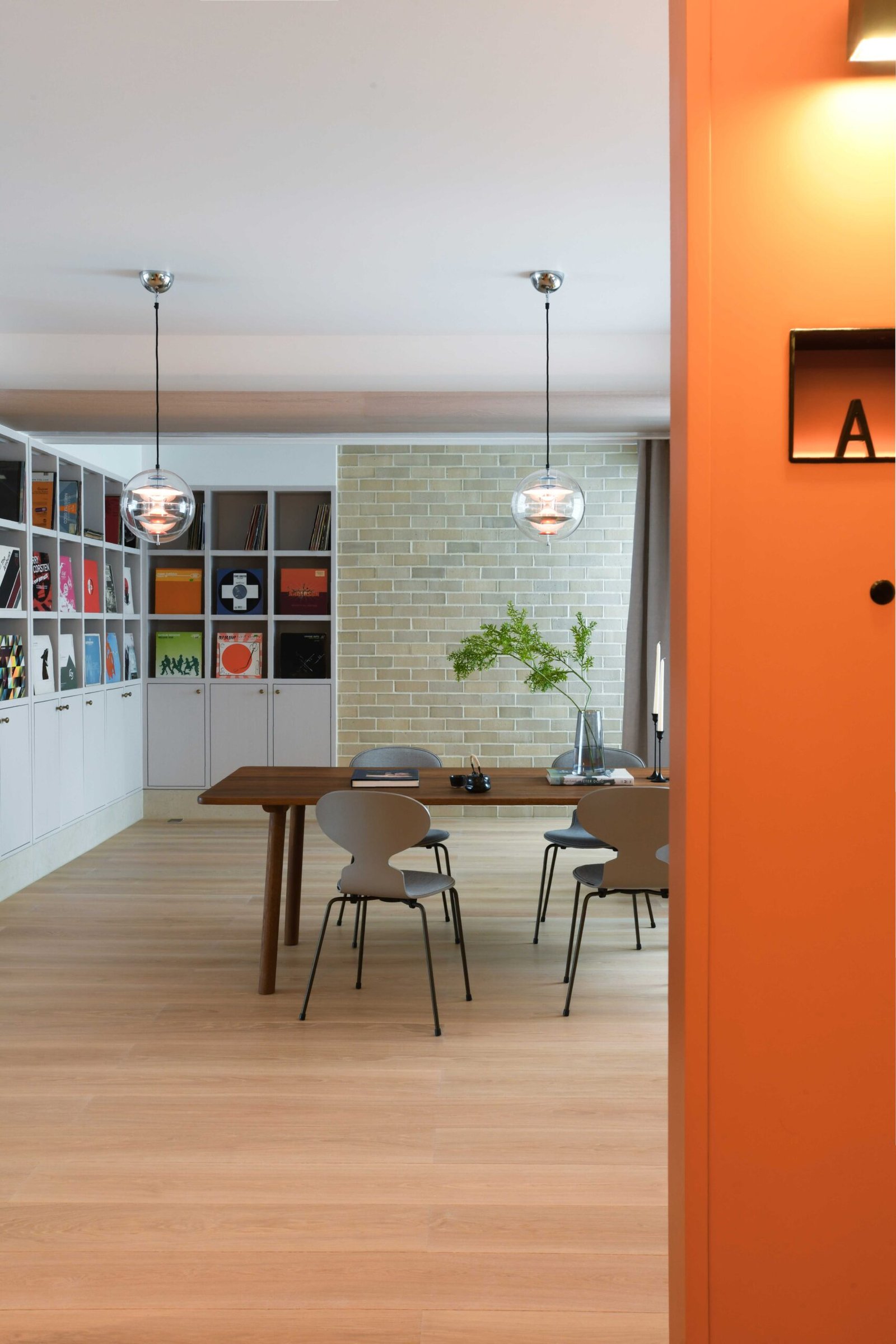
New Office Works (NOW): Our client is an award-winning documentary filmmaker based in Hong Kong and Los Angeles. She wanted an open yet flexible space with a natural material palette, one that would fuel her creativity. One of the project’s key goals was to introduce a sense of depth to the house. Hence, we decided to transform the previously guest room with a solid wall facing the entrance into a reading room. Enclosed by a glass sliding door, it creates a sense of transparency throughout the living space and serves as a space to curate the client’s sources of inspiration in literature and music.

You describe the apartment as drawing from the nature-infused, earthy feel of a country house. What aspects of this typology felt essential to express spatially, and which did you consciously avoid?
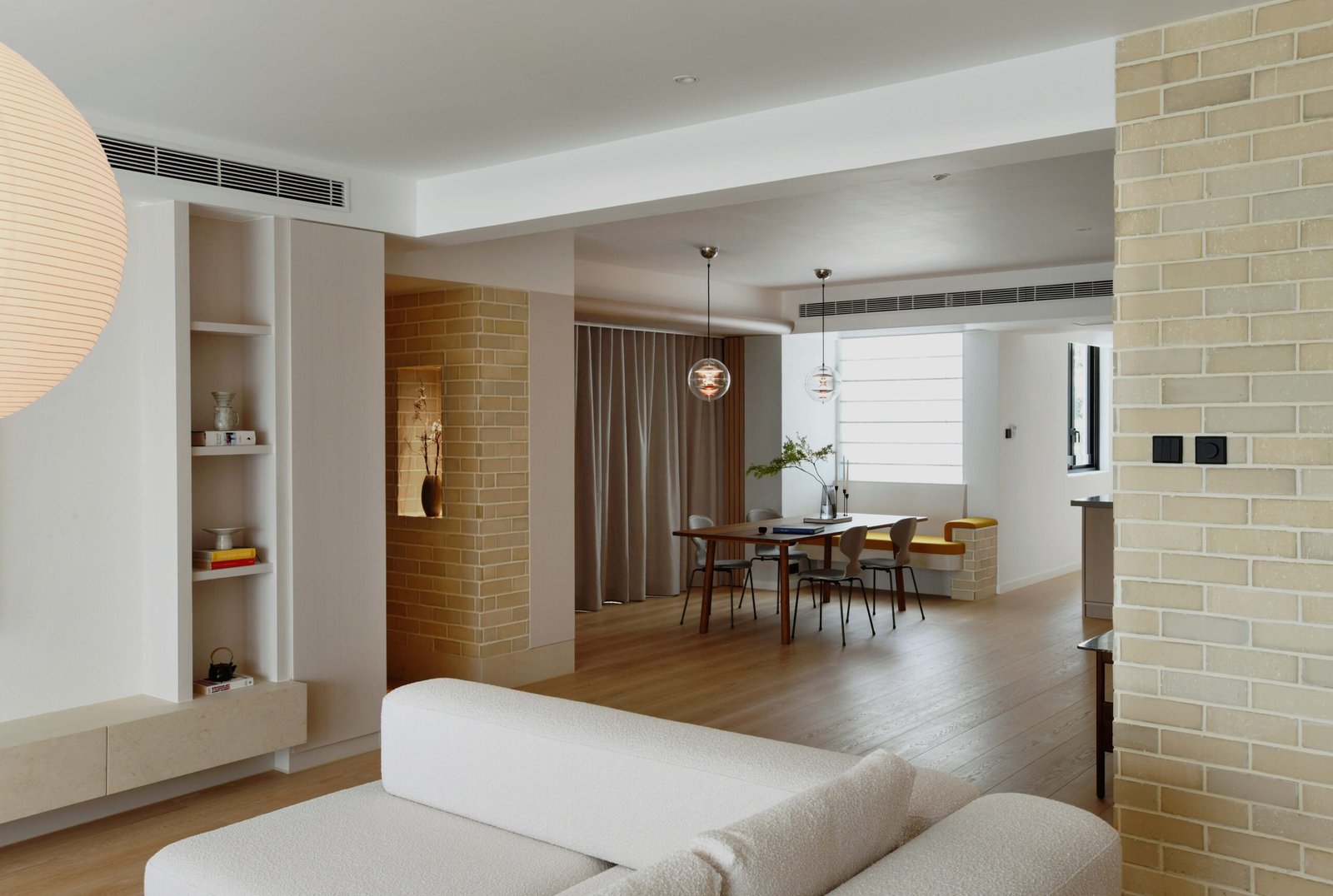
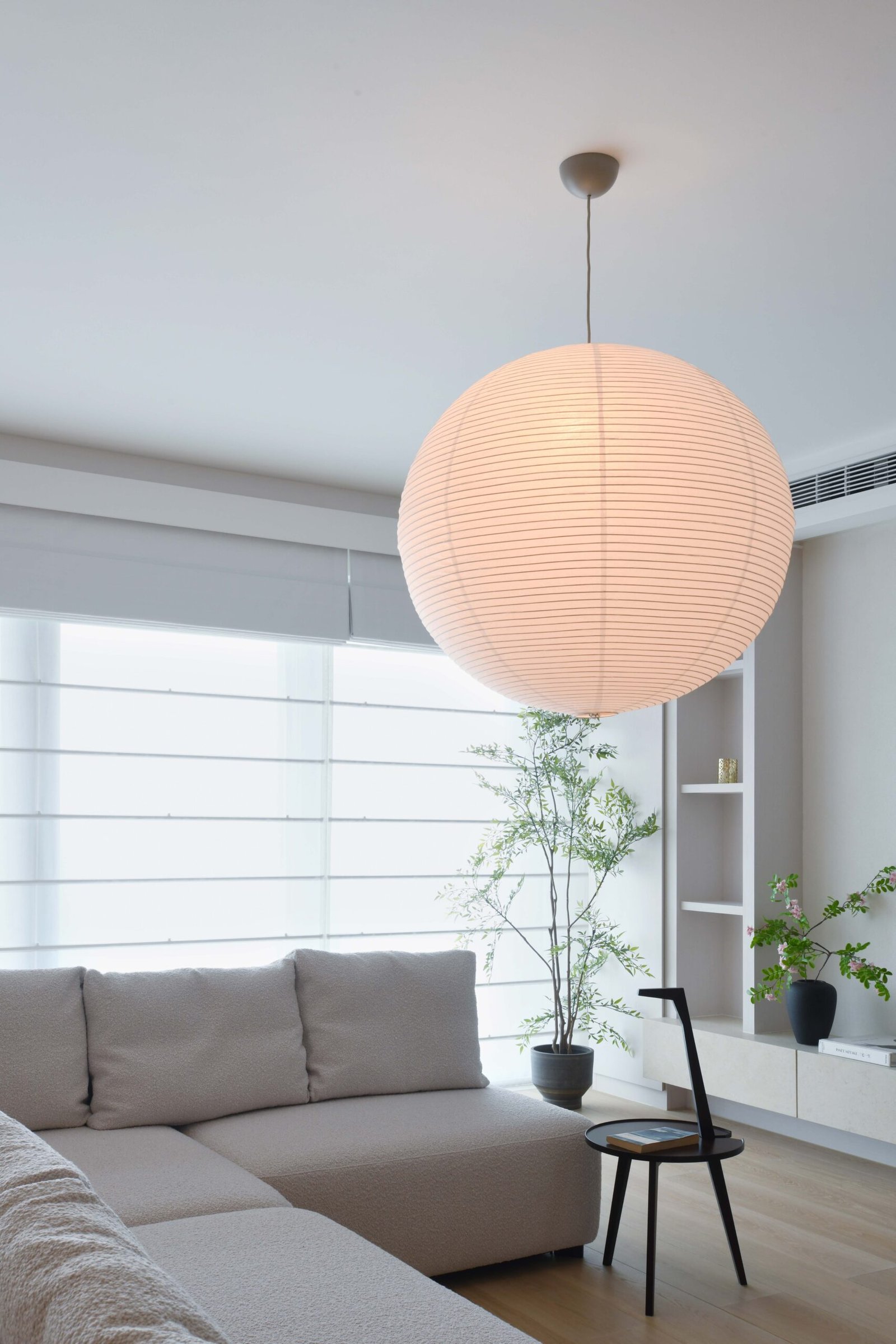
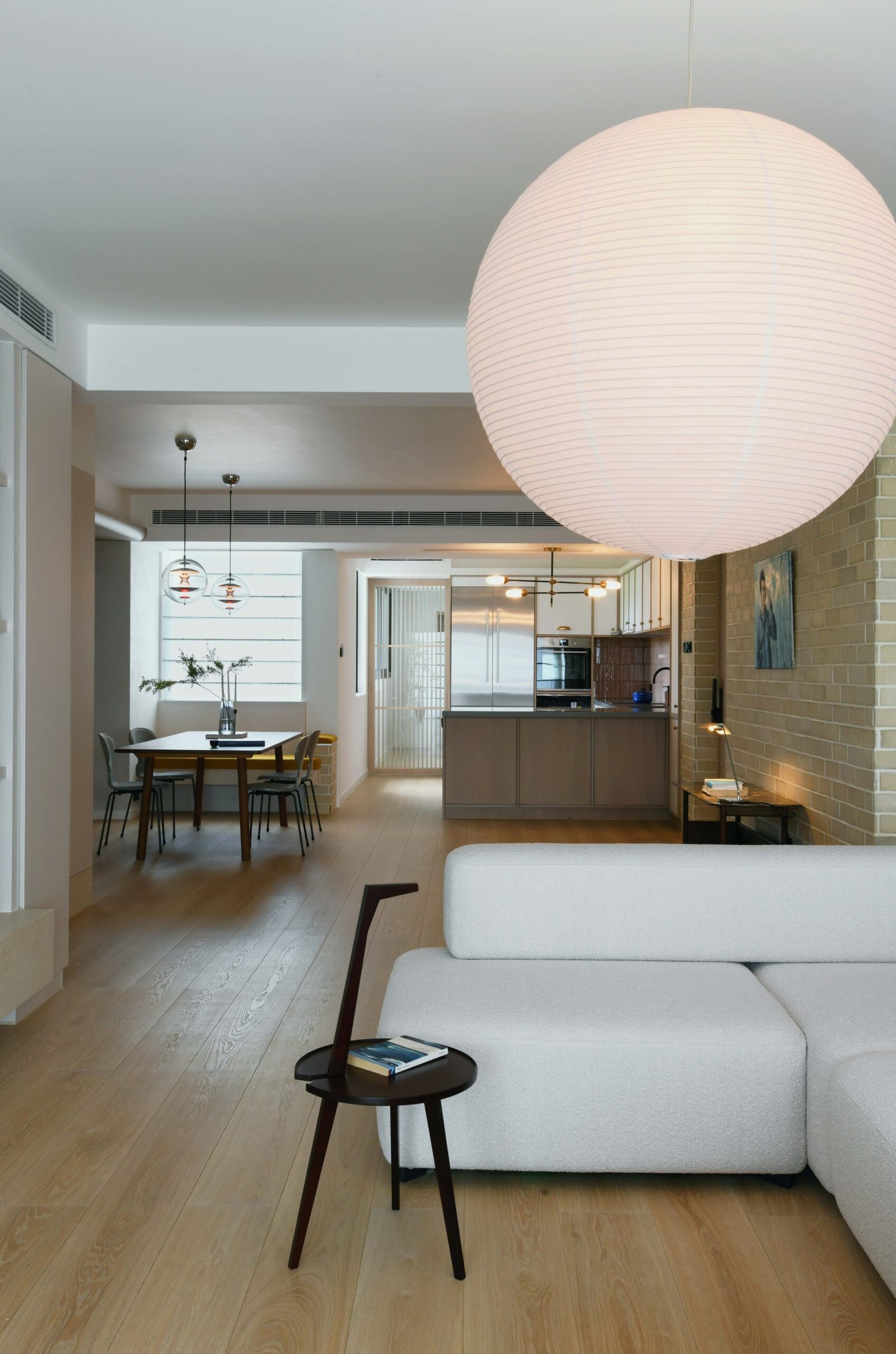
NOW: The aspect of the country house that comes through the most is the sparse use of materials. The brick walls and wood flooring create a muted palette that allows furniture and objects to be accentuated.
The resulting plan allows rooms to shift character: expanded through sliding glass partitions, lit by diaphanous Roman blinds, or galvanized through material zoning. What problems were you trying to solve with this flexibility, and what compromises, if any, came with it?
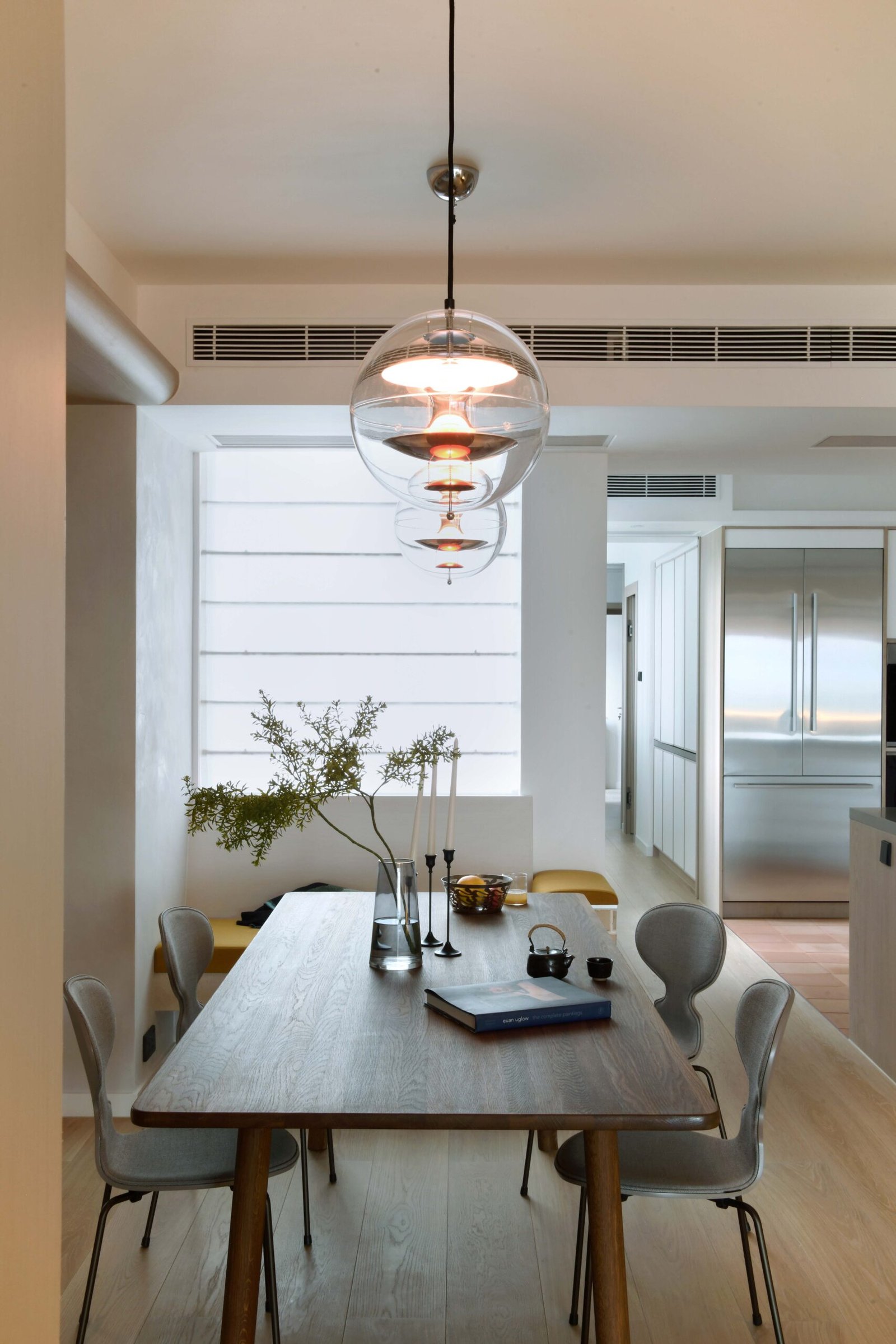
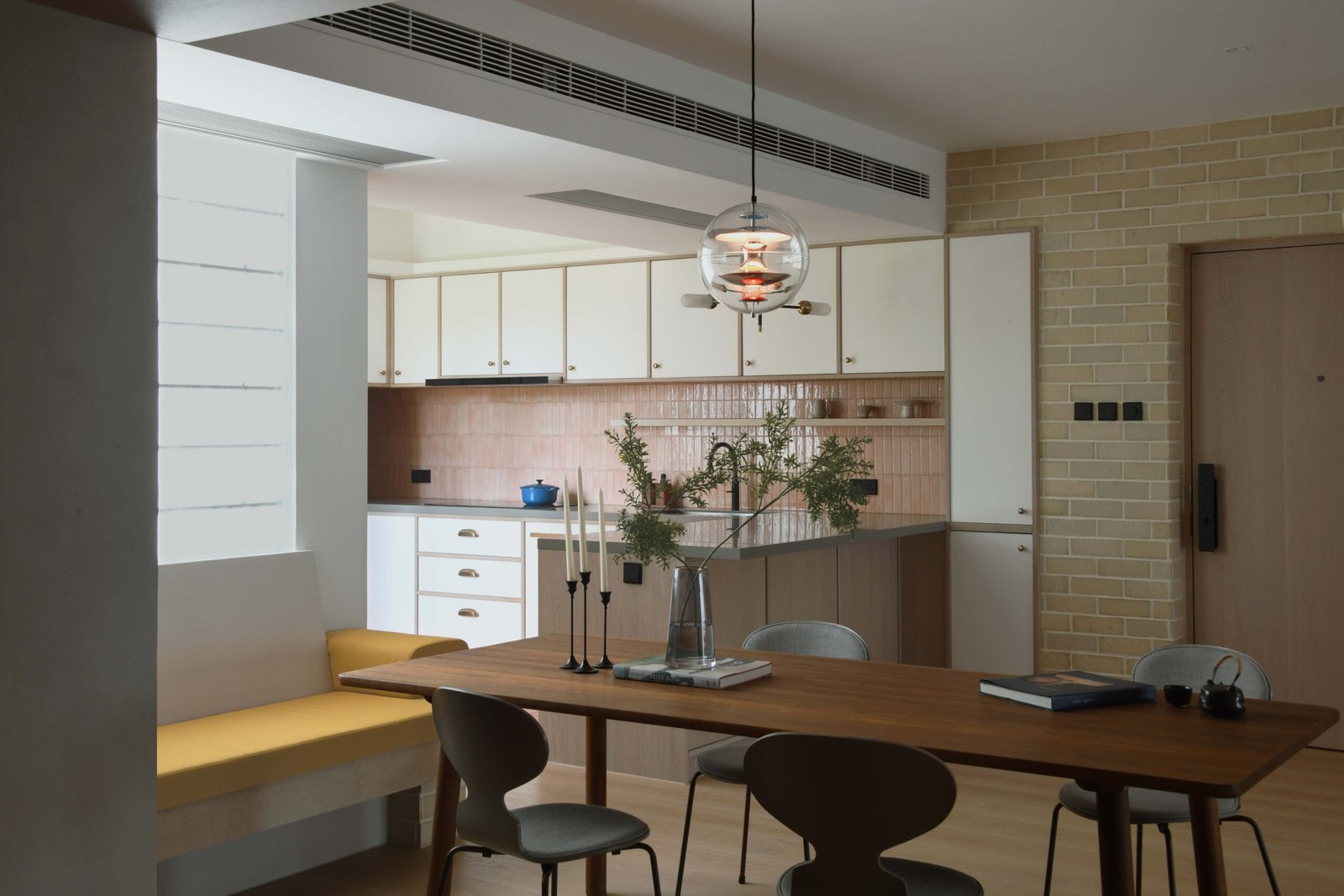
NOW: One of the qualities we enjoy about designing homes is creating the center of the home, traditionally established by the hearth. In this case, the dining table occupies the centre and is flanked by the banquette and picture window. At the same time, the reading room’s sliding partitions give a sense of openness and transparency in the dining area. It provides flexibility for the dining area to expand to accommodate large gatherings and doubles as a guest room.
Each room possesses a distinct atmosphere and material universe, but the apartment still reads as a continuous whole. What rules and limits did you set to allow both variation and spatial cohesion?
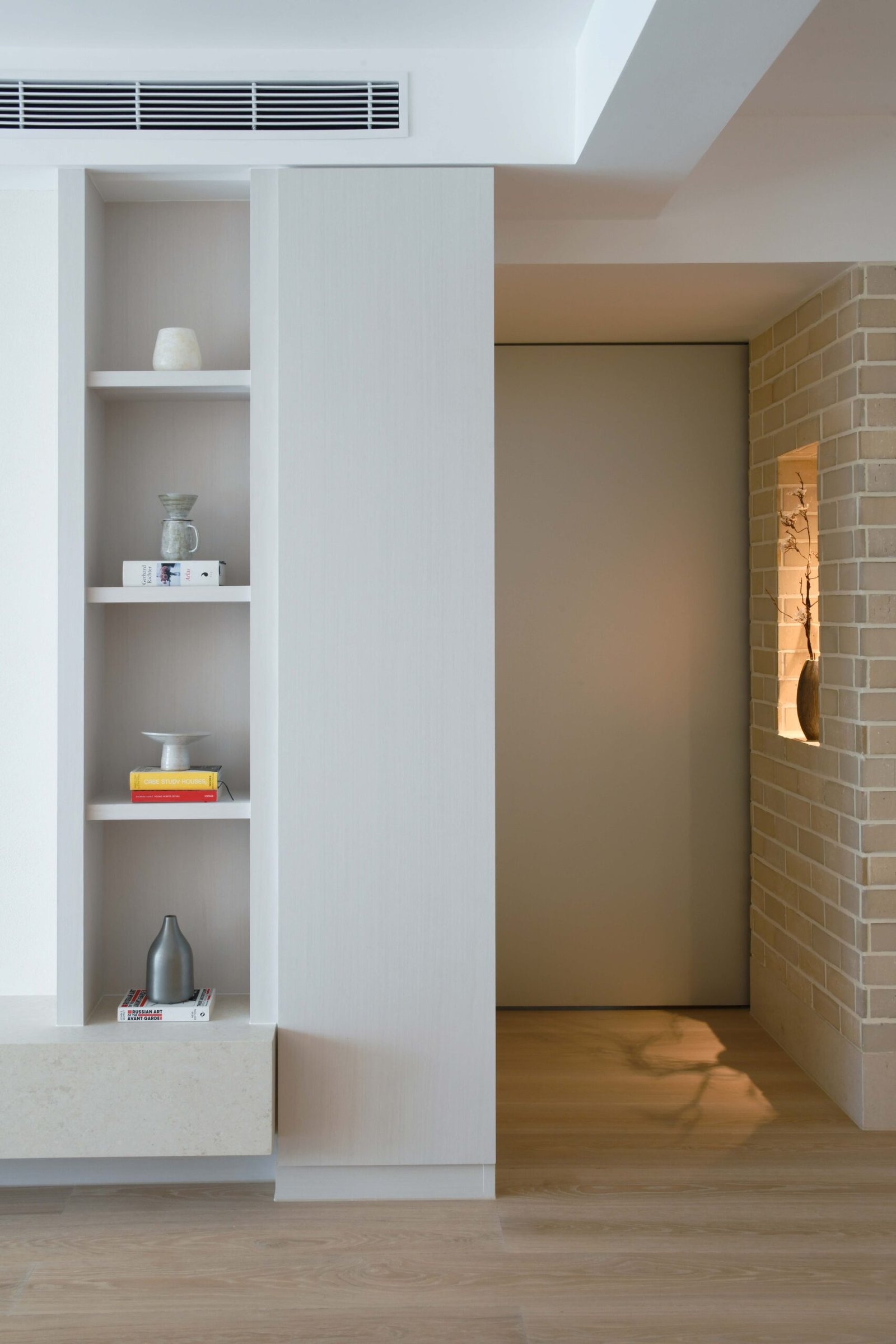
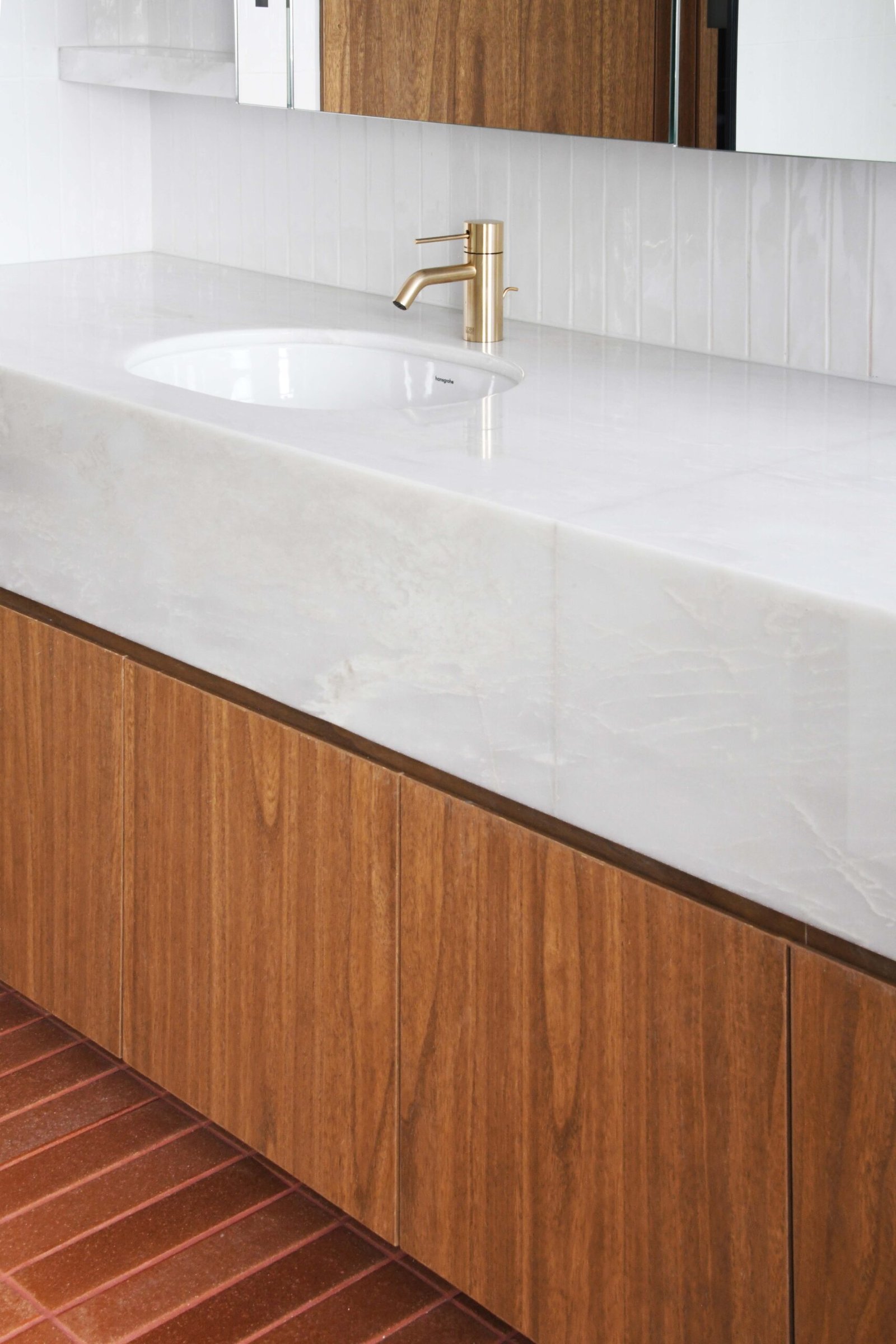
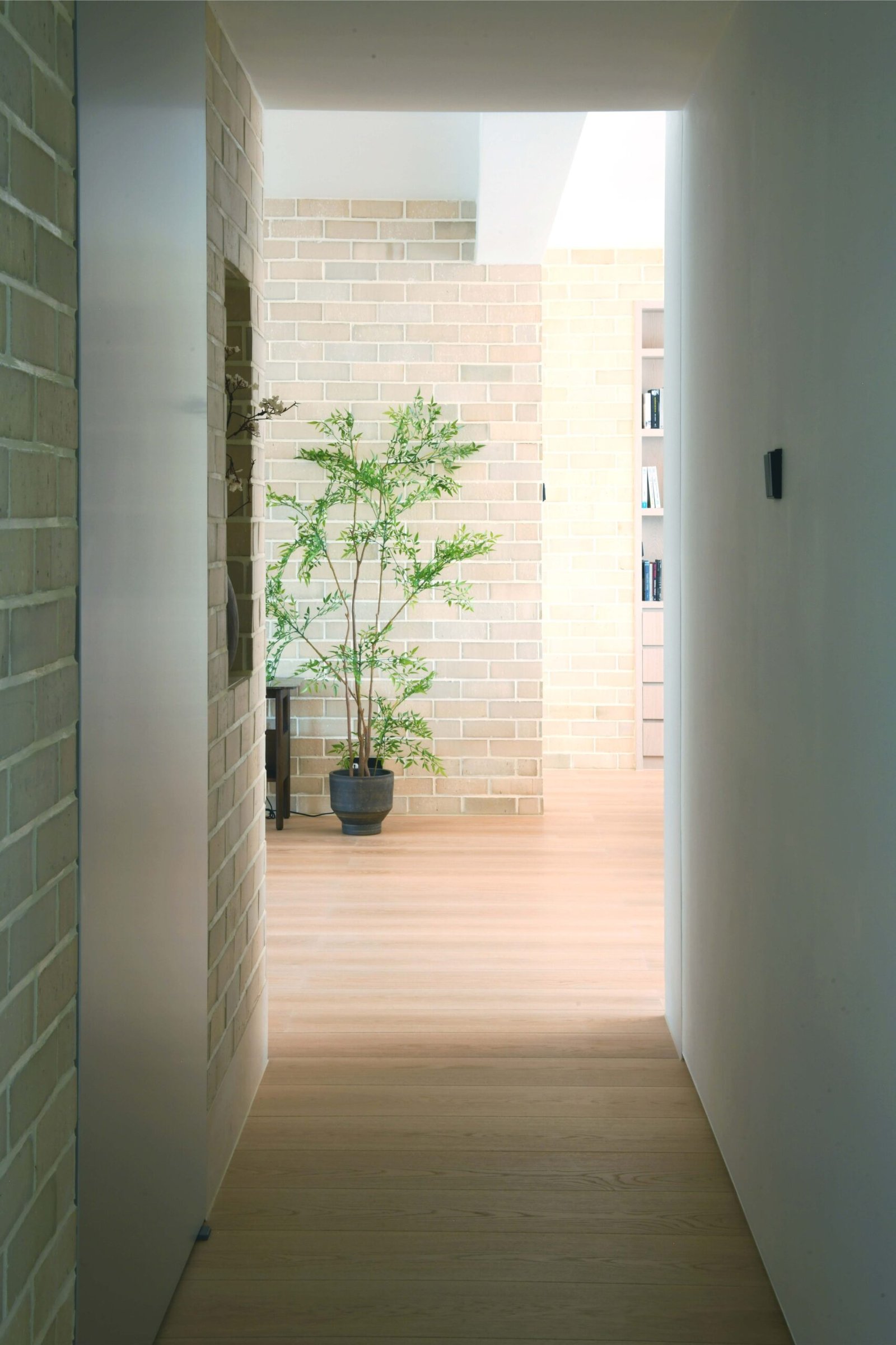
NOW: The corridor between the living room and bedrooms is the key transition between different materials. The thickened wall at the end of the corridor intentionally combines three materials: brick, wood, and stone.
The Krause brick wall is one of the project’s defining gestures and appears multiple times throughout the space. Why brick, and this particular variant, in this context? What did it contribute spatially beyond texture or warmth?
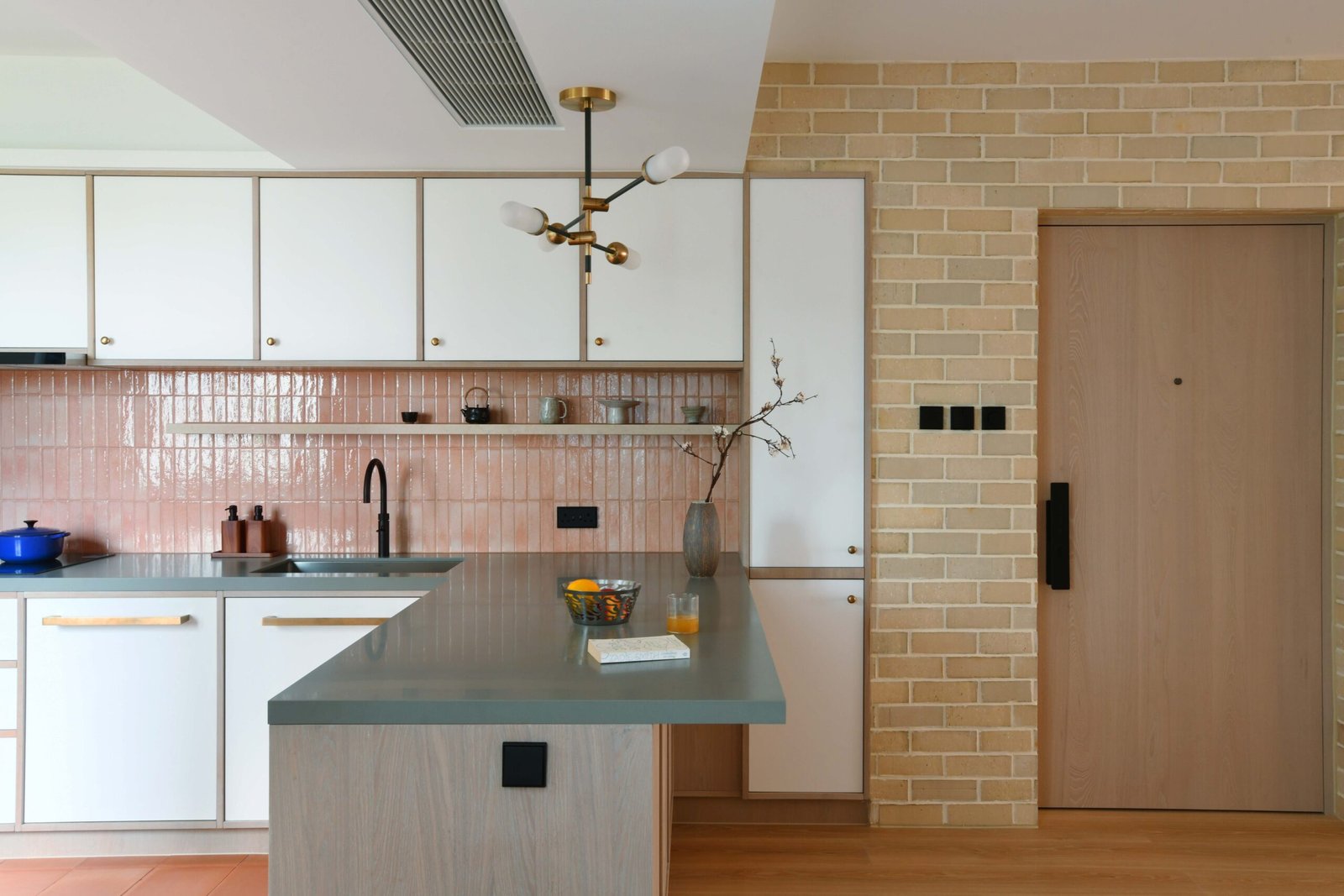
NOW: Brick is not often used in the Hong Kong residential context, so we wanted to bring it into the home for its display of craft and hint of the countryside. Aside from the warmth and texture the Krause bricks bring to the home, it also creates a sense of solidity, making the rooms feel like spaces carved from a whole rather than simply partitioned by walls.


“The aspect of the country house that comes through the most is the sparse use of materials.”
Were there existing elements, such as the original parquet flooring, that you chose to preserve, alter, or remove? What guided those decisions?
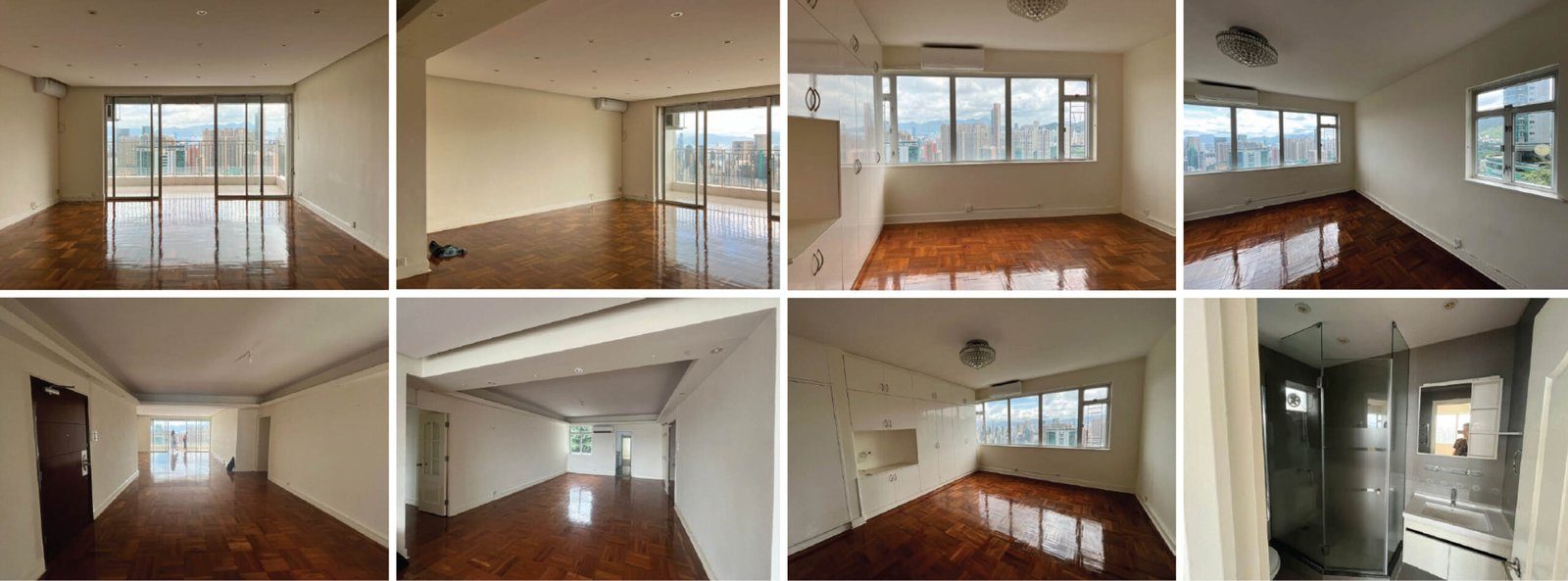
NOW: The core layout remains for the most part, but we introduced an open kitchen to make the living/dining area more spacious. The glass sliding doors of the reading room also enhance the home’s overall transparency.
The project teems with bespoke furniture and detailing; which piece or element are you proudest of pulling off? How does it capture the studio’s vision behind the apartment as a whole?
NOW: The bench with curved and straight edges is an example of how textured and soft materials come together. The design captures the studio’s principle of balancing artistry with practicality.

Was there a spatial idea or flourish in an earlier design iteration that didn’t make it past the drawing board?
NOW: At an early stage, we considered exposing the raw concrete ceiling beams, but later we felt there were too many materials in the mix.
The client’s background in film suggests a sensitivity to framing and sequence. Did that inform how you approached movement or sightlines through the apartment?
Paul Tse, Design Director, NOW: The idea of spaces unfolding as one moves from one area to another plays an important role in the project, as seen in the metal door concealing the private bedroom area and the sliding door with drapery that divides the dining area and reading room.
Evelyn Ting, Managing Director, NOW: Yes, framing happens throughout the space. In the living room, the ceiling beam and walls frame the balcony opening and view beyond. The door to the bedrooms is recessed into the corridor, accentuating the frame between public and private.


In working closely with a filmmaker accustomed to narrative and world-building, how did you think about the kind of spatial story the apartment might offer its inhabitants and visitors?
NOW: We would say the client’s films are less world-building and more acute observations of interesting and peculiar stories found in everyday life. We share a similar ethos in our architecture: to draw on a site’s context or history and incorporate it into the spaces of everyday life.
Now that the apartment is in use, have any spaces or details begun to reveal themselves differently than you expected? What’s the most surprising feedback you’ve received from the client about the space?
NOW: Not yet, but as with all of our projects, there are always pleasant and unexpected surprises in certain elements and spaces being used differently than originally envisioned!


Did this project allow you to refine any ideas or approaches you’ve long circled in previous New Office Works commissions? Where does it sit within your studio’s broader practice?
Paul Tse: Creating calming and contemplative spaces for everyday life in dense urban settings like Hong Kong has always been the core pursuit of our studio. This project further advanced this agenda by incorporating materials such as handcrafted bricks rarely seen in Hong Kong residences.
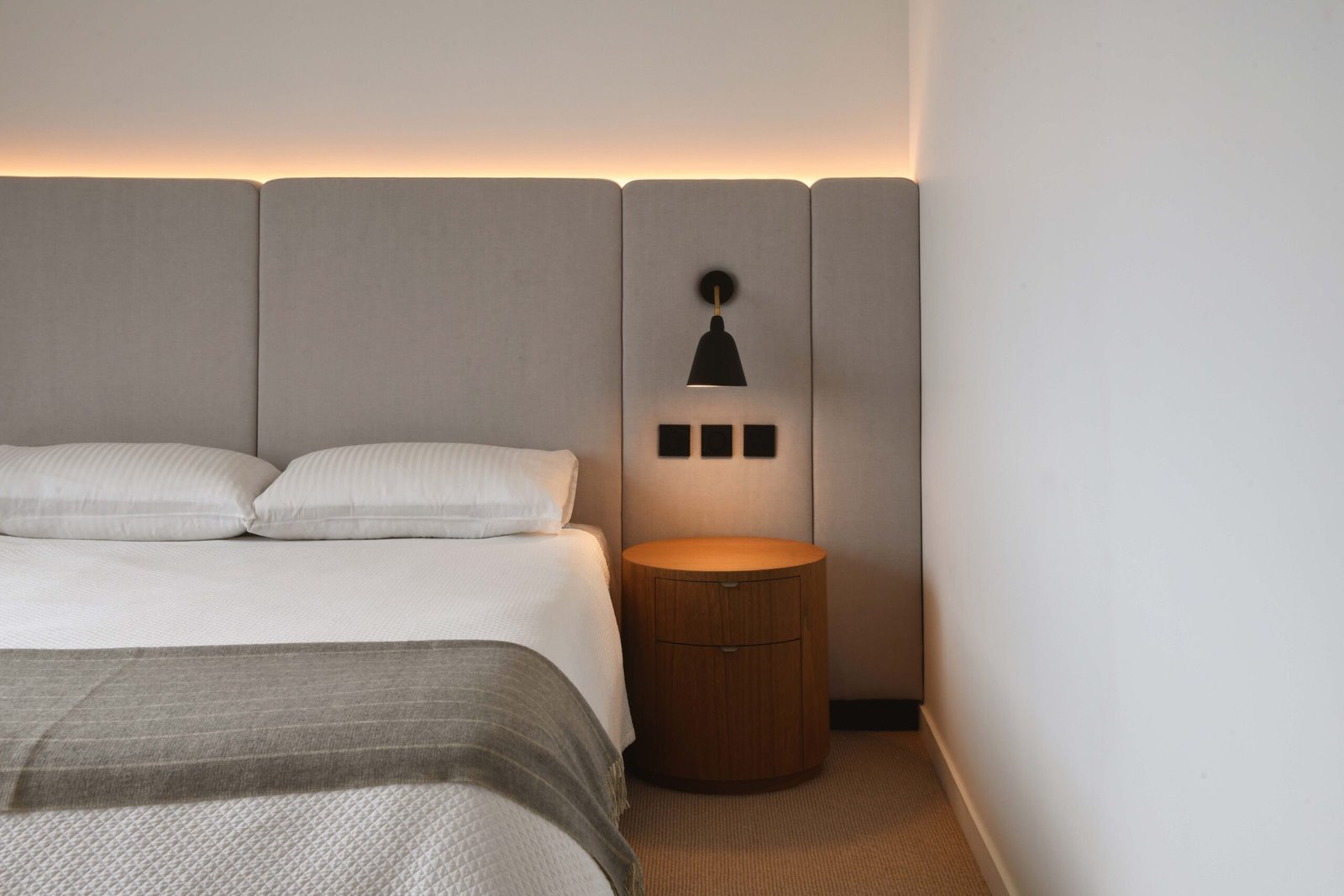
Evelyn Ting: We have several bespoke lights in the project: the wall lights above the living room bookshelves, the floor lamp, and the pendant light above the bar counter. Crafting that detail in the fixtures and built-in furniture in our interior projects, and in the structure and cladding for our architectural counterpart, is the ambition across all our projects. •