Interview Vanini Belarmino
Images Tekla Tamoria
Editor’s note: The introduction and interview by curator Vanini Belarmino below follow after AlterBibo 2025.
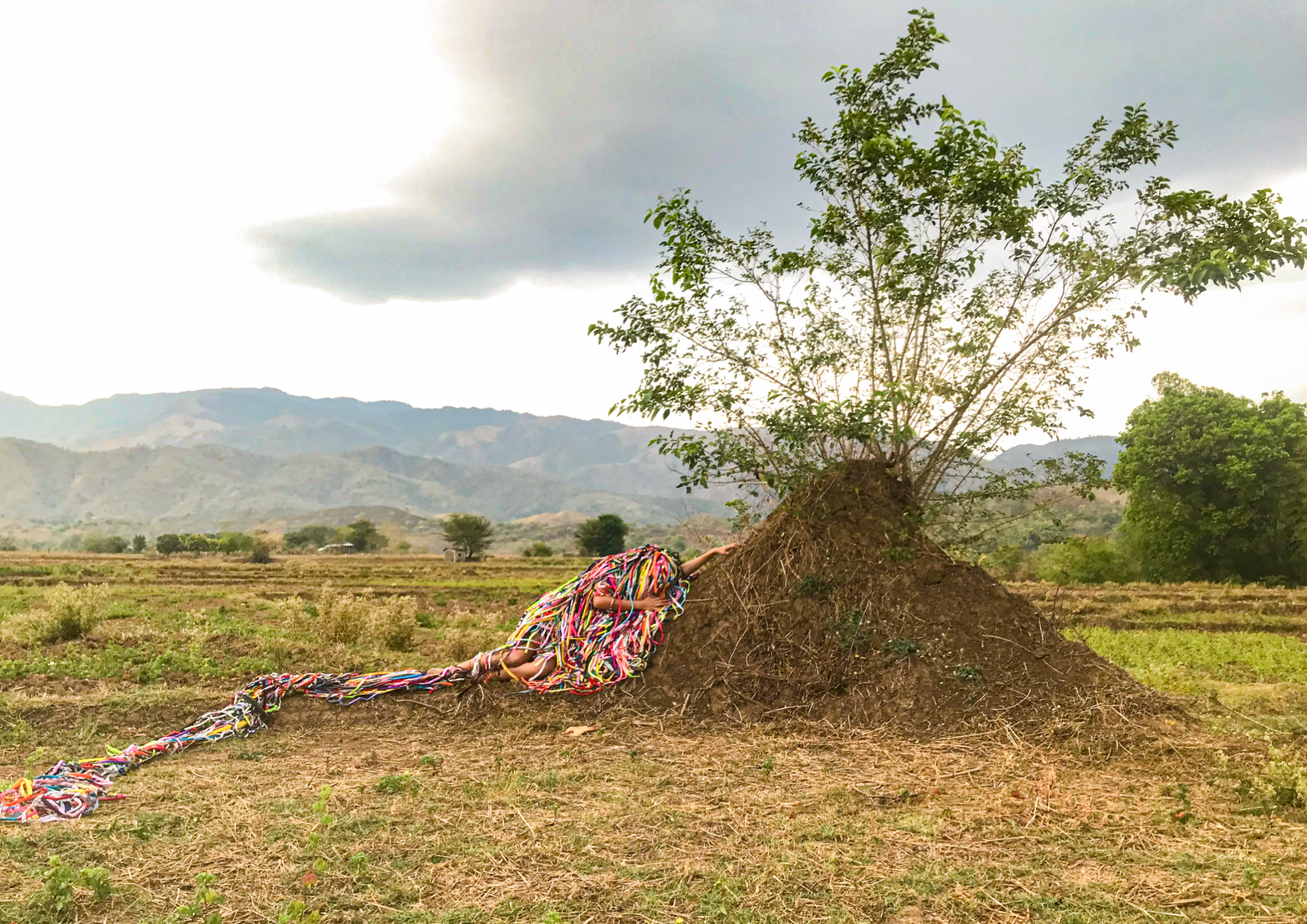
When we last spoke in March 2025, on the occasion of the solo exhibition dedicated to AlterBibo at ChinaHouse in Penang, Malaysia, our conversation traced the emergence of a wearable artwork that had moved beyond its initial form to become a living presence. From fabric scraps gathered during Tekla Tamoria’s TESDA training to performances unfolding in public markets, forests, and abandoned structures, AlterBibo developed through unpredictability, trust, and sustained attention.
Tamoria reflected on learning to follow the work, allowing it to lead her into unfamiliar territories of performance, sound, photography, and endurance. Most strikingly, she described AlterBibo as her “firstborn”: a being with its own agency, demands, and trajectory.
AlterBibo, 2026 marks another stage in this ongoing evolution. What began in 2017 as an intimate act of self-expression has, over nine years, become a sustained meditation on care, mothering, and becoming. The work now bears the presence of a child: playful, curious, and quietly insistent. It stands in gentle contrast to the artist’s present life, shaped by work, responsibility, and domestic care.
In this iteration, AlterBibo swings beneath the balete tree in front of Ayala Museum, its growing hair extending towards the rhythms of both city and nature. Shown alongside Vegetating Alternative Histories (2017–2019), the installation holds a tension between attention and release. The sculptural body, cast from the artist’s younger sister, folds familial intimacy into the work, while discarded fabrics and clothing signal a presence that is at once private and public—tenderly animated yet fully autonomous.
Presented in Triangulum’s Mothering/Unmothering, a project bringing together eight women artists across generations and life stages, AlterBibo invites reflection on care, responsibility, and letting go. This interview revisits themes from our earlier conversation: agency, materiality, time, and trust. This time, we meet these aspects from a different vantage point, shaped by distance and a work entering its pubescent years.
You once described AlterBibo as your firstborn—a work through which you explored performance, sound, and image-making, and learned to embrace uncertainty. Looking at AlterBibo, 2026, how has your understanding of that “birth” changed? Has time shifted the way you relate to the work emotionally or conceptually?
Tekla Tamoria: As a multidisciplinary artist creating works ranging from wearable art and tapestries to sculptural installations, my first step is always to define the core of each piece. For AlterBibo, the core is movement, play, and childlike wonder, a spiritual apparition of positive energy. As my firstborn, I still see her as the one with the youngest soul, a childlike wanderer, among all my creations. Her name reflects this: “Alter” from alter ego, and “Bibo,” meaning lively and full of life.
After I exhibited her, AlterBibo became “human” in my eyes — a living being, a representation of a part of myself. This practice also helped me separate myself from my creations. As a result, feelings of motherhood, care, and nurturing naturally emerged.
Over the years, as I have continued to explore new materials and deepen my understanding of fabric as a medium, my artistic practice and creations have evolved alongside me.

Earlier, you spoke of AlterBibo developing its own agency, which guided your decisions as much as you guided it. How do you experience that agency in AlterBibo, 2026? In what ways does the work assert itself now?
Through exhibitions and explorations of AlterBibo from 2017 to the present, and the perspectives of others, she has gradually developed her agency, character, and form. Personally, as much as I can, I exercise patience in my work. I do not rush the creative process. At times, I feel like a vessel for my creations, a humbling practice that keeps me grounded. Once a work is fully realised, I often refer to it in the third person, which fosters a parental connection to my pieces.
For AlterBibo 2026, I created a body—a sculpture moulded by my own hands—to share with a wider audience at Ayala Museum. In previous iterations, I used ready-made mannequins, but they never felt complete, as if there were a gap. To address this, I studied sculpture to create her own body, giving her presence a more complete and autonomous form.
In its earlier life, AlterBibo relied on your body—movement, endurance, and interaction with public spaces. Now it exists as a sculptural installation. How does this shift change the work’s life, presence, or impact?
For this installation, AlterBibo features a body modelled on my younger sister. I cast her arms and legs, which lend a sense of familial intimacy and comfort. Placing her in the balete tree invites viewers to connect with Filipino beliefs, such as the “babae sa balete” (the woman in the balete tree), yet her presence here evokes wonder and a sense of childlikeness. She remains colourful and inviting, a lively presence with a touch of oddity, not fear.
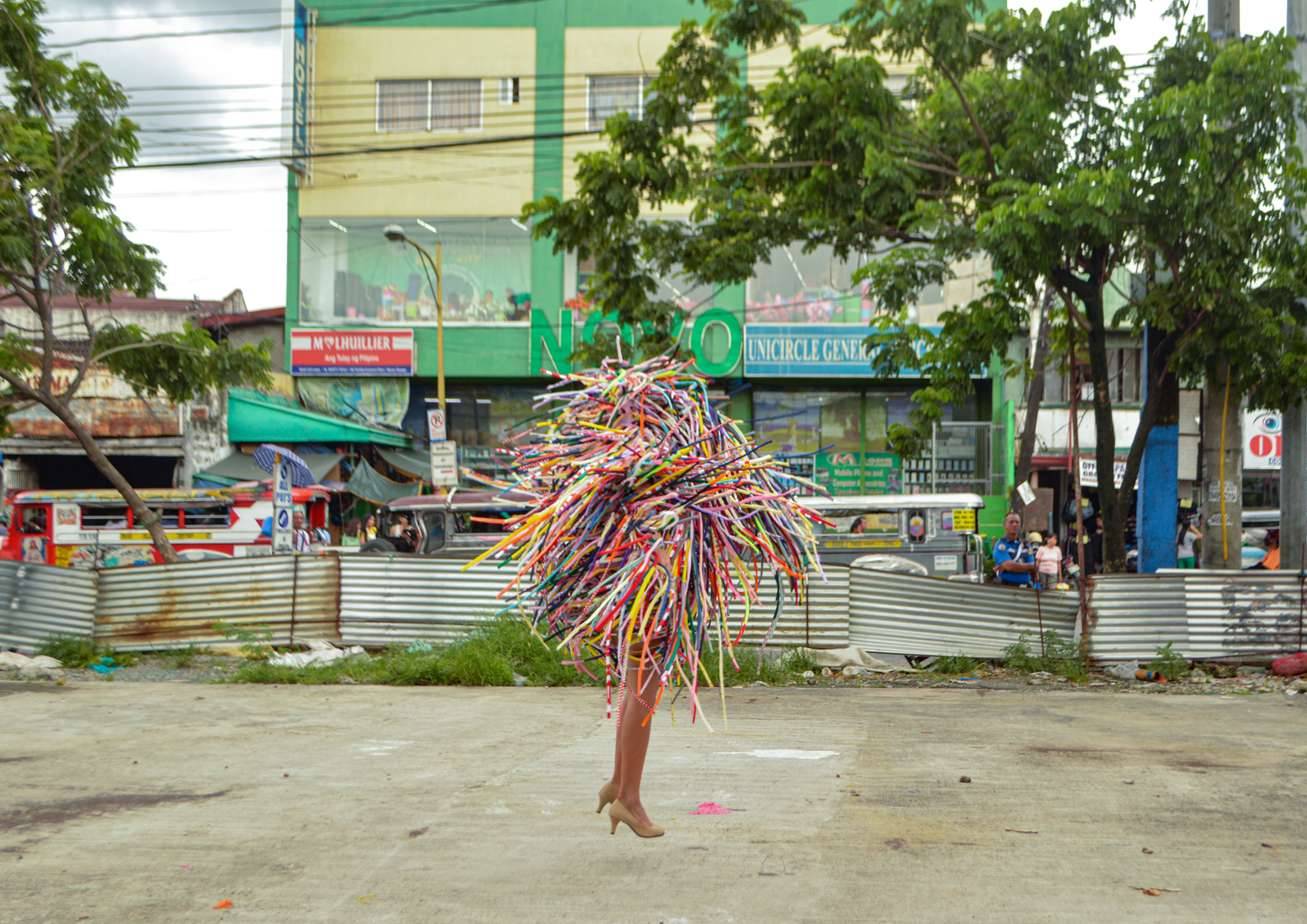
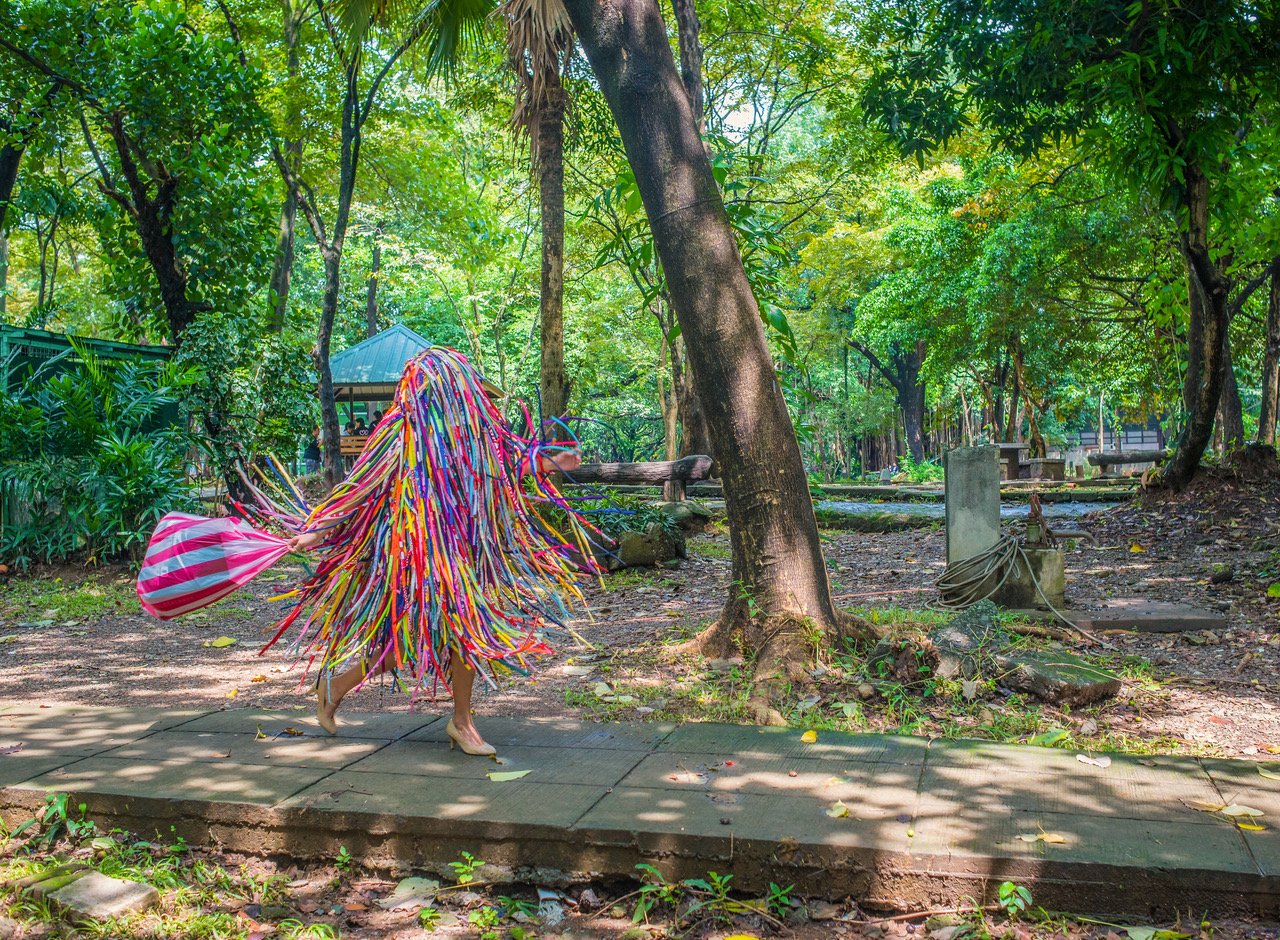
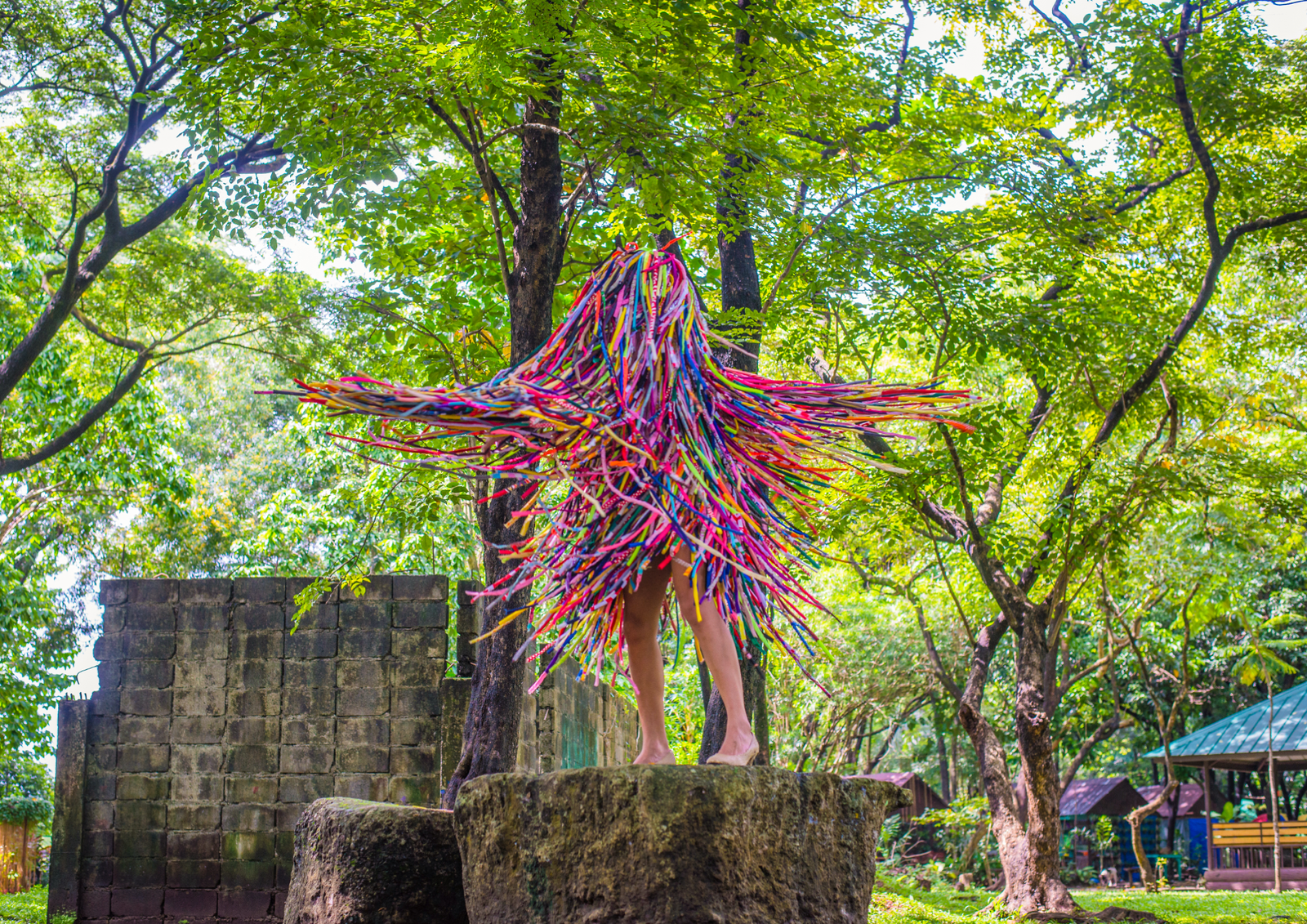
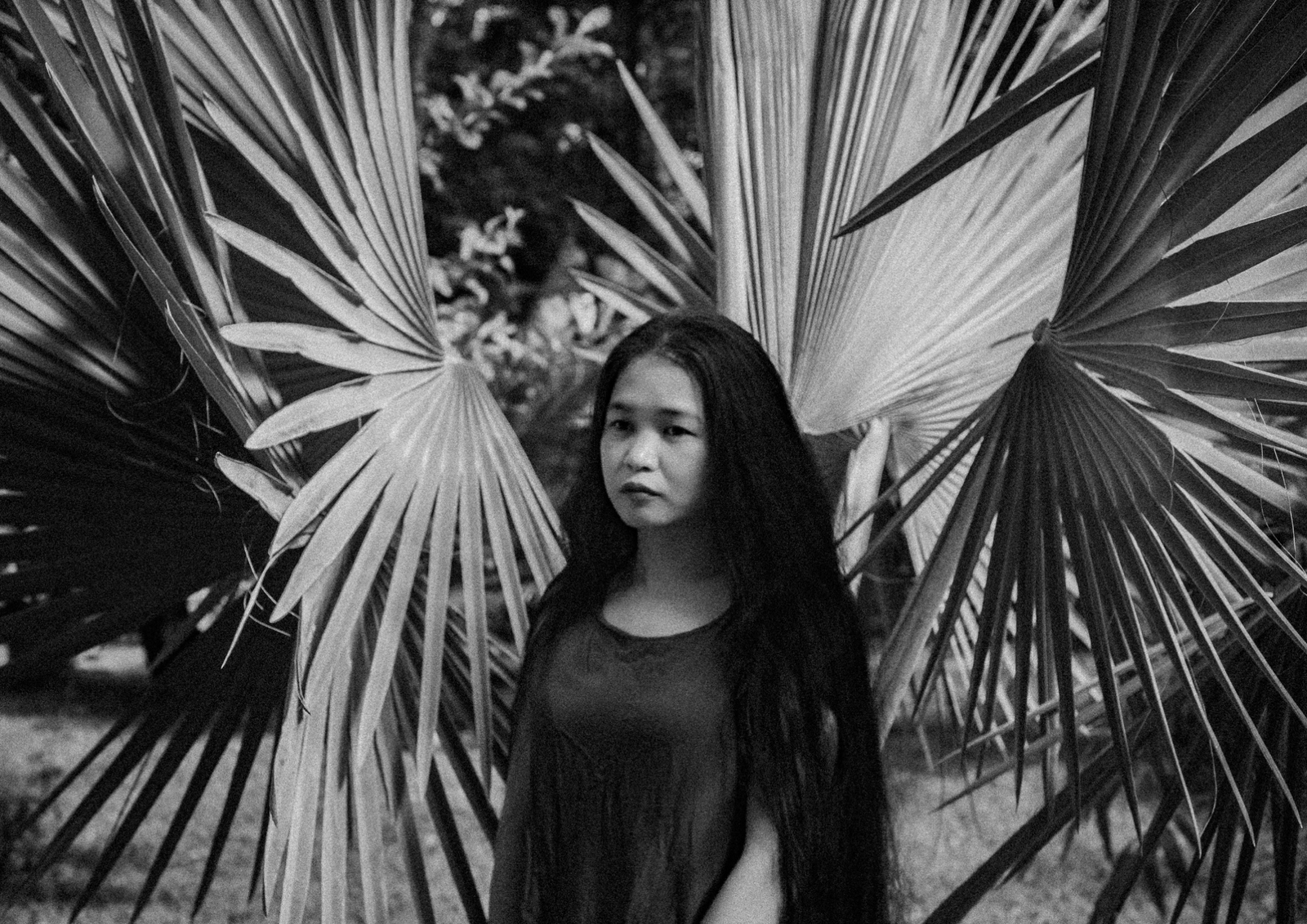
Above: AlterBibo, 2017, photographed by Ralph Barrientos. Below: AlterBibo, 2018
AlterBibo’s hair grows longer, and its stitching becomes more refined over time. How do these material changes reflect your own growth as an artist? In AlterBibo, 2026, how does the work carry or measure time differently than before?
Since 2018, each time I exhibit AlterBibo, I have lengthened her hair. It became a rule, a visual measure of growth over time. For the 2026 iteration, I decided to go even further, examining her hair strand by strand, checking each fabric, and repairing or enhancing where needed. My improved knowledge of textiles allows me to refine the installation. I also remembered that the last time I displayed her in the Philippines was in 2019. For this opportunity, I wanted her to be the best she could be.
Within the Mothering/Unmothering framework, AlterBibo, 2026, evokes care, responsibility, and release. How does this work speak to your understanding of mothering—or unmothering—and what does letting go look like in your current artistic practice?
In my practice, creating art is as much an act of nurturing as it is of making. I nurture the core values of my work. From altering her hair to mending AlterBibo for each exhibition, I reflect on what she represents within me. Our growth is intertwined—her development mirrors my own.
Am I mothering myself through my art? Yes. Much of my work centres on womanhood, Filipino cultural narratives, self-expression, and healing. Working alone in my studio, confined within the four corners of my room, gives me the freedom to play and explore.
Beyond the studio, I carry many roles: the breadwinner of my family, a daughter, a responsible sister, a friend, and a collaborator. At my core, however, I am the mother of my creations—sacrificing health, time, and energy to see how far they can grow. Yet, once a work is displayed, I release it. The audience’s response is beyond my control, but their perspectives enrich my practice, keeping it alive and evolving. •