Interview Vanini Belarmino
Images Jane Jin Kaisen
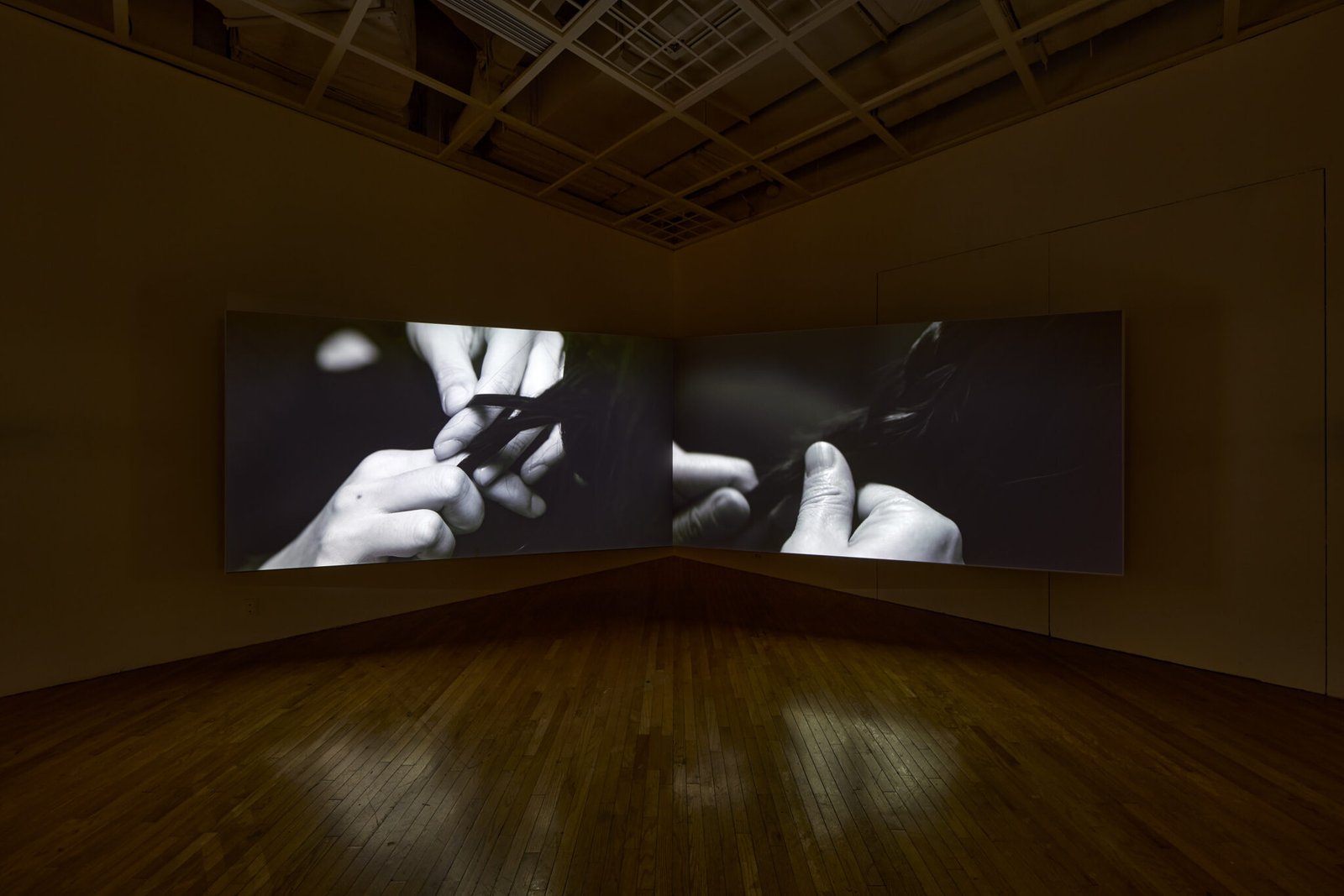
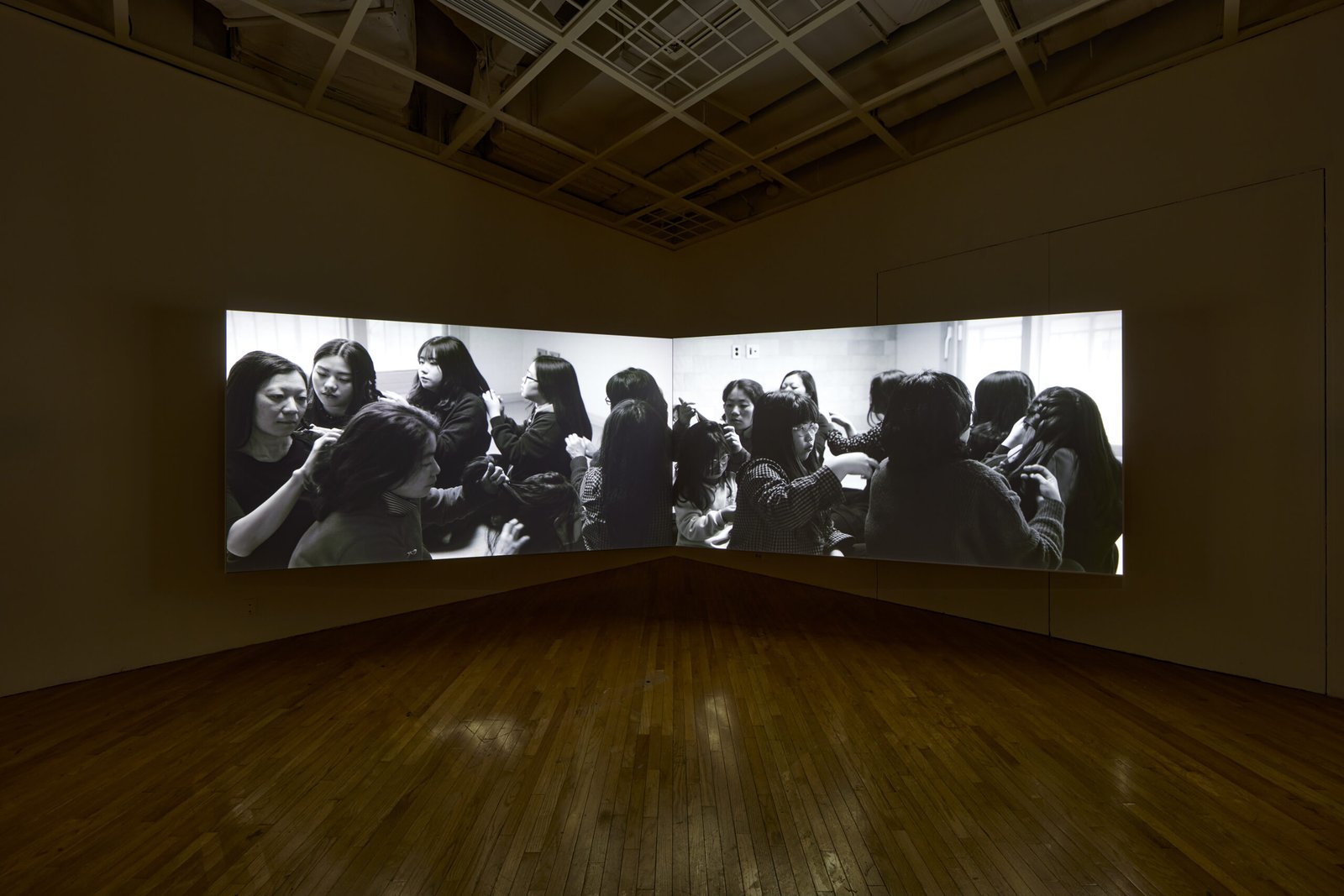
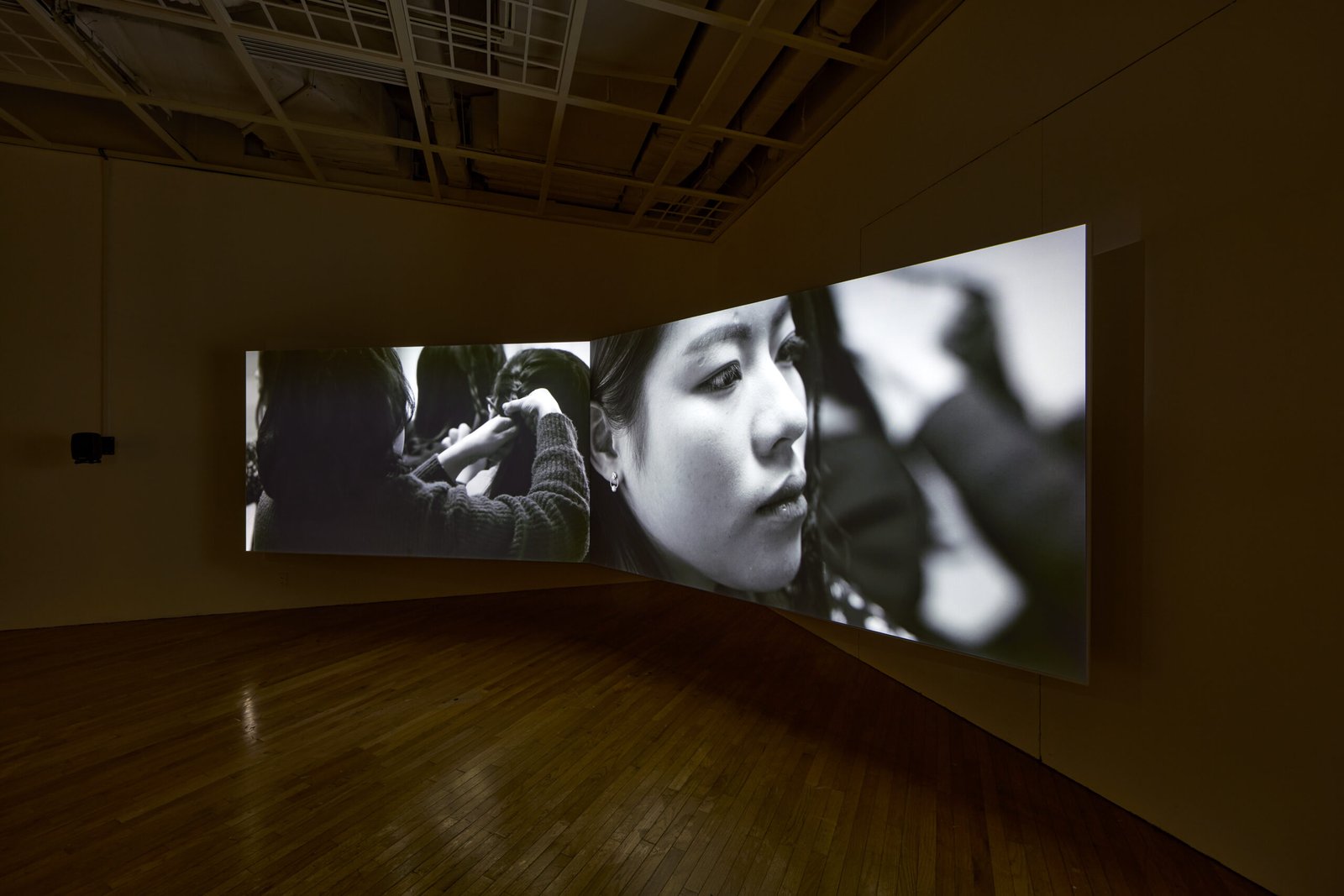
In Braiding and Mending, Danish-Korean artist Jane Jin Kaisen presents a dual-channel black-and-white video installation that unfolds as a quiet, meditative act of care, memory, and intergenerational connection. Over the course of the six-minute work, women from several generations—including the artist herself, alongside her sisters and nieces—sit in a circle, braiding and combing one another’s hair. The camera slowly revolves, emphasizing the intimacy of the gestures and the ritualised movements that bind the participants together.
The work reflects Kaisen’s own life trajectory. Adopted to Denmark as an infant, she has lived at a physical and emotional distance from her biological family, who were raised in Jeju, Korea. In this context, the careful and unhurried act of hair braiding becomes a symbolic gesture of reconnection—an embodied process of healing and the transmission of memory across generations.
Within the framework of Mothering/Unmothering, Braiding and Mending explores themes of familial bonds, care, embodiment, and the often-invisible relational labour of women. It reveals how intimate, repetitive gestures can carry deep cultural, emotional, and political resonance, offering a space to reflect on kinship, separation, and continuity beyond normative definitions of motherhood.
Vanini Belarmino, curator of Mothering/Unmothering: Since we met in Copenhagen in October 2021, I have hoped for the opportunity to work together, and I am honoured to present Braiding and Mending within Mothering/Unmothering.
When I first mentioned the project and its title, what was your initial response? How does Mothering/Unmothering resonate with you, given your long-standing engagement with transnational adoption and your lived experiences as a daughter and a mother?
Jane Jin Kaisen, artist, Braiding and Mending: I am very pleased to be part of this project since the notions of ‘Mothering’ and ‘Unmothering’ resonate deeply with me. I am recalling now how I once wrote that the place I create from is one of translation, of being at the thresholds and exploring what it means, among other things, ‘to be a mother who is herself a daughter of m/others, an orphan of two histories and cultures, an inheritor of a division, a migrant, an/other.’ What this is meant to evoke is that the question of motherhood for me, from the vantage point of being transnationally adopted, is one that brings into play both dimensions of recognition and intimacy, but also otherness and separation. The evocative title Motherting/Unmothering, to me, holds the ambiguity.
Transnational adoption, as a structure and historical process, indicates the extra-familial transfer of children mostly from sending countries in the global south and east to receiving countries in the global north and west. Within this practice, which for the child in most cases means assuming a whole new identity: name, family, culture, language, nationality, and often also religion and different racial milieu, is that all legal ties are cut between the child and the birth mother and birth family, so the structure of transnational adoption is a structure of ‘unmothering’ and of erasure. As I became a mother myself, I understood how violent the notion of “unmothering” can be when it is externally enforced. When it comes to the notion of “mothering”, family structures and perceptions of how to be and behave as a mother can be very narrow, so I also welcome a nuancing of what ’mothering’ can mean.
Can you talk about the genesis of Braiding and Mending? How was it conceived, and how did involving your sisters and nieces affect your work emotionally and conceptually?
Braiding and Mending is one of these works that was very clear to me from the beginning. It emerged for me as a very vivid inner image, and the final video work resembles this apparition. In the work, which is configured as a 2-channel synchronized video of a duration of six minutes, a group of female participants of several generations who sit in a circle arranging each other’s hair: combing and braiding it in calm, gentle movements. In the beginning, the camera is very close-up, and you see hand gestures, fingers running through hair. The work is slightly slow-motioned, and the camera revolves around the group of women who are all preoccupied by the act of braiding hair—every woman’s hands are touching the hair of the woman in front of her, and they are all connected in a circle. It is a very intimate and meditative work.
Across several of my video works, I have been interested in the intersection of performativity, ritual, and the everyday. Rather than working with professional actors, I tend to work with individuals and communities with whom I have built a relationship over time and whose life stories and personalities I am compelled by. I have found that this kind of filming situation, in which people are encouraged to be themselves while enacting a ritual or performative gesture, is very meaningful. When situations are familiar and yet something out of the ordinary, it can allow for another kind of intimacy and heightened attention, a liminal space where the people involved can consider themselves and their interrelation in new ways. I have also experienced that this kind of approach can allow people to see the beauty and meaning in aspects of their lives that they might otherwise take for granted or consider mundane, and can open up new and interesting conversations between participants.
With Braiding and Mending, I think the filming situation offered this kind of space for my sisters, nieces and me to be together in a different way, to reflect upon our relationship in a calm, non-verbal, intimate way where each person, through the act of braiding hair, formed a quiet connection.
How do the gestures of braiding, combing, and touching articulate lineage, intergenerational memory, and forms of embodied knowledge in your work?
I’ve always believed that a person’s hair can carry meaning and affect. I think many minoritized individuals who have grown up being racialized can relate deeply to how hair, having black hair in a white culture, is a strong racial signifier and a signifier of difference, something that was both admired but also made abject, and in any case, a marker of difference.
Growing up in Denmark in the 1980s and 1990s, there was this idea that transnational adoptees could be completely assimilated into Danish culture, and I grew up being told that I was just like everyone else, but my hair was always a signifier of another history, of another biological family history, of another past. So hair, when I was growing up, was a marker of an unspoken but very visible difference. When I reunited with my birth family in the early 2000s, it was striking to my sisters and me how much we resemble each other both physically, mentally, and psychologically, despite having grown up in completely different cultures and social environments. They also have very thick black hair, so over time, hair for me also became a marker of belonging, recognition, and intergenerational connection.
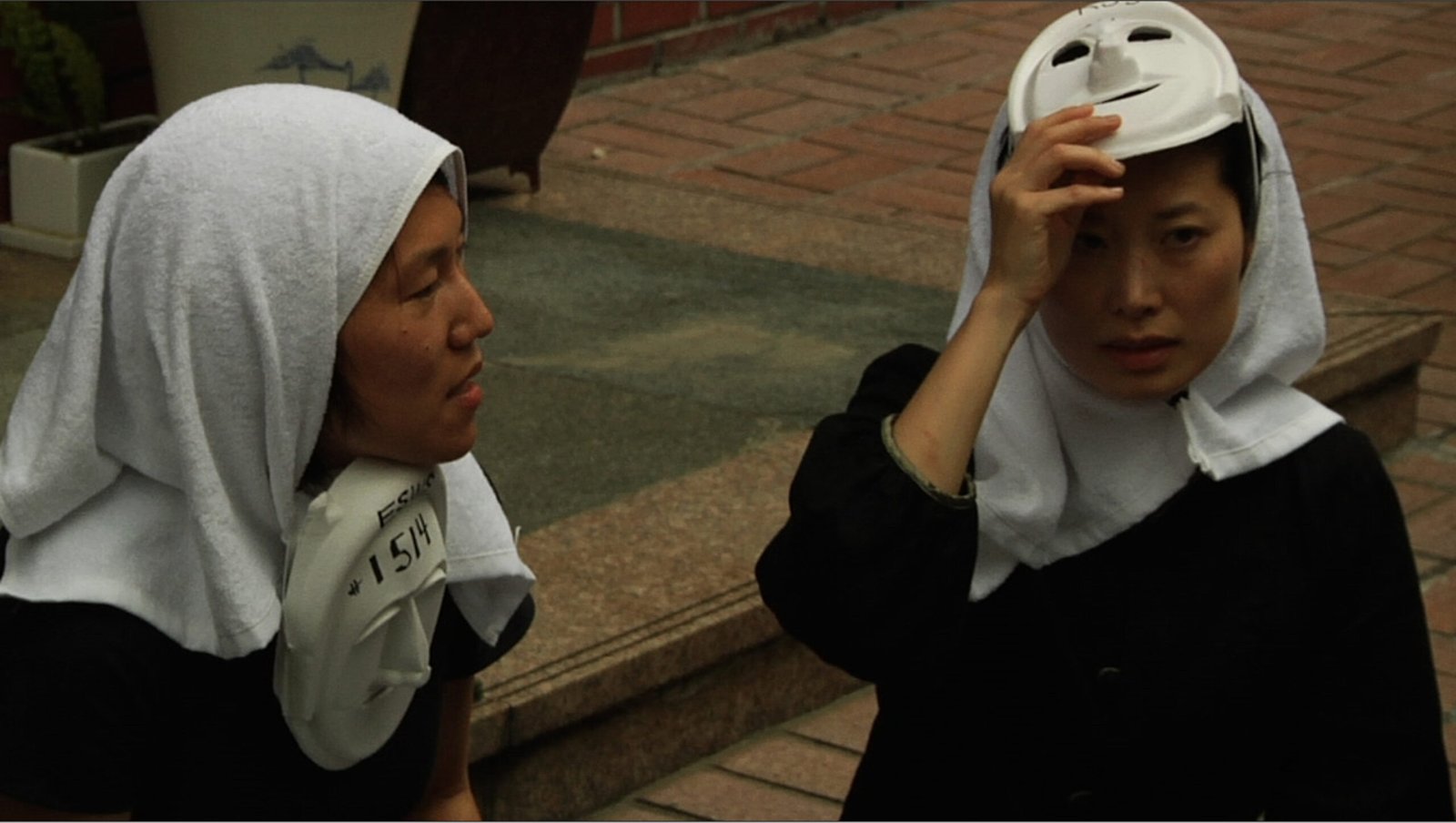
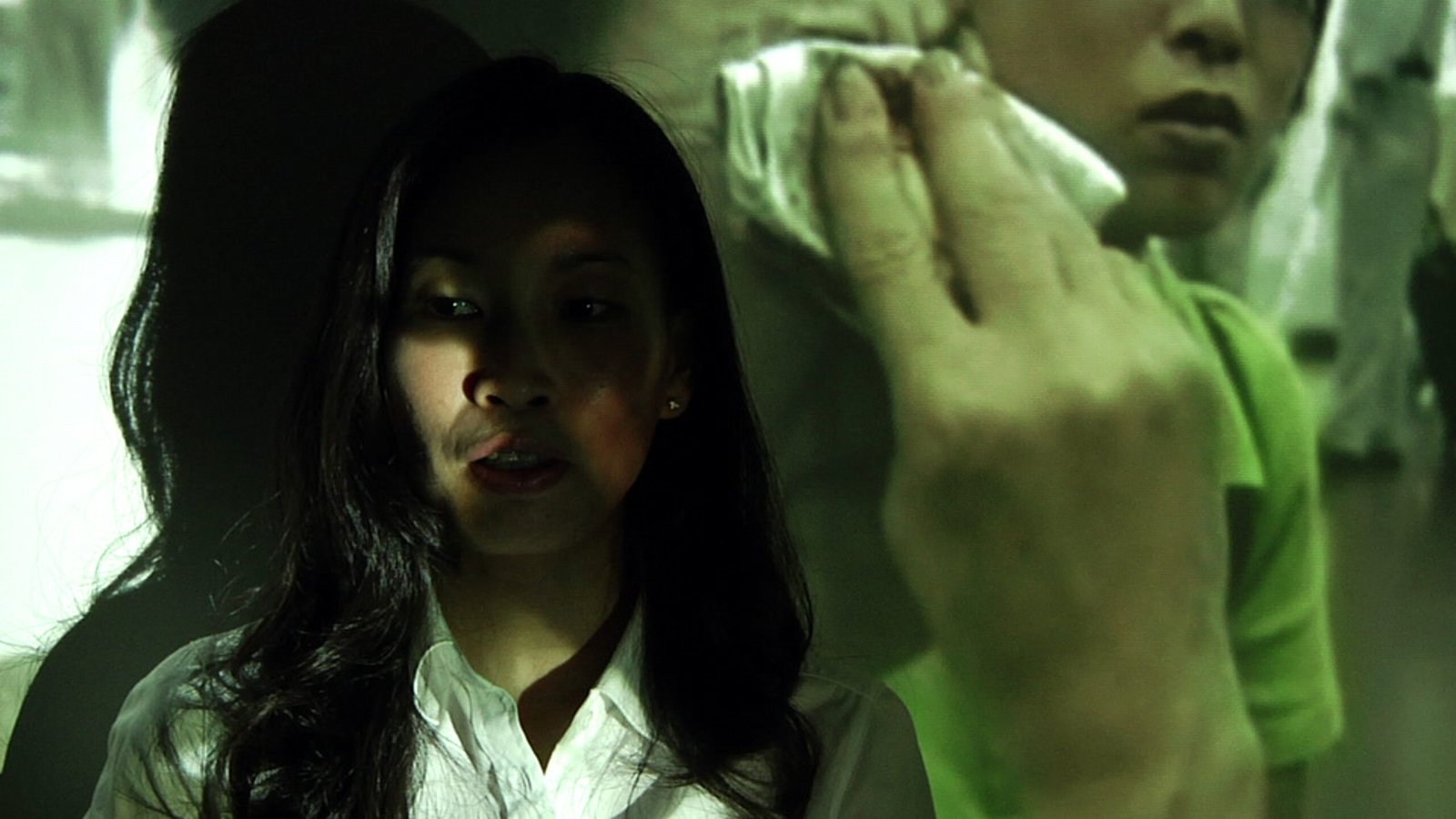
Stills from The Woman, The Orphan, and The Tiger, 2010.
Within the framework of the show, how do you see the work engaging with care, kinship, and relational labour? Do you view these gestures as acts of repair, continuity, resistance, or something more ambiguous?
The title Braiding and Mending is important to the work. The act of braiding hair is a very embodied act, an act of intimacy, of care and relation. It is also laborious. In the act of braiding in the video, there is a dimension of rekindling relations. In that, I think one can read a dimension of repair, of healing and of mending severed kinship ties. This also serves as a form of resistance, a resistance to a process of separation that none of us chose. Time is also important to the work. There is a juxtaposition of times, and the act of braiding and mending can be viewed as a memory-making act in the present that brings the past into relief, but it is focused on foregrounding a present and future of relation. In doing so, there is also a dimension of mending the past.
As the work is both profoundly personal and includes your own presence, how did you negotiate the shift from familial intimacy to public address? What strategies enabled you to remain present as an artist while working within a family context?
Except for grading the video in high contrast black and white and making some edits, there is very little manipulation to the video. The setting was very natural, filmed in a domestic environment that was familiar to everyone involved, with just one camera rather than a big crew. This allowed us to be immersed in the act of braiding and in the situation of togetherness rather than being too focused on the camera. It is very important to me, in all my work, to establish a sense of intimacy where the people involved feel comfortable and seen not only in the roles they perform but also as individuals and as part of a collective act. I am interested in bridging the everyday, and it was important to me that the setting be natural, so everyone was wearing their regular clothing, and there was no lighting setup, special makeup, or additional staging. I think this enabled everyone to remain present and immersed.
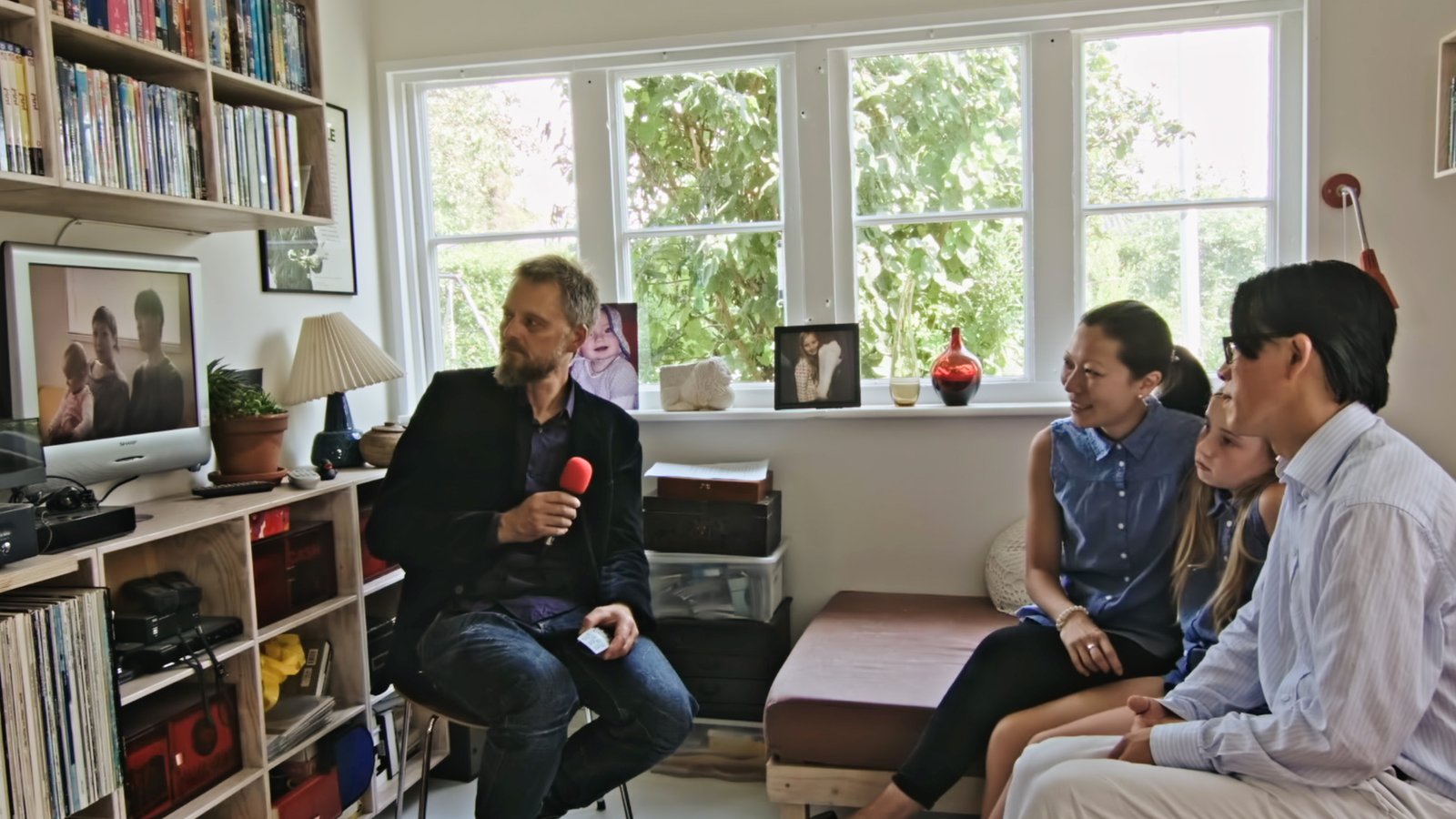
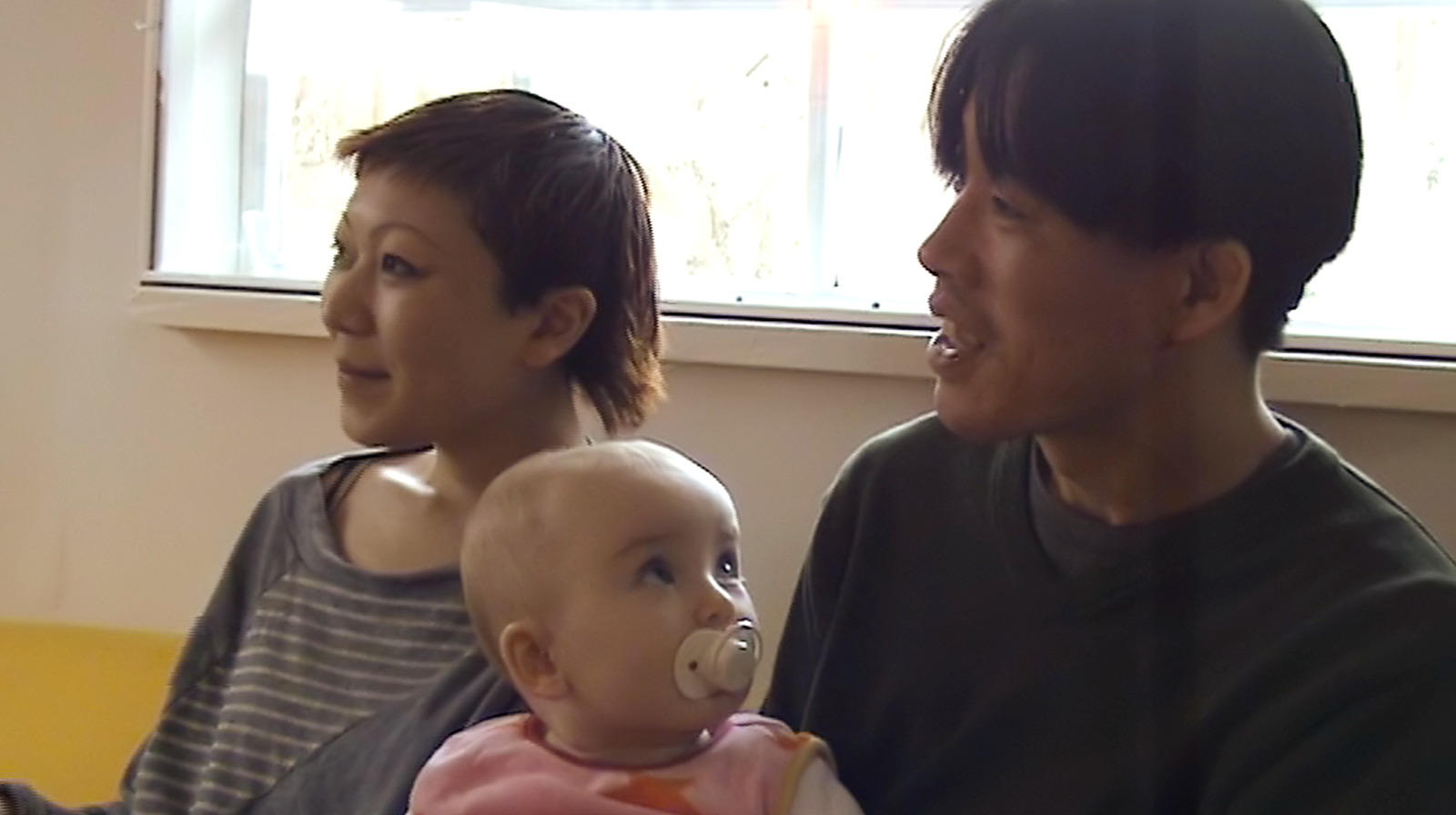
Shared moments by the artist: Revisiting the Andersons in 2015, and Adopting Belinda in 2006
Braiding and Mending has been presented in diverse cultural and institutional contexts over the past five years, and will now be shown in the Philippines for the first time. Although the video itself remains unchanged, how has the work revealed itself differently through reinstallation and encounter with new audiences?
What kinds of recognition or questions do you hope viewers carry with them—particularly around care, kinship, memory, and transnational histories—and how do you imagine these themes resonating within the Philippine context?
The work has been shown in several contexts, including Denmark, South Korea, the United States, and Brazil. While my works address historical, social, and political themes, they also engage viewers sensorially and emotionally. It is always deeply interesting to me to present and experience how the work comes alive through encounters with new audiences. For me, the most successful presentations are those that allow for intimacy, introspection, and reflection. In these conditions, the work can open up a space where audiences reflect not only on what they see, but also on their own relationships to kinship, dimensions of care, intimate relations, embodied experience, transgenerational memory, and female labor.
I hope the encounter offers an experience first: one that stays with the audience—and that, through deeper engagement, some viewers may feel compelled to explore the underlying ideas further.
In the Philippines, I am particularly curious about how audiences will respond to the history, duration, and scale of Korean transnational adoption and possibly reflect upon that in relation to histories of gender and labor migration in the context of the Philippines. I am also interested in how viewers might respond to the work’s natural representation of women, which differs from dominant K-pop imagery, as well as to its broader reflections on connection, family, and kinship across cultural and geographic distances. •