Words Lex Balaguer
Images Patrick Kasingsing and Lex Balaguer (Art Fair Philippines and ALT ART)
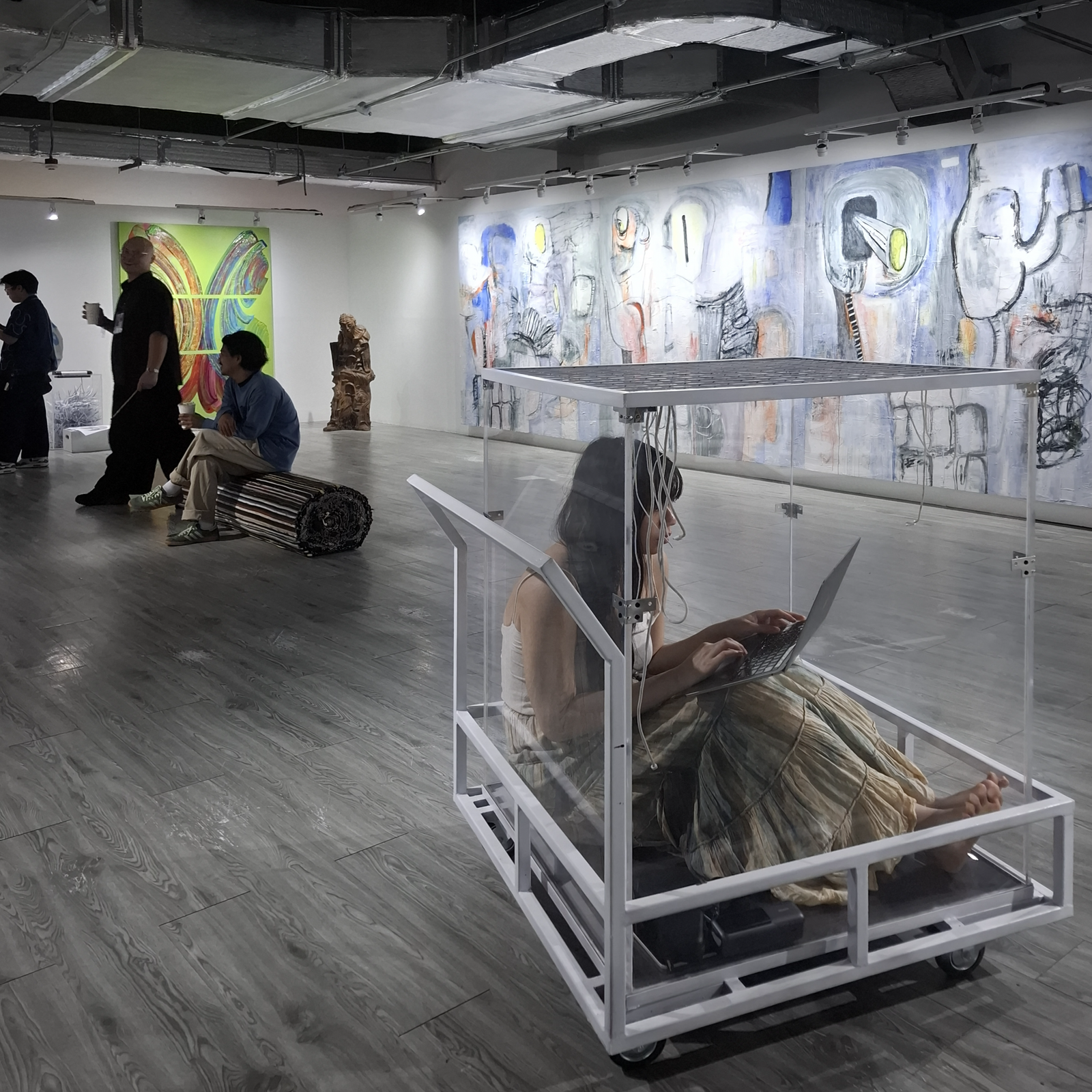
When I saw Thai artist Pitchapa Wangprasertkul’s durational performance The Standard (2022, 2026), I felt a visceral sense of recognition. Encased in a transparent glass box for eight hours a day, the length of a standard workday, the artist-employee performs the actual tasks of a full-time worker. With her legs cramped and feet braced against the glass, she was working on a graphic design project when I visited on February 6, 2026. The sight triggered memories from over a decade ago when I was a young gallery assistant. I recalled the relentless cycle of updating object lists, writing captions, installing works, and managing the temperaments of artists and collectors, all while pushing for a sale. Wangprasertkul’s performance highlights how societal “standards” like the eight-hour workday function as ideological tools. They condition us to accept suppressive environments as “normal” or “fair.” While collectors circulate to consume art as a luxury, Wangprasertkul, along with many art writers, cultural workers, and artists, remains “on the clock” inside a box. The fair is really a site of mundane, corporate labor. It is a fitting critique for its new venue at One Ayala, where corporate offices had been transformed into white cubes.
The performance serves as a potent metaphor for how the market frames the contemporary art experience. Inextricable from the arts economy, the field’s internal criteria for value are increasingly replaced by the external logic of a globalized market. In the current climate, a troubling shift in priority has emerged: the drive for sales frequently eclipses the desire to contribute a meaningful message. Argentinian anthropologist Nestor Canclini puts it bluntly in his 1995 book “Hybrid Cultures”: a shift is visible in the art world’s changing power structures: the financialization of artworks and the struggle of cultural workers to compete with private capital. Similarly, Noah Becker, American artist and writer, in his Whitehot Magazine of Contemporary Art quips, “Criticism has been replaced by vibes. Curators are brand managers. Galleries are lifestyle companies. Magazines compete for access instead of truth. Everyone is afraid of being uninvited, unfollowed, or quietly erased.”
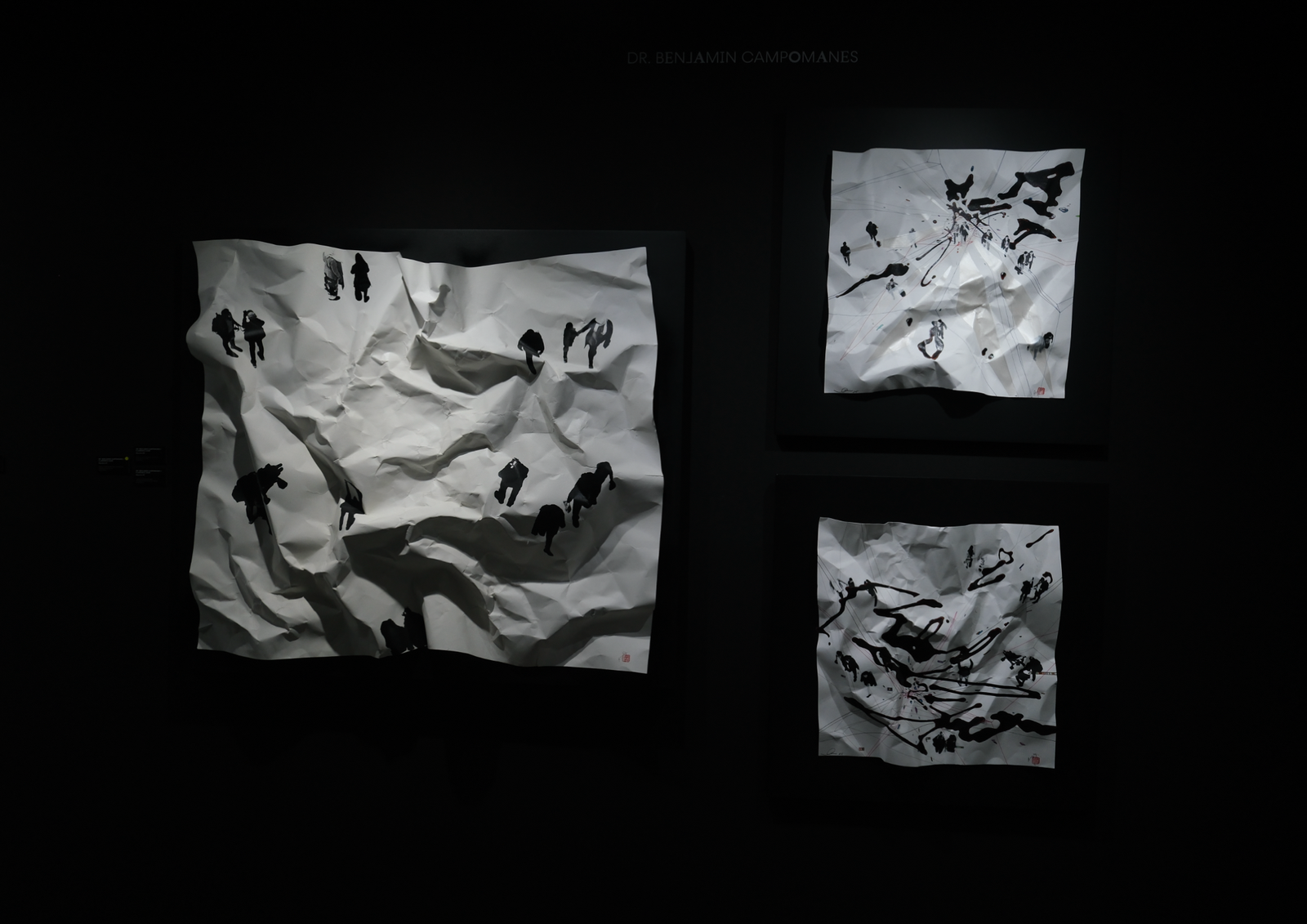
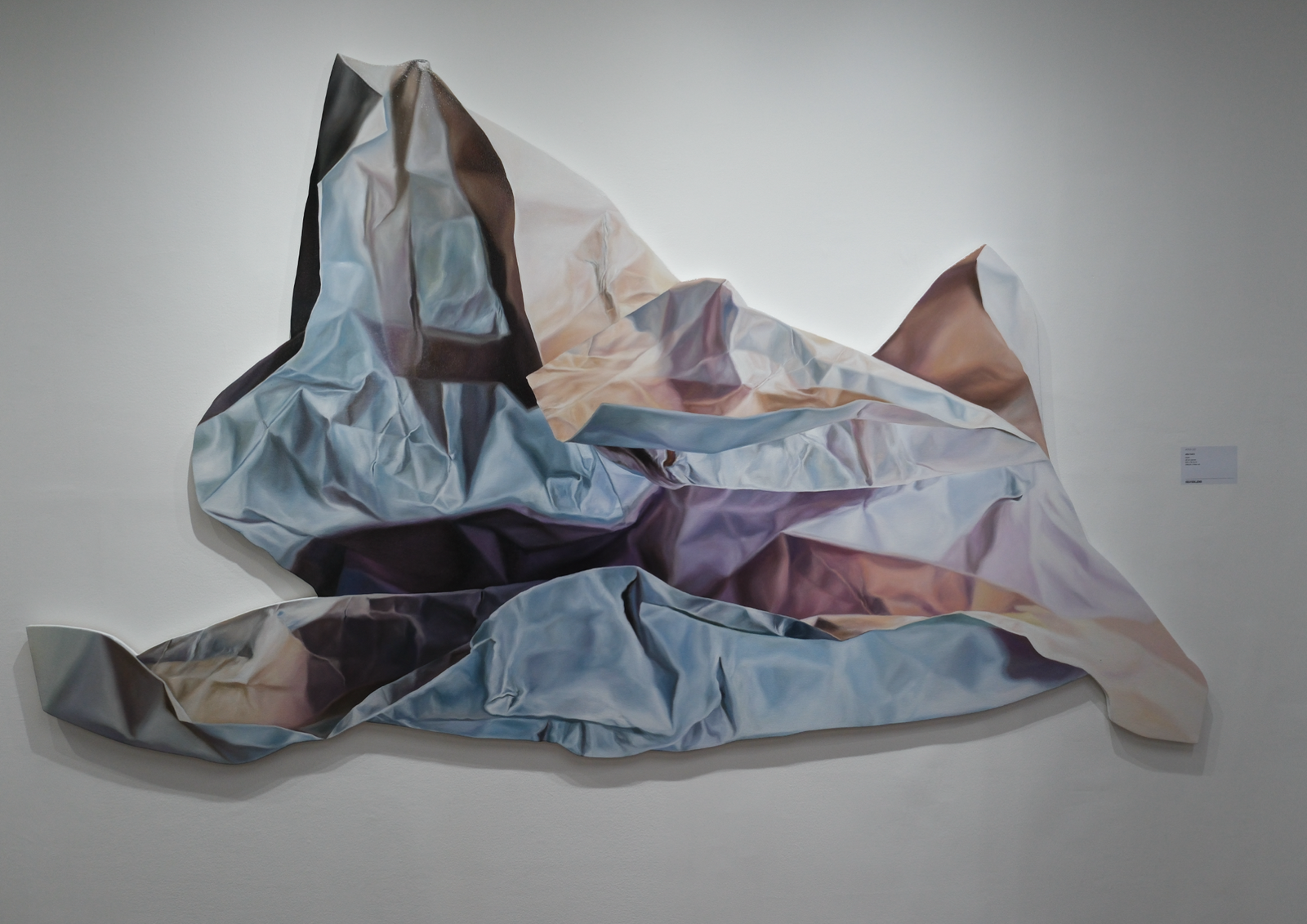
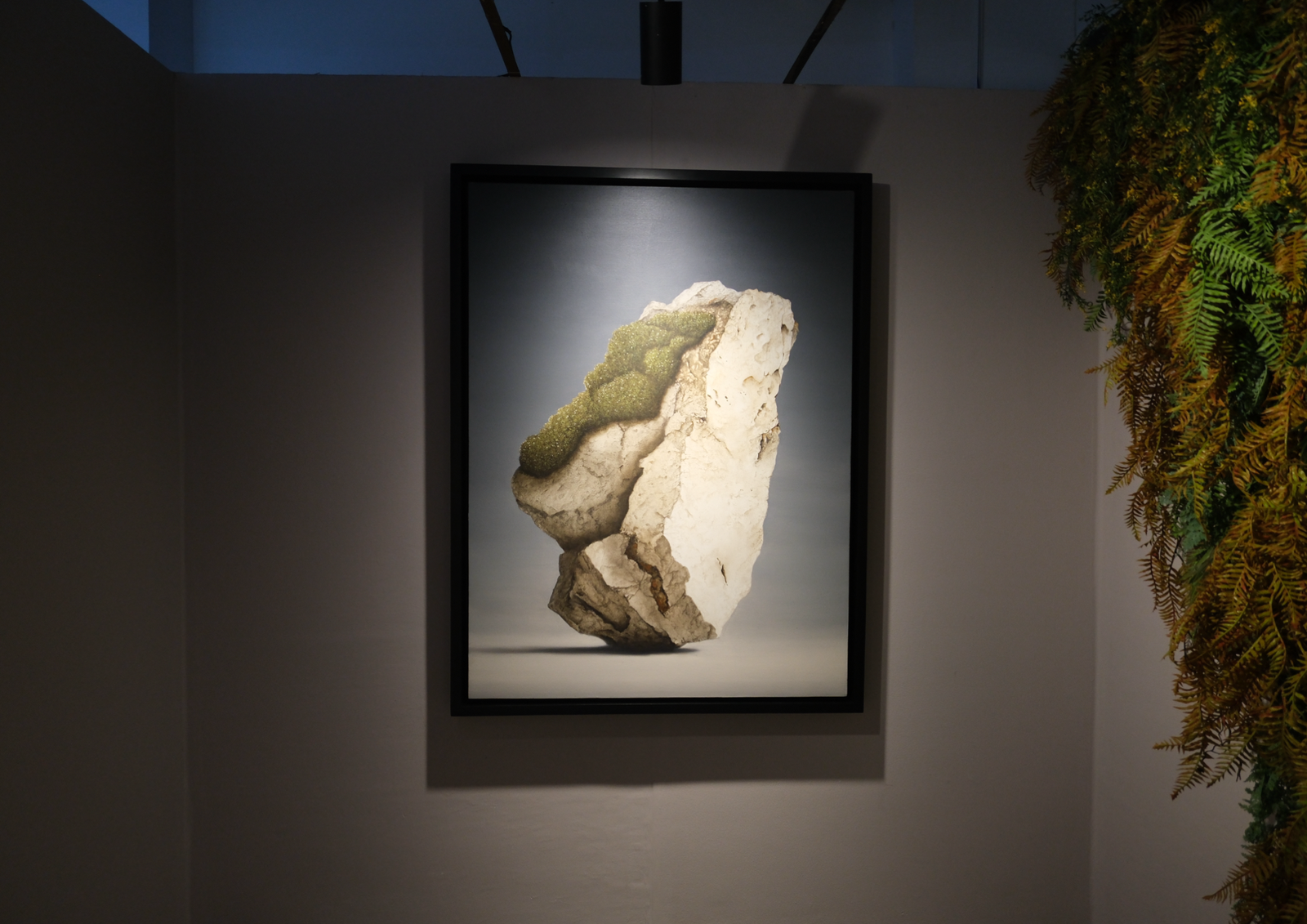
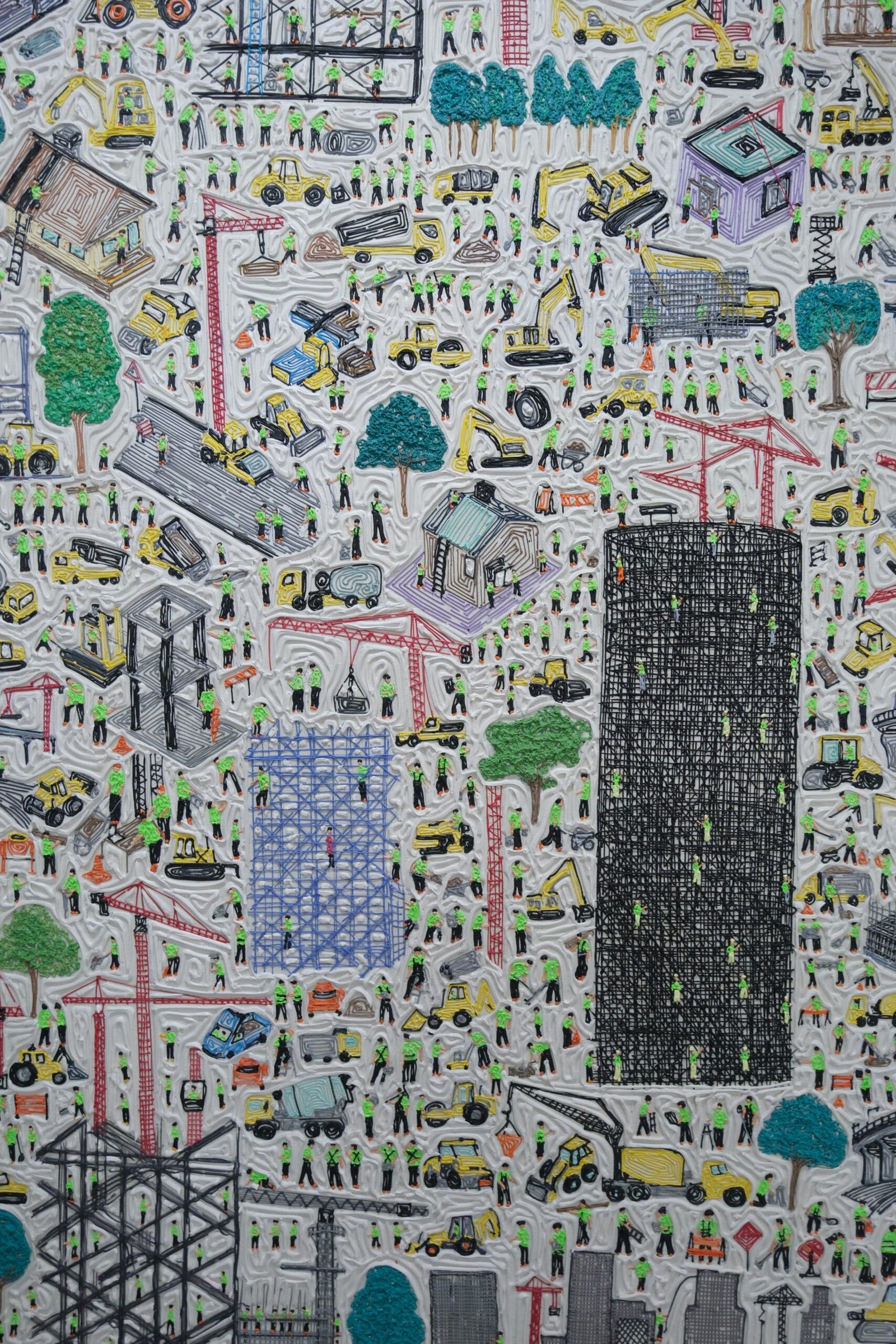
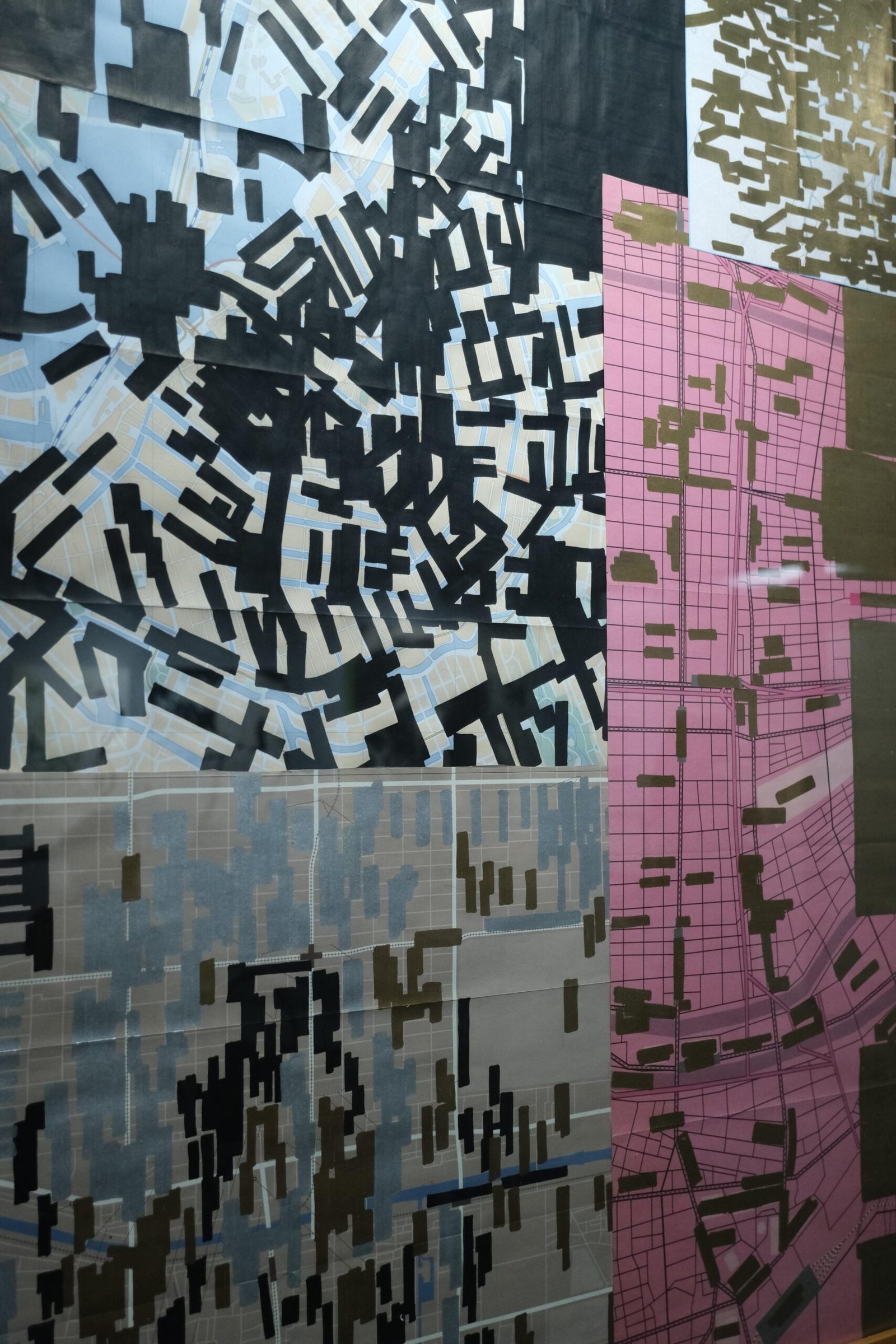
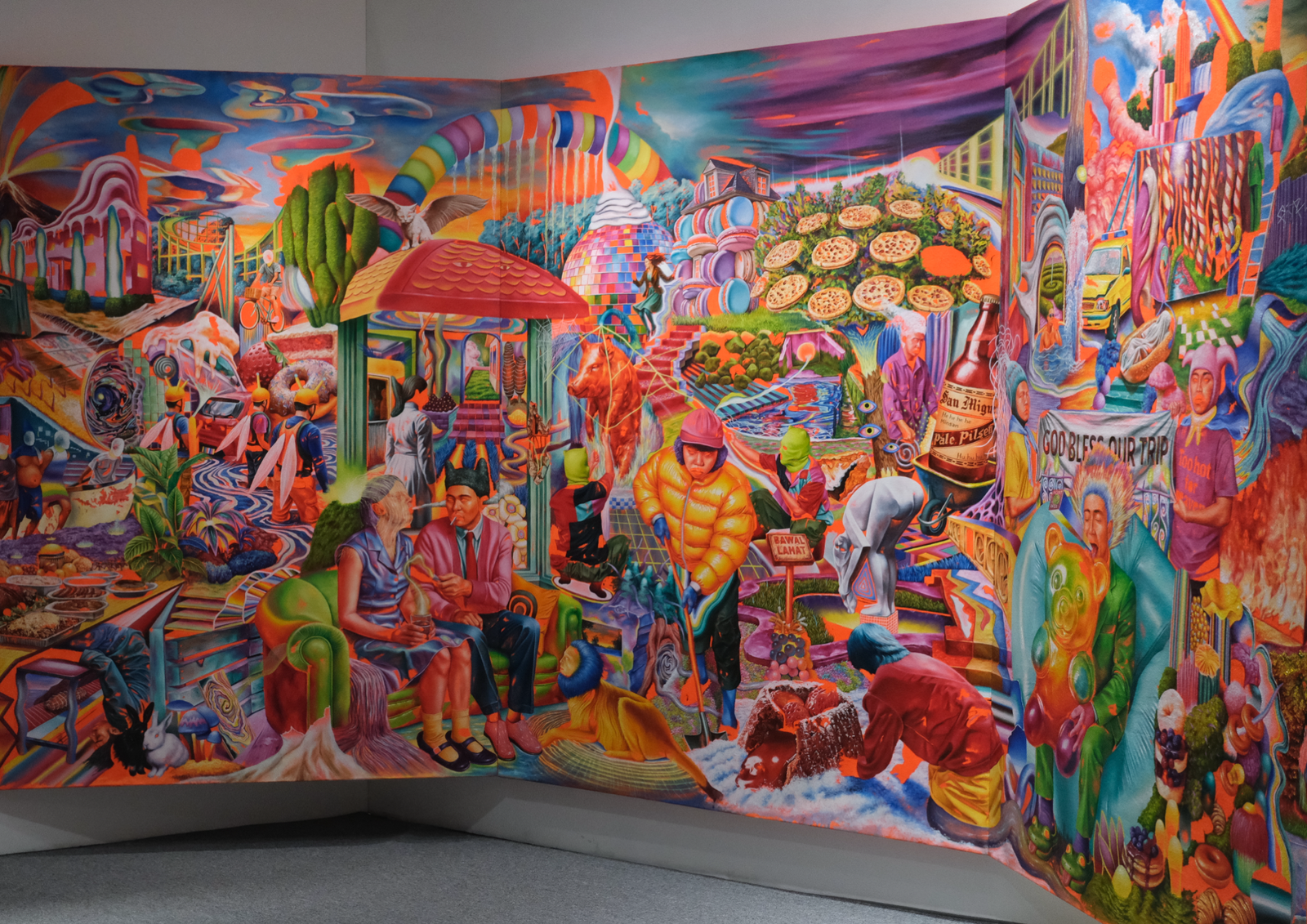
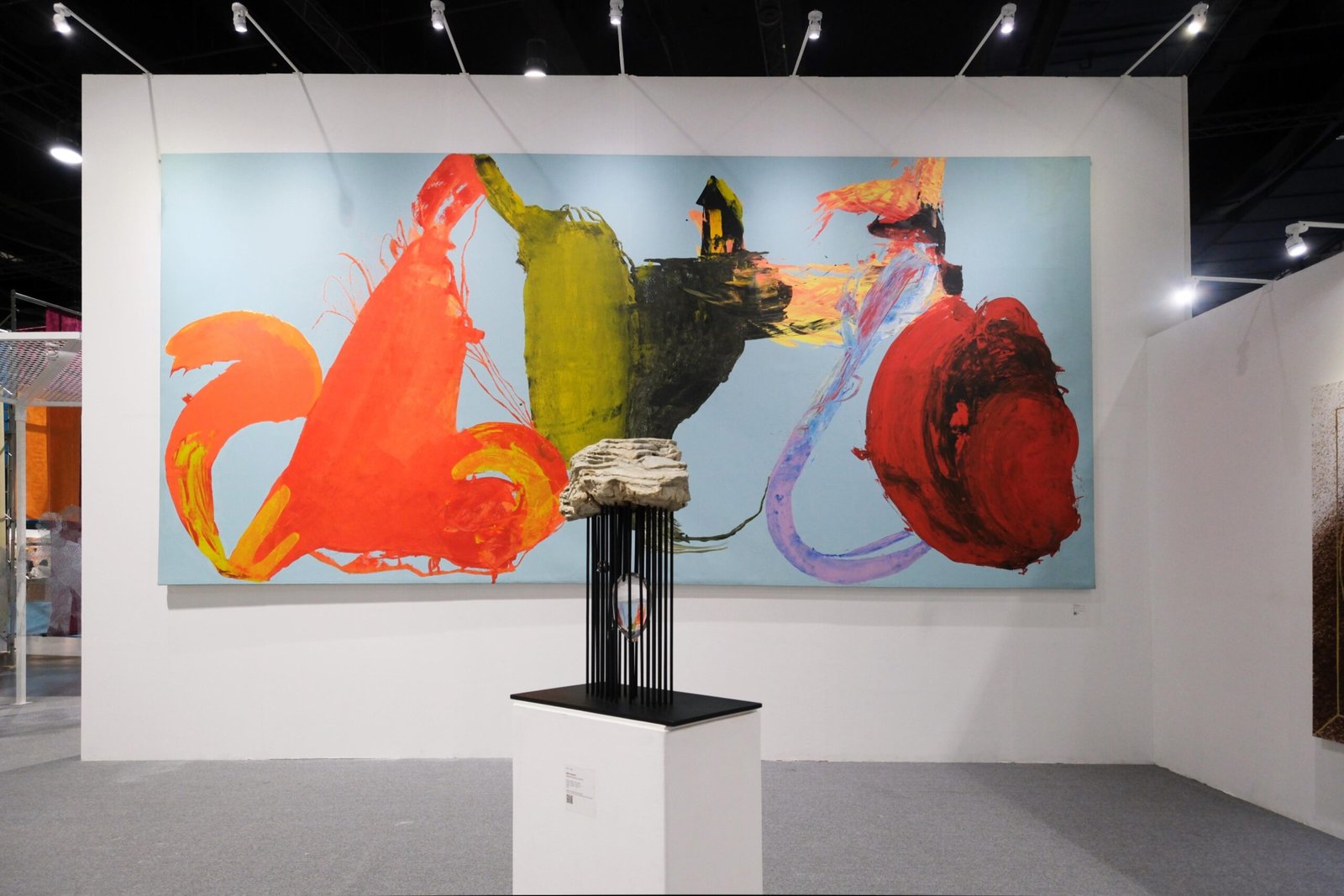
Artworks from Art Fair Philippines 2026
One need not look far for evidence. During my visit to ALT Art Fair a week later, I encountered MM Yu’s re-collected (2025–2026), a collection of Instax portraits featuring collectors and artists. Stacked in rows like an archive, on one side the collectors; on the other, the artists, the repetitive nature of these portraits transforms individual identities into a singular, collective body. The work functions as a commentary on the nature of exchange, questioning who is the “producer” and who is the “acquired object.” It is an insider’s insight into the veiled dynamics of the art world, illustrating the personas that “world” this environment.
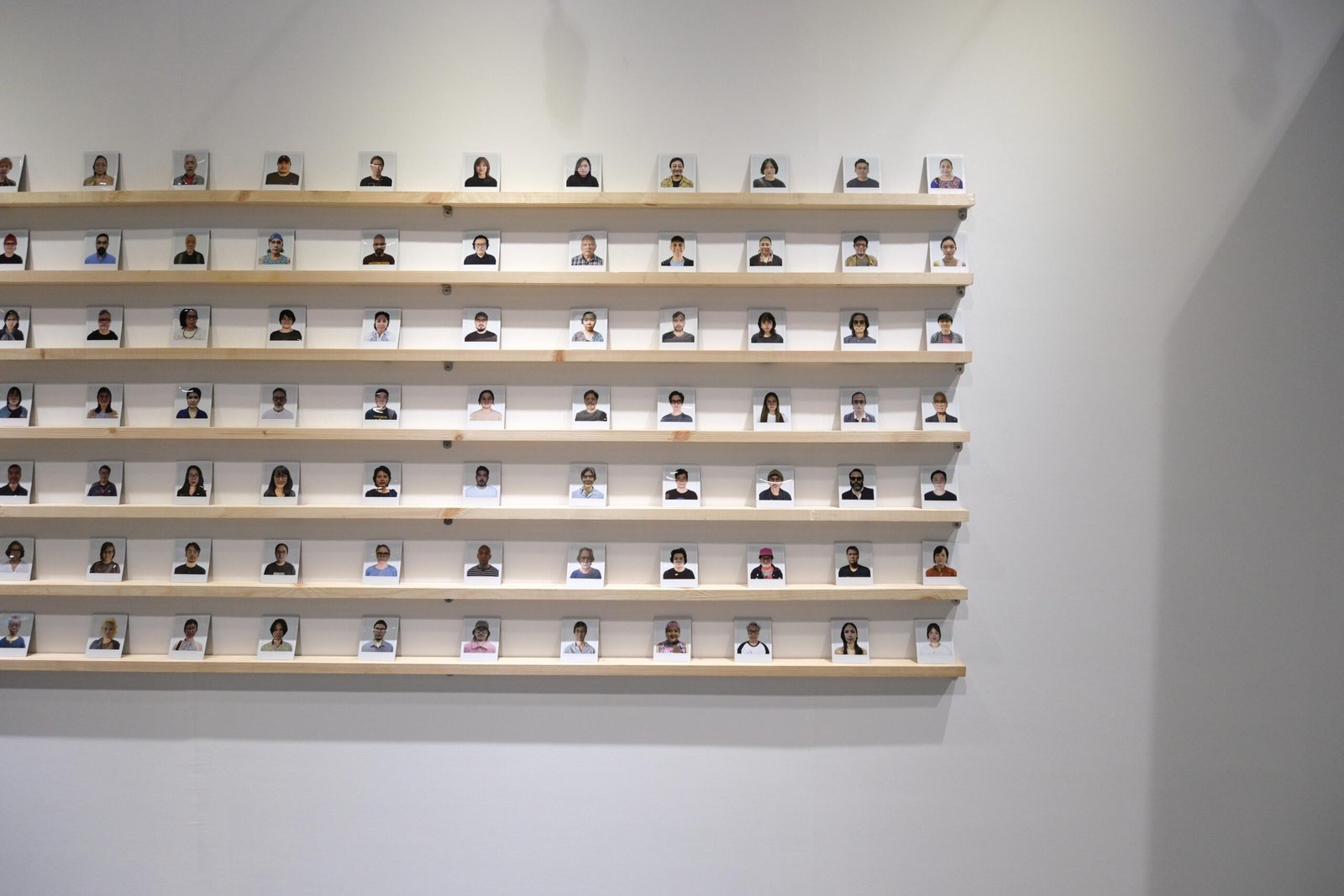
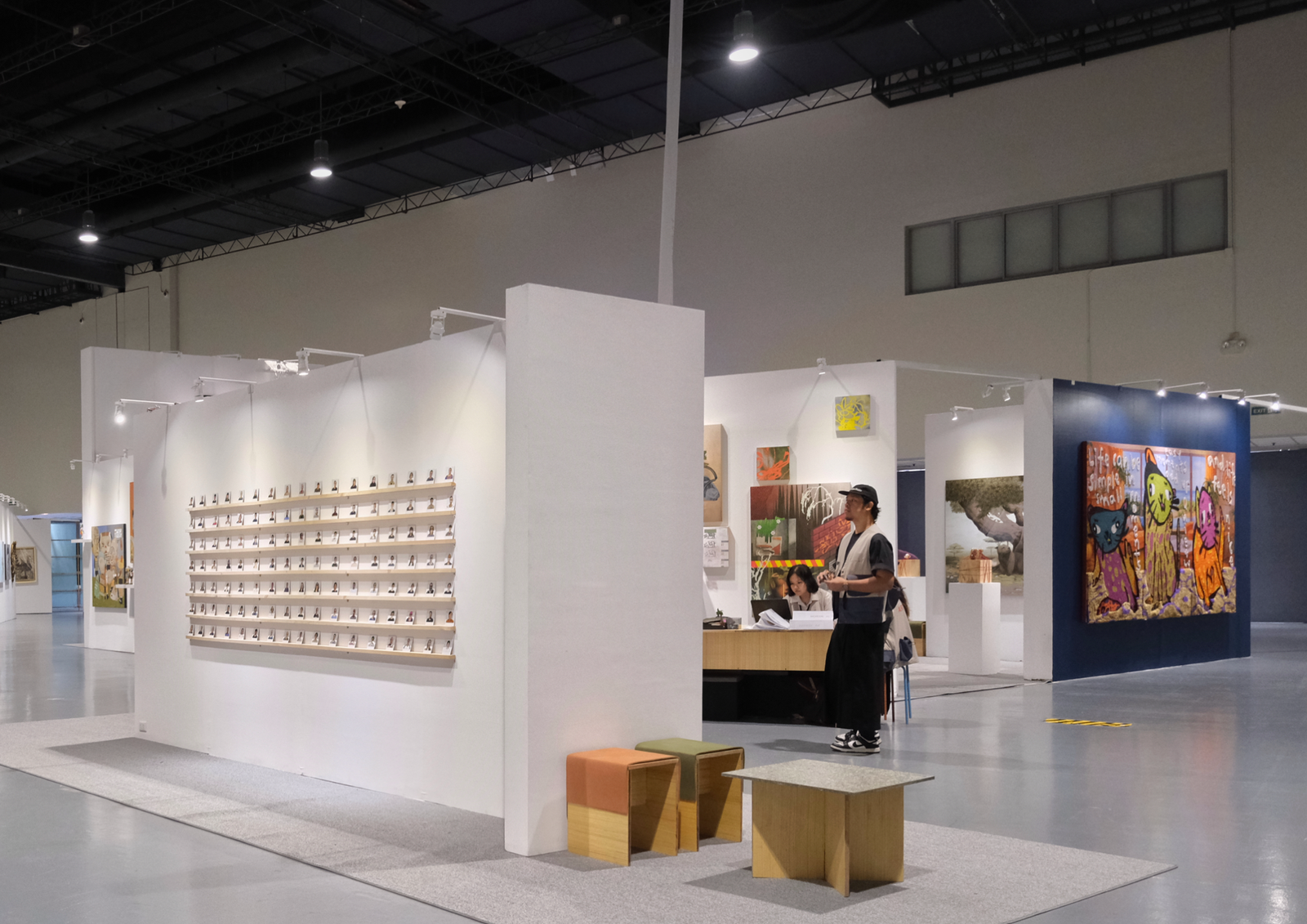
re-collected, MM Yu (2025-2026) at ALT ART
Lindslee’s Weight of the Day (2025) at ALT also captures the heavy residue of this crisis. Rendered in fiber-reinforced resin, acrylic, and human hair, the hyperrealistic sculpture depicts a Filipino man decompressing with a bottle of beer after an exhausting workday. Shirtless in denim shorts and rubber flip-flops, his body is a map of spiritual insurance: talismanic tattoos, a Catholic scapular, and an animist anting-anting. While curator Stephanie Frondoso suggests these symbols signal a preoccupation with the afterlife that renders the subject “oblivious to small joys,” the work functions as more than a narrative study. It is a mirror of the “everyman” stationed just outside the comforts of the high-end art fair. Its hyperrealism, however, triggers a complicated obsession with possession. In Ways of Seeing (1972), John Berger argued that “tangibility” served a specific social function: realism makes the subject “tangible” so the spectator may feel they possess it. Transposing Berger’s critique from this sculpture reveals a troubling tension: to buy this work is to buy the laborer it represents, effectively commodifying the very exhaustion the piece seeks to critique.
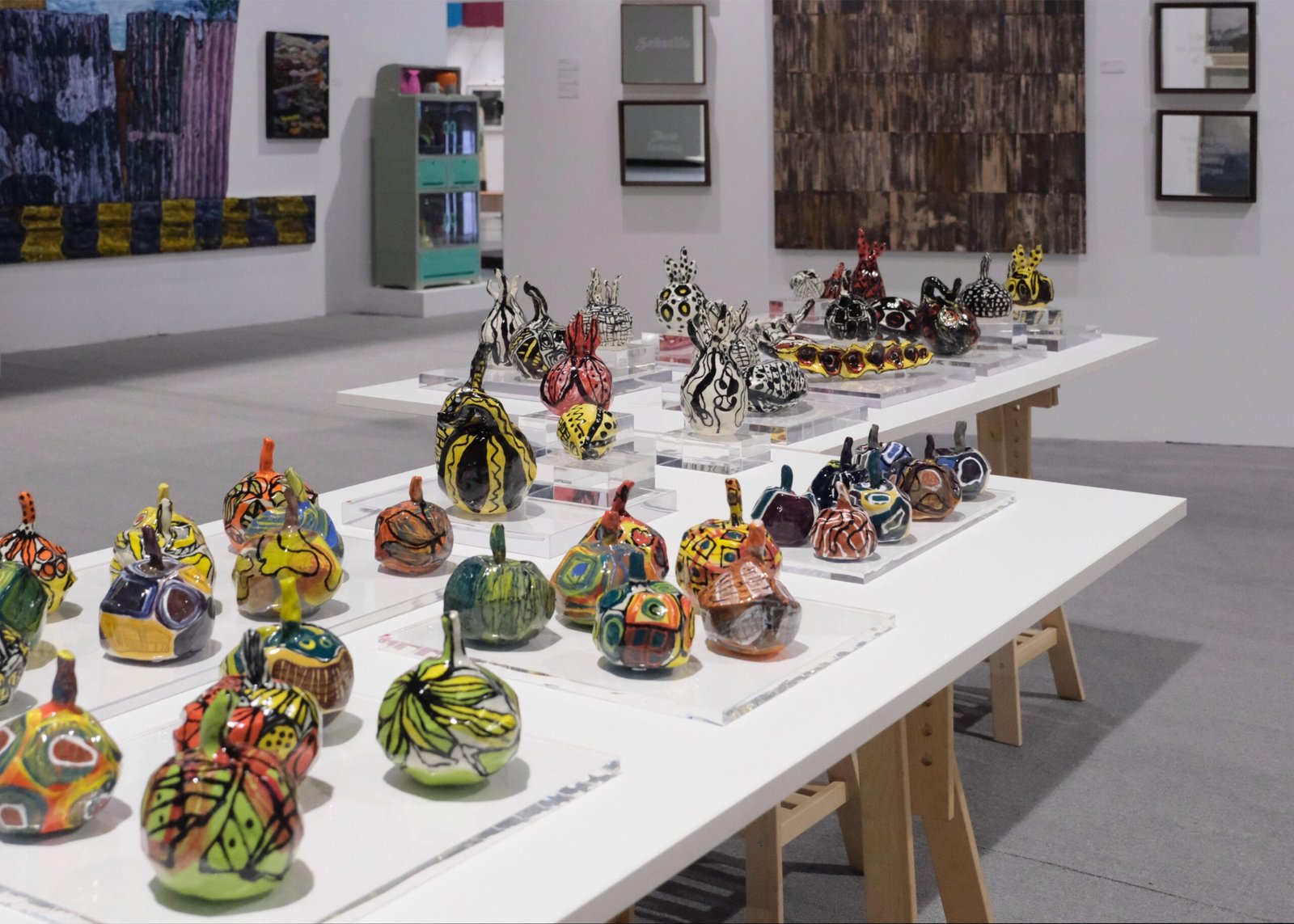
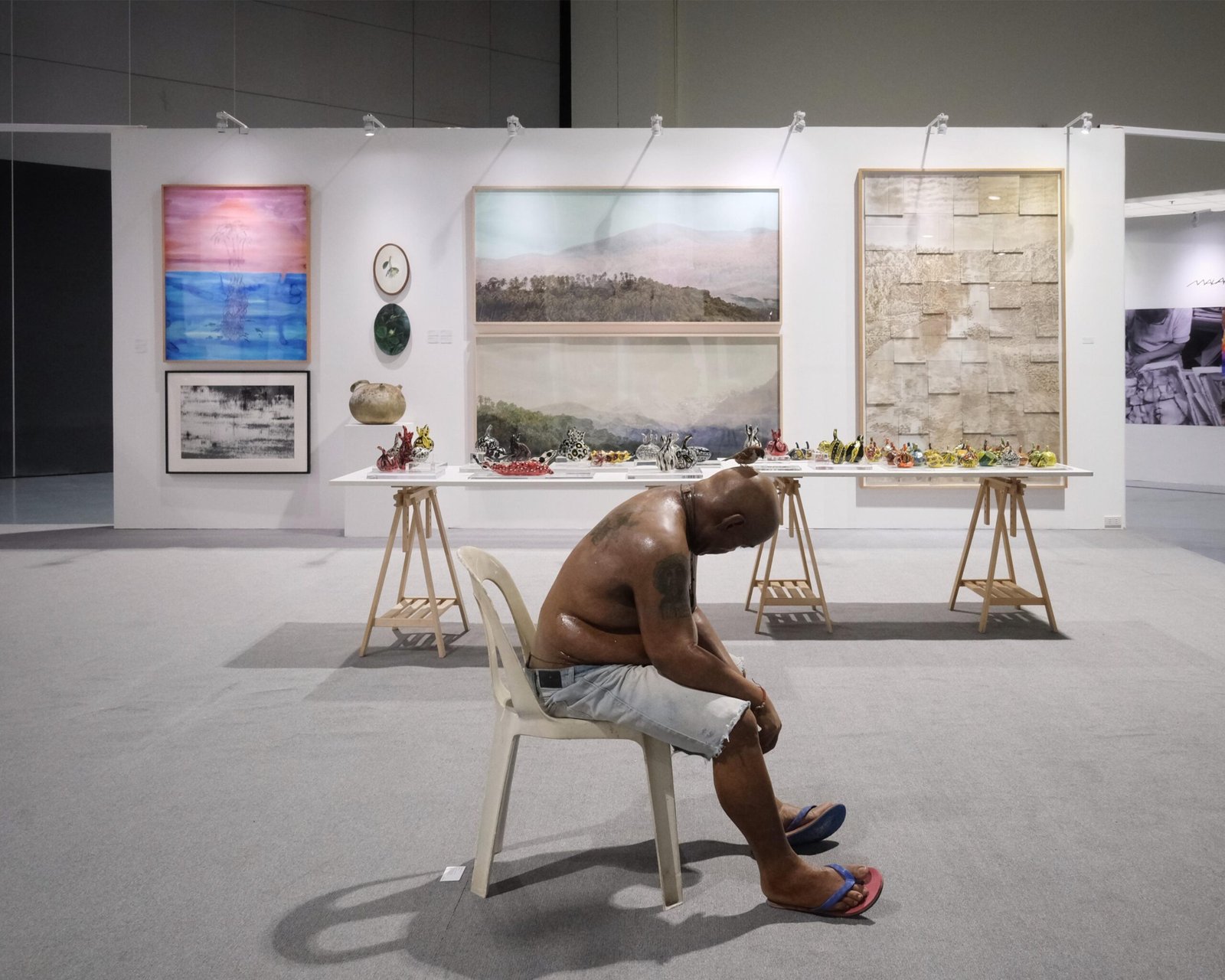
Weight of the Day, Lindslee, 2025, at ALT ART
While the art market plays a necessary economic role, it often does so at the expense of our cultural health. If we truly intend to cultivate a generation of Philippine thinkers and visionaries, we must move past the habit of viewing art as a mere luxury and assigning value to works based solely on their marketability or their ability to signal status. At times, I wonder if I am searching for genuine discovery in a space where it has run dry; yet, navigating both Art Fair Philippines and ALT, I still encountered works that were truly arresting. These pieces offered more than just visual appeal; they provided fresh perspectives and a profound connection to the artist’s internal values, proving that discovery is still possible if we look beyond the transaction.
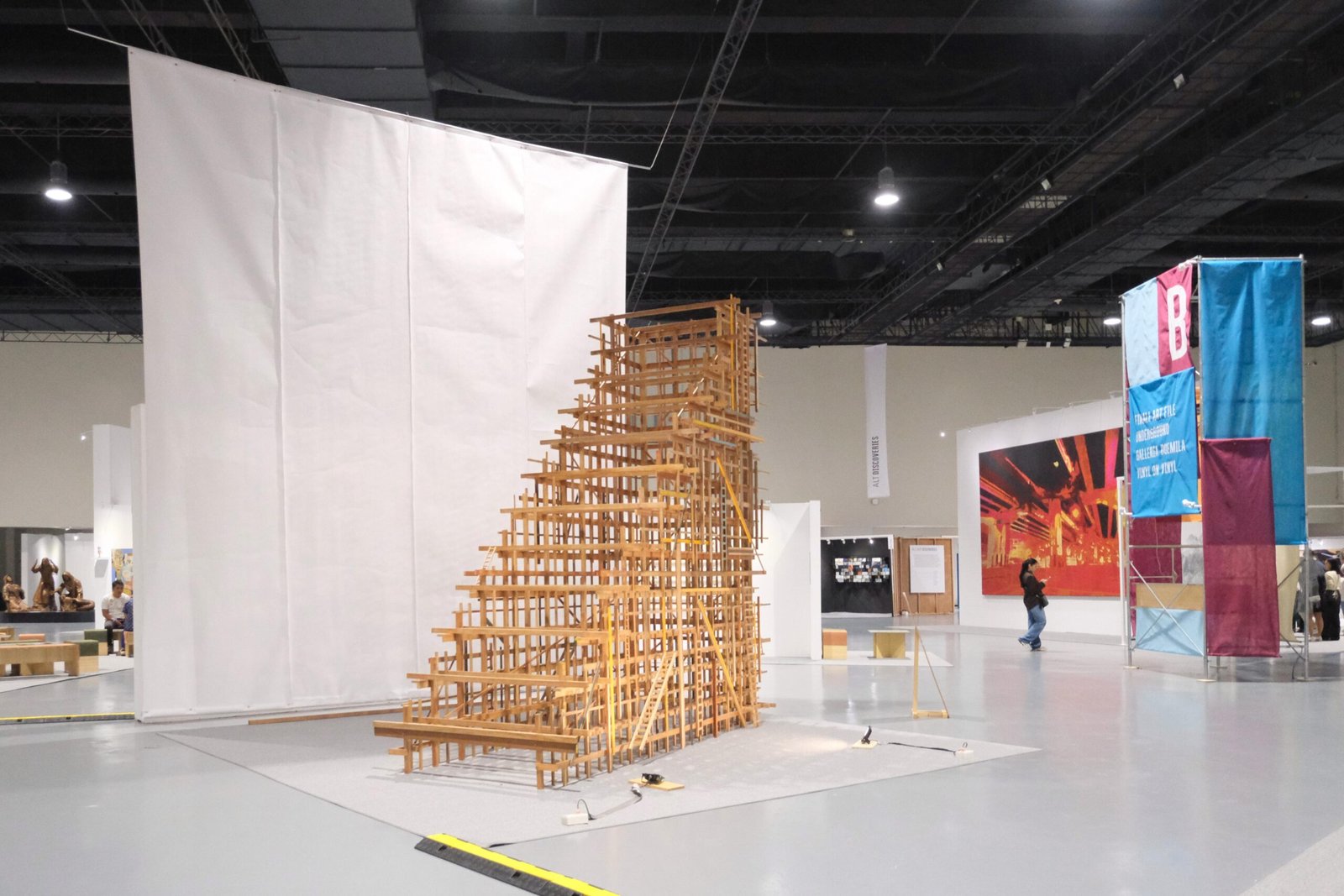
Above: Christina Quisumbing Ramilo‘s Still We Hope at ALT ART. Below: Byahe sa Pasifico, Joar Songcuya, 2026
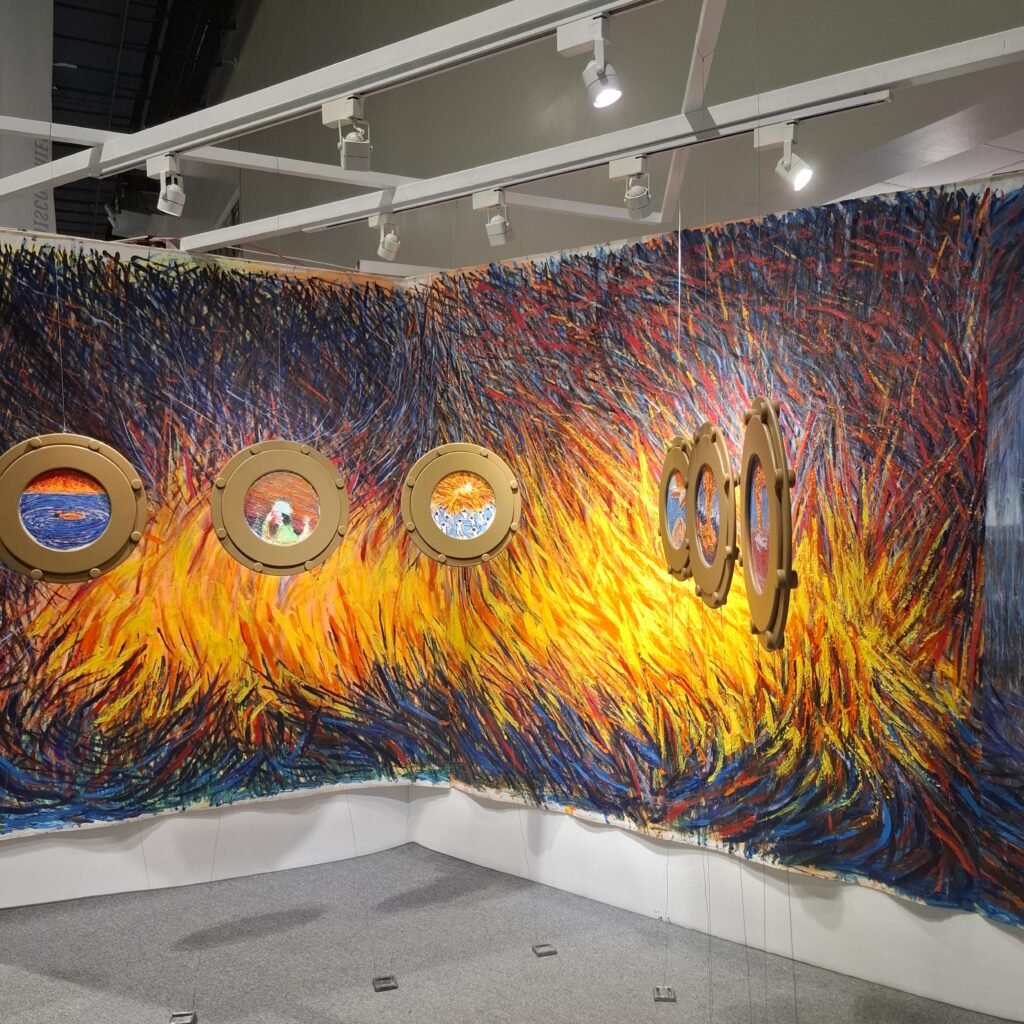
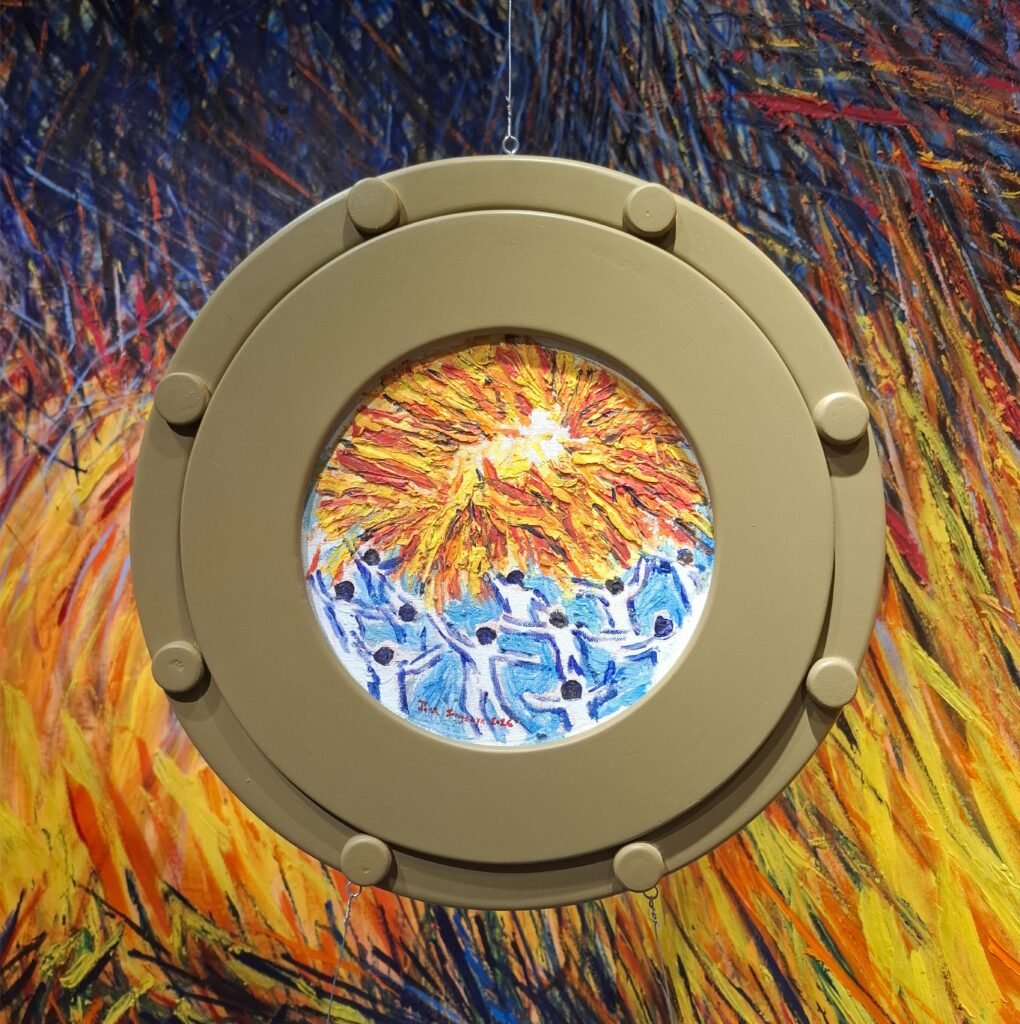
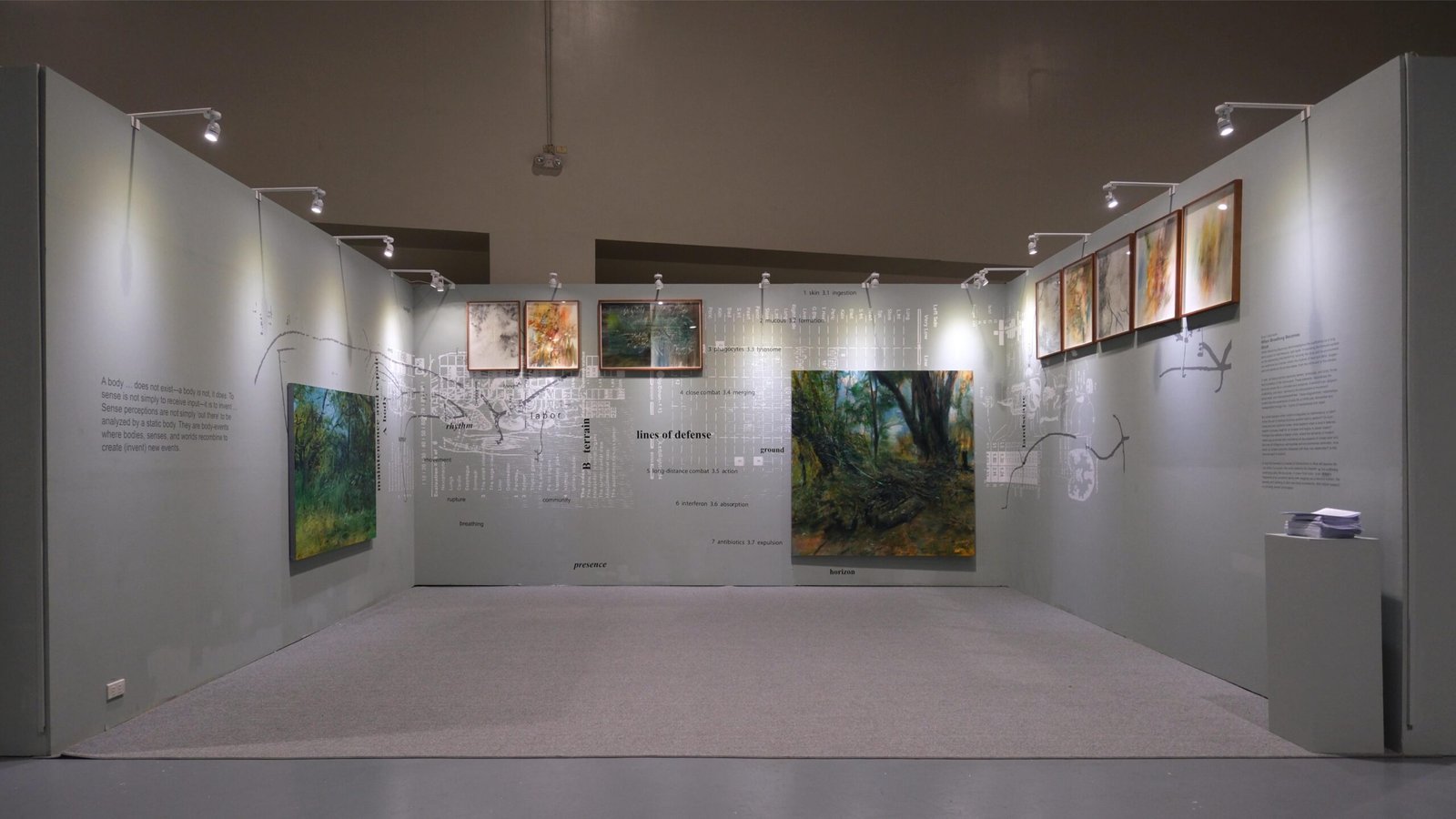
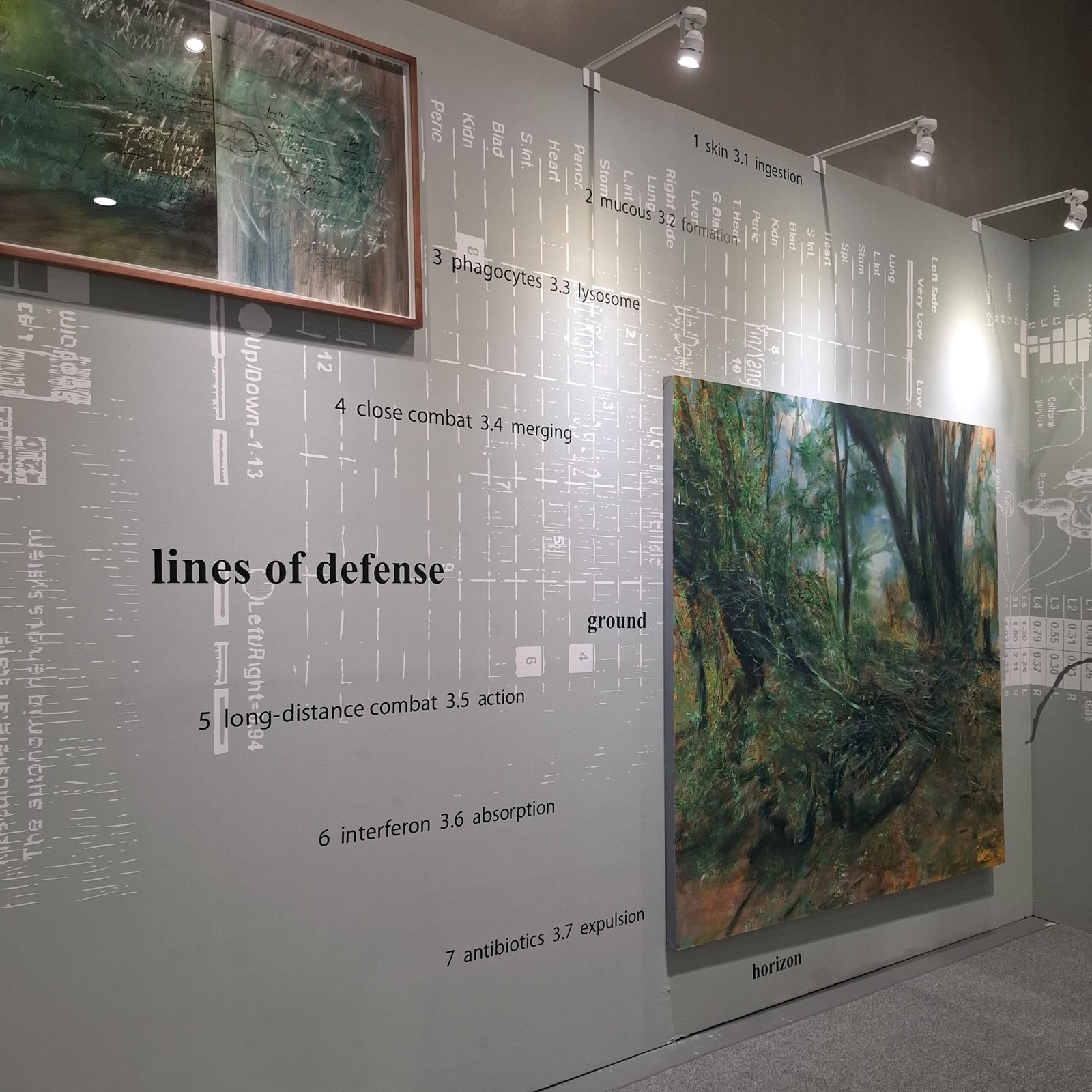
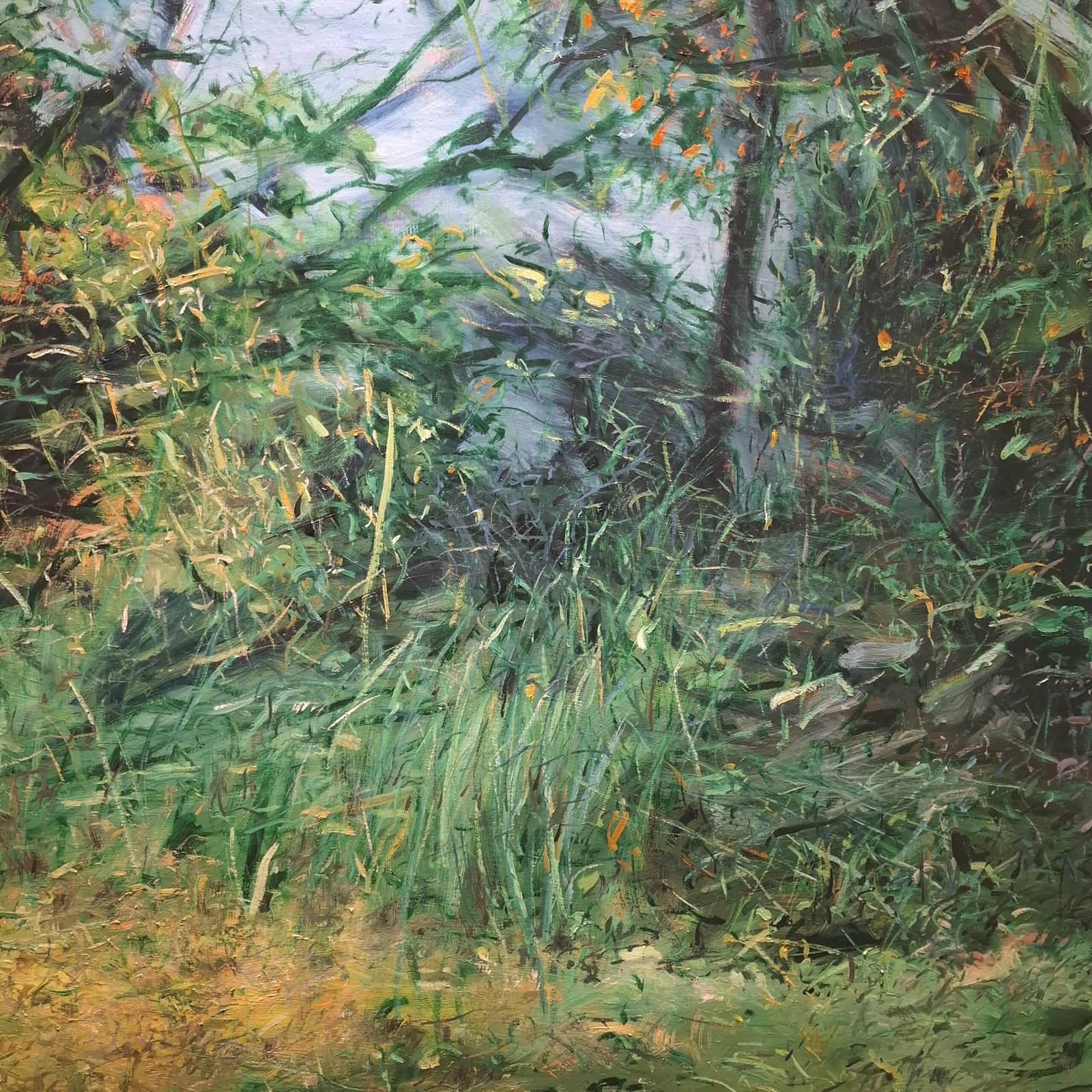
At ALT, Joar Songcuya’s Byahe sa Pasifico (2026) employs triptych murals and twelve paintings, encased in wooden, porthole-like frames, to simulate the bow of a ship. Within this immersive structure, Songcuya explores themes of fear, anguish, and catharsis, surfacing fragmented memories to locate strength in vulnerability. Drawing from his personal history as a sailor-artist, Songcuya uses feverish painterly motions as release: the expressive strokes mimic both the visceral turbulence of the sea and the heavy, chaotic silence that often follows trauma. In a series of aquarium tanks housing “books” constructed from an eclectic range of materials, including textiles, film photographs, flora, plastic wrappers, and embroidery, electronic wavemakers cause the pages to undulate or flip from one end to the other in Lesley-Anne Cao’s Amphibian palm (2026). The page flipped, during my viewing, to reveal a photograph of a man visiting a grave with flowers. The work exists as a living arrangement possessing its own logic and improvisations; the ghosts of autonomy haunt us yet. Finally, In When Breathing Becomes Work (2026), Buen Calubayan presents a series of paintings, maps, and diagrams that confront the paradox surrounding rest. By utilizing a gritty palette of oil, tire stamps, graphite, and dirt on paper to render the landscapes of Mount Maarat alongside imagery reminiscent of medical body scans, Calubayan exposes a systemic crisis: the relentless demand for “cheap labor” is sustained through exploitation, of indigenous communities, and the degradation of environmental health.
Above: Still from Amphibian palm, Lesley-Anne Cao, 2026. Below: When Breathing Becomes Work, Buen Calubayan, 2026
At Art Fair Philippines, National Artist Kidlat Tahimik’s Mga Tambak sa Kubo ni MomBaki de Fertility (2026) serves as a monumental assembly of sculptures, paintings, and Ifugao cultural artifacts. In this installation that resembles a healing hut, the traditional Ifugao mumbaki, a shaman typically sought for fertility rituals, is reimagined as a spiritual guide for contemporary creativity. The hut is encircled by a garden of gifts from Kidlat’s inner circle, happily impregnated creators who have successfully birthed new artistic visions through this artistic and cultural intervention. Operating as a non-selling sanctuary, the booth functions as a site for collective healing, where the mumbaki blesses the art world and its practitioners to rediscover their unlimited imaginative power.
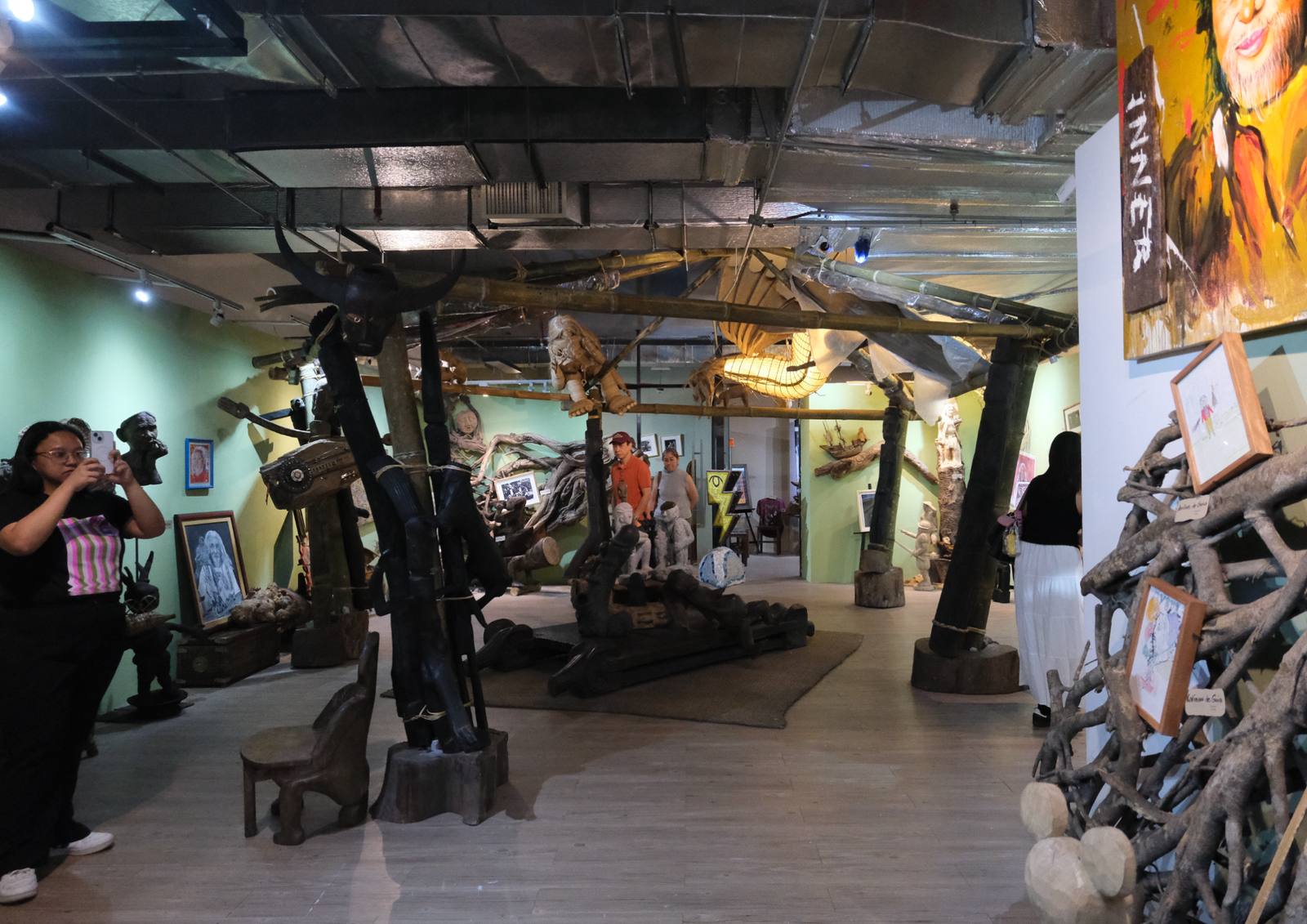
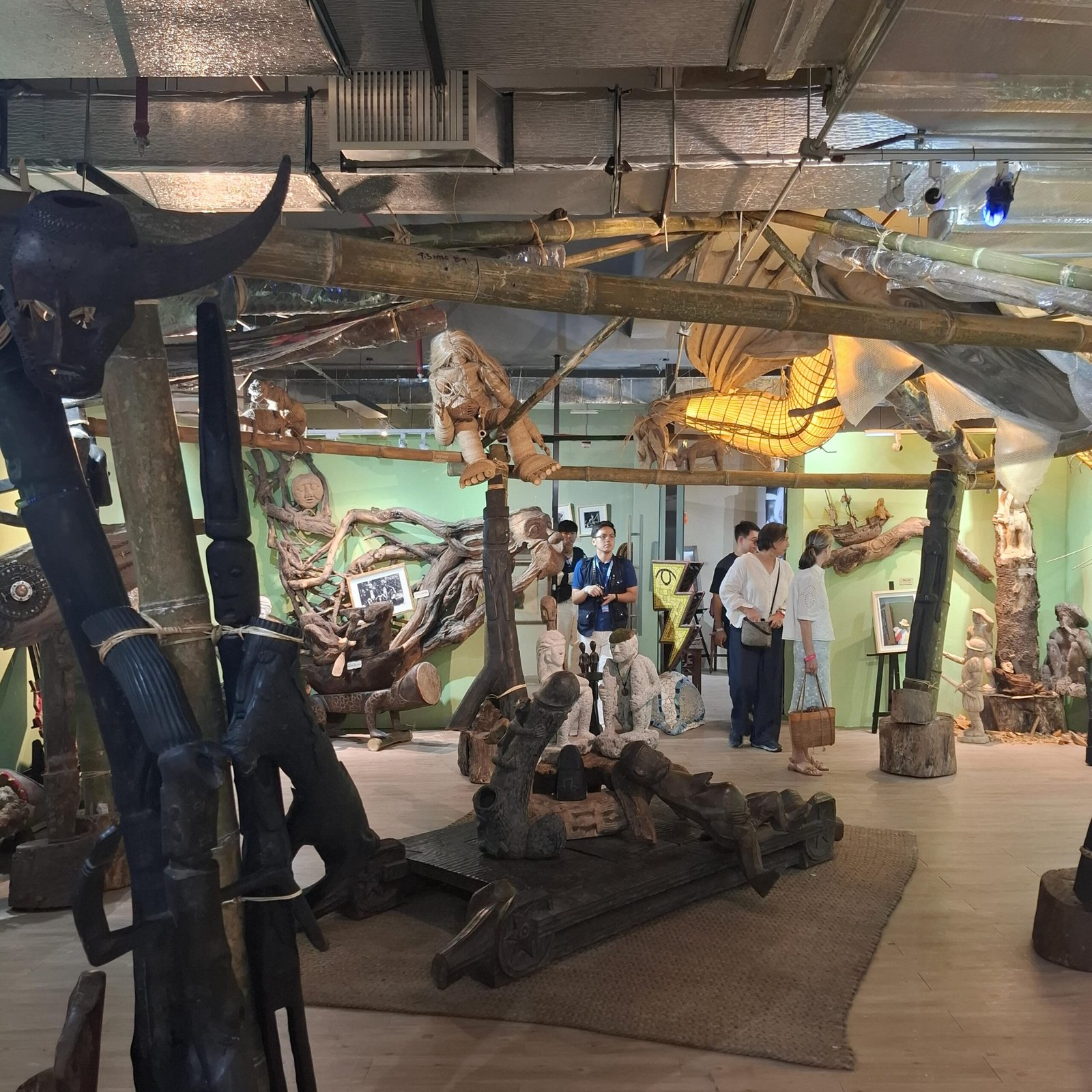
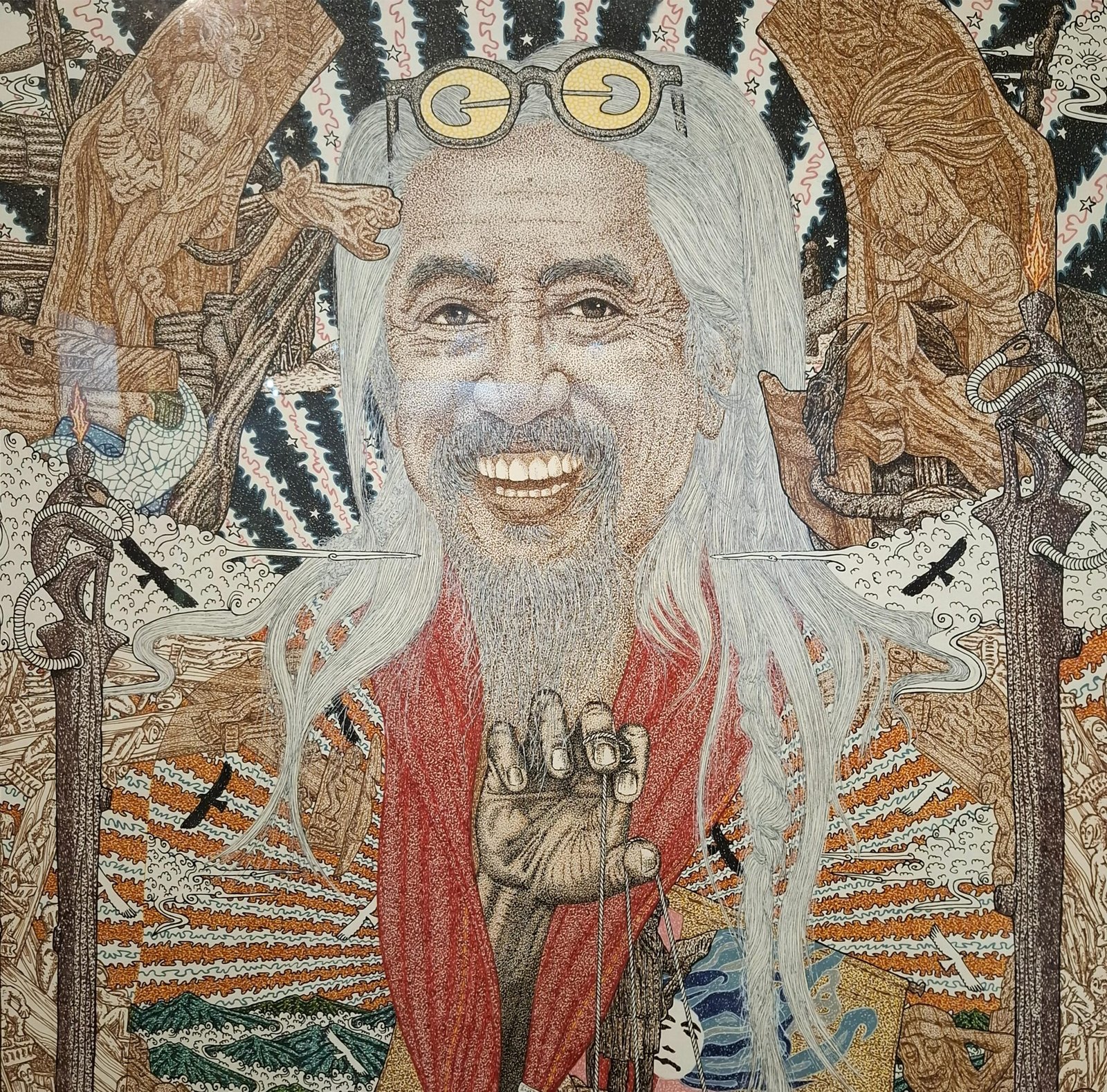
Mga Tambak sa Kubo ni MomBaki de Fertility, National Artist Kidlat Tahimik, 2026
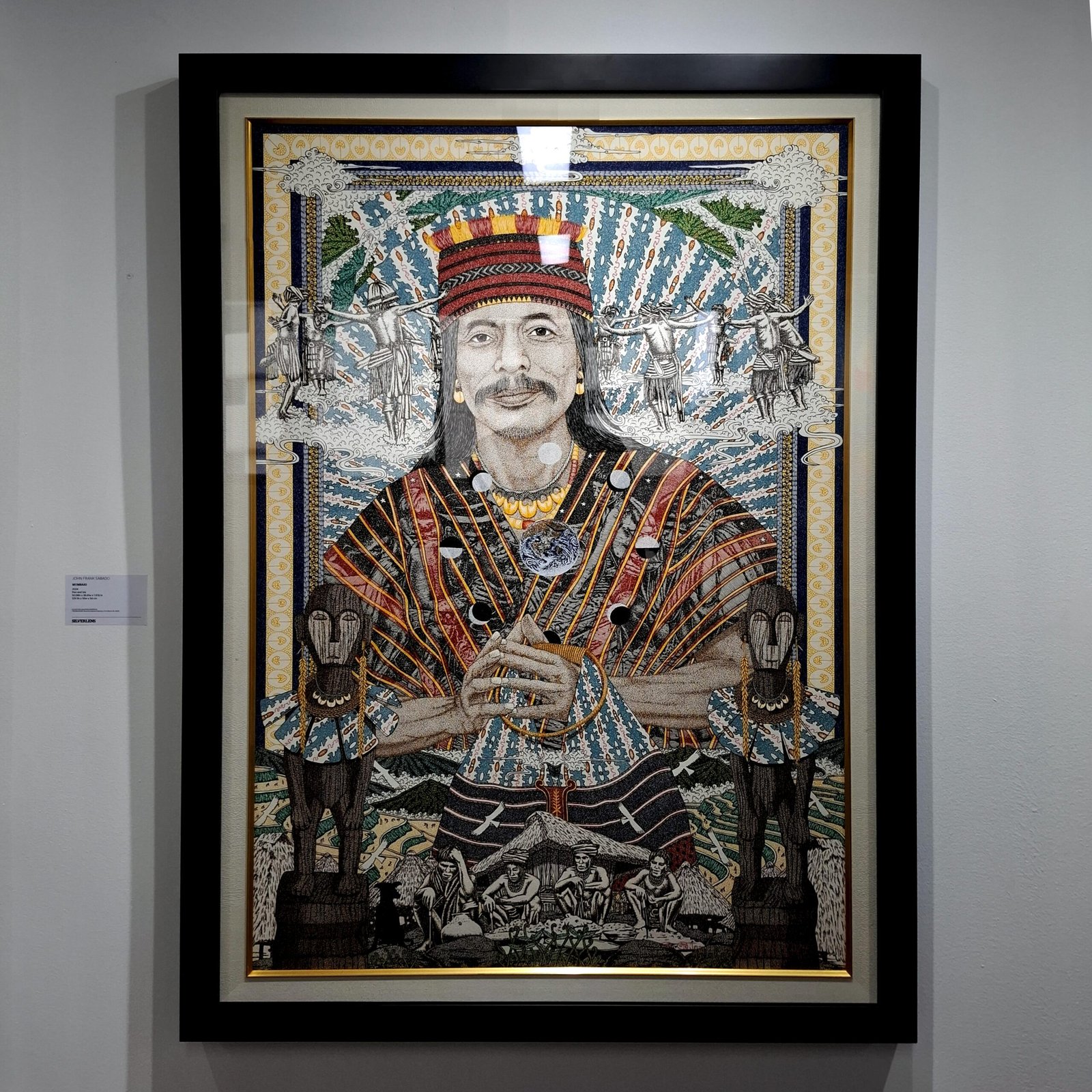
But where is the mumbaki? I found him, John Frank Sabado’s 2024 pen and ink, at the Silverlens booth. For the artist to reclaim their own self-determination and “give birth” to art anew, they must first find a way to breathe inside the very structure that seeks to subsume them. •
John Alexis Balaguer is a Manila-based curator, arts writer, and cultural worker with over a decade of professional practice across galleries, museums, and heritage institutions in the Philippines. He is the founder of Curare Art Space, an independent platform for emerging and regional contemporary art. A recipient of the Purita Kalaw Ledesma Award for Art Criticism (2019), he has held international art writing residencies at the Salzburg Art Association (2024) and as a Fellow for art criticism with the Asian Cultural Council in New York (2025). His writing is featured in Ocula, Art Asia Pacific, Kanto, and Art+. A candidate for MA in Art Studies (Art Histories and Theories), he teaches at the University of the Philippines Diliman, College of Fine Arts. As an expressive arts facilitator through The Arts & Health Institute Philippines (TAHI), he integrates contemplative practices into the classroom, inviting students to engage with cultural heritage and creative well-being.