

Interview Vanini Belarmino
Images Moi Tran
Moi Tran’s practice explores how care, labour, and meaning are carried through bodies, often quietly, repetitively, and without spectacle. For Mothering/Unmothering, Tran presents Handling Act, a work she describes as a “staged installation” in which the hand becomes both performer and subject. In the work, the hands appear to rest, lean, support, or wait, relating to effort and relational presence. Meaning unfolds slowly, through encounter and attention, rather than being fixed or immediate.
By focusing on the hand as a site of action and care, Moi Tran highlights gestures often overlooked yet deeply meaningful: holding, steadying, offering support. In Handling Act, these gestures are not performed live, yet they retain a strong sense of presence. The work reflects on how meaning is constantly shifting and incomplete, much like care itself, which is rarely finished or resolved.
Within the framework of Mothering/Unmothering, the installation meditates on the invisible labour of caregiving—work that sustains others but often goes unrecognised. The piece resists linear narratives, creating an open field of signs that invites reflection on giving care, receiving it, or living in its absence.
This interview invites Moi Tran to reflect on gesture, care, and deferred meaning on how hands carry histories, how love persists through distance, and how art can make visible the quiet, enduring work of caregiving.
Handling Act is described as a “staged installation.” Could you speak about the genesis of this work and what led you to position the hand as both performer and subject?
Handling Act emerged from thinking about the hand as a site where histories of intimate communication, resistance, and labour intersect—the hand that performs, receives, remembers, and resonates. The idea of a “staged installation” speaks of caregiving as a live event, a practice through which care is enacted and communicated. To stage the hand, then, is to draw attention to what often remains unseen: the quiet repetitions of maintenance, the touch that sustains relation, gestures that vibrate across distance. The hand reaches, holds, and releases; it navigates both presence and absence. Handling Act situates this understanding within the material practices of the hand, persistent acts registering as both deeply personal and profoundly political.
By making the hand both performer and subject, I wanted to foreground this tension between agency and burden, intimacy, and endurance. In the staged space, the hand becomes a conduit, conveying deferred meanings that reside in resonance, in touch, in muscle memory, in the labour of tending to another.
Ultimately, Handling Act is a meditation on how care performs itself, how gesture becomes archive, and how the work of caregiving continues, quietly, as the resonance in every contact continues to move through one to another.
The hands in Handling Act appear to rest, lean, support, or wait rather than act decisively. What draws you to these suspended or unfinished gestures, and what do they reveal about care?
I’ve long been drawn to open-ended gestures that linger in the moments before or after an action, when something is felt but not yet resolved. In Handling Act, the hands rest, lean, or wait because care often resides in these suspended intervals: in patience, in endurance, in the ongoingness of tending rather than the climax of doing. As Sara Ahmed reminds us, to care is to “stay with” what is fragile, to inhabit the discomfort of duration rather than seek immediate repair. These gestures of pause—of leaning or holding without resolution—make visible a slower temporality of relation, one where tenderness resists productivity and allows for uncertainty.
The incomplete gestures of Handling Act reveal this truth: that care is rarely decisive, often unanswered, and always unfolding. The waiting hand does not withdraw; it listens. It embodies an ethics of attention that asks, “What does it mean to be with, not to hurry towards a superficial fix, but to stay with?” In these suspended movements, care discloses itself as a form of entire presence. It transforms into a willingness to remain open and hold space for what has not yet healed or arrived.
So perhaps these unfinished gestures are not about inaction but about duration, about how care can draw strength from persistence rather than finality. They remind us that sometimes the most profound acts of care occur in the quiet commitment to remain, to wait, to stay with.
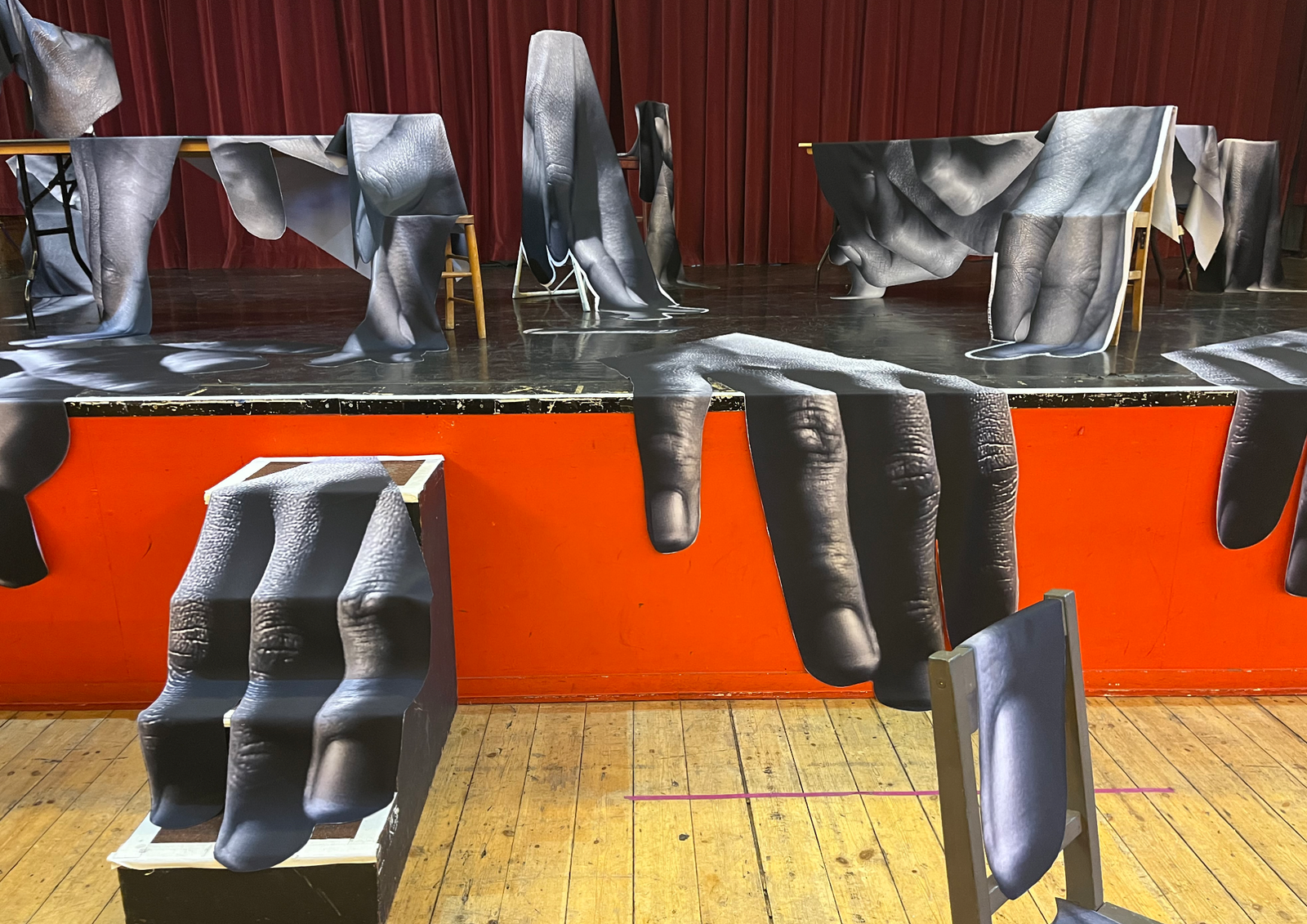
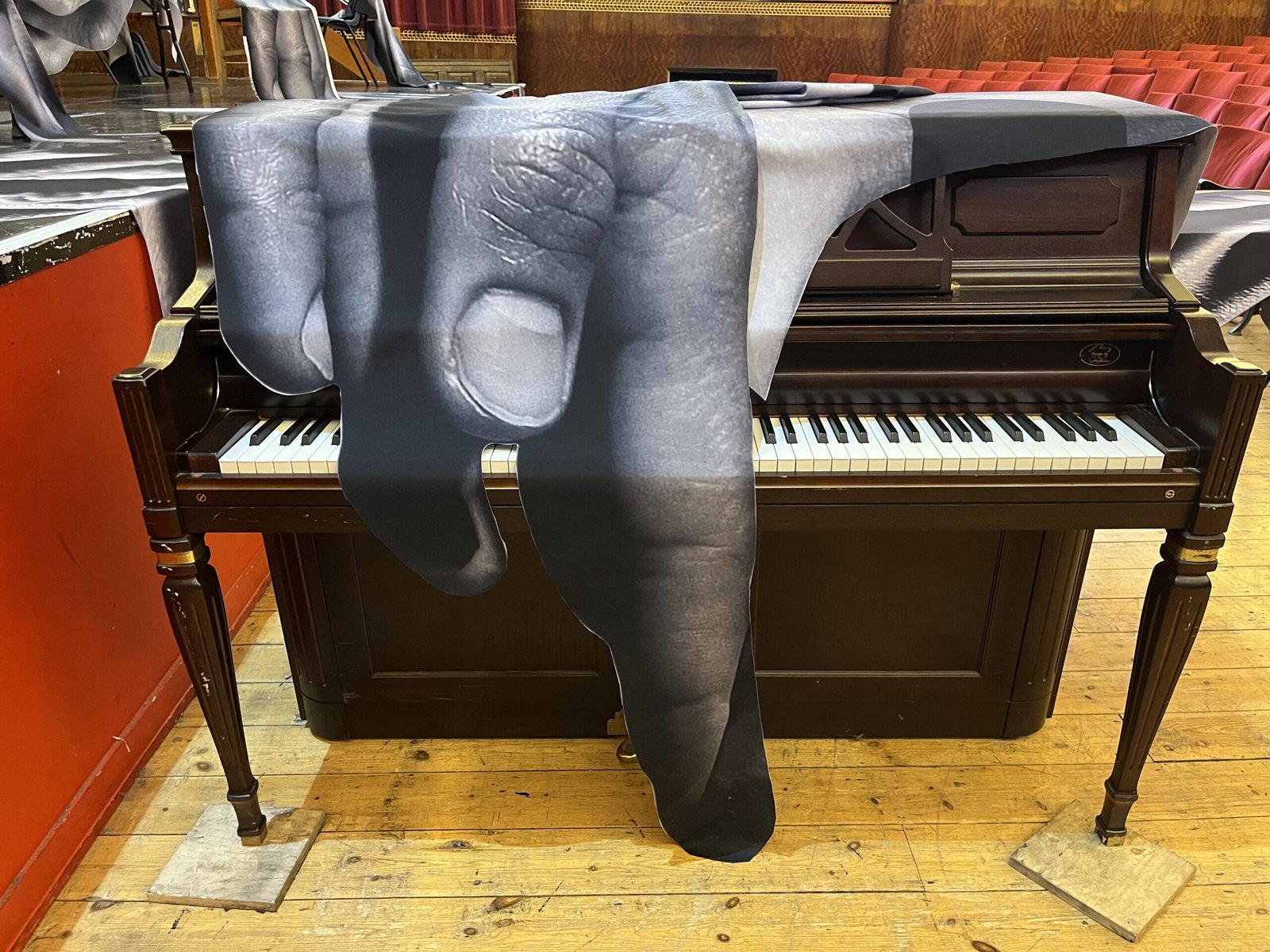
Handling Act, 2025
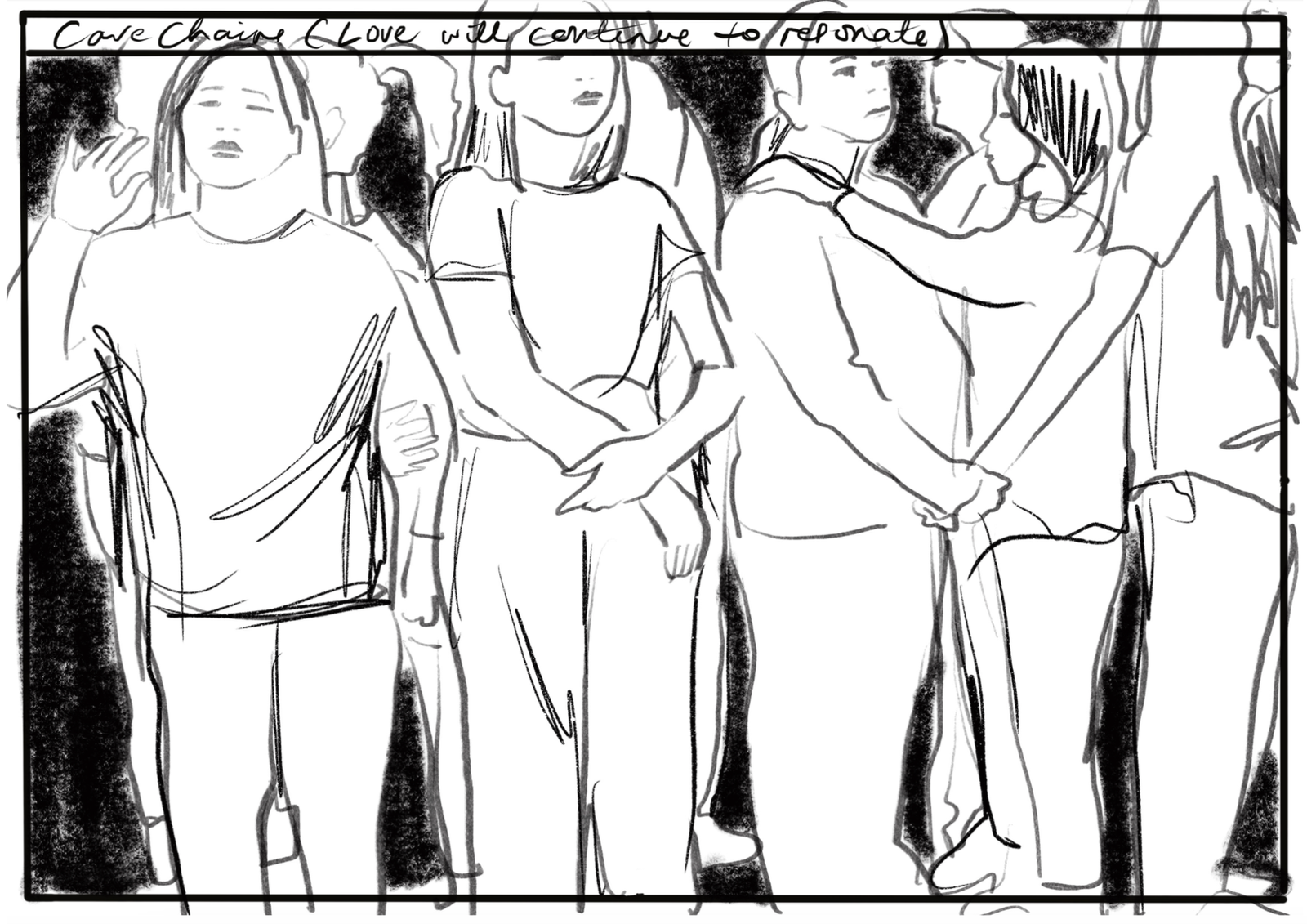
You recently presented a collaborative project, Care Chains (Love will continue to resonate), at the Wellcome Collection that centres on the lived experiences of migrant domestic workers. How did this work shape your thinking about gesture, touch, and bodily labour in Handling Act?
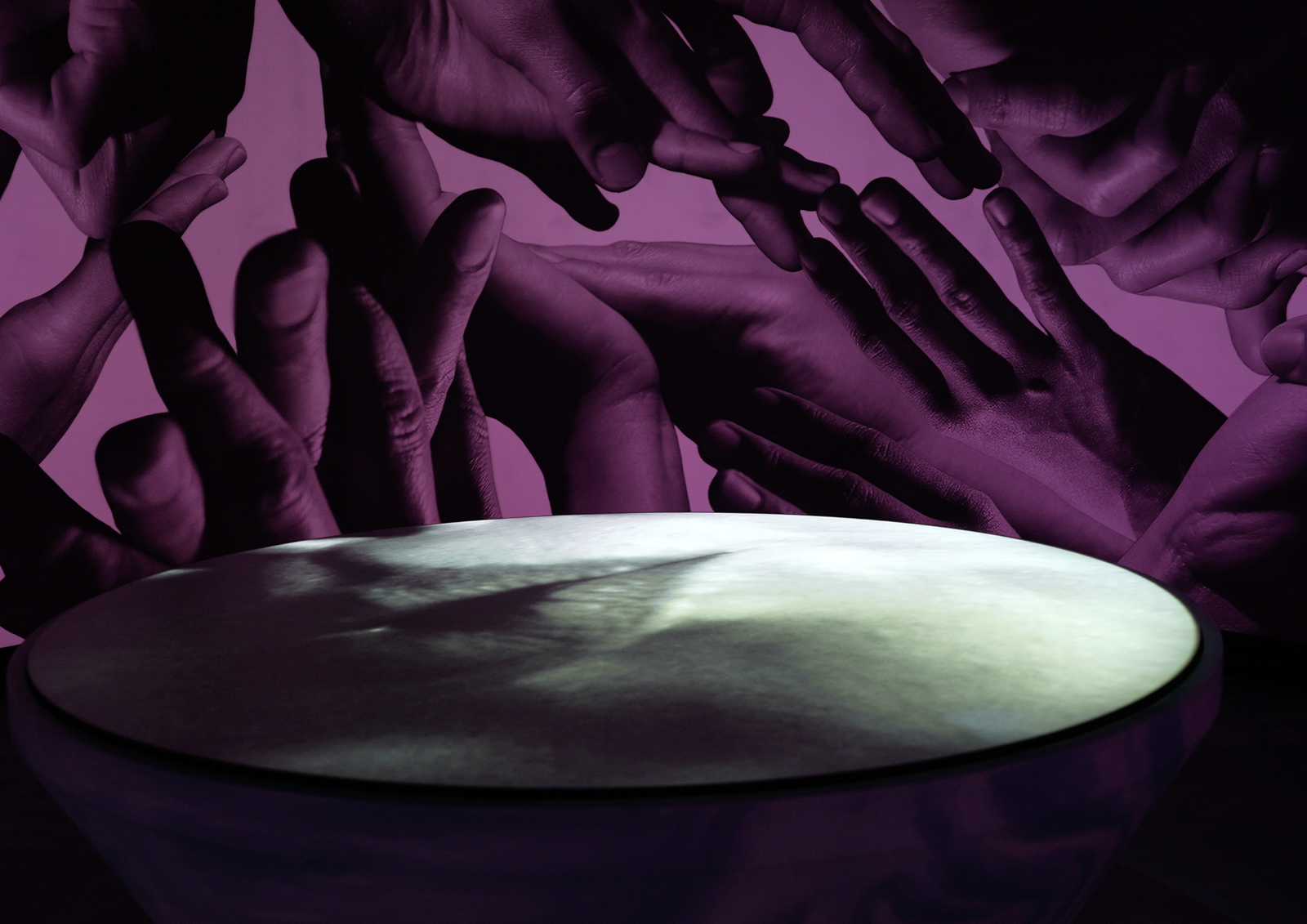
Care Chains (Love will continue to resonate) compelled a rethinking of caregiving as forms of organised, collective bodily labour rather than merely intimate, private acts. The Voices of Domestic Workers is a charity that supports and advocates for the rights of domestic workers in the UK; their work is activism. In Care Chains, the clapping, stomping, and snapping of migrant domestic workers’ hands insist that care is not only soft or invisible but also a sustained, rhythmic, percussive, and structurally produced form of activism. The full performance sound score of Care Chains was also composed into a resonance score, and both scores were played in the London installation. The vibration running through Care Chains is integral to appreciating the extended effects of caregiving, opening a renewed understanding of touch as distributed rather than localised. Caregiving continues to vibrate, even in stillness.
Spending time with VODW members shifted attention from individual touch to what might be called chains of touch: the way one gesture of care is linked to another, forming a continuum that stretches across borders, contracts, and generations of workers. Care Chains also pauses in the aftermath of the caregiving event to acknowledge the fatigue, weariness, loneliness, and micro-adjustments that remain in the caregiver’s bodily frequencies. Work on affective labour and “global care chains” by scholars such as Arlie Hochschild and Rhacel Parreñas helps articulate the sense that care circulates unevenly, and that the bodily labour of migrant women sustains distant households, while often eroding their own access to rest and protection.
Handling Act takes up this insight by treating the hand as both archive and amplifier: as an instrument of caregiving, but equally a reminder that it can also signify ‘stop’, where care is not reciprocated but instead used to strip workers of the human right to security and respect.
The resting hand, here, is not empty of action; it is dense with accumulated frequencies and, as the title of Care Chains suggests, will continue to resonate.
Working closely with The Voices of Domestic Workers, what did you learn about how care is carried, transmitted, or withheld, and how might these insights surface?
Working with The Voices of Domestic Workers made it impossible to think of care as a purely emotional attribute; what also emerged was a patterned movement of bodies, documents, and remittances, in constant risk of interruption. Care is carried in the way workers hold multiple households in mind at once, in the choreography of sending money, voice notes, and advice across time zones, even while their own needs for rest, healthcare, or security are deferred.
Care is transmitted through small but meticulously repeated gestures: the way a bed is made, a child is bathed, food is seasoned in a way that recalls another country, another kitchen. These gestures travel: they sediment in the textures of domestic space and in the nervous systems of those who receive them, even when the worker is unnamed or unseen. At the same time, care is withheld structurally when visas, wages, and housing arrangements make workers perpetually replaceable, reminding them that the care they offer does not guarantee care in return.
These insights surface in Handling Act as a tension: hands that lean or rest bear the weight of stories about contracts, migration routes, and border regimes without directly illustrating them.
The gestures are deliberately modest, almost minimal, because so much of this labour is required to appear effortless, yet their accumulation hints at exhaustion, repetition, and a dense, transnational circuitry of obligation. In this sense, the work attempts to let the traces of carried, transmitted, and withheld care vibrate through posture and touch, rather than resolving them into a single, legible narrative, because there is never one single narrative.
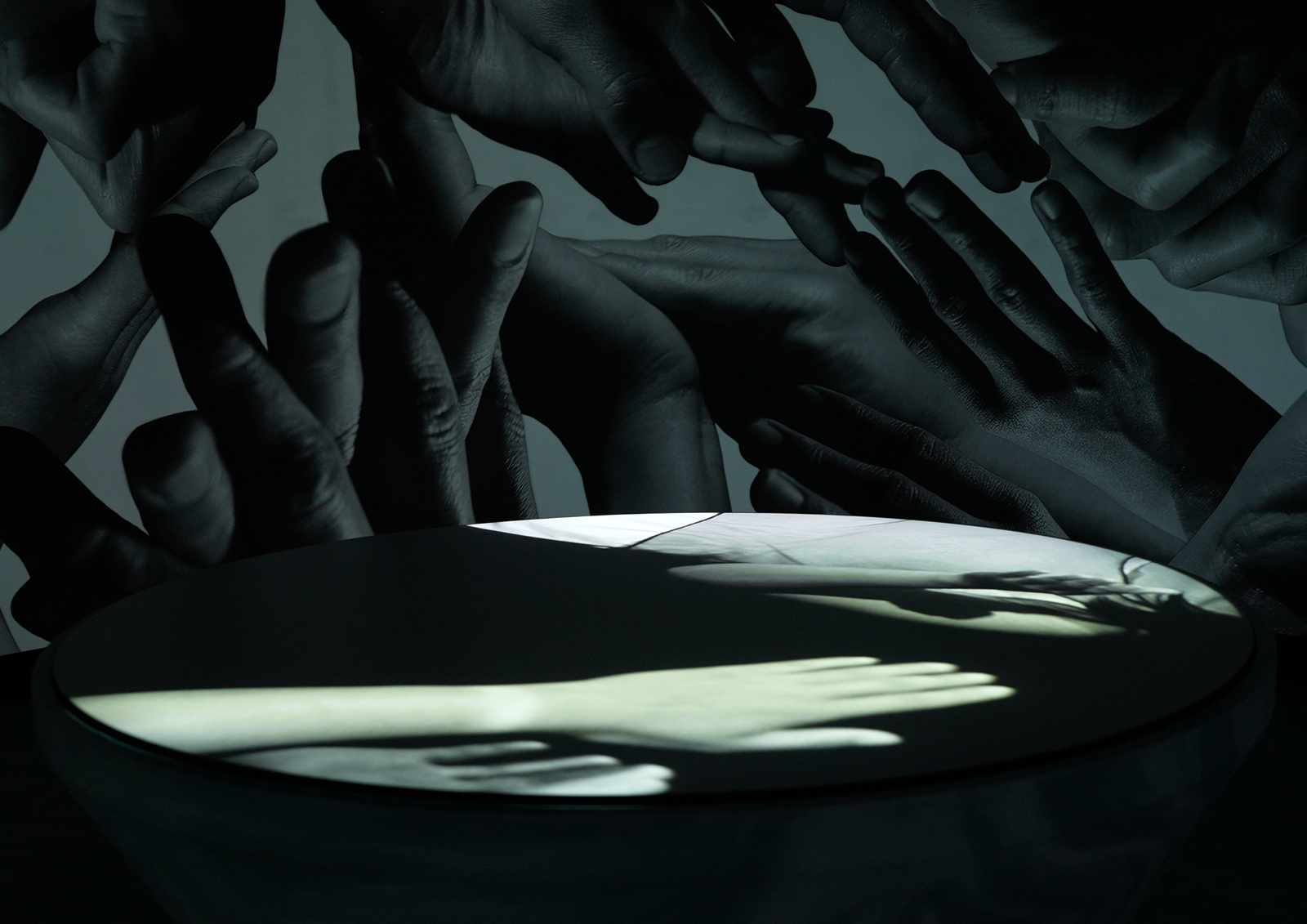
Within the context of Mothering/Unmothering, the focus on hands can be read as a reflection on invisible caregiving labour. What do you hope audiences consider as they encounter these hands dispersed throughout the space?
I invite audiences to think about how much caregiving labour is asked to disappear into “natural” love, into personality, into duty. The hands in Handling Act are scattered rather than centralised because care itself is often fragmented, spread across bodies, rooms, and routines in ways that rarely register as work, even as they hold entire households in place.
Encountering these hands, audiences are asked to notice their own habits of expectation: whose touch is taken for granted, whose exhaustion is normalised, whose absence is only felt when something is no longer done. The hope is that viewers sense the tension between tenderness and depletion in these gestures—the way a resting hand can signal both affection and refusal, both the willingness to hold and the need to let go.
Finally, the hands are an invitation to consider mothering beyond biological or gendered scripts: as a network of supports that includes migrant workers, extended kin, friends, and strangers who step in when structures fail. As audiences move through the space, the wish is that they register each hand as a node in this wider ecology of care—and feel how the labour that appears invisible is, in fact, what quietly organises the conditions of life. Our experience of contact suggests that these gestures do not end at the skin; they leave traces in rooms, objects, and infrastructures that have been repeatedly cleaned, repaired, or inhabited.



Dramaturgy plays a vital role in how Handling Act is staged. How do ideas of delay, incompleteness, or deferral, even stillness, shape the way care is performed and perceived in this work?
In Handling Act, perhaps it is more post-dramaturgy I am interested in; the work leans into delay and incompleteness to unsettle the common trajectory of the script. This script challenges that care is quick, efficient, or easily resolved; there is no clear beginning, climax, or end; the work lingers in the in-between: the moment of reaching but not yet touching, of supporting but not fully lifting, of resting without fully recovering.
The stillness in the work is not empty; it is charged with anticipation, doubt, and fatigue. The installation treats pause as dense with information, a place where the politics of ‘staying with’ become palpable. The dramaturgical choice to withhold full action—no grand gesture, no cathartic resolution—echoes how caregiving often unfolds away from spectacle, in cycles of intervention and return.
Delay and deferral ask viewers to stay longer with what might otherwise be skimmed over: a hand leaning on a surface, a slight adjustment of weight, a gesture that almost happens. This work invites audiences to attune to quieter registers—hesitation, ambivalence, the micro-negotiations between giving and resisting. I invite audiences to recognise care as unending gestures that hold everyday life together.
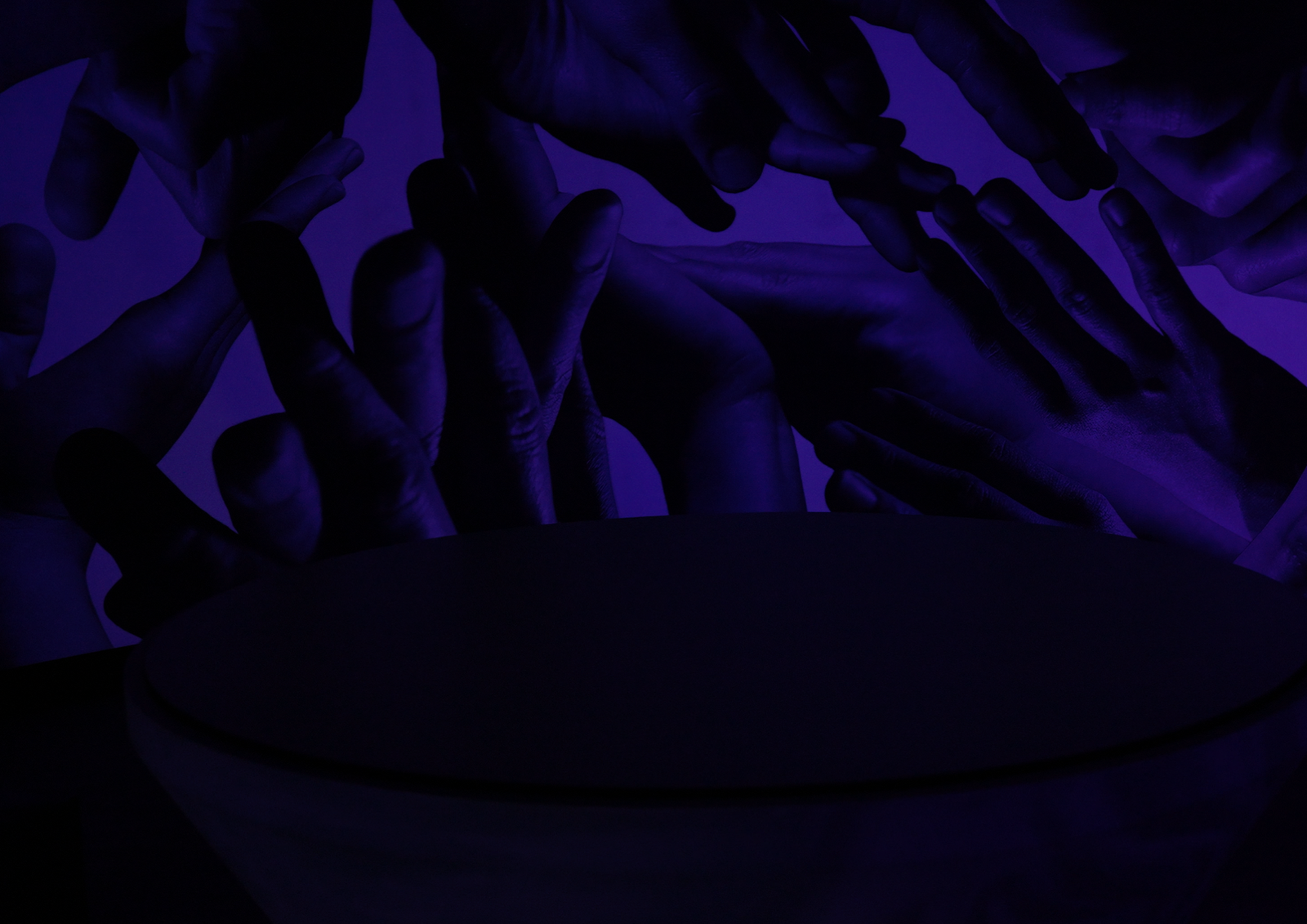
Rather than resolving meaning, your works often invite sustained attention and leave things open. After encountering Handling Act, what kinds of reflections or resonances do you hope audiences carry with them?
Caregiving, or any scenario of encounter, does not end with a single gesture; they reverberate, continue, and return, as if touch leaves an afterimage in the body of the world. The resting, leaning, and waiting hands are not simply paused; they are vibrating with past and future contact, holding traces of what has been given and what is still to come. Suspended gestures interest me because they foreground care as an ongoing, circulatory force rather than a completed act. In affect theory, resonance and vibration name the way affects exceed the moment of their initial emergence, travelling across bodies, objects, and spaces as intensities that linger and accumulate. Caregiving, in this sense, is not exhausted in the instant of touch; it resounds. It moves through the hand, into the surfaces it meets, and back again, forming what might be called an affective echo—an ongoing vibration of tending and being-tended-to.
In this way, caregiving appears as a practice that keeps giving, altering the vibrational field of relation. It changes how bodies orient toward one another, how spaces feel, and how futures are imagined. Even when the caregiver steps back, the care does not simply disappear; it hums in the atmosphere, structuring the conditions of possibility for comfort, survival, and love. The “waiting” hand, then, is not empty; it is always charged, imprinting life within spectrums of frequencies even when it looks like nothing is happening. •